More steps, Washington, D.C.

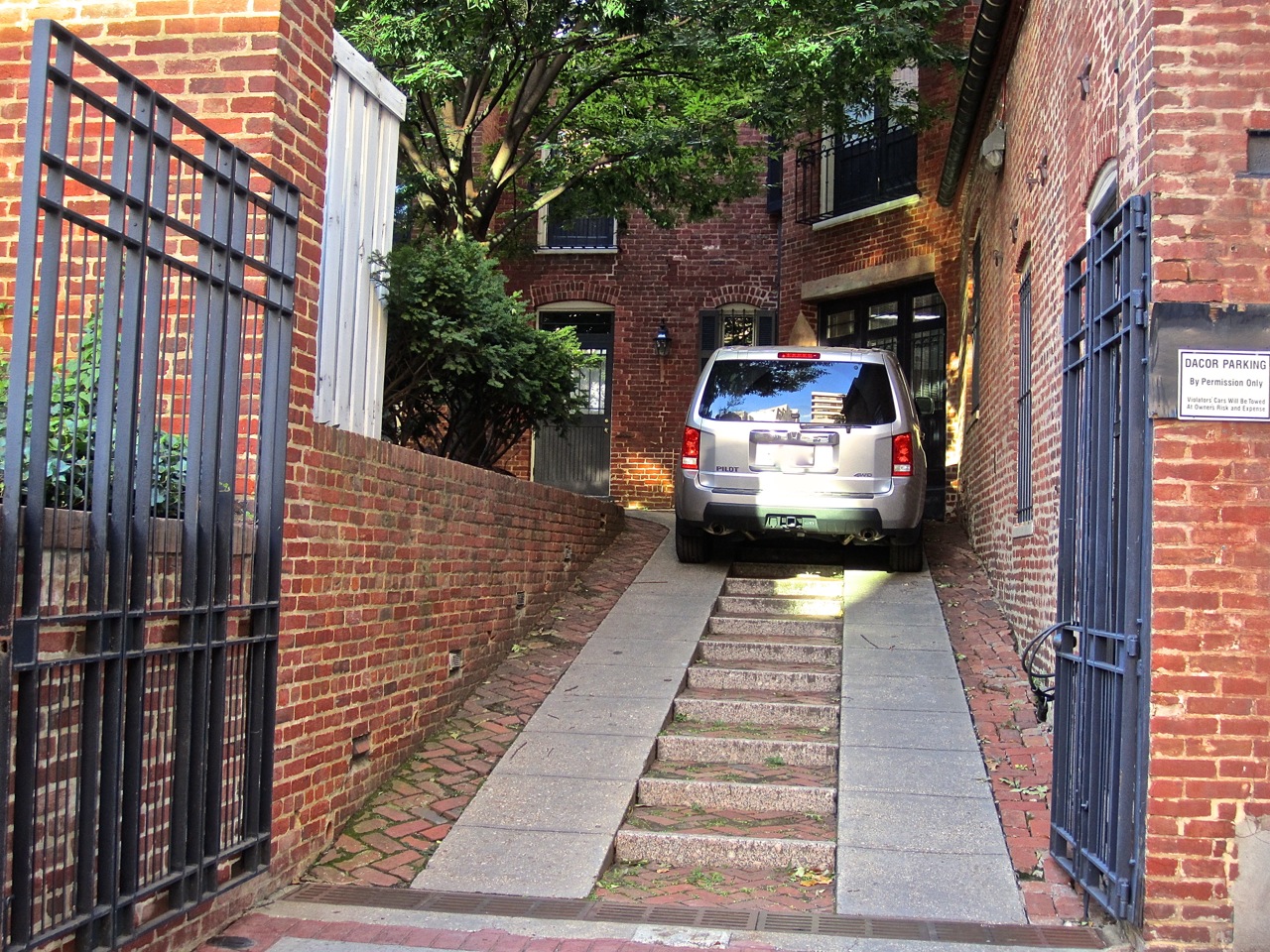
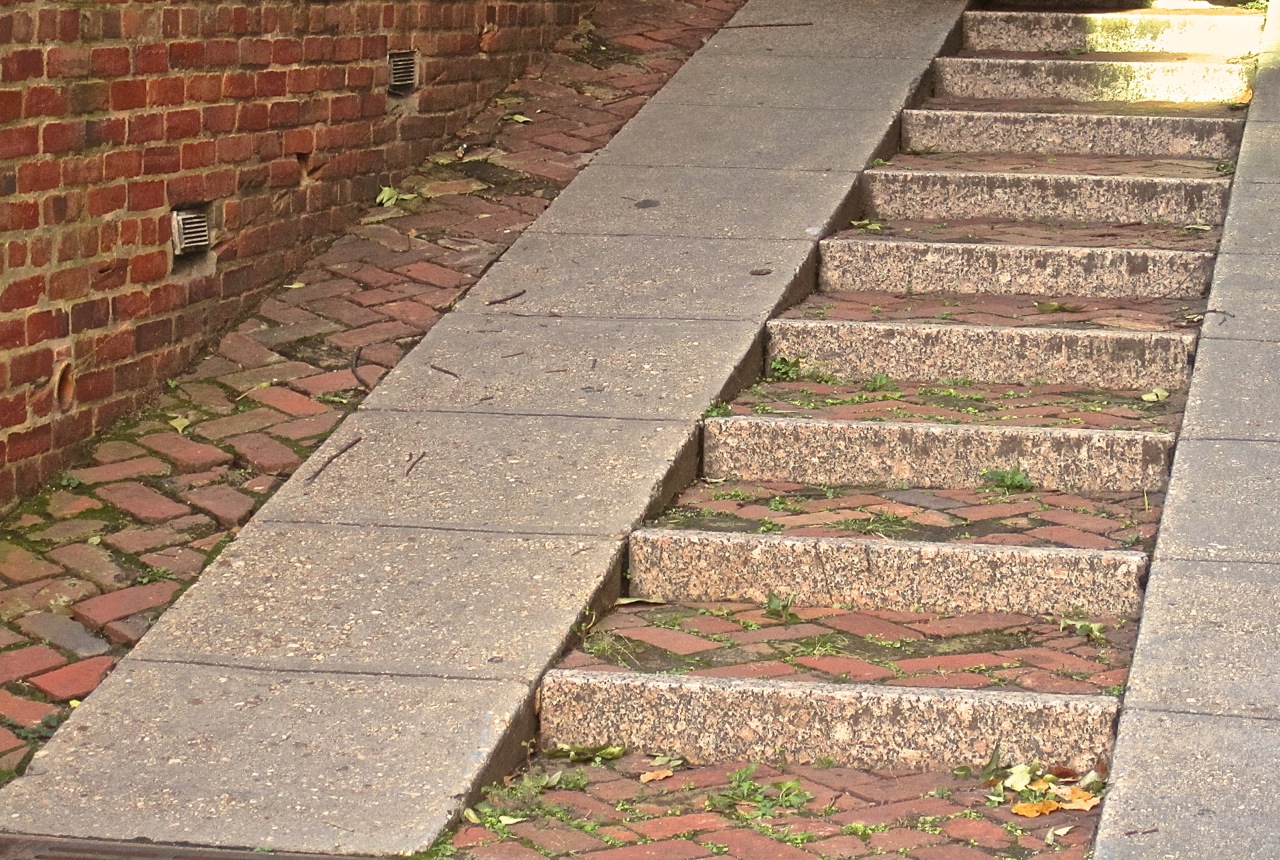
Here’s another steps/ramp (driveway) combination that I snapped during our recent travels — at the back of DACOR Bacon House, an historic former residence a couple of blocks from the White House in Washington, D.C.


I like the mix of old brick and pebbly concrete.

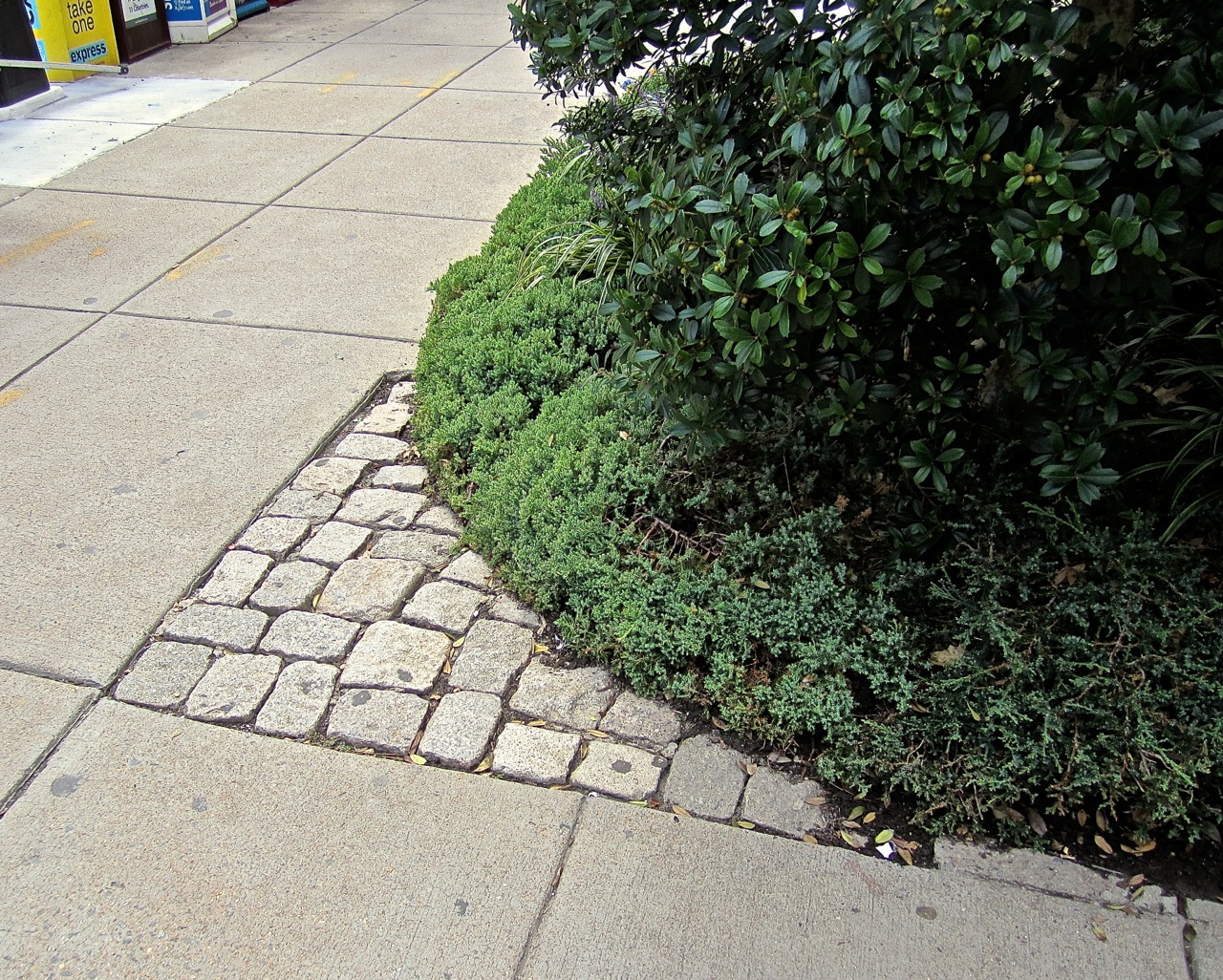
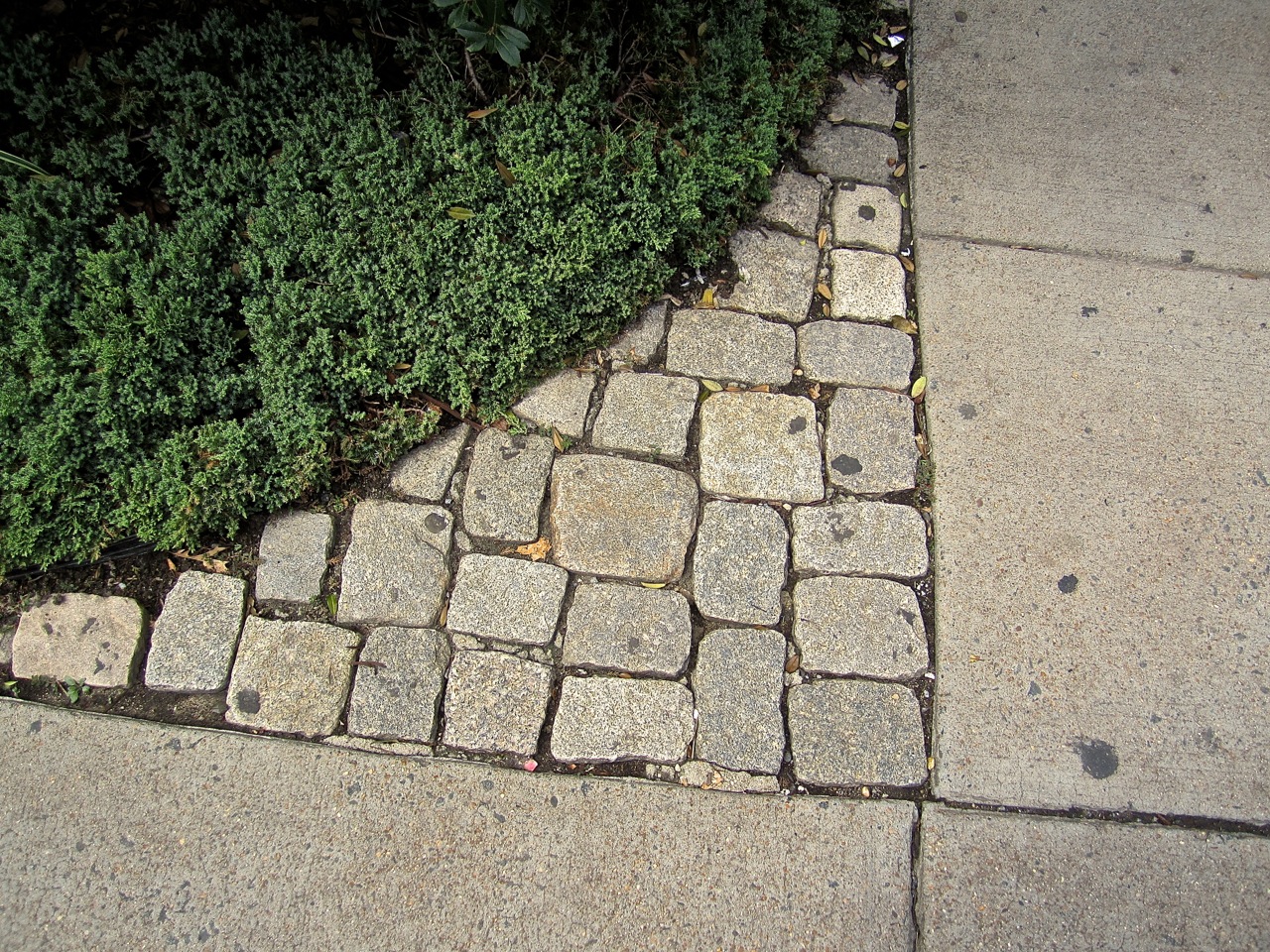
BELOW: In front of a D.C. office building, I also spotted this nice solution to those sharp planting bed corners that are always bare dirt because people cut across them.

Mount Vernon’s garden and a Wednesday miscellany

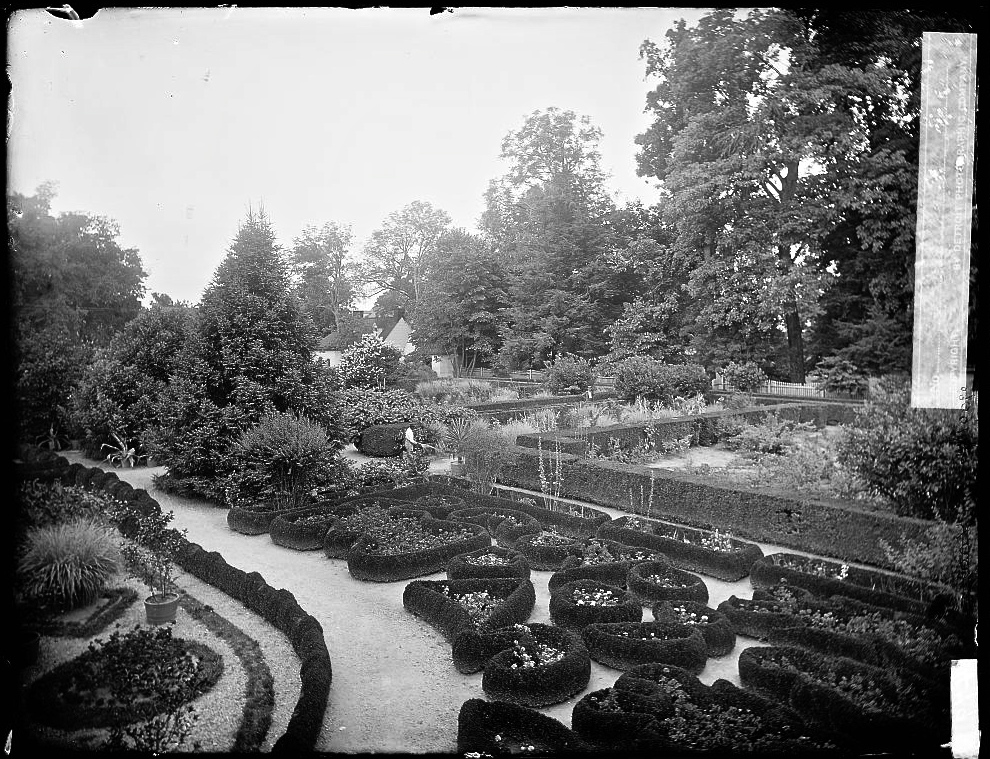
I love this 1902 photograph of the Upper Garden at George Washington’s home, Mount Vernon. It’s so high Colonial Revival.

Early American Gardens has a post this week,  “Mount Vernon after George Washington’s death,” with images from the 19th century.  While looking at them I remembered the picture above and the two below.

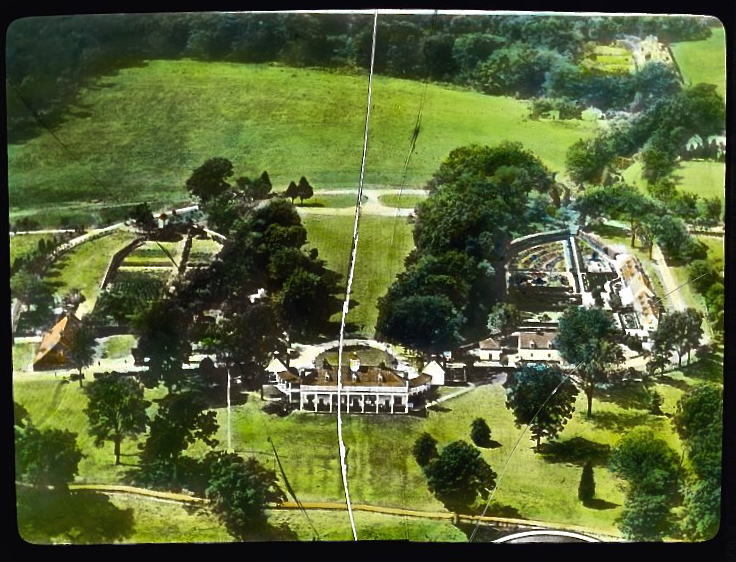
Above is a hand-colored slide from a 1929 aerial photo, part of the lantern slides collection of Frances Benjamin Johnston.  The Upper Garden is on the right side.

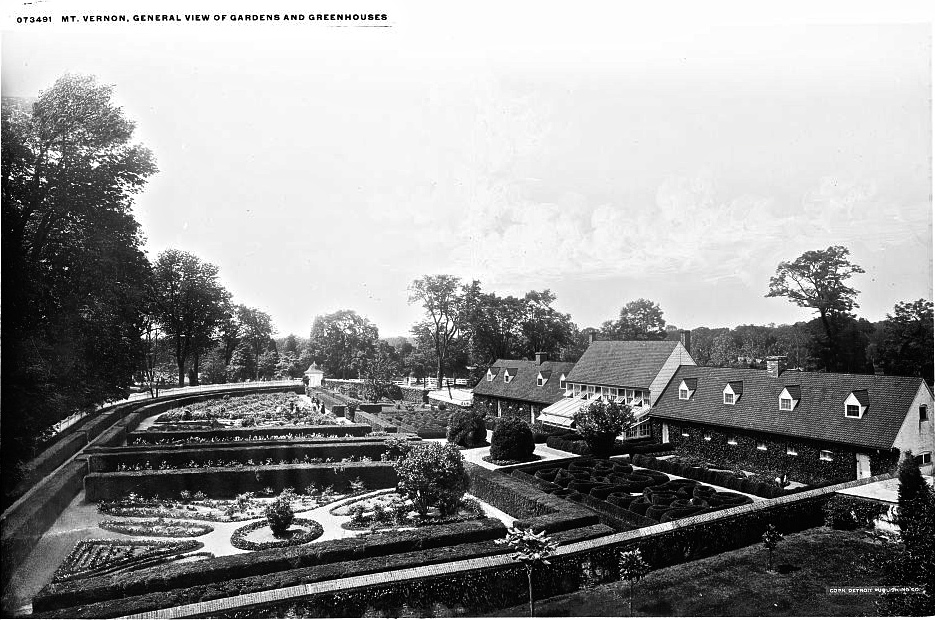
And here is a general view (c.1910 – 1920) of the the Upper Garden by the Detroit Publishing Co.  All three images above via the Library of Congress Prints and Photographs Division.

The 20th century photos are pretty, but they don’t accurately represent the Upper Garden of Washington’s time.  In the late 19th century, restorers thought that the boxwood parterres (many filled with hybrid tea roses) were original to Washington’s time, but research in the 1980s found that they were actually planted in the 1860s or 70s (although they may have been rooted from Washington’s boxwood).

The garden was substantially re-worked in 1985 (the greenhouse was restored in the 1950s), but such is the romantic power of a boxwood hedge that they were largely “kept in place by their own mythology and the mythology they supported of Washington as American royalty,” according to The History Blog, here.

By the early 2000s, the boxwoods were dying, so the Mount Vernon Ladies’ Association, which owns the estate, decided to make an extensive (six-year) archaeological dig on the site.  This culminated in a “new” (1780s) design in 2011.  The area now holds large open beds of vegetables and flowers.  They are bordered by low boxwood hedges and centered by a 10′ wide gravel walkway.

You can read about the restoration in this Washington Post article, here.  However, I really recommend watching this very interesting 30-minute C-Span video about the research and archaeology that informed it.

Miscellany

I’ve almost finished reading the excellent Gardens and Gardening in the Chesapeake, 1700 – 1805, by Barbara Wells Sarudy (aka Early American Gardens).  You can read its first chapter, about the 18th century garden of Annapolis, Maryland, craftsman William Faris, here.

For Anglophiles: thousands of aerial photos of Great Britain have recently been made available online; read about it here.

I recently found this 2010 (inside) art installation by Beilu Liu, which I think is just lovely, here.  It’s called “Red Thread Legend.”  (My Pinterest page — link on the right — is red today.)

In 2011, artist and former urban planner, Kathryn Clark, made a series of map quilts, shown here, representing neighborhoods that have had high foreclosure rates in recent years. Earlier this year, she gave an interesting interview with The Atlantic blog, Citieshere.

I also recently found the blog Miss Design Says, about “all good things Danish.”  It currently has a post about Rabalder Parken, a park that combines a street skate area  with an overflow water drainage system, here.

Of course I saw this on Pinterest: an umbrella that looks like a head of lettuce, here.  It’s from Japan, but the link will help you order it from other countries.

I liked this Q & A  information on rose hips in the New York Times,  here.  And I have recently been looking for some good flower frogs, and I found them here, from a tip from Gardenista.

Finally,  O-Dark-Thirty, the online literary journal of the Veterans Writing Project, launched in August.   The VWP is a 501(c)(3) non-profit based in Washington, D.C.  It provides no-cost writing seminars and workshops for veterans, service members, and military family members. Please visit them here.

ADDENDUM:  Today, Thursday, Washington Post garden columnist Adrian Higgins discusses boxwood blight, a disease that comes from Europe and has infected shrubs in nine states, here.

You know there’s a story here


“Mrs. Harriman [Florence Jaffrey] does [not] burn fences behind her. Washington, D.C. May 27 [,1927].

“In leaving for her new post as American Minister to Norway, Mrs J. Borden Harriman is not burning but leaving her fences behind her. The last time Mrs. Harriman was away from her Capitol home for any length of time she found a load of dirt from the excavation for the new home of the late Raymond T. Baker dumped on her front lawn upon her return. She sued for $23,000 but the case was settled out of court. This time she has had a high fence constructed around her property to prevent a recurrence of the same thing.”

Mrs. Harriman’s complaint said “that on the 22d of April, 1931, the defendants, ‘with force and arms, did break and enter into and upon the said ground of the plaintiff, and trod down, trampled upon, consumed, destroyed, and spoiled the grass, herbage, shrubbery, ornamental trees, then and there growing and being of great value,’ etc.”

Perhaps the fence should be even higher.

Photo by Harris & Ewing; both it and text in quotes via Library of Congress Prints and Photographs Division.  Mrs. Harriman’s home was at the intersection of Ridge and Reservoir Roads — I believe in the Pallisades neighborhood (although I haven’t found a Ridge Road that intersects with Reservoir).

Love your neighbor; yet don’t pull down your hedge.
— Benjamin Franklin, Poor Richard’s Almanack

Thanks to the blog Living in Kigali for including enclos*ure in their list of “Super Fabulous Rwanda-Related Websites.”

Vintage landscape: the fountain

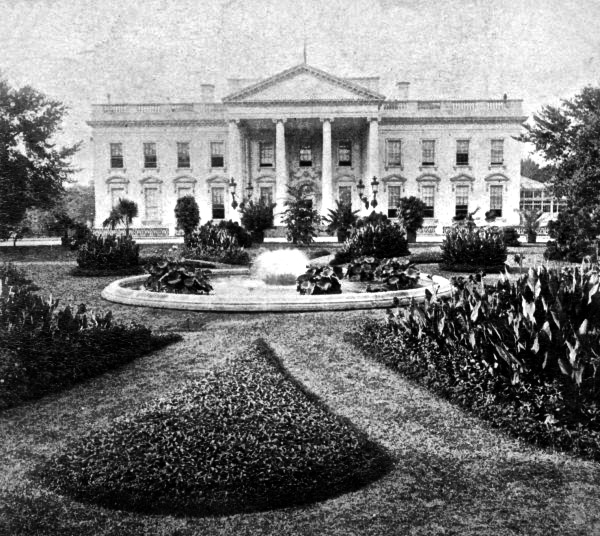
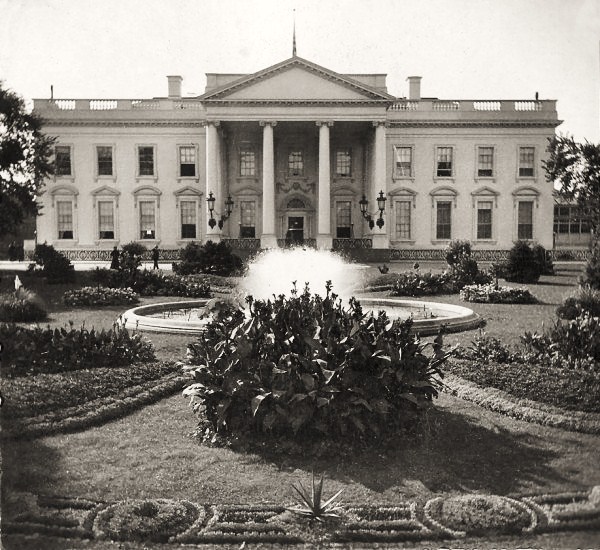
How many ways can you plant out a lawn with a basic round fountain in the center? From 1871 to the early-1900s, the White House tried out a number of designs on its north side.

This photo was taken during the 1860s. The statue of Thomas Jefferson had been there since 1848.  Photo by National Photo Company, via the Library of Congress.

In 1871, the statue was replaced by a round fountain (the statue went to the Capitol Building).

Things were pretty simple in this 1881 etching, via the blog American Garden History.

By 1885, the fountain was surrounded by flower beds in teardrops and circles.  Photo by Underwood & Underwood, via the website The White House Museum.

The design was more elaborate by 1894.   Photo by B.L. Singley, via American Garden History.

There was a more squared-off arrangement in 1901.  Photo by Detroit Publishing Co., via Library of Congress.

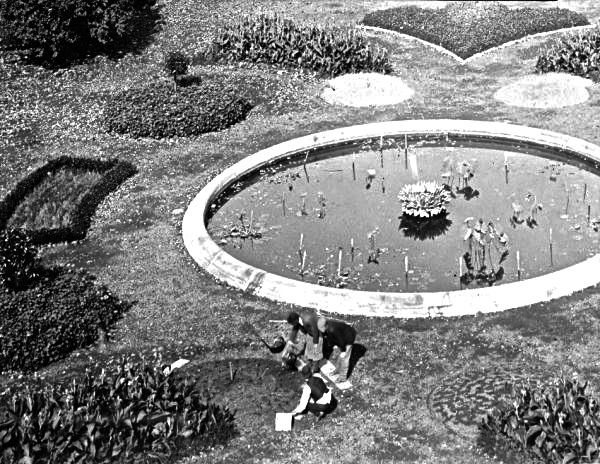
Above, gardeners were planting out the fountain area in 1902, via The White House Museum.

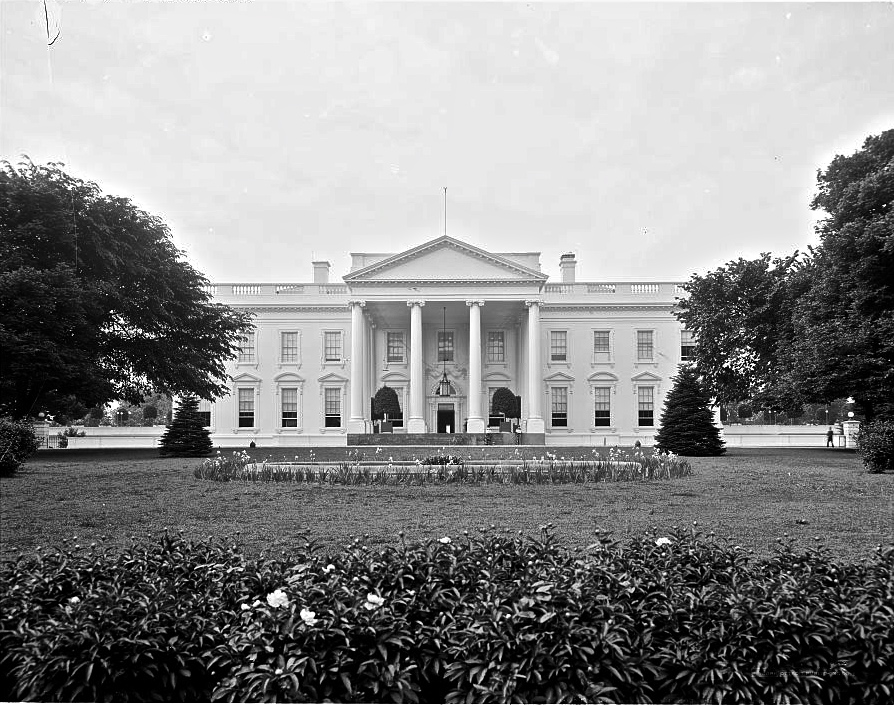
By 1905, the whole Victorian mess had been cleared out for simple plantings of bulbs and peonies.  Photo by Detroit Publishing Co., via Library of Congress.

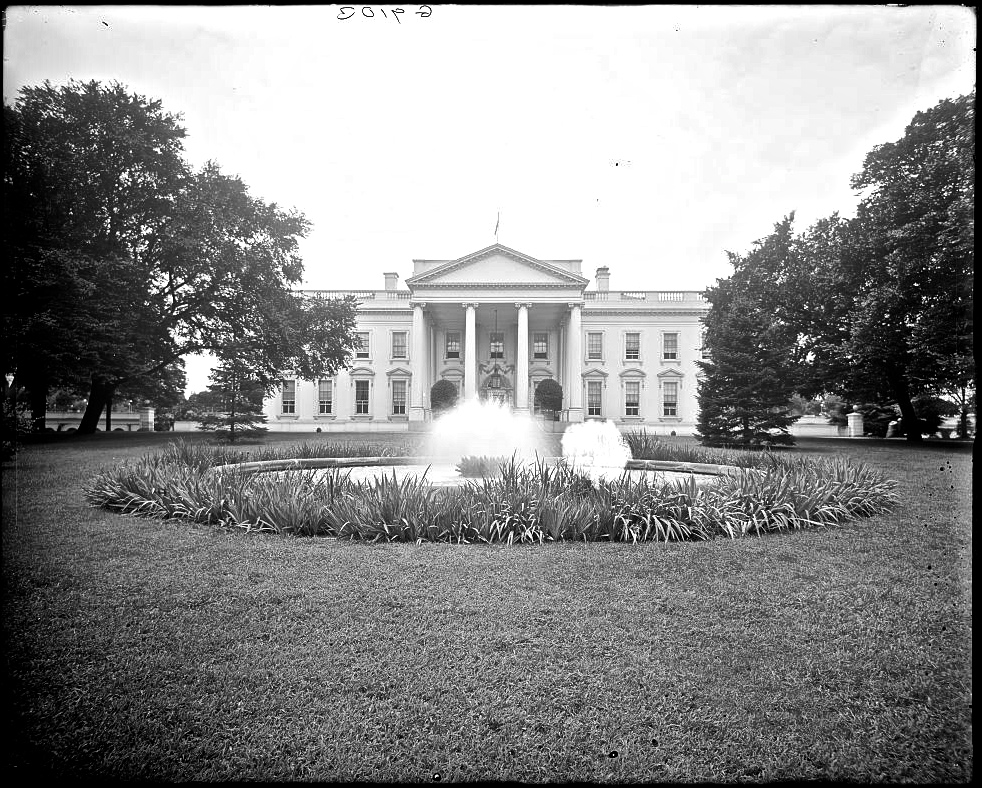
Above, sometime later, before 1920, the peonies were gone.  I like all the irises around the fountain.  Photo by Detroit Publishing Co., via Library of Congress.

Above is my photo of the north lawn in March 2012.

ADDENDUM: I found one more photo.

This would have been the view from the W.H. Dining Room during the years of Victorian bedding out. Taken ca. 1889 -1906 by Frances Benjamin Johnson, via Library of Congress.

The lantern slides

This is really exciting.  Yesterday, the Library of Congress released online the digital images of more than 1,000 hand-colored, glass-plate lantern slides of gardens taken (mostly) by Frances Benjamin Johnston.
The images in the collection were taken from 1895 to 1935.  Originally black and white photographs, Johnston had them hand tinted and made into slides to illustrate her popular garden lectures, which she gave to garden clubs, horticultural societies, and museum audiences from 1915 to 1930.  As part of the Garden Beautiful Movement, she encouraged Americans to grow gardens on tenement lots, in row-house yards and in parks, which had deteriorated from industrial pollution and neglect during the Gilded Age.

The slides have not been seen in public since Johnston last projected them during her lectures.  They depict more than 200 sites — primarily private gardens — in all regions of the United States and in Europe.  The entire collection, 1,130 digital images, can be found in the Library’s Prints and Photographs Online Catalog, here.

I’ve just begun to enjoy this beautiful resource, but here are 11 images that I pulled out quickly during my first enthusiastic look.

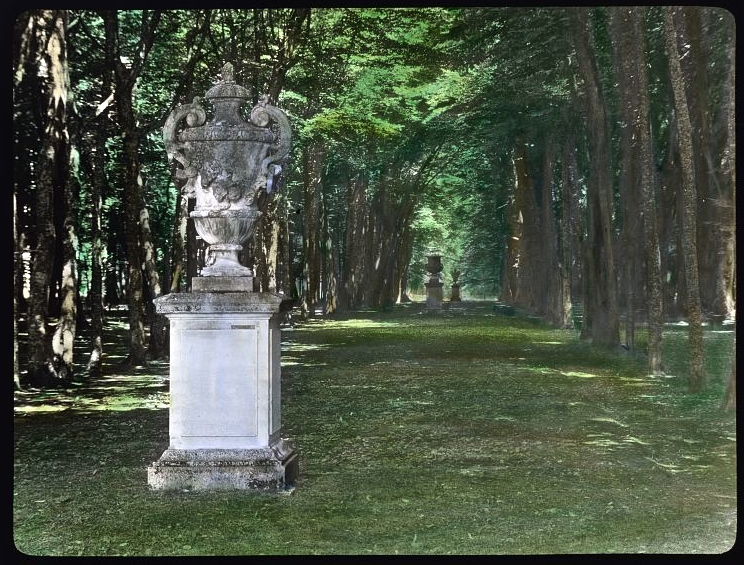
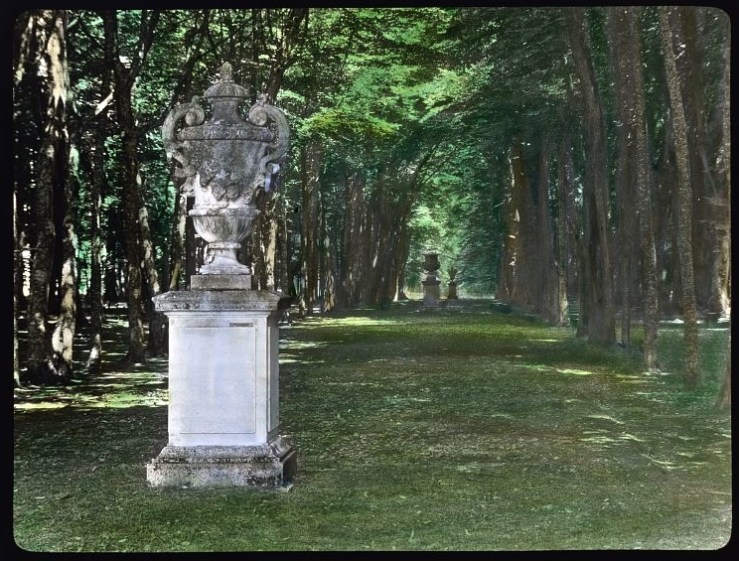
The photo above is of Chateau of Bréau, Dammarie-les-Lys, Seine-et-Marne, France.  July 1925. (Click any photo to enlarge it.)
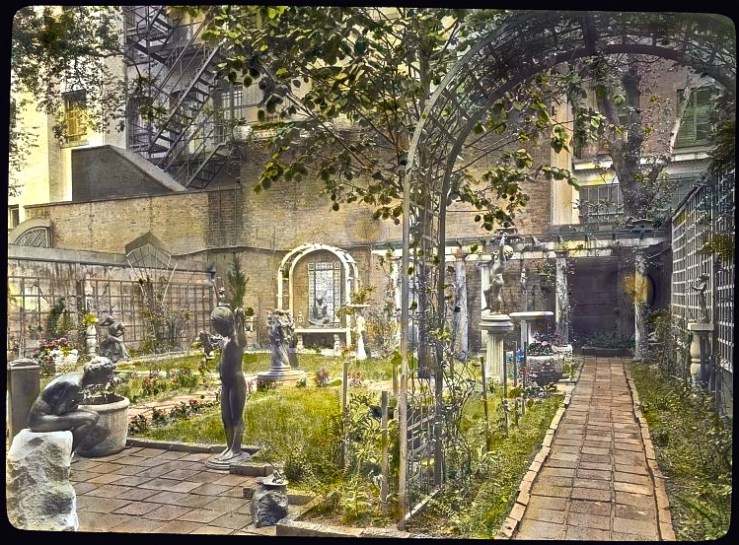
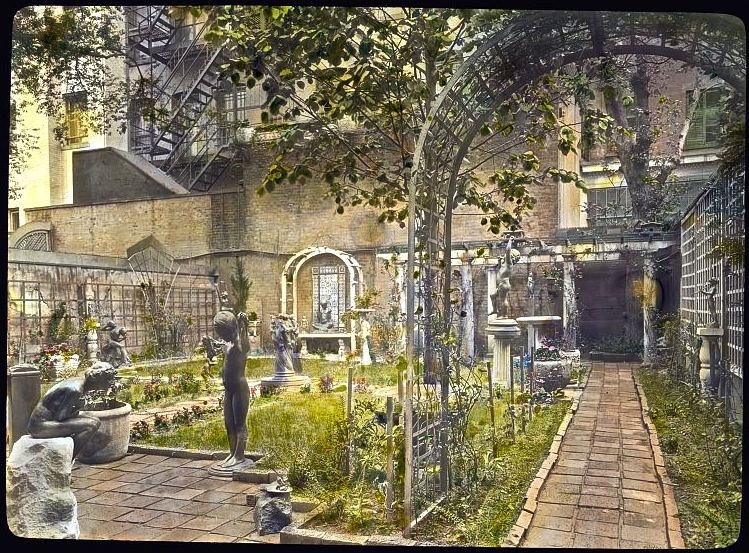
The Touchstone Garden, New York, New York. Sculpture exhibition, summer 1919.
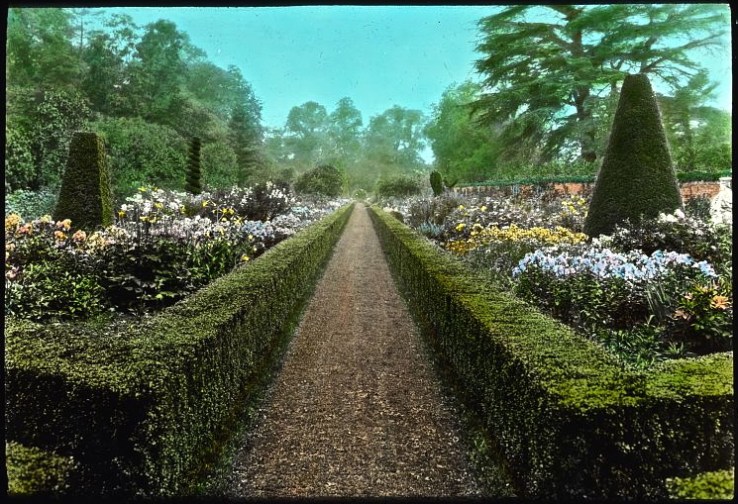
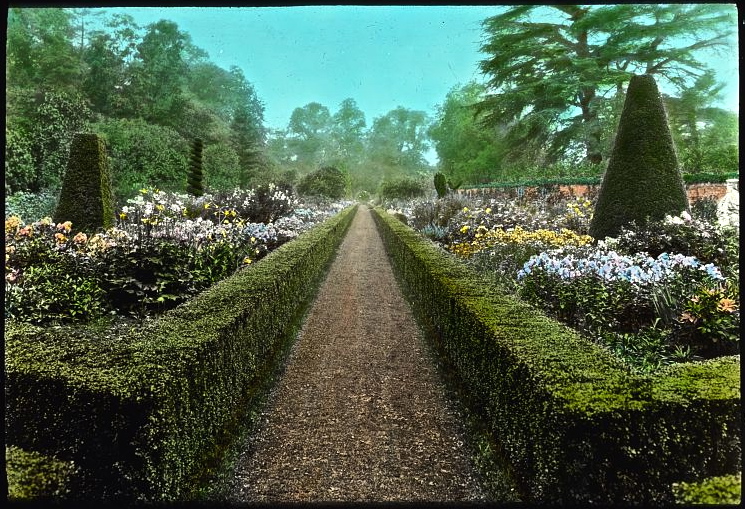
“Cliveden,” Viscount Waldorf Astor house, Taplow, Buckingham, England.  Long Garden, summer 1925.
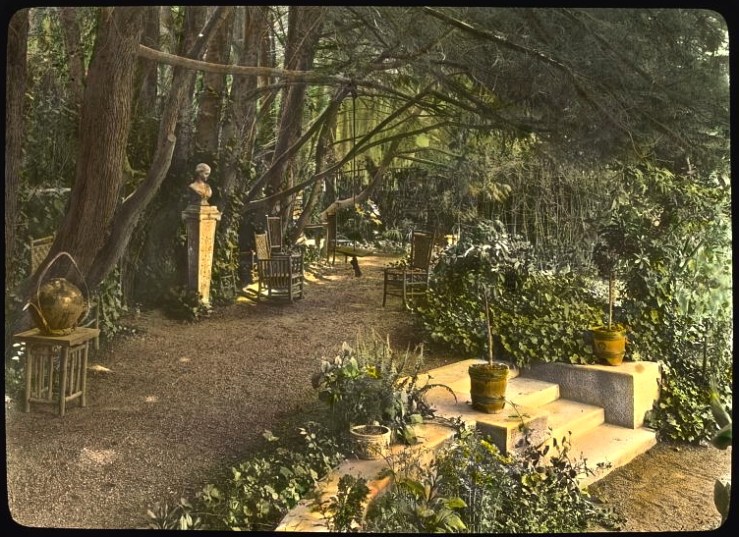
Myron Hunt house, 200 North Grand Avenue, Pasadena, California. Garden Terrace, spring 1917.
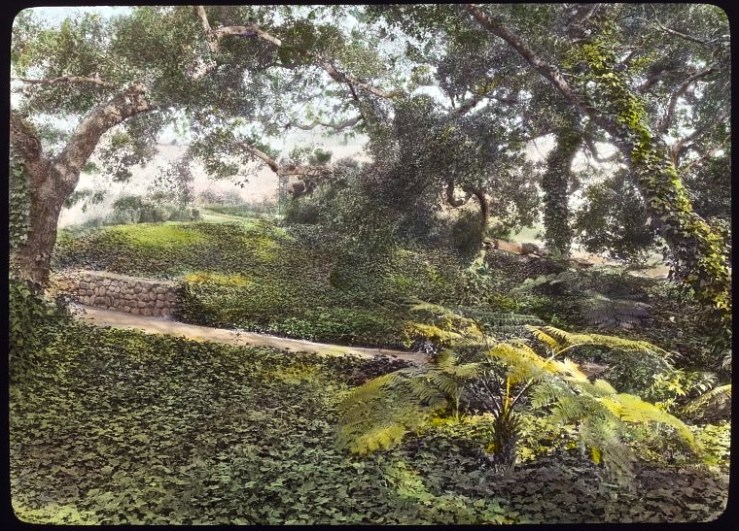
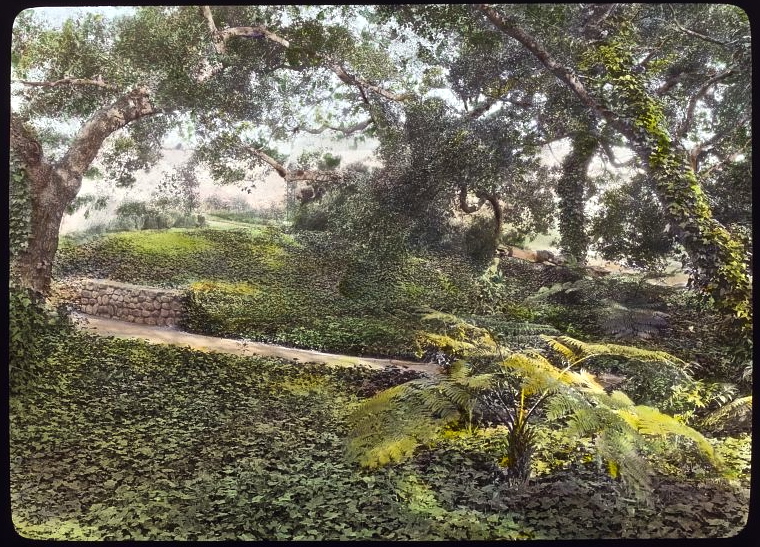
“Inellan,” Walter Douglas house, Channel Drive, Montecito, California.  Pathway to Pacific Ocean, spring 1917.
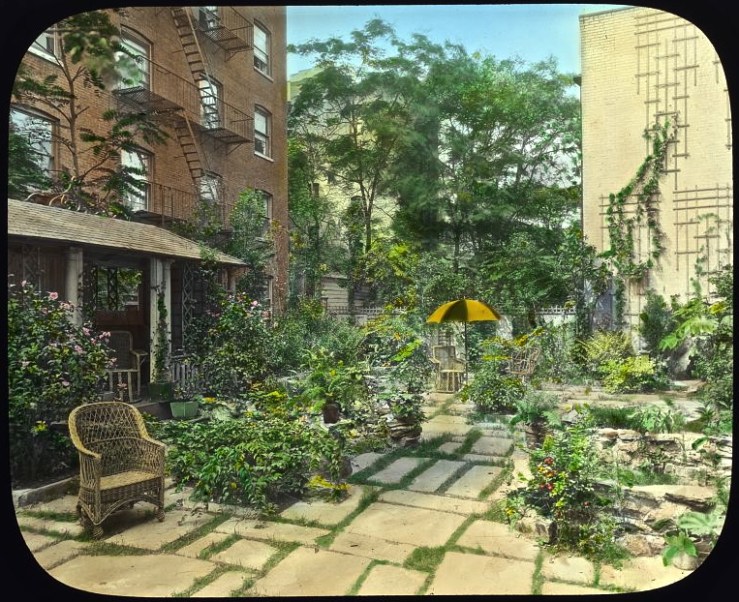
“Flagstones,” Charles Clinton Marshall house, 117 East 55th Street, New York, New York.  Tea house/sleeping porch.
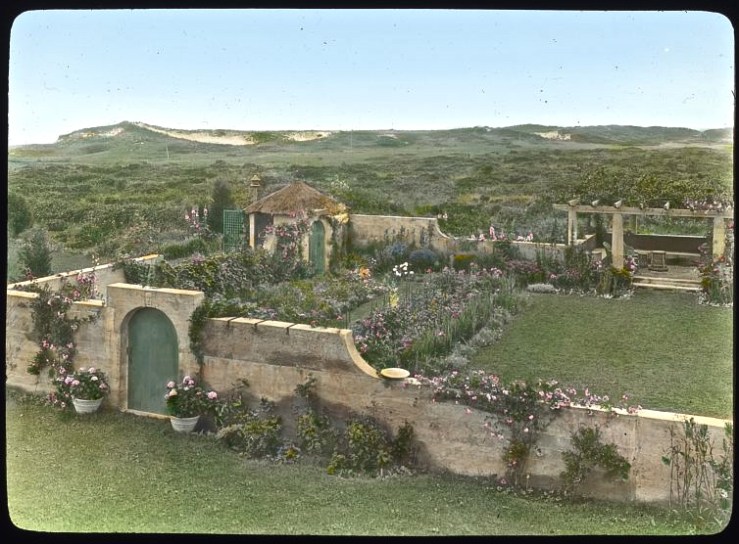
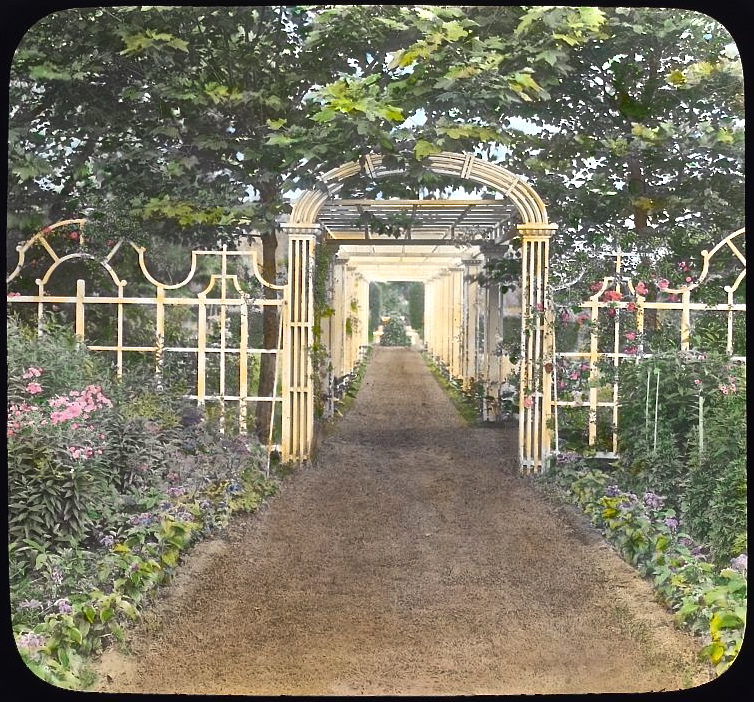
“Gray Gardens,” Robert Carmer Hill house, Lily Pond Lane, East Hampton, New York, New York.  View to Garden Trellis.
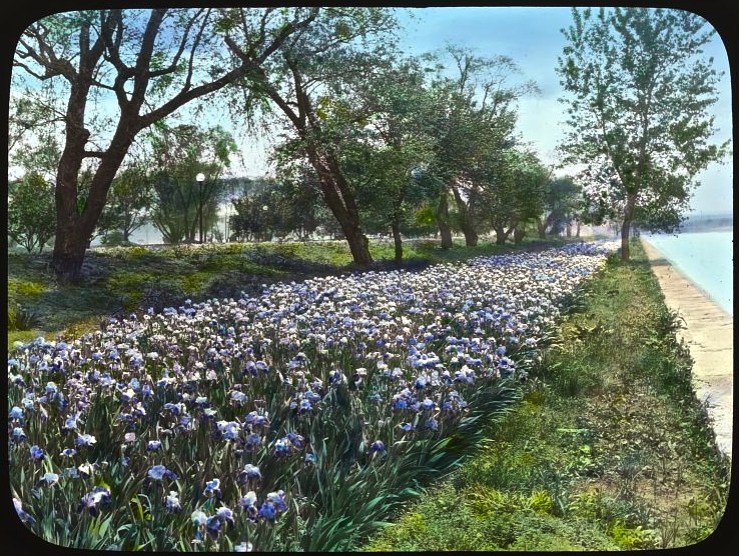
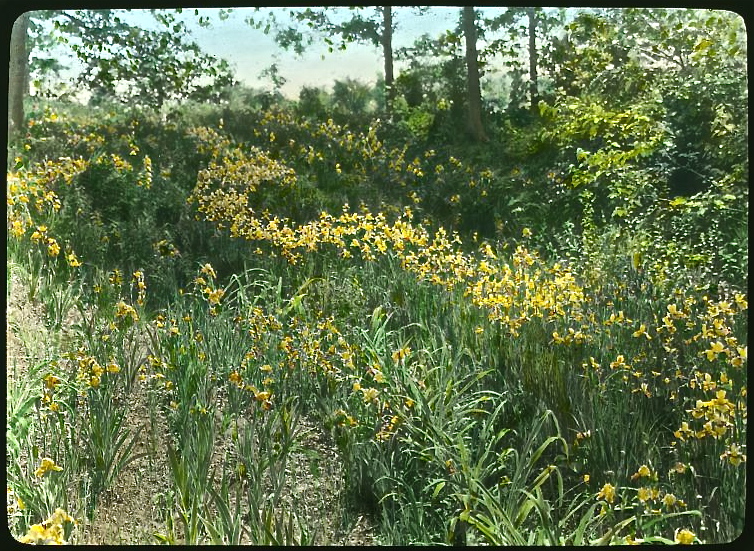
West Potomac Park, Washington, D.C.  Irises along the embankment, April 1905.
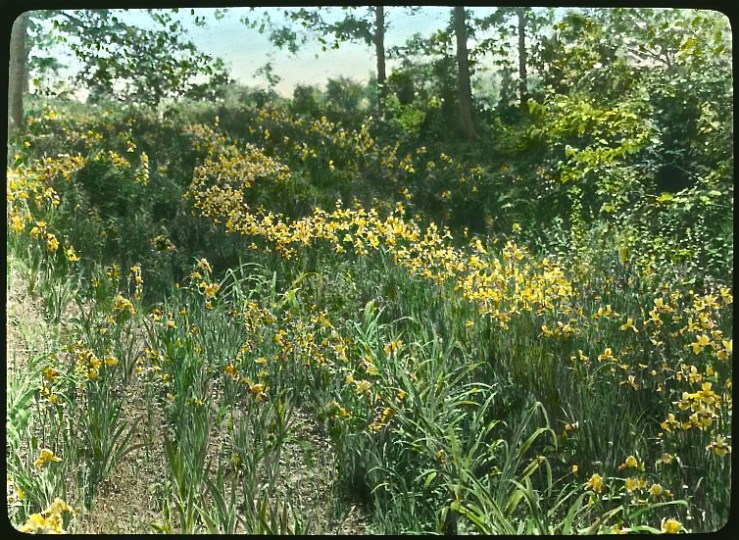
Dr. Charles William Richardson house, Chevy Chase, Washington, D.C.   Irises, 1921.
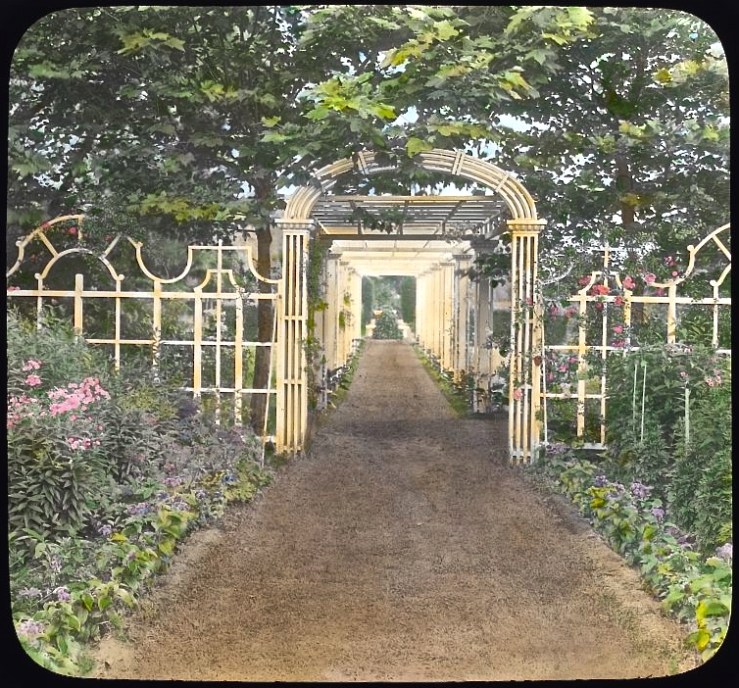
“The Fens,” Lorenzo Easton Woodhouse house, Hunting Lane, East Hampton, New York. Pergola, 1914.
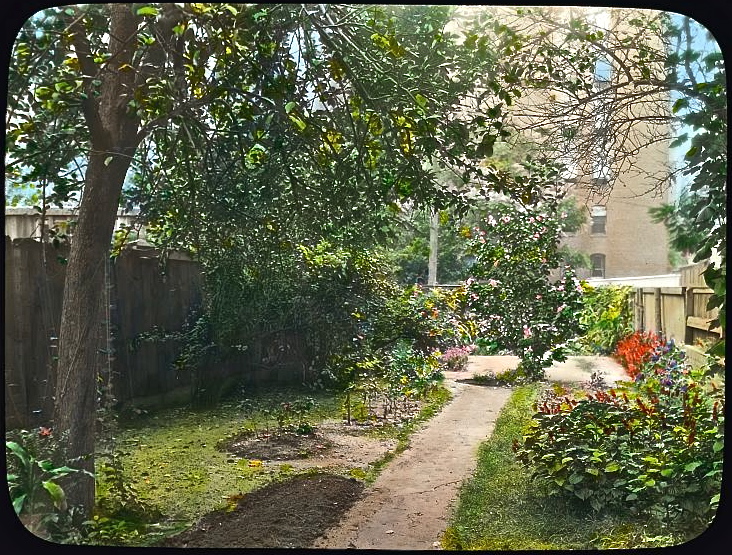
Unidentified city garden, probably in New York, New York.  Pathway, 1922.

A selection of 250 of the color images can also be seen in a new book by house and garden historian Sam Watters, Gardens for a Beautiful America, 1895-1935: Photographs by Frances Benjamin Johnston.  It will be published this month by Acanthus Press, in association with the Library. ($79, here — not yet available.)

The Library of Congress is the repository of Johnston’s personal papers and approximately 20,000 photographs. But the lantern slides lacked garden names, locations, and dates and, therefore, had not been released to  general public access.  Watters took on the challenge of cataloging the collection, and after five years of research in libraries and archives, he has transformed vague earlier library notations into detailed data.  For example, an unlabeled slide was recognized as a prize winner in a 1922 design contest and is now identified as “The Janitor’s Garden, 137 E. 30th St., New York City.”

For more information about Frances Benjamin Johnston, see here and here.