The Sunday porch: paint and vines

Ste-Catherine, Brussels, Sept. 2015, enclos*ure

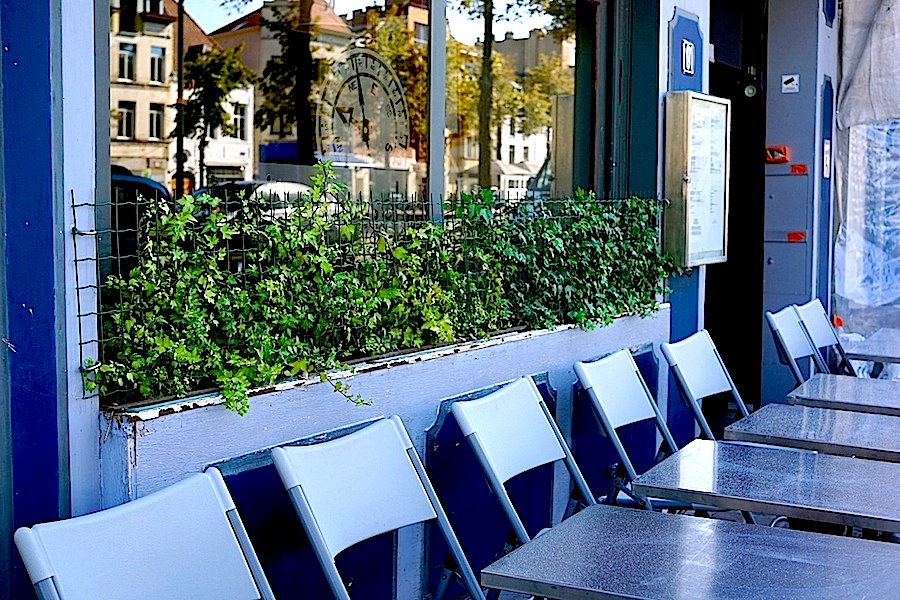
These are not really porches, of course, but two café doorways and a storefront.

They caught my eye while we were walking around the Sainte-Catherine or Sint Katelijne neighborhood of Brussels, which is just northwest of the Grand’Place and La Bourse.
Rue de Flandre, Brussels, Sept. 2015, enclos*ure

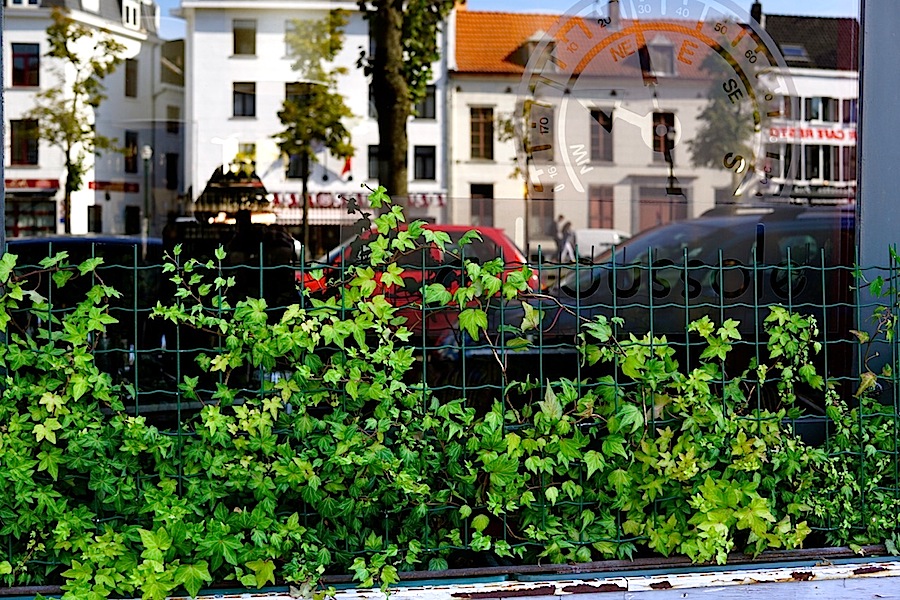
The one pictured above is on Rue de Flandre.
Rue de Flandre, Brussels, Sept. 2015, enclos*ure

I believe I snapped this blue café, above, on Quai au Bois à Brûler, facing the site of the old Saint-Catherine Bassin or canal port, covered over since the 1870s.
Ste-Catherine, Brussels, Sept. 2015, enclos*ure

I like the way the ivy is used as both a decorative windowbox planting and low privacy screen.
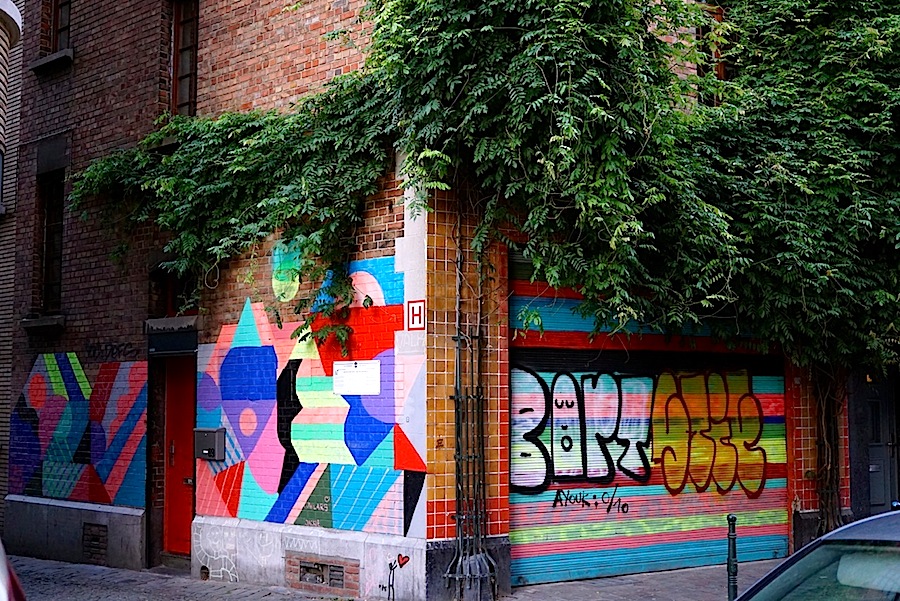
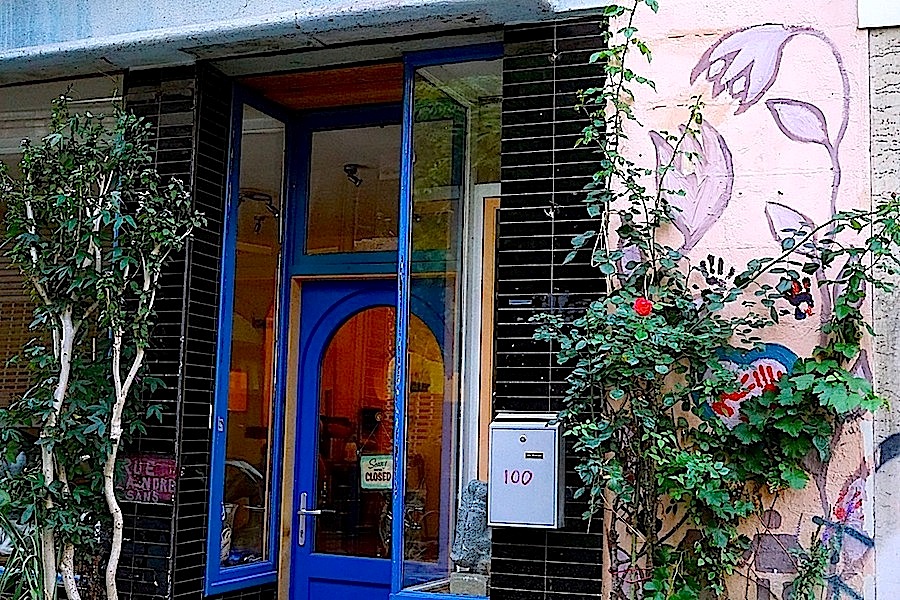
A vine-covered storefront, also along Rue de Flandre.
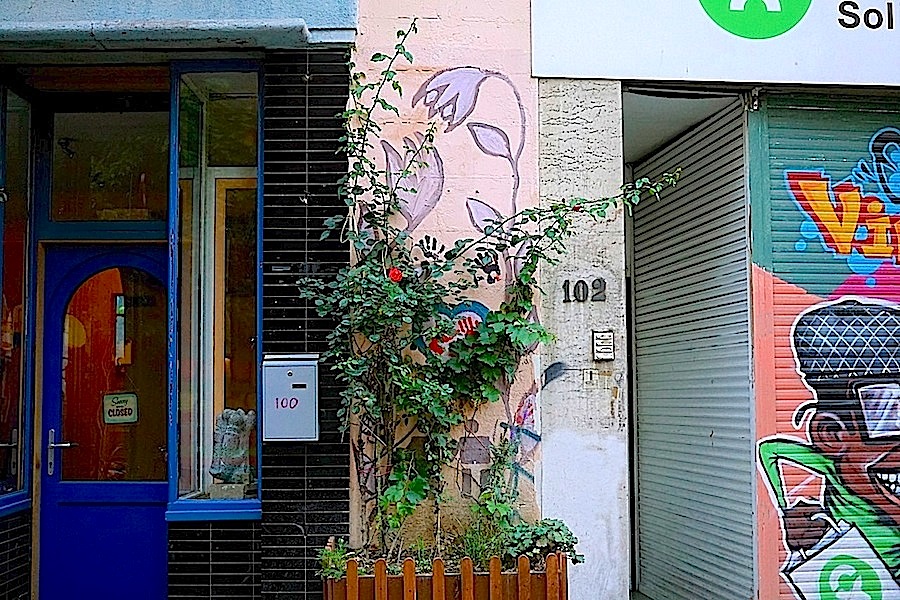
Above, a mass of vines shades a closed storefront, also along Rue de Flandre.

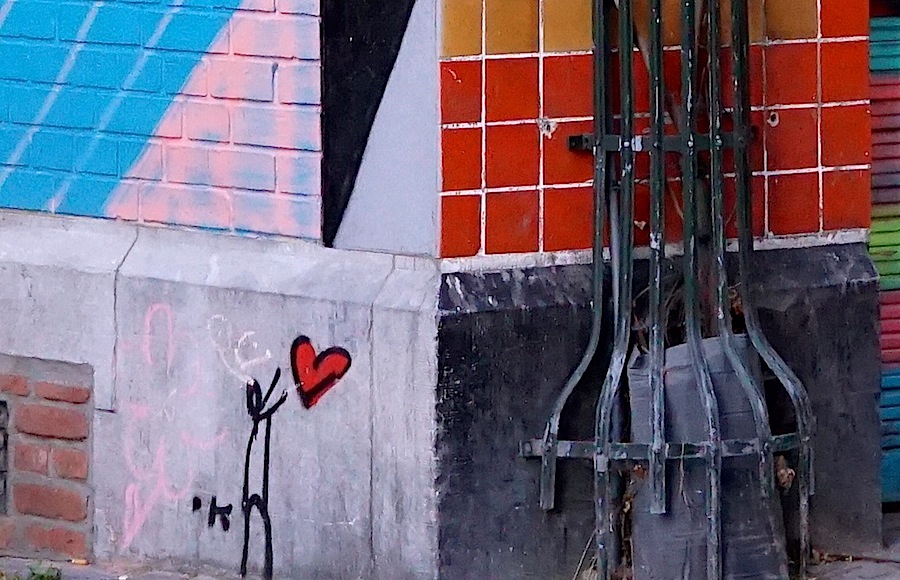
Detail.
Detail of photo above.

Rue de Flandre is a good street on which to find an interesting restaurant.  We liked Viva M’Boma (old-fashioned Belgian food, emphasis on meat/offal) and Domaine de Lintillac (dishes from the southwest of France, emphasis on duck).

Click on any photo above to enlarge it.
Marais garden, Paris

This slideshow requires JavaScript.

The “hidden garden” of  the Musée des Archives Nationale in early September.

A quiet place to retreat to while exploring the popular Marais section of Paris.

I particularly liked the row of wire grid columns just inside the entrance from Rue des Quatre-Fils.  They enclosed upright pyracantha bushes and were underplanted with fountain grass.

Canal Saint-Martin, Paris

This slideshow requires JavaScript.

On this visit to Paris we walked along the Canal Saint-Martin for the first time — starting at the Jaurès metro stop and then leaving it near the Place de la Républic (where the canal goes into a tunnel and then re-emerges after Place de la Bastille).

Along the way, the little derelict enclosed garden* above caught my attention. I found it touching and rather beautiful in its neglected state.

The canal was built between 1802 and 1825 to bring more fresh water into the growing city. Boats also transported grain and other materials.  Traffic declined after the mid- 20th century, and there was talk of paving it over in the 1960s.  Since 1993, it has been designated as an Historical Monument.

Today, the formerly working class, now gentrifying area is very picturesque, if still a little down-at-heel in spots. It’s definitely worth a detour from the more usual Paris sights.

This slideshow requires JavaScript.

Above, Square des Récollets.

ADDENDUM: There’s an interesting video clip of the canal in 1926 here.

*It was at Rue Eugène Varlin and Quai de Valmy.

Montmartre Cemetery, Paris

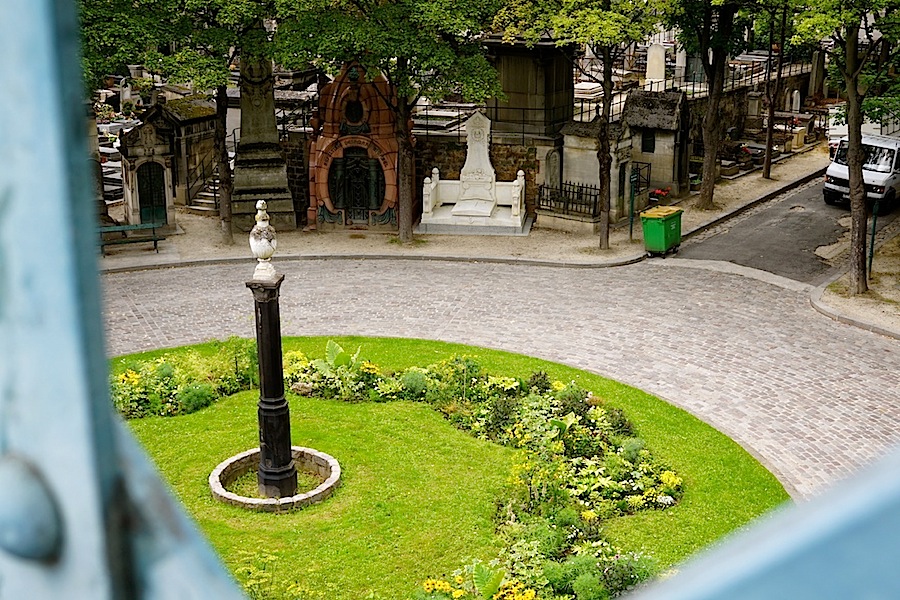
Montmartre Cemetery, Sept. 2015, by enclos*ureAnother quick look down.

We were walking along the Rue Caulaincourt bridge over the south end of the cemetery when we spotted this pretty planting arrangement in yellow below.

Cimetière de Montmartre is the third largest of four necropolises built in the early 19th century, just outside the Paris city boundaries.

Montmartre Cemetery glimpse, Sept. 2015, by enclos*ur

It was placed below street level, in an abandoned gypsum quarry, which had previously received the hundreds of bodies of those killed in the riots of the French Revolution.

The entrance is at the end of Rue Rachel, under Rue Caulaincourt.

Streifzug 6: Esslingen

I’m sorry that there was no Sunday porch yesterday; we were out touring Stuttgart with visitors.

Esslingen, Germany, doorway seat, by enclos*ure

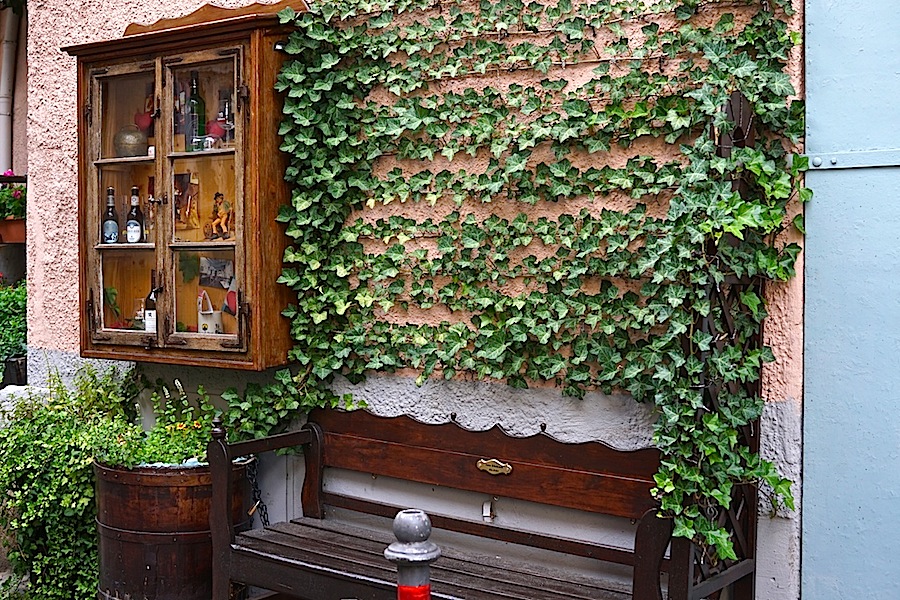
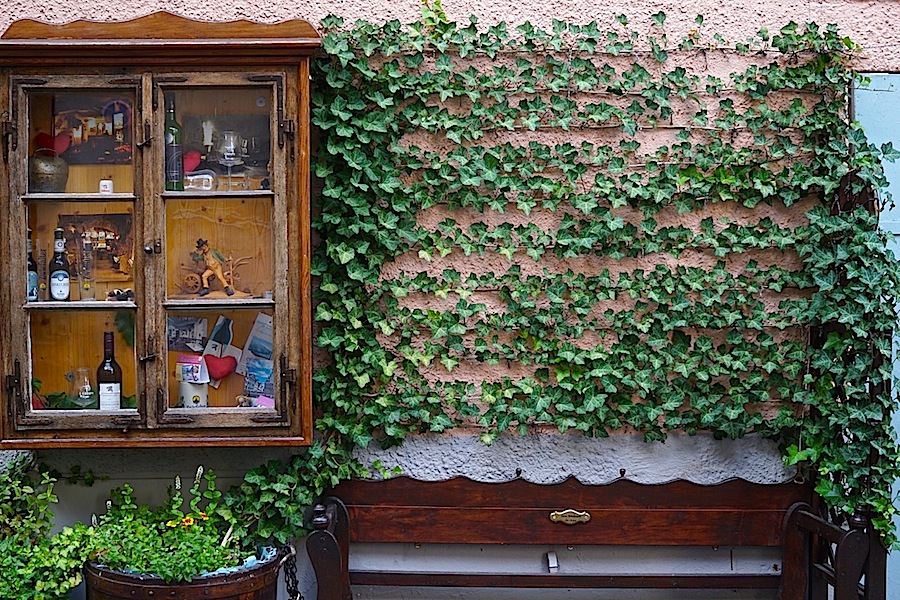
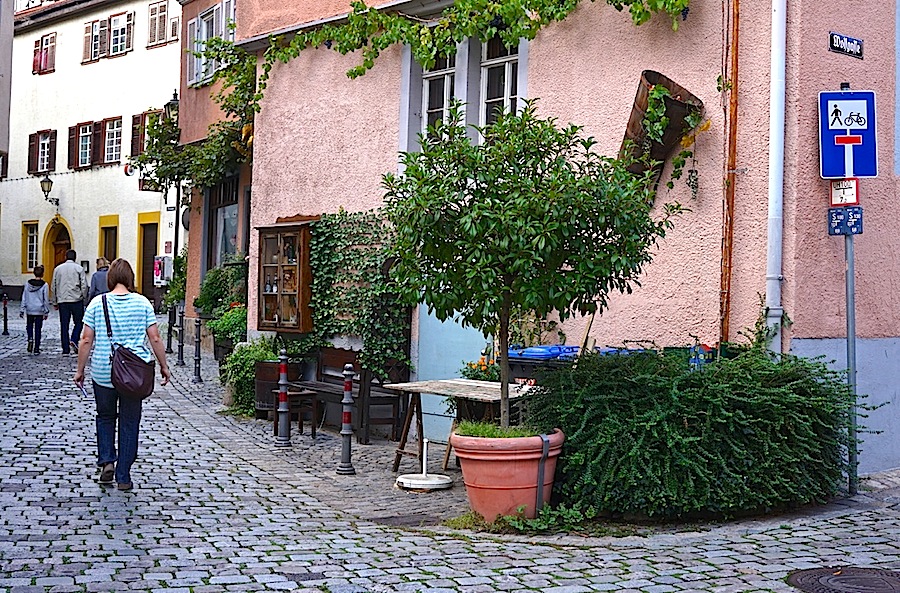
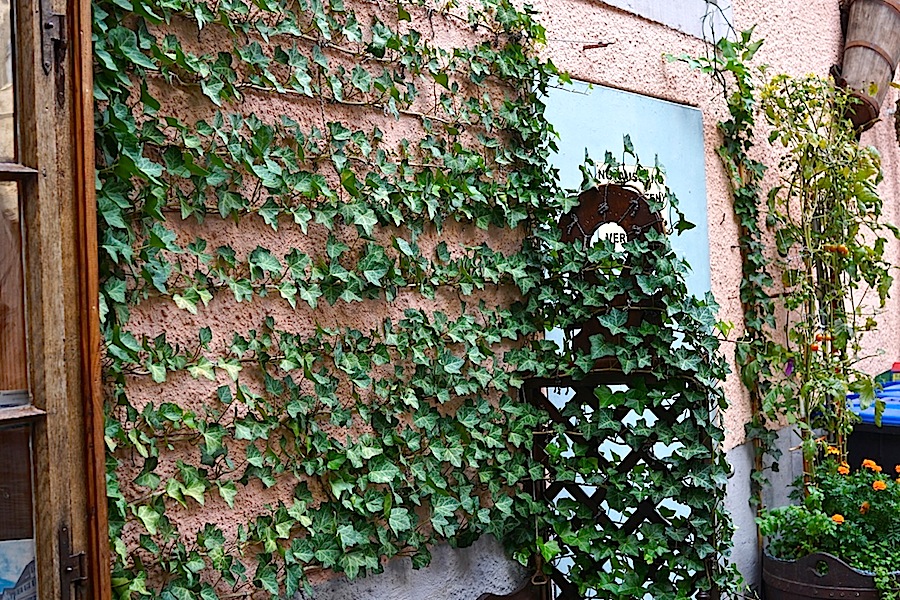
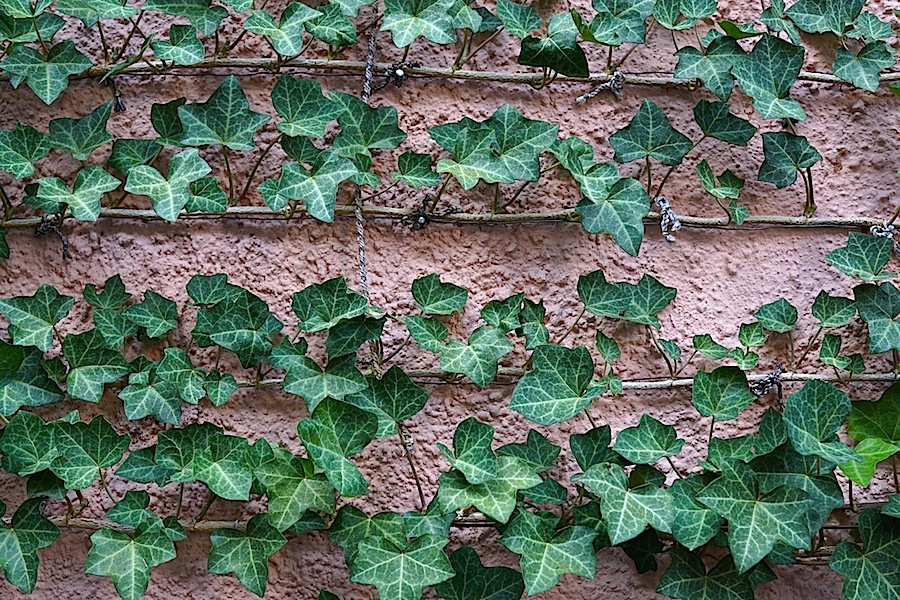
In the early evening, we walked through the nearby small city of Esslingen am Neckar, and I spotted this sweet doorway arrangement with espaliered ivy.

Esslingen, Germany, doorway seat and vitrine, by enclos*ure

Esslingen, Germany, doorway, by enclos*ure

Esslingen, Germany, doorway seat ivy, by enclos*ure

Esslingen, Germany, espaliered ivy, by enclos*ure

Streifzug means ‘foray,’ ‘ brief survey,’ or ‘ramble.’