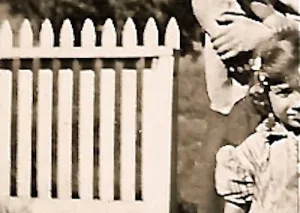
 “[S]chool yard, Jindalee Primary School, [Cootamundra, Australia,] c. 1920s,” photographer unknown; via State Library of New South Wales Commons on flickr.
The children have made a map of the world in dirt. It includes cut-out ships and animals.
“[S]chool yard, Jindalee Primary School, [Cootamundra, Australia,] c. 1920s,” photographer unknown; via State Library of New South Wales Commons on flickr.
The children have made a map of the world in dirt. It includes cut-out ships and animals.
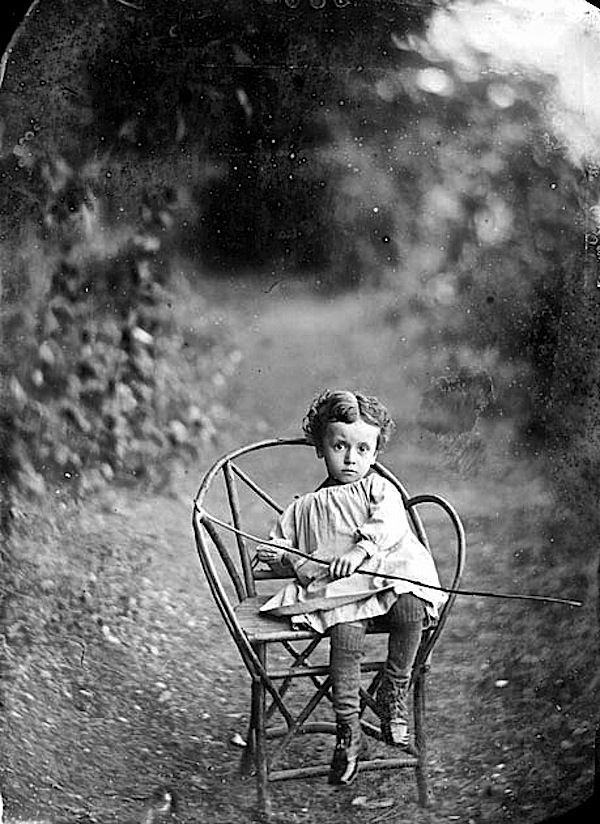 Paul Trutat at Cornusson, France, by his father, Eugène Trutat. All photos here via Bibliothèque de Toulouse Commons on flickr.
Do you have a favorite outdoor spot for taking family photographs?
For early French photographer Eugène Trutat (1840 – 1910), it seems to have been this garden path, which was in Cornusson, a village in the Parisot commune in the Midi-Pyrénées.
The property may have been part of the family home of his wife, Caroline Cambe. The couple were married in Cornusson in 1864. Paul (above) was born in 1865 and Henri in 1868.
(There’s a sweet picture of the two little boys together here.)
Eugène was from Toulouse. In addition to being a photographer, he was a naturalist, geologist, mountaineer of the Pyrénées, and a curator of the Museum of Toulouse.
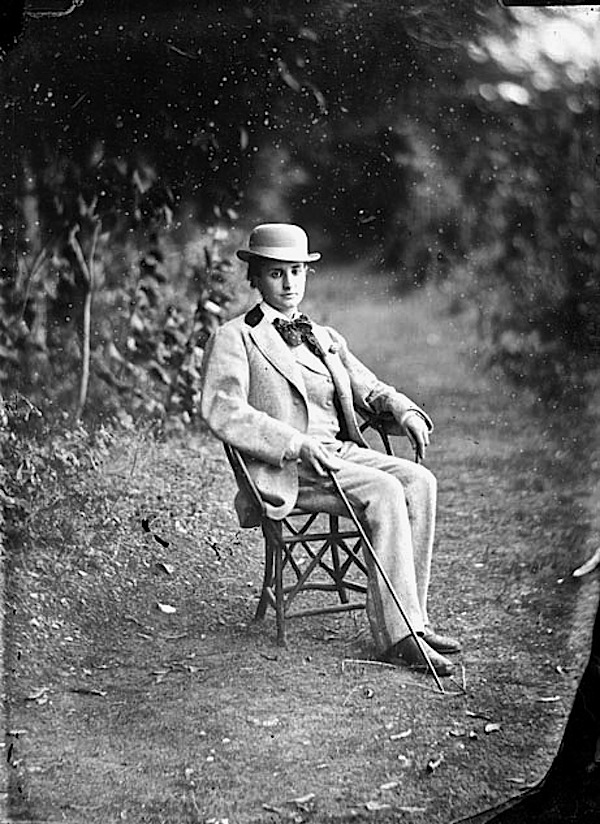 Caroline (née Cambe) in a man’s suit. I believe this was taken between 1859 and 1870.
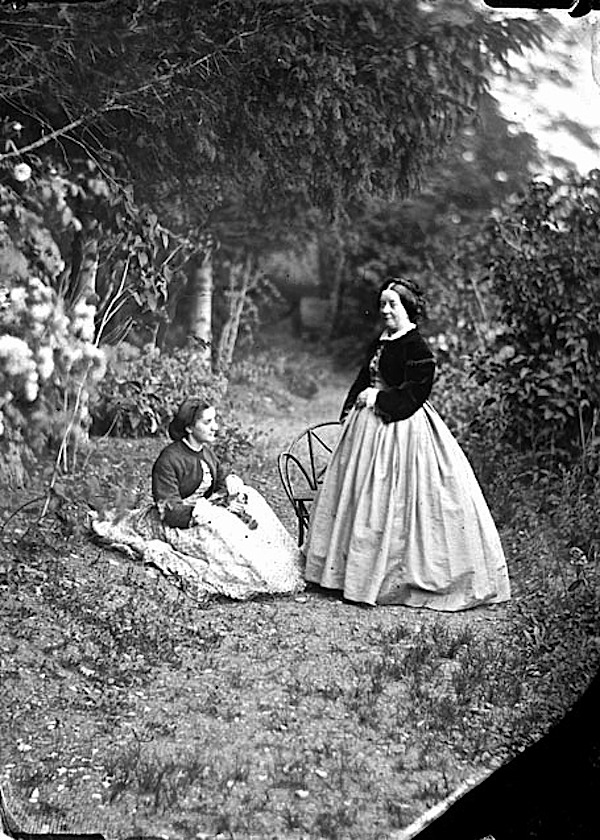 Caroline and her mother, ca. 1864- ca. 1875.
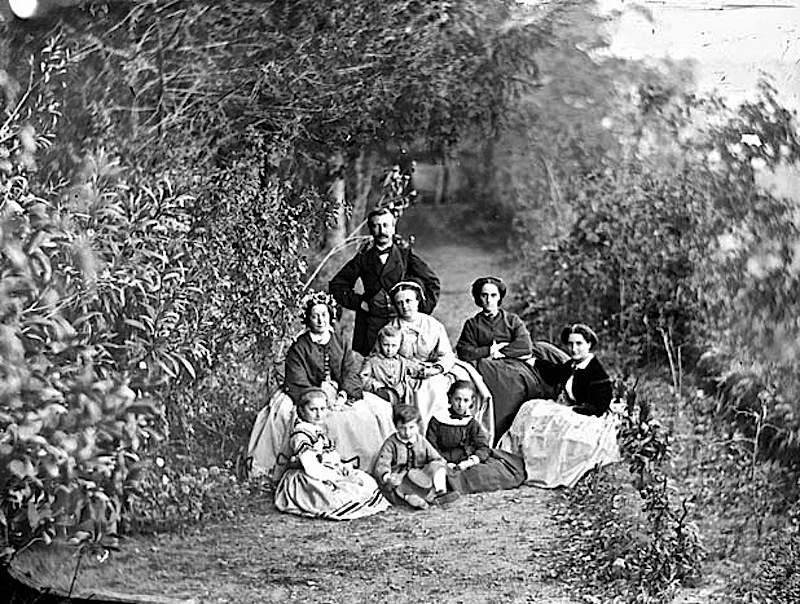 Extended family group. If the boys in the picture are Paul and Henri, then the date is probably about 1871-75.
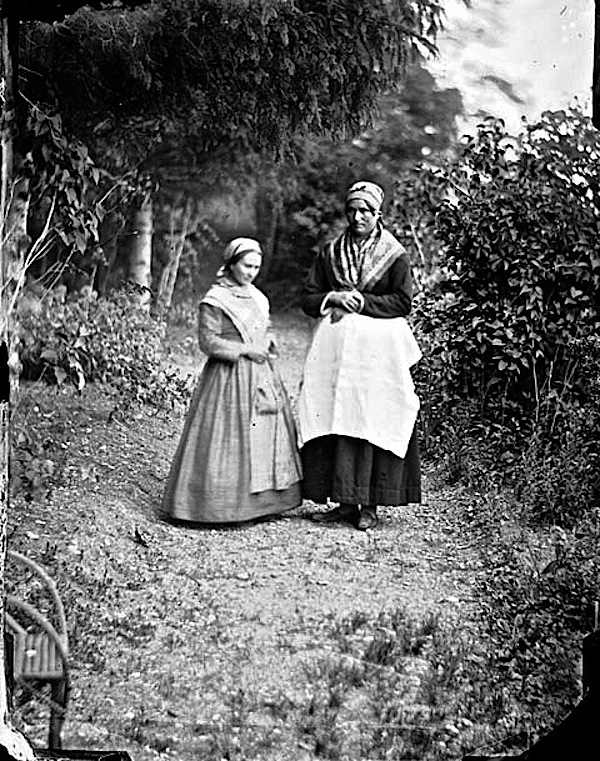 Jeanne and Henriette, (household servants?), between 1859-1910.
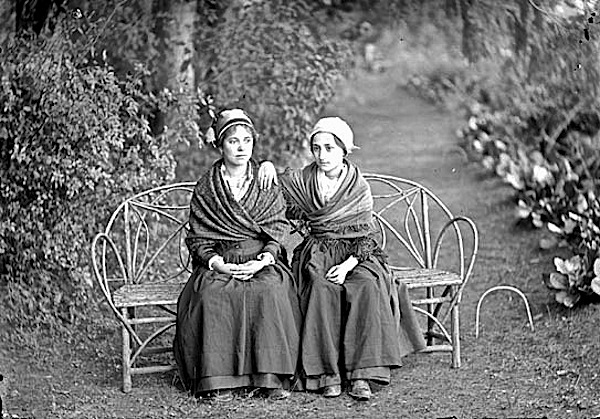 Women’s headdress, Jeanne and Clémence, between 1859-1910.

“Women on the steps of a multi-story white building with dark timbering,” between 1906 and 1942 (I think before 1920), an autochrome by Arnold Genthe, via Library of Congress Prints and Photographs Division.
The small size of the digital copy of this image makes it difficult to be sure whether the walk areas are brick (like the steps). But I believe they are. (They could be something like decomposed granite.) I love how the tree has been preserved as part of the space.
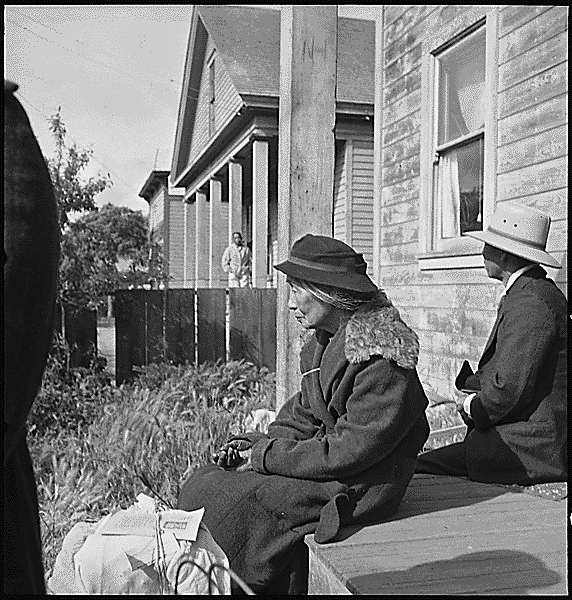 “Grandmother of farm family awaits evacuation bus. Evacuees of Japanese ancestry will be housed in War Relocation Authority centers for the duration,” May 9, 1942, by Dorothea Lange for the U.S. War Relocation Authority, via U.S. National Archives on flickr.
Centerville is a community in northern California. All along the Pacific coast — from 1942 to January 1945 — over 110,000 people of Japanese heritage were forced into internment camps. Sixty-two percent were American citizens.
In 1988, in the Civil Liberties Act, the U.S. Government admitted that its actions had been based on “race prejudice, war hysteria, and a failure of political leadership.”
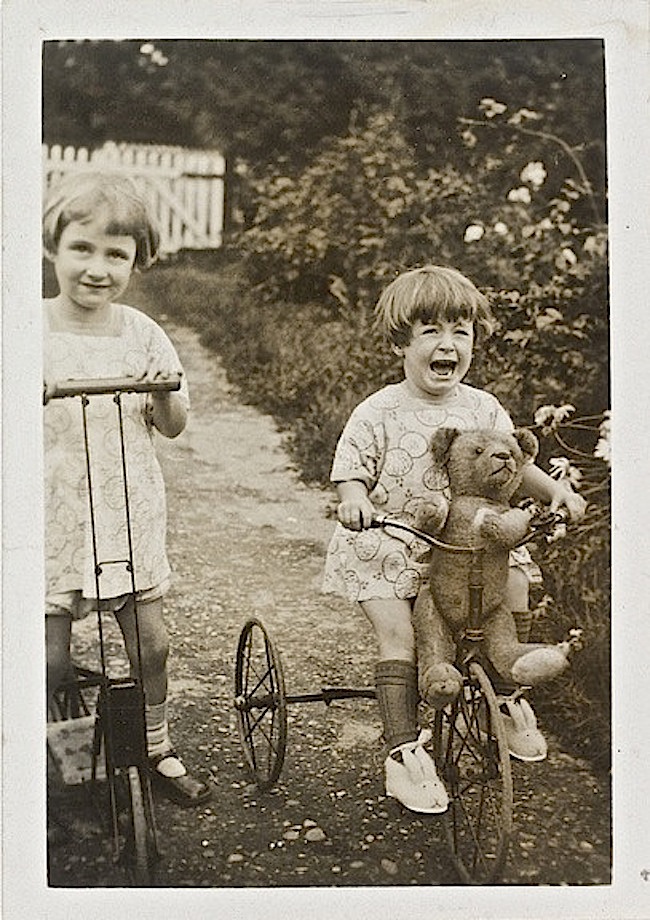
Elizabeth Jolley and sister Madelaine Winifred (having a good cry) in a garden, probably in the English Midlands, 1927, photographer unknown, via State Library of New South Wales on flickr.
Monica Elizabeth Jolley was an English-born author who moved to Western Australia in the late 1950s. In the photo above, the girls were about 5 and 4 years old. Check out Madelaine’s bunny slippers.

