(Not very) Wordless Wednesday: rain

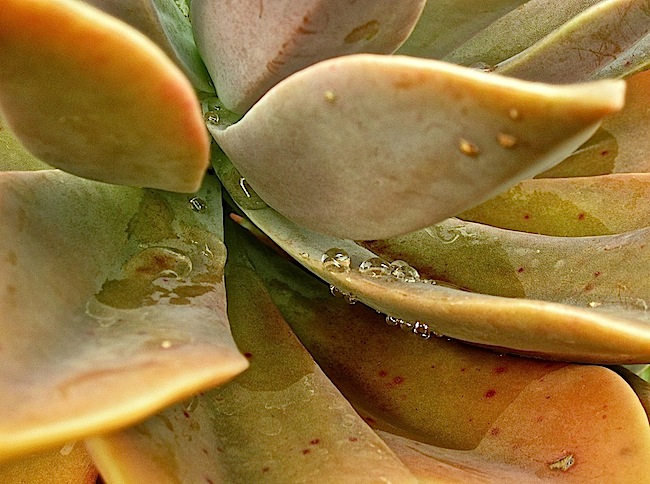
Our Rwanda garden after rain, August 2014Raindrops on the Graptopetalum leaves yesterday morning.
It had rained the night before, for the third time in two weeks. Maybe the summer dry season is ending early?

(I would normally look for consistent heavy showers to start in early to mid September and last until late December.)

I have been hoping for an early fall rainy season, since we only have a few more months in the country, and I would like to see the garden in high growth mode one more time.

ADDENDUM: 6:27 p.m. — raining.

Vintage landscape: O cabbage gardens

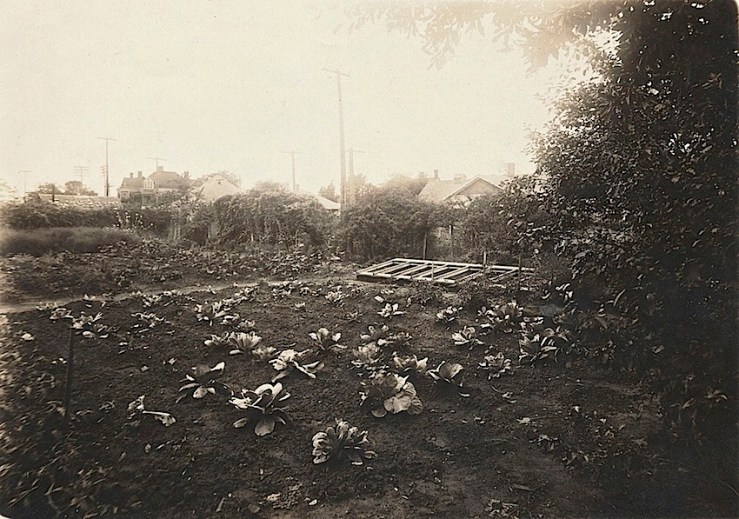
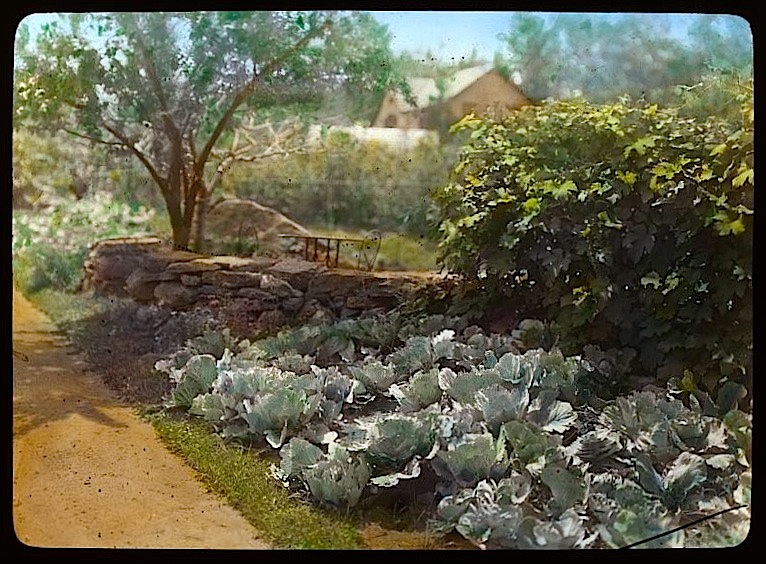
cabbage garden, FBJohnson collection, Library of CongressCabbages in the vegetable garden of Chelmsford, Greenwich, Connecticut, ca. 1914, by Frances Benjamin Johnston, via Library of Congress Prints and Photographs Division.

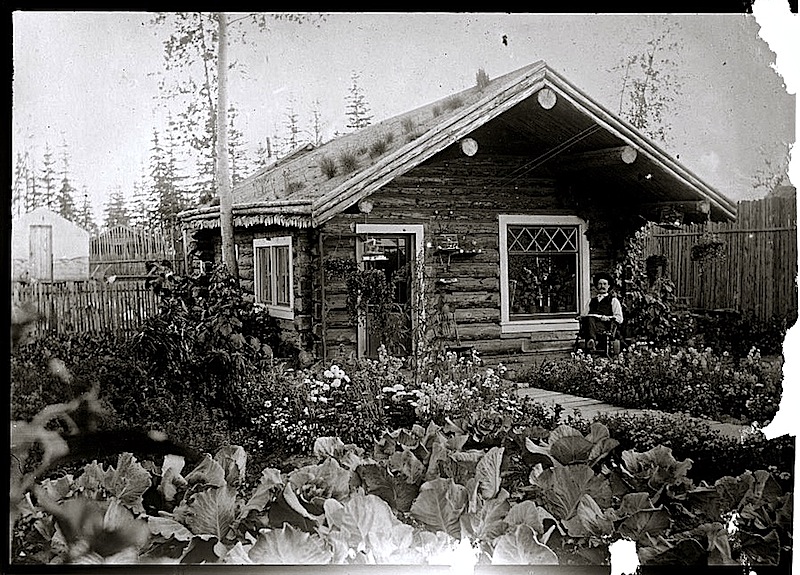
Alaska cabbage garden, via Library of CongressA cottage garden in Alaska, between 1909-1920. By National Photo Company, via Library of Congress Prints and Photographs Division.

Puerto Rico cabbage garden, ca. 1941, J. Delano, Library of CongressWoman in her garden, Puerto Rico, Winter 1941/42, by Jack Delano, via Library of Congress Prints and Photographs Division.

cabbage garden, Maxey Hse, Paris TX, flickrThe vegetable garden and cold frames of the Maxey House, Paris, Texas, undated, from the Samuel Bell Maxey Collection, via Texas State Archives Commons on flickr.
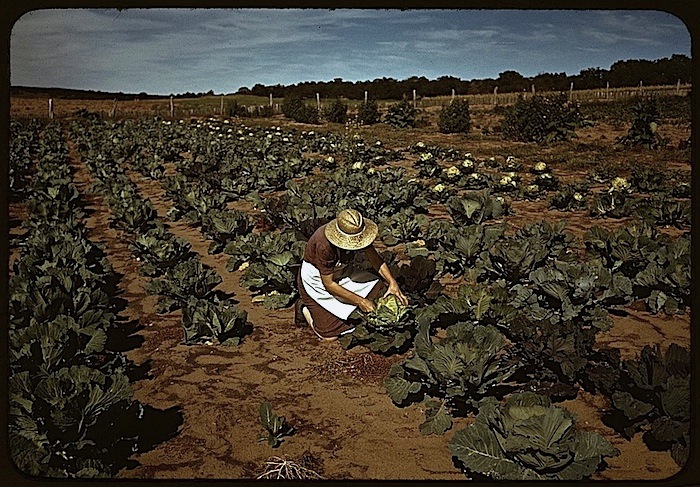
Norris gardenMrs. Jim Norris with homegrown cabbage, Pie Town, New Mexico, October 1940, by Russell Lee, via Library of Congress Prints and Photographs Division.

eternity swallows up time
                        O cabbage gardens
summer’s elegy
                        sunset survived

Susan Howe, from “Cabbage Gardens

Life in gardens: coleslaw, anyone?

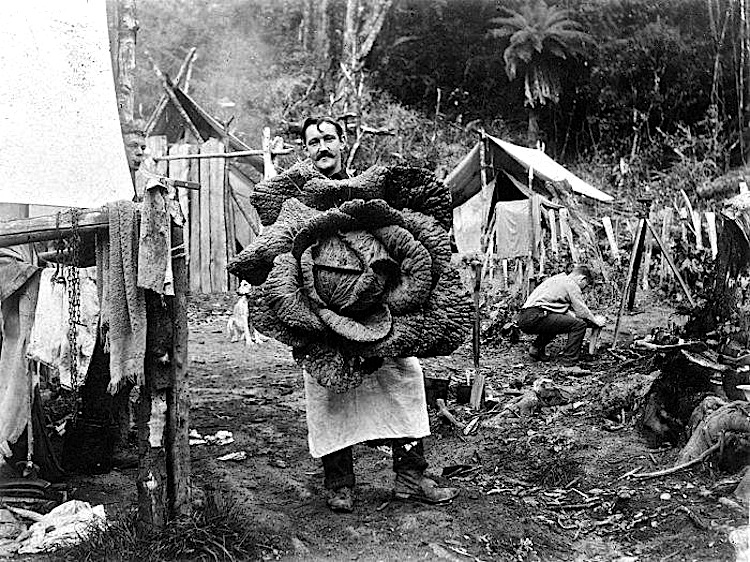
cabbage, Library New Zealand“A cook holding up a giant cabbage at a camp in Wairarapa[, New Zealand],” ca. 1890s, photographer unknown, via National Library of New Zealand.

One of my favorite coleslaws is made by tossing shredded cabbage, a chopped apple or underripe mango, and some chopped peanuts with the dressing part of Vietnamese green papaya salad (recipe here).

At Samoa, hardly unpacked, I commenced planting. . .
I plant cabbage by moonlight, set out more cacao.
The heart of a death’s-head moth beats a tattoo in my hand.

Carolyn Kizer, from “Fanny

Life in gardens: Dunedin, New Zealand

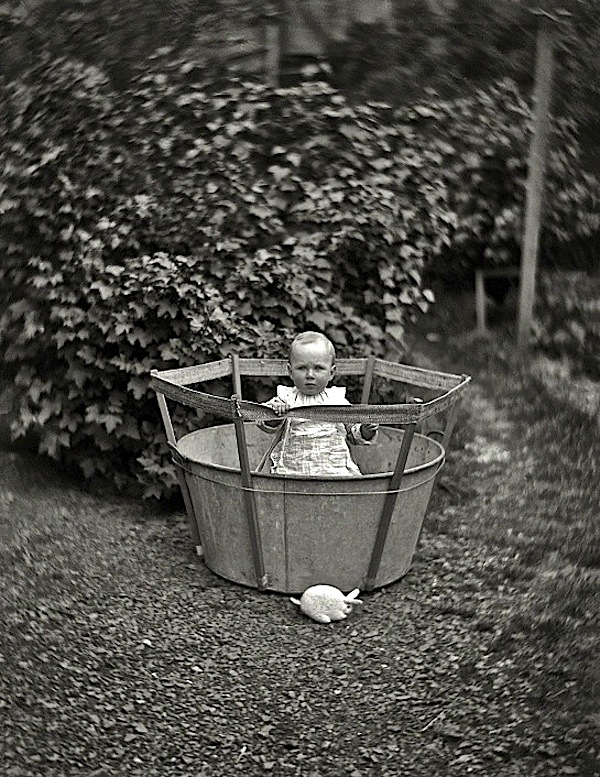
Baby in bucket, by W. Williams, via ShorpyEdgar Williams in a playpen tub, Dunedin, New Zealand, ca. 1892-93, by William Williams. Part of the National Library of New Zealand collection, via Shorpy.

Another possible garden use for a galvanized farm tank.

William Williams (1859-1948) was a talented amateur photographer who worked for the New Zealand Railways Department.

Below is another (more formal) Williams photo of Edgar in the garden, via the National Library of New Zealand.

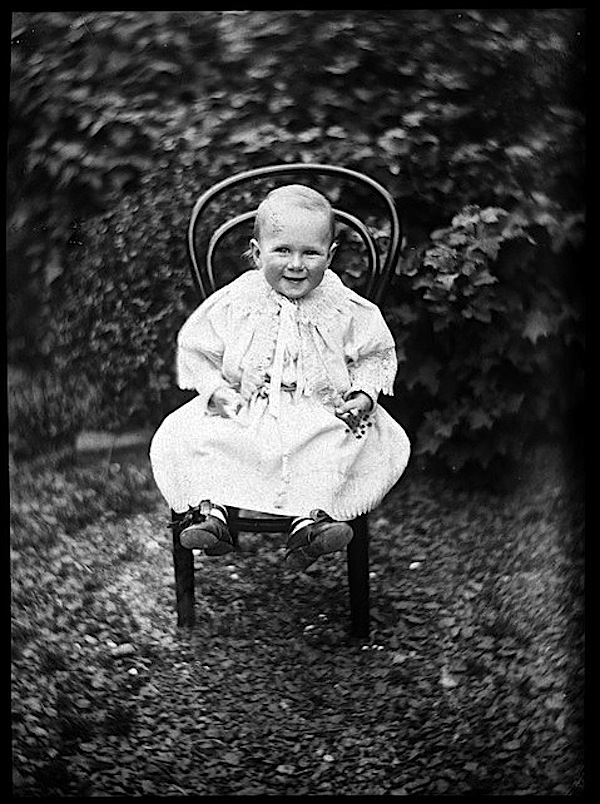
Williams baby on chair, by W. Williams, via Natl Library New Zealand

Edgar lived to be over 90, by the way. He was also a photographer and bequeathed thousands of his father’s and his own black and white negatives to the National Library.

Life in gardens: dance!

This slideshow requires JavaScript.

It’s the first day of the last month of summer.

In observance of this moment, you might want to put on something gauzy, go outdoors, and cavort {gambol, caper, dance, frisk, frolic, rollick, romp, leap and skip about playfully} — as many were apparently wont to do in the first decades of the 20th century.

These performers were certainly influenced by American dancer Isadora Duncan, who, by 1900, was performing and teaching a “natural” modern dance. “With free-flowing costumes, bare feet, and loose hair, she took to the stage inspired by the ancient Greeks, the music of classical composers, the wind and the sea,” according to the Isadora Duncan Dance Foundation.

All photos here via Library of Congress Prints and Photographs Division, except for “Sisters of the Sun,” which is via Shorpy.

What mattered in Isadora’s Hellenic dances was not the Greek themes or the gauzy costumes, but the uninhibited vitality, the sense of a glorious nakedness.”

— Lewis Mumford, 1905