The Sunday porch: Breitenbush

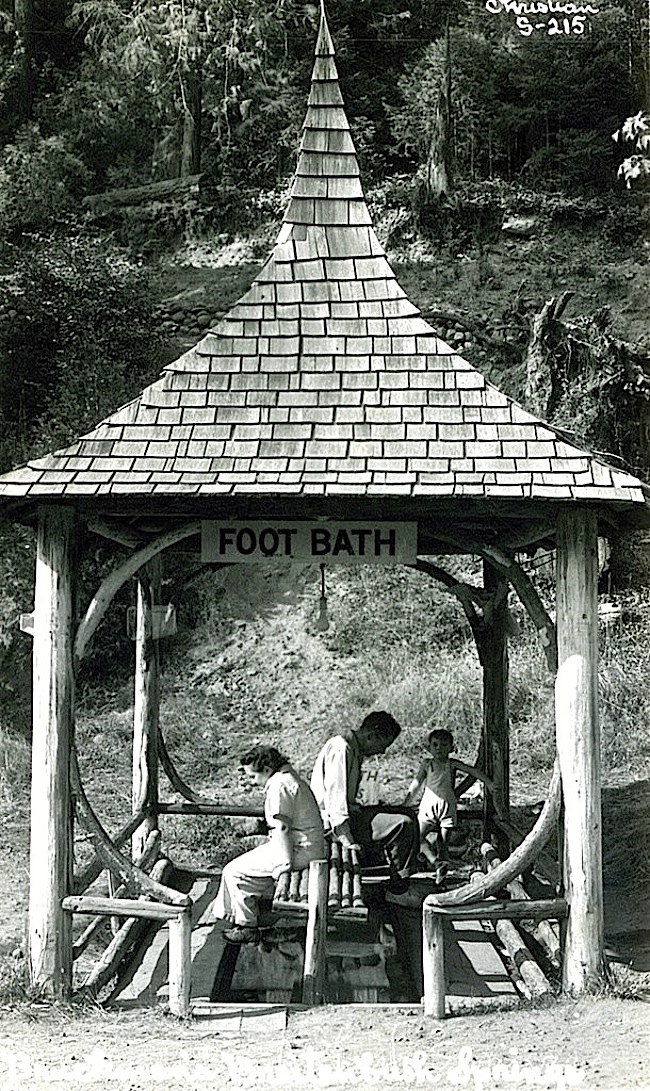
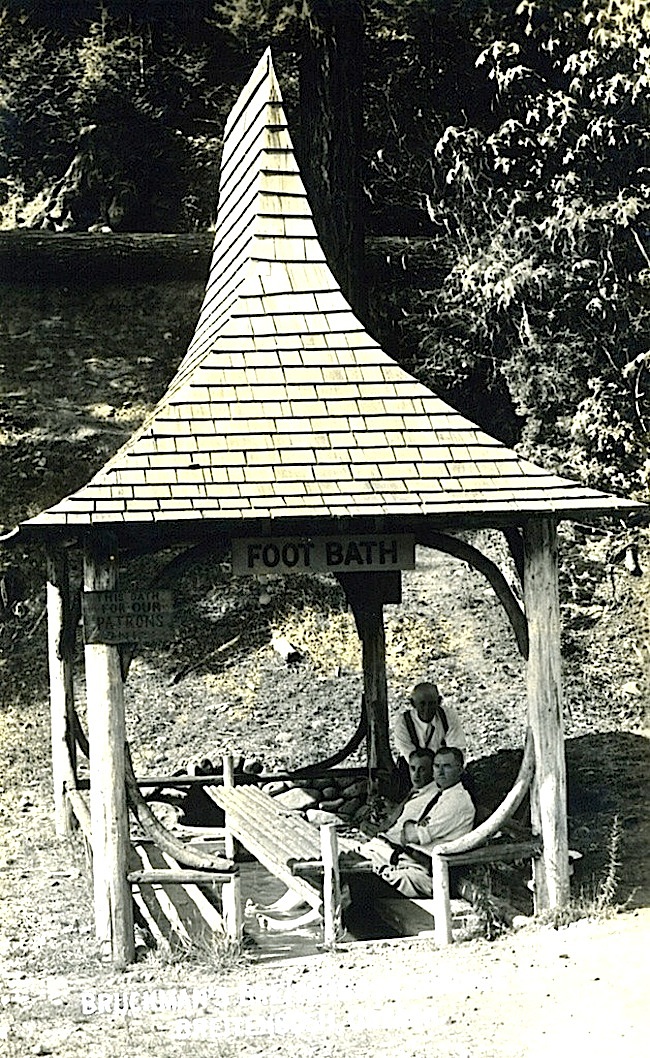
Foot bath, Oregon, OSU Archives“Bruckman’s Breitenbush Springs Foot Bath, Breitenbush, Oregon,” ca. 1937, via OSU Special Collections & Archives Commons on flickr.

Ah, come on folks. . . take off those shoes.

2 Foot bath, Oregon, OSU Archive

Like these guys. (Tie removal optional)

Merle Bruckman bought the property around the Breitenbush hot springs in 1927 and turned it into a wilderness health spa. He sold it in the mid-1950s, and the operation changed hands a few more times before closing in 1972 after two large floods.

In 1981, it re-opened as a retreat and conference center — owned by its workers since 1989.

Life in gardens: keeping bees (close)

This slideshow requires JavaScript.

This lady — probably in Finland, ca. 1900 — must have been really devoted to her bee hives to keep them so close to her open windows.

The photo is via Gallen-Kallelan Museo Commons on flickr, photographer unknown.

To scroll through larger images, click on ‘Continue reading’ below and then on any thumbnail in the gallery.

Deare behold me, you shall see
Faith the Hive, and love the Bee,
Which doe bring.
Gaine and sting.

Lady Mary Wroth

Vintage landscape: Thornewood

A little Monday morning prettiness. . .

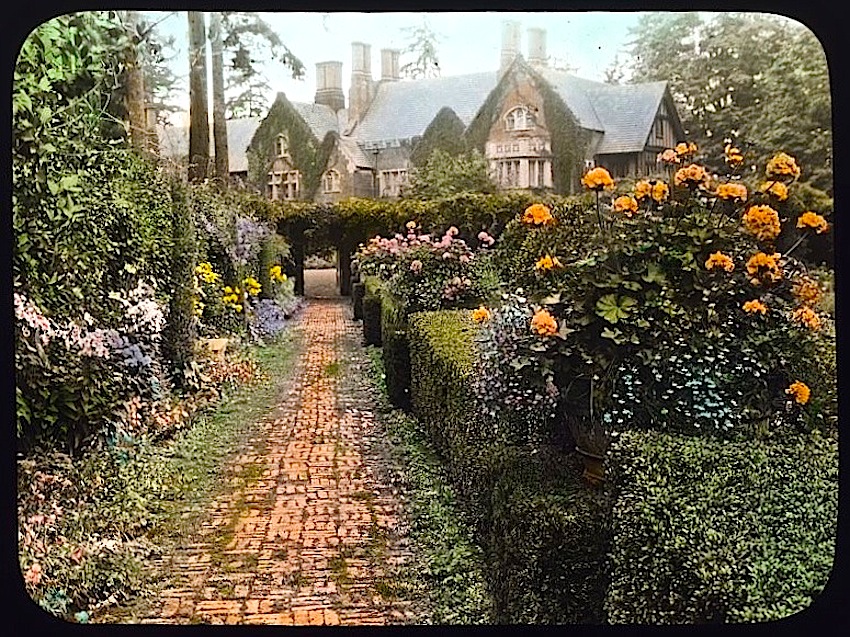
Thornewood, 1923, F.B.Johnston, via LibraryCongressThe walk to the house from the flower garden at “Thornewood,” Lakewood, Washington, 1923, a hand-colored glass lantern slide by Frances Benjamin Johnston, via Library of Congress Prints and Photographs Division.

The house was built between 1909 and 1911 for Chester and Anna Thorne — constructed partly  from a 400-year-old Elizabethan manor house, which Chester purchased in England and had dismantled and shipped to Lakewood.

Thornewood’s over 30 acres of formal “English” gardens were designed by James Frederick Dawson and John Charles Olmsted of Olmsted Brothers from 1908 to 1913.  They were originally cared for by 28 gardeners.

In 1926, House Beautiful magazine named Thornewood one of the five most beautiful formal gardens in America. In 1929, the Garden Club of America held its national convention there.

Today, the property still exists as the Thornewood Castle Inn and Gardens.

It is magnificent. It is what God would have done if he had the money.

— [of a perfectly groomed estate] Noel Coward

The Sunday porch: Savannah, Ga.

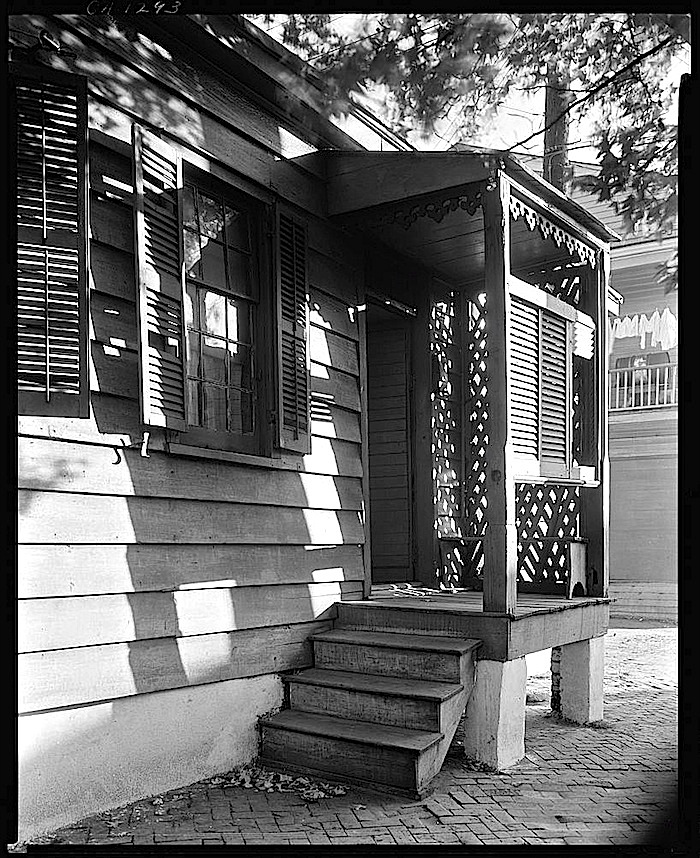
Price Street, F.B. Johnston, via Library of Congress“Price Street corner York Lane,” Savannah, Georgia, 1939 or 1944, by Frances Benjamin Johnston, via Library of Congress Prints and Photographs Division.

The Library of Congress catalogue entry for the image above includes the note: “Once in the ‘Restricted District,’ hence the lattice work” — meaning the house had been a bordello. (That would also explain the panel of shutters across the front.)

Looking at Google Maps street view, a very similar house (built 1828) at one of the four possible corner sites still stands in good condition. Across York Lane from it is a two-story building that was probably there at the time of the photo. There are new condos on the other side of Price Street.

The Sunday porch: French Riviera

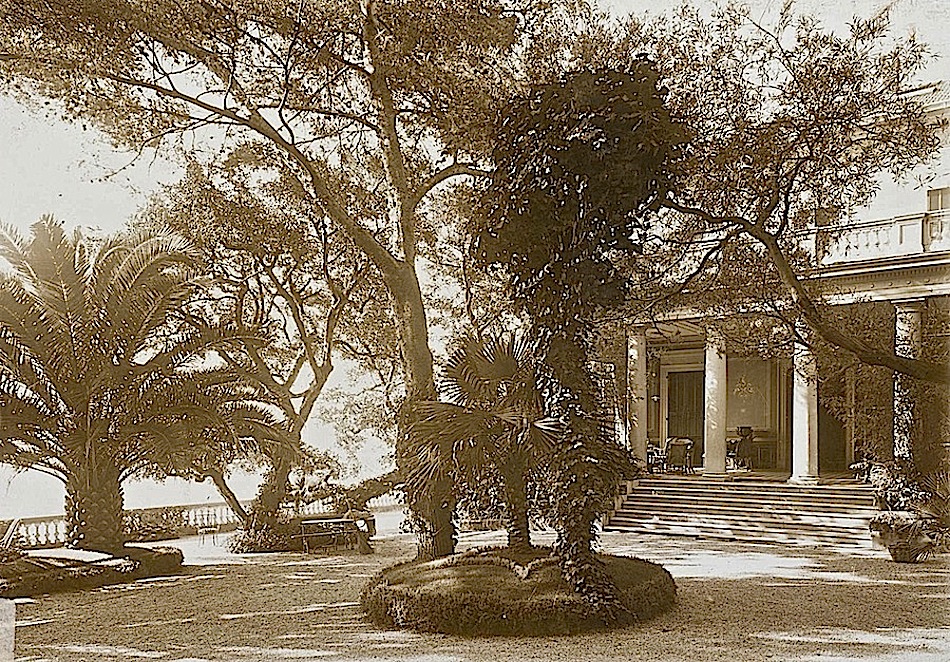
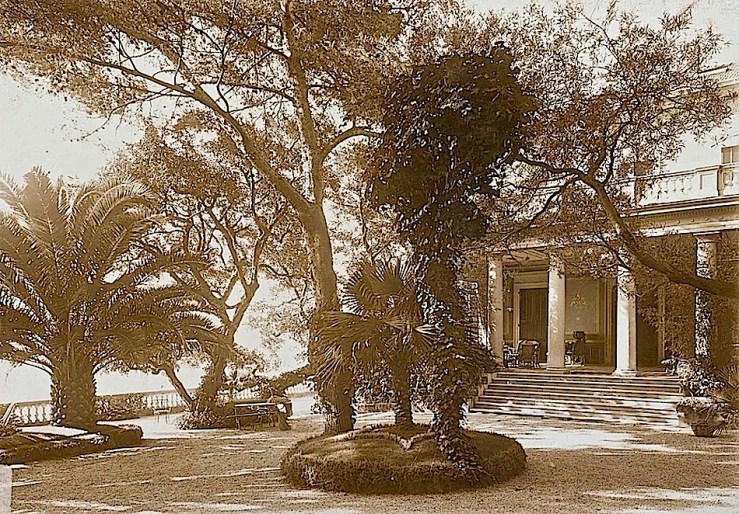
1 full view, Poincare Residence, Eze, France, ca. 1914, University Caen Basse…The property of M. [Raymond] Poincaré in Èze.  The gardens and the main entrance of the house,” ca. 1914 – ca. 1918, photographer unknown, via the Université de Caen Basse-Normandie Commons on flickr.

Èze is located on the southeastern coast of France, not far from Nice. The Mediterranean was just beyond the railings above.
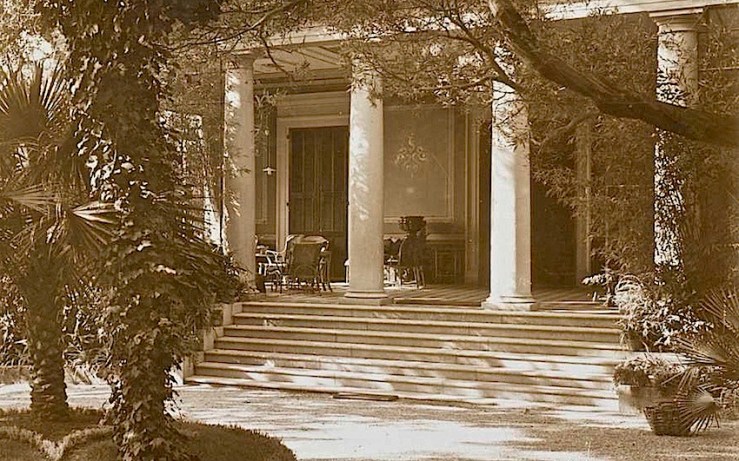
Detail, Poincare Residence, Eze, France, ca. 1914, University of Caen Basse-Normandie

(To scroll through a number of larger versions of the photo, click on ‘Continue reading’ below and then on any thumbnail in the gallery.)

Raymond Poincaré was President of France from 1913 to 1920.  He had been both Prime Minister and Foreign Minister (simultaneously) during all of 1912.

. . . I  decided this time not to go to Sampigny but to stay somewhere on the Mediterranean. After brief research, I rented, in the Alpes-Maritimes, at the foot of the small town of Saracen Eze-sur-Mer, a quiet villa, hidden in the pine trees. . . . [I]t has an incomparable view of the sea. By winning this early retirement, I am not unhappy to escape a little to the embrace of my job, but at least I have the impression that the state of Europe, while still unstable, allows me to breathe more freely. Peace seems restored in the Balkans. Our relations with all Powers are normal. Whatever the new influences acting on William II, France was determined not provide any pretext for war. It’s almost a feeling of rest and security I feel, when I’ll salute the French Riviera the spring of 1914.

— Raymond Poincaré, from his memoirs.

You can see an image of the long terrace of the house in April 1914 here.

Continue reading “The Sunday porch: French Riviera”