Spring city colors

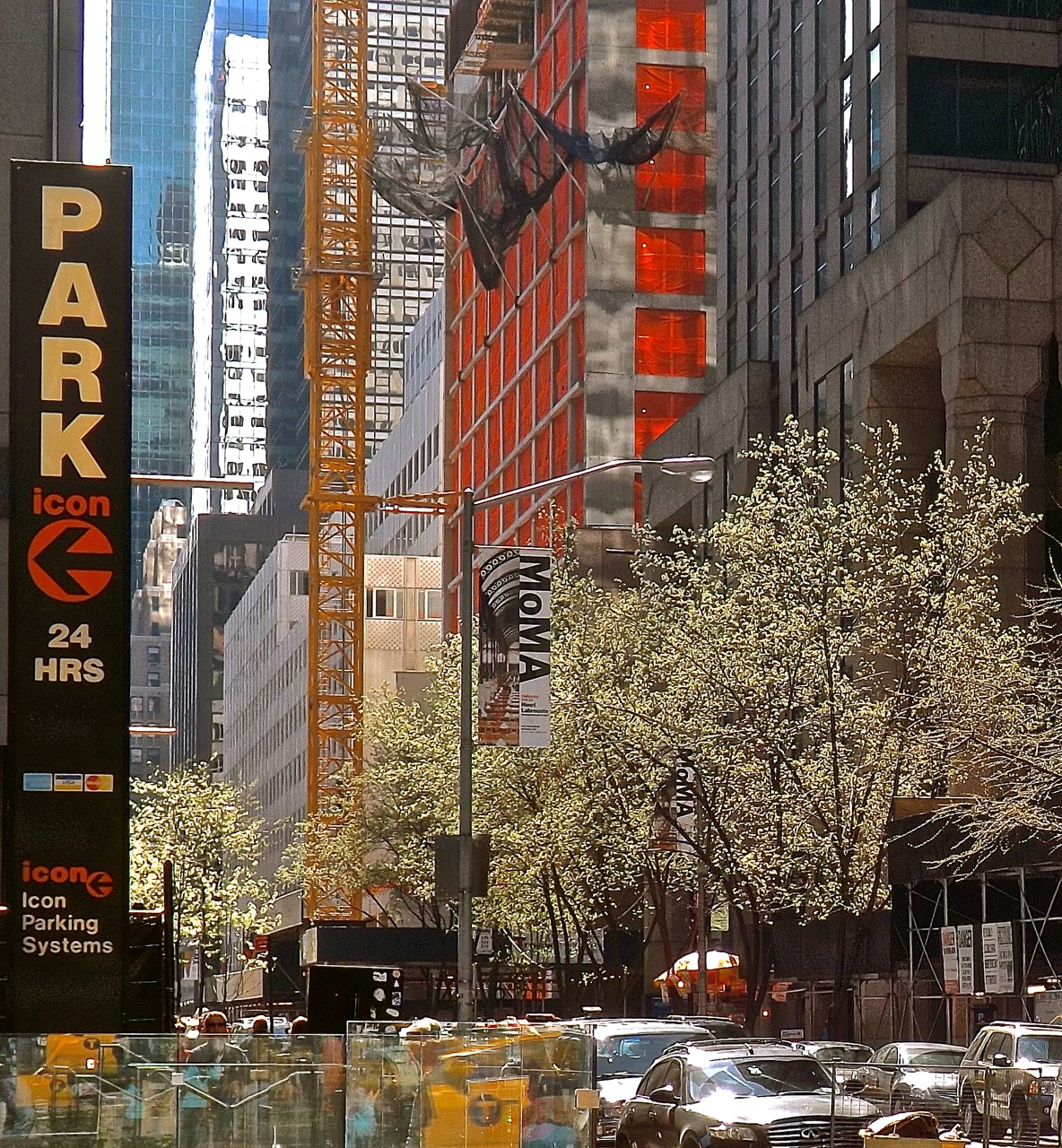
Manhattan in April/enclos*ureFlowering pear trees in midtown Manhattan, New York City, April 2013.

Earth has not anything to show more fair:
Dull would he be of soul who could pass by
A sight so touching in its majesty:
This City now doth, like a garment, wear
The beauty of the morning. . . .

— William Wordsworth, “Composed upon Westminster Bridge, September 3, 1802

Ribbon trees in Chicago

I’ve been back since last weekend from a three-week trip to Washington, Chicago, and New York City. It’s taken me seven days to shake off the droopiness of jet lag.

Ribbon tree in Chicago/enclos*ure

Our two days in Chicago were windy (of course) and occasionally damp, and very few trees had even begun to leaf out.

But I was taken by this arboreal display of blue outside the Fourth Presbyterian Church on Michigan Avenue.

blue ribbons tree in Chicago/enclos*ure

The ribbons were tied in the trees and along the fence in memory of the 28,828 children of Illinois who were abused last year.

Ribbon trees in Chicago/enclos*ure

April is Child Abuse Prevention Awareness Month.  You can get more information here.

The ribbons will removed this Tuesday.

Ribbons in trees in Chicago/enclos*ure

The church has a nice Gothic courtyard too — although it was still quite bare in early April.

Church garden in Chicago/enclos*ure

this is the garden: colours come and go,
frail azures fluttering from night’s outer wing. . .

— e.e. cummings, “This is the Garden

Arbor Day

Yesterday, the last Friday in April, was National Arbor Day in the U.S.

The Washington Post had an interesting article about how tree canopy density is an indicator of wealth among D.C. neighborhoods. The reasons for the disparities are complex.

Our garden at work

I’m in Washington, D.C., where it looks and feels like winter, except for the ten gorgeous tulip magnolia trees blooming in a little park across from this Starbucks.

I’d give you a picture, but the camera of my Kindle, on which I’m rather laboriously typing, is not really doing them justice.

So, I thought I would show you a few more photos of the garden back in Kigali — set up for a recent event at our house: a reception and then a concert by the folk rock group Dawes, all on behalf of the U.N. Foundation and its program “Nothing but Nets.”  (This is a diplomatic residence.)

In the first slides, you can see the terrace and the tops of the tents down on the lower lawn.  Then, there are  couple of pictures of the tents being set up.  There is just enough grass so that they don’t need to put tent stakes in the flower beds.  A final shot shows the reason for the tents:  it poured rain during the concert.

This slideshow requires JavaScript.

Nothing but Nets is a global campaign to raise awareness and money for the fight against malaria. It began in 2006 when Sports Illustrated columnist Rick Reilly challenged his readers to give $10 each to buy anti-malarial bed nets. To date, six million have been distributed in Africa with the $40 million raised.

The U.N. was represented locally that evening by UNHCR, its refugee agency. There are 55,000 refugees in Rwanda, mostly from the Democratic Republic of Congo. They live in four camps, and Nothing but Nets has been distributing nets among them.

Dawes was terrific; you can hear a couple of their songs here and here.  The group will soon be going on tour with Bob Dylan.

Our garden: March going out

I’m going to be traveling for the next few weeks, so I wanted to leave you with some snapshots that I took this morning of the lower lawn area.

(Pictures of the upper lawn are here).
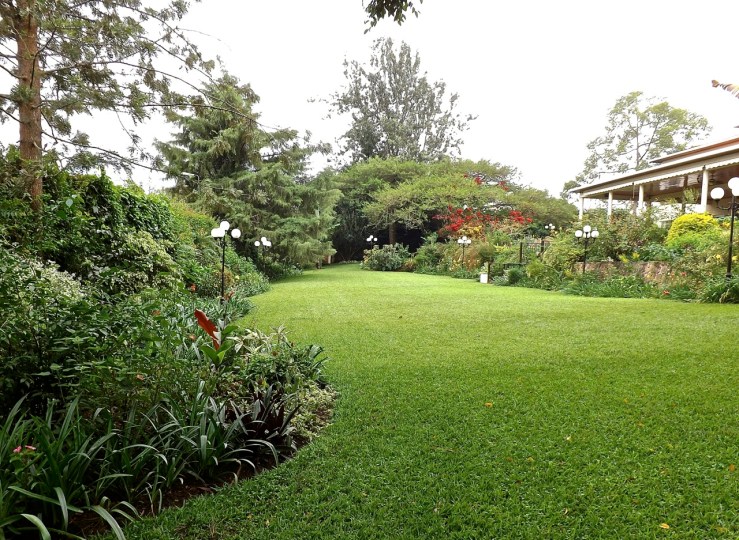
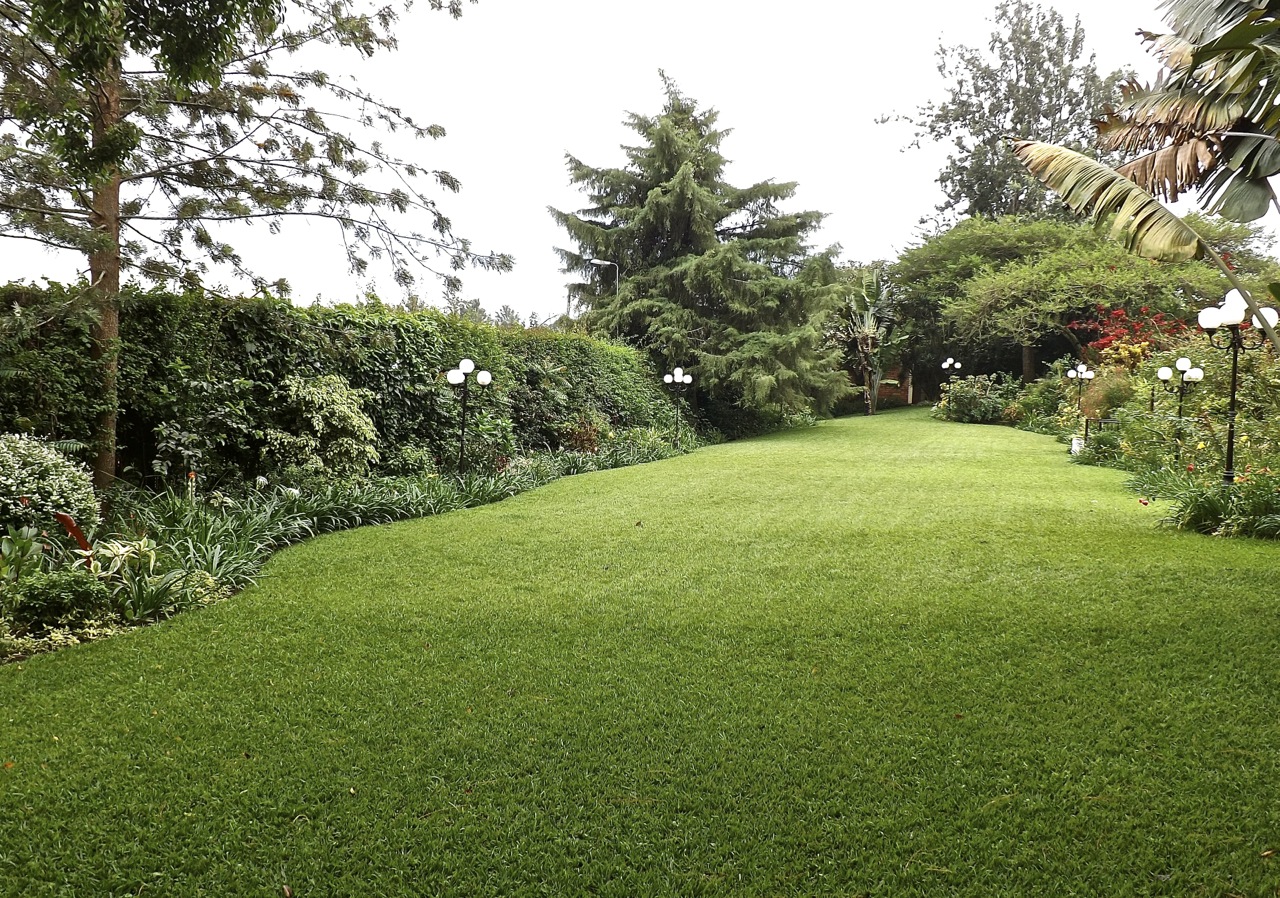
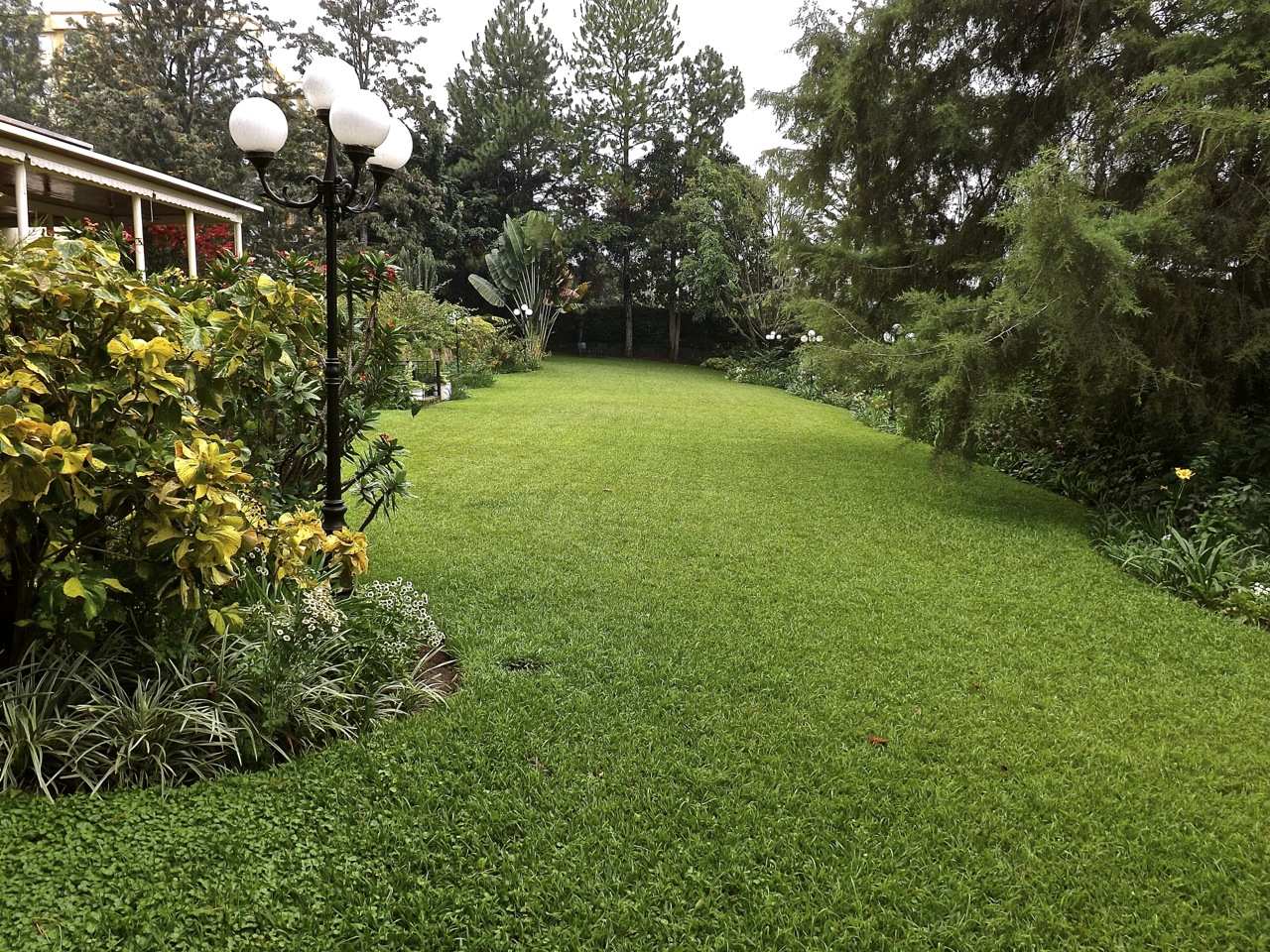
The long lower lawn from the south end.

The borders are filling out, and I’m starting to see more blooms.  Most of the plants were put in in the last eight months — many of them in the last couple of months, including some purple coneflowers that I started from seed.

(To see a garden plan and some “before” photos, click here and here.)

Above and below, on the right side:  the flowers will be — in about 6′ to 12′ sections — 1) red with some pink; 2) purple with some pink and white; 3) yellow and blue; 4) pink and some burgundy; 5) yellow and some burgundy; then a section of green, burgundy, and yellow foliage; 6) (way down there) pink, orange, and white.
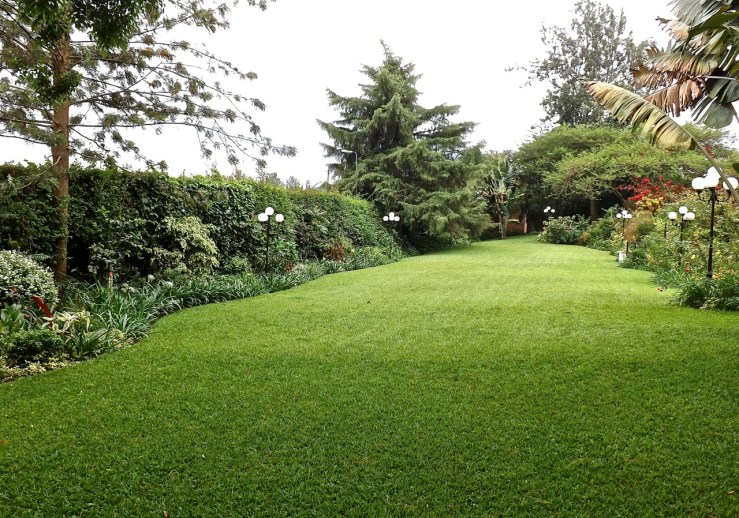
Our Kigali garden/ enclos*ure

Next month, I’ll show the borders closer up, section by section.

There are also a number of plants with variegated or burgundy or bronze foliage interspersed throughout.  Everything just needs a little more growing time, but it’s been raining almost daily this month (we never really had much of a winter dry season), so I’ll see a lot of change when I get back.

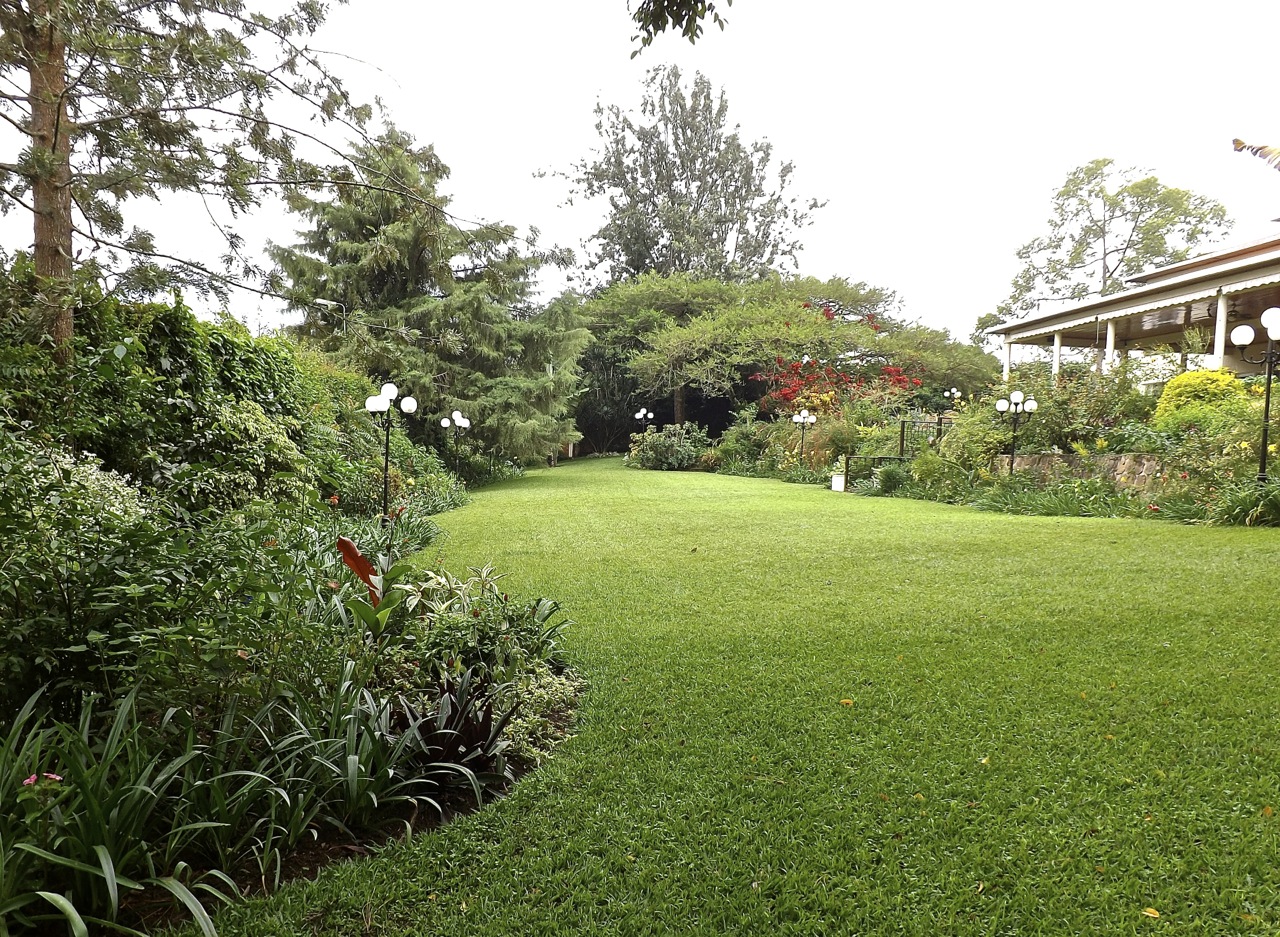
Below is the lawn from the other end.
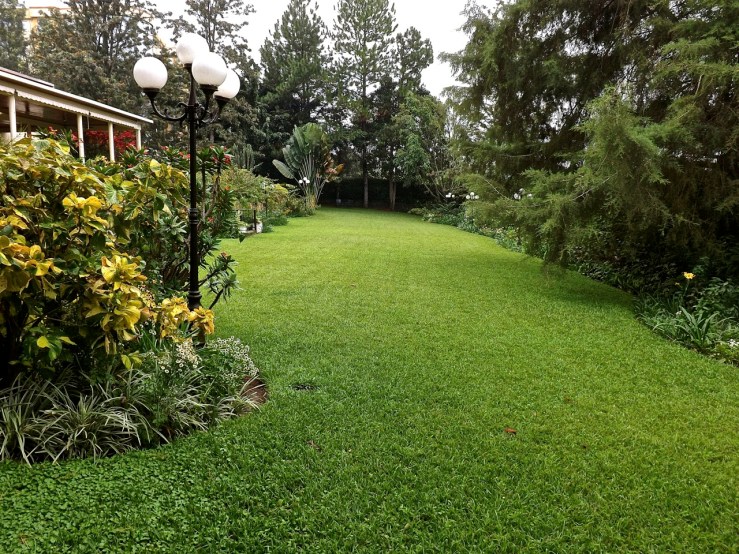
From the other end of the lawn.

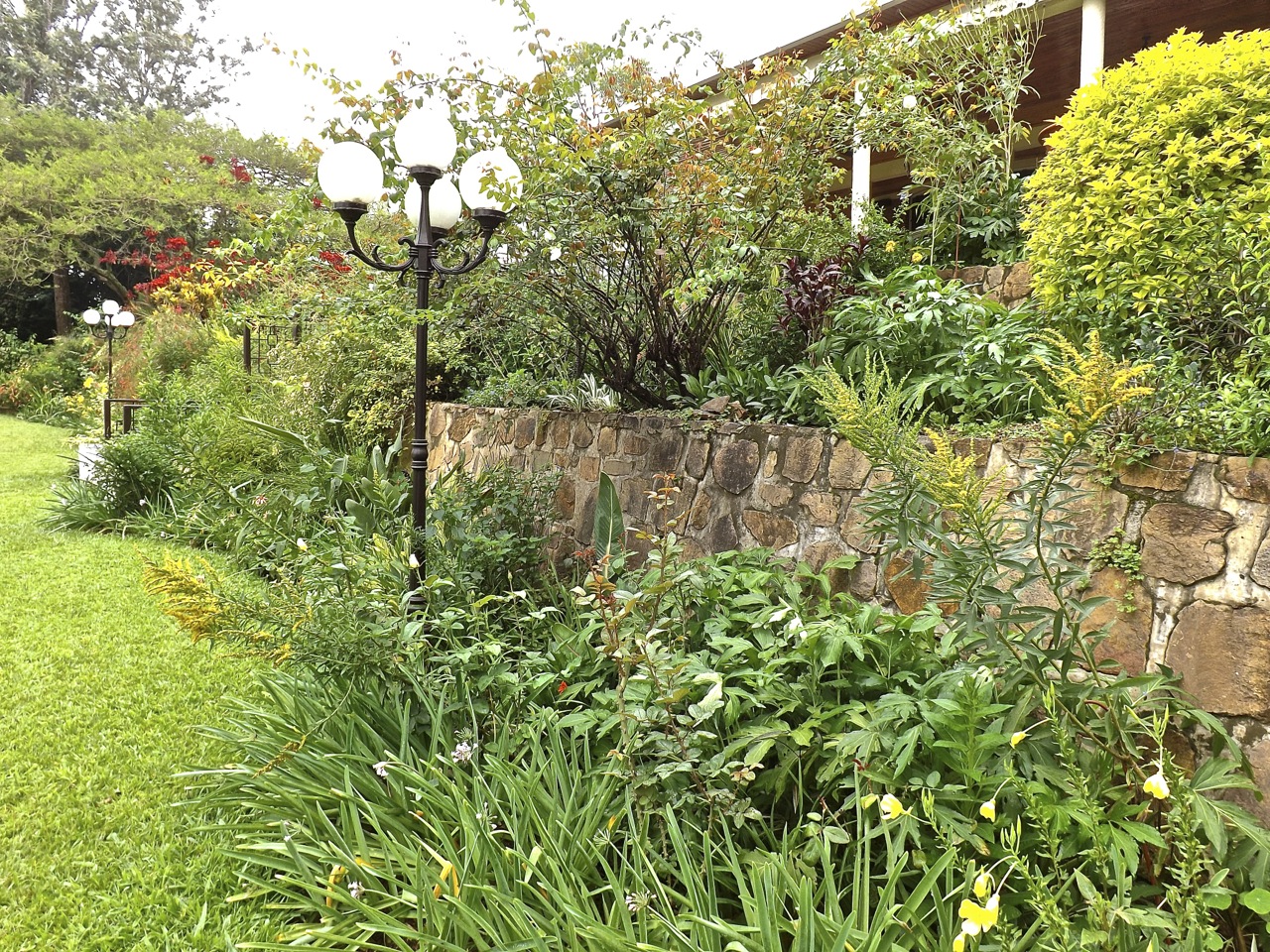
Below are the borders on the other side of the lawn.  The photo just below shows what will be a mostly yellow section at the base of the retaining wall and a yellow and blue section above (with a little white, pink and purple).
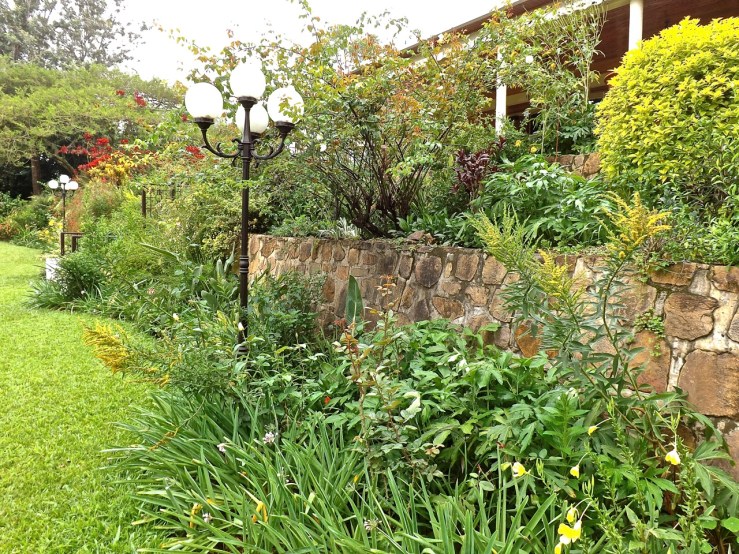
A yellow section of border in front of the retaining walls.

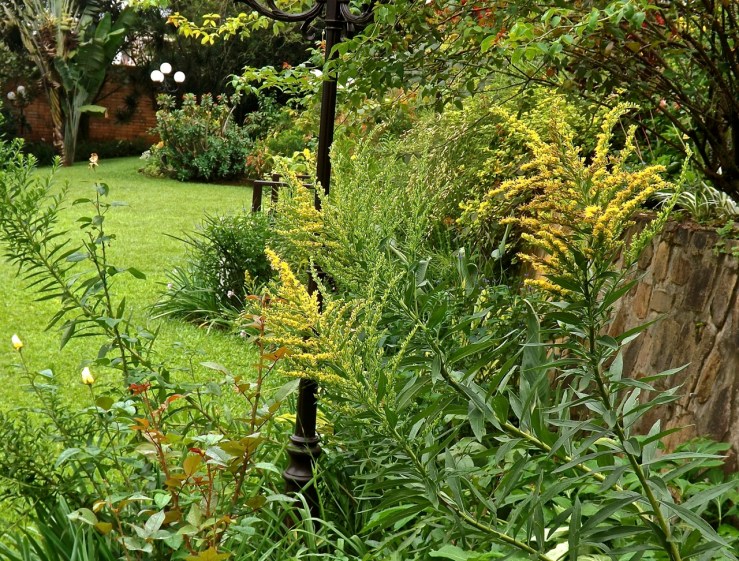
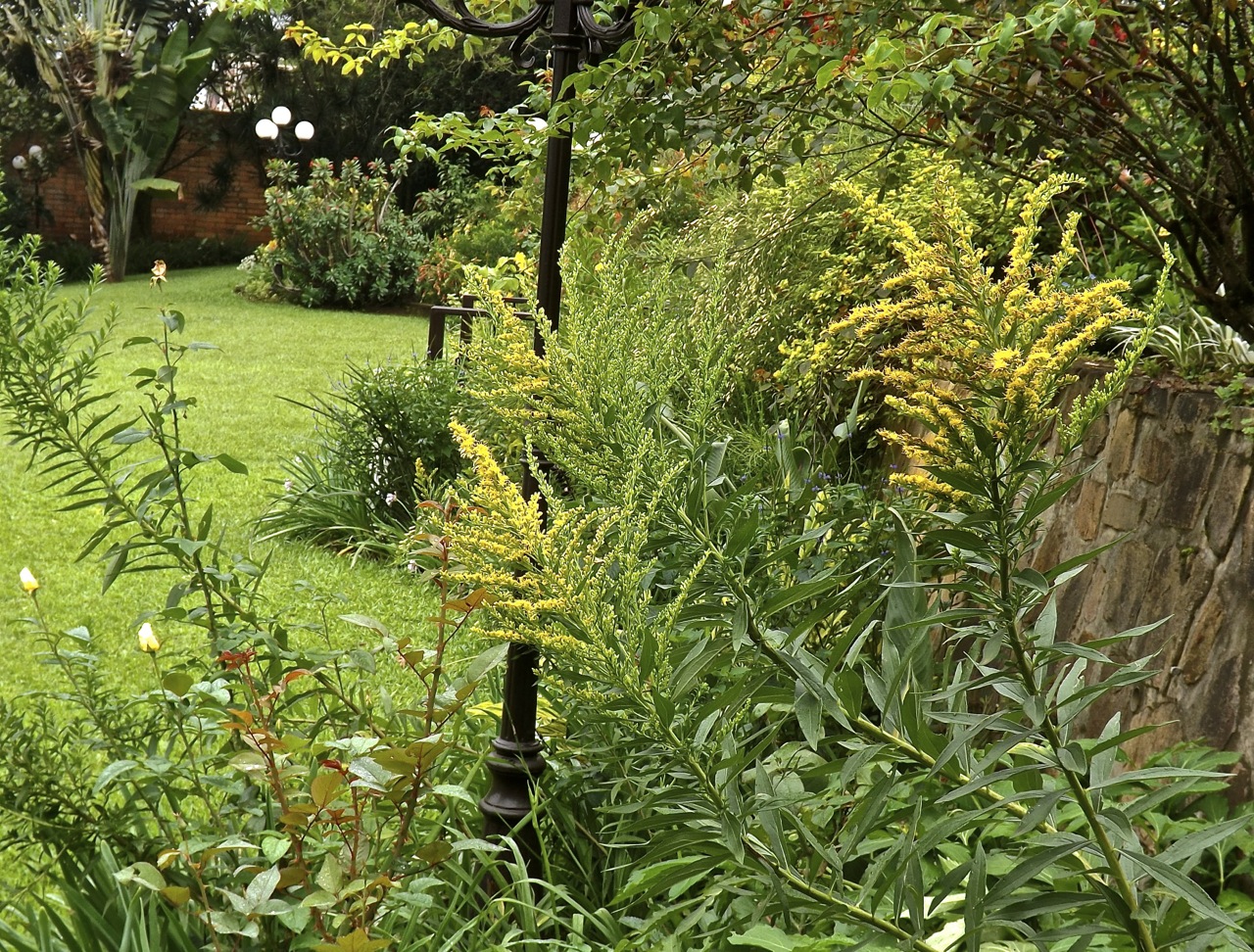
Below, the goldenrod is blooming.

Goldenrod in bloom.

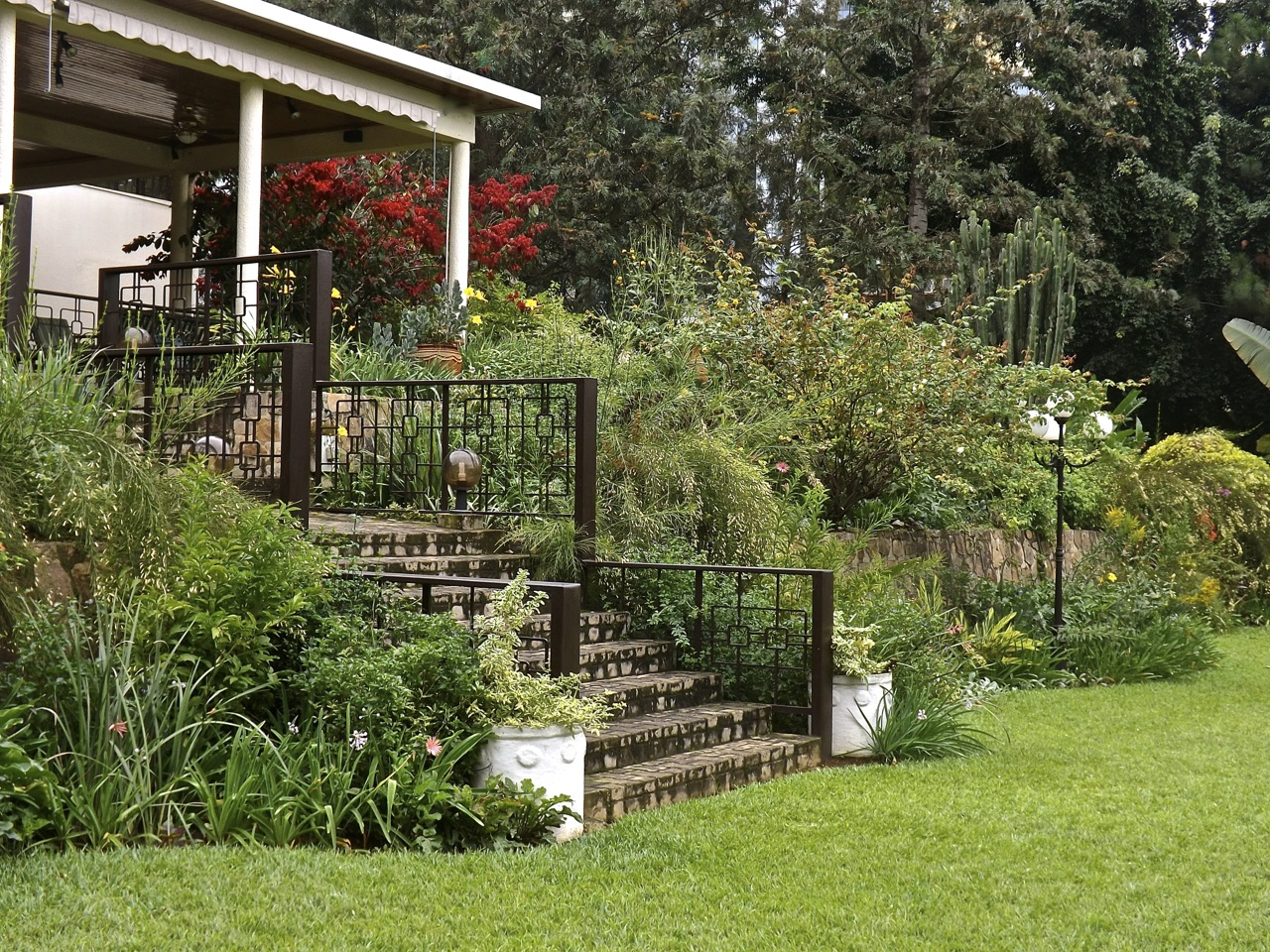
Below:  the steps and retaining wall borders from the other direction.
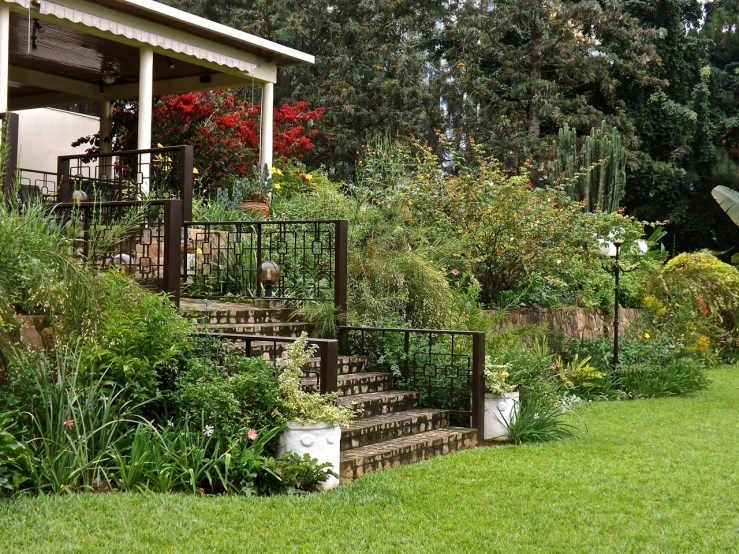
The steps and retaining walls.

Above: in the lower border, on the far side of the steps, you can just glimpse a little of the lamb’s ear that I grew from seeds from my parents’ garden.

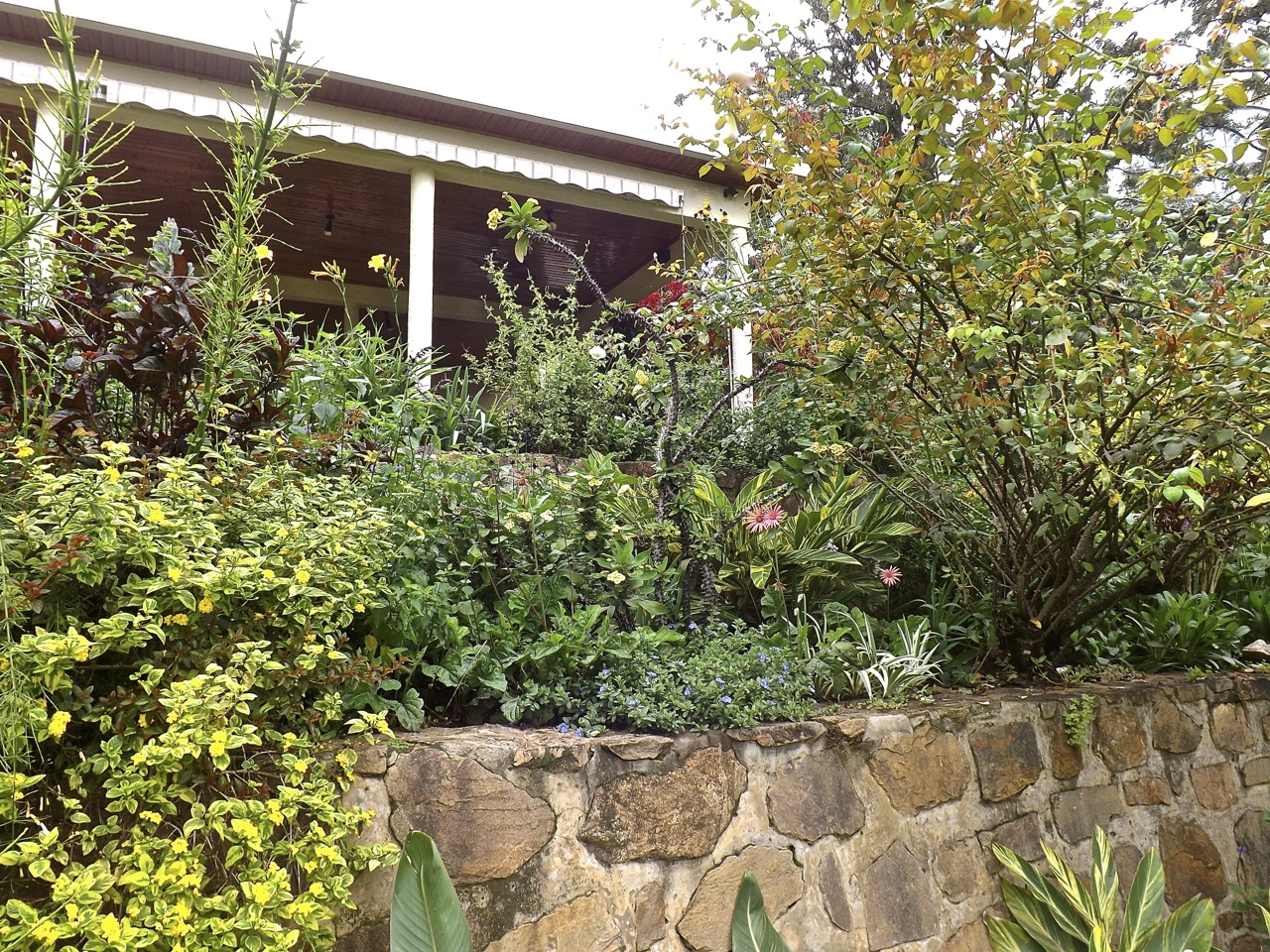
Below: yellow lantana, pink gerbera daisies, blue evolvulus, yellow crown of thorns, ginger with yellow striped leaves, and a giant white rosebush.
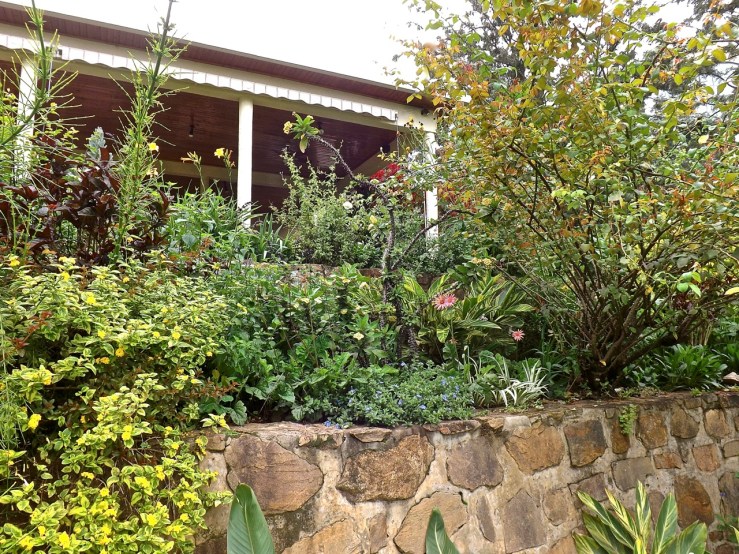
Lantana, gerbera daisies, yellow crown of thorns, and a giant white rosebush.

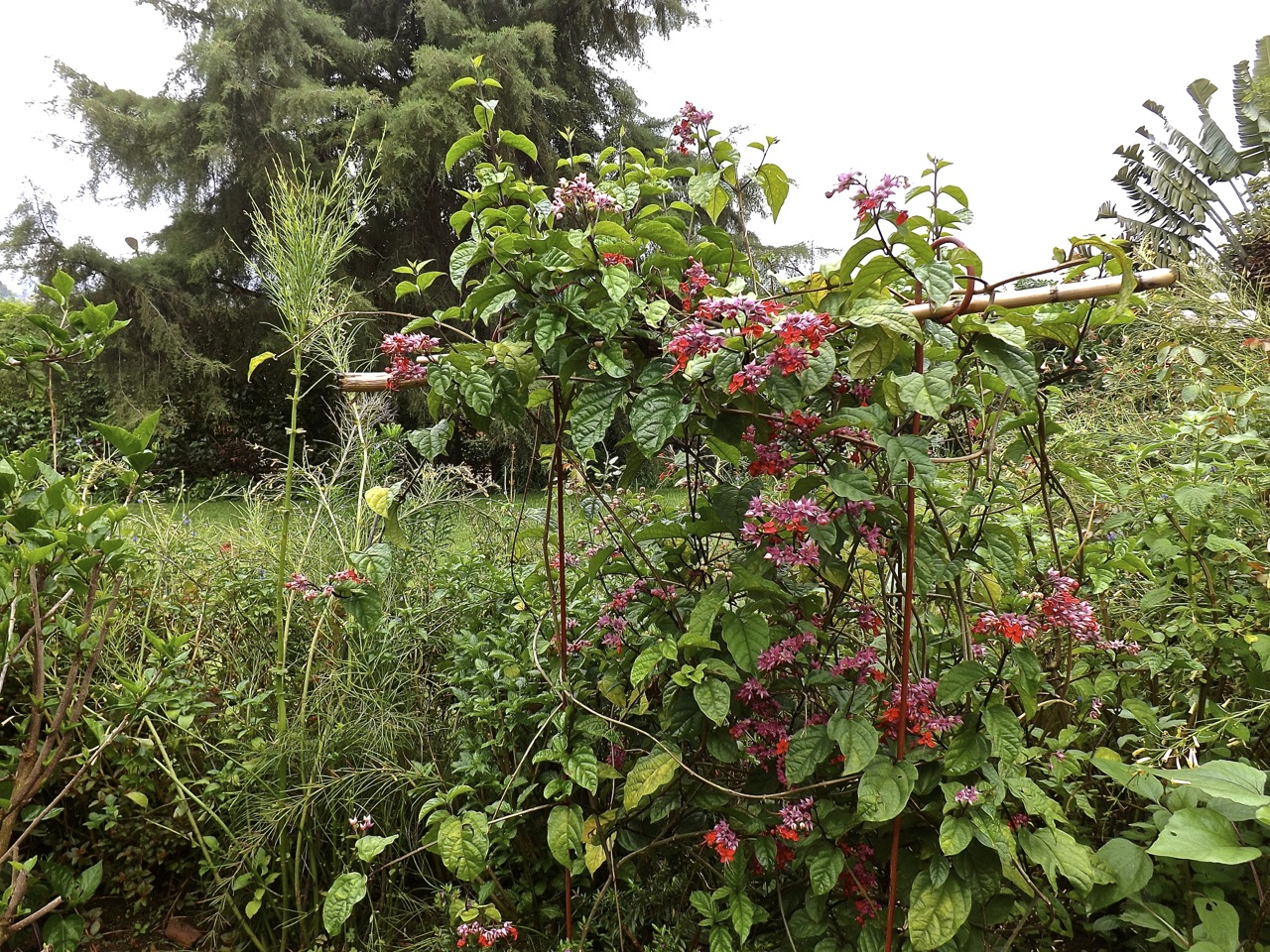
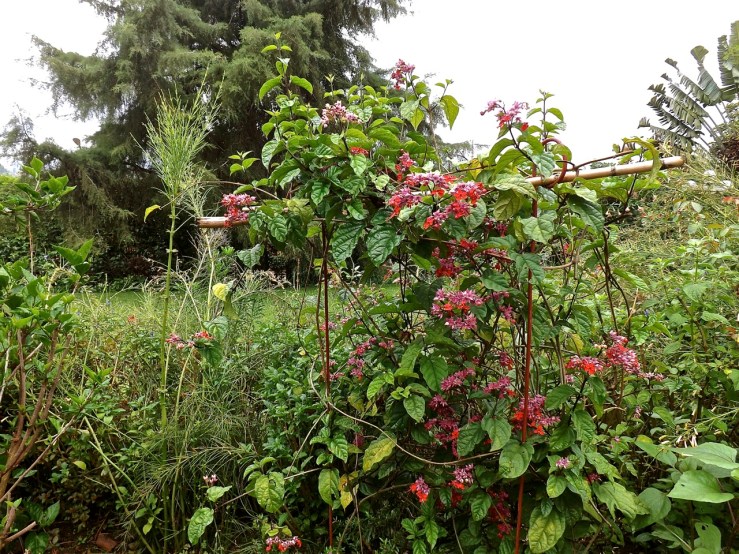
The vine Cleodendrum thomsoniae var. delectum growing on plant supports in a bed between the retaining walls.

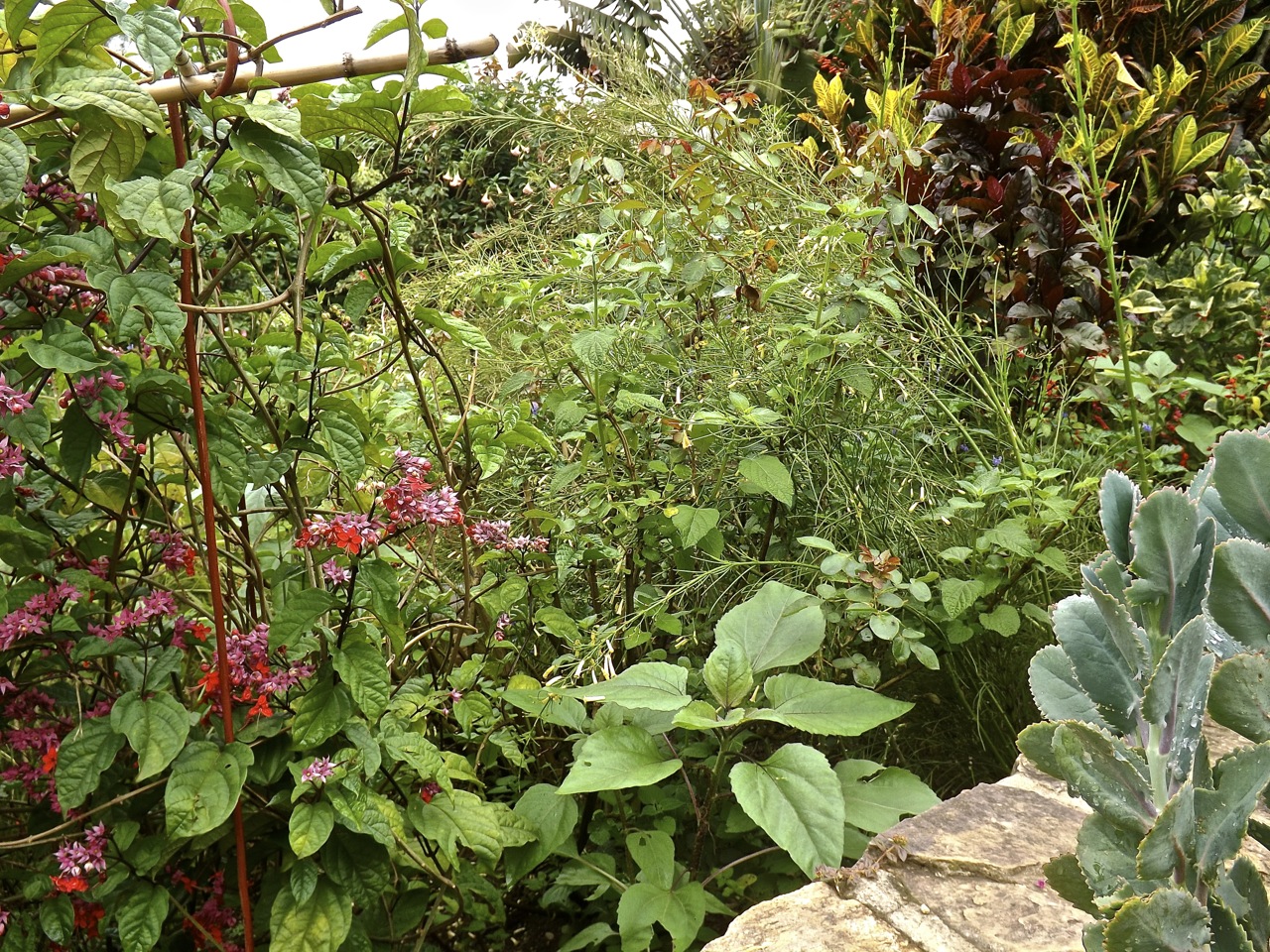
Above and below is a Clerodendrum thomsoniae var. delectum vine growing on plant supports in the upper bed between the two retaining walls.  You can also see the top of one of four burgundy-flowered sunflowers that are coming up in this mostly red (with some pink) section.
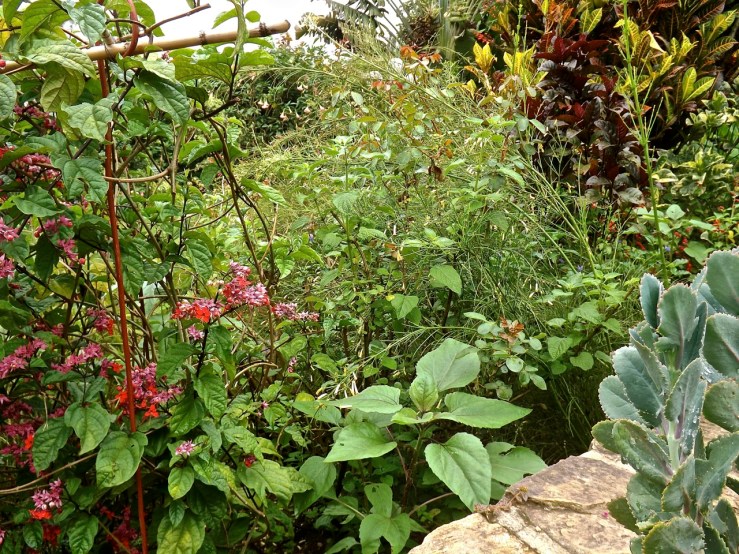
One of four burgundy sunflowers coming up in a mostly red-flowing area.

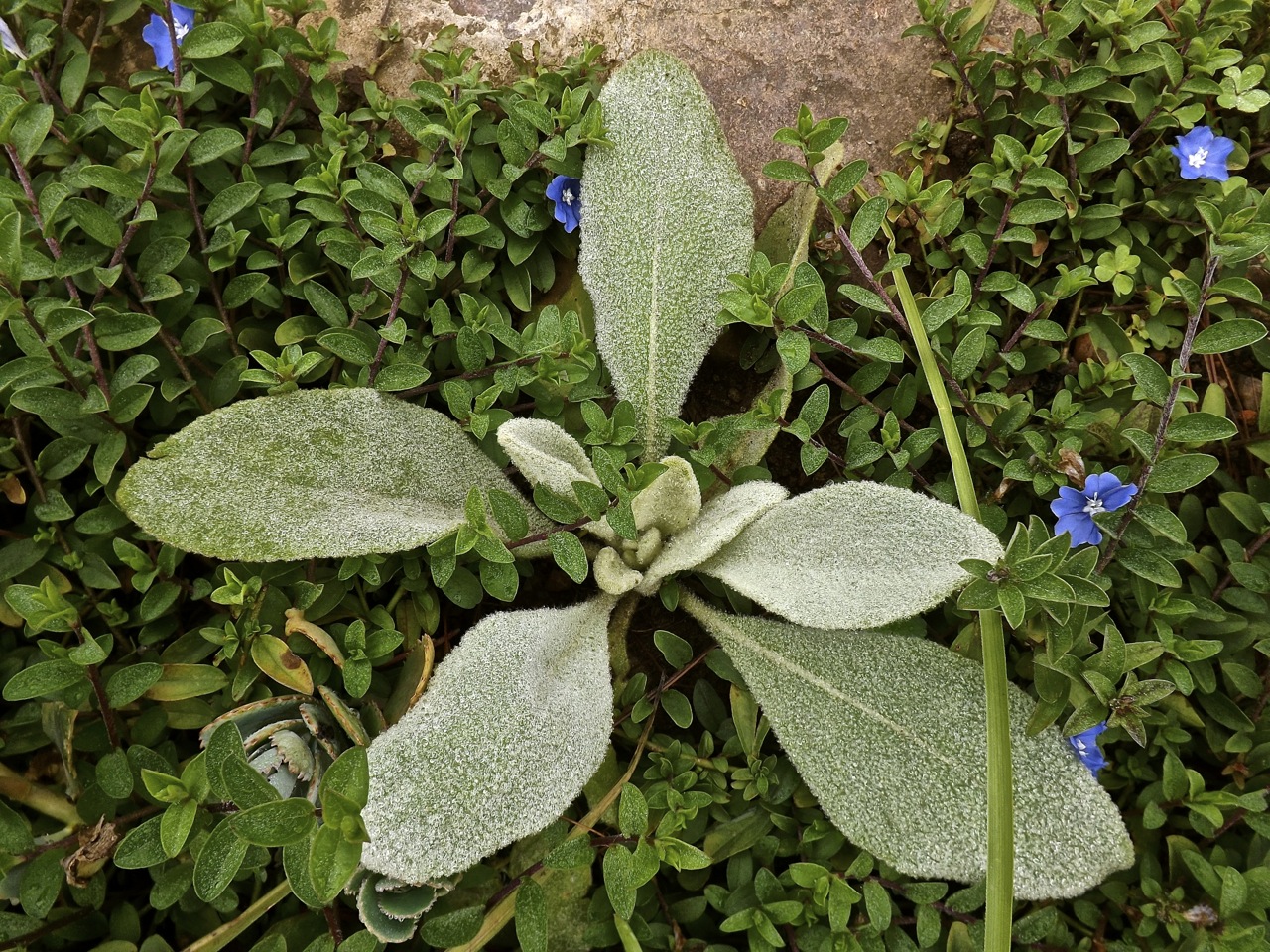
Finally, below is a baby wild mullein coming up from seed from my parents’ Virginia garden.
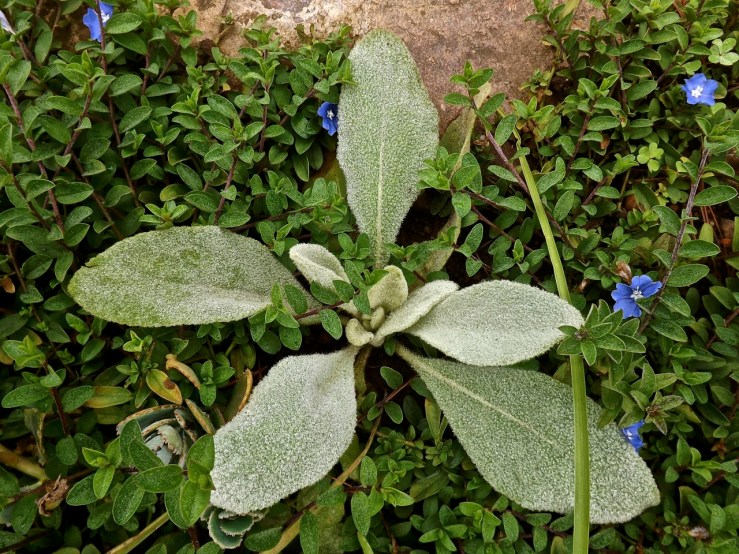
Wild mullein from seeds from my parents' Virginia garden.

The bright blue flowers are Evolulus ‘Blue Sapphire.’

I’m looking forward seeing the garden with fresh eyes when I return.

New York City is on my schedule.  Of course, I will walk through the High Line, and there’s a show on Impressionism and 19th c. fashion at MOMA that I want to see.  Any other recommendations for NYC in April?

To scroll through larger images, click on ‘Continue reading’ below and then on any thumbnail in the gallery.
Continue reading “Our garden: March going out”

Logs and sticks, Malvern

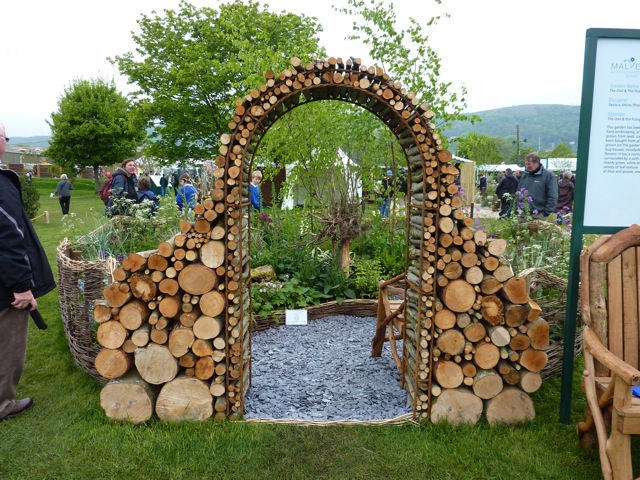
Log arch at 2010 Malvern Show.  Photo by The Enduring Gardener.

I saw this photo on the blog The Enduring Gardener and thought of my parents, who had their forest thinned last fall, which left a lot of woody debris.  A simple metal frame holds the logs and sticks in place.

Are you currently cleaning up from a lot of winter tree damage?

This log arch was a display at the 2010 Malvern Spring Gardening Show in the U.K. The photo is © The Enduring Gardener, which is written by Stephanie Donaldson, Contributing Garden Editor of Country Living (U.K.) magazine. She also co-authored The Elements of Organic Gardening with the Prince of Wales.

Her blog’s “Inspiration” page has a lot of great photos of the Chelsea and Hampton Court garden shows.