The Sunday porch: Savannah, Ga.

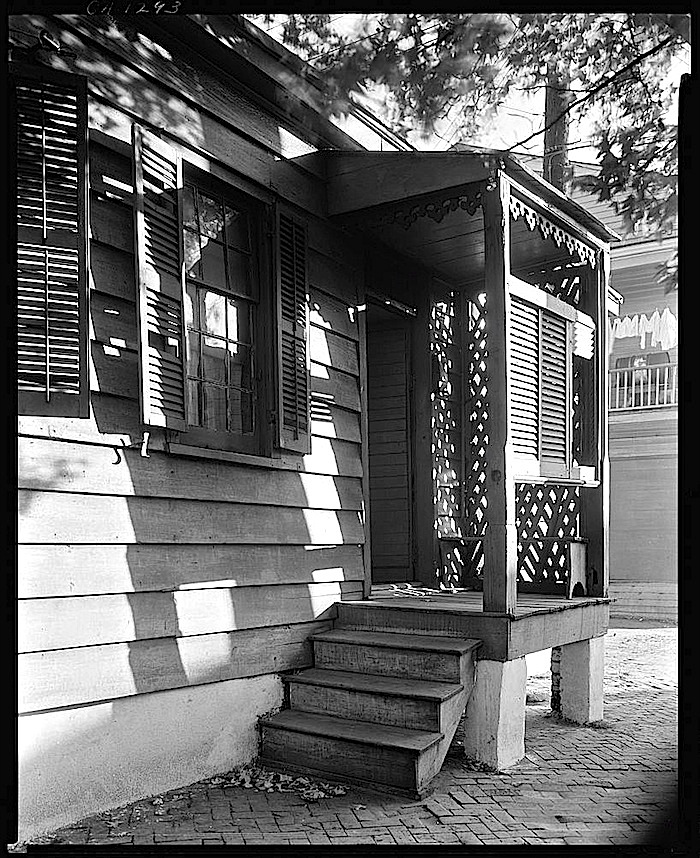
Price Street, F.B. Johnston, via Library of Congress“Price Street corner York Lane,” Savannah, Georgia, 1939 or 1944, by Frances Benjamin Johnston, via Library of Congress Prints and Photographs Division.

The Library of Congress catalogue entry for the image above includes the note: “Once in the ‘Restricted District,’ hence the lattice work” — meaning the house had been a bordello. (That would also explain the panel of shutters across the front.)

Looking at Google Maps street view, a very similar house (built 1828) at one of the four possible corner sites still stands in good condition. Across York Lane from it is a two-story building that was probably there at the time of the photo. There are new condos on the other side of Price Street.

The Sunday porch: French Riviera

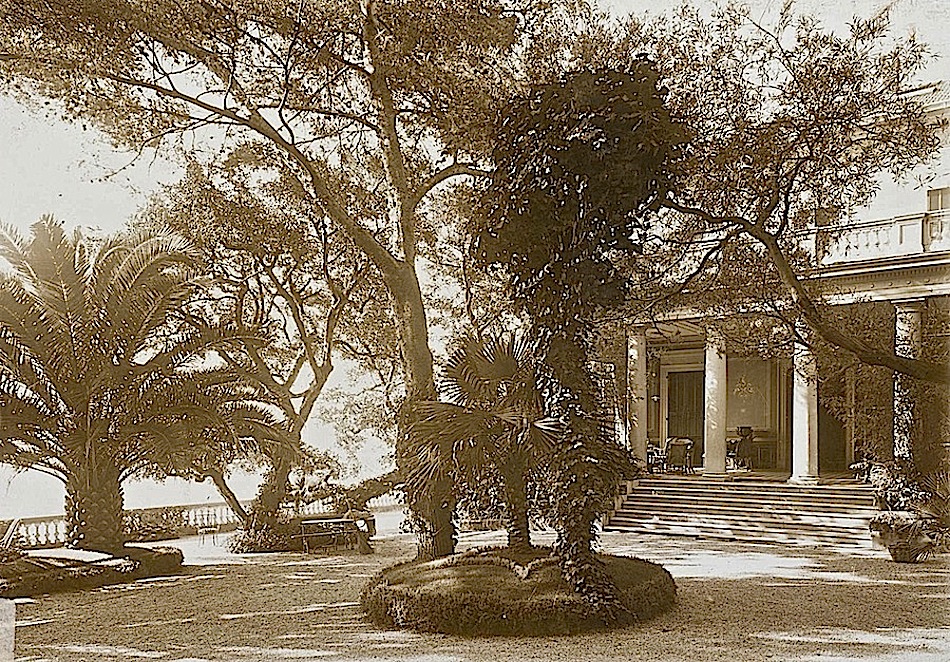
1 full view, Poincare Residence, Eze, France, ca. 1914, University Caen Basse…The property of M. [Raymond] Poincaré in Èze.  The gardens and the main entrance of the house,” ca. 1914 – ca. 1918, photographer unknown, via the Université de Caen Basse-Normandie Commons on flickr.

Èze is located on the southeastern coast of France, not far from Nice. The Mediterranean was just beyond the railings above.

Detail, Poincare Residence, Eze, France, ca. 1914, University of Caen Basse-Normandie

(To scroll through a number of larger versions of the photo, click on ‘Continue reading’ below and then on any thumbnail in the gallery.)

Raymond Poincaré was President of France from 1913 to 1920.  He had been both Prime Minister and Foreign Minister (simultaneously) during all of 1912.

. . . I  decided this time not to go to Sampigny but to stay somewhere on the Mediterranean. After brief research, I rented, in the Alpes-Maritimes, at the foot of the small town of Saracen Eze-sur-Mer, a quiet villa, hidden in the pine trees. . . . [I]t has an incomparable view of the sea. By winning this early retirement, I am not unhappy to escape a little to the embrace of my job, but at least I have the impression that the state of Europe, while still unstable, allows me to breathe more freely. Peace seems restored in the Balkans. Our relations with all Powers are normal. Whatever the new influences acting on William II, France was determined not provide any pretext for war. It’s almost a feeling of rest and security I feel, when I’ll salute the French Riviera the spring of 1914.

— Raymond Poincaré, from his memoirs.

You can see an image of the long terrace of the house in April 1914 here.

Continue reading “The Sunday porch: French Riviera”

Vintage landscape: the lagoon

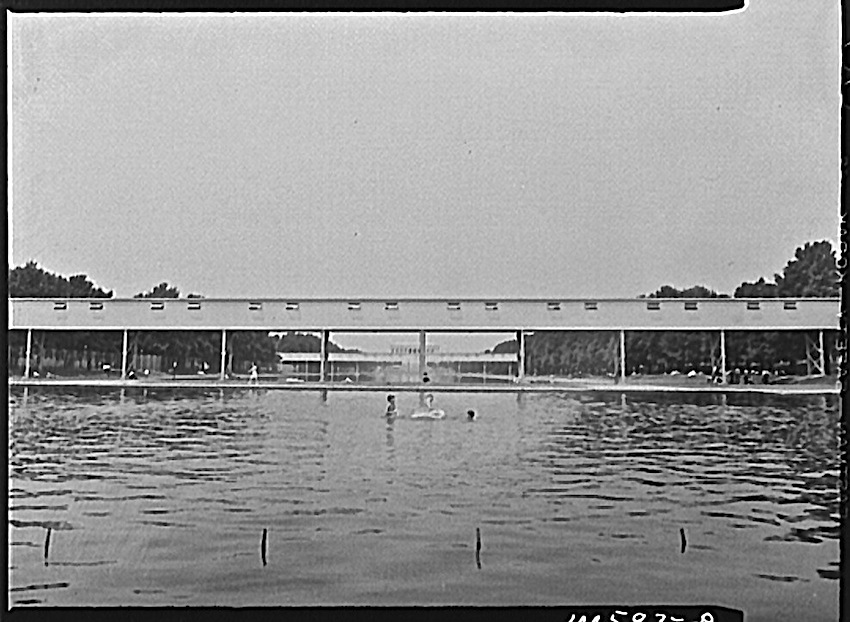
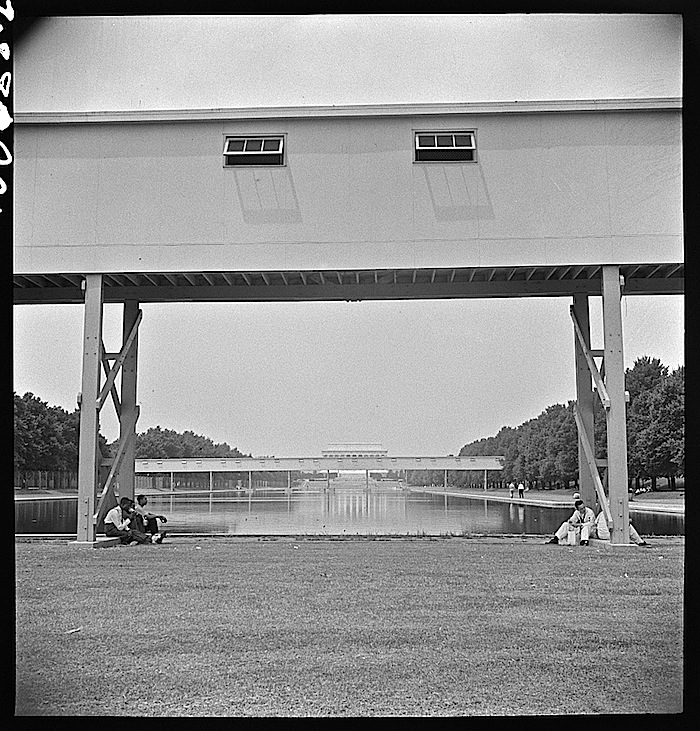
Washington, D.C., in July 1942, by Marjory Collins, via Library of CongressThe Lincoln Memorial Reflecting Pool in July 1942.  Two raised corridors crossed it and connected Department of War buildings. Photo by Marjory Collins, via Library of Congress Prints and Photographs Division.

Above, small boys were swimming in the pool. Collins called it a “lagoon” in her original photo caption — an allusion to Washington, D.C.’s tropical summer weather.

Washington, D.C., in July 1942, by Marjory Collins, via Library of Congress

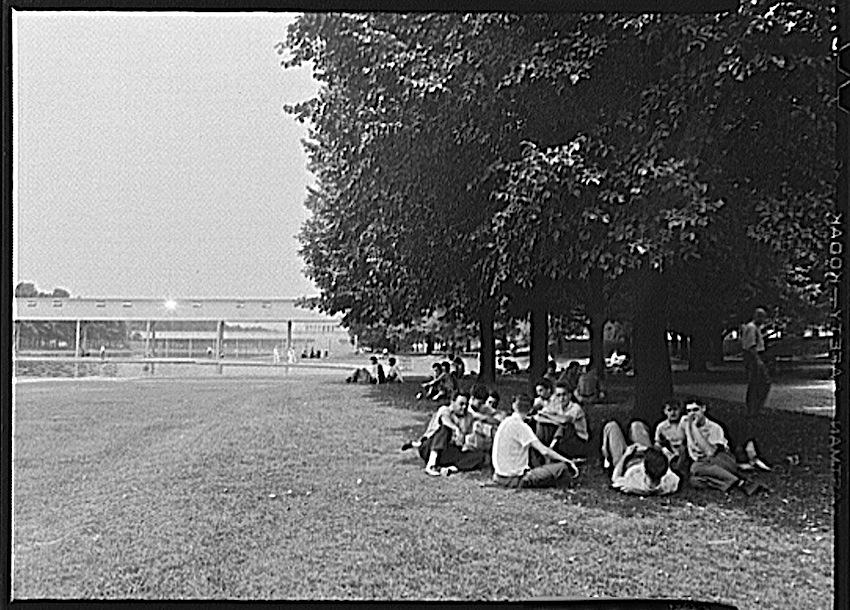
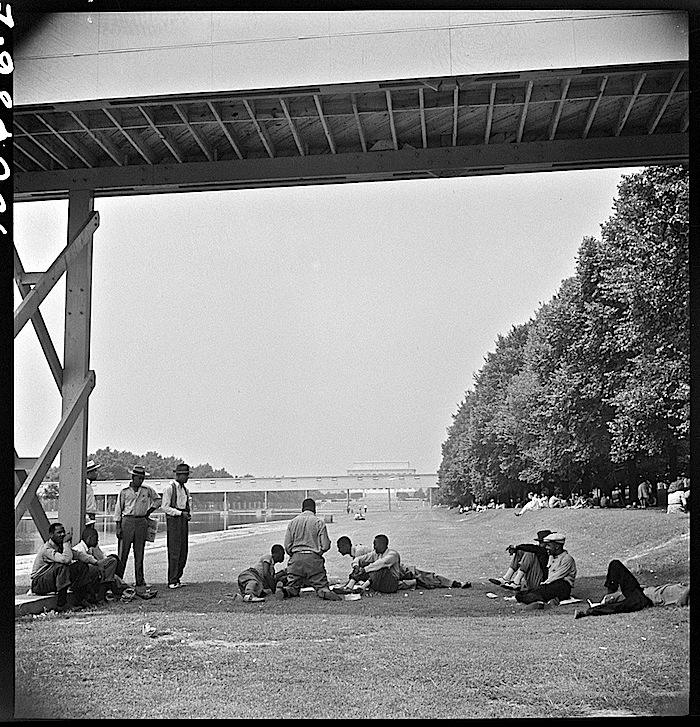
Along the sides of the water, under the trees, government workers were eating lunch on the grass.

Washington, D.C., in July 1942, by Marjory Collins, via Library of Congress

These men took advantage of the additional shade cast by the structures.

Washington, D.C., in July 1942, by Marjory Collins, via Library of Congress

“Temporary” buildings for various military branches were constructed along the north side of the pool in 1918.  The offices on the south side — and the corridors — were added during World War II.

The walkways were removed in 1947.  The last of the buildings came down in 1970.

Life in gardens: July 1942

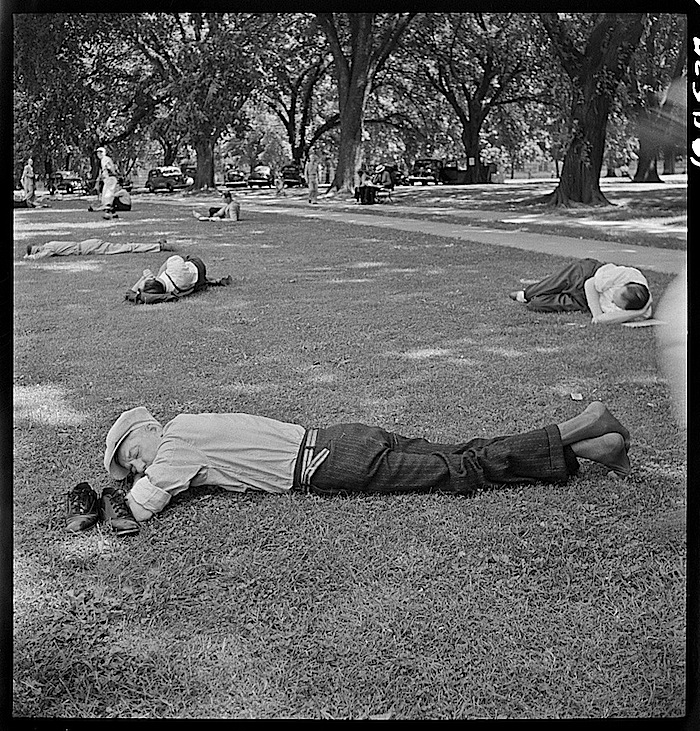
Washington, D.C., in July 1942, by Marjory Collins, via Library of CongressA hot Sunday in Washington, D.C., before air-conditioning.

All three photos of Ellipse Park by Marjory Collins, via Library of Congress Prints and Photographs Division.

Washington, D.C., in July 1942, by Marjory Collins, via Library of Congress

The mean daytime temperature that month was 86° — the high was 98°; the low was 78°. The daily high for humidity ranged from 76% to 100%.

Washington, D.C., in July 1942, by Marjory Collins, via Library of Congress

In the dog days of summer . . .

The wind lifts up my life
And sets it some distance from where it was.

Meena Alexander, from “Dog Days of Summer

The Sunday porch: Mechanicsville, Md.

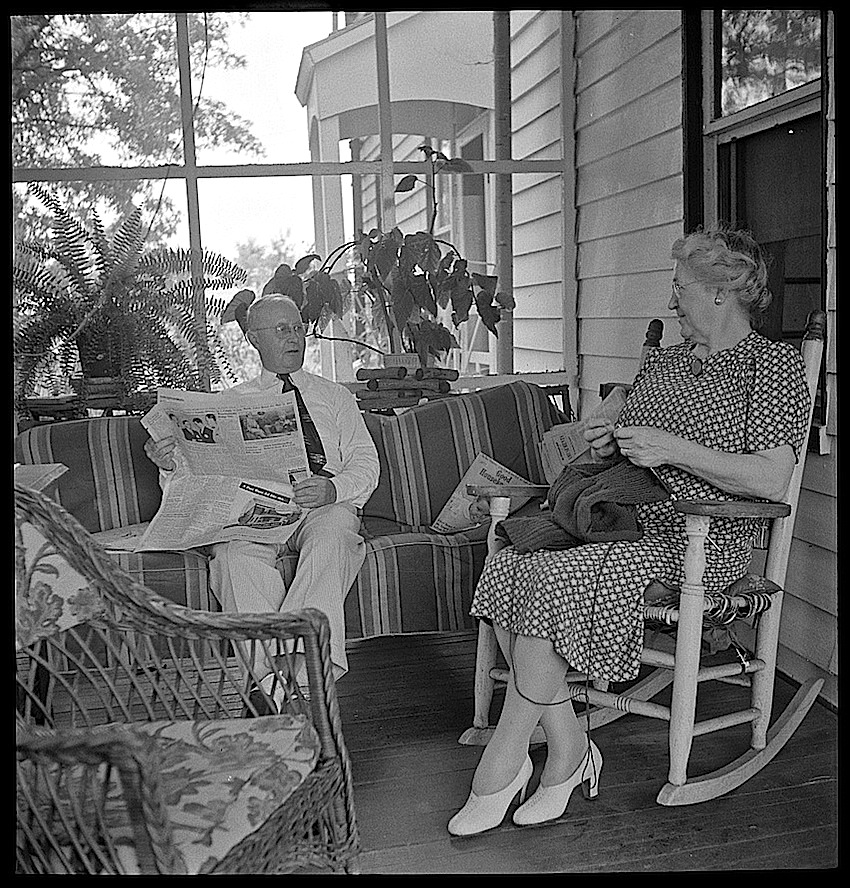
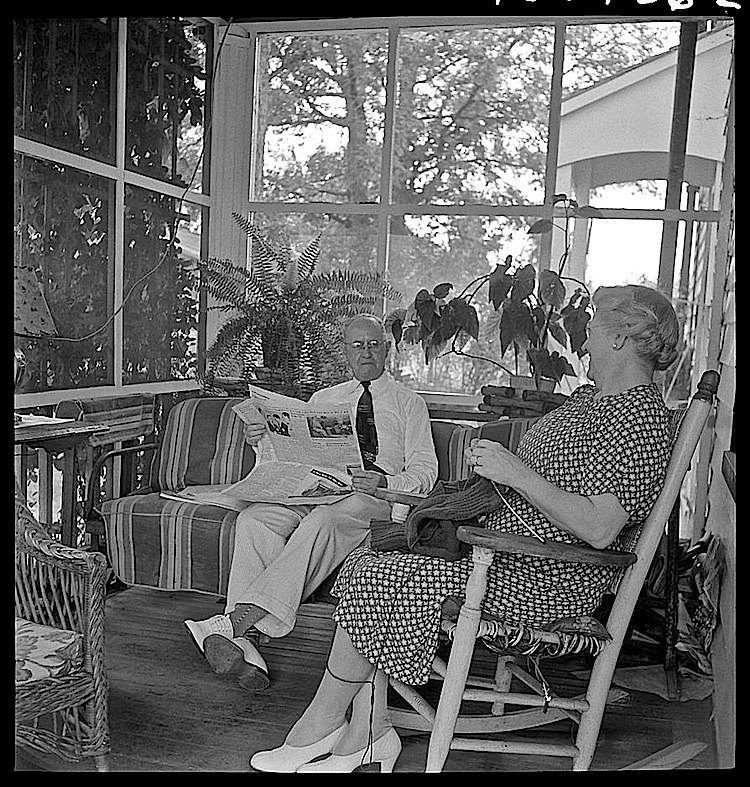
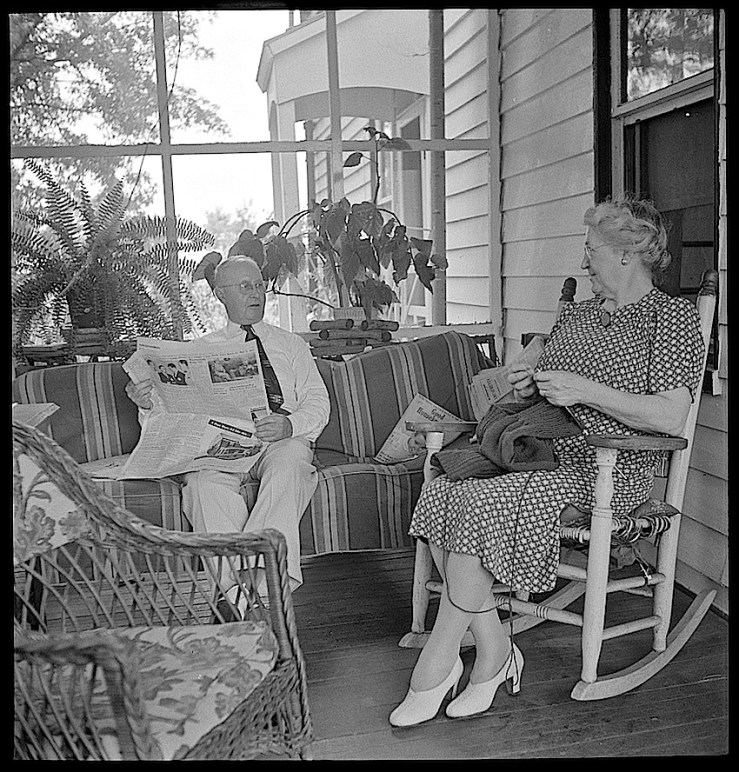
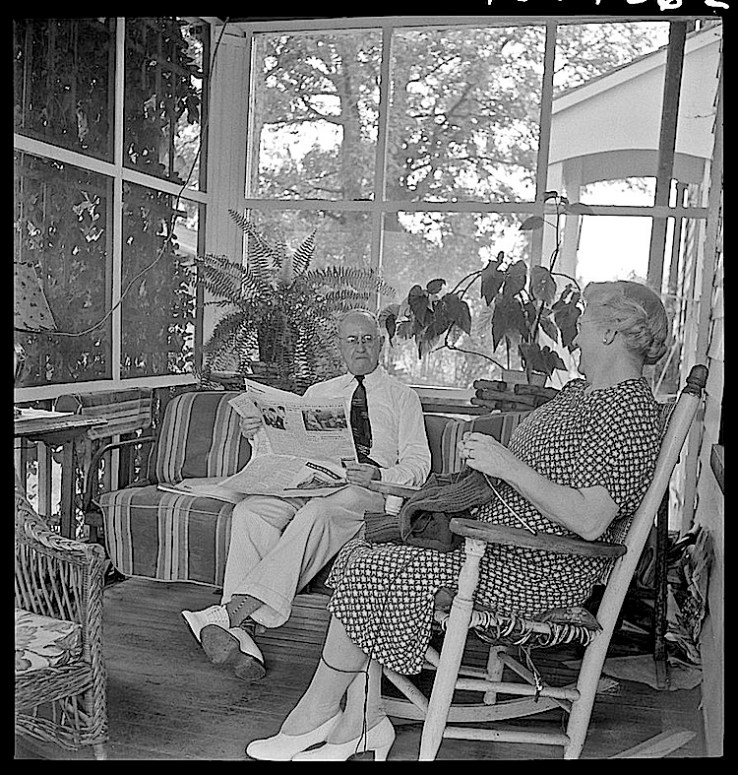
Mechanicsville MD 2, Library of CongressMr. and Mrs. Herbert on their porch in Mechanicsville, Maryland, June or July 1942, by Marjory Collins, via Library of Congress Prints and Photographs Division (all three photos).
Mechanicsville MD, Library of Congress

All the elements of a good screened porch are here: a slipcovered glider and a wicker chair, a rocker with a cushion (because the caned seat is nearly gone), a Boston fern and an angel-wing begonia, a newspaper and a copy of Good Housekeeping.  Both Herberts are wearing summertime white shoes.

Only a little iced tea could make it any nicer. Judging from the way they are dressed, I would guess this is a Sunday afternoon.
Mechanicsville MD house, Library of Congress

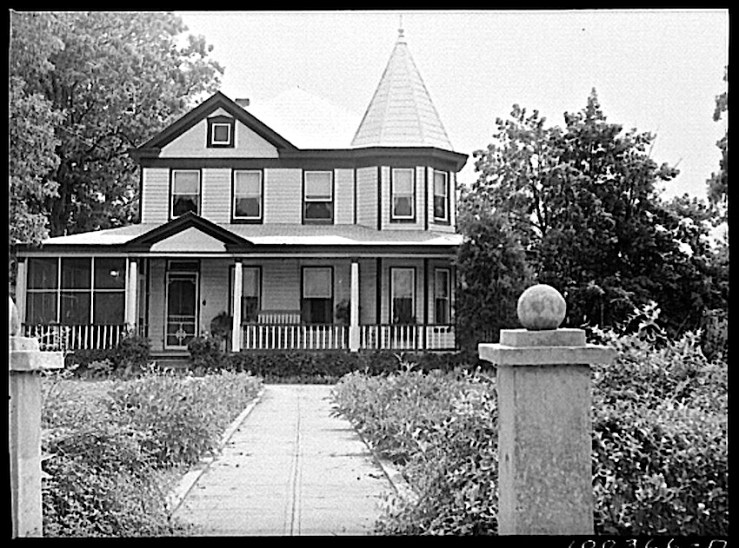
The couple — Charles P. and Bessie D. — built their Queen Anne house in 1909, although, curiously, it appears that they only bought the land beneath it in 1914, according to a Maryland Historic Sites Inventory Form filled out in the 1990s or later.

Charles had moved to the the area to be an express agent for the railroad.  Bessie was the town dressmaker. They lived in the house until their deaths during the 1960s.

A photo attached to the Inventory Form shows that the screening on the east side of the porch was later removed and some lacy trim was added along the entire front.  I could not find the house in a current Google Maps satellite view, however.

As usual, I wish we could see more of the garden.

Marjory Collins took these pictures about six months after moving to Washington, D.C., to join the documentary photographers of the U.S. Office of War Information.  Her “upbeat, harmonious images” of that time “reflected the OWI editorial requests for visual stories about the ideal American way of life,” according to a biographical essay about her by the Library of Congress.