A morning in the weeds

Preparing for a Weeding Day at Dumbarton Oaks Park, Washington, D.C./enclos*ureIs this not a picture of fun? Two buckets full of loppers, pruners, saws, and even a couple of machetes.

Our recent visit to Washington, D.C., coincided with a September Saturday “Weeding Day” at Dumbarton Oaks Park, sponsored by the Dumbarton Oaks Park Conservancy.  I have wanted to volunteer for one of these days for a couple of years — ever since learning about the group’s efforts to restore this Beatrix Farrand masterpiece, which is located behind the more famous Dumbarton Oaks Gardens.
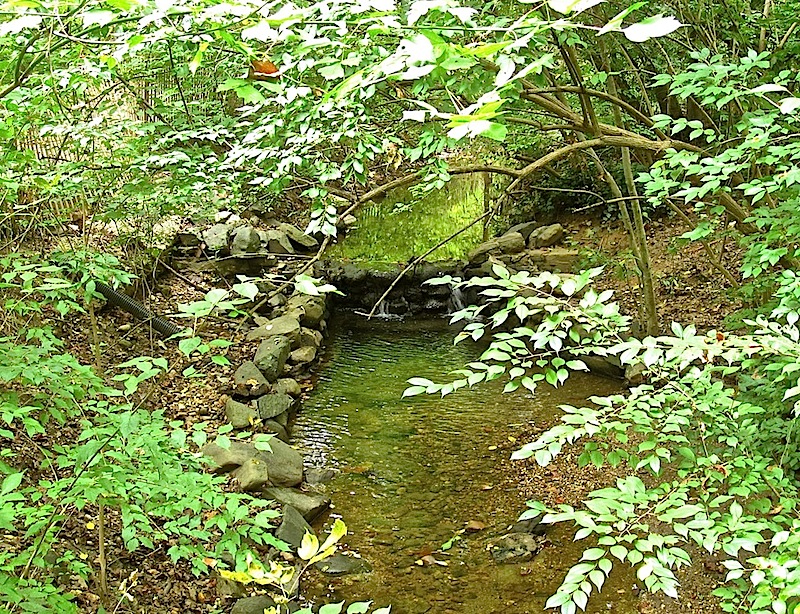
The stream and a dam at Dumbarton Oaks Park, Washington, DC -- a Beatrix Farrand masterpiece now undergoing restoration/enclos*ure
Owned by the National Park Service since 1940, the park has suffered from invasive exotic plants and water runoff.

The morning started with  Ann Aldrich, the Conservancy’s Program Director, making sure we knew how to recognize poison ivy.  Then we all doused our exposed skin in Tecnu, a soap that mitigates the effects of exposure.

We learned that poison ivy was not one of the weeds we would be pulling — it is native to the area and an important source of (protein) food for birds.
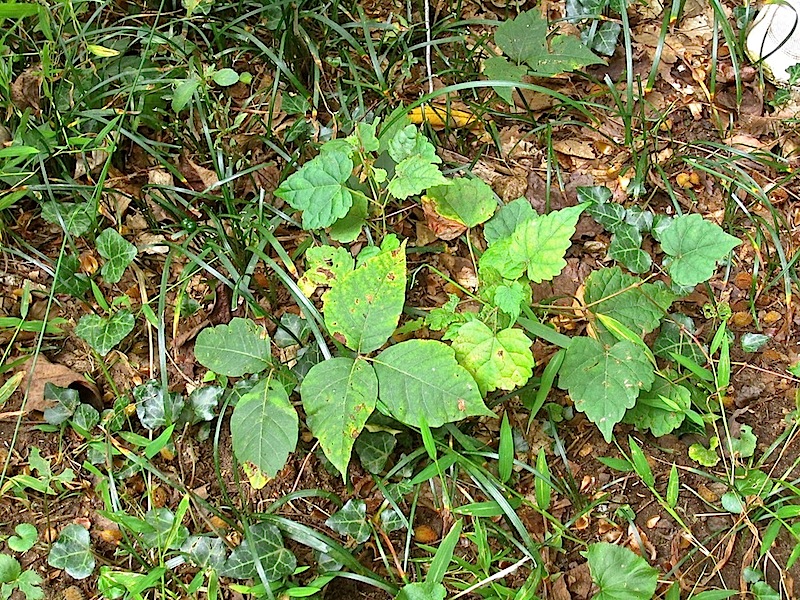
Poison Ivy plus invasive weeds at Dumbarton Oaks Park/enclos*ure
(Good) poison ivy surrounded by (bad) porcelain berry, English ivy, Japanese stilt grass, and liriope.

Our enemies were Japanese stilt grass, pokeweed, English ivy, tree of heaven, wild grape, porcelain berry vine,* and multi-flora rose.

We were clearing a meadow area just above the stone pump house (no. 2), on the right in the drawing below.
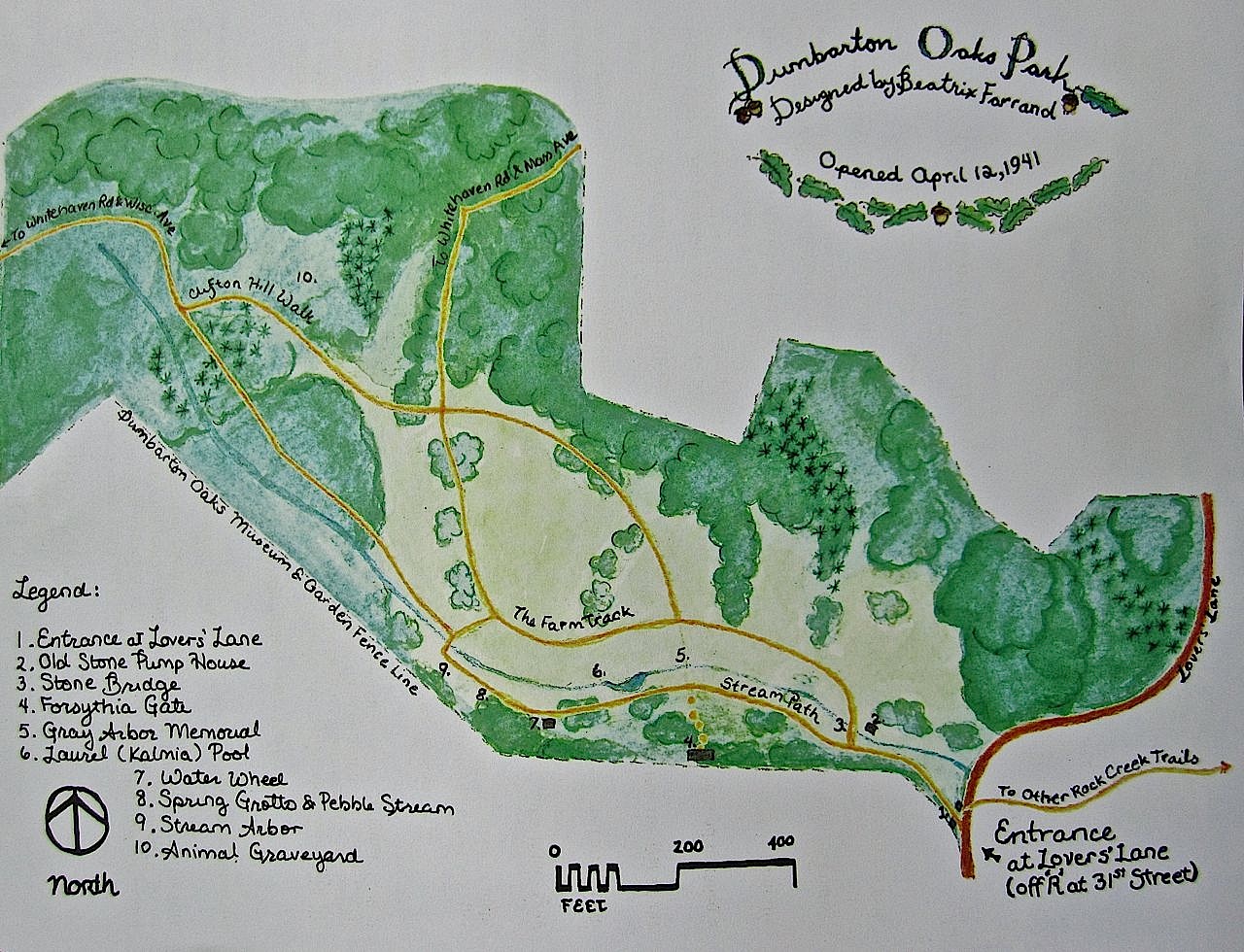
Plan of Dumbarton Oaks Park, Washington, D.C./enclos*ure

Below is a picture of the area before we started. . .
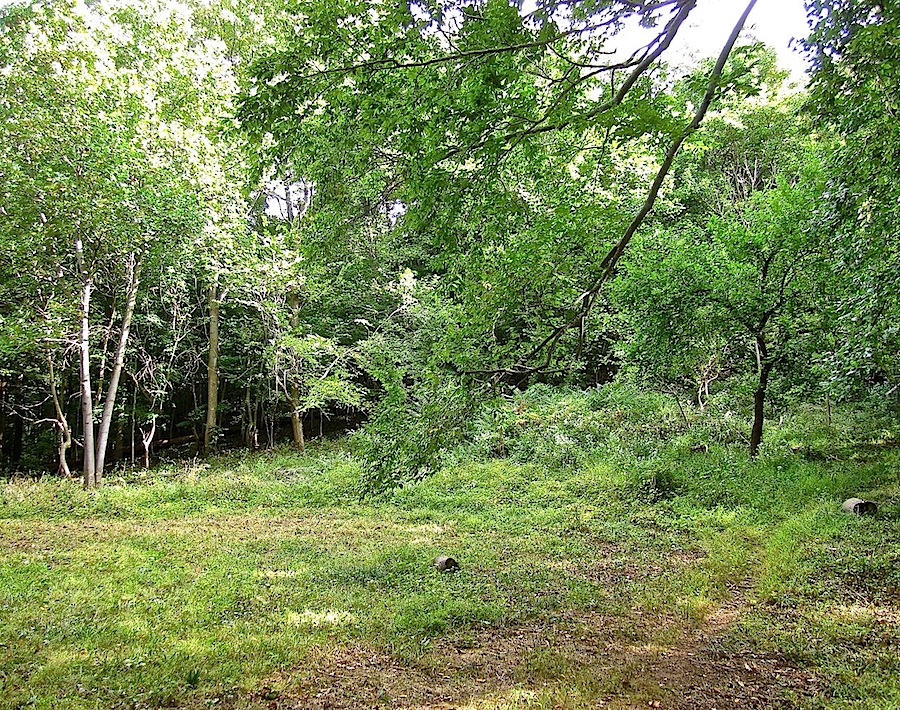
A meadow in Dumbarton Oaks Park before pulling invasive weeds/enclos*ure

And below is what it looked like after we finished (about 3 1/2 hours later).  We probably would have cleared out more above the old log, but there was a bees’ nest on the other side.
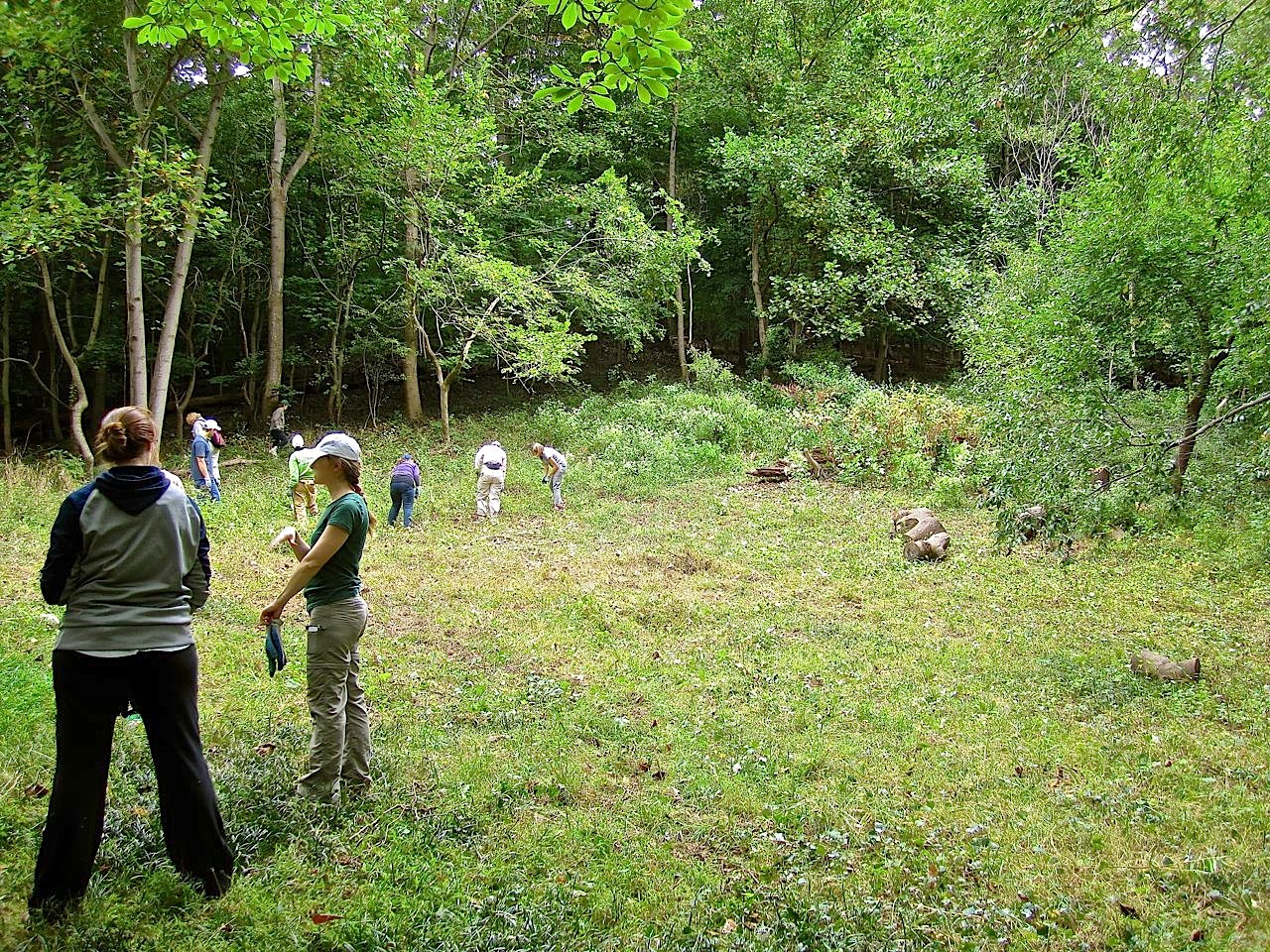
A meadow at Dumbarton Oaks Park after pulling invasive weeds/enclos*ure

Ann has spent many a weekend this summer leading garden enthusiasts, college students, and D.C. schoolchildren in “weed warrior-ing.”  There is so much to do, and I am so impressed with the group’s ambitious commitment to this lovely place.
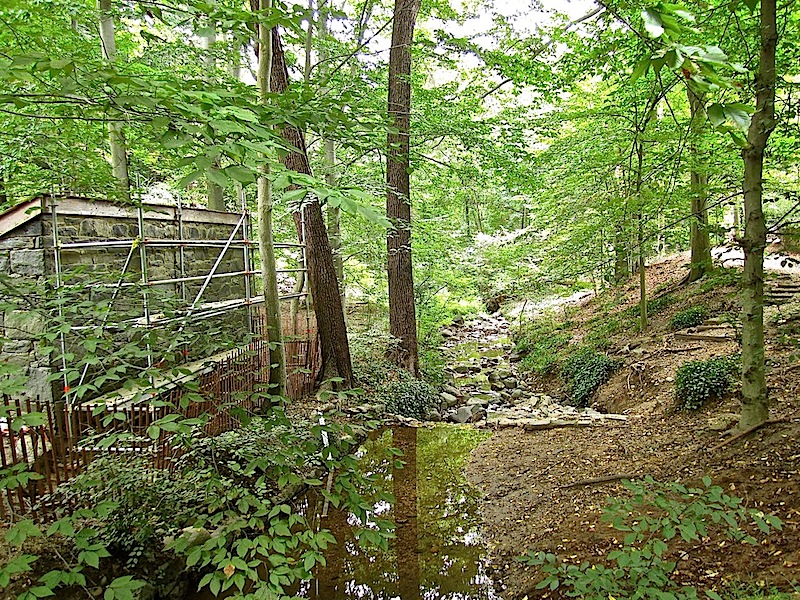
The stream at Dumbarton Oaks Park, now under restoration/enclos*ure

As I was leaving, I stopped to admire the Arts and Crafts-style stonework of the dams that Farrand installed all along the little stream that runs through the park.
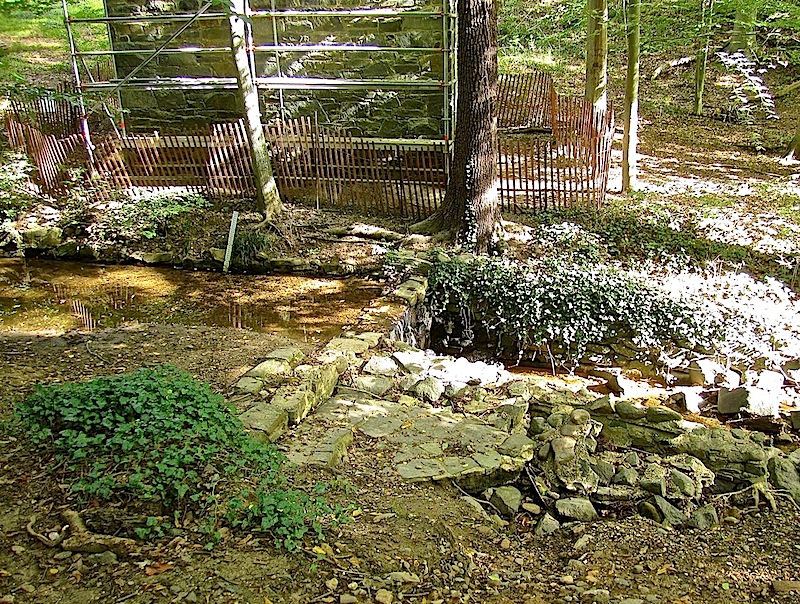
Stone work slated for repair by the Dumbarton Oaks Park Conservancy/enclos*ure

The Conservancy was just about to have a contractor make repairs to this area when the government shutdown put a halt to even volunteer efforts. (The Conservancy supports and is supervised by the National Park Service.)  I  hope the work is underway now.  Earlier this year, the group was able to place compost filter socks (below) near the Lovers’ Lane entrance to the park.
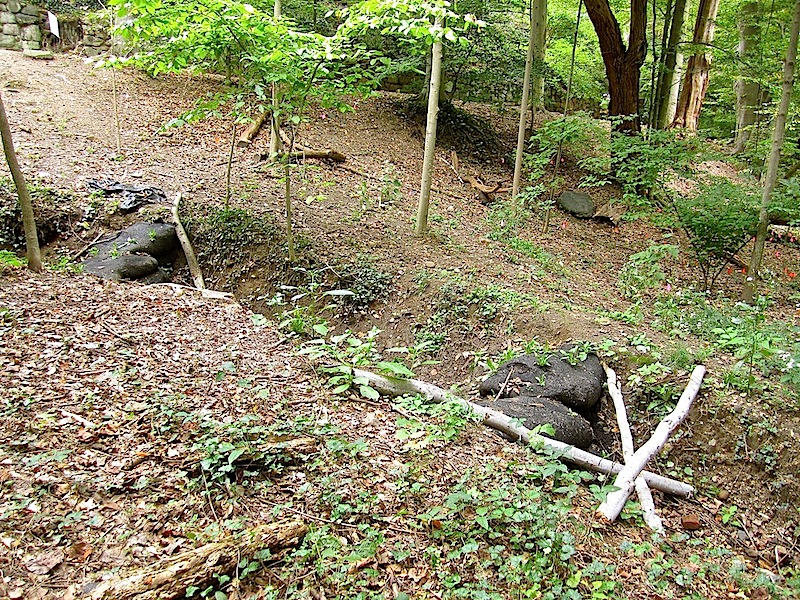
Compost filter socks in Dumbarton Oaks Park, Washington, DC. The park is undergoing restoration/enclos*ure

They are preventing further damage from the water runoff that comes shooting down the small asphalt road that runs along Dumbarton Oaks Gardens.
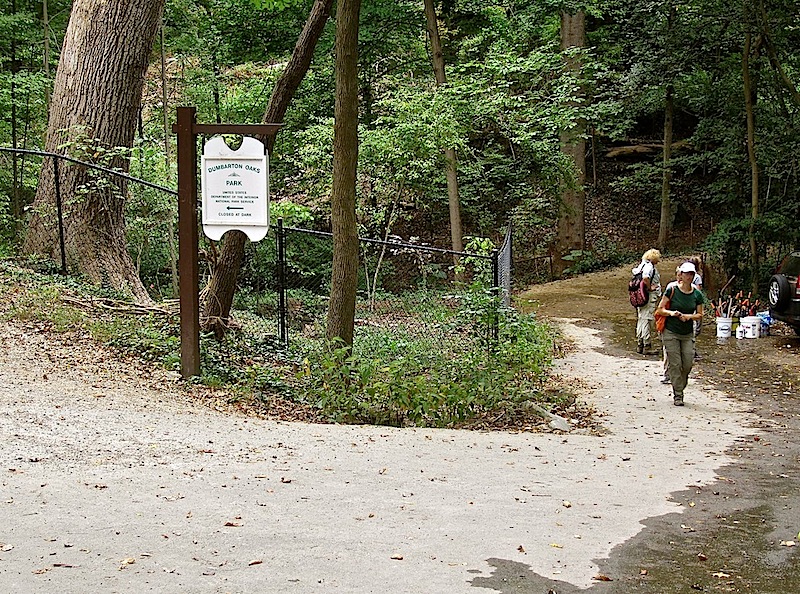
The entrance to Dumbarton Oaks Park, Washington, DC/enclos*ure

I had a great time and I will definitely do it again when we move back to Washington (the park is an easy walk from our house).  If you live in the D.C. area and would like to help, click here and ask to be put on the Conservancy’s mailing list.

Dumbarton Oaks Park Conservancy is also holding a fundraiser on November 7, 6:30 p.m., at The Josephine Butler Parks Center.  Author Richard Guy Wilson will speak on “Edith Wharton at Home:  Life on the Mount.”  (Wharton was Farrand’s aunt.)  Tickets are $35; click here for more information.


* Farrand actually specified porcelain berry vine to be grown over her arbors, which just makes me shudder.
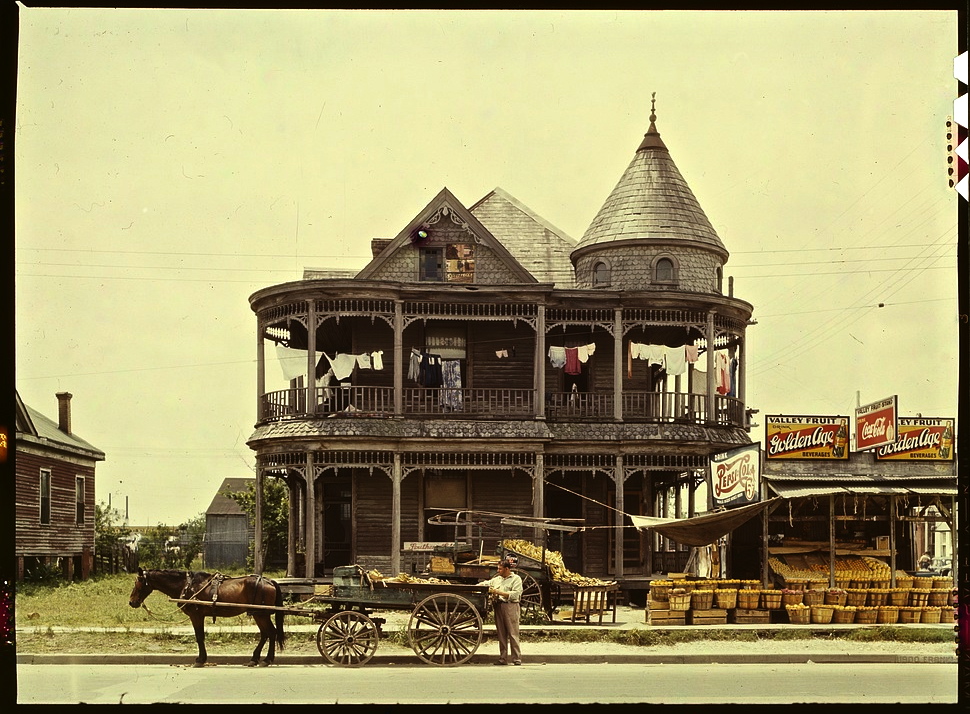
The Sunday porch: Houston, Texas

Old house in 1940s Houston, by John Vachon, Library of Congress

Another photo by John Vachon — an old house with a double porch in Houston, Texas, May 1943.*  I love the tower room.

You really need to click on the photo and enlarge it to enjoy all the details of this one.

Sharp-eyed commenters on the Library of Congress’s Flickr Commons project noticed that the address on the curb is 1900 Franklin Street. The location is currently a parking lot next to the US Route 59 overpass, close to Minute Maid Park.


*via Farm Security Administration/Office of War Information Color Photographs Collection, Library of Congress.

Both sides now

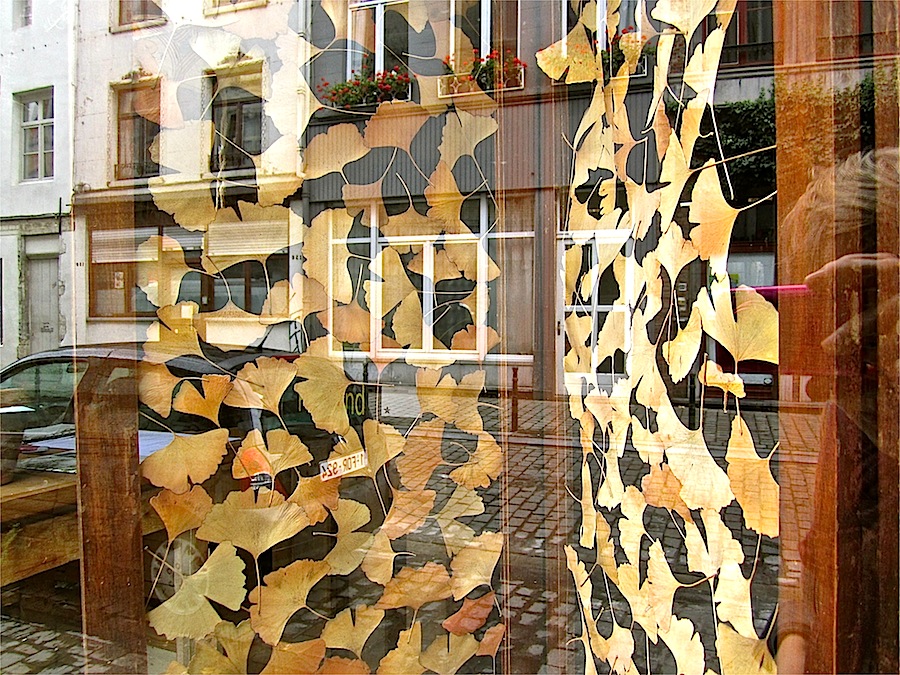
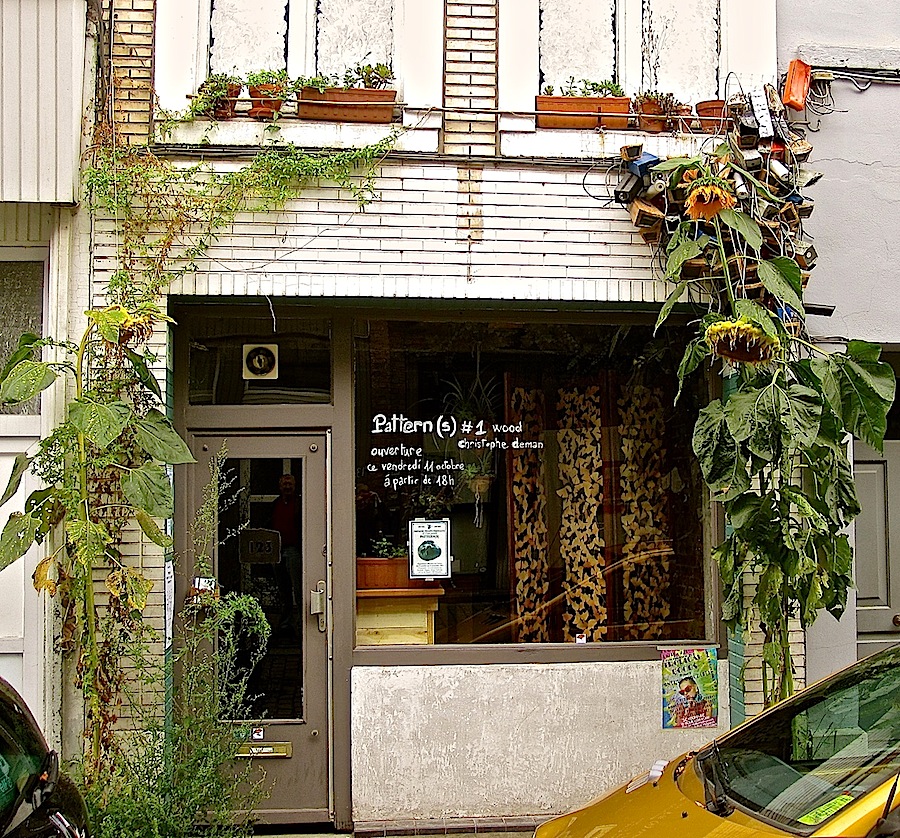
Gallery in Dansaert, Brussels/enclos*ureThe front of this small gallery on Rue de Flandre (or Vlaamsesteenweg) in Dansaert shows how Brussels can be both charming and a little grim at the same time.

Gallery in Dansaert, Brussels/enclos*ureI took these pictures a week ago yesterday.

Gallery in Dansaert, Brussels/enclos*ureThere’s a nice appreciation of the city on The Economist’s Intelligent Life website here.

Gallery in Dansaert, Brussels/enclos*ureThe neighborhood of Dansaert starts about four blocks northwest of the Grand’Place and is definitely worth exploring, especially if you are interested in Belgian fashion design and/or food.

The gallery, Impasse Temps/Tijd Gang*, is staging a series of weekend exhibits on “Pattern(s)” between now and November 24.

Gallery in Dansaert, Brussels/enclos*ureIt is located at 123 Rue de Flandre.

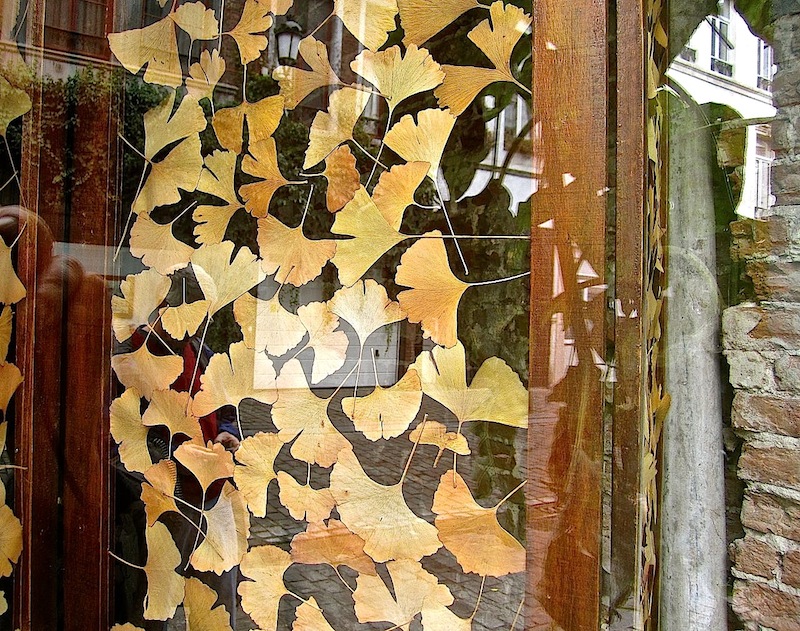
Gallery window in Dansaert, Brussels/enclos*ure

Back on the sidewalk in Washington. . .

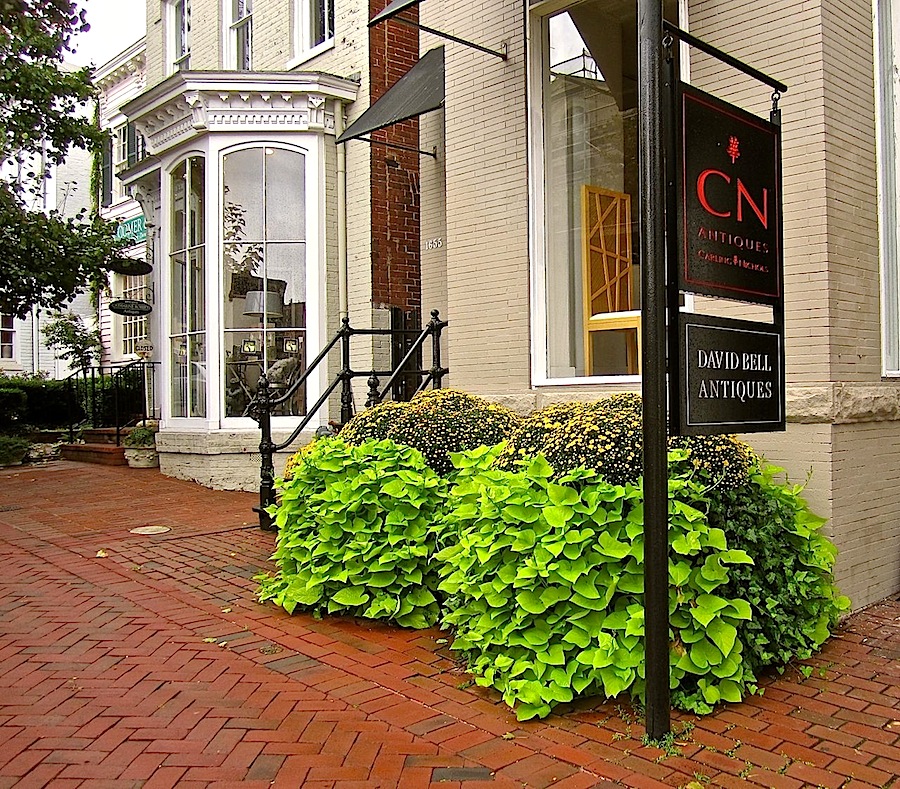
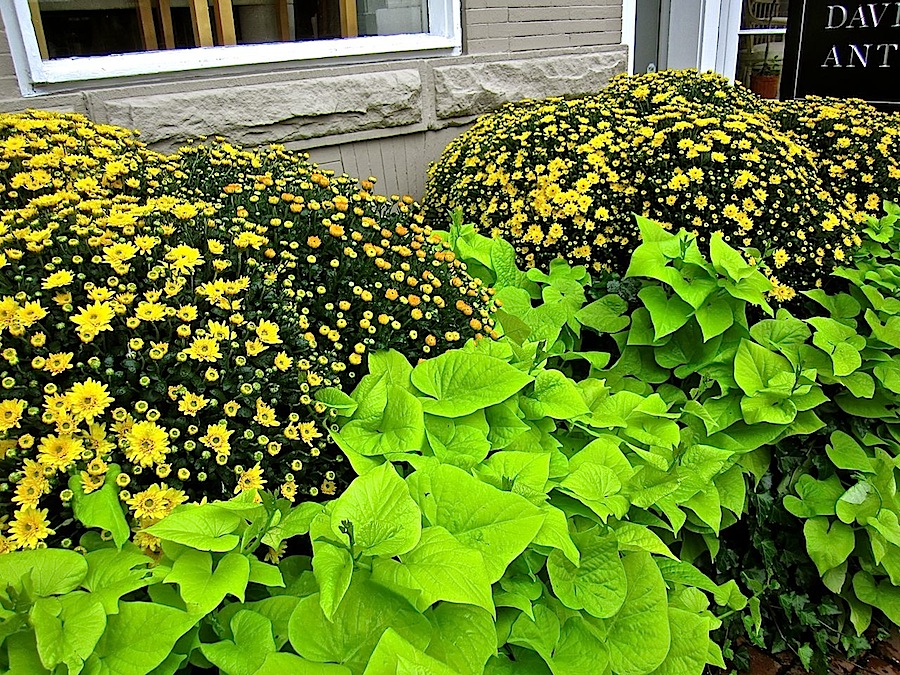
Mums and sw. potato vines in Georgetown:enclos*ureWalking along the Book Hill section of Wisconsin Avenue in Georgetown, I crossed the street to take a few pictures of this arrangement.  It wins my own “best in mums and sweet potato vines” award.  (There’s a little English ivy in there too.)

Mums and sw. potato vines:enclos*ureIt’s appropriately in front of an antiques shop that sells mid-century modern furniture.

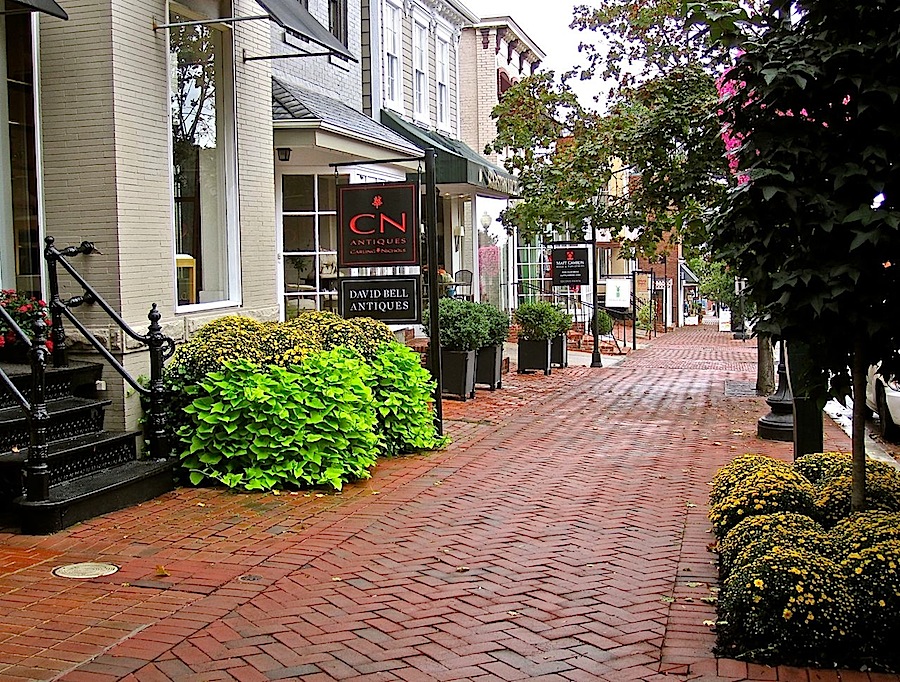
Planting in Georgetown:enclos*ure

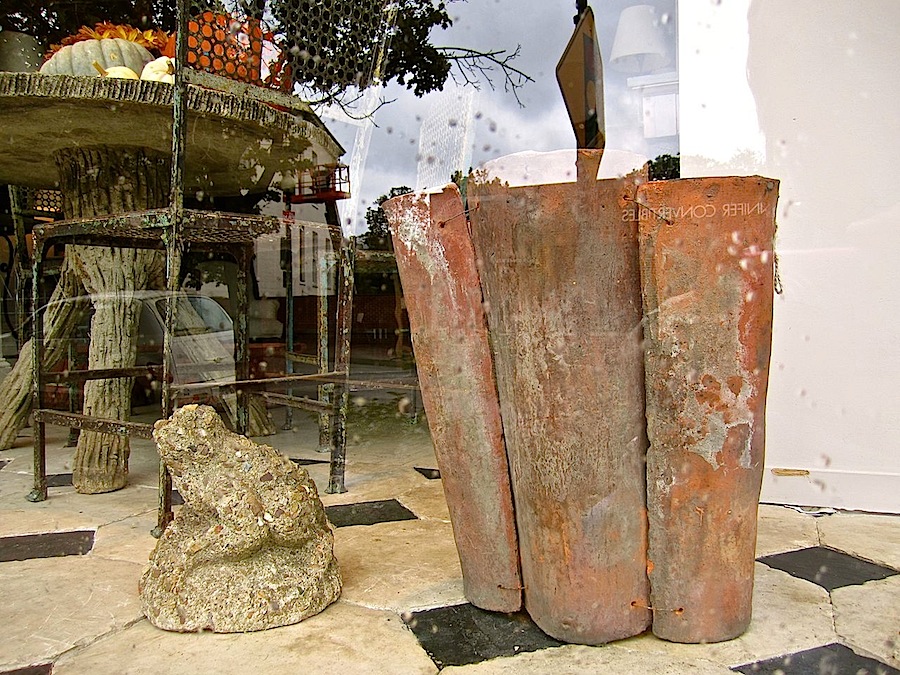
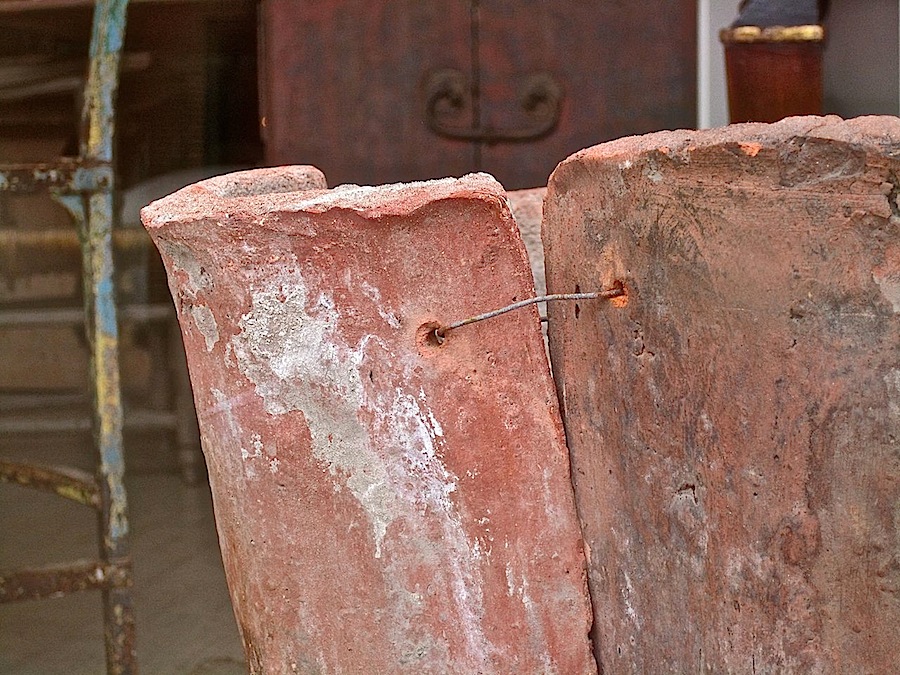
I also liked this planter made from old roof tiles at Marston-Luce a few doors down.

Roof tile planter in Georgetown shop:enclos*ureAnd I love the frog.

Detail of planter made from roof tiles, Georgetown:enclos*ure

It takes a calendar one damp day to declare fall,
weeks of dying mums to second the motion.

Lance Larsen, from “Backyard Georgics

A Sunday in the streets of Brussels

On the first day of our recent travels, we were lucky enough to arrive in Brussels on its annual “Car Free Sunday.” The streets of the city were closed to “all traffic with an engine”* from 9:00 a.m. to 7:00 p.m.

The streets were full of happy bikers, skaters, skateboarders, and walkers — in about that order. In addition, stands devoted to regional food and drink, organic farming, and ecology were set up from the Grand’Place to the Royal Palace and Brussels Park.

This slideshow requires JavaScript.

I like this garden (above slides) at the Mont des Arts. Like so many outdoor spaces in Brussels, its design successfully encompasses many centuries.

Under the rows of pleached trees, there were booths selling food and wine from France, so, bien sur, we had fois gras sandwiches for lunch.

This slideshow requires JavaScript.

A little farther east, on the street between the Royal Palace (above slides) and Brussels Park, sod had been put down over the stone block paving, and people were picnicking on every kind of organic cuisine.

I also really like Brussels Park (below slides).  It has very formal wide gravel walkways laid out in the shape of the Free Masonry symbol of an architect’s compass. Two rows of espaliered trees surround its perimeter.  But inside, there are forest-style groupings of very tall trees, long berms planted in a natural way with a variety of shrubs, and some well-used grass.

This slideshow requires JavaScript.

In the afternoon, we went back to our hotel for a rest and found that the street under our window had been blocked off for children’s activities. A local radio station had set up a stage, and, for the length of our planned nap, it featured a teenage punk rock band. I must admit they sang and played (what seemed like) their one song over and over again with some proficiency (I guess).

We ended our lovely day of walking in the neighborhood of Dansaert, along Rue de Flandre (or Vlaamsesteenweg), where the shops and residents were having a street-long yard sale/block party. At no. 17, we ate traditional Belgian food at the restaurant Viva M’Boma** (long live grandmother), which we highly recommend — as long as you eat meat.

To scroll through larger versions of all the photos above, click on ‘Continue reading’ below.


*Except for buses, taxis, some delivery vans, police, and ambulance.  The event is always in September, to coincide with the  European Week of Mobility.  I found one webpage indicating that it will be on September 16 in 2014.

**But they are normally closed on Sundays — and Wednesdays.  Main courses are between 11€ and 18€.