I have a new old salt-glazed pottery crock from the Stuttgart Saturday flea market — just the right size for a supermarket bouquet of tulips.
The market always has a lot of these pretty blue and grey pots, which were made in the Westerwald* region of Germany and range in size from egg cup to several liters. They are very affordable: normally about €5 to €12 for those big enough to hold kitchen utensils. I haven’t found anything particularly useful online about how to assess their age. The woman who sold me this one pointed out the circular ridges on its bottom as an indication that it was “very old.” But I’ve seen other pots labeled “antique” (late 19th century) on websites that have smooth bottoms. I think you just have to look for a pleasing pattern and patina combination.
To see what other garden bloggers have put in vases today, please visit Cathy at Rambling in the Garden.
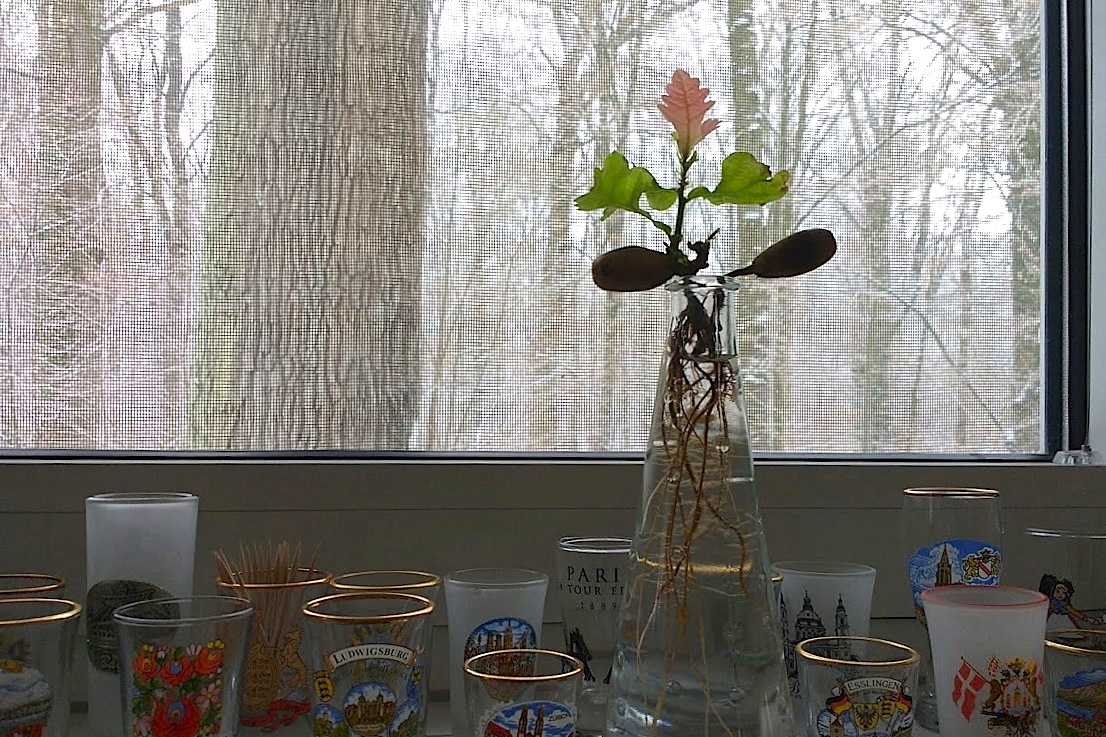
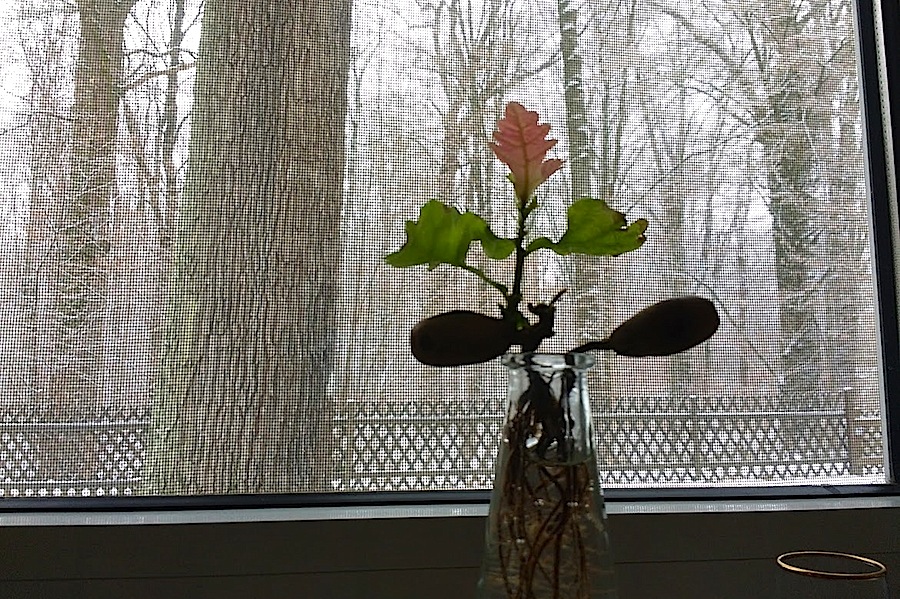
In November, I picked up a few acorns from the backyard that had begun to poke out little white roots. I balanced them over water in the tops of bottles and these two survived.
To see what other garden bloggers have put in vases today, please visit Cathy at Rambling in the Garden.
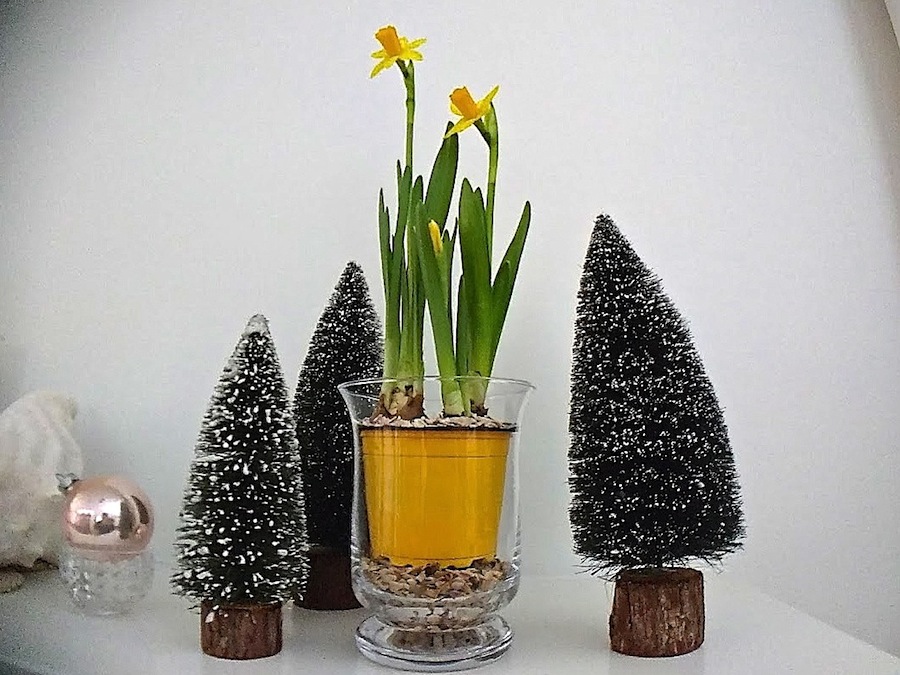
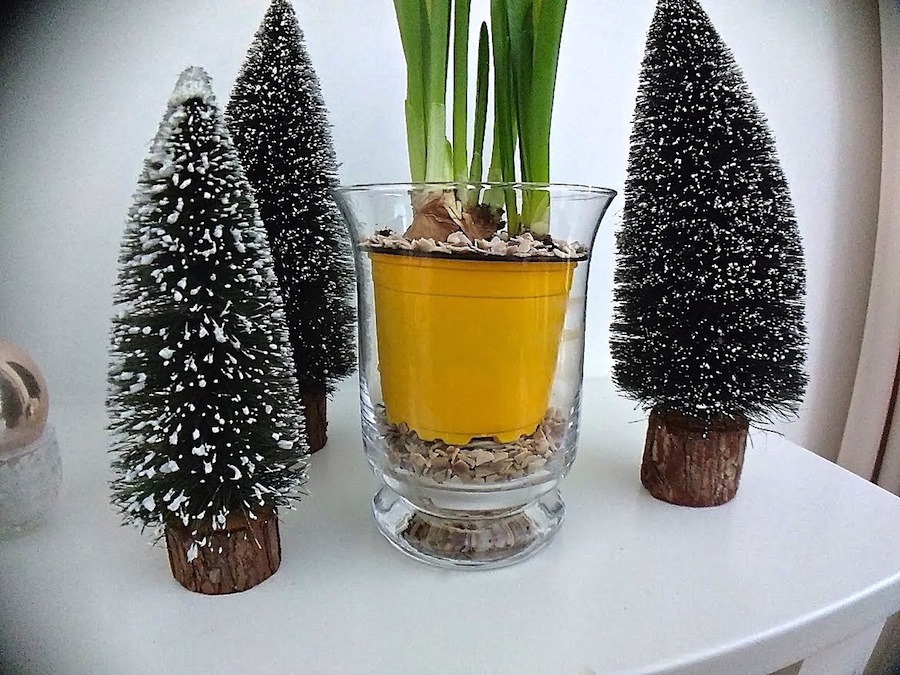
On Monday, we went downtown for lunch and a stop at Stuttgart’s Markthalle or indoor food market. I also stuck my head in the stylish home goods store that occupies its second floor and discovered that it was having a 50% off sale on Christmas ornaments. So I bought five of these little trees, which I had coveted earlier in December.
At the same store, I also picked up some forced daffodils (1.90 euros). I liked the bright yellow plastic pot that they were already planted in, so I just dropped them into a little glass vase with some shell chips.
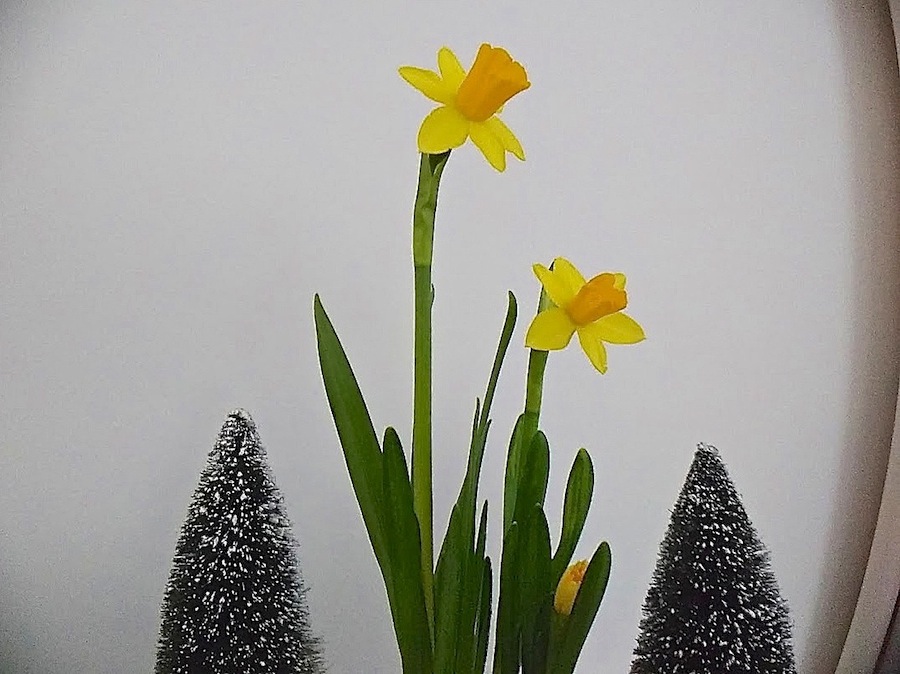
Two of the buds opened up overnight. Very early thoughts of spring. . .
To see what other garden bloggers put in vases yesterday, please visit Cathy at Rambling in the Garden.
I want to bring you a little late summer update on this garden.
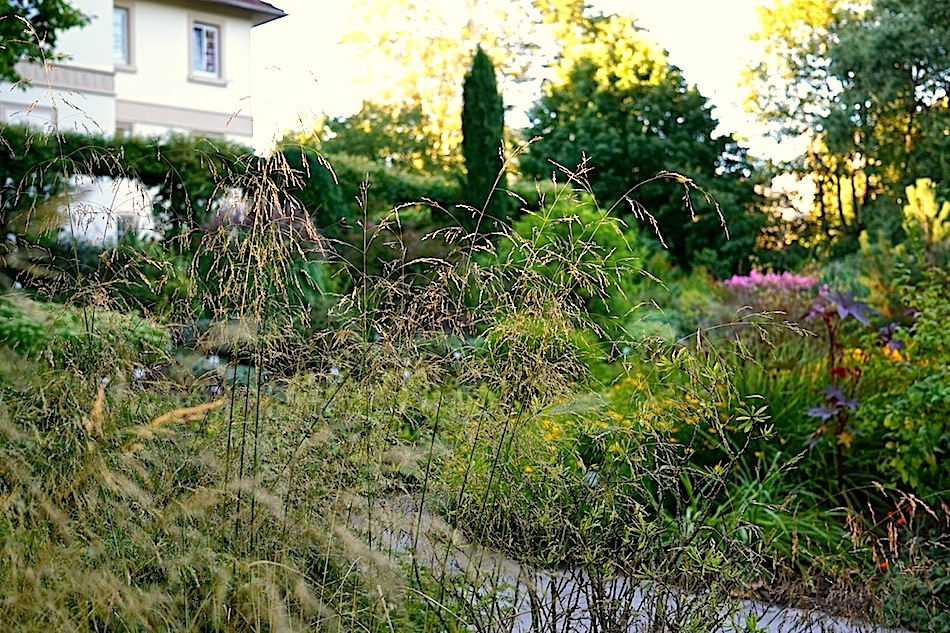
The garden and a corner of the 18th century Spielhaus through Deschampsia cespitosa grass.
I started out in March meaning to track the flowers of the Spielhaus (playhouse) perennial garden at the University of Hohenheim for this year’s GB Bloom Days. However, travel, gloomy weather, and hurting feet have interfered, and I haven’t posted an update since May.
I did pay a visit this week, however, on Tuesday evening, and there was lots of color.
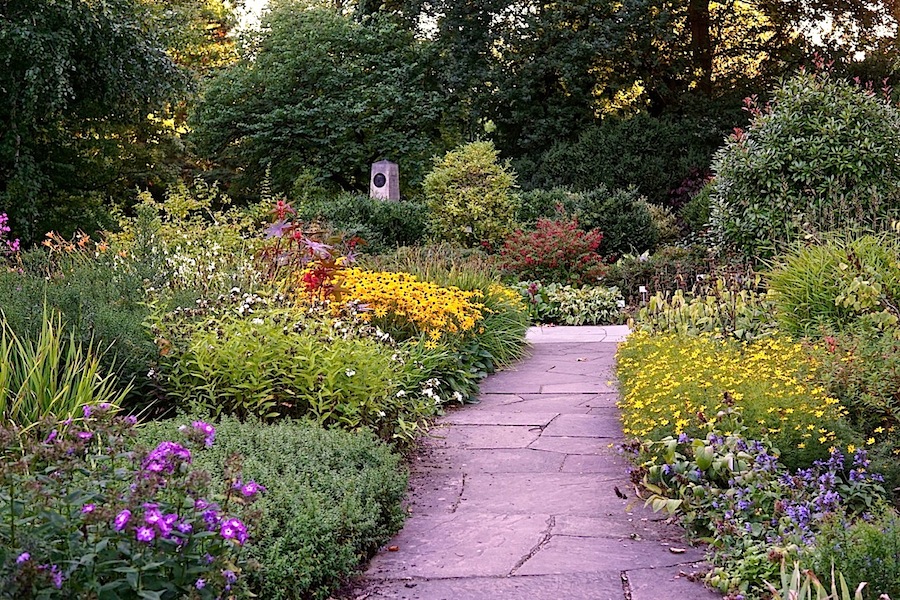
Above, American Rudbeckia hirta or Black-eyed Susans draw the eye, paired with a red cultivar of Ricinus communes, and Coreopsis on the other side of the path.
The obelisk in the background memorializes Duke Carl Eugen von Württemberg and Franziska von Hohenheim. They built Hohenheim Palace (now a University building) and the English landscape-style garden/arboretum around it (now the University’s botanical garden).
Franziska was first the king’s mistress, then his morganatic wife. The main palace building was barely finished when he died. The family then pressured her into giving up Hohenheim for another estate.
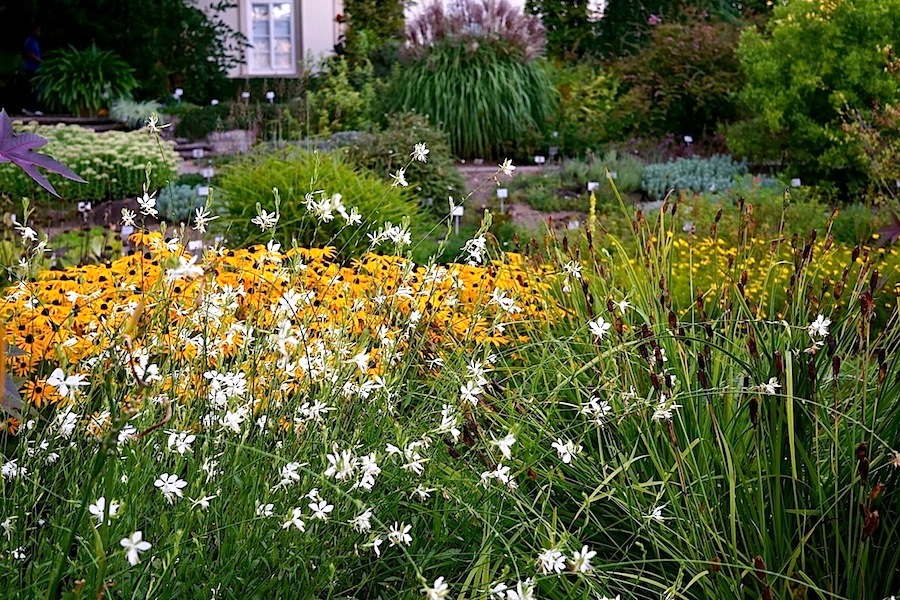
Above: the Rudbeckia and white Oenothera lindheimeri (gaura).
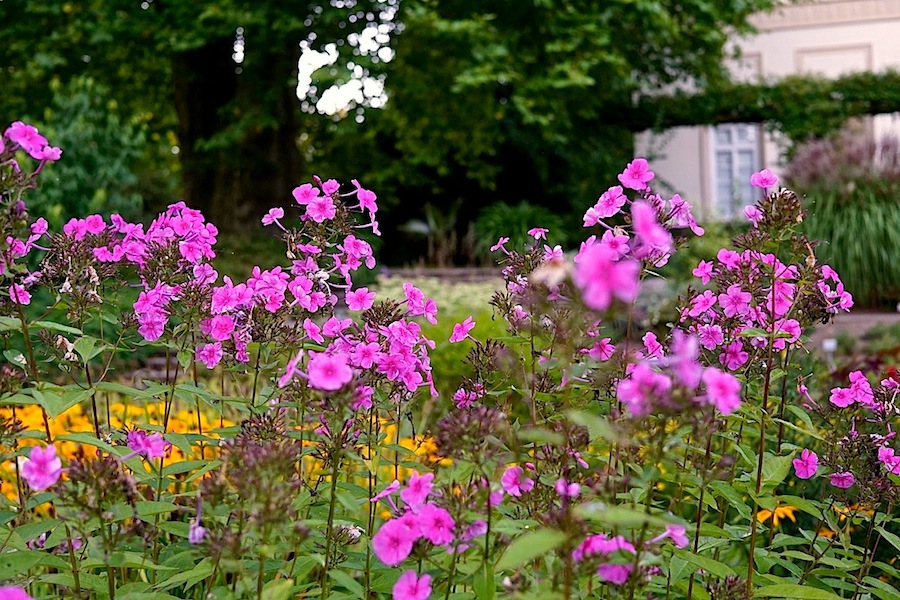
This pink phlox has a beautiful scent, but it has grown up over its label, so I can’t tell you the variety.
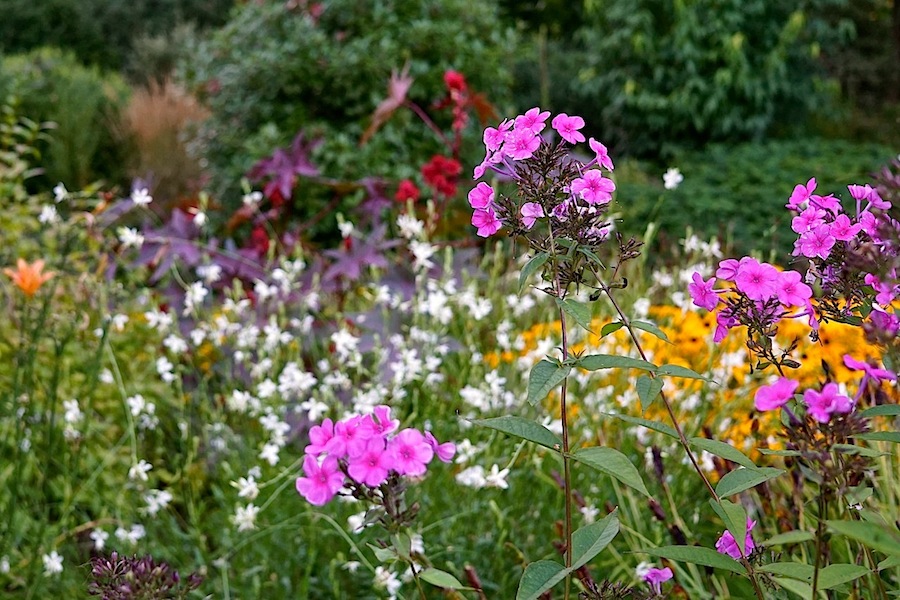
Above: with the red caster bean plant behind it.
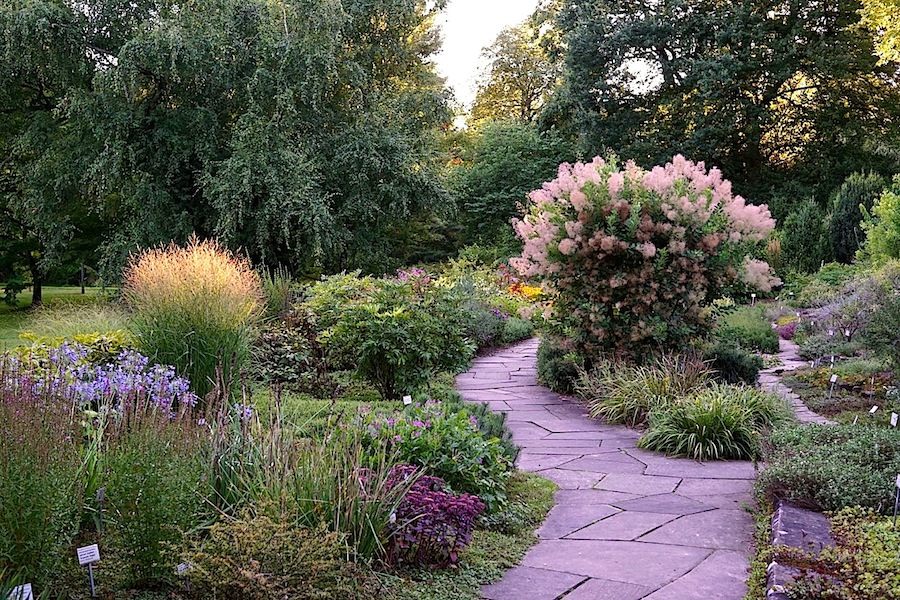
The garden is roughly a rectangle with a bit of slope, set in front of the Spielhaus terrace. Narrow stone paths run through it lengthwise.
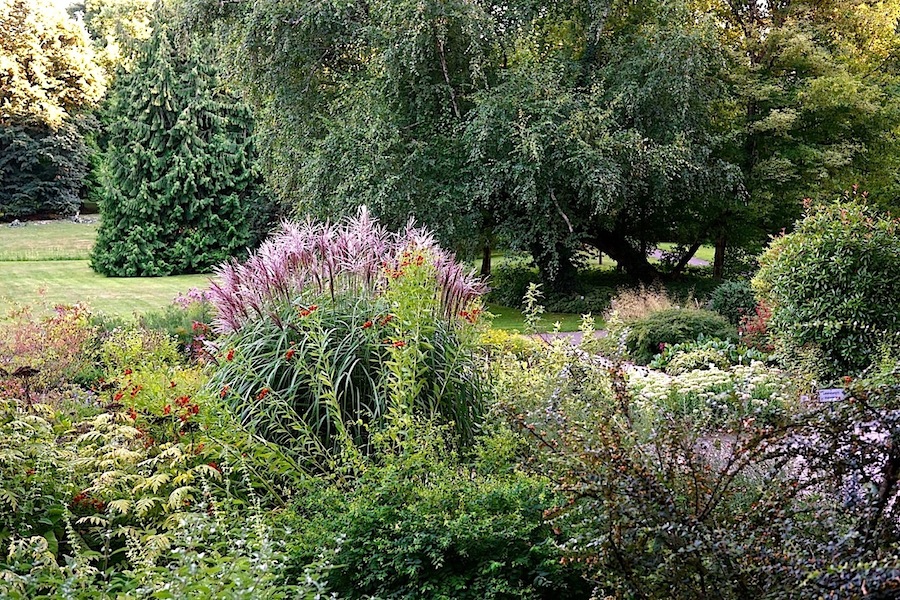
I don’t have the name of the species of the Panicum grass on the left above. The smoke bush on the right of the path is Cotinus coggygria ‘Young Lady’.
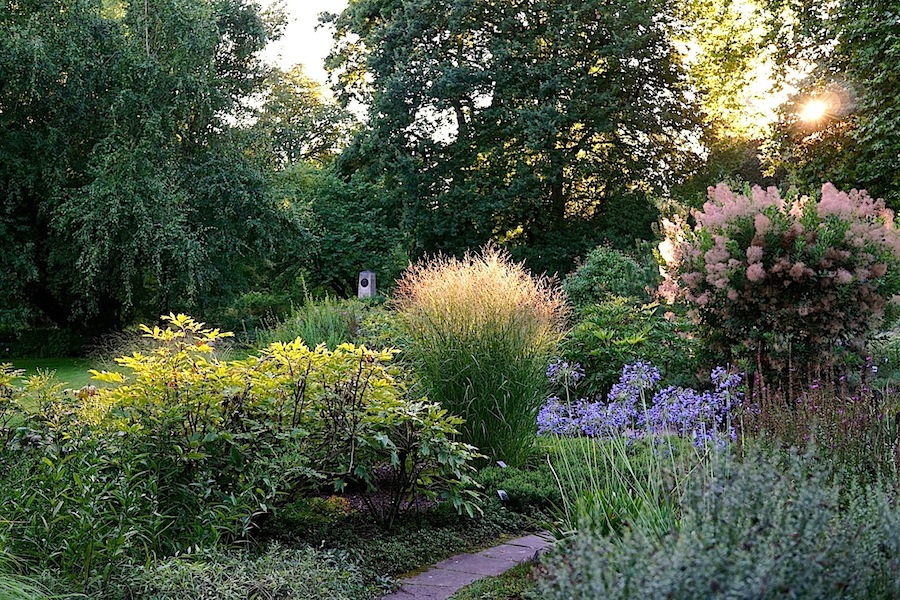
Above: tree peonies on the left, Agapanthus on the right.
Above: the center area.
I particularly like the garden’s layout. And the display of plants is very popular with the neighborhood. It’s rare that I get it almost to myself.
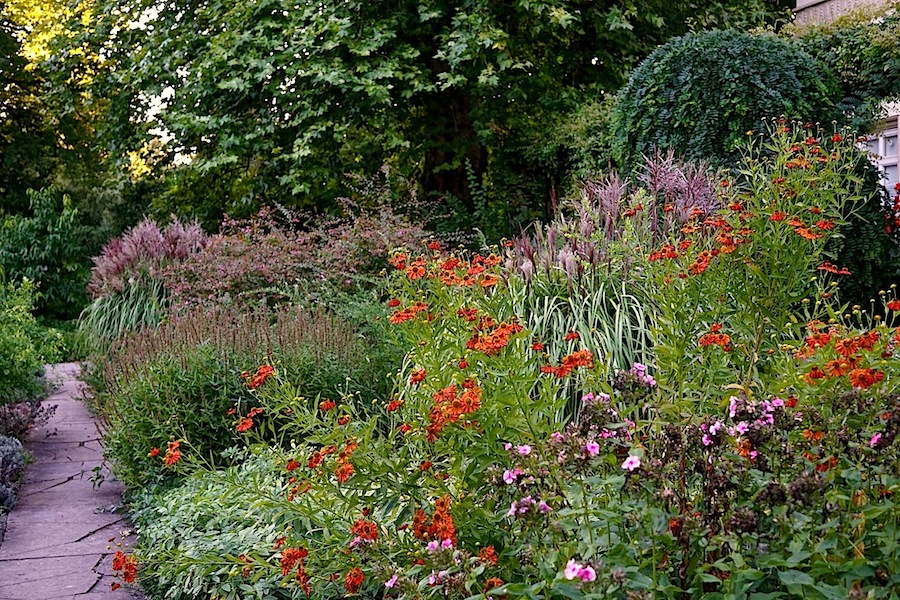
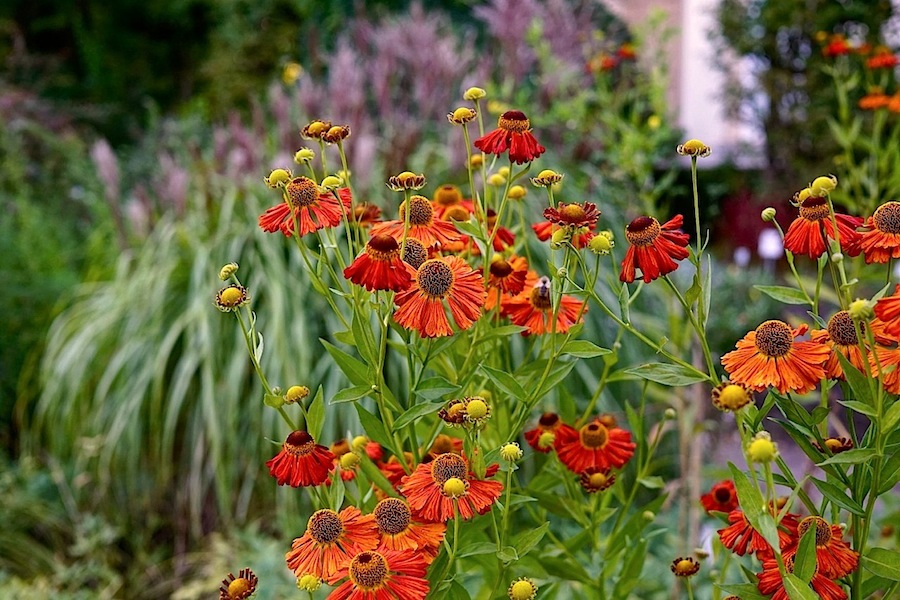
Above and below: heleniums in front of the terrace — unfortunately, the label was hidden.
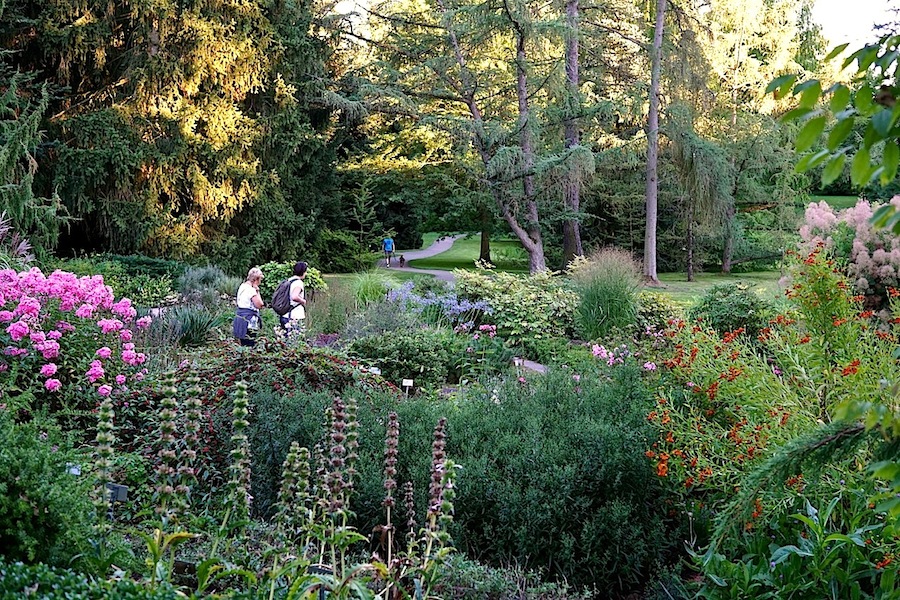
Above and the two photos below: looking across the garden from the Spielhaus terrace — left to right. (That’s another — taller and fuller — pink phlox on the left.)
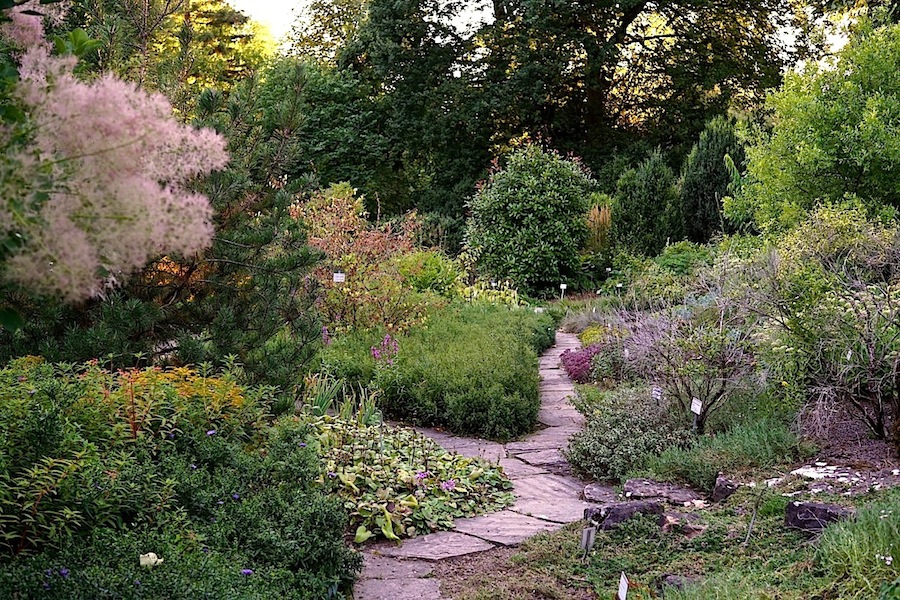
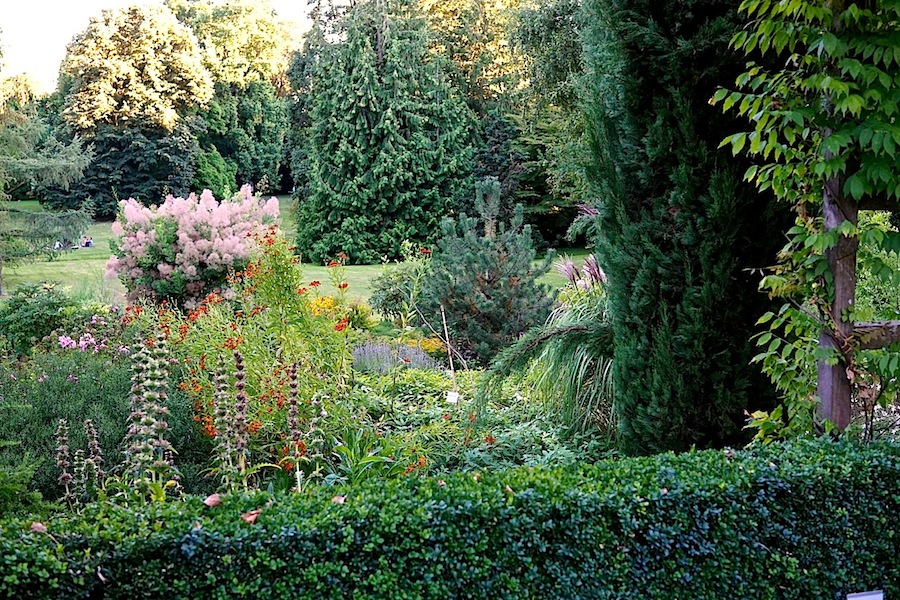
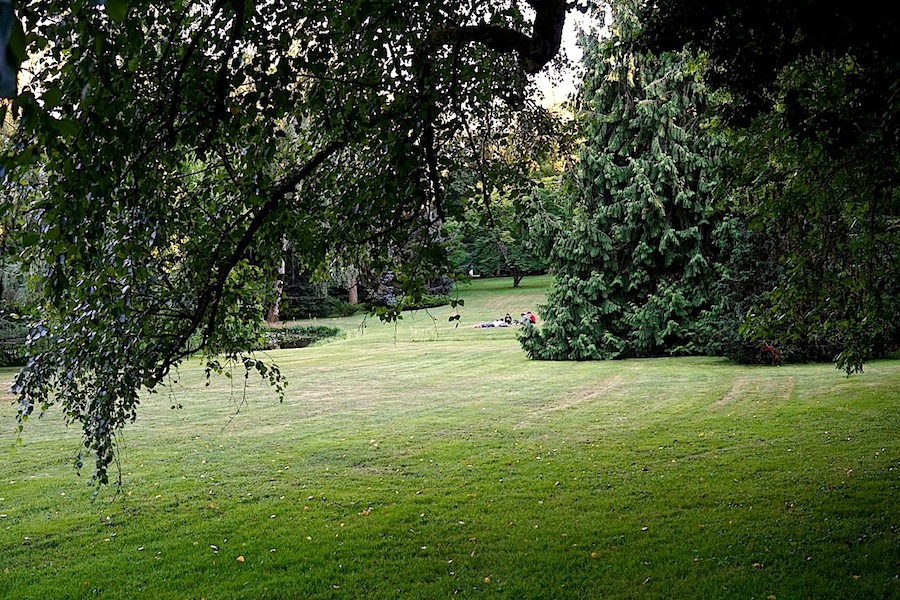
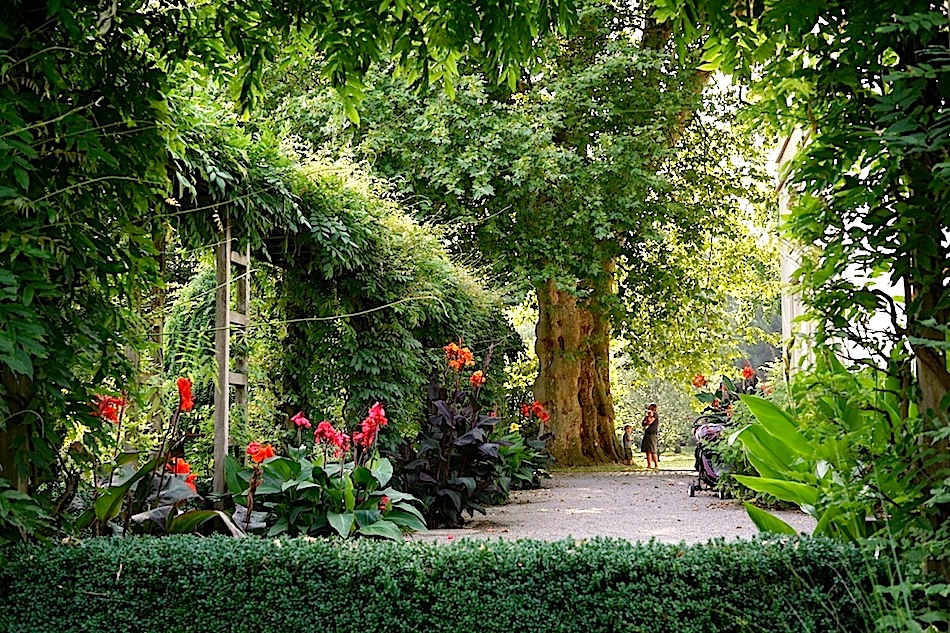
Above: Just beyond the Spielhaus area, the trees, pond (left), and lawn of Carl Eugen’s and Franziska’s landscape garden.
Throughout this summer, the University has opened one room inside the Speilhaus on weekend afternoons. If you click on ‘Continue reading’ below and then on any of the thumbnail images, you can see some snapshots that I took in late July. The room holds a scale model of the palace grounds in Carl Eugen’s time, when there were about 60 folly-type buildings. Today, only the Spielhaus and one other remain.


 enclos*ure