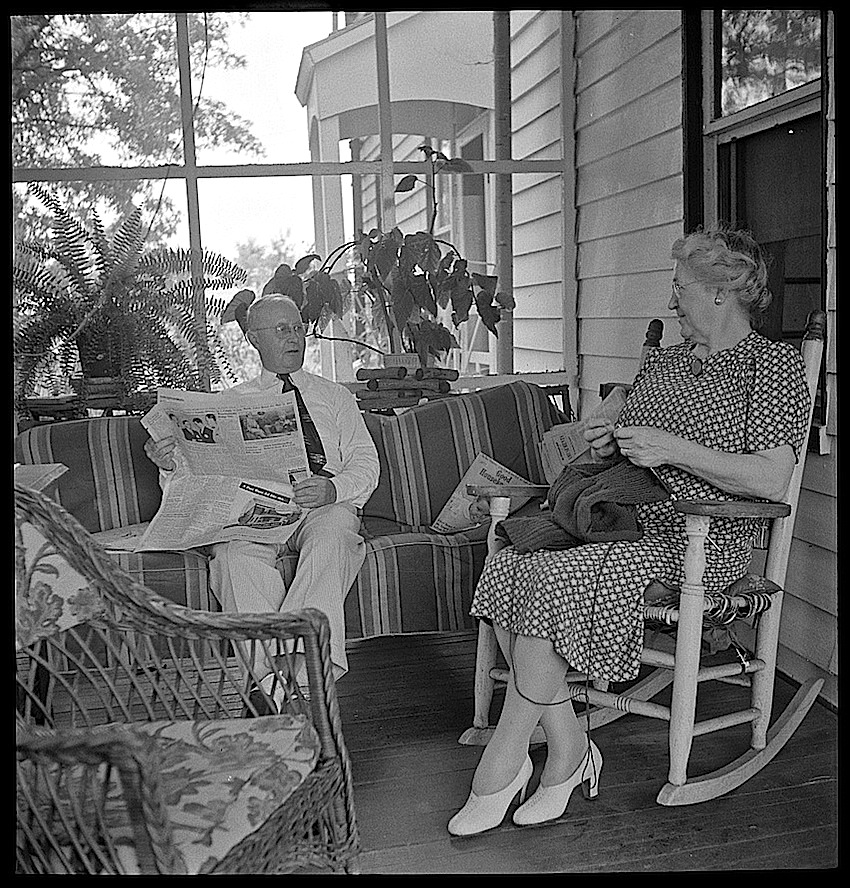
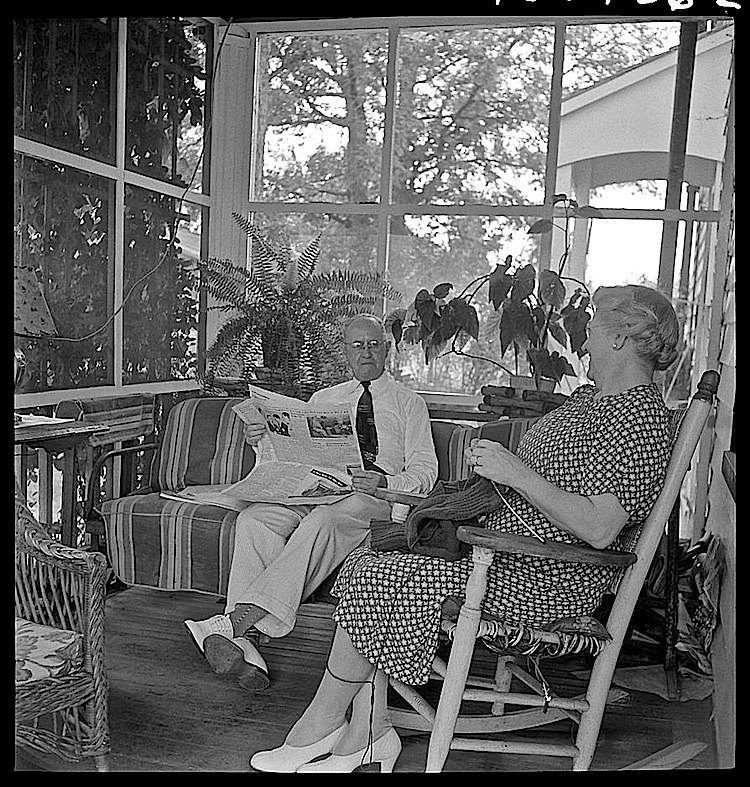
Mr. and Mrs. Herbert on their porch in Mechanicsville, Maryland, June or July 1942, by Marjory Collins, via Library of Congress Prints and Photographs Division (all three photos).
All the elements of a good screened porch are here: a slipcovered glider and a wicker chair, a rocker with a cushion (because the caned seat is nearly gone), a Boston fern and an angel-wing begonia, a newspaper and a copy of Good Housekeeping. Both Herberts are wearing summertime white shoes.
Only a little iced tea could make it any nicer. Judging from the way they are dressed, I would guess this is a Sunday afternoon.
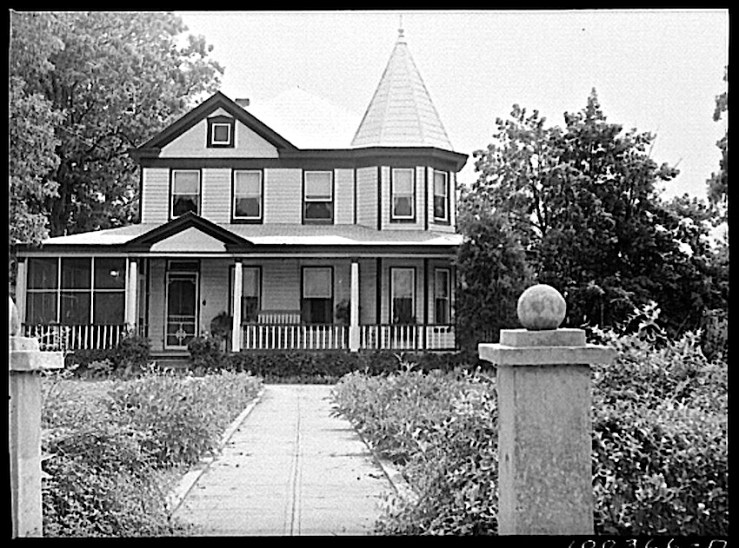
The couple — Charles P. and Bessie D. — built their Queen Anne house in 1909, although, curiously, it appears that they only bought the land beneath it in 1914, according to a Maryland Historic Sites Inventory Form filled out in the 1990s or later.
Charles had moved to the the area to be an express agent for the railroad. Bessie was the town dressmaker. They lived in the house until their deaths during the 1960s.
A photo attached to the Inventory Form shows that the screening on the east side of the porch was later removed and some lacy trim was added along the entire front. I could not find the house in a current Google Maps satellite view, however.
As usual, I wish we could see more of the garden.
Marjory Collins took these pictures about six months after moving to Washington, D.C., to join the documentary photographers of the U.S. Office of War Information. Her “upbeat, harmonious images” of that time “reflected the OWI editorial requests for visual stories about the ideal American way of life,” according to a biographical essay about her by the Library of Congress.
My husband loves climbing these high towers. I do not — being both a little afraid of heights and a little claustrophobic. However, lured by the promise of a great view, I almost always follow him up. And I always think, after about 30 steps, how this is absolutely the last tower I will ever climb. . . at least this year (I’ve climbed two this year). . . at least in this city.
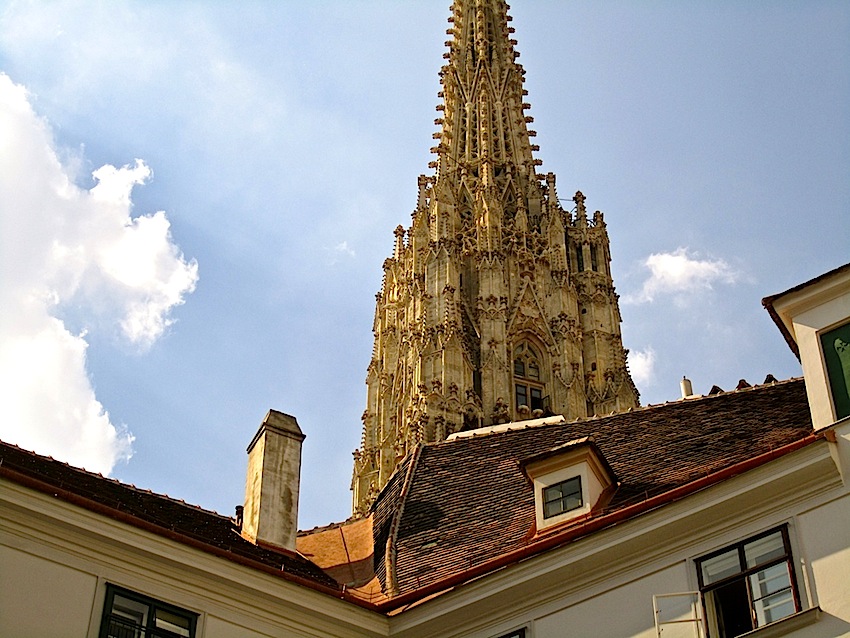
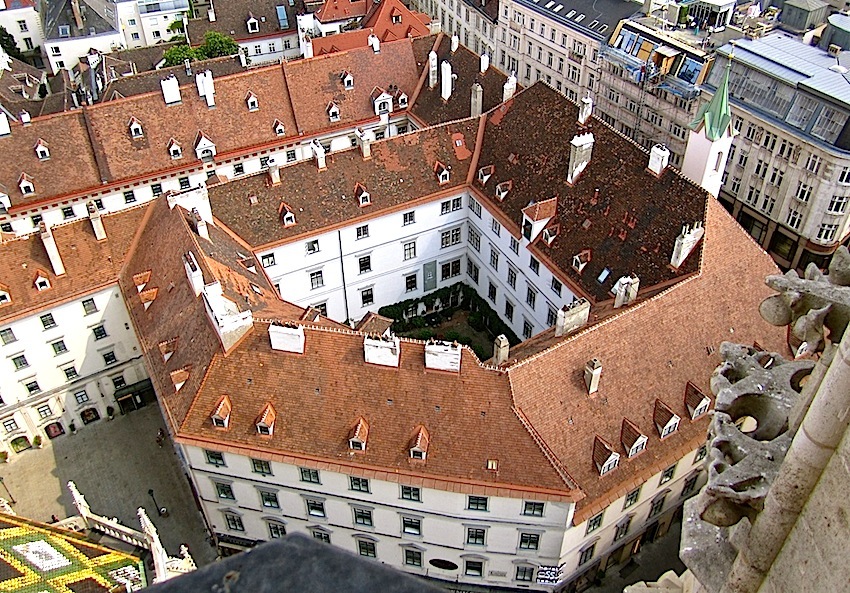
The view from the watch room (343 steps up) was tremendous. A night watchman actually occupied the room until 1955. If he saw a fire in the city, he would ring the tower bells.
Looking southeast, I spotted this pretty courtyard garden and took a few pictures.
After the climb down, we went around the corner, looking for the Mozart House (Mozarthaus).
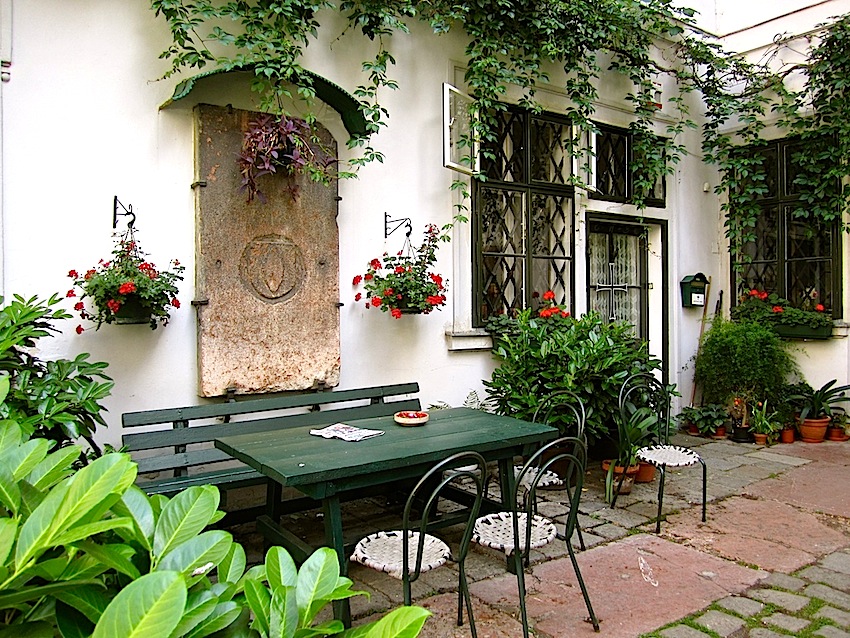
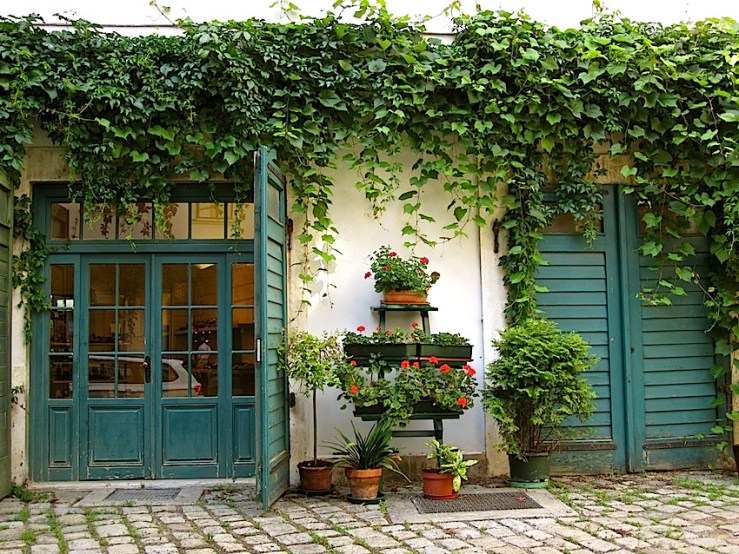
We went through a passageway off Singerstraße and found ourselves in the same courtyard seen from above.
It was not the Mozart House, but the seat of the Grand Master of the Order of the Teutonic Knights of St. Mary’s Hospital in Jerusalem (or Deutscher Orden).
The Order has been associated with this site since 1204. The present building dates from the second half of the 18th century.
Mozart did briefly live on the premises from March to May 1781 — and Johannes Brahms from 1863 to 1865.
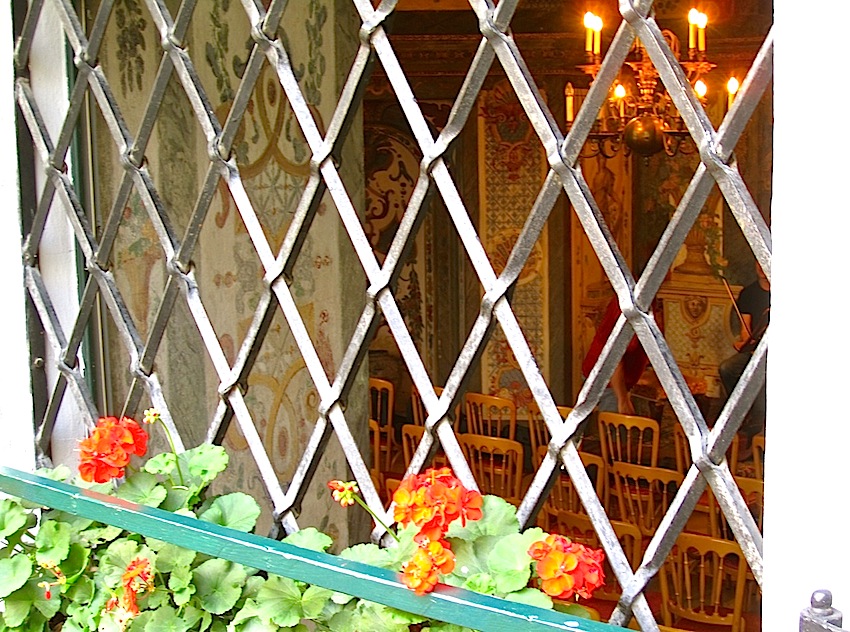
From one window on the courtyard, you can get a peek into the Sala Terrena, a frescoed room next to the chapel and the oldest concert hall in Vienna.
Mozart played there, and it now hosts the Mozart Ensemble Wien several days a week.
(Streifzug means ‘foray,’ ‘ brief survey,’ or ‘ramble.’)
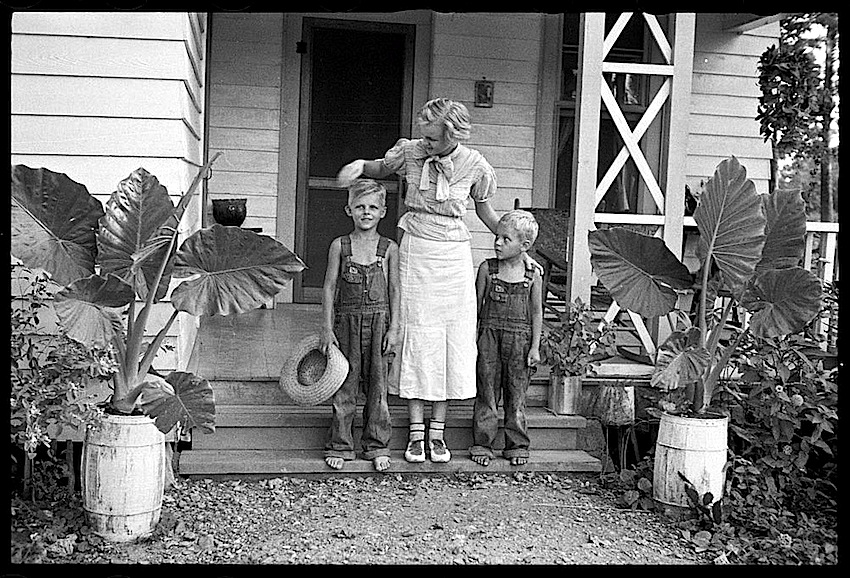
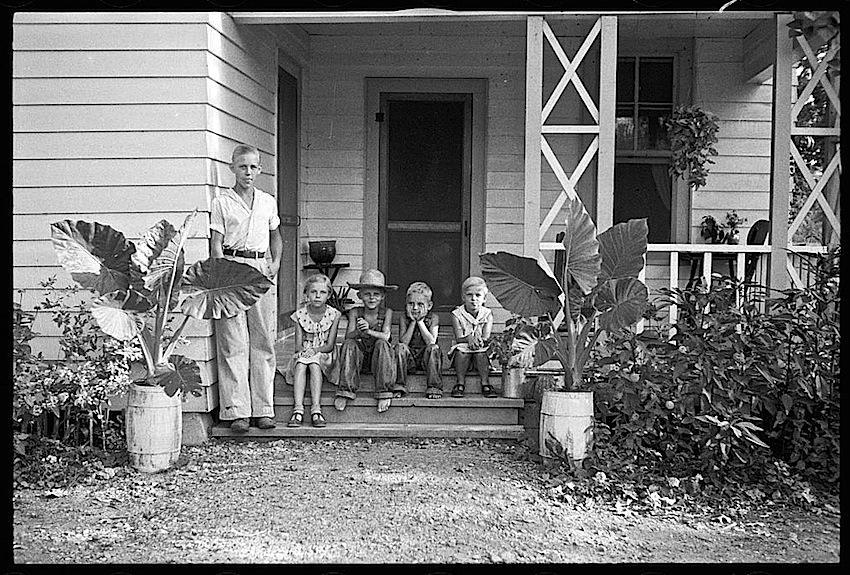
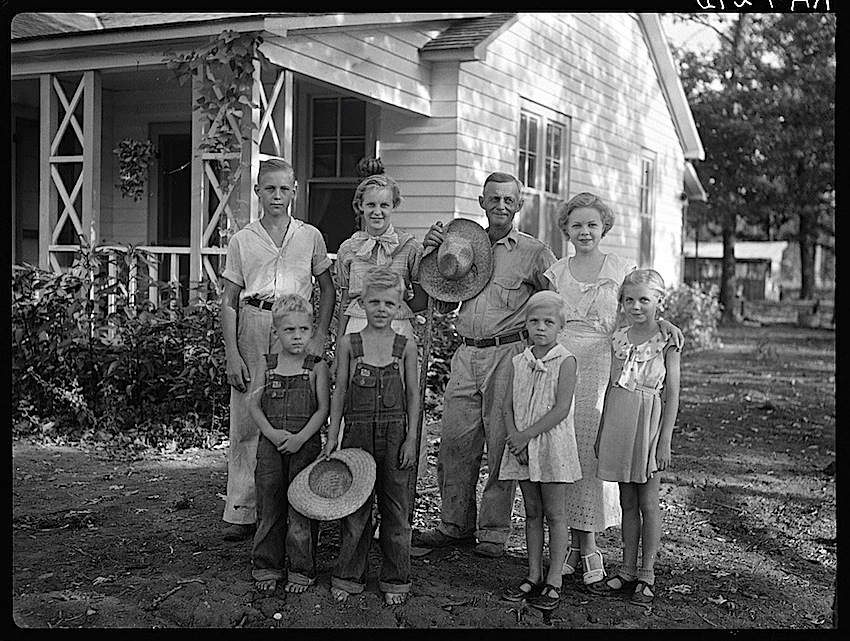
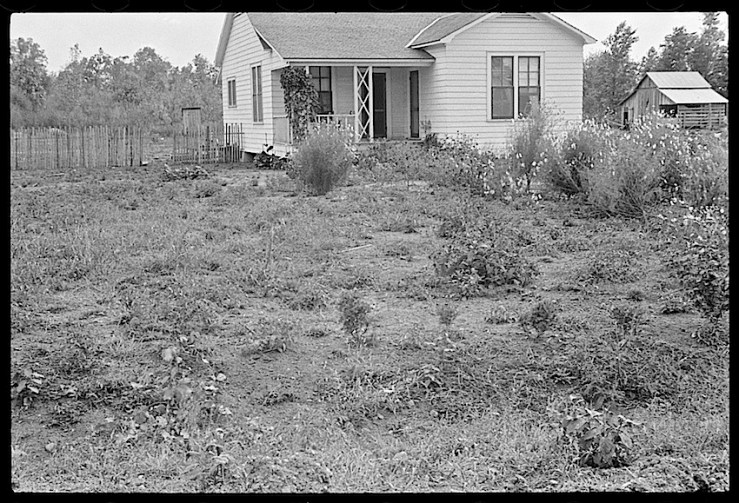
The government-sponsored agricultural community had just been established the year before — the brainchild of local cotton planter William Reynolds Dyess, who was also Director of the Arkanasas Emergency Relief Administration.
Dyess wanted to provide aid to displaced tenant farmers and sharecroppers. His idea was to put 800 families on 20 to 40-acre uncleared bottomland plots with new houses.
The project — scaled back to 500 families — was underwritten by the New Deal Federal Emergency Relief Administration. (It was absorbed by the Farm Security Administration in 1944 and made independent of the federal government in 1951. )
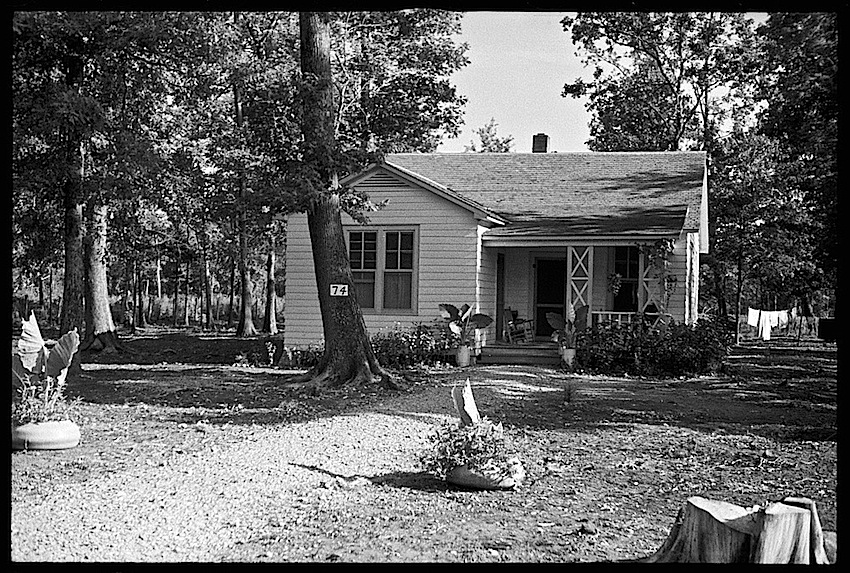
“The colony was laid out in a wagon-wheel design, with a community center at the hub and farms stretching out from the middle. . ,” according to the online Encyclopedia of Arkansas. “Each house had five rooms with an adjacent barn, privy, and chicken coop. . . , plus a front and back porch.”
Another colony house with a mass of flowers along the front path.
Dyess was killed in a plane crash in 1936, and the colony was given his name.
Among the resettled farmers — all of whom were white — was the father of country singer Johnny Cash. Cash lived in house #266 from the age of three until his high school graduation in 1950.
Today, Arkansas State University has restored the Cash home (open to the public) and is working on an adjacent original colony home, as well as the administration building and theater.
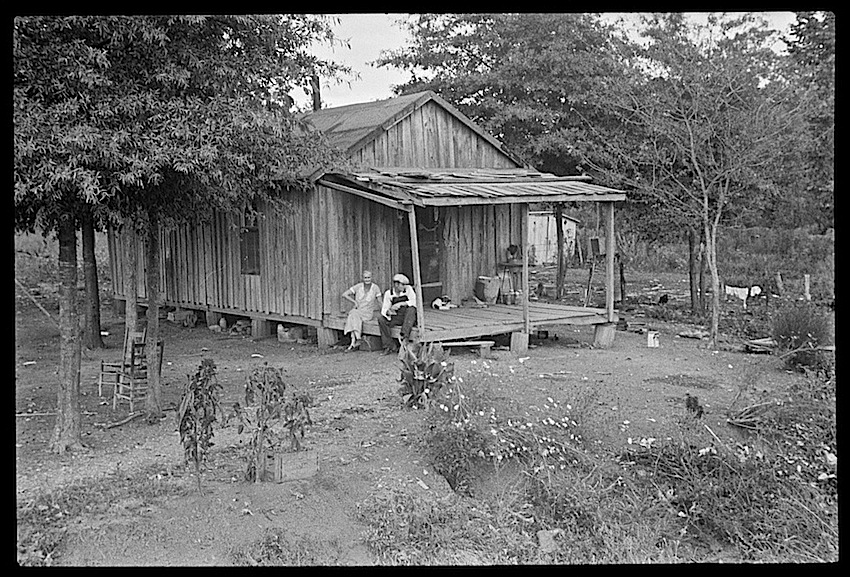
The 1935 photo above by Ben Shahn was captioned, “Sharecropper’s house optioned. Dyess Colony, Arkansas.” I’m not sure what that means, but the picture gives an example of original local farm housing.
I like the small semi-circle of trees and the two chairs facing out on the left side.
*All photos but the last were by Rothstein, taken in August 1935. All are via Library of Congress Prints and Photographs Division.
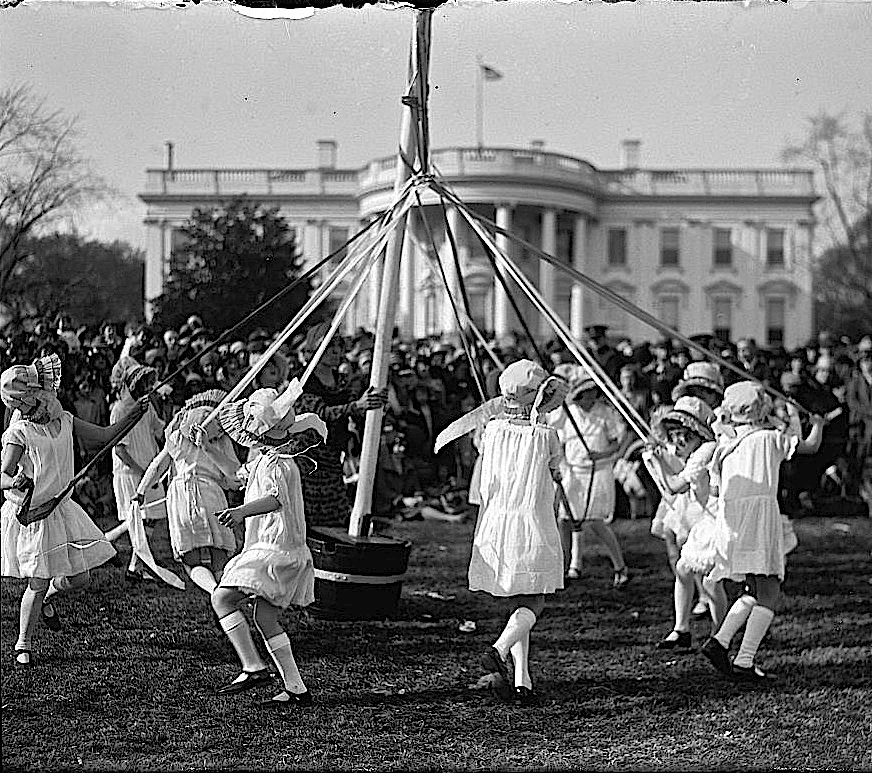
May pole dance at the White House Easter Egg Roll, Monday, April 1, 1929, National Photo Company Collection, via Library of Congress Prints and Photographs Division.
First Lady Lou Hoover added May pole and folk dancing to the annual event — but only briefly. Apparently, the Depression was bad enough on its own.
(If you click on the photo and enlarge it, you can see the wonderfully fierce expression of one of the girls on the right side.)




 enclos*ure