GB Bloom Day in May

in the pleatpetal purring of mouthweathered May.

Karen Volkman, from “May

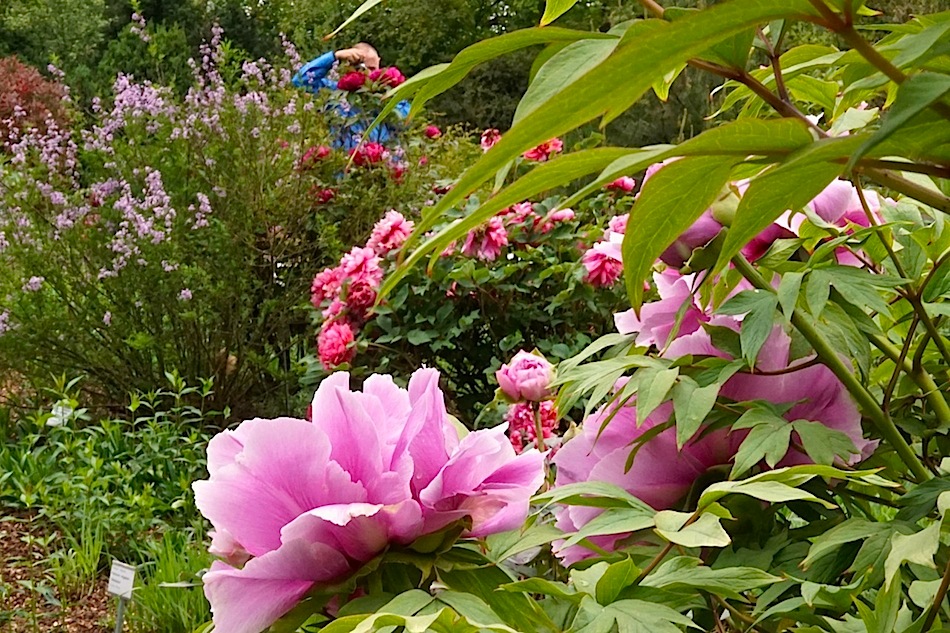
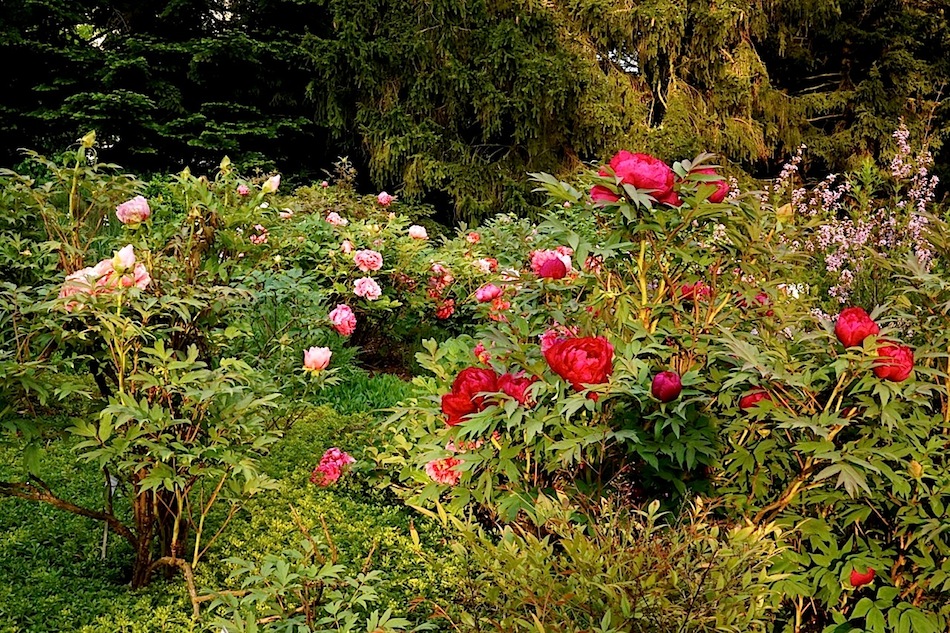
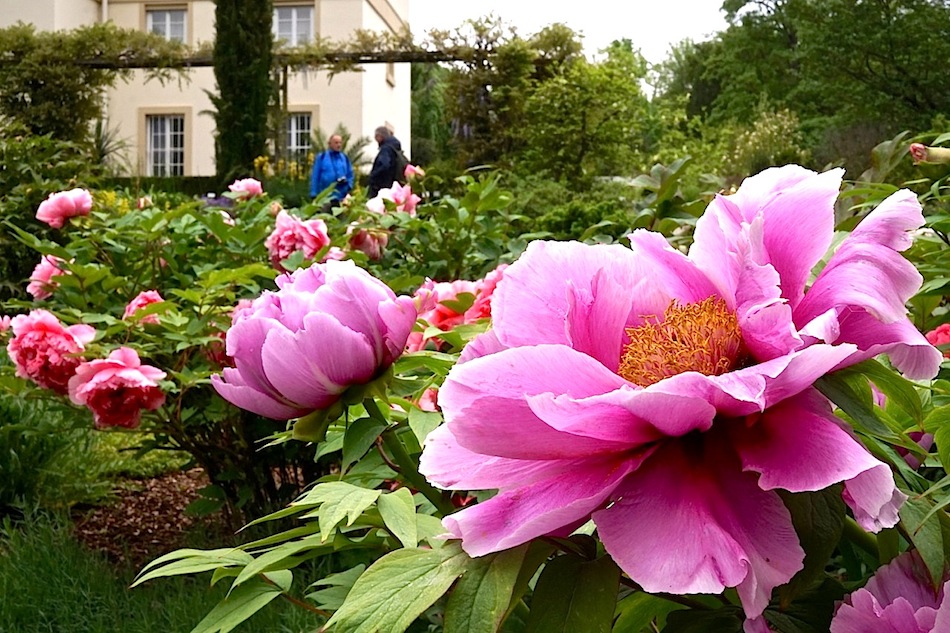
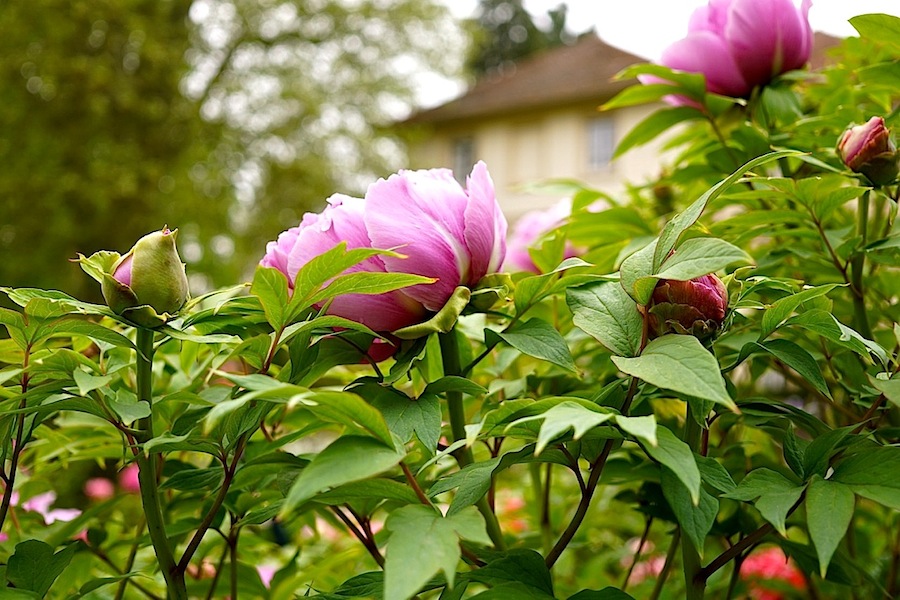
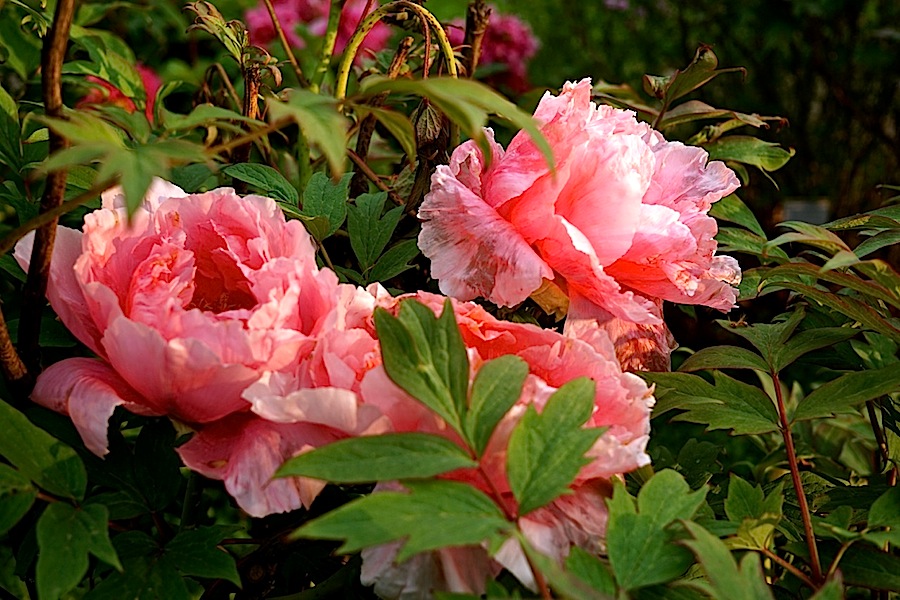
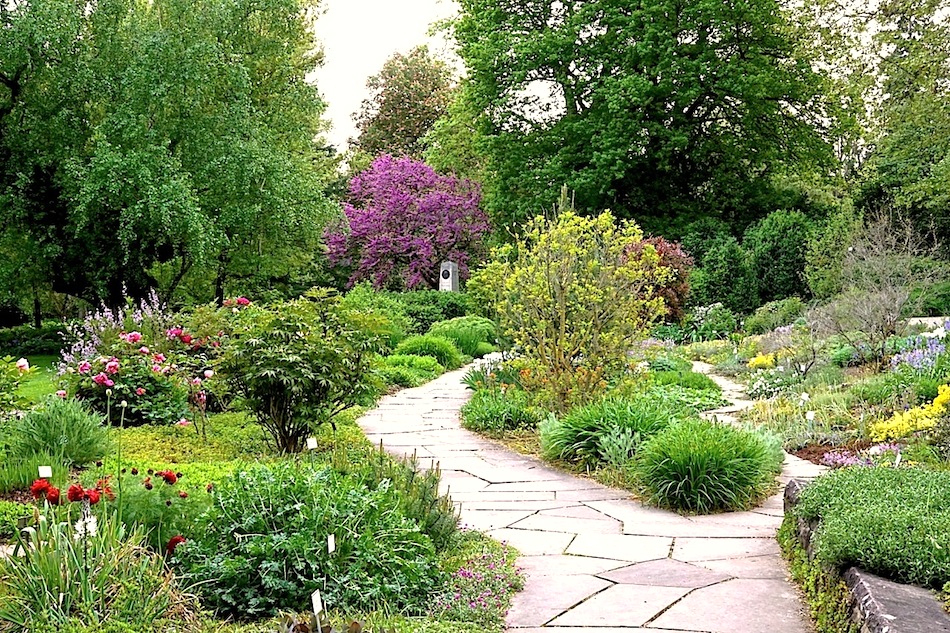
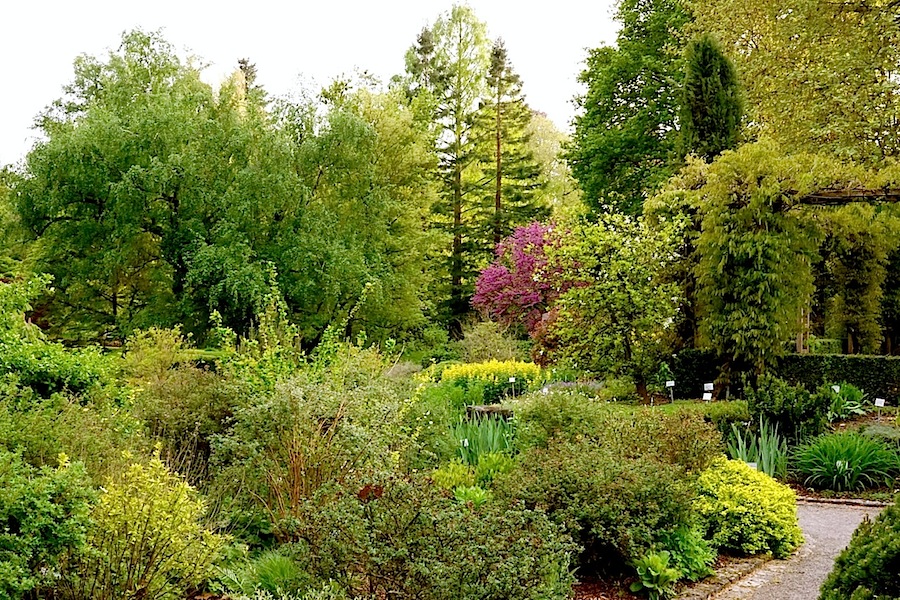
The Chinese tree peonies are definitely the stars this month in the Speilhaus garden of the University of Hohenheim.

Bloom Day, 2016,enclos*ure

I took these photos yesterday evening.

The garden has around ten mature specimens.

Paeonia Suffruticosa Hybrid ‘Yoshinogawa’

Paeonia-Suffruticosa-Hybride 'Yoshinogawa'
Paeonia Suffruticosa Hybrid ‘Yoshinogawa’

Unfortunately, we had several days of rain last week, and the blooms were not at their best.

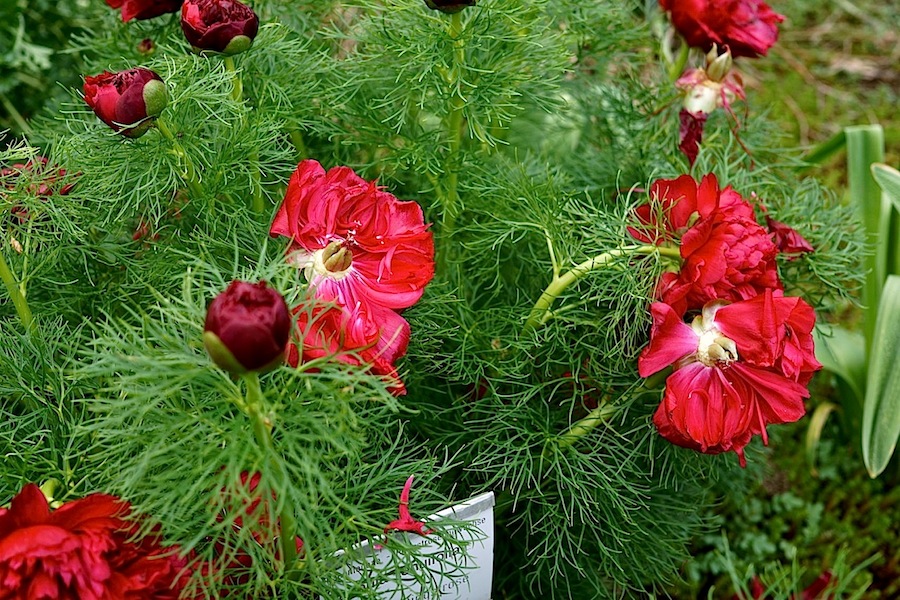
Paeonia tenuifolia 'Plena'
Paeonia tenuifolia ‘Plena’

The fern leaf peony shown above was new to me.

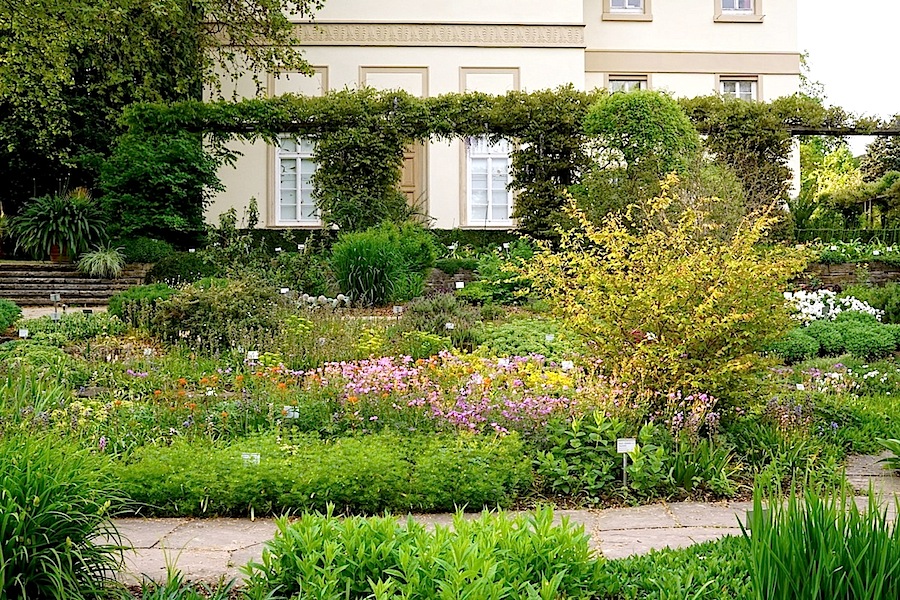
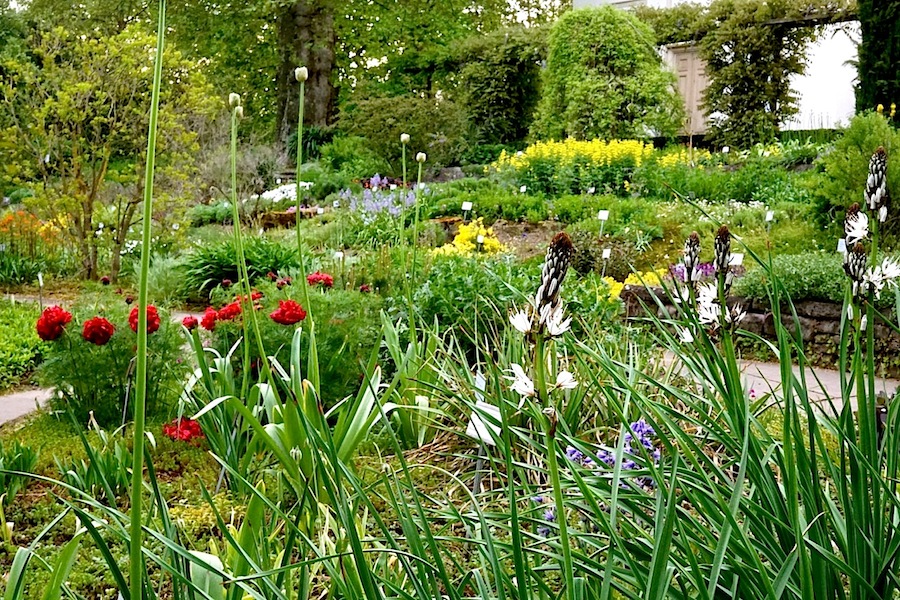
Looking across the garden to the Spielhaus.

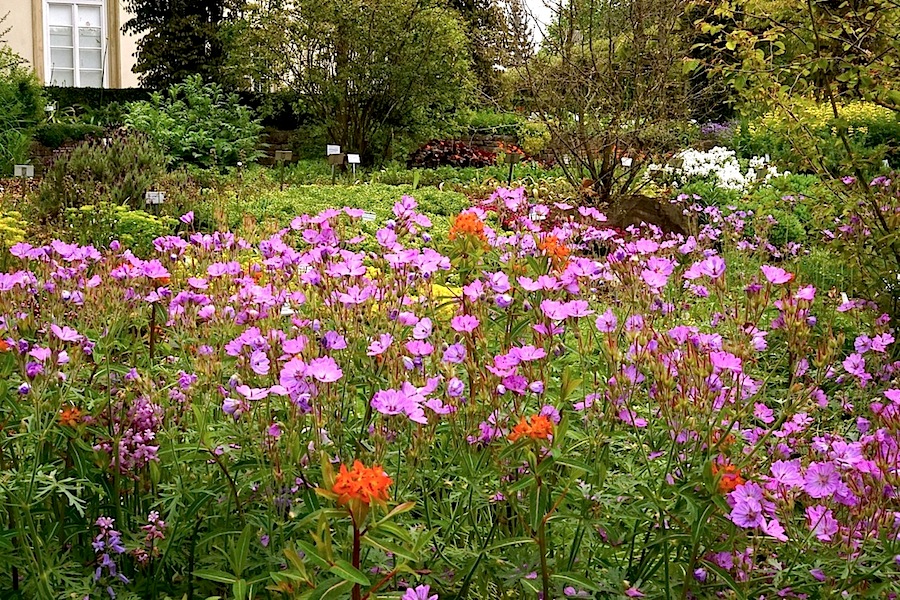
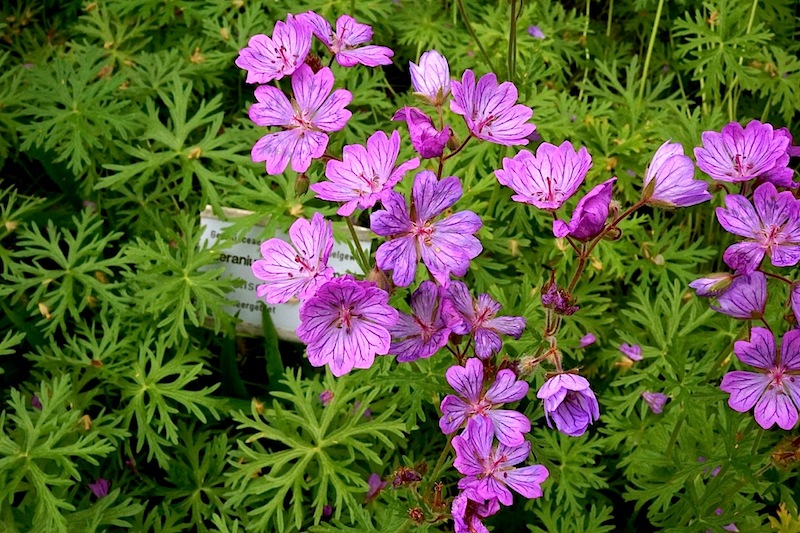
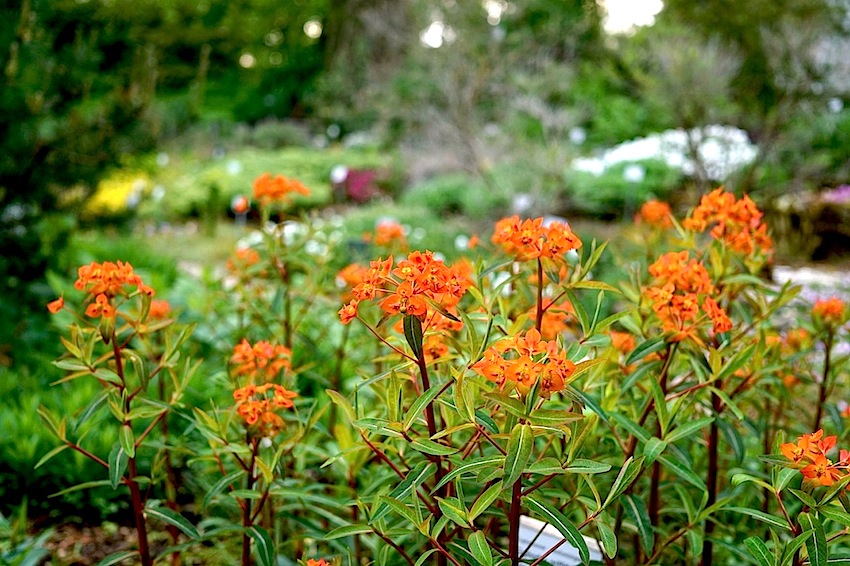
Beyond the peony bed, I liked the combination, above and below, of light-purple geraniums and orange euphorbias.

Geranium tuberosum and
Geranium tuberosum and Euphorbia griffithii ‘Fire Glow’

Euphoribia griffithii 'Fire Glow'
Euphoribia griffithii ‘Fire Glow’
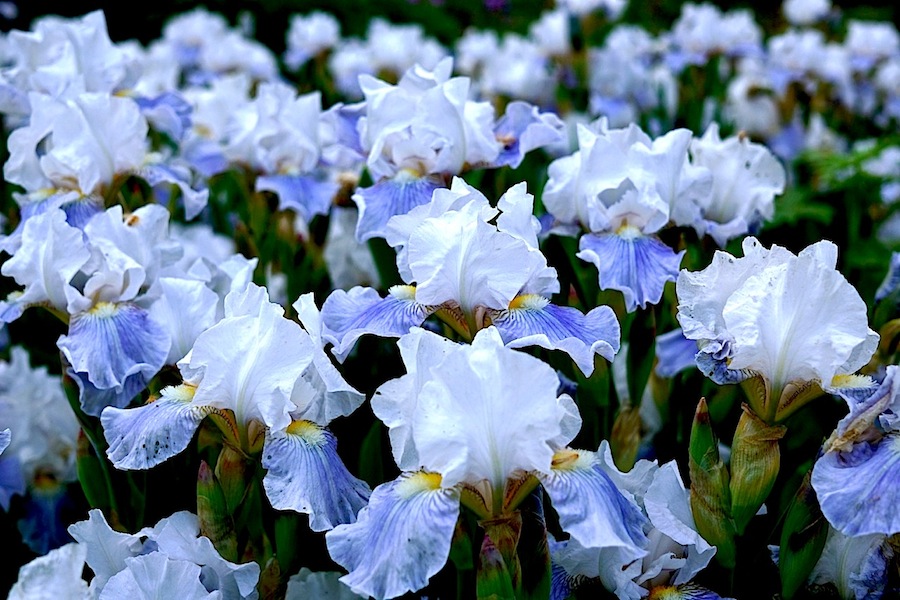
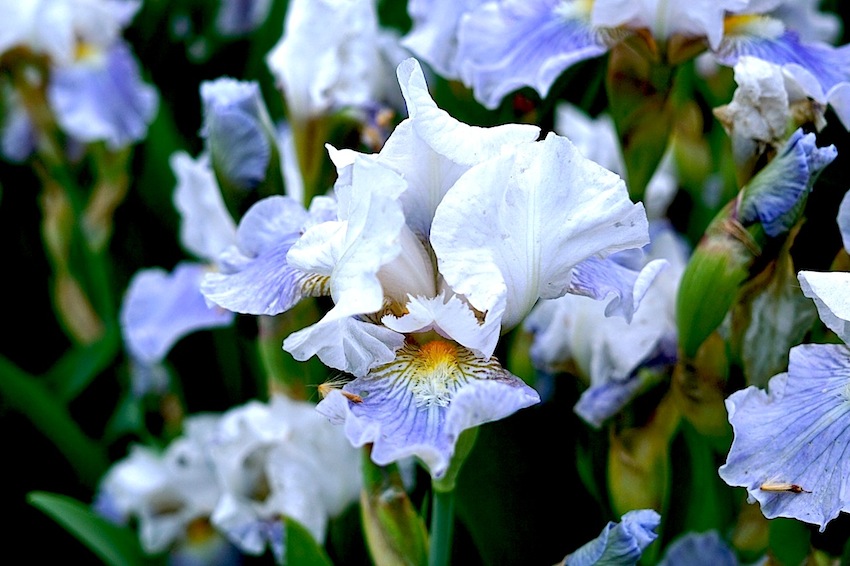
Iris Barbata-Media-Grpuppe 'Antarctique'
Iris Barbata-Media-Grpuppe ‘Antarctique’

Nearby was a planting of bearded iris.

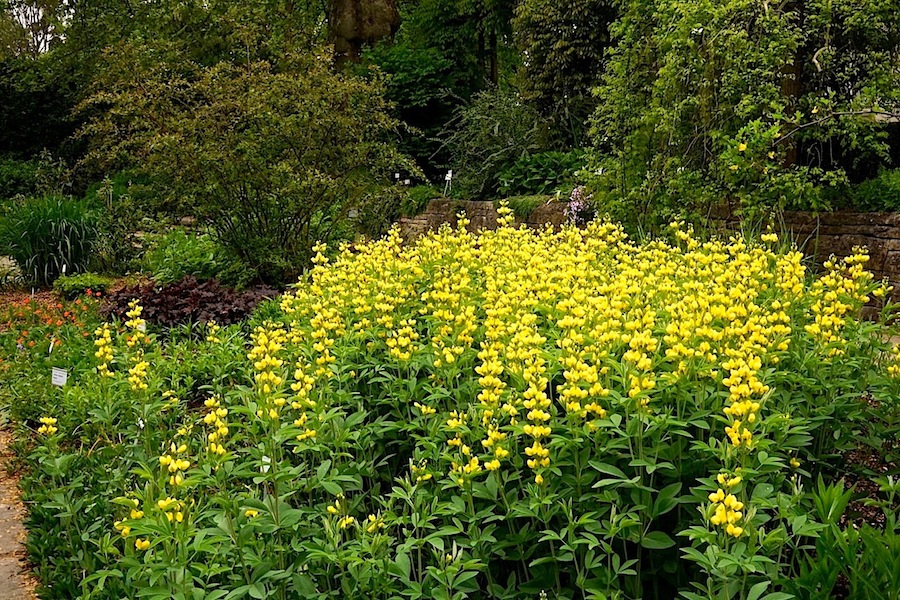
In the photo above, the bright yellow at the top, just below the arbor, is mountain goldenbanner, which is native to the western United States.

Thermopsis montana
Thermopsis montana or mountain goldenbanner
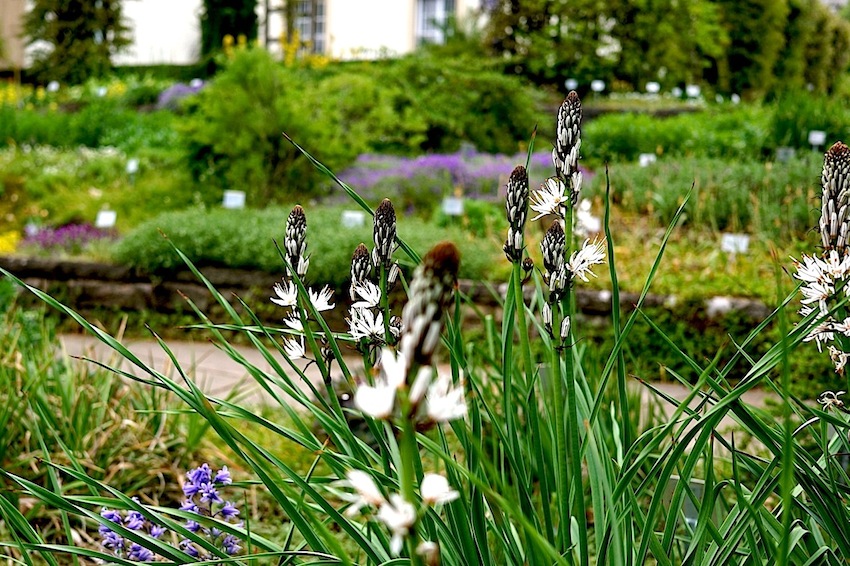
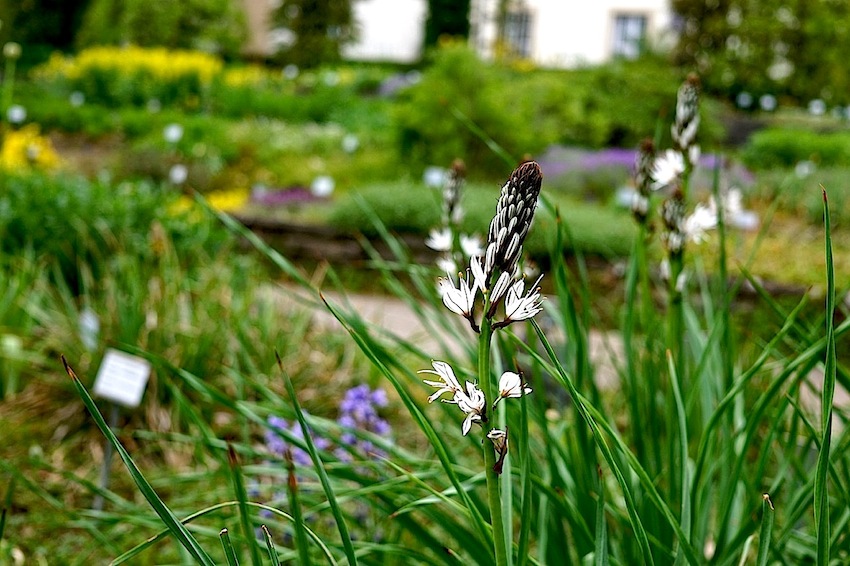
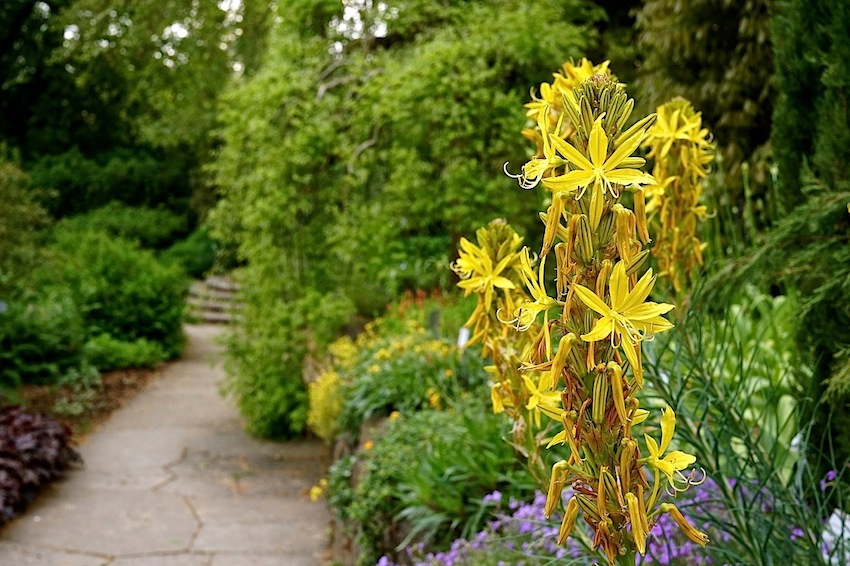
Asphodelus albus
Asphodelus albus

White asphodel  — “that greeny flower” — was also blooming in the garden.

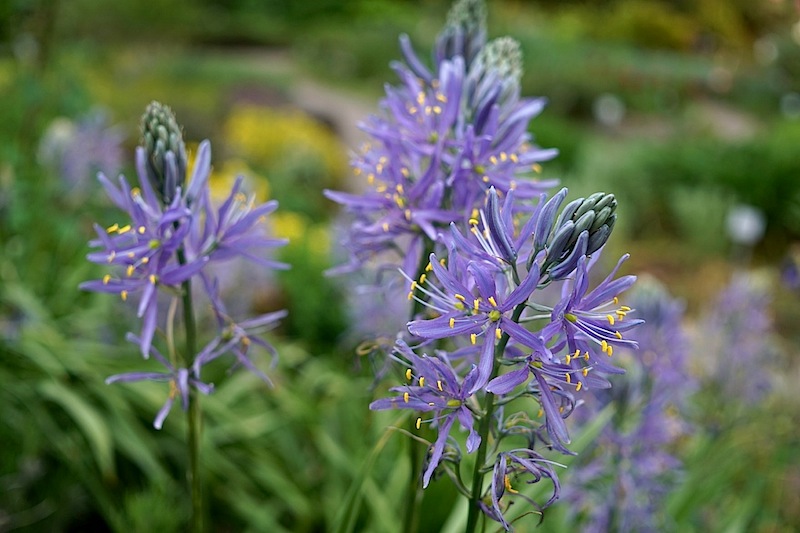
The pretty blue-violet flower above was close by, but I didn’t get a picture of its label.  I think it’s another Asphodelus. It’s a Camassia, a North American native in the asparagus family (see the comments below).

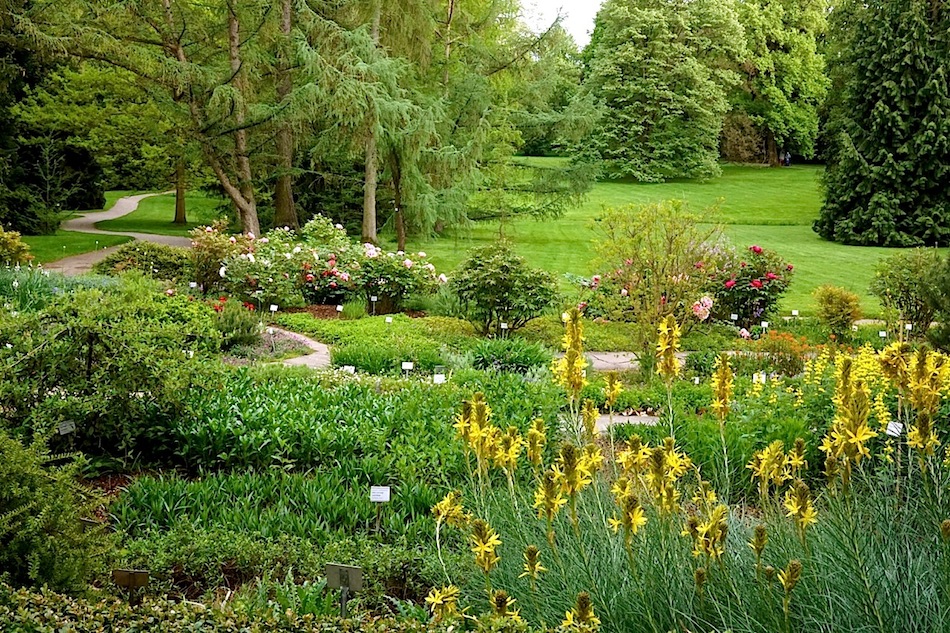
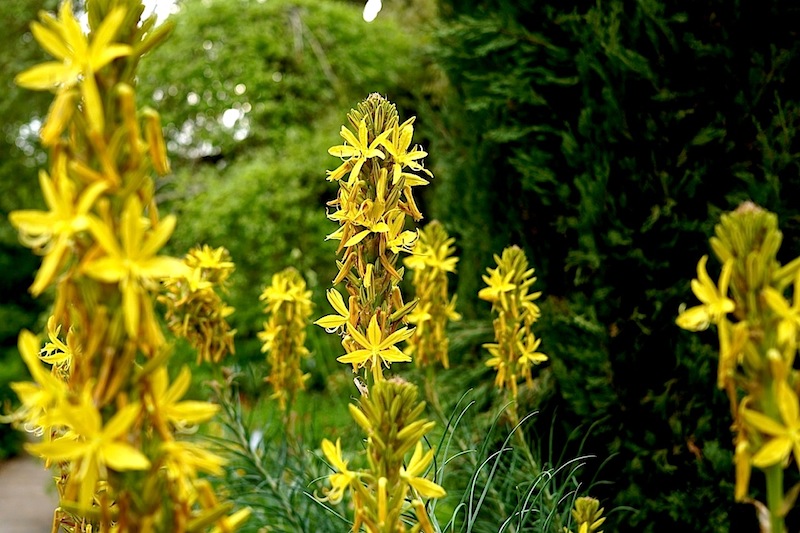
Looking south across the garden from behind the wisteria arbor, you can see the row of tree peonies.  In the lower right-hand corner is a planting of yellow asphodel or king’s spear.

Asphodelus lutea

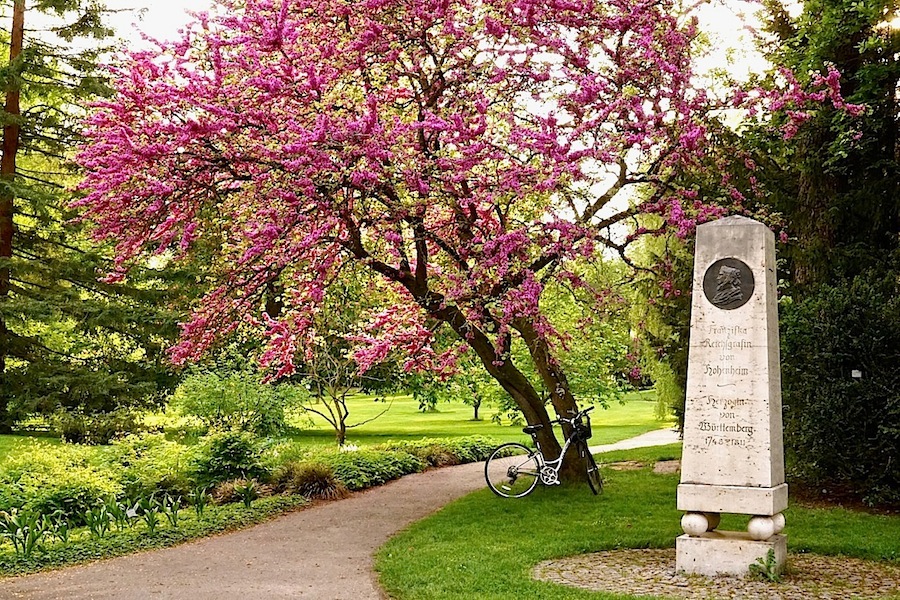
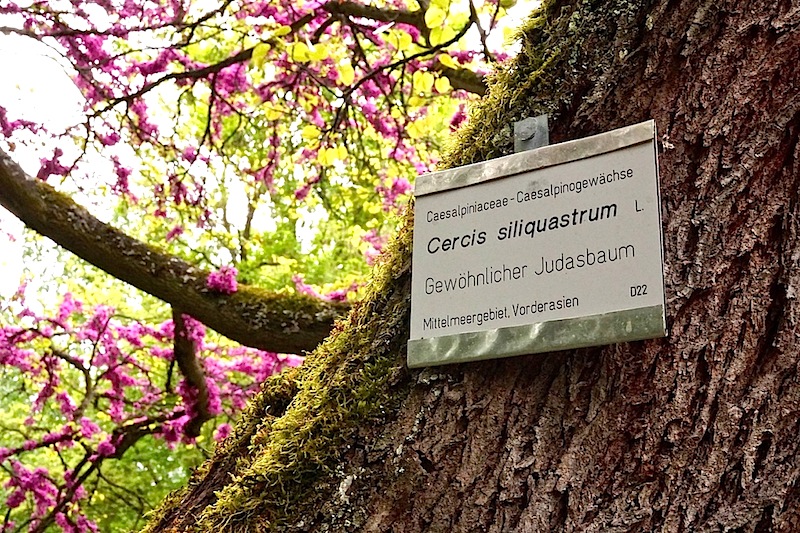
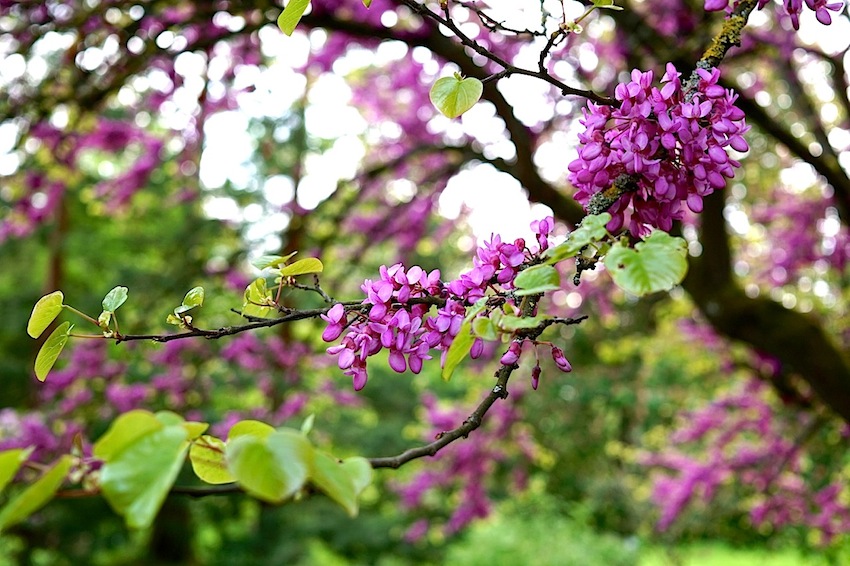
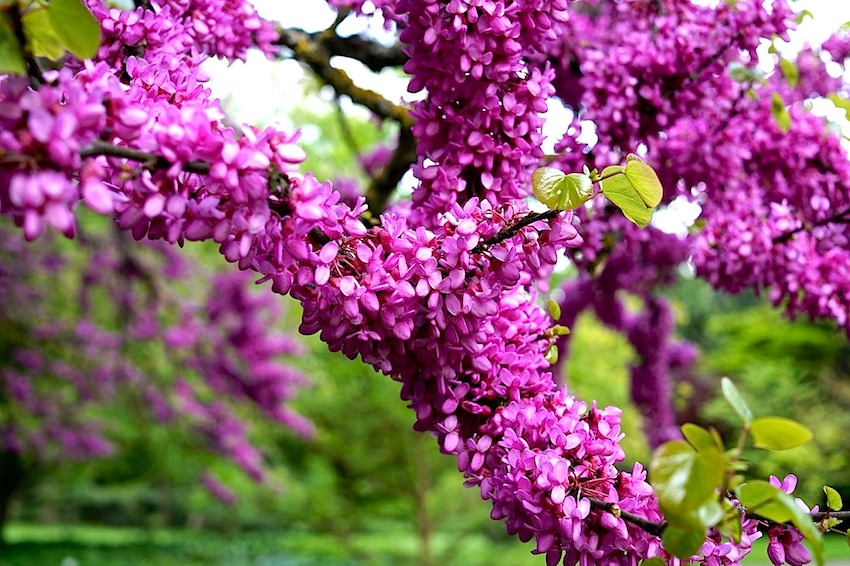
Looking across the garden from the east to the west, a beautiful pink blooming Judas tree draws the eye.

The tree is native to Southern Europe and Western Asia.

The flowers are edible and are said to have a sweetish-acid taste.

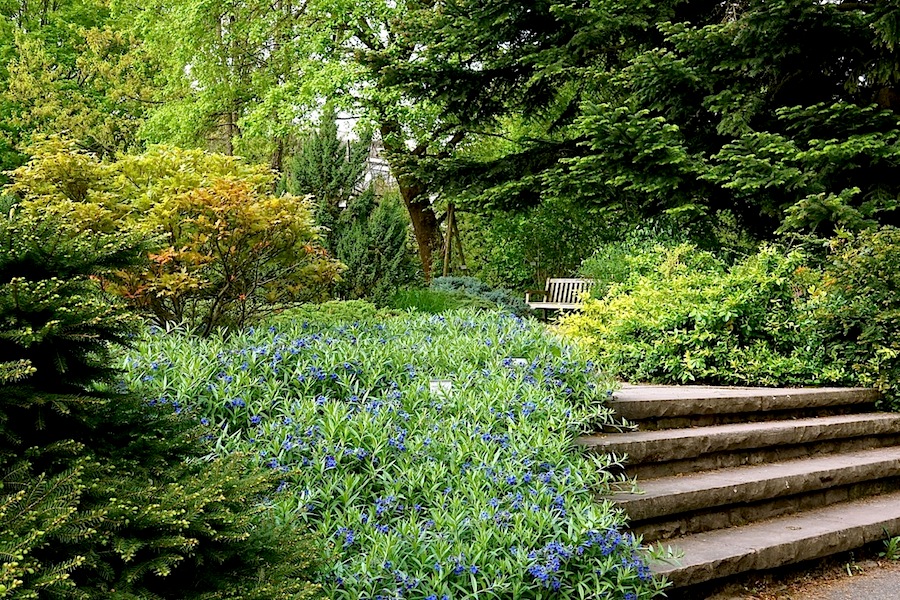
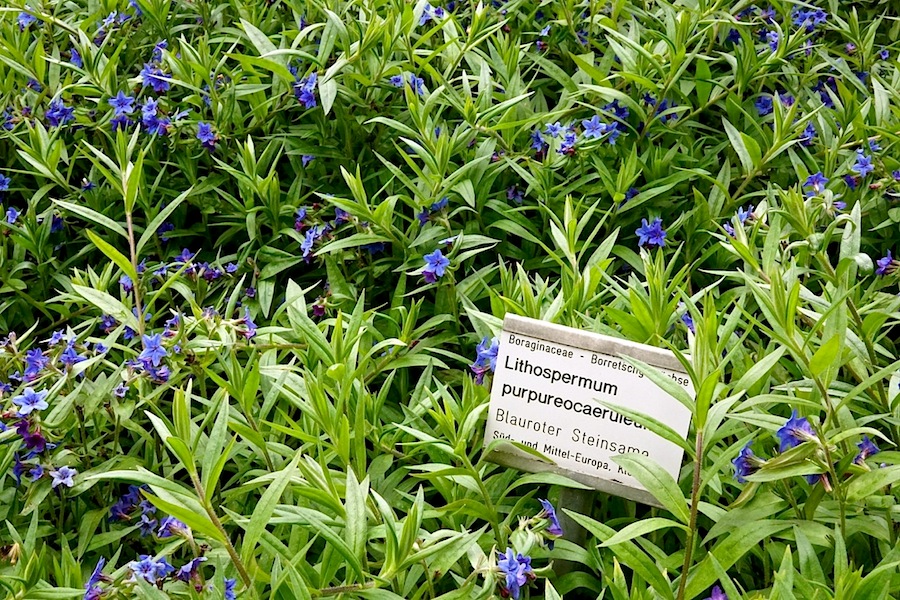
At the other side of the garden a Lithospermum purpurocaeruleum or purple gromwell drapes over the steps. The flowers emerge purple reddish and then mature to deep blue.

A last look from the northeast. At mid-month, the wisteria on the arbor (right side) has only a few blooms.

To see what’s blooming today for other garden bloggers, please visit Carol at May Dreams Gardens.

GB Bloom Day: snow day

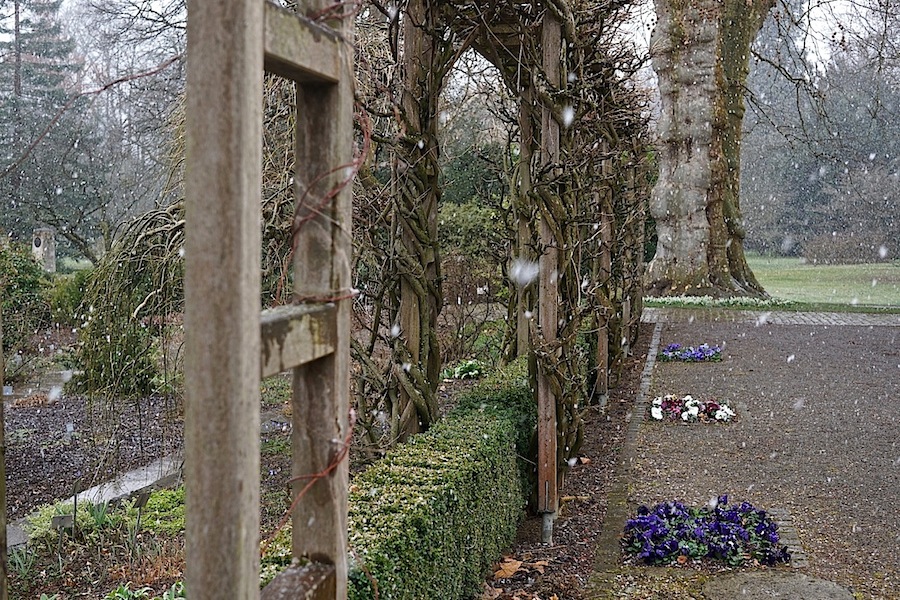
26 March 2016 Bloom Day, Stuttgart, enclos*ure

Because I haven’t really been gardening here in Stuttgart, I decided that for this year’s Bloom Days, I would make a record of the flowers of the display garden of the 18th century Spielhaus at the Exotic Garden of the University of Hohenheim, which is close to our neighborhood. 

Unfortunately, when I visited this afternoon it was snowing hard, and I didn’t take as many pictures as I would have liked. I may have to try again later this week.

Please click on any thumbnail in the gallery below to scroll through larger images. And to see what’s blooming today for other garden bloggers, visit Carol at May Dreams Gardens.

You must stand still; and then. . . you will hear the infinite march of buds faintly roaring.

Karel Capek [on the coming of spring], from The Gardener’s Year

The mission garden, Basel

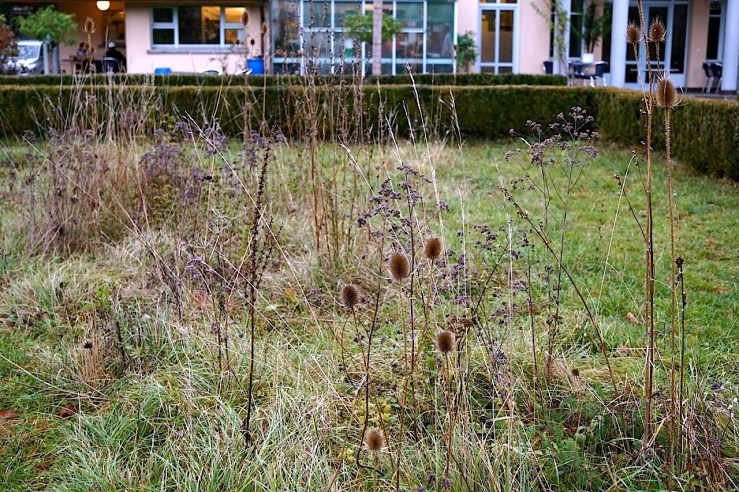
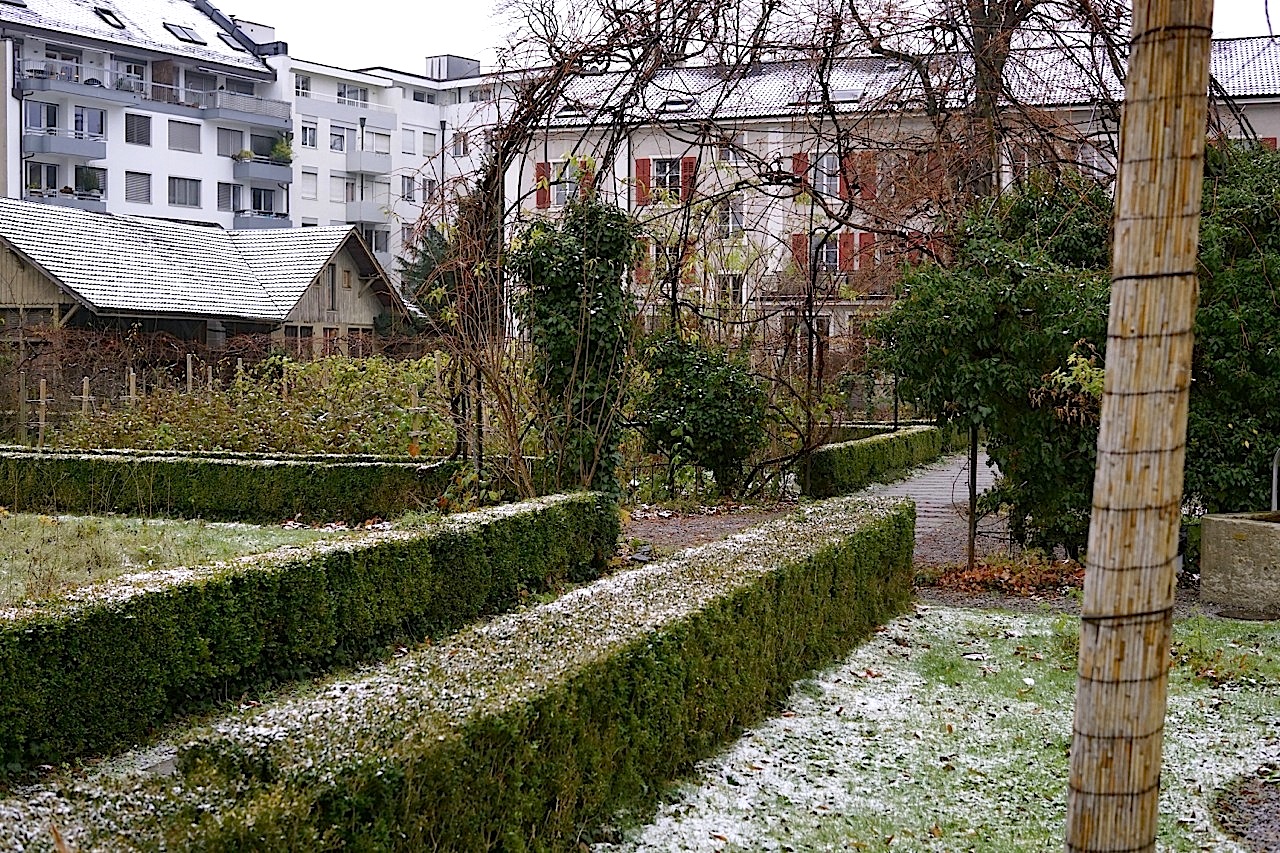
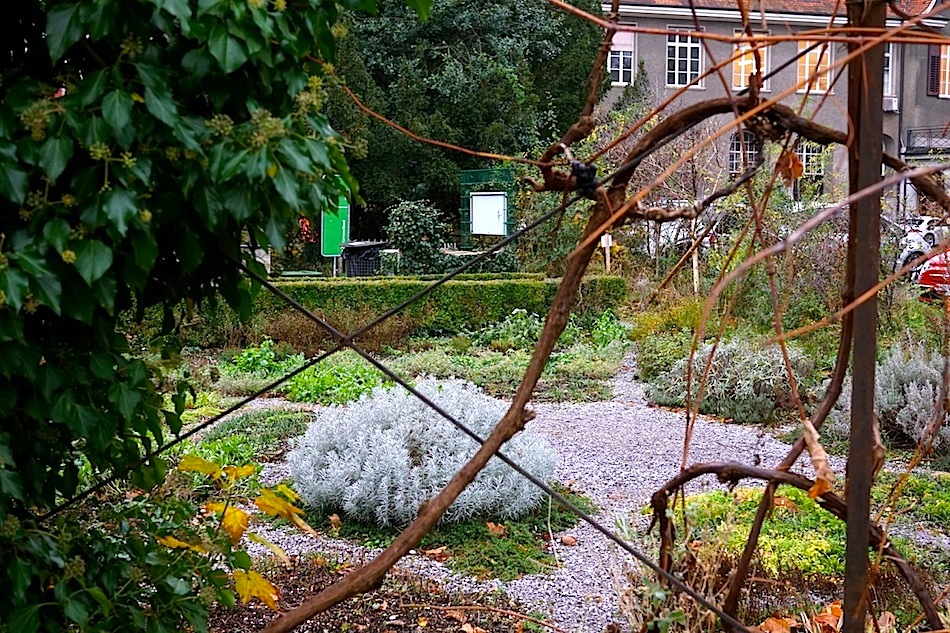
The back garden, Mission 21, Basel, Switzerland, late November 2015, by enclos*ure

During our Thanksgiving visit to Basel, Switzerland, we stayed at Hotel Bildungzentrum 21 or Hotel Educational Center 21.
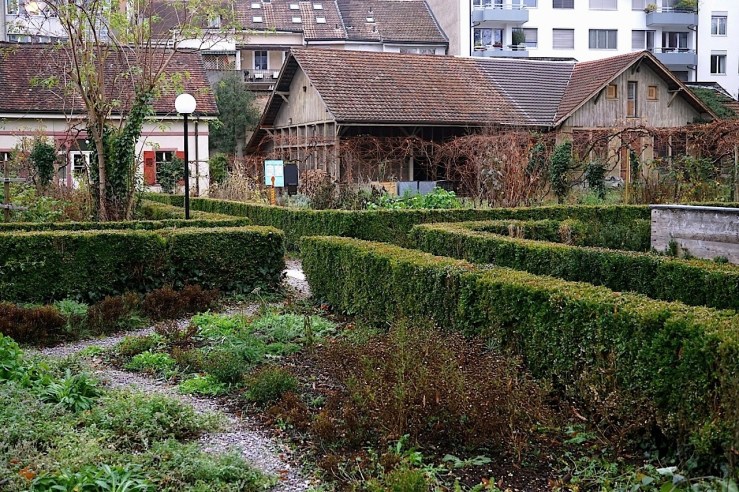
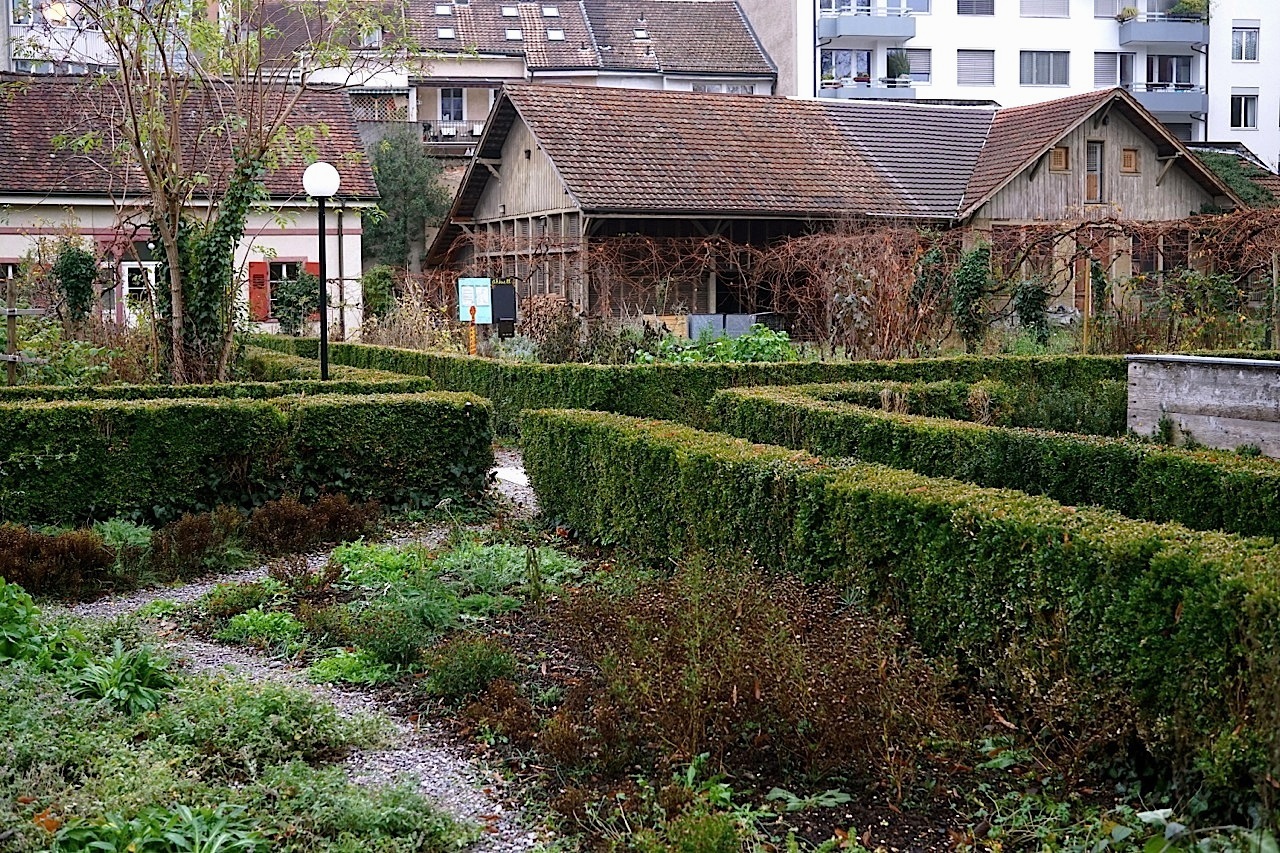
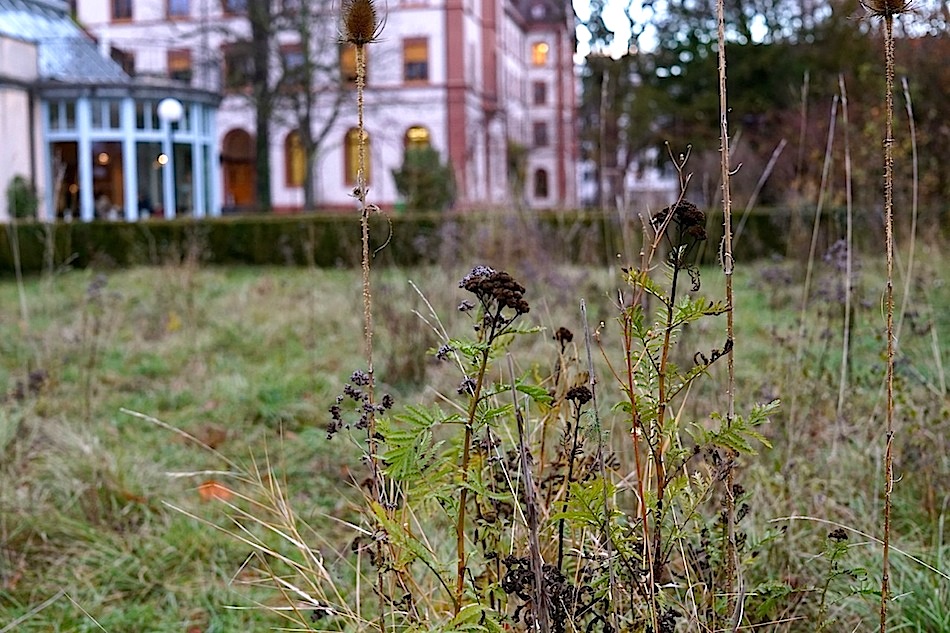
The back garden, Mission 21, Basel, Switzerland, late November 2015, by enclos*ure

Although a large garden was mentioned on TripAdvisor when I was booking, I had guessed that this would mean — particularly in late November — neat gravel paths, some dormant shrubs and lawn, and beds of chilly purple pansies on a 8″ planting grid.
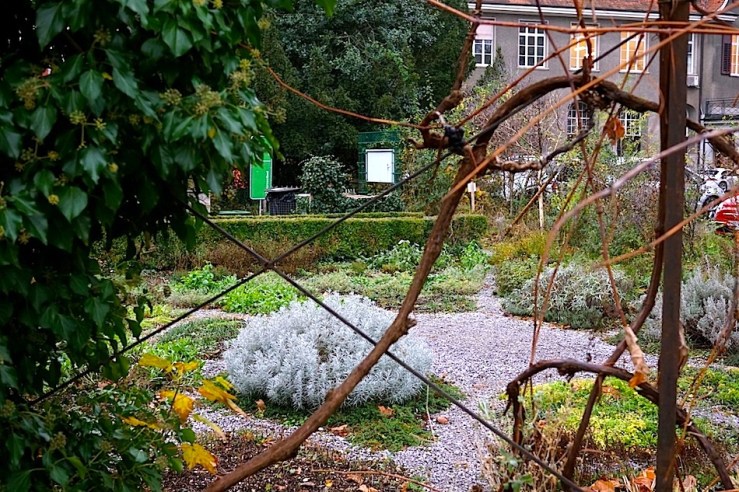
The back garden, Mission 21, Basel, Switzerland, late November 2015, by enclos*ure

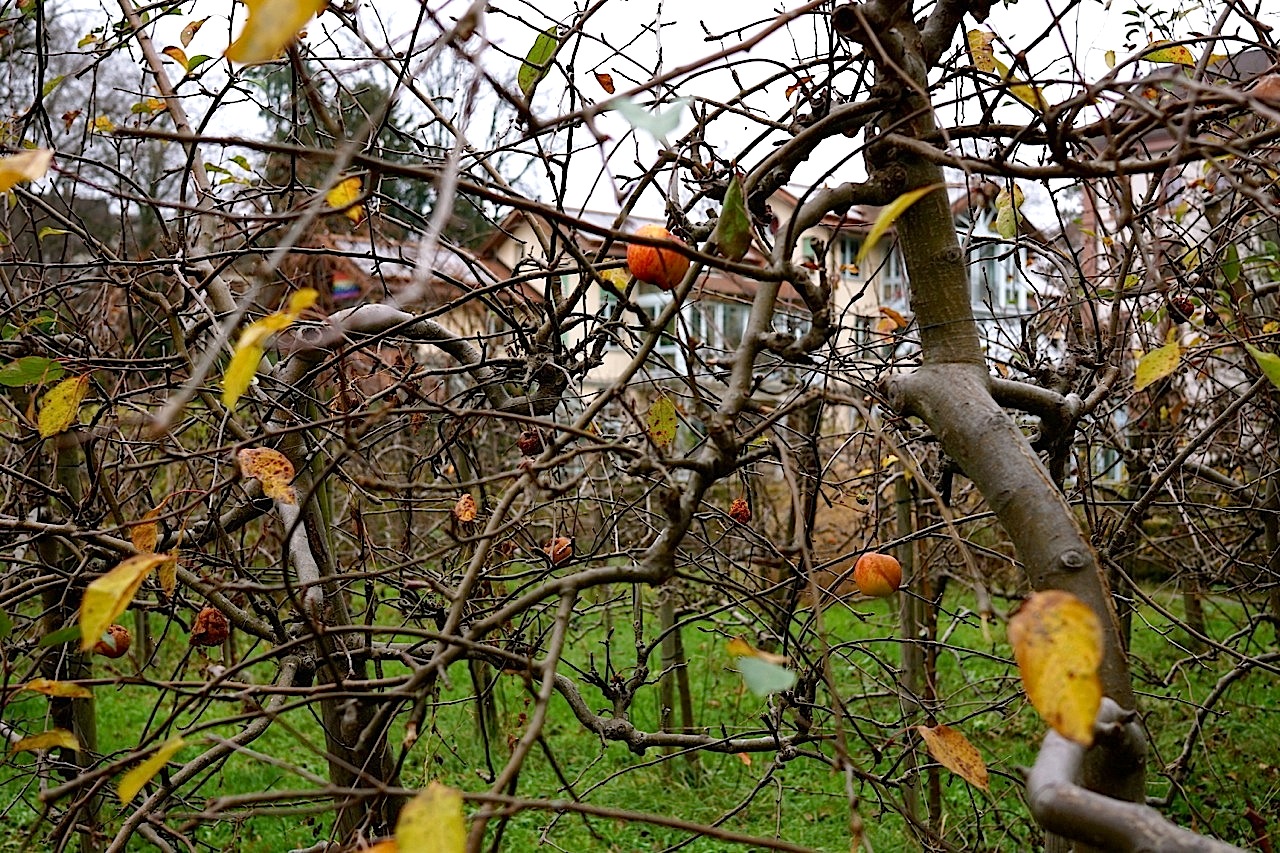
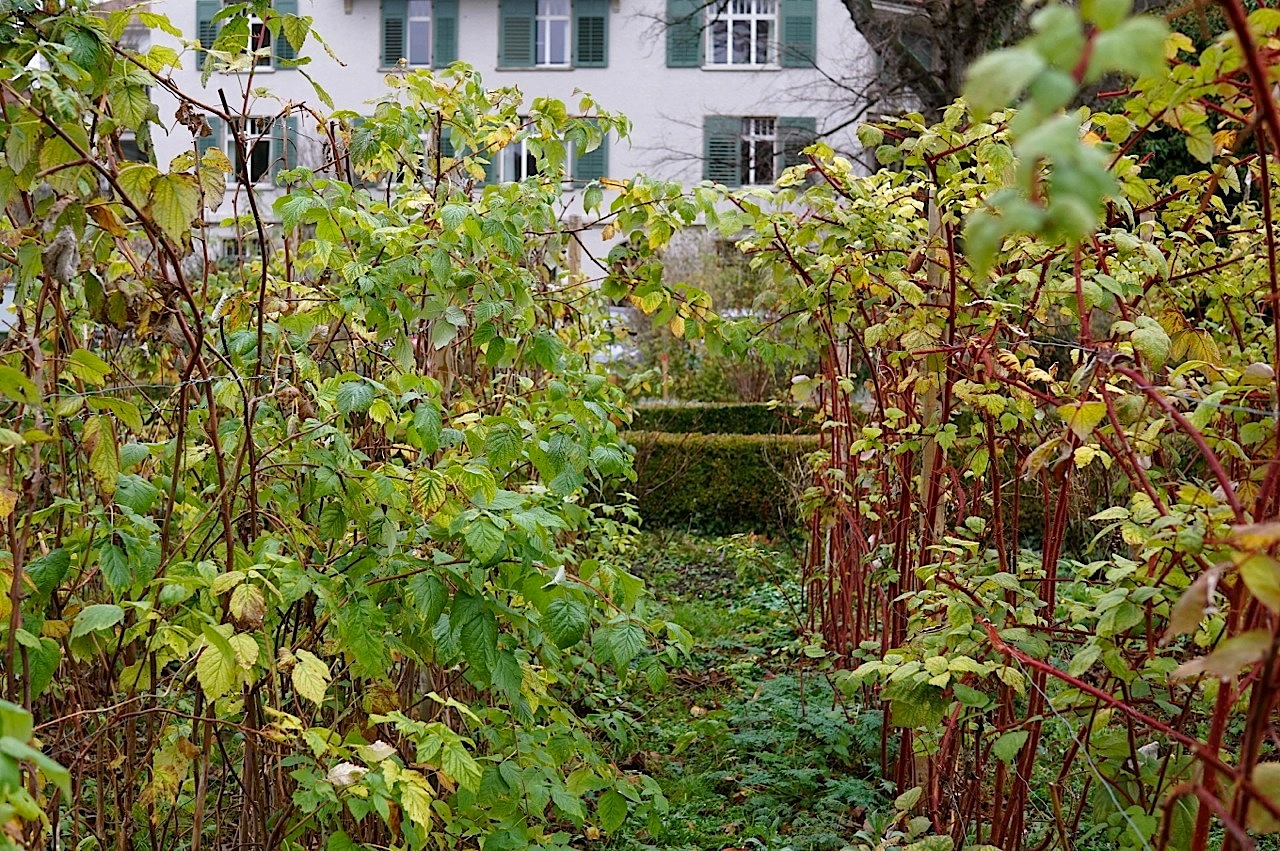
That the “private park” would actually encompass meadows, large plots for flowers, vegetables, and herbs, rows of berry bushes, and an orchard was a wonderful surprise.
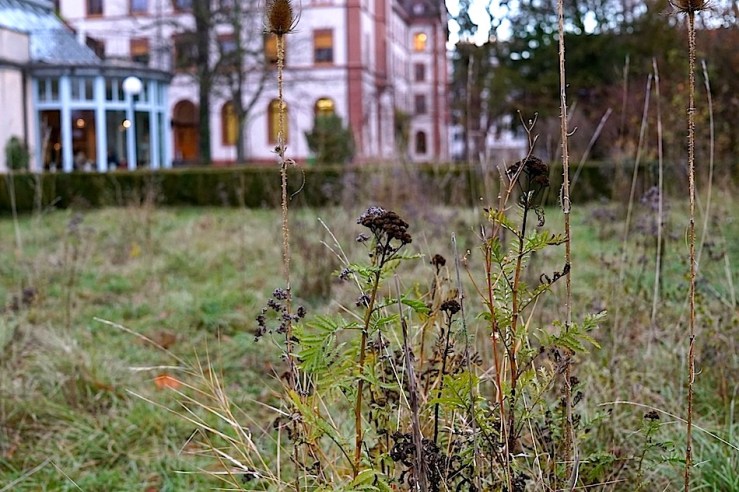
The back garden, Mission 21, Basel, Switzerland, late November 2015, by enclos*ure

The back garden, Mission 21, Basel, Switzerland, late November 2015, by enclos*ure

The hotel’s rooms are in one part of a building constructed in the 1860s as housing for the Basel Evangelical Missionary Society, now called Mission 21. (Hermann Hesse lived here for six years as a child.) The garden was once a place for teaching outgoing missionaries how to grow their own food.
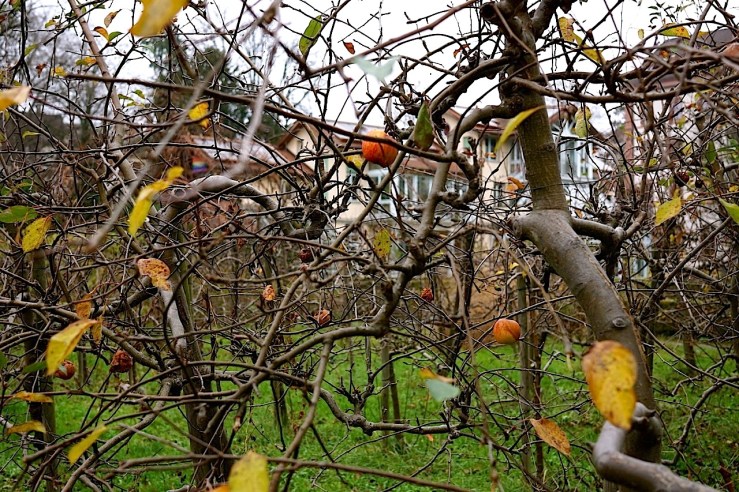
The back garden, Mission 21, Basel, Switzerland, late November 2015, by enclos*ure

Today, it is cared for by Unigärten Basel — a collective of University student gardeners — in collaboration with Urban Agriculture Basel and ProSpecieRara.
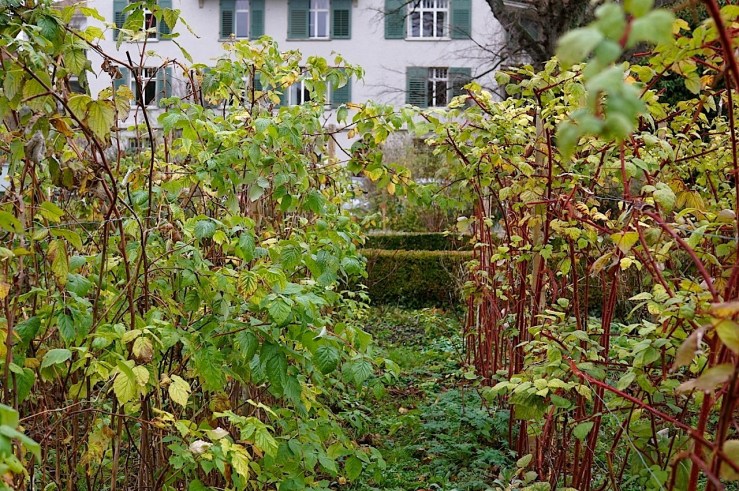
The back garden, Mission 21, Basel, Switzerland, late November 2015, by enclos*ure

Unigärten’s goal for the Mission 21 garden is to show the “greatest possible diversity of plants” within a permaculture system. They believe the garden, open to hotel guests and the surrounding neighborhood, can inspire both experienced and novice gardeners.
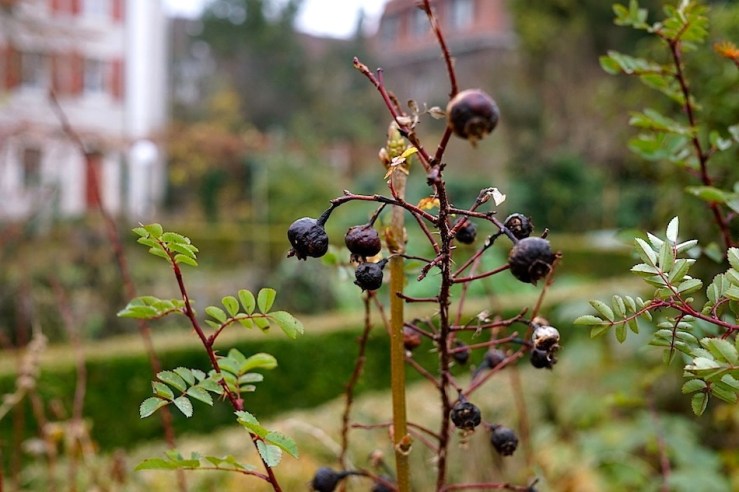
The back garden, Mission 21, Basel, Switzerland, late November 2015, by enclos*ure

I loved this practical and romantic garden.  I spent the beginning and end of every day we were there taking dozens and dozens of pictures — which is why it has taken me so long to post this. (There’s also a good photo of the garden in summertime here.)
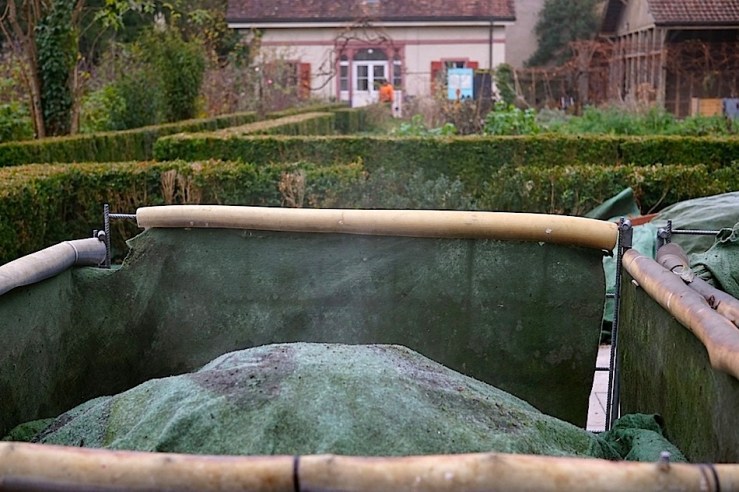
The back garden, Mission 21, Basel, Switzerland, late November 2015, by enclos*ure

(At the bottom of this post, you can click on ‘Continue reading’ and then on any thumbnail in gallery, and you can scroll through larger versions of all these photos, plus several more.)


The back garden

This slideshow requires JavaScript.

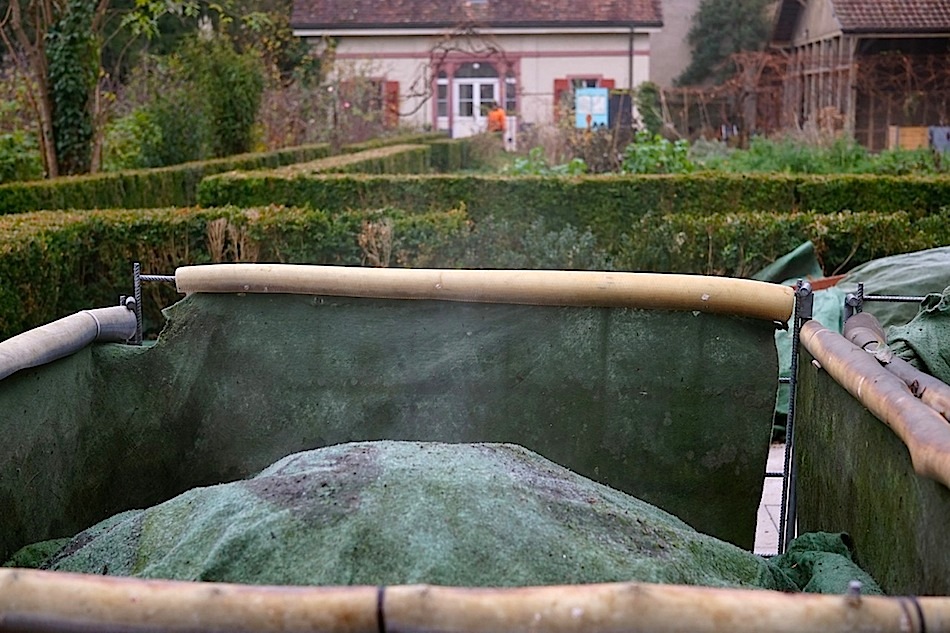
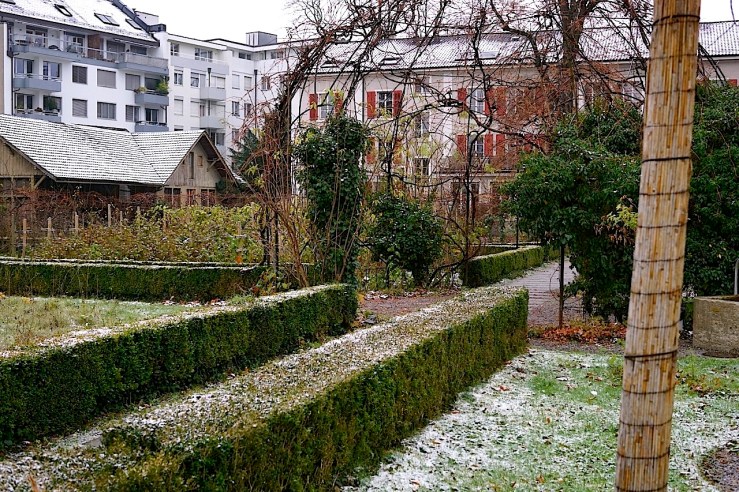
In the back garden, seven rectangular and square sections are outlined in sheared boxwood.

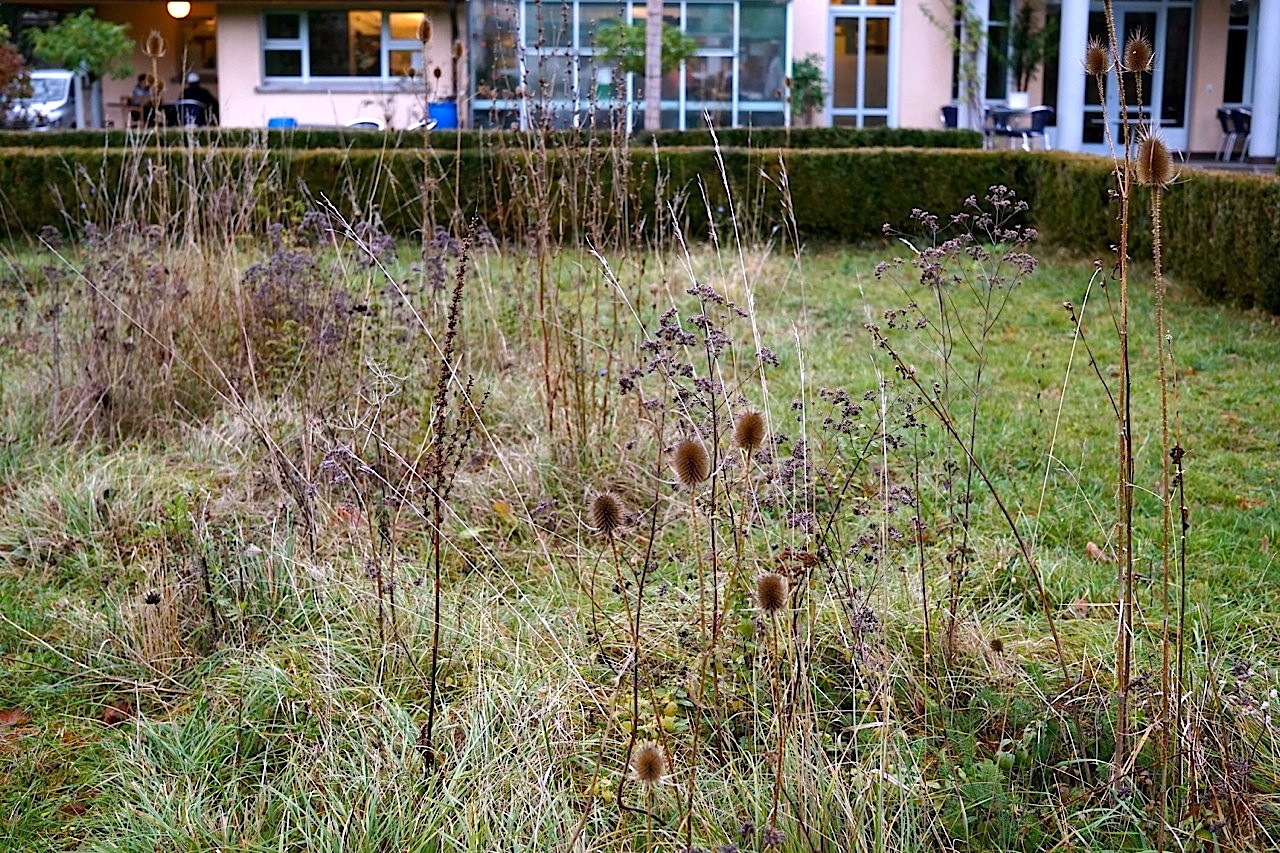
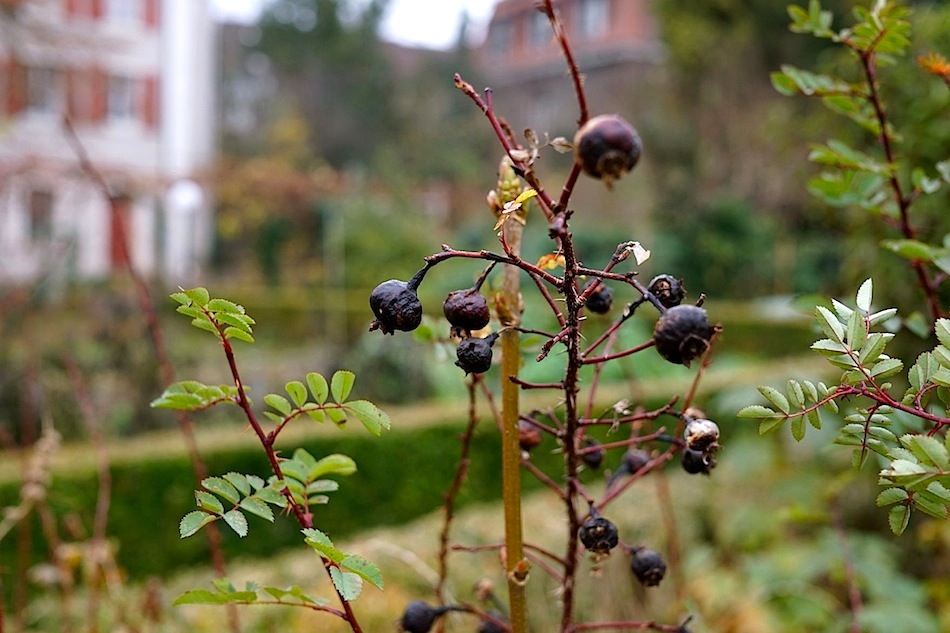
Wild plants (Wildpflanzen) — particularly those that thrive in dry and waste or disturbed ground (Ruderalflächen) — take their place alongside the urban agriculture. They have been left to spread largely undisturbed along the pathways and under shrubs and fruit trees.  And in the two meadows, there are forty species, “providing joy to many insects,” according to a sign posted outside the restaurant.

The front garden

This slideshow requires JavaScript.

The front garden, across from the hotel entrance,  does contain curving gravel paths and lawn, but also a number of large, old trees underplanted in a very rough and natural way with native plants from the region — mostly those with the downy oak forest as their native habitat.

You can also see that this front area has been designed to accommodate the hotel’s and the Mission’s entertaining needs and is surely at its best in the warmer months, full of tables and chairs, lights, and people.

Basel travel tips

Hotel Bildungszentrum 21 is two blocks from the historic city center. The rooms are simple, but comfortable.  Their rates are very reasonable.

Meals are the biggest expense for a tourist in Basel. Main dishes in all the guidebooks’ lists of budget restaurants are $20-$45.  A Whopper meal at the local Burger King is around $15, although sandwiches from bakeries, eaten standing up, can be had for $6 – $10.

I can recommend Zum Isaak and the bistro of the Museum der Kulturen (nice for lunch), both on Münsterplatz; Manger & Boire at Barfüsserplatz; and ONO deli cafe bar at Spalenvorstadt and Kornhausgasse (their generous Zmorge breakfasts are good for lunch too).

All public city transportation is free for anyone staying in a Basel hotel. Just ask for a pass when checking in.
Continue reading “The mission garden, Basel”

The Sunday porch: The Appletrees

This slideshow requires JavaScript.

“The Appletrees,” Henry Eugene and Eva Johnston Coe house, Southampton (on Long Island), New York, 1914, by Frances Benjamin Johnston,* via Library of Congress Prints and Photographs Division.

The porch of this 19th century “cottage” is actually an arbor — covered, I believe, in grape vines.  The flower-filled boxwood parterre immediately surrounding the house ends rather abruptly in country fields and woods.

I haven’t been able to discover much about the property and its owners:  Mrs. Coe co-authored a book on American embroidery samplers, and Mr. Coe was evidently considered an arbiter of social acceptance for the wealthy Southampton of his time. He signified who was in and who was out by issuing (or not) invitations to his annual dinner at The Appletrees (or The Apple Trees).

I could not find out whether the house still exists.

This hand-colored glass lantern slide was used by Johnston in her  garden and historic house lectures.


*Photographed when Frances Benjamin Johnston and Mattie Edwards Hewitt worked together.

ADDENDUM, October 2018: A kind reader who lives in Southampton just wrote to me and confirmed that the Coe house no longer exists.

“The last time I was on the property was in the 1960’s. It was a beautiful house and had wonderful out buildings, one of which was a large 2 story barn which was located near the property line that abutted the Catholic Church to the south. The horses were stabled below and the men were housed above.”