The mission garden, Basel

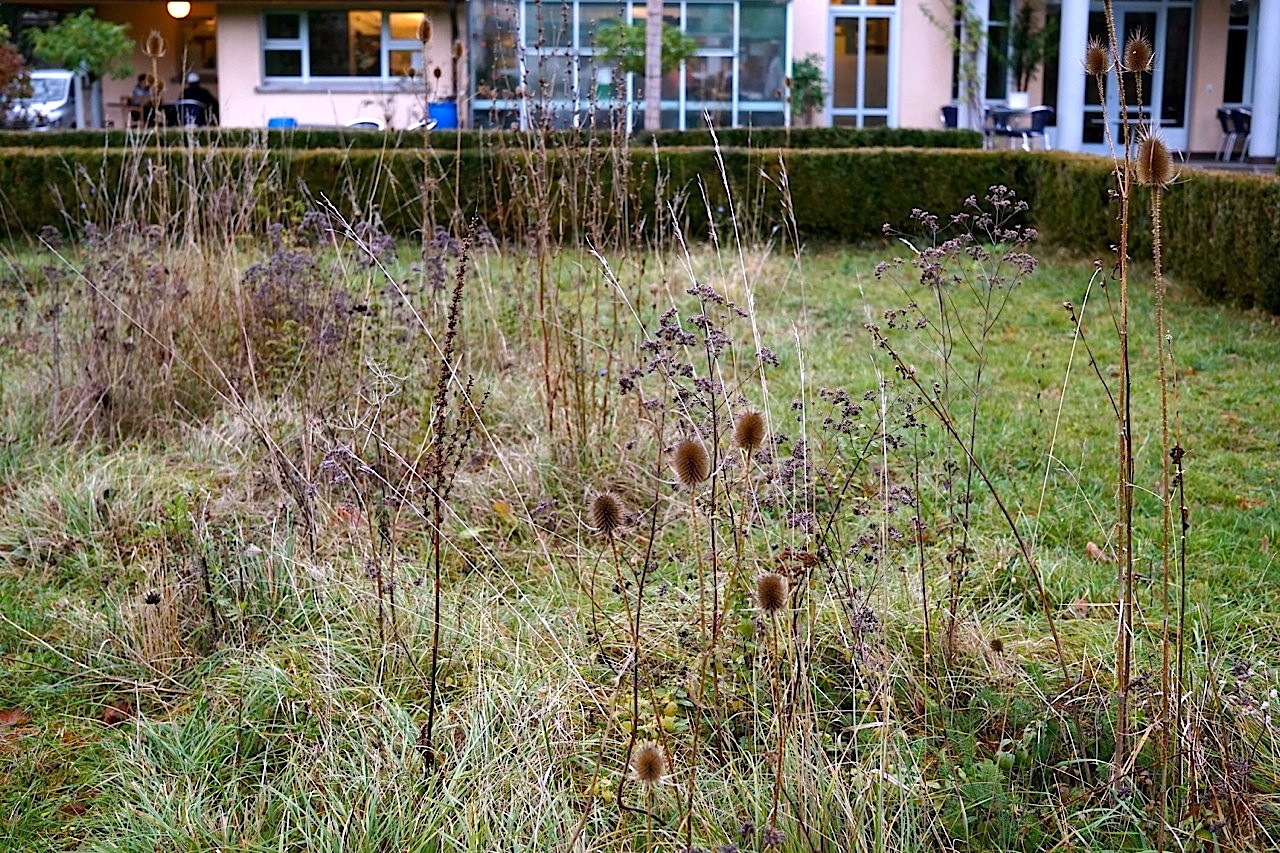
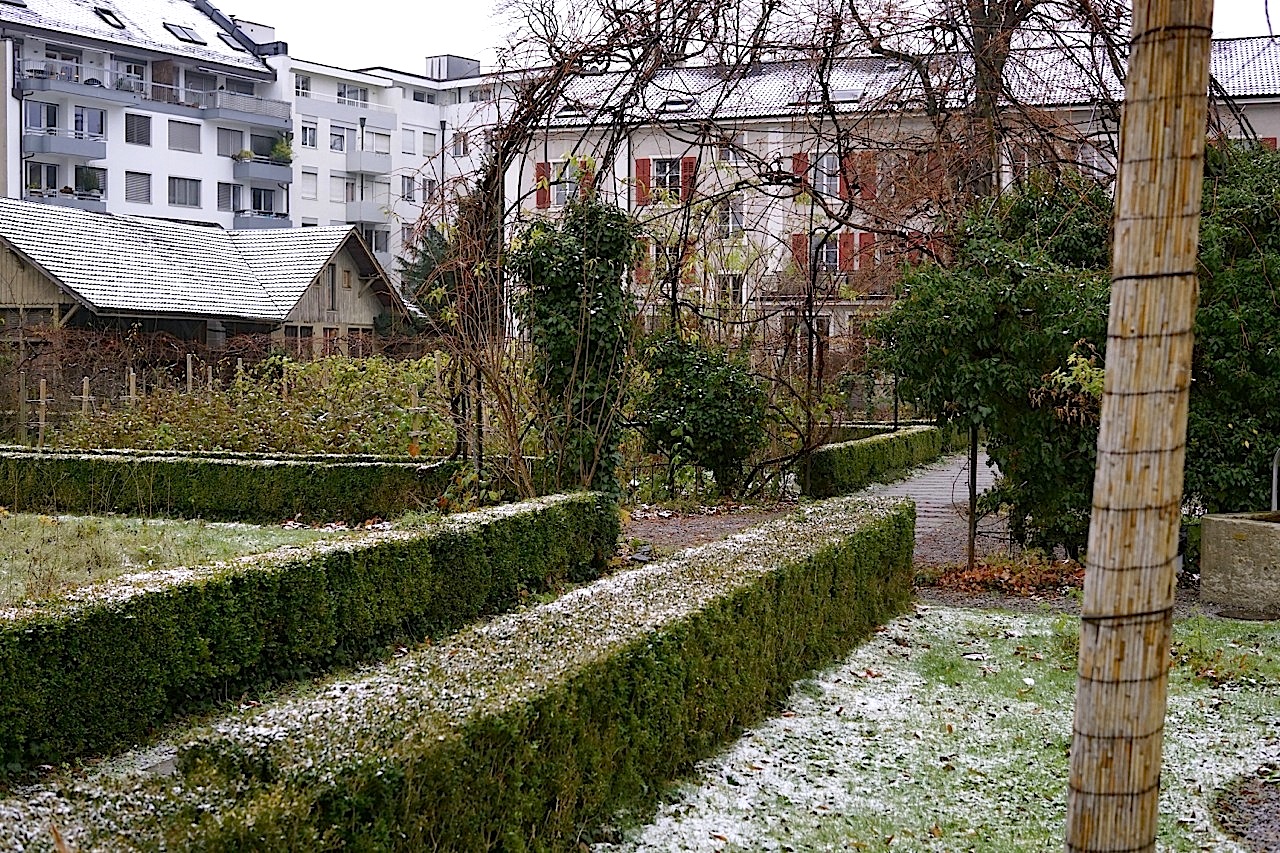
The back garden, Mission 21, Basel, Switzerland, late November 2015, by enclos*ure

During our Thanksgiving visit to Basel, Switzerland, we stayed at Hotel Bildungzentrum 21 or Hotel Educational Center 21.
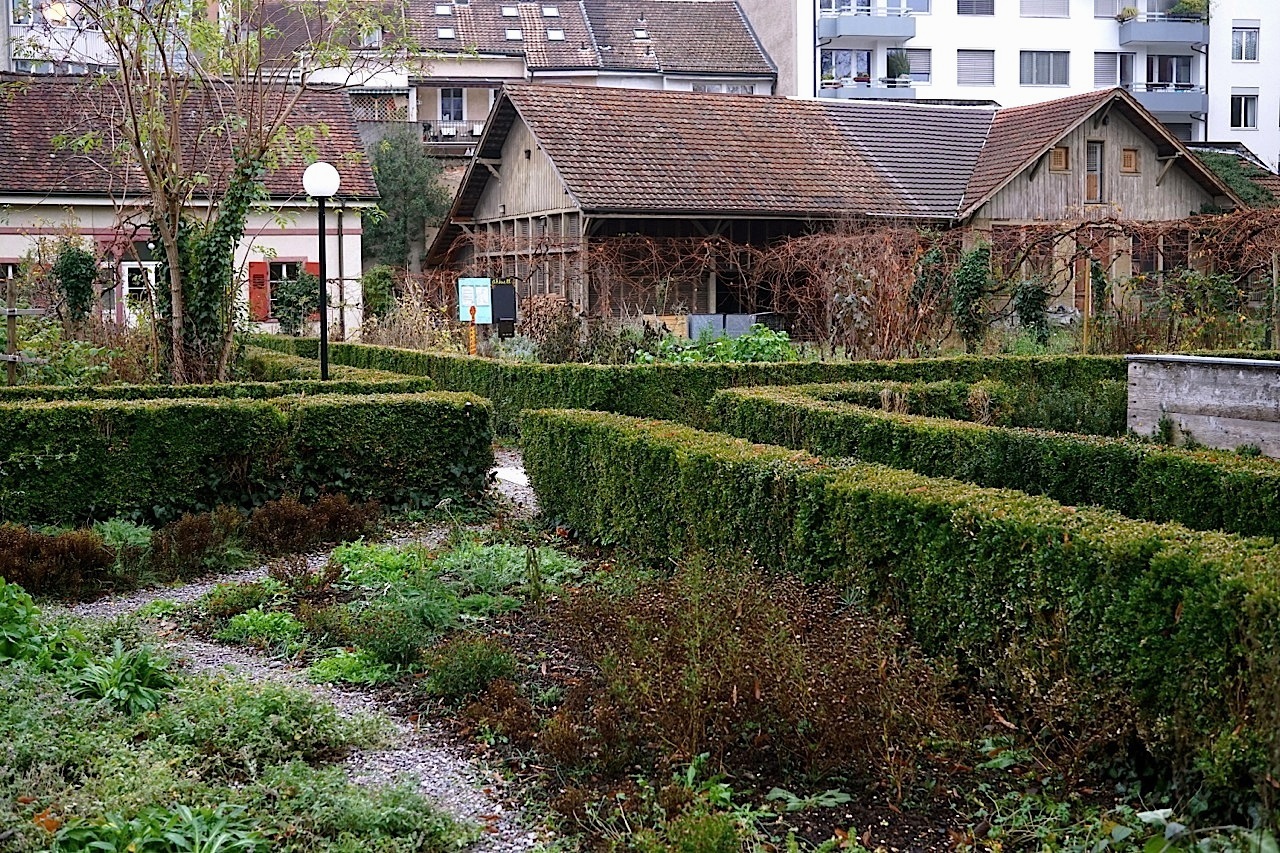
The back garden, Mission 21, Basel, Switzerland, late November 2015, by enclos*ure

Although a large garden was mentioned on TripAdvisor when I was booking, I had guessed that this would mean — particularly in late November — neat gravel paths, some dormant shrubs and lawn, and beds of chilly purple pansies on a 8″ planting grid.
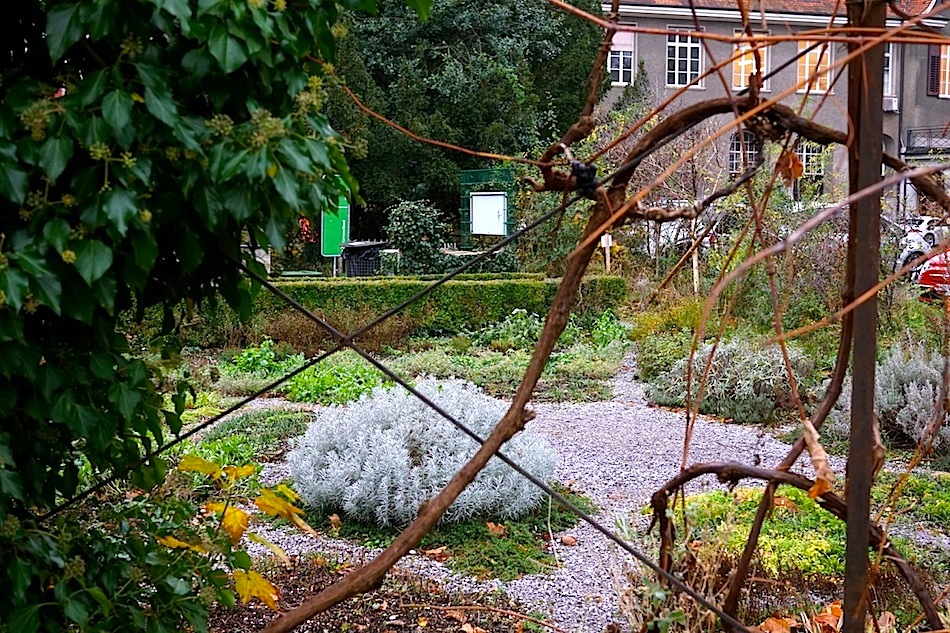
The back garden, Mission 21, Basel, Switzerland, late November 2015, by enclos*ure

That the “private park” would actually encompass meadows, large plots for flowers, vegetables, and herbs, rows of berry bushes, and an orchard was a wonderful surprise.
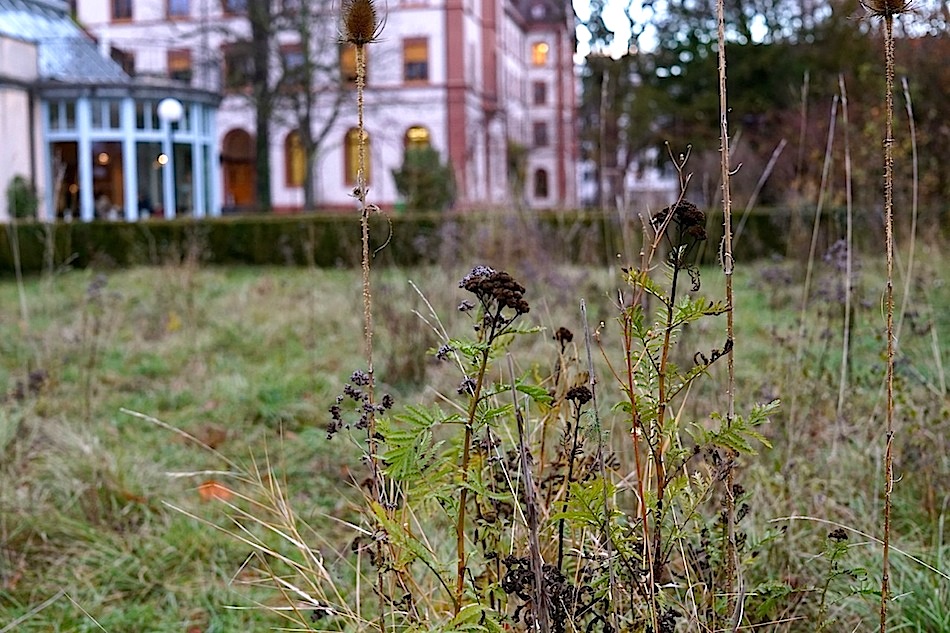
The back garden, Mission 21, Basel, Switzerland, late November 2015, by enclos*ure

The back garden, Mission 21, Basel, Switzerland, late November 2015, by enclos*ure

The hotel’s rooms are in one part of a building constructed in the 1860s as housing for the Basel Evangelical Missionary Society, now called Mission 21. (Hermann Hesse lived here for six years as a child.) The garden was once a place for teaching outgoing missionaries how to grow their own food.
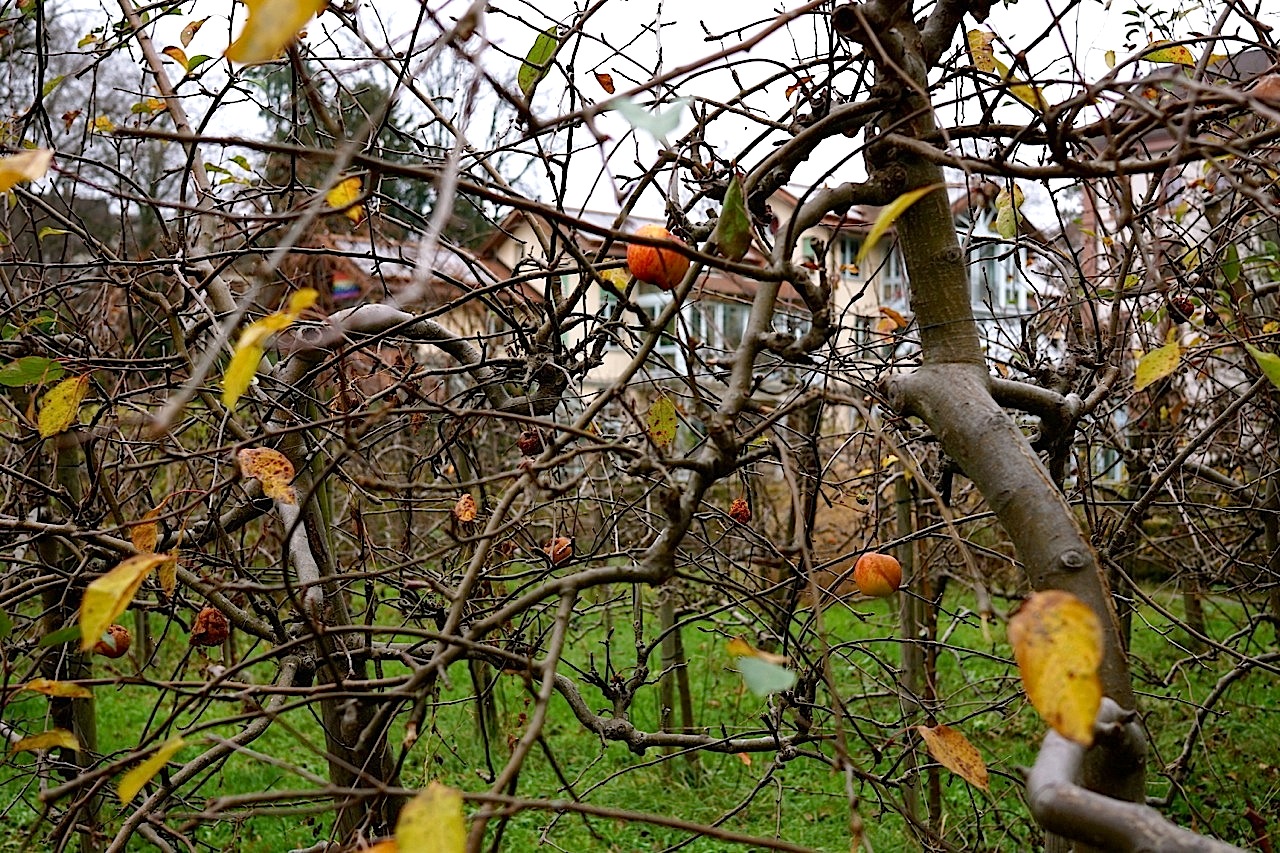
The back garden, Mission 21, Basel, Switzerland, late November 2015, by enclos*ure

Today, it is cared for by Unigärten Basel — a collective of University student gardeners — in collaboration with Urban Agriculture Basel and ProSpecieRara.
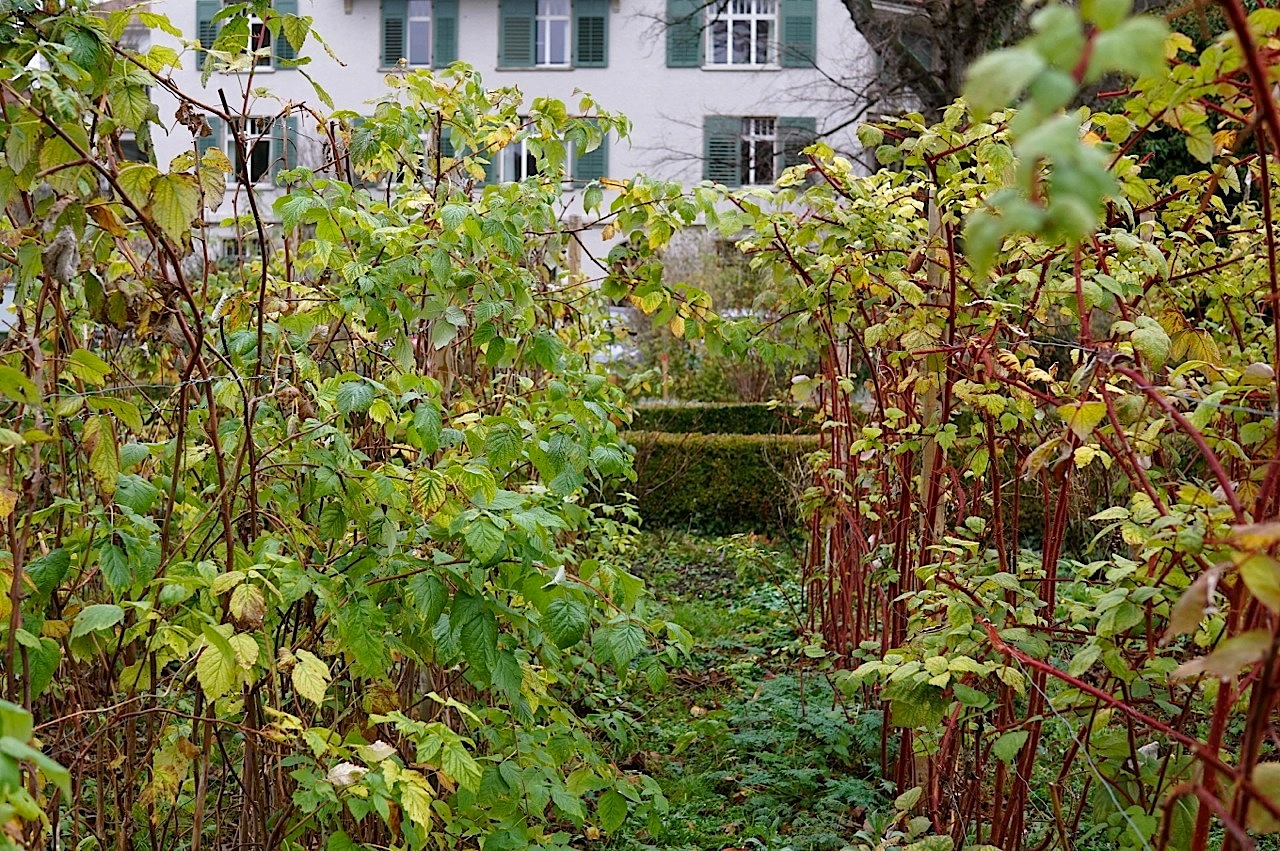
The back garden, Mission 21, Basel, Switzerland, late November 2015, by enclos*ure

Unigärten’s goal for the Mission 21 garden is to show the “greatest possible diversity of plants” within a permaculture system. They believe the garden, open to hotel guests and the surrounding neighborhood, can inspire both experienced and novice gardeners.
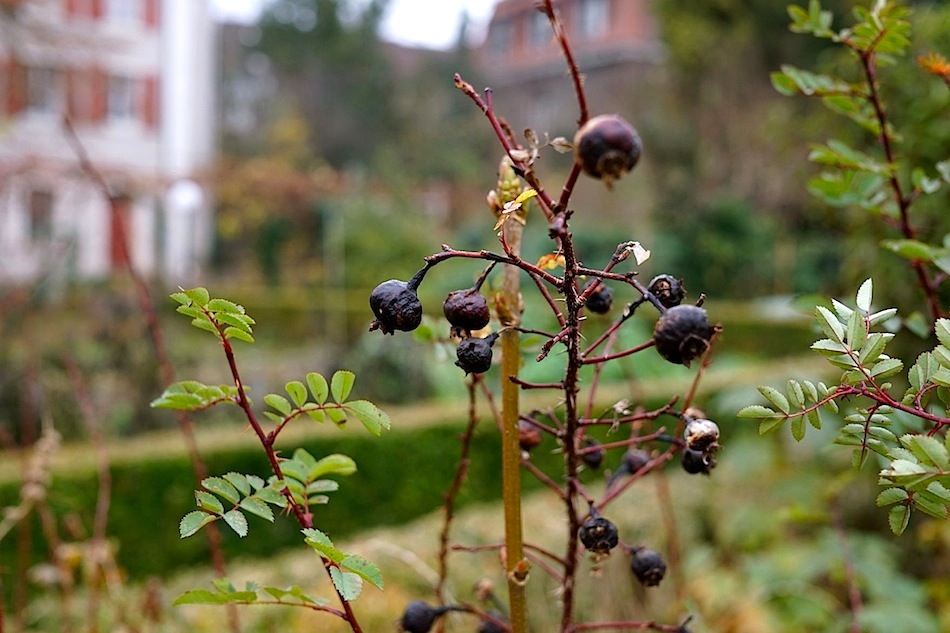
The back garden, Mission 21, Basel, Switzerland, late November 2015, by enclos*ure

I loved this practical and romantic garden.  I spent the beginning and end of every day we were there taking dozens and dozens of pictures — which is why it has taken me so long to post this. (There’s also a good photo of the garden in summertime here.)
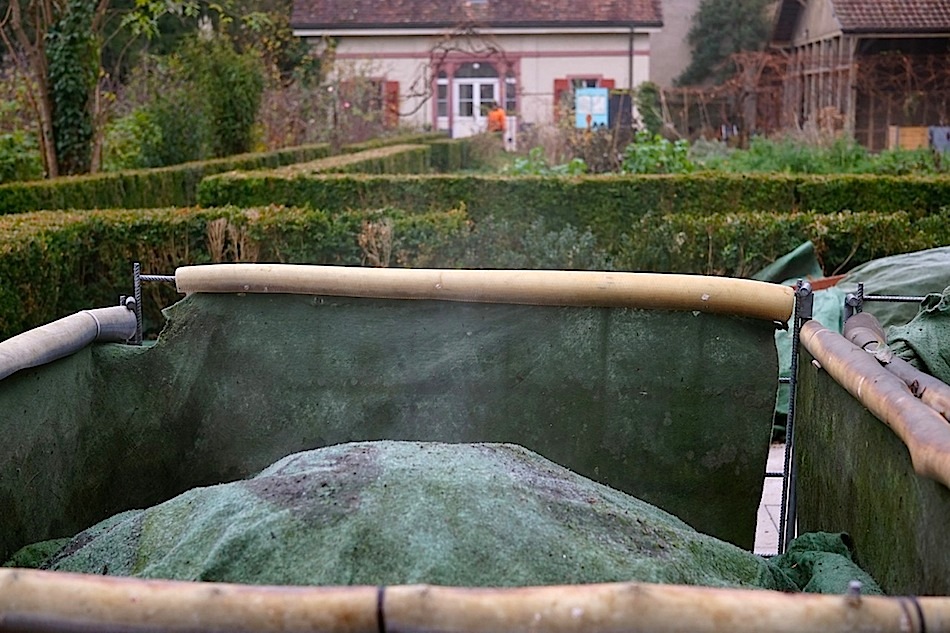
The back garden, Mission 21, Basel, Switzerland, late November 2015, by enclos*ure

(At the bottom of this post, you can click on ‘Continue reading’ and then on any thumbnail in gallery, and you can scroll through larger versions of all these photos, plus several more.)


The back garden

This slideshow requires JavaScript.

In the back garden, seven rectangular and square sections are outlined in sheared boxwood.

Wild plants (Wildpflanzen) — particularly those that thrive in dry and waste or disturbed ground (Ruderalflächen) — take their place alongside the urban agriculture. They have been left to spread largely undisturbed along the pathways and under shrubs and fruit trees.  And in the two meadows, there are forty species, “providing joy to many insects,” according to a sign posted outside the restaurant.

The front garden

This slideshow requires JavaScript.

The front garden, across from the hotel entrance,  does contain curving gravel paths and lawn, but also a number of large, old trees underplanted in a very rough and natural way with native plants from the region — mostly those with the downy oak forest as their native habitat.

You can also see that this front area has been designed to accommodate the hotel’s and the Mission’s entertaining needs and is surely at its best in the warmer months, full of tables and chairs, lights, and people.

Basel travel tips

Hotel Bildungszentrum 21 is two blocks from the historic city center. The rooms are simple, but comfortable.  Their rates are very reasonable.

Meals are the biggest expense for a tourist in Basel. Main dishes in all the guidebooks’ lists of budget restaurants are $20-$45.  A Whopper meal at the local Burger King is around $15, although sandwiches from bakeries, eaten standing up, can be had for $6 – $10.

I can recommend Zum Isaak and the bistro of the Museum der Kulturen (nice for lunch), both on Münsterplatz; Manger & Boire at Barfüsserplatz; and ONO deli cafe bar at Spalenvorstadt and Kornhausgasse (their generous Zmorge breakfasts are good for lunch too).

All public city transportation is free for anyone staying in a Basel hotel. Just ask for a pass when checking in.
Continue reading “The mission garden, Basel”

Waterford, Ireland

National Library of Ireland, 1929Christmas tree wagon of William Power & Sons, merchants of seeds and trees. Photo taken at Waterford, Ireland, courthouse on December 16, 1929, via National Library of Ireland Commons on flickr.

There’s another good photo of this little girl (possibly a Power) and another loaded company wagon here.

To be
Brought down at last
From the cold sighing mountain
Where I and the others
Had been fed, looked after, kept still,
Meant, I knew — of course I knew —
That it would only be a matter of weeks,
That there was nothing more to do. . . .

James Merrill, from “Christmas Tree

Life in gardens: favorite stalk

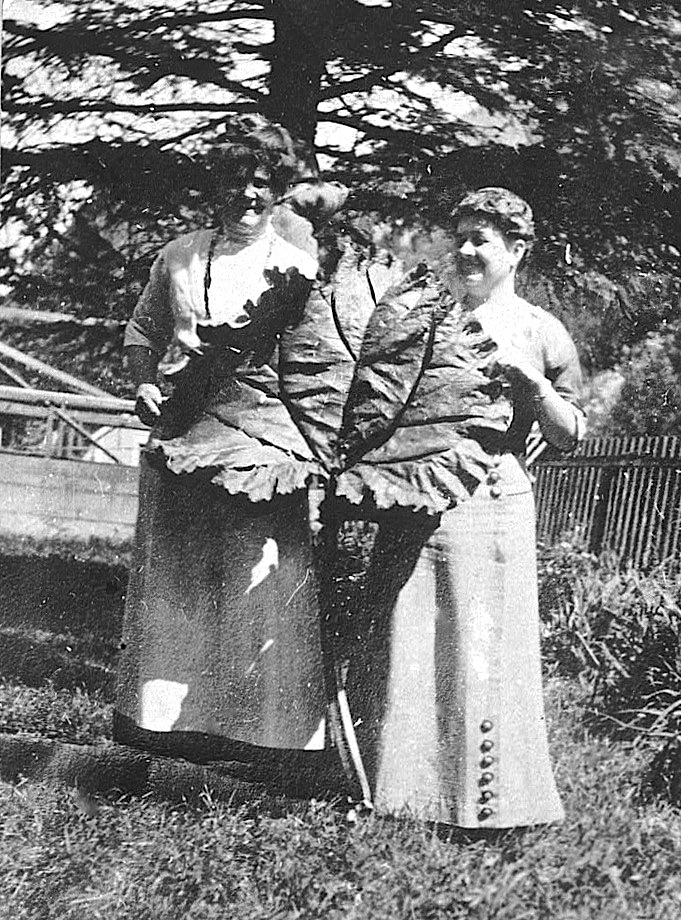
What’s not to love about Rhubarb? It’s the easiest thing to grow in Alaska and the moose don’t eat it.*

Rhubarb in Alaska, ca. 1910, Library of Congress
The leaves are toxic.

Rhubarb stalk in southeastern Alaska,” ca. 1900 and ca. 1925, Frank and Frances Carpenter collection, via Library of Congress Prints and Photographs Division.

Rhubarb is a very popular garden plant in Alaska. “That’s because the few long days of summer sun there help rhubarb grow to five feet or more,” according to The Plate.

Want to know more?  Check out Rhubarb or BUST, a blog all about growing rhubarb in Alaska.

Celebrate bitter things
after long winter
rhubarbs’ red green stalks
and partial sun. . .

—  Sheila Packa, from “Rhubarb

*Renae Wall, from “What’s not to love about rhubarb,” Peninsula Clarion.

Streifzug 7: Filderkraut festival

I’m sorry there was no Sunday porch yesterday. . .

8 Cabbage Fest, enclos*ure

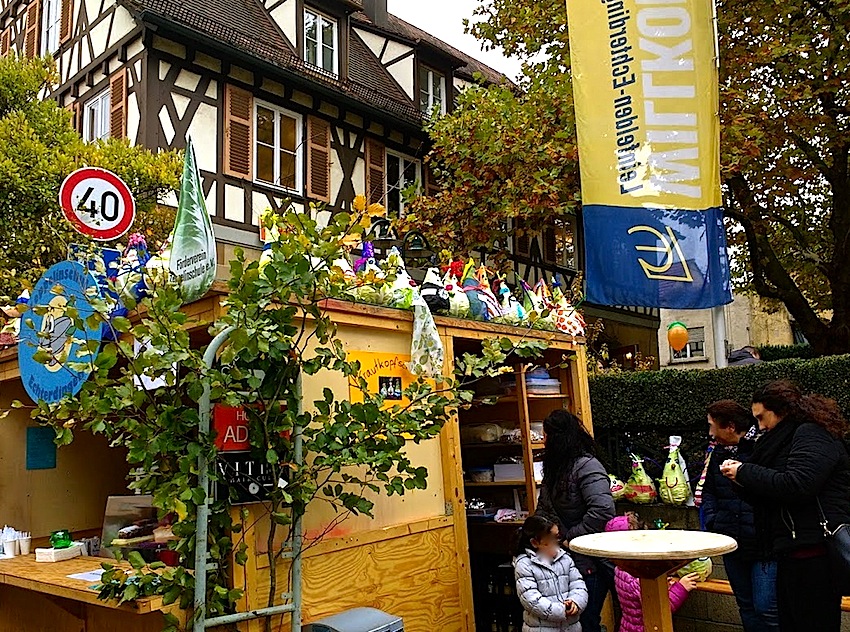
I was at the 37th annual Filderkraut-Fest in Leinfelden-Echterdingen, a town near the Stuttgart airport.

There are very few weekends in the Stuttgart area without a local fest celebrating some aspect of the season.  Since the end of summer, we have celebrated the wine harvest, the potato harvest, the pumpkin harvest, and now that of the Filderkraut.

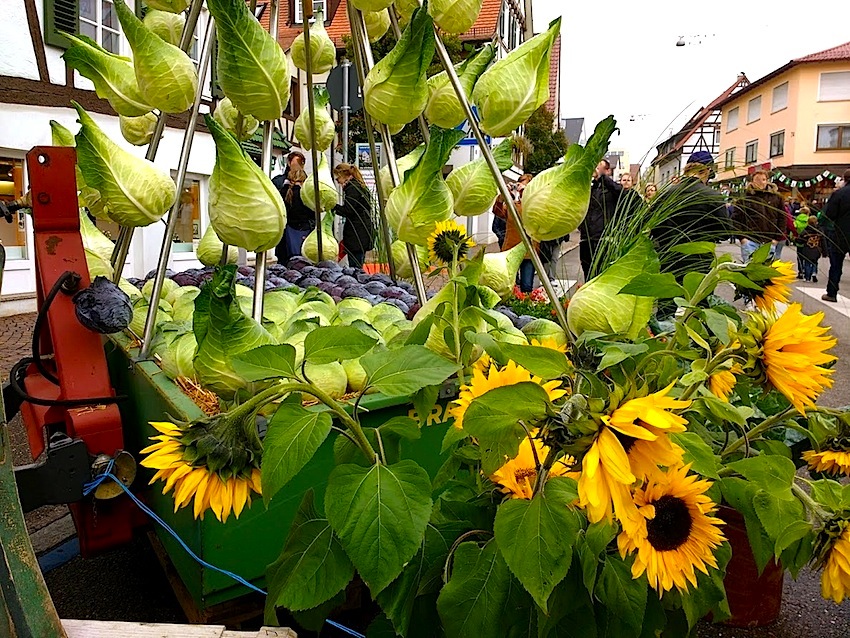
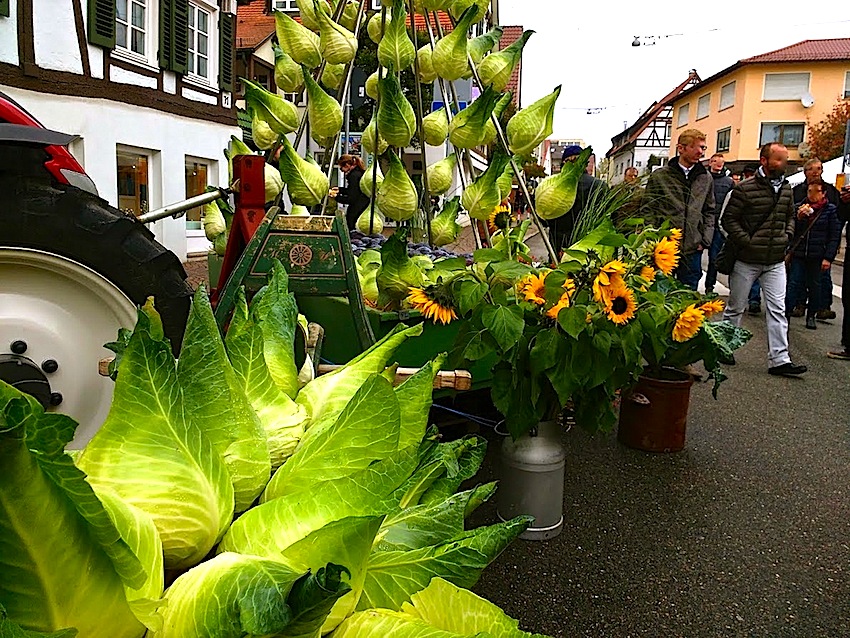
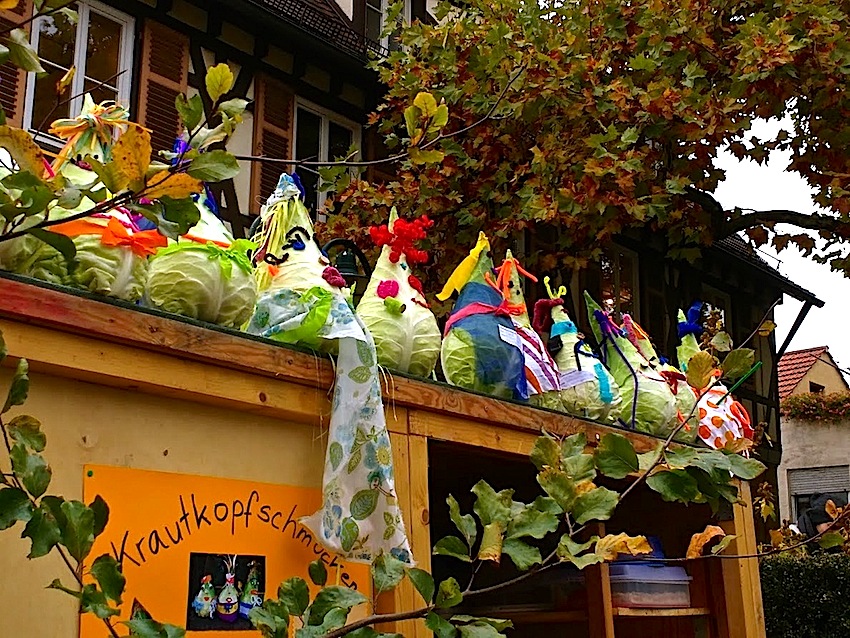
This very fine variety of cabbage has a distinctive pointy shape.*  It grows particularly well in the rich loess-loam of the Filder plateau, which surrounds the airport.

7 Cabbage Fest, enclos*ure

The fest was opened on Saturday by Mayor Roland Klenk, who tapped the first keg and, after about 40 taps, sprayed onlookers with beer.  “That’s not my core competency,” he reportedly said.

Tapping the first keg seems to be the German equivalent of throwing out the first ball in the U.S. — an honor fraught with peril for a politician.

9 Cabbage Fest, enclos*ure

This was not an easy year for cabbage growers, according to an article in the Stuttgarter Nachrichten.  It was too hot and dry, and the heads were smaller than usual.

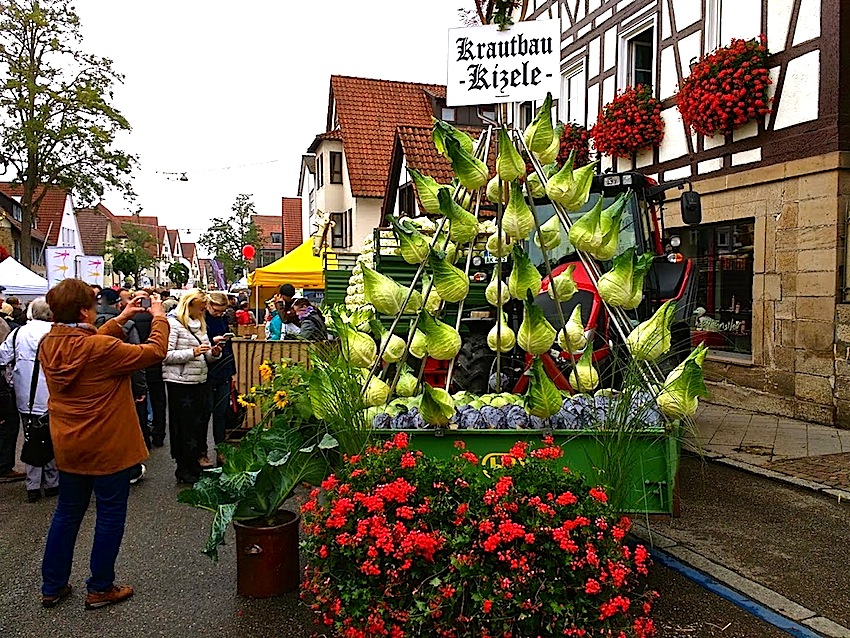
10 Cabbage Fest, enclos*ureAbove: “Kizele’s cabbage display.”

3 Cabbage Fest, enclos*ure

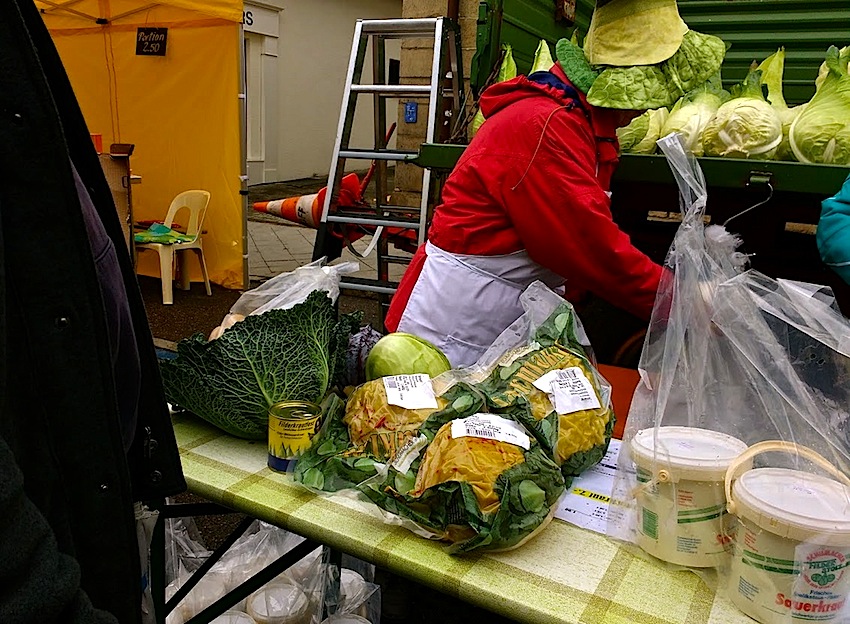
4 Cabbage Fest, enclos*ureAbove: whole heads of fermented cabbages on the table.  Note her hat.

15 Cabbage Fest, enclos*ure

14 Cabbage Fest, enclos*ureAbove: tubs of sauerkraut to take home.

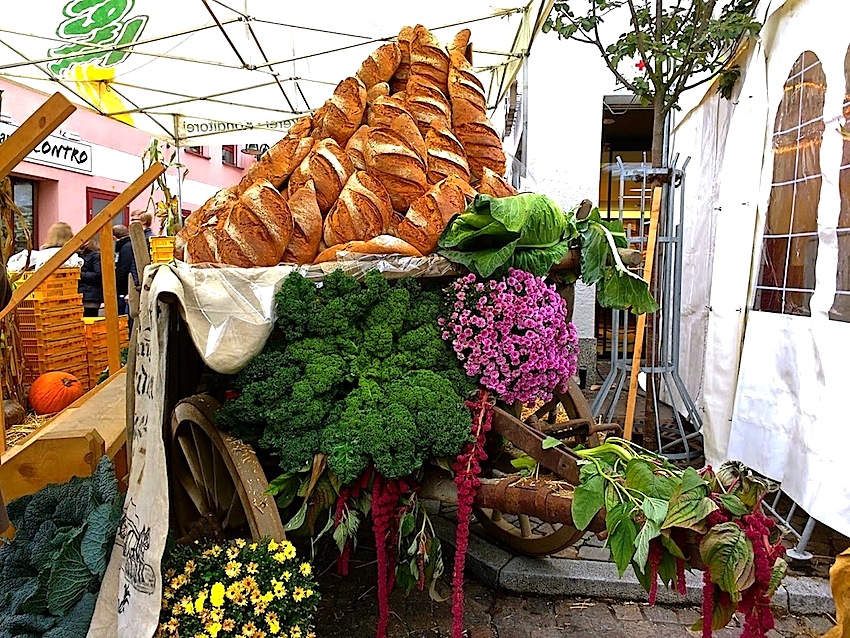
22 Cabbage Fest, enclos*ureAbove: a display of bread and cabbage.

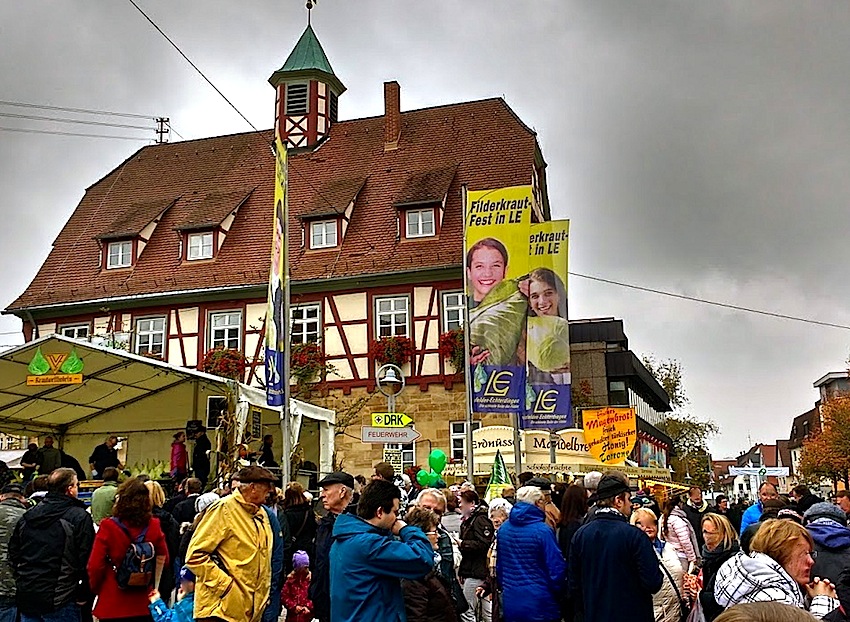
23 Cabbage Fest, enclos*ureAbove: the Rathaus or town hall of Echterdingen.

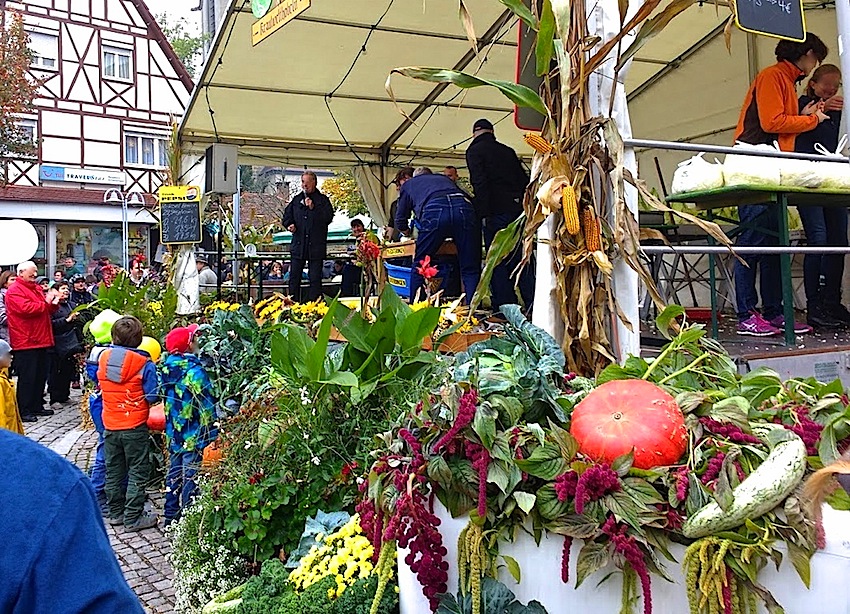
25 Cabbage Fest, enclos*ureAbove: a cabbage shredding race on the stage.

20 Cabbage Fest, enclos*ureAbove: a children’s activity booth in front of the town’s museum.

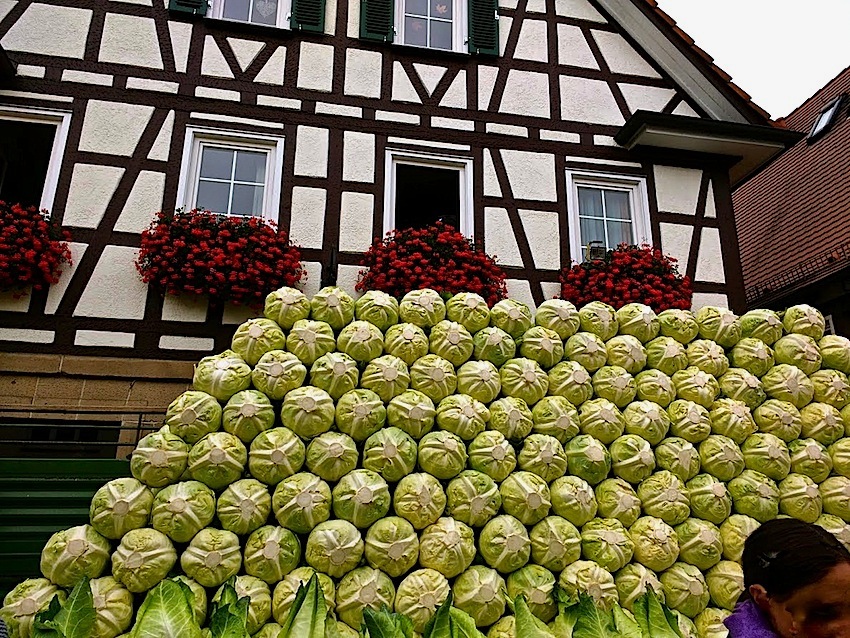
12 Cabbage Fest, enclos*ureAbove: “Pretty cabbage heads.”

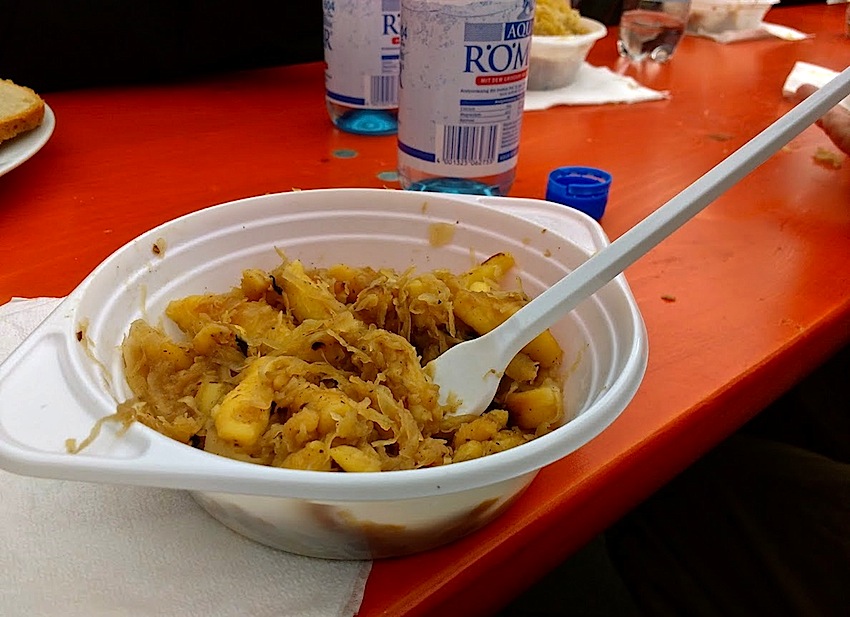
19 Cabbage Fest, enclos*ureAbove: my lunch, sauerkraut and potato dumplings (like gnocchi).

By the way, now is the time in Stuttgart to eat Zwiebelkuchen (bacon and onion flan) with Neuer Sußer or new wine — newly (barely) fermented grape juice.

Streifzug means ‘foray,’ ‘ brief survey,’ or ‘ramble.’

*I mentioned this fest to my mother, and she remembered that, back in Texas, my great-grandmother always told her that cabbages with pointed heads were the best. I don’t think I’d ever seen any until this August.

the moon moves over
the field of dark cabbage and an
exchange fills
all veins.

Jonathan Williams, from “Two Pastorals for Samuel Palmer at Shoreham, Kent”

Life in gardens: snake

Man with snake, Alabama, 1948, via Galt Museum“James Burness Senior holding a rattle snake outside the family’s home at Coste Station, six miles from Burdett, Alberta[, Canada]. ”

The photo, dated August 1948, is via the Galt Museum & Archives Commons on flickr.

I’m trying to figure out what plant is coming up in the narrow L-shaped — or does it go around to form a square with the sidewalk — bed behind him.  Sunflowers?