Vintage landscape: the fountain

How many ways can you plant out a lawn with a basic round fountain in the center? From 1871 to the early-1900s, the White House tried out a number of designs on its north side.

This photo was taken during the 1860s. The statue of Thomas Jefferson had been there since 1848.  Photo by National Photo Company, via the Library of Congress.

In 1871, the statue was replaced by a round fountain (the statue went to the Capitol Building).

Things were pretty simple in this 1881 etching, via the blog American Garden History.
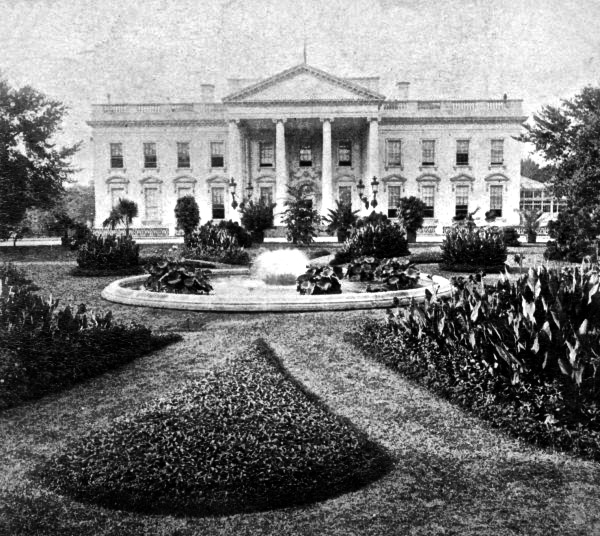
By 1885, the fountain was surrounded by flower beds in teardrops and circles.  Photo by Underwood & Underwood, via the website The White House Museum.
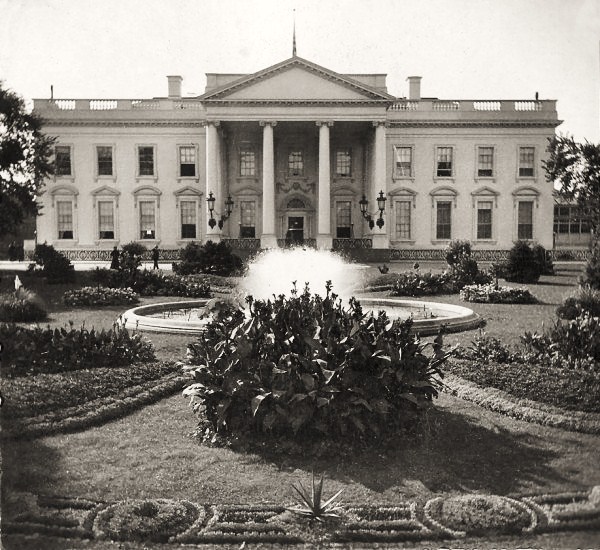
The design was more elaborate by 1894.   Photo by B.L. Singley, via American Garden History.

There was a more squared-off arrangement in 1901.  Photo by Detroit Publishing Co., via Library of Congress.
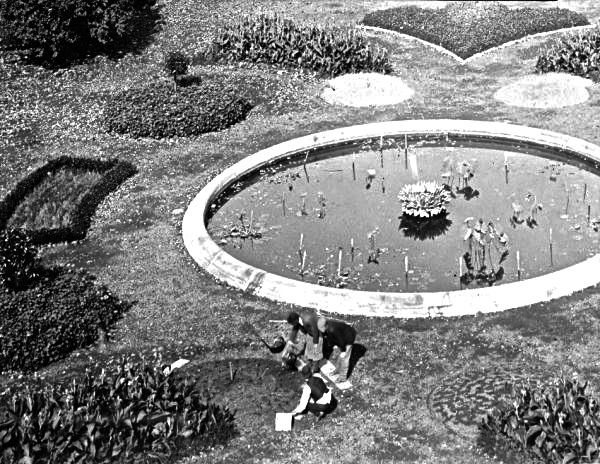
Above, gardeners were planting out the fountain area in 1902, via The White House Museum.
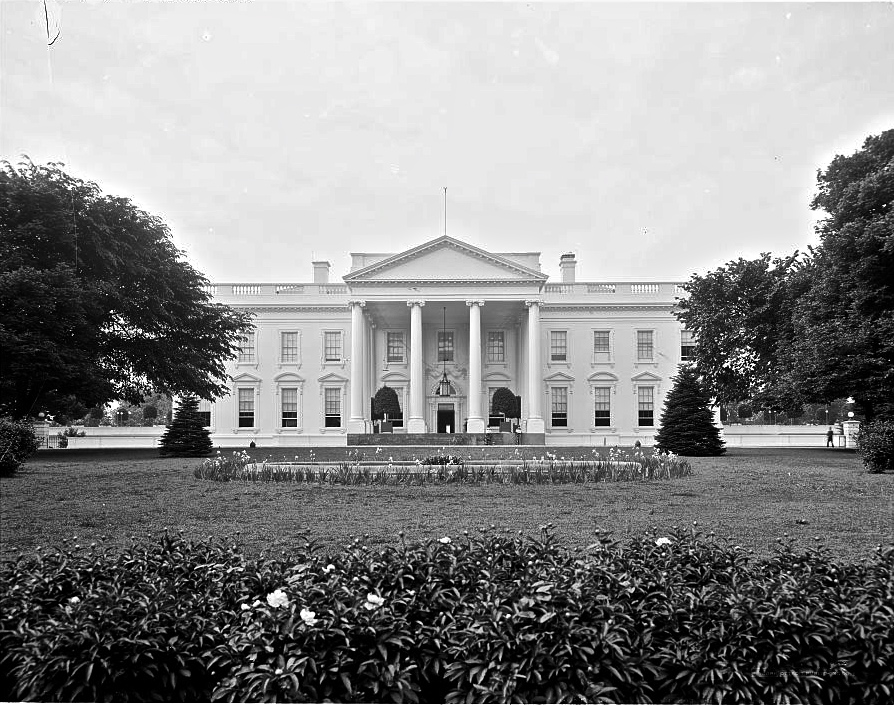
By 1905, the whole Victorian mess had been cleared out for simple plantings of bulbs and peonies.  Photo by Detroit Publishing Co., via Library of Congress.
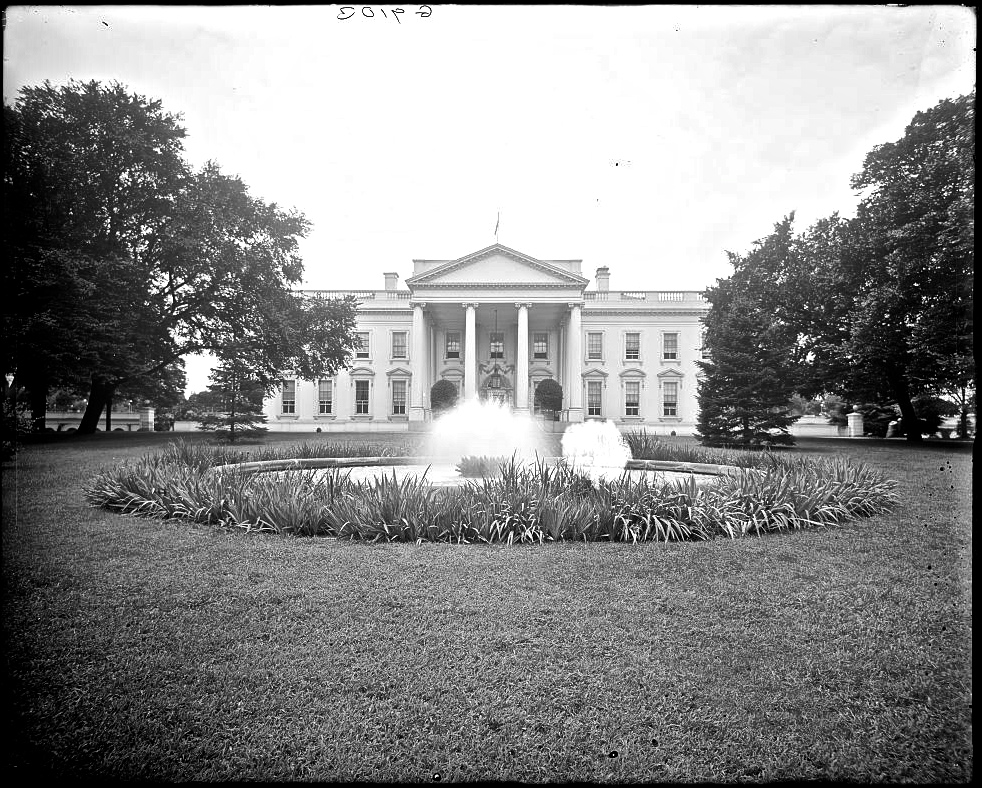
Above, sometime later, before 1920, the peonies were gone.  I like all the irises around the fountain.  Photo by Detroit Publishing Co., via Library of Congress.

Above is my photo of the north lawn in March 2012.

ADDENDUM: I found one more photo.

This would have been the view from the W.H. Dining Room during the years of Victorian bedding out. Taken ca. 1889 -1906 by Frances Benjamin Johnson, via Library of Congress.
Vintage landscape: take water, add children

Before air conditioning, water was the best remedy for hot summer weather.

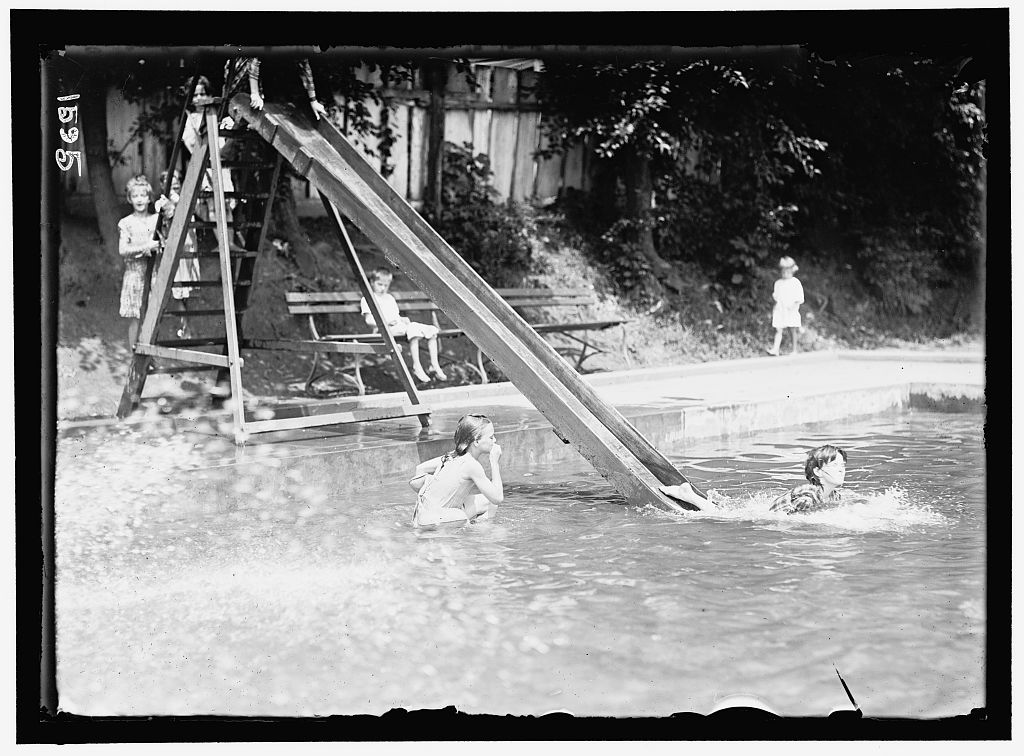
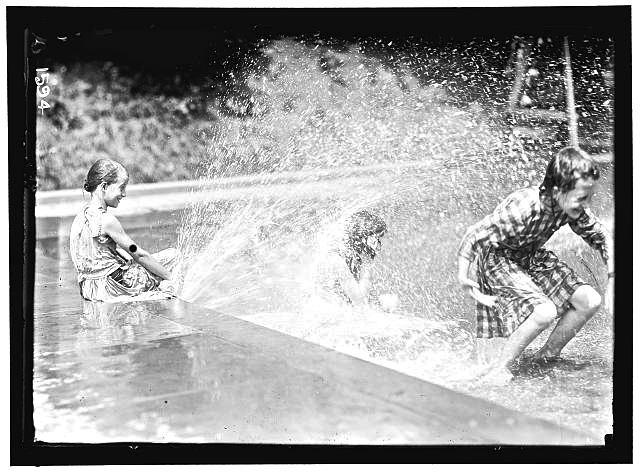
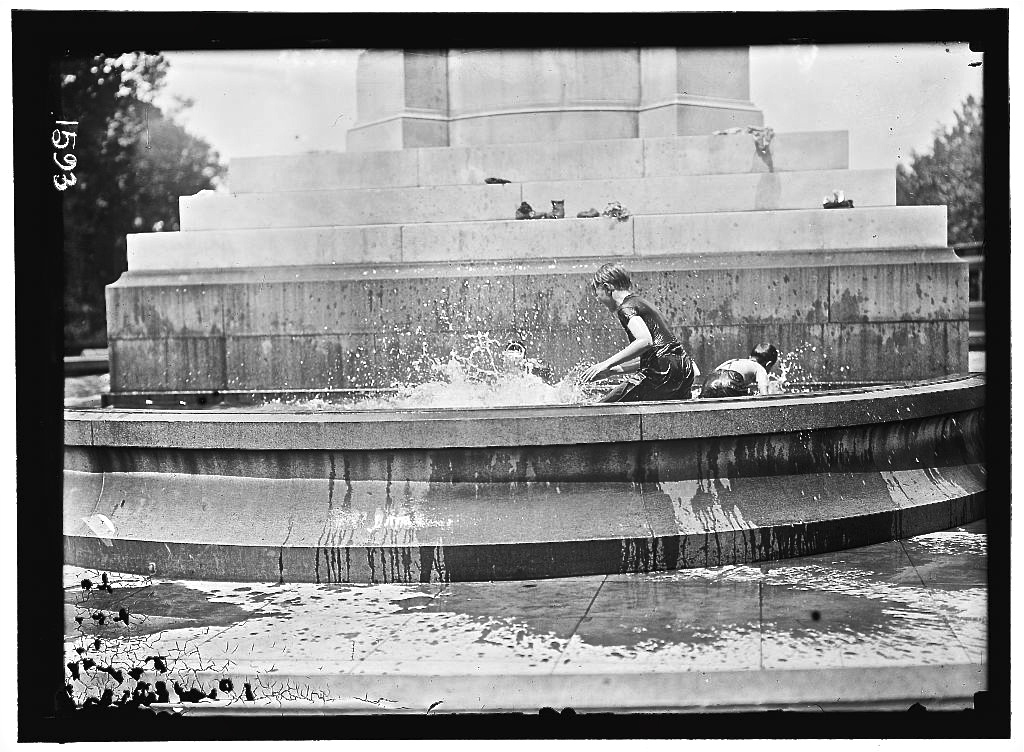
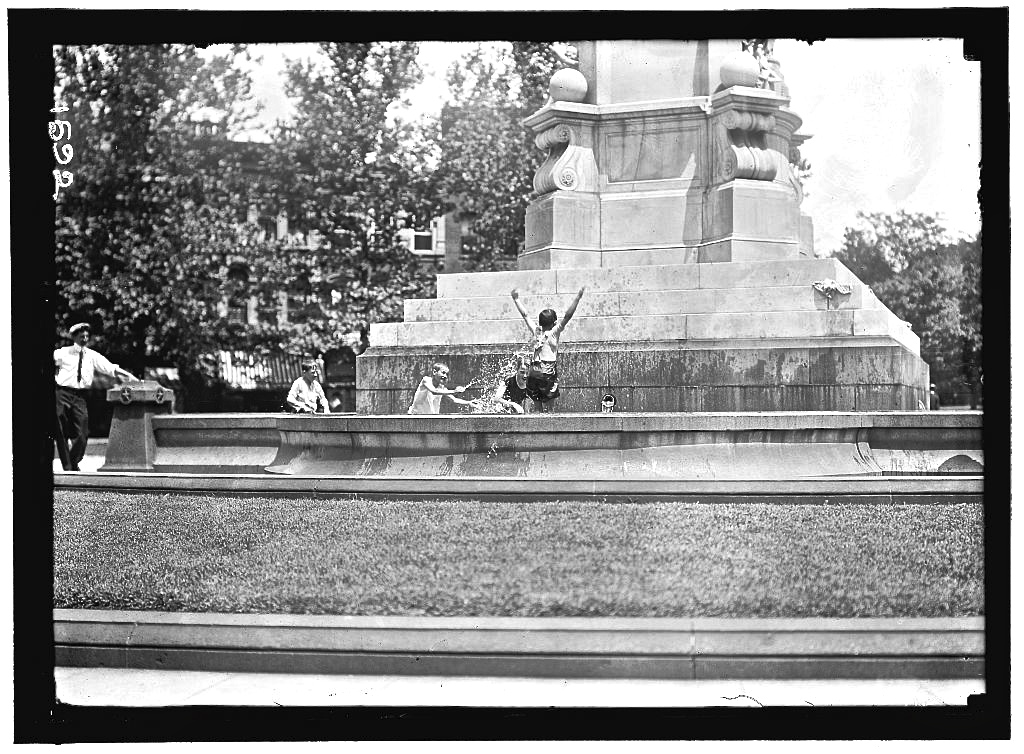
The children in the photos just above and below were enjoying a public fountain in Washington, D.C., in the summer of 1912.

The fountain is the Peace Monument on the U.S. Capitol grounds.

Below are children in a public pool in Washington, D.C., also in 1912.

All of the above four photos were taken by Harris & Ewing.

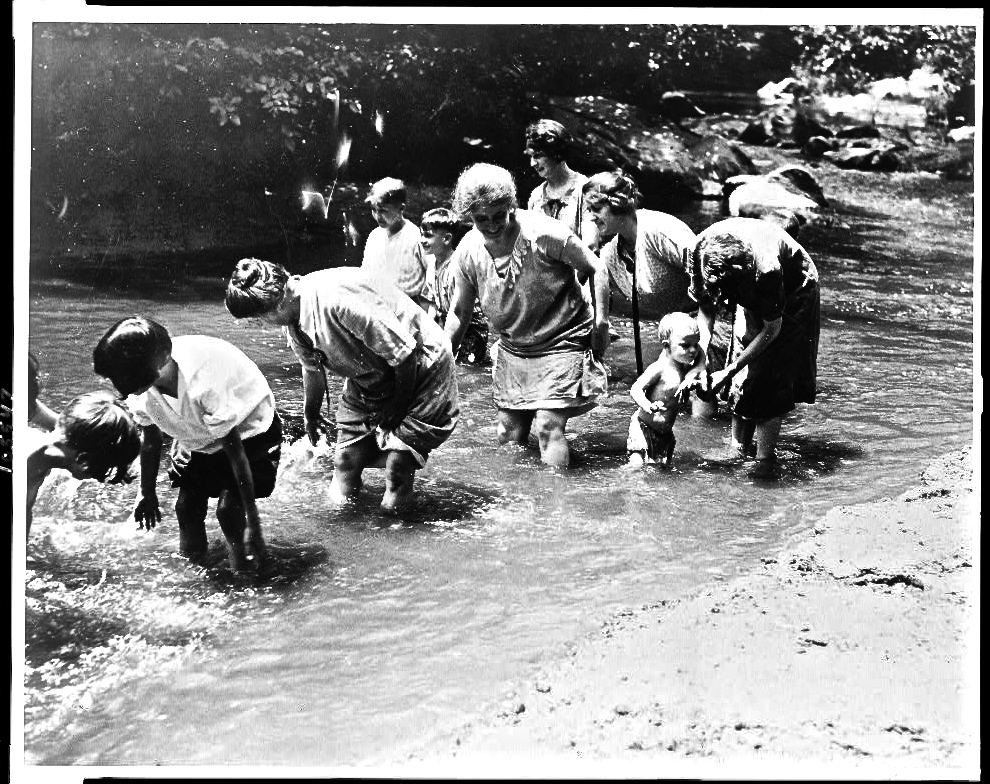
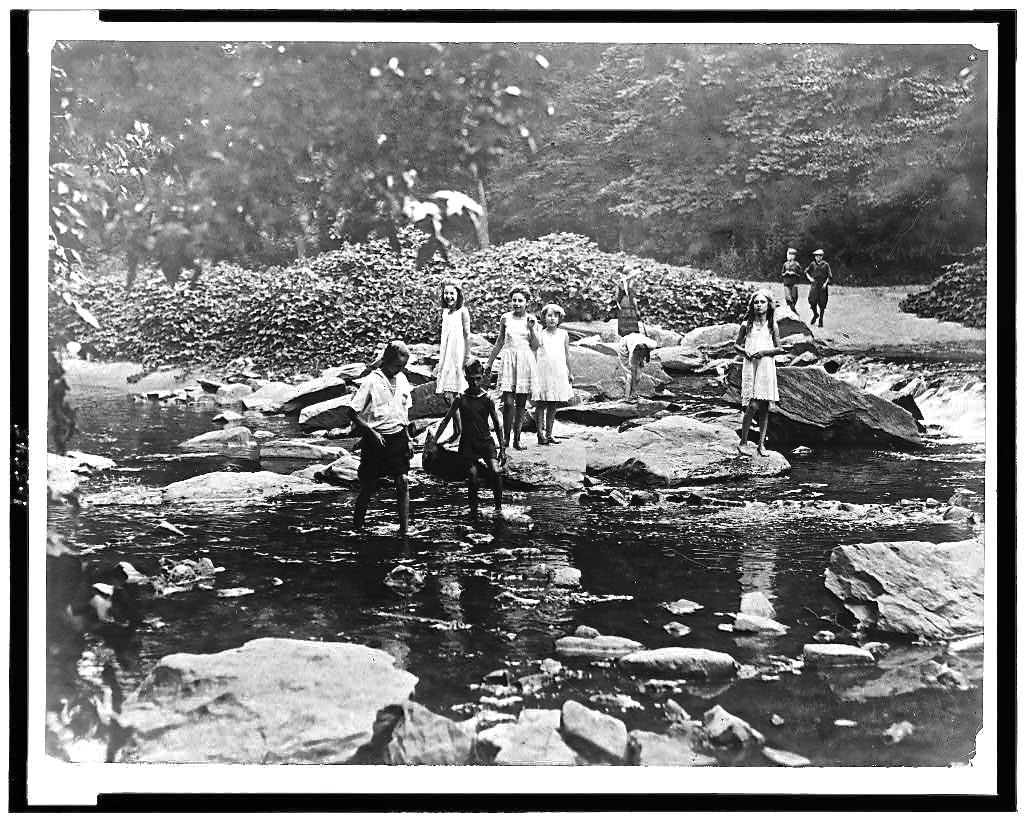
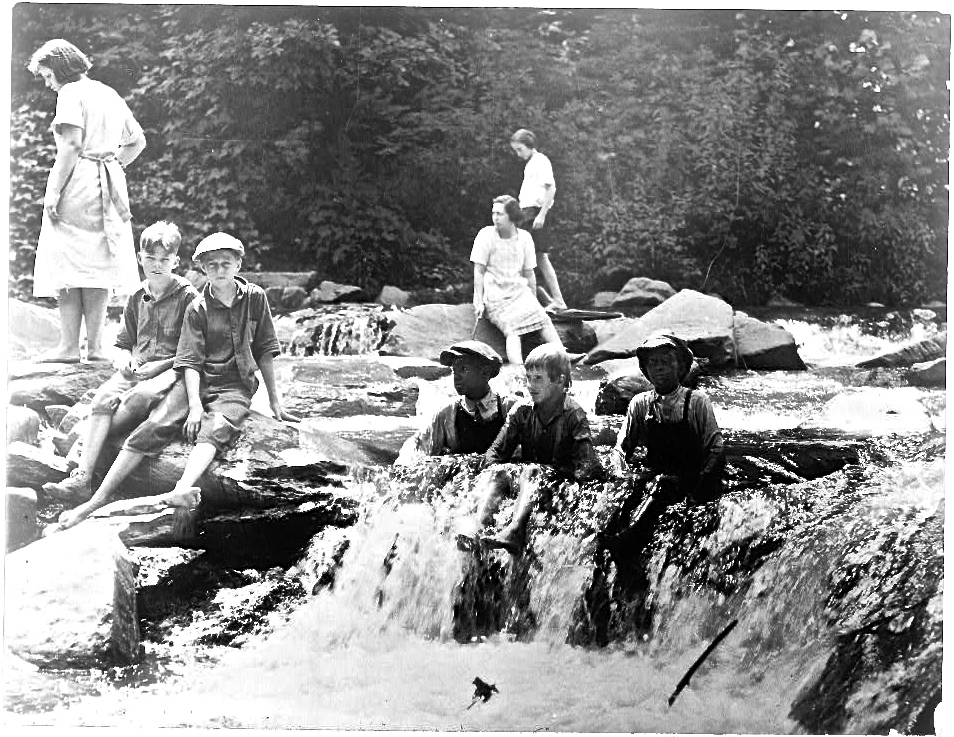
The three photos below of bathers in Rock Creek Park were taken by the National Photo Company between 1920 and 1932.

The photo label for the above picture is “Women and children find some relief by wading in the creek on one of the hottest days in the history of the Capital. Snapped in Rock Creek Park today.”

The highest temperature recorded for Washington, D.C., was 106°F, in 1918 and 1930. The city just missed matching the old record yesterday, only reaching 105°F.

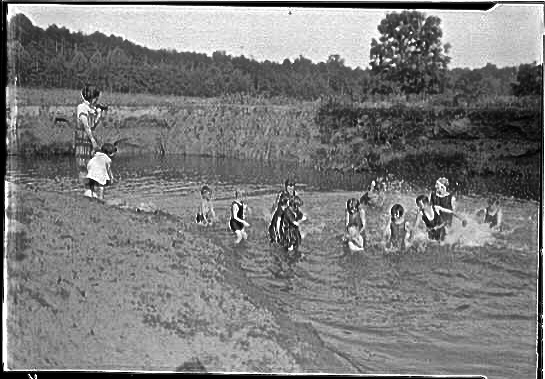
Below are children playing in an “old swimming hole” in the Washington, D.C., area. The photo was taken by Theodor Horydczak between 1920 and 1950.

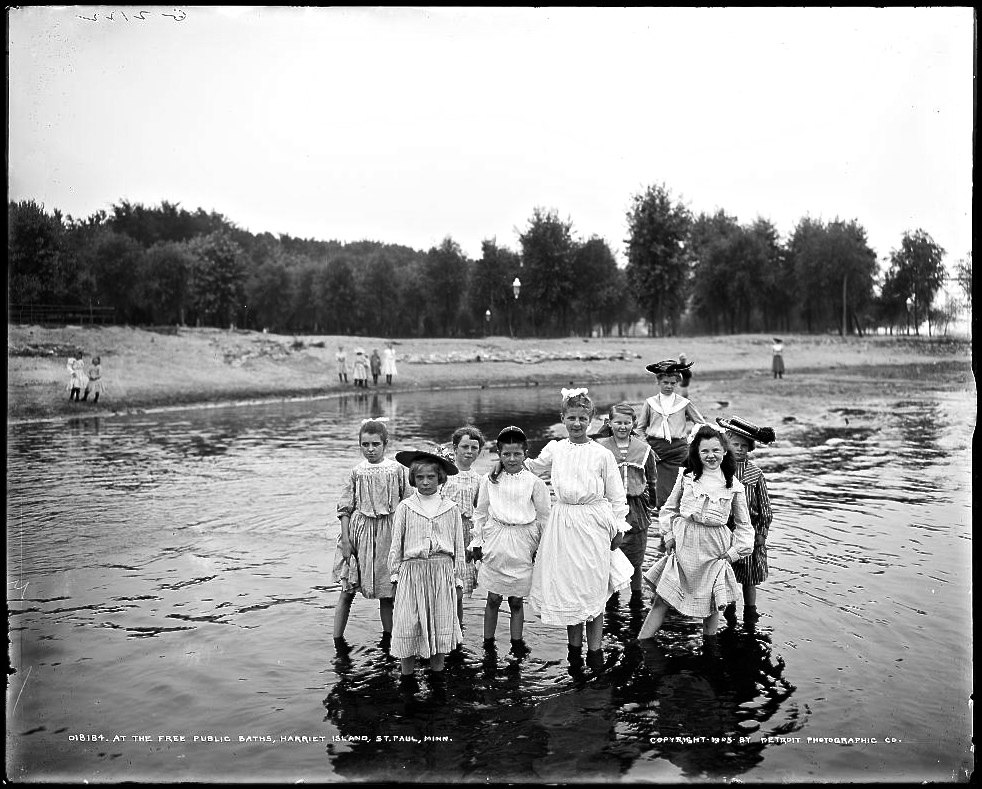
The photo below shows a group of proper young ladies at the free public baths, Harriet Island, St. Paul, Minnesota.  It was taken by the Detroit Publishing Co. around 1905.

How hard to be so dressed up at the lake!

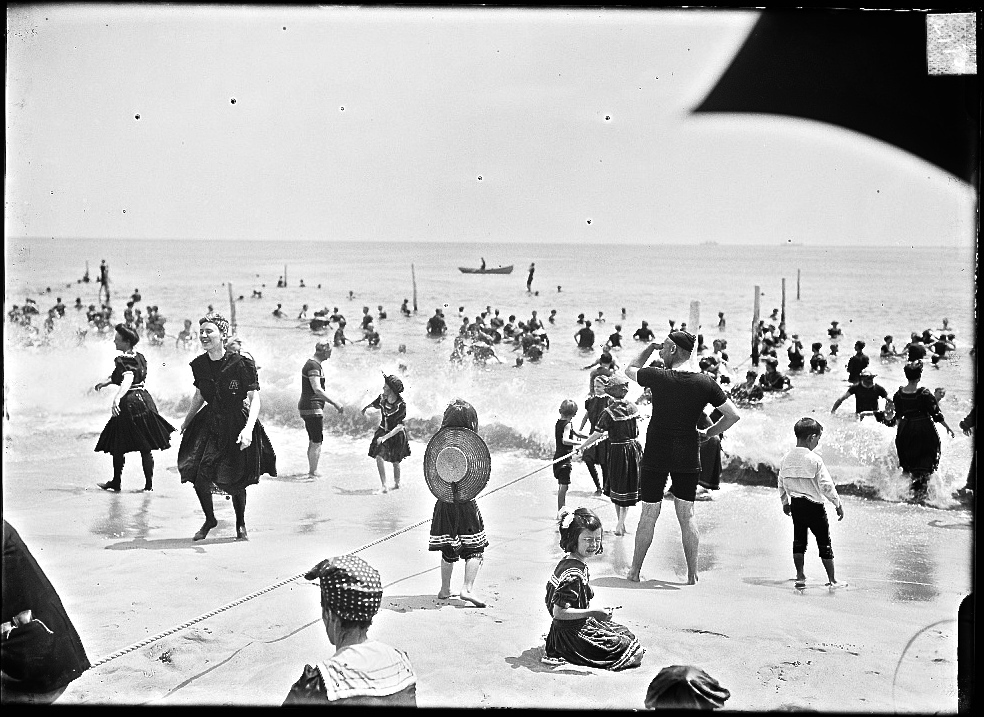
Below are children playing with a rope at a beach, possibly at Atlantic City, New Jersey.  The photo was taken between 1890 and 1910 by the Detroit Publishing Co.

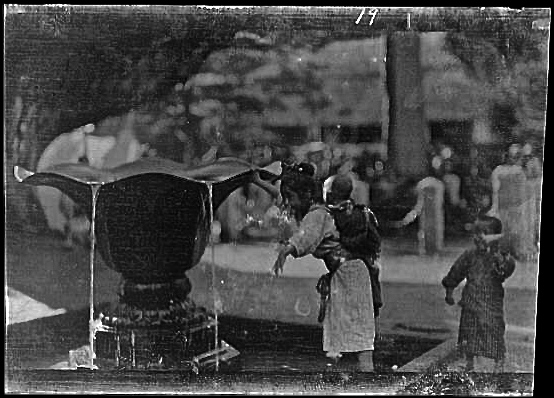
The lure of water in a fountain during hot weather is universal. Below are children in Japan or Korea in 1908. The photo was taken by Arnold Genthe.

All images via Library of Congress Prints and Photographs Division.  Click on any photo to enlarge it.

Wordless Wednesday: the Jordan River

Hand-colored photographs by the American Colony of Jerusalem taken between 1900 and 1946, showing the Jordan River, olive trees, and “Bethlehem, Juda, and Blue Galilee.”

All photos via the Matson Collection of the Library of Congress.

Vintage landscape: Gethsemane

I’ll take one more pass at the interesting photographs of the Library of Congress Matson Collection  (American Colony of Jerusalem).

“Garden of Gethsemane in snow,” February 28, 1938.

The American Colony photographers took many pictures of the Garden of Gethsemane during the first half of the 20th century. Presumably, they were big sellers in the Colony’s tourist shop near Jaffa Gate.

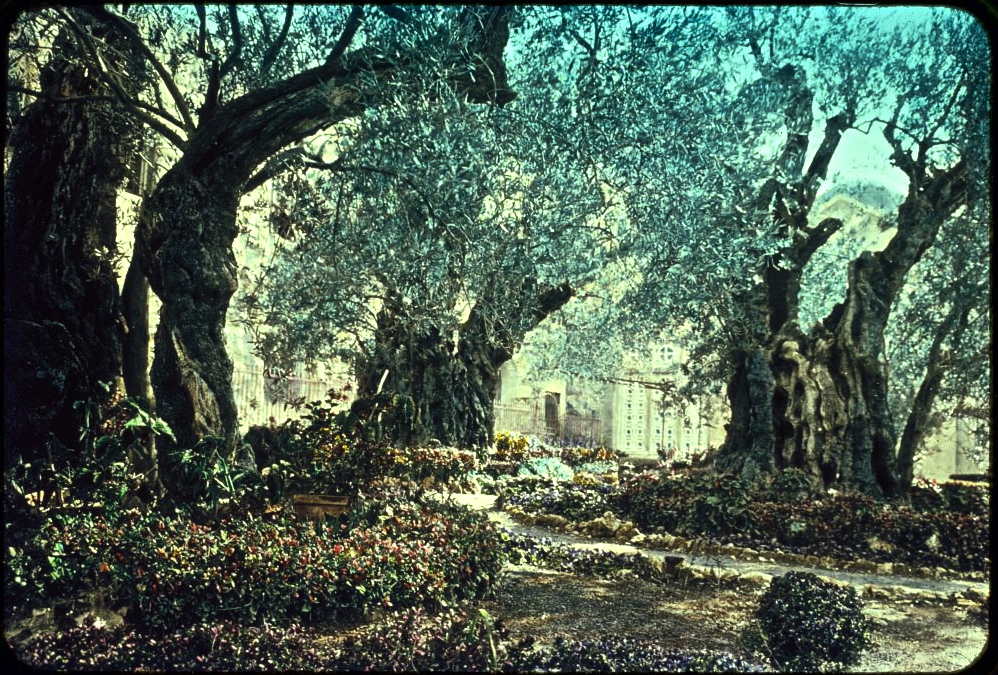
“Garden of Gethsemane semi-distant with overhanging olive branch,” c. 1898-1946.  The garden is in the middle of the photo.  Click the image to enlarge it.

‘Gethsemane’ is a Greek word derived from an Aramaic word for ‘oil-press.’ The Roman Catholic-administered garden is located at the foot of the Mount of Olives. It is one of four locations in the area currently claimed by different religions as the place where Jesus prayed the night before the crucifixion.

“Jerusalem. Gethsemane from convent roof showing city wall and Golden Gate.” Image hand-colored c. 1950 – 1970, but original black and white photo was probably taken earlier.

In the gospels of Matthew and Mark, it is called by a word meaning ‘place,’ ‘property,’ or ‘estate.’ In the gospel of John, the Greek word ‘kepos’ is used; it can mean ‘garden,’ but also ‘cultivated tract of land.’

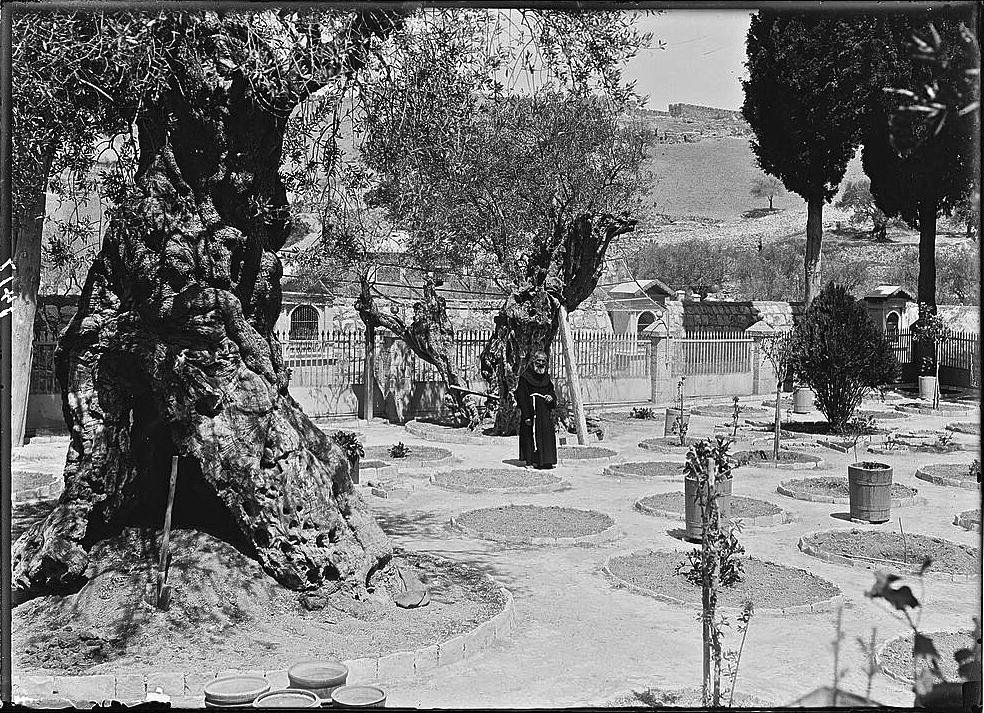
“Garden of Gethsemane, inside enclosure.”

The first recorded pilgrimage to the site was made in 333 A.D. by the anonymous “Pilgrim of Bordeaux,” who recorded his travels in the Holy Land in Itinerarium Burdigalense.

“Jerusalem (El-Kouda, Garden of Gethsemane, interior),” c. 1898-1914.

The building attached to the garden, the Church of All Nations, was built in the 1920s. The garden’s olive trees are said to be 2,000, 1,000, or 900 years old, depending on the source.

“The terrible plague of locusts in Palestine, March-June 1915. The same garden after visitation by the locust.”

In 1915, a plague of locusts swept through Palestine, stripping areas — including the garden — of all vegetation. The American Colony was asked to photograph the devastation, which caused food shortages, by the Ottoman-Turkish governor for “Syria and Arabia.”

The Garden of Gethsemane remains a popular tourist and pilgrimage destination today.

Wordless Wednesday: the lamps


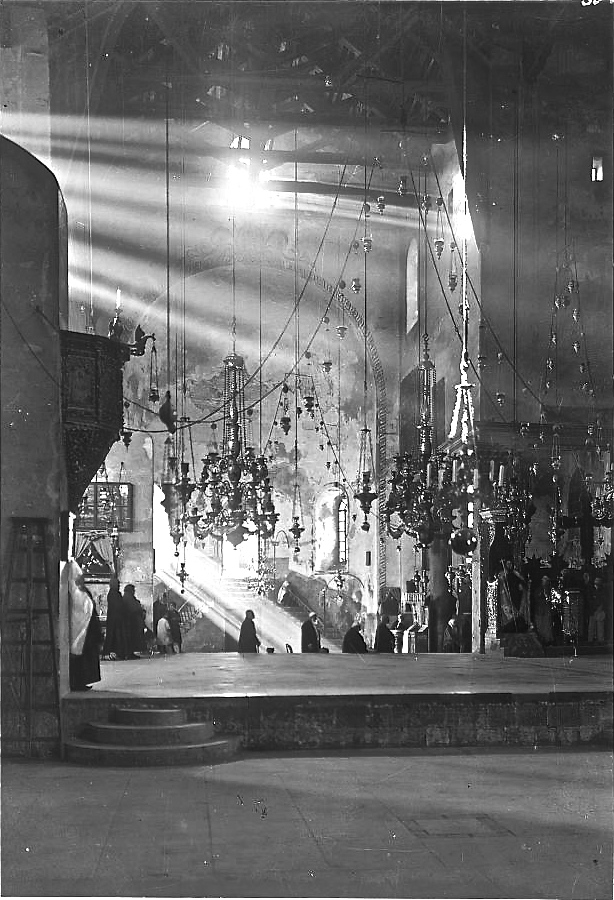
“Bethlehem Church of the Nativity,” c. 1925-1946, American Colony of Jerusalem, via the Library of Congress Prints and Photographs Division.