You know there’s a story here


“Mrs. Harriman [Florence Jaffrey] does [not] burn fences behind her. Washington, D.C. May 27 [,1927].

“In leaving for her new post as American Minister to Norway, Mrs J. Borden Harriman is not burning but leaving her fences behind her. The last time Mrs. Harriman was away from her Capitol home for any length of time she found a load of dirt from the excavation for the new home of the late Raymond T. Baker dumped on her front lawn upon her return. She sued for $23,000 but the case was settled out of court. This time she has had a high fence constructed around her property to prevent a recurrence of the same thing.”

Mrs. Harriman’s complaint said “that on the 22d of April, 1931, the defendants, ‘with force and arms, did break and enter into and upon the said ground of the plaintiff, and trod down, trampled upon, consumed, destroyed, and spoiled the grass, herbage, shrubbery, ornamental trees, then and there growing and being of great value,’ etc.”

Perhaps the fence should be even higher.

Photo by Harris & Ewing; both it and text in quotes via Library of Congress Prints and Photographs Division.  Mrs. Harriman’s home was at the intersection of Ridge and Reservoir Roads — I believe in the Pallisades neighborhood (although I haven’t found a Ridge Road that intersects with Reservoir).

Love your neighbor; yet don’t pull down your hedge.
— Benjamin Franklin, Poor Richard’s Almanack

Thanks to the blog Living in Kigali for including enclos*ure in their list of “Super Fabulous Rwanda-Related Websites.”
Vintage landscape: what a lovely idea

A garden party. . .

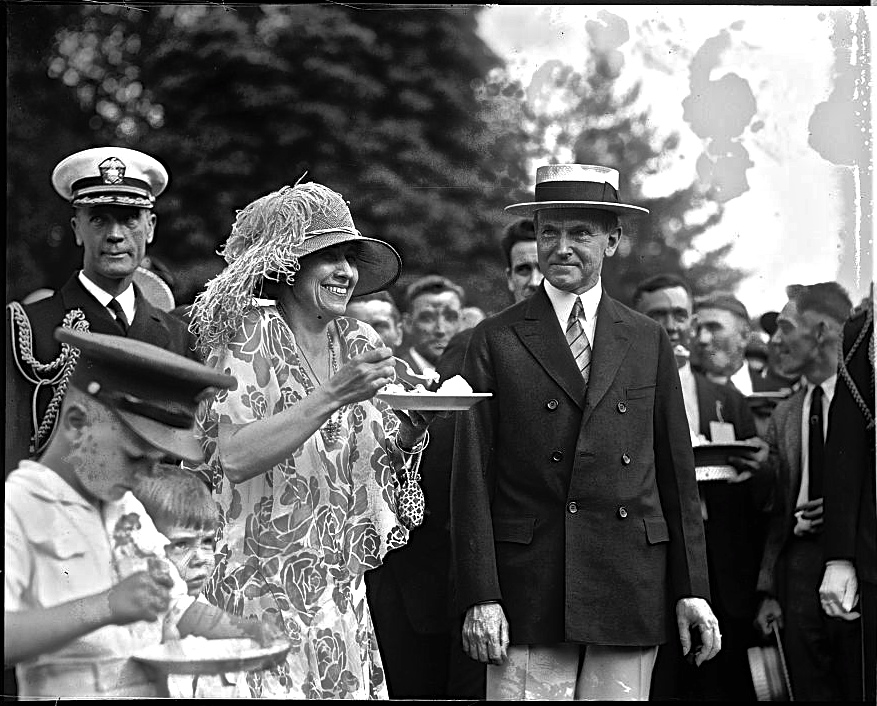
Bill Cunningham’s (always) charming fashion video in today’s New York Times, about The Newport Vintage Dance Week — here — made me think of these Library of Congress photos of bygone garden parties.

President and Mrs. Coolidge at White House garden party, June 3, 1926, by National Photo Company.

Click on any thumbnail below to scroll through larger photos of a variety of garden and lawn parties.

Vintage landscape: Maplewood cottages

“Cottages at Maplewood [Waseca, Minnesota],” ca. 1880-1899. By Detroit Publishing Co., via Library of Congress Prints and Photographs Division.

Maplewood Park on Clear Lake was a national vacation attraction at the end of the nineteenth century. Click the image to enlarge it.

For another sort of summer cabin living, see today’s New York Times, here.

Vintage landscape: Zuni gardens

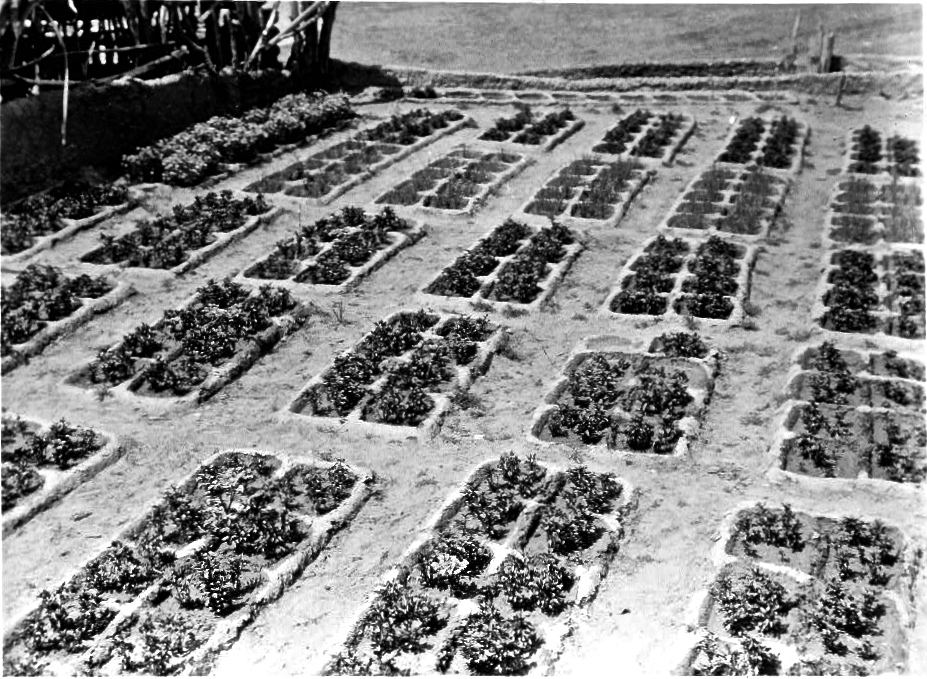
“Gardens surrounding the Indian Pueblo of Zuni, in which are raised a variety of vegetables, such as peppers, onions, garlic, etc.,” c. 1873, by Timothy H. O’Sullivan, via Library of Congress Prints and Photographs Division.

The Zuni people of western New Mexico have long built a form of kitchen garden (now) called “waffle gardens.”

Each square plot is about 2′ to 8′ wide with bermed sides of unamended soil. The design efficiently captures and holds rainwater and retards evaporation. The Zuni traditionally filled their gardens with corn, beans, and squash.

Timothy H. O’Sullivan, who took the picture above, photographed events of the Civil War as an employee of Alexander Gardner.

From 1871 to 1874, he traveled the southwestern United States as part of a survey of the land west of the 100th meridian. Later, he worked in Washington, D.C., as an official photographer for the U.S. Geological Survey. He died of tuberculosis at age 42.

“Zuni gardens,” c. 1927, by Edward Curtis, via Library of Congress.

Edward Curtis, a Seattle photographer, took over 40,000 images of life in 80 native American tribes.  The photo above was one of 2,000 he published, from 1907 to 1930, in the 20-volume The North American Indian.

Vintage landscape: the sleeping porch


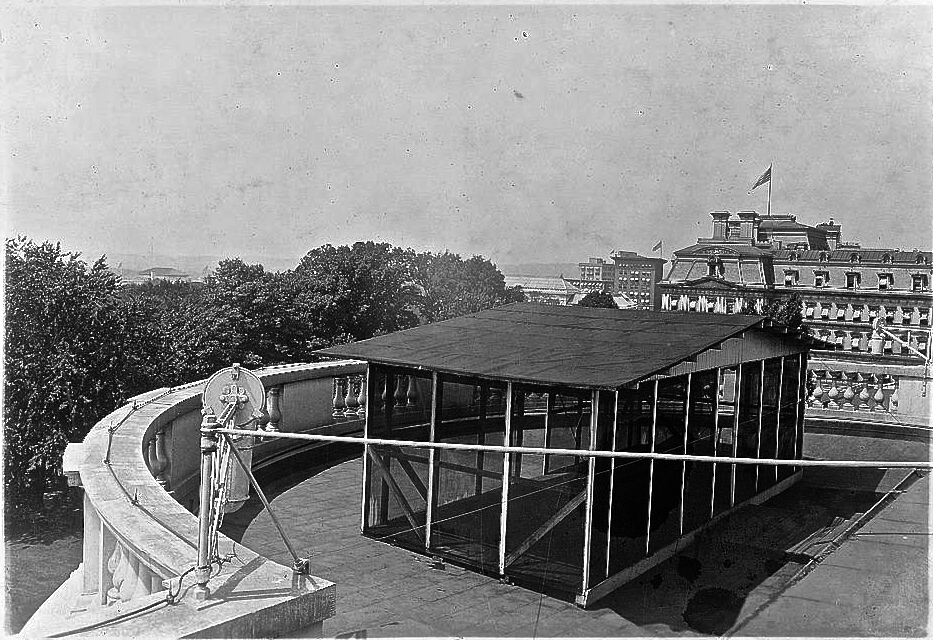
A sleeping porch was added to the roof of the White House during the Taft Administration. Photo by National Photo Company, via Library of Congress.

Click here to read more about sleeping porches.