Life in gardens: sod roof oven

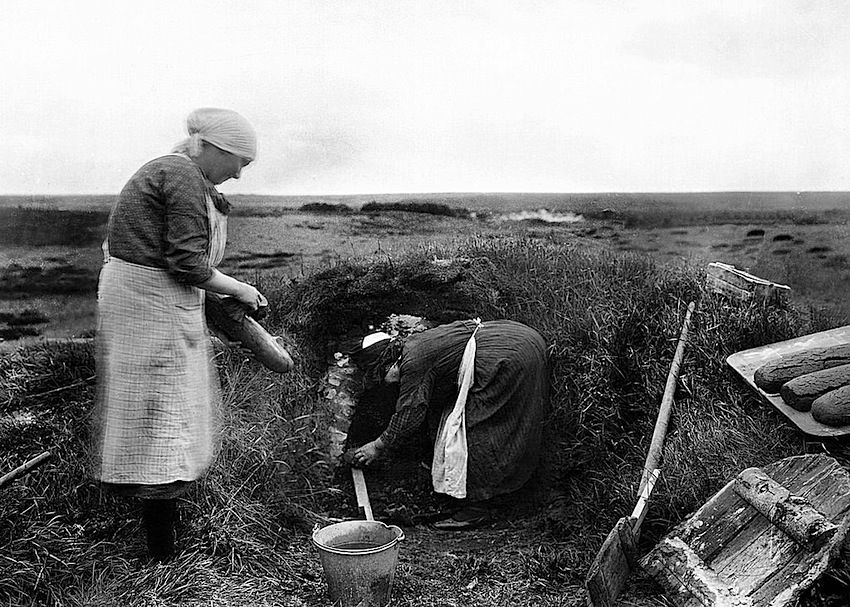
Breadbaking, West Jutland, 1929, National Museum of DenmarkBaking bread on a small farm on the moor in Koelvraa, West Jutland, Denmark, 1929, by Kai Uldall via National Museum of Denmark Commons on flickr (all photos here).

Click on the images to enlarge them. I would love to visit this landscape.

Breadbaking, West Jutland, 1929, National Museum of DenmarkTaking the bread out of the sod-covered oven.

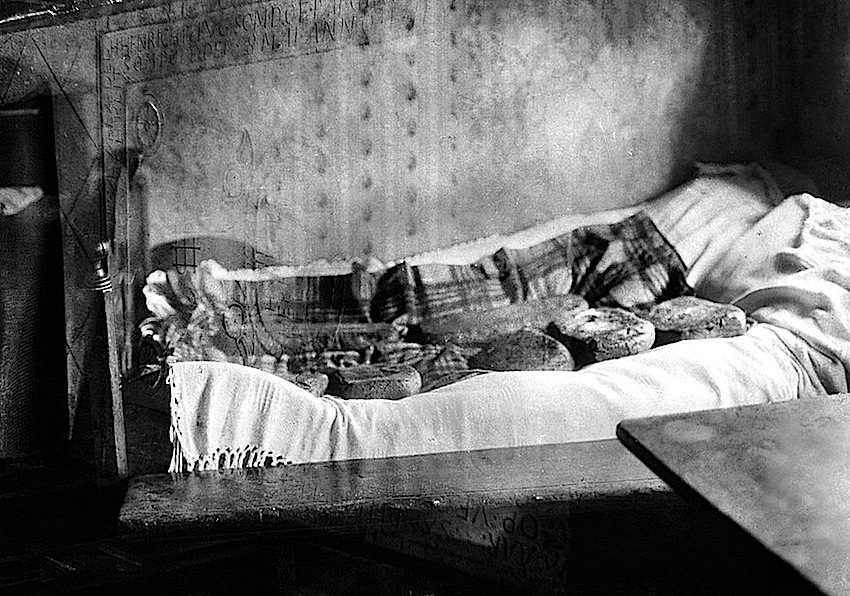
Breadbaking, West Jutland, 1929, National Museum of Denmark, slightly croppedBread cooling in a bed (photo cropped slightly by me).

Was that where the three women worked baking bread? —
Where they began at morning, by their fire under the wet boughs.
And laid the loaves in the sun?

— H. L. Davis, from “Baking Bread

Vintage landscape: begonias

A little Monday morning pink and white…

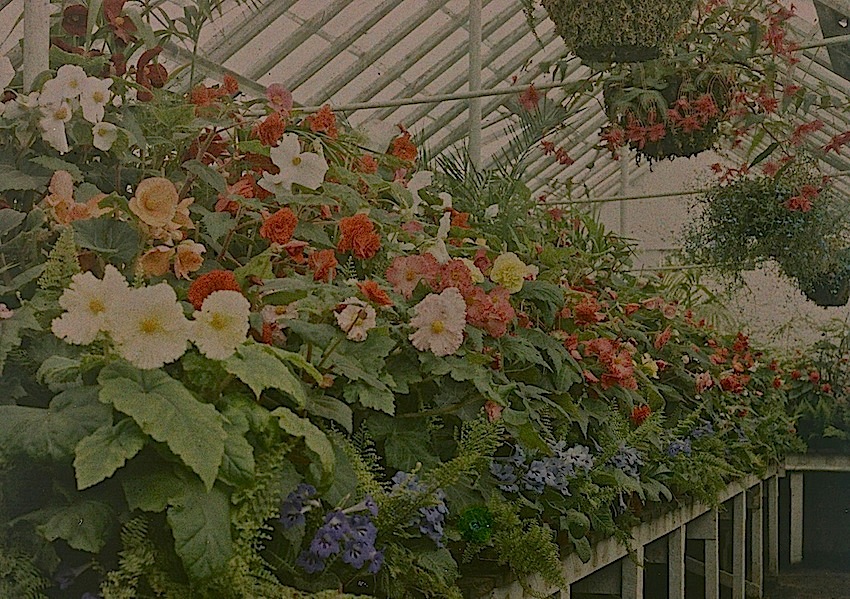
Flowers in a Greenhouse, early 20 c., Te PapaFlowers in a greenhouse,” between 1900 and 1930, an autochrome by James W. Chapman-Taylor, via Te Papa Tongarewa (Museum of New Zealand)

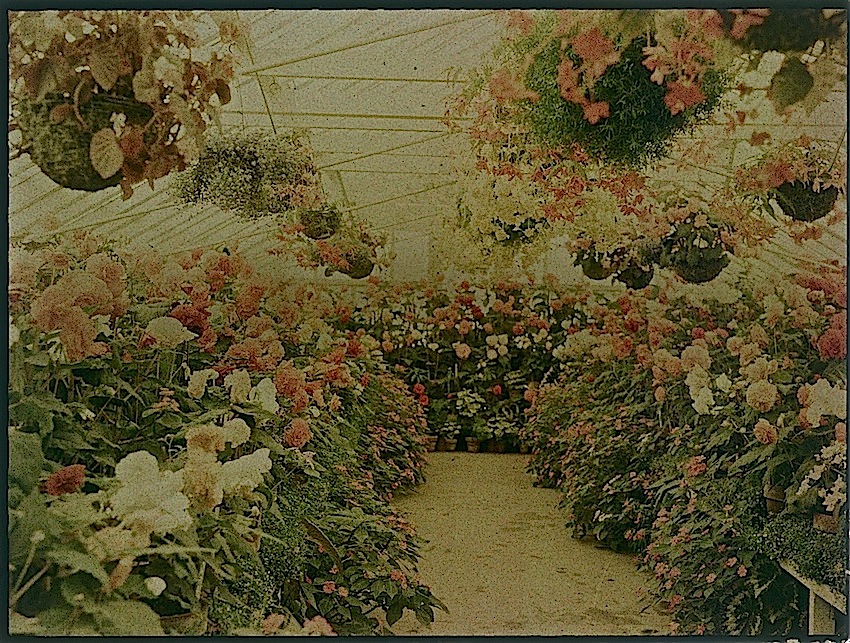
Begonia House, c. 1913, via Te Papa“Begonia House, Domain Gardens, Auckland,” 1915, an autochrome by Robert Walrond, via Te Papa Tongarewa.

The irresistible and benevolent light
brushes through the angel-wing begonias. . .

The blooms are articulate deluge. . .

Elizabeth Woody, from “Illumination

The Sunday porch: wisteria par excellence

In honor of the wisteria now beginning to bloom in many regions, here is a Sunday porch redux from 2013:

On abandon, uncalled for but called forth. . . .*

full cropped

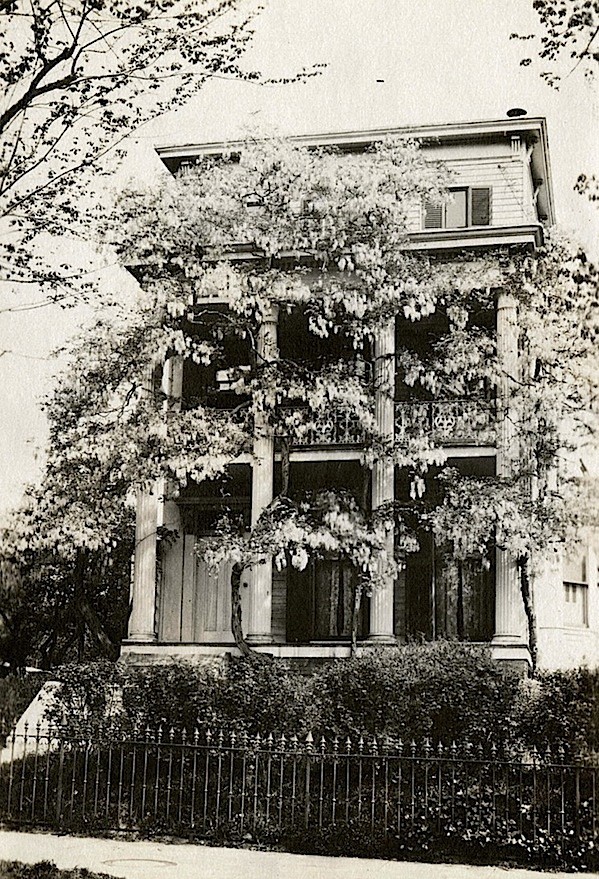
I think this is the loveliest wisteria I have ever seen.  It grew on the porch columns of “Wisteria House,” at Massachusetts Avenue and Eleventh Street, N.W., in Washington, D.C. The photo was taken in 1919, by Martin A. Gruber.**

The house was torn down in 1924 to make room for the Wisteria Mansion apartment building.

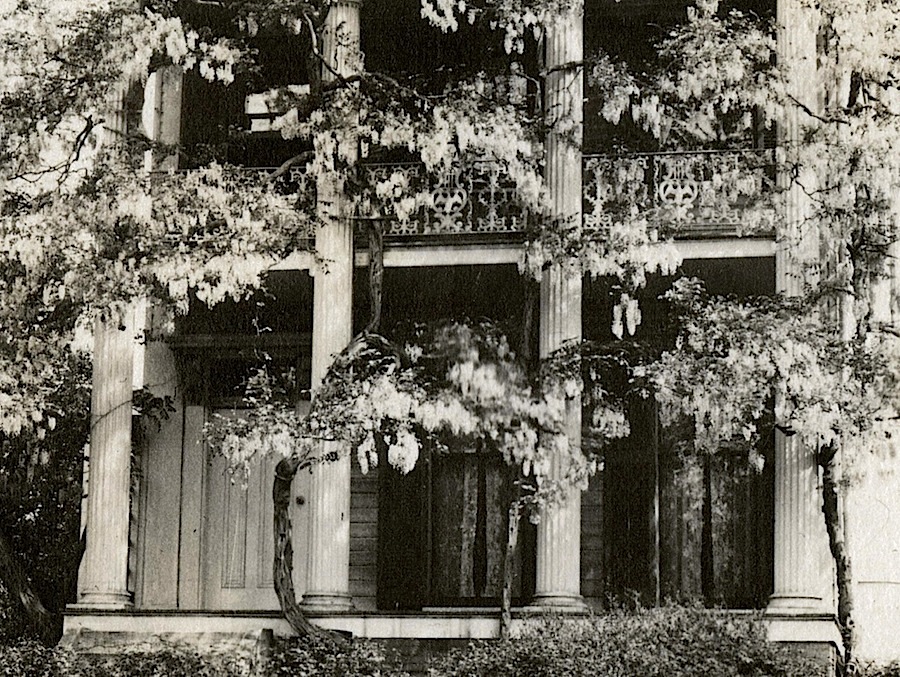
Wisteria House detail, 1919, via Smithsonian Institution Commons

A naval officer brought the vine from China and gave it to the owner of the house, probably during the 1860s, according to the blog Greater Greater Washington.

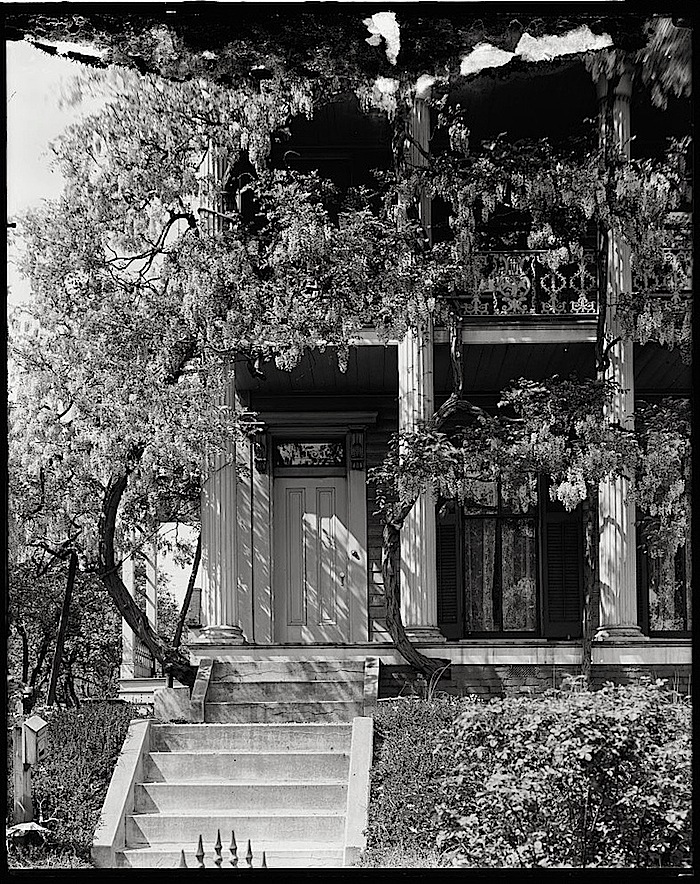
Wisteria House, Harris & Ewing photo

The Harris & Ewing** photo above, taken between 1910 and 1920, shows the trunks of the (one?) plant emerging through openings at the base of the porch.  The house was built in 1863, and the two-story portico was added in 1869 — so it looks like the wisteria was planted between those years and protected during the construction.

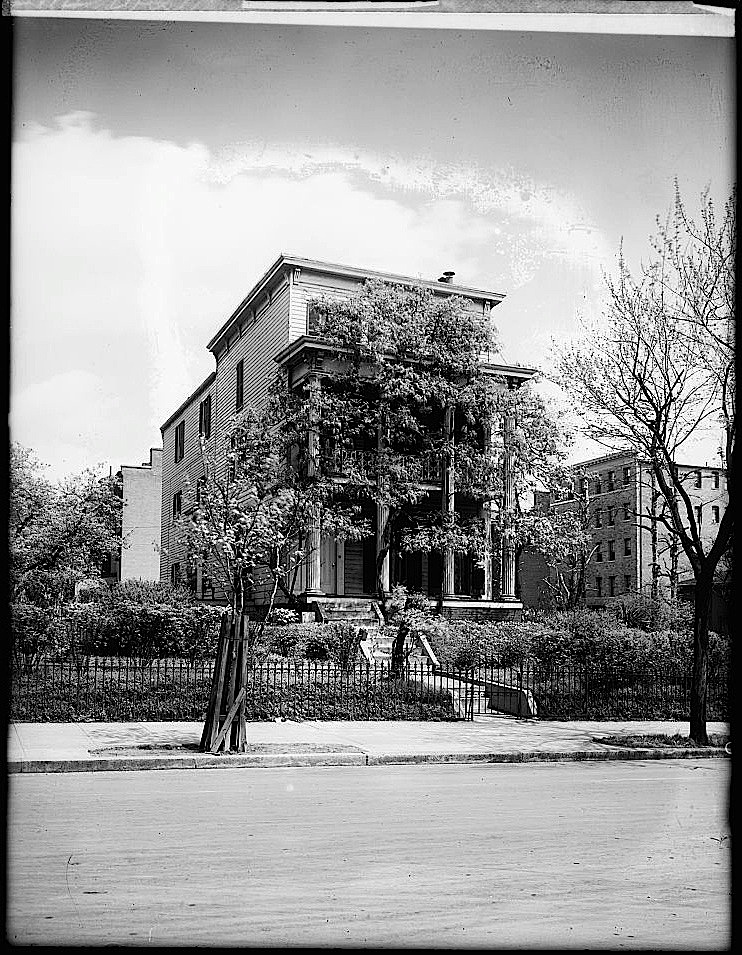
Wisteria House, LOC photo

The National Photo Company image above shows the house about 1920.

*Lucie Brock-Broido, from “Extreme Wisteria

**Top and second (a detail of the first) photos via the Smithsonian Institution Archives Commons on flickr.  Third and fourth photos via Library of Congress Prints and Photographs Division.

The Sunday porch: Pasadena

So thou dost riot through the glad spring days. . .*

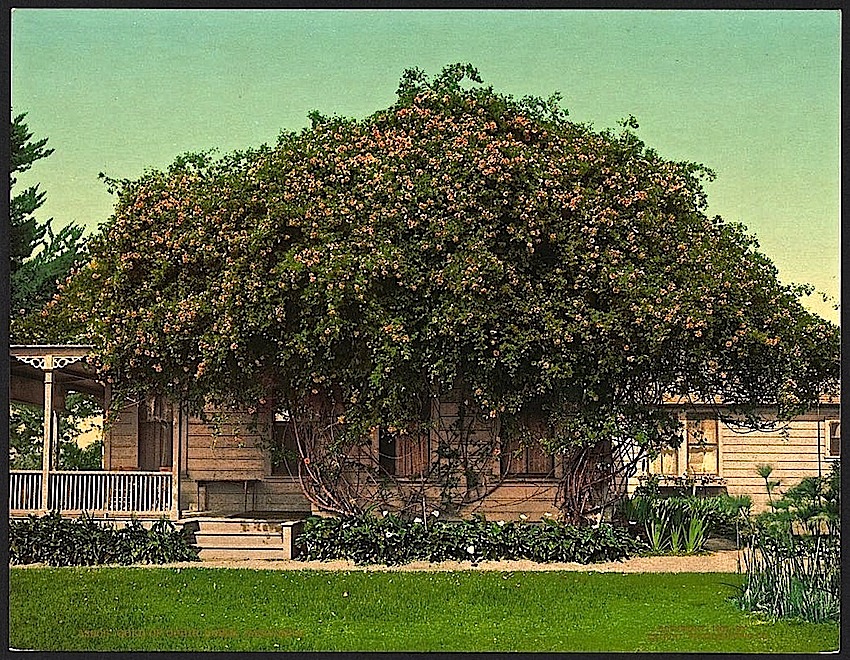
The Sunday porch:enclos*ure -- Pasadena, c. 1902, Library of Congress“Gold of Ophir roses, Pasadena[, California,]” ca. 1902, a photochrom by Detroit Photographic Co., via Library of Congress Prints and Photographs Division.

The climber Gold of Ophir — also known as Fortune’s Double Yellow and Beauty of Glazenwood — moved to southern California with the settlers and flourished there.

“I remember great heaps of them in every backyard, blazing like moons on fire, yellow, gold, pink. . .,” wrote M. K. Fisher in her introduction to Growing Good Roses by Rayford C. Reddell.


* from “Gold of Ophir Roses” by Grace Atherton Dennen, editor/publisher of The Lyric West

Vintage landscape: courtyard pattern

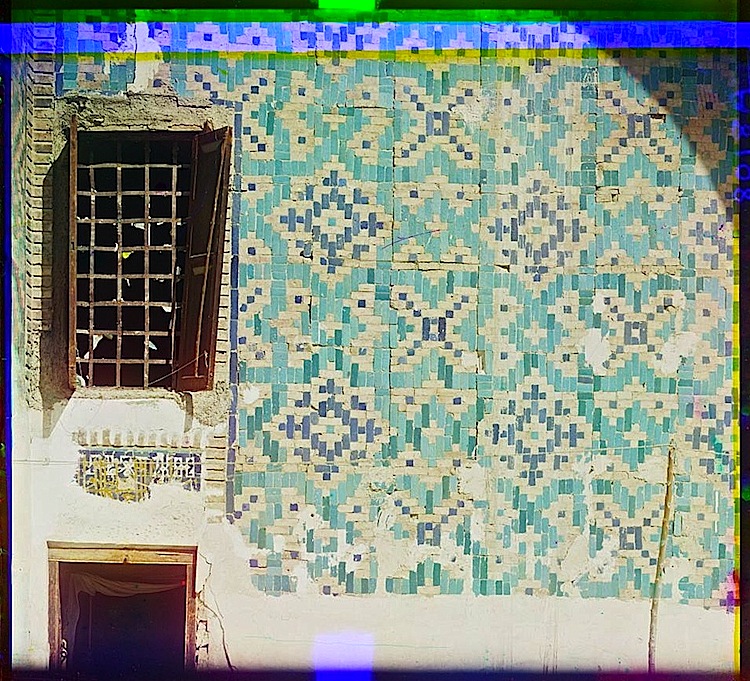
I’ve making patchwork pillows in shades of blue this week.  The mosaic arrangement on this courtyard wall would be a good one to copy in fabric.
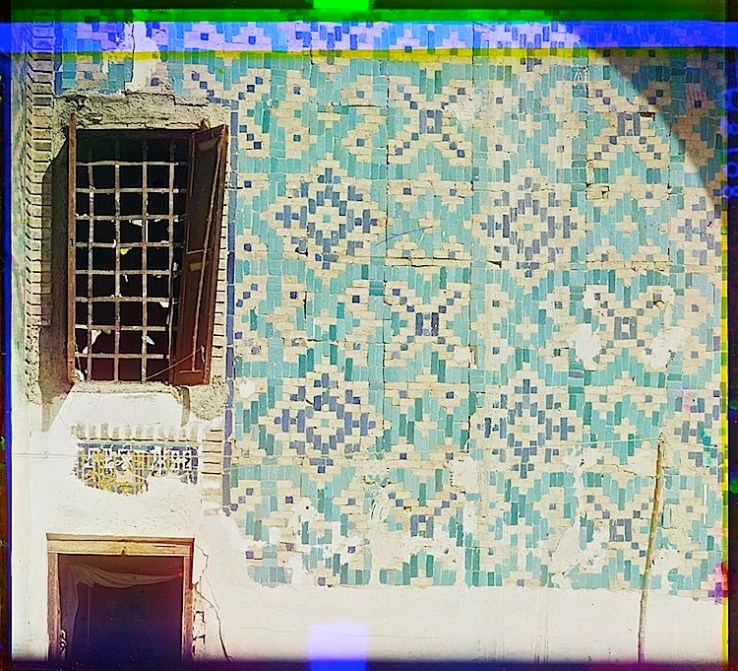
Tillia-Kari courtyard“Vnutri dvora Tilli︠a︡-Kari. Detalʹ na pravoĭ storoni︠e︡. Samarkand (Inside Tillia-Kari courtyard. Detail on right side.), between 1905 and 1915, by Sergeĭ Mikhaĭlovich Prokudin-Gorskiĭ, via Library of Congress Prints and Photographs Division (also the photo below).

In the center of Samarkand is the Registan complex, consisting of three madrasah (religious schools). The third of these, the Tillia Kari Madrasah, was built in 1646–60 on the site of a former caravansarai. Its basic plan is formed by a rectangular courtyard, bounded by arcades that contain rooms for scholars. Although much damaged, the facades show profuse ceramic decoration in geometric and botanical motifs, as well as panels with Perso-Arabic inscriptions above the door of each cell. Seen here is a detail of a cell facade inside the courtyard, with the walls covered in a geometric pattern of small glazed tiles and a fragment of an inscription panel above the door.

— from the image’s page on World Digital Library, a project of the Library of Congress.
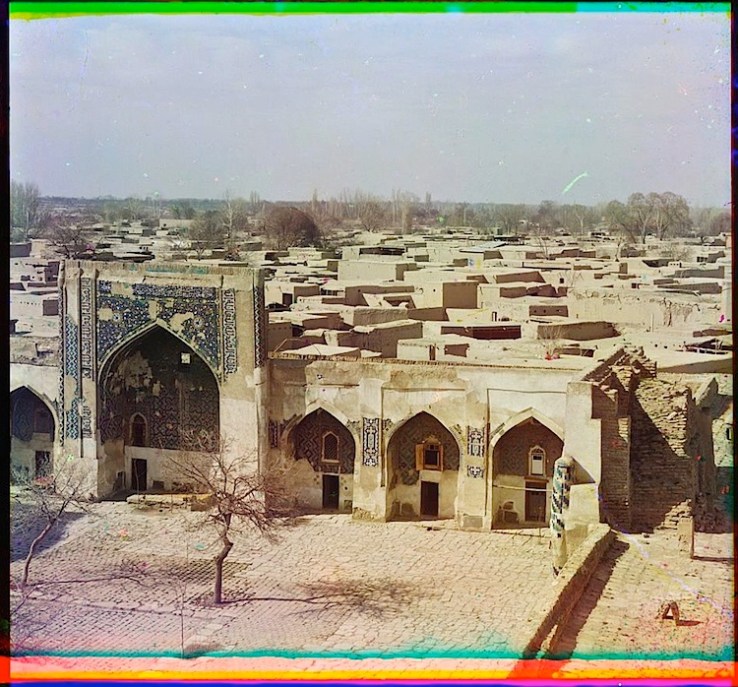
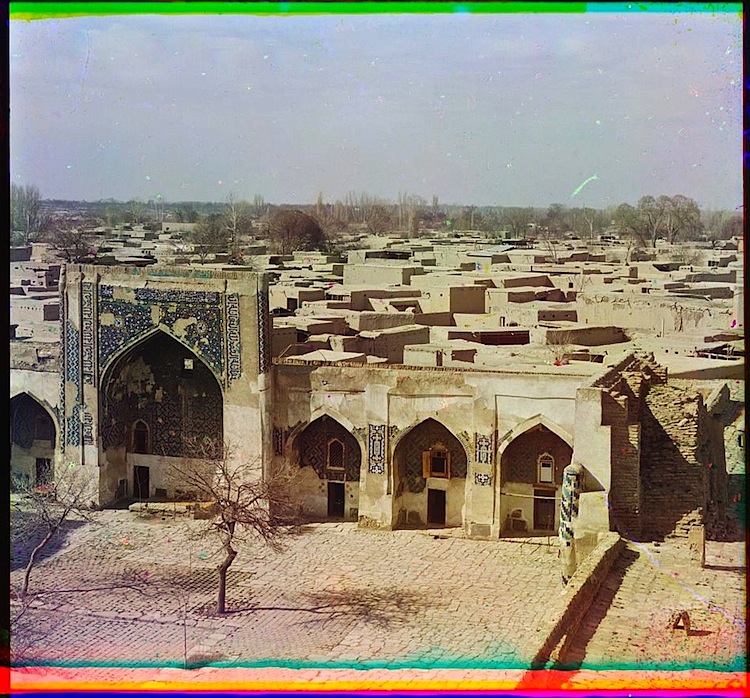
view of Tillia-Kari courtyard“Vid s Tilli︠a︡-Kari na Samarkand (View of Samarkand from Tillia-Kari).”

Sergeĭ Prokudin-Gorskii made early color photographic surveys of the Russian Empire in the decade before World War I and the Russian revolution. He left Russia in 1918, eventually settling in Paris. The Library of Congress purchased his collection of 2,607 images from his sons in 1948. There are more vintage photos of Tillia Kari here.

Not Delft or delphinium, not Wedgewood. . .

But way on down in the moonless
octave below midnight, honey,
way down where you can’t tell cerulean
from teal.

Lynn Powell, from “Kind of Blue