
Wordless Wednesday: Gunnera leaves
At Rwanda Unique Nurseries, January 20, 2013, Kigali, Rwanda.

These are the front “steps” from the road to someone’s home in a village near the Virunga Safari Lodge in northern Rwanda. (We spent a night at the Lodge earlier this month.)
They are steeper than they look in the picture.
The little house at the top of the hill would look like the one below; I took this photo along the same stretch of road.
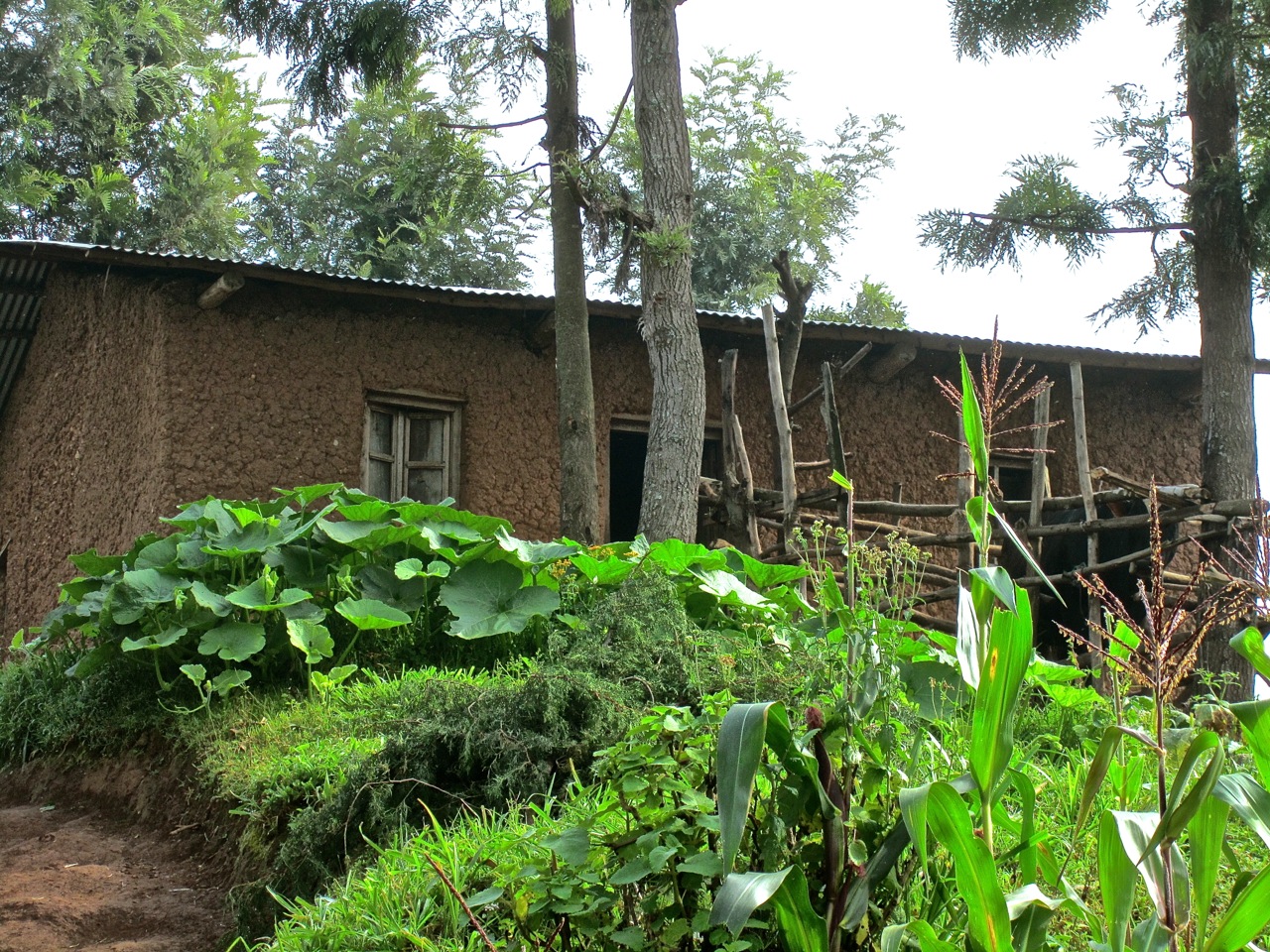
We had hiked down the hill from the hotel along a series of narrow and slippery paths.
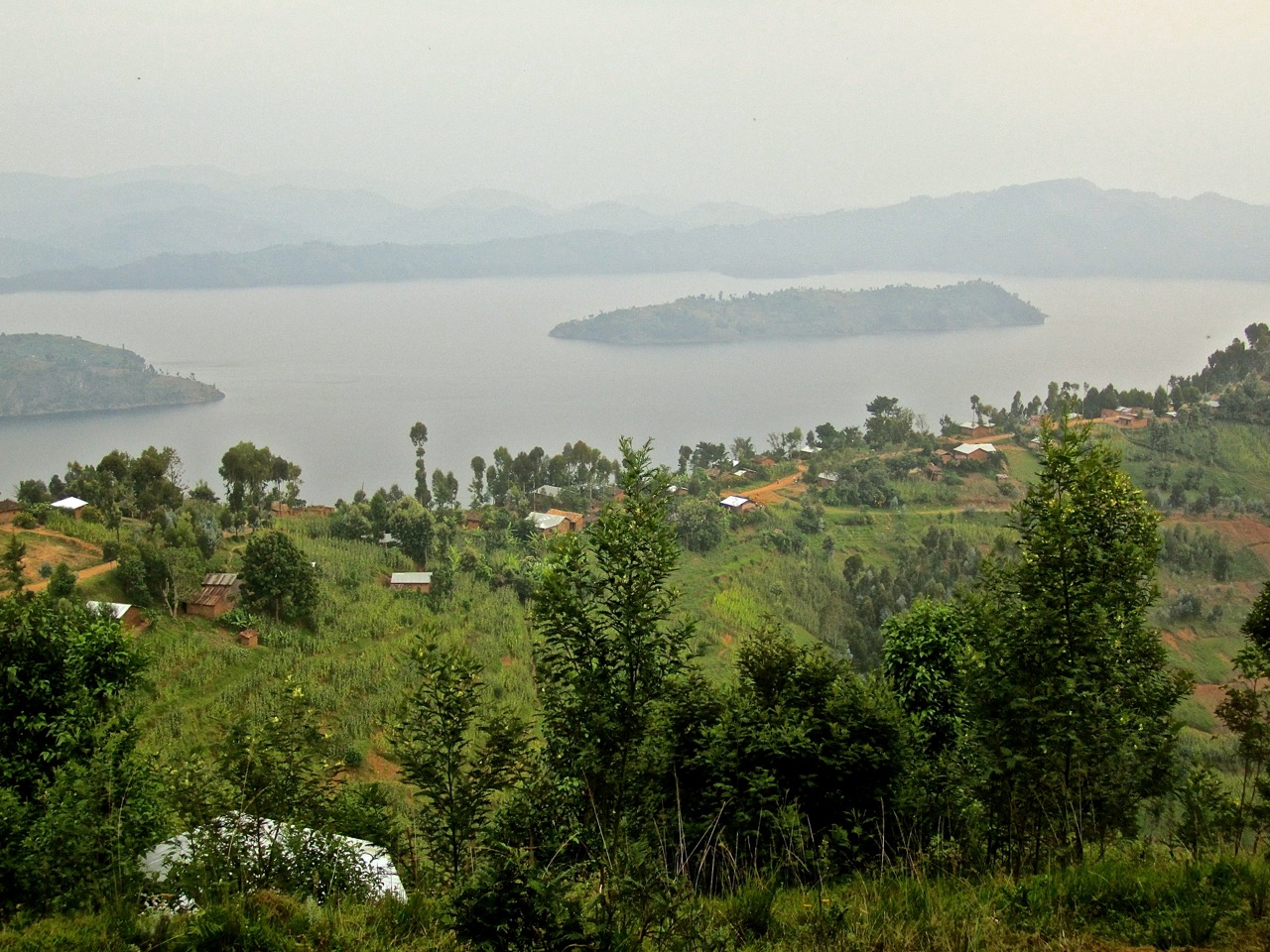
Also steeper than it looks here.

Below are my husband and our guide starting back up the hill. A moment later, as we were sliding and leaning on our sticks, we were passed by a young women with a baby on her back. She was wearing flip-flops and carrying what I can only describe as a yule log on her head. She was soon out of sight.

What if we just let it all go?
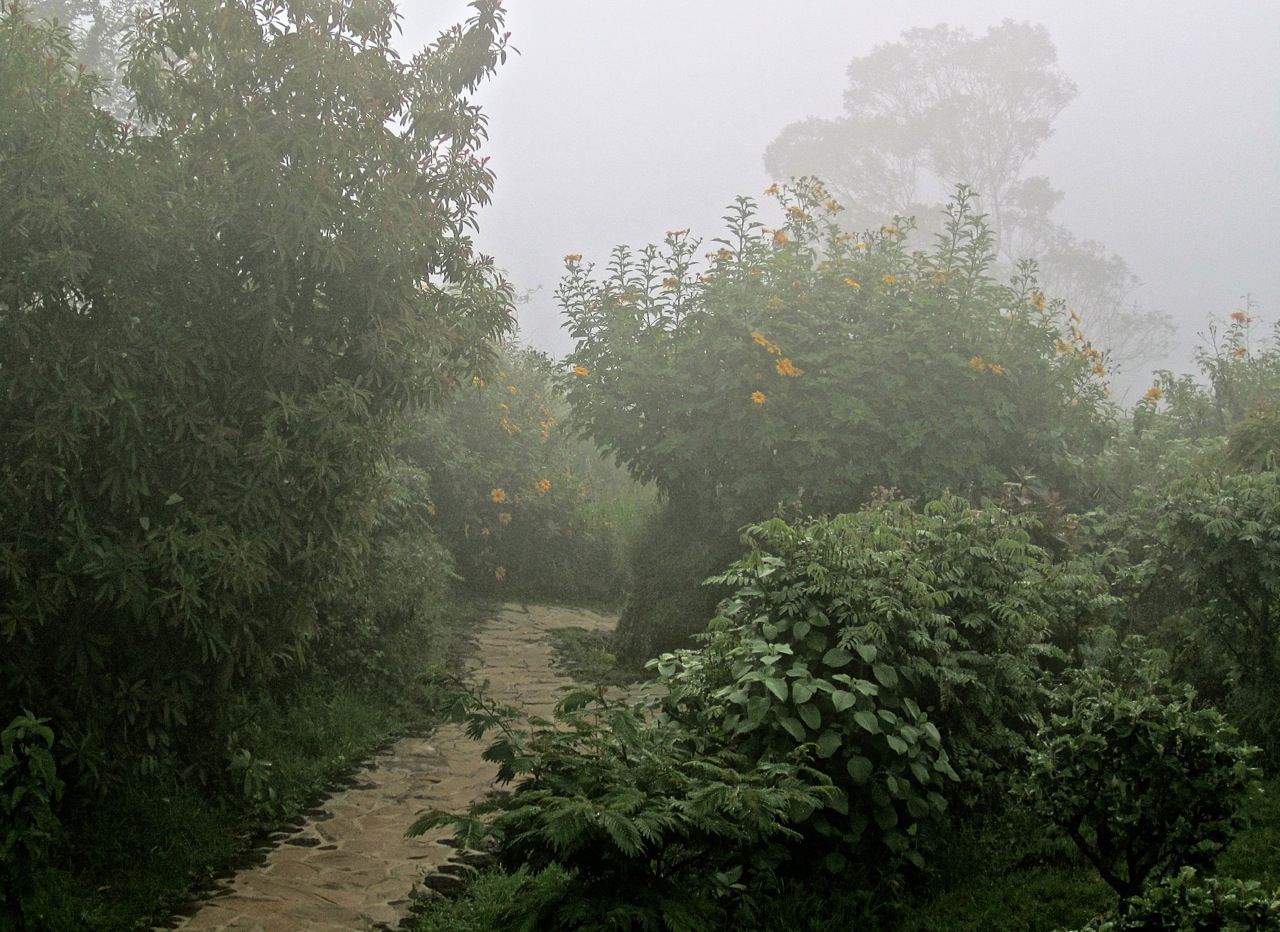
Just cut paths through the brush and then beautifully paved them?
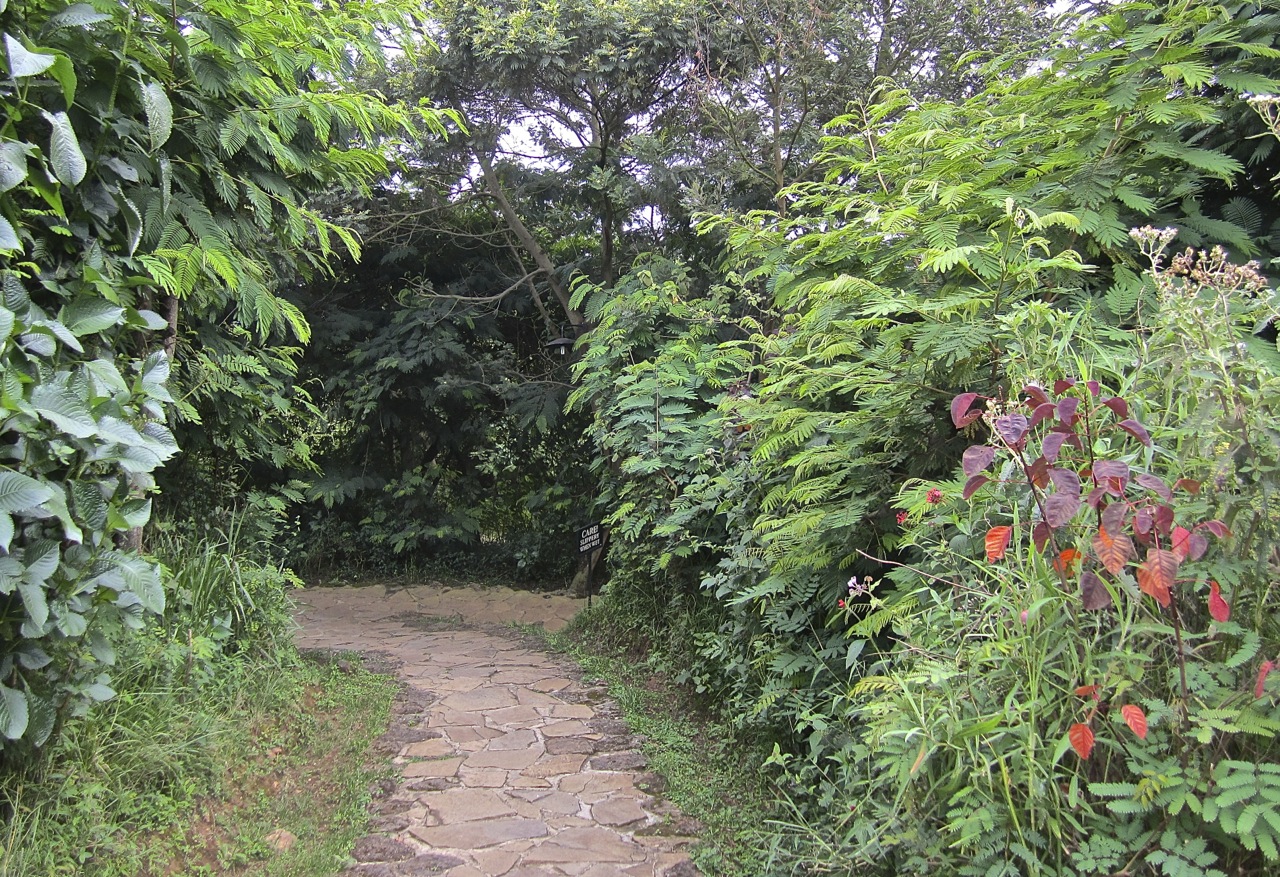
Pushed out a few garden rooms with low walls and columns built of local stone?
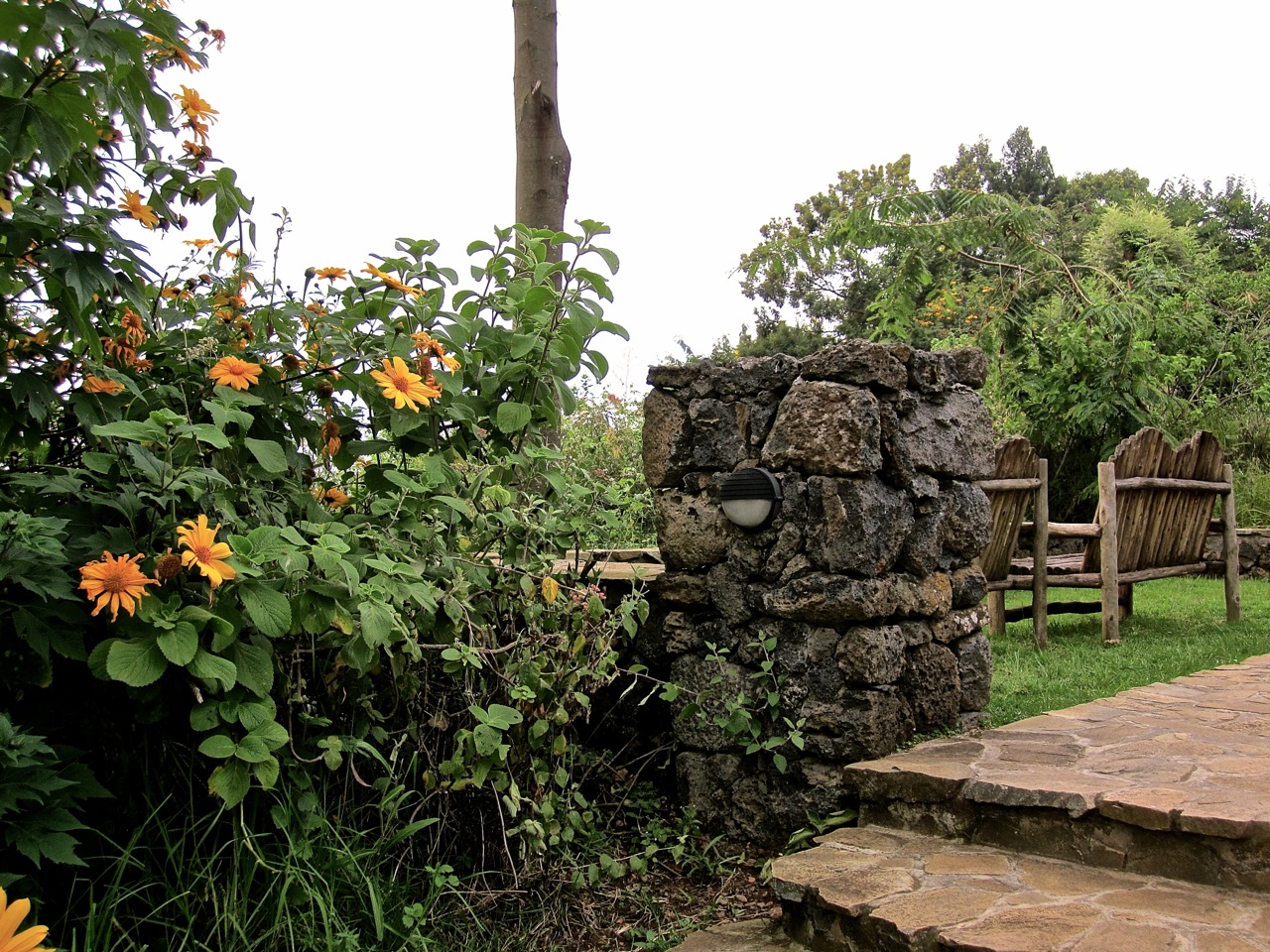
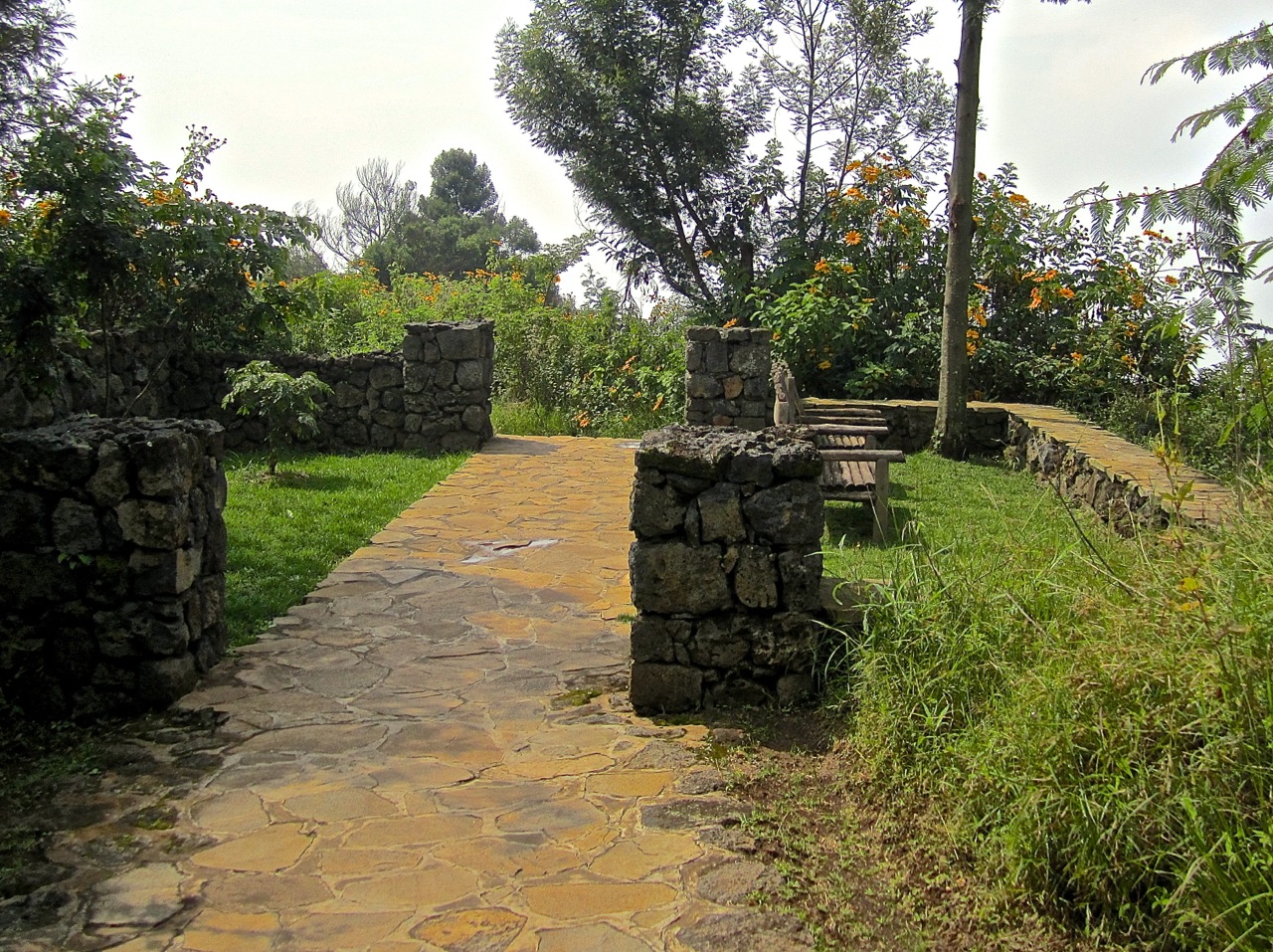
Mowed the grass only in those small spaces? Gardened (sometimes) with a machete, not hoes and shovels?
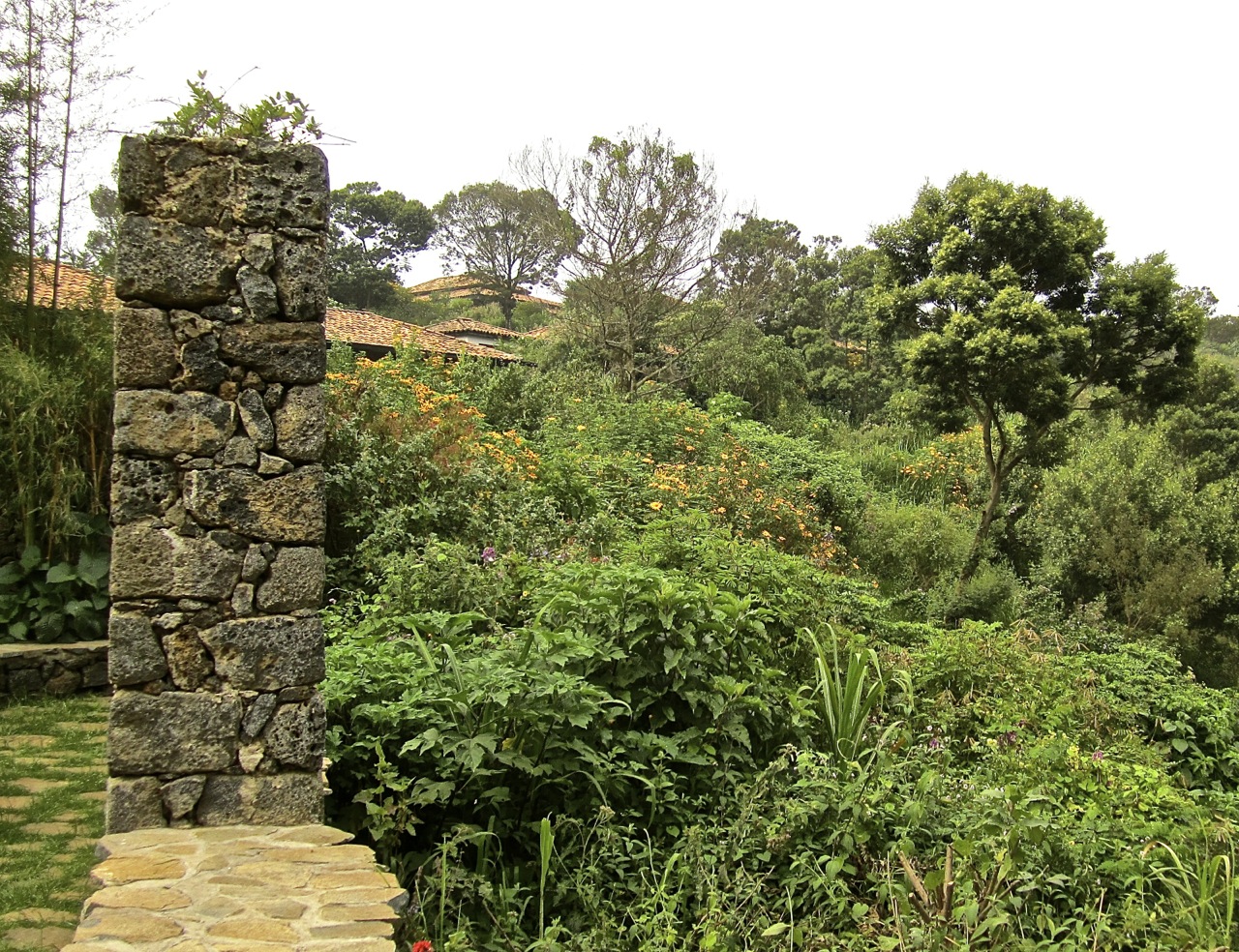
That’s what I kept thinking during our overnight stay at the Virunga Safari Lodge in northern Rwanda a couple of weeks ago.
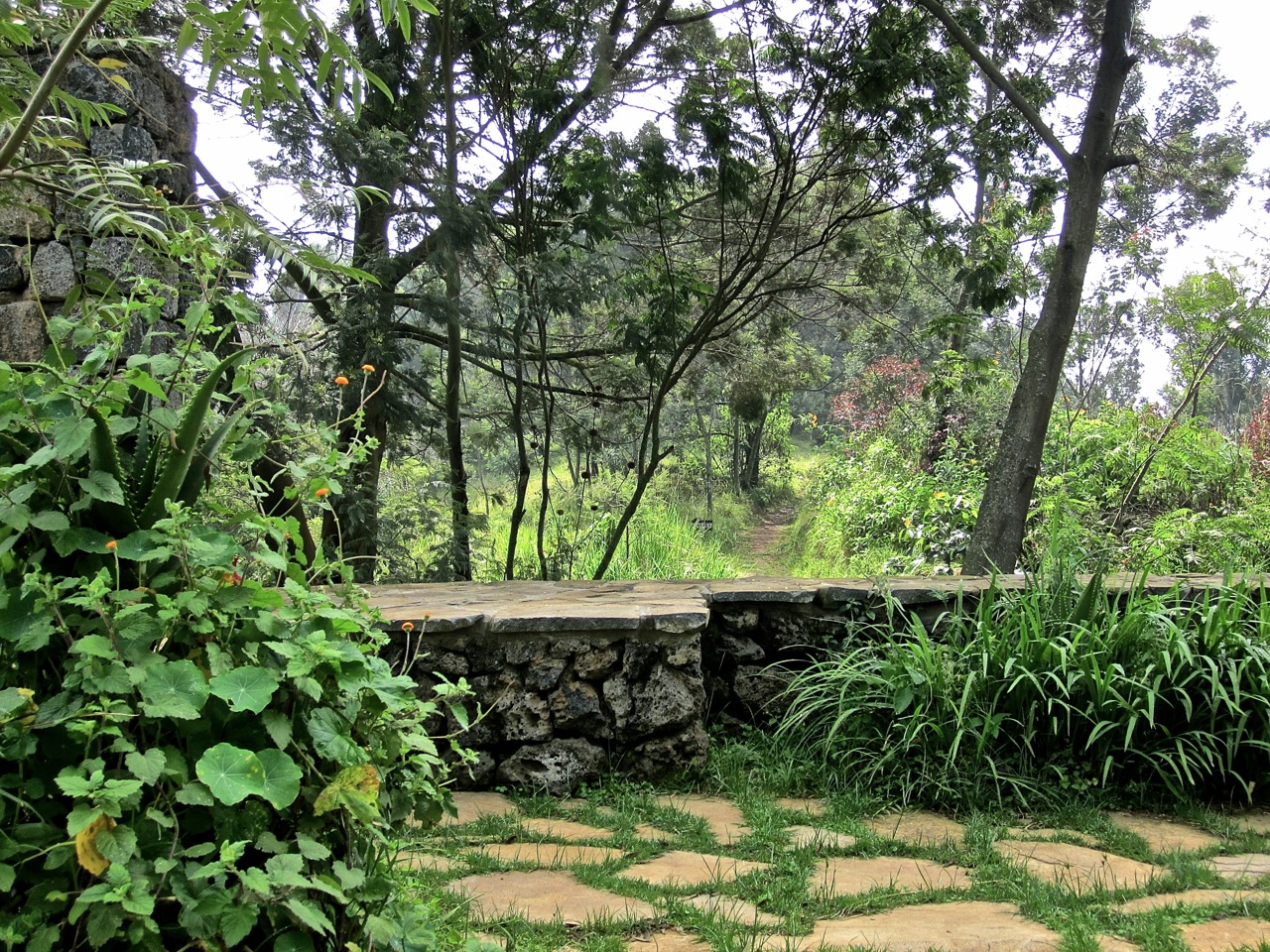
The hotel consists of a main dining/lounge building and eight very private cabins.
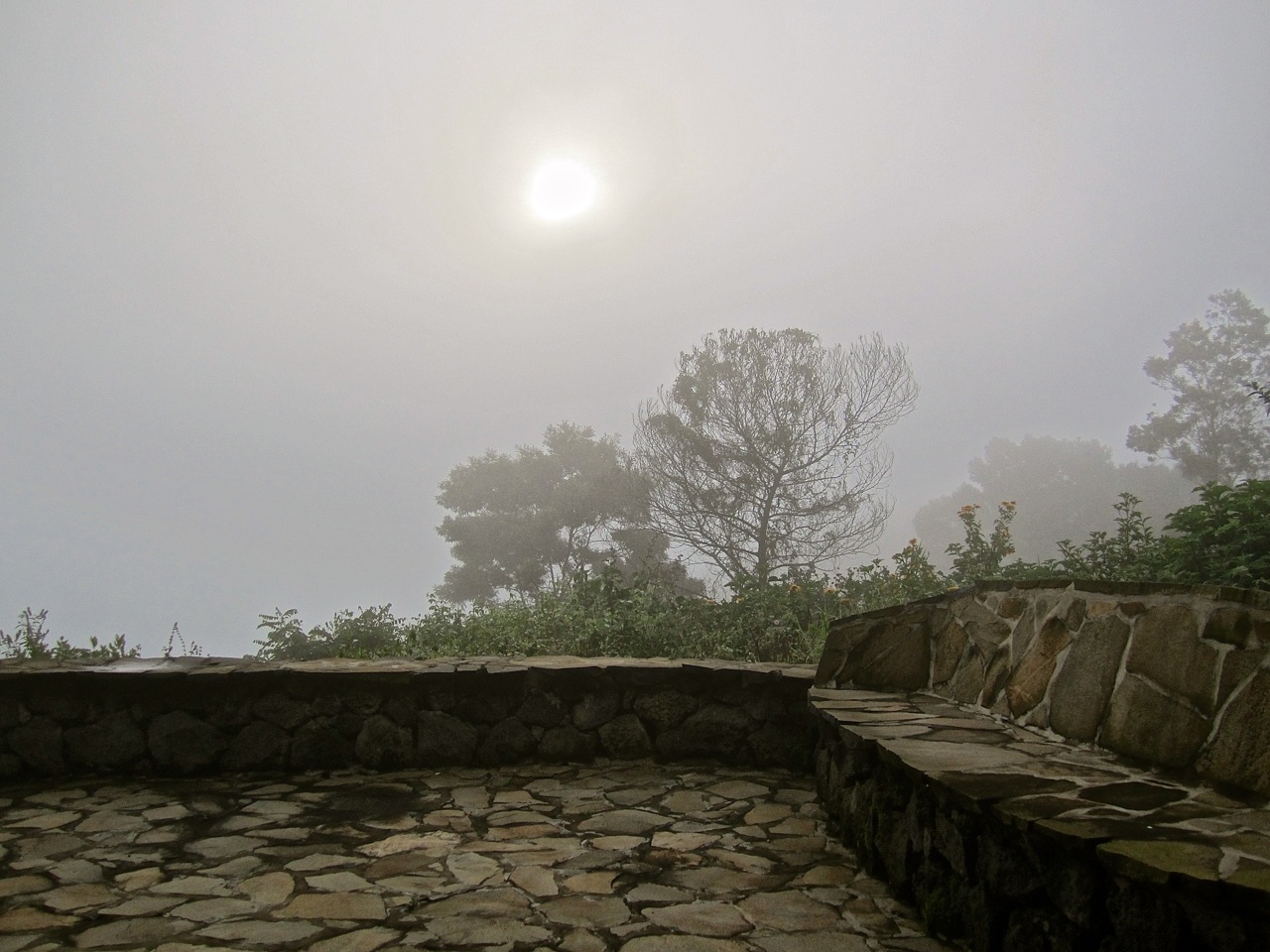
A central path through the hotel grounds runs along the top of a hill, and the cabins are sited on both sides on a level below.
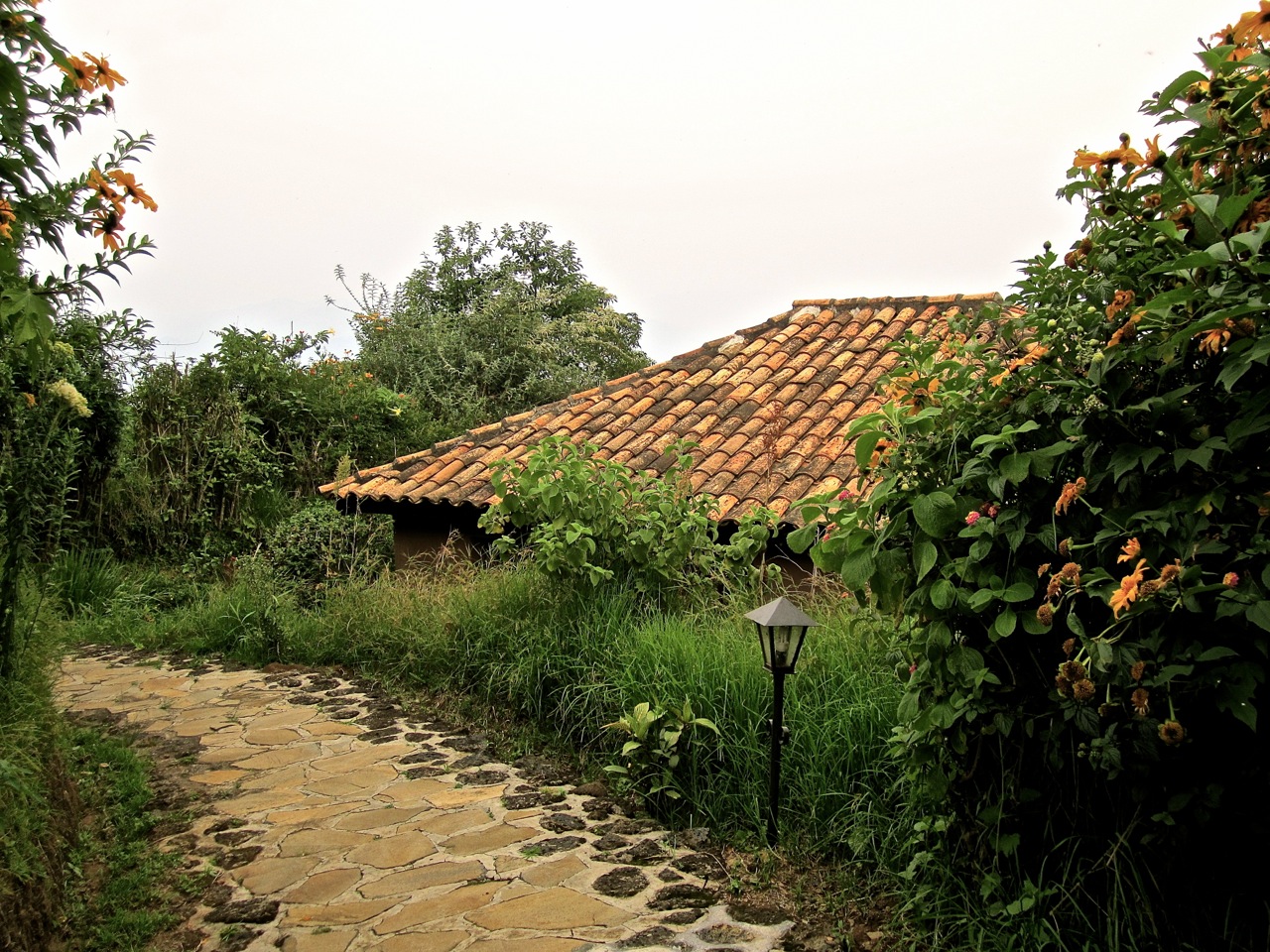
In the brush, wild natives and naturalized exotics grow together in a jumble. They were noisy with birds and insects.
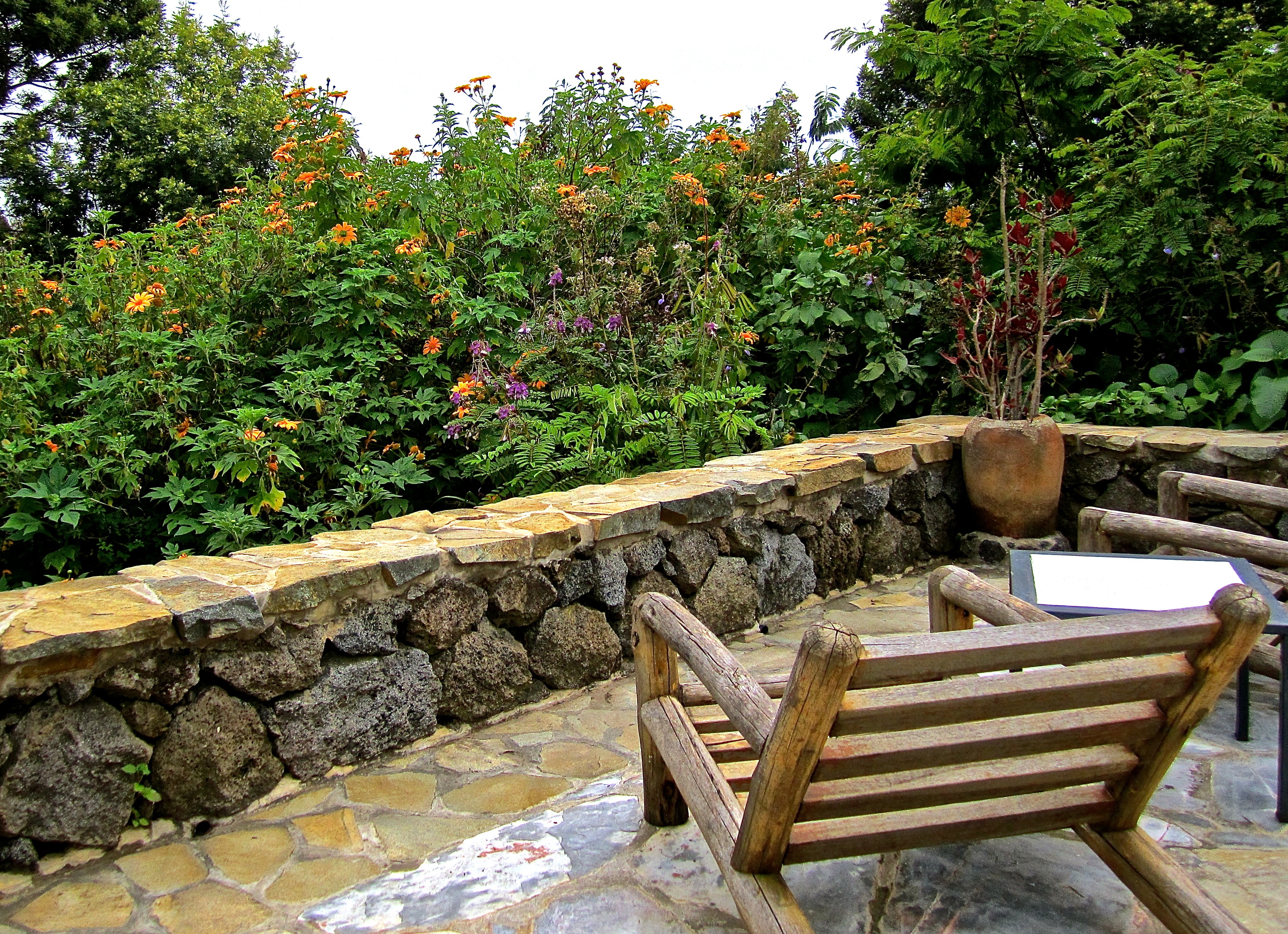
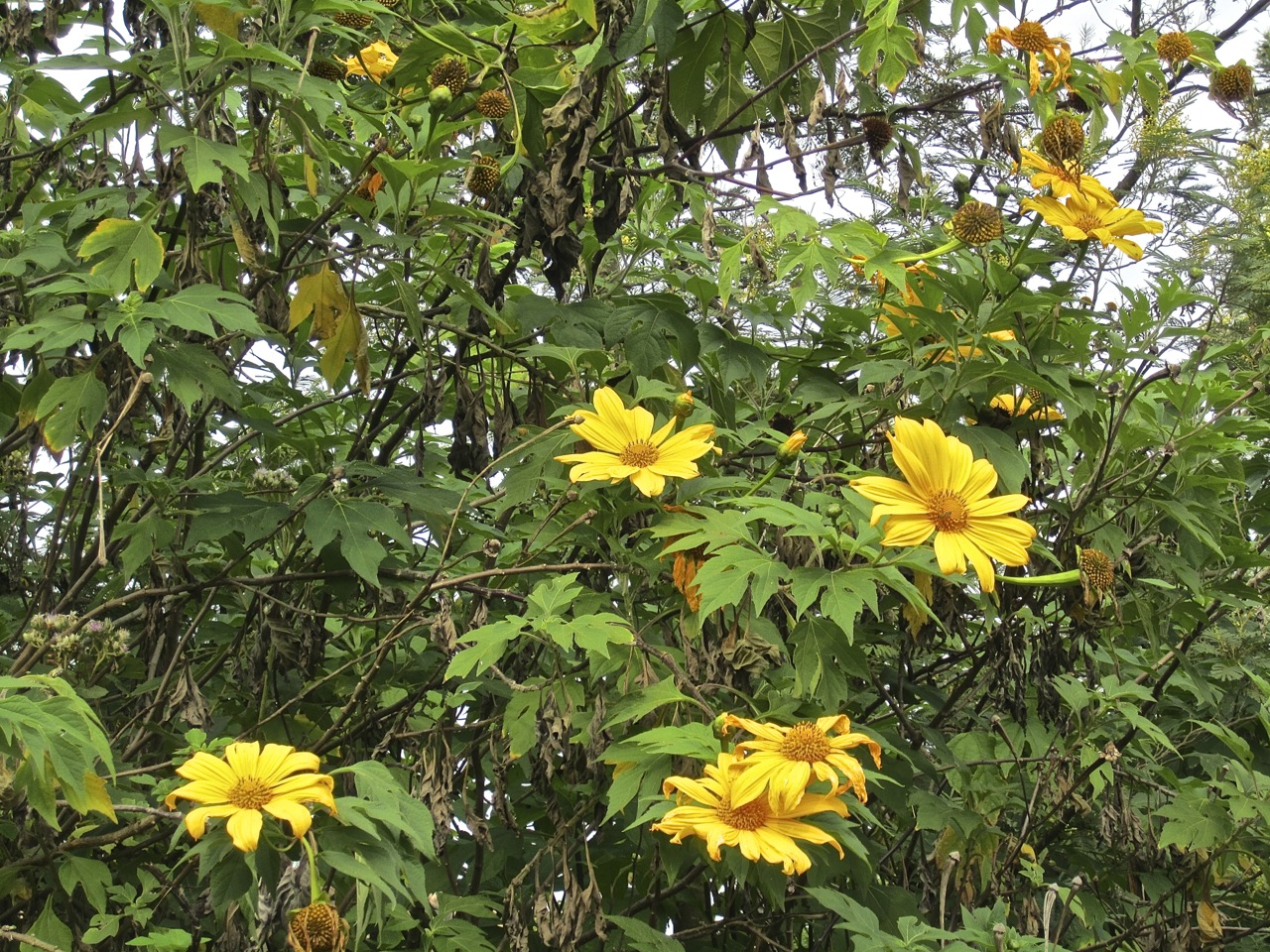
As we took a walk through the neighboring community, I realized that the light-touch landscaping of the hotel grounds created, in a sense, the least artificial environment in the area. Rwanda’s country land is highly cultivated — almost every square foot is part of a vegetable garden or field or wooded plot for timber. A steep slope is rarely an obstacle.
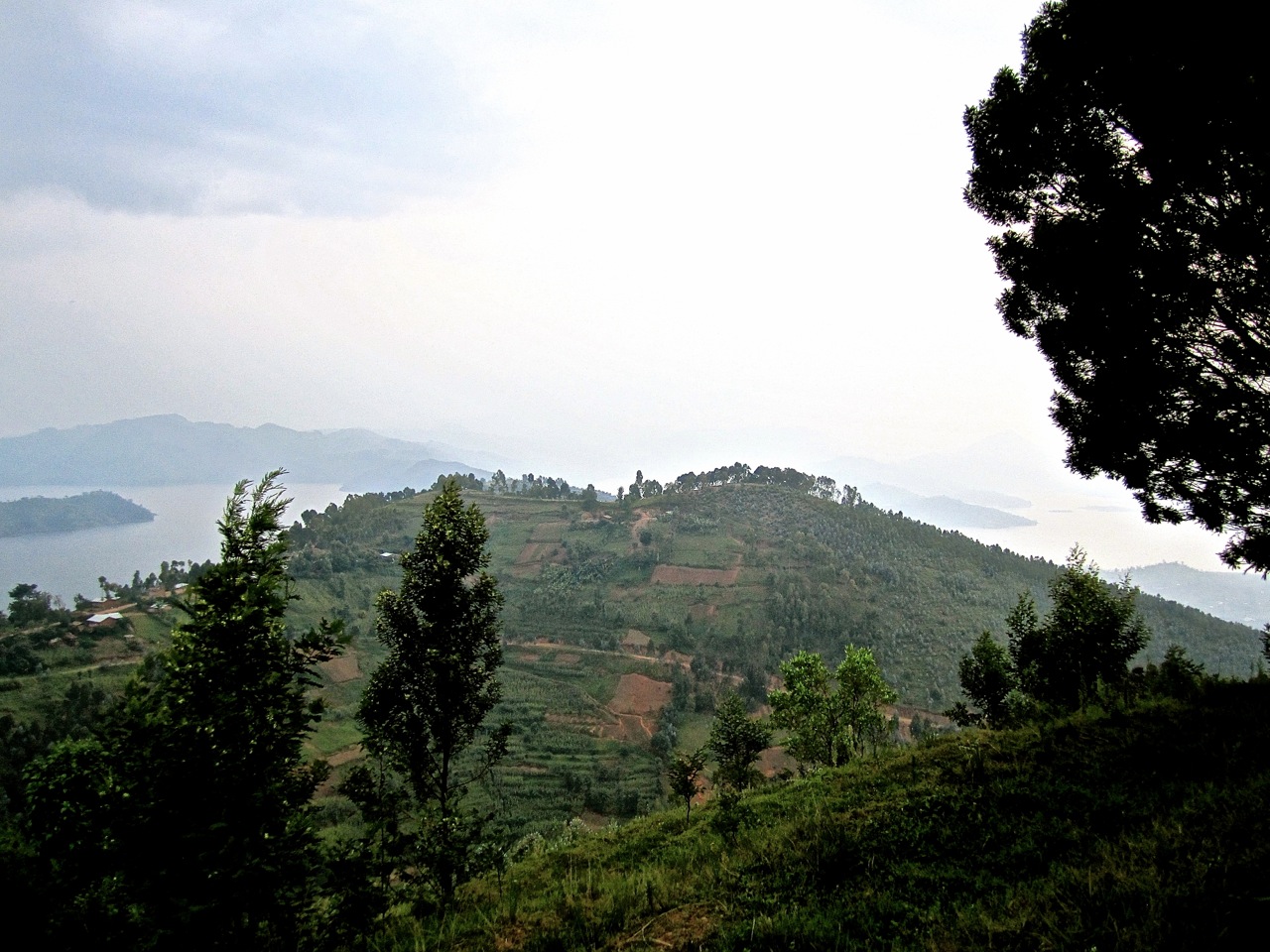
At the end of a relaxing stay, we had lunch at a table overlooking Lake Burera and its little islands. Then we were off on the 2-hour drive back to Kigali.
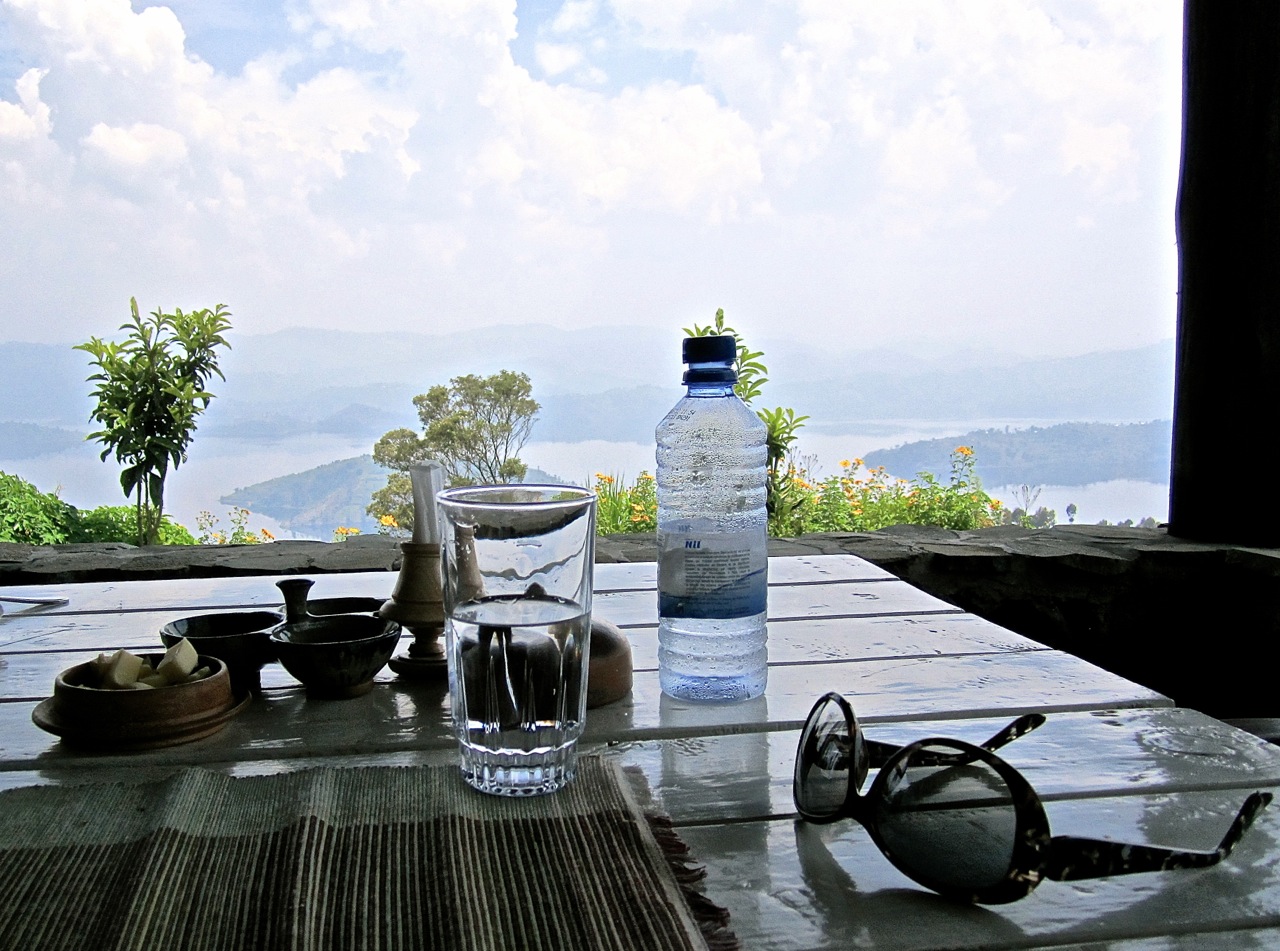
It’s sad to leave Eden.
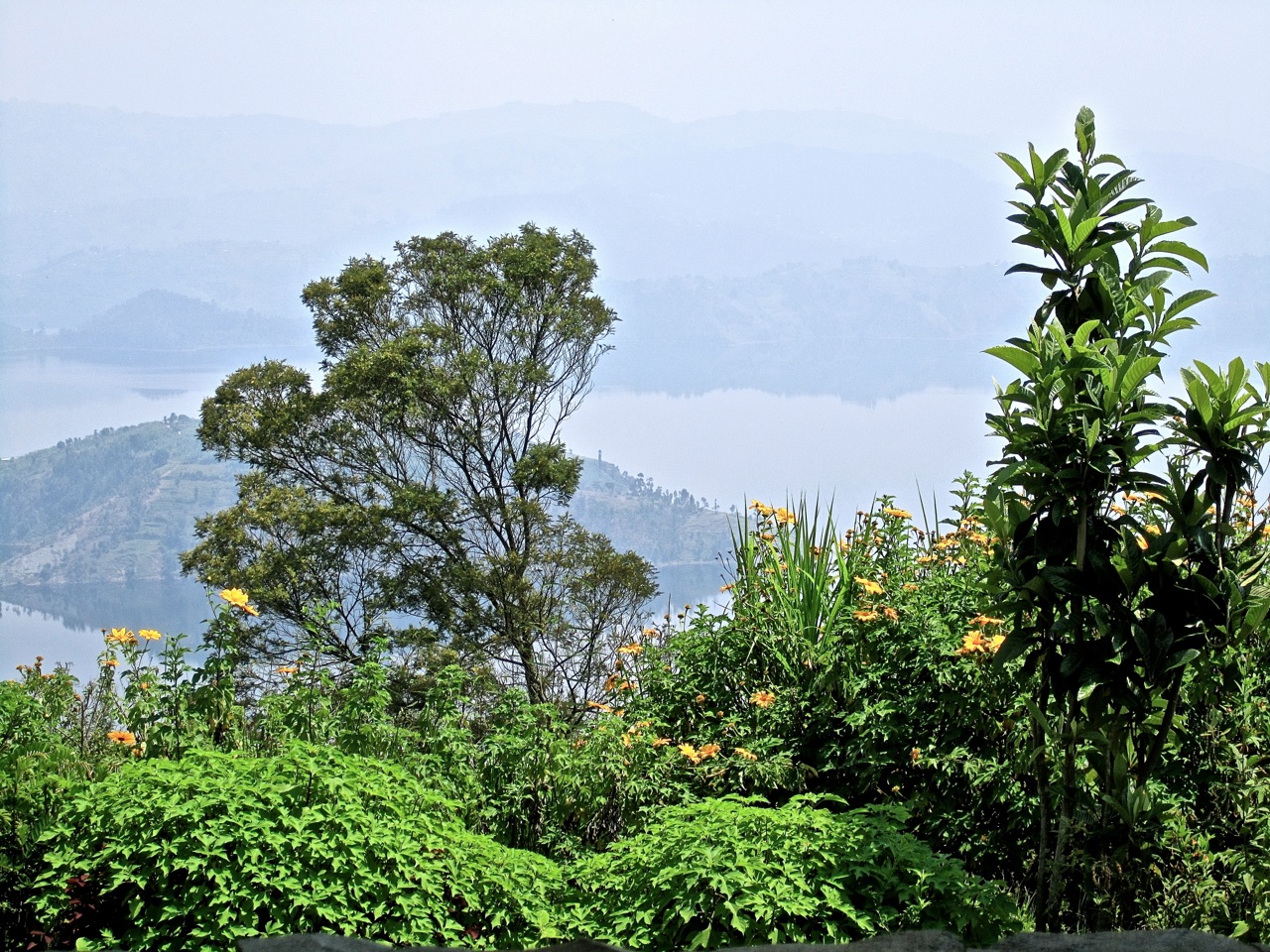
To scroll through larger versions of these images (and several more), click ‘Continue reading’ below and then on any thumbnail in the gallery.
To see more photos of Virunga Safari Lodge from a brief visit last year, click here.
Here are a few of the flowers blooming in our garden this month.

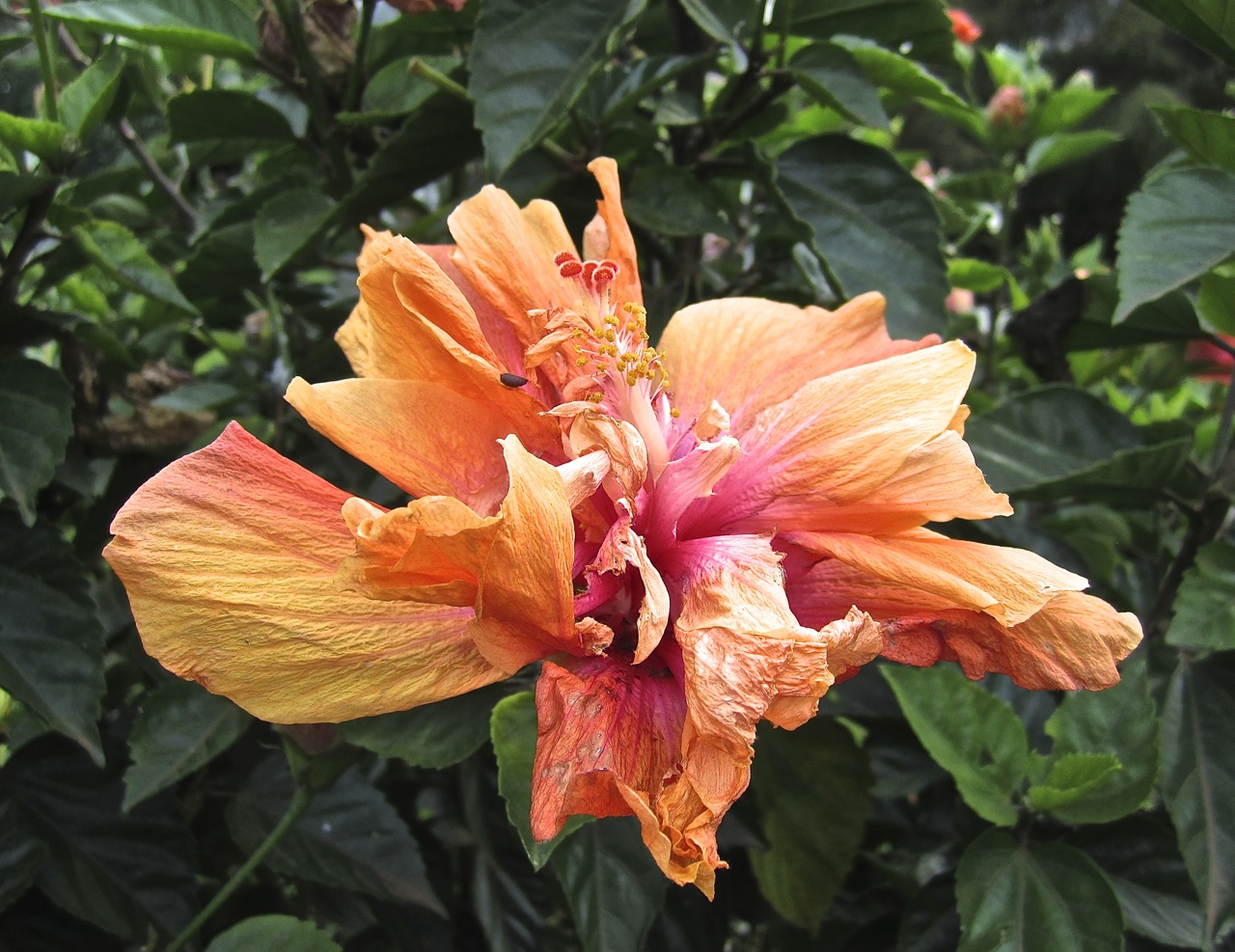
This beautiful light orange tropical hibiscus — this large shrub is growing on the middle level of the retaining walls along the front lawn.
Below: Rudbeckia laciniata or cutleaf coneflowers — this is a double variety, possibly ‘Goldquelle,’ ‘Hortensia,’ or ‘Goldenglow.’

This 3′ to 5′ rudbeckia — usually seen with single coneflower blooms — is native to eastern North America. A double variety appeared in 1897 and became popular as an “outhouse flower,” planted to shield privies from view.
When we arrived in Rwanda, there was one clump in the garden. I divided it, and now, because it is a “vigorous spreader,” I have about 25 plants.

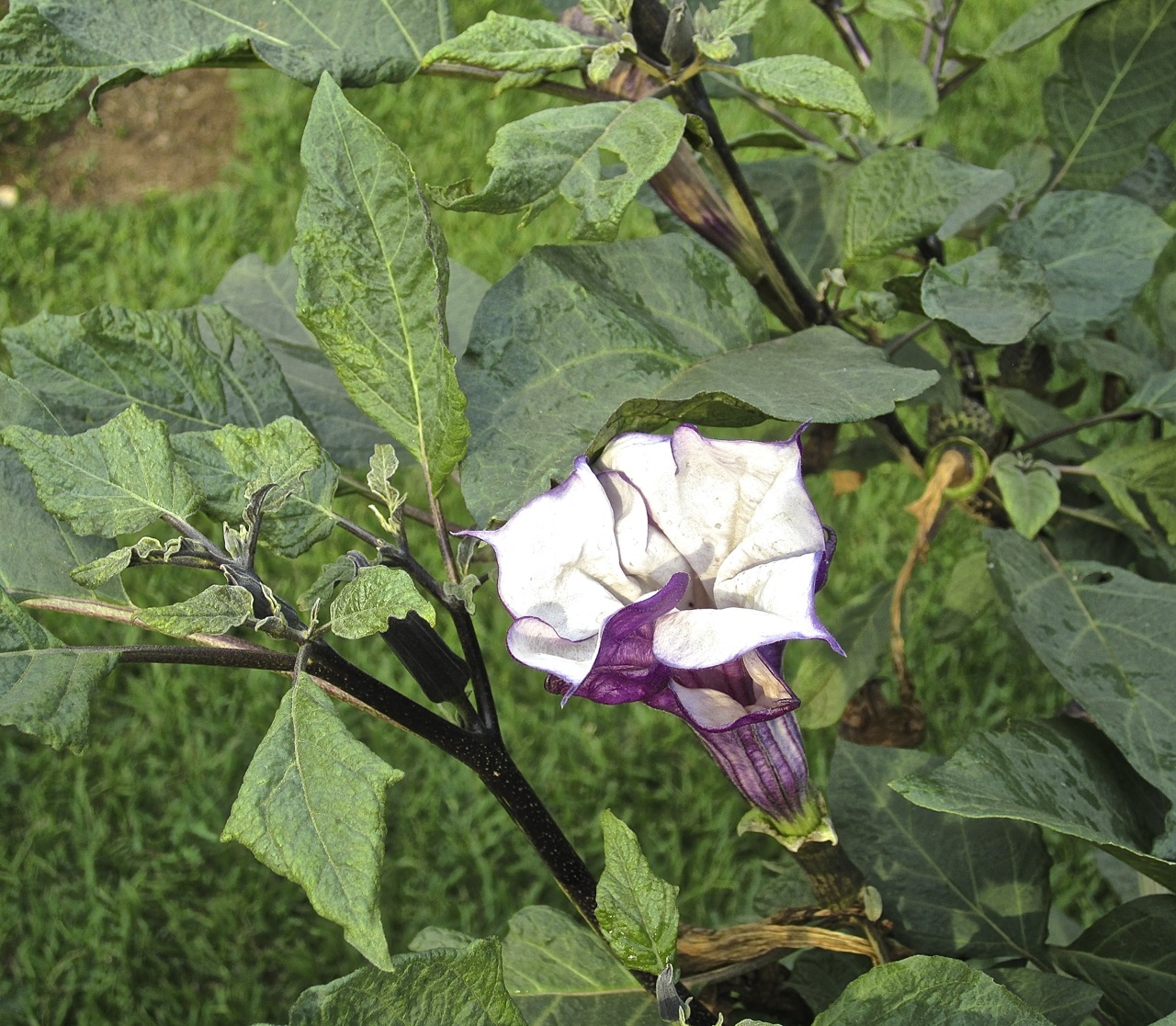
I’m pretty sure the plant below is another American native in our garden: Datura stramonium or Jimson weed or Jamestown weed.
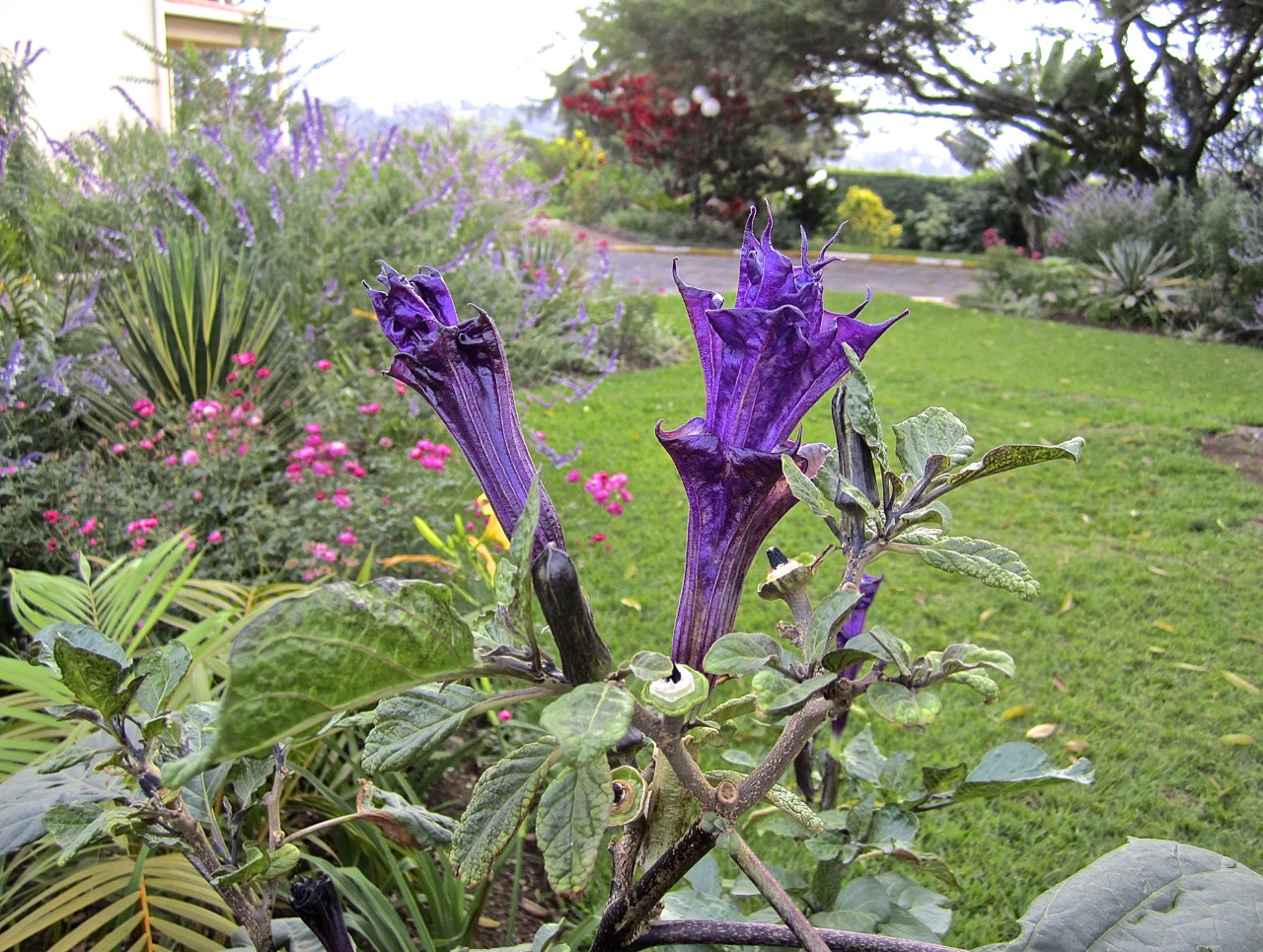
Because all parts of the plant can produce delirium or bizarre behavior if ingested or smoked, it played a small role in colonial American history when it drugged British soldiers sent to quell a 1676 uprising in Virginia.
The James-Town Weed . . . , being an early plant, was gather’d very young for a boil’d salad, by some of the soldiers sent thither to quell the rebellion of Bacon; and some of them ate plentifully of it, the effect of which was a very pleasant comedy, for they turned natural fools upon it for several days: one would blow up a feather in the air; another would dart straws at it with much fury; and another, stark naked, was sitting up in a corner like a monkey, grinning and making mows [grimaces] at them; a fourth would fondly kiss and paw his companions, and sneer in their faces with a countenance more antic than any in a Dutch droll.
In this frantic condition they were confined, lest they should, in their folly, destroy themselves. . . . [A]fter eleven days [they] returned themselves again, not remembering anything that had passed.
– The History and Present State of Virginia, 1705
Below: Salvia leucantha or Mexican sage — when we moved in over a year ago, there was one clump near the driveway. I divided it, and now we have the purple and white flowers all around the semi-circle of pavement.
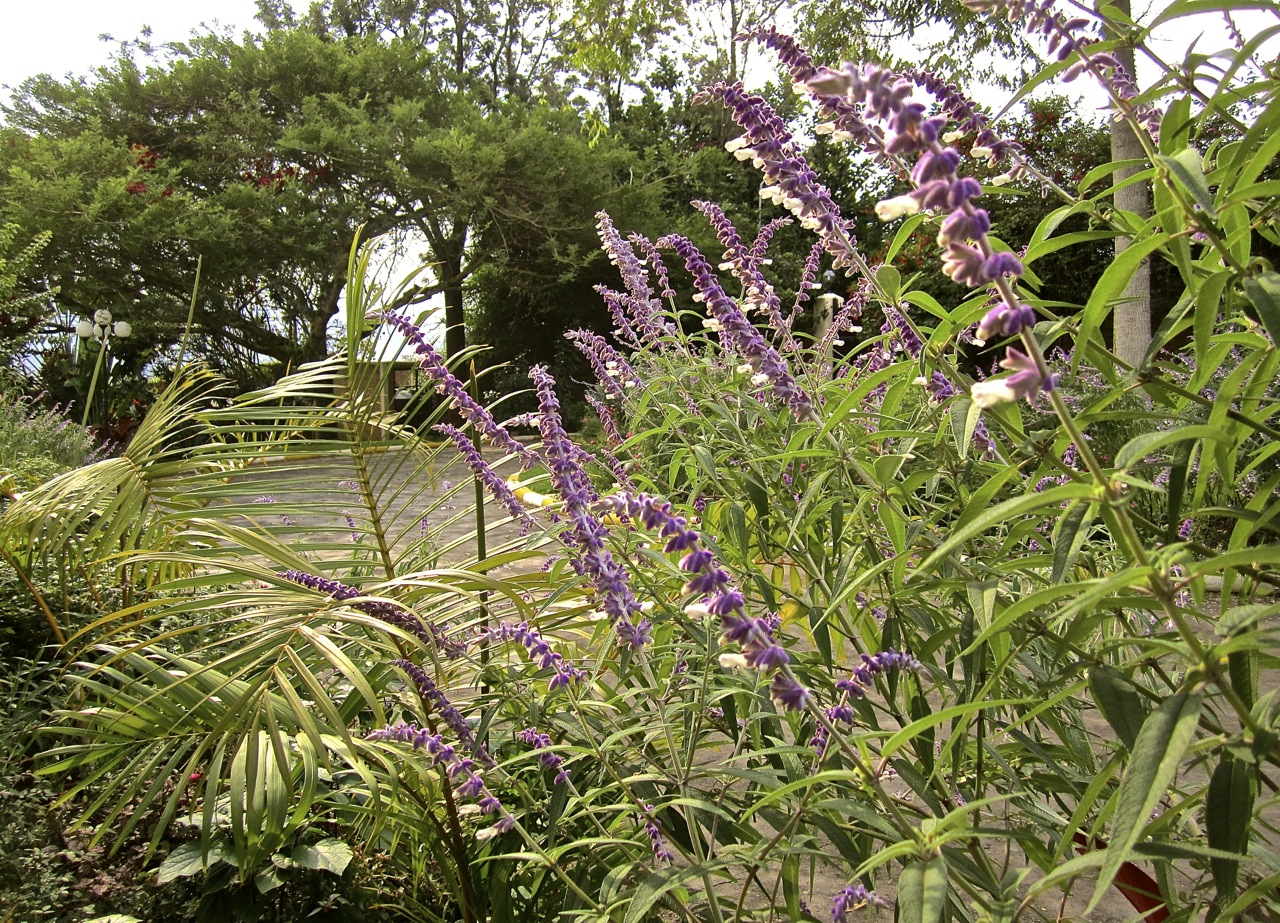
I like its tall, twisty, rather floppy nature, but I think those same attributes annoy our gardener, who keeps trying to stake it upright.

The driveway area is mainly planted with the sage, ‘Fairy’ (I think) roses, yellow daylilies, Jimson weed, and orange lantana. There are also several palm trees, which will eventually add some vertical interest. I’m thinking of adding either some tall, dark pink celosia, burgundy sunflowers, or cranberry-colored hardy hibiscus.

I am not responsible for the bright yellow and white paint on the curbs, by the way. I go back and forth about whether I like it or not.
Below: We have finally stopped using the cutting garden as a holding area for various plants being moved from one place to another.

It is now planted out with zinnias, borage, and cosmos seedlings, as well as some perennials, like the pink chrysanthemums below.
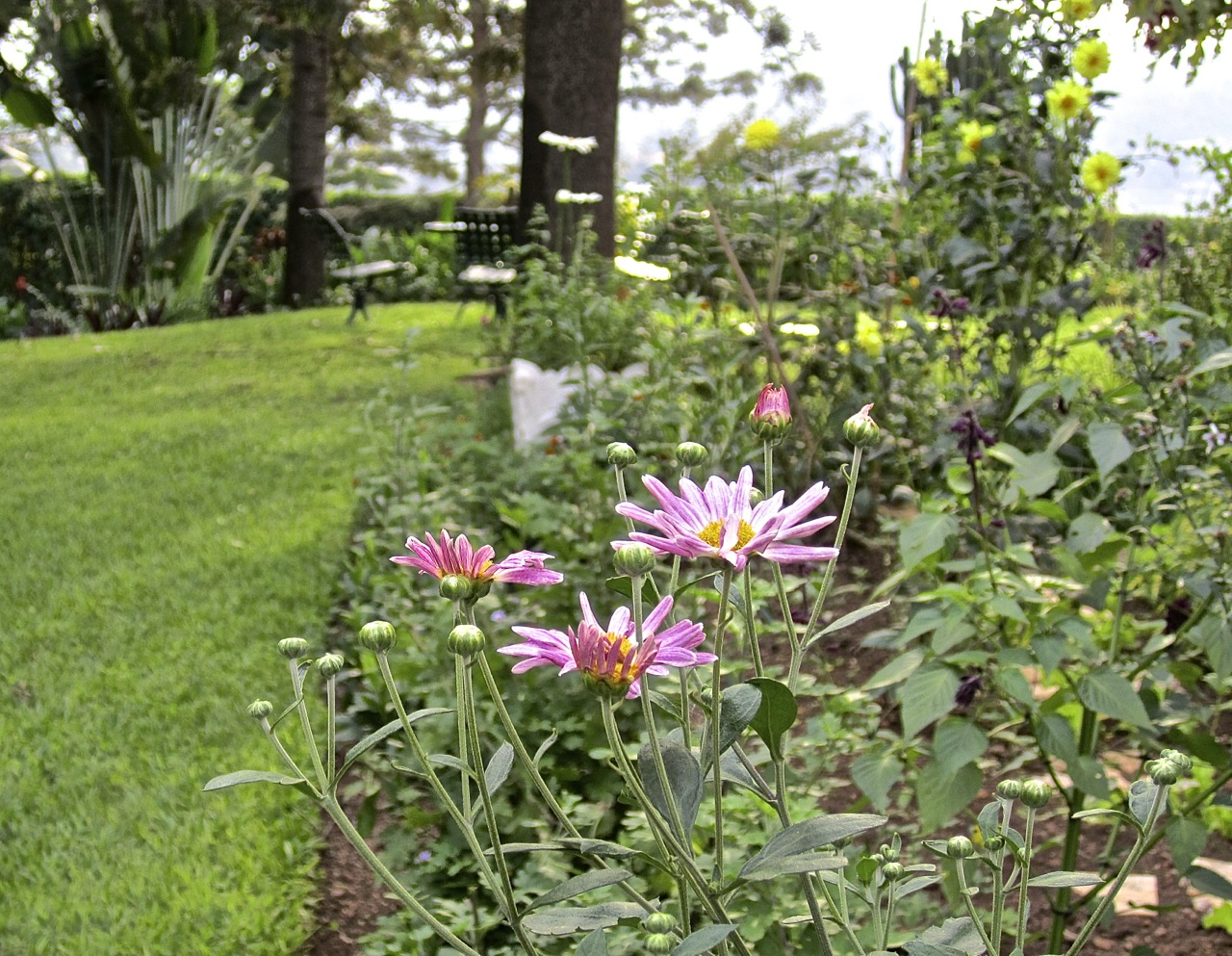
I have really tried to like those acid yellow dahlias in the background, but I just can’t, and I think they are going into the compost pile quite soon.
Garden Bloggers’ Bloom Day is the 15th day of each month. To see what’s blooming in other garden bloggers’ gardens, check out May Dreams Gardens.
When we were at my parents’ house in September, I went around the garden and gathered seeds from their purple coneflowers, lamb’s ear, and wild mullein. I put them all in one baggie because I thought I would recognize the seedlings as they emerged. Of course, now I have no idea whether this is lambs ear or mullein. I hope it’s mostly lamb’s ear, because I should only need a few of the tall, wide mulleins.
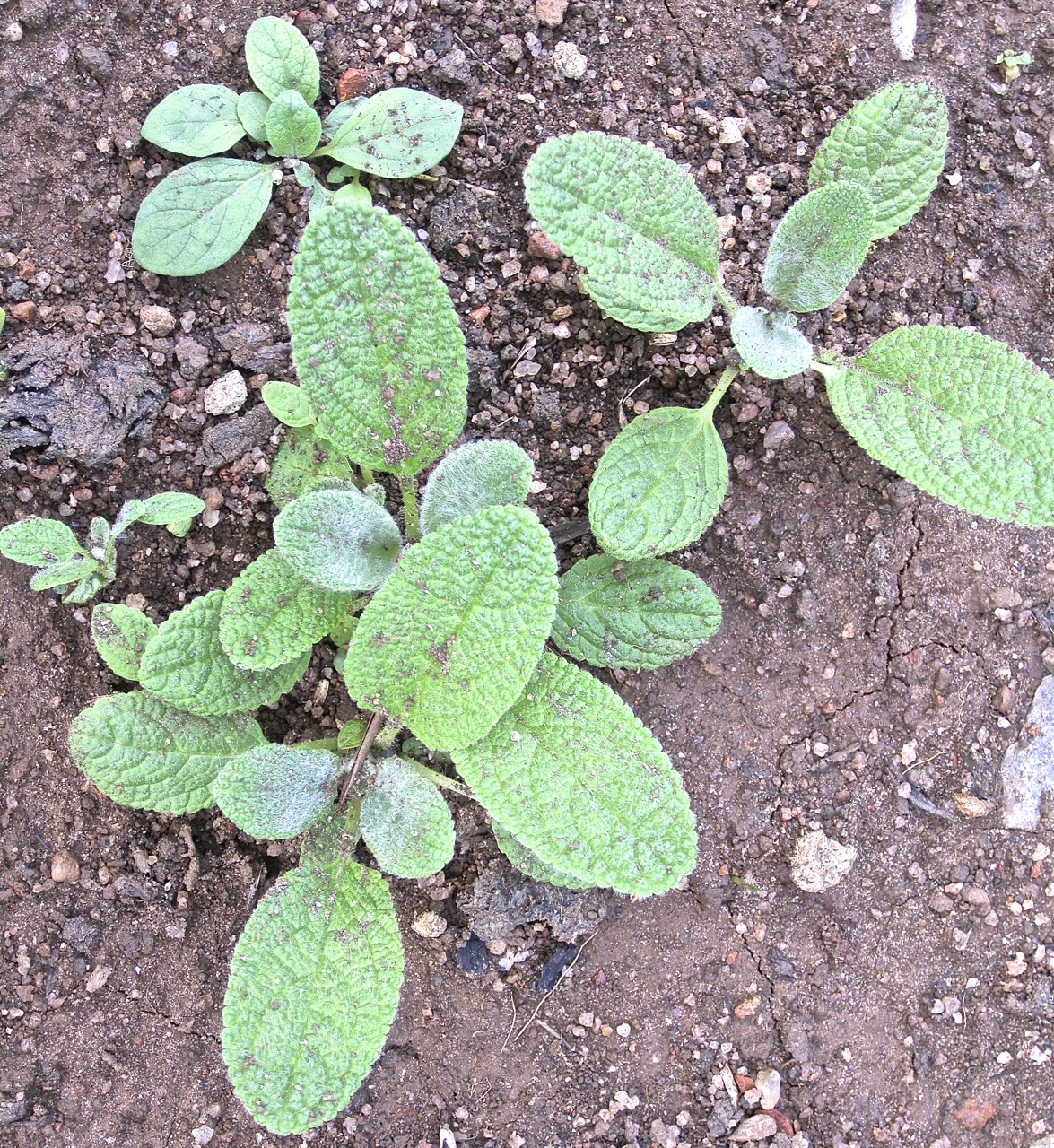
My mother also gave me some kale seeds, which I forgot about and then mixed in with all the other seeds. Then I went and bought a packet of kale seeds and planted them. So now my vegetable garden is about half kale. Oh well, it does seem to be the vegetable of the moment.
Thanks to Digging for hosting Garden Bloggers’ Foliage Follow Up the 16th of every month.
Last weekend, we spent a night at the Virunga Safari Lodge in northern Rwanda. While there, we took the village trail to Mwiko Primary School, a public school that receives support from the hotel.
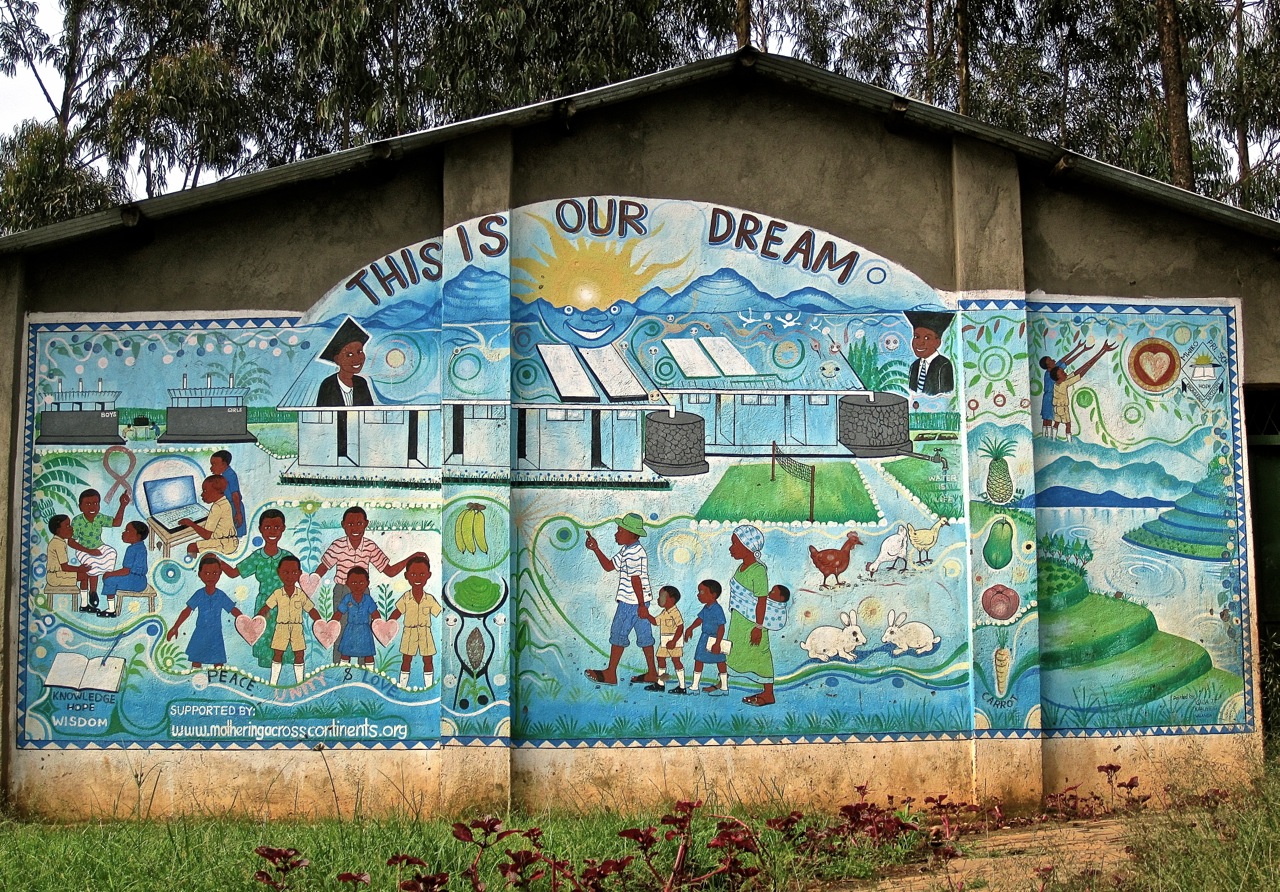
There is an inspiring mural of the students’ hopes for their school on one of its buildings.
Below, on the right side of the mural, there are classrooms and well-built latrines* with a hand-washing station.

There is also a computer, a teacher talking about HIV-AIDS, and students and teachers joined by love. The organization Mothering Across Continents mentors teachers at the school and sponsored the mural.

Below, in the center of the mural, there are solar panels and tanks to catch rainwater runoff from the classrooms’ roofs, a grassy playing field, a smiling graduate.
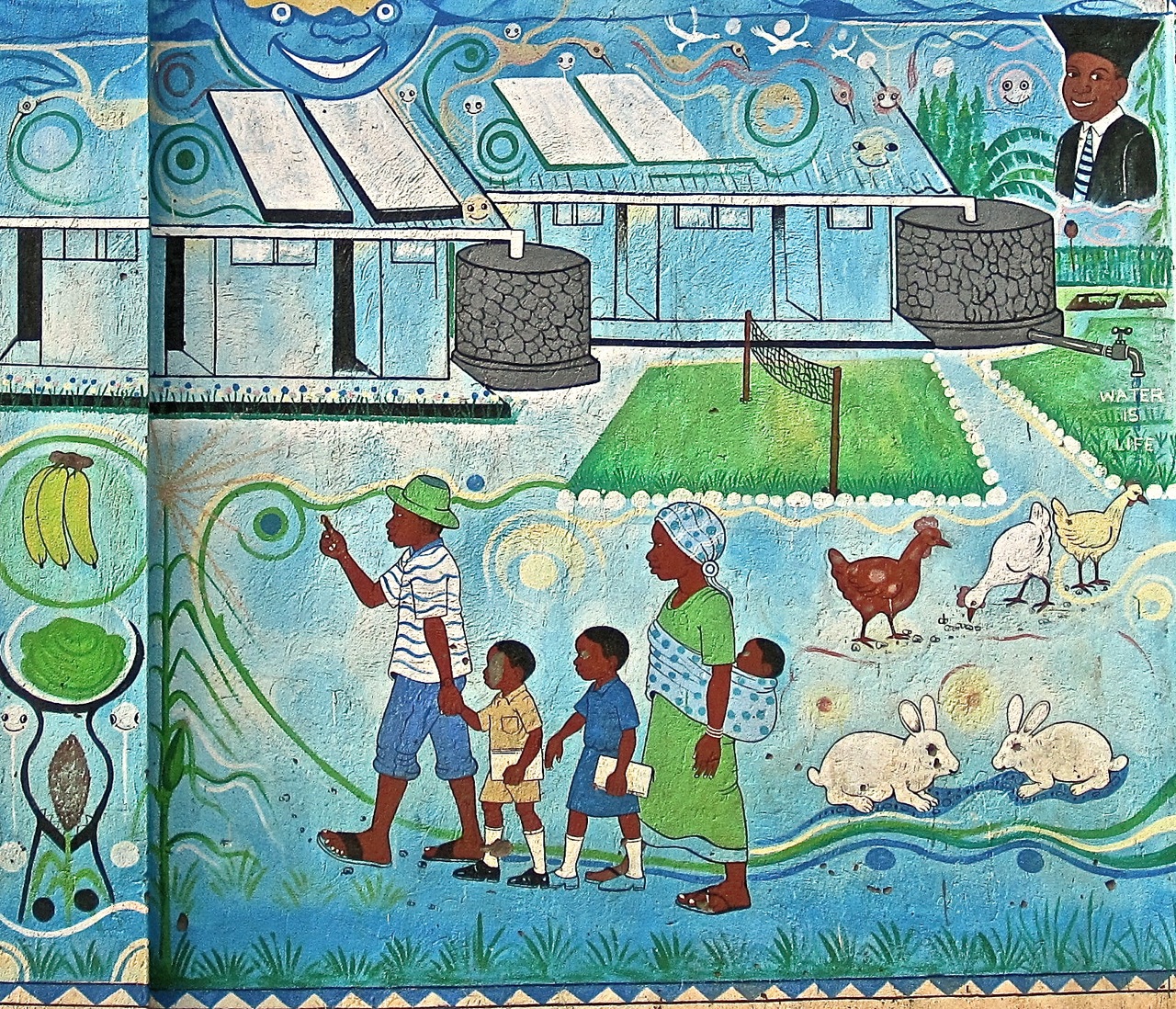
The mural was painted by Igala J. and Kabuye G. working from ideas from 50 paintings by the children.
On the right side of the mural below, there are chickens and rabbits, hills terraced for planting, the mountains, and Lake Burera.

The children currently raise rabbits in pens behind the school.
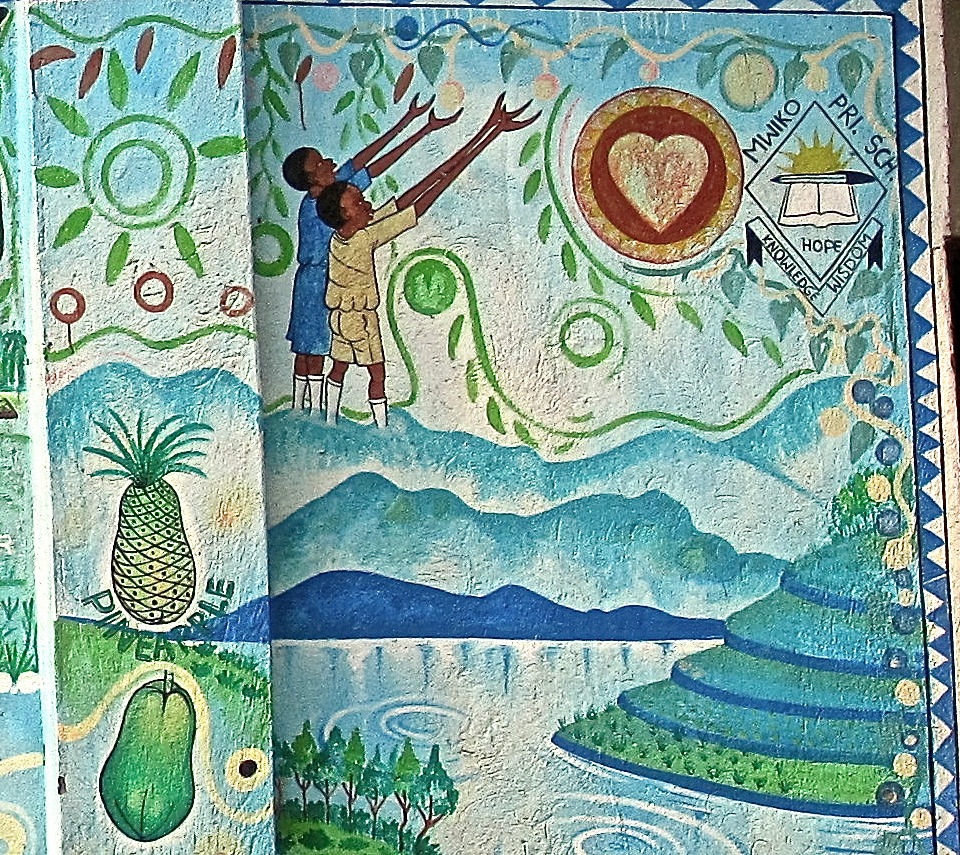
The school’s motto is “knowledge, wisdom, hope.”
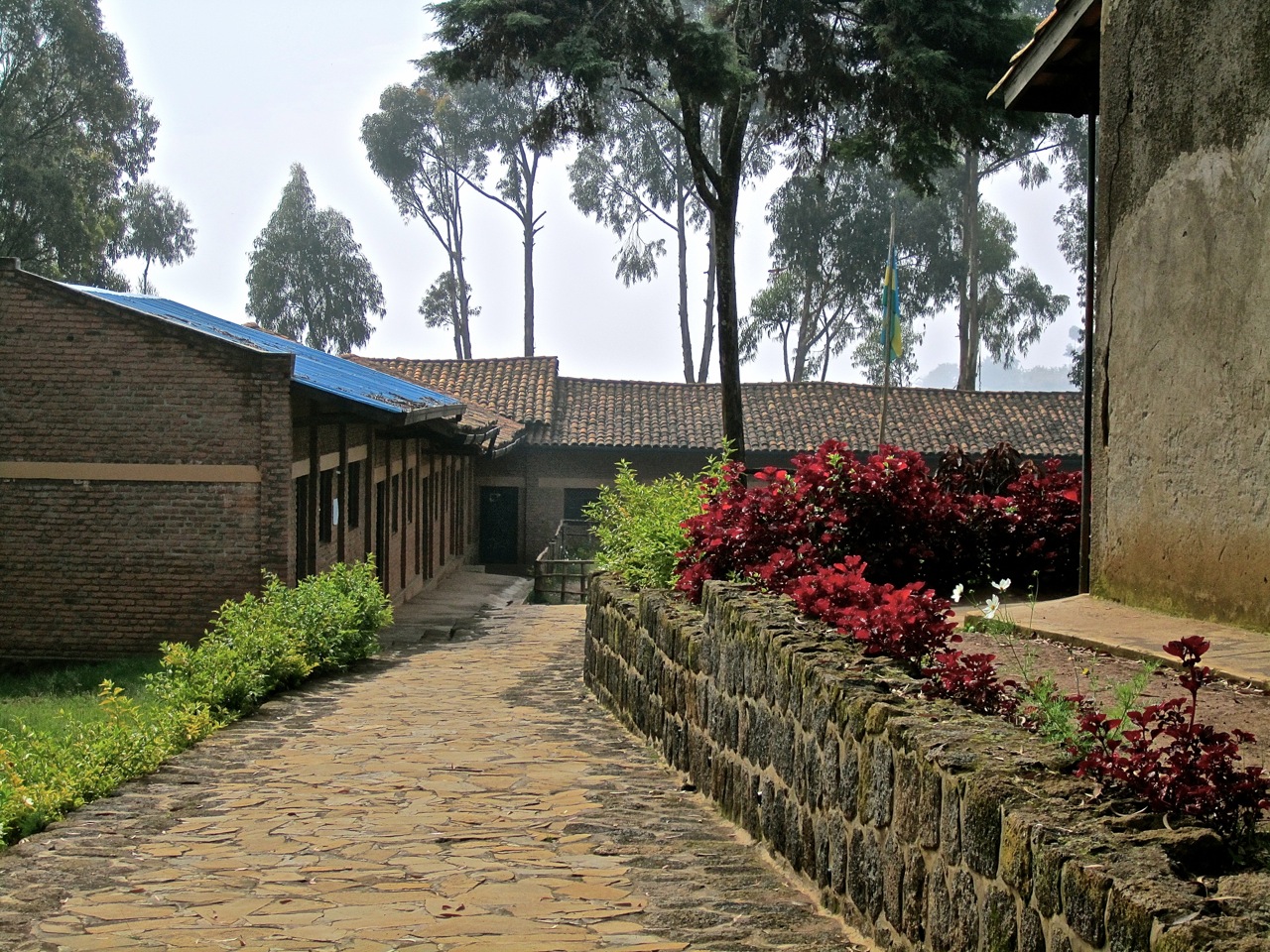
Below is a photo of the school, which serves over 800 children and has 12 teachers. You can see more pictures here and here. There’s a video of a class singing here.
*More information on the importance of adequate latrines in schools in developing countries is here and here.
 enclos*ure