After some rain

All night the sound had
come back again,
and again falls
this quiet, persistent rain. . . .

— Robert Creeley, from “The Rain

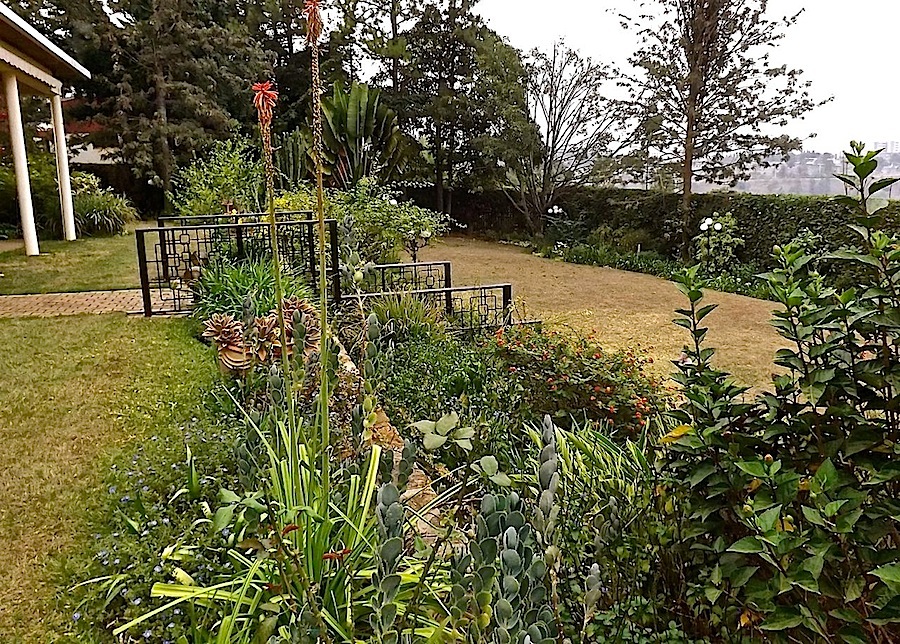
Our garden on August 31, at the end of the dry season:Our garden in the dry season/enclos*ure

And on September 11, after several days of rain:Our September garden in Rwanda/enclos*ure

Much better. After the first rain or two, everything seemed almost sparkly.

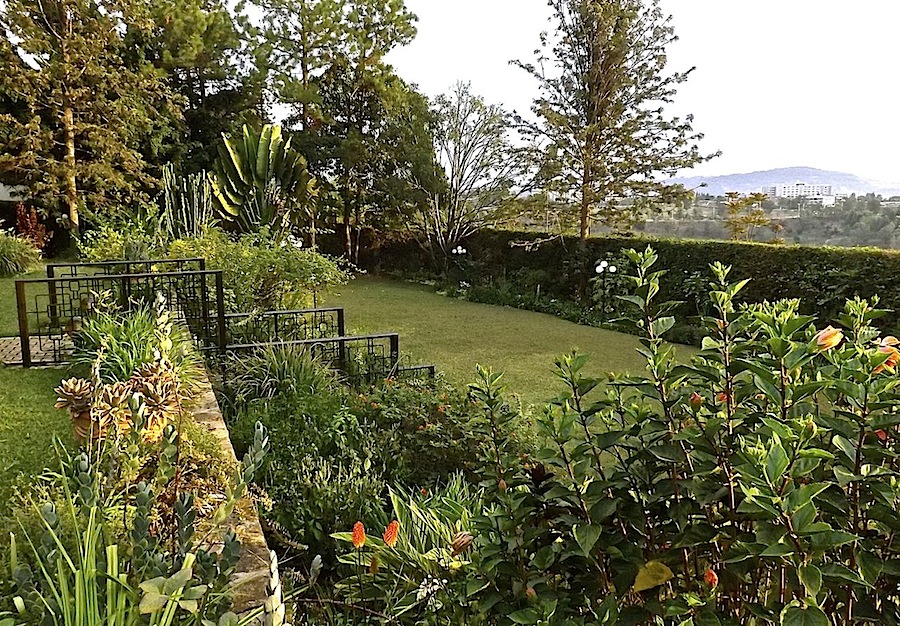
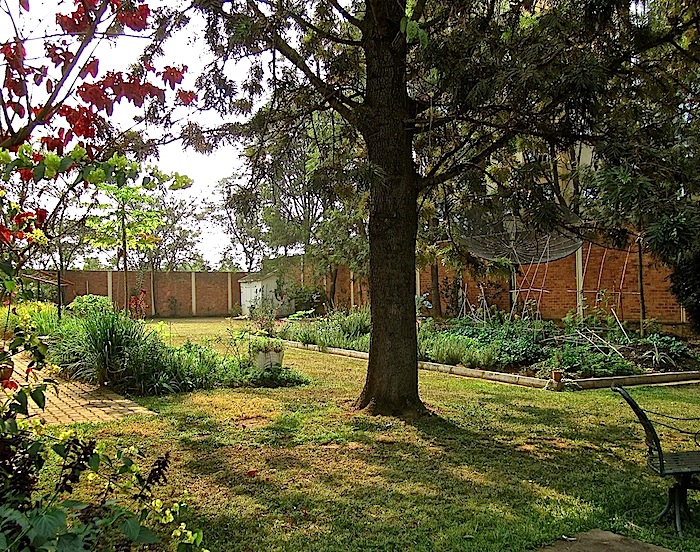
Below (click on any of the thumbnails in the gallery) is a little tour of the borders along the upper and lower lawns, taken on September 11 — just before sunset — and yesterday afternoon.

I think this will be my slightly early Garden Bloggers’ Bloom Day and Foliage Follow-Up submission for September. Please go to May Dreams Gardens (Bloom Day on September 15) and Digging (Foliage Follow-Up on September 16) to see what’s happening in other Garden Bloggers’ gardens.

Garden Bloggers’ Bloom Day for August

Now is the winter of our discontent
Made glorious summer . . .

by our water hoses.

We are just below the equator here in Rwanda, so technically it is near the end of winter — and of the long dry season, which began in May and normally ends in September.

But last night there was a light rain for about seven hours, so today I don’t need to water anything in the garden, not even the new plants.

The cutting garden (left) and the vegetable garden (right).

We’ve really cut back on watering this year, anyway — none for the grass and a lot less for the planting beds. The grass is going brown, but we still have a lot of flowers, particularly my stalwarts, yellow daylilies and pink gerbera daisies.

The vegetable garden with kale, sunflowers, Missouri primroses, nasturtiums.

My biggest project in the last month has been to tackle our mess of a vegetable garden, which has consisted of several not very productive, but very wide and long raised beds.  Their dimensions just weren’t manageable, so we’ve dug new paths and now all the beds are about 4′ x 5′.

Orange nasturtium in our vegetable garden.
Orange nasturtium bloom in our vegetable garden.

Growing among the argula, lettuce, kale, strawberry, and tomato plants are also celosias, nasturtiums, Missouri primroses, and sunflowers.

Sunflower (one of the shorter varieties) in our vegetable garden.
The garden with celosia, feverfew, supports for tomatoes and beans, with lettuce gone to seed in the back.
Our still rather disorderly garden with celosia, feverfew, supports for tomatoes, with a row of lettuce going to seed along the back.

Recently, I tried to grow American hardy hibiscus from seed (in the vegetable garden, where the soil is best), and, despite the fact that I have always read that this is a very easy thing to do, only about ten seedlings appeared from two packets of seeds, and for weeks they have remained at 2″ tall.

Nothing at all came up from a packet of black-eyed Susan seeds; only one plant from a packet of Verbena bonariensis.  However, alpine strawberry seeds have produced about 15 plants.

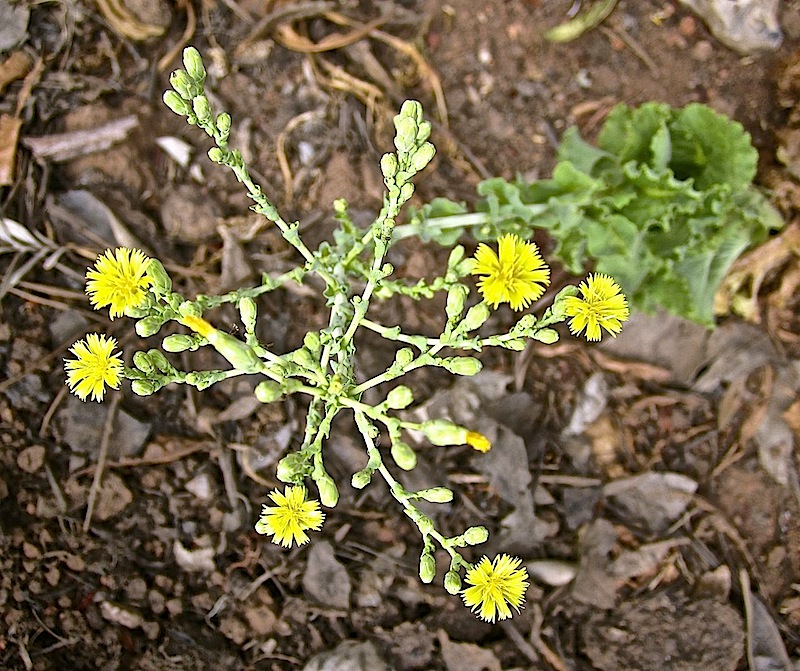
Lettuce flowers.
Lettuce flowers.

I have also done well with re-seeding lettuce, dill, basil, garlic chives, and coriander and with rooted rosemary cuttings. I have high hopes for my cherry tomato plants, many of which have clusters of tiny fruit.

Feverfew in the vegetable garden.
Celosia in the vegetable garden. The fading blooms are full of seeds.

In the long flower border along the lower lawn, I have one bloom from several purple coneflower plants that I have grown from seed.

The first coneflower bloom.
The first coneflower bloom from plants I grew from seed.

Garden Bloggers’ Bloom Day is the 15th day of every month.  Check out May Dreams Gardens to see what’s blooming in other garden bloggers’ gardens today.

Opportunity for interesting design

In late June, we attended the launch of the Women’s Opportunity Center in Kayonza, Rwanda.

Women's Opportunity Center, Kayonza, Rwanda. Supported by Women for Women International and designed by Sharon Davis Design./enclos*ure

Constructed with the support of Women for Women International (WfWI) and other donors, the center will train the region’s women in financial literacy, business, agribusiness, and life skills.  WfWI has given support to over 56,000 women in Rwanda since 1997.

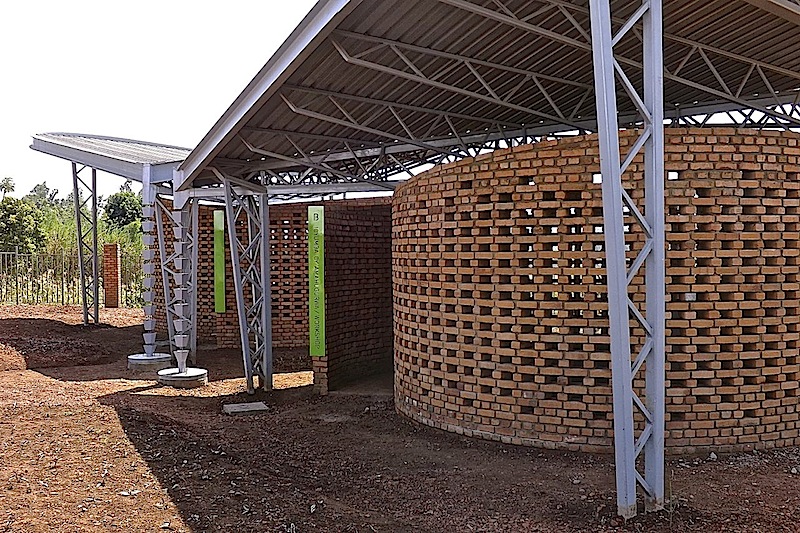
The facility was designed by the American firm Sharon Davis Design.   Particular attention was given to using local building materials and installing eco-friendly technology.

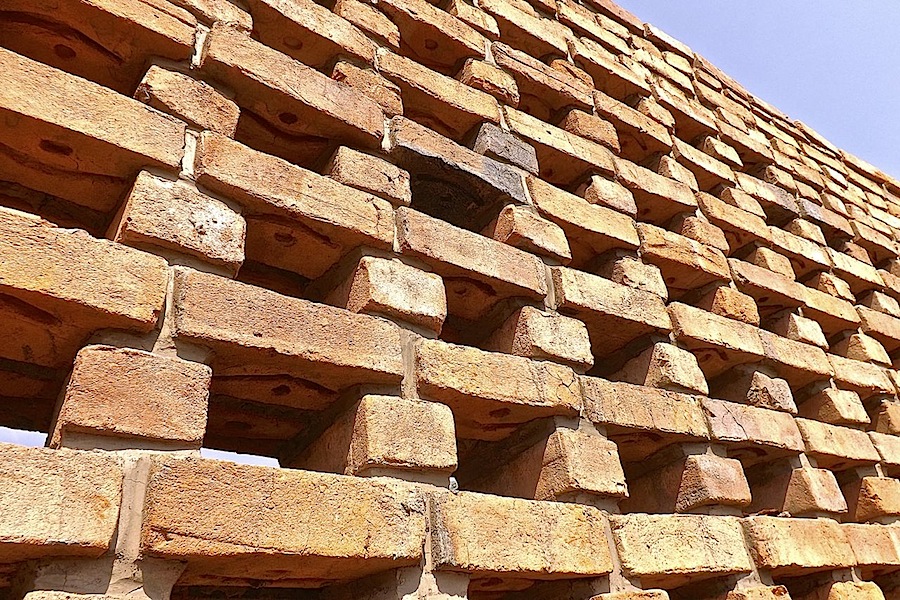
Handmade bricks, Women's Opportunity Center, Kayonza, Rwanda. Supported by Women for Women International and designed by Sharon Davis Design./enclos*ure

The buildings and walls around the center were constructed with 450,000 beautiful handmade bricks — each one stamped with the logo of WfWI.  They were pressed by a co-op of WfWI training graduates from clay dug in an adjacent valley.

Women's Opportunity Center, Kayonza, Rwanda. Supported by Women for Women International and designed by Sharon Davis Design./enclos*ure

The plan above is from the Sharon Davis Design brochure.  You may want to click on the photo to see a larger version.

The brochure explains some of the design concept:

To keep the scale and quality of the center’s spaces intimate and diverse, the organization of traditional Rwandan residences and villages became the inspiration for organizing and dispersing the many program elements across the 1-hectare* plot.  A series of human-scaled pavilions are clustered around the center of the site.  . . .  The circular nature of many of the interior spaces is also in response to WfWI’s approach of teaching in the round.

During the ceremony, Sharon Davis explained that her team wanted to create a particularly reassuring design for women who might be shy about entering this type of public place. WOC expects 200-300 women to participate in various activities every day.

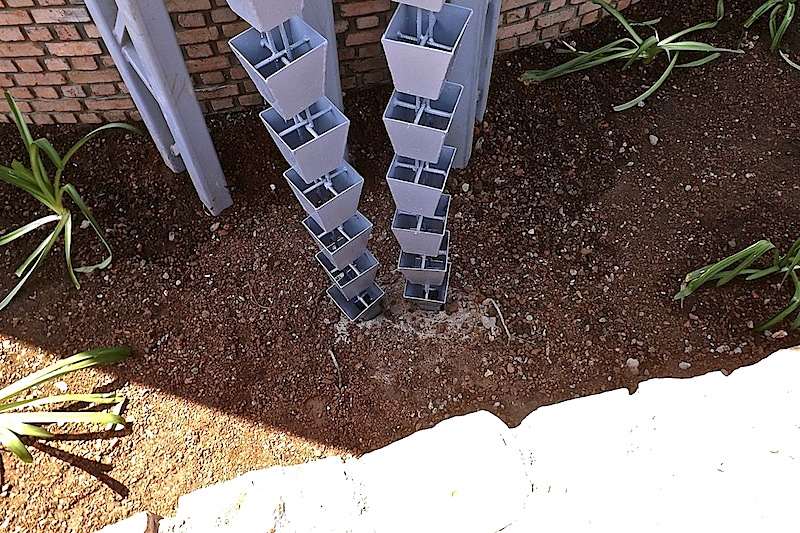
Handmade bricks and rain chain, Women's Opportunity Center, Kayonza, Rwanda. Supported by Women for Women International and designed by Sharon Davis Design./enclos*ure

The center includes domitory lodging — in the tent above — for students and visitors.  All toilets on site are composting toilets, which will produce fertilizer for use in the center’s farm and for sale in its market.

Rainchains direct all the runoff from the buildings to two buried 40,000 liter cisterns. This collection is expected to meet all the water needs of the site.

Rain chains, Women's Opportunity Center, Kayonza, Rwanda. Supported by Women for Women International and designed by Sharon Davis Design./enclos*ure

The bonding pattern and curves of the buildings’ brick walls eliminate the need for concrete columns and beams.

Workshop classroom, Women's Opportunity Center, Kayonza, Rwanda. Supported by Women for Women International and designed by Sharon Davis Design./enclos*ure

The workshop buildings have no doors or ceilings, and the open pattern lets in diffuse natural light and air.

Workshop classroom, Women's Opportunity Center, Kayonza, Rwanda. Supported by Women for Women International and designed by Sharon Davis Design./enclos*ure

Inside the workshop rooms, students sit on two levels of benches.  (I don’t think the chair is meant to stay.)  The floor tiles were made by WfWI graduates in the Democratic Republic of Congo.

The recently planted landscaping consists of simple rounded shapes of turf grass and ground cover plants.

Women's Opportunity Center, Kayonza, Rwanda. Supported by Women for Women International and designed by Sharon Davis Design./enclos*ure

I don’t know how they will handle the large center area labeled as ‘Gathering Space’ on the plan above (there was a large tent there on the launch day).  They may leave it flat for event tents or build a circle of benches similar to the workshop interiors.

Below are photos of the area labeled ‘Farm’ on the plan.  It was being partly used for parking that day, but I hope it will eventually be filled by raised-bed vegetable gardens like these.

WOC kitchen gardens, Kayonza, Rwanda/enclos*ure

Just below, you can see the rainwater cisterns and the partly underground ‘Farm House,’ which I was told will be used for storage. Rainwater cisterns, Women's Opportunity Center, Kayonza, Rwanda. Supported by Women for Women International and designed by Sharon Davis Design./enclos*ure

The center hopes to be financially independent from the WfWI in five years.  It will rent training and event space to partner organizations and market, retail, and storage spaces to local small businesses.  It will also offer lodging and restaurant services for visitors and travelers.

You can see more photos of WOC by Sharon Davis Design here.


*2.471 acres

Wordless Wednesday: a night away from home

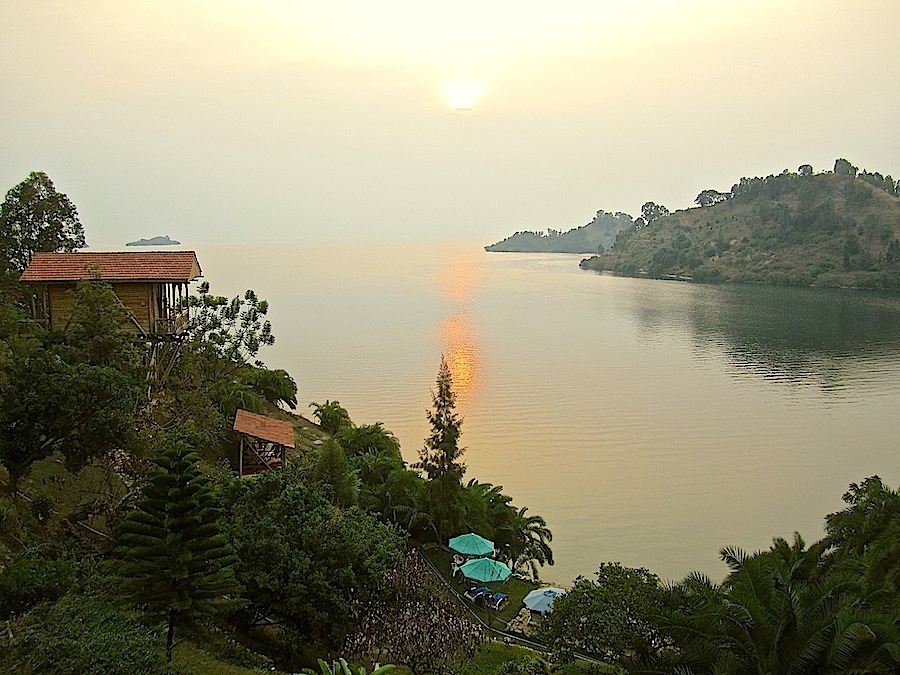
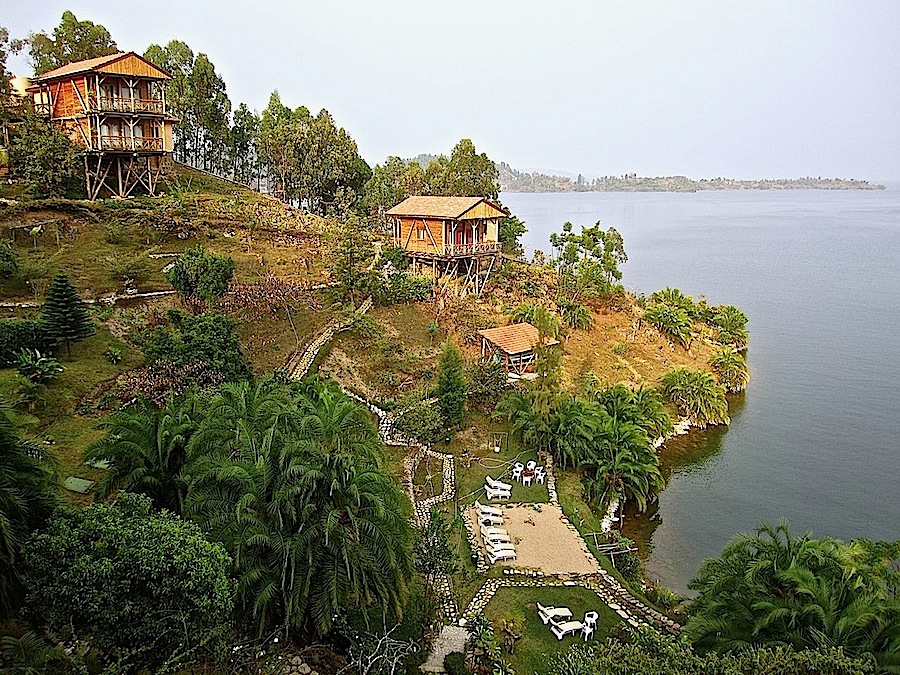
Cormoran Lodge on Lake Kivu, Kibuye, Rwanda/enclos*ureJuly 29, 2013, Cormoran Lodge on Lake Kivu, Kibuye, Rwanda.

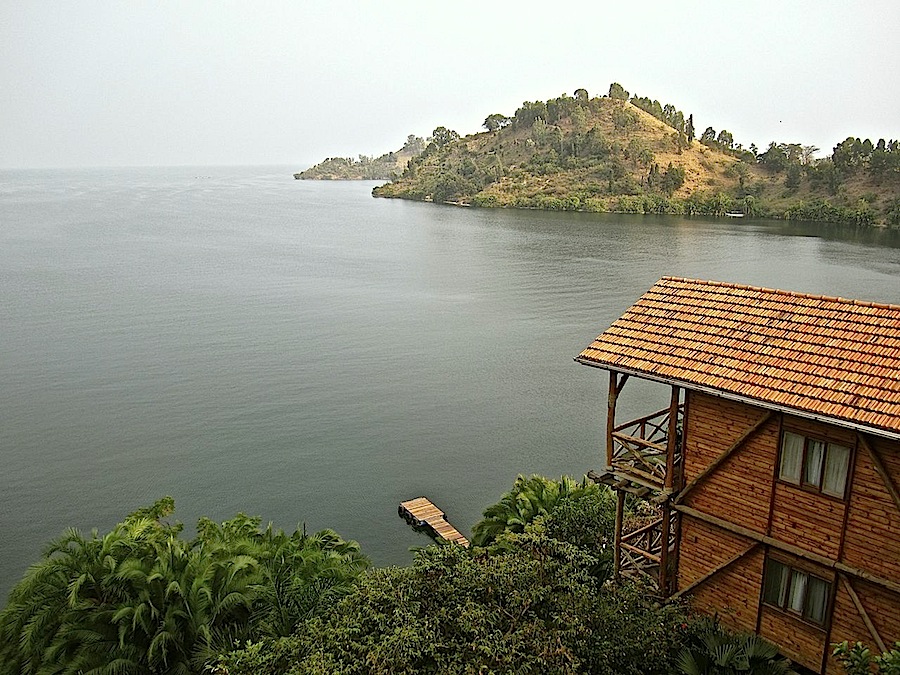
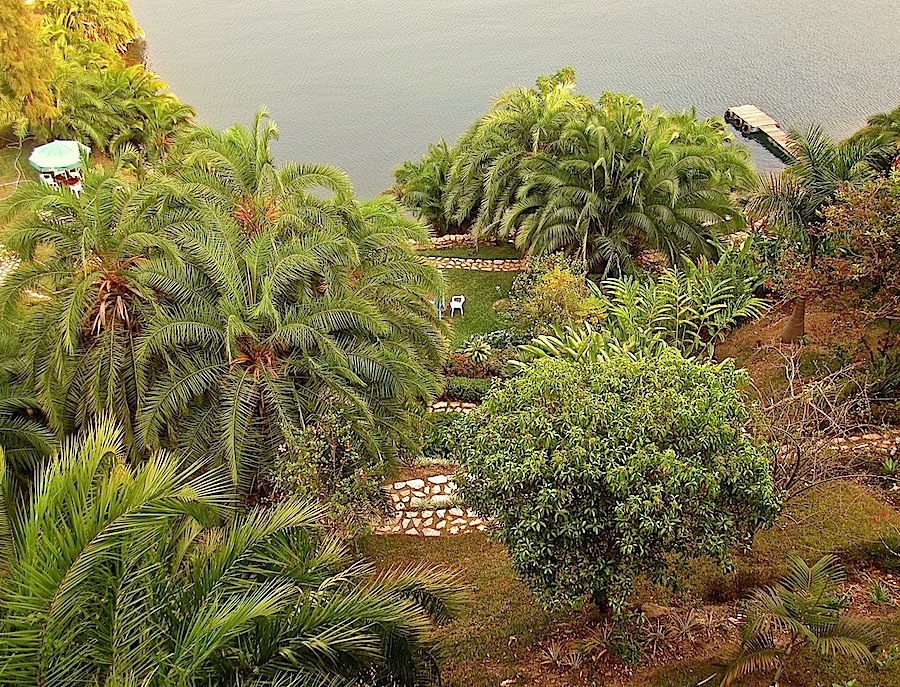
Cormoran Lodge on Lake Kivu, Kibuye, Rwanda/enclos*ureThe next morning.

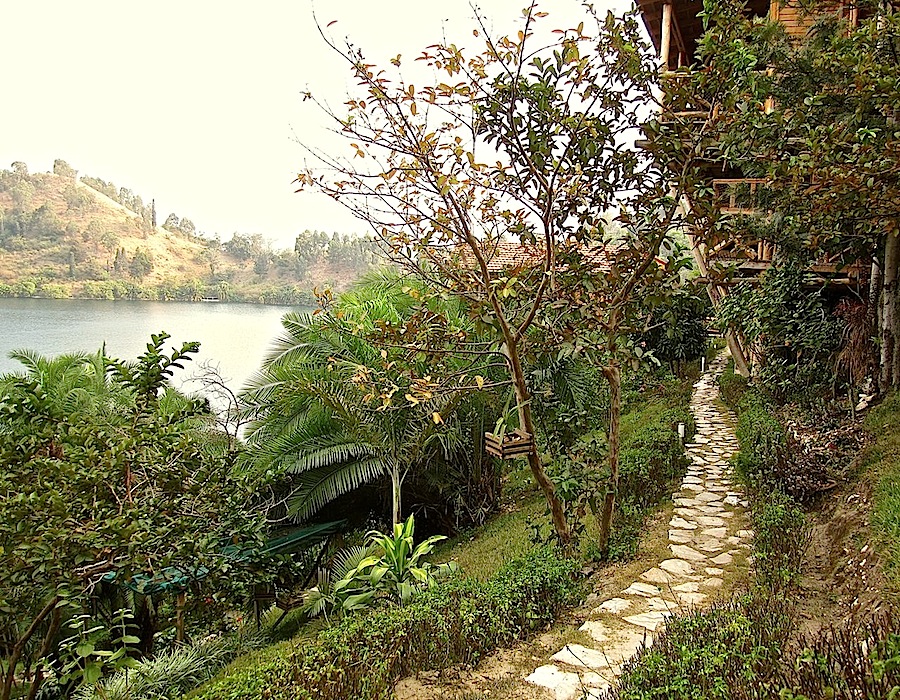
Cormoran Lodge on Lake Kivu, Kibuye, Rwanda/enclos*ureMore here.

Cormoran Lodge on Lake Kivu, Kibuye, Rwanda/enclos*ure

Cormoran Lodge on Lake Kivu, Kibuye, Rwanda/enclos*ure

Ruzizi Tented Lodge at Akagera National Park

After our recent drive to the southeast corner of Rwanda, we backtracked and then headed north to Akagera National Park to spend the night.
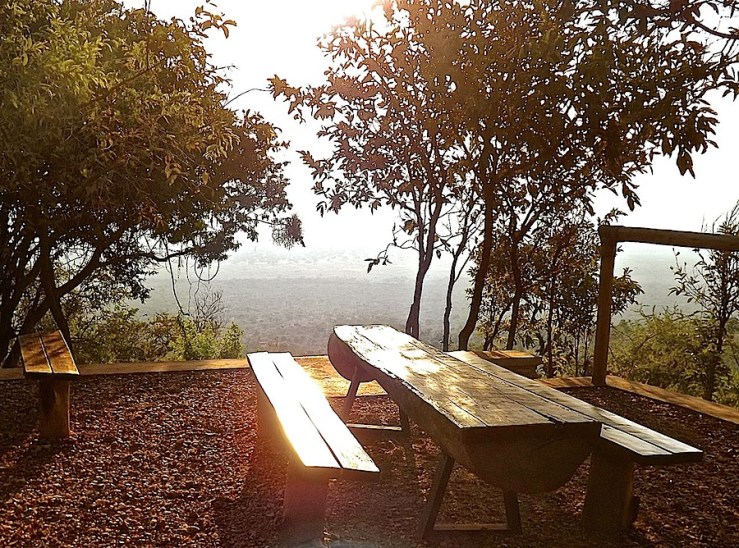
Picnic table, welcome center, Akagera Nat'l. Park in Rwanda:enclos*ure

It was about 4:30 p.m. when we arrived at the park’s welcome center, and I was anxious to get some photos before the light disappeared.  Here, near the equator, dark comes between 6:00 and 6:30 all year round.  No extra long summer days for us.
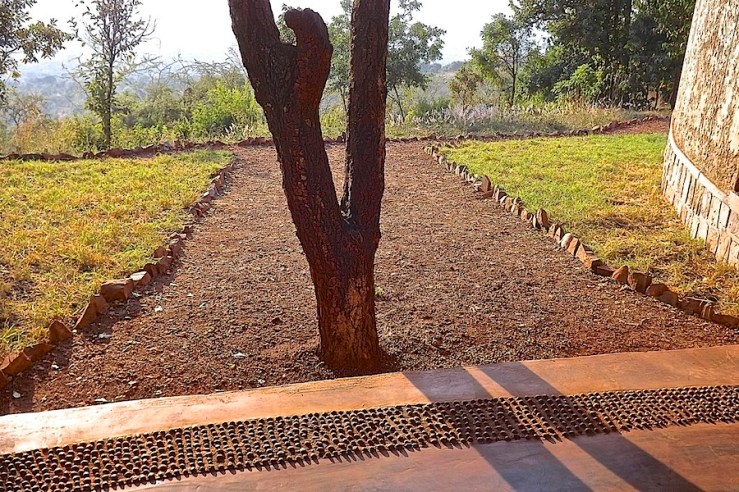
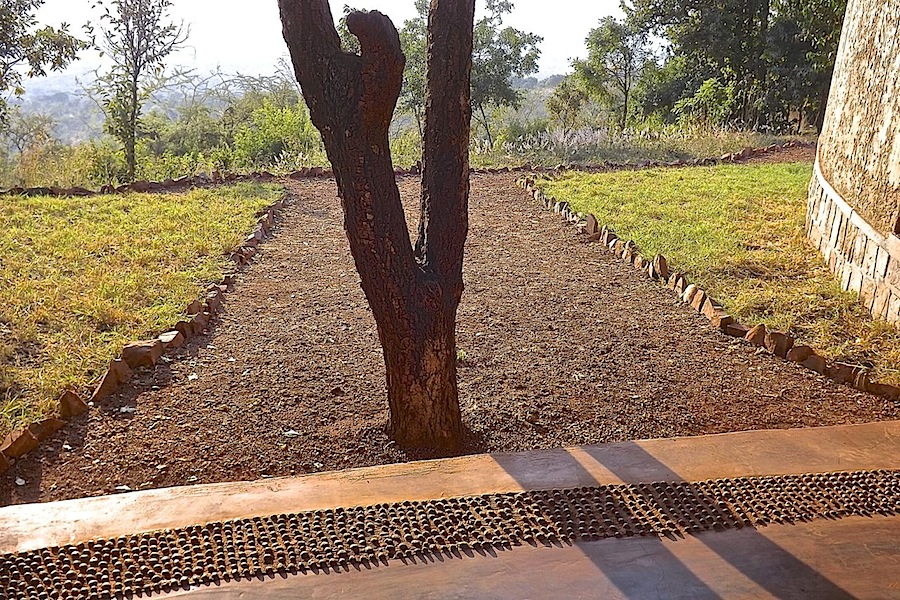
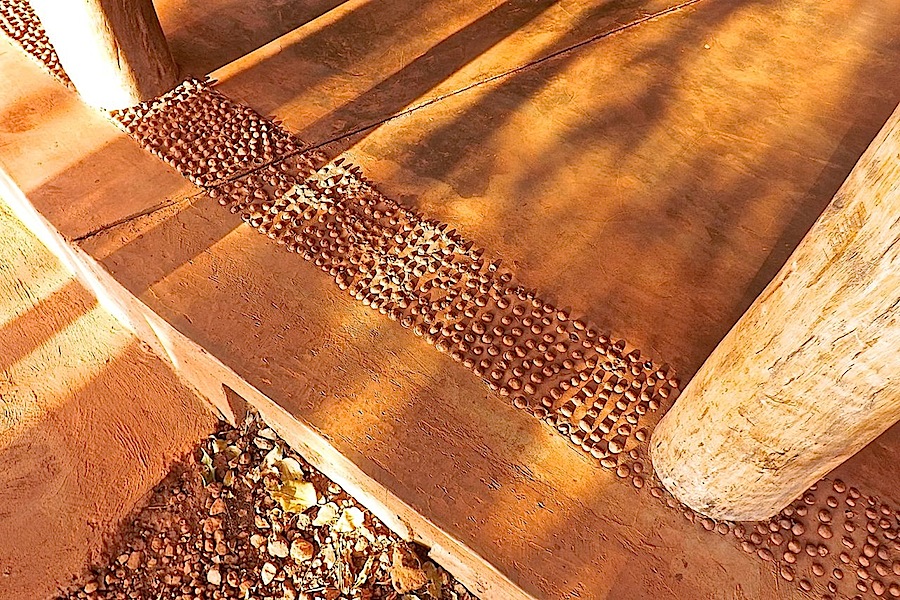
Pebble floor border, welcome center, Akagera Nat'l. Park in Rwanda:enclos*ure

I liked the pebble border to the welcome center’s concrete floor, which had been colored red, like the surrounding dirt.
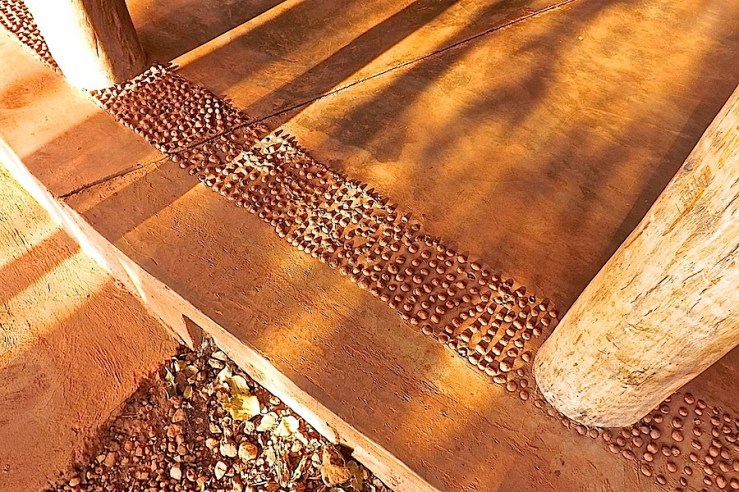
Pebble floor border, welcome center, Akagera National Park, Rwanda:enclos*ure

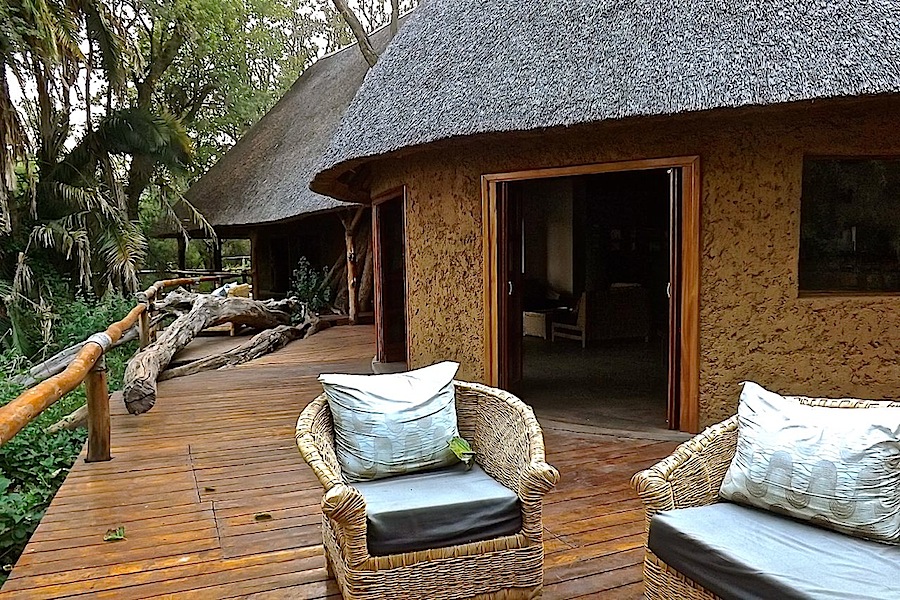
The attractive building, which for some reason I failed to photograph, was stone and stucco and had a thatched roof, like the lodge pictured below.
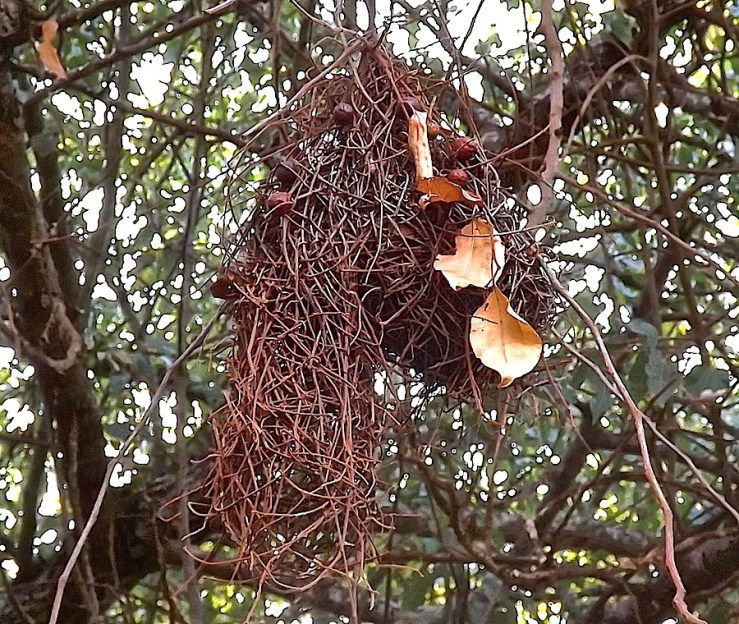
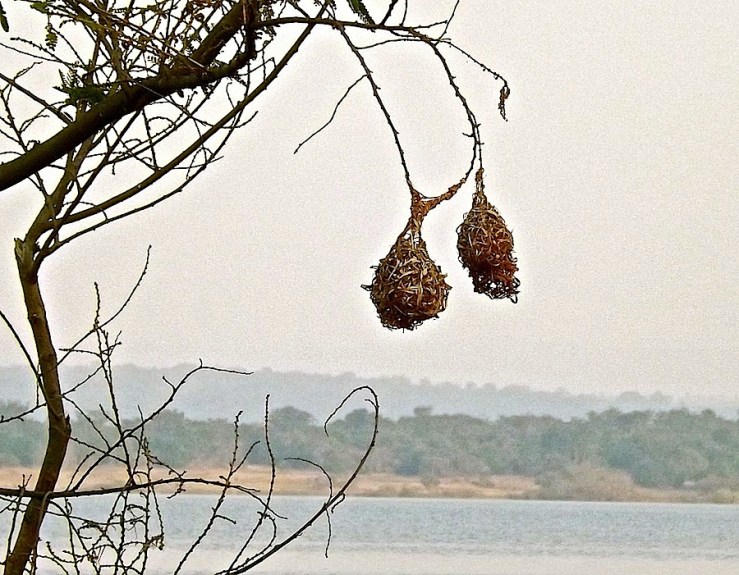
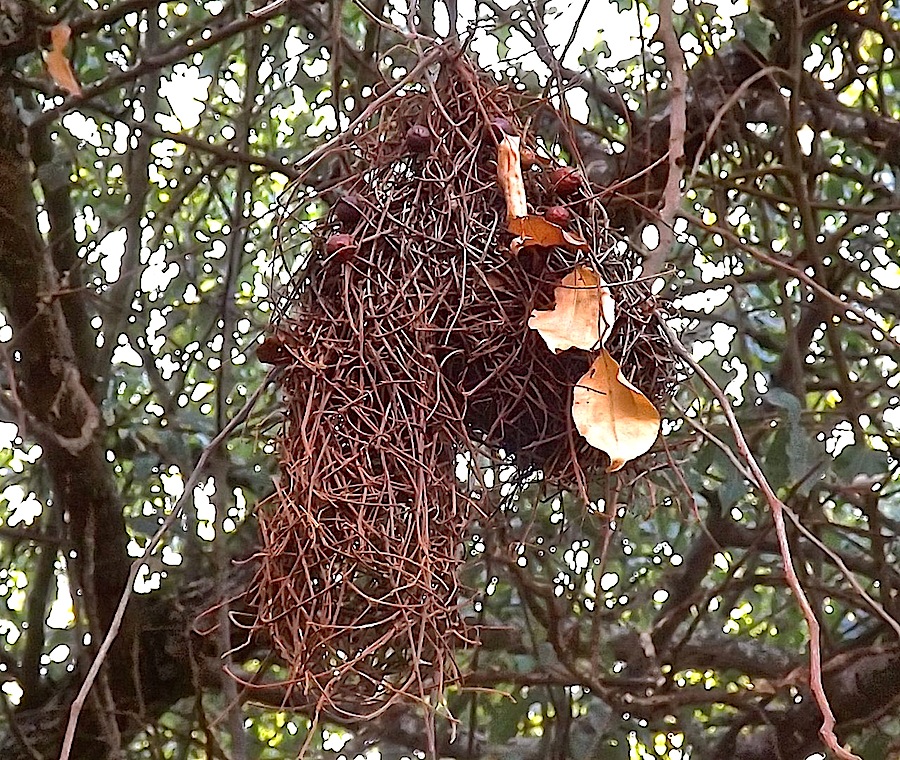
Long-neck weaver bird nest, Akagera Natl. Park, Rwanda:enclos*ure

In a tree just outside the welcome center, there was a weaver bird nest (above) — this one with a very long entrance tunnel, a protection against predators.
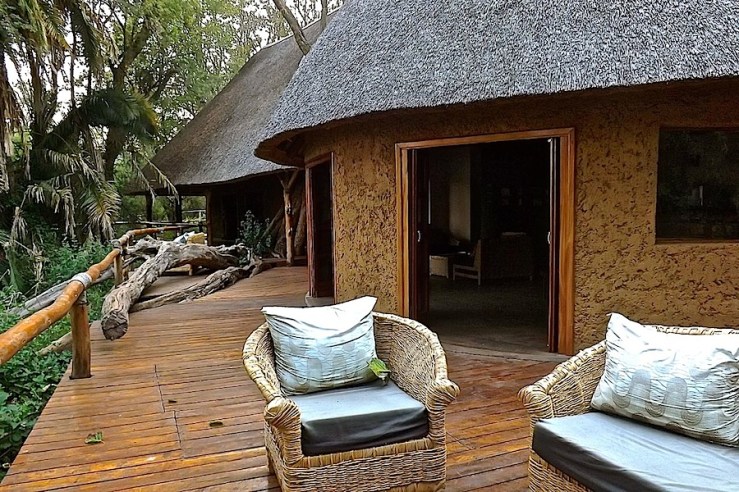
Main lodge, Ruzizi Tented Lodge, Akagera Nat'l. Park, Rwanda:enclos*ure

The Ruzizi Tented Lodge — which opened inside the park just this year — is on a small strip of largely undisturbed land along the edge of Lake Ihema.
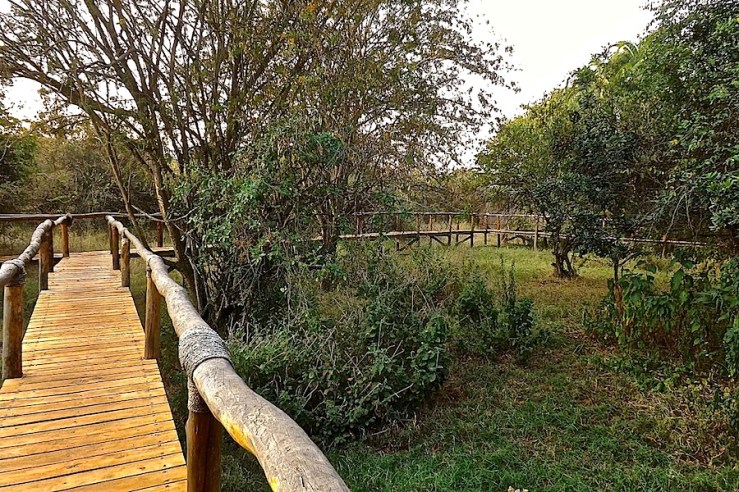
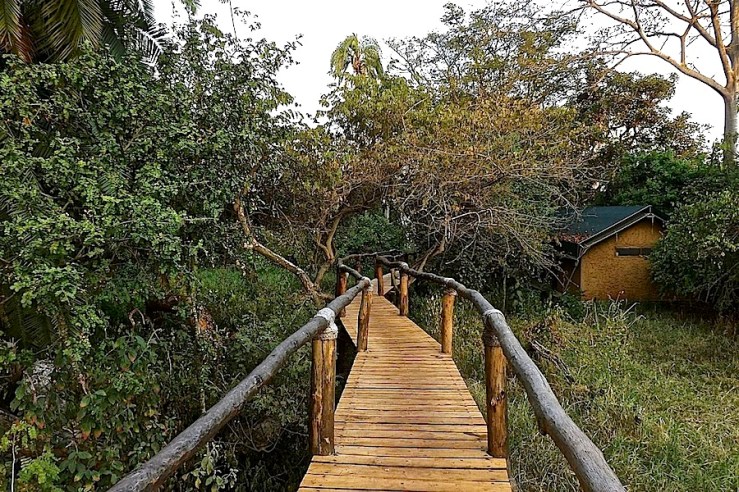
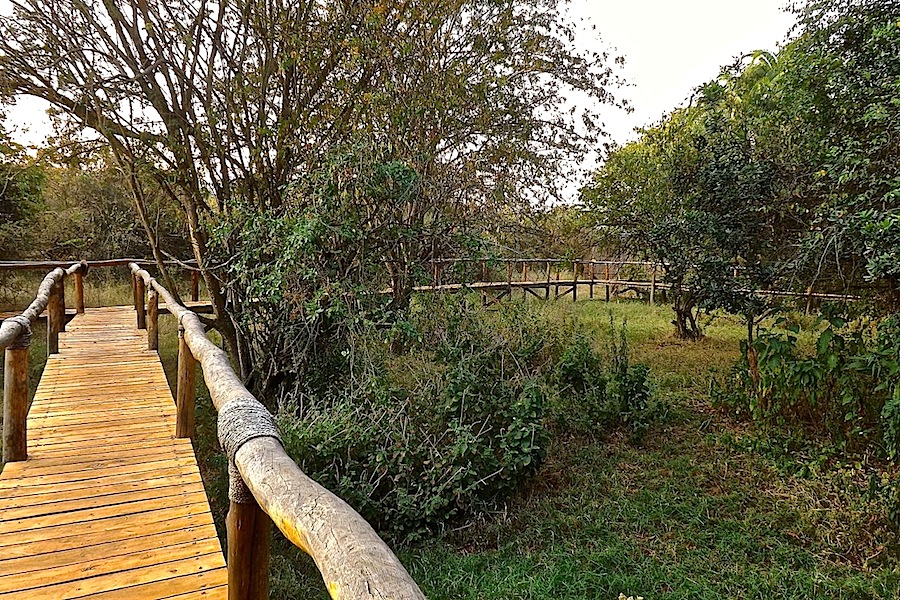
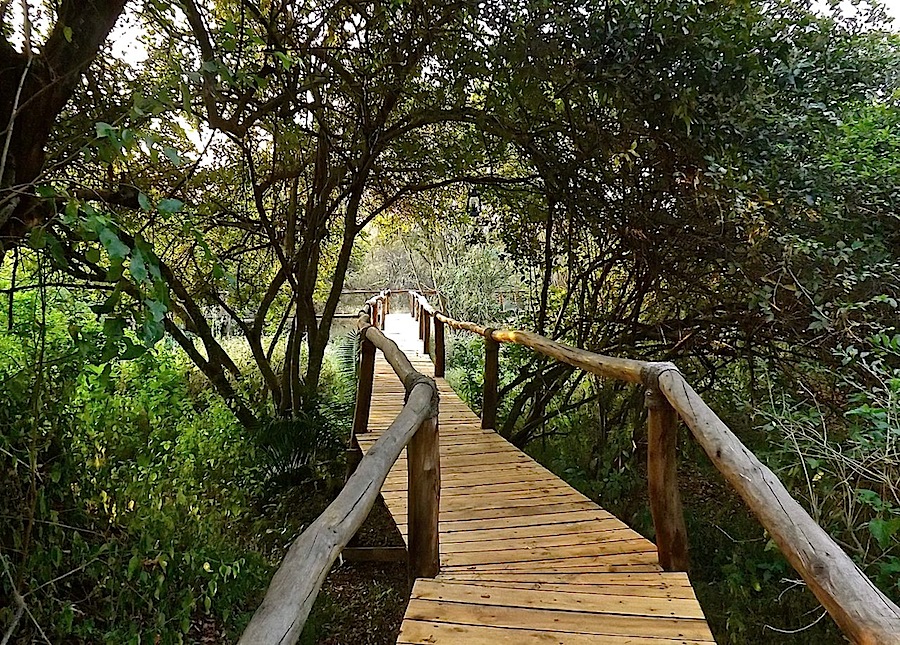
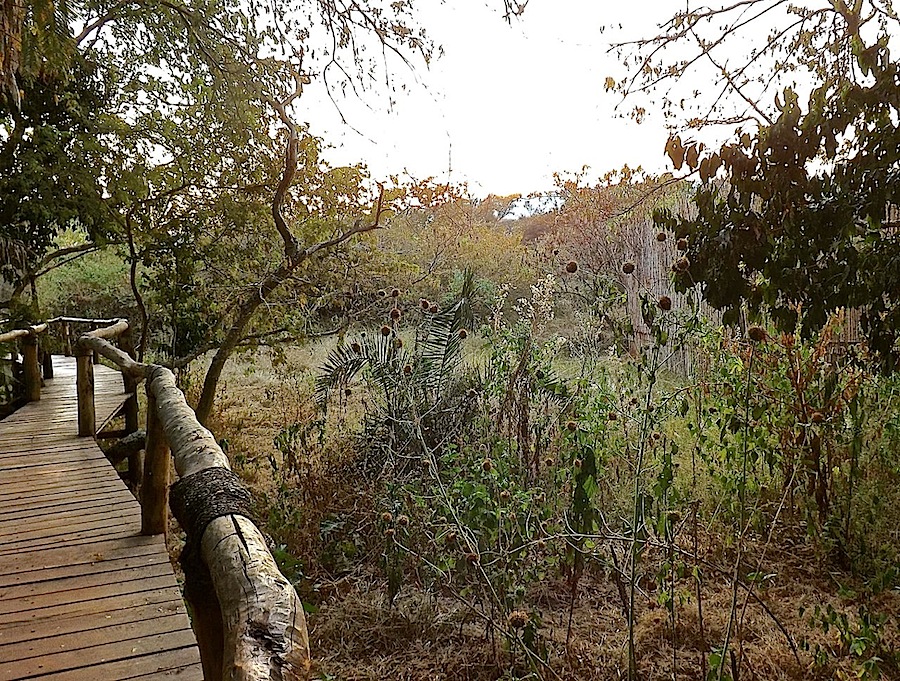
Boardwalk, Ruzizi Tented Lodge, Akagera Nat'l. Park in Rwanda:enclos*ure

Boardwalks keep visitors off the native plants, not to mention away from the equally native crocodiles and hippos.  (An electric fence keeps other large animals out on the inland side of the lodge.)
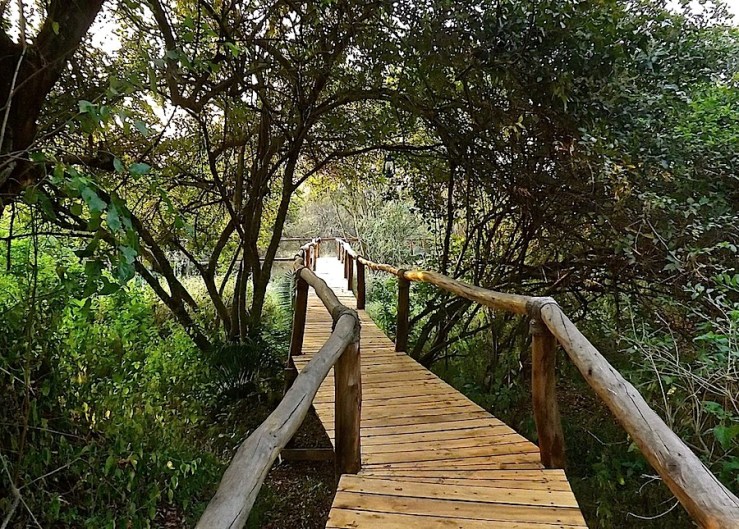
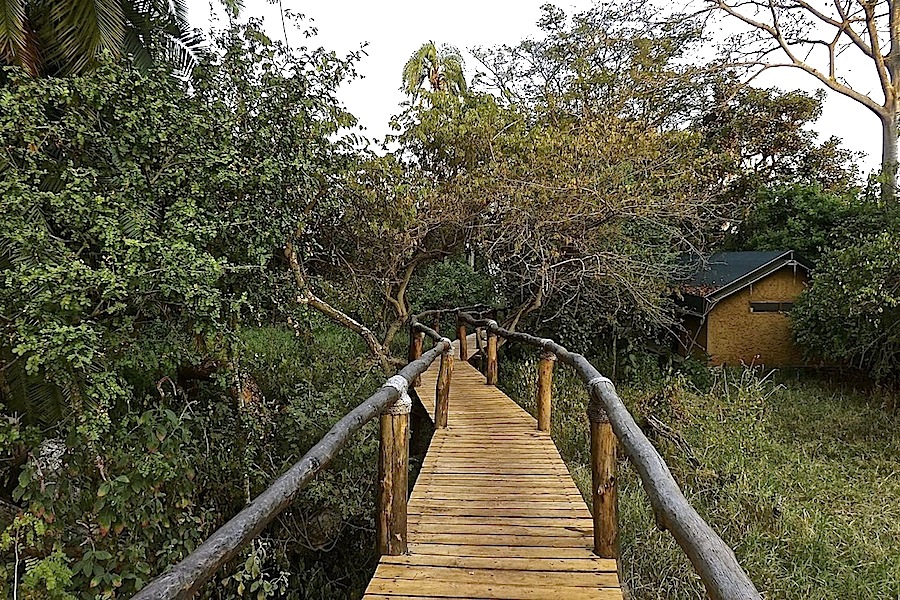
Boardwalk, Ruzizi Tented Lodge, Akagera National Park, Rwanda:enclos*ure

Boardwalk to tent, Ruzizi Tented Lodge, Akagera Natl. Park in Rwanda:enclos*ure

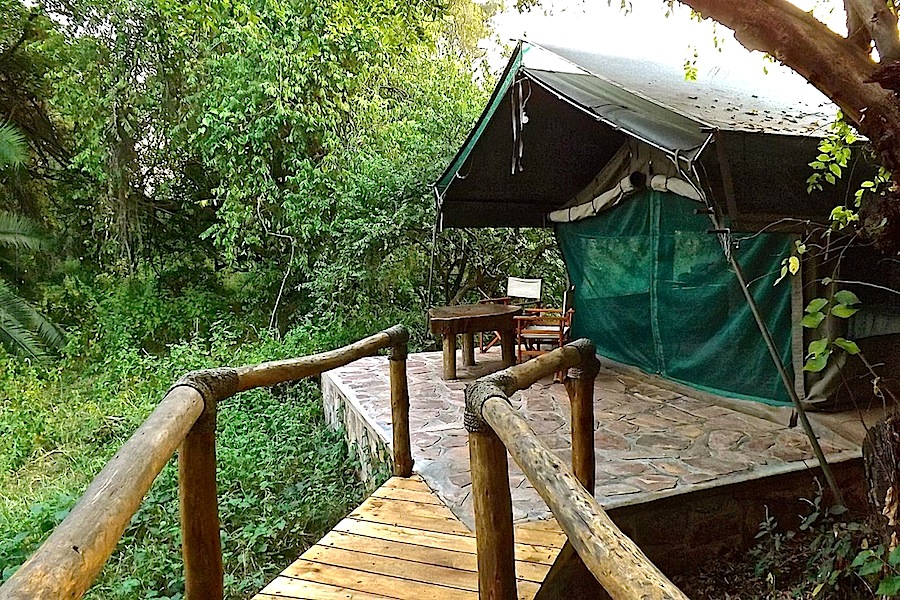
The camp has seven tented cabins, each with a full bath, one or two real beds (with reading lamps), and an outlet for recharging phones.
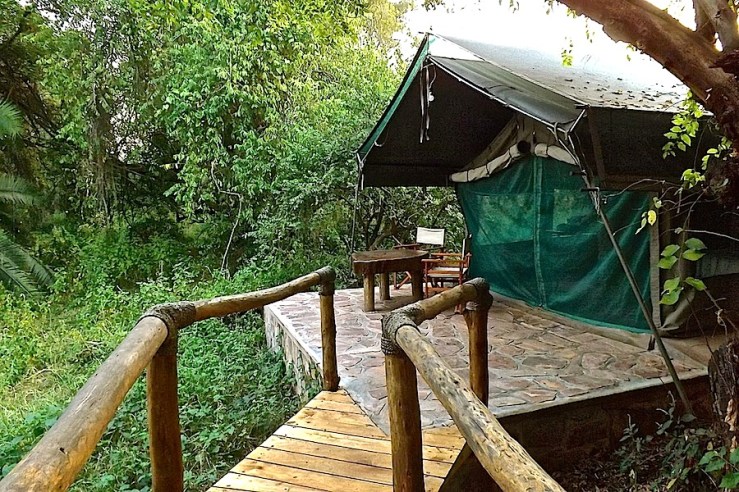
Tent cabin, Ruzizi Tented Lodge, Akagera Natl. Park, Rwanda:enclos*ure

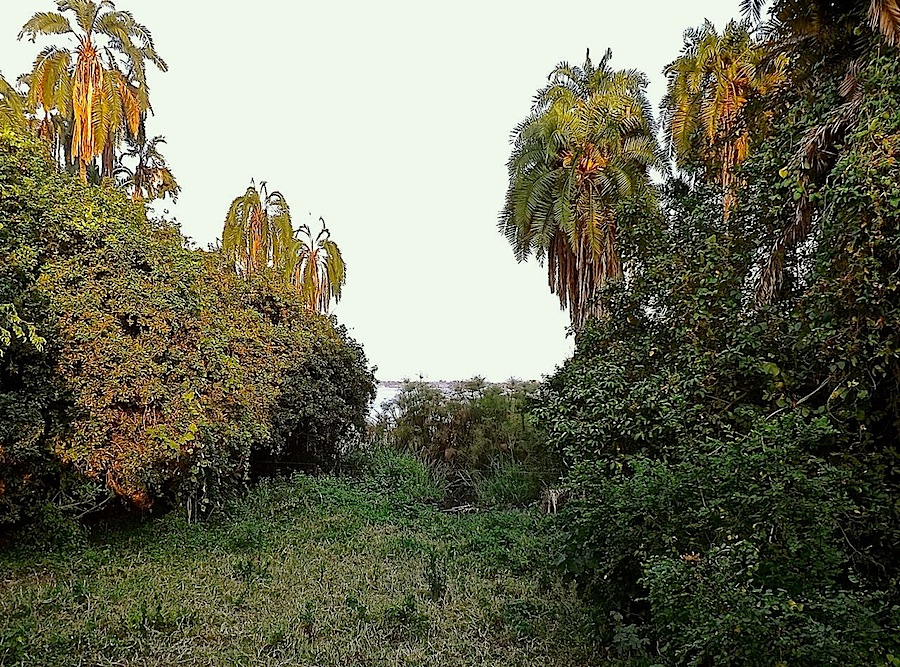
Below is our tent’s “front yard,” which was quite close to the water’s edge.  That night, we heard, but did not see, hippos near our tent.
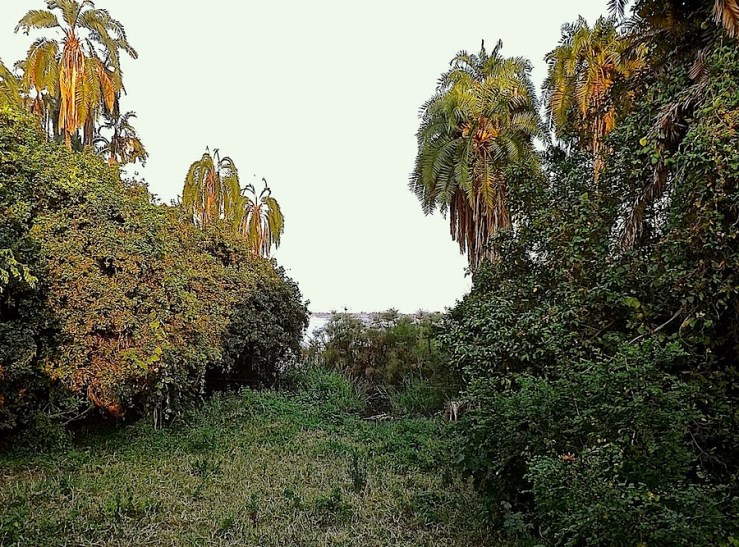
Marshy edge of Lake Ihema at Ruzizi Tented Lodge, Akagera National Park, Rwanda:enclos*ure

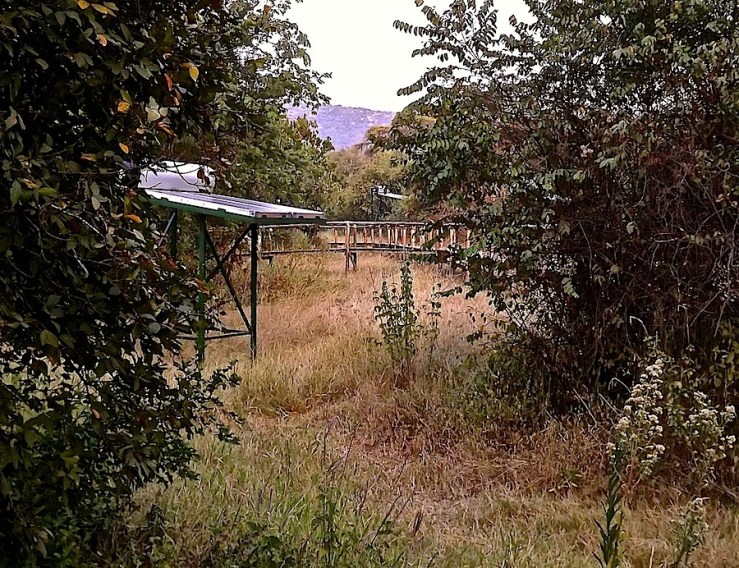
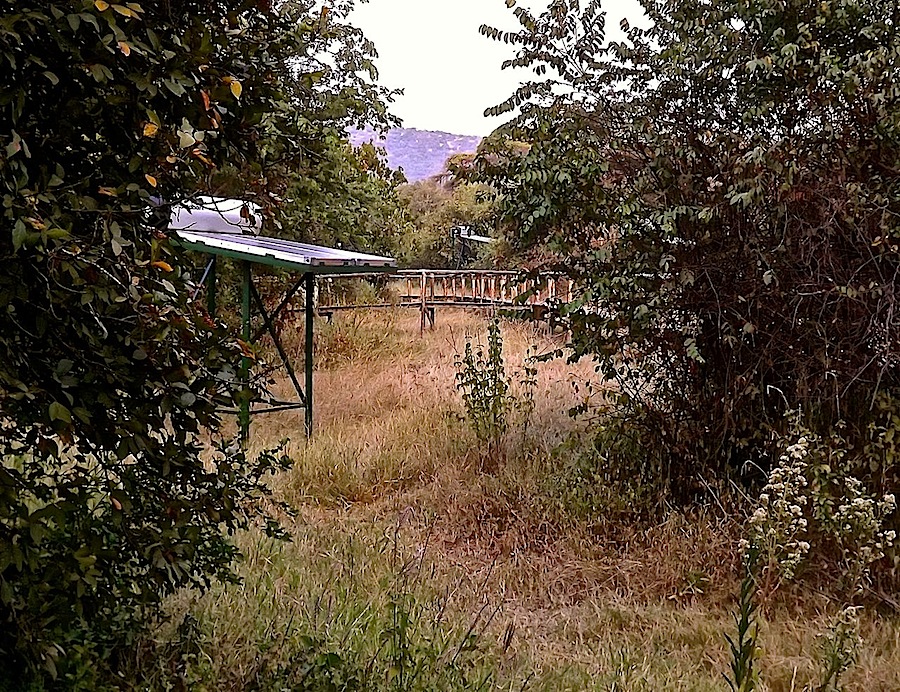
Solar panels for tents, Ruzizi Tented Lodge, Akagera National Park, Rwanda:enclos*ure

Each tent has a solar panel for lights and hot water — shown above.
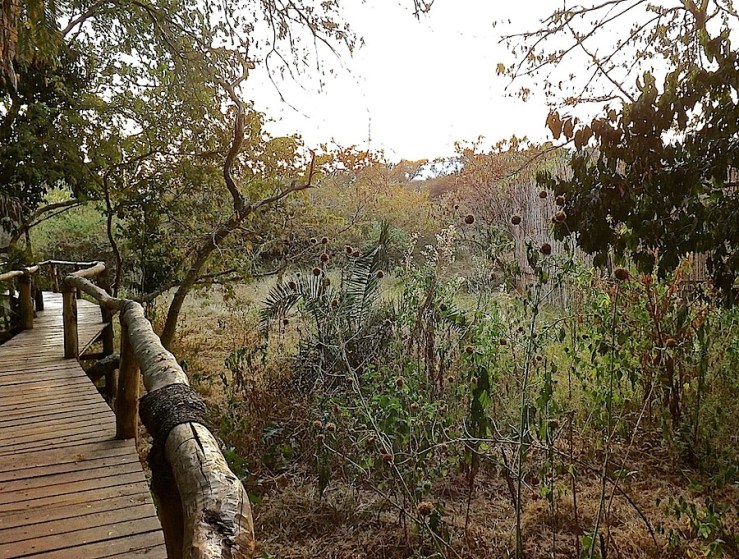
Wildflowers and boardwalk, Ruzizi Tented Lodge, Akagera National Park in Rwanda:enclos*ure

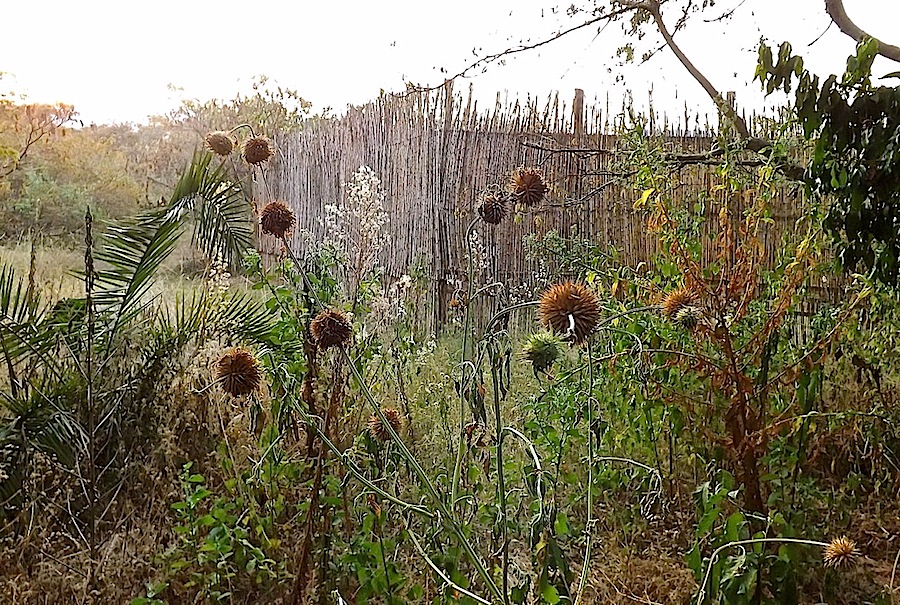
Even in the dry season, there were some wildflowers catching the last of the day’s light.
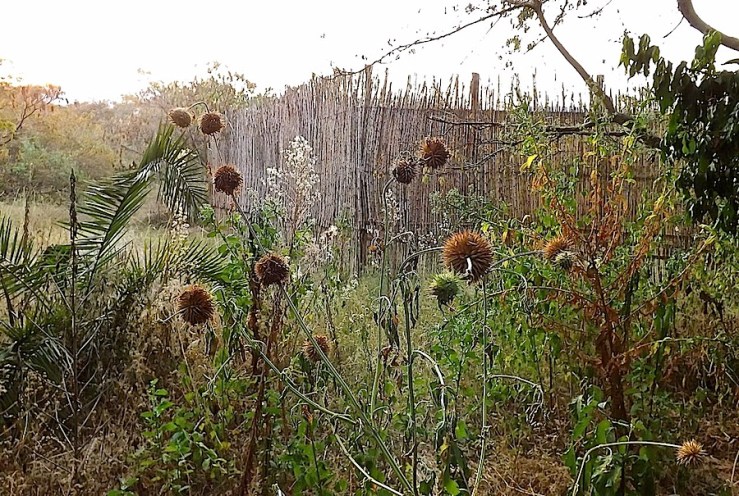
Wildflowers, Ruziz Tented Lodge, Akagera National Park, Rwanda:enclos*ure

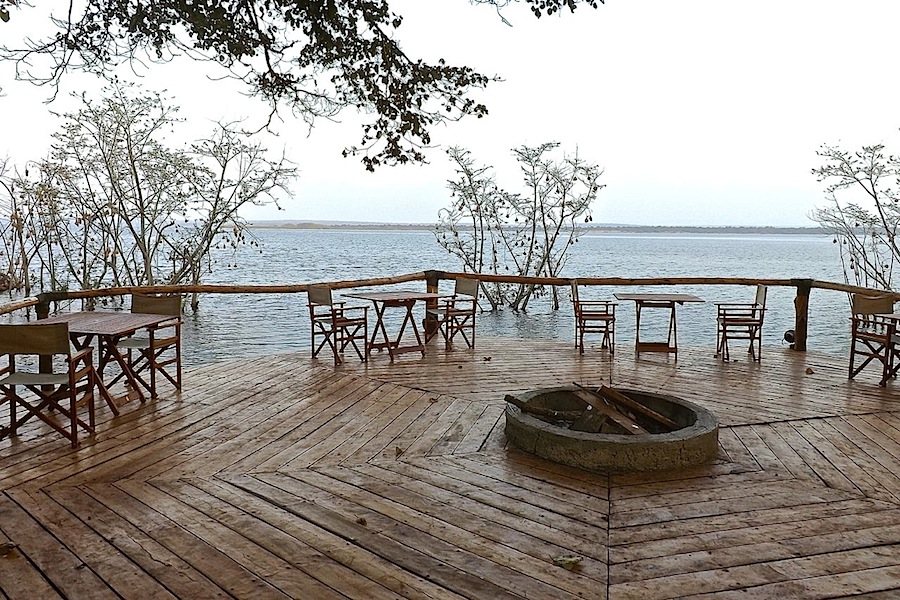
In the evening, we had cocktails around a fire on the riverside deck, below.
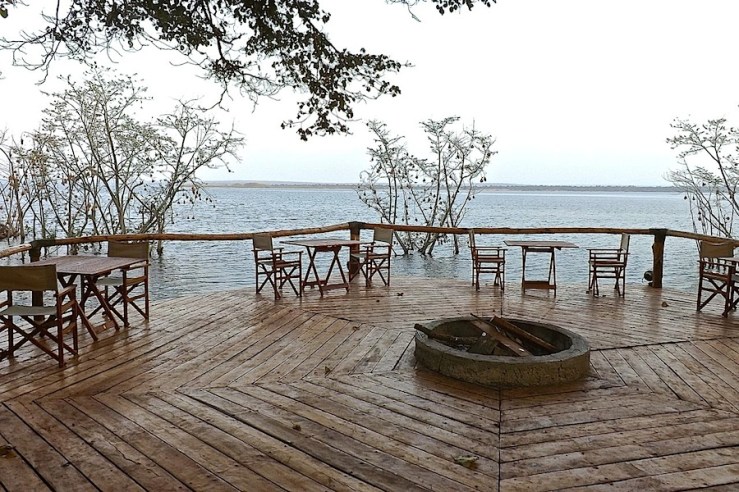
Lakeside eating area, Ruzizi Tented Lodge, Akagera National Park, Rwanda:enclos*ure

Breakfast was also served there — while monkeys ate fruit off a big tree above us.
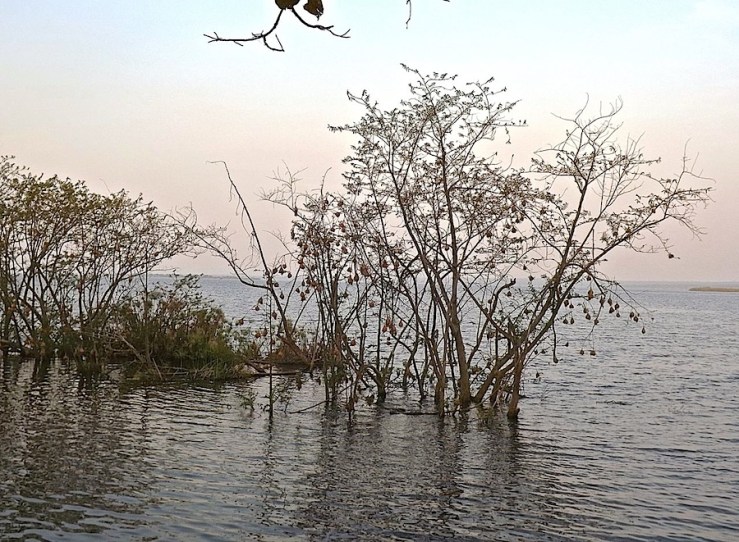
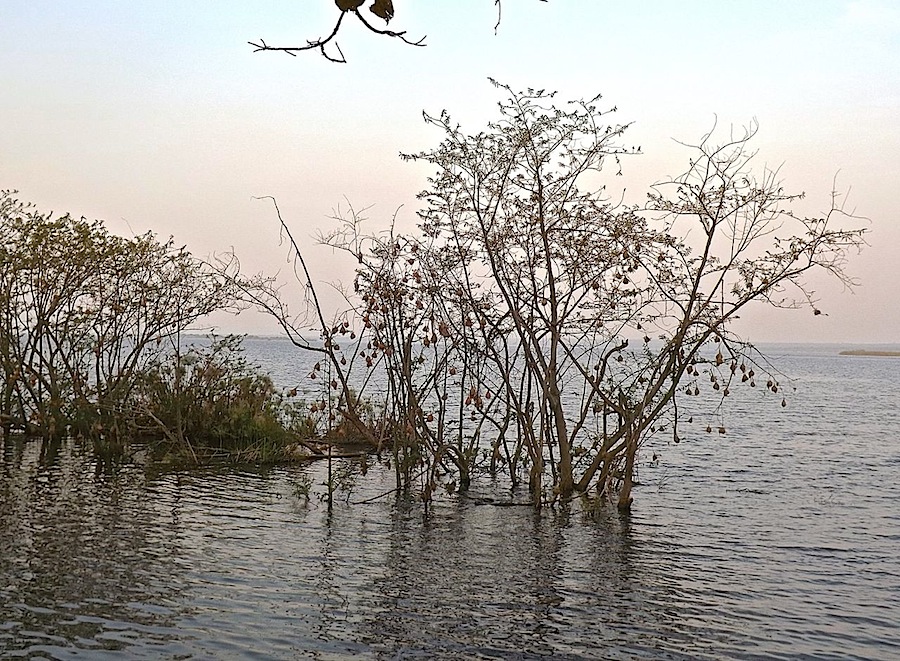
Weaver birds' nests at dusk, Ruzizi Tented Lodge, Akagera National Park, Rwanda:enclos*ure

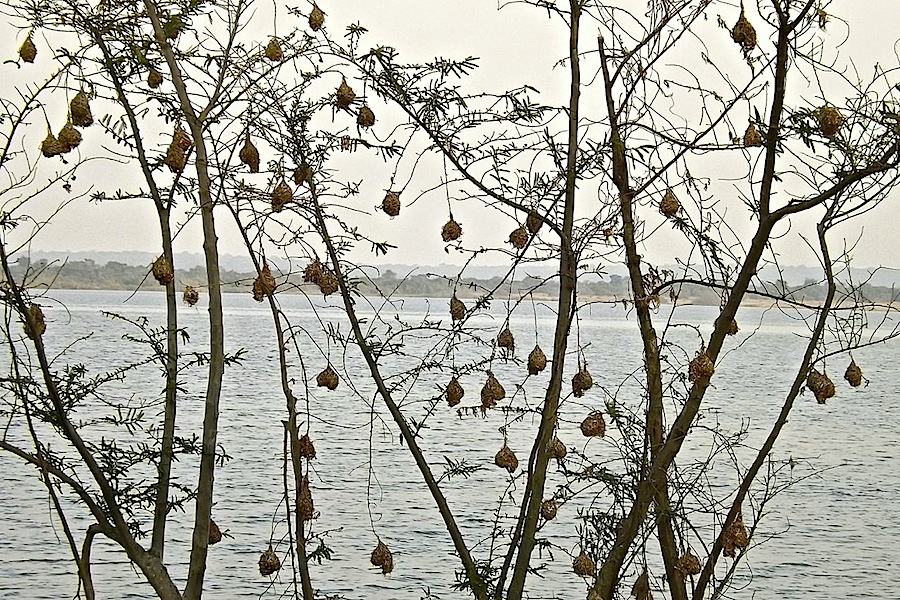
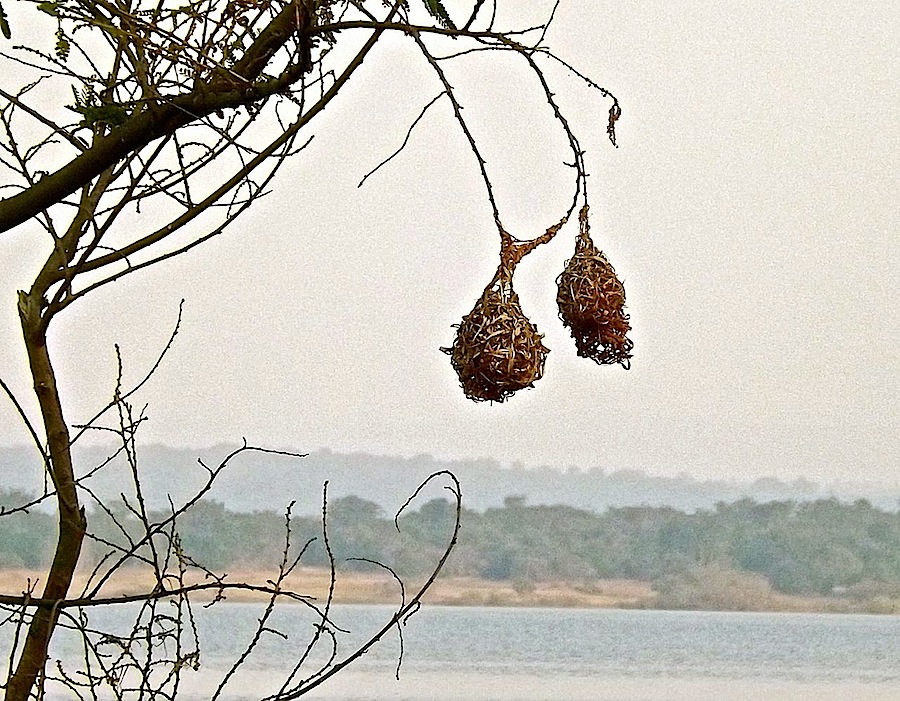
In the shrubby trees just beyond the deck, there were dozens of (empty) weaver birds’ nests.
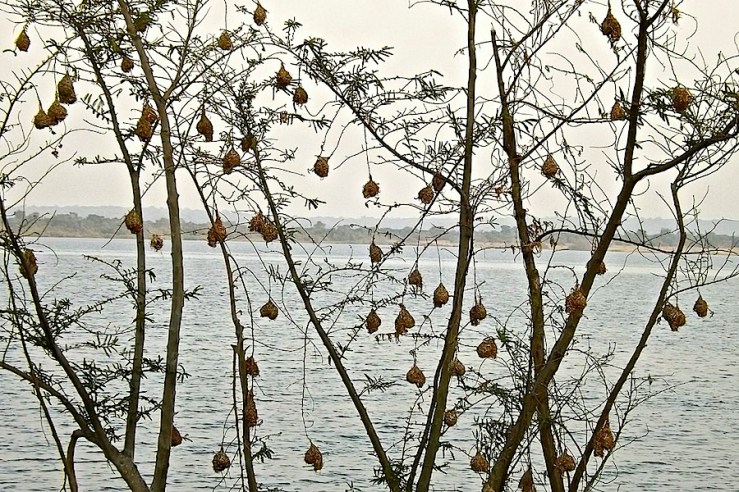
Weaver birds' nests, Akagera Nat'l Park, Rwanda:enclos*ure

Weaver birds' nests, Ruzizi Tented Lodge, Akagera Natl. Park in Rwanda:enclos*ure

Located along Rwanda’s eastern border with Tanzania, Akagera National Park presents quite a different landscape from the mountainous forests and farms of western and central Rwanda. (It is one of four large national parks in the country.)

“[I]ts undulating plains support a cover of dense, broad-leafed woodland interspersed with lighter acacia woodland and patches of rolling grassland studded evocatively with stands of the superficially cactus-like Euphorbia candelabra [aka E. ingens] shrub,” according to the Bradt guide to Rwanda.
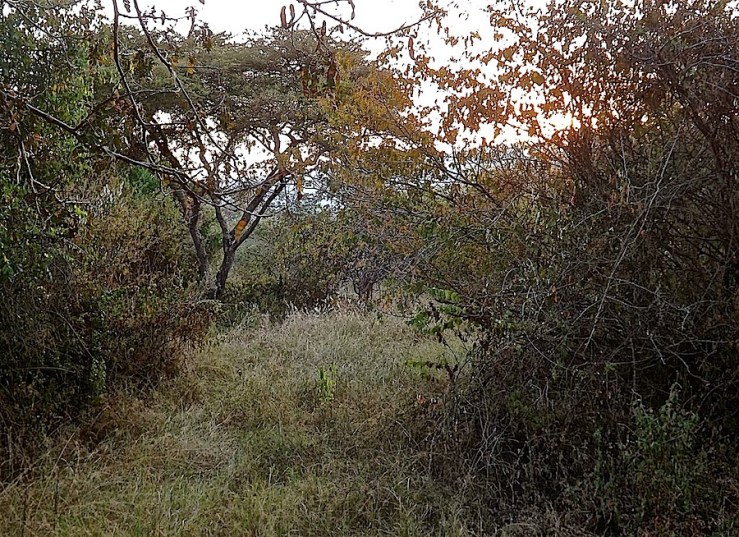
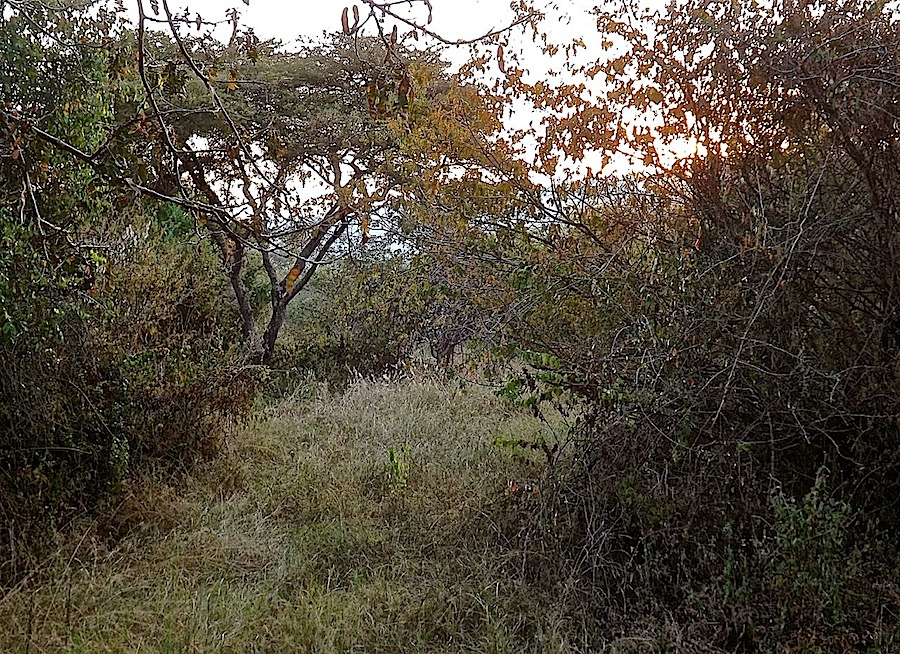
Grass and shrubs near Ruzizi Tented Lodge, Akagera Natl. Park, Rwanda:enclos*ure

There are also large wetlands surrounding several lakes and the channels of the Akagera River, which runs along the border between the two countries.

The game-viewing is not up the standards of the great savanna parks in neighboring countries, but every visitor I have talked to recently has seen elephants, hippos, zebra, and giraffes, as well as antelopes and impalas.  (Unfortunately, we did not have time to tour the park during our stay.)

Currently, there may or may not be lions and leopards in small numbers, but there are reportedly plans to restock them — and add black rhinos — eventually.

According to the Bradt guide, the birdlife is “phenomenal.”  The landscape is particularly scenic, with forests, lakes, swamps, and low mountains.  Perhaps best of all, the park is fairly empty of other tourists.

Camping (in real tents) is allowed in various locations.  It is also possible to take boat safaris on Lake Ihema.