Garden Bloggers’ Foliage Follow Up: Whittemore House

It’s wet and gloomy again this morning (the rainy season) and nothing in the garden really inspires me at the moment. So I went back to the Frances Benjamin Johnston Collection at the Library of Congress website and searched ‘foliage.’

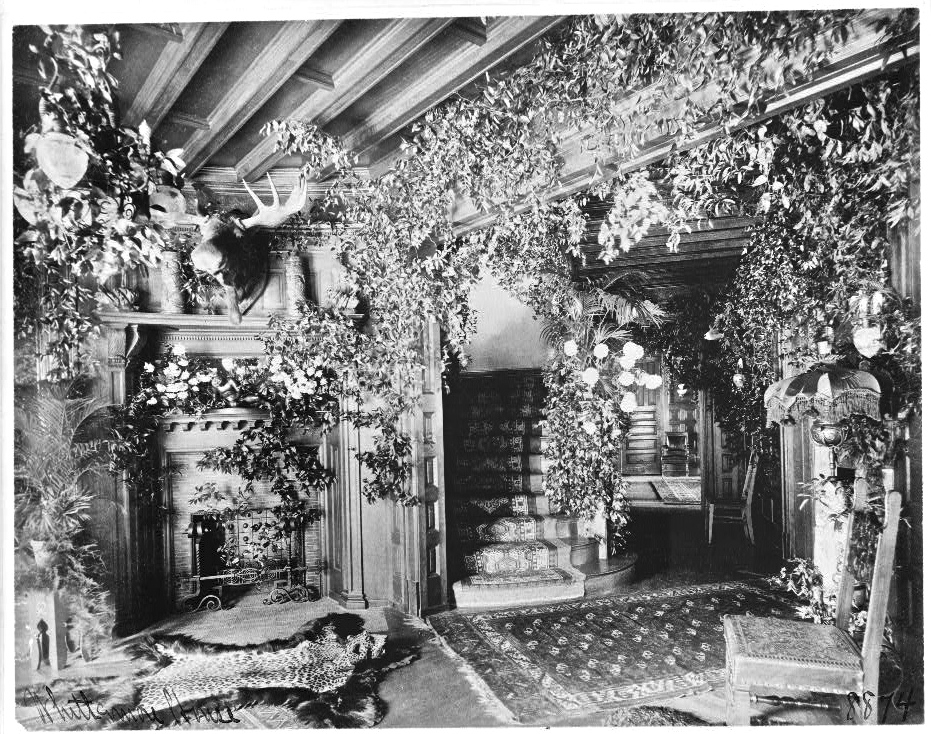
This was what came up, and it’s quite something.

It was the interior of Whittemore House, at Dupont Circle* in Washington, D.C.  Johnston took the photo sometime between 1890 and 1920.  In addition to the copious foliage, it features a leopard rug and a moose head.

The house has been the home of The Women’s National Democratic Club since 1927 and is listed on the National Register of Historic Places. Unfortunately, judging from the club’s website, the current decoration, while pretty, is more conventional. (Rooms are available for private parties, weddings, and special events.)

Whittemore House was built from 1892 to 1894 for opera singer Sarah Adams Whittemore, a descendant of President John Adams. She lived there until her death in 1907. The interior in the photo may be hers, as Johnston took her portrait in 1900.

Thanks to Pam at Digging for hosting Garden Bloggers’ Foliage Follow Up the 16th of every month.


*1526 New Hampshire Avenue, N.W.

Vintage landscape: wildflowers

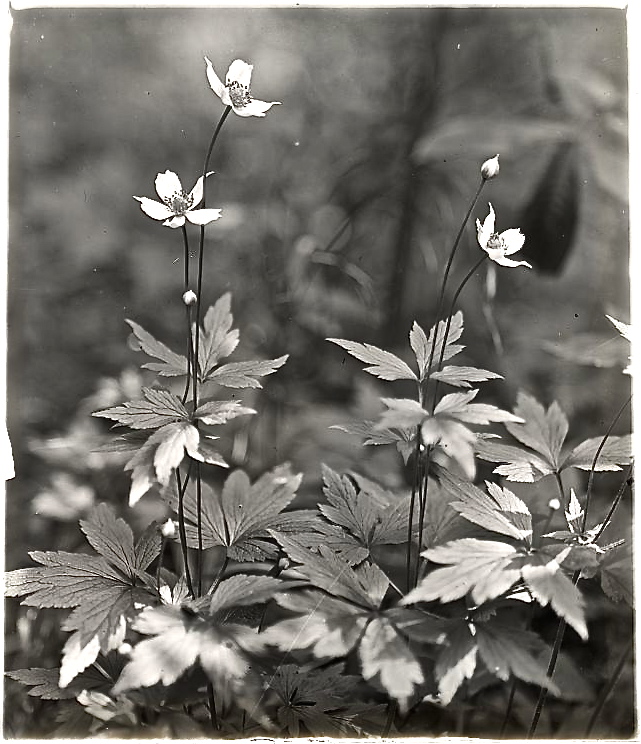
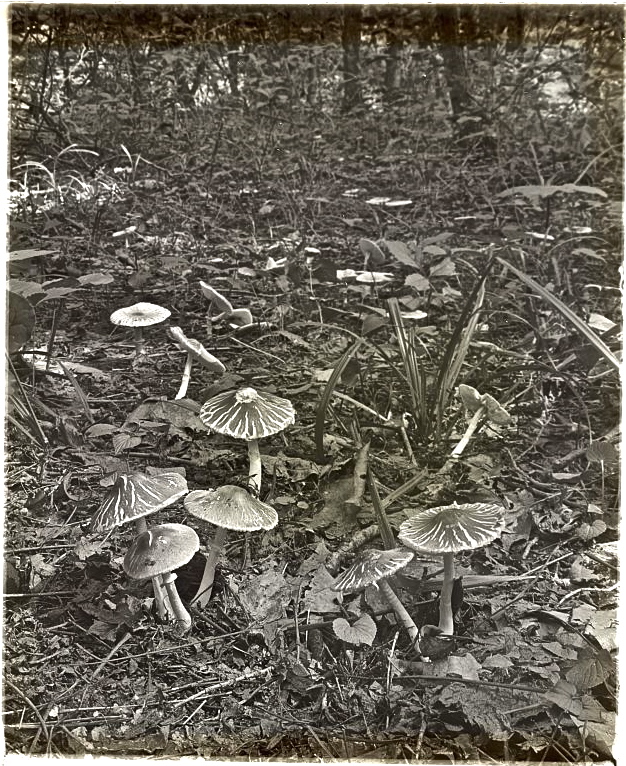
While the hand-colored images are the stars of the recently released collection of lantern slides taken by Frances Benjamin Johnston, among the new material are these lovely black and white photographs of wildflowers. Johnston used these pictures to illustrate her popular lecture, “Wild Flower Gardening.”

The slide at the top is “Unidentified house, woodland pathway, 1920.” All the portraits of flowers below were taken between 1915 and 1927.

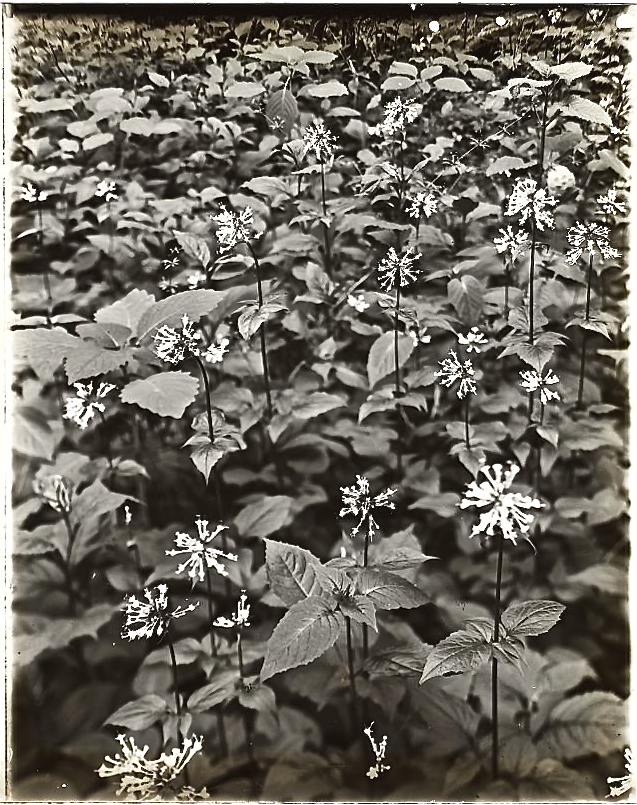
Wood anemone. (All labels by the Library of Congress; click any photo to enlarge it.)

Wildflowers.

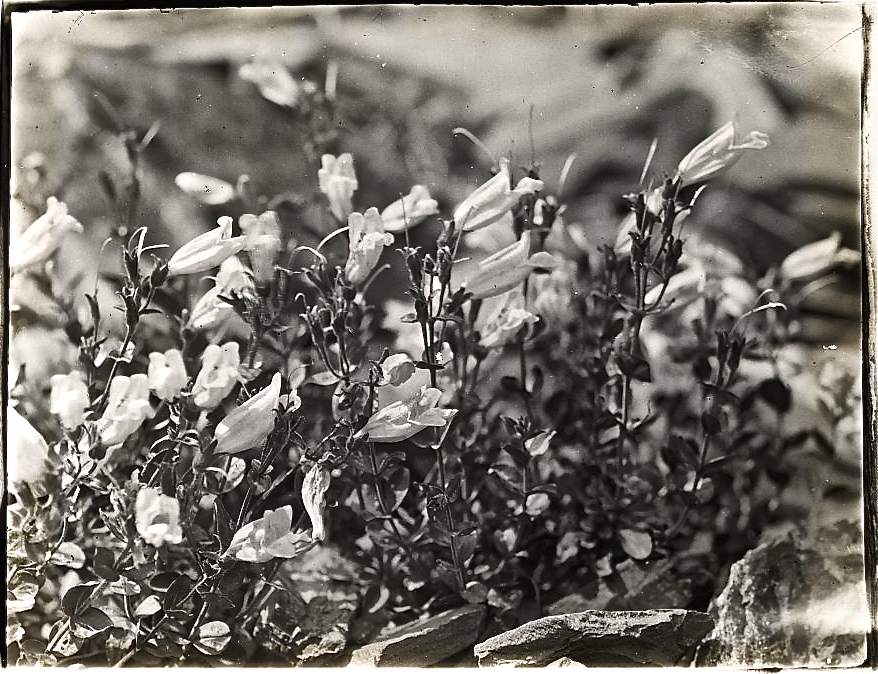
Bell flower (campanula).

Woodland mushrooms.

Wildflowers in bloom.

Bell flower (campanula).

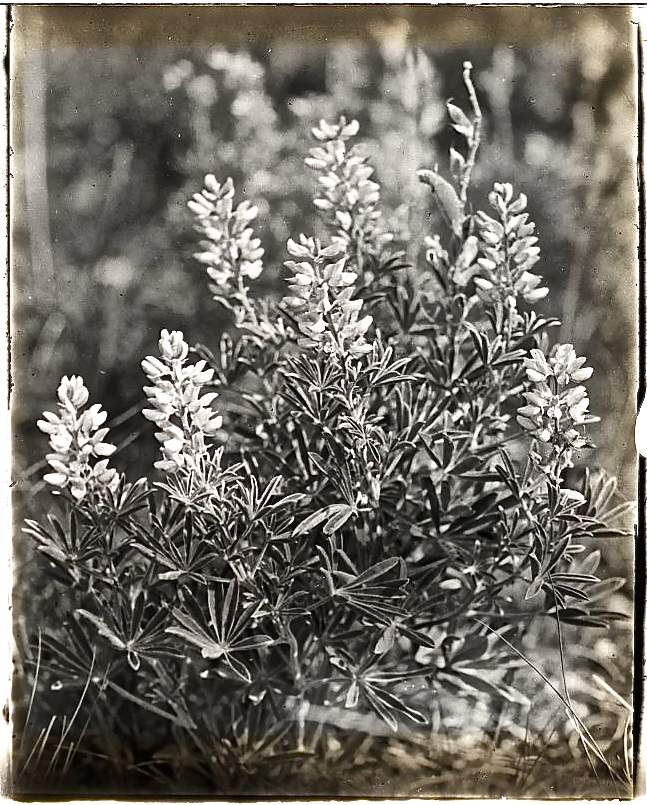
Lupin (lupinus).

Unidentified garden or park, woodland daffodils, 1920 (also the photo below).

All photos are from the Frances Benjamin Johnston Collection, Library of Congress Prints and Photographs Division.

Garden Bloggers’ Bloom Day in April

I’m afraid this will have to count for my Bloom Day post this month — it’s pouring outside.  To see what’s blooming in other garden bloggers’ gardens, go to May Dreams Gardens, here.

Cherry tree clouds

This slideshow requires JavaScript.

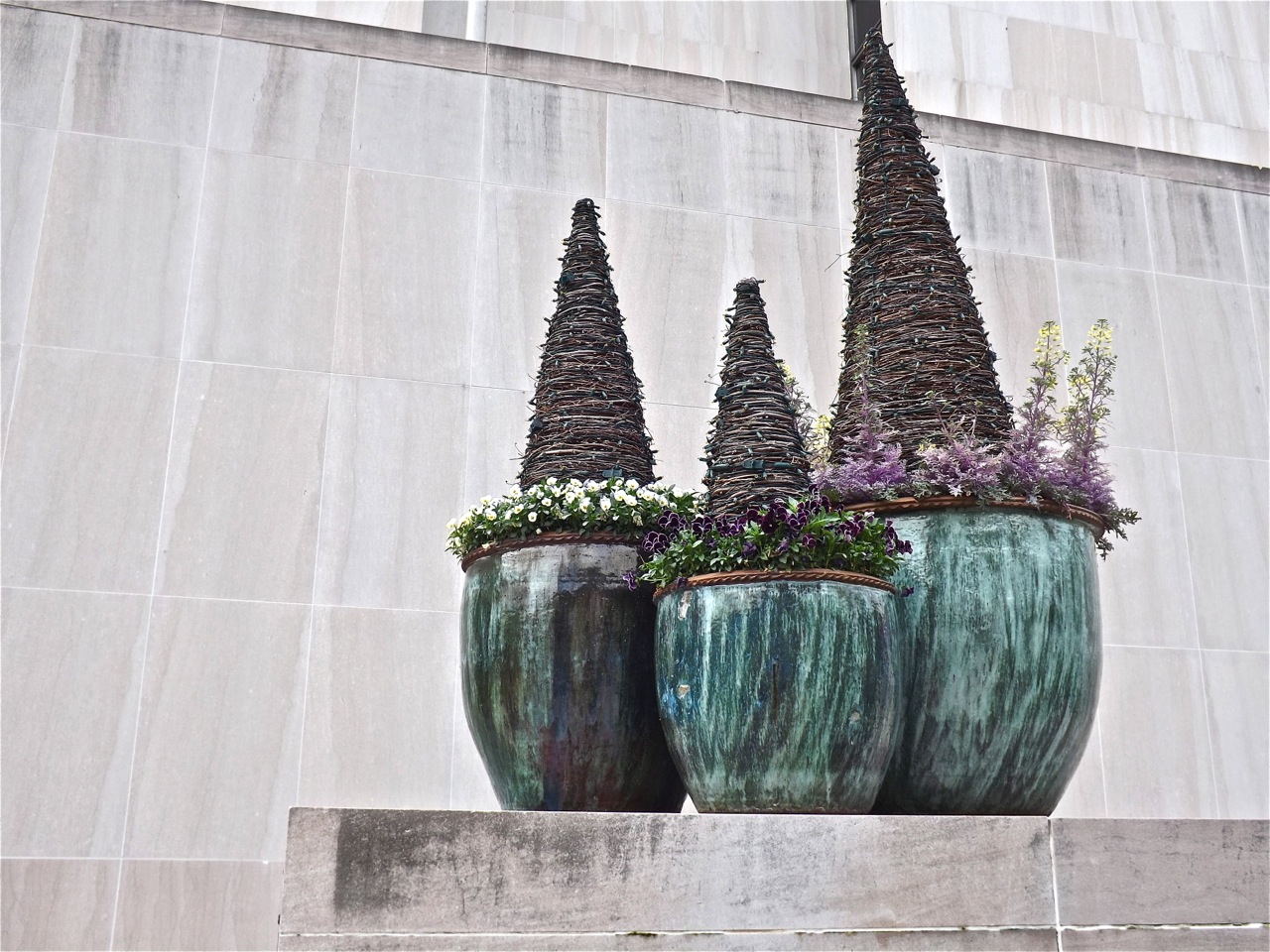
I spotted these clipped cherry trees in mid March, in front of a George Washington University administration building, and they made me smile.

The Washington, D.C., area has a lot of Prunus avium, so I liked it that someone took a few liberties with three of them.

the clouds of

a thousand skies from

cherry buds

Saigyo Hoshi, Japanese poet, 1118-1190

A Brassica moment

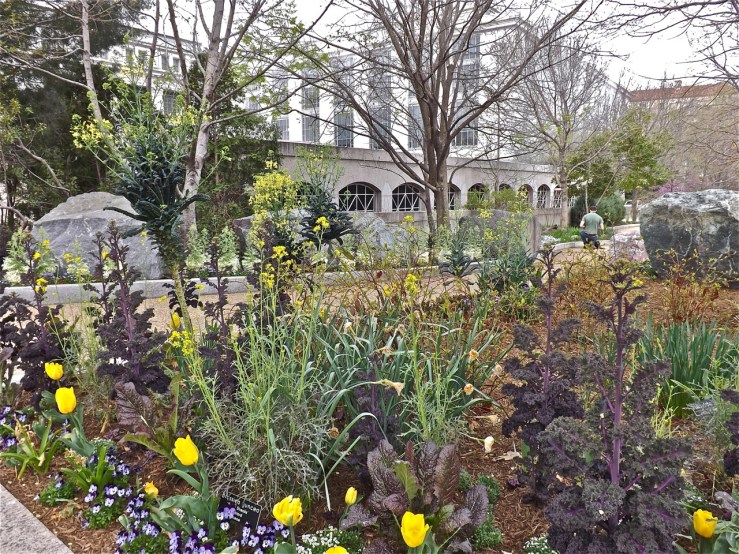
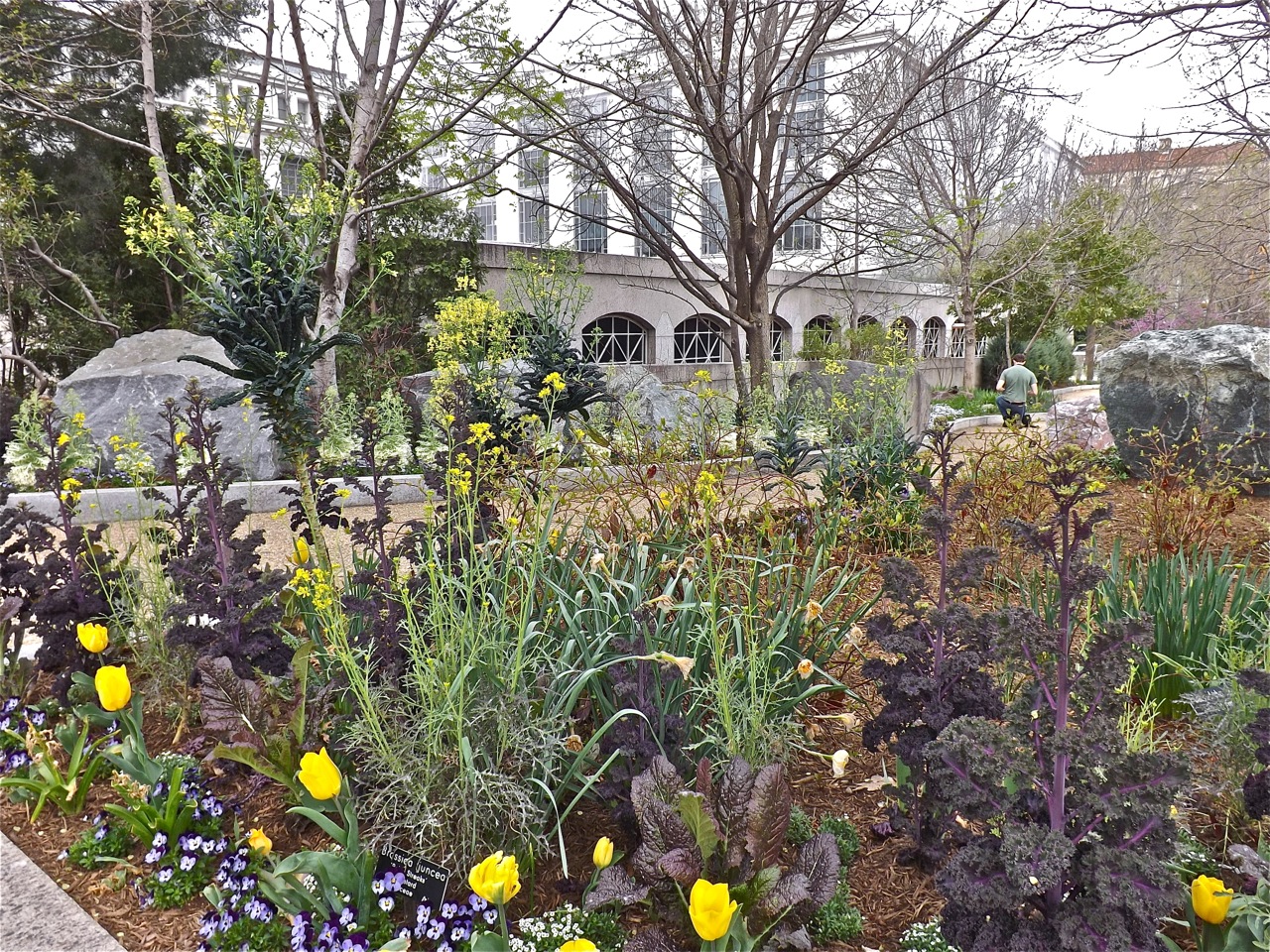
On the same day that I walked by the White House, I visited the Smithsonian Institution’s Heirloom Garden at the American History Museum and its Butterfly Garden beside the Natural History Museum to see how they look in early spring.

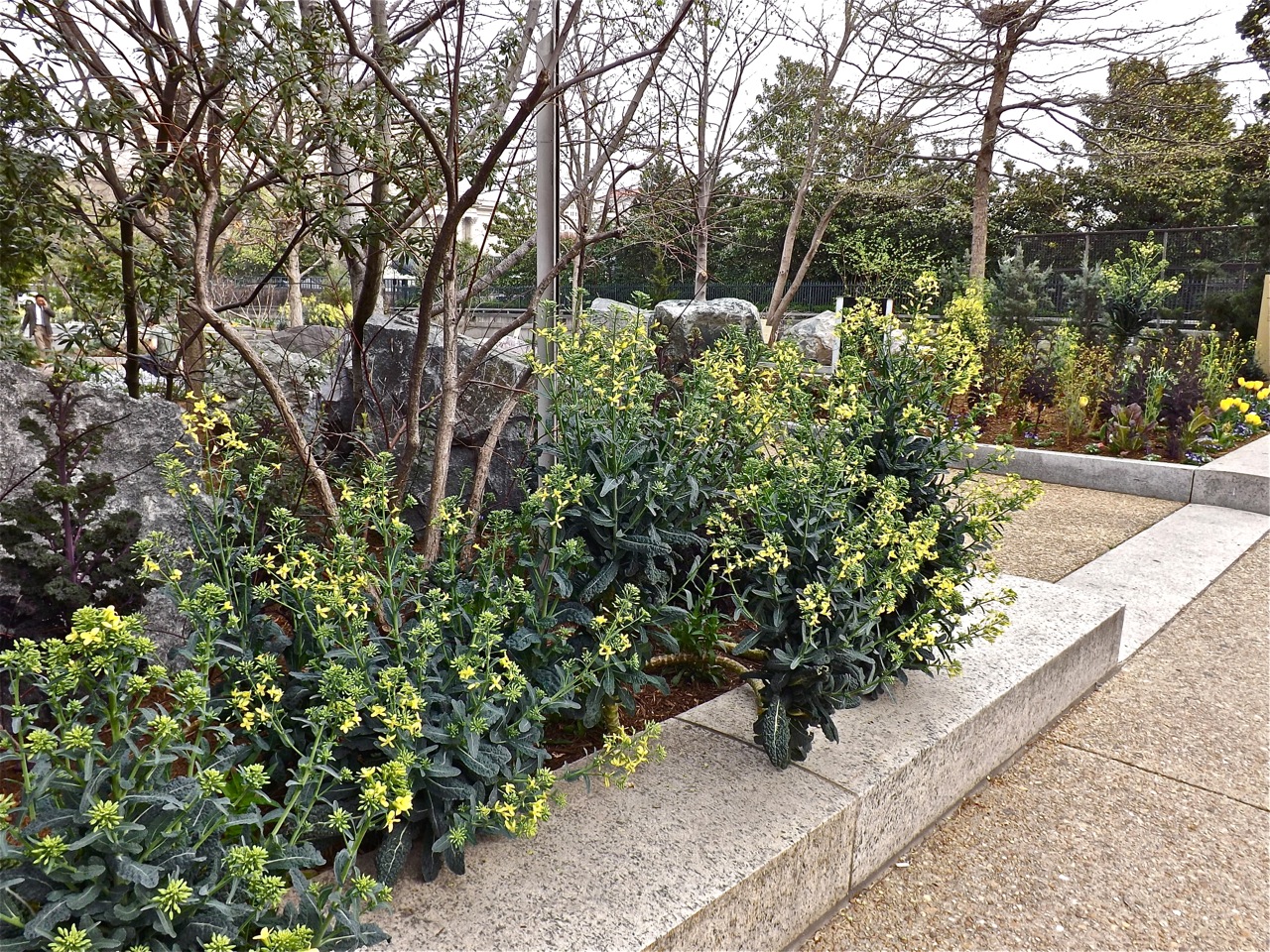
In both, the SI gardeners were putting forward Brassicas — ornamental kale, cabbage, and red mustard.
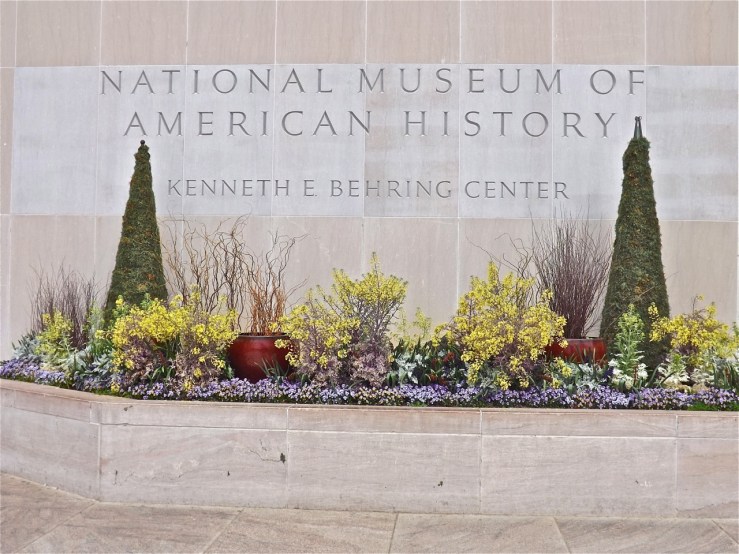
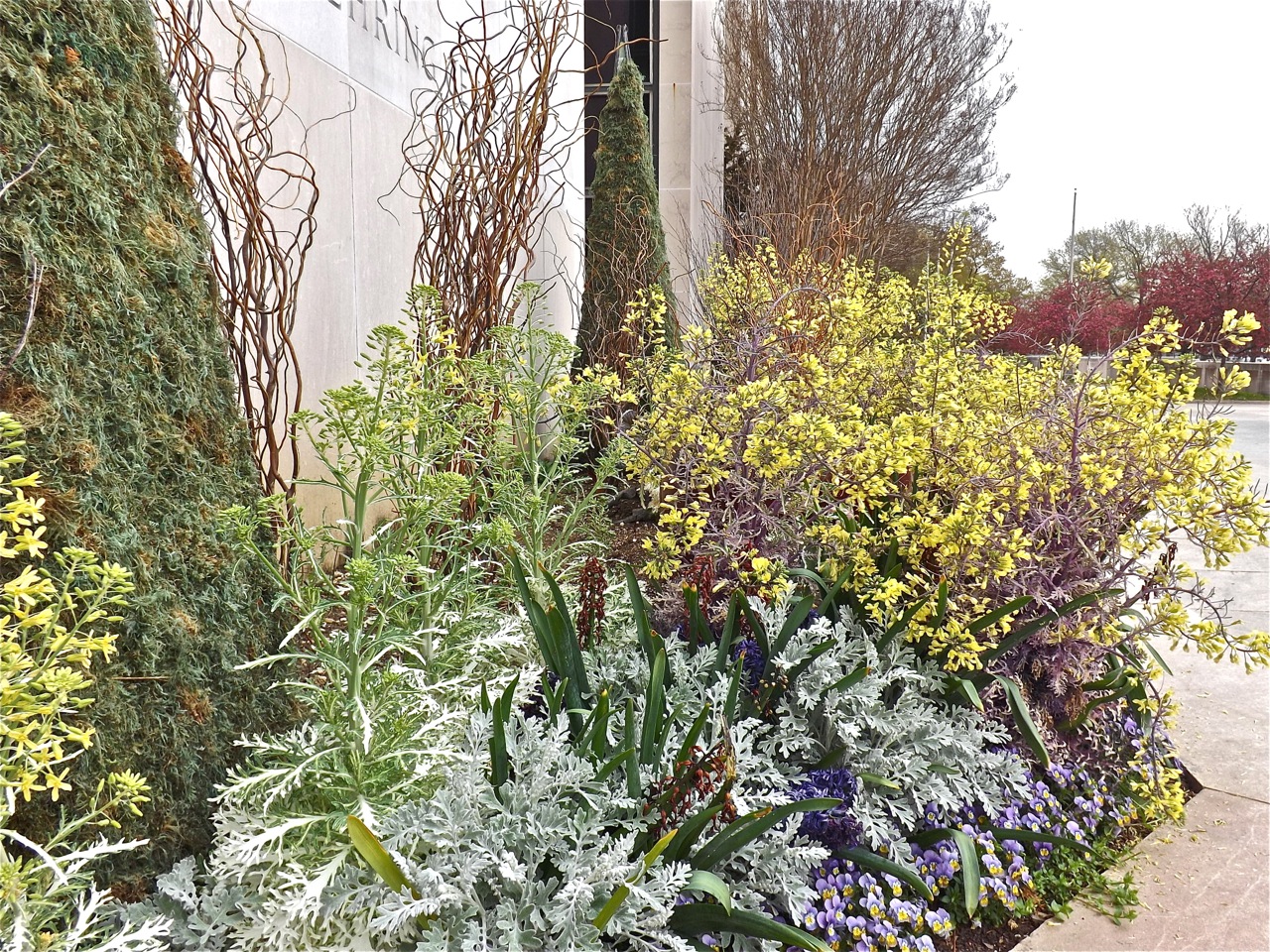
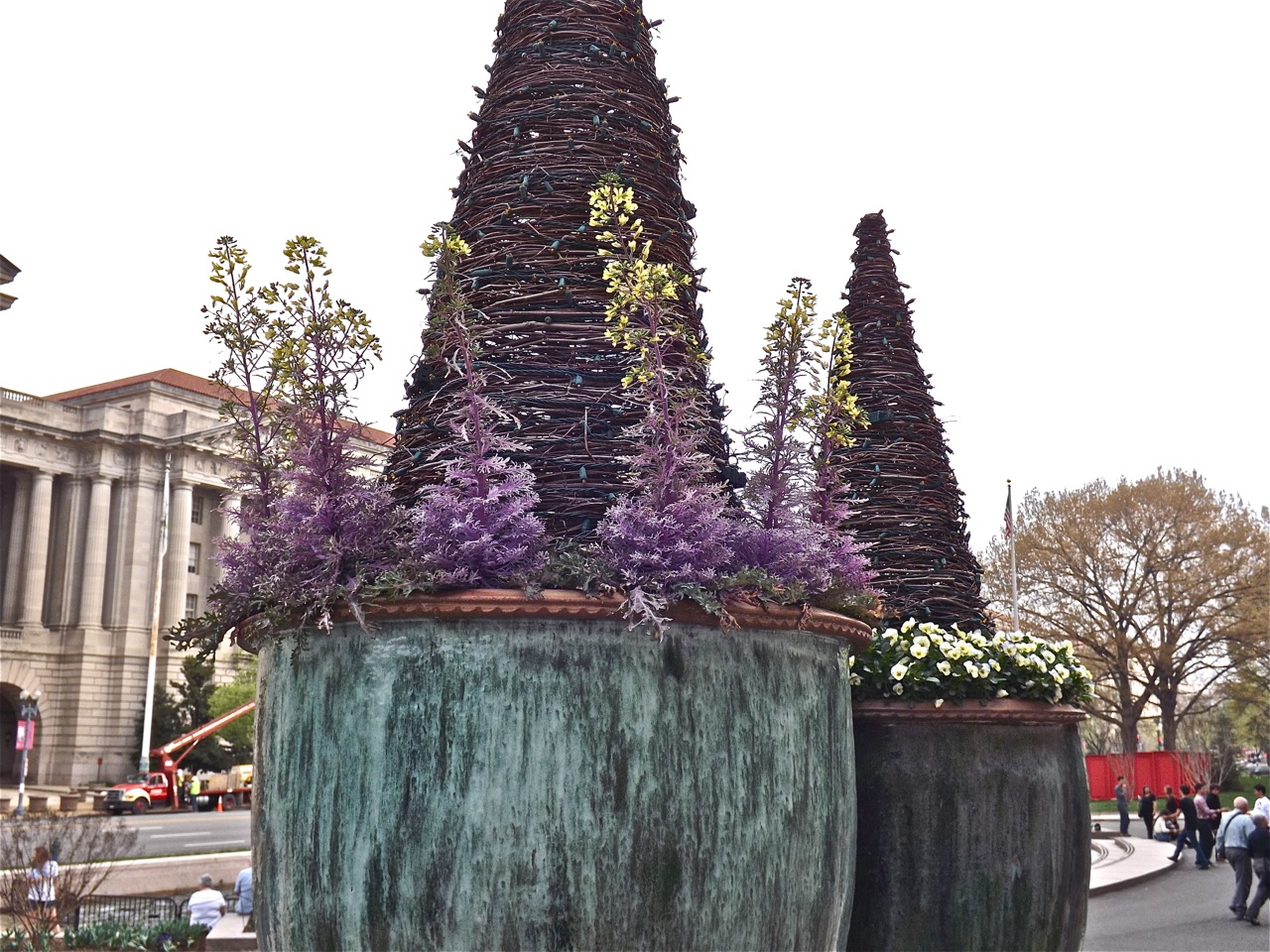
In the American History Museum entrance planter, yellow predominates, not from forsythia, but from the flowers of ornamental kale (Brassica oleracea var. acephala) and red mustard (Brassica juncea). Here’s the link to how it was planted last summer.
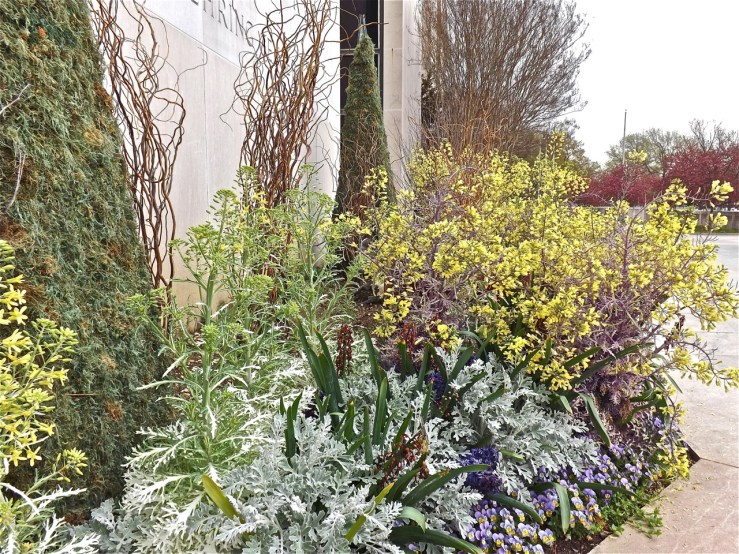
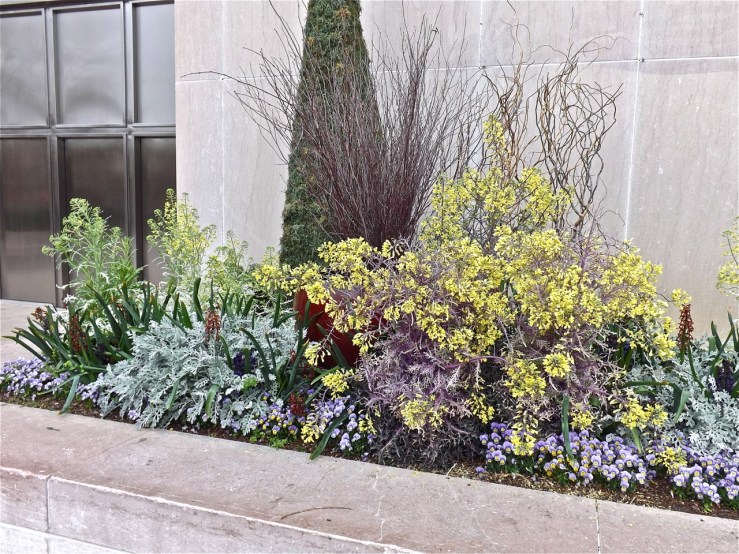
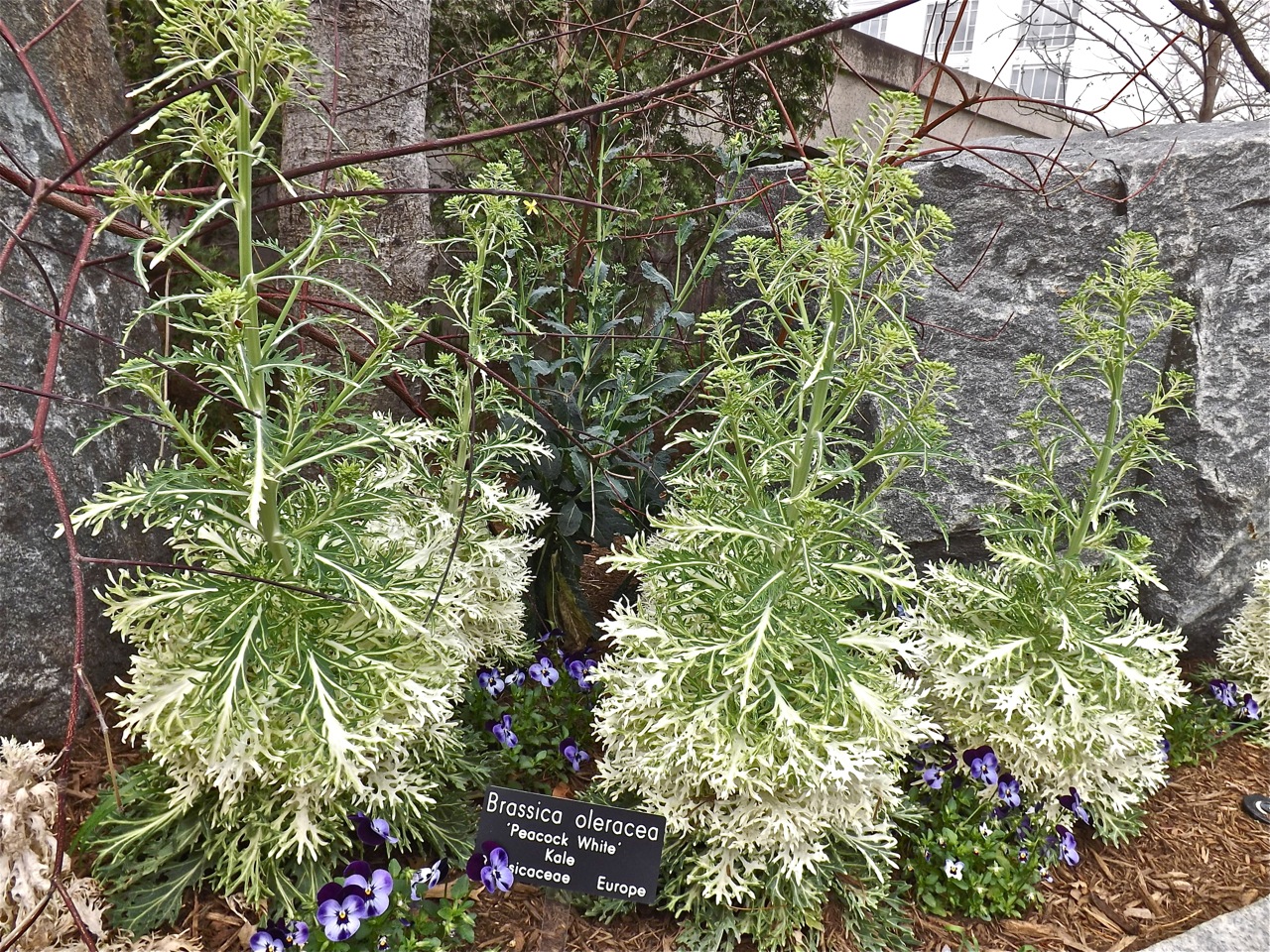
Now it’s filled with dusty miller, violas, and two Brassicas. I did not see any labels, but I’m pretty sure that the lacy white one on the sides is B. oleracea ‘Peacock White’  and the other one with light purple/light green leaves in the center is B. juncea ‘Red (or Ruby) Streaks,’ a mustard mizuna.

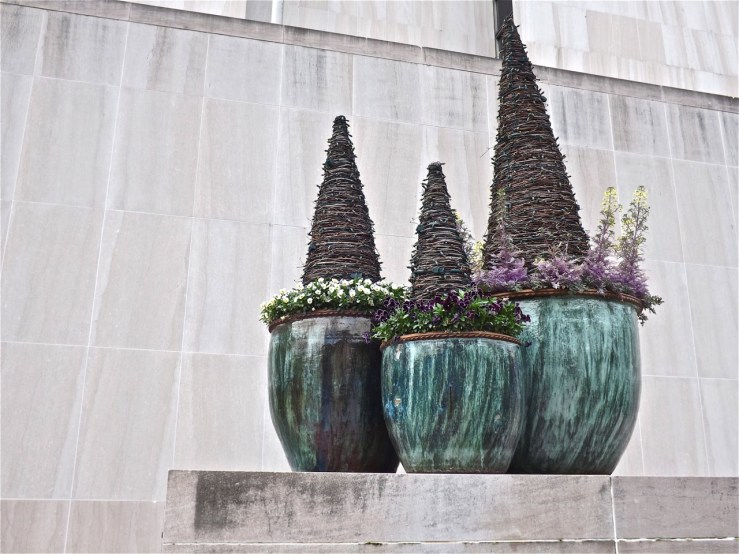
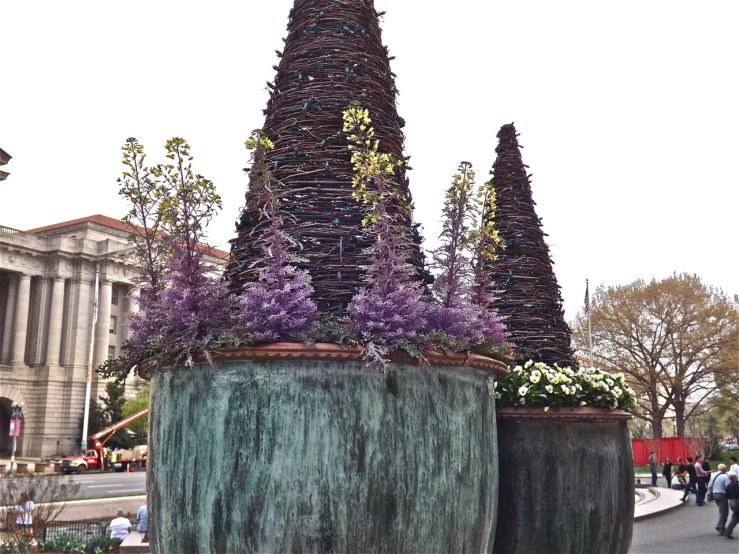
The museum’s big blue pots are also planted in purple kale (I think it may be B. oleracea ‘Peacock Red’) and violas. (You can click on any photo to enlarge it.)
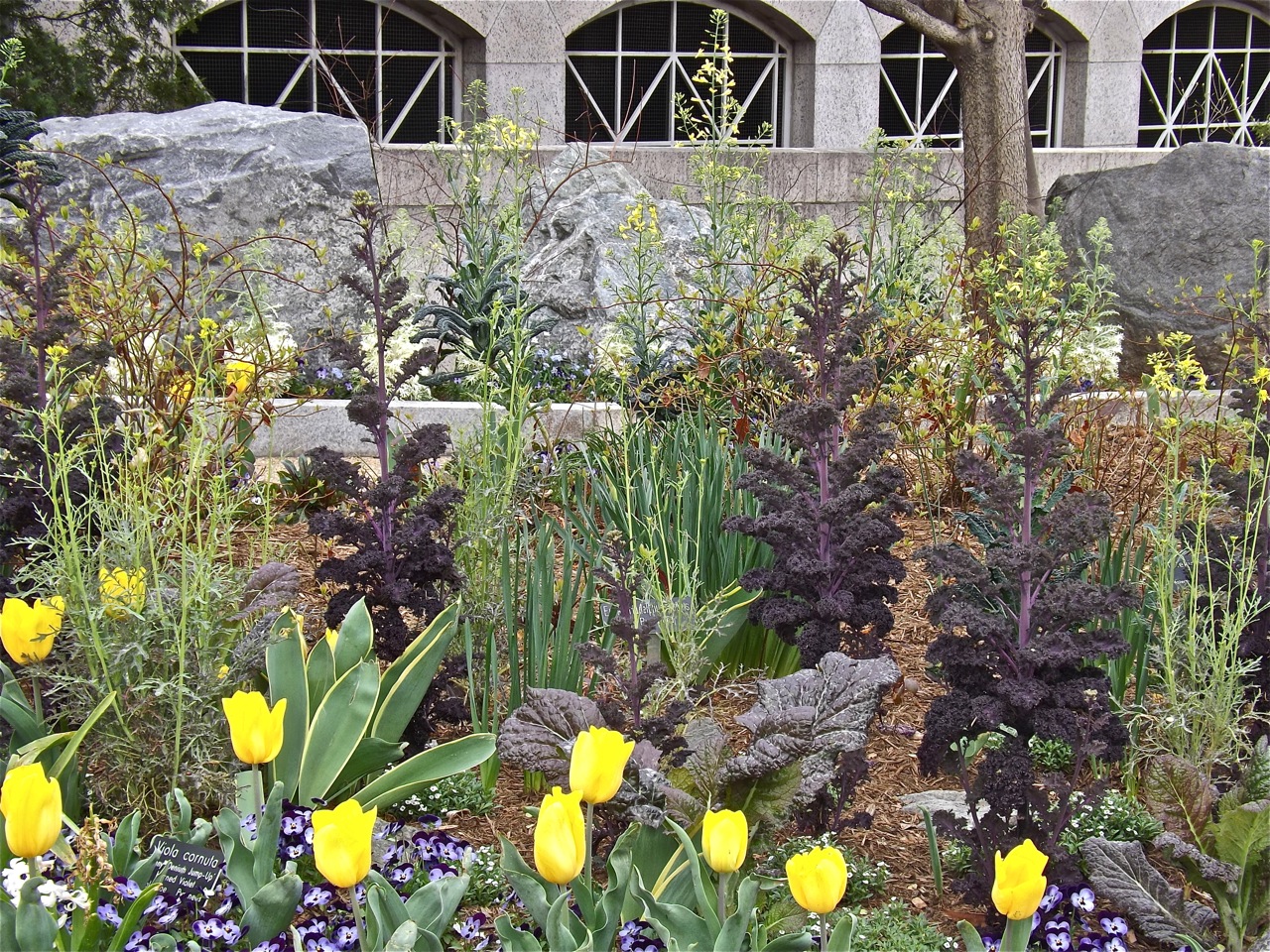
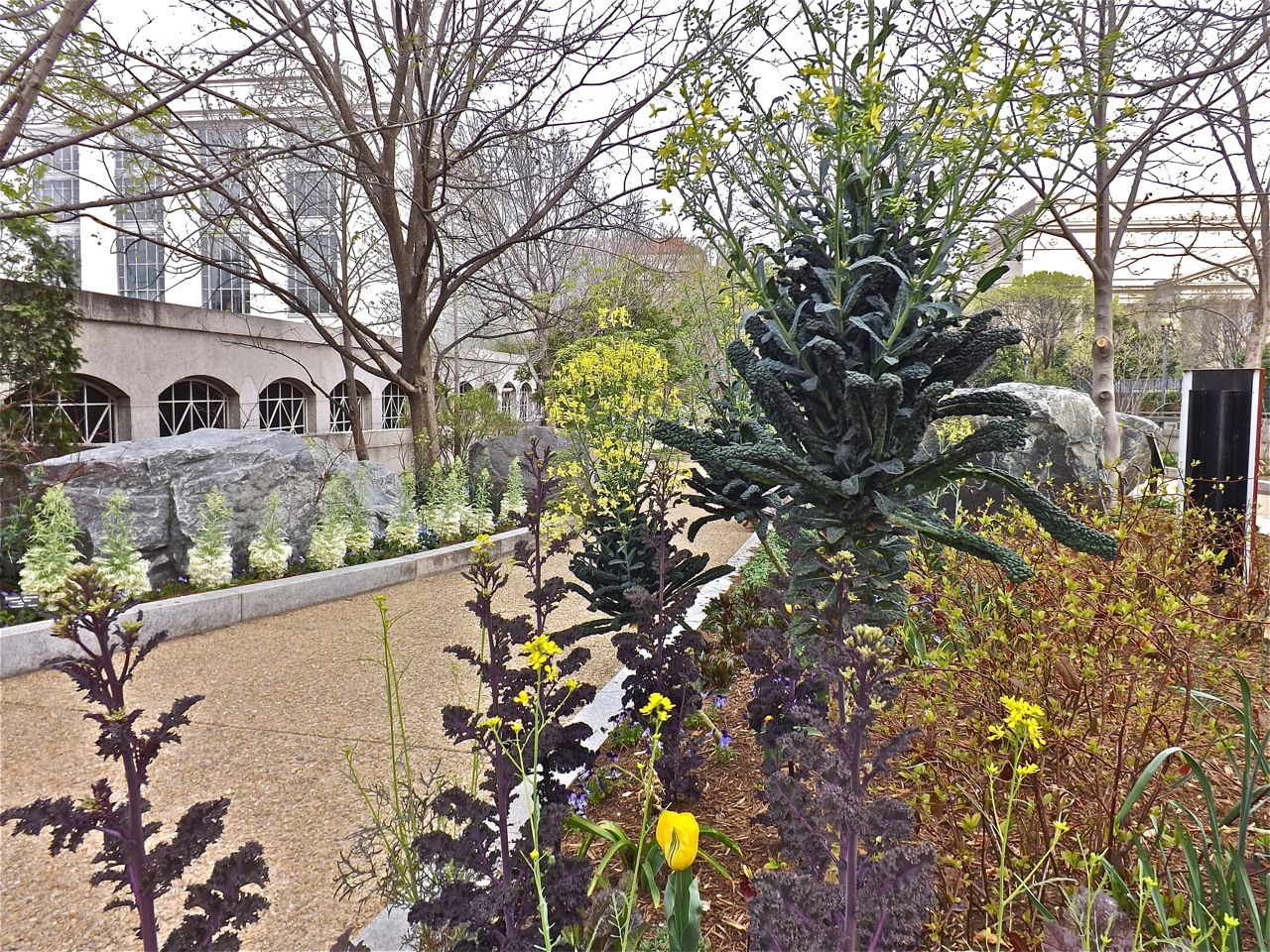
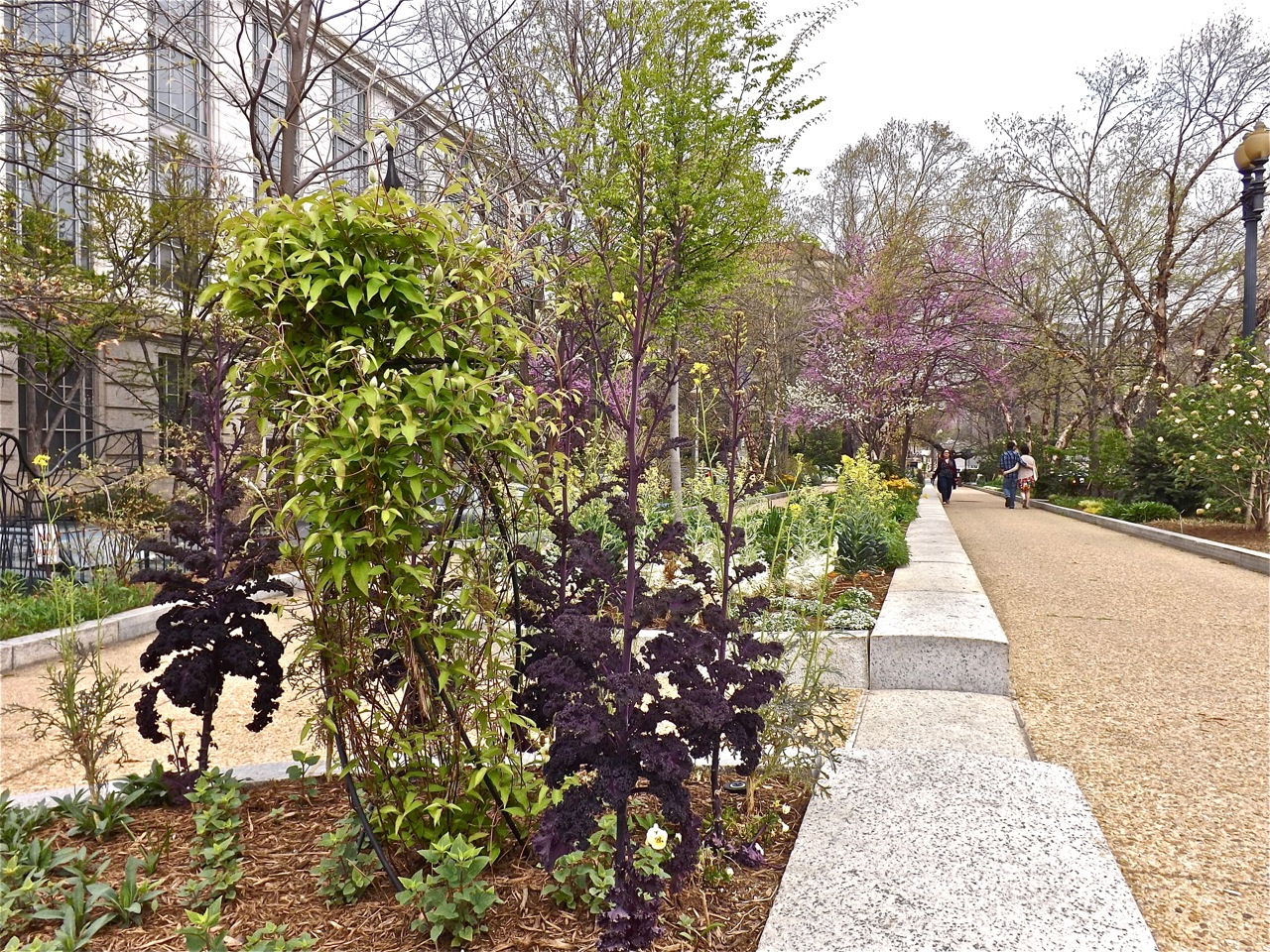
At the Mall entrance to the Butterfly Garden, below, various Brassicas stood out, along with yellow tulips and violas.
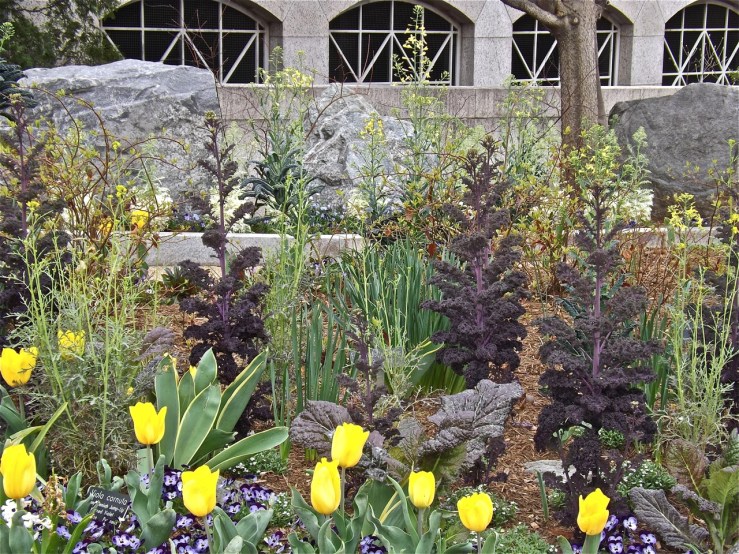
These photos show ruffled dark purple B. oleracea ‘Redbor,’ as well as (I think) ‘Garnet Giant’ red mustard (in the center above) and Johnnie jump-up violas.  The lacy light-purple/light-green plant is B. juncea ‘Red (or Ruby) Streaks.’

I think the tall, dark blue-green kale in the foreground below is dinosaur kale, maybe ‘Lacinato’ or ‘Cavalo Nero.’  Unfortunately, it was not labeled.
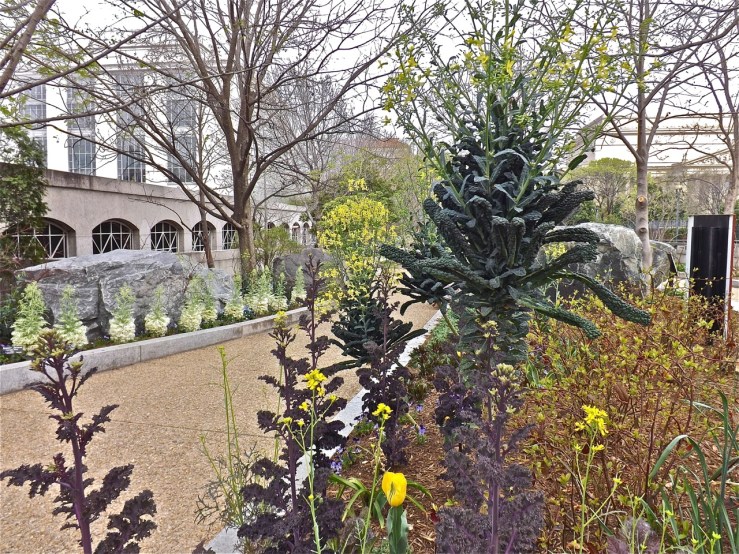
Below are ‘White Peacock’ kale.
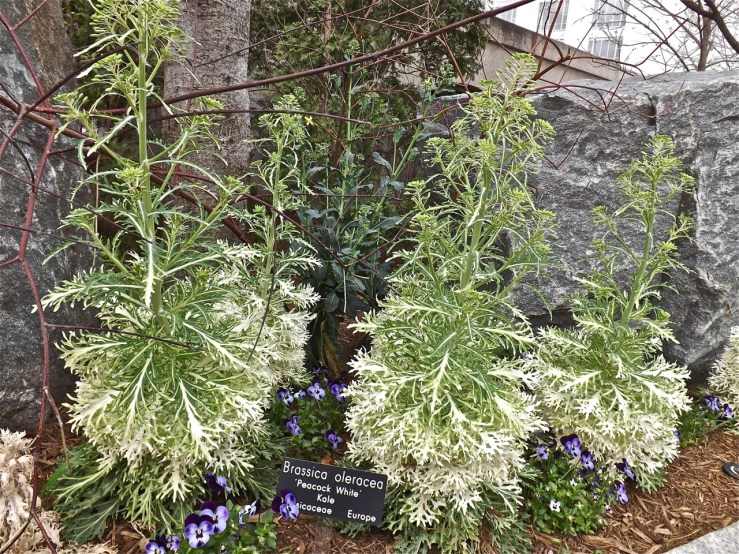
I didn’t find a label for the very dark purple kale below.  They may be ‘Redbors’ that are just more mature and darker than the other specimens.
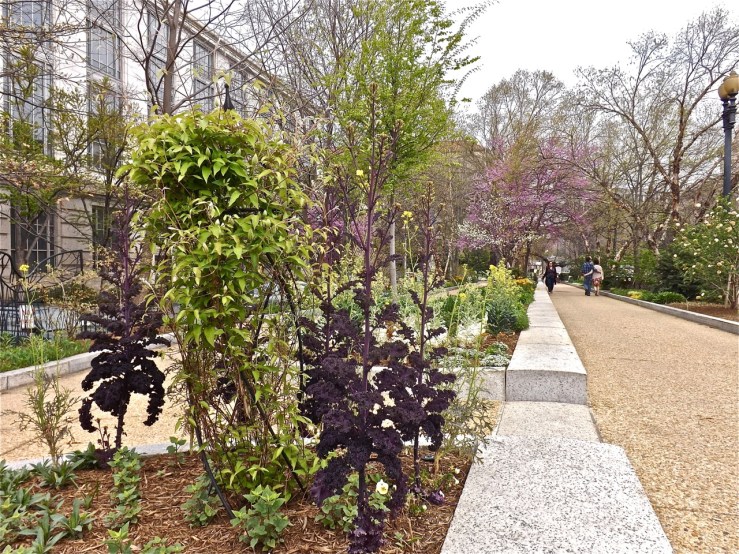
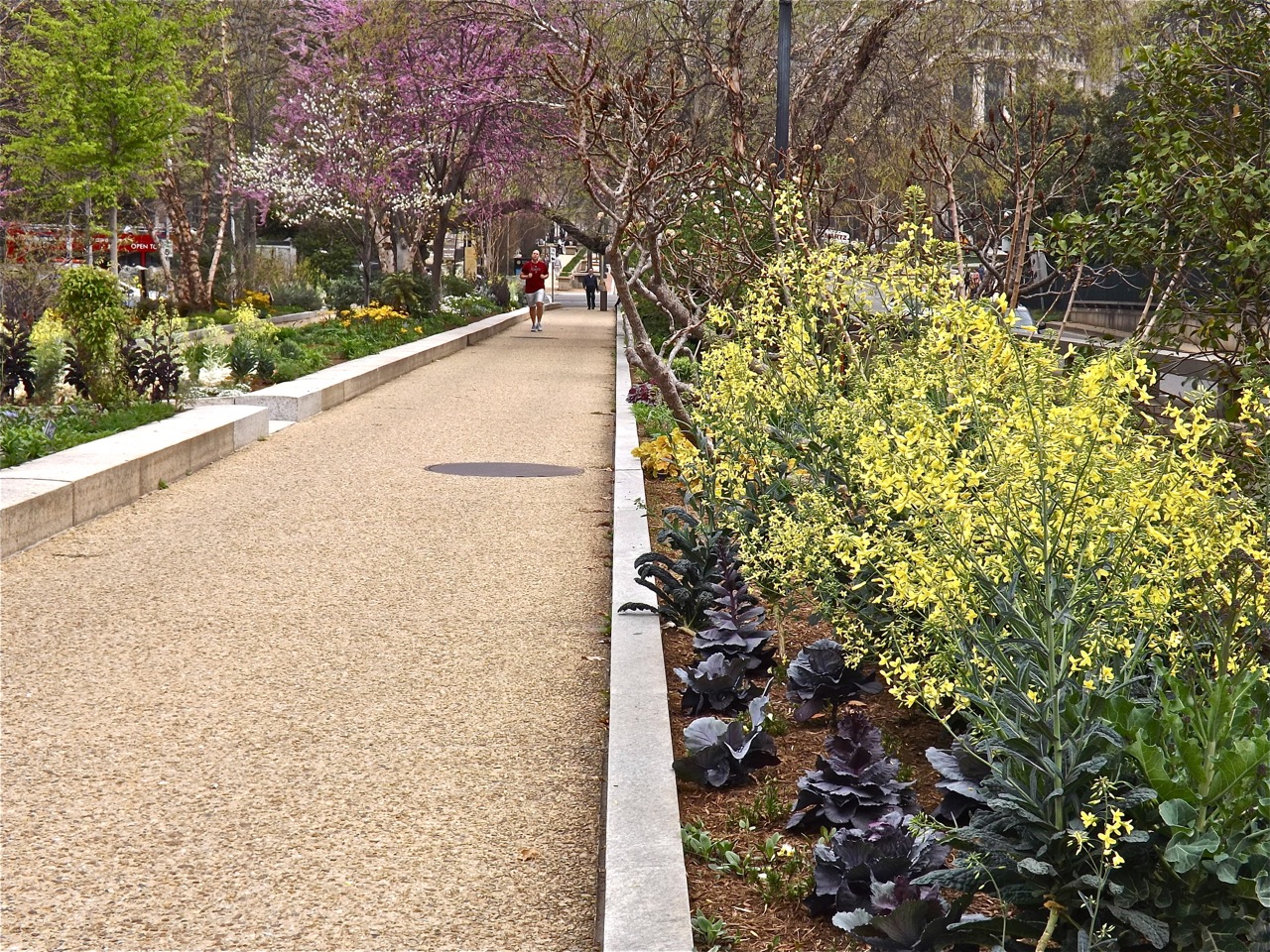
The cabbages in the front of the bed below are ‘Red Drumhead,’ with a row of dinosaur kale behind them.
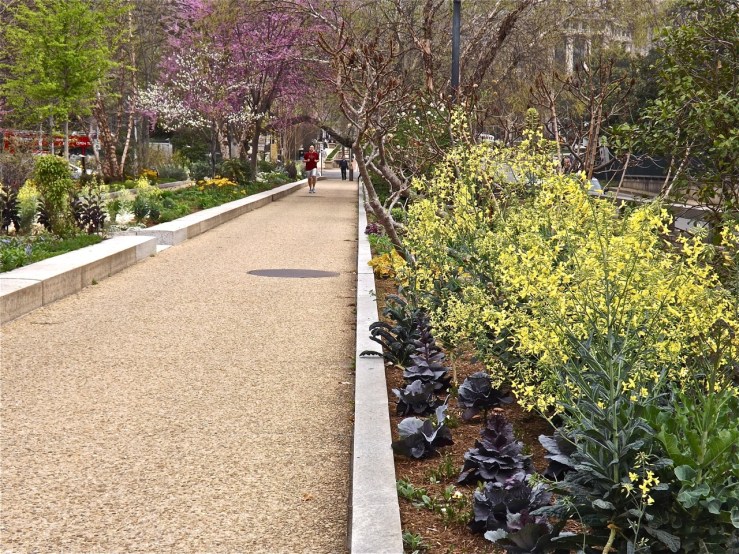
At the entrance are more dinosaur kale.  Here’s the link to what they looked like last summer.
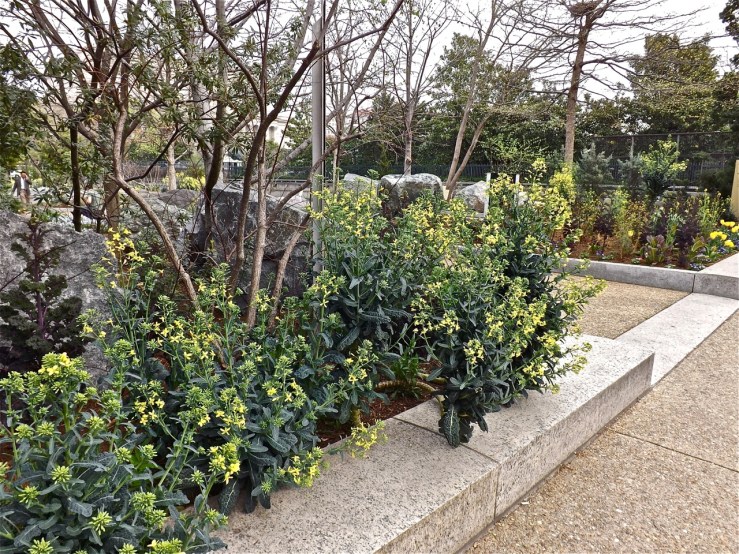
Here and here are some links to growing ornamental kale.

To scroll through larger versions of all the photos above, click on ‘Continue reading’ below and then on the first thumbnail in the gallery.

ADDENDUM: In Paris, in March, I spotted some lovely flower beds on the Champs Elysees planted only with various-colored primroses and regularly interspersed tall flowering ornamental kale (something like B. oleracea ‘Redbor’). Unfortunately, I was on a bus and couldn’t get a picture.

Continue reading “A Brassica moment”

A glimpse of the White House garden

I’m skipping around somewhat in sharing my photos from our March travels. Today I’m back to Washington, D.C.

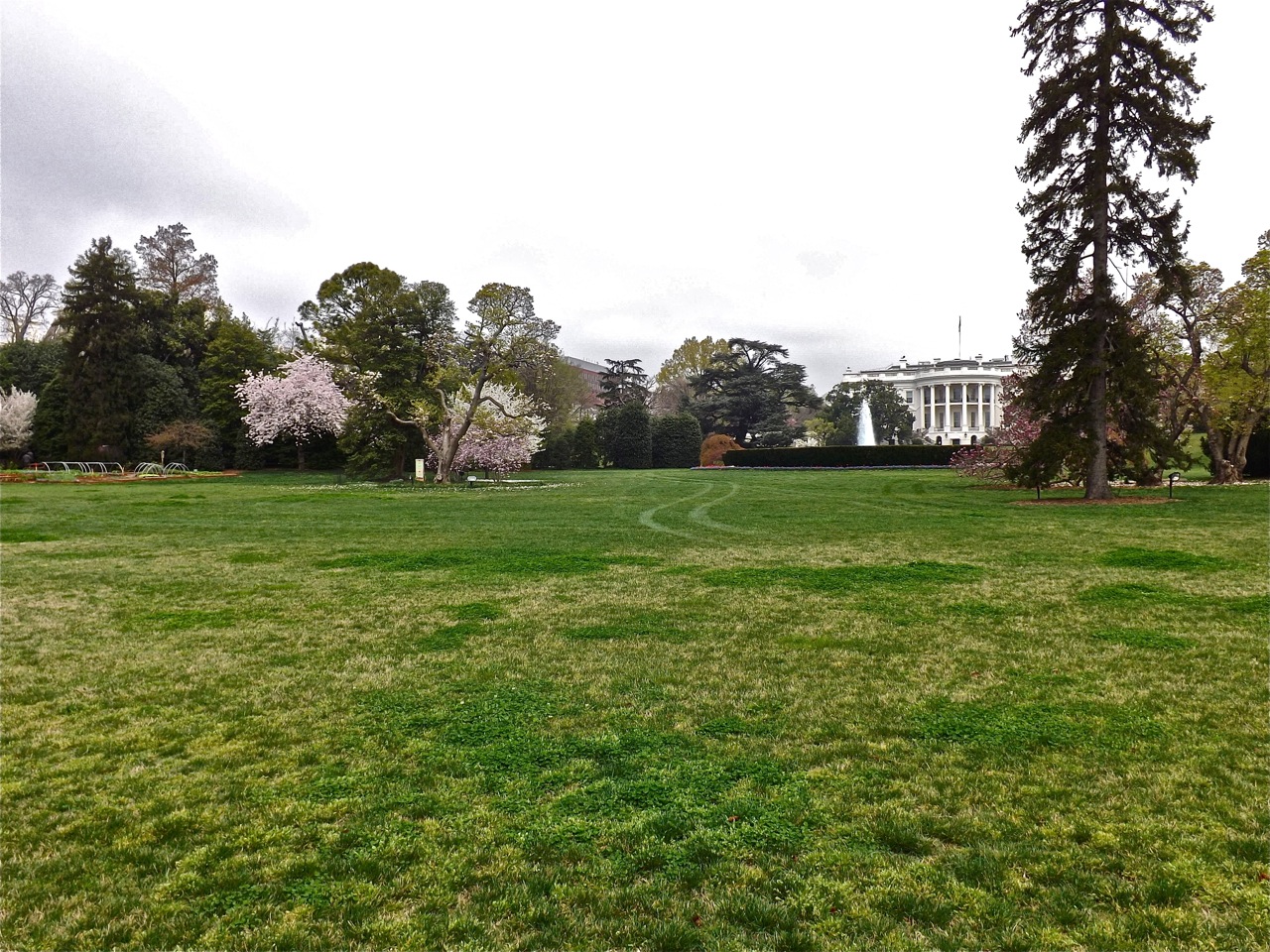
I’ve been a little curious about the White House vegetable garden and its exact location, because the W.H. grounds are not enormous — not after you subtract for enough lawn to land a helicopter or two, press/security tents and equipment, large conifers for privacy, roses, etc.

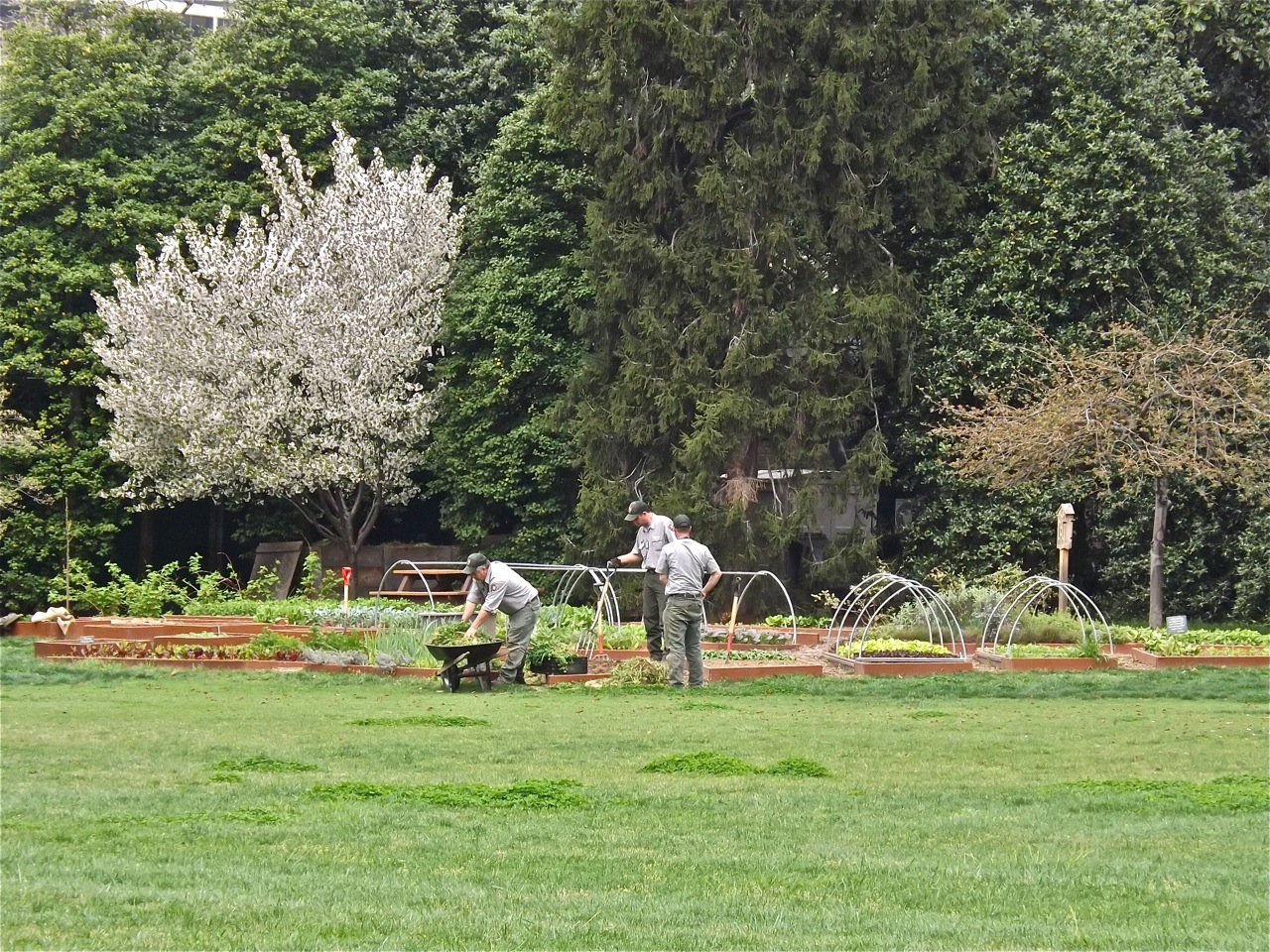
But on a walk I took about March 15, I passed by the fence on the south side and there it was (on the far left of the first photo below).

The Park Service seemed to be doing some spring cleanup, although the beds looked pretty well planted out with various early greens. (Click any photo to enlarge it.)

About 10 days after I passed by, schoolchildren and Mrs. Obama officially planted out the 2012 garden.

There’s a very interesting post in Early American Gardens about the White House Gardens in the 19th century, here.