On the Champ de Mars

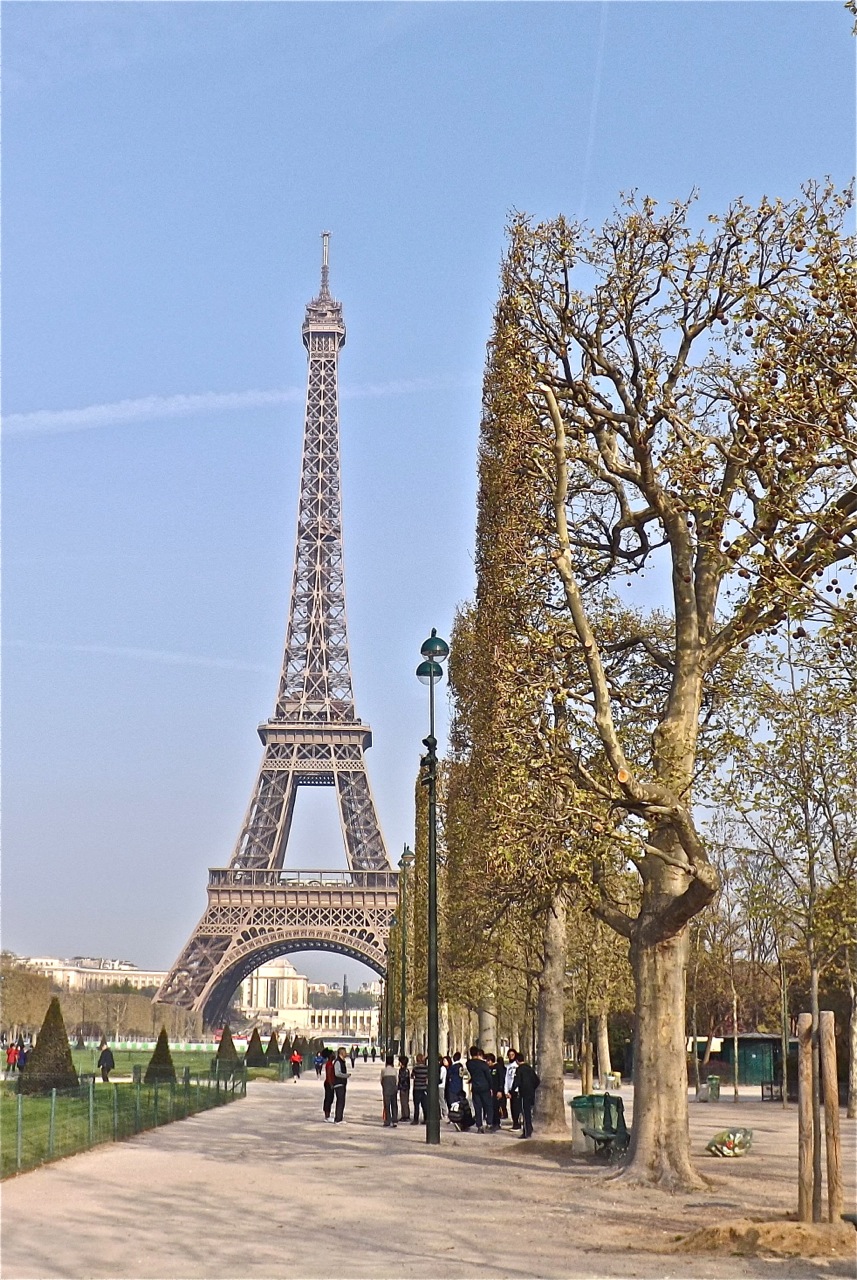
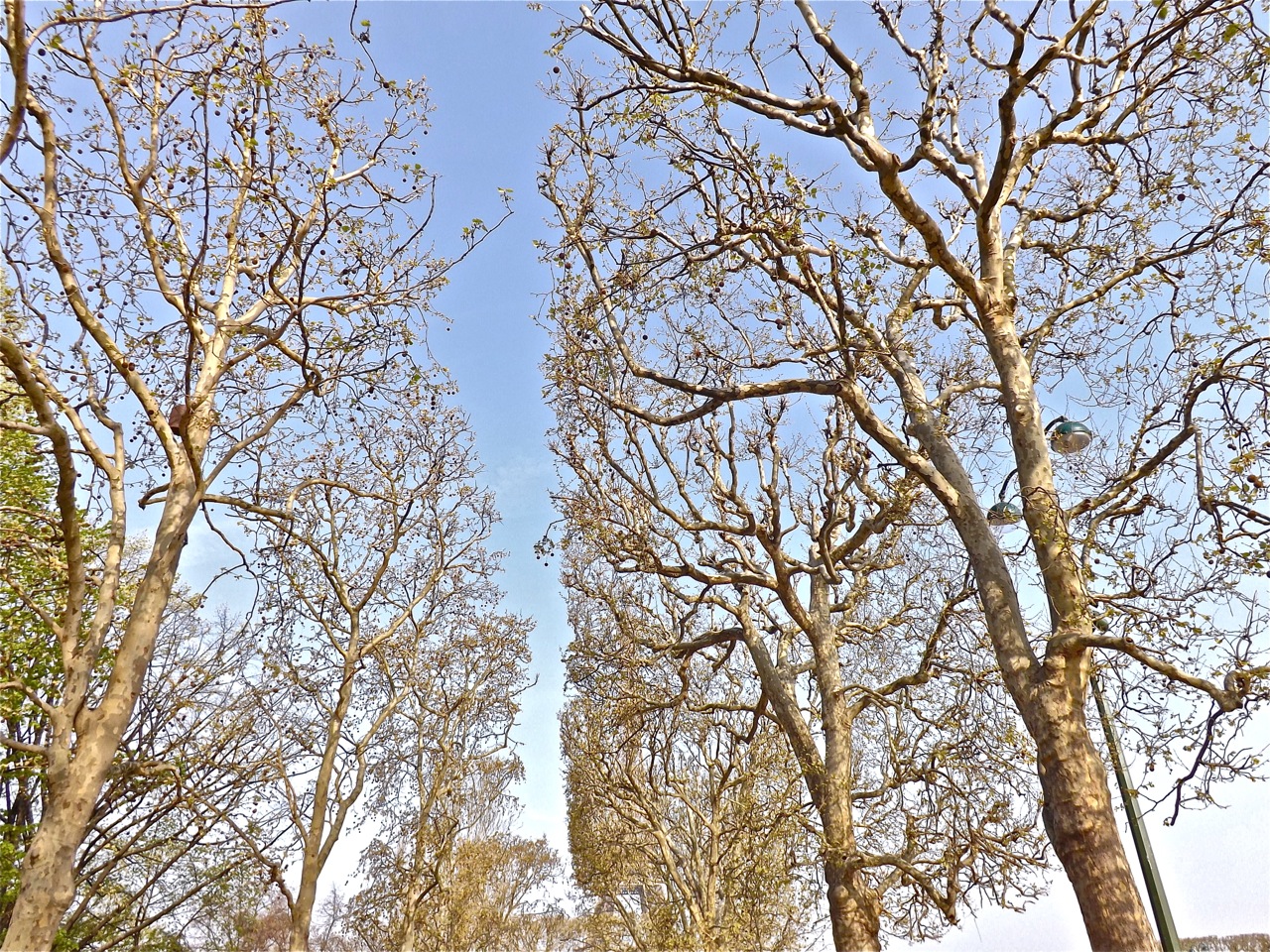
When we visited Paris in the first days of spring, the edges of the pleached trees on the Champ de Mars were still razor sharp.

Located between the Eiffel Tower and the Ecole Militaire, the park was named for the Campus Martius — ‘Mars Field’ — in ancient Rome, which was dedicated to the god of war. (Click any photo to enlarge it.)

In the 18th and 19th centuries, the lawns were used for military marching and drilling.  They were opened to the public just before the French revolution.

In the 16th century, the space had been part of an area was called Grenelle and was set aside for market gardening plots.

The trees are London plane trees, Platinus x acerifolia (or x hispanica).  In France, they are called platane à feuille d’érable (maple leaf plane tree).

Below, you can see how the park’s gardeners keep them sheared, thanks to the blog Pattersons in Paris.

Milkweed

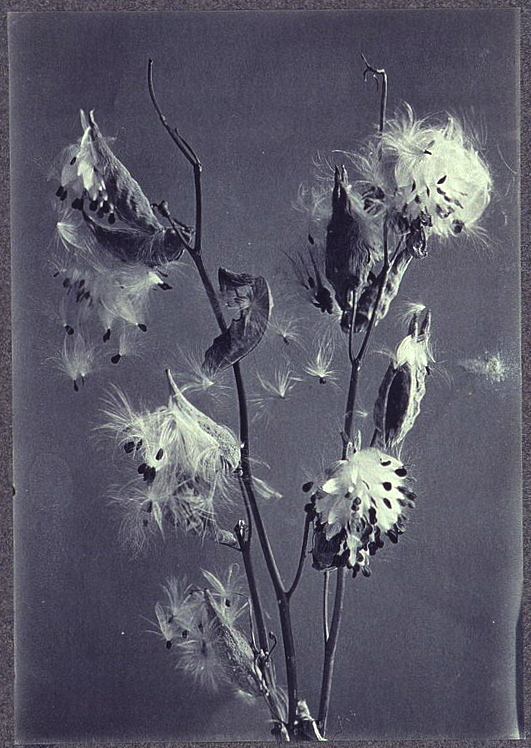
“Milkweed” by Mary Frances Carpenter Paschall, 1900. Part of a collection of “artistic photographs” by early women photographers donated to the Library of Congress by Frances Benjamin Johnston.

. . . I look down now. It is all changed.
Whatever it was I lost, whatever I wept for
Was a wild, gentle thing, the small dark eyes
Loving me in secret.
It is here. At a touch of my hand,
The air fills with delicate creatures
From the other world.

James Wright, “Milkweed,” The Branch Will Not Break

In Brussels Park

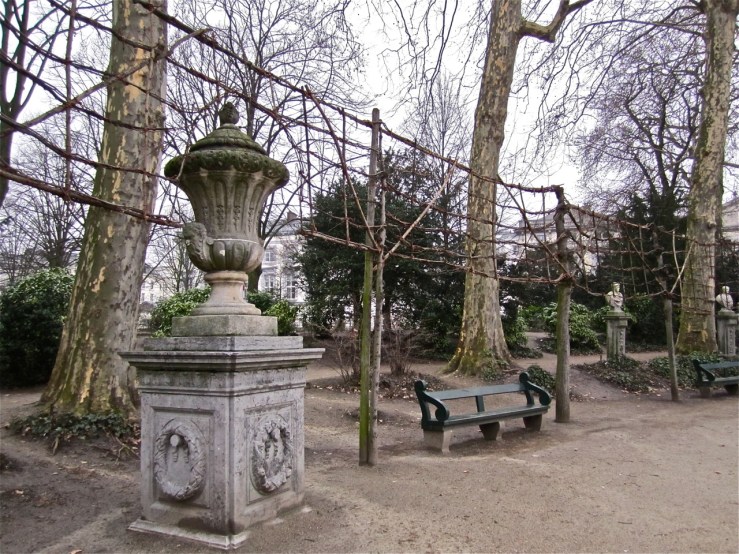
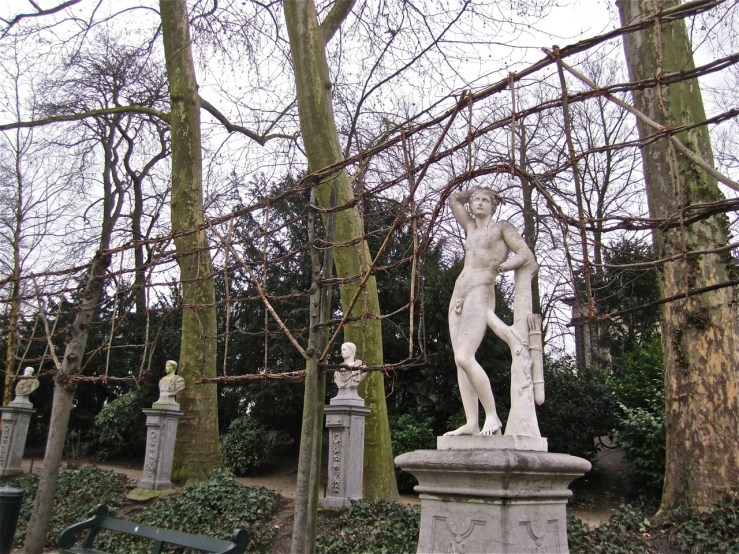
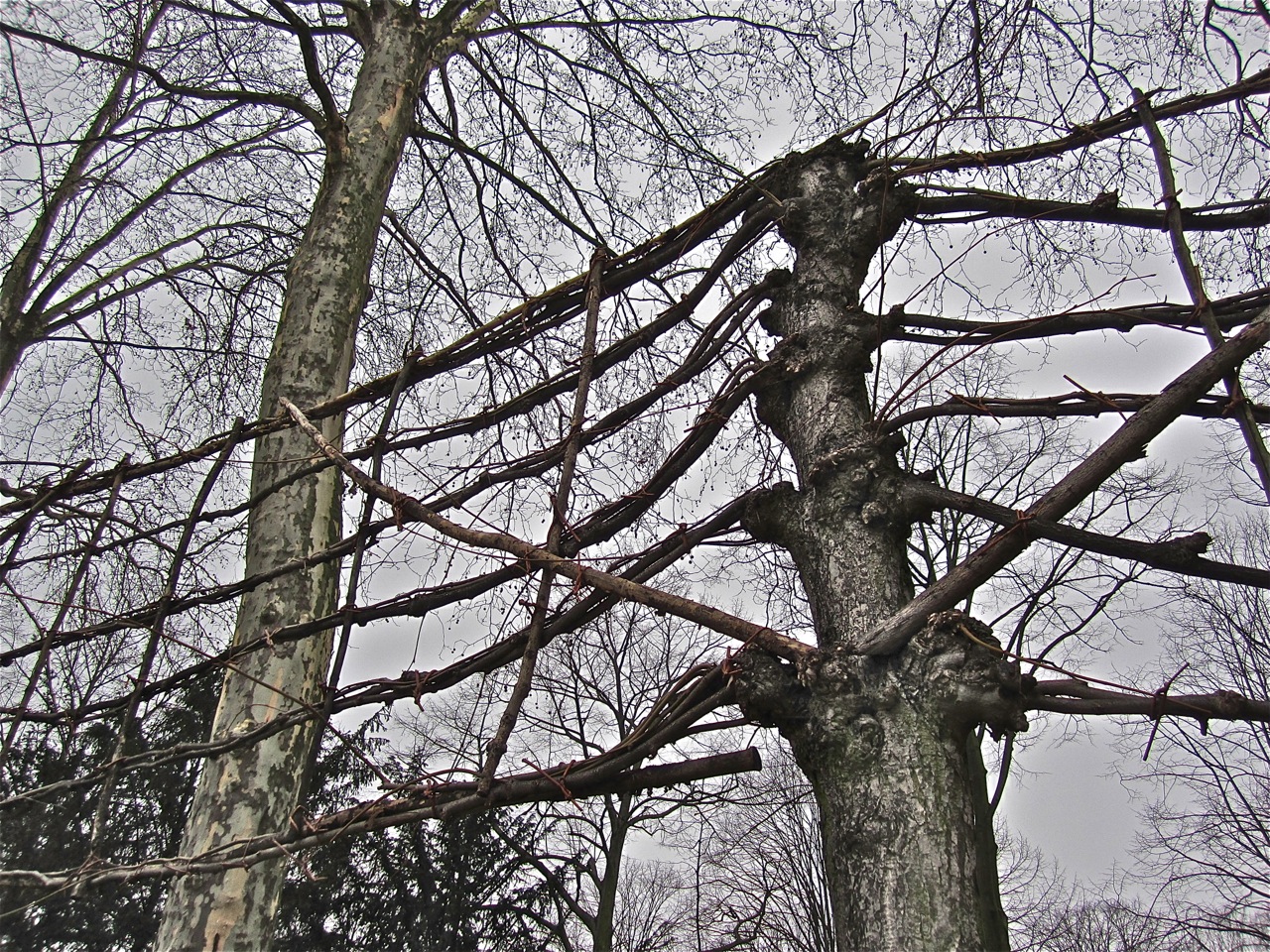
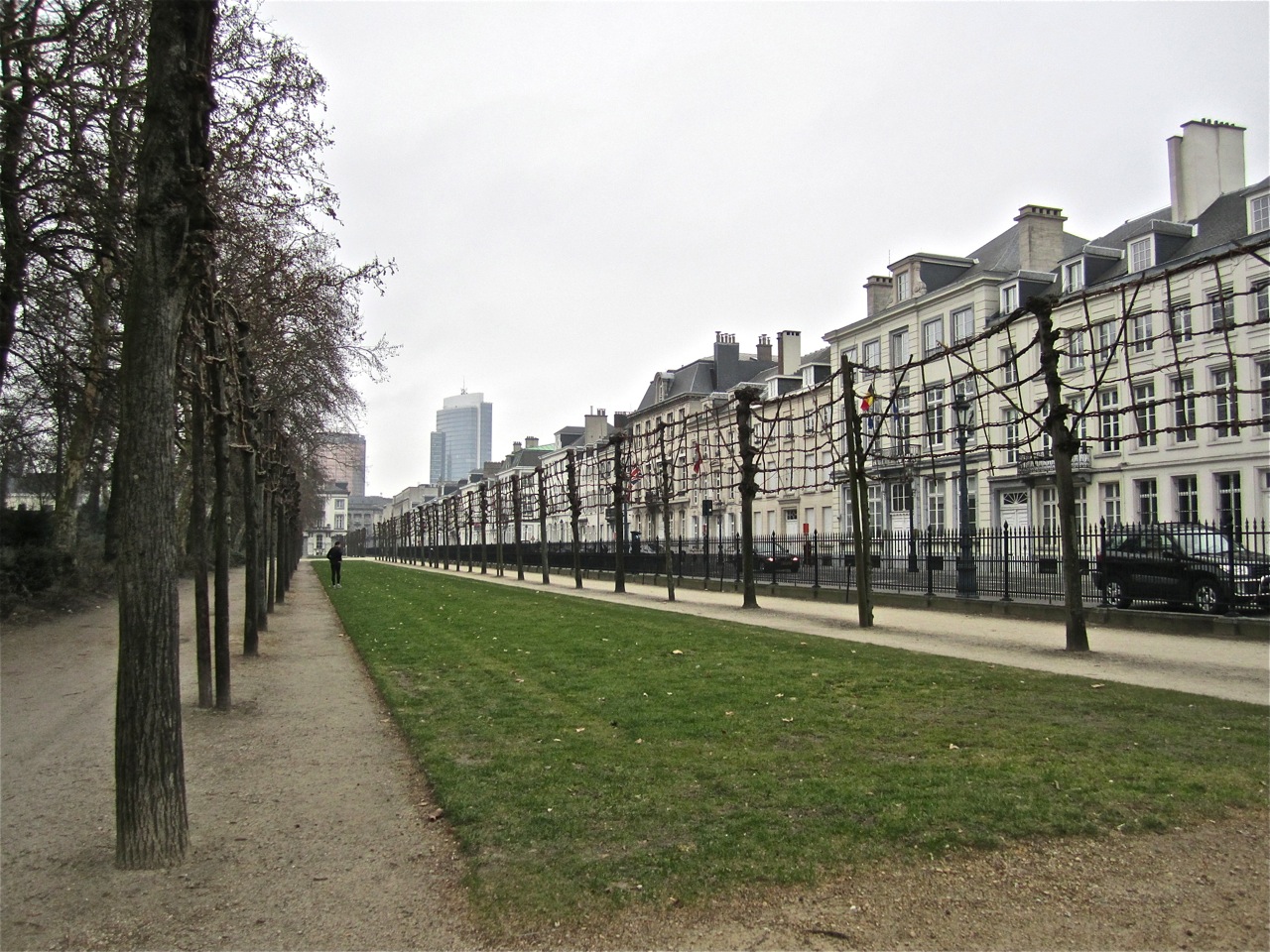
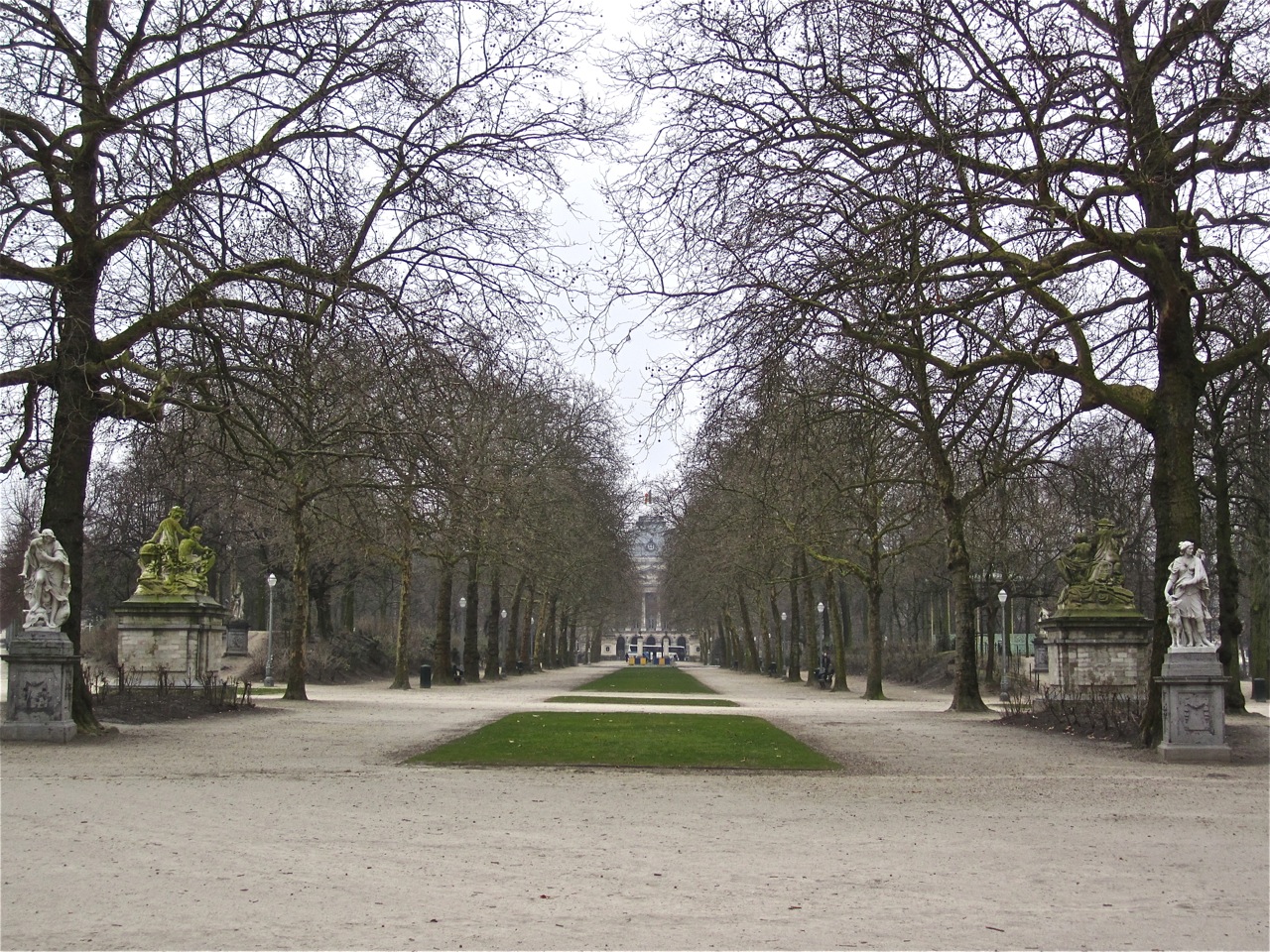
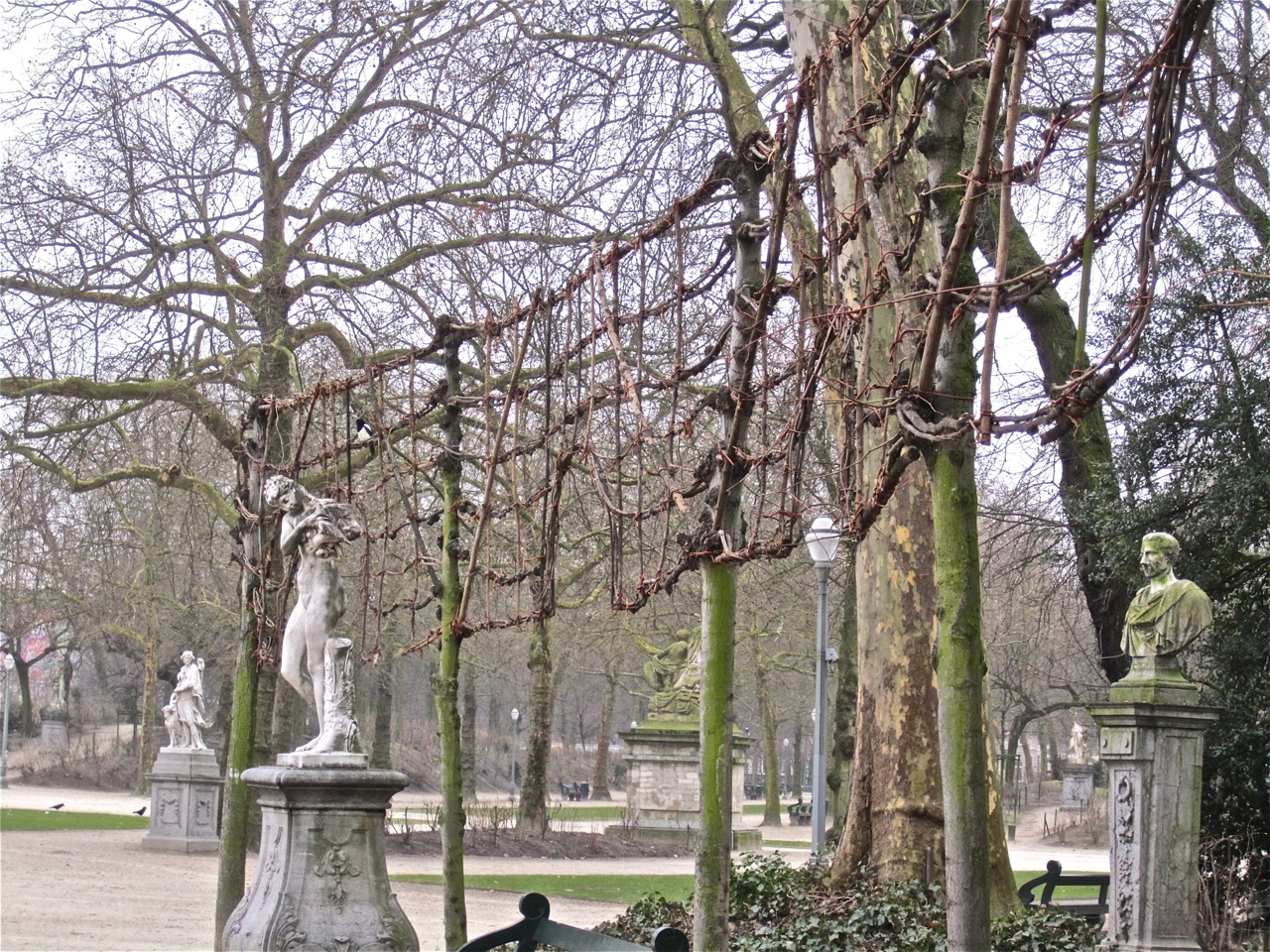
I noticed the bare, pleached trees near the end of the taxi ride from the airport  — a double row of long limbs on high, grid supports.
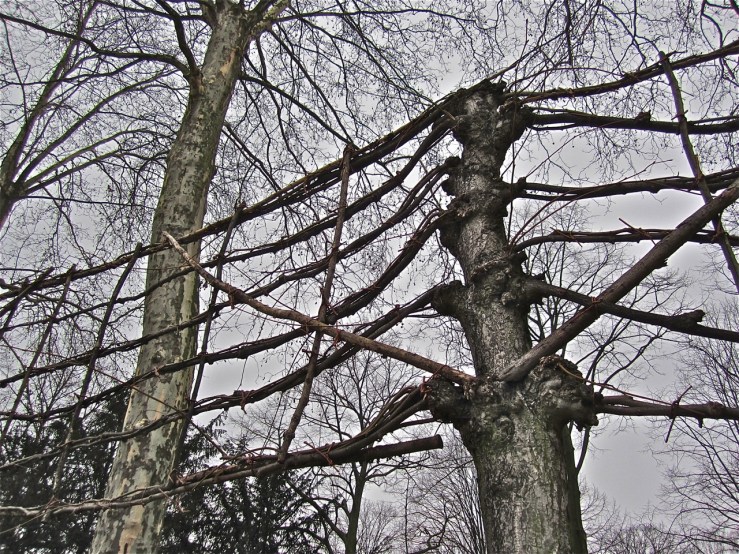
As soon as we dropped our bags at the hotel (and after a mid-morning snack of Liege waffles), we walked back to Brussels Park.
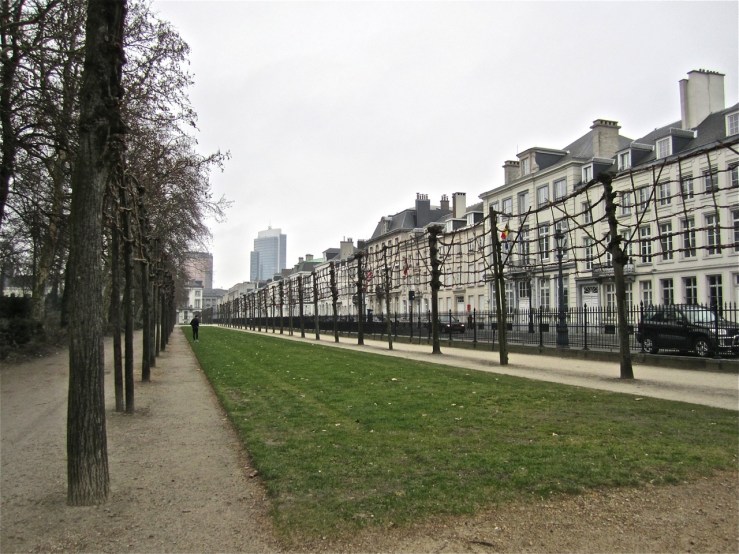
The Parc de Bruxelles (or Warandepark in Dutch) is the largest urban park in the city center, as well as the oldest. A rectangle, it is capped on the north end by the Belgian Parliament (the park is on a north-east to south-west axis) and on the south end by the Royal Palace (below).
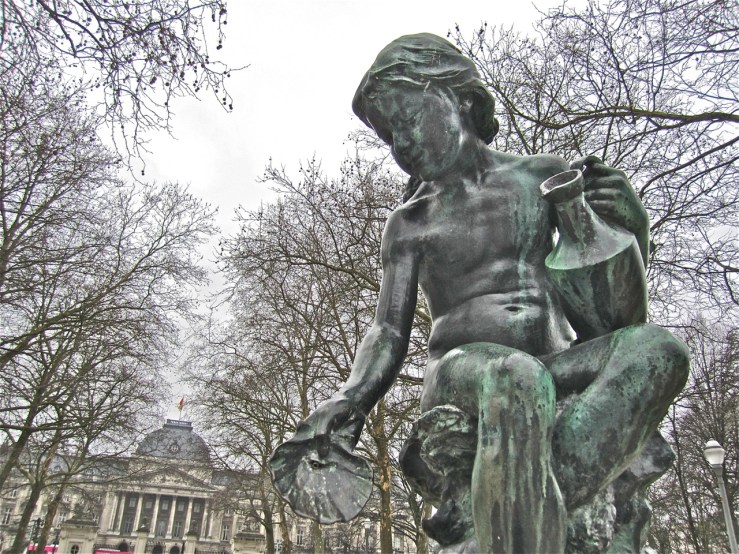
In the 12th century, it was the hunting ground for the dukes of Brabant. In 1774, Empress Maria Therese of Austria (the ruler of Brussels at that time) ordered that the space be turned into a French-style garden.

The original design by Barnabé Guimard remains to this day.  The predominate feature of the layout — that the north fountain and the two outer wide allées form the shape of an architect’s compass — reflects the influence of Free Masonry in 18th c. Brussels.

While formal, symmetrical, and on a grand scale, the park is simply planted with banks of shrubs, forest-style groupings of tall (naturally shaped) trees, and the rows of pleached lime trees, which border the whole garden and the north fountain.

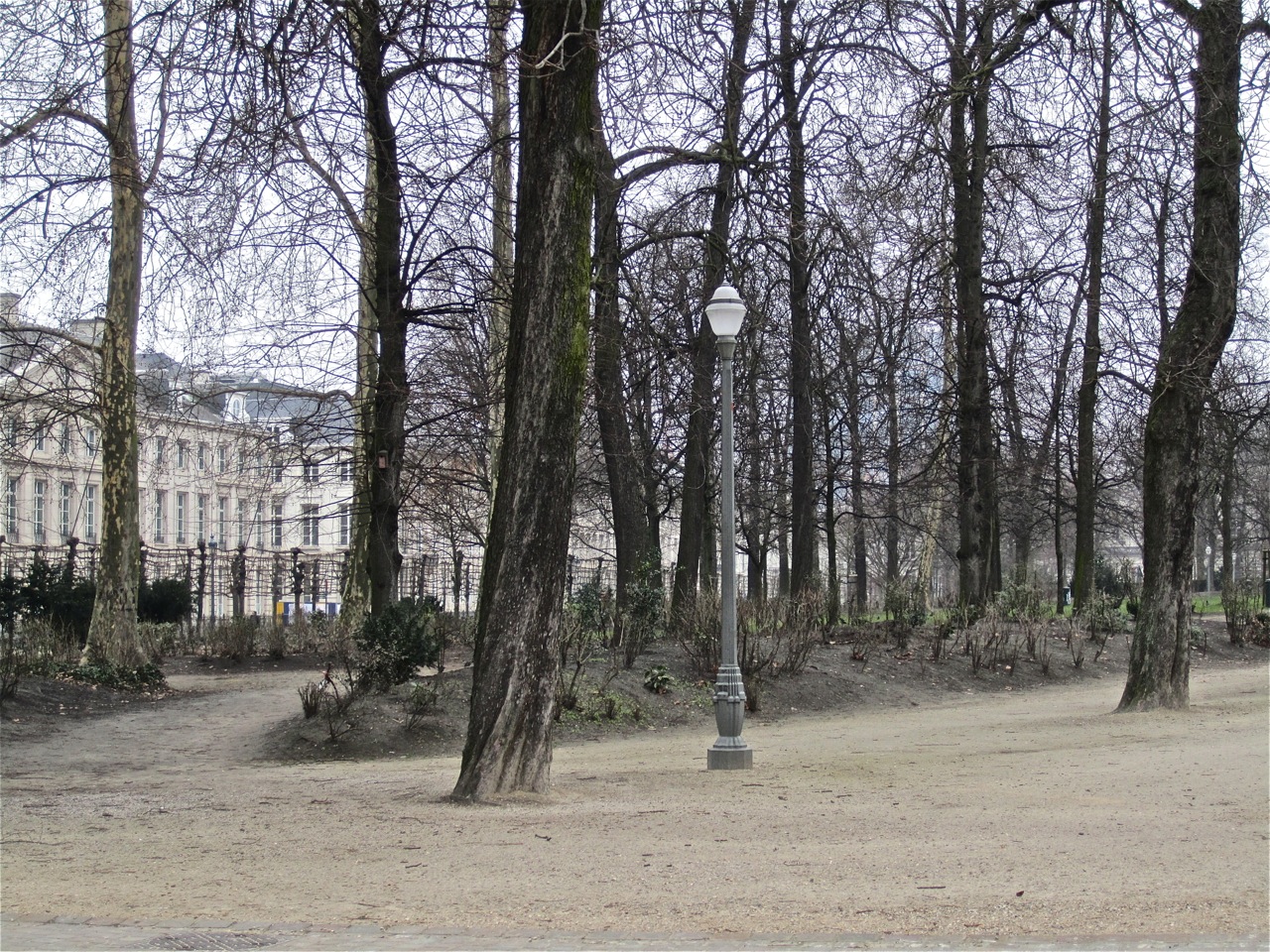
Curvy, auxiliary paths wind between the main allées.
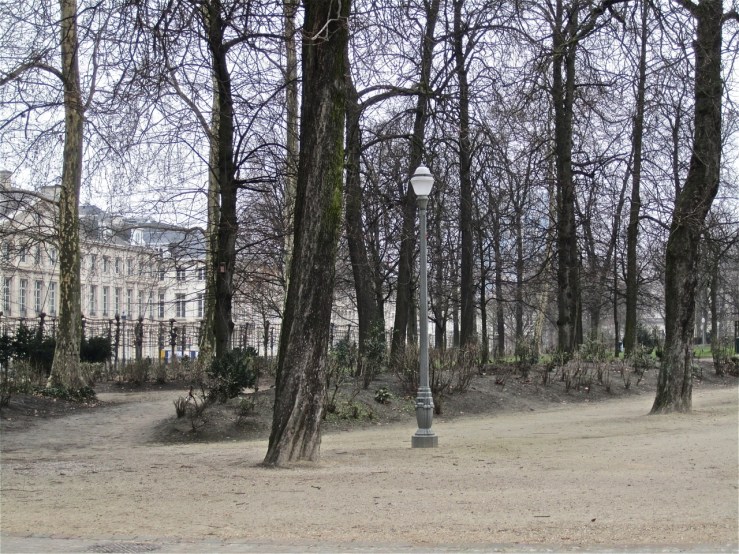
On the west side is a lovely 1841 bandstand designed by Jean-Pierre Cluysenaer.
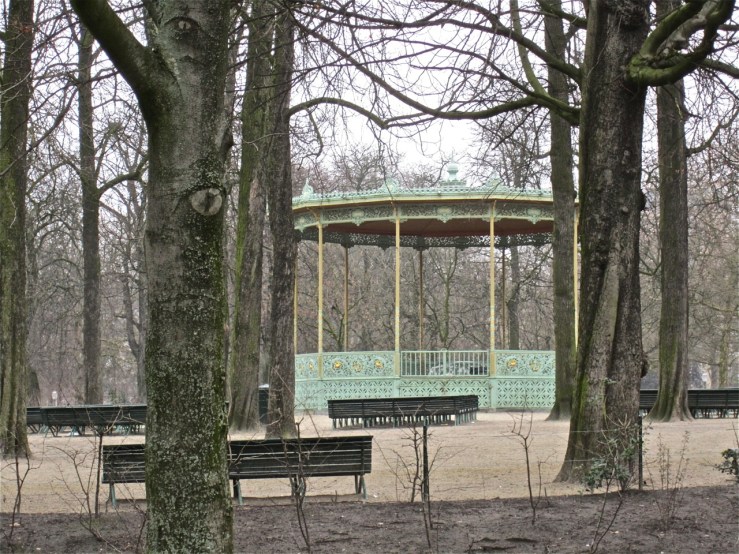
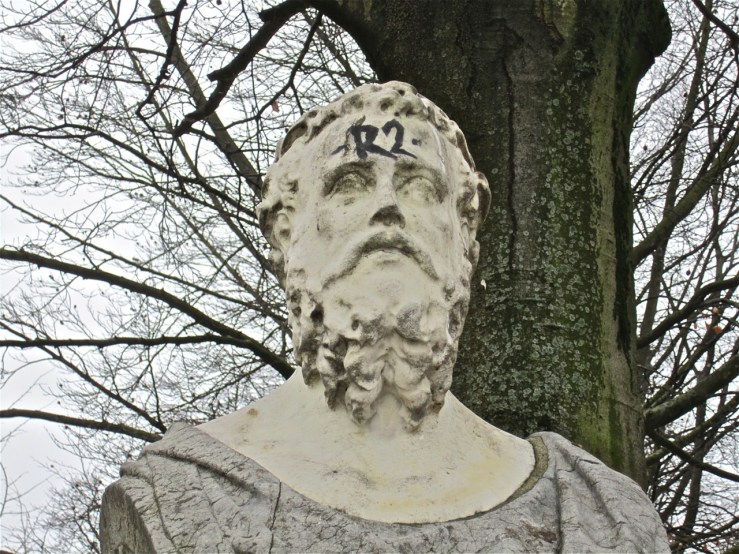
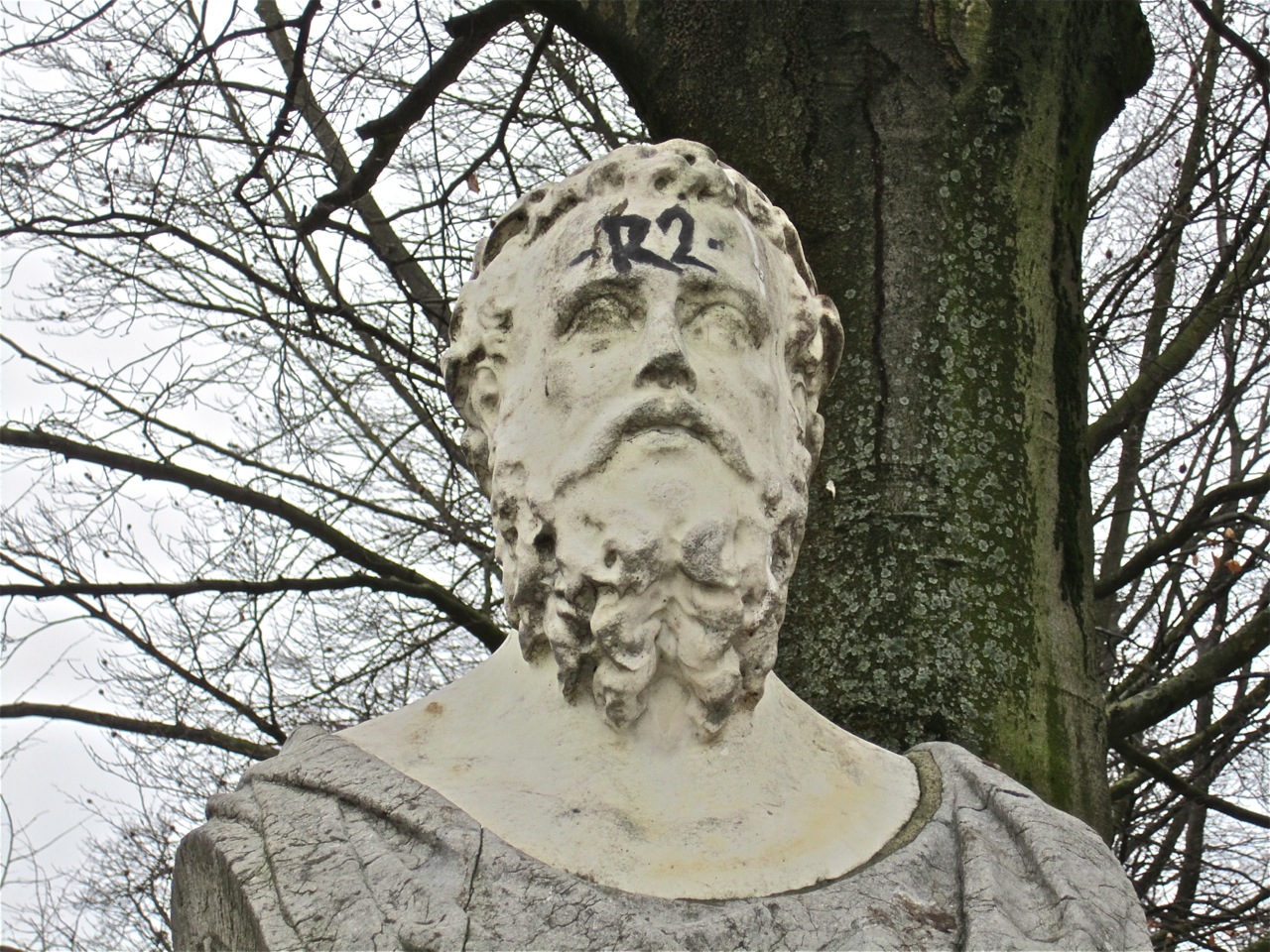
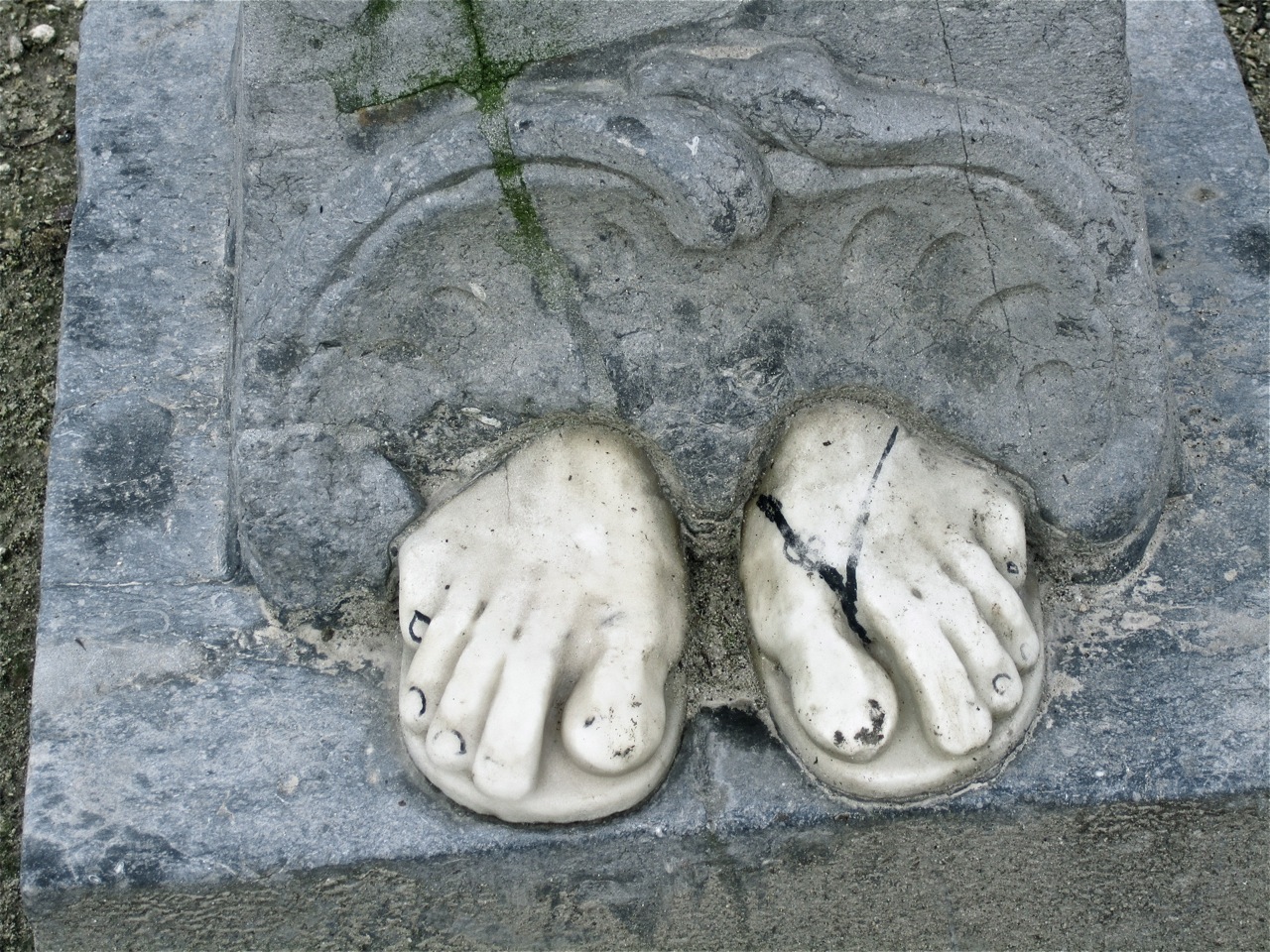
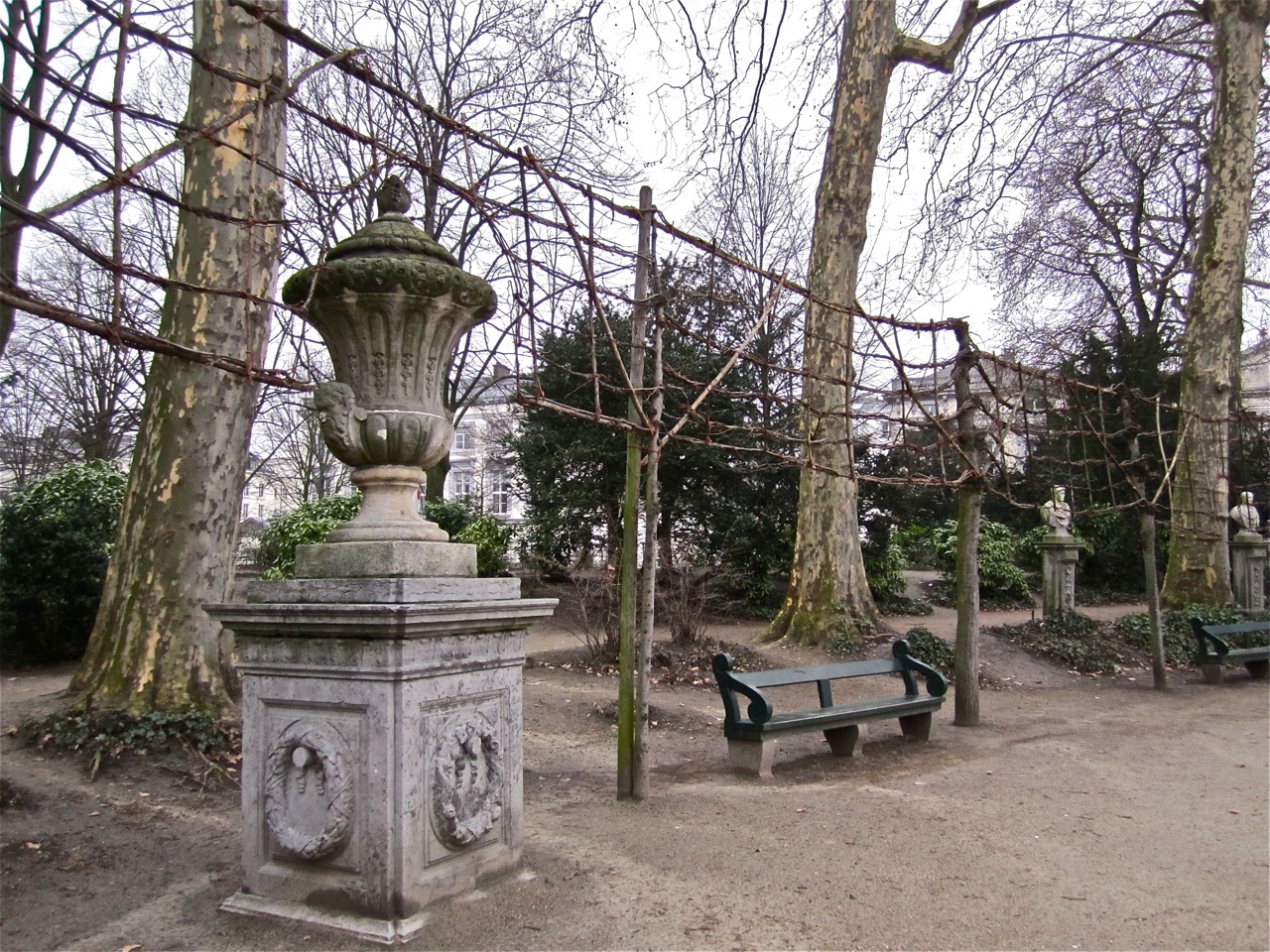
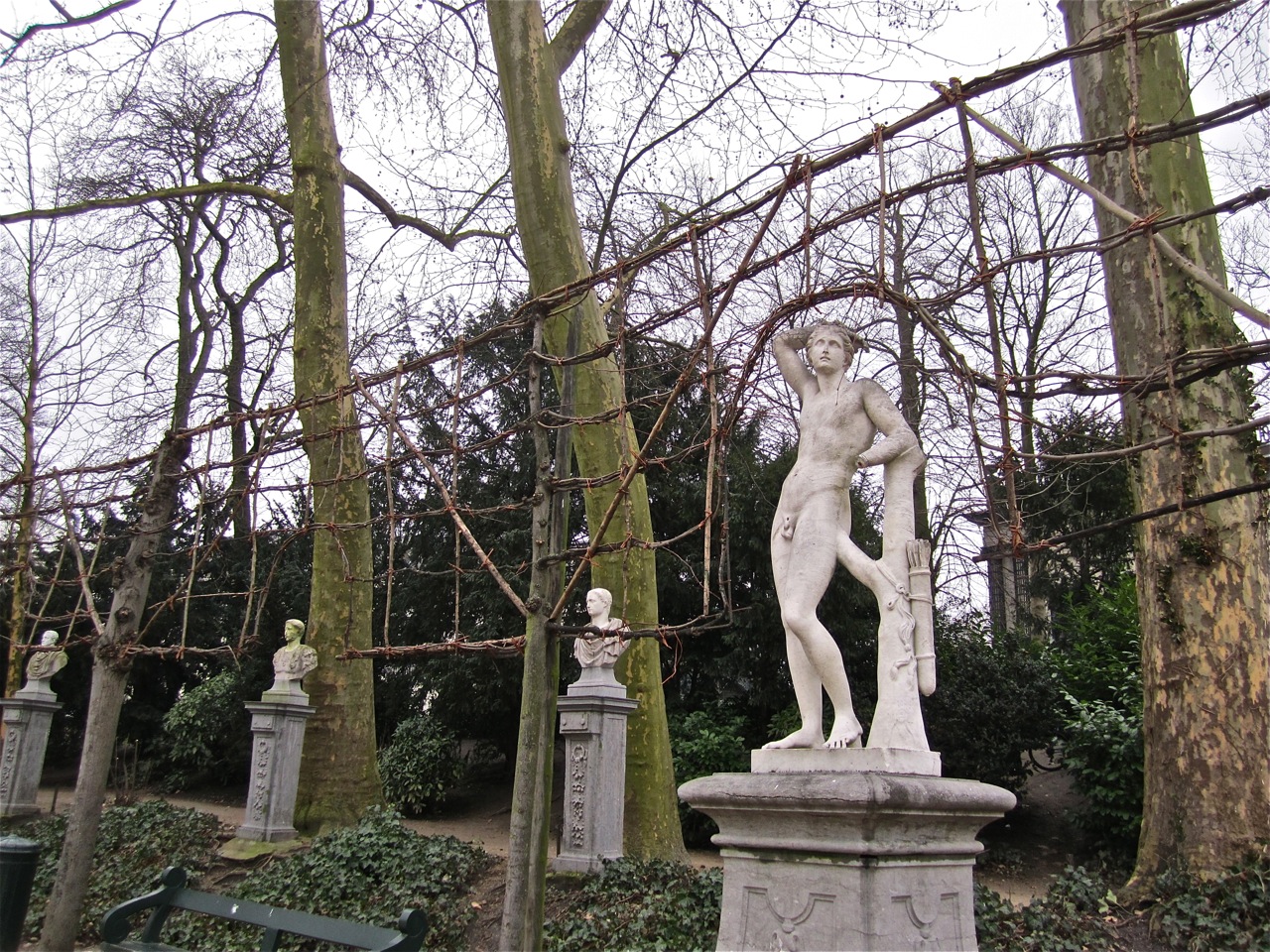
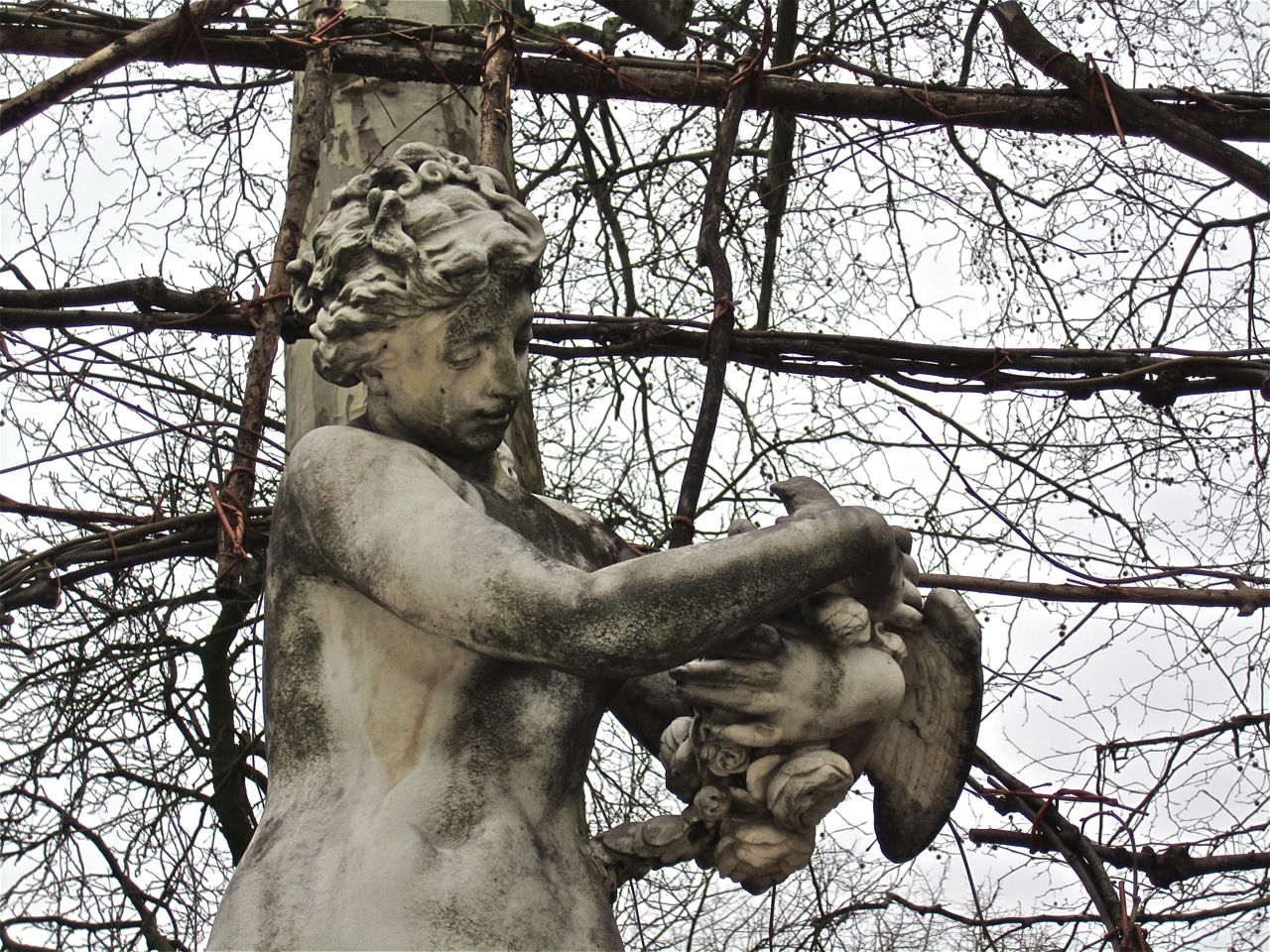
The park also contains about 60 sculptures inspired by Roman-Greek myths.  Most were originally taken from the Brabant dukes’ castle, Tervuren, and the Thurn und Taxis Palace.  Today, however, many are copies.  The entire park underwent a restoration in 2001.

The urns and sculptures below circle the north fountain.
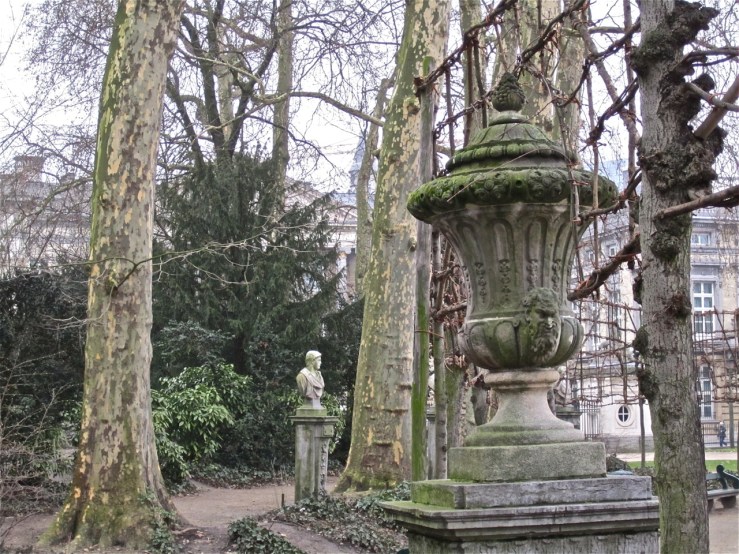
To scroll through larger versions of the above photos (and some others), click on ‘Continue reading’ below and then on any thumbnail in the gallery.

Continue reading “In Brussels Park”

And in Lyon

During three days in Lyon, France, last month, we also found some wonderful pollarded London plane trees in the old city areas of Vieux Lyon and Presqu’île.

Click on any thumbnail in the gallery to scroll through larger images.

Pollarded trees in Brussels

An advantage of visiting Brussels in the final days of winter is being able to see the bare knobby limbs and whippy branches of the city’s many pollarded trees.  They “can look weird,” wrote Landscape Designer Clive West in The Guardian at this link.  But, like him, I am fascinated by the particular aesthetic of their gnarly forms — ancient and modern at the same time.

Click on any thumbnail in the gallery to scroll through larger images.