Vintage landscape: Los Angeles

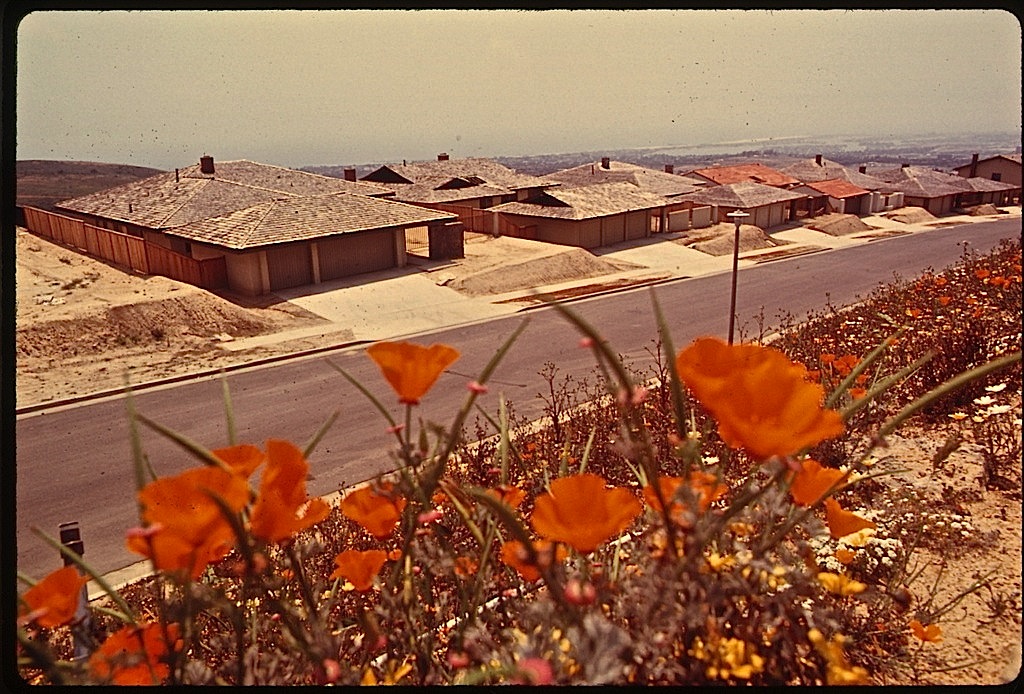
L.A. houses, DOCUMERICA, National ArchivesFlowers planted around Spyglass homes built on a terraced hillside[, Los Angeles], May 1975.”

This photo was taken by Charles O’Rear for DOCUMERICA,  a 1970’s photography program of the Environmental Protection Agency.

There are more pictures from DOCUMERICA here.

Neptune Road, Boston

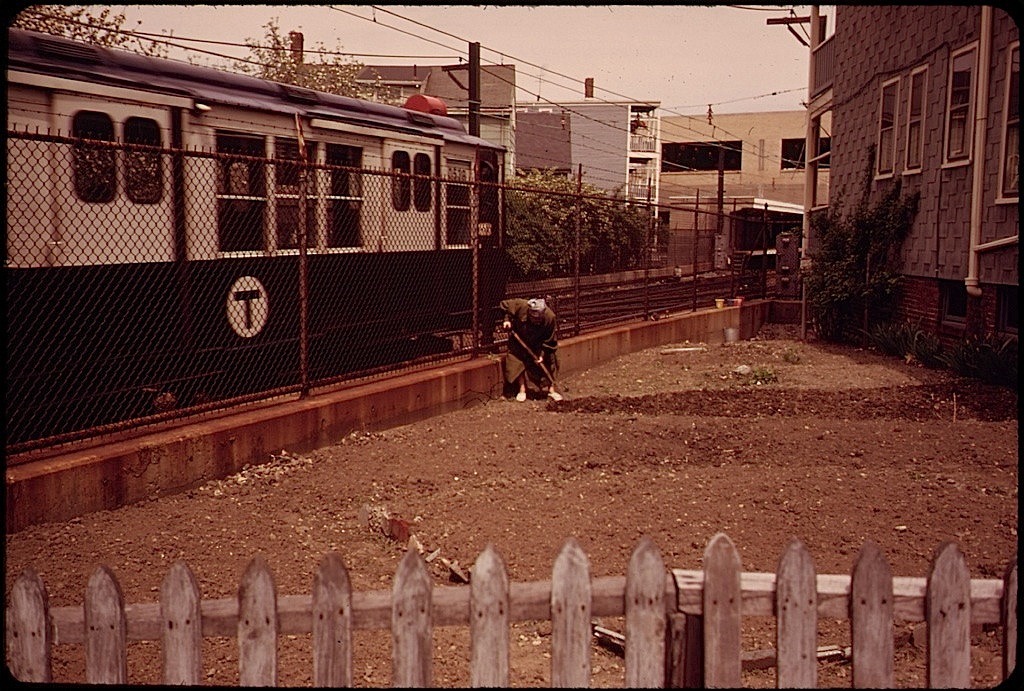
Life in gardens/enclos*ure: East Boston, 1973, by M.P. Manheim, via Natl. ArchivesA woman turns her garden soil while a Massachusetts Bay Transit Authority train rushes past the northeastern side of Neptune Road in East Boston, Massachusetts.

This photo* was taken in May 1973 by Michael Philip Manheim for the DOCUMERICA program of the Environmental Protection Agency.

Manheim captured East Boston, particularly around Constitution Beach and Neptune Road, at a moment of massive expansion of transportation infrastructure, including Interstate 90 (which terminates in East Boston) and an above-ground portion of the city’s rail system (both projects completed in the 1950s). But more than any other piece of infrastructure, Logan Airport was the source of the biggest and potentially most harmful changes.

Logan’s expansion in the mid-1960s led to the removal of a Frederick Law Olmsted-designed park (Wood Island park), and its 1970s expansion led to the displacement of residents on Neptune Road as well as mounting local noise and air pollution issues.

Forty years later, the lively neighborhood Manheim found along Neptune Road hardly exists, replaced with parking lots and runways.

— Mark Byrnes, for the CITYLAB blog of The Atlantic

There are more photos of East Boston by Manheim  here.


*Via the U.S. National Archives Commons on flickr.

Jamaica Bay, New York

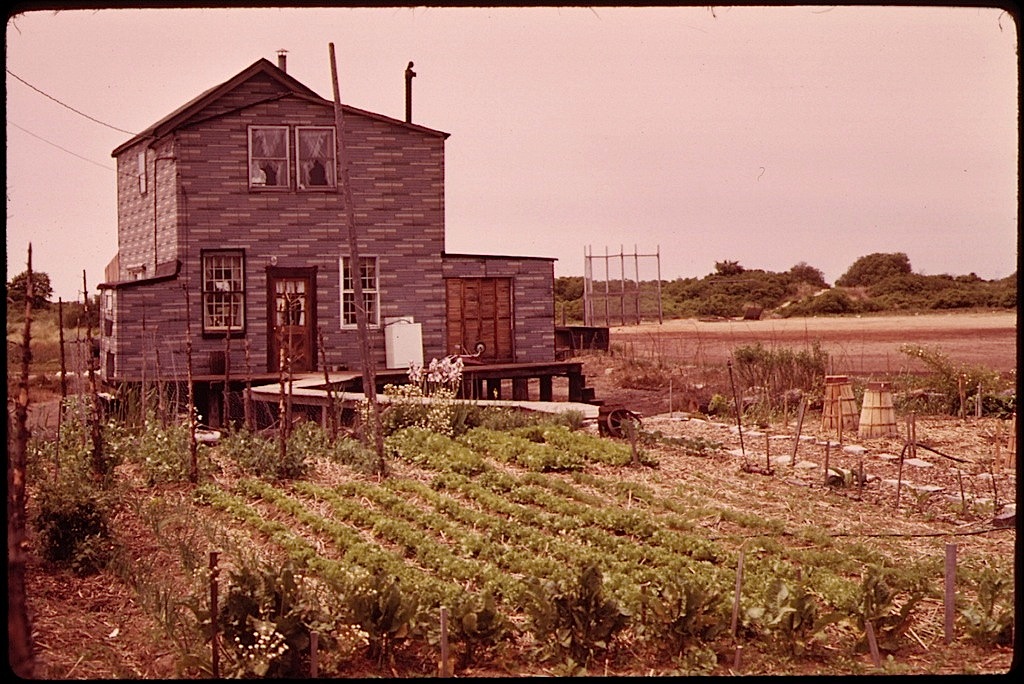
Vintage landscape/enclos*ure: Jamaica Bay vegetable garden, 1973, by A. Tress, via National ArchivesBroad Channel, marginal land in Jamaica Bay near the JFK Airport. New York City owns this land and leases it for five year periods. This renter is cultivating a vegetable garden.”

Arthur Tress took this picture* in May 1973 for DOCUMERICA, a program of the U.S. Environmental Protection Agency, which “photographically document[ed] subjects of environmental concern” from about 1972 to 1977.

Note that the house is raised on pilings, as well as the walkway from the back door to the garden.

There are more pictures from DOCUMERICA here.


*Via the U.S. National Archives Commons on flickr. Caption by photographer or EPA.

Life in gardens: conversation

This slideshow requires JavaScript.

I like this trio of photos by Louise Rosskam, which capture two men on a town common bench evidently enjoying a funny story or joke.

They were  taken in Vergennes, Vermont, in August 1940.*

New England commons were (and are) community spaces that probably evolved from the lots originally set aside for village meetinghouses or churches.  After the mid 19th century, many began to function like parks.†

Although Rosskam was not employed there, a series of photos that she took in rural Vermont became part of the picture archives of the Farm Security Administration.

In a 1965 oral history interview, she related how she proposed taking these pictures for the FSA, where her husband, Edwin, was a photo editor.

. . . [O]nce I took a vacation in Vermont, and I said to Roy [E. Stryker, head of the Information Division],”Could I take some pictures for you?” you know, “I’ll buy my own film and everything.” And he said, “Oh, here’s some film,” and then he starts rambling along about Vermont and really it didn’t sound as if it had anything to do with what you wanted to do at all. You started talking about hills, farmhouses and how people build a little extension on the house for the old people, and about pickled limes, the sky and how to get to Vermont 50 years ago, you know; by the time you got through listening to him ramble along, you begin to get some sort of formation in your mind of what there was up there so that when you get out there (phone rings)-

LOUISE ROSSKAM: (continues after phone conversation) But I’m sure that everybody sitting around, listening to Roy ramble, as it seemed, began to get his mind turned in the direction to be open to a lot of things that ordinarily he wouldn’t perceive when he got to a place. Don’t you think that’s true?

For many years afterward, her Vermont photos were attributed to her husband.  The records were corrected in 2001.

Laura Katzman, an associate professor of art history at James Madison University, curated two exhibits of Louise Rosskam’s photos and described her work like this:

She was one of those documentary photographers for whom the people and the work were so much more important than her name or her career. . . .  She tried to erase herself as much as possible. It was a pure documentary ideal that was impossible to achieve: let the subject feel comfortable, take yourself out of it and see what happens in the encounter. She did this beautifully because her ego wasn’t invested in it.

You can see four more photos by Rosskam of the Vergennes common by clicking on ‘Continue reading’ below.


*All via the Library of Congress Prints and Photographs Division.

†Vergennes is actually a city — the first chartered in Vermont and currently its smallest (in population). It is approximately 2.5 sq. miles in area.
The Sunday porch (on Monday)

Today, I’m repeating a porch from August 2012, but it is a nice one. (We were traveling this weekend.)

The Sunday porch/enclos*ure: Maplewood Camp, Waseca, Minn., c. 1900, Library of Congress“Cottages at Maplewood [Waseca, Minnesota],” c.1880-c.1899. By Detroit Publishing Co., via Library of Congress Prints and Photographs Division.*

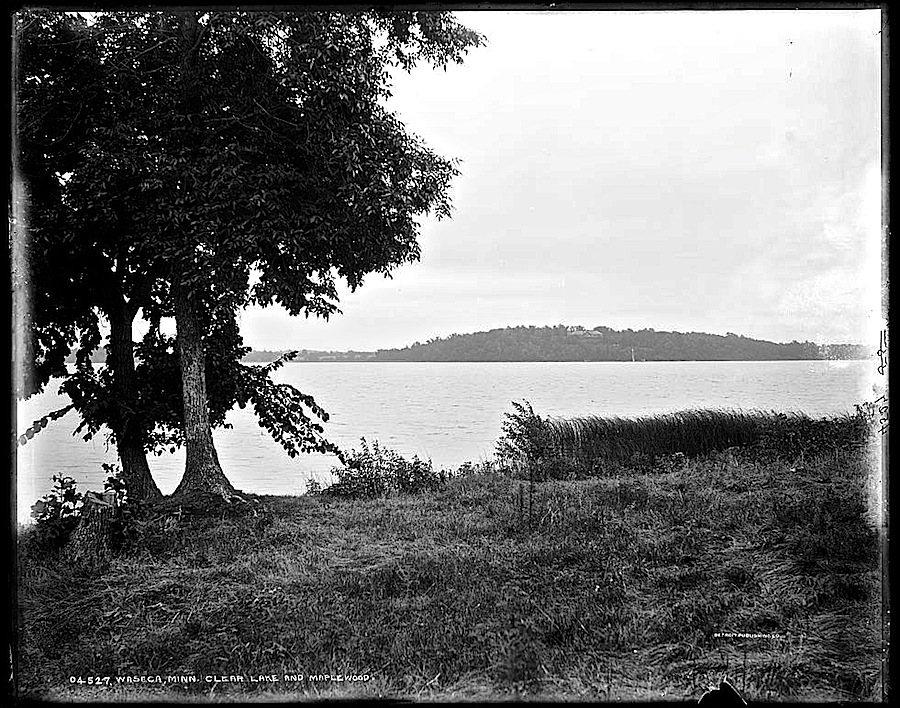
Maplewood Park on Clear Lake was a national vacation attraction at the end of the nineteenth century. (Click on any image to enlarge it.)

The Sunday porch/enclos*ure: Maplewood Camp, Waseca, Minn., c. 1900, Library of CongressAbove: Maplewood’s pavilion for Chautaquas. From the 1870s to 1920s, the Chautaqua movement brought speakers and companies of musicians, dancers, and actors to camps like Maplewood for up to a week at a time.

The Waseca Historical Society still hosts a Chautaqua at Maplewood Park every July.

To read about a similar sort of summer cabin living, which also continues today, see this 2012 New York Times article, here.

The Sunday porch/enclos*ure: Maplewood Camp, Waseca, Minn., c. 1900, Library of CongressAbove: the view of Clear Lake from Maplewood.


*All photos here: c.1880 – c.1899, by Detroit Publishing Co., via Library of Congress Prints and Photographs Division.