This slideshow requires JavaScript.
Everyone soon or late comes round by Rome.
— Robert Browning, from The Ring and The Book
As you might imagine, late May was a beautiful time to be in Rome. Coming in from the airport — and later on the way to Naples — we saw swathes of red poppies blooming all along the train tracks. In the city, there were jasmine flowers everywhere. The temperatures were in the seventies, and the crowds of tourists weren’t yet (too) bad.
We continued our rather unfocused wanderings in this city as well. But I did spend about two hours in the Museo di Palazzo Doria Pamphilj* (or Pamphili), which was recommended in a 2013 New York Times article, “Three Quiet Museums in Rome.” It’s a family art collection in what is still the family’s palace home.
Prince Camillo Pamphilj and his brother Pope Innocent X began buying the paintings and sculptures in the 17th century. In the 18th, the palazzo became the dynasty’s principal residence, and it is now mostly presented as it was at that time.
It is quiet, and you can see masterworks by Bernini, Caravaggio, Memling, Titian, and Rubens, among others. Admission is €11 and includes a good audio tour by a current Pamphilj prince.
The extended family lives in other parts of the building (you can get a peek at their private courtyard garden just as you enter the museum). We think my husband, who met up with me later in the gift shop, may have been directed around the corner to the entrance by two of its members — older Italian ladies who told him he would “have a lovely time” in perfect British English. The audio guide tells you that English is the first language of the family today (a legacy of a 19th century English peeress ancestress).
This slideshow requires JavaScript.
We were also able to visit the beautiful grounds of the American Academy of Rome on Janiculum Hill (photos above).
Miscellaneous tips for Rome
Reserve your hotel room as early as possible. I started looking about six weeks before our trip, and all of my first and second choices were booked up.
The two (casual) restaurants we particularly liked were:
- the pizzeria Panattoni, Viale di Trastevere 53/57 (dinner only, cash only, closed Wednesdays) in Trastevere — for thin Roman-style pizza.
- L’Antica Birreria Peroni, near Piazza Venezia — serving lunch and Peroni beer to local businesspeople. (The menu they gave us was only in Italian, but you can see a translation here.)
I liked the Kindle guidebook Revealed Rome by Amanda Ruggeri (and her blog of the same name) for culture, restaurant, and shopping tips. I also consulted the blogs Parla Food, Aglio, Olio e Peperoncino, and The Guardian’s city guide for Rome.
I also liked Italian Survival Guide (on Kindle and paper) by Elizabeth Bingham for a good explanation of Italian pronunciation, numbers, and basic phrases, as well as culture tips.
Not Built in a Day by George H. Sullivan is an interesting guide to Roman architecture, but don’t buy the Kindle version, as I did. The maps are tiny and fuzzy, making it very difficult to follow his walking tours.
*It is not part of the large park, Villa Doria Pamphili. The Palazzo is just northwest of the Piazza Venezia in the historic city center. The entrance is on Via del Corso.
Continue reading “In Rome” →

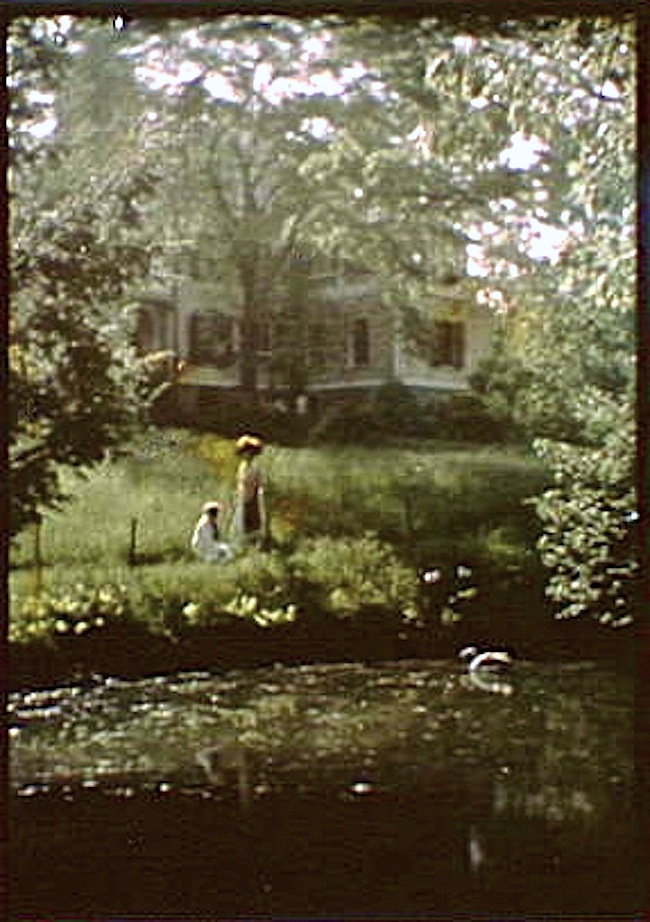 “Woman and child in a field in front of a white house,” an autochrome taken between 1906 and 1942, by Arnold Genthe, via Library of Congress Prints and Photographs Division.