On Friday, I visited Tudor Place, a 200-year-old estate in Georgetown built by Martha Custis Peter, the granddaughter of Martha Washington, and her husband.
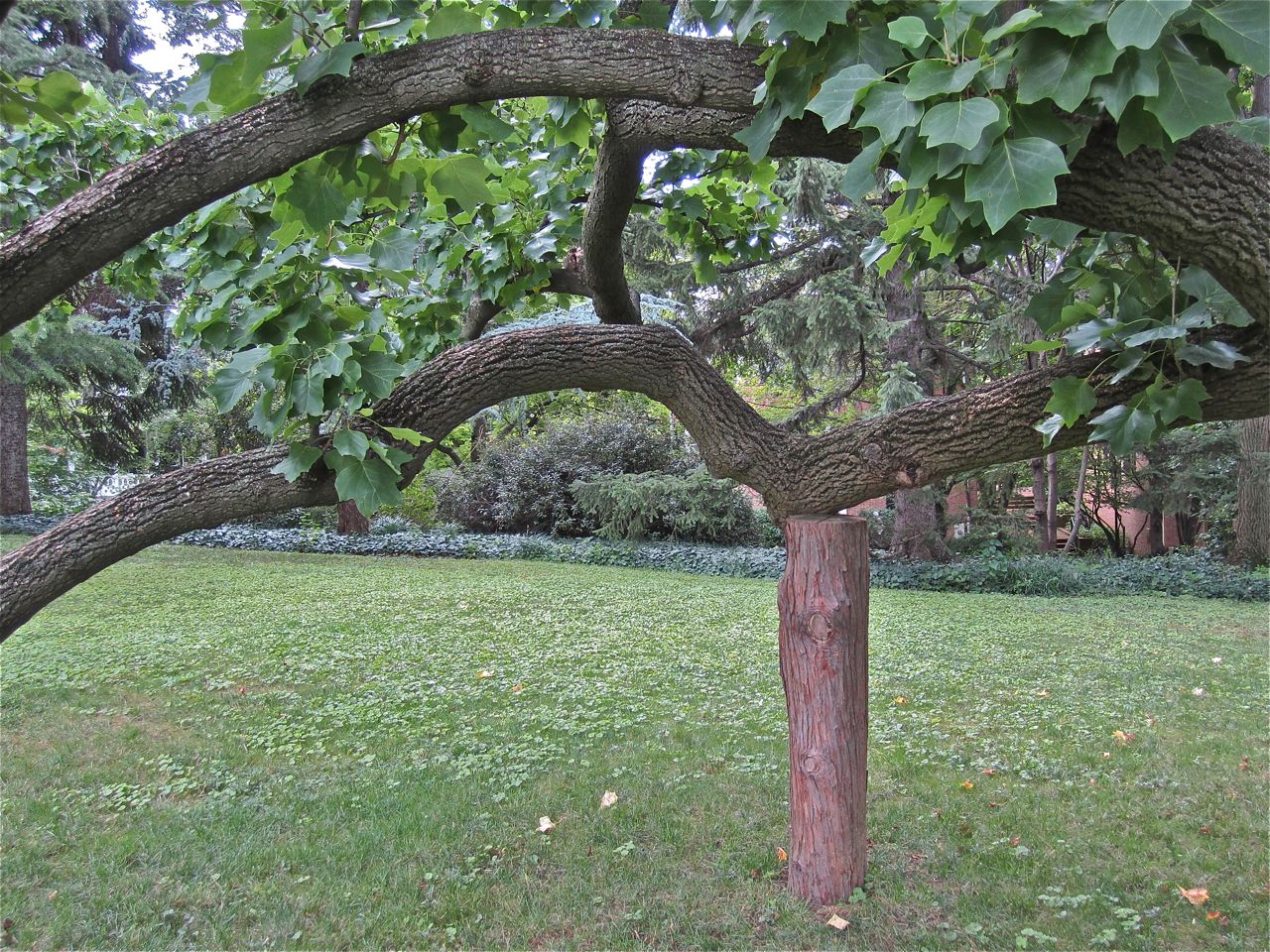
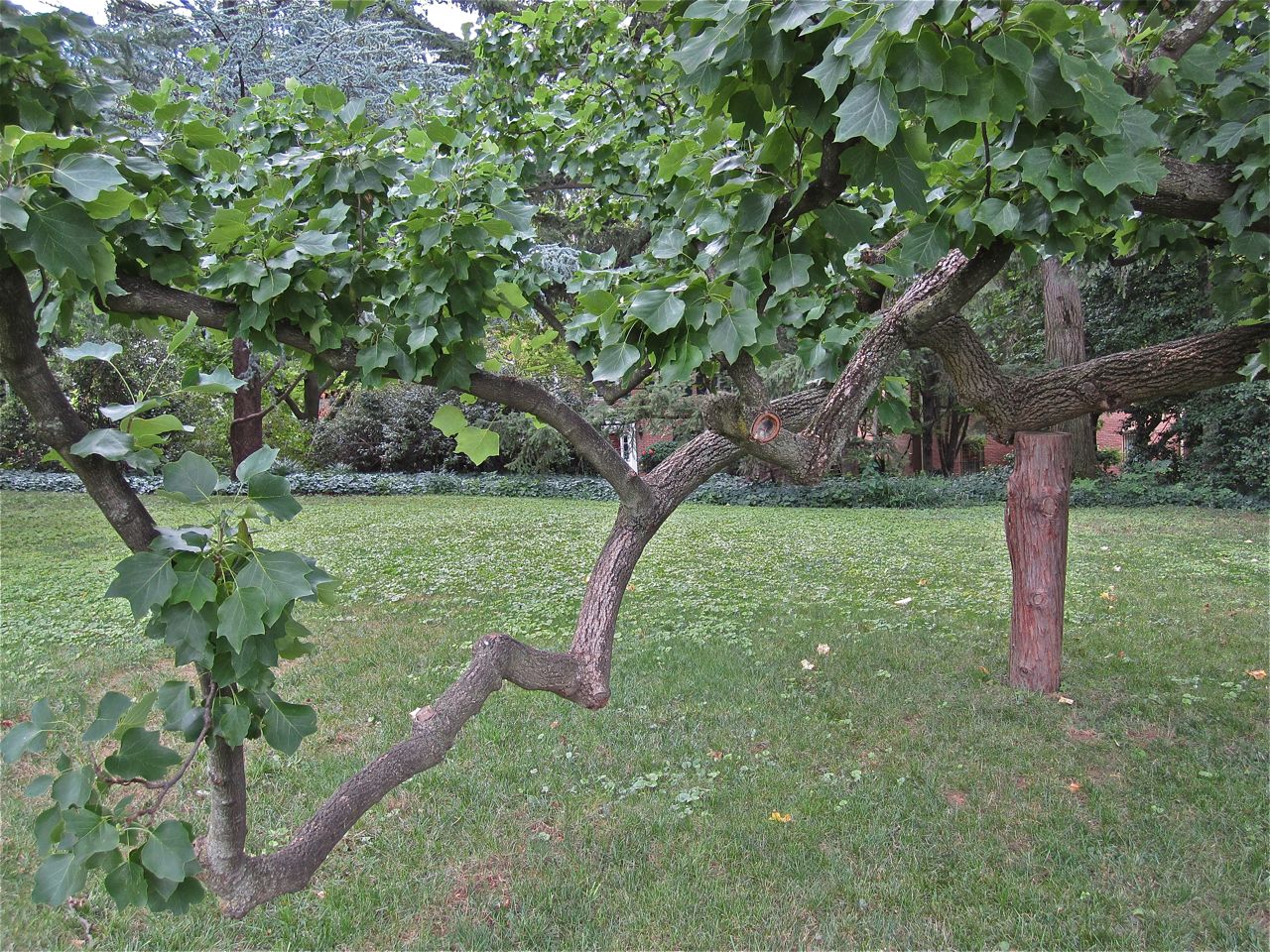
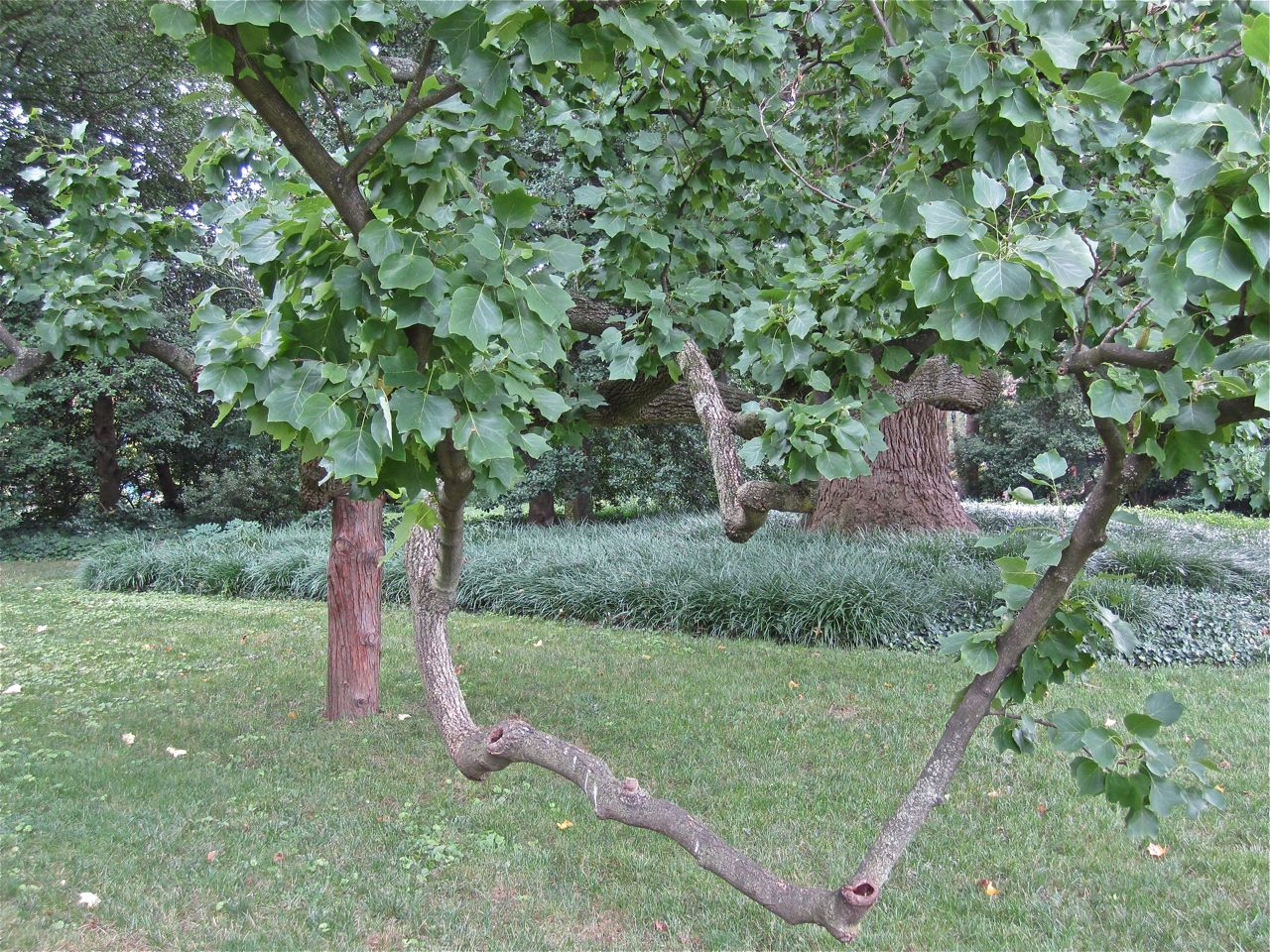
I took many photos (I take full advantage of my memory card), and I want to write a post about the whole garden, but today, I thought I would start with some pictures of the property’s remarkable tulip poplar tree.
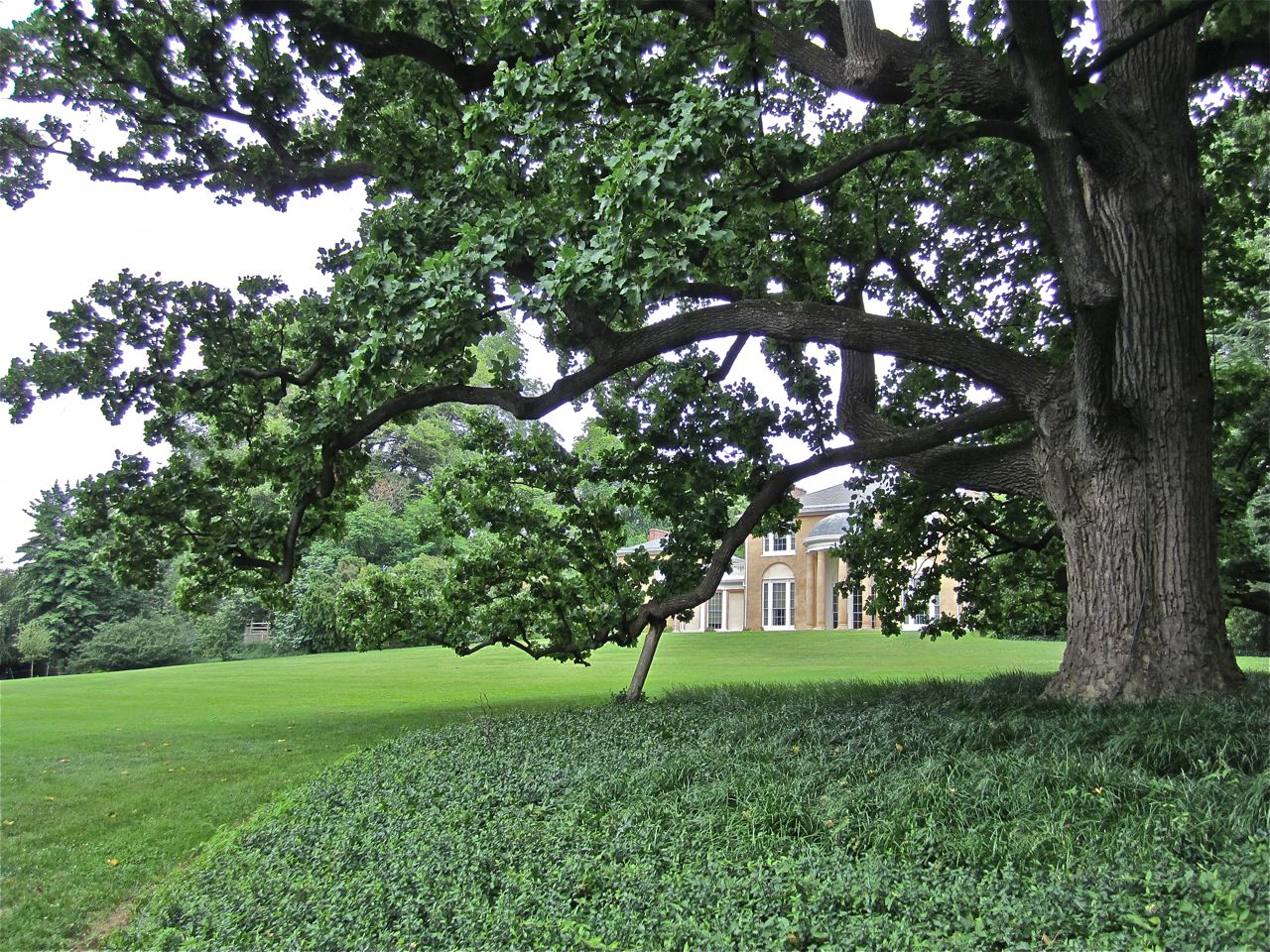
Tudor Place house, seen from south lawn.
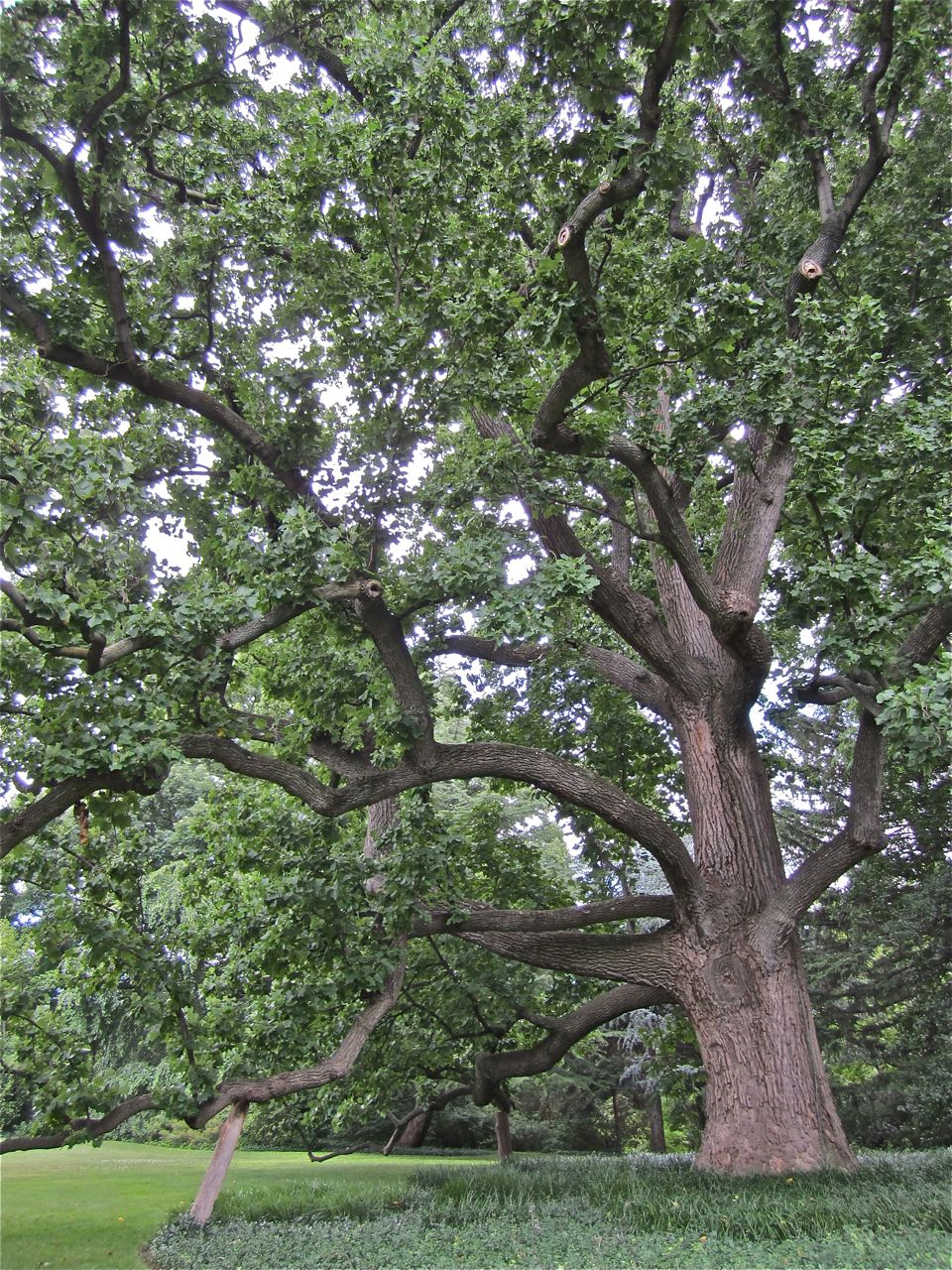
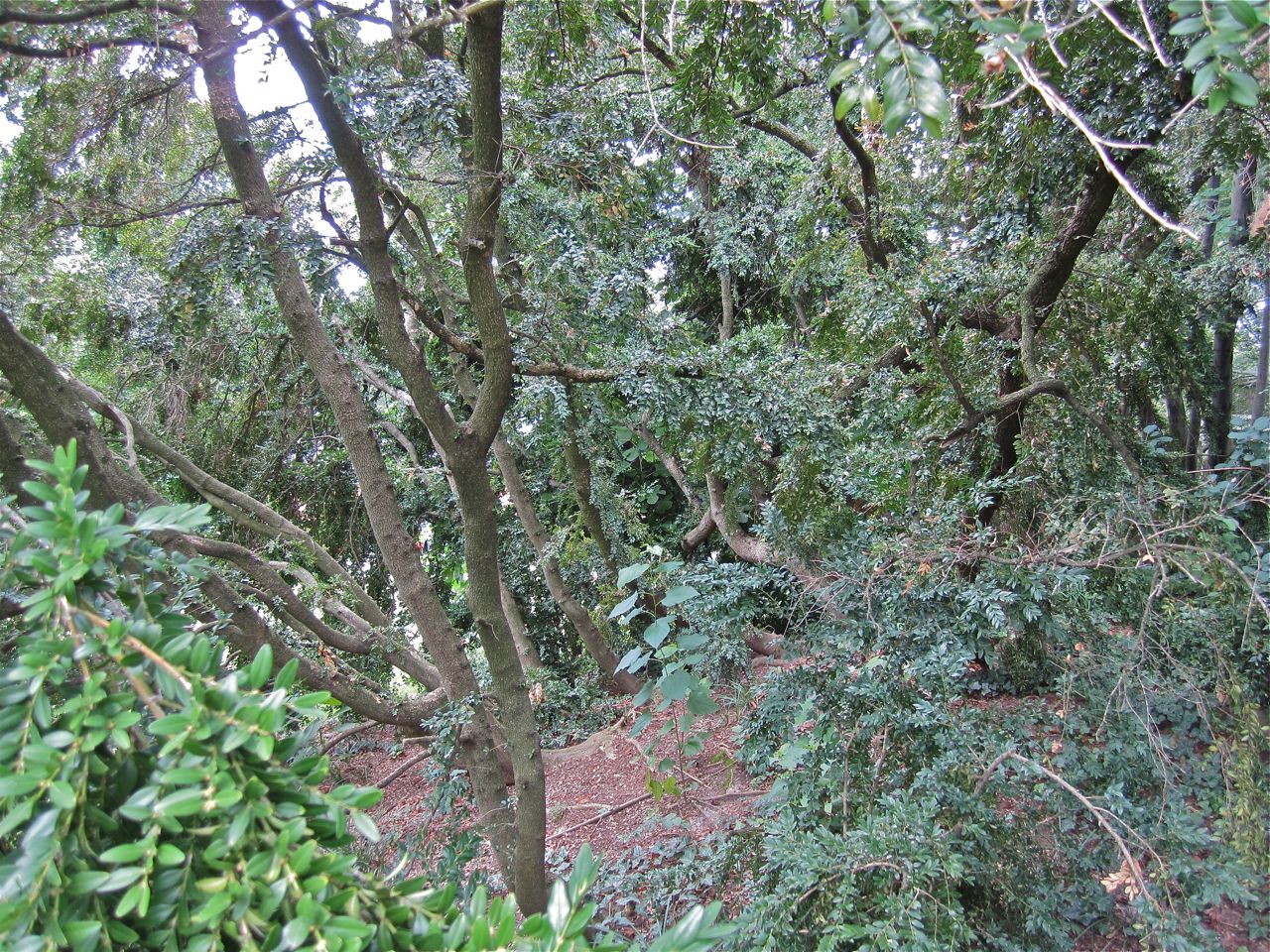
Located on the south-side lawn, the tree was possibly there when the Peters arrived. It is now 20′ in circumference and over 100′ tall. In 2002, it was designated the “Millenium Landmark Tree” for the District of Columbia by the America the Beautiful Fund.
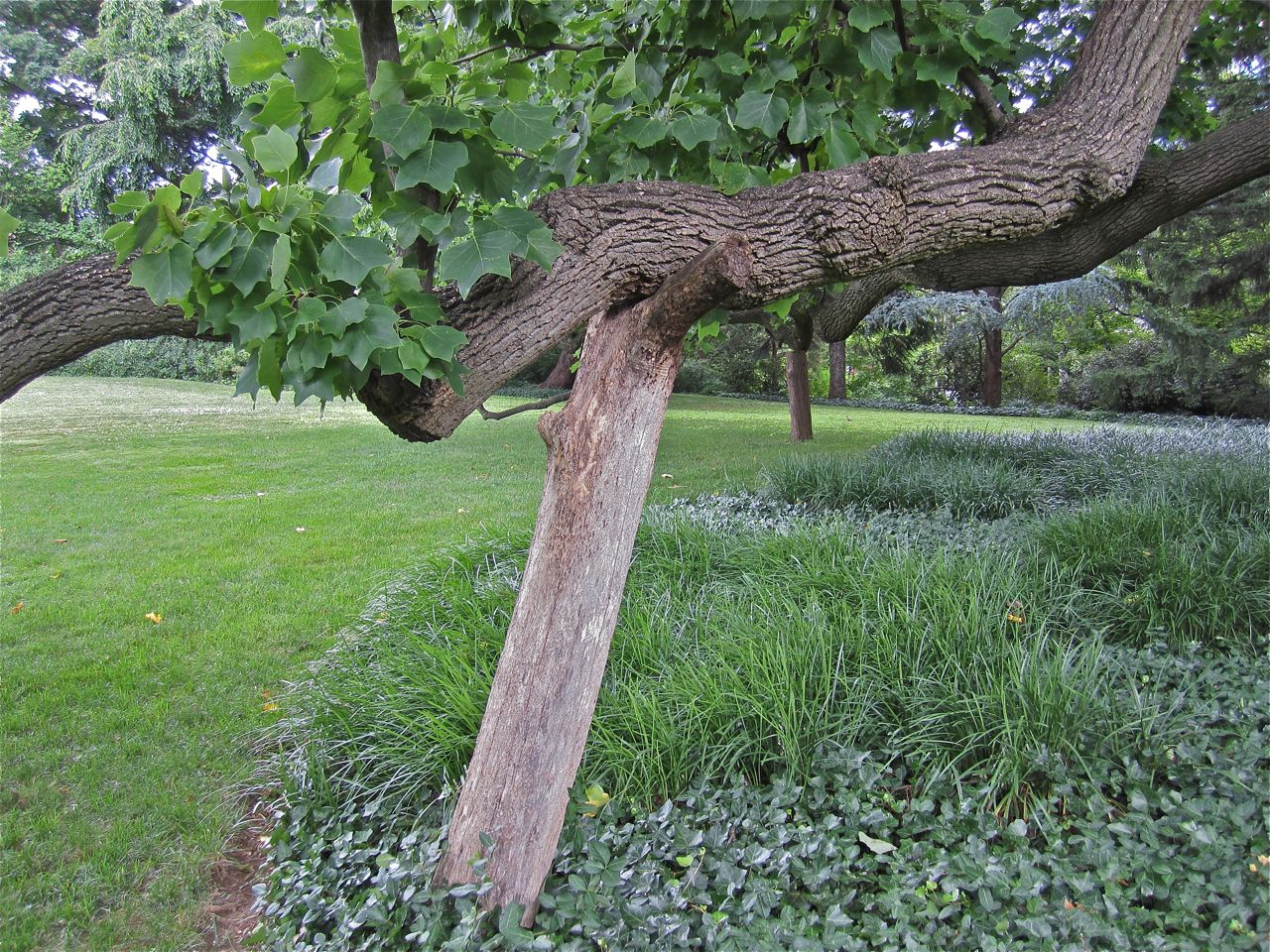
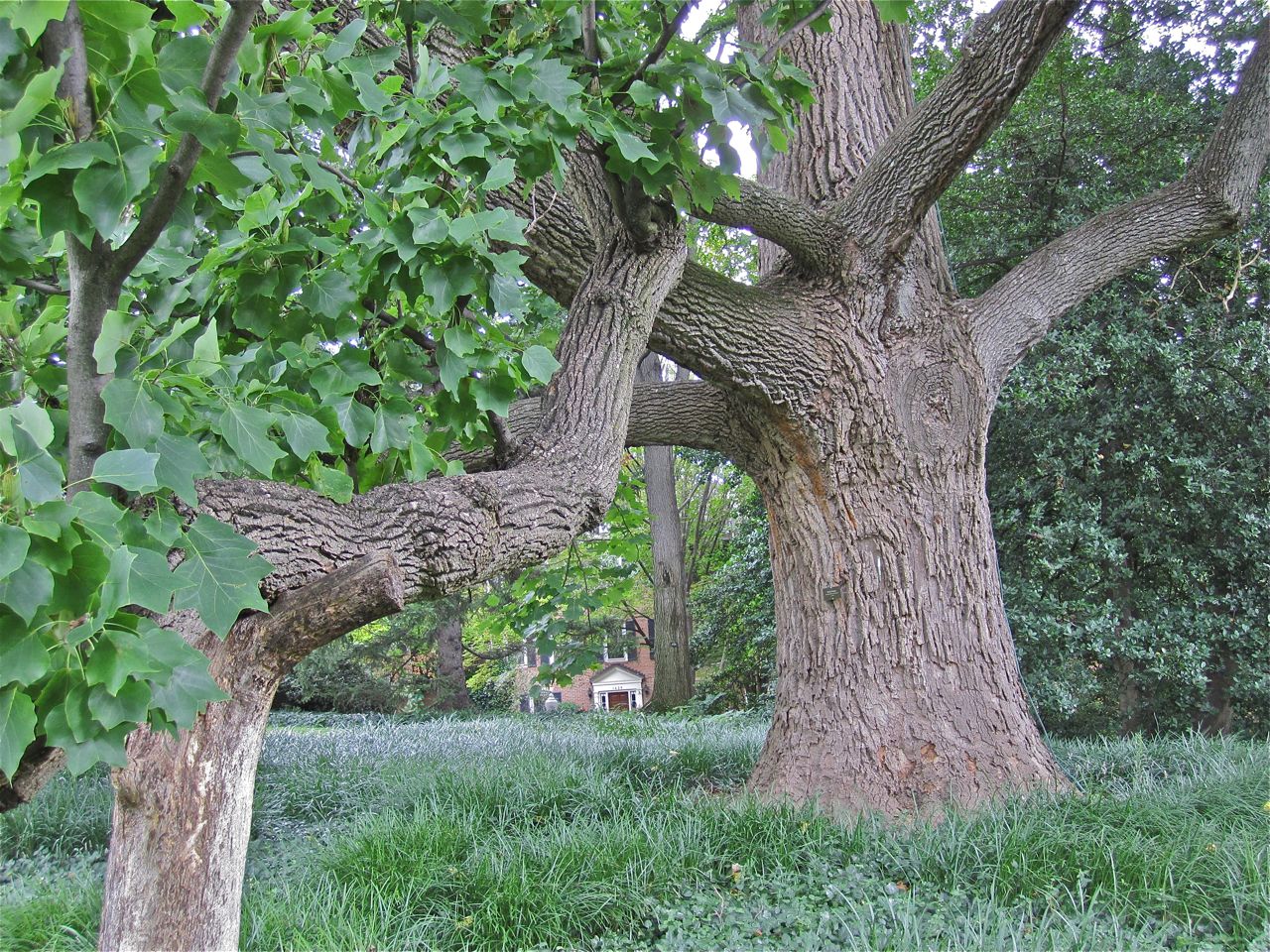
Historic tulip poplar at Tudor Place. Branch support.Branch support with neighbor’s house in the background.
Another low branch and support.Low branch and support.The tree’s low branches encompass a separate space within the larger property. An “Archaeological Overview and Preservation Plan” prepared by the University of Maryland called it “perhaps the most significant landscape feature on the entire estate.”
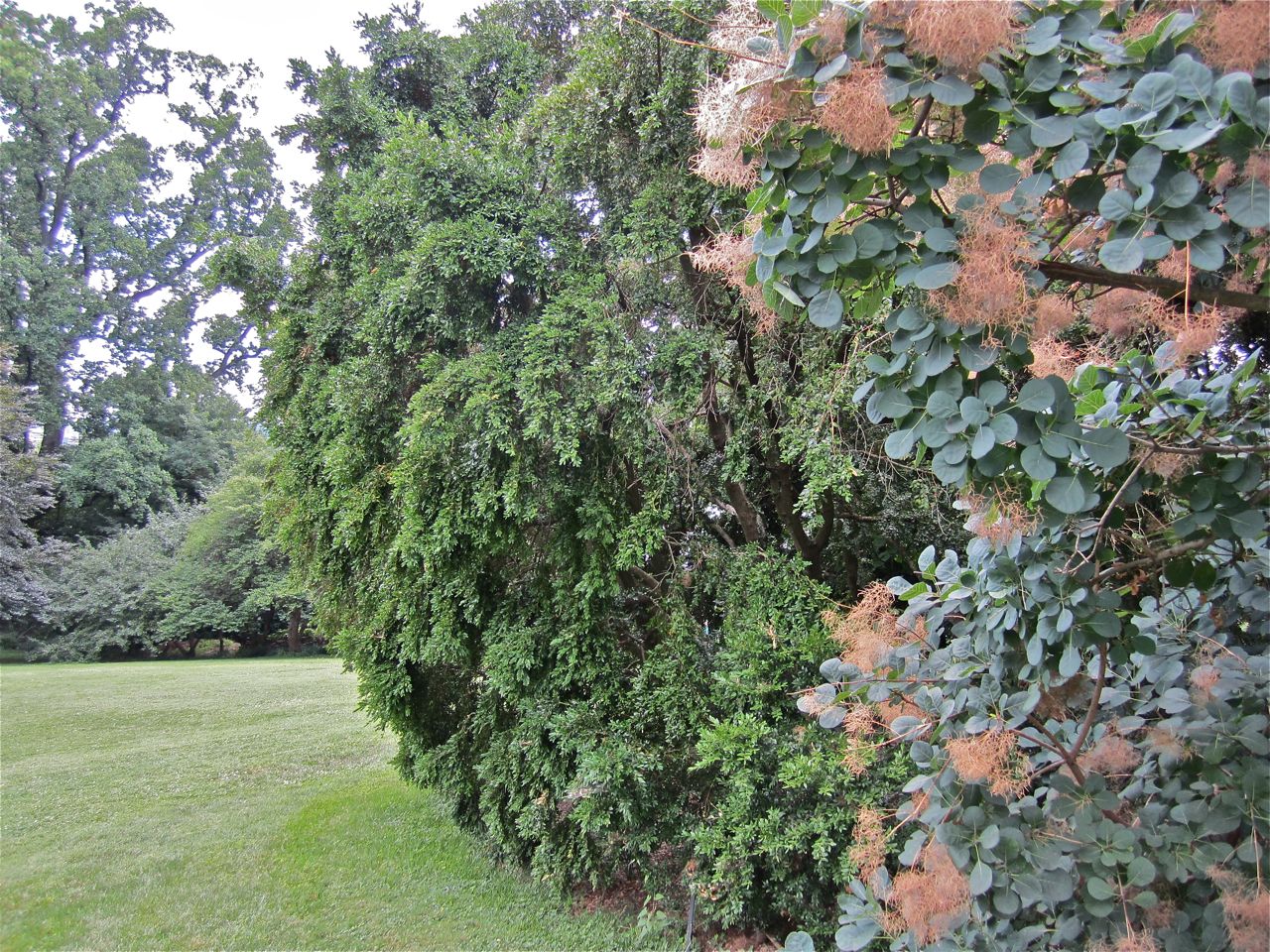
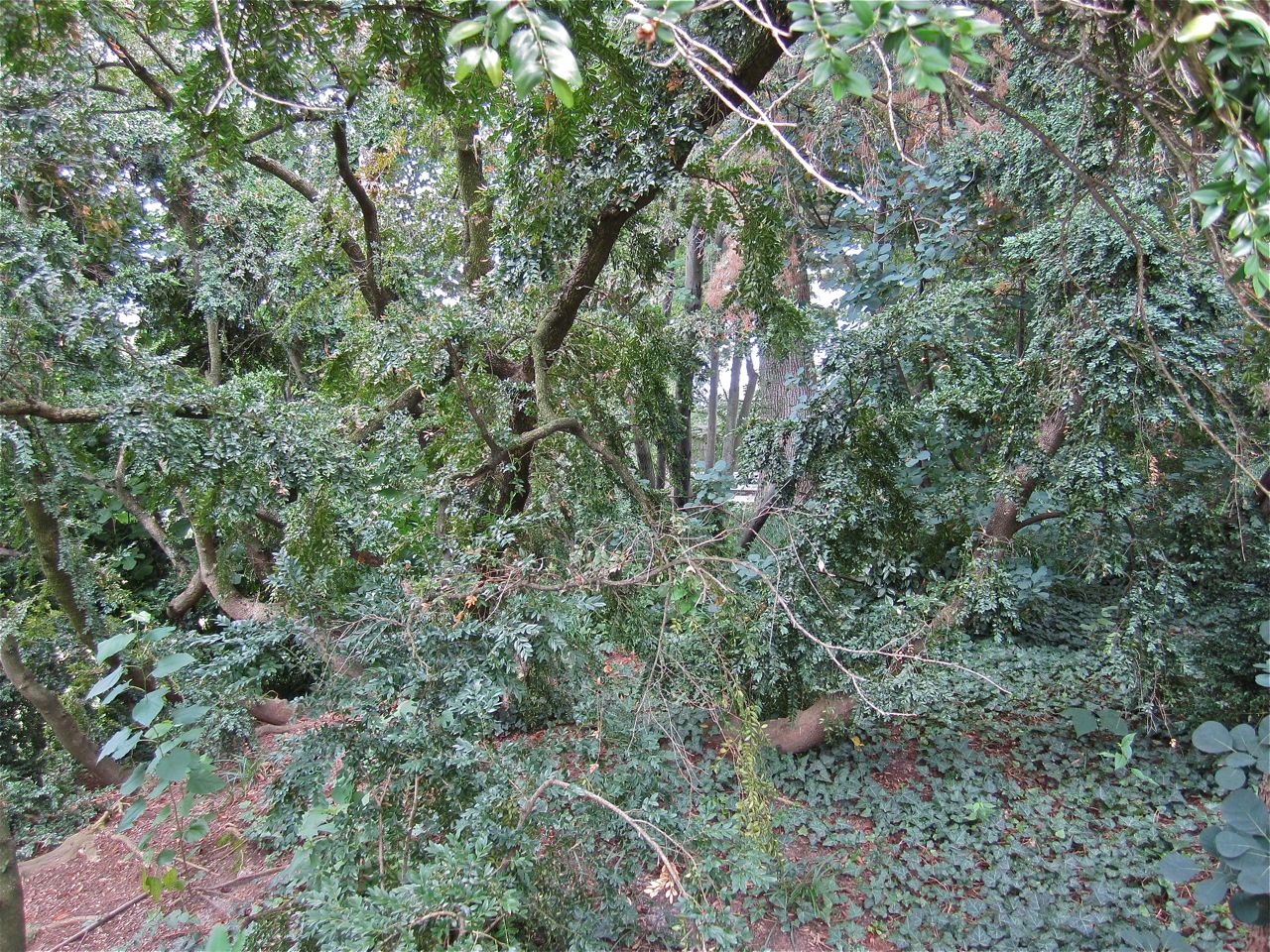
Here are also some photos of a small “grove” of very large, very old boxwoods, also on the south lawn, which I thought were almost other-world-like from the inside.
The outside of an old boxwood the height of a small tree on the front lawn of Tudor Place.Another small environment within the boxwoods. Inside this “grove” of old boxwoods.
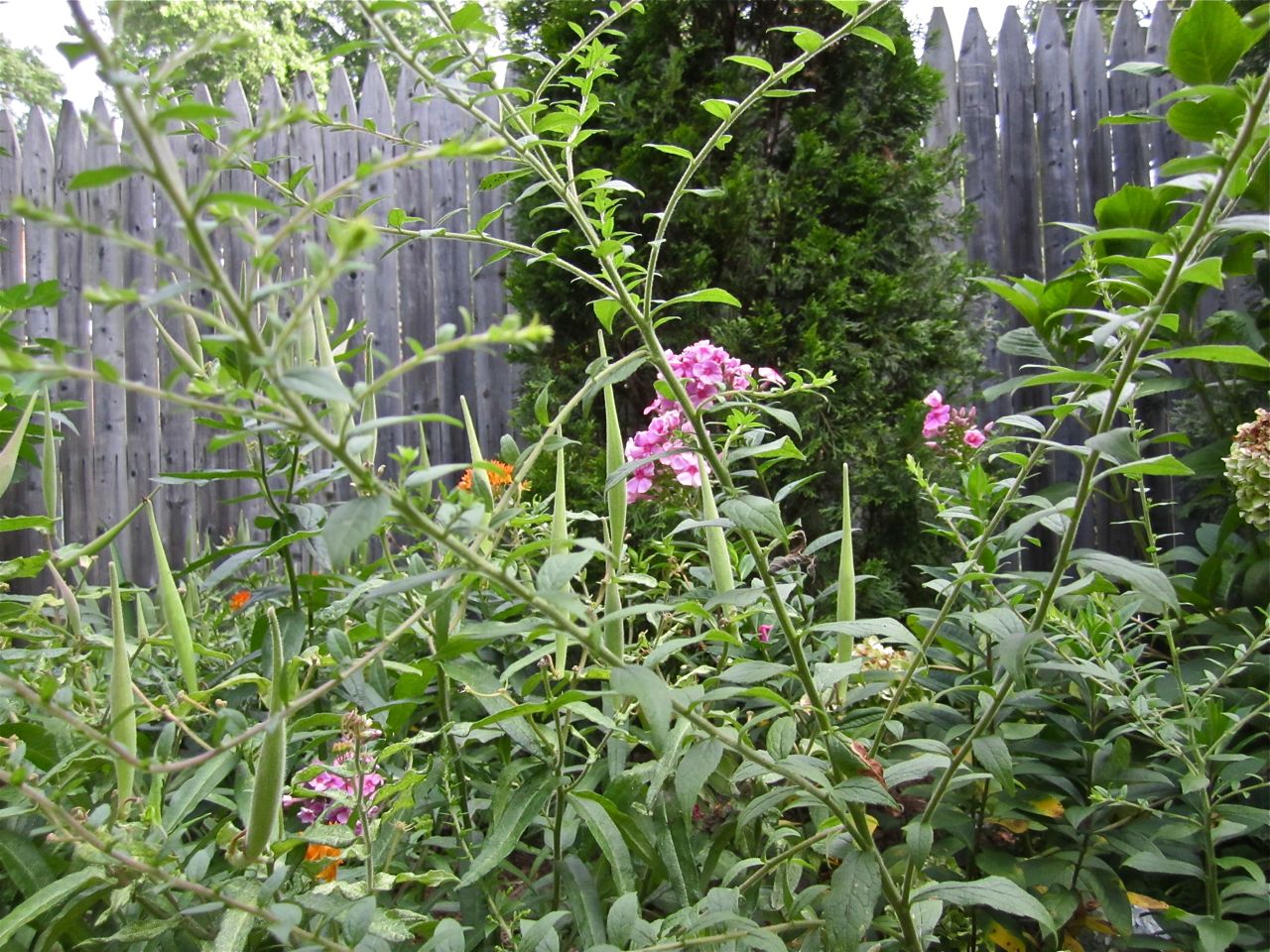
Goldenrod, butterfly milkweed, and common tall phlox.
I’m having more of an in-between-bloom day. The milkweed has about finished, although the pods are nice, but the goldenrod and cutleaf coneflowers need another week or so. I do have some nice phlox blooming though. Continue reading “Garden Bloggers’ Bloom Day in July”→
I’m stuck inside with a cold today and have been all weekend, so I haven’t been able to take any new pictures.
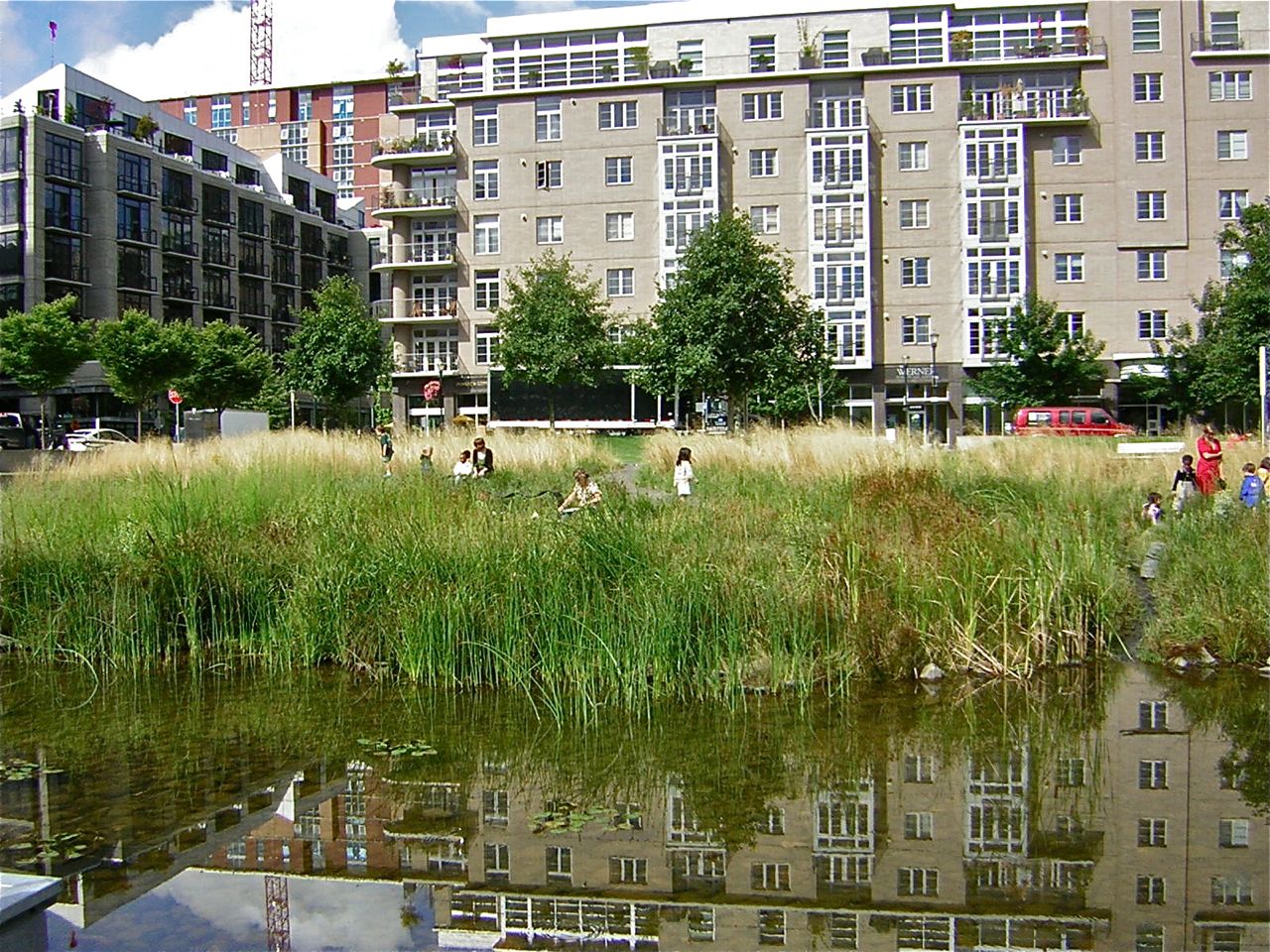
However, I found these photos of Tanner Springs Park in Portland, Oregon, which I took in 2008. I thought I would share them because I was thinking about Fiona Stephenson’s chalk stream show garden and about how a landscape type (in this case, wetlands) can be interpreted effectively in a garden design (in this case, a .92 acre urban public park).
Also, the children in the photos are having such a nice time fooling around in the grass and water, and, while I look at them, I reflect that it’s going to be 95° here in Washington, D.C., today and only 70° in Portland.
A summer camp group visits Tanner Springs Park in Portland, Oregon.
The Tanner Springs Park opened in 2006 in the Pearl District, which is a neighborhood partly made up of old warehouses that are now turned into apartments and shops. Before the warehouses, there was Tanner Creek, which fed streams, wetlands, and a lake and ended at the Willamette River close by. In the late 19th century, Tanner Creek was rerouted into an underground system of pipes.
The park is not a restoration of the original environment but is meant to imitate and function somewhat like a wetland.
The concept for the park was provided by Peter Walker & Partners. The design was by Atelier Dreiseitl and Green Works, P.C.
On July 4th, my husband and I walked home through Georgetown after lunch. When we reached R Street, we decided to cut through Montrose Park and then over behind Dumbarton Oaks.
This is how we came upon Dumbarton Oaks Park, a section of Rock Creek Park with an exceptional pedigree, but a difficult present existence. It is an almost lost remnant of the Country Place Era of American garden design (1880 – 1940).
The Dumbarton Oaks garden, which was designed by Beatrix Farrand for Mildred and Robert Bliss, is famous, but the park behind it is far less known. I had never heard of it — not from garden history classes nor during visits to the DO garden — until this April, when I received an e-mail about the launch of efforts of save it.
Laurel Pool damaged by runoff.
But the DO Park, also designed by Farrand, is on the National Register of Historic Places. “To landscape historians,” writes Adrian Higgins of The Washington Post, “it is hallowed ground.”
In 1928, these 27 acres of former farmland became a naturalistic extension of the Bliss estate’s formal gardens. A series of paths and meadows were composed along a small tributary of Rock Creek and planted out with drifts of native and exotic wildflowers, bulbs, and woodland shrubs. Eighteen waterfall dams were built, as well as two arbors and several benches and footbridges — all in the rustic Arts and Crafts style.
In 1941, when Dumbarton Oaks was given to Harvard University, this part of the property went to the National Park Service.
Over time, however, it seems that the highly designed and delicately crafted landscape was just too much for the Park Service to handle. Photos taken in the late 1980s show it in very bad condition. Through the decades, there has been serious damage from runoff to the stream-edge areas, and invasive weeds and vines have smothered and pushed out Farrand’s trees and plants.
The formation of the Dumbarton Oaks Park Conservancy offers some hope for its restoration. Headed by Rebecca Trafton, a garden designer and documentary maker, it is currently raising money and hopes to present a work plan in October.
The DO Park is a remarkable place even now, and the strength of Farrand’s vision and of her artful use of materials still shines through. The refrain “this is how it’s done” ran through my mind as we walked along. If you visit Dumbarton Oaks, please walk down Lover’s Lane on its east side and take a look.
Click on any thumbnail in the gallery below to scroll through the enlarged photos. The order follows a walk from one end of the path along the stream to the other.
Looking back to the Montrose Park entrance, lichen-covered stone.
Crossing the stream on a footbridge.
The stream was dammed to create waterfalls.
A memorial, although to what is lost.
Laurel Pool somewhat damaged by runoff.
Rhododendron along the path. Farrand also had planted drifts of mountain laurel, but I didn’t see any remaining.
Old stone pool.
Old stone pool and rhododendrons.
I have no idea. . . but beautiful.
The stream, an unnamed tributary of Rock Creek Park.
The stream.
The stream.
The stream and waterfalls.
Stone bench. There used to be a rustic arbor over this long bench.
Photo of the long stone bench from the 1930s. Library of Congress, Historic American Buildings Survey.
A footbridge over a waterfall.
Native tree.
A bench in a meadow.
Stream dam.
The back of the Georgetown Safeway parking garage, which overlooks the last part of the path. Porcelain berry vine and wild grape have taken over this area.
Ancient, broken rhododendron.
Rhododendron.
Old rhododendrons at the edge of the path.
Couple walking along the path.
Emerging from the park behind The British School on Wisconsin Avenue.
I would like to share more of my photos from the Bishop’s Garden that particularly show the wonderful patterns, shades, and textures of the varied foliage. Please click on any thumbnail in the gallery.