Trois enfants

Another picture from a file of bookmarked photos I have labeled “children made to pose in gardens.”

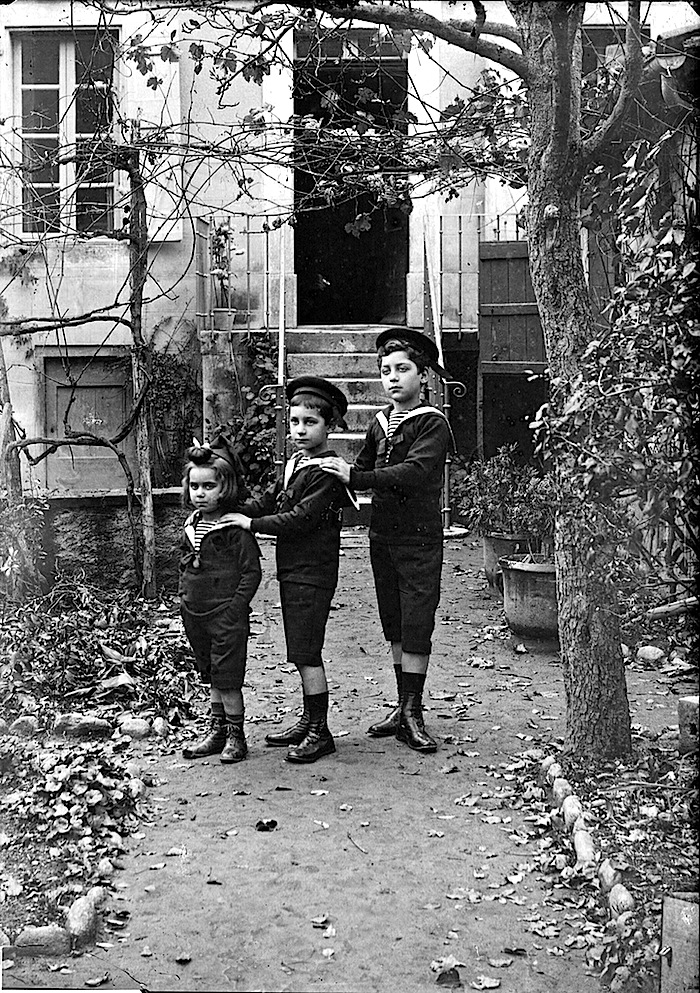
8056081761_64c8a419a1_b“Three children in sailor suits,” between 1859 and 1910, in the Pyrénées, by Eugène Trutat, via Bibliothèque de Toulouse Commons on flickr.

I think the little girl has just about had enough.  I like the way she has her hands in her pockets.

There is another photo from the Bibliothèque that I believe shows the same three children, captioned “Enfants Servell, 2 novembre 1905,here.

Life in gardens: vier kinderen

Vier kinderen hand in hand, 1924, Rijkmuseum“Four (vier) children holding hands in front of a wooden fence,” Indonesia, ca. 1924, attributed to Klaas Kleiterp, via Rijks Museum of Amsterdam.

This image is from a file of bookmarked photos I have labeled “children made to pose in gardens.” I really like the large freeform lattice arbor around them.

Life in gardens: national day

Norwegian Natl Day in Baghdad, 1941, DEXTRA PhotoNorwegians celebrating Norwegian National Day (May 17) in Baghdad, Iraq, in 1941 by standing high jumping over a pole set up between two deck chairs, via DEXTRA Photo Collection Commons on flickr.

The Sunday porch: Munich

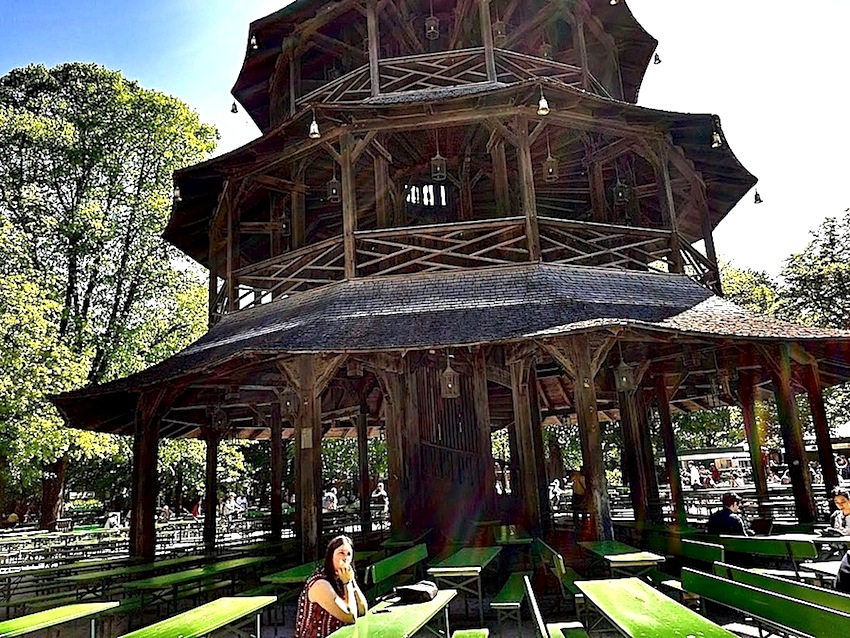
Chinese Tower, Munich, May 2016, enclos*ureChinesischer Turn and beer garden in the Englischer Garten park, Munich, Germany.

Not a porch, of course, but a grand garden pavilion first built in 1790 — the year the park itself was laid out (officially opening in 1792).

Chinese Tower detail, Munich, May 2016, enclos*ure
The all-wooden tower is five storeys and eighty-two feet tall.

The tower was designed by Joseph Frey, a military architect.  He was inspired by the “Great Pagoda” of the Kew Royal Botanic Gardens in London.

The 1790 structure burned down in 1944 after a heavy bombing of Munich.  The current tower, true to the original, was built in 1951.

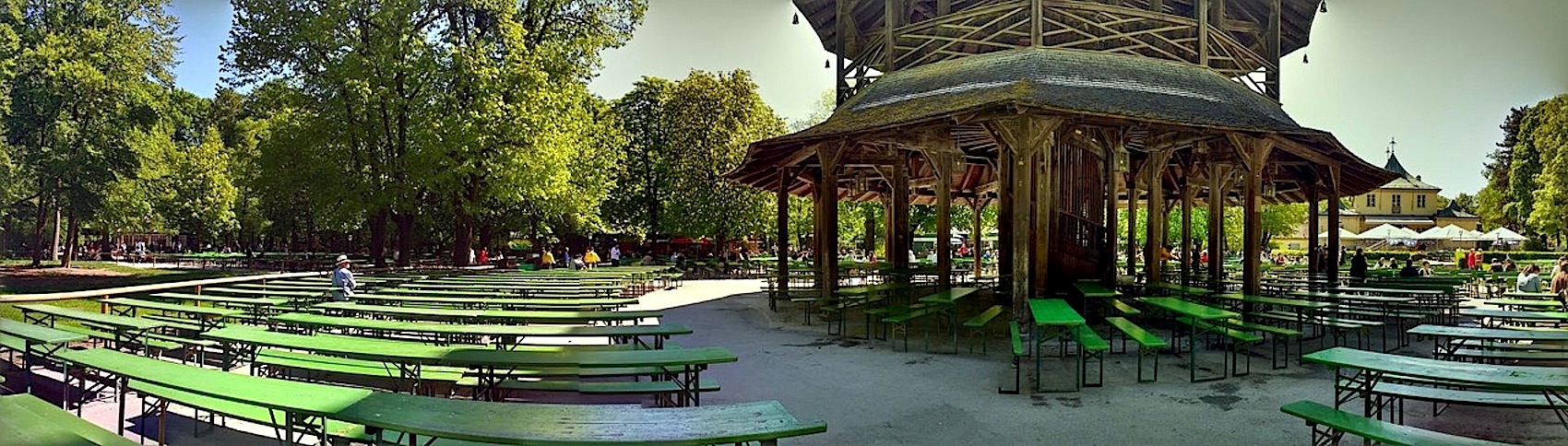
panoramic Chinese Tower, Munich, May 2016, enclos*ure
Click on the image to enlarge it.

The beer garden surrounding the Chinese Tower seats 7,000 people.

On early Sunday mornings in the late 19th century, up to 5,000 servants, soldiers, students, and other working-class people would gather at the tower to dance to a brass band.  These Kocherlball or cooks’ balls would end by 8:00 a.m., so that the attendees could get back to work or go to church.  The dances were outlawed in 1904, but were revived in 1989 as a annual event every third Sunday in July.

Munich, early May 2016, enclos*ure

As its name implies, the Englischer Garten public park (the oldest in Germany) was laid out in the English landscape style associated with the work of Capability Brown.  Its principal designer was Royal Gardener Friedrich Ludwig von Sckell, who had studied in England.

The park has an area of 910 acres — making it larger than New York City’s Central Park.

I took these photos with my phone while biking through the park last Sunday morning. (There are over 48 miles of paths in the park.)

There’s a brief history of beer gardens in America here.

Life in gardens: coffee stop

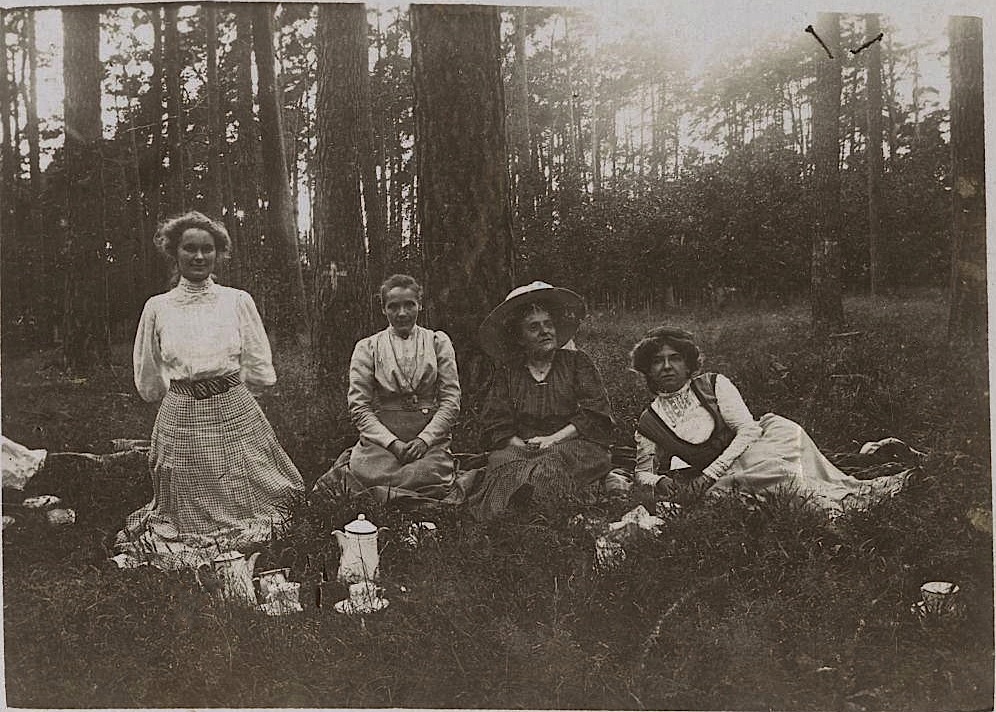
A fancy picnic, Estonia, flickr“Peen piknik,” (a fancy picnic), ca. 1910, photographer unknown,” via National Archives of Estonia Commons on flickr.