
The Sunday porch (on Monday)

Today, I’m repeating a porch from August 2012, but it is a nice one. (We were traveling this weekend.)

The Sunday porch/enclos*ure: Maplewood Camp, Waseca, Minn., c. 1900, Library of Congress“Cottages at Maplewood [Waseca, Minnesota],” c.1880-c.1899. By Detroit Publishing Co., via Library of Congress Prints and Photographs Division.*

Maplewood Park on Clear Lake was a national vacation attraction at the end of the nineteenth century. (Click on any image to enlarge it.)

The Sunday porch/enclos*ure: Maplewood Camp, Waseca, Minn., c. 1900, Library of CongressAbove: Maplewood’s pavilion for Chautaquas. From the 1870s to 1920s, the Chautaqua movement brought speakers and companies of musicians, dancers, and actors to camps like Maplewood for up to a week at a time.

The Waseca Historical Society still hosts a Chautaqua at Maplewood Park every July.

To read about a similar sort of summer cabin living, which also continues today, see this 2012 New York Times article, here.
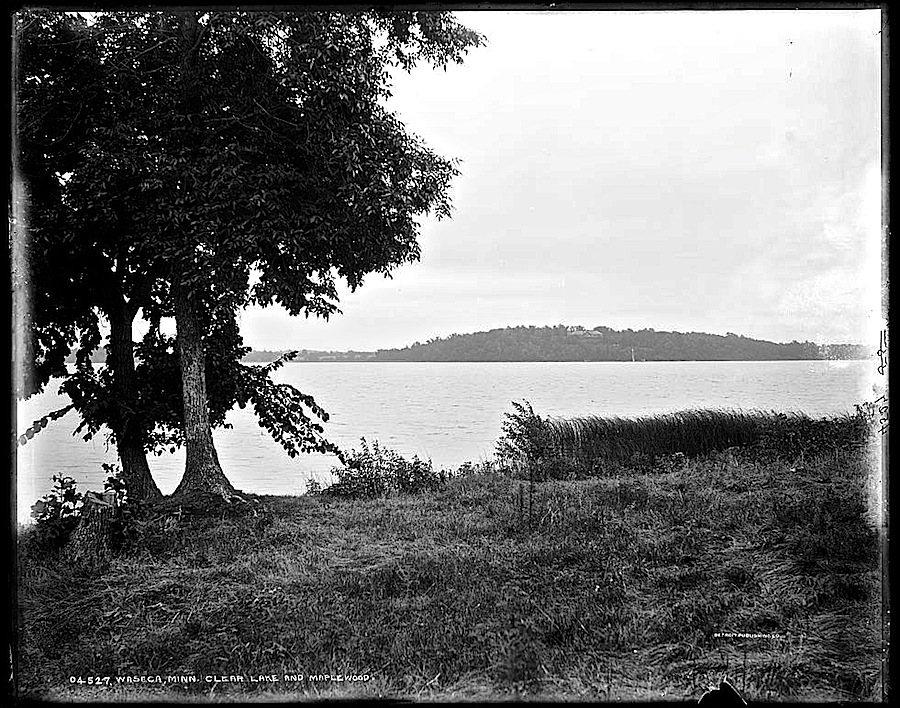
The Sunday porch/enclos*ure: Maplewood Camp, Waseca, Minn., c. 1900, Library of CongressAbove: the view of Clear Lake from Maplewood.


*All photos here: c.1880 – c.1899, by Detroit Publishing Co., via Library of Congress Prints and Photographs Division.
Vintage landscape: Hawthorne Lane

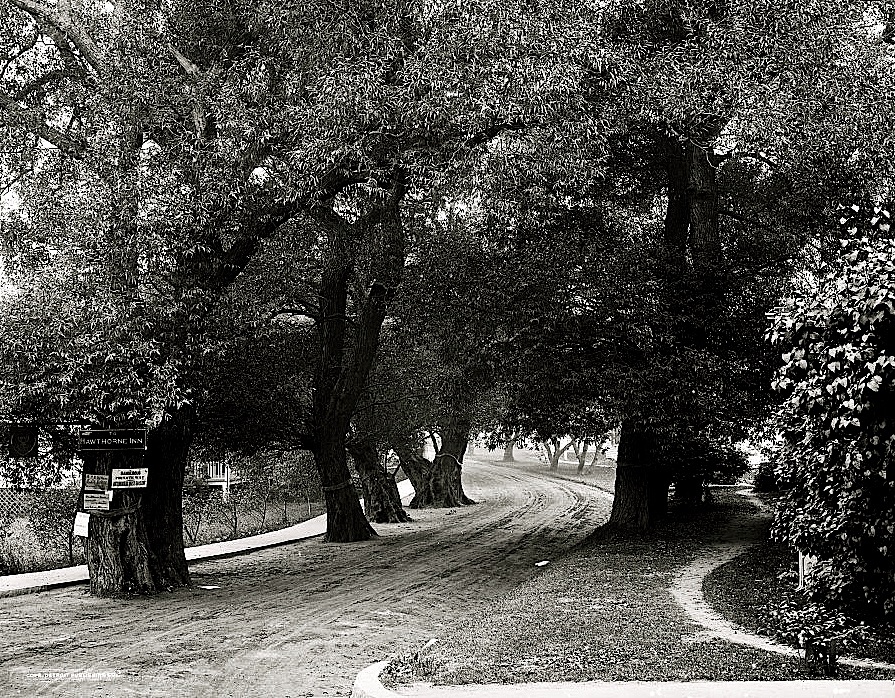
Vintage landscape/enclos*ure: Hawthorne Lane, Mass., early 20th c., via Library of CongressHawthorne Lane, East Gloucester, Massachusetts, between 1900 and 1920, by Detroit Publishing Co., via Library of Congress Prints and Photographs Division.
The signs on the tree: Direct to Hawthorne Inn (to the right), A.P.T. deHaas Gate Lodge (to the left), and Miss Willard’s Studio.

Life in gardens: the Ellipse

What means this tumult in a vestal’s veins? . . .*

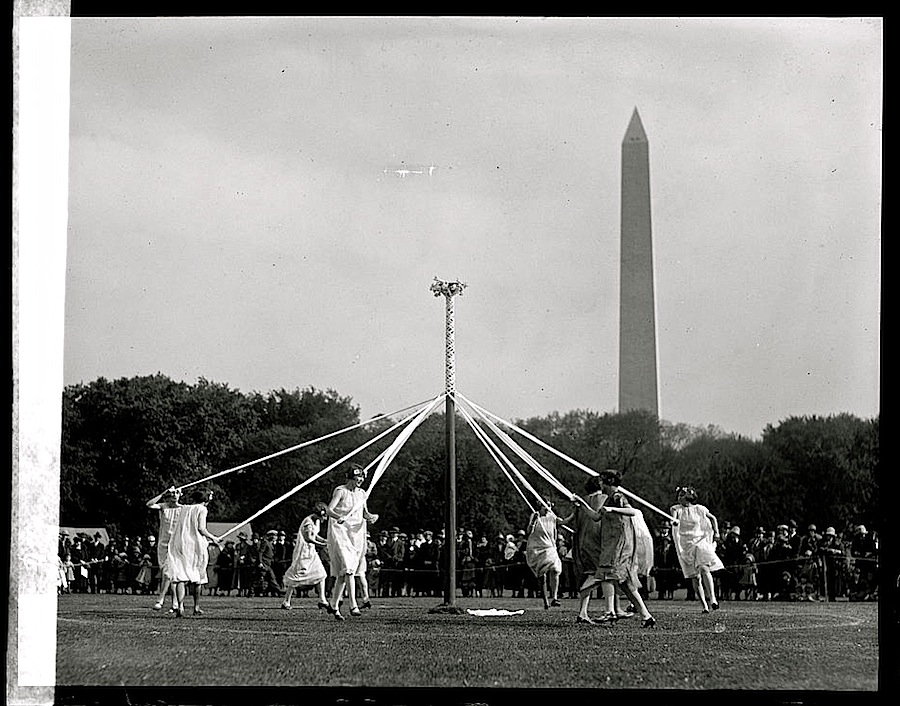
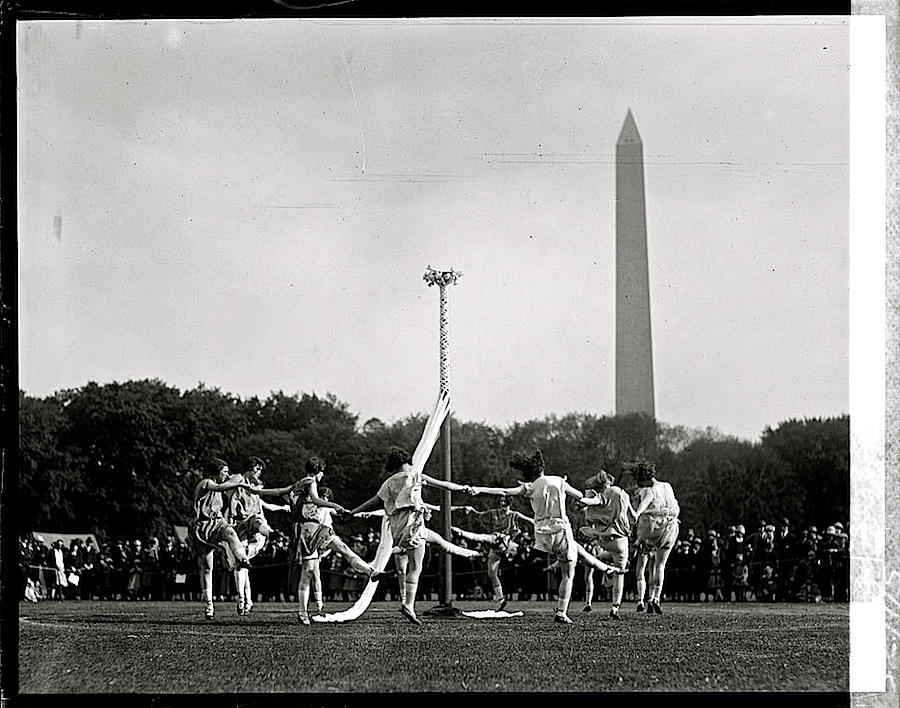
Maypole, 1925, Library of CongressMay pole dancing on the Ellipse, Washington, D.C., May 1, 1925, by National Photo Company, via Library of Congress Prints and Photographs Collection.

Maypole dance, 1925, via Library of CongressClick on the photos for larger views.


*Alexander Pope, from “Eloisa to Abelard

Vintage landscape: woodland teahouse

Japanese teahouse, Library of CongressTea house in a woodland, Itsuku-Shima, Japan,” between 1890 and 1923, photographer unknown, via the Frank and Frances Carpenter Collection of the Library of Congress Prints and Photographs Division.
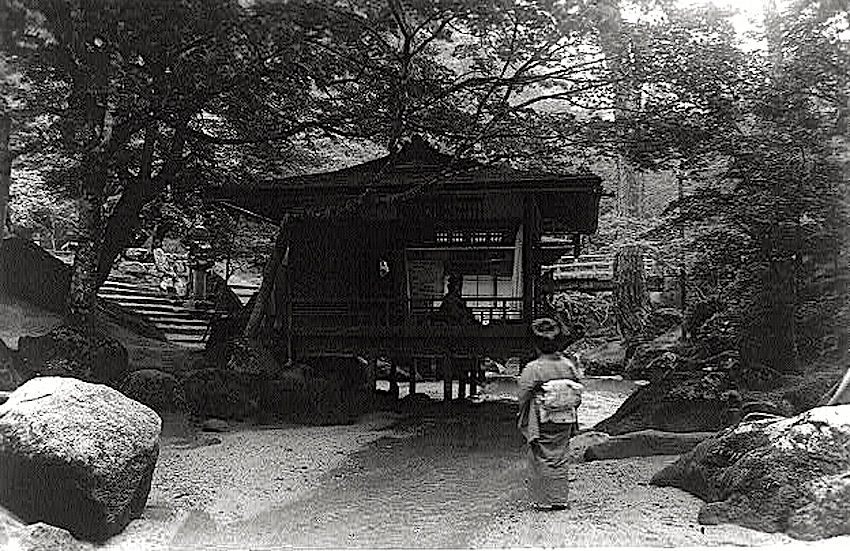
The garden may be on Itsukushima Island (now called Miyajima).

I’m sorry there was no Sunday porch two days ago; there was also no weekend internet service in our house.

What carols, like the blazon of a king,
Fill all the dawn with wonder?
Oh, hush,
It is the thrush,
In the deep and woody glen!

— Edwin Markham, from “A Lyric of the Dawn

Vintage landscape: Meridian Hill Park

Orpheus with his lute made trees. . .*

Vintage landscape/enclos*ure: Meridian Hill Park, D.C., 1976, via Library of CongressThe Linden Walk, Meridian Hill Park,* Washington, D.C., August 1976, by Jack Boucher for an Historical American Buildings Survey (HABS), via Library of Congress Prints and Photographs Division.
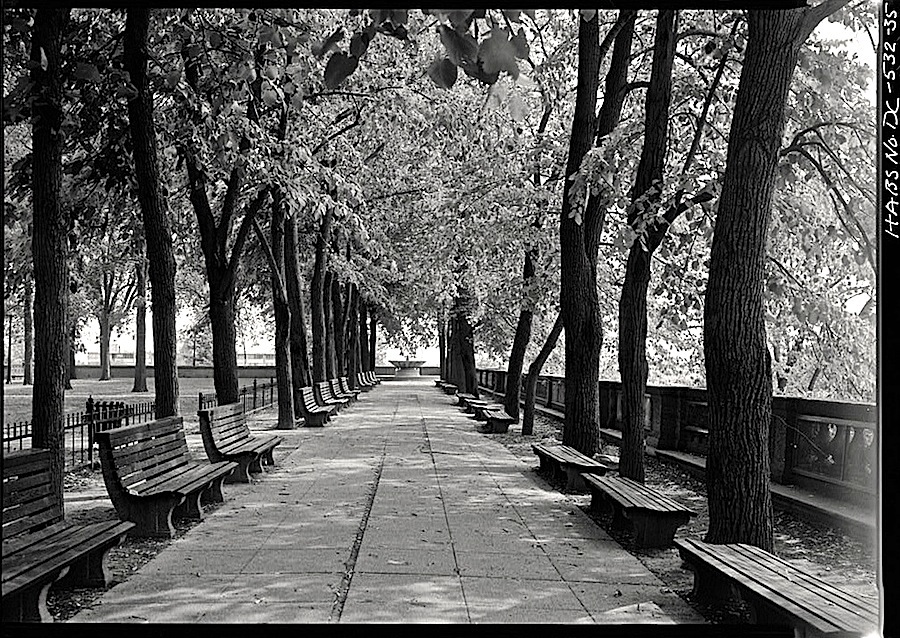
This HABS has photos from 1976 and 1985. The report, which contains a very detailed description and history of the park’s design, was completed in 1987.

Unfortunately, the report notes that the linden trees shown above had to be cut down between 1976 and 1985 because they were threatening the 16th St. retaining wall (on the right side). They were replaced quickly, however, as you can see here.

The HABS report summarizes the importance of Meridian Hill Park this way:

One of the first public parks in the United States to be designed as a formal park, generally considered to be in the continental tradition, rather than in the “natural” mode associated with the English park; Meridian Hill Park was constructed [from about 1914 to 1936]. . . . Under the guidance of the Commission of Fine Arts, the park benefited from the finest criticism of the day. The technologically innovative use of exposed aggregate concrete provided a facsimile of the stone and mosaic masonry traditionally employed in the Italian Garden. The Park represents an effort in a democratic society to match the major European city park.

Today, the last Friday in April, is Arbor Day in many states in the U.S. The day was established to encourage people to plant and care for trees.

The words themselves are a delight to learn,
You might be in a foreign land of terms
Like samara, capsule, drupe, legume and pome,
Where bark is papery, plated, warty or smooth.

Howard Nemerov, from “Learning the Trees


*Meridian Hill Park is bounded by Fifteenth, Sixteenth, Euclid and W Streets, N.W.  The quote above the photo is by William Shakespeare, from Henry VIII.