Jardin de l’Infante, Paris

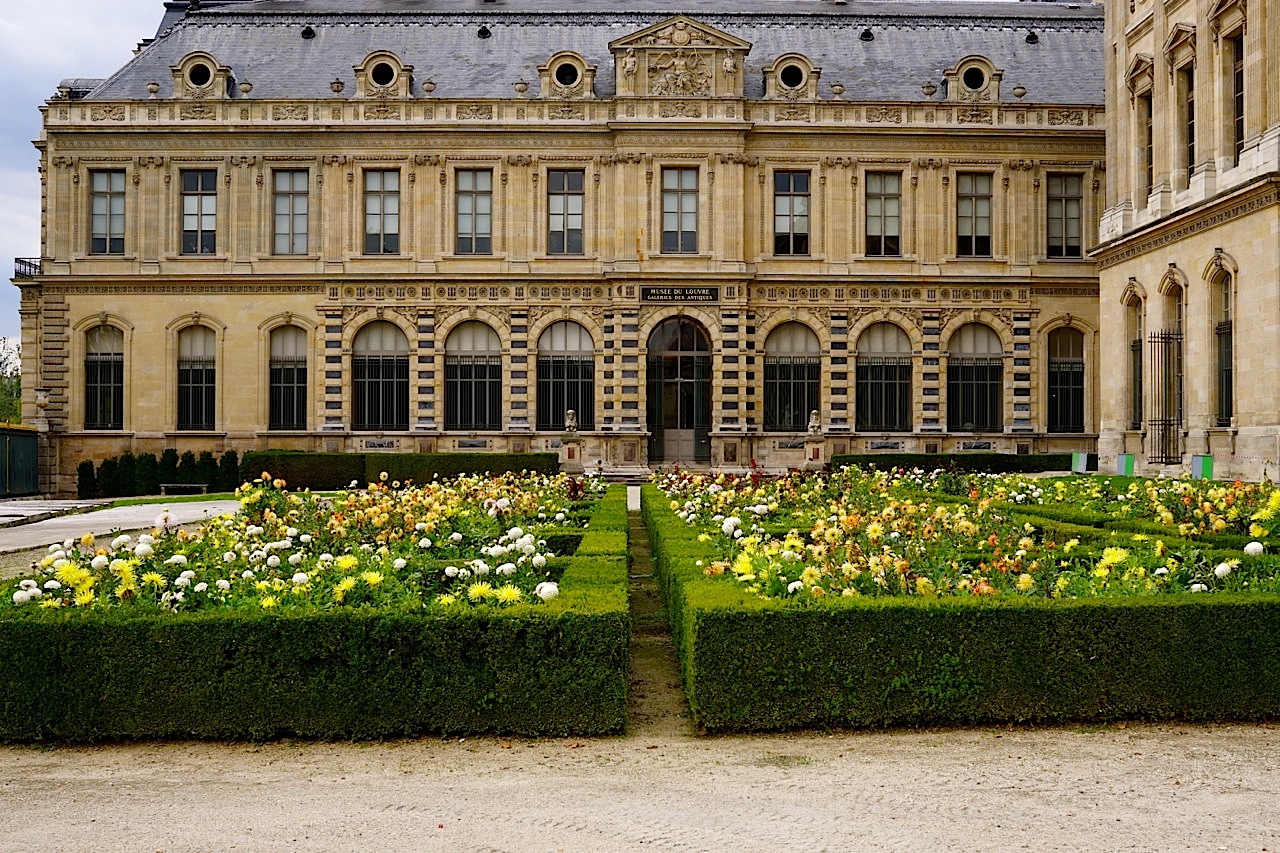
My favorite flower display in Paris last week was at the entrance to the Cour Carrée of the Louvre, near the Pont des Arts.
DSC01756full

But I’m a pushover for massed dahlias — these were yellow, white, orange, and dark red, mixed with some burgundy amaranth and caster bean plants in the back.
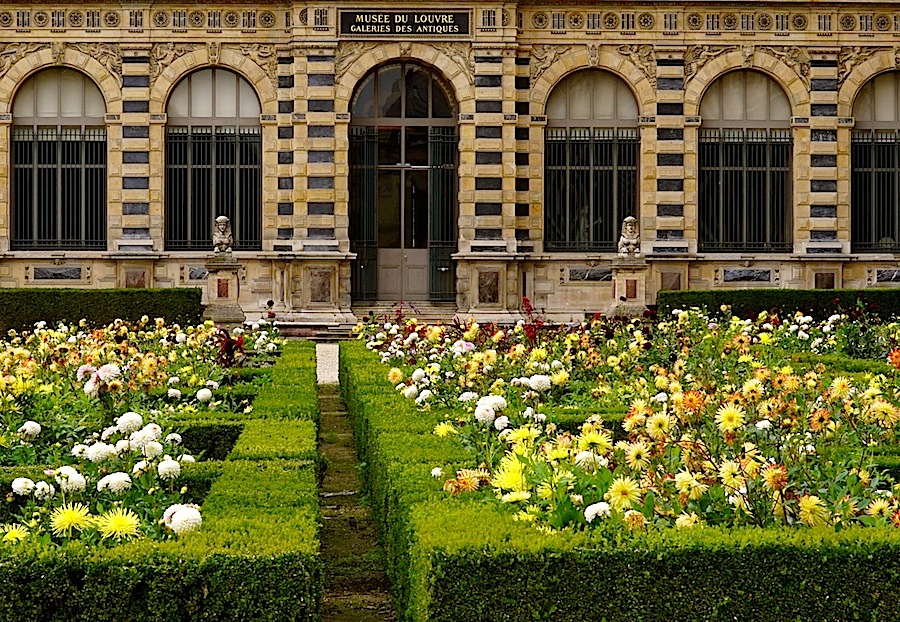
Jardin de l'infante, Louvre, Paris, Sept 2015, by enclos*ure

Jardin de l'Infante, The Louvre, Paris, September 2015, by enclos*ure

Unfortunately, a tall iron fence blocked them off from close inspection.
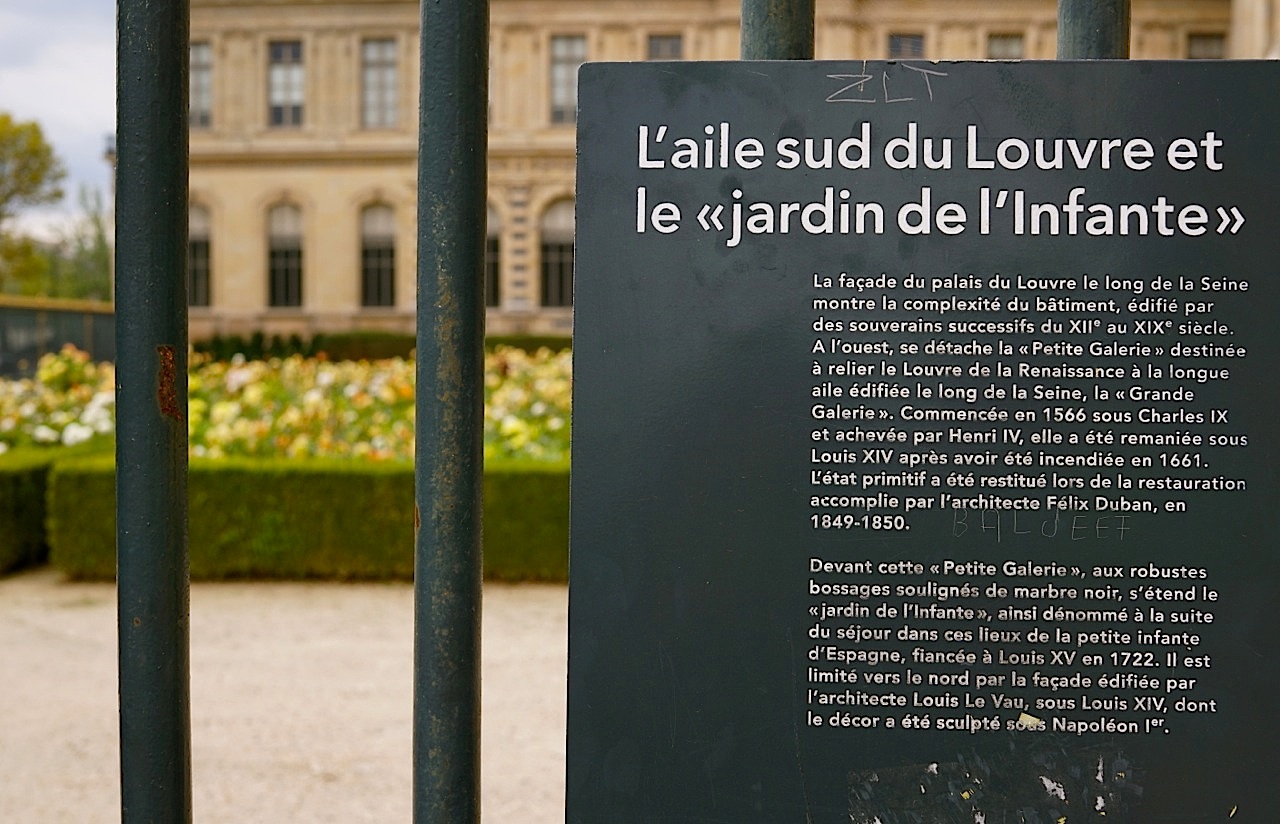
DSC01757

 I didn’t have a zoom lens, so I did the best I could to get some useable photos by pushing the camera through the bars and holding it out.
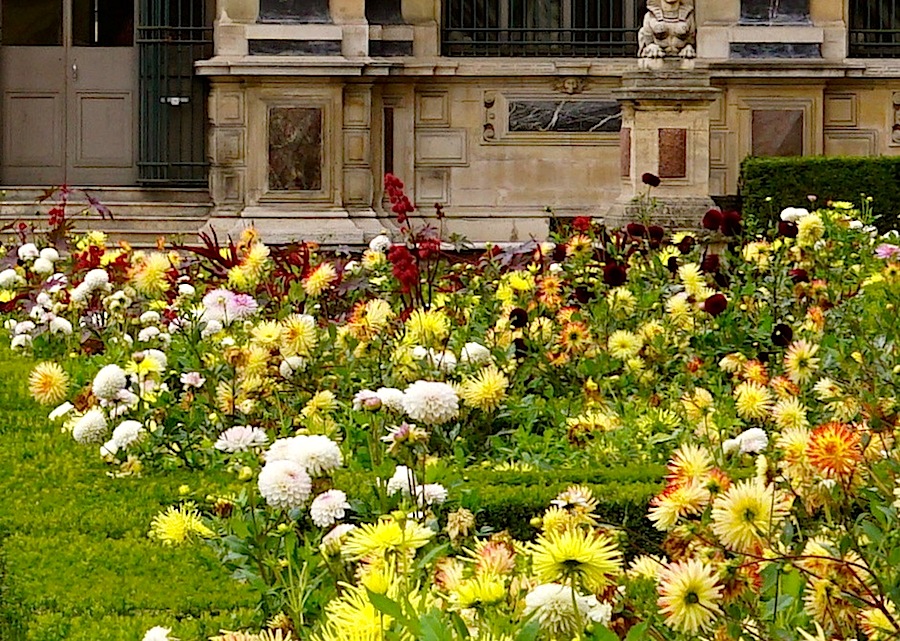
Jardin de l'infante,detail 2, Louvre, Paris, Sept 2015, by enclos*ure

The space is named “Garden of the Princess” for Mariana Victoria of Spain.  The three-year-old Infante was brought to live in the Louvre in 1721 when she was engaged to the preteen King Louis XV.

Jardin de l'infante,detail, Louvre, Paris, Sept 2015, by enclos*ure

Although she was deemed the “sweetest and prettiest little thing,” four years later, Louis broke off the match in order to marry an older Polish princess.

Jardin de l'infante,detail 3, Louvre, Paris, Sept 2015, by enclos*ure

Mariana was sent back to Spain and later married King Joseph I of Portugal.
The Tuileries, Paris

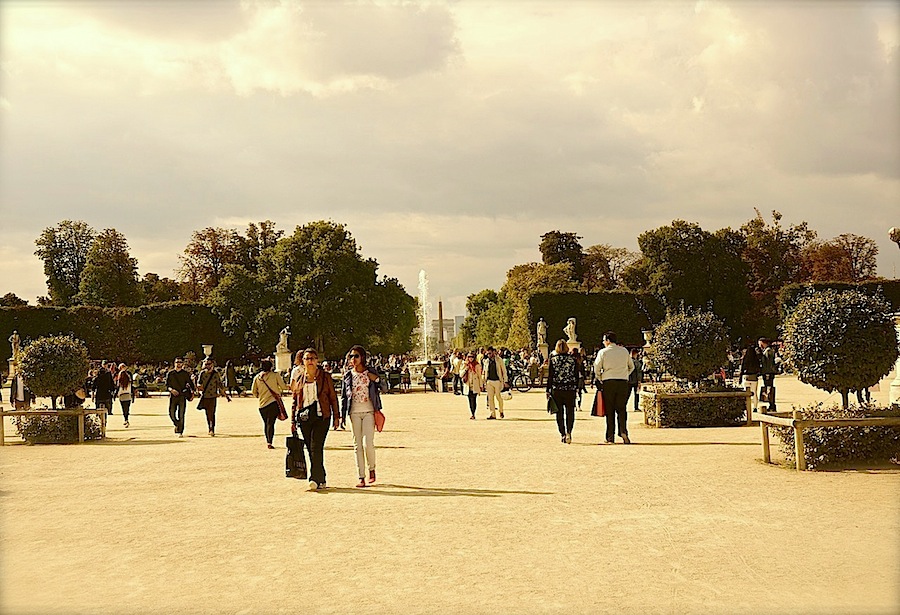
We were lucky enough to be in Paris and Brussels all last week. The weather was wonderful: slightly cooler than Stuttgart and — my photos below not withstanding — very sunny.

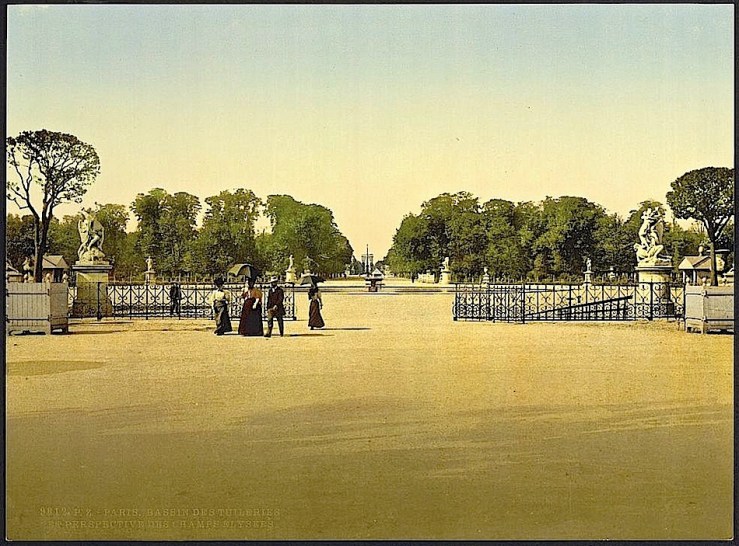
Tuileries fountain, ca. 1900, photochrom via Library of CongressWhile taking pictures at the grand bassin rond in the Tuileries Garden, I remembered this turn-of-the-century photochrom (above) from the Library of Congress.
Last Tuesday, a bit “antiqued.”My slightly “antiqued” version, the first Saturday of September.

There are more photos below — click on any thumbnail in the gallery.

The Sunday porch: French Riviera

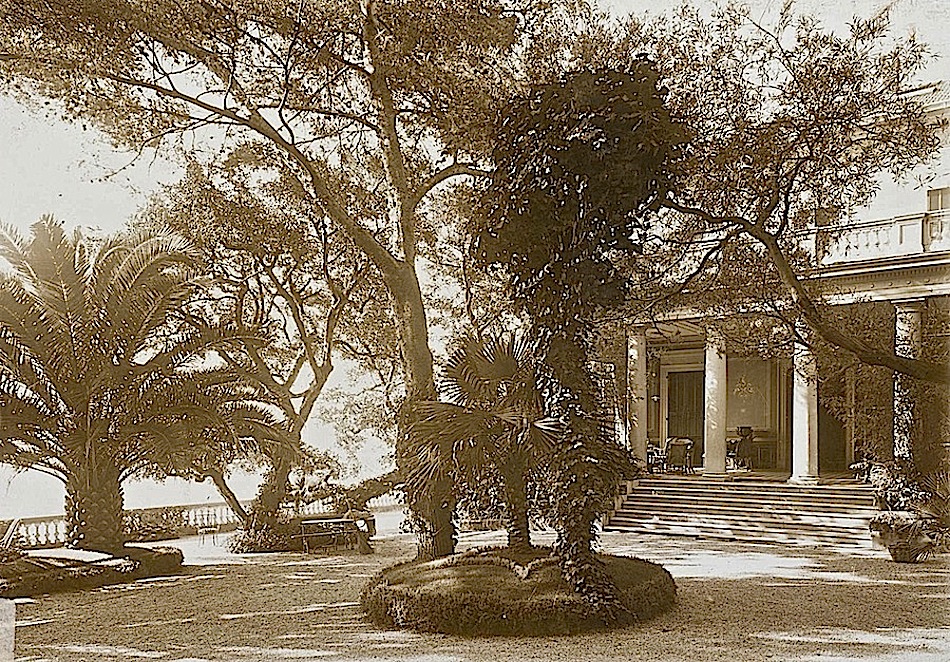
1 full view, Poincare Residence, Eze, France, ca. 1914, University Caen Basse…The property of M. [Raymond] Poincaré in Èze.  The gardens and the main entrance of the house,” ca. 1914 – ca. 1918, photographer unknown, via the Université de Caen Basse-Normandie Commons on flickr.

Èze is located on the southeastern coast of France, not far from Nice. The Mediterranean was just beyond the railings above.

Detail, Poincare Residence, Eze, France, ca. 1914, University of Caen Basse-Normandie

(To scroll through a number of larger versions of the photo, click on ‘Continue reading’ below and then on any thumbnail in the gallery.)

Raymond Poincaré was President of France from 1913 to 1920.  He had been both Prime Minister and Foreign Minister (simultaneously) during all of 1912.

. . . I  decided this time not to go to Sampigny but to stay somewhere on the Mediterranean. After brief research, I rented, in the Alpes-Maritimes, at the foot of the small town of Saracen Eze-sur-Mer, a quiet villa, hidden in the pine trees. . . . [I]t has an incomparable view of the sea. By winning this early retirement, I am not unhappy to escape a little to the embrace of my job, but at least I have the impression that the state of Europe, while still unstable, allows me to breathe more freely. Peace seems restored in the Balkans. Our relations with all Powers are normal. Whatever the new influences acting on William II, France was determined not provide any pretext for war. It’s almost a feeling of rest and security I feel, when I’ll salute the French Riviera the spring of 1914.

— Raymond Poincaré, from his memoirs.

You can see an image of the long terrace of the house in April 1914 here.

Continue reading “The Sunday porch: French Riviera”

Vintage landscape: the watchers

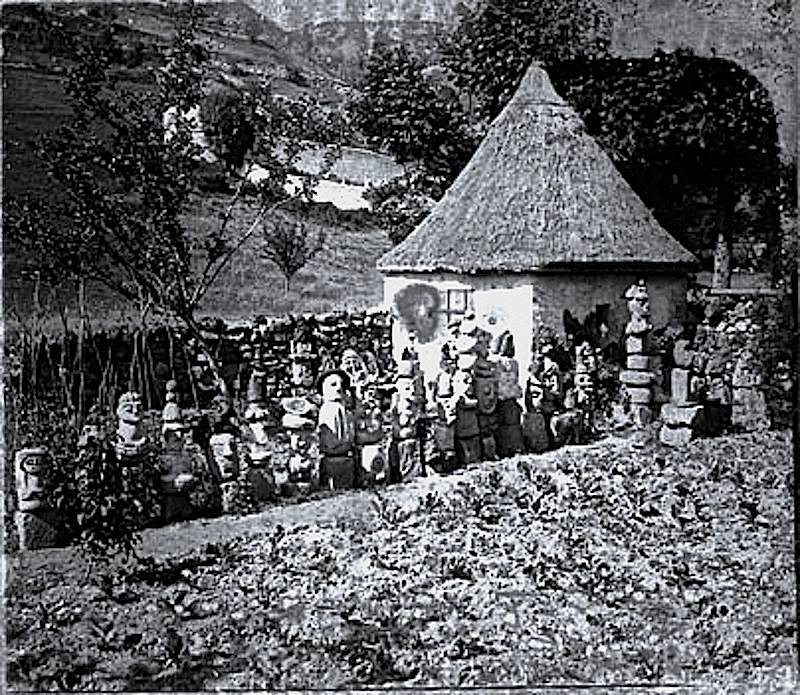
Clay figures, Bibliotheque ToulouseFigurines de pierre (stone) dans un potager,” between 1859 and 1910, by Eugène Trutatvia Bibliothèque de Toulouse Commons on flickr.

Unfortunately, the old image is not very clear.

The location of the vegetable garden was not noted, but the Bibliothèque assigns it to the Germany album. Trutat took a large number of pictures while traveling in the Rhineland-Palatinate region in the early 1920s.

Life in gardens: Paul et Henri

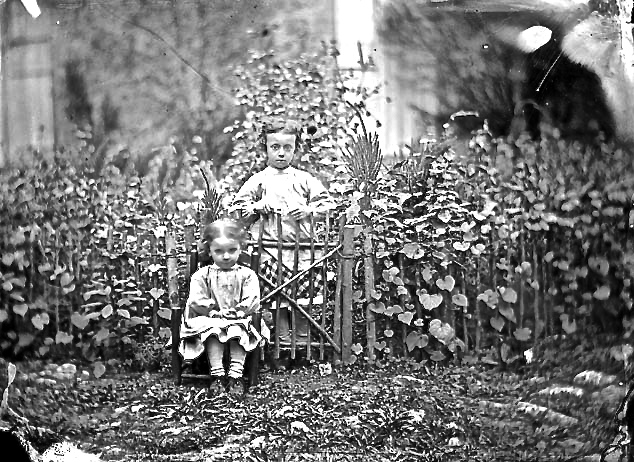
A repeat from December 2012. . . . I love this bleary little photo.

Paul et Henri

Paul and Henri at Cornusson, Parisot Commune, in the Pyrenees, France, ca. 1870 — like yesterday’s post  by Eugène Trutat, via the Bibliothèque de Toulouse Commons on flickr.

As from the house your mother sees
You playing round the garden trees,
So you may see, if you will look
Through the windows of this book,
Another child, far, far away,
And in another garden, play.
But do not think you can at all,
By knocking on the window, call
That child to hear you. He intent
Is all on his play-business bent.
He does not hear; he will not look,
Nor yet be lured out of this book.
For, long ago, the truth to say,
He has grown up and gone away,
And it is but a child of air
That lingers in the garden there.
Robert Louis Stevenson, “To Any Reader”