Hundertwasser House, Vienna

Hundertwasser Hse., Vienna, by enclos*ure

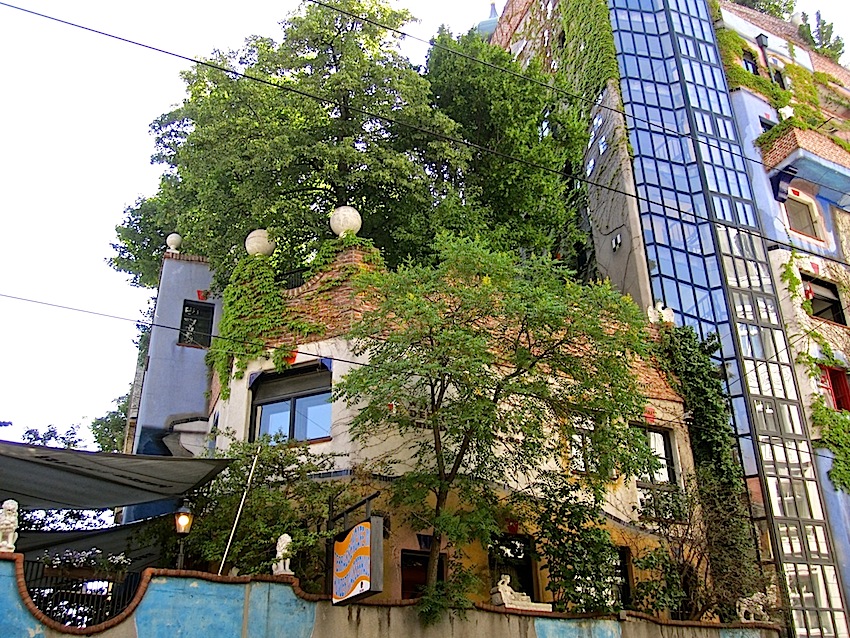
This is the Hundertwasser House in Vienna, Austria, an apartment building designed and constructed in the early 1980s from the concepts of visionary Austrian artist Friedensreich Hundertwasser.

I had admired pictures of it before, but I had forgotten that it was in Vienna until I was leafing though a pamphlet at the tourist office there in early July. I found that not only was it in the city, but that we could get there via a quick ride from the Ring Road on the no. 1 tram.*

This is Kegelgasse,
Kegelgasse, the bermed pedestrian street below the photo above.

Friedensreich Hundertwasser† was a painter and later worked in the field of applied art, creating flags, posters, and stamps.

From the 1950s, he also wrote and spoke passionately about “an architecture in harmony with nature and man” — and in what he called “new values” of a “yearning for romanticism, individuality, creativity, especially creativity.”

He wanted forested roofs, “tree tenants” on balconies, and “high rise” meadows.

In 1977, the mayor of Vienna was persuaded to give Hundertwasser a chance to try out his ideas on an apartment building. An architect (and then another) was assigned to help him create the technical drawings.

The quiet ground-level internal courtyard of the building.
Beyond the fountain above, the quiet internal courtyard of the building.

In 1980, at a press conference about the Haus, Hundertwasser expressed his philosophy of “window right” and “tree obligation.” You can read it here.

Some of his other statements about the building are below.

"Windows in rank and file are sad, . . .
“Windows in rank and file are sad, windows should be able to dance.” — F.H.

Photos above and below: The facade of the north side. Hundertwasser believed that every tenant should have the right to choose the decoration around his or her own windows.
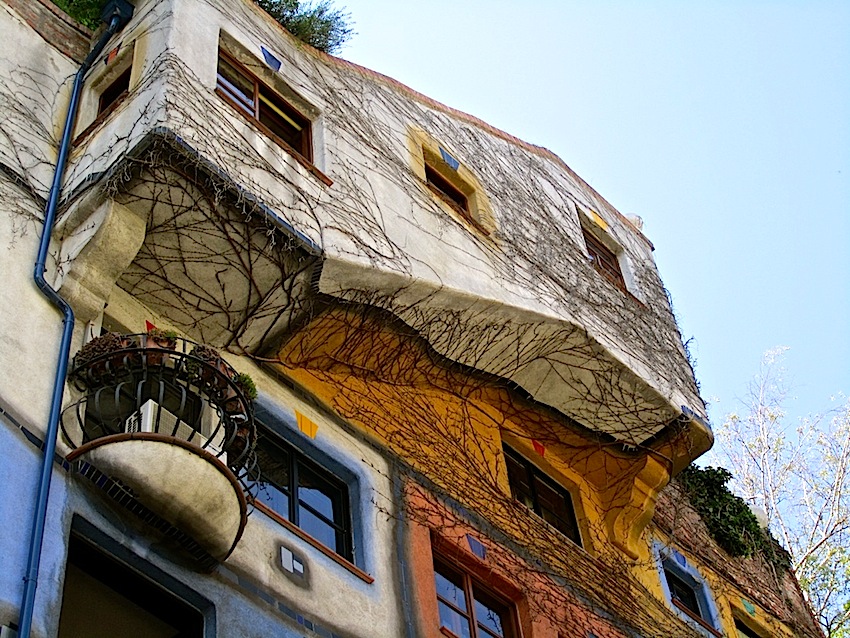
. . .windows should be able to dance.' - F.H.

A person in a rented apartment must be able to lean out of his window and scrape off the masonry within arm’s reach. And he must be allowed to take a long brush and paint everything outside within arm’s reach. So that it will be visible from afar to everyone in the street that someone lives there who is different from the imprisoned, enslaved, standardised man who lives next door.

— F.H. (more of his words on the “apartheid of window races” here.)

The Löwengasse side of the building.

Photos above and below: The Lowengasse side of Hundertwasserhaus.  It does not stand alone, but is closely surrounded by traditional 19th and early 20th century apartment buildings.  On this side, I could see why some critics called the work “kitsch.”

“Romanticism has been declared kitsch and so we have been robbed or romanticism,” wrote Hundertwasser. “May one not dream? . . . The absence of kitsch makes life unbearable.”

and so we have been robbed of romanticism. May one not dream?. . .

In a[n apartment] house, an individually different, organic design of the outer wall of each individual apartment is of fundamental significance, so that the resident can identify with his house from the outside.

F.H.

The absence of kitsch makes life unbearable." - F.H.

[The terraces] open to the street are a gift for everyone . . . . [They] take away the house’s vertical aggressivity, street noise is lessened because the echo is no longer caught between the rows of buildings.

If the terraces are green and have trees on them, it is like a natural hill with people living in it. Walking through a city with ascending terraces is like wandering through a gentle, green valley.

F.H.

This slideshow requires JavaScript.

Photos above: The pedestrian street along the north side of the building.

A lively, uneven floor in the public area means a regaining of the human dignity which man is deprived of by the levelling tendencies of urbanism. . . .

If modern man is forced to walk on asphalt, concrete FLAT surfaces, the way they are thoughtlessly conceived with the ruler in the designer offices, alienated from his natural relationship to the earth which goes back to the dawn of time, from contact with the earth, a crucial part of man is blunted, with catastrophic consequences for his psyche, his emotional balance, his well-being and health.

Man forgets how to experience things and becomes emotionally ill.

Thus, the flat floor becomes a true danger for man.

F.H.

The building contains 52 apartments, 16 private terraces, 3 communal terraces, and 250 trees and bushes, according to Wikipedia.

To scroll through larger versions of the photos, click on ‘Continue reading’ and then on any thumbnail in the gallery.


*The 1 tram starts out in front of the Opera House and moves along the west and north sides of the Ring Road. Just stay on until it veers off east on Radetzky Street. Hundertwasserhaus is on Löwengasse — on the left — right after you cross Blütengasse.

†He was born Friedrich Stowasser, but changed his name in the late 1940s. His adopted name translates as “Peace-Realm Hundred-Water.” He died in 2000, after working on a number of architectural projects in the 1980s and 90s.
Vintage landscape: the lagoon

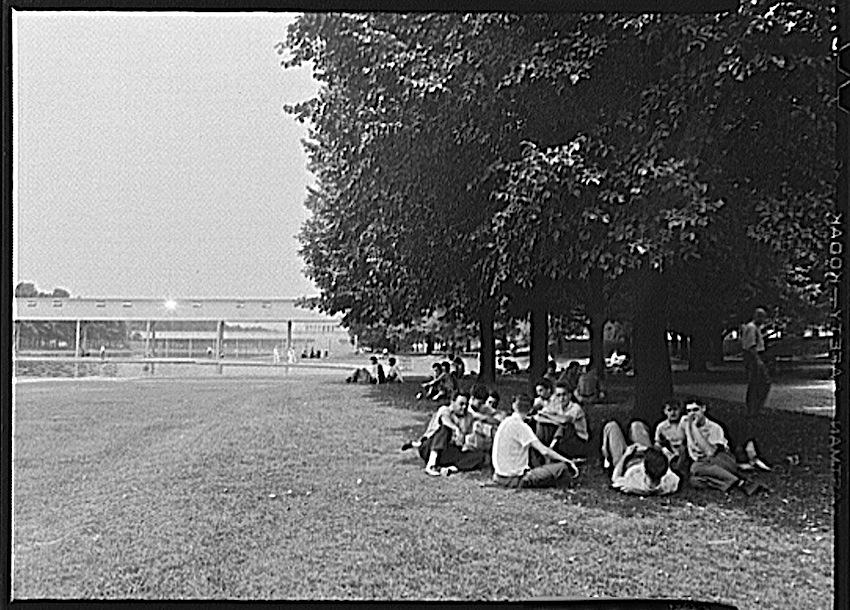
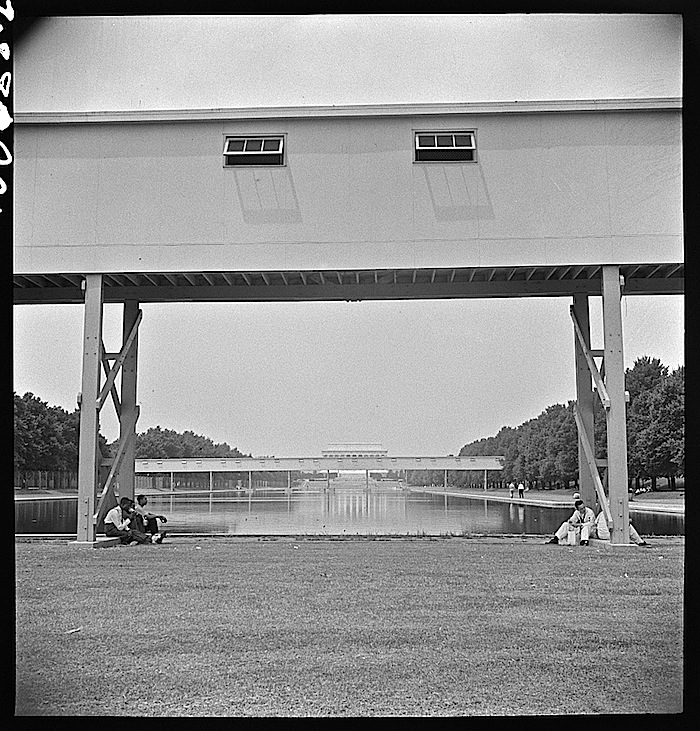
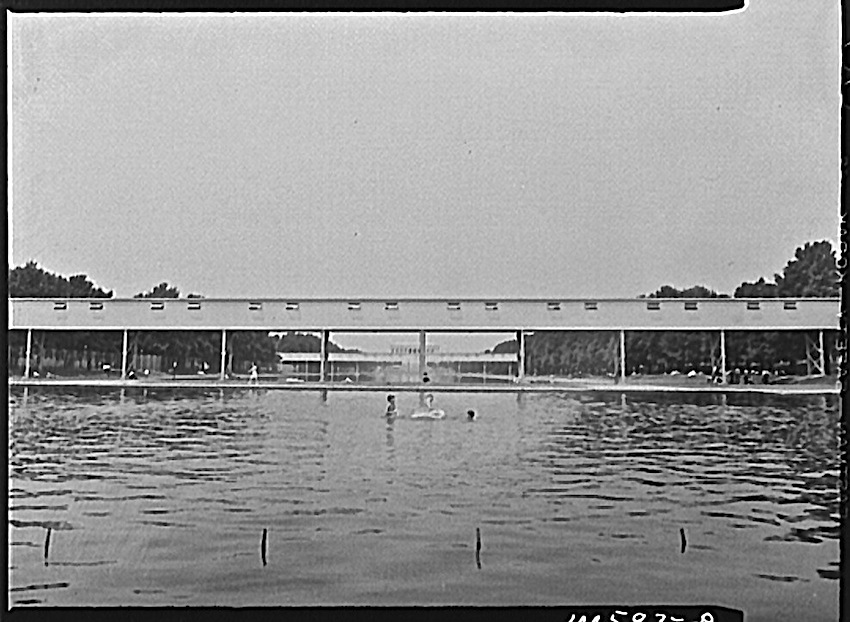
Washington, D.C., in July 1942, by Marjory Collins, via Library of CongressThe Lincoln Memorial Reflecting Pool in July 1942.  Two raised corridors crossed it and connected Department of War buildings. Photo by Marjory Collins, via Library of Congress Prints and Photographs Division.

Above, small boys were swimming in the pool. Collins called it a “lagoon” in her original photo caption — an allusion to Washington, D.C.’s tropical summer weather.

Washington, D.C., in July 1942, by Marjory Collins, via Library of Congress

Along the sides of the water, under the trees, government workers were eating lunch on the grass.

Washington, D.C., in July 1942, by Marjory Collins, via Library of Congress

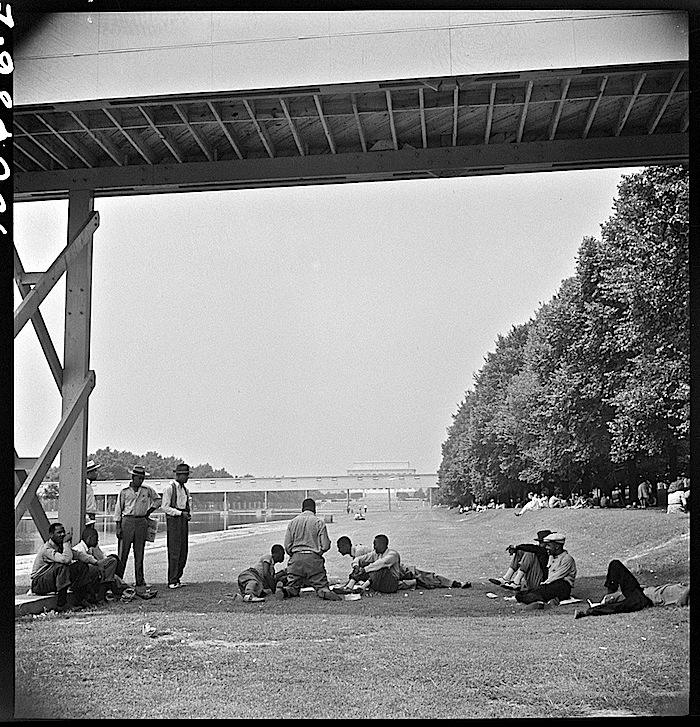
These men took advantage of the additional shade cast by the structures.

Washington, D.C., in July 1942, by Marjory Collins, via Library of Congress

“Temporary” buildings for various military branches were constructed along the north side of the pool in 1918.  The offices on the south side — and the corridors — were added during World War II.

The walkways were removed in 1947.  The last of the buildings came down in 1970.

The Sunday porch: Sagamore Hill

T. Roosevelt porch, Library of CongressThe porch of President Theodore Roosevelt’s country home, Sagamore Hill, ca. 1905, photographer unknown, via Library of Congress Prints and Photographs Division (both photos here).

The rug was a mountain lion.

Roosevelt purchased the land in Oyster Bay, New York, in the early 1880s and began planning the Queen Anne house with his first wife, Alice. But she died in 1884, and it was second wife Edith who moved into the newly completed home two years later.

Sagamore Hill, ca. 1905, Library of Congress

Sagamore Hill was their family’s primary residence, except from 1901 to 1909, when it was known as the “Summer White House.”

Theodore died there in 1919, as did Edith in 1948.  The family continued to own it until the 1950s, when it was passed to the Theodore Roosevelt Association and later to the National Park Service.

The house reopens to the public today, after being closed for three and a half years for renovation.

Streifzug 3: on high

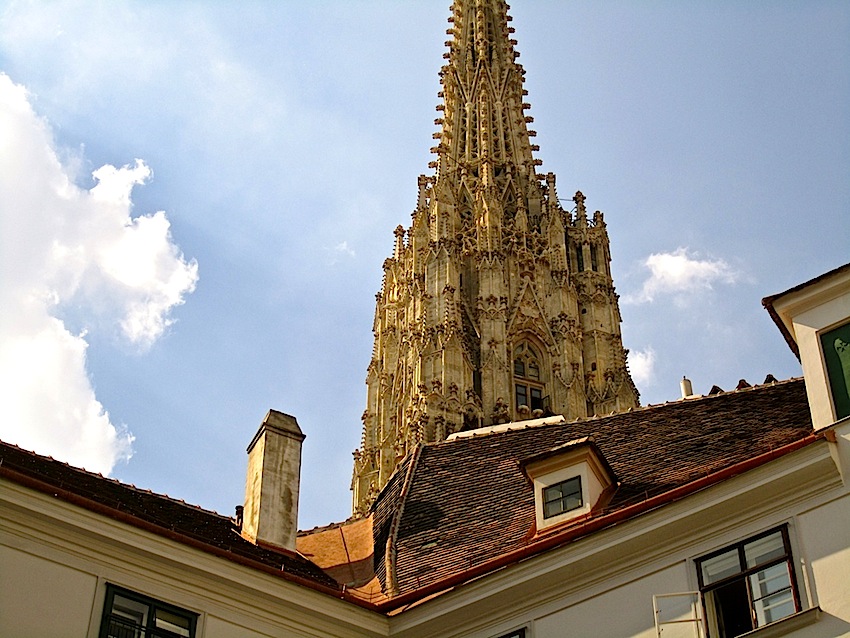
The south tower of St. Stephen's Cathedral in Vienna, by enclos*ure.We were up there.

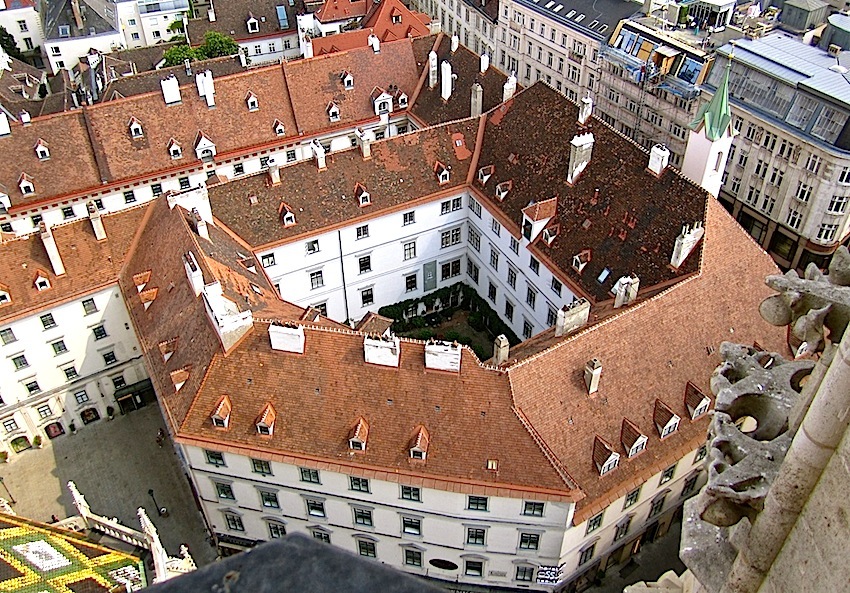
IMG_4358Looking down here.

Last week, we were in Vienna and climbed the south tower of St. Stephen’s Cathedral.

My husband loves climbing these high towers.  I do not — being both a little afraid of heights and a little claustrophobic. However, lured by the promise of a great view, I almost always follow him up. And I always think, after about 30 steps, how this is absolutely the last tower I will ever climb. . . at least this year (I’ve climbed two this year). . . at least in this city.

The view from the watch room (343 steps up) was tremendous.  A night watchman actually occupied the room until 1955.  If he saw a fire in the city, he would ring the tower bells.

IMG_4355Looking southeast, I spotted this pretty courtyard garden and took a few pictures.

After the climb down, we went around the corner, looking for the Mozart House (Mozarthaus).

IMG_4363

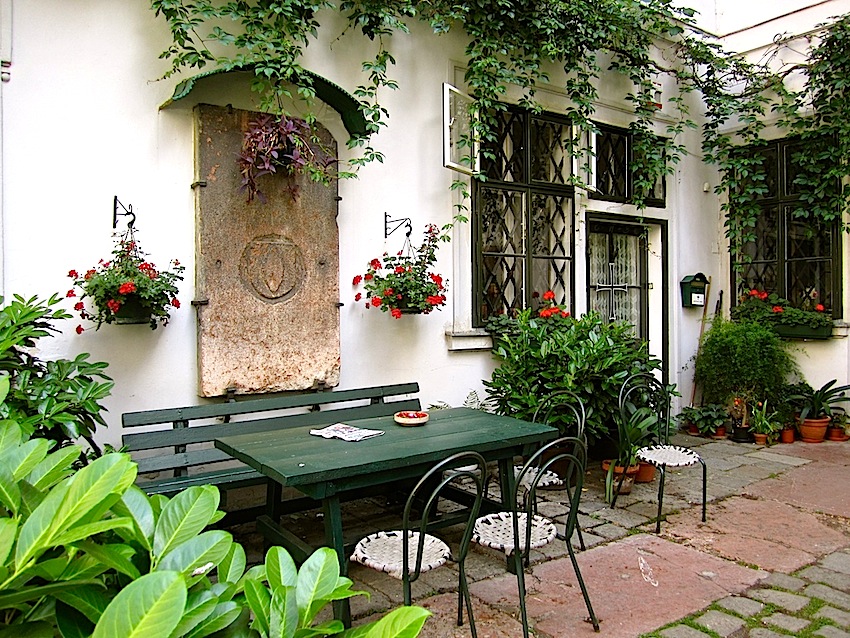
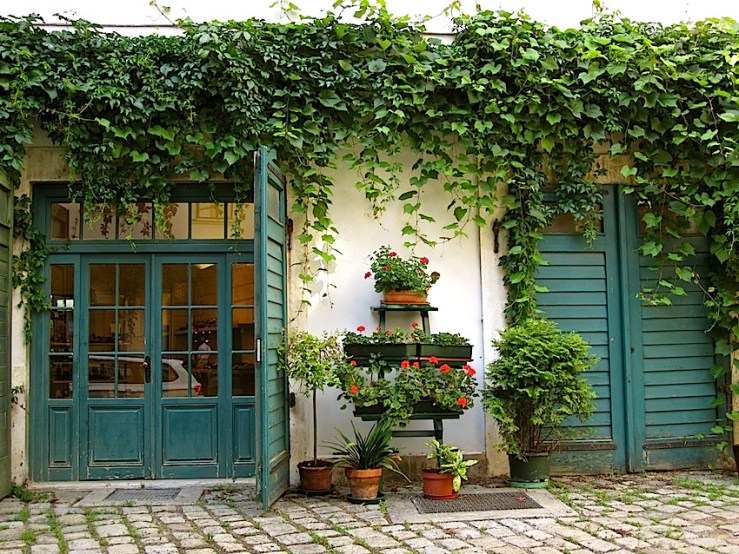
We went through a passageway off Singerstraße and found ourselves in the same courtyard seen from above.

IMG_4364

It was not the Mozart House, but the seat of the Grand Master of the Order of the Teutonic Knights of St. Mary’s Hospital in Jerusalem (or Deutscher Orden).

IMG_4361

The Order has been associated with this site since 1204. The present building dates from the second half of the 18th century.

IMG_4365

Mozart did briefly live on the premises from March to May 1781 — and Johannes Brahms from 1863 to 1865.

IMG_4369

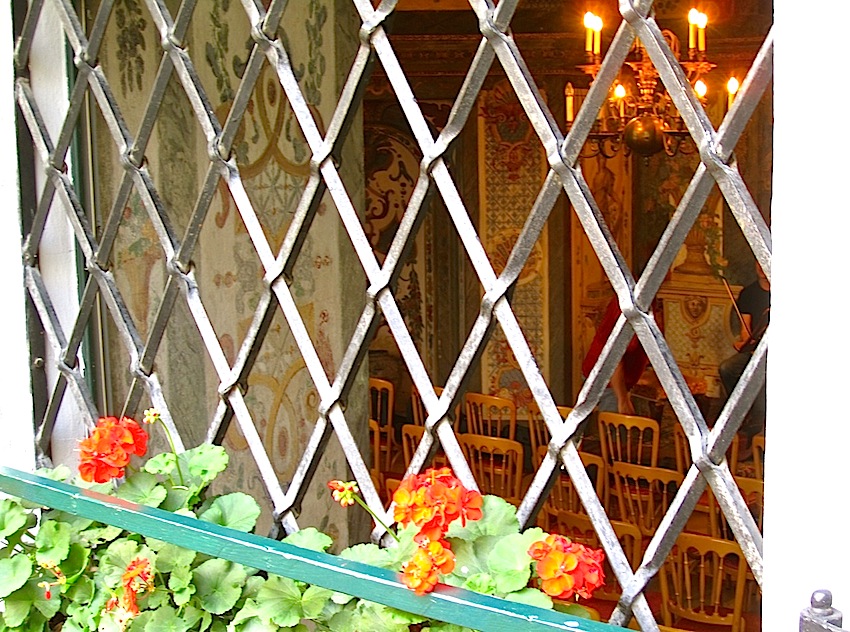
From one window on the courtyard, you can get a peek into the Sala Terrena, a frescoed room next to the chapel and the oldest concert hall in Vienna.

Mozart played there, and it now hosts the Mozart Ensemble Wien several days a week.

(Streifzug means ‘foray,’ ‘ brief survey,’ or ‘ramble.’)


Life in gardens: Detroit, Michigan

Detroit wall, 1941, J. Vachon, Library of CongressBlack children standing in front of a half-mile concrete wall  in northwest Detroit. It was built in 1941 to separate their neighborhood from a white housing development going up on the other side.

The photo was taken in August 1941 by John Vachon for U.S. Farm Security Administration and is via Library of Congress Prints and Photographs Division.

The 1930s and 1940s were times of great growth for the city of Detroit and the inner-suburbs. The Federal Housing Administration (FHA), founded in 1934, pushed the idea of home ownership as an accessible goal for the average working class. . . .

[However], the FHA’s policies of mandated racial homogeneity in housing developments and redlining made it difficult for African Americans to become home owners. . . . Between 1930 and 1950, three out of five homes purchased in the United States were financed by FHA, yet less than two percent of the FHA loans were made to non-white home buyers. . . .

Public or private housing being hard to come by in the city, some African Americans were able to purchase land lots around the Wyoming Avenue and 8 Mile intersection with hopes of eventually building houses. . . . When the FHA was approached by a developer wanting to build an all-white subdivision west of the site, funding was refused because the area was too risky for investment. In a compromise with the FHA, the developer erected the wall that was to divide the “slum” from his new construction project.

— “The Detroit Wall,” Wikipedia