
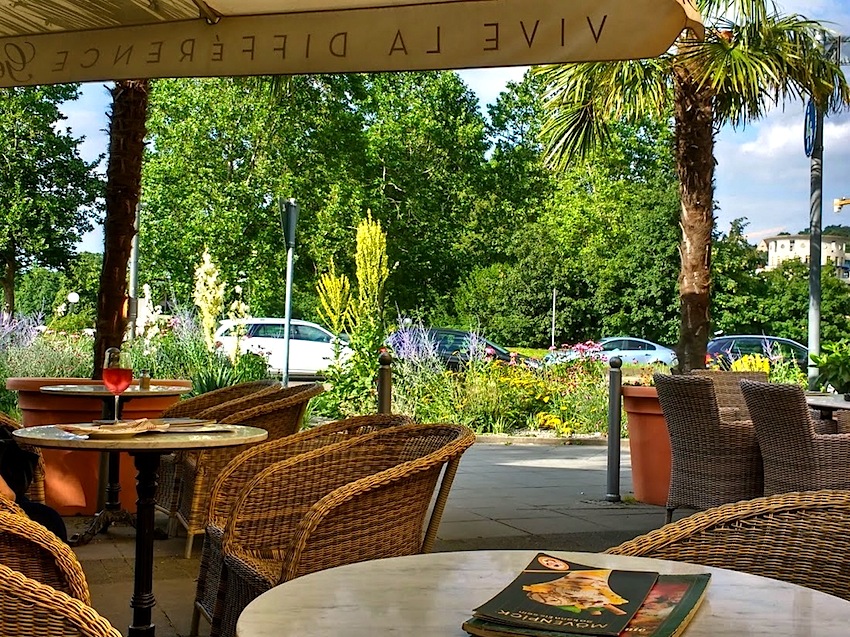
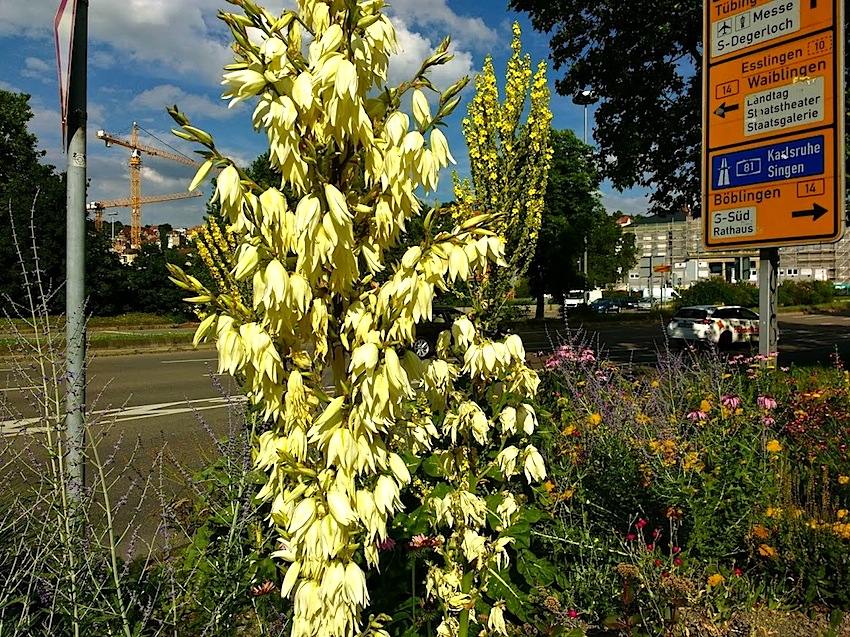
Karlsplatz, Stuttgart, July 2016.

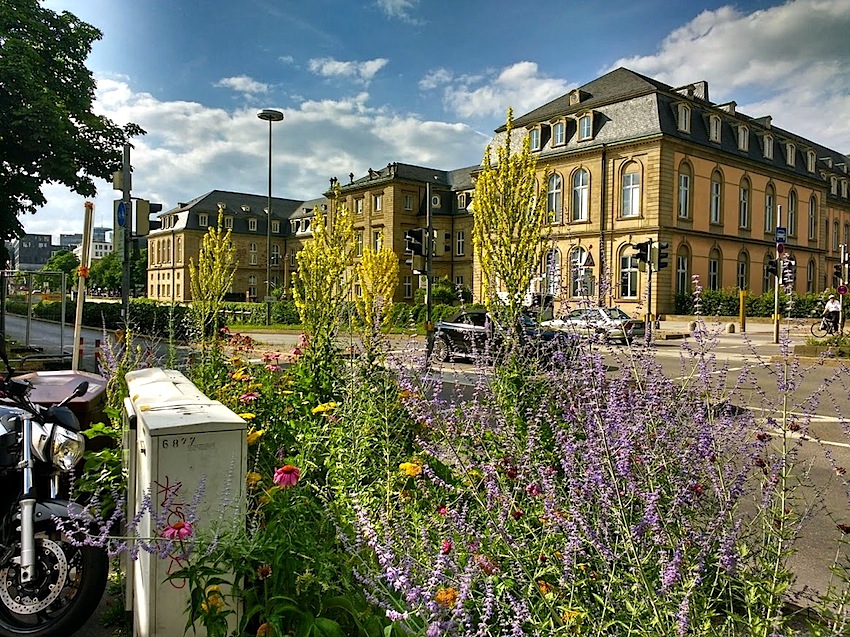
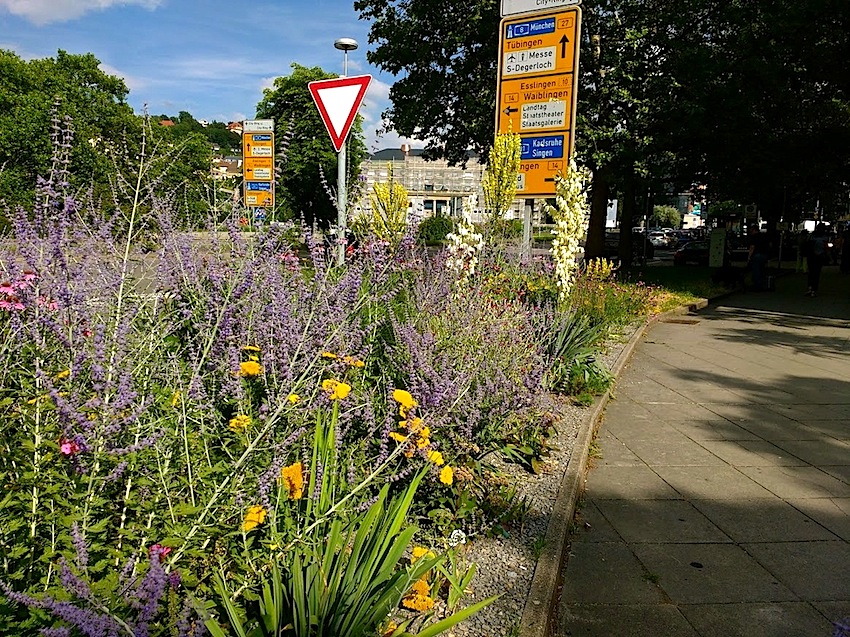
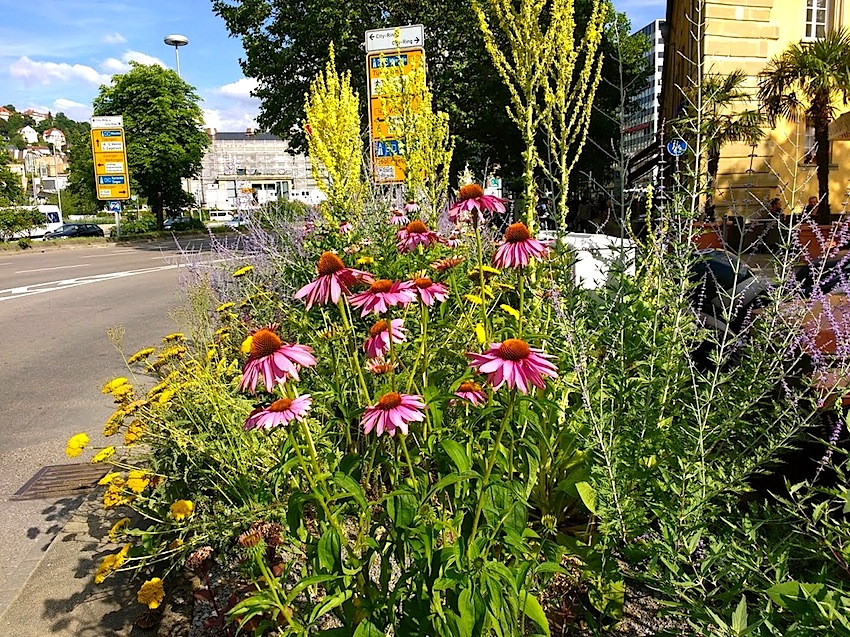
 “Aileen Parker watering a garden with a hose, Toronto, Ontario,” June 26, 1920, by John Boyd, via Library and Archives Canada on flickr (used under CC license).
. . . To love,
this song of water,
the insects work their garden long into the sun,
and the apples, still far away,
dream October.— Richard Barnes, from “Watering the Lawn“
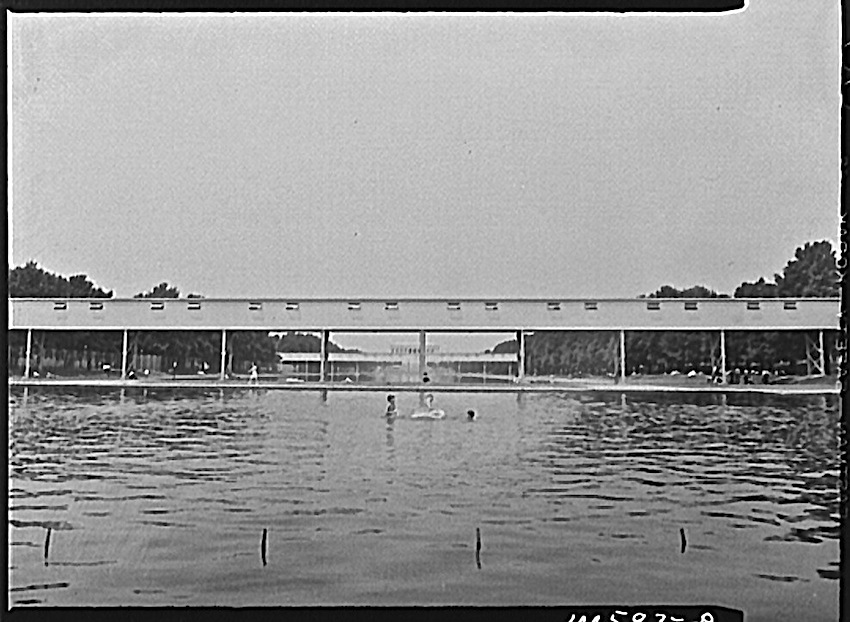 The Lincoln Memorial Reflecting Pool in July 1942. Two raised corridors crossed it and connected Department of War buildings. Photo by Marjory Collins, via Library of Congress Prints and Photographs Division.
Above, small boys were swimming in the pool. Collins called it a “lagoon” in her original photo caption — an allusion to Washington, D.C.’s tropical summer weather.
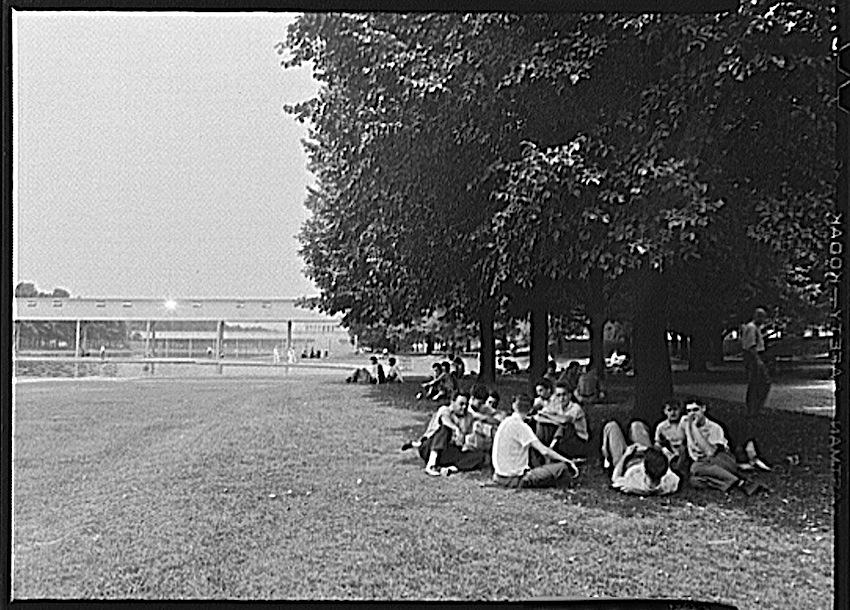
Along the sides of the water, under the trees, government workers were eating lunch on the grass.
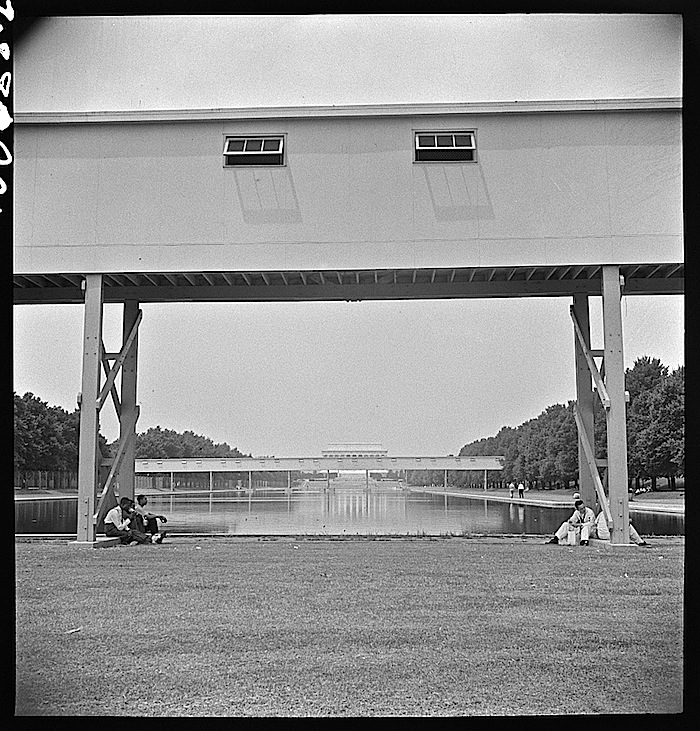
These men took advantage of the additional shade cast by the structures.
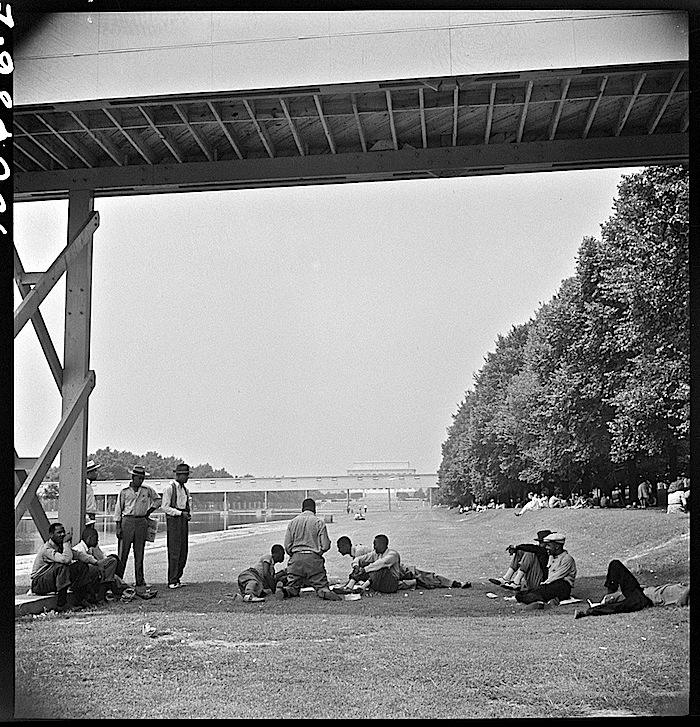
“Temporary” buildings for various military branches were constructed along the north side of the pool in 1918. The offices on the south side — and the corridors — were added during World War II.
The walkways were removed in 1947. The last of the buildings came down in 1970.
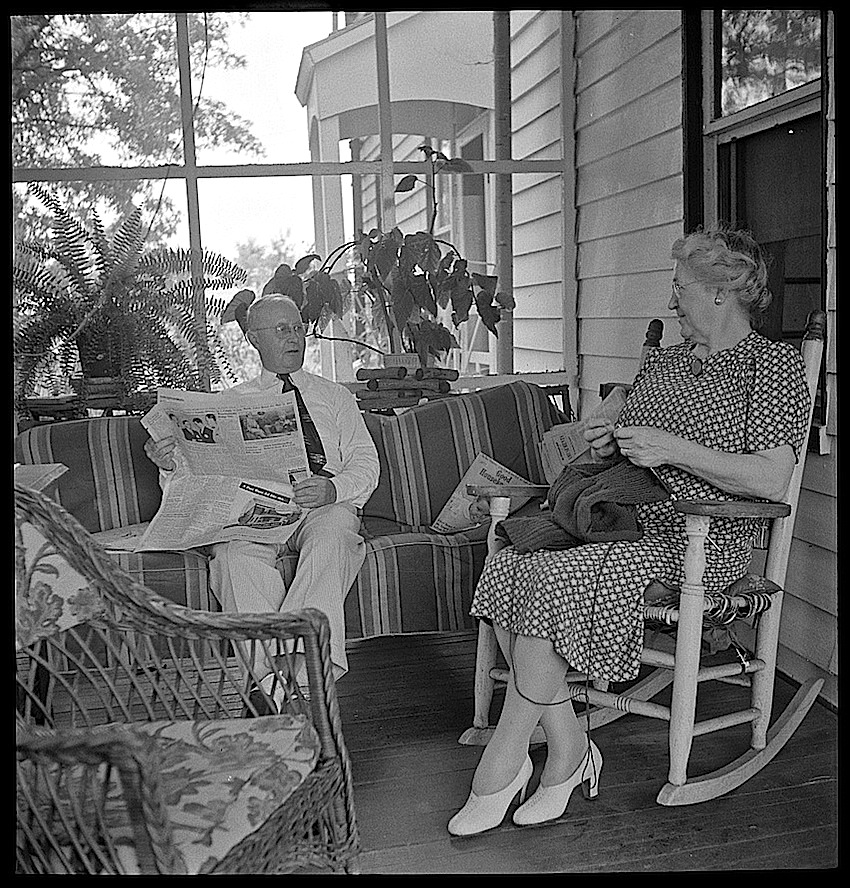 Mr. and Mrs. Herbert on their porch in Mechanicsville, Maryland, June or July 1942, by Marjory Collins, via Library of Congress Prints and Photographs Division (all three photos).
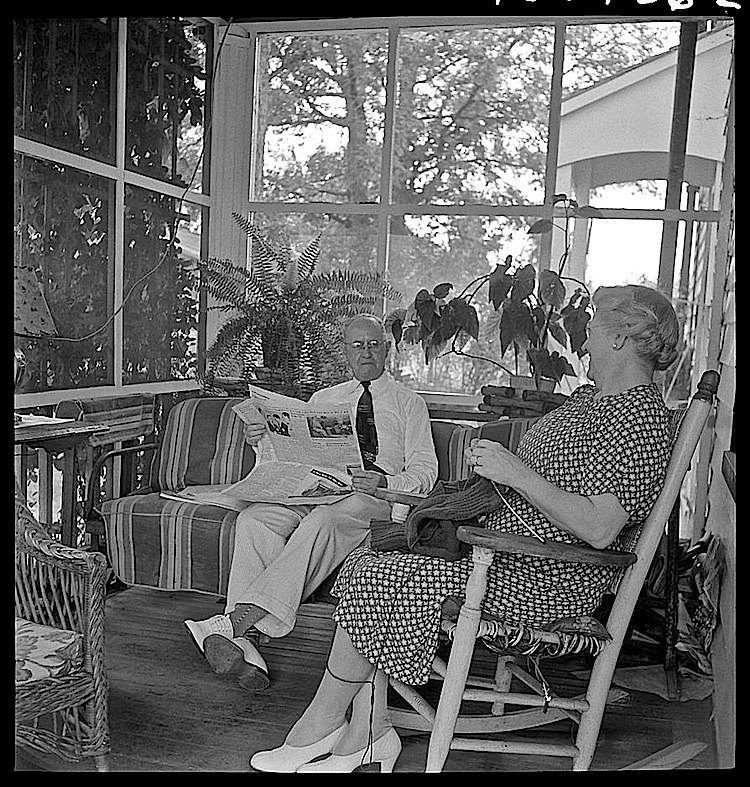
All the elements of a good screened porch are here: a slipcovered glider and a wicker chair, a rocker with a cushion (because the caned seat is nearly gone), a Boston fern and an angel-wing begonia, a newspaper and a copy of Good Housekeeping. Both Herberts are wearing summertime white shoes.
Only a little iced tea could make it any nicer. Judging from the way they are dressed, I would guess this is a Sunday afternoon.
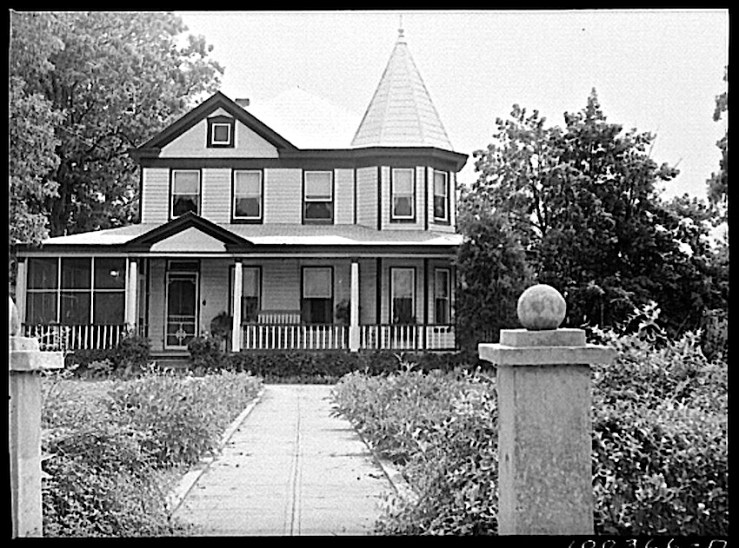
The couple — Charles P. and Bessie D. — built their Queen Anne house in 1909, although, curiously, it appears that they only bought the land beneath it in 1914, according to a Maryland Historic Sites Inventory Form filled out in the 1990s or later.
Charles had moved to the the area to be an express agent for the railroad. Bessie was the town dressmaker. They lived in the house until their deaths during the 1960s.
A photo attached to the Inventory Form shows that the screening on the east side of the porch was later removed and some lacy trim was added along the entire front. I could not find the house in a current Google Maps satellite view, however.
As usual, I wish we could see more of the garden.
Marjory Collins took these pictures about six months after moving to Washington, D.C., to join the documentary photographers of the U.S. Office of War Information. Her “upbeat, harmonious images” of that time “reflected the OWI editorial requests for visual stories about the ideal American way of life,” according to a biographical essay about her by the Library of Congress.
 “Old Birds’ Nest Tavern, Marionville vic., Northampton County, [on the Eastern Shore of] Virginia,” ca. 1930s, by Frances Benjamin Johnson, via Library of Congress Prints and Photographs Division. (Marionville was also known as Birdsnest.)
Beautiful summer meadow around the house. . .
Johnston’s notes on the photograph call the building a “sailors’ tavern.” It was probably one half to two miles from the creeks and marshes of Hog Island Bay on the Atlantic Ocean, maybe closer.
Her notes also say that it was “the first three story house in the country [county?].”
According to a 1927 economic and social survey of Northampton County, “[f]rom the low room in the middle of this building originated the name of ‘Bird’s Nest’.”
Unfortunately, I can’t find anything to indicate that it has survived to the present day.
When the world turns completely upside down
You say we’ll emigrate to the Eastern Shore
Aboard a river-boat from Baltimore;
We’ll live among wild peach trees, miles from town, . . .
We’ll swim in milk and honey till we drown.— Elinor Wylie, from “Wild Peaches“
 enclos*ure