The Sunday porch: Montana

This slideshow requires JavaScript.

W. C. Child Ranch, near Helena, Montana, ca. 1890,* from an Historic American Building Survey (HABS), via Library of Congress Prints and Photographs Division.

Mr. Child became rich from prospecting in Montana. He built this octagonal house on his 3,000-acre ranch in the late 1880s.

However, he used it not as a home, but as a party space.  (The whole second floor was a ballroom.) He and his friends — sometimes over 100 — would take the Northern Pacific train from nearby Helena for banquets and dances lasting late into the night.

By 1893, Child was broke and had to assign the ranch to another man.  He was found dead in the house a month later.

Child called the ranch “White Face Farm” for the Hereford cattle he raised there, and he built Montana’s largest barn to protect them during the winters. There are more details here.

The house and barn still exist as a special events center called Kleffner Ranch. *Both HABS pictures here were photocopies of original photographs; the originals are in the collection of the Historical Society of Montana.
The Sunday porch: St. Mary’s County

This slideshow requires JavaScript.

“Lynch Farm, St. Mary’s County, Maryland,” 1936 or 1937, by Frances Benjamin Johnston, via Library of Congress Prints and Photographs Division.

You can scroll through over a year’s worth of Sunday porches here.
Continue reading “The Sunday porch: St. Mary’s County”

Vintage landscape: New Roads, La.

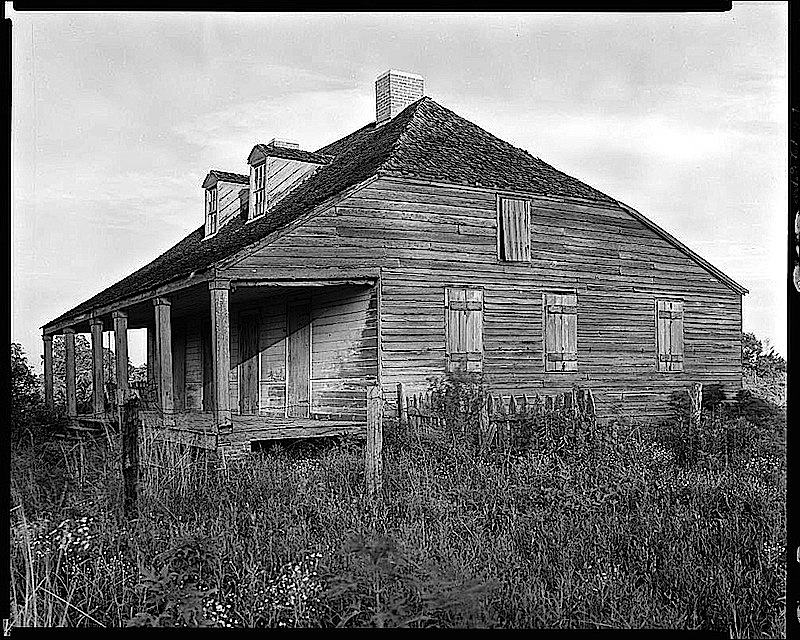
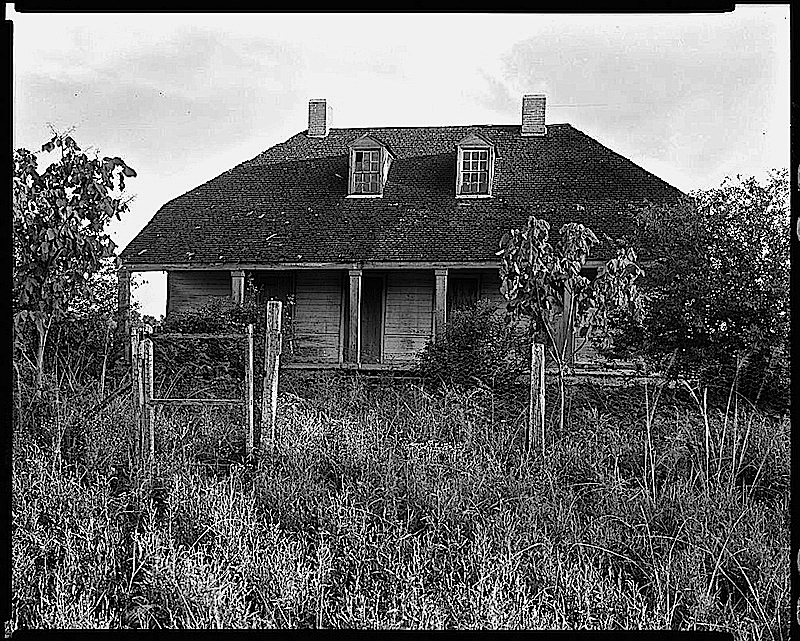
New Roads, Louisiana, 1938, by Frances Benjamin Johnston, via Library of Congress“House, small, hipped roof, New Roads vic., Point Coupee Parish, Louisiana,” 1938, by Frances Benjamin Johnston, via Library of Congress Prints and Photographs Division.

On some days, this is my dream garden.

Just cut a path through the gate, up to the front steps . . .

01471vand plant a fig tree at the end of the porch.

Long live the weeds and the wilderness yet.

— Gerard Manley Hopkins, from “Inversnaid

The Sunday porch: Tasmania

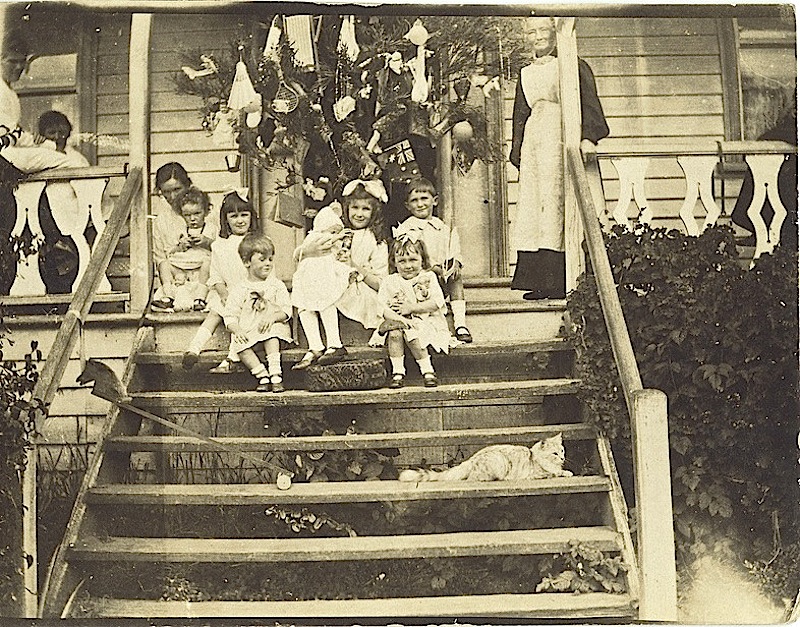
Christmas scene on porch, via Tasmanian Archives on flickr“Children beside a Christmas tree,” ca. 1910s, via Tasmanian Archive and Heritage Office Commons on flickr.

I think this snapshot may have been taken by a child — the focus is as much on the toy horse and the cat as on the other children and the tree.

The Sunday porch: the Berry’s

The Berry house“Berry’s house,” between 1910 and 1925,* probably near Selma, California, by National Photo Company, via Library of Congress Prints and Photographs Division (all photos here).

I think this is the farm that Ethel and Clarence Berry bought near her parents’ home in Selma after they became millionaires in the Klondike gold rush.

Ethel was one of the first women miners to go to Alaska, leaving right after her wedding in 1896. The next spring, the couple struck it amazingly rich on the Eldorado and Bonanza Creeks.

When she arrived in Seattle that summer — headed to the bank alone with $100,000 in gold that she’d kept hidden in her bedroll — she was immediately embraced by the popular press as the “Bride of the Klondike.”

The Berrys invested their money in more Alaskan mines (and in oil) and stayed rich.  They moved between the farm in Selma and a home in Alaska until Clarence’s death in 1930. Ethel then moved to Beverly Hills.  She died there in 1948.


*I suspect the photos were taken closer to the earlier year given, judging from the photo of Ethel and her sister (after ‘Continue reading’). Ethel would have been 37 years old in 1910.

Continue reading “The Sunday porch: the Berry’s”