The Sunday porch: Munich

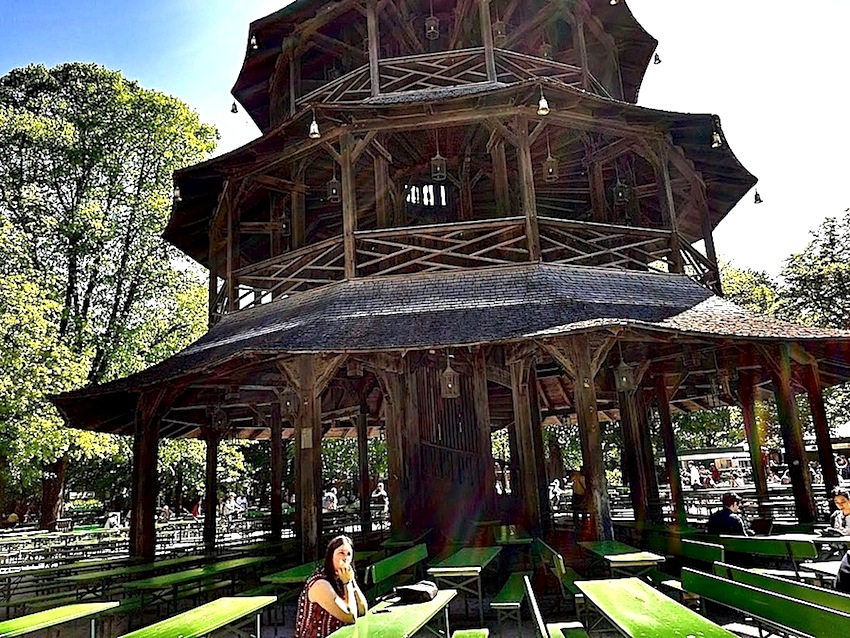
Chinese Tower, Munich, May 2016, enclos*ureChinesischer Turn and beer garden in the Englischer Garten park, Munich, Germany.

Not a porch, of course, but a grand garden pavilion first built in 1790 — the year the park itself was laid out (officially opening in 1792).

Chinese Tower detail, Munich, May 2016, enclos*ure
The all-wooden tower is five storeys and eighty-two feet tall.

The tower was designed by Joseph Frey, a military architect.  He was inspired by the “Great Pagoda” of the Kew Royal Botanic Gardens in London.

The 1790 structure burned down in 1944 after a heavy bombing of Munich.  The current tower, true to the original, was built in 1951.
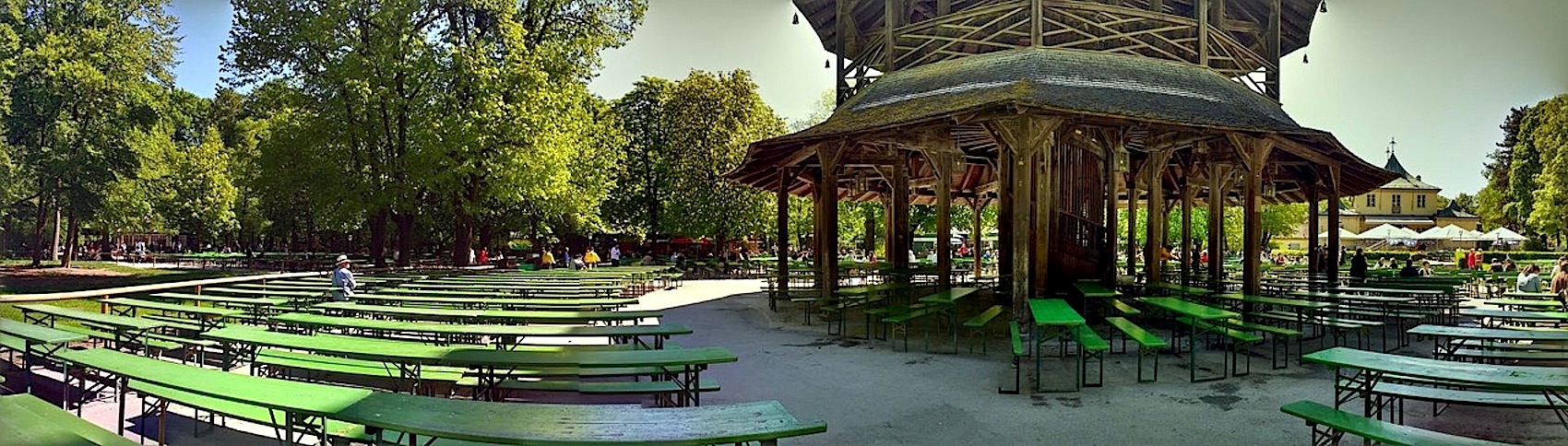
panoramic Chinese Tower, Munich, May 2016, enclos*ure
Click on the image to enlarge it.

The beer garden surrounding the Chinese Tower seats 7,000 people.

On early Sunday mornings in the late 19th century, up to 5,000 servants, soldiers, students, and other working-class people would gather at the tower to dance to a brass band.  These Kocherlball or cooks’ balls would end by 8:00 a.m., so that the attendees could get back to work or go to church.  The dances were outlawed in 1904, but were revived in 1989 as a annual event every third Sunday in July.

Munich, early May 2016, enclos*ure

As its name implies, the Englischer Garten public park (the oldest in Germany) was laid out in the English landscape style associated with the work of Capability Brown.  Its principal designer was Royal Gardener Friedrich Ludwig von Sckell, who had studied in England.

The park has an area of 910 acres — making it larger than New York City’s Central Park.

I took these photos with my phone while biking through the park last Sunday morning. (There are over 48 miles of paths in the park.)

There’s a brief history of beer gardens in America here.
Wordless Wednesday: krokus

This slideshow requires JavaScript.

The King’s Garden, Copenhagen, March 24, 2016.

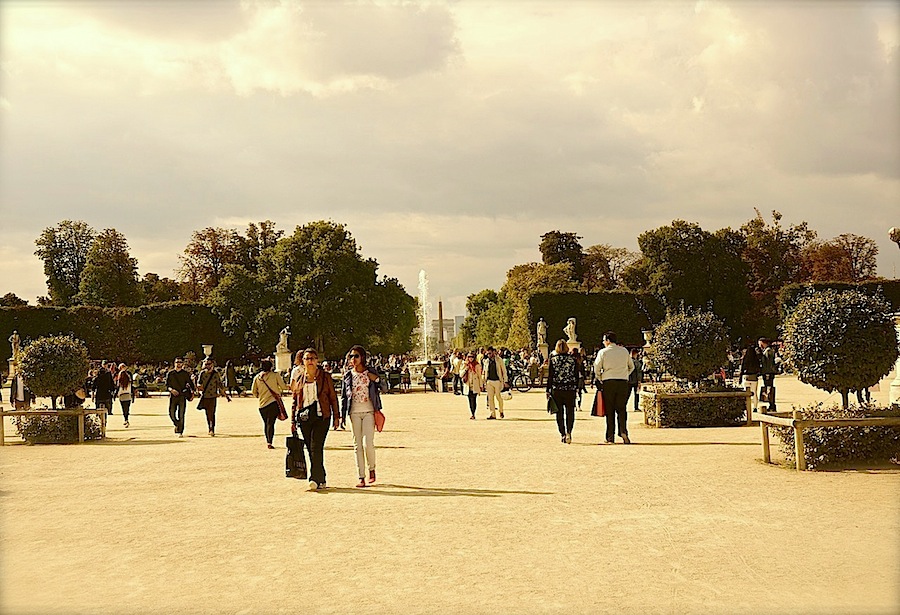
The Tuileries, Paris

We were lucky enough to be in Paris and Brussels all last week. The weather was wonderful: slightly cooler than Stuttgart and — my photos below not withstanding — very sunny.

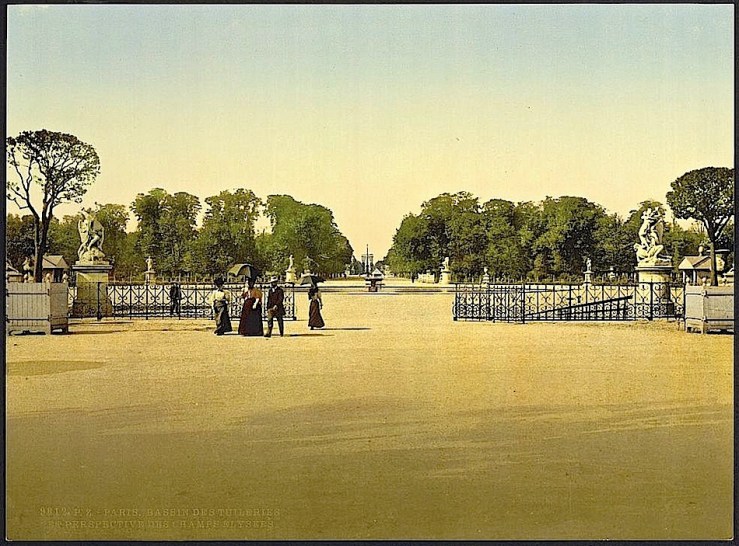
Tuileries fountain, ca. 1900, photochrom via Library of CongressWhile taking pictures at the grand bassin rond in the Tuileries Garden, I remembered this turn-of-the-century photochrom (above) from the Library of Congress.

Last Tuesday, a bit “antiqued.”My slightly “antiqued” version, the first Saturday of September.

There are more photos below — click on any thumbnail in the gallery.

Life in gardens: last look

As April’s cherry blossoms fade away, here is one more vintage scene.

This slideshow requires JavaScript.

“Street life in Yokohama park with blossoming cherry trees,” from the photo collection of  journalist Holger Rosenberg, who traveled to Japan in 1903, via National Museum of Denmark Commons on flickr.

In Japan this week, the flowers are at their peak only in the most northern regions.

Click on ‘Continue reading’ below to scroll through larger versions of the images.

the clouds of
a thousand skies from
cherry buds

Saigyo Hoshi

Continue reading “Life in gardens: last look”

The Sunday porch: rustic pavilion

Rustic building, Philadelphia, Library Company of PhiladelphiaThis whimsical shelter was located on a ridge in Philadelphia overlooking the Schuylkill River.  It was “one of the thatch-roof rustic pavilions installed at the [Fairmount Water Works] between 1864-1866 as a decorative improvement,” according to the website Philadelphia Architects and Buildings.

The photo, via Library Company of Philadelphia Commons on flickr, is dated ca. 1870.

In the lower left corner of the picture, you can just see one of the water work’s Classical Revival buildings at the river’s edge below. They housed and disguised the pumping equipment of the city’s water supply system from 1815 until 1911.

I love the birdhouses near the top of the pavilion’s roof.

The little buildings seem to have been replaced during the 20th century by white gazebos more closely matching the style of the other water works buildings, which now house a restaurant and interpretive center.