
 Our backyard this weekend.
First spring mow
Our backyard this weekend.
Our backyard this weekend.
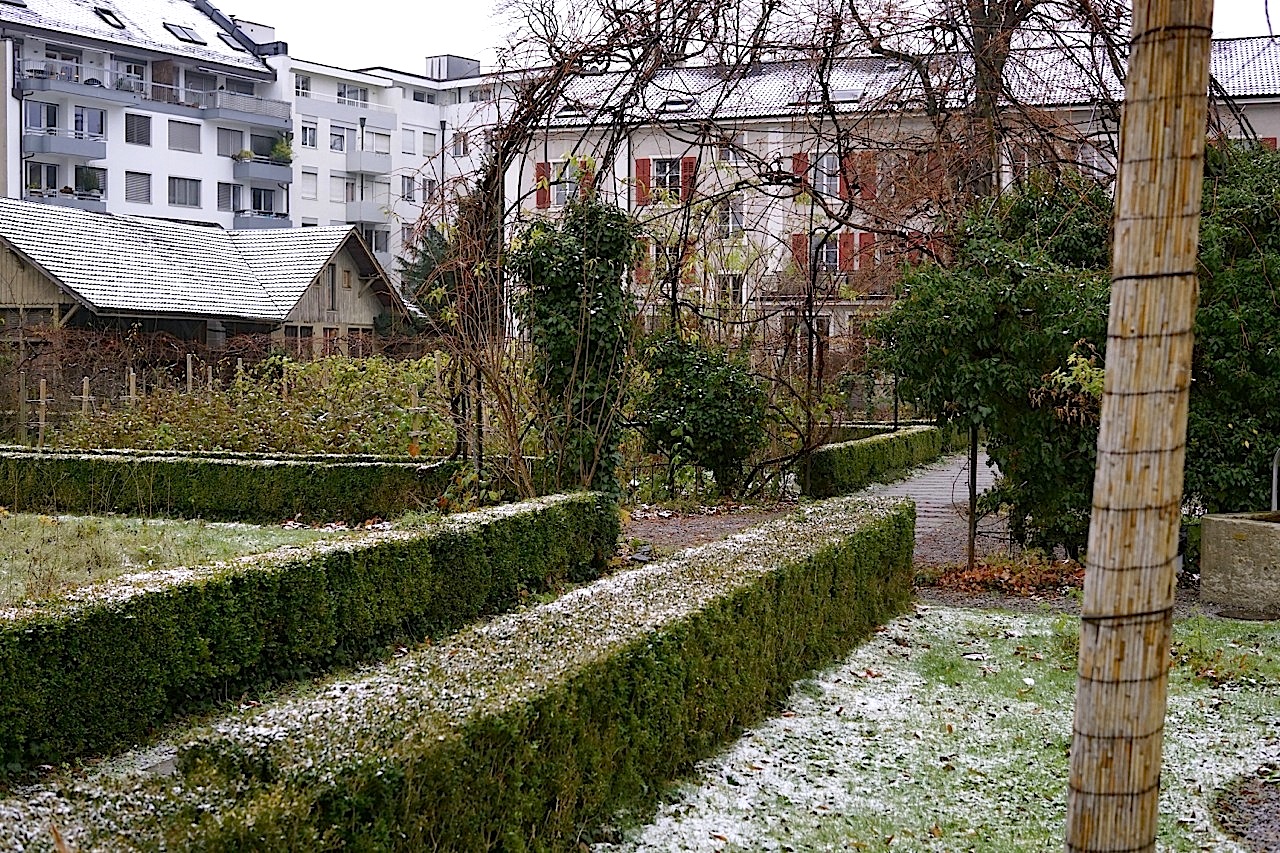
During our Thanksgiving visit to Basel, Switzerland, we stayed at Hotel Bildungzentrum 21 or Hotel Educational Center 21.
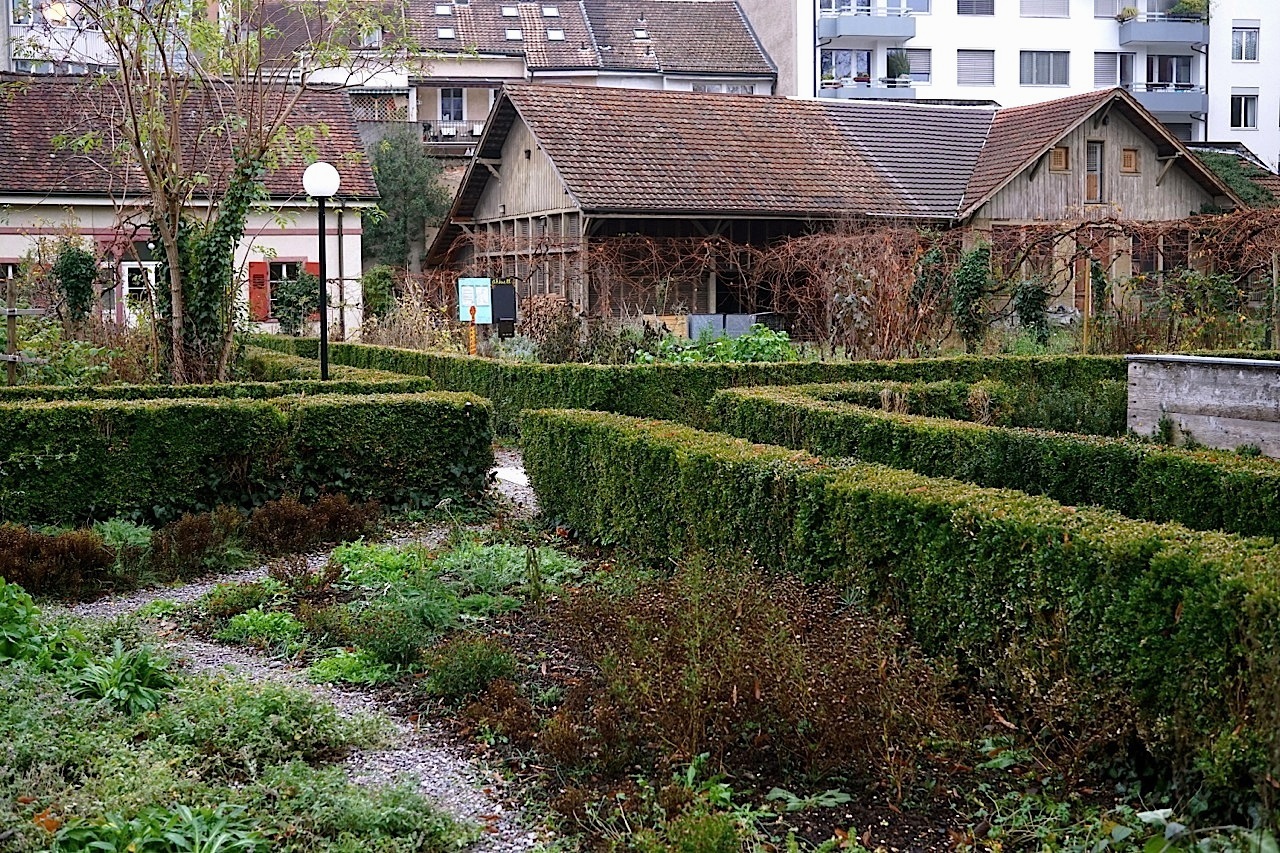
Although a large garden was mentioned on TripAdvisor when I was booking, I had guessed that this would mean — particularly in late November — neat gravel paths, some dormant shrubs and lawn, and beds of chilly purple pansies on a 8″ planting grid.
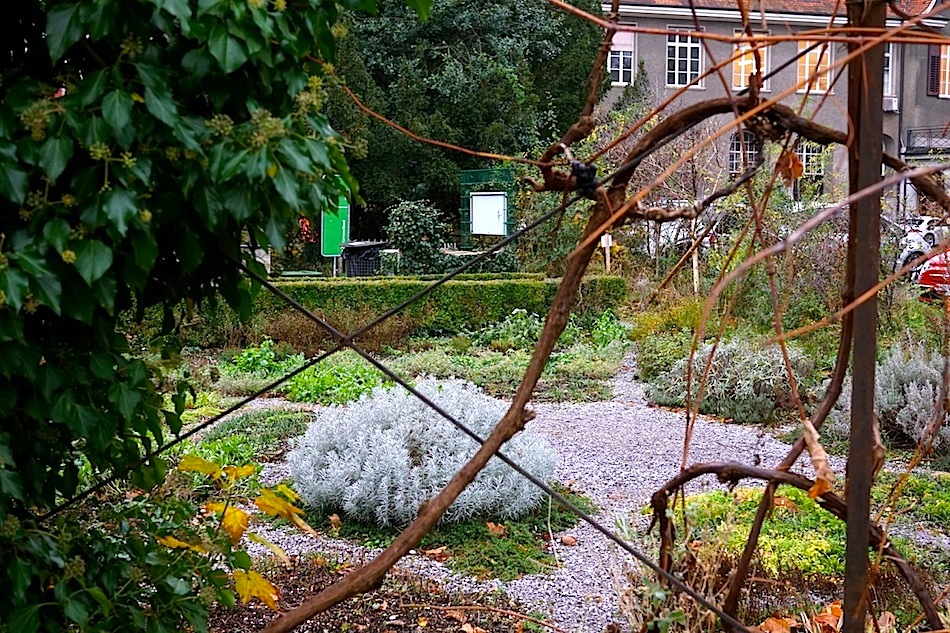
That the “private park” would actually encompass meadows, large plots for flowers, vegetables, and herbs, rows of berry bushes, and an orchard was a wonderful surprise.
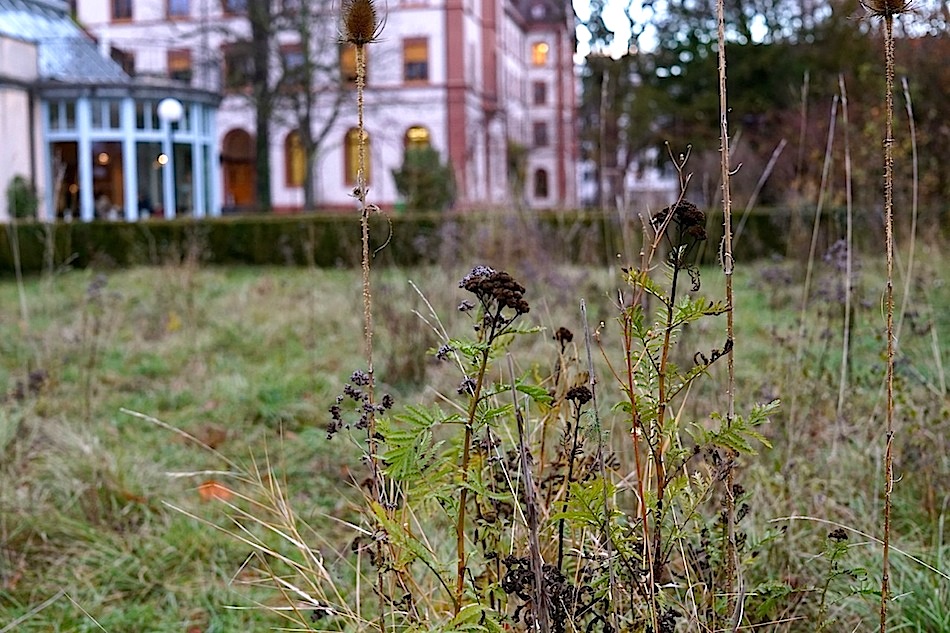
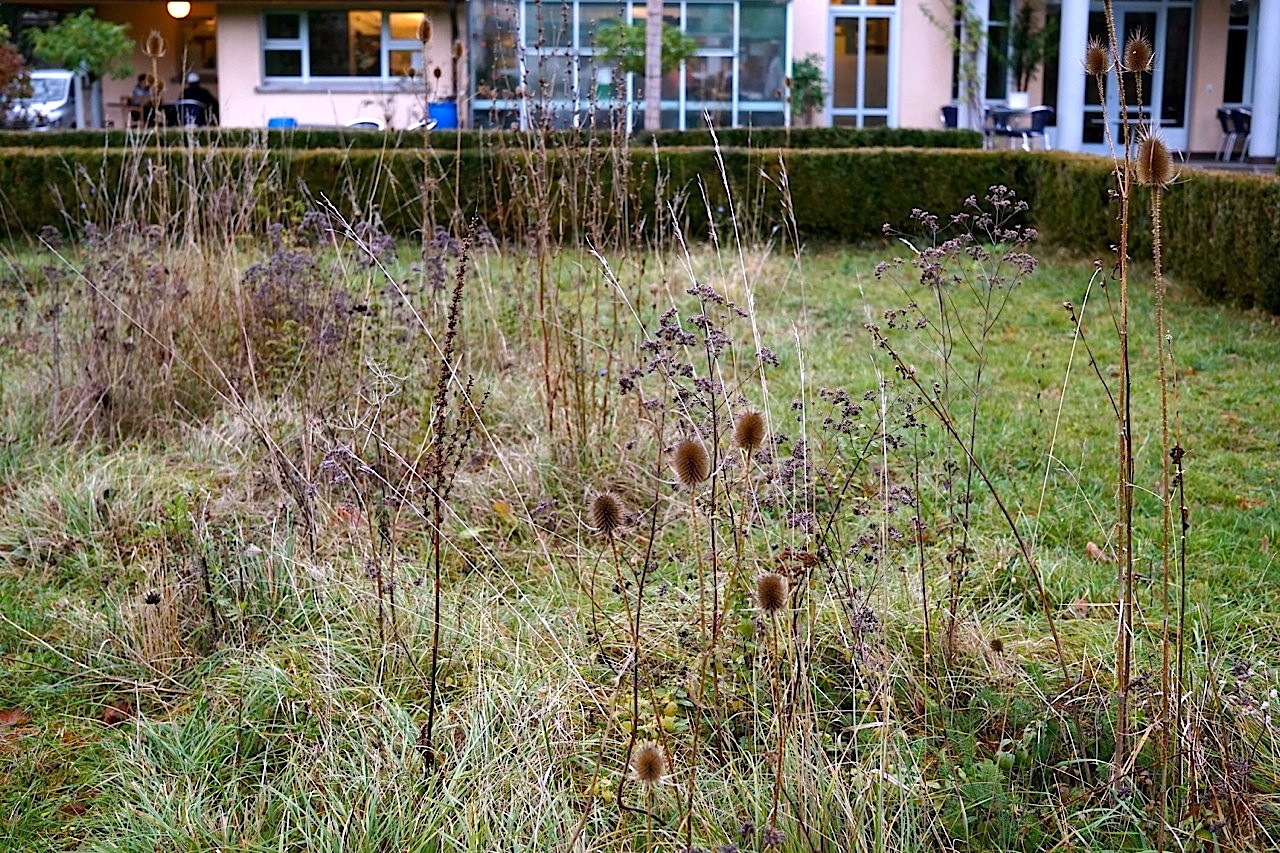
The hotel’s rooms are in one part of a building constructed in the 1860s as housing for the Basel Evangelical Missionary Society, now called Mission 21. (Hermann Hesse lived here for six years as a child.) The garden was once a place for teaching outgoing missionaries how to grow their own food.
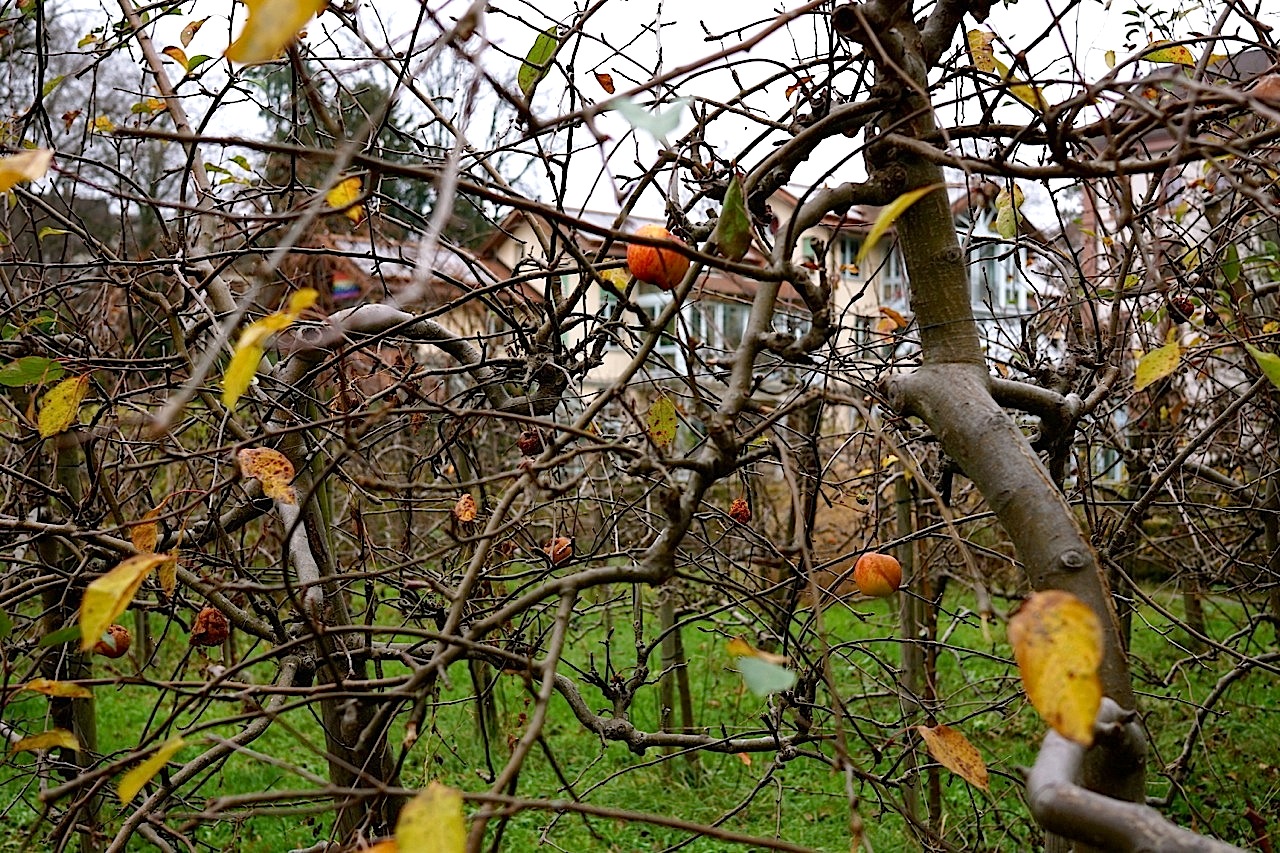
Today, it is cared for by Unigärten Basel — a collective of University student gardeners — in collaboration with Urban Agriculture Basel and ProSpecieRara.
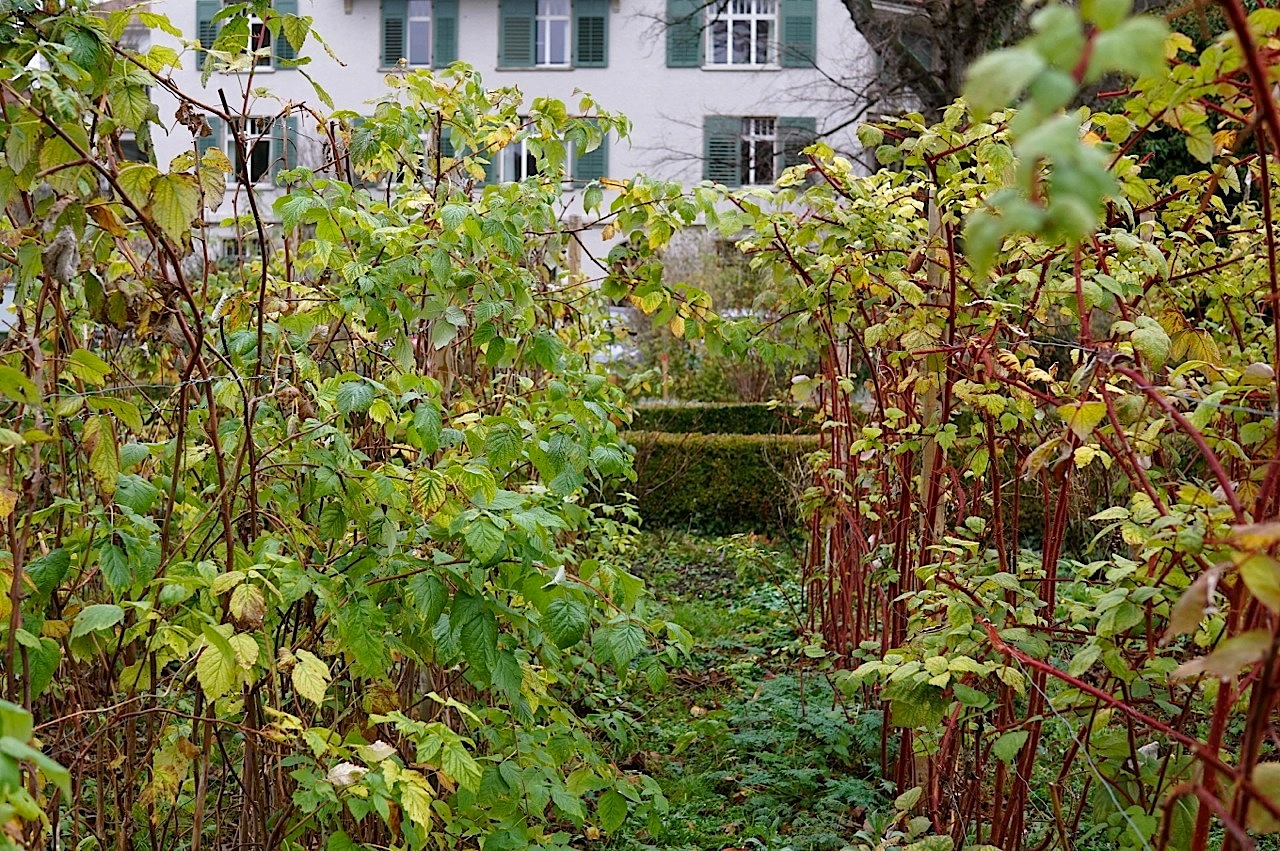
Unigärten’s goal for the Mission 21 garden is to show the “greatest possible diversity of plants” within a permaculture system. They believe the garden, open to hotel guests and the surrounding neighborhood, can inspire both experienced and novice gardeners.
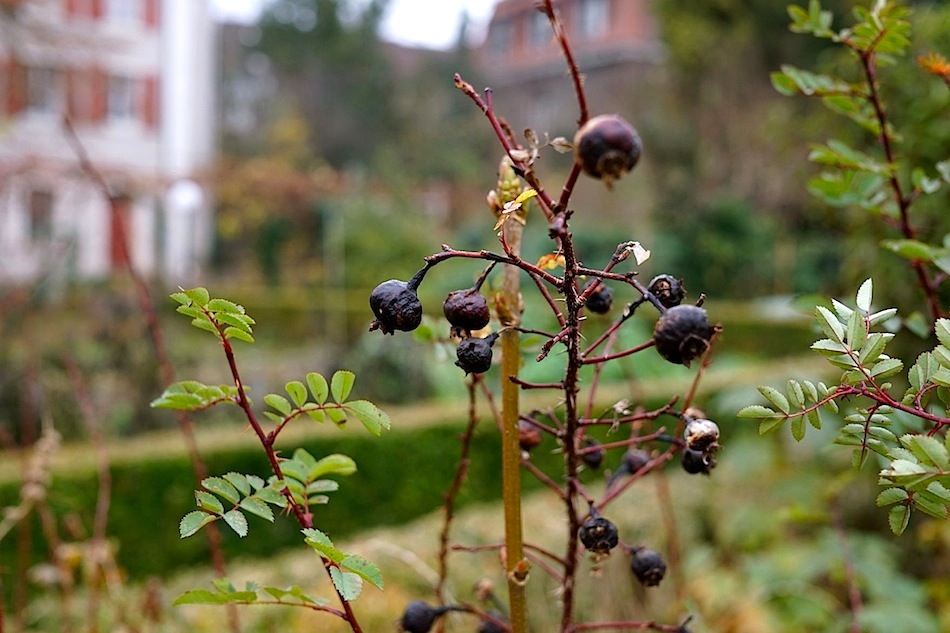
I loved this practical and romantic garden. I spent the beginning and end of every day we were there taking dozens and dozens of pictures — which is why it has taken me so long to post this. (There’s also a good photo of the garden in summertime here.)
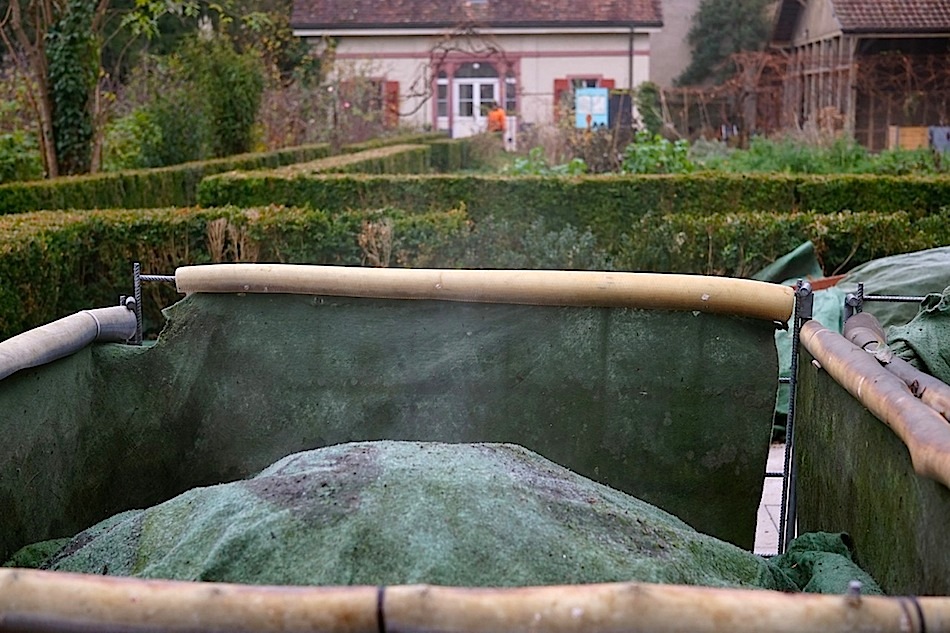
In the back garden, seven rectangular and square sections are outlined in sheared boxwood.
Wild plants (Wildpflanzen) — particularly those that thrive in dry and waste or disturbed ground (Ruderalflächen) — take their place alongside the urban agriculture. They have been left to spread largely undisturbed along the pathways and under shrubs and fruit trees. And in the two meadows, there are forty species, “providing joy to many insects,” according to a sign posted outside the restaurant.
The front garden, across from the hotel entrance, does contain curving gravel paths and lawn, but also a number of large, old trees underplanted in a very rough and natural way with native plants from the region — mostly those with the downy oak forest as their native habitat.
You can also see that this front area has been designed to accommodate the hotel’s and the Mission’s entertaining needs and is surely at its best in the warmer months, full of tables and chairs, lights, and people.
Hotel Bildungszentrum 21 is two blocks from the historic city center. The rooms are simple, but comfortable. Their rates are very reasonable.
Meals are the biggest expense for a tourist in Basel. Main dishes in all the guidebooks’ lists of budget restaurants are $20-$45. A Whopper meal at the local Burger King is around $15, although sandwiches from bakeries, eaten standing up, can be had for $6 – $10.
I can recommend Zum Isaak and the bistro of the Museum der Kulturen (nice for lunch), both on Münsterplatz; Manger & Boire at Barfüsserplatz; and ONO deli cafe bar at Spalenvorstadt and Kornhausgasse (their generous Zmorge breakfasts are good for lunch too).
All public city transportation is free for anyone staying in a Basel hotel. Just ask for a pass when checking in.
Continue reading “The mission garden, Basel”
 “Old Birds’ Nest Tavern, Marionville vic., Northampton County, [on the Eastern Shore of] Virginia,” ca. 1930s, by Frances Benjamin Johnson, via Library of Congress Prints and Photographs Division. (Marionville was also known as Birdsnest.)
Beautiful summer meadow around the house. . .
Johnston’s notes on the photograph call the building a “sailors’ tavern.” It was probably one half to two miles from the creeks and marshes of Hog Island Bay on the Atlantic Ocean, maybe closer.
Her notes also say that it was “the first three story house in the country [county?].”
According to a 1927 economic and social survey of Northampton County, “[f]rom the low room in the middle of this building originated the name of ‘Bird’s Nest’.”
Unfortunately, I can’t find anything to indicate that it has survived to the present day.
When the world turns completely upside down
You say we’ll emigrate to the Eastern Shore
Aboard a river-boat from Baltimore;
We’ll live among wild peach trees, miles from town, . . .
We’ll swim in milk and honey till we drown.— Elinor Wylie, from “Wild Peaches“
My question here in Stuttgart is a common one: “how to make a garden without much gardening?”
Our backyard is an enclosed strip of lawn that runs the length of the back of the house and wraps halfway around on both sides. There are two large trees and a concrete patio outside the center door. In one far corner is a small, oval-ish planting bed with a few shrubs and perennials and a lot of weeds. About 5′ beyond the fence are mature woods.
And when I say ‘lawn,’ I mean moss, clover, dandelions, plantains, buttercups, lawn daisies, sprouted trees, an assortment of other low creeping plants, and some grass.
I have no desire to dig the planting beds (or buy the trees and shrubs) that would improve this dull (except for the woods) space. We want to spend our time in Europe getting out and about.
But I do want to have a garden that’s a little more pretty aesthetically satisfying to sit in during the long daylight of summer.
My solution (at least for this year) has taken inspiration from several different sources.
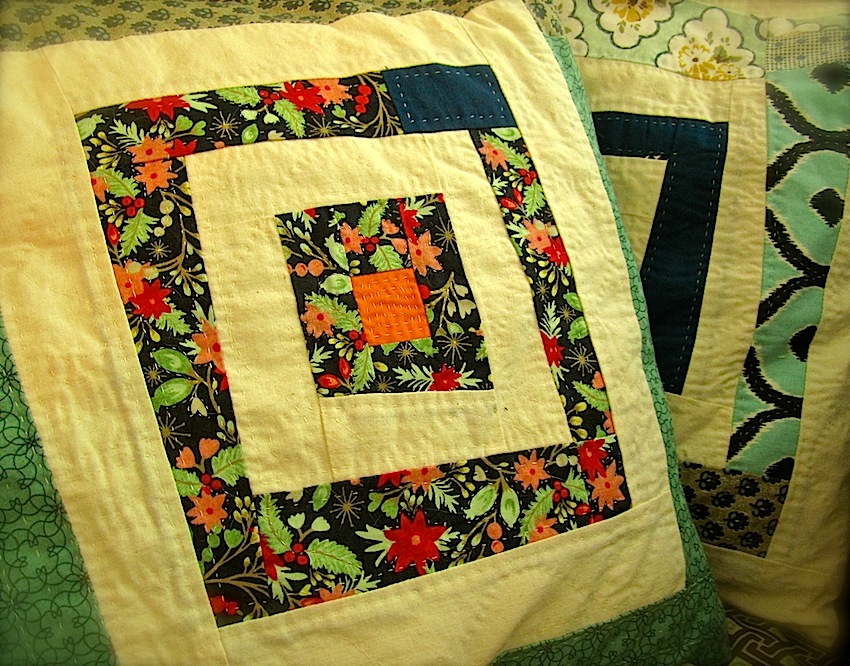 1) The “wonky” log cabin patchwork pillows I made for the living room.
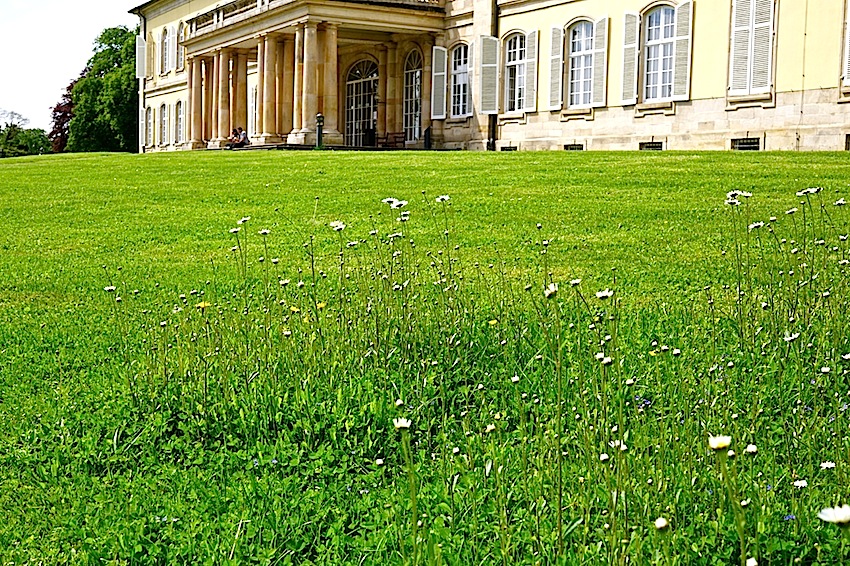 2) The front lawn of the 18th century schloss (palace) of Hohenheim (near our house in the southern suburbs of Stuttgart) — it’s part of the University of Hohenheim, which specializes in agriculture and natural sciences.
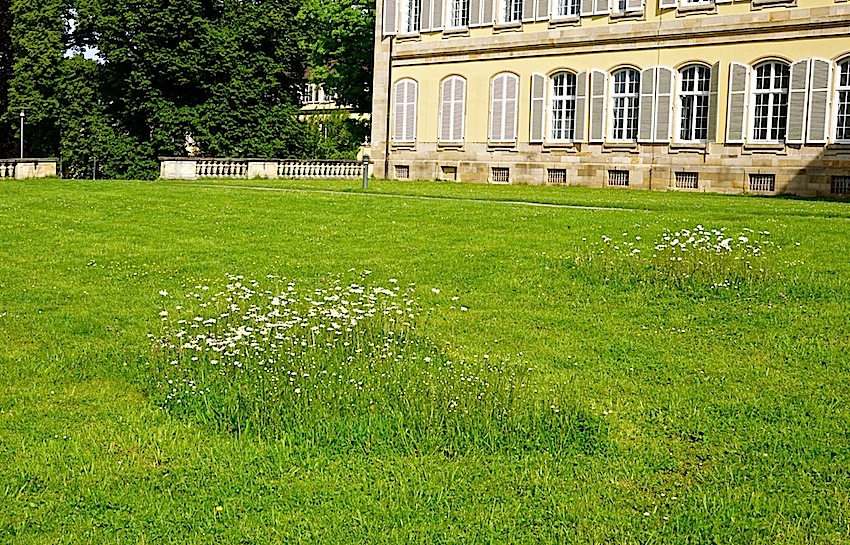 The grass is cut short, except for five or six unmown islands.
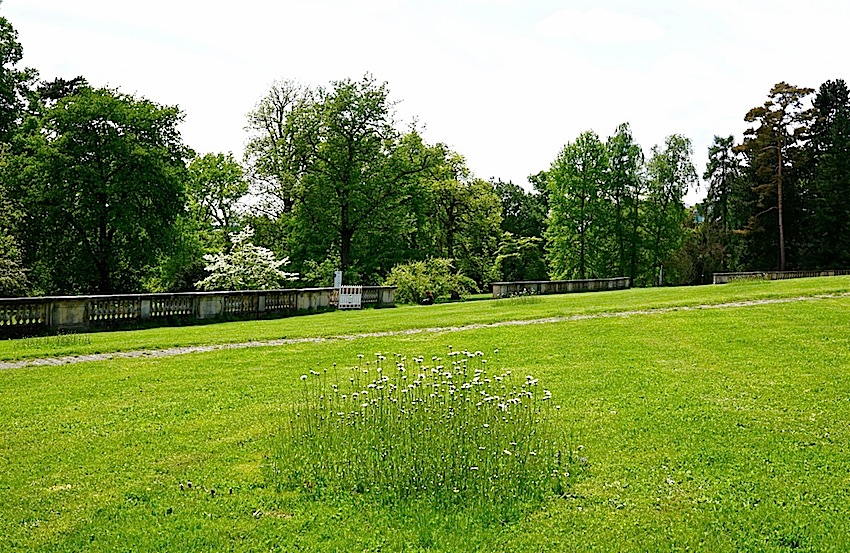 No doubt, the university is also trying to add some pattern and texture with low effort and cost.
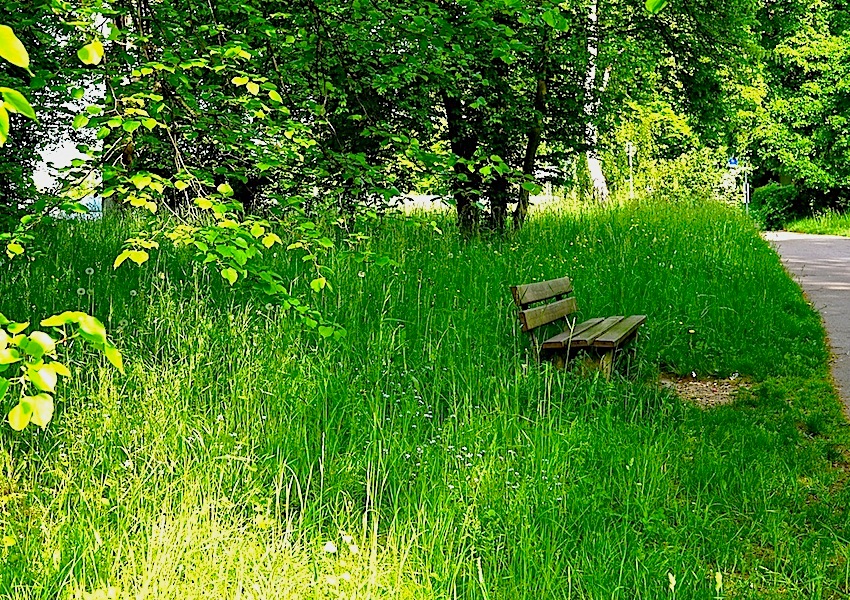 3) The public “hell” strips and other intermediary spaces along streets and sidewalks in nearby towns. They have been left uncut and have grown into really beautiful urban meadows. The area in the photo above was sprinkled with blue forget-me-nots a week ago.
4) Paths and patterns cut through long grass — and labyrinths. Here and here are a couple of images of a garden by Mien Ruys.
This is what I did about a week ago:
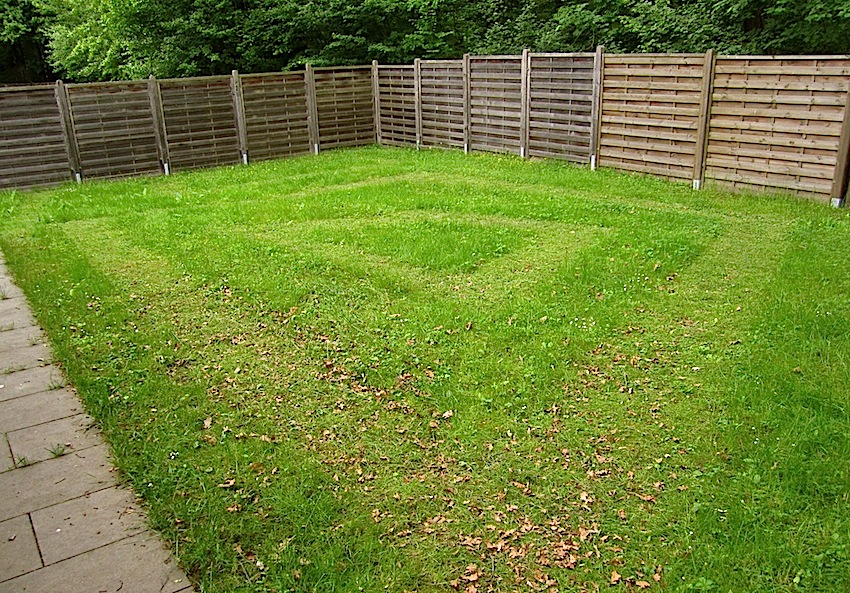
Using my antique reel mower and some clippers, I cut patterns through the grass, which has only been mowed once this spring.
I just “free-handed” it, starting with a patchwork-type design on the north side.
Then, I mowed a border around the patio and made a short path to the back gate.
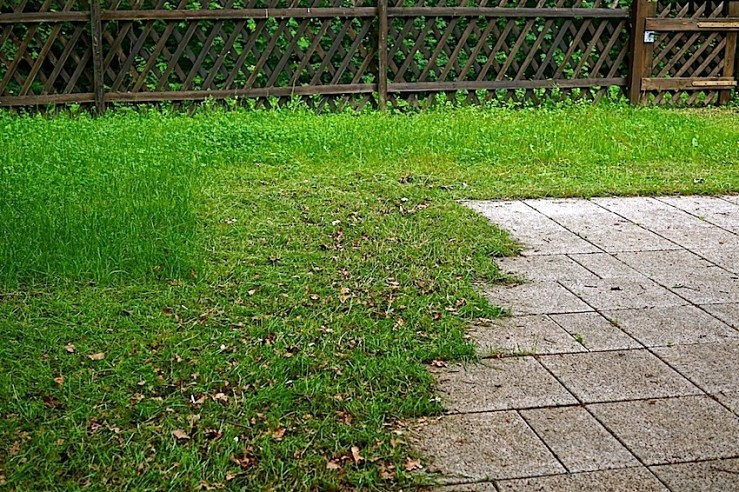
On the south side, my main concern was the planting bed, the shape of which does not even rise to that of a kidney.
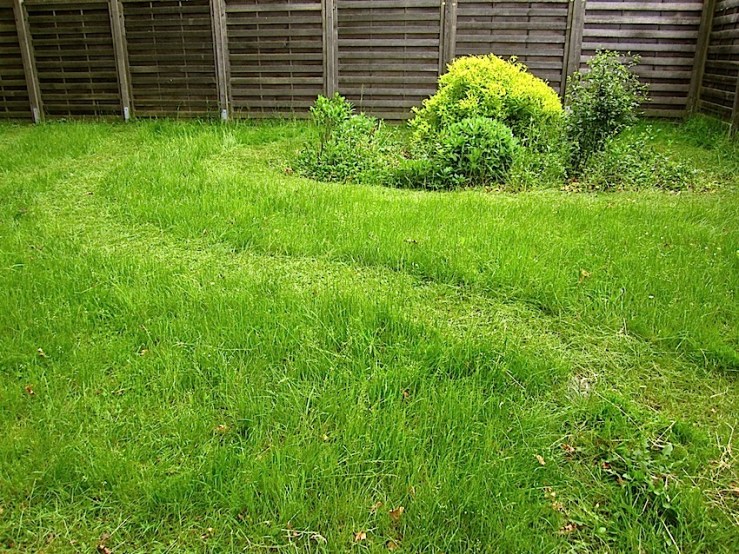
First, I mowed around it, enlarging it and cleaning up the edges (weeding it will come one of these days — it’s not really in our line of sight when we sit on the patio). Then I matched it by making a similar shape on the other end of the same side of the yard, under one of the trees.

I put our old table and chairs there (painting them is another chore for the future).

Then, I mowed two curvy paths out from each oval, so they cross in the center.
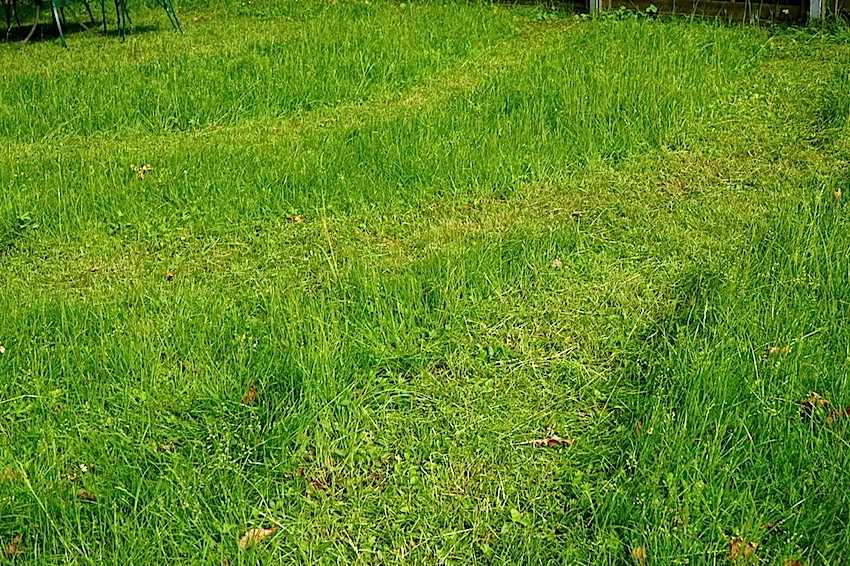
Then, I sat down to rest and admire my work.
Admittedly the results are, let’s say, “understated.” But I have made my mark and I’m happier about the place.
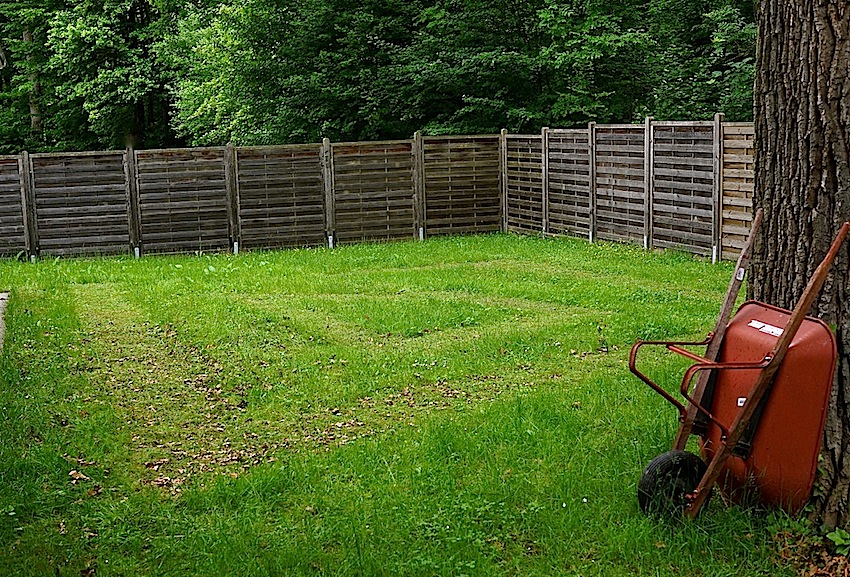
For the rest of the warm months, I just have to mow the paths from time to time. I may plant some bulbs in the grass in the fall. And I’ve thought of wrapping the tree trunks in fairy lights.
In late fall (or should I do it in late winter?), I will need to knock down the long grass — which I’m afraid will involve me and a pair of long shears. There is always something. . . .
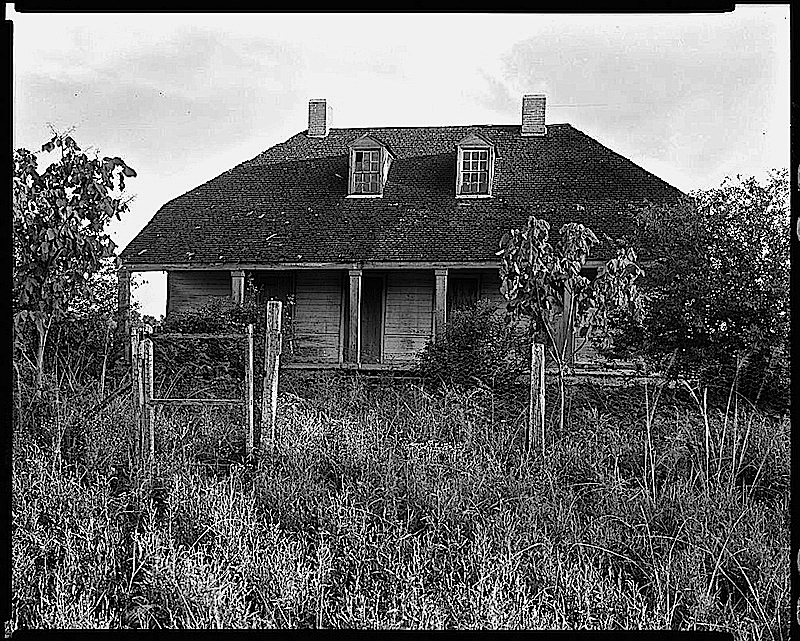 “House, small, hipped roof, New Roads vic., Point Coupee Parish, Louisiana,” 1938, by Frances Benjamin Johnston, via Library of Congress Prints and Photographs Division.
On some days, this is my dream garden.
Just cut a path through the gate, up to the front steps . . .
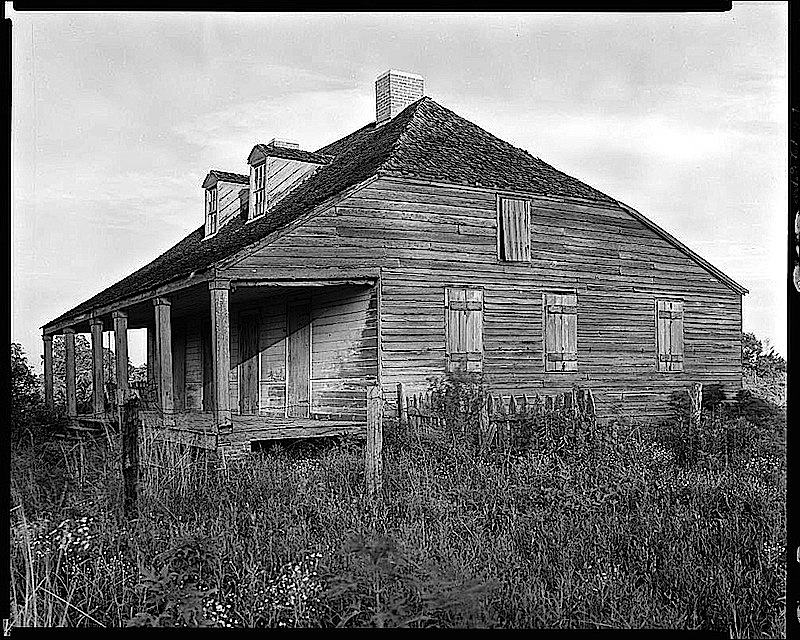 and plant a fig tree at the end of the porch.
Long live the weeds and the wilderness yet.
— Gerard Manley Hopkins, from “Inversnaid“
 enclos*ure