
The Sunday porch (on Monday)

Today, I’m repeating a porch from August 2012, but it is a nice one. (We were traveling this weekend.)

The Sunday porch/enclos*ure: Maplewood Camp, Waseca, Minn., c. 1900, Library of Congress“Cottages at Maplewood [Waseca, Minnesota],” c.1880-c.1899. By Detroit Publishing Co., via Library of Congress Prints and Photographs Division.*

Maplewood Park on Clear Lake was a national vacation attraction at the end of the nineteenth century. (Click on any image to enlarge it.)

The Sunday porch/enclos*ure: Maplewood Camp, Waseca, Minn., c. 1900, Library of CongressAbove: Maplewood’s pavilion for Chautaquas. From the 1870s to 1920s, the Chautaqua movement brought speakers and companies of musicians, dancers, and actors to camps like Maplewood for up to a week at a time.

The Waseca Historical Society still hosts a Chautaqua at Maplewood Park every July.

To read about a similar sort of summer cabin living, which also continues today, see this 2012 New York Times article, here.
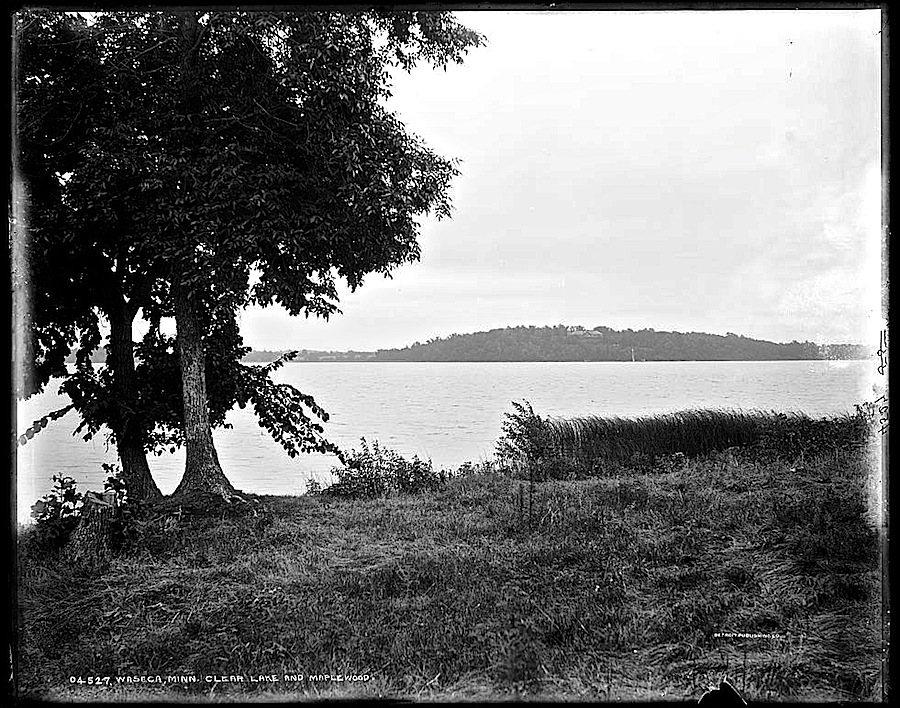
The Sunday porch/enclos*ure: Maplewood Camp, Waseca, Minn., c. 1900, Library of CongressAbove: the view of Clear Lake from Maplewood.


*All photos here: c.1880 – c.1899, by Detroit Publishing Co., via Library of Congress Prints and Photographs Division.
The Sunday porch: Lincoln, Vermont

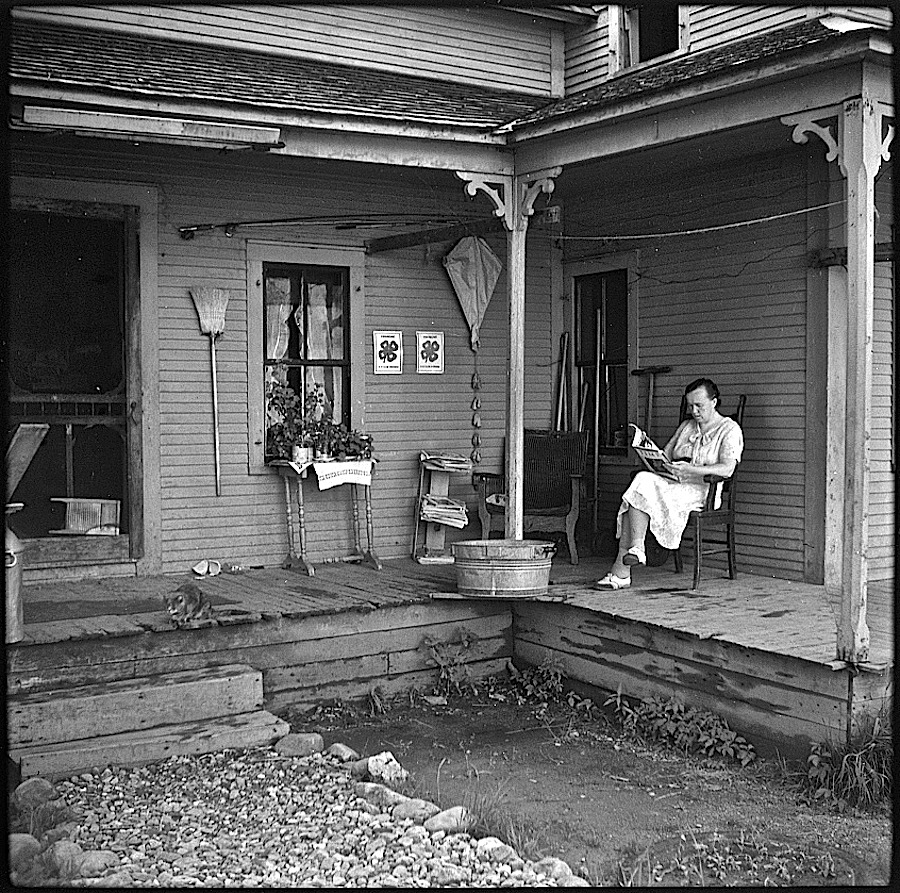
The Sunday porch/enclos*ure: Lincoln VT, 1940, by L. Rosskam, via Library of Congress“Front porch. Lincoln, Vermont,” July 1940, by Louise Rosskam, via the FSA/OWI Collection, Library of Congress Prints and Photographs Division.
The porch as a farm woman’s summertime mission control room. . .

Her broom (and 4H posters) are on the wall, and more cleaning and gardening tools are behind the chair.  She has stacks of magazines (and TIME in hand).  Her potted plants are doing well.  Above them are fishing poles and a kite.

The cat dozes above the steps — I think the scrub board behind the broken screen is there to keep him out of the house.

The wash tub is setting on a shelf built across the angle where the two sides of the porch meet.  This puzzled me until I realized that it must be there to catch rainwater from the roof.

The photographer, Louise Rosskam (1910-2003), was “one of the elusive pioneers of what has been called the golden age of documentary photography,” according to the Library of Congress.

Like many of her photos, this image was attributed for many years to her husband Edwin, who was also a photographer.  At the time it was taken — as part of a series on rural Vermont — he was working as an editor for the Farm Security Administration (FSA) of the U.S. government.

Her first professional photography work had been in the mid 1930s for the Philadelphia Record.  The paper would only actually hire Edwin, so he recouped her wages by including them on his expense vouchers under “gas and oil.”

The couple then produced documentary photo books on San Francisco and Washington, D.C. (but only Edwin’s name appeared on the covers).  After 1939, when Edwin went to work for the FSA, Louise began to take freelance photographs.  In the 40s, they both worked for Standard Oil Company.

Near the end of her life, Louise began to write to institutions like the Library of Congress correcting the credit given to Edwin for her own photos.  There’s an interesting interview with her from 2000 here.

Vintage landscape: New Orleans

Vintage landscape/enclos*ure: Ursuline Convent, New Orleans, Library of Congress“Doorway and courtyard of the Ursuline Convent, New Orleans,” between 1920 and 1926, by Arnold Genthe, via Library of Congress Prints and Photographs Division.
The Old Ursuline Convent was completed in 1753 in a French Colonial style.  It may be one of the oldest buildings in the Mississippi Valley. It was a convent only until the 1820s, however, when the nuns turned it over to the Bishop of New Orleans and moved to a larger place in Treme.

At the time of this photo, the building was a rectory for the adjoining church of St. Mary’s, the home parish for the area’s many Italian immigrants.  Today, it is part of the Catholic Cultural Heritage Center of the Archdiocese of New Orleans.

Vintage landscape: Hawthorne Lane

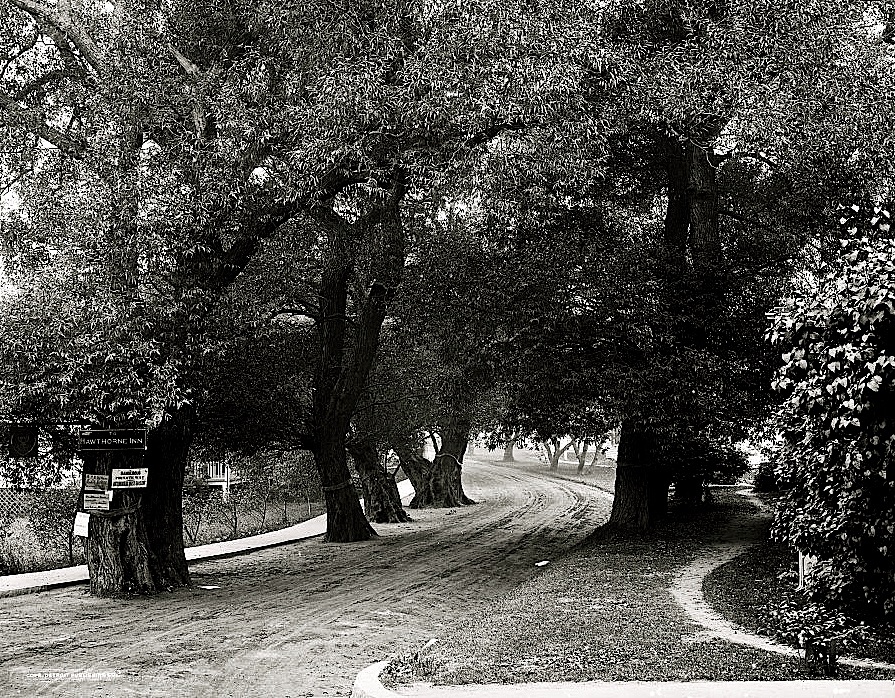
Vintage landscape/enclos*ure: Hawthorne Lane, Mass., early 20th c., via Library of CongressHawthorne Lane, East Gloucester, Massachusetts, between 1900 and 1920, by Detroit Publishing Co., via Library of Congress Prints and Photographs Division.
The signs on the tree: Direct to Hawthorne Inn (to the right), A.P.T. deHaas Gate Lodge (to the left), and Miss Willard’s Studio.

Life in gardens: the Ellipse

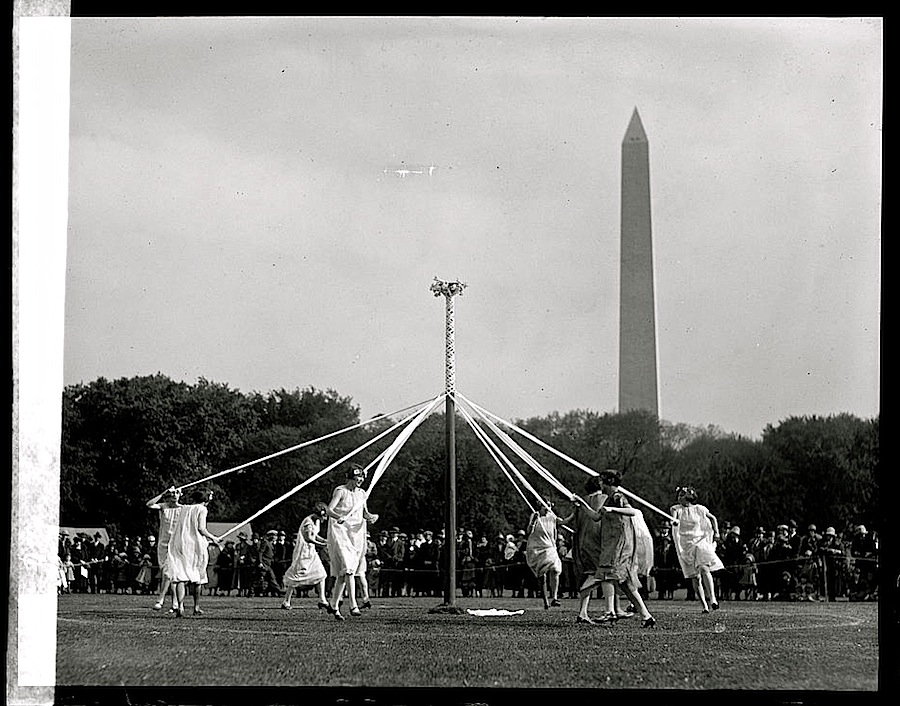
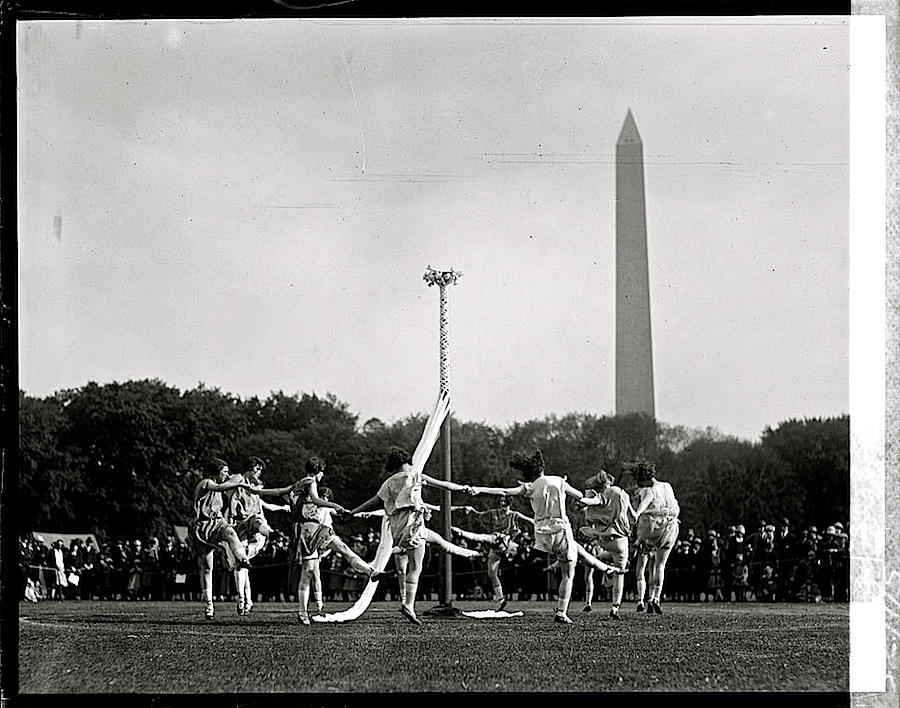
What means this tumult in a vestal’s veins? . . .*

Maypole, 1925, Library of CongressMay pole dancing on the Ellipse, Washington, D.C., May 1, 1925, by National Photo Company, via Library of Congress Prints and Photographs Collection.

Maypole dance, 1925, via Library of CongressClick on the photos for larger views.


*Alexander Pope, from “Eloisa to Abelard