This morning, I combined the tulips that I bought last week at the supermarket with some white sweet woodruff, or Galium oderatum, just picked from a shady spot in our backyard.
The flowers in my arrangements smell lightly of honey, but sources say that as the plant wilts and dries, its leaves will smell like fresh-cut hay and vanilla.
G. oderatum is native to Europe. In Germany, it is known as Waldmeister or ‘master of the forest.’ Traditionally in spring, before it blooms, its leaves have been added to wine to create May wine or Mai Bowle.
For a good discussion of the culinary uses of the herb in Germany — where it flavors jell-O and hard candy — see this article, “May’s sweetest herb,” in the blog Spoonfuls of Germany.
To see what other gardeners have put in a vase today, please visit Cathy at Rambling in the Garden.
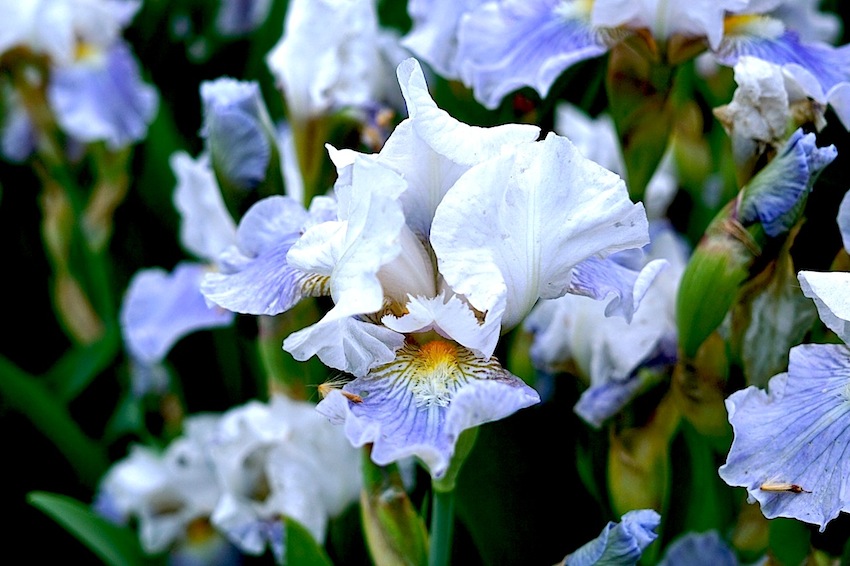
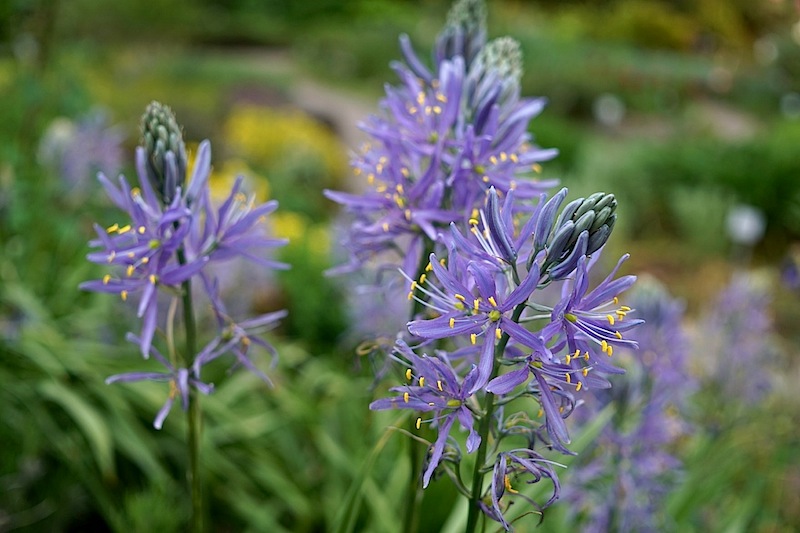
The pretty blue-violet flower above was close by, but I didn’t get a picture of its label. I think it’s another Asphodelus. It’s a Camassia, a North American native in the asparagus family (see the comments below).
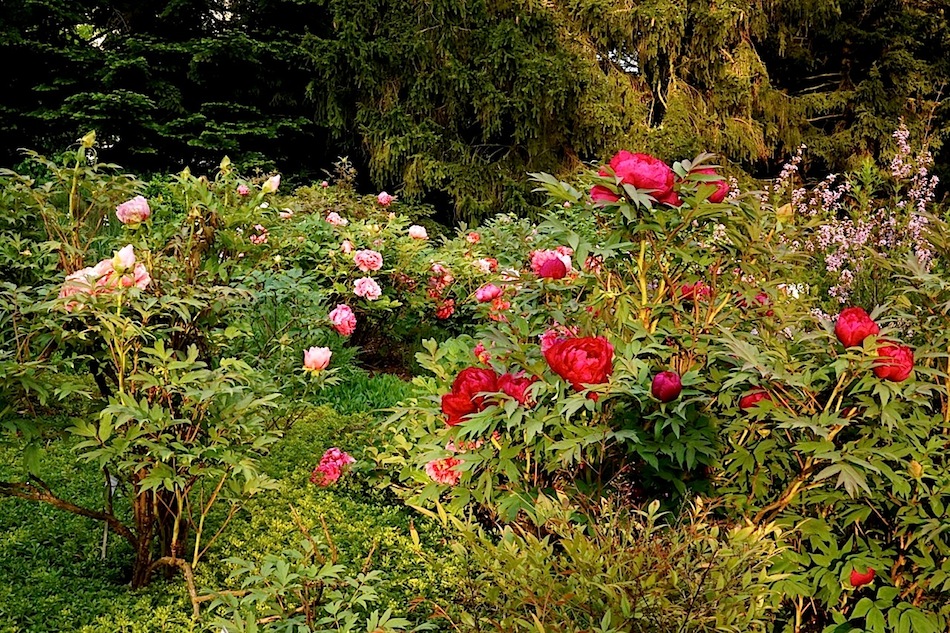
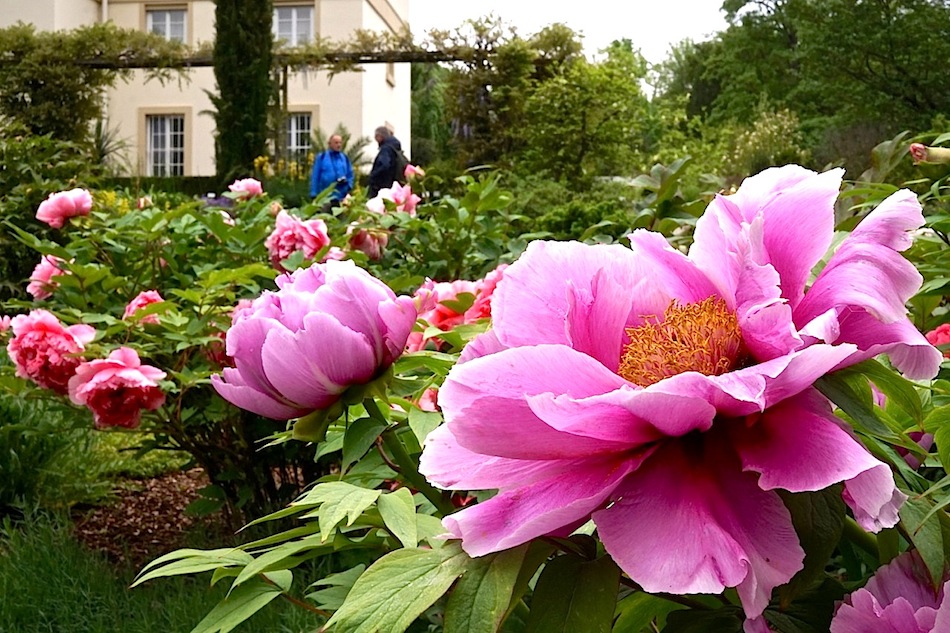
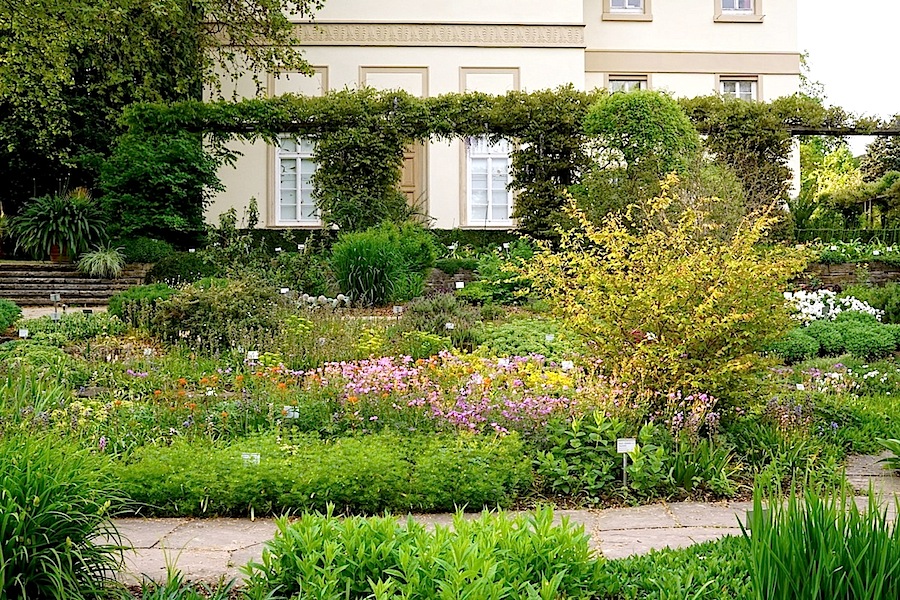
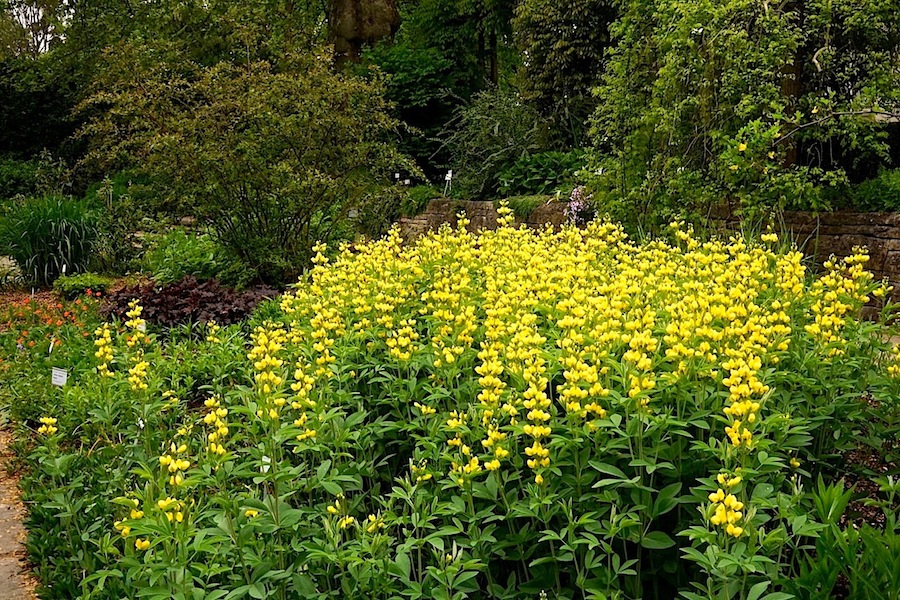
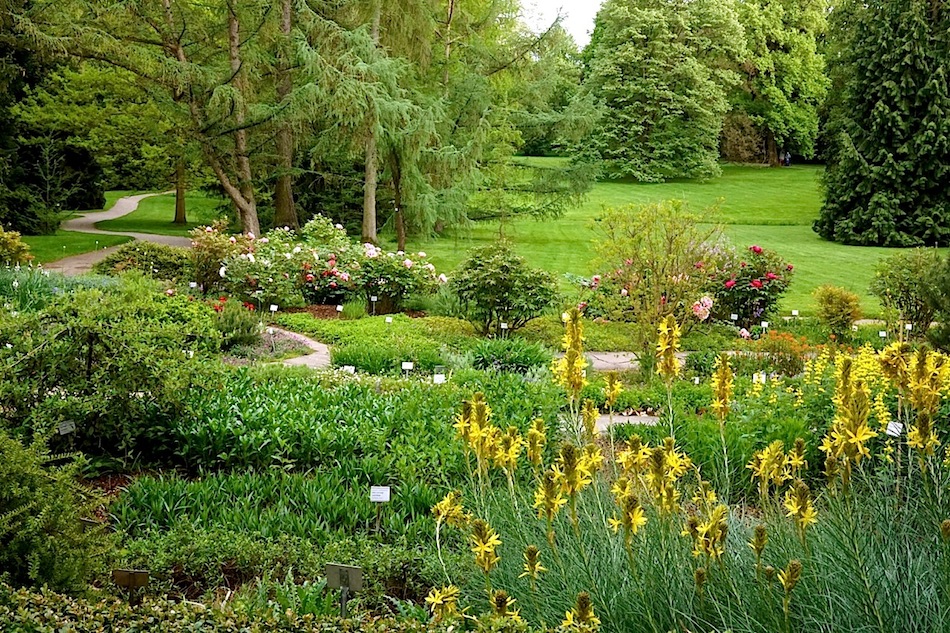
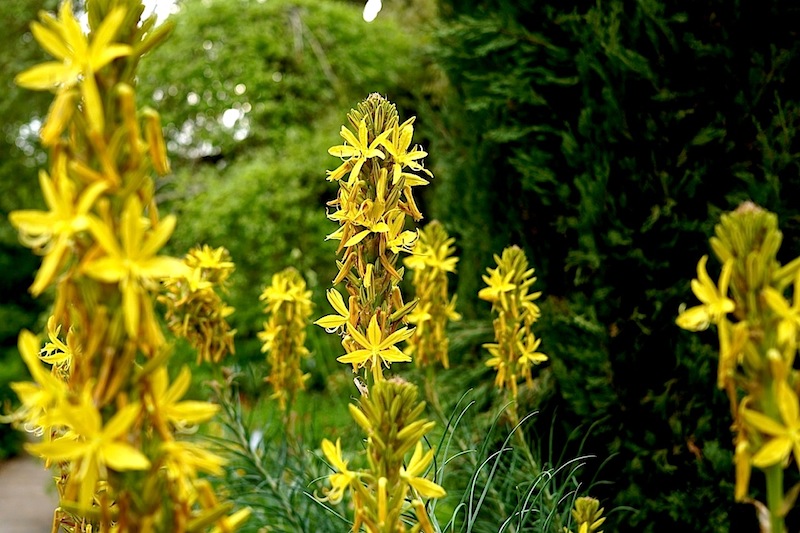
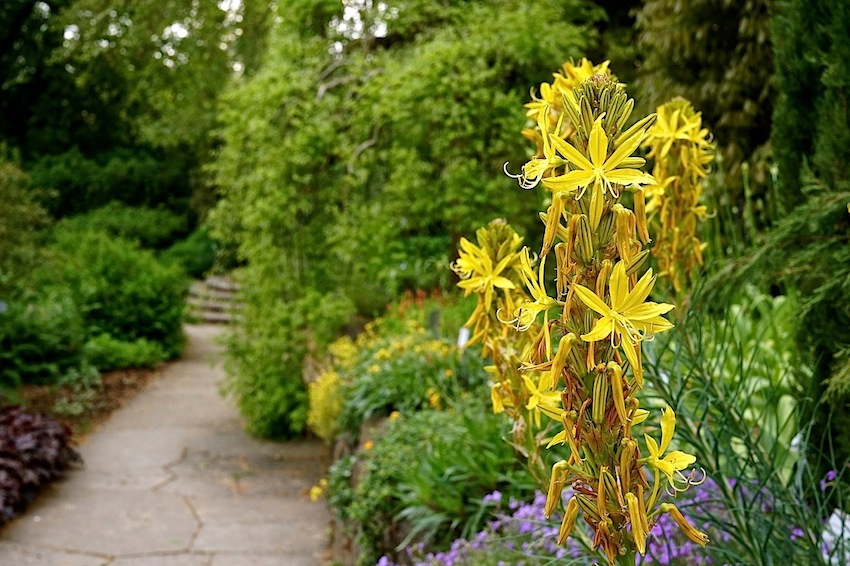
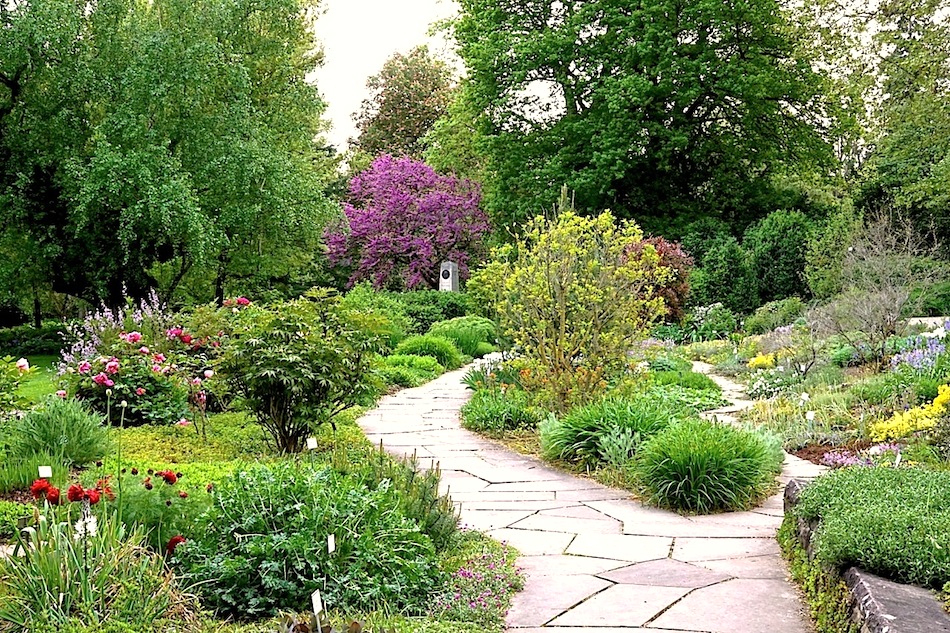
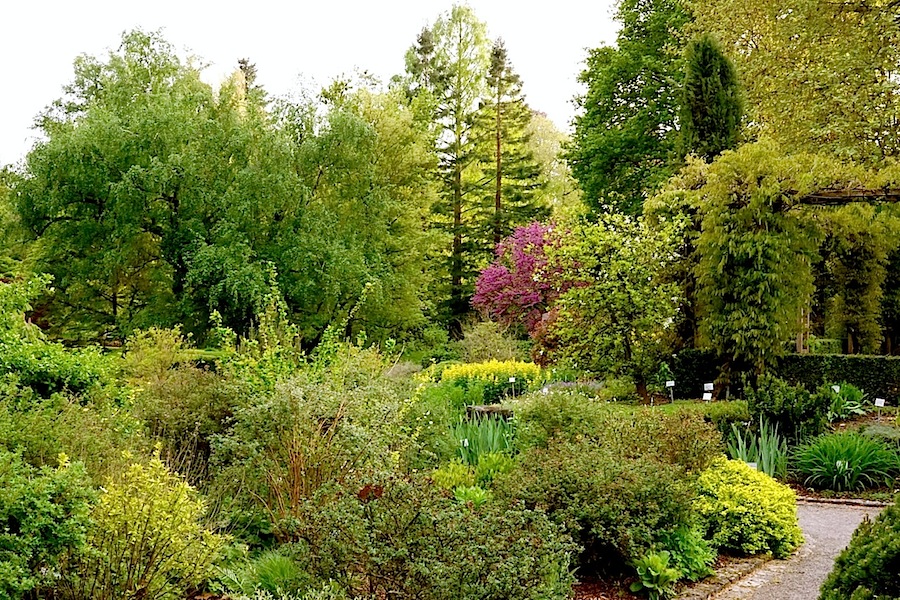
Looking south across the garden from behind the wisteria arbor, you can see the row of tree peonies. In the lower right-hand corner is a planting of yellow asphodel or king’s spear.
Asphodelus lutea
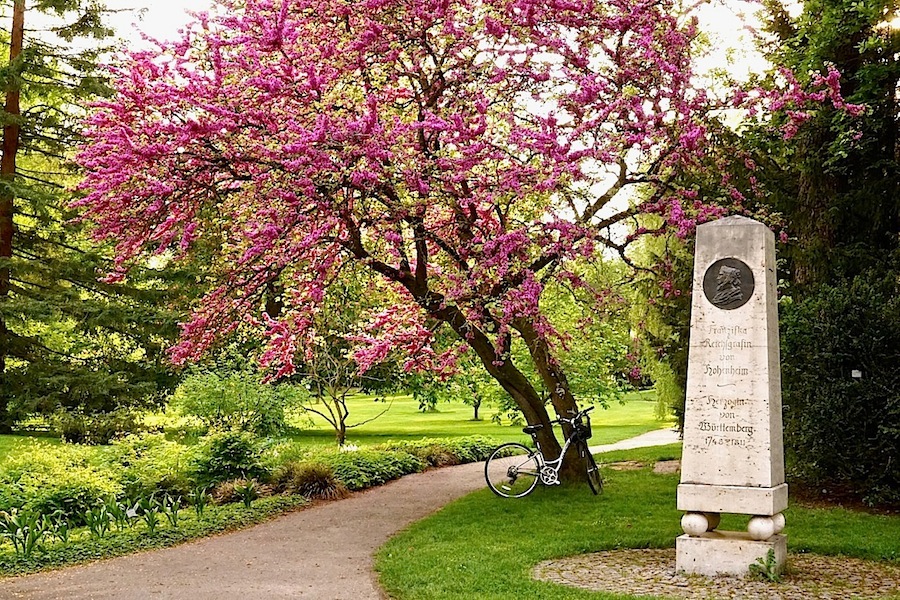
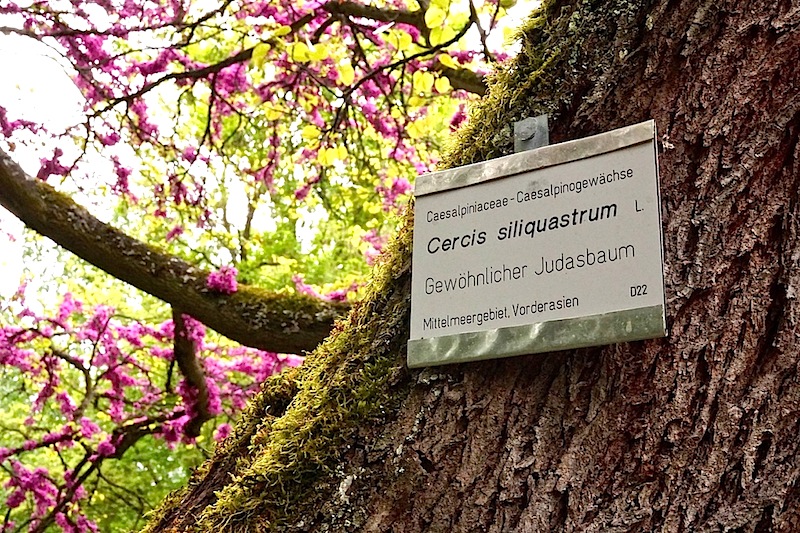
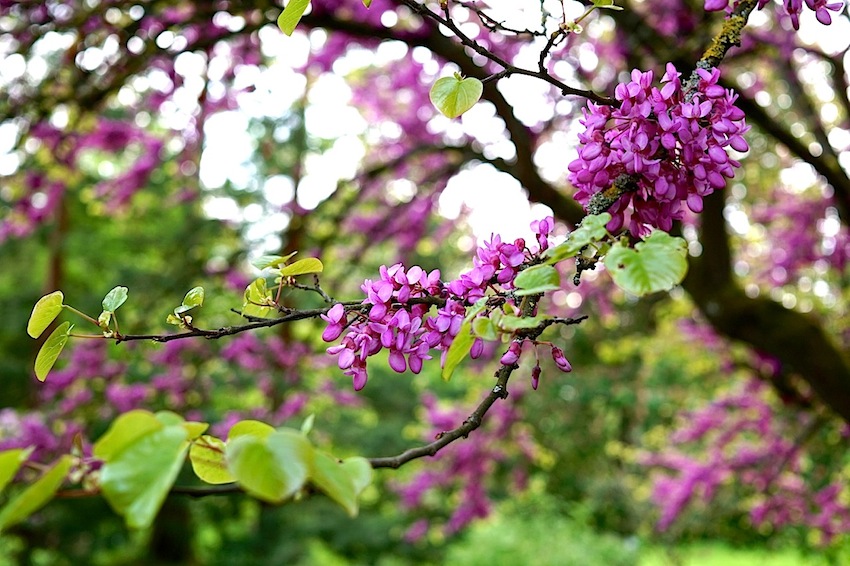
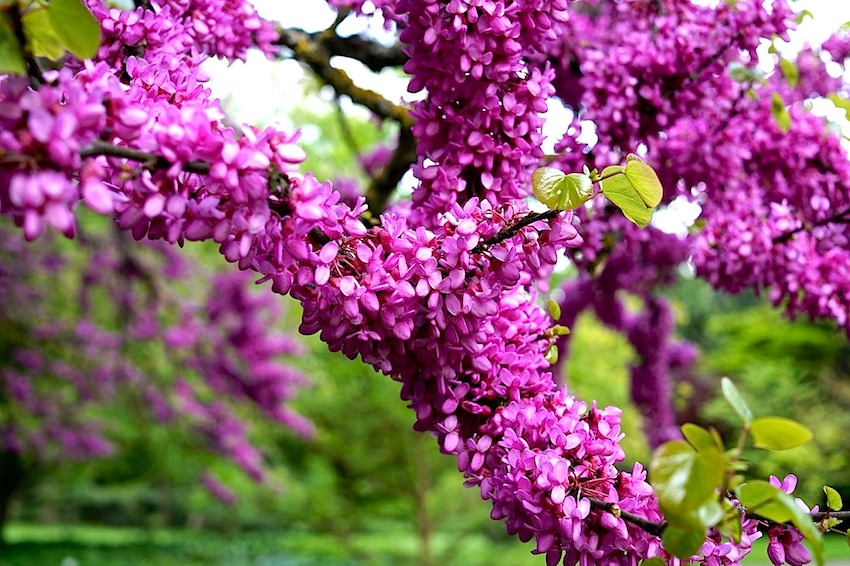
Looking across the garden from the east to the west, a beautiful pink blooming Judas tree draws the eye.
The tree is native to Southern Europe and Western Asia.
The flowers are edible and are said to have a sweetish-acid taste.
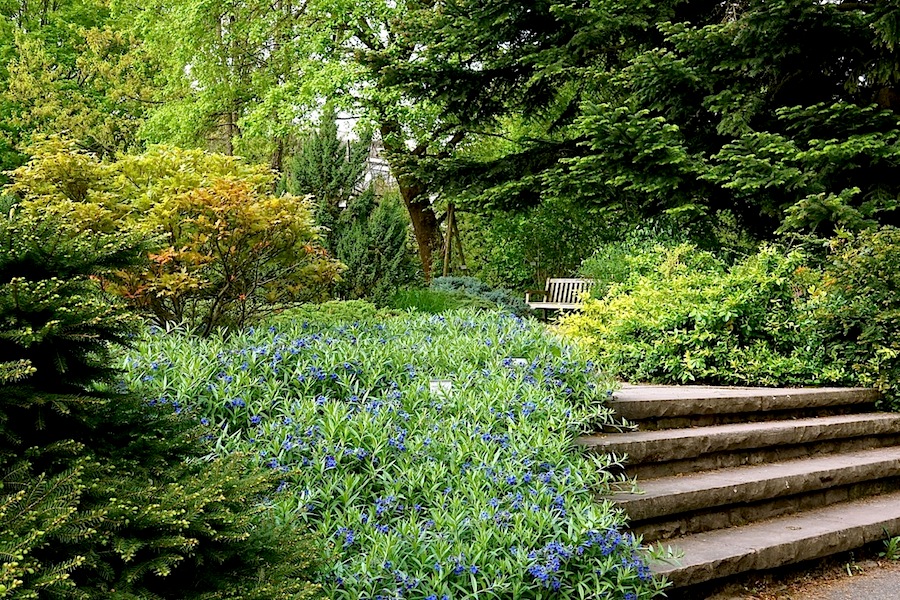
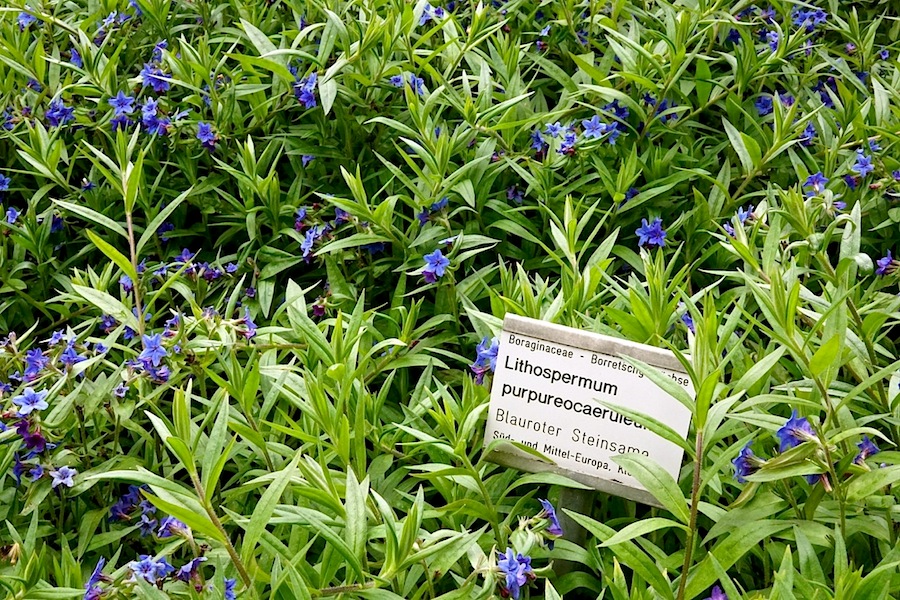
At the other side of the garden a Lithospermum purpurocaeruleum or purple gromwell drapes over the steps. The flowers emerge purple reddish and then mature to deep blue.
A last look from the northeast. At mid-month, the wisteria on the arbor (right side) has only a few blooms.
To see what’s blooming today for other garden bloggers, please visit Carol at May Dreams Gardens.
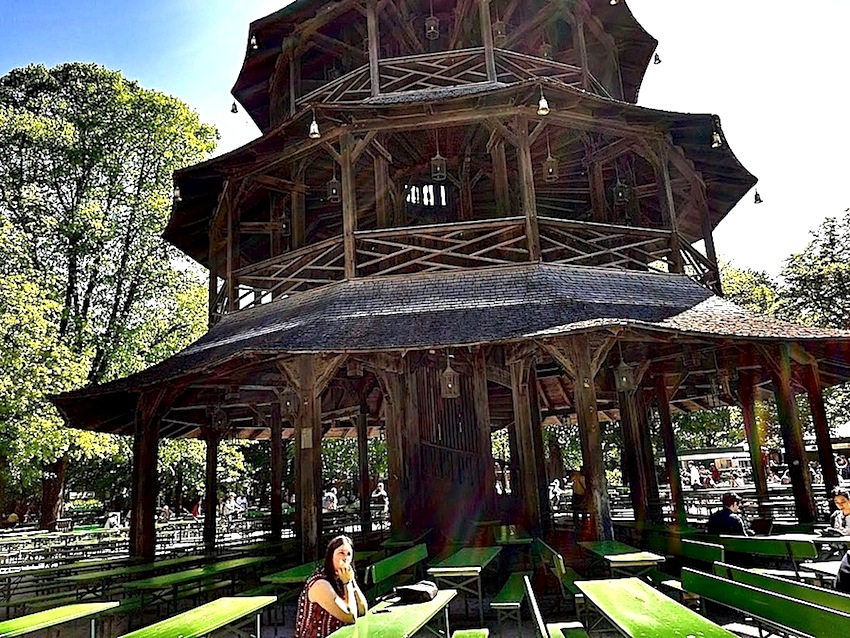
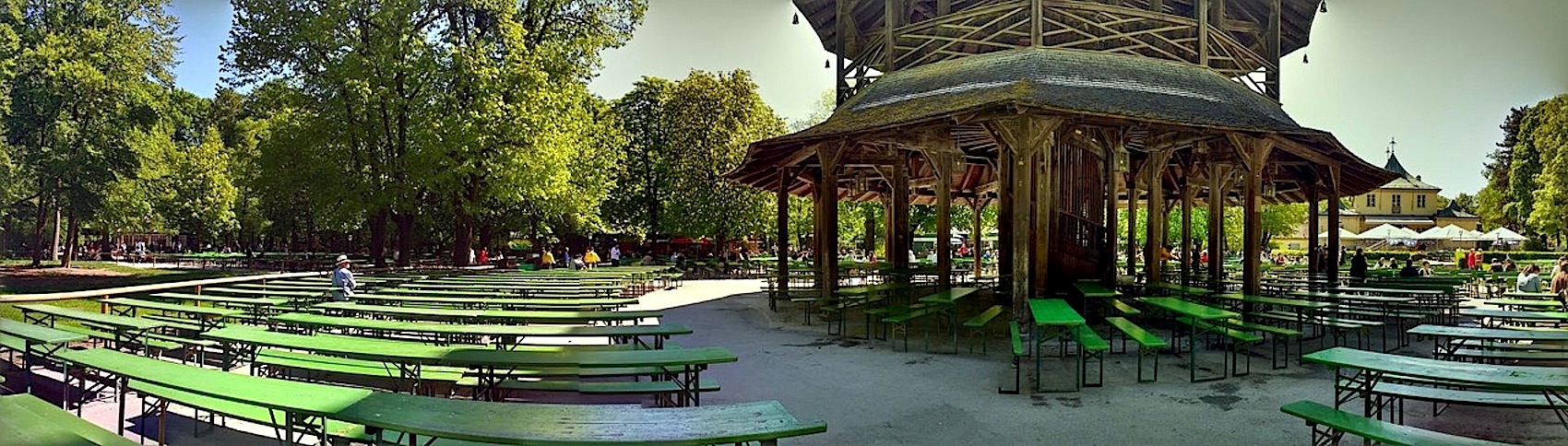
On early Sunday mornings in the late 19th century, up to 5,000 servants, soldiers, students, and other working-class people would gather at the tower to dance to a brass band. These Kocherlball or cooks’ balls would end by 8:00 a.m., so that the attendees could get back to work or go to church. The dances were outlawed in 1904, but were revived in 1989 as a annual event every third Sunday in July.
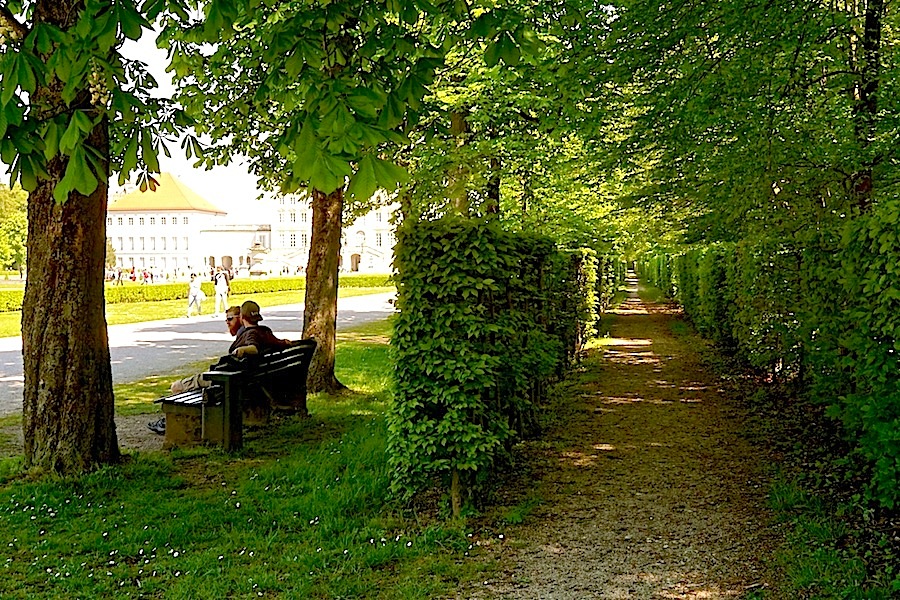
As its name implies, the Englischer Garten public park (the oldest in Germany) was laid out in the English landscape style associated with the work of Capability Brown. Its principal designer was Royal Gardener Friedrich Ludwig von Sckell, who had studied in England.
The park has an area of 910 acres — making it larger than New York City’s Central Park.
I took these photos with my phone while biking through the park last Sunday morning. (There are over 48 miles of paths in the park.)
There’s a brief history of beer gardens in America here.

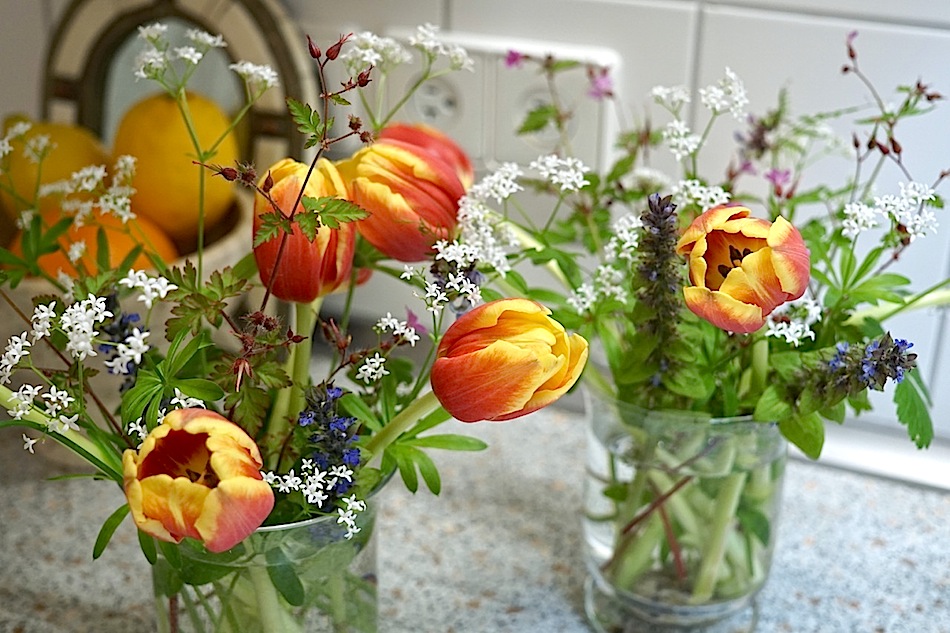 This morning, I combined the tulips that I bought last week at the supermarket with some white sweet woodruff, or Galium oderatum, just picked from a shady spot in our backyard.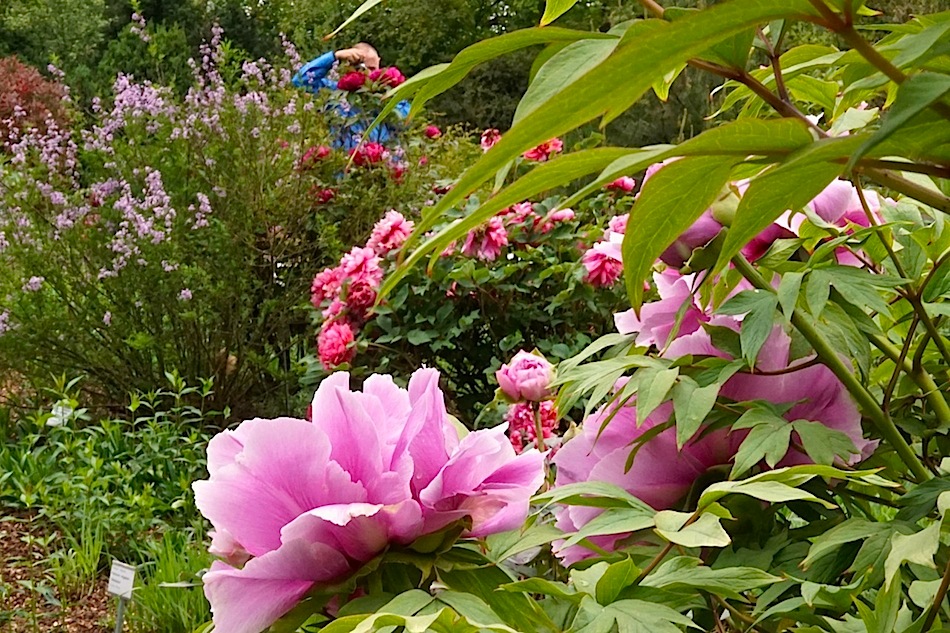




 enclos*ure