“Four (vier) children holding hands in front of a wooden fence,” Indonesia, ca. 1924, attributed to Klaas Kleiterp, via Rijks Museum of Amsterdam.
This image is from a file of bookmarked photos I have labeled “children made to pose in gardens.” I really like the large freeform lattice arbor around them.
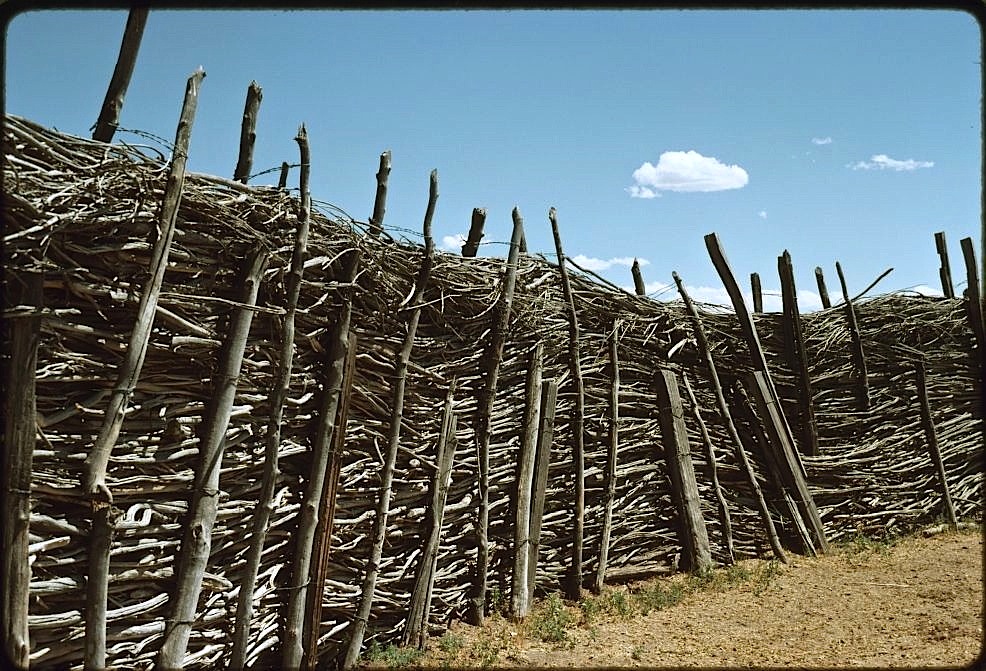
Moving cattle into a willow branding corral on Ninety-Six Ranch, Paradise Valley, Nevada, October 1979, by Carl Fleischhauer, via American Folklife Center, Library of Congress (all photos here).
Willow corral at Hay Camp on Ninety-Six Ranch, May 1978, by Howard W. Marshall.
We are concerned with staying with original willow corrals – that is definitely part of Great Basin ranching. They are safer in every way; they have some give to them. And they are the cheapest fencing from a materials standpoint since almost everything is naturally already on the ranch.
Willow corral on Ninety-Six Ranch, July 1978, by Suzi Jones.
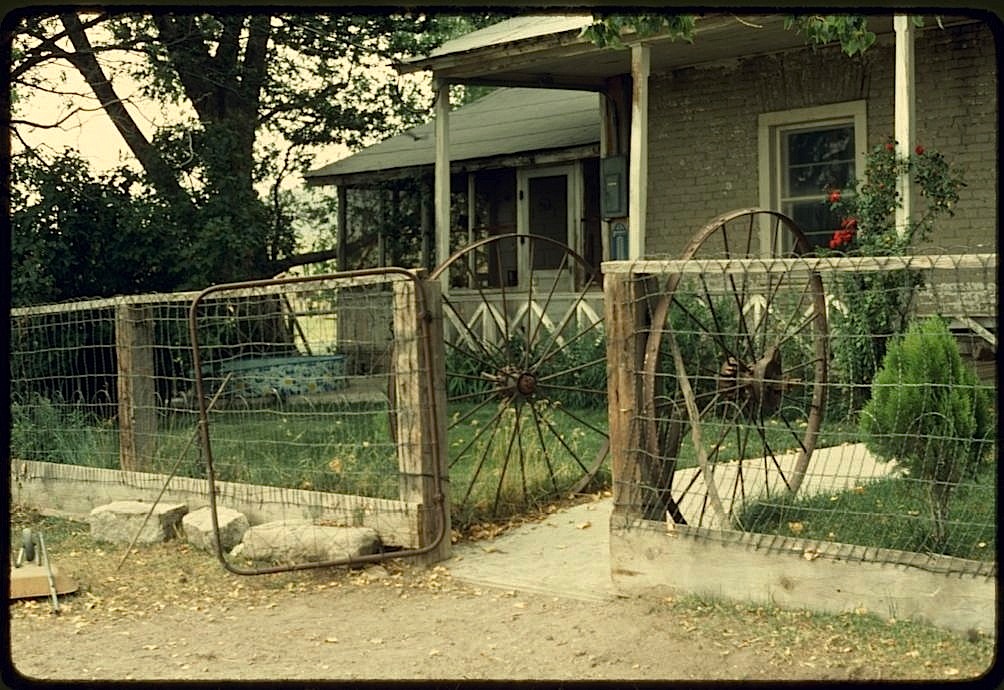
Horseshoe gate on the Pedroli Ranch, Paradise Valley, Nevada, July 1978, (35mm slide) by Richard E. Ahlborn, via American Folklife Center of the Library of Congress (both photos).
The ranch house gate was made by Pete Pedroli about 1950. It has a counterweight for self closing. . .
Photo by Suzi Jones
. . . and a latch made from a bridle bit.
There’s another photo of the house and gate here, by Carl Fleishhauer.
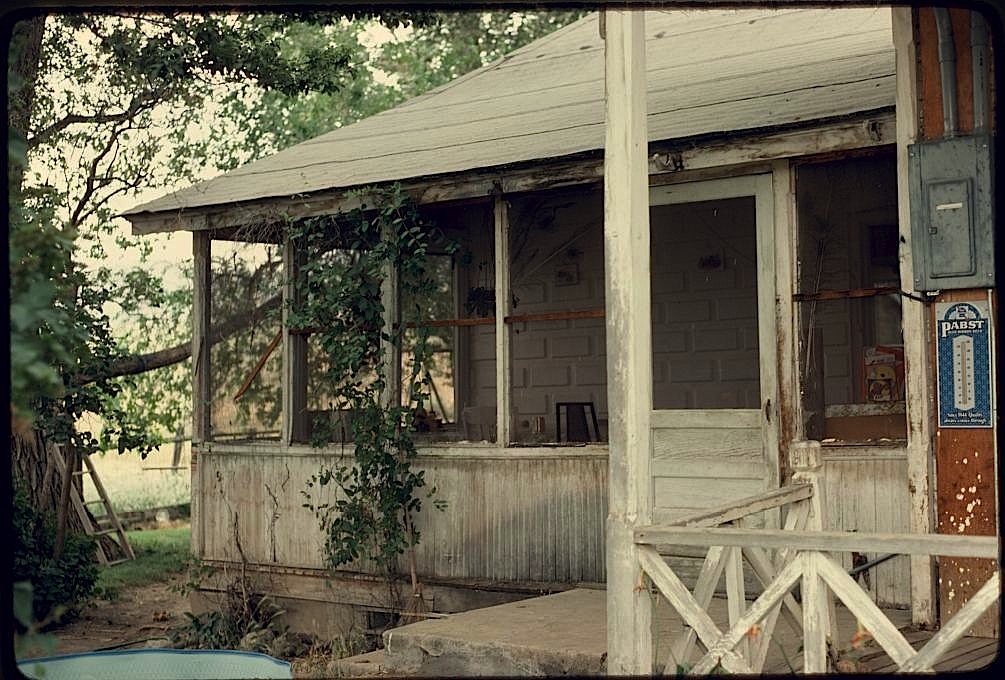
Ranch House with Porch, Paradise Valley, Humboldt County, Nevada, July 1978, (35mm slide) by Suzi Jones, via American Folklife Center of the Library of Congress (all photos here).
The house — of adobe construction — served as the officer’s quarters of Fort Scott in the late 1860s. In 1978, it was the main residence of Fort Scott Ranch.
There is another view here, by Howard W. Marshall.
The photos here are three of over two thousand taken or collected for the Folklife Center’s 1972-1982 ethnographic field project on the Paradise Valley area. The work became the collection* “Bucharoos in Paradise: Ranching Culture in Northern Nevada, 1945-1982.”
Fort Scott Ranch, by Howard W. Marshall.
There’s another photo of the ranch house and its outbuildings here.
Poll results
For the last two Sundays, I ran a little poll asking how readers look at enclos*ure — 1) on a desktop computer or Mac; 2) on an e-reader; or 3) on a smartphone? Of those who responded, 82% use a desktop and the others use an e-reader.
*It also contains sound recordings and motion picture film.
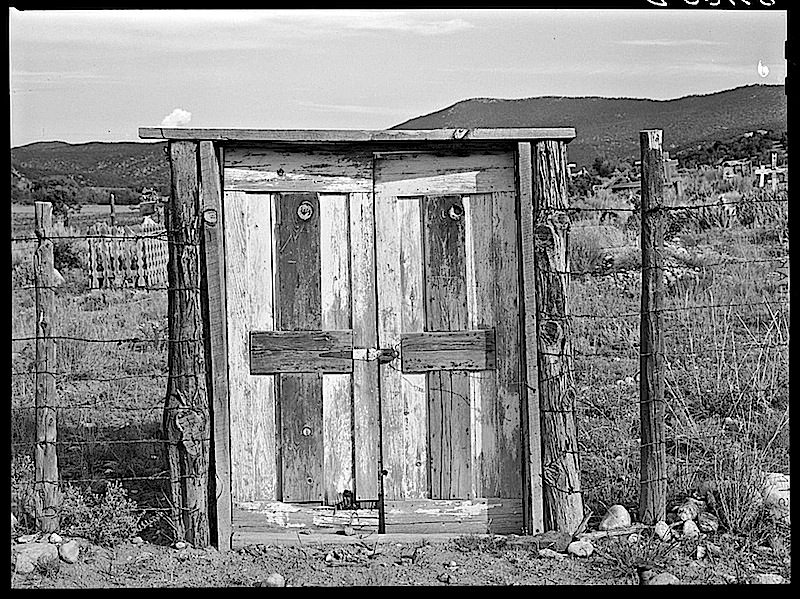
“Entrance to the cemetery at Peñasco, New Mexico (along the High Road to Taos), July 1940, by Russell Lee, via Library of Congress Prints and Photographs Division.
Lee and his wife, Jean, spent two weeks in Chamisal and Peñasco documenting the lives of the towns’ Hispanic small farmers and ranchers. The area was settled by Spanish colonists in the late 18th century.

 “Four (vier) children holding hands in front of a wooden fence,” Indonesia, ca. 1924, attributed to Klaas Kleiterp, via Rijks Museum of Amsterdam.




 enclos*ure