
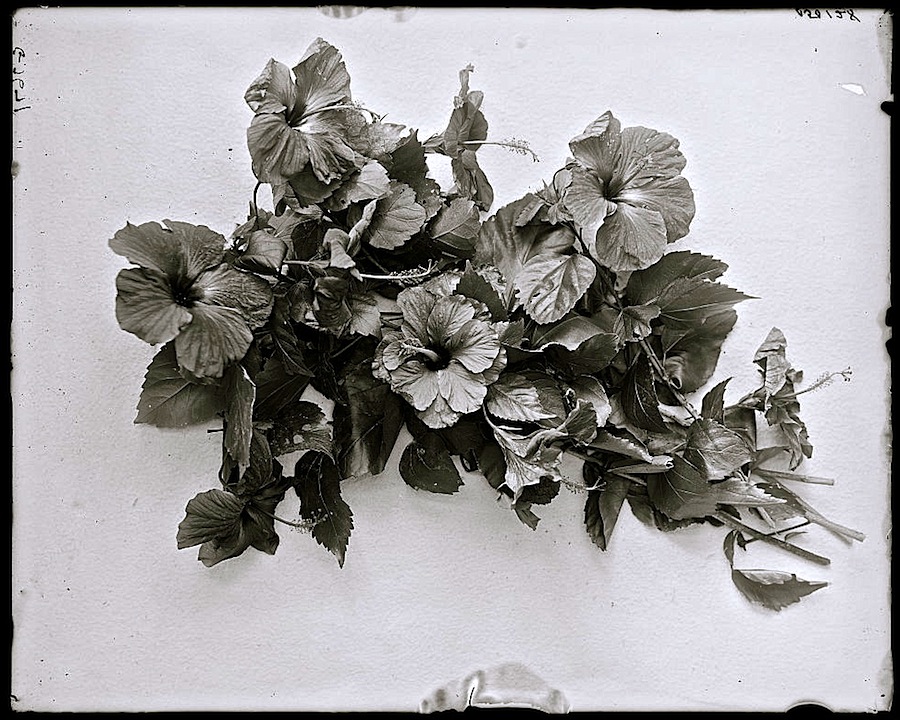
 Palm Beach, Florida, ca. 1900-15, by Detroit Publishing Co., via Library of Congress Prints and Photographs Division.
Where the hibiscus flares would cymbals clash. . . .
— Grace Hazard Conkling, from “Symphony of a Mexican Garden“
Palm Beach, Florida, ca. 1900-15, by Detroit Publishing Co., via Library of Congress Prints and Photographs Division.
Where the hibiscus flares would cymbals clash. . . .
— Grace Hazard Conkling, from “Symphony of a Mexican Garden“
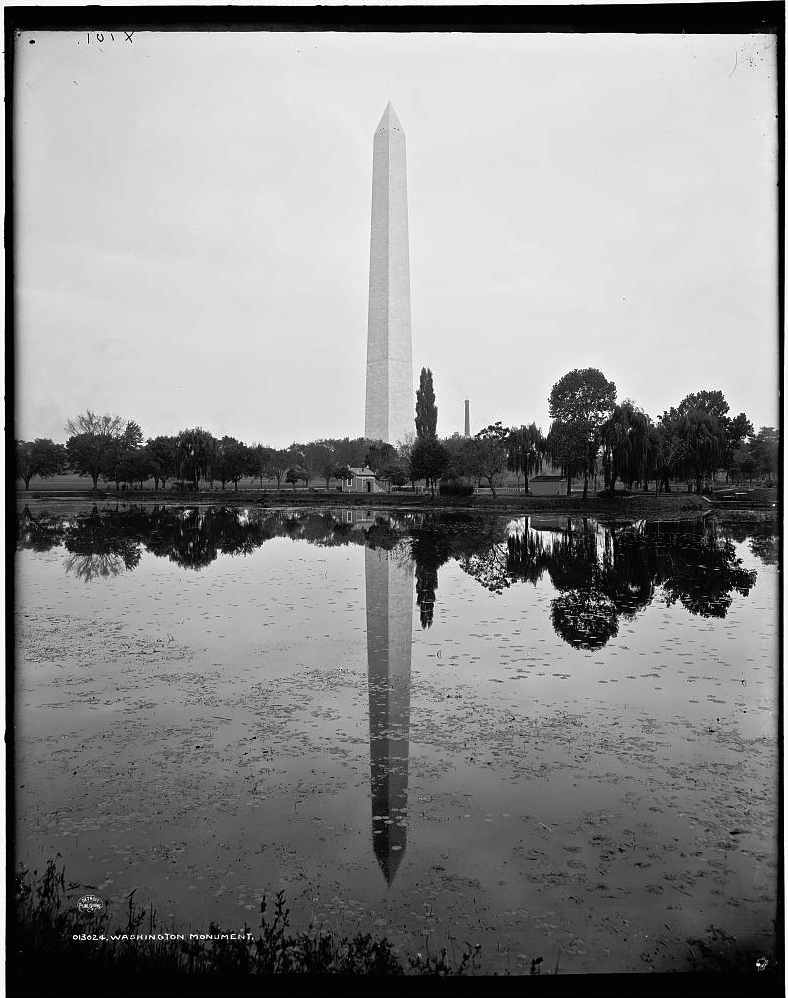
“Washington Monument,” ca. 1900, Detroit Publishing Co., via Library of Congress Prints and Photographs Division.
Good luck today, Washington.
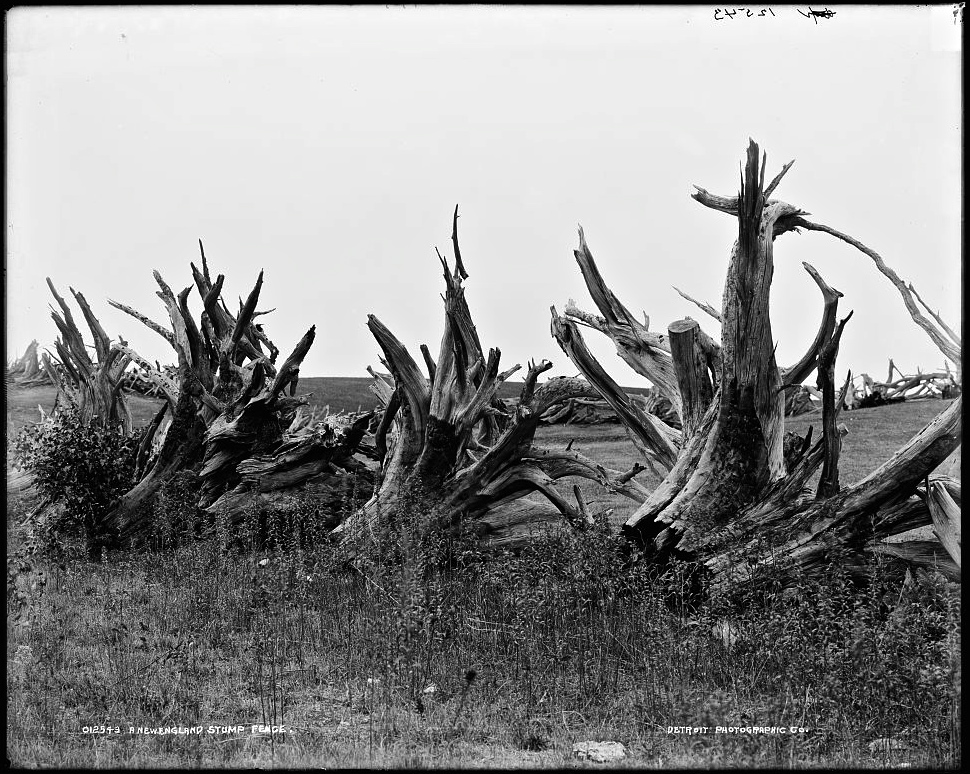
The stump or root fences on the Corner road remind me of fossil remains of mastodons, etc., exhumed and bleached in sun and rain.
— Henry David Thoreau, Journal (July 19, 1851)
Both photos: “A New England stump fence,” ca. 1890-1901, by Detroit Publishing Co., via Library of Congress Prints and Photographs Division.
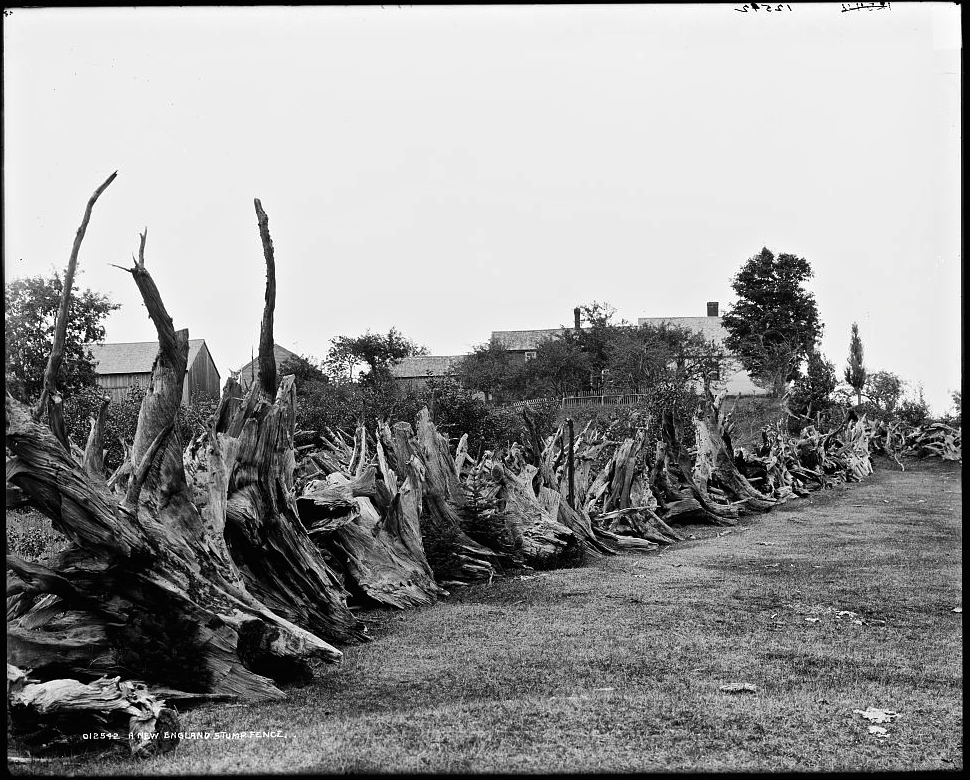
I had heard of ‘stumperies,’ but not of stump fences (sometimes called root fences), however now I’ve learned that . . .
[s]tump fences, as their name implies, were made by dragging the stumps of trees to the edge of a field and placing them side by side, with their interlacing roots facing outward and their trunks inward. In the days when “ugly as a stump fence” was a simile in common usage, the stump fence had its critics, but in 1837 one observer called it “a singular fence…needing no mending, and lasting the ‘for ever’ of this world.” “The devil himself couldn’t move a stump fence,” farmers used to say, an opinion borne out by the fact that stump fences well over a hundred years old can still be seen in parts of Canada and in the Midwest.
Stumps were often the product of the first clearing of the land, but stump fences didn’t appear in the first generation of a settlement’s fences because stumps need to sit in the ground for six to ten years before they are loose enough to be pulled out and hauled away. Extracting even a loosened stump was never easy; it required oxen and strong chains, something that many settlers lacked at first. In the 1800s, stump pulling would become a cash business and one way that a man could make a good living. Twenty-five cents a stump was the standard price in 1850 when men operating such mechanical stump pullers as the “Portable Goliath,” “The Little Giant,” and “Roger’s Patent Extractor” could extract from twenty to fifty stumps a day.
–Susan Allport, Sermons in Stone: The Stone Walls of New England and New York (older edition here)
Quotes via the blog Laudator Temporis Acti.
I’m traveling for the next couple of weeks, but I’ll be posting a ‘vintage landscape’ from time to time.
How many ways can you plant out a lawn with a basic round fountain in the center? From 1871 to the early-1900s, the White House tried out a number of designs on its north side.
 This photo was taken during the 1860s. The statue of Thomas Jefferson had been there since 1848. Photo by National Photo Company, via the Library of Congress.
In 1871, the statue was replaced by a round fountain (the statue went to the Capitol Building).
 Things were pretty simple in this 1881 etching, via the blog American Garden History.
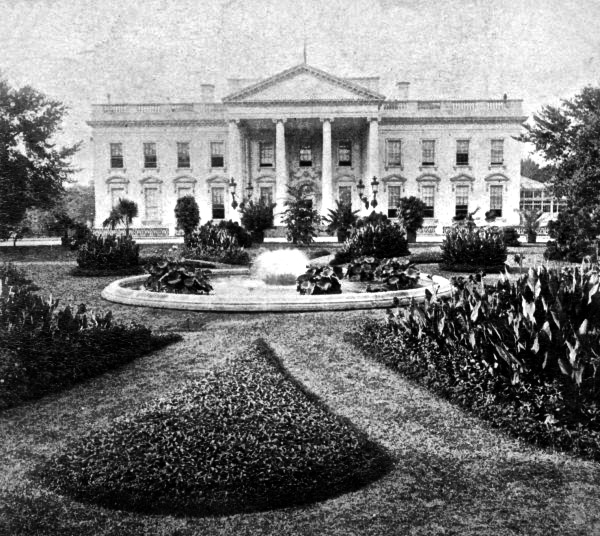 By 1885, the fountain was surrounded by flower beds in teardrops and circles. Photo by Underwood & Underwood, via the website The White House Museum.
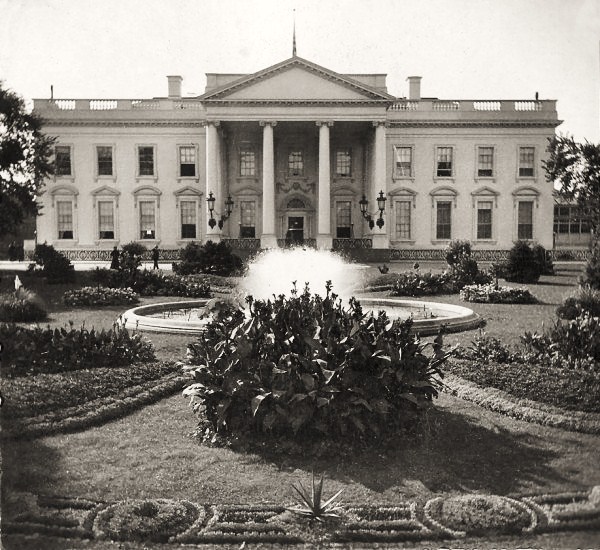 The design was more elaborate by 1894. Photo by B.L. Singley, via American Garden History.
 There was a more squared-off arrangement in 1901. Photo by Detroit Publishing Co., via Library of Congress.
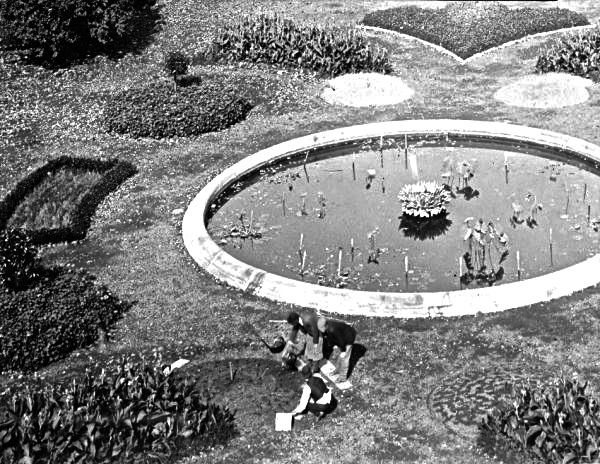 Above, gardeners were planting out the fountain area in 1902, via The White House Museum.
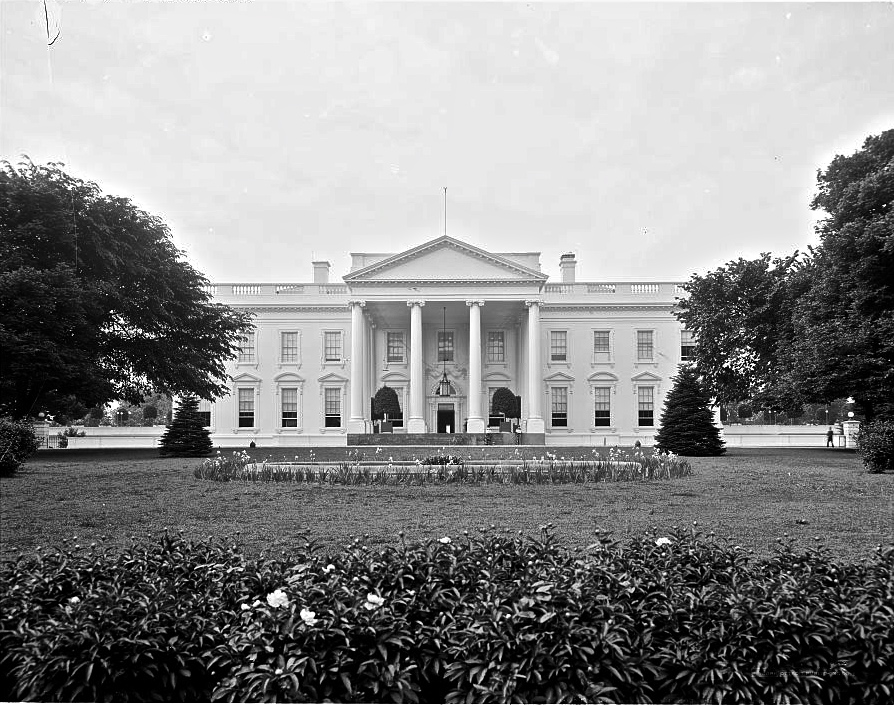 By 1905, the whole Victorian mess had been cleared out for simple plantings of bulbs and peonies. Photo by Detroit Publishing Co., via Library of Congress.
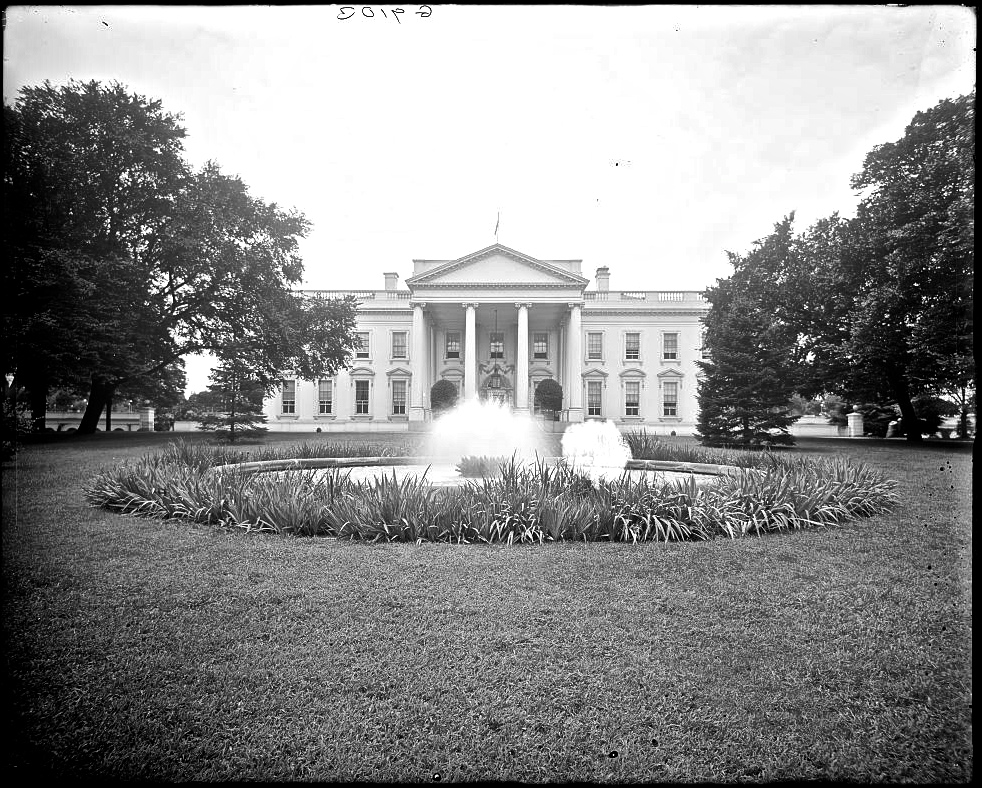 Above, sometime later, before 1920, the peonies were gone. I like all the irises around the fountain. Photo by Detroit Publishing Co., via Library of Congress.
 Above is my photo of the north lawn in March 2012.
ADDENDUM: I found one more photo.

This would have been the view from the W.H. Dining Room during the years of Victorian bedding out. Taken ca. 1889 -1906 by Frances Benjamin Johnson, via Library of Congress.
Among the many treasures of the Library of Congress’s online catalogue are several thousand digital images of antique photochrom prints.
The prints were colored images made from black-and-white photographic negatives transferred onto lithographic printing plates. The process was invented at a Swiss printing company in the 1880s. By the mid 1890s, it had been licensed it to many other companies, including the American Detroit Publishing Company, which had exclusive rights in the U.S.
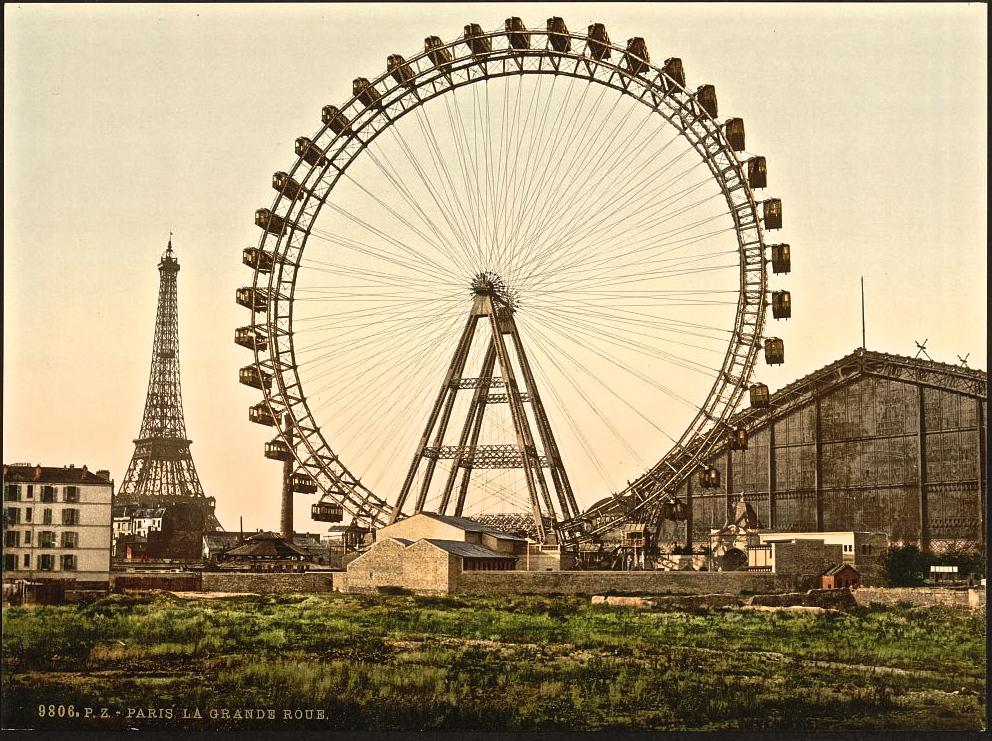
In 1898, Congress passed an act allowing private publishers to print postcards that could be mailed for only a penny each — half the rate of a letter. Millions of photochrom postcards were purchased — and often collected in albums or framed — in the first two decades of the nineteenth century.
Wikipedia describes the process:
A tablet of lithographic limestone, known as a “litho stone,” is coated with a light-sensitive coating, comprising a thin layer of purified bitumen dissolved in benzene. A reversed half-tone negative is then pressed against the coating and exposed to daylight for a period of 10 to 30 minutes in summer, up to several hours in winter. The image on the negative allows varying amounts of light to fall on different areas of the coating, causing the bitumen to harden and become resistant to normal solvents in proportion to the amount of light that falls on it. The coating is then washed in turpentine solutions to remove the unhardened bitumen and retouched in the tonal scale of the chosen color to strengthen or soften the tones as required. Each tint is applied using a separate stone bearing the appropriate retouched image. The finished print is produced using at least six, but more commonly from 10 to 15, tint stones.
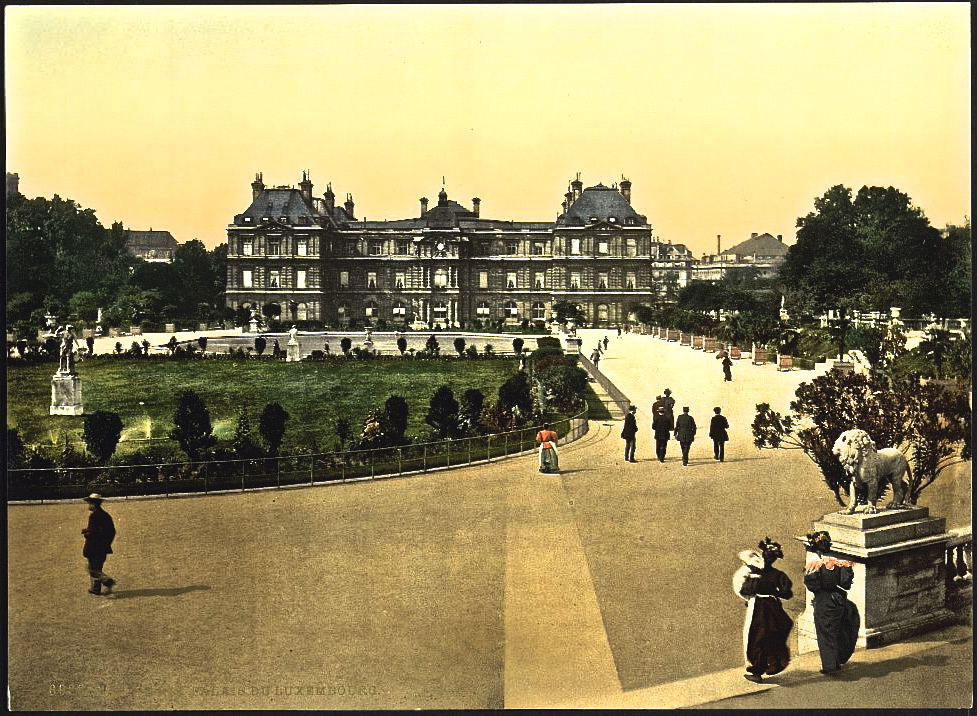
Often the printer was provided with notes about realistic colors, but sometimes he had to work from his imagination alone. However, Detroit Publishing’s catalog said that its photochrom prints joined “the truthfulness of a photograph with the color and richness of an oil painting or the delicate tinting of the most exquisite water color.”
In these images of Belle Epoque Paris, the printer used ivory, pink, and apricot for the buildings and ground, quiet blues and greens for water and sky, and put a buttery light at the horizons. The tints soften and still the monumental spaces on this walk from the Louvre to the Arc de Triomphe at L’Etoile.
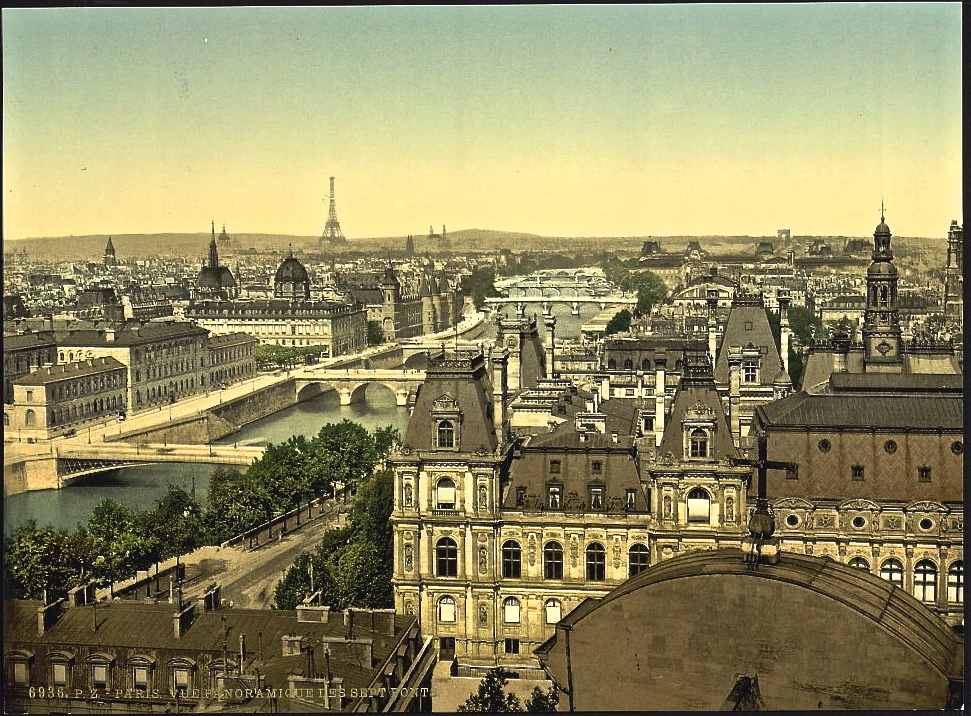 A panorama of the seven bridges over the Seine River. The Eiffel Tower in the distance was built in 1889.
(All photos were taken by the Detroit Publishing Company, ca. 1890-1900; all via the Library of Congress Prints and Photographs Division. To scroll through the images in full size, click on ‘Continue reading’ below and then on any of the thumbnails in the gallery.)
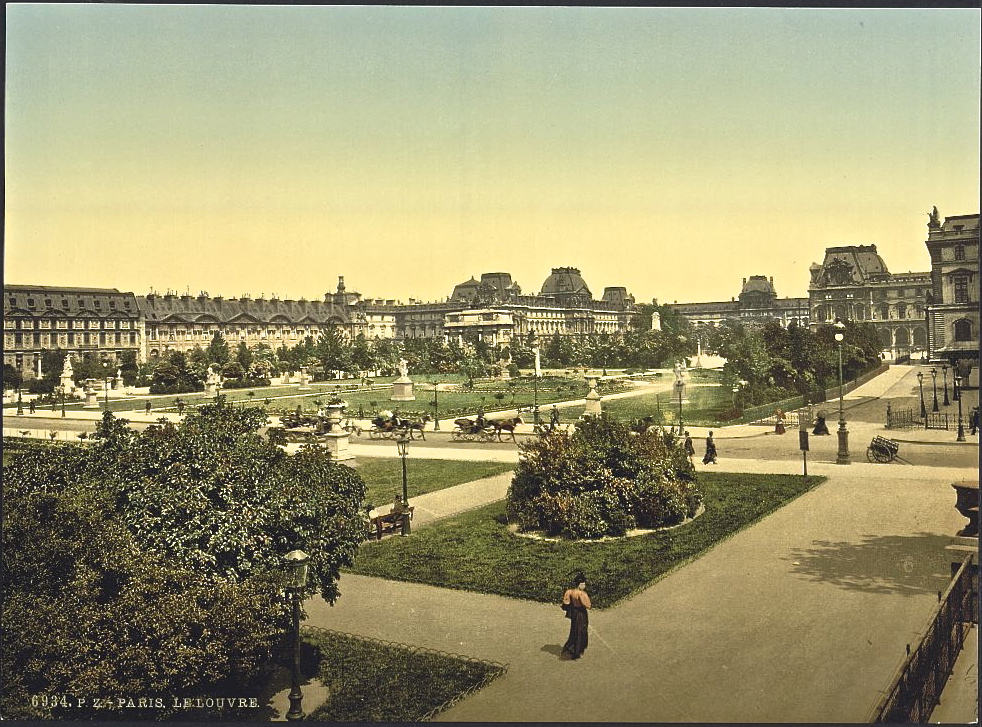 The Louvre.
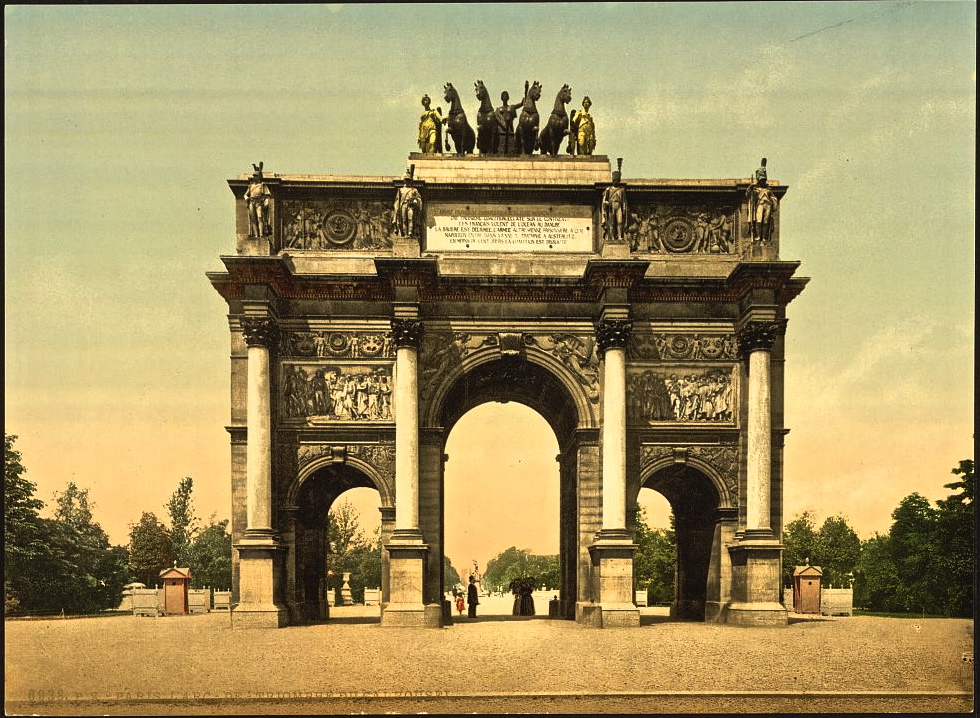 The Carrousel. This arch was built in 1805 to celebrate Napoleon’s victories.
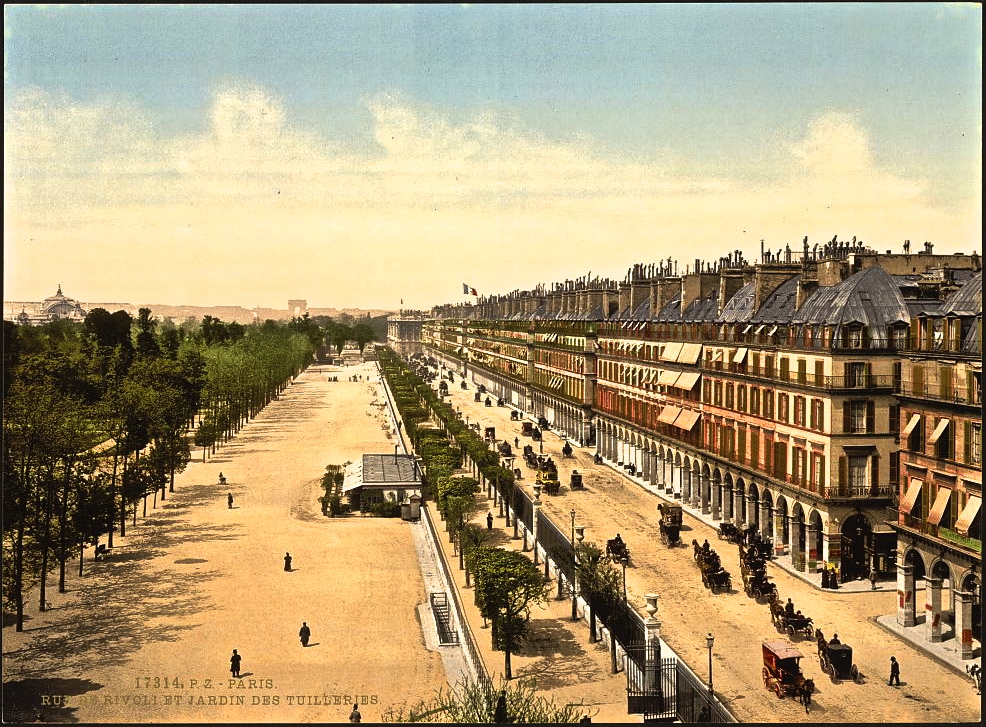 Rue de Rivoli. The arcades and shops along the street were built between the early 18th century and the 1850s.
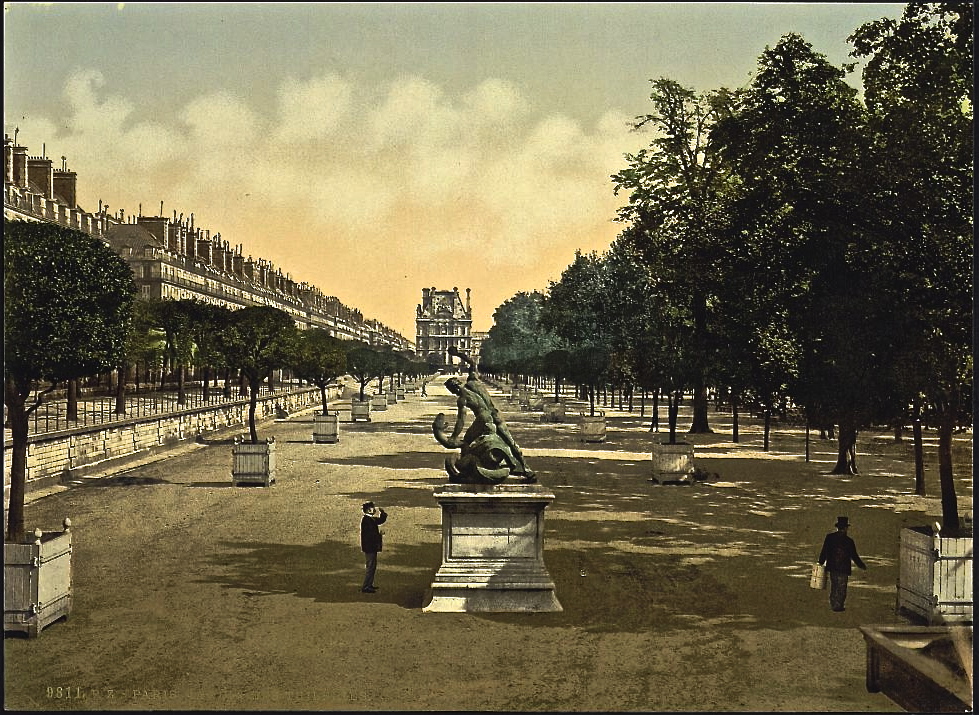 The Tuileries Garden. Its name came from the tile makers (tuileries) who were removed from the site on Catherine de Medicis’s orders so that she could build a (later-destroyed) palace and grounds. The palace garden was redesigned in the 17th century by André Le Nôtre for Louis XIV.
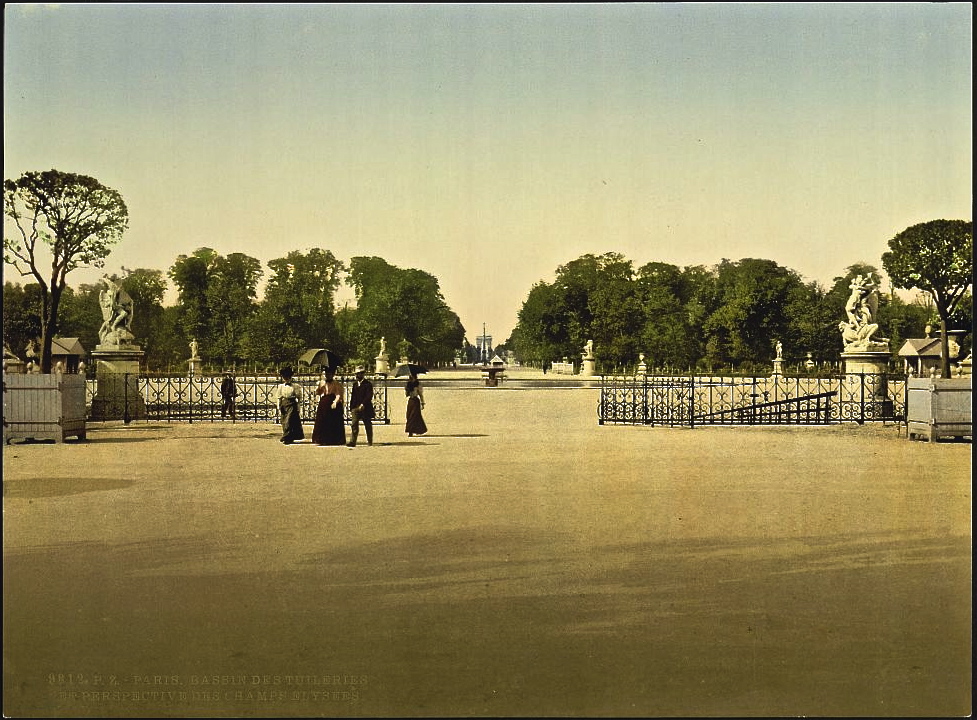 The Tuileries Garden.
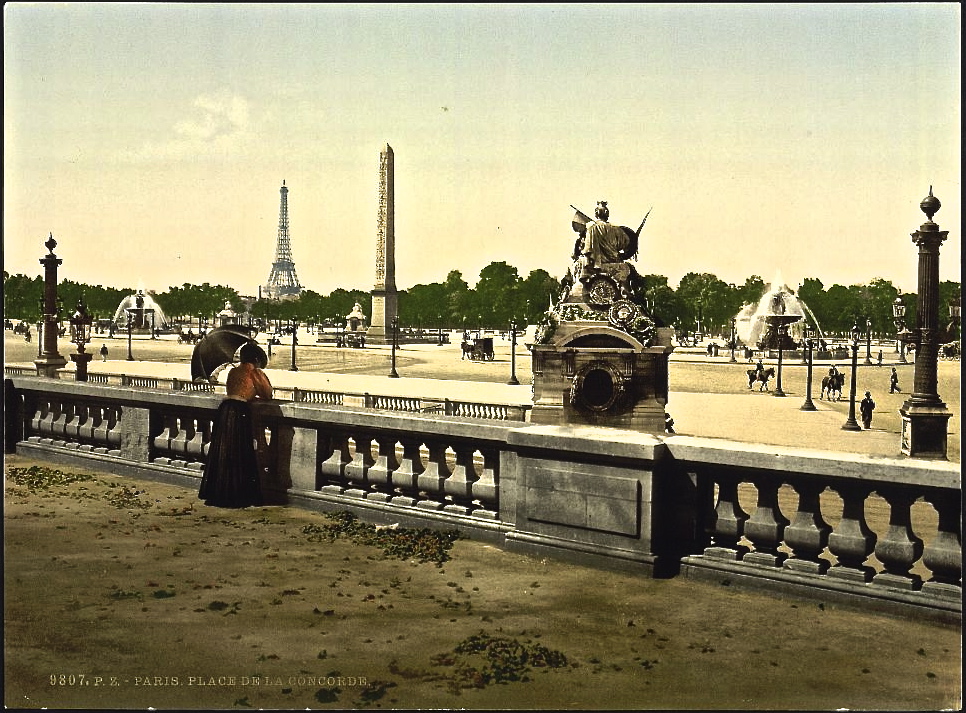 Place de la Concorde. During the revolution, the guillotine was placed here and took over a thousand lives. Later, the space was named la Concorde in a gesture of reconciliation. Since 1833, its central feature has been the 3,200-year-old obelisk from Luxor, Egypt.
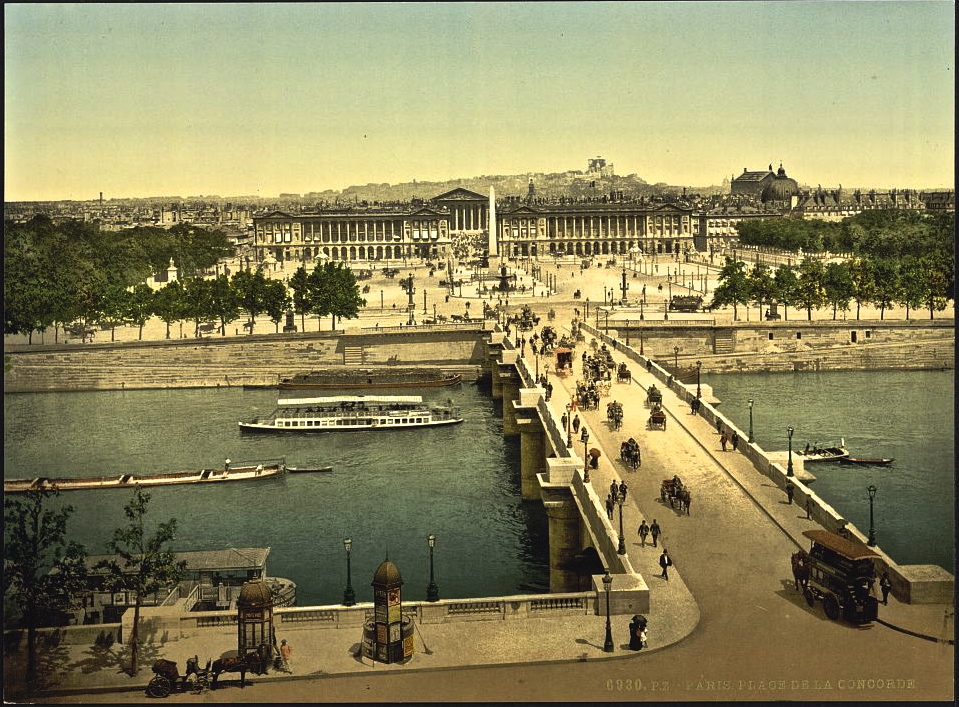 Place de la Concorde and Pont (bridge) de la Concorde.
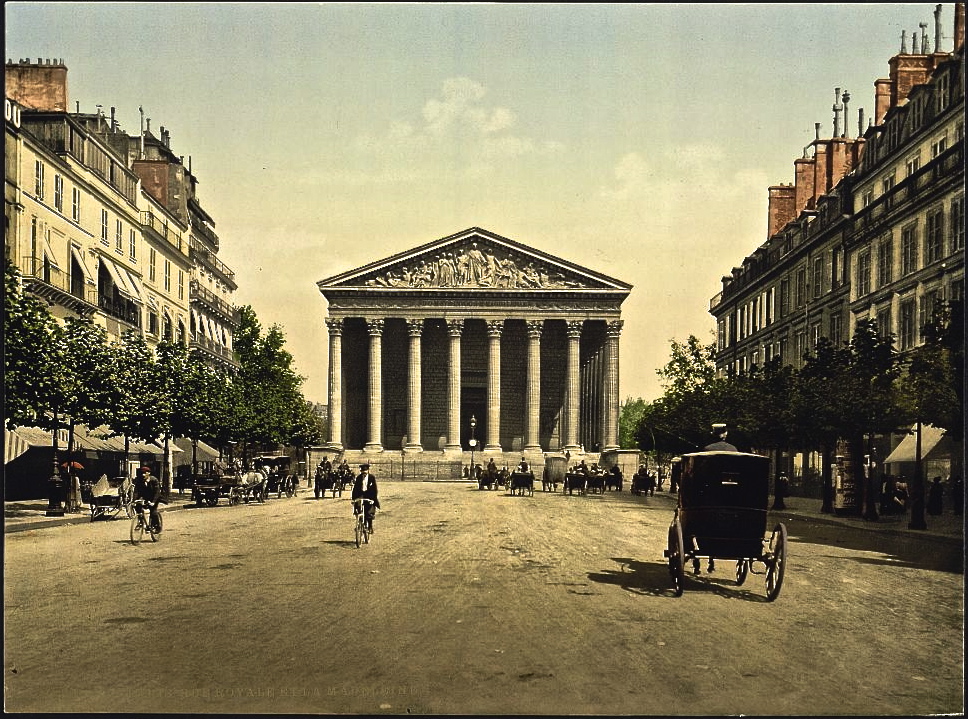 Rue Royale and Place de la Madeleine. This church is dedicated to Mary Magdalene. Its construction began in 1764, but it was not consecrated until 1845.
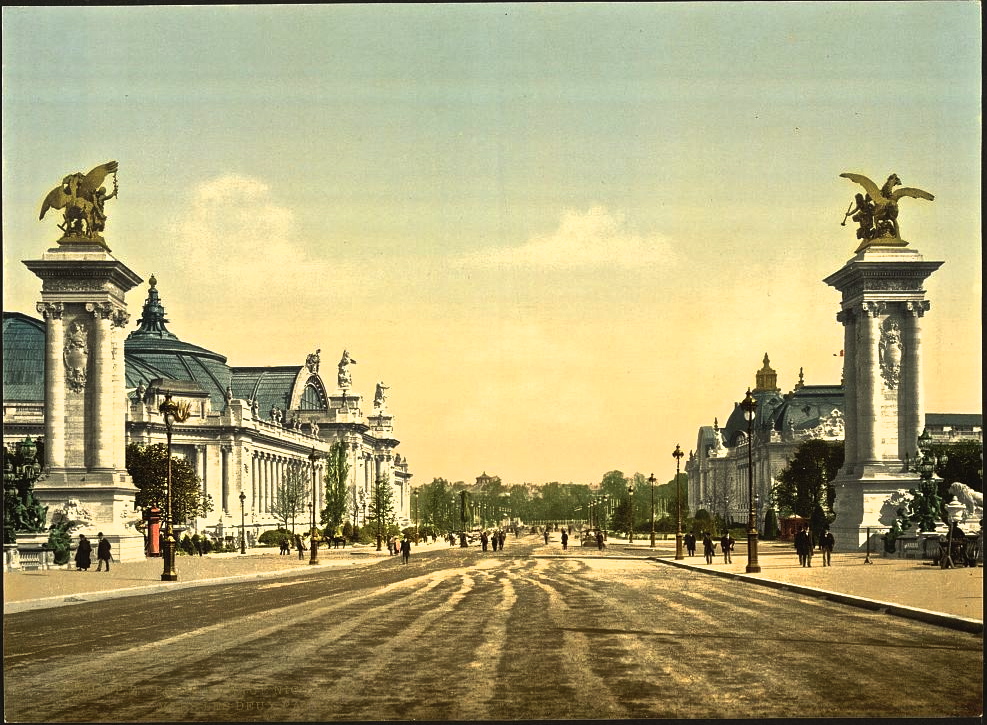 Ave. Napoleon III (now Ave. Winston Churchill) and the Grand Palais (left) and Petit Palais (right). The two display halls were built between 1896 and 1900 for the Universal Exhibition of 1900.
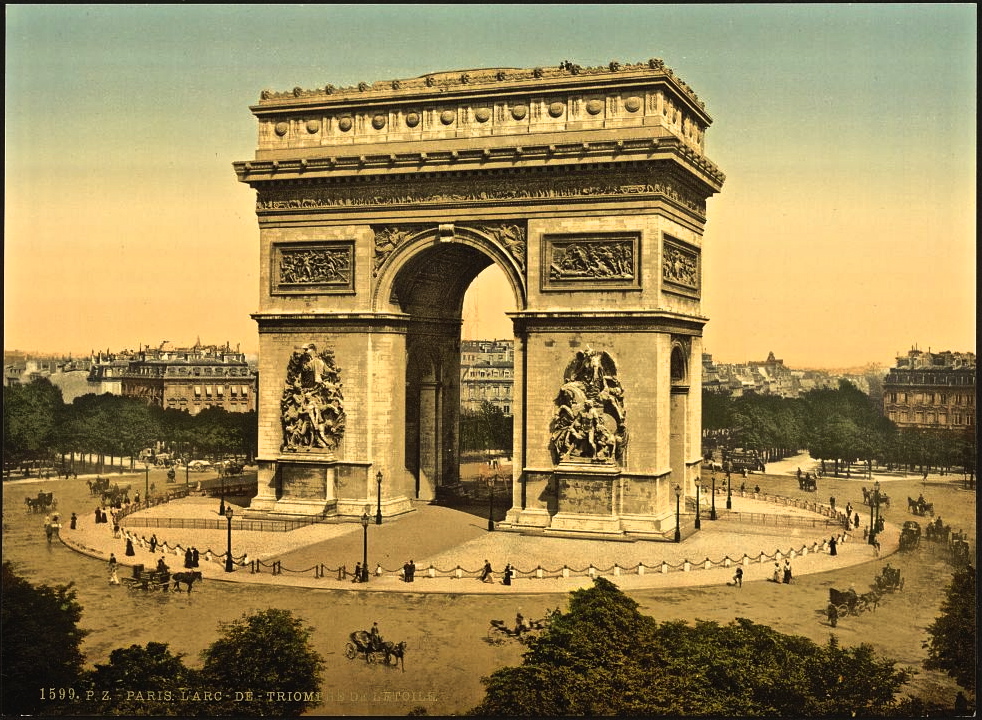 The Arc de Triomphe. The first stone of the arch was laid in 1806, but it was only completed in 1836 and dedicated to the French army.
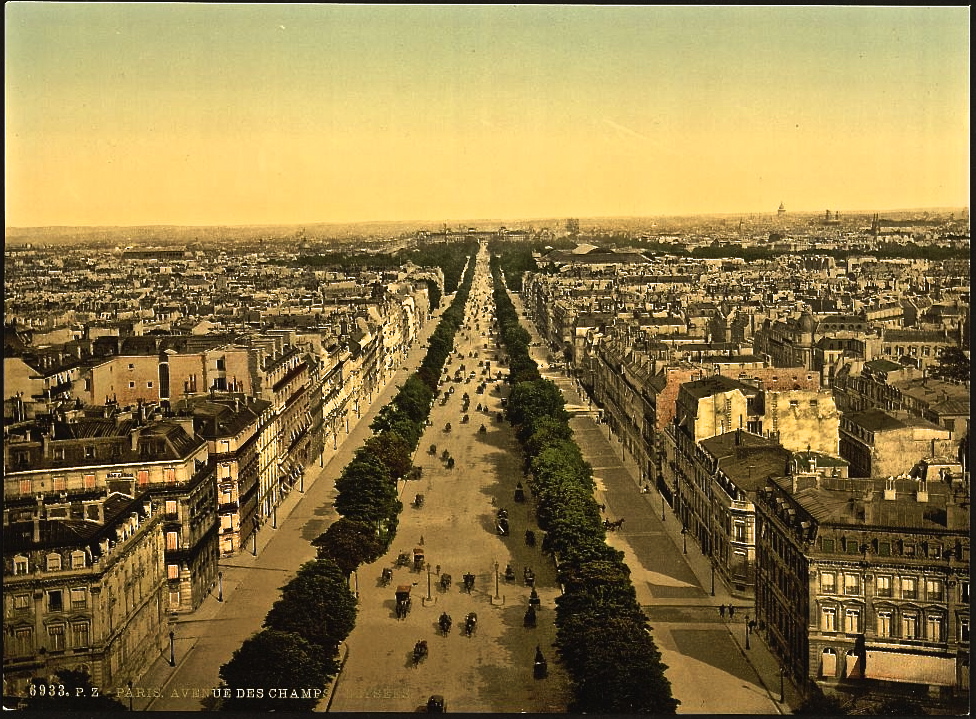 Avenue Champs Elysees, looking back toward the Tuileries Garden and the Louvre. The tree-lined boulevard was originally designed about 1667 by André Le Nôtre to extend the view from the Tuileries.
 enclos*ure