
 Three elegant gentlemen outside the homestead on Tyrrell Range farm, Chillingollah, Victoria, 1938, via The Biggest Family Album in Australia, Museums Victoria Collections (under CC License).
Tag: arbor
Florence, Italy
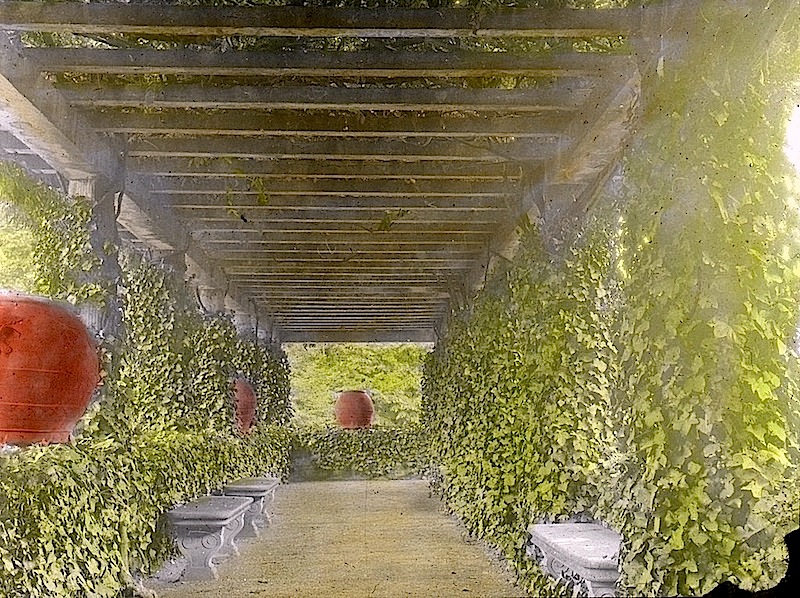
Pergola covered in wisteria and ivy in a garden of Villa Palmieri, Florence, ca. 1915, from the Arthur Peck Collection, via Oregon State University (OSU) Special Collections & Archives Commons on flickr.
The 14th century Villa Palmieri is credited with being the story-telling setting for Boccaccio’s Decameron.
To see this garden, its handsome ordering, the plants, and the fountain with rivulets issuing from it, was so pleasing to each lady and the three young men that all began to affirm that, if Paradise could be made on earth, they couldn’t conceive a form other than that of this garden that might be given it.
However, the garden was completely restructured in 1697 and then partially redesigned several times thereafter, according to current fashions, through to the 1920s.
Since 1986, the villa has been owned by the Italian government and houses part of the European University Institute.
Arthur Peck was a Professor of Landscape Architecture at the Oregon Agricultural College from 1908 to 1948. During his long career, he created a teaching library of 24 boxes of glass lantern slides — now in OSU’s archives.
Victoria, Australia
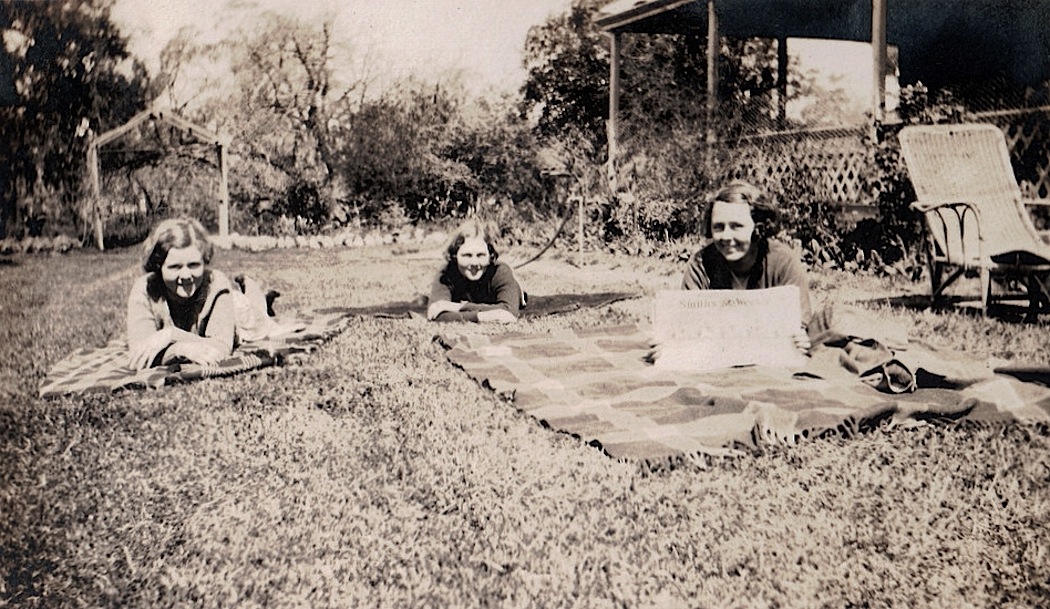 “Relaxing in the garden,” photographer unknown, via Genealogical Society of Victoria (Melbourne) on flickr (under CC license).
The young woman on the right is holding up a copy of Smith’s Weekly, a tabloid newspaper published from 1919 to 1950.
Salem, Massachusetts
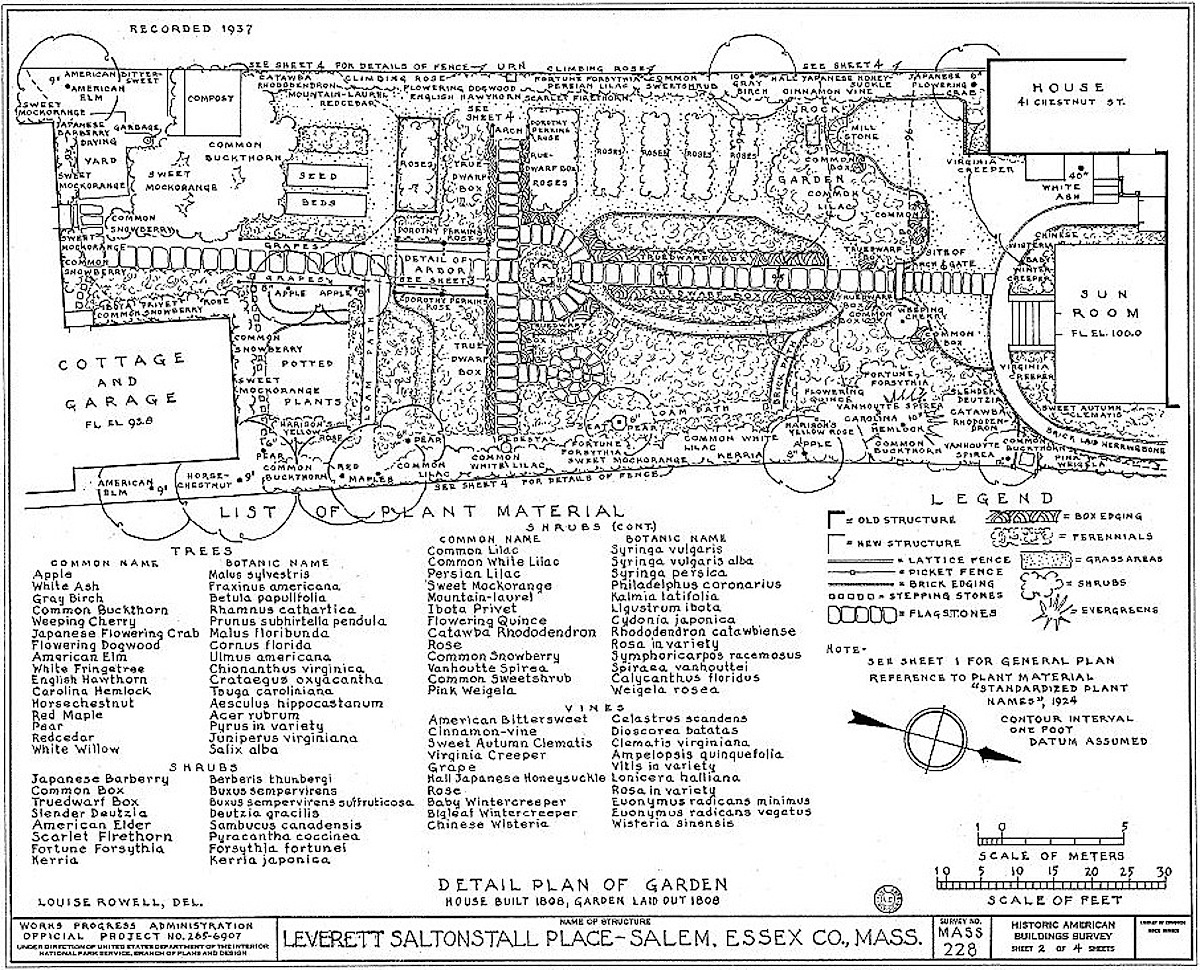
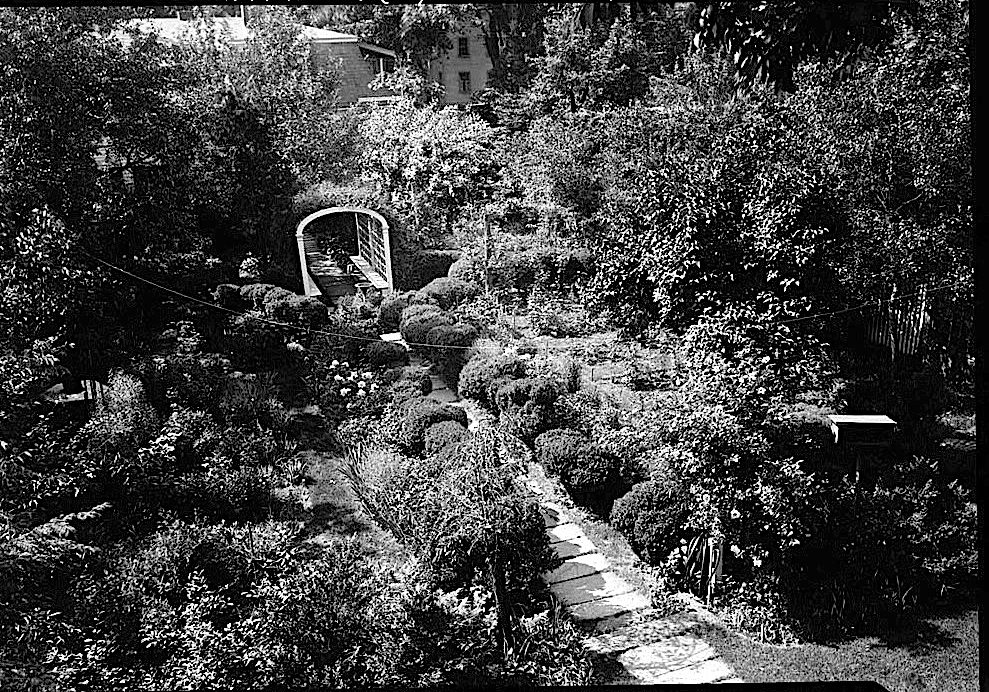 View of garden, looking south, Leverett Saltonstall Place, 41 Chestnut Street, Salem, Massachusetts, June 1940, by Frank O. Branzetti for an Historic American Buildings Survey (HABS), via Library of Congress Prints and Photographs Division (both photos).
In 1808 (or maybe 1810), Thomas Saunders built a double house for his two daughters, Caroline and Mary Elizabeth, and their husbands, brothers Nathaniel and Leverett Salstonstall.
The Leverett Salstonstalls lived in the no. 41 side, shown here.
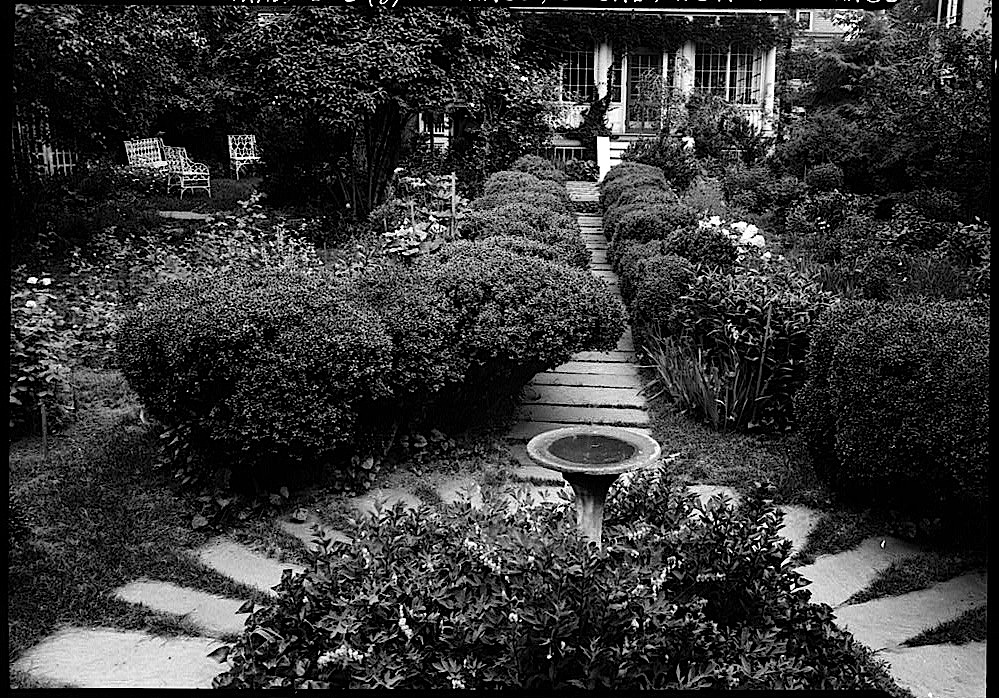
The garden was also laid out about 1810. Its arrangement was reportedly the same as when this drawing was made in 1937.
Mary and Leverett’s granddaughter, Mary Saltonstall Parker, also lived in the house in the late 19th and early 20th centuries. She wrote several little books of sentimental verse that fed into the Colonial Revival movement of that period. During WWI, her needlework art was published in House Beautiful and other publications.
Sunnie-Holme
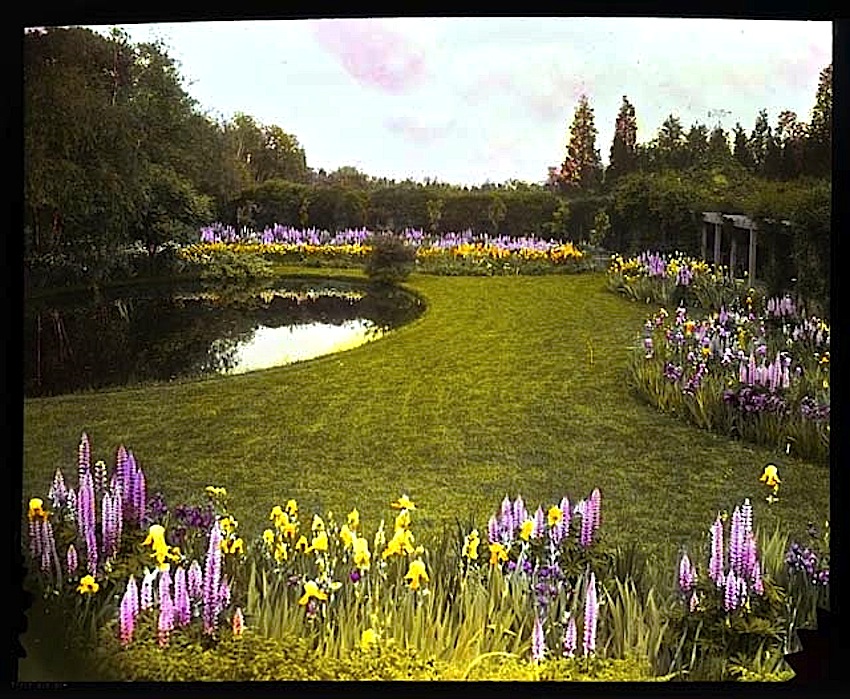
“Sunnie-Holme,” Fairfield, Connecticut, ca. 1930, a hand-colored glass lantern slide by John Duer Scott, via Archives of American Gardens, Smithsonian Institution Commons on flickr.
Sunnie-Holme was the summer residence of Annie Burr Jennings, whose father made fortunes in the California gold rush and as an investor in Standard Oil. She designed at least some of the garden, influenced by the writings of Gertrude Jekyll. The house was demolished after her death in 1939 — a provision of her will. There is a photo here.
 enclos*ure