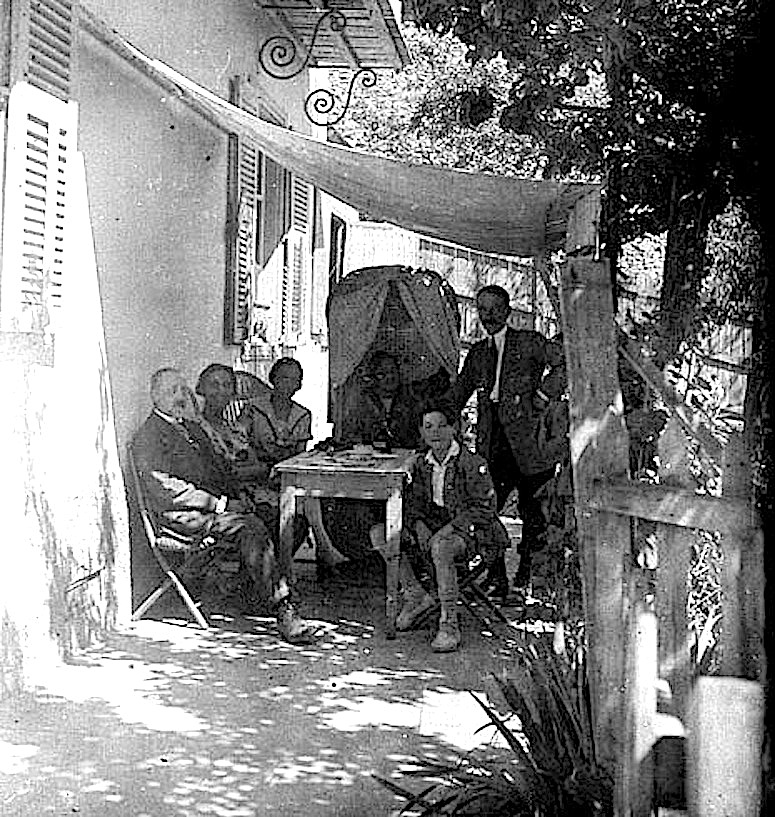
“Famille attablée sur la terrasse, ombragée par une bâche,” (family at a table on a terrace, shaded by a tarp) ca. 1890 – ca. 1910, by Eugène Trutat*, via Bibliothèque de Toulouse (cropped slightly by me).
*I was skeptical about the photographer because Trutat died in 1910, and the women on the left appear to be in the shorter dresses of the 1920s or 30s. However, they could be wearing the bathing suits of around 1900.
I want to bring you a little late summer update on this garden.
The garden and a corner of the 18th century Spielhaus through Deschampsia cespitosa grass.
I started out in March meaning to track the flowers of the Spielhaus (playhouse) perennial garden at the University of Hohenheim for this year’s GB Bloom Days. However, travel, gloomy weather, and hurting feet have interfered, and I haven’t posted an update since May.
I did pay a visit this week, however, on Tuesday evening, and there was lots of color.
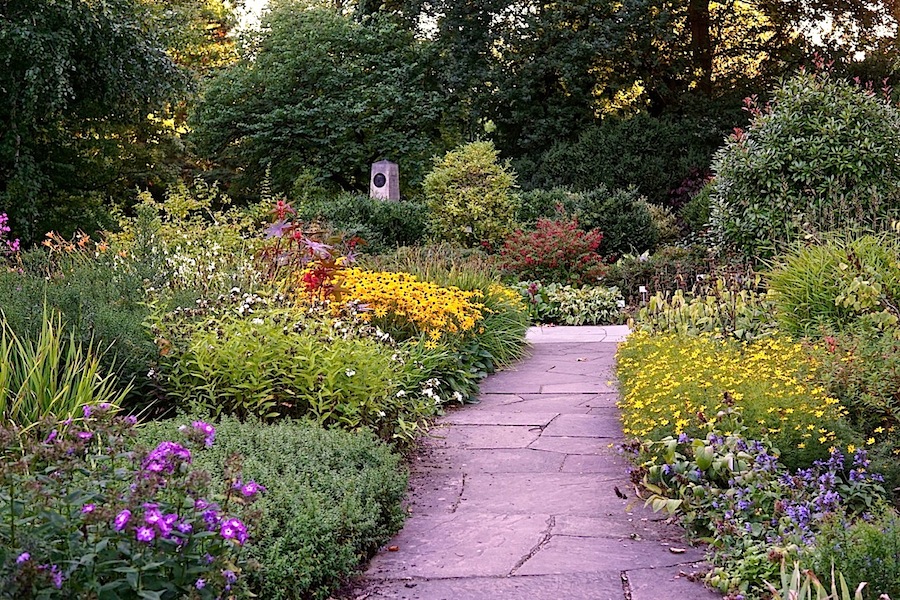
Above, American Rudbeckia hirta or Black-eyed Susans draw the eye, paired with a red cultivar of Ricinus communes, and Coreopsis on the other side of the path.
The obelisk in the background memorializes Duke Carl Eugen von Württemberg and Franziska von Hohenheim. They built Hohenheim Palace (now a University building) and the English landscape-style garden/arboretum around it (now the University’s botanical garden).
Franziska was first the king’s mistress, then his morganatic wife. The main palace building was barely finished when he died. The family then pressured her into giving up Hohenheim for another estate.
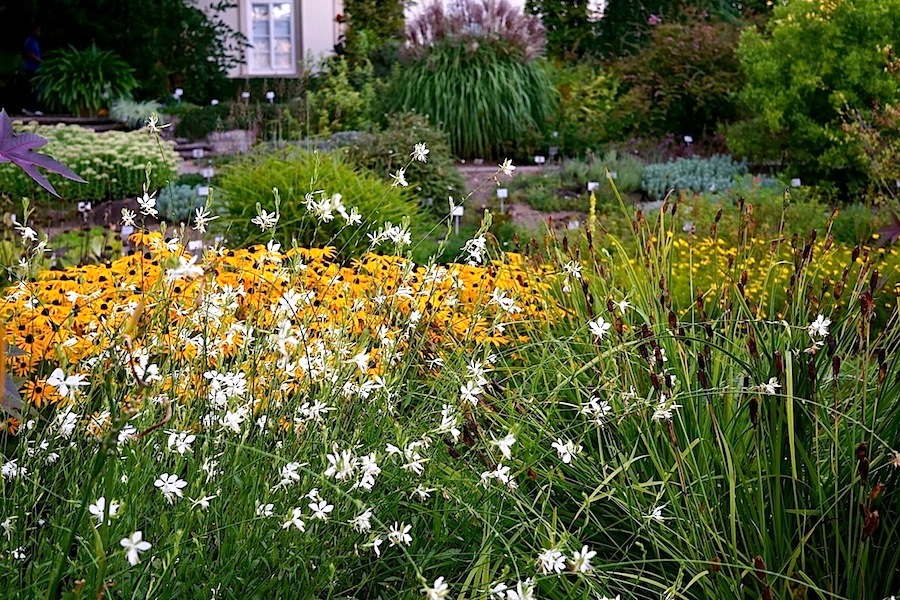
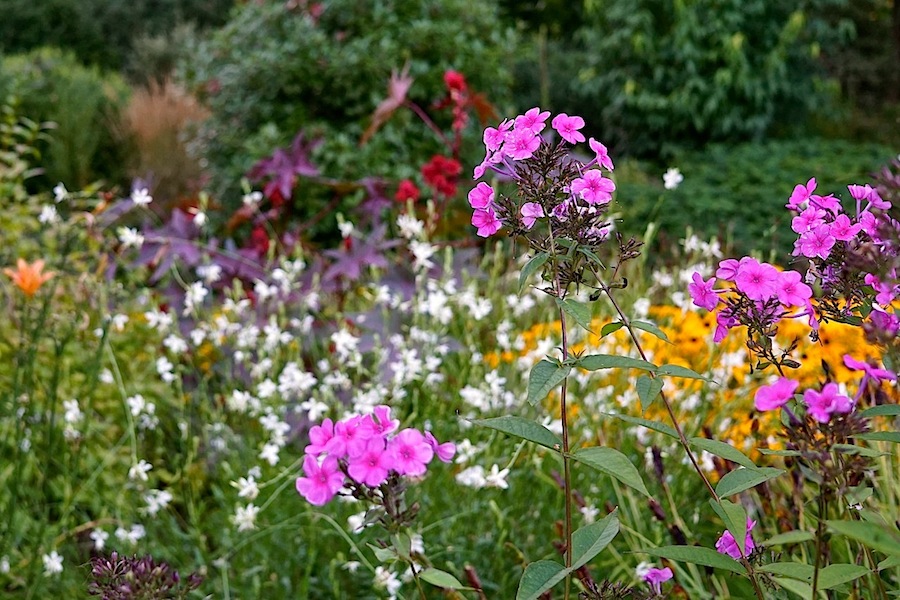
Above: the Rudbeckia and white Oenothera lindheimeri (gaura).
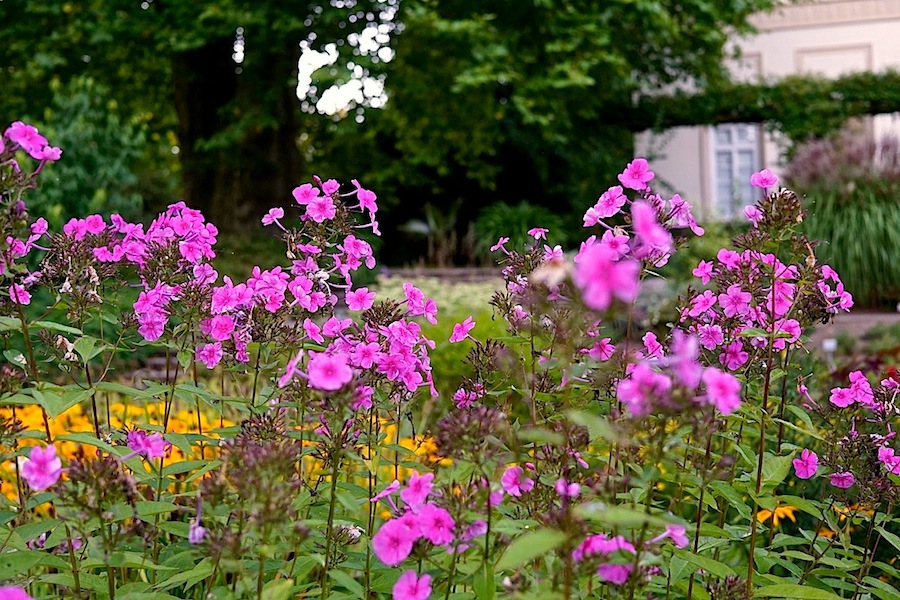
This pink phlox has a beautiful scent, but it has grown up over its label, so I can’t tell you the variety.
Above: with the red caster bean plant behind it.
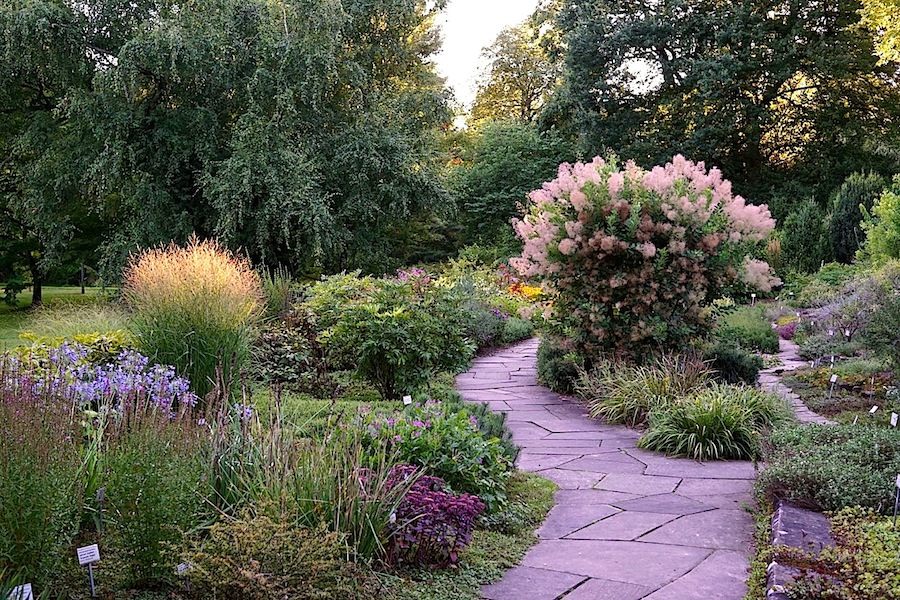
The garden is roughly a rectangle with a bit of slope, set in front of the Spielhaus terrace. Narrow stone paths run through it lengthwise.
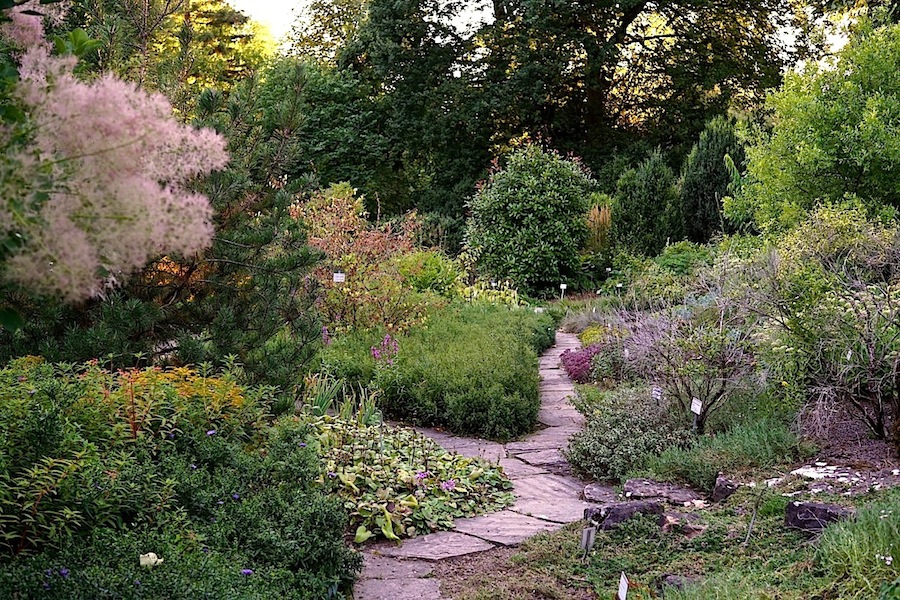
I don’t have the name of the species of the Panicum grass on the left above. The smoke bush on the right of the path is Cotinus coggygria ‘Young Lady’.
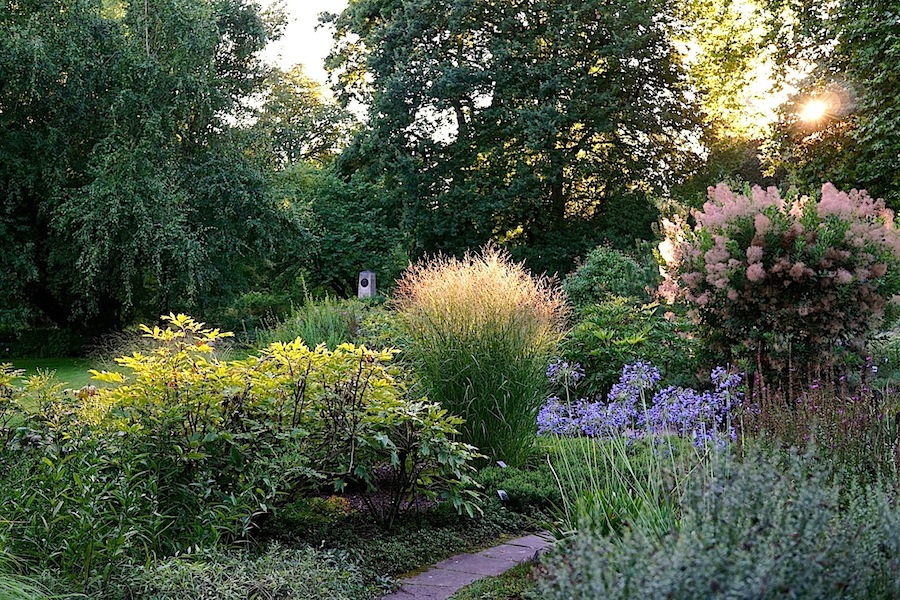
Above: tree peonies on the left, Agapanthus on the right.
Above: the center area.
I particularly like the garden’s layout. And the display of plants is very popular with the neighborhood. It’s rare that I get it almost to myself.
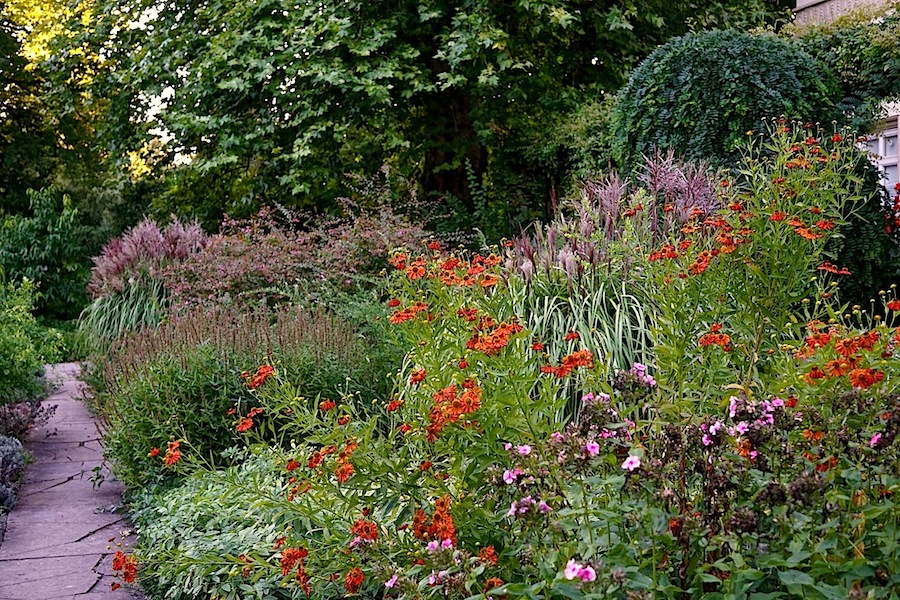
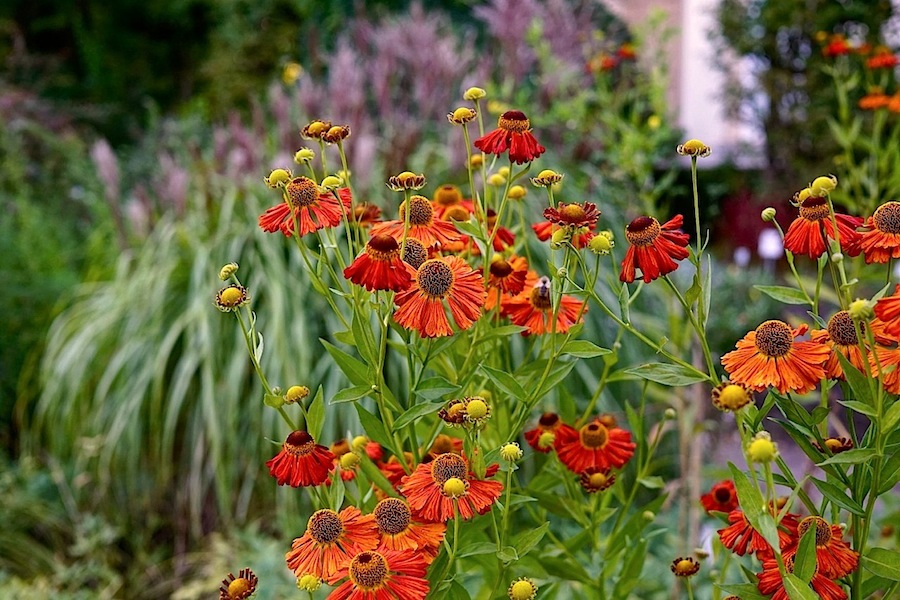
Above and below: heleniums in front of the terrace — unfortunately, the label was hidden.
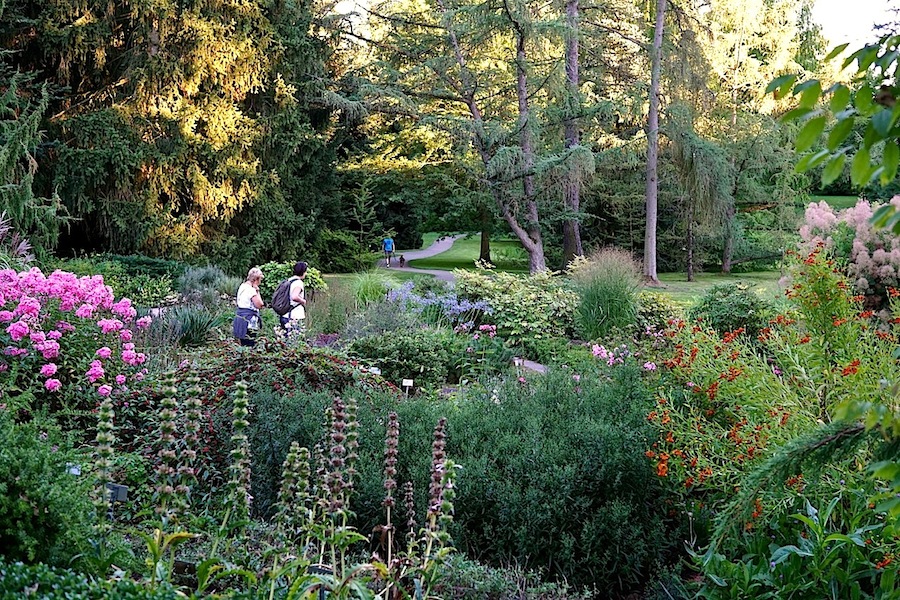
Above and the two photos below: looking across the garden from the Spielhaus terrace — left to right. (That’s another — taller and fuller — pink phlox on the left.)
Above: Just beyond the Spielhaus area, the trees, pond (left), and lawn of Carl Eugen’s and Franziska’s landscape garden.
Throughout this summer, the University has opened one room inside the Speilhaus on weekend afternoons. If you click on ‘Continue reading’ below and then on any of the thumbnail images, you can see some snapshots that I took in late July. The room holds a scale model of the palace grounds in Carl Eugen’s time, when there were about 60 folly-type buildings. Today, only the Spielhaus and one other remain.
Because of its waterfront location, Beloxi has been a summer resort town since the first half of the 1800s. The Hotel de Montross — facing the Mississippi Sound — was one of its oldest hotels. Today, it is long gone, with a Hard Rock Hotel and Casino located on approximately the same spot.
(There’s another picture of the hotel’s grounds here.)
The Both children and mother outside their home and cottage garden at Slave* Lake, Ontario, Canada, ca. early 1960s, viaCloyne and District Historical Society Commons on flickr.
*Probably named for the Slave or Awokanak Native Americans of the region.

 “Famille attablée sur la terrasse, ombragée par une bâche,” (family at a table on a terrace, shaded by a tarp) ca. 1890 – ca. 1910, by Eugène Trutat*, via Bibliothèque de Toulouse (cropped slightly by me).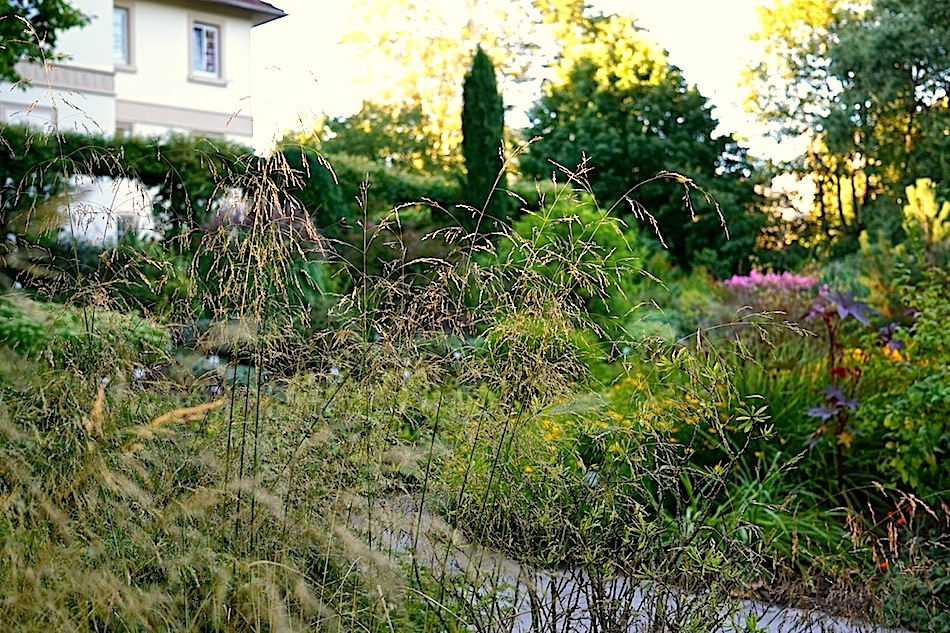


 enclos*ure