Vintage landscape: the lagoon

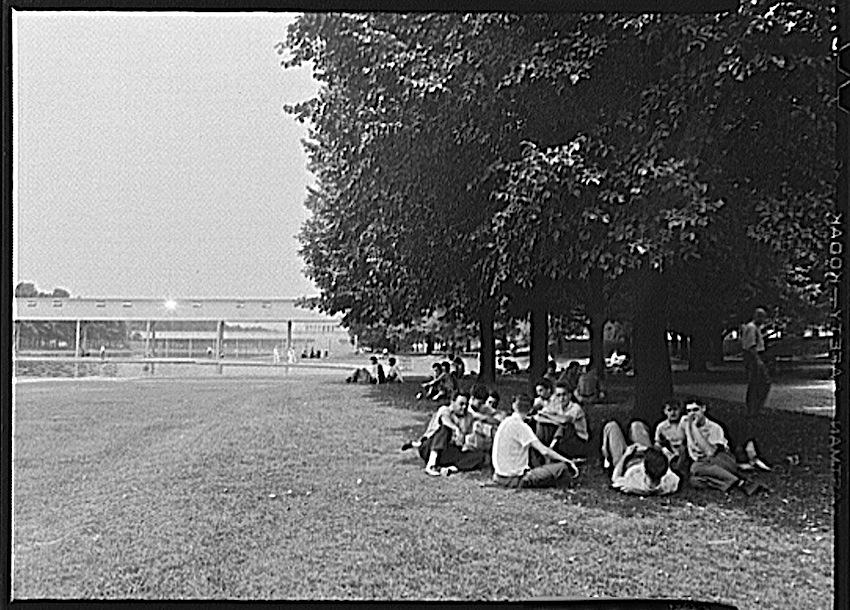
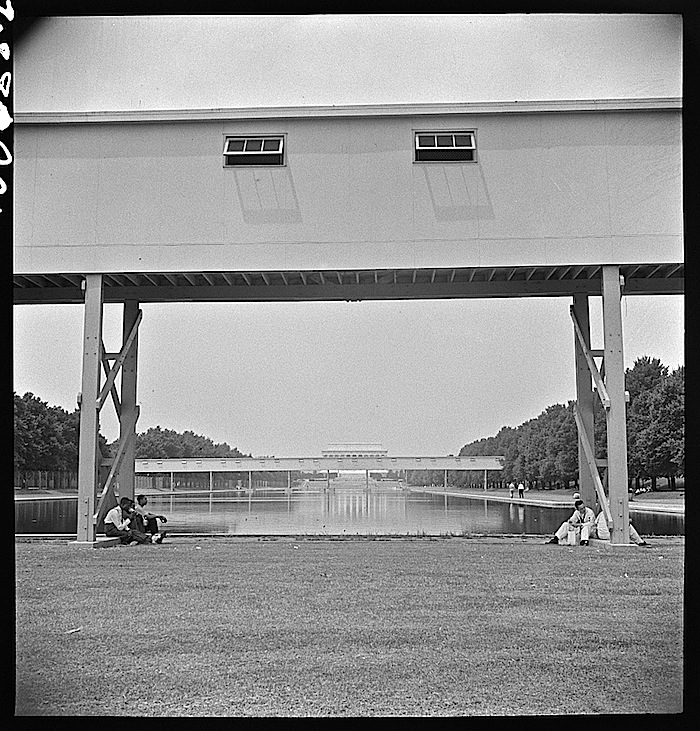
Washington, D.C., in July 1942, by Marjory Collins, via Library of CongressThe Lincoln Memorial Reflecting Pool in July 1942.  Two raised corridors crossed it and connected Department of War buildings. Photo by Marjory Collins, via Library of Congress Prints and Photographs Division.

Above, small boys were swimming in the pool. Collins called it a “lagoon” in her original photo caption — an allusion to Washington, D.C.’s tropical summer weather.

Washington, D.C., in July 1942, by Marjory Collins, via Library of Congress

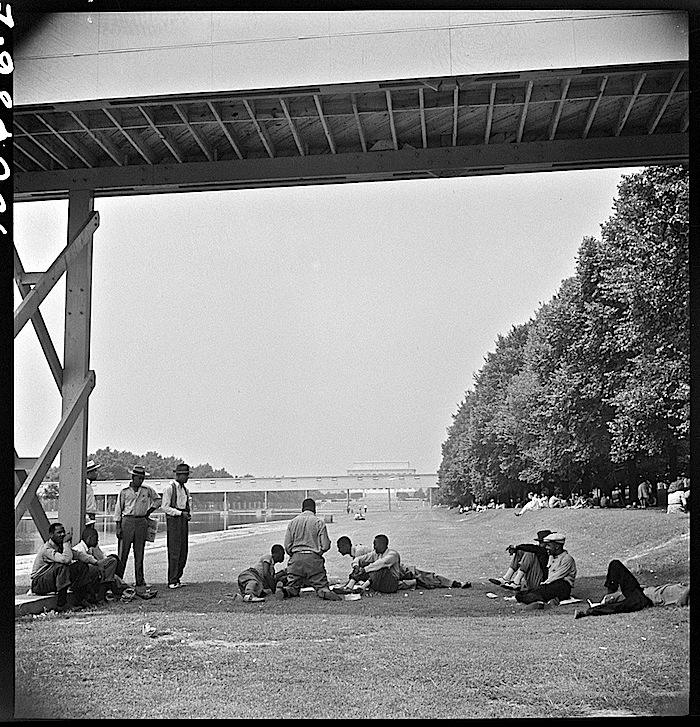
Along the sides of the water, under the trees, government workers were eating lunch on the grass.

Washington, D.C., in July 1942, by Marjory Collins, via Library of Congress

These men took advantage of the additional shade cast by the structures.

Washington, D.C., in July 1942, by Marjory Collins, via Library of Congress

“Temporary” buildings for various military branches were constructed along the north side of the pool in 1918.  The offices on the south side — and the corridors — were added during World War II.

The walkways were removed in 1947.  The last of the buildings came down in 1970.

Life in gardens: July 1942

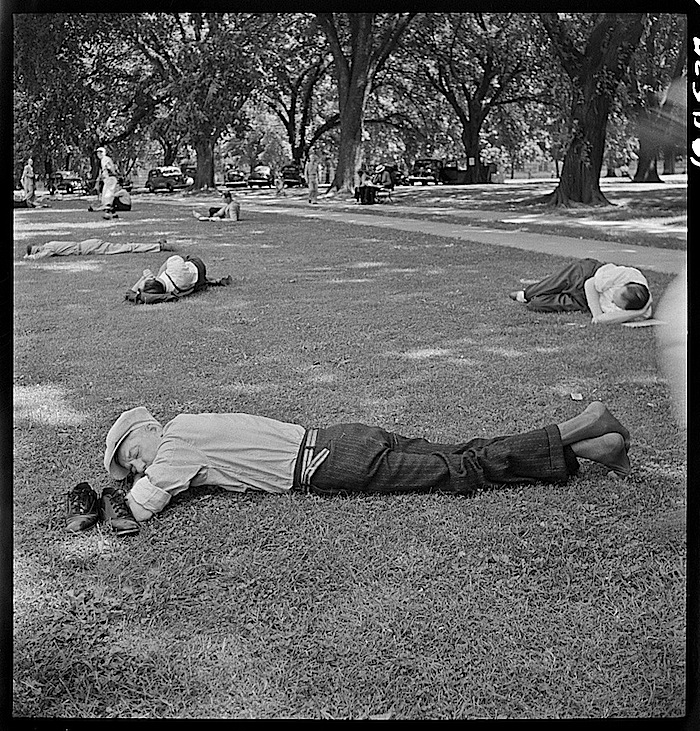
Washington, D.C., in July 1942, by Marjory Collins, via Library of CongressA hot Sunday in Washington, D.C., before air-conditioning.

All three photos of Ellipse Park by Marjory Collins, via Library of Congress Prints and Photographs Division.

Washington, D.C., in July 1942, by Marjory Collins, via Library of Congress

The mean daytime temperature that month was 86° — the high was 98°; the low was 78°. The daily high for humidity ranged from 76% to 100%.

Washington, D.C., in July 1942, by Marjory Collins, via Library of Congress

In the dog days of summer . . .

The wind lifts up my life
And sets it some distance from where it was.

Meena Alexander, from “Dog Days of Summer

Streifzug 4: more blumen

This slideshow requires JavaScript.

Yesterday: a Blumen selbt schneiden or ‘cut your own flowers’ field, with an honor-system money box.

There were lots of calendulas and cornflowers, but only a few red poppies left in the Sommerblumen mischung or summer mix row.  In the next couple of weeks, we’ll have gladiolus and dahlias.


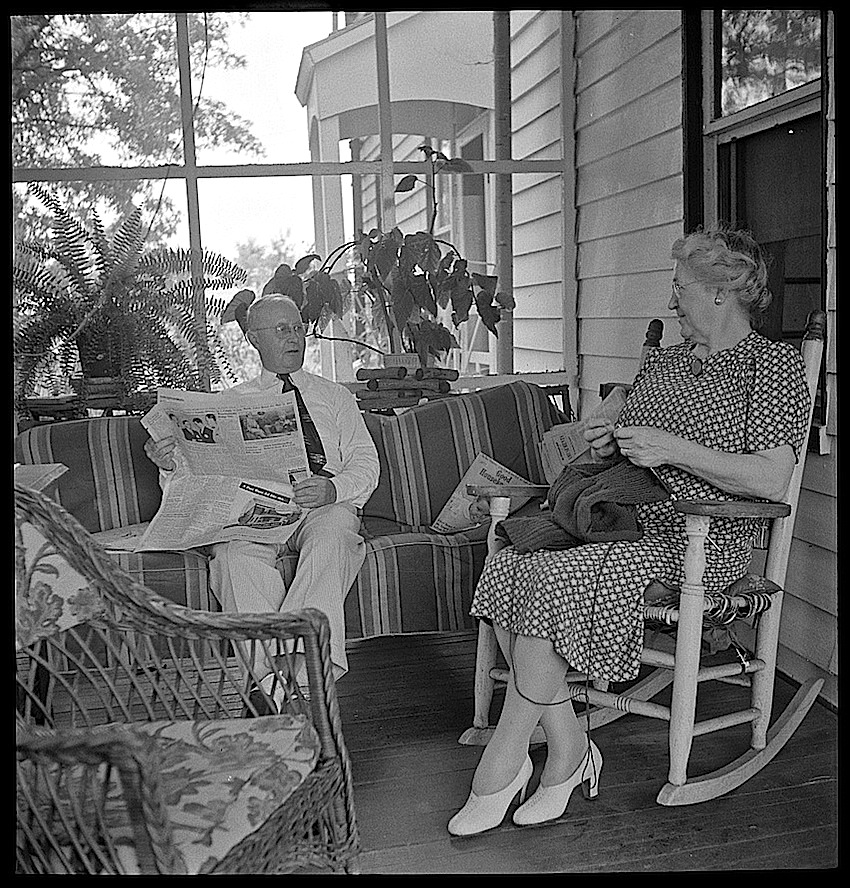
The Sunday porch: Mechanicsville, Md.

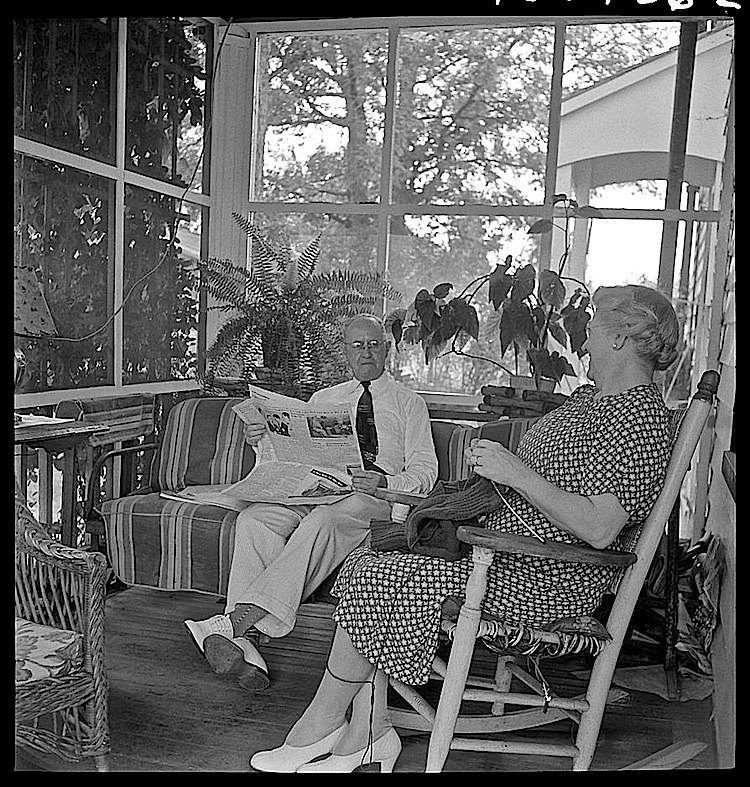
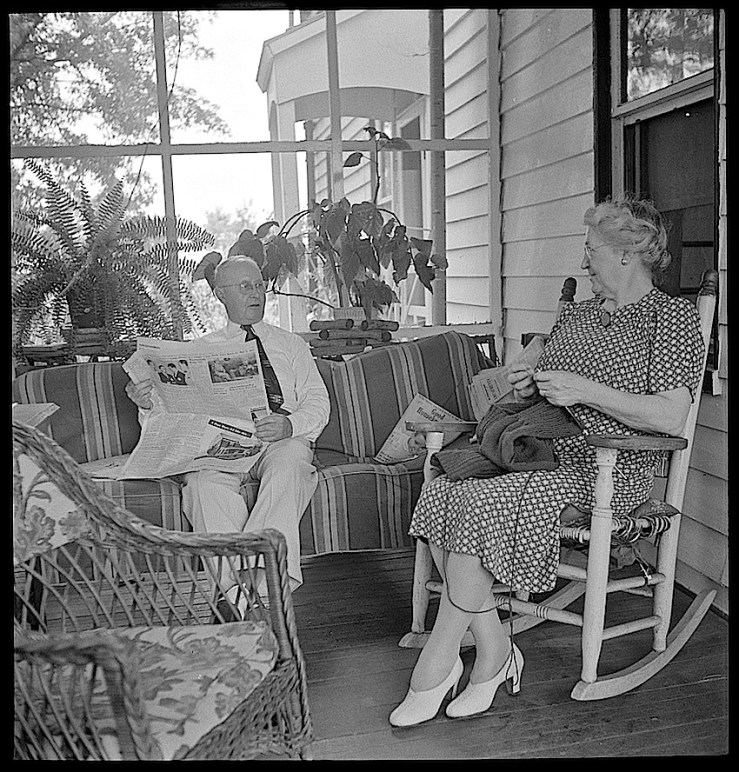
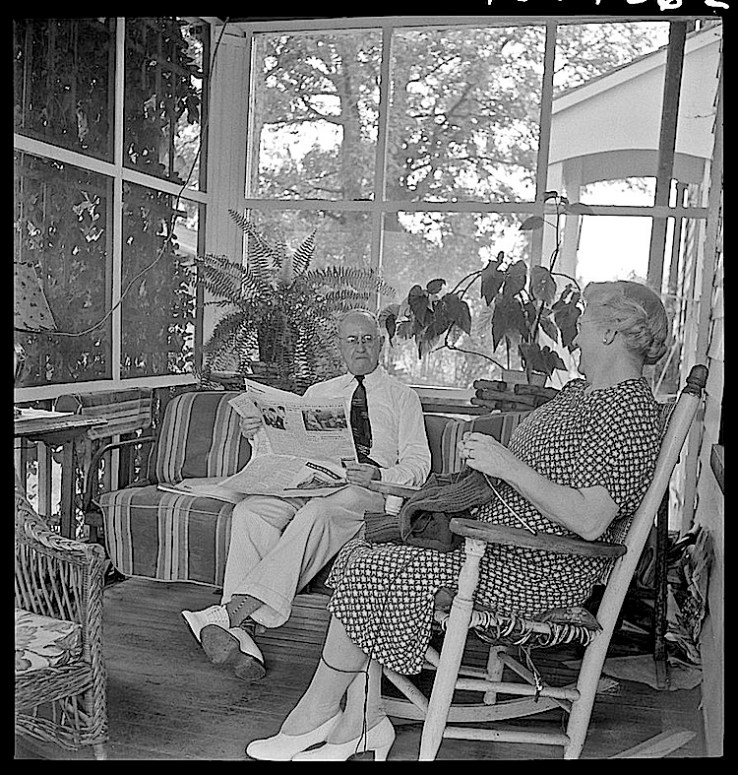
Mechanicsville MD 2, Library of CongressMr. and Mrs. Herbert on their porch in Mechanicsville, Maryland, June or July 1942, by Marjory Collins, via Library of Congress Prints and Photographs Division (all three photos).
Mechanicsville MD, Library of Congress

All the elements of a good screened porch are here: a slipcovered glider and a wicker chair, a rocker with a cushion (because the caned seat is nearly gone), a Boston fern and an angel-wing begonia, a newspaper and a copy of Good Housekeeping.  Both Herberts are wearing summertime white shoes.

Only a little iced tea could make it any nicer. Judging from the way they are dressed, I would guess this is a Sunday afternoon.
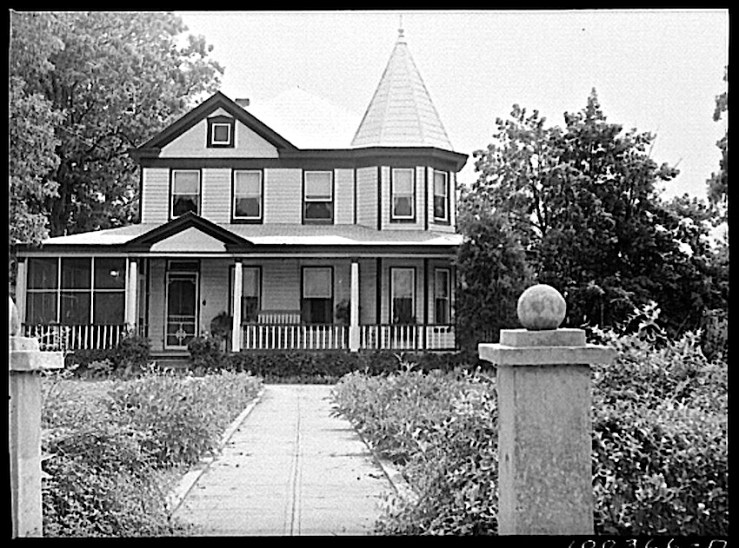
Mechanicsville MD house, Library of Congress

The couple — Charles P. and Bessie D. — built their Queen Anne house in 1909, although, curiously, it appears that they only bought the land beneath it in 1914, according to a Maryland Historic Sites Inventory Form filled out in the 1990s or later.

Charles had moved to the the area to be an express agent for the railroad.  Bessie was the town dressmaker. They lived in the house until their deaths during the 1960s.

A photo attached to the Inventory Form shows that the screening on the east side of the porch was later removed and some lacy trim was added along the entire front.  I could not find the house in a current Google Maps satellite view, however.

As usual, I wish we could see more of the garden.

Marjory Collins took these pictures about six months after moving to Washington, D.C., to join the documentary photographers of the U.S. Office of War Information.  Her “upbeat, harmonious images” of that time “reflected the OWI editorial requests for visual stories about the ideal American way of life,” according to a biographical essay about her by the Library of Congress.


Our garden in July

How to convey the very, very discreet charm of our garden of rough grass and weeds?

This slideshow requires JavaScript.

I often think of this other bit of German ground painted by Albrecht Dürer.

Yesterday, a repairman came over to fix the window/door behind my desk chair. It turned out to be fine; I just did not know how to operate it properly. (German windows are wonderful, but this one is a bit over-engineered.)  He pushed the handle and pulled the frame and said, “And now you can go out into the beautiful . . . looks out, slight pause. . . garden.”

You can read about the beginning of my “garden without (much) gardening” here.

The middle of the month brings Garden Bloggers’ Bloom Day (the 15th) and Foliage Follow Up (the 16th). Please visit Carol at May Dreams Gardens and Pam at Digging to see what’s blooming and leafing out in July.

You can scroll through larger versions of the photos above by clicking on ‘Continue reading’ below.

I grow in places
others can’t,

where wind is high
and water scant. . . .

I make my humble,
bladed bed.

And where there’s level ground,
I spread.

Joyce Sidman, from “Grass