Life in gardens: snake

Man with snake, Alabama, 1948, via Galt Museum“James Burness Senior holding a rattle snake outside the family’s home at Coste Station, six miles from Burdett, Alberta[, Canada]. ”
The photo, dated August 1948, is via the Galt Museum & Archives Commons on flickr.

I’m trying to figure out what plant is coming up in the narrow L-shaped — or does it go around to form a square with the sidewalk — bed behind him.  Sunflowers?

Life in gardens: dahlias

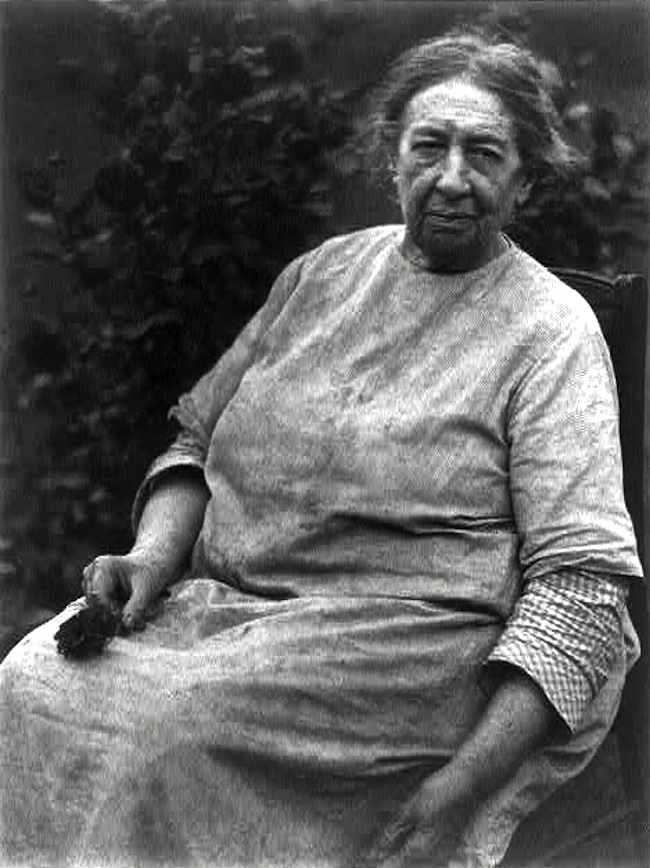
Woman with dahlia, Library of Congress“Woman with dahlias,” ca. 1930, by Doris Ulmann, via Library of Congress Prints and Photographs Division.

In this beautiful portrait of an older Appalachian women, you can just see her stand of dahlias behind her.

In the traditional language of flowers, the dahlia is usually said to represent dignity, sometimes elegance.

A well-to-do New Yorker, Doris Ulmann trained as an art photographer with Clarence H. White in the 1910s. In the 1920s, she began traveling to the southeast to photograph rural people, particularly in the hills of Kentucky and the Sea Islands of South Carolina — people “for whom life had not been a dance.” She also documented Appalachian folk arts and crafts, working with musician and folklorist John Jacob Niles.

Life in gardens: 1967

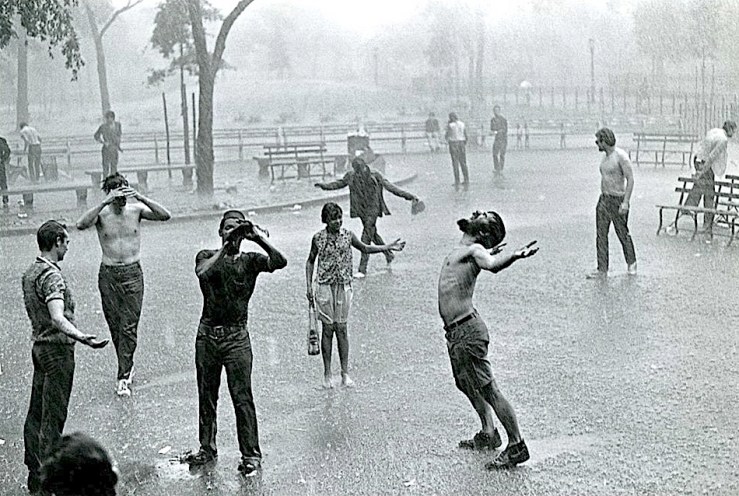
Tompkins Square Park, 1967, George Eastman HouseTompkins Square Park, East Village, New York City, 1967, by James Jowers, via George Eastman House Commons on flickr.

Tompkins Square Park . . .  was reconstructed [in the mid 1960s,] just in time for an era of sweeping changes. The surrounding neighborhood became the east coast version of ‘Haight-Ashbury.’ Rock musicians, poets, hippies, and political activists transformed downtown Manhattan into a center for counter-cultural activities and political protest. It was during the mid- to late-1960s that the area surrounding Tompkins Square Park came to be called ‘The East Village.’ . . .

Tompkins Square had once before been the site of powerful expressions of joy and rebellion. A century earlier, German-Americans had transformed the square with their volkefestes and mass demonstrations. Their spirit and command of the space were being revived— only now in 1960s terms. Young people demonstrated at the bandshell against American involvement in Vietnam and in favor of women’s and third world liberation movements. They gathered to hear bandshell concerts put on by the Fugs, the Grateful Dead and Charles Mingus. They were certainly ignoring signs that cautioned ‘keep off the grass.’ . . .

— Laurel Van Horn, from “A History of Tompkins Square Park

The Sunday porch: Breitenbush

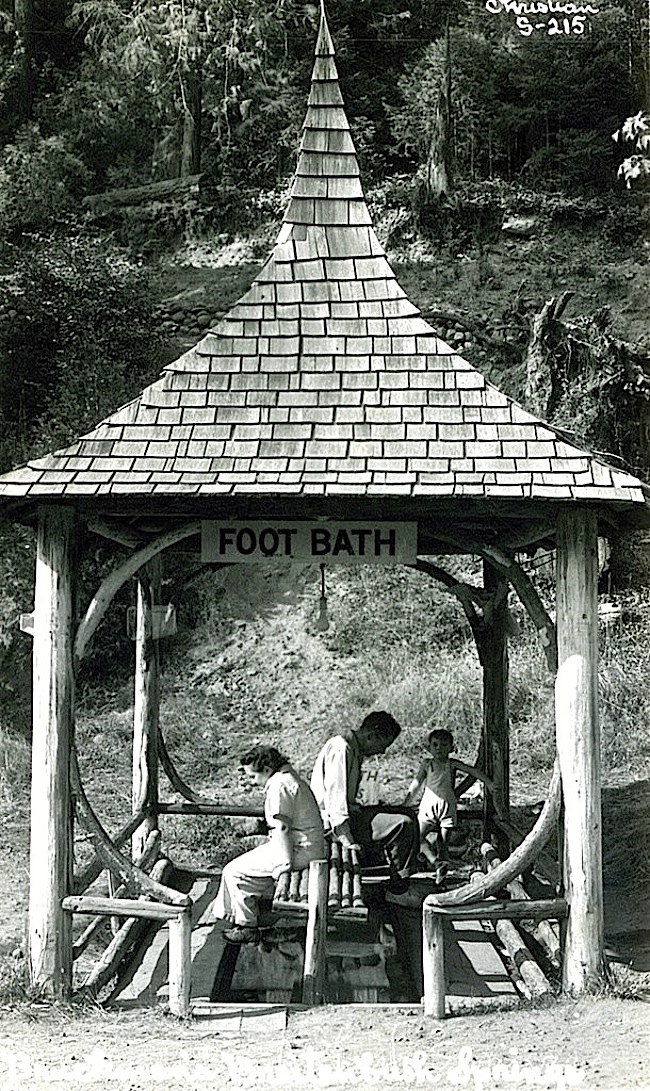
Foot bath, Oregon, OSU Archives“Bruckman’s Breitenbush Springs Foot Bath, Breitenbush, Oregon,” ca. 1937, via OSU Special Collections & Archives Commons on flickr.

Ah, come on folks. . . take off those shoes.

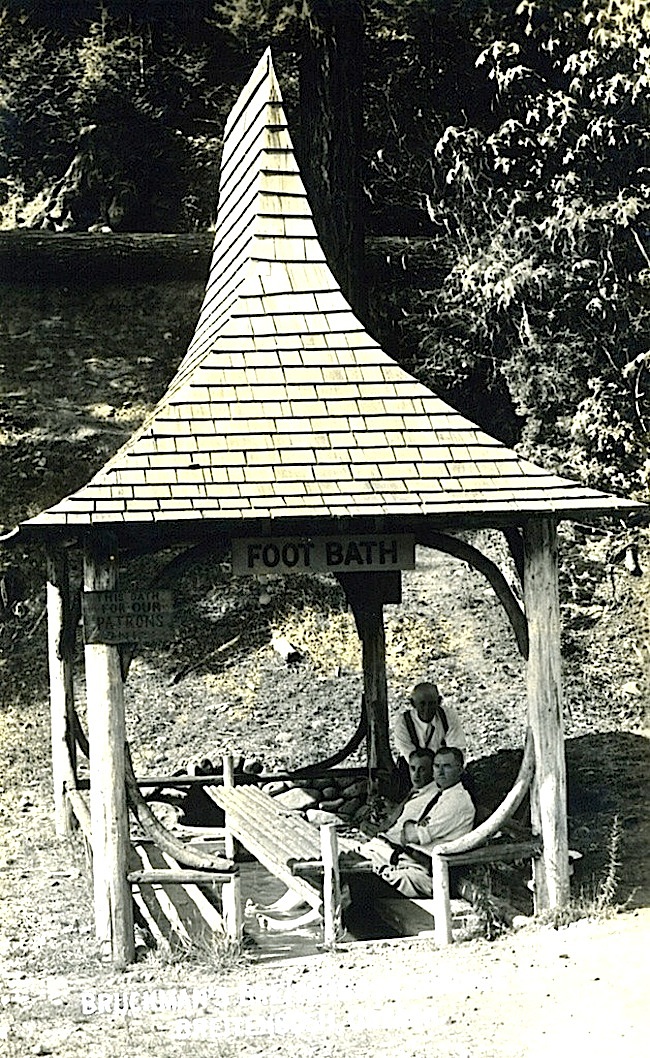
2 Foot bath, Oregon, OSU Archive

Like these guys. (Tie removal optional)

Merle Bruckman bought the property around the Breitenbush hot springs in 1927 and turned it into a wilderness health spa. He sold it in the mid-1950s, and the operation changed hands a few more times before closing in 1972 after two large floods.

In 1981, it re-opened as a retreat and conference center — owned by its workers since 1989.

Life in gardens: keeping bees (close)

This slideshow requires JavaScript.

This lady — probably in Finland, ca. 1900 — must have been really devoted to her bee hives to keep them so close to her open windows.

The photo is via Gallen-Kallelan Museo Commons on flickr, photographer unknown.

To scroll through larger images, click on ‘Continue reading’ below and then on any thumbnail in the gallery.

Deare behold me, you shall see
Faith the Hive, and love the Bee,
Which doe bring.
Gaine and sting.

Lady Mary Wroth