January reading

Happy 2013!

January WPA posterA silkscreen poster of  the Illinois WPA Art Project (ca. 1936 – 1941), via Library of Congress Prints and Photographs Division.

On my nightstand for January reading:

Home Ground: Sanctuary in the City by Dan Pearson.  His city garden is the best example of what I want for our Washington, D.C., garden when we return.

Illustrated History of Landscape Design by Elizabeth Boults and Chip Sullivan

The American Meadow Garden by John Greenlee and Beautiful N0-Mow Yards by Evelyn J. Hadden

The City Shaped:  Urban Patterns and Meaning Through History by Spiro Kostof

Color by Design:  Planting the Contemporary Garden by Nori and Sandra Pope

The New Perennial Garden by Noël Kingsbury

— none particularly new, but indications of my current interests.

I just finished re-reading Peter Martin’s The Pleasure Gardens of Virginia:  From Jamestown to Jefferson.  I recommend it — along with Barbara Wells Sarudy’s Gardens and Gardening in the Chesapeake, 1700 – 1805 — if you garden in the U.S. mid-Atlantic.  Martin is particularly good on Mount Vernon and Monticello and on Jefferson’s changing enthusiasms and false starts.  (Martin and Sarudy differ somewhat on the extent of the influence of the English landscape garden style in 18th century America.)

(I also love Fergus M. Bordewich’s Washington: The Making of the American Capital for landscape/city planning history.)

Right now I’m really taken with the Game of Thrones books (I know, I’m behind the trend; I’m in Rwanda.)  I’m thinking of making the jump to an e-reader this month and then loading on the second book (aka Season Two) to watch in February.  I also want Hillary Mantel’s Bring Up the Bodies soon (I had to re-read Wolf Hall last month first — it’s so good).

What are your plans for winter reading?
Our garden: flower color

I have flower colors on the brain right now.

I’m going to try some (mostly) single-color planting combinations in some sections of the long borders — and dramatic contrasts in others.

This slideshow requires JavaScript.

We have blooms all year round here and lots of space. The main borders are along the lower lawn, so I don’t think  that the colorful arrangements will compete too much with our terrace views of the city and hills.

I’ll probably make a good, old mess at first, but I have a year to experiment and a year to make corrections.

The photos above are some reference pictures I took of all the flowers we have right now (a few things aren’t blooming). I’ve been going around and tagging the colors of the roses and daylilies as they bloom.

I have a number of flowering shrubs in the borders that are too big to move, so I will start my color selections with them.

Vintage landscape: Congressional gardener

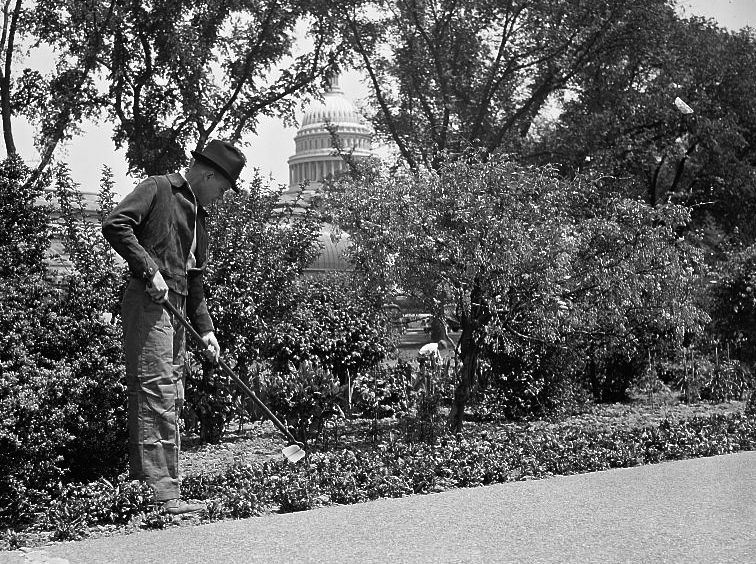
“Washington, D.C., May 7[, 1937].  Rep. William R. Poage, a first term Texas Democrat, likes gardening. He couldn’t find a plot of ground in the crowded capital, so he used his newly acquired congressional influence and won permission to help tend flowers and shrubbery in the government’s Botanical Gardens. So he works along with the regular laborers an hour or two daily.”

These days, many congressmen sleep in their House offices, but I haven’t heard of any tending the flower beds. Representative Poage retired from Congress in 1978.

Photo and text in quotes by Harris & Ewing via Library of Congress Prints and Photographs Division.

Our garden: blue hills, yellow flowers

The landscape in the distance can provide one of the colors in a planting bed combination.

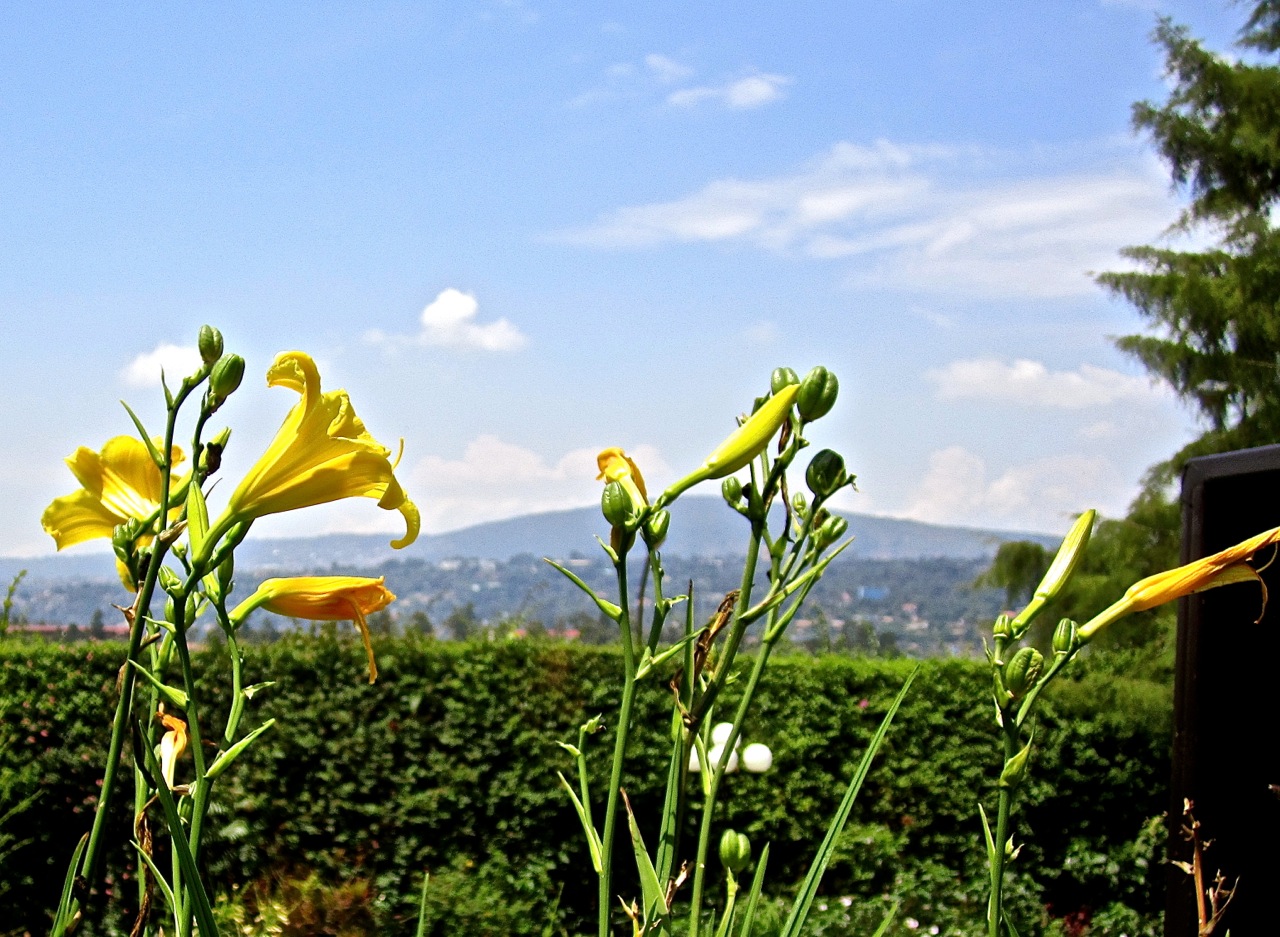
That’s come home to me this week as I’ve noticed how great the yellow daylilies in front of our terrace look against our view of the blue Kigali hills and sky.

Classic blue and yellow are working really well in this open, bright area.  (The columns of the terrace are pale yellow too.)

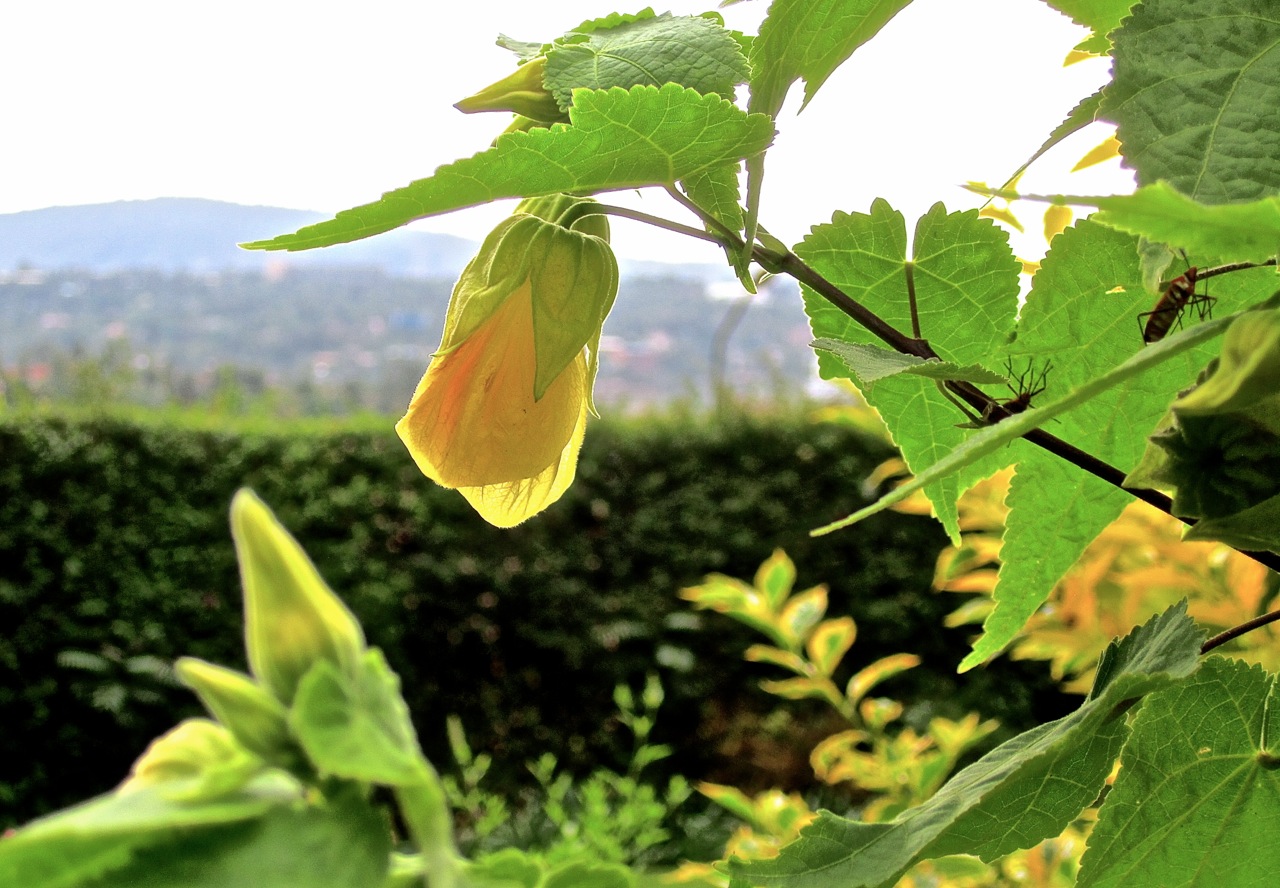
Below are yellow abutilon and yellow foliage in the same area. I need to bring some cream into the mix.


As the garden comes back from our  all the changes we made this summer, I’m starting to think more comprehensively about structure/color combinations in the planting beds. In June, as my two temporary helpers were fast digging up swathes of shrubs and flowers, there wasn’t a lot of time to get too prissy about perennial placement — I knew where I wanted the shrubs and grass, my main concerns for Phase One.

Quickly, I tried to direct the placement of the other plants into something like the ever-advised drifts, but as things fill in, I’m not getting the overall “clarity” (the word that most comes to my mind) that I want. So I need to get the shovel back out. (But these daylilies are good.)

I’m thinking about this observation on the relationship between plant color and form by Piet Oudolf:

Different shapes + different colours
There is a danger that there will be too much contrast. The eye may be overstimulated, and there may be no common ground.

He goes on, however, to say that “this is only a suggestion to be cautious. . . as even outrageous contrasts may work!”

He indicates that easier approaches may be:

  • Related shapes + related colours
  • Different shapes + related colours [Think Nori and Sandra Pope — I am.]
  • Related shapes + different colours

(from Designing with Plants.)

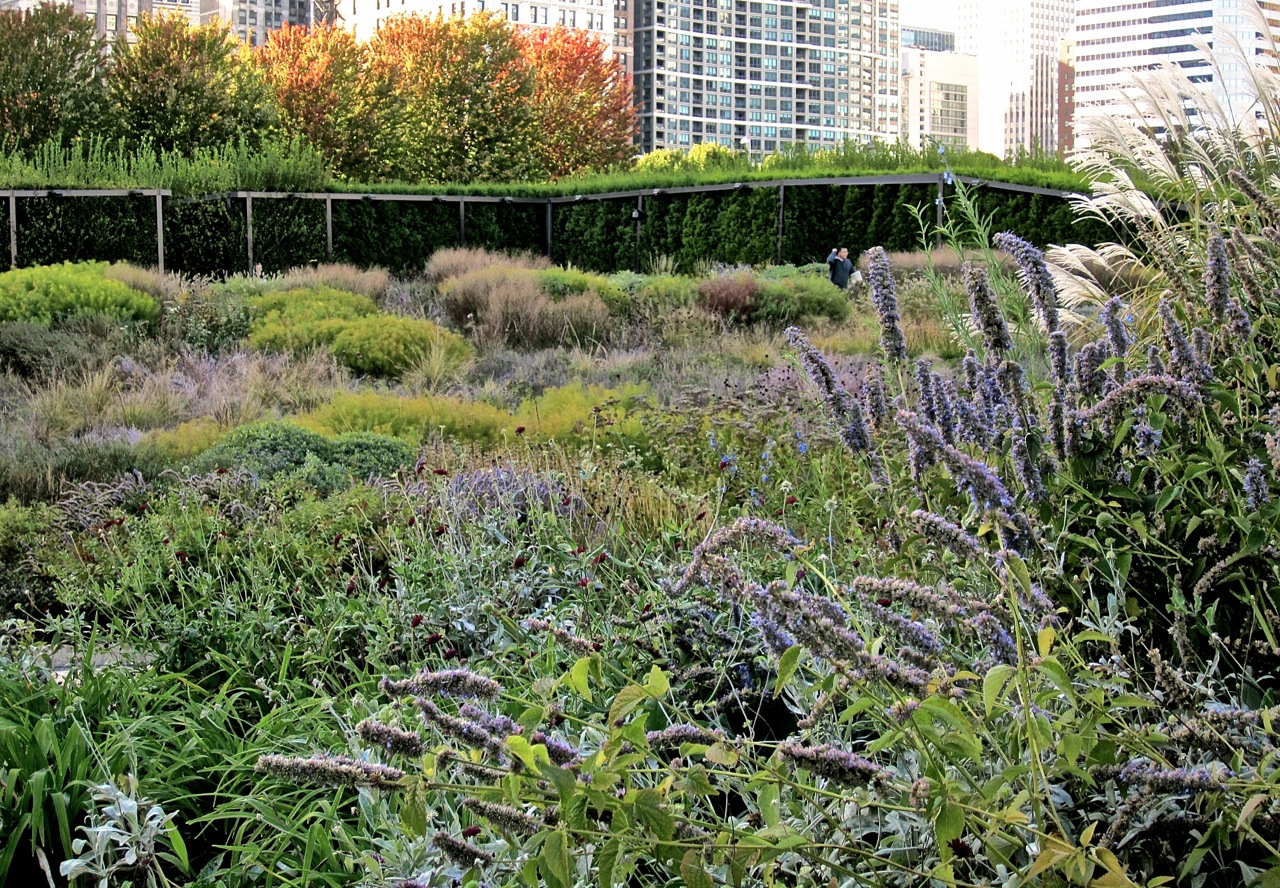
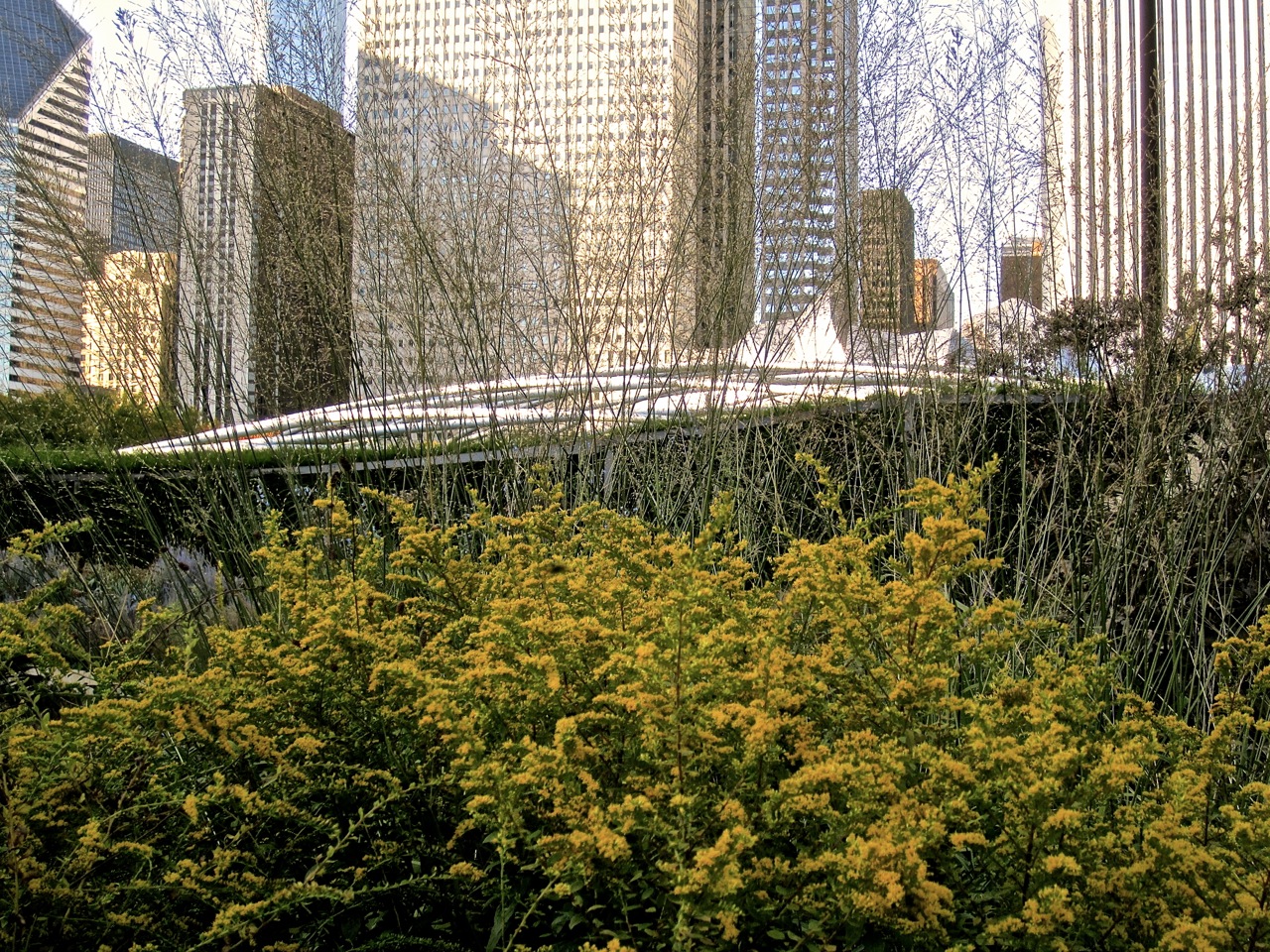
In September, we visited Chicago, and I spent some time in the Oudolf-designed* Lurie Garden.  In the large section in the photo below, fading shades of purple predominated.

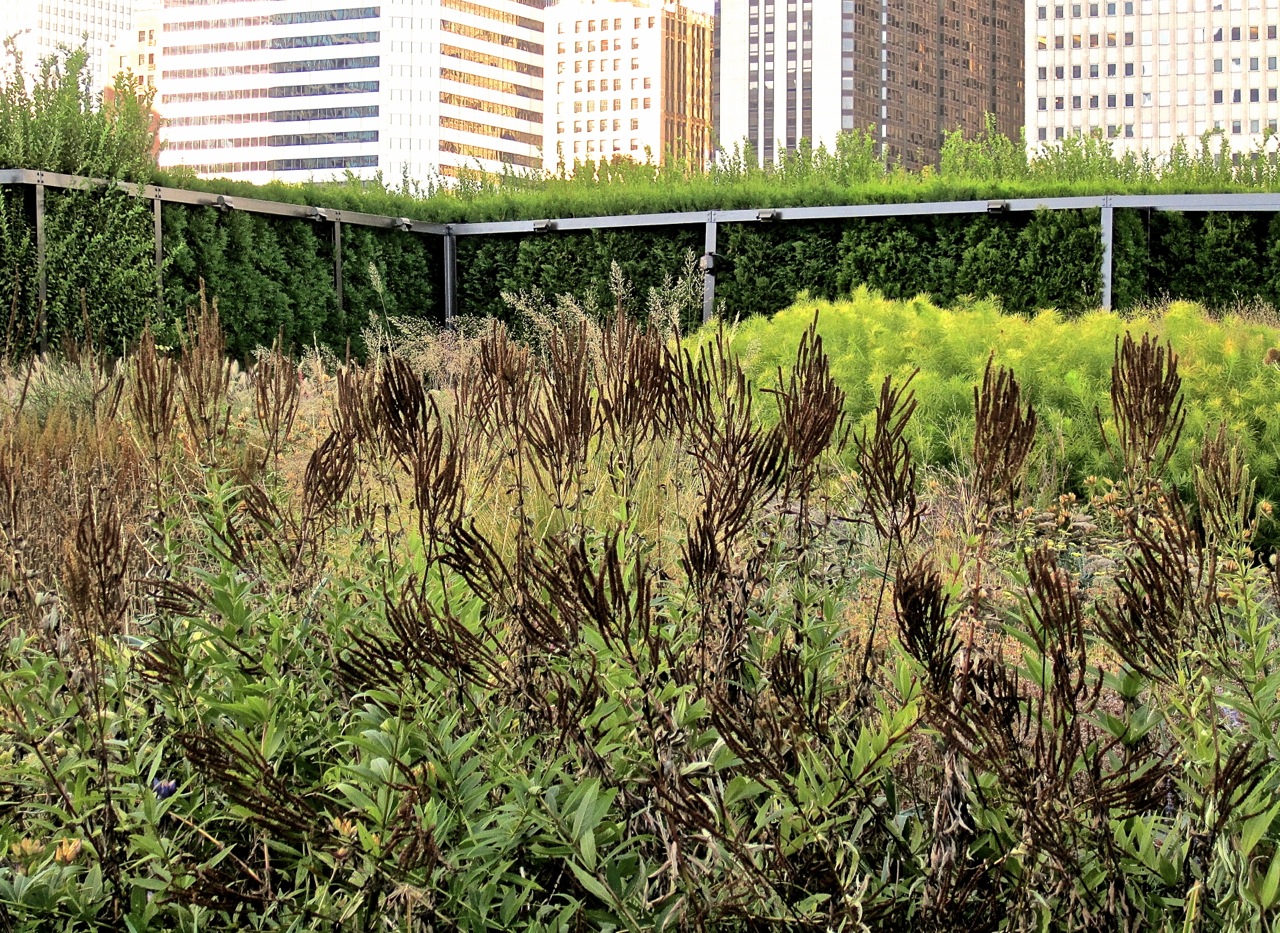
Seed heads in dark brown, below, provided contrast.

OK, that works.


Above, in a yellow section of the garden, an ornamental grass is a transparent curtain across the city buildings.

*with Gustafson, Guthrie, Nichol, Ltd., and Robert Israel.

In which we learn some elegant French

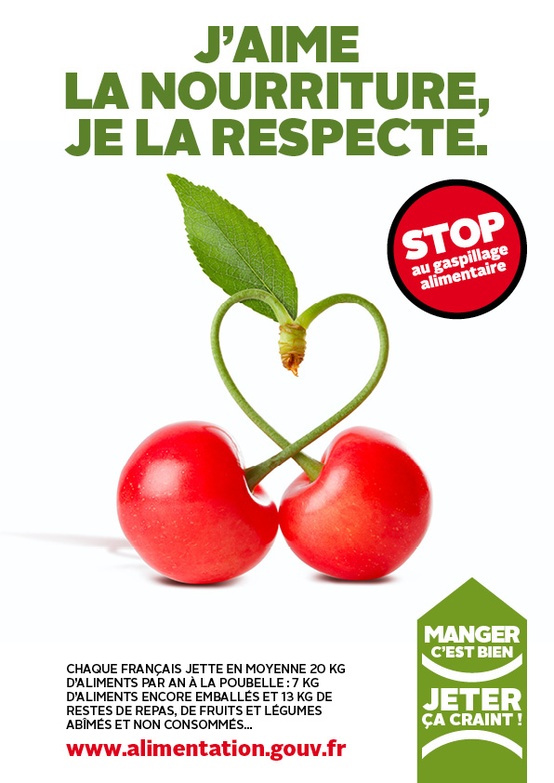
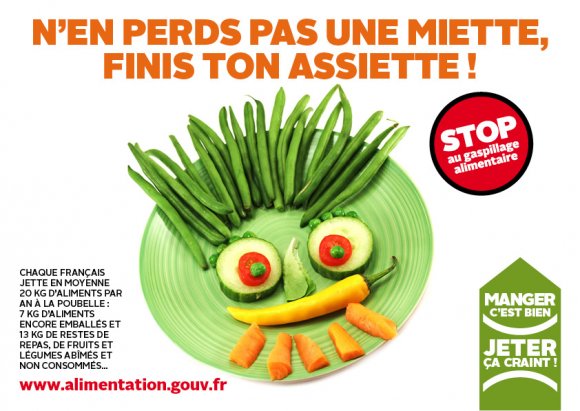
Well, maybe not, but this French government ad carries an important message.

Below, the tagline in the lower right corner roughly translates as ‘eating, that’s good; throwing away, that sucks (ça craint!*).’

“I love food, I respect it.”

Chaque Français jette . . . “Every French person throws an average of 20 kgs. of food in the trash can each year.”

According to the FAO,  a European generates 60-110 kgs. (130-240 lbs.) of food waste yearly; an American, 95-115 kgs. (210-250 lbs.); a person from a developing country, 6-11 kgs. (13-24 lbs.).

“Don’t waste a crumb, finish your plate.”

For more information, see the campaign webpages here and here.  And there’s more about French food at French Food in the U.S.

I spotted these posters on the wonderful blog about gardening in Paris, Paris coté jardin, by Alain Delavie.

*Also means ‘that’s dangerous.’  ‘That sucks’ can also be ‘c’est nul.’