Photo from DACOR, Inc. DACOR is an acronym for Diplomatic and Consular Officers, Retired.
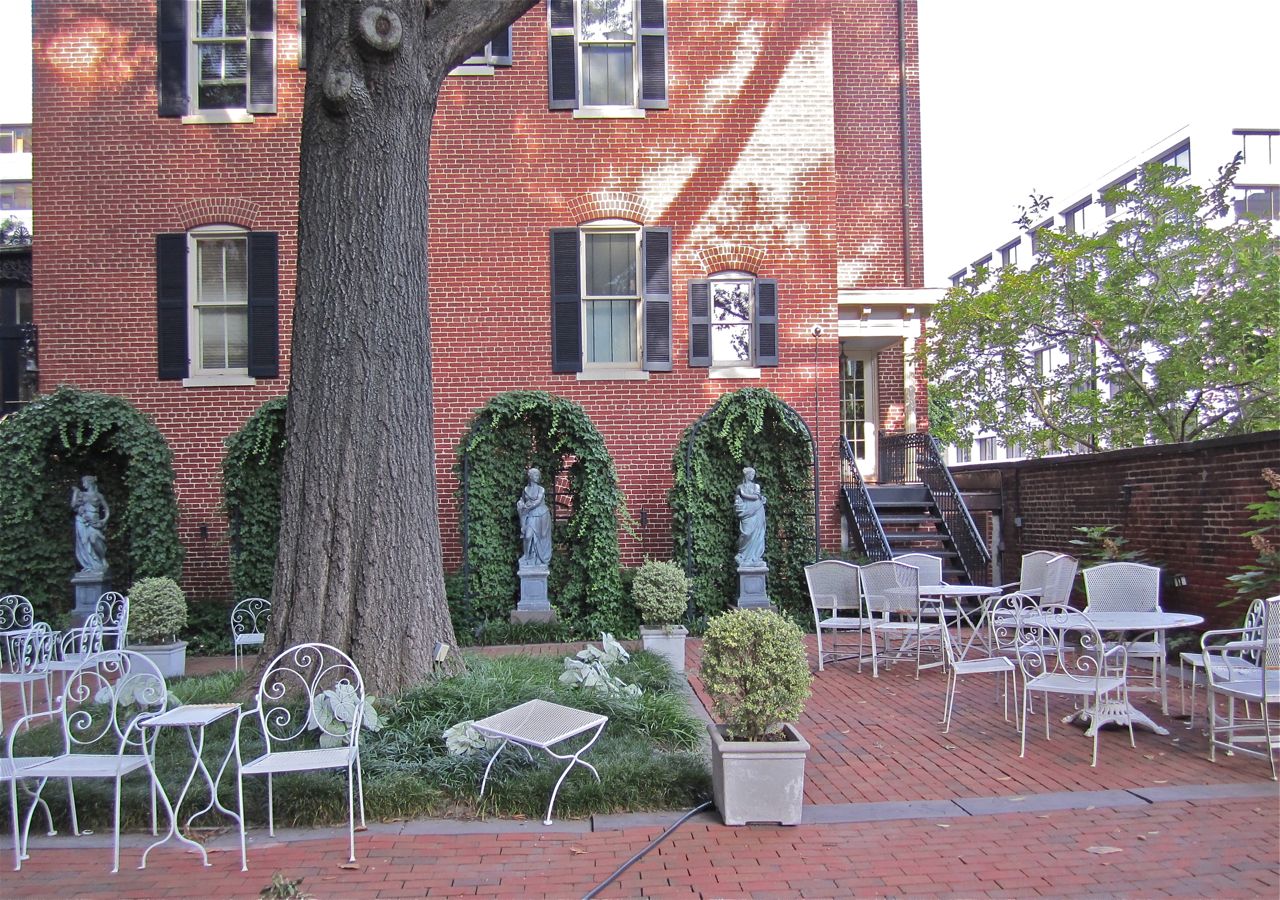
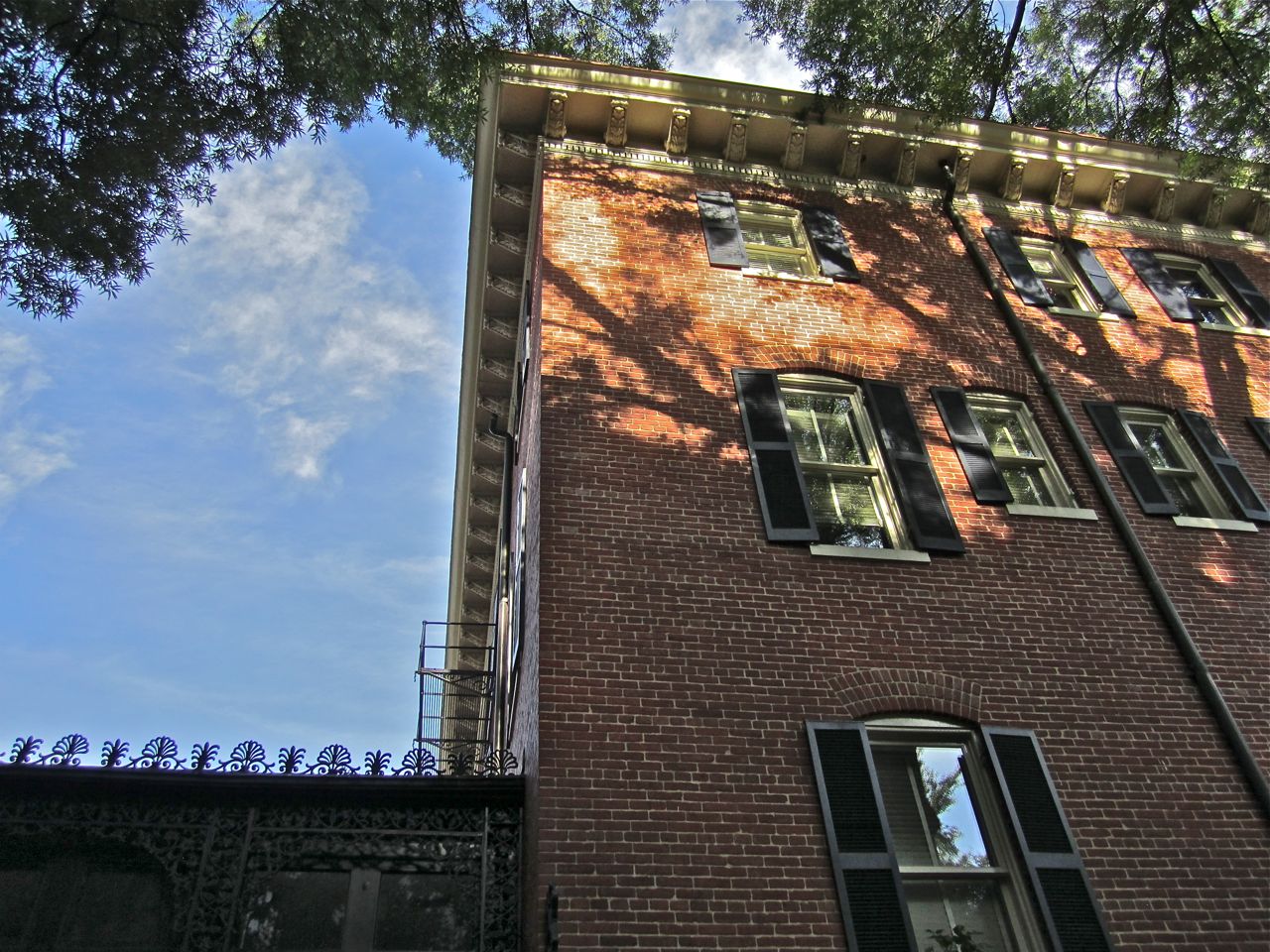
On the other side of 18th and F Streets, N.W., is the DACOR Bacon House (also known as the Ringgold-Carroll House), built in 1824/5.
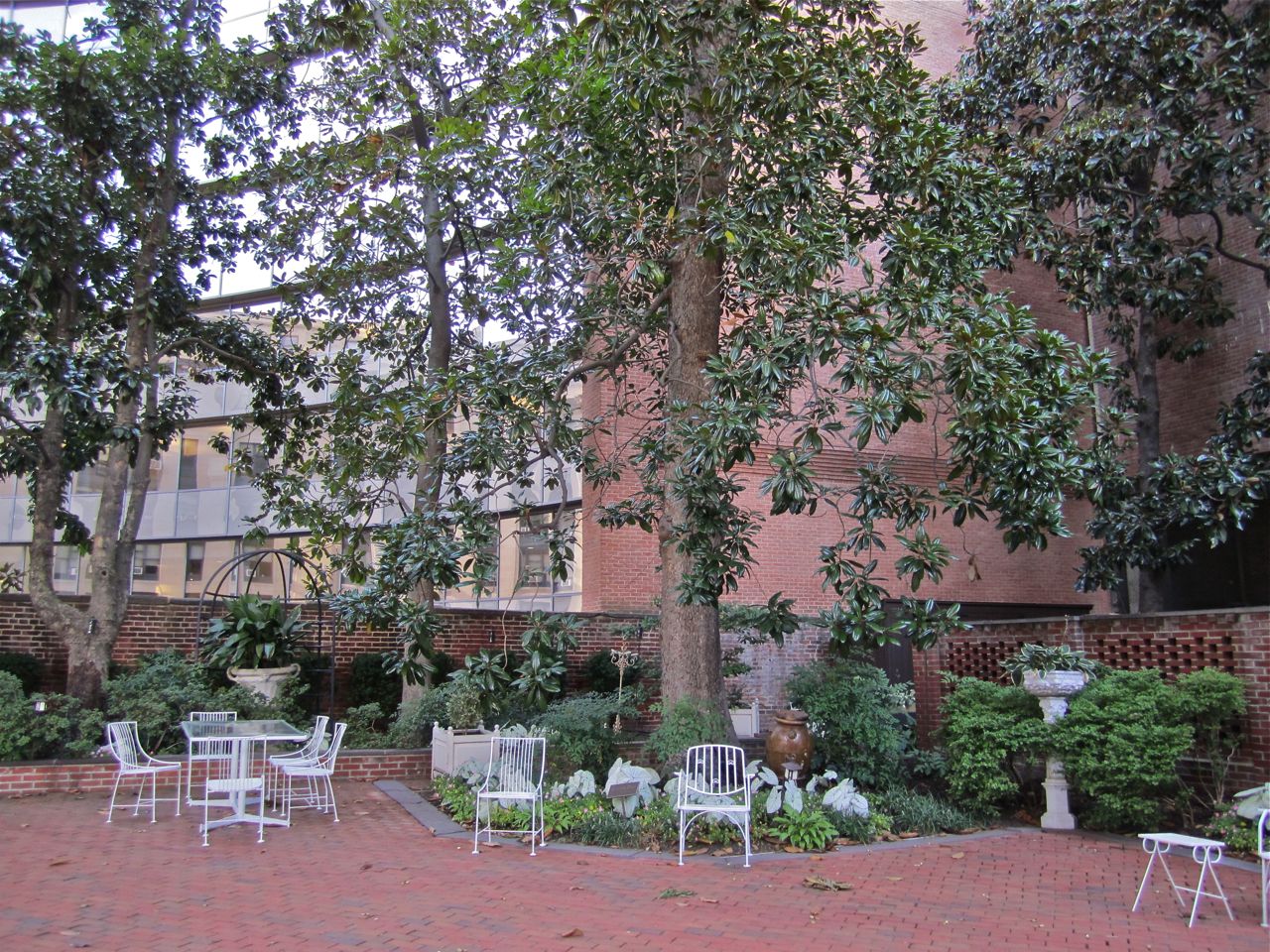
On Wednesday evening, I attended a reception there and was able to spend a little time in its nice walled garden — a serene, old-fashioned place in the midst of tall modern office buildings.
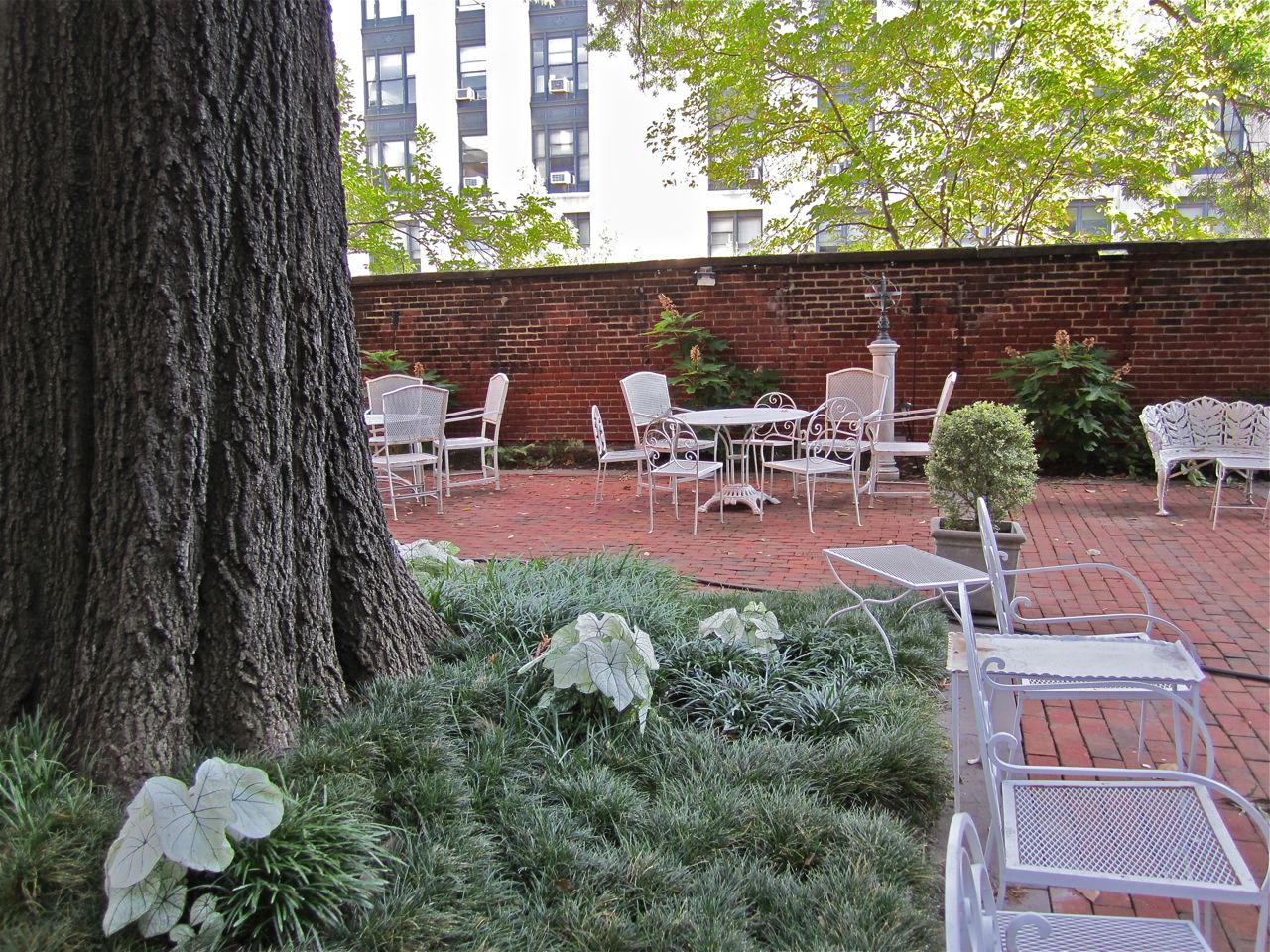
DACOR-Bacon House garden walled off from busy F Street. Unfortunately, it was too hot that evening for the event to be held outside, so the chairs are a little scattered.DACOR-Bacon House was built in 1824/5.Under a willow oak tree, a planting of coleus, lirope, and mondo grass.The garden is now surrounded by modern buildings.
From 1831 to 1833, it was a boarding house whose tenants included Chief Justice John Marshall and several other Supreme Court Justices. Virginia Murray Bacon and her husband, a U.S. Congressman, bought the house in 1925. She lived there until her death at the age of 89, when she bequeathed it to the Foundation.
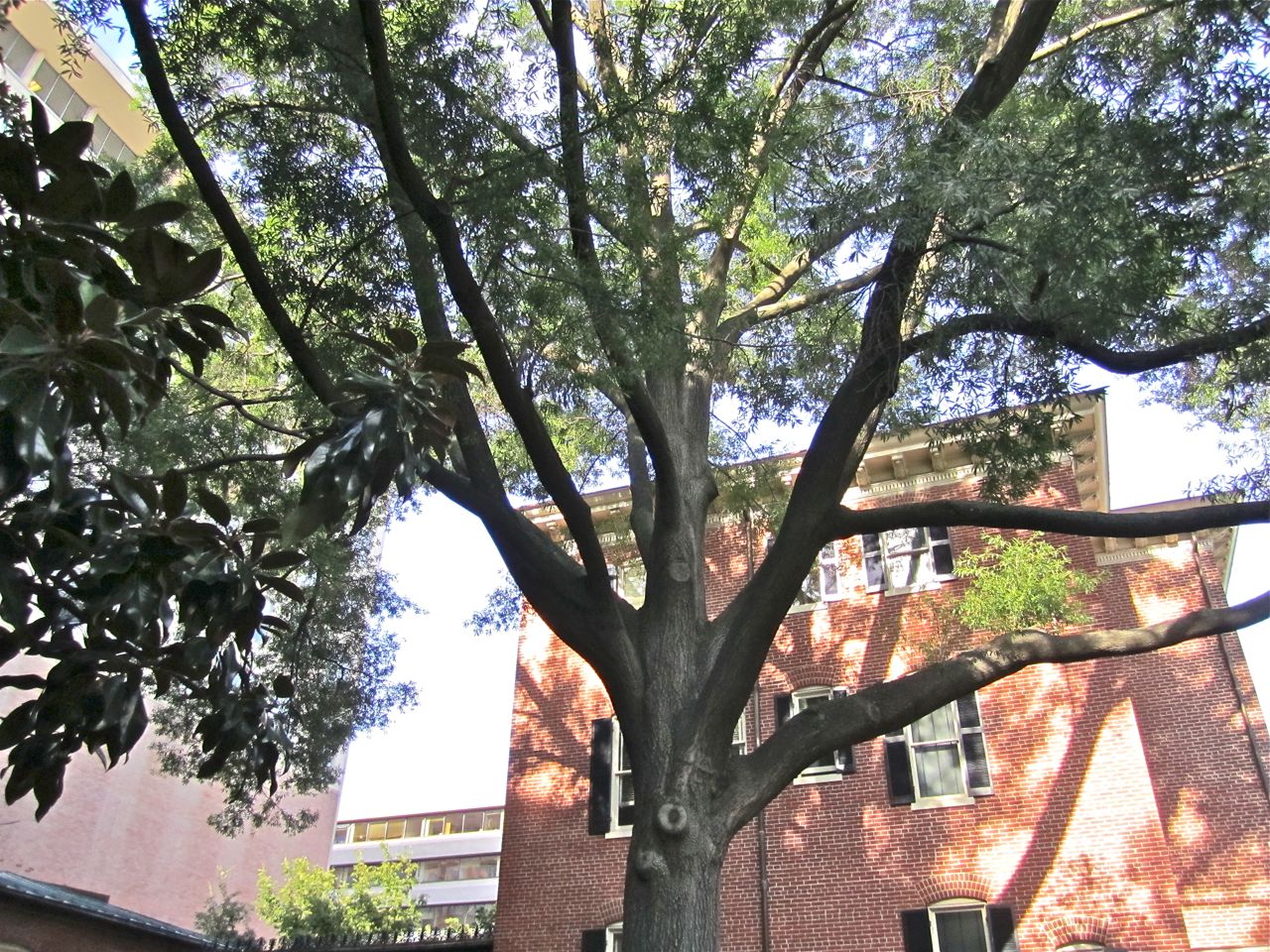
I was told that Mrs. Bacon spotted the garden’s huge willow oak in the nearby town of Silver Spring about 65 years ago. She was so taken with it that she bought it and had it dug up and trucked to 18th and F Streets, then hoisted over the garden wall by crane.
The giant willow oak in the center of the garden.
DACOR Bacon House also houses the Ringgold-Marshall Museum and can be toured Mondays, Wednesdays, and Thursdays, 2:30 – 4:30 p.m. It is listed in the National Register of Historic Places.
The DACOR Bacon House Foundation works to develop mutual international understanding and strengthen ties between the people of the United States and other nations. DACOR, Inc., is an association of retired officers of the U.S. Foreign Service and of other foreign affairs agencies and their spouses.
DACOR members (click the link above) may rent the house and garden for weddings, and it would be a really lovely venue. (In the 1860s, President and Mrs. Lincoln attended a wedding there.)
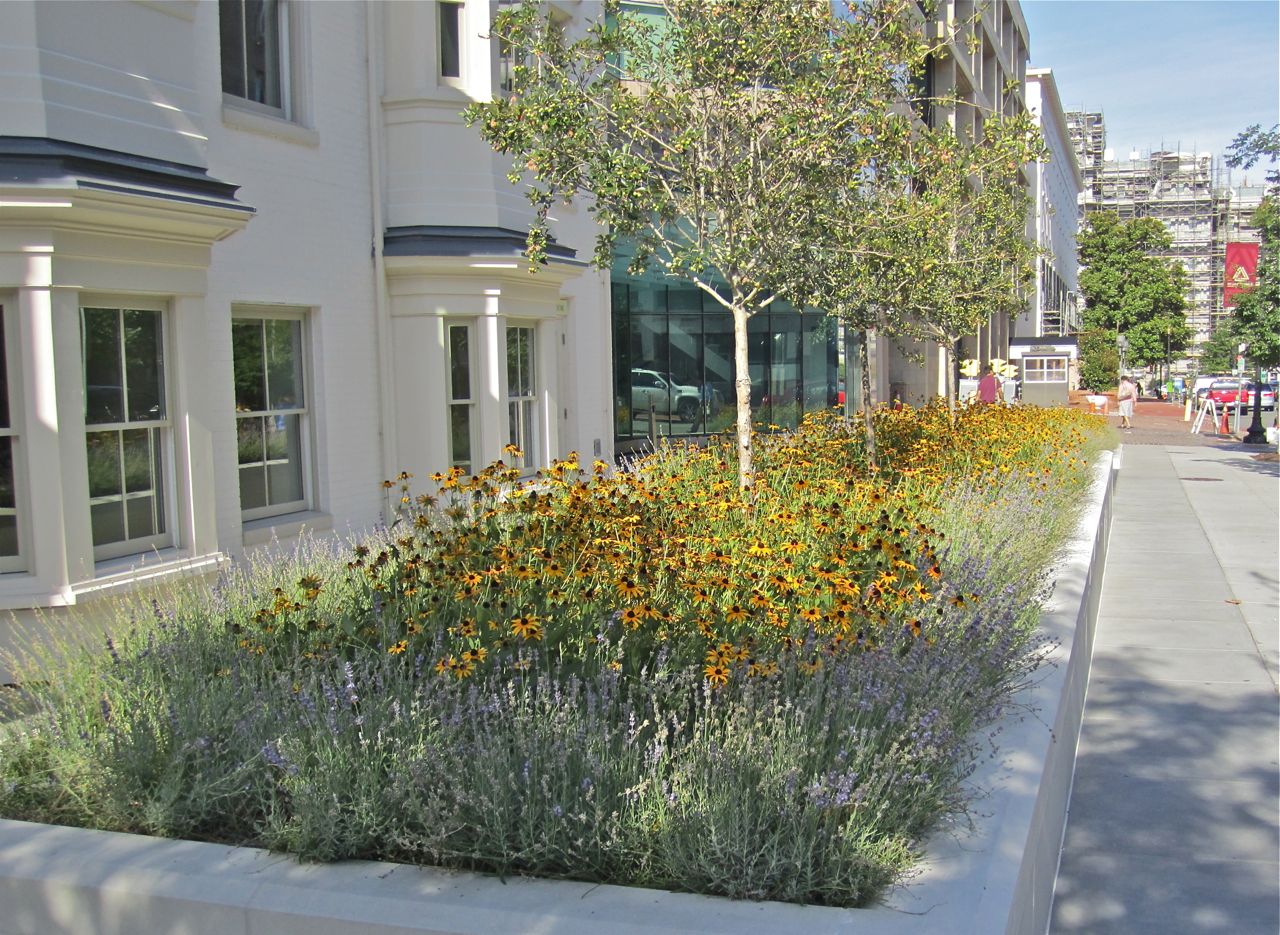
Yesterday evening, I spotted this very simple, very pretty combination of black-eyed Susans and lavender on the corner of 18th and F Streets, not far from the Old Executive Building. The three small trees are crabapples.
Please click on the photo to get a closer look.
The planter is located along the side of a building occupied by The Council on Foreign Relations. Its facade is that of Michler Place, a home built in 1871 (the interior is from the 1980s).
ADDENDUM: Below is a photo of the planter in March 2012.
I am fascinated by the old boxwoods of Tudor Place, an historic estate in Georgetown.
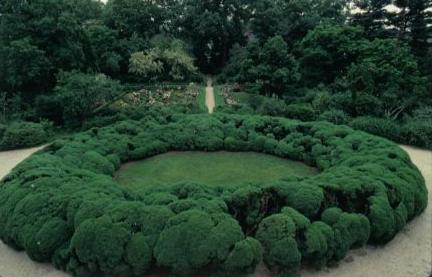
In 1805, soon after she and her husband purchased the property, Martha Custis Peter, the granddaughter of Martha Washington, planted (or more likely, directed to be planted) an ellipse of Buxus sempervirens ‘Suffruticosa’ in the center of the drive on the north side of the house.
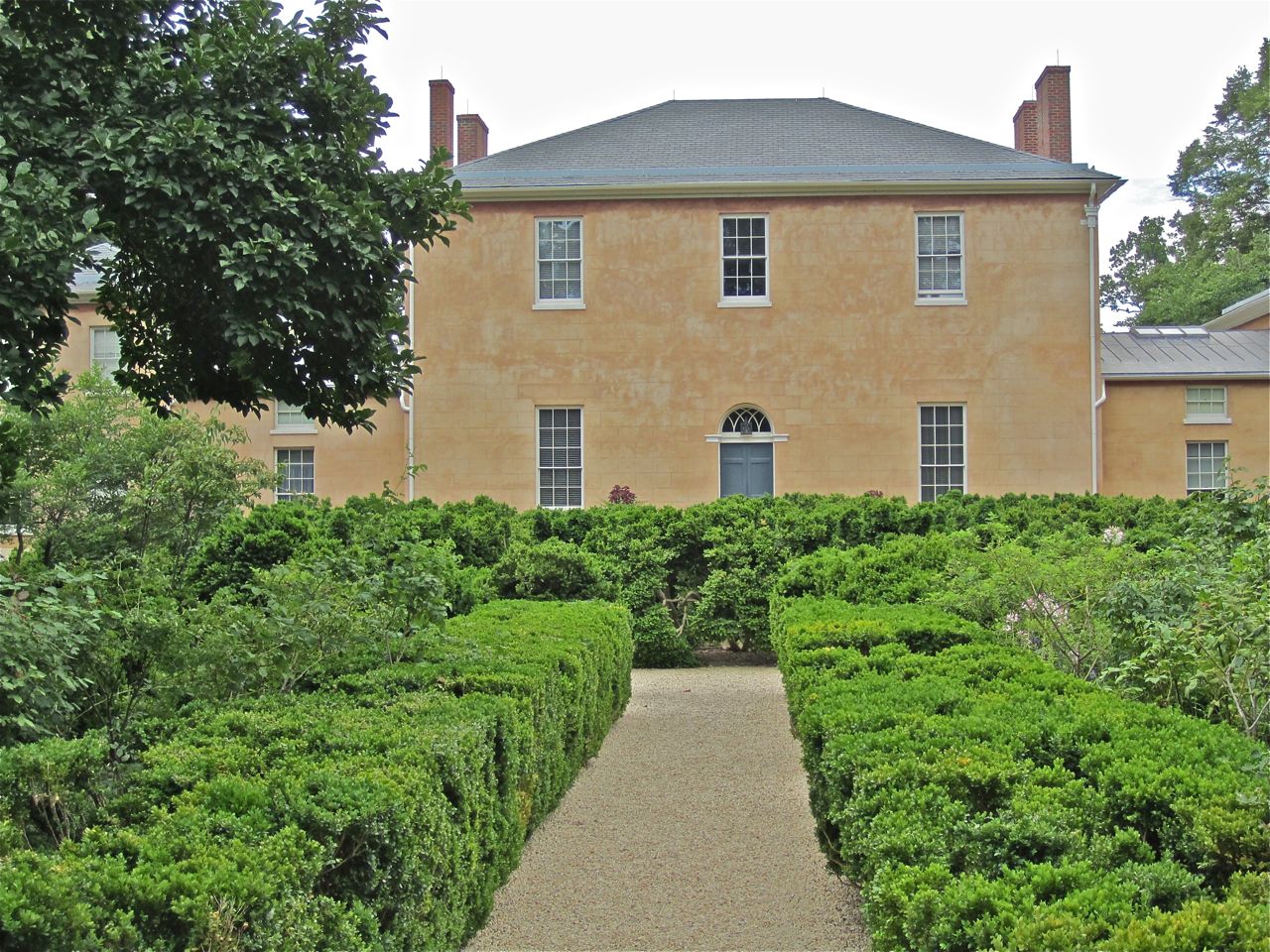
Walkway to the ellipse and house from the north side with rose garden on the right. The neoclassical house was designed by William Thornton, architect of the U.S. Capitol and completed in 1816. Six generations of the Peter family lived there until 1983.
For the Tudor Place Foundation, who received the estate in 1983 from a direct descendant of Martha’s, they must be a much-loved treasure and (I suspect) a big preservation headache.
Today, the ellipse is over 5′ tall, as one might expect, given its age. When I toured the property almost ten years ago during a Landscape Design class, the teacher fretted that it was too large for the original design and for the scale of the house and drive.
Boxwood ellipse before 2010. Photo via the Tudor Place Foundation website.
At that time, the boxwoods were nearly as tall as now, but still nicely filled out all around. As such, I found them impressive, but not particularly interesting.
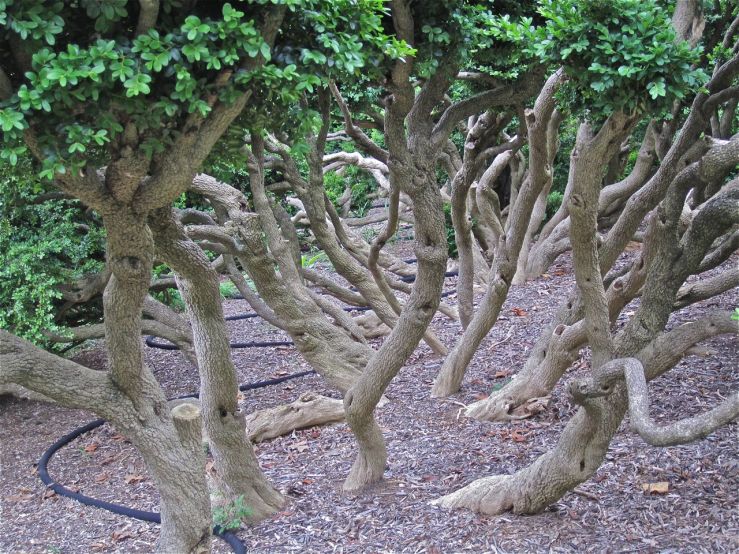
However, in February 2010, Washington had the deepest snows in over 100 years. The damage to the boxwood ellipse and to many other old specimens at Tudor Place was severe, and the hedge’s interior was opened to view in many places. Now the ellipse shows interior volume as well as exterior.
My sympathies to the Foundation, but I find the old shrubs’ new negative spaces and sculptural qualities beautiful and rather moving, and I took photo after photo.
Ellipse from west side. The bushes are English boxwood.Ellipse boxwood. Click on the photos to enlarge.Ellipse boxwood.Ellipse boxwood.Ellipse boxwood.
There are other old boxwoods in the north-side garden, like these in a planting bed near the old “tennis lawn.”
Boxwood in the “tennis lawn” planting bed.
And these along a walkway near the bowling green.
A walk along the bowling green seen through old boxwood. Click on photo to enlarge.
I wonder how long they will be left in place, given their current condition. I find them beautiful, but they don’t really conform to a classic neat Federal or Colonial Revival aesthetic. But who wants to replace bushes planted by the step-granddaughter of the father of our country?
If they were mine, I think I would want to turn the old ellipse’s design somewhat inside out and fill many of the open spaces with the contrasting foliage of other perennials planted inside them — as is happening among some of the equally ancient boxwoods at the Bishop’s Garden at the National Cathedral. I’d like to see a few Rudbeckia maxima flowers waving over the center (although whether the ground beneath the ellipse, full of old roots, would support more plants is a practical question).
Beyond boxwood
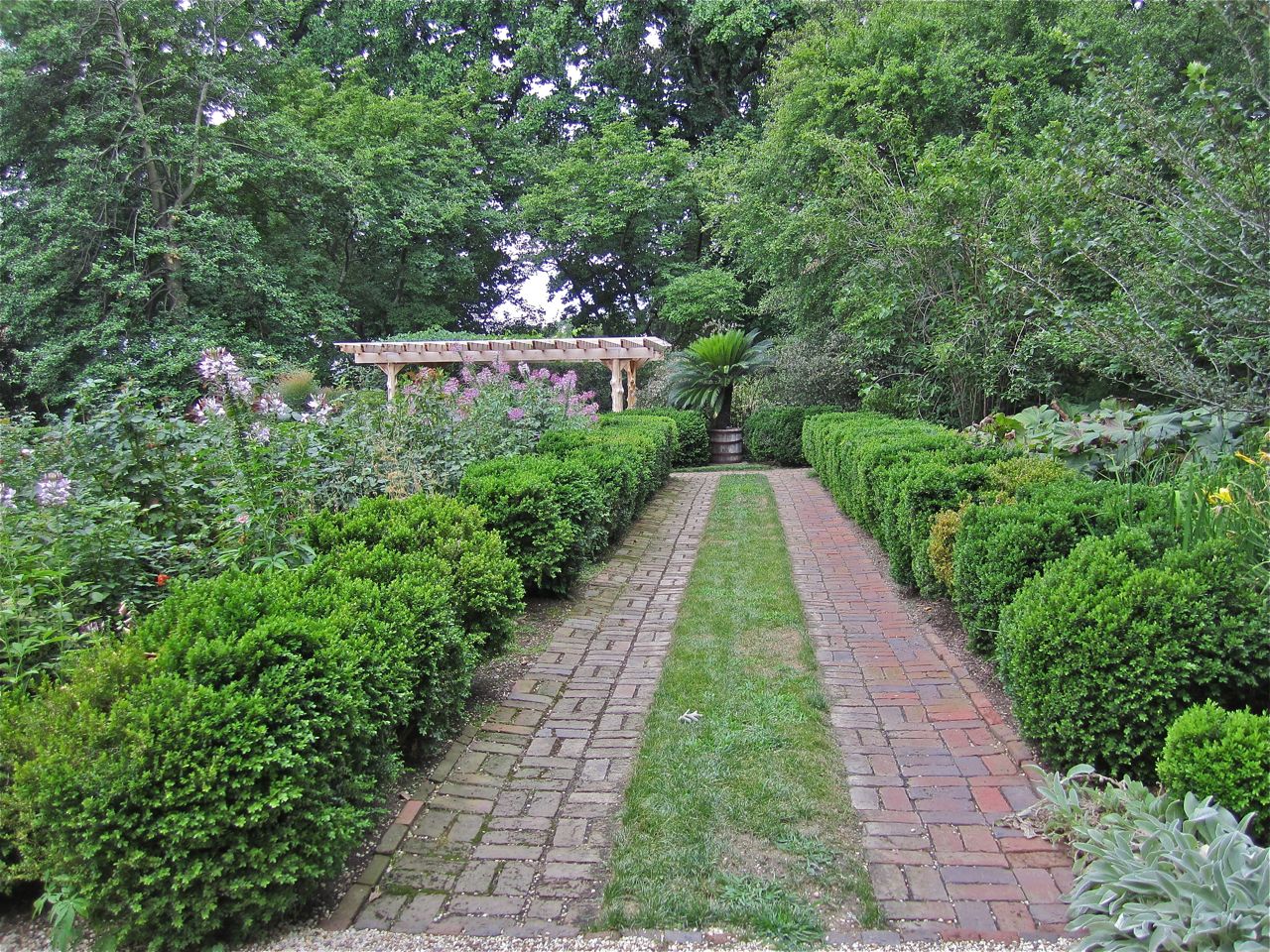
The rest of the Tudor Place garden is lovely as well, with the center north-side area symmetrically squared off in true C.R. style with brick and gravel walkways.
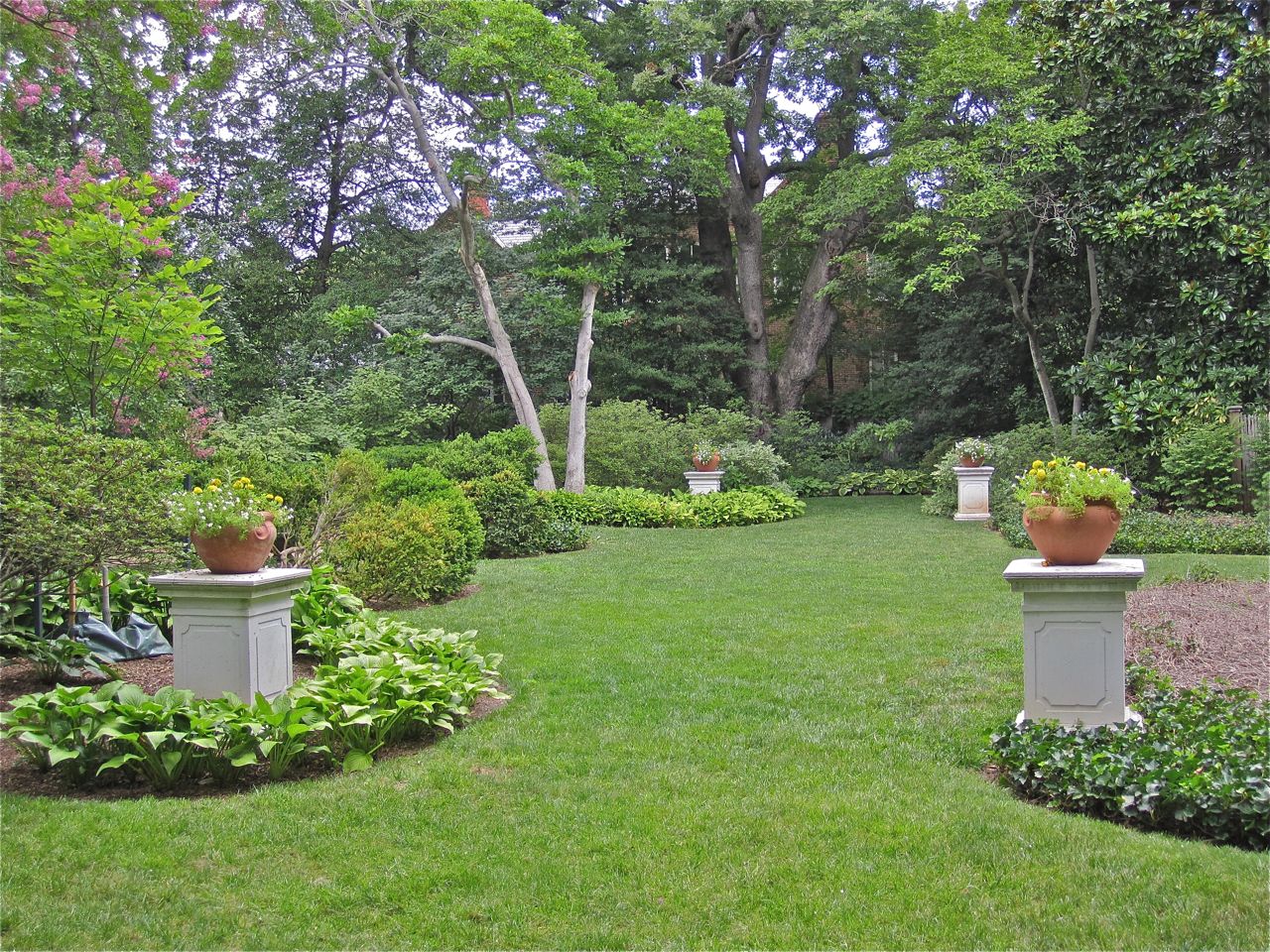
The well-maintained property actually shows off an interesting continuum of original and reconstructed functions and design styles from the last two centuries.
Tennis lawn.
According to an archaeological study and plan by the University of Maryland, the planting of the south-side lawn, which contains the 200-year old tulip poplar and once had a view of the Potomac River, has changed relatively little since the building of the house (and therefore is of little archaeological interest). And, of course, the ellipse is also truly from the Federal period.
The walkways and rose/knot garden existed in their current layouts by the 1830s. But the knot garden was destroyed in the 1860s by intruders seeking boxwood for Christmas wreaths. It was replanted by the last Peter owner in the 1930s, using old family plans, although he moved it to the opposite side of the center walkway.
Walkway from center to west side with rose garden on left.
The northeast-side garden with lawn and curving beds was an orchard and a tennis lawn before its current 20th century design. On the west side, there is a 20th century bowling green and a fountain on what had once been a wooded area.
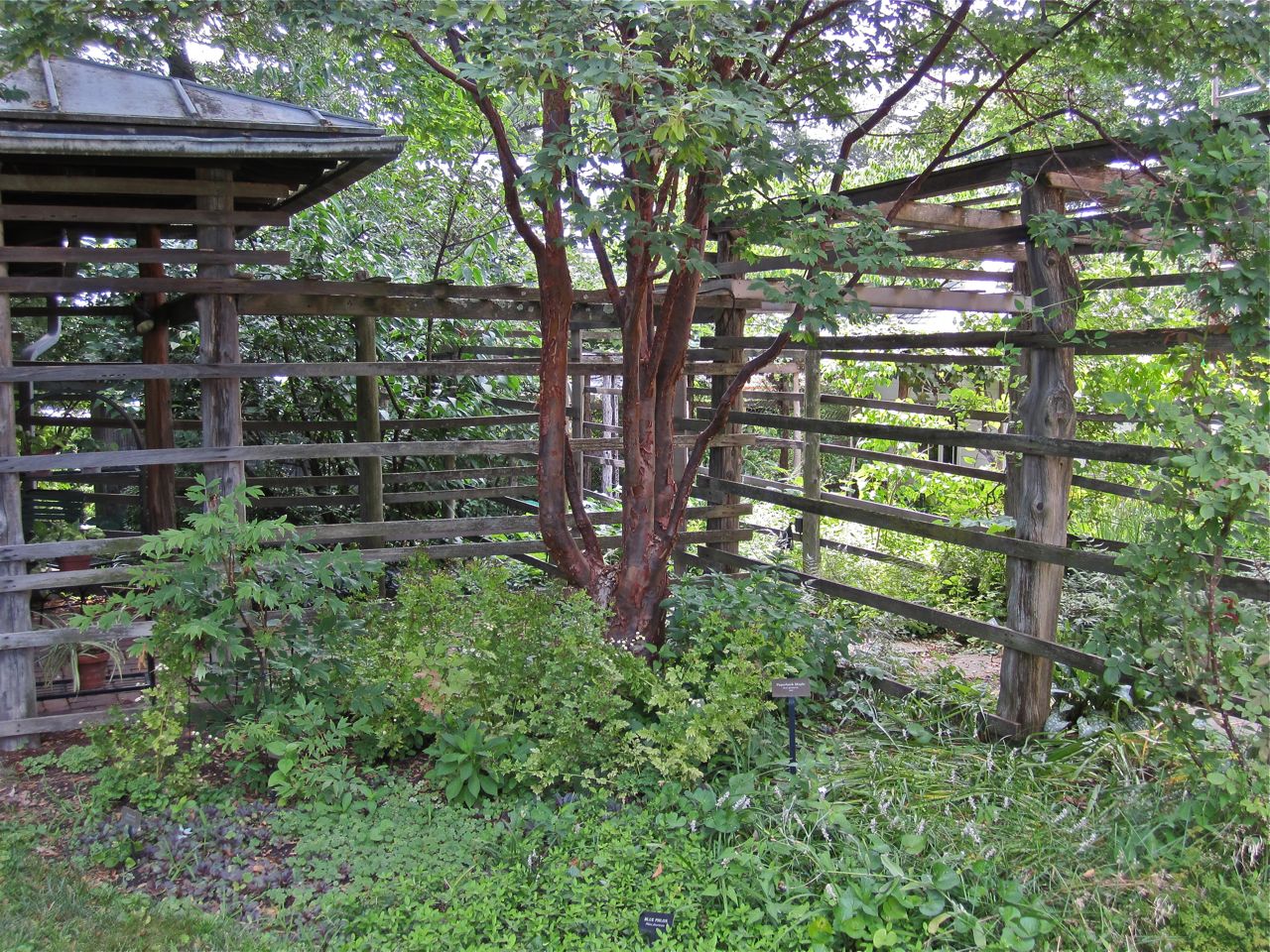
A pretty 20th century patio, “Japanese” teahouse, and arbor sit off the west wing of the house, more or less in the location of the 19th century kitchen garden. They look Tidewater southern more than anything else.
“Japanese” tea house and arbor.
The garden is open to the public Monday through Saturday, 10 a.m. to 4 p.m., Sunday, noon to 4 p.m. There’s a small charge of $3. See this link for information about touring the house.
To see more photos and a garden plan, click “Continue reading” below and click on any thumbnail scroll through large pictures.Continue reading “Tudor Place, part two”→
It’s 97° right now (noon) in D.C. and expected to get to 102° today.
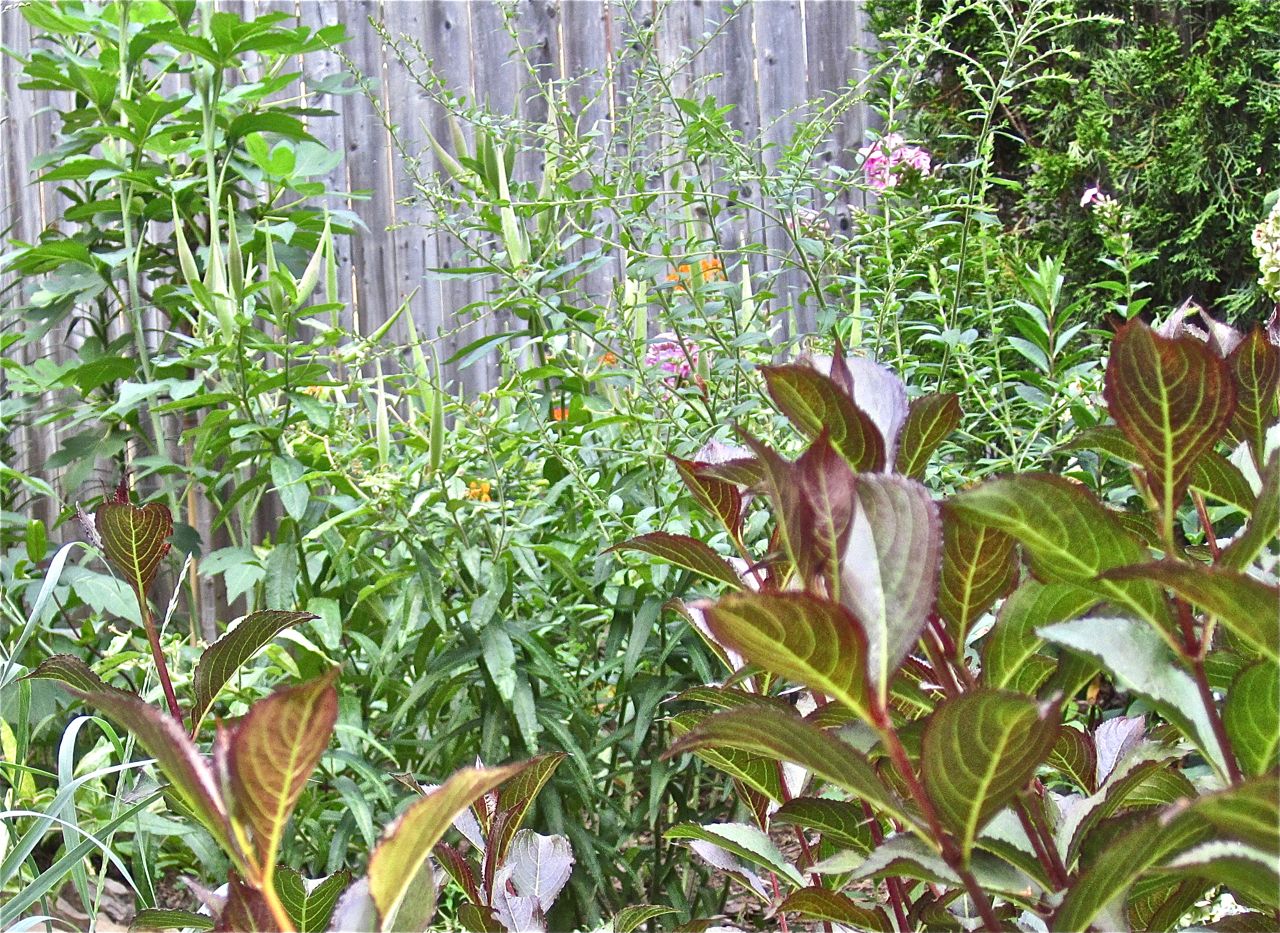
What’s holding up well in my new garden? The goldenrod ‘Firecracker’ for one. Not yet blooming, of course, but the foliage is absolutely sprightly, I would say. Such a great plant!
Weigela and goldenrod still upright in the heat.
All the ornamental grasses look good, even the two miscanthus that are still sitting in their pots waiting to be planted after 6 weeks. My lamb’s ear looks great (I have the old-fashioned variety that flowers wildly; it’s messy, but I like it). The Rudbeckia laciniata is green and upright, but the leaves are drooping a little. My two little rosebushes (‘Cinco de Mayo’ and some small apricot David Austin) and a mature weigela with burgundy-tinged leaves (came with the garden) also actually look fresh.
Sophie. This was my best shot after several tries.
My almost 12-year-0ld dog, Sophie, keeps wanting to stay outside and lie on the warm stone walkway or the deck. I’m wondering if it feels good to her touch of arthritis. I make her come in after 15-20 minutes, though, so the Animal Cops don’t show up.
Here's the second best shot.
What’s not fresh looking is the bigleaf hydrangeas and a still-unidentified viburnum (also from the old owners). They wilt at a look. I think they may both go at the end of the summer and be replaced by oak leaf hydrandreas (both regular and dwarf). I passed one yesterday evening that had toasted-looking blooms (still pretty), but still upright stems and leaves.
Need something to help with the heat? Check out this fun video clip at PigTown Design and then the creamy lemon popsicles recipe at Content in a Cottage.
Also, try to remember how long and cold last winter was.
On Friday, I visited Tudor Place, a 200-year-old estate in Georgetown built by Martha Custis Peter, the granddaughter of Martha Washington, and her husband.
I took many photos (I take full advantage of my memory card), and I want to write a post about the whole garden, but today, I thought I would start with some pictures of the property’s remarkable tulip poplar tree.
Tudor Place house, seen from south lawn.
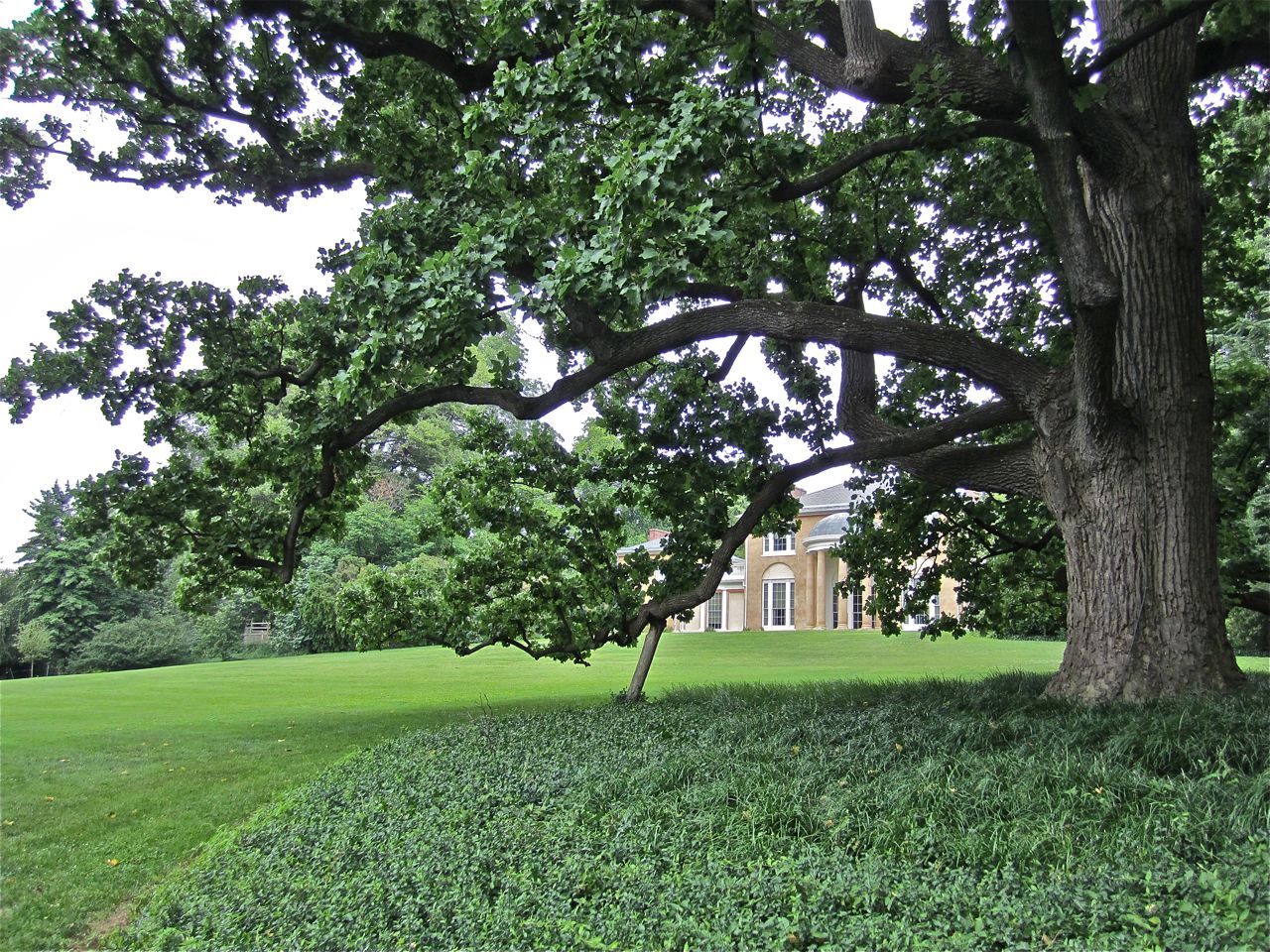
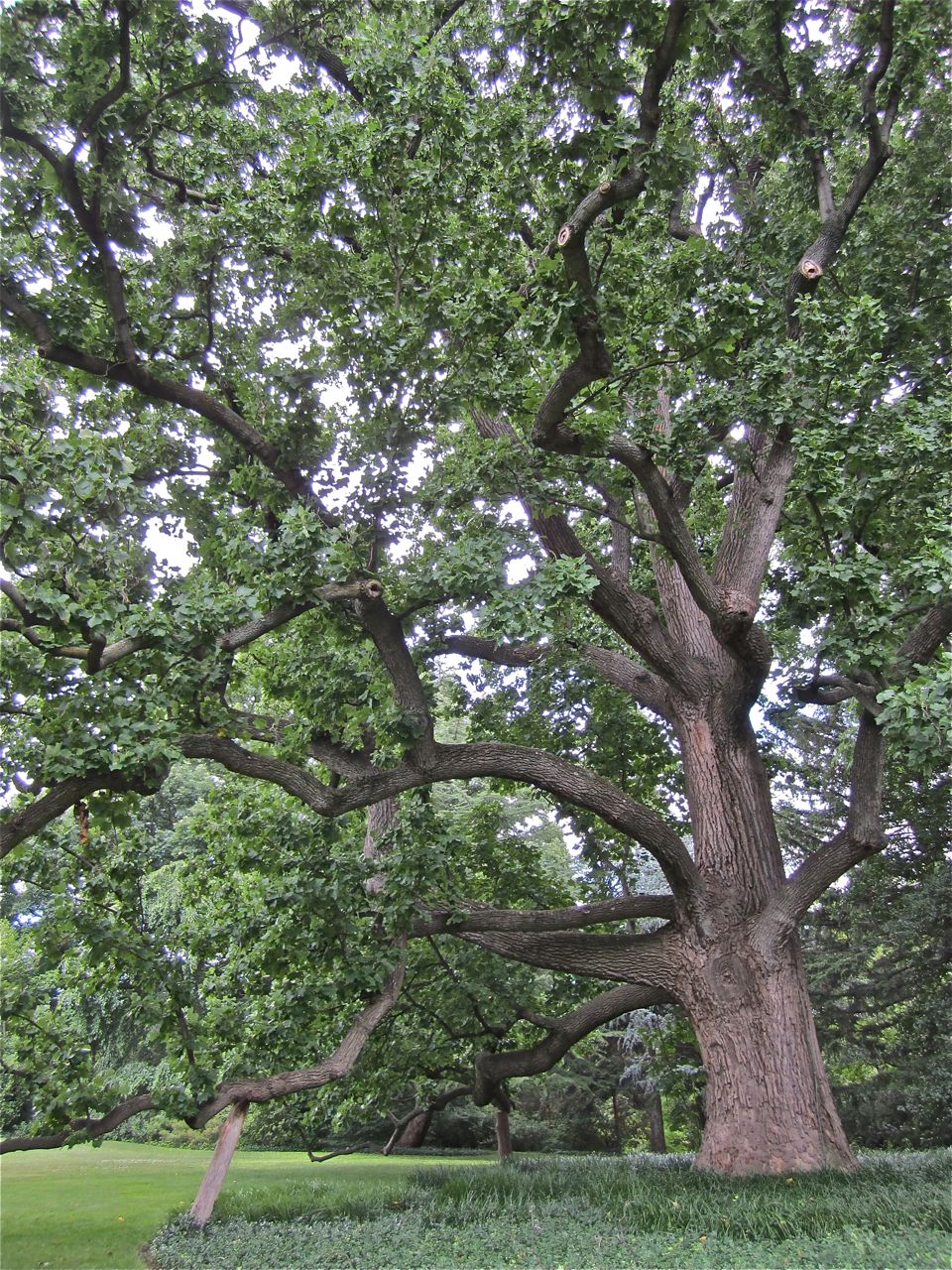
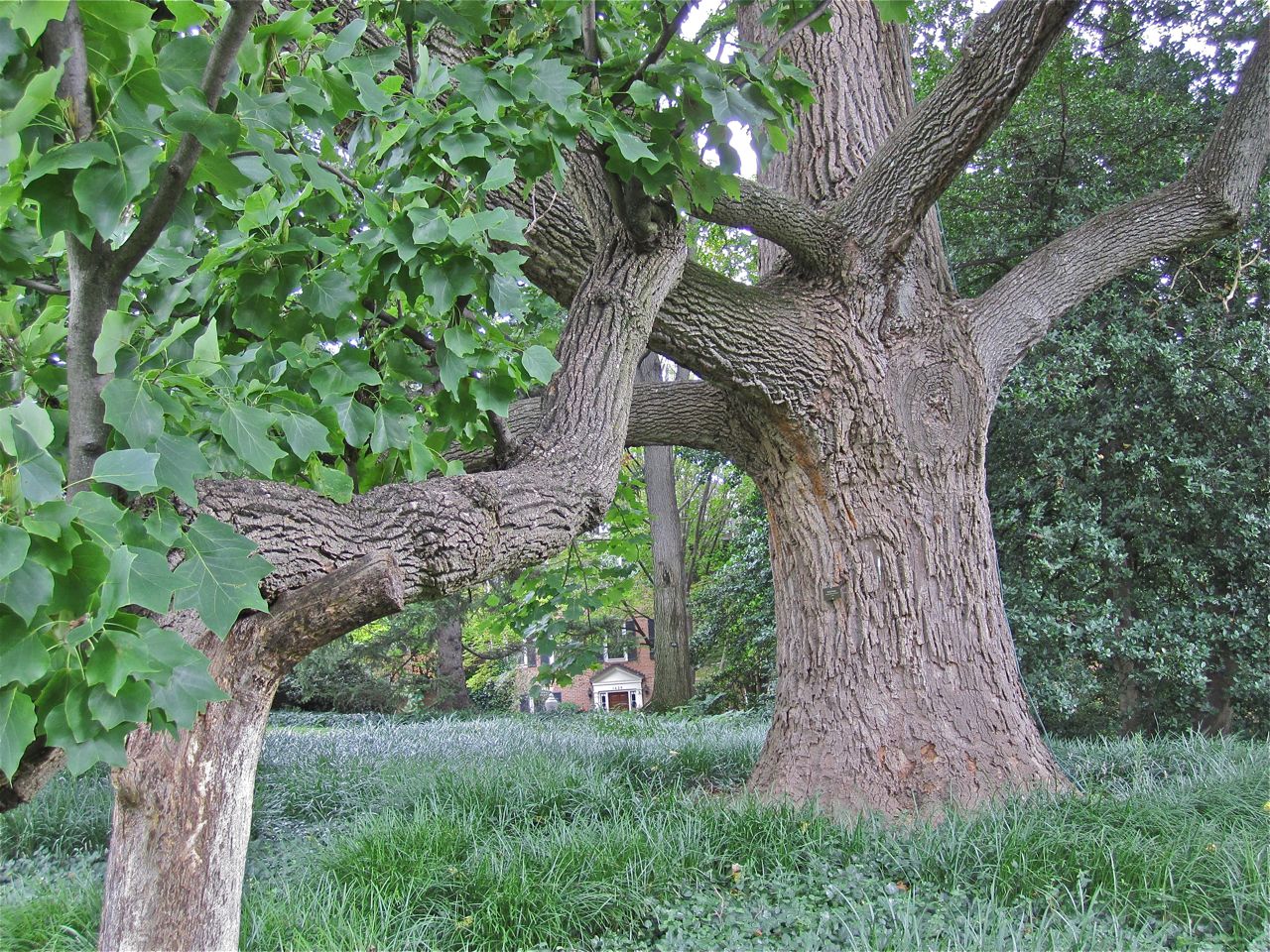
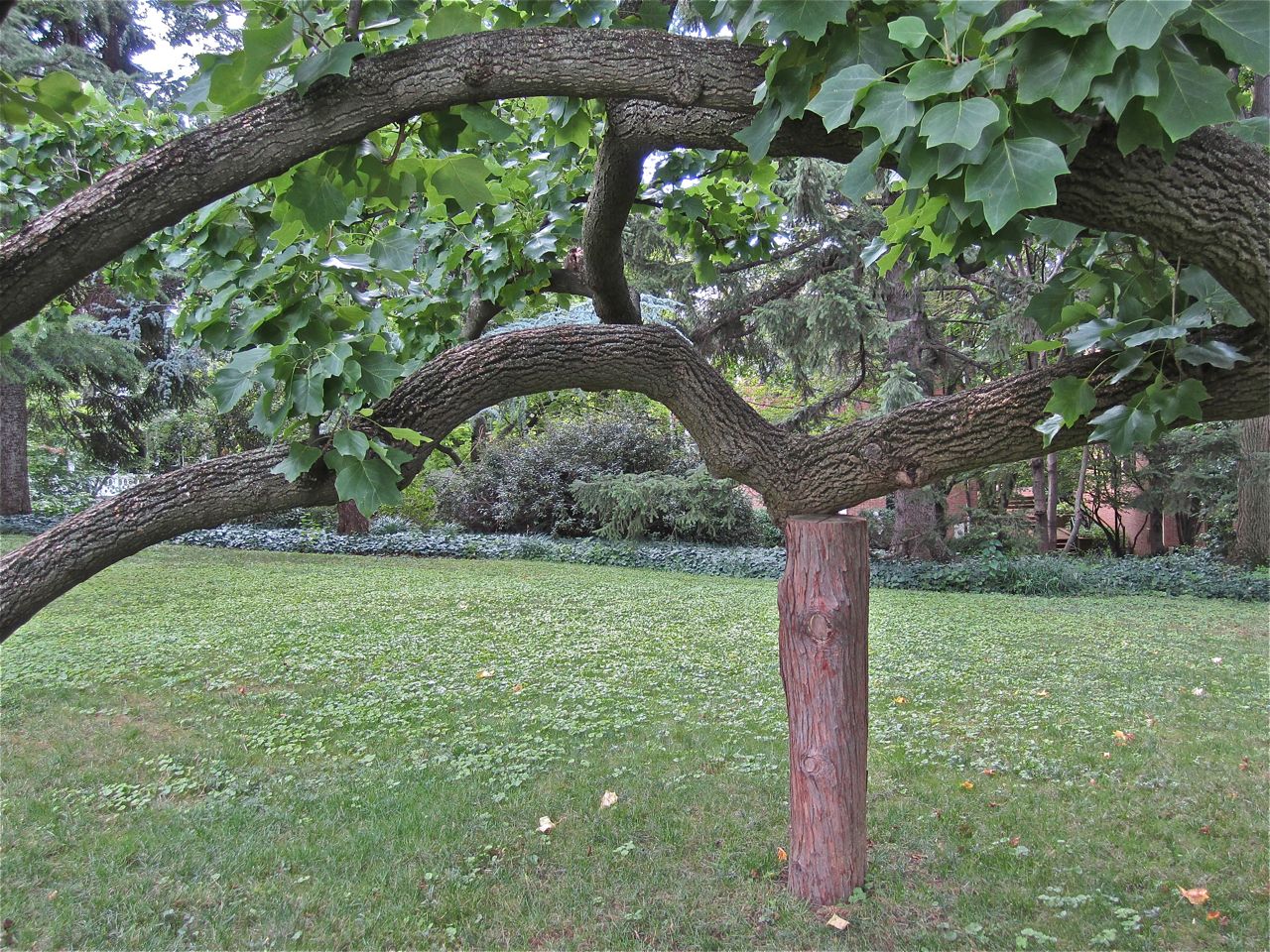
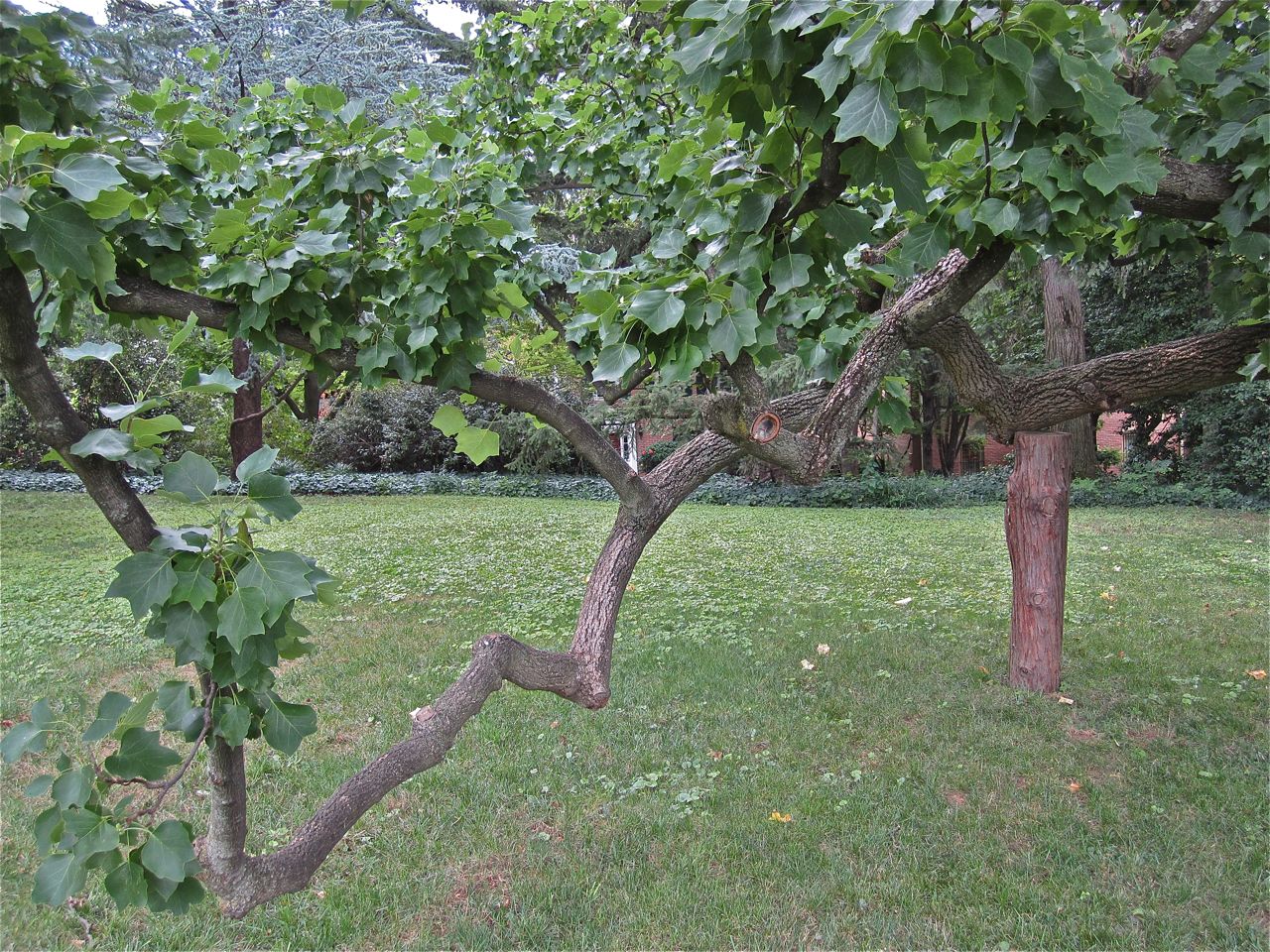
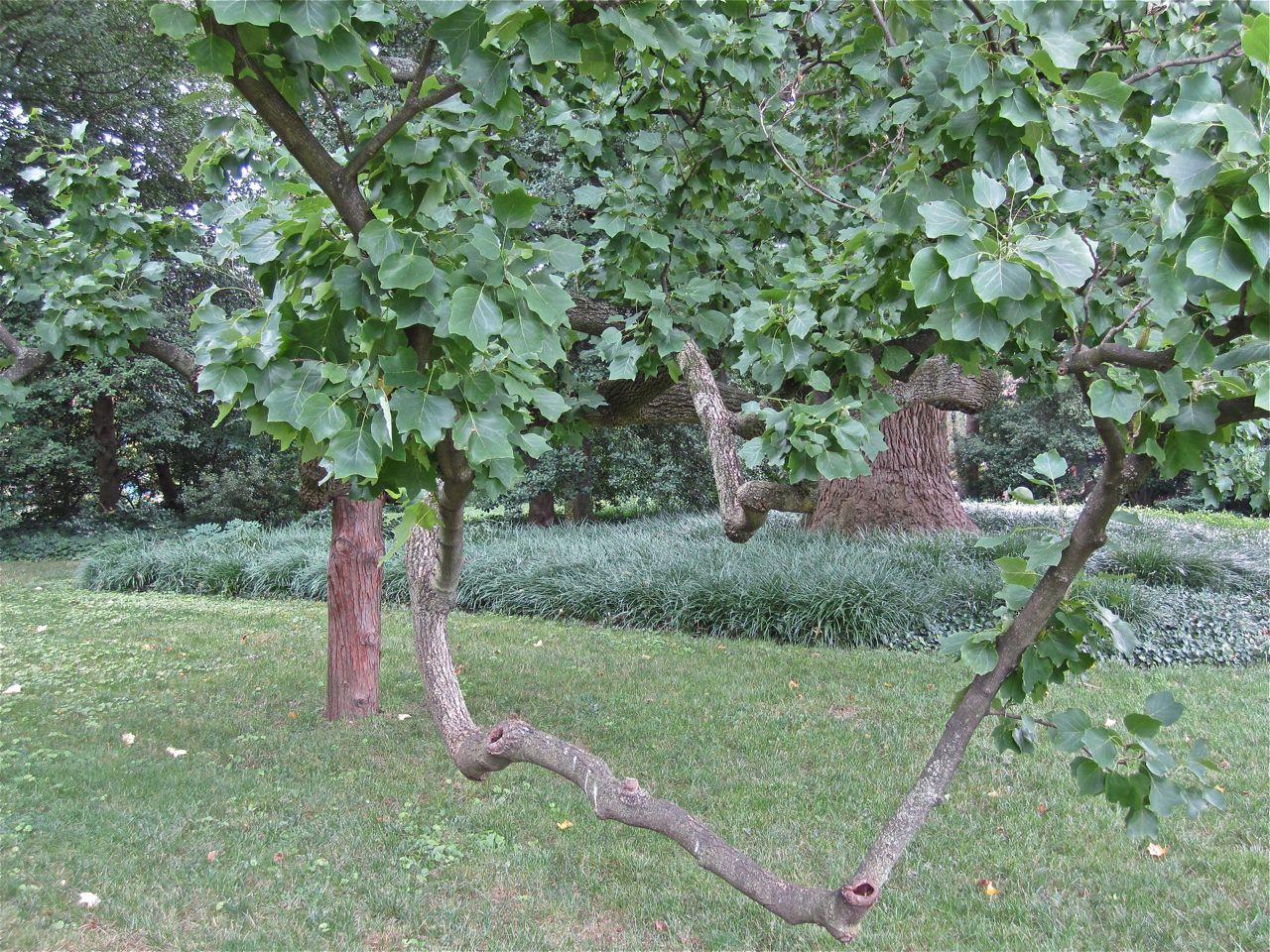
Located on the south-side lawn, the tree was possibly there when the Peters arrived. It is now 20′ in circumference and over 100′ tall. In 2002, it was designated the “Millenium Landmark Tree” for the District of Columbia by the America the Beautiful Fund.
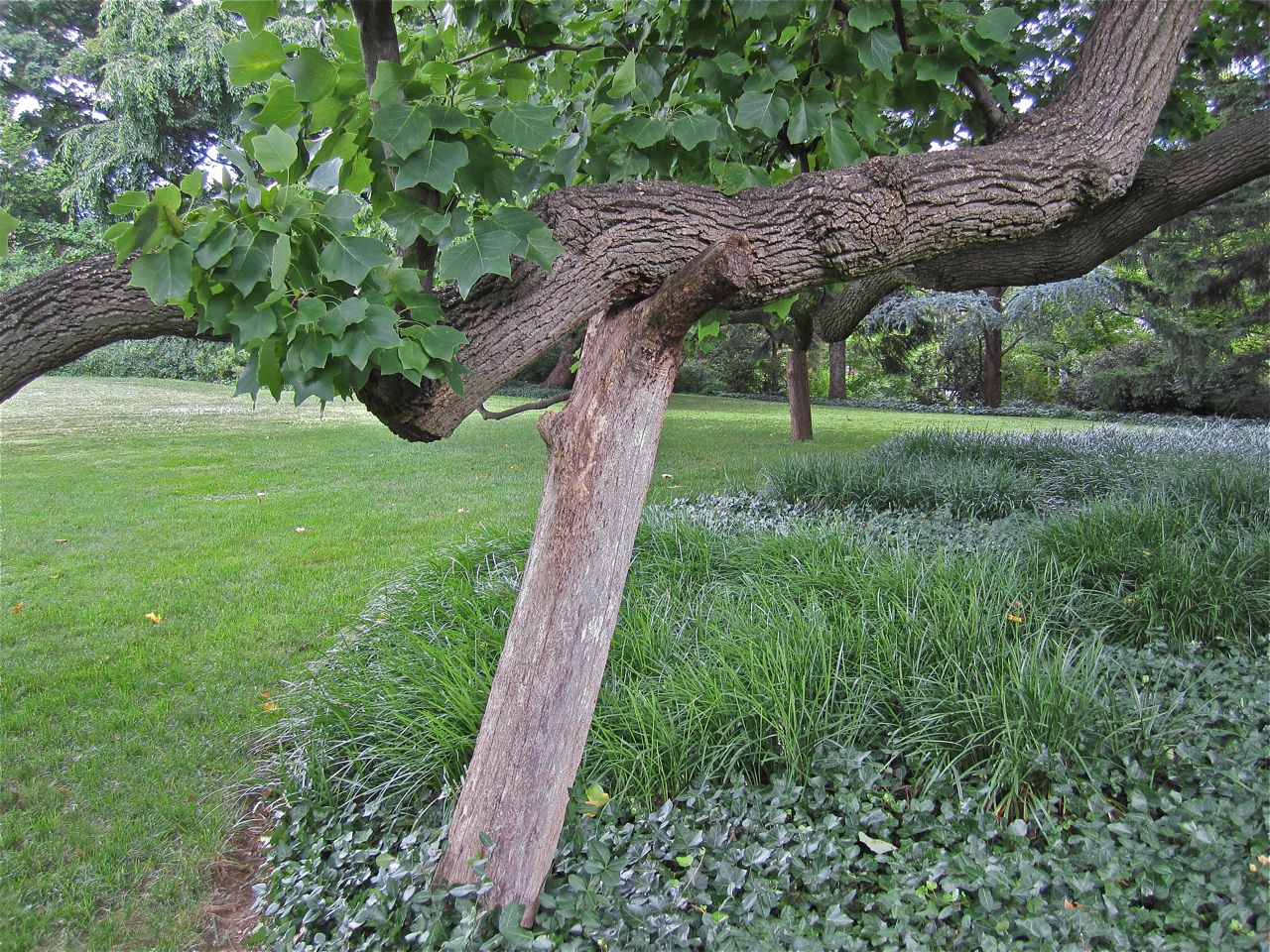
Historic tulip poplar at Tudor Place. Branch support.Branch support with neighbor’s house in the background.
Another low branch and support.Low branch and support.The tree’s low branches encompass a separate space within the larger property. An “Archaeological Overview and Preservation Plan” prepared by the University of Maryland called it “perhaps the most significant landscape feature on the entire estate.”
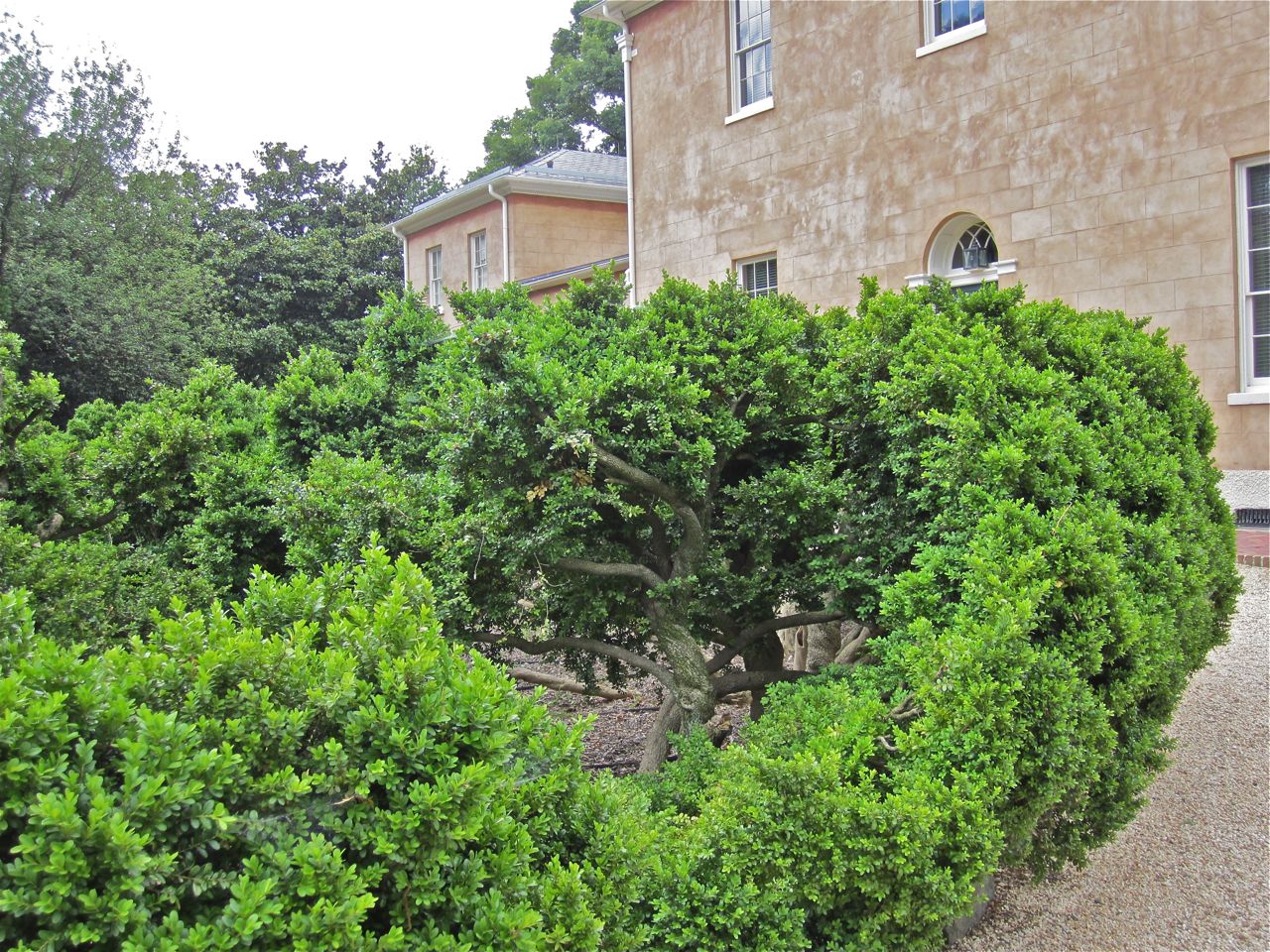
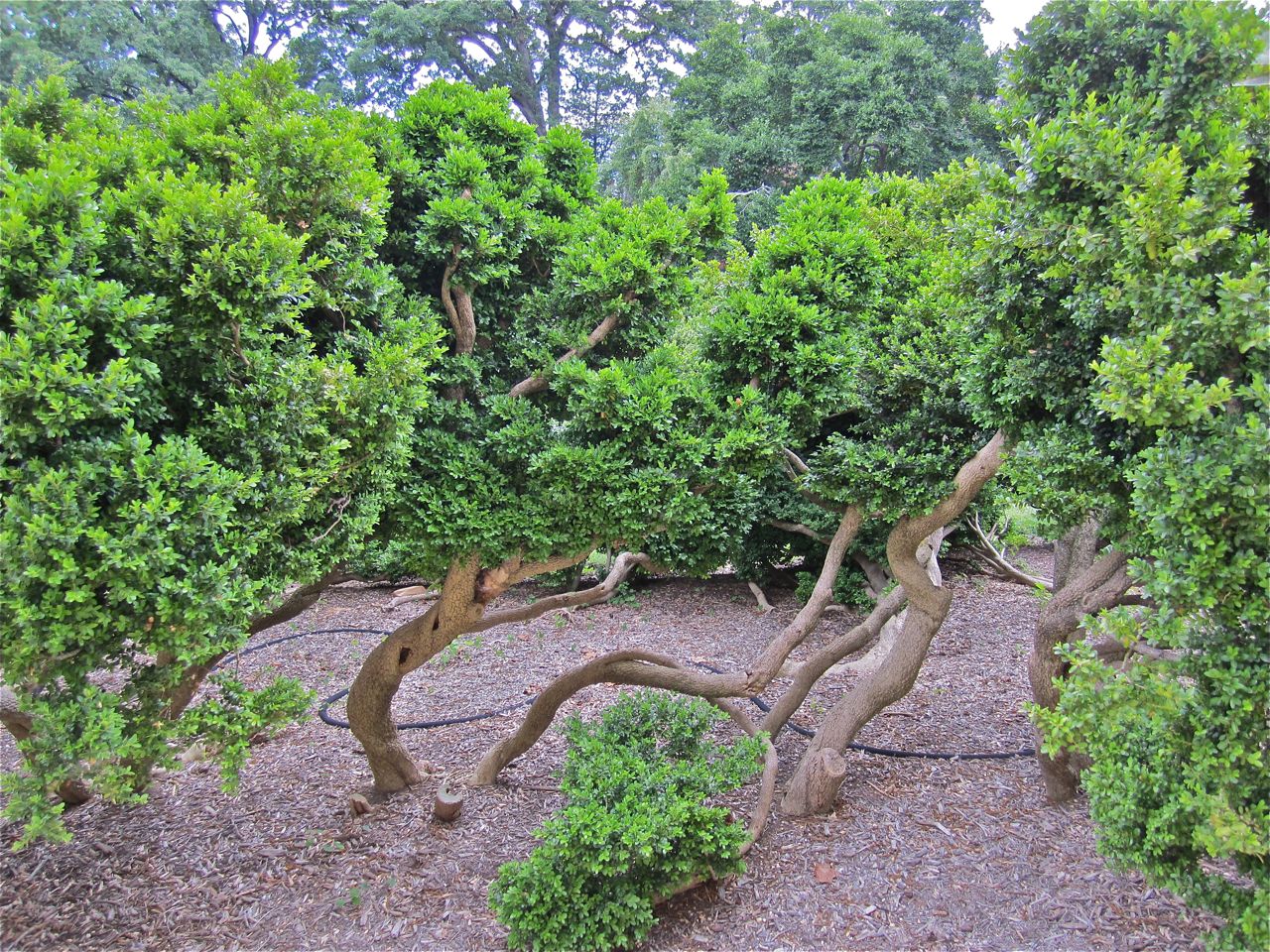
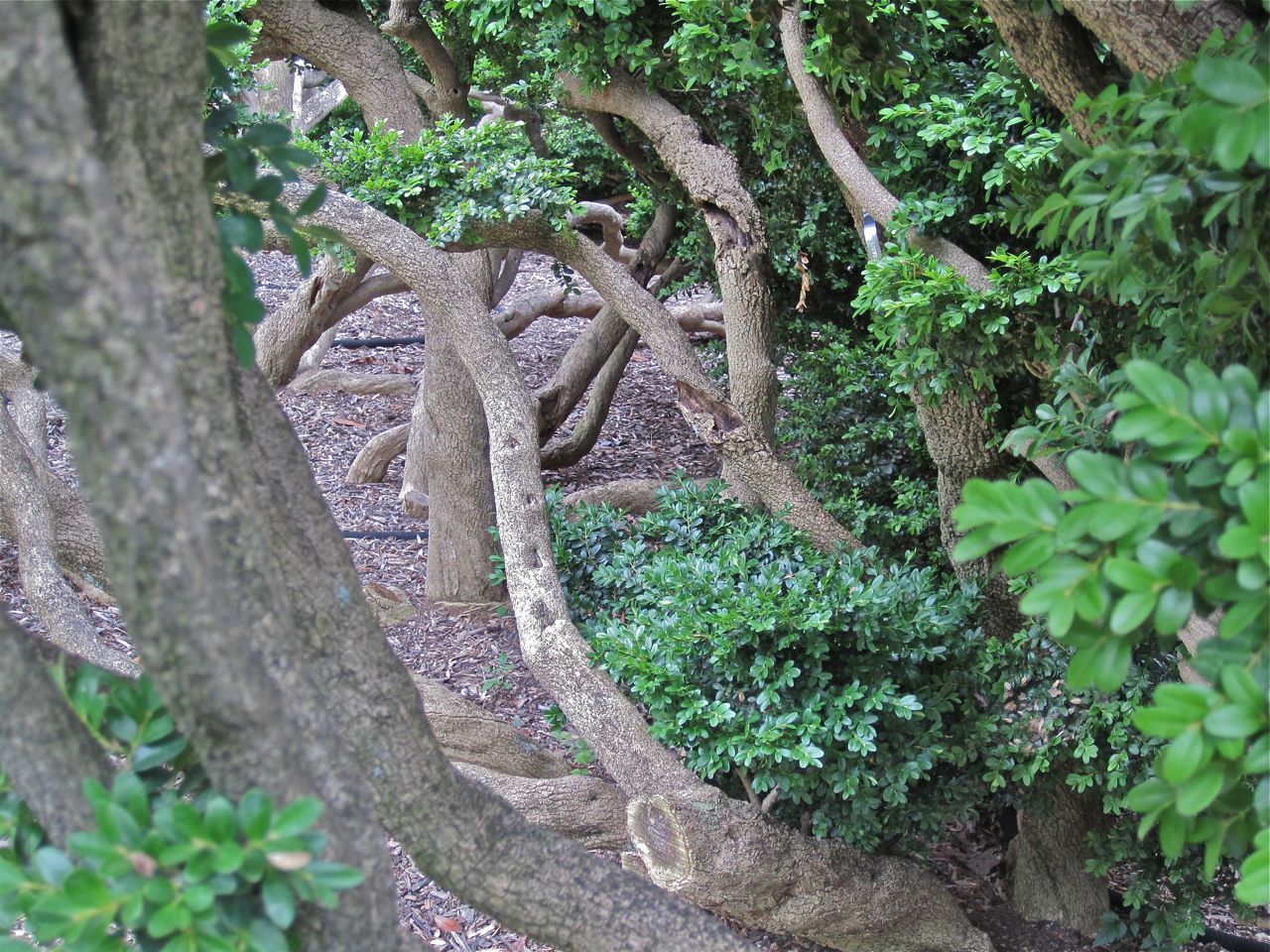
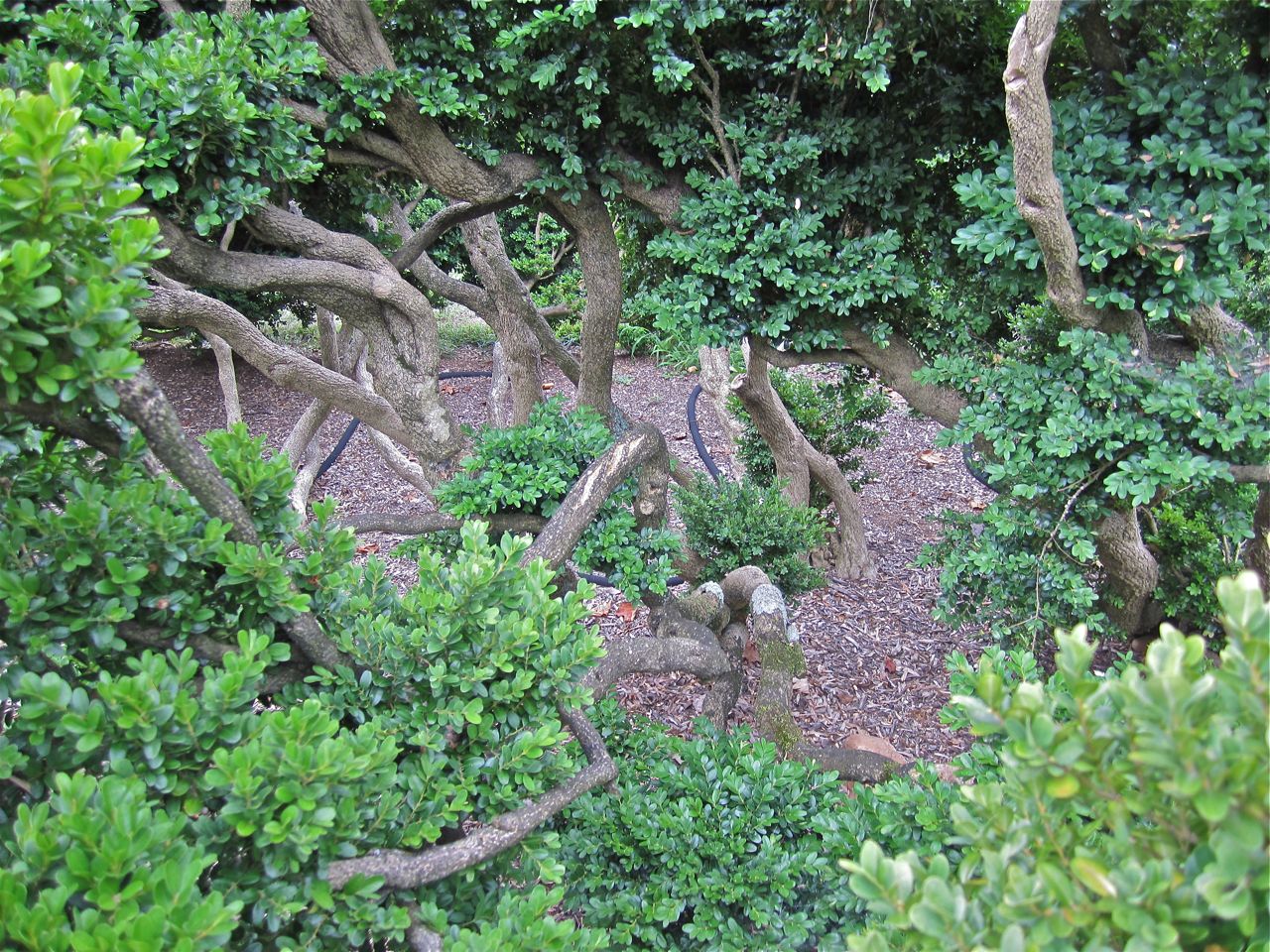
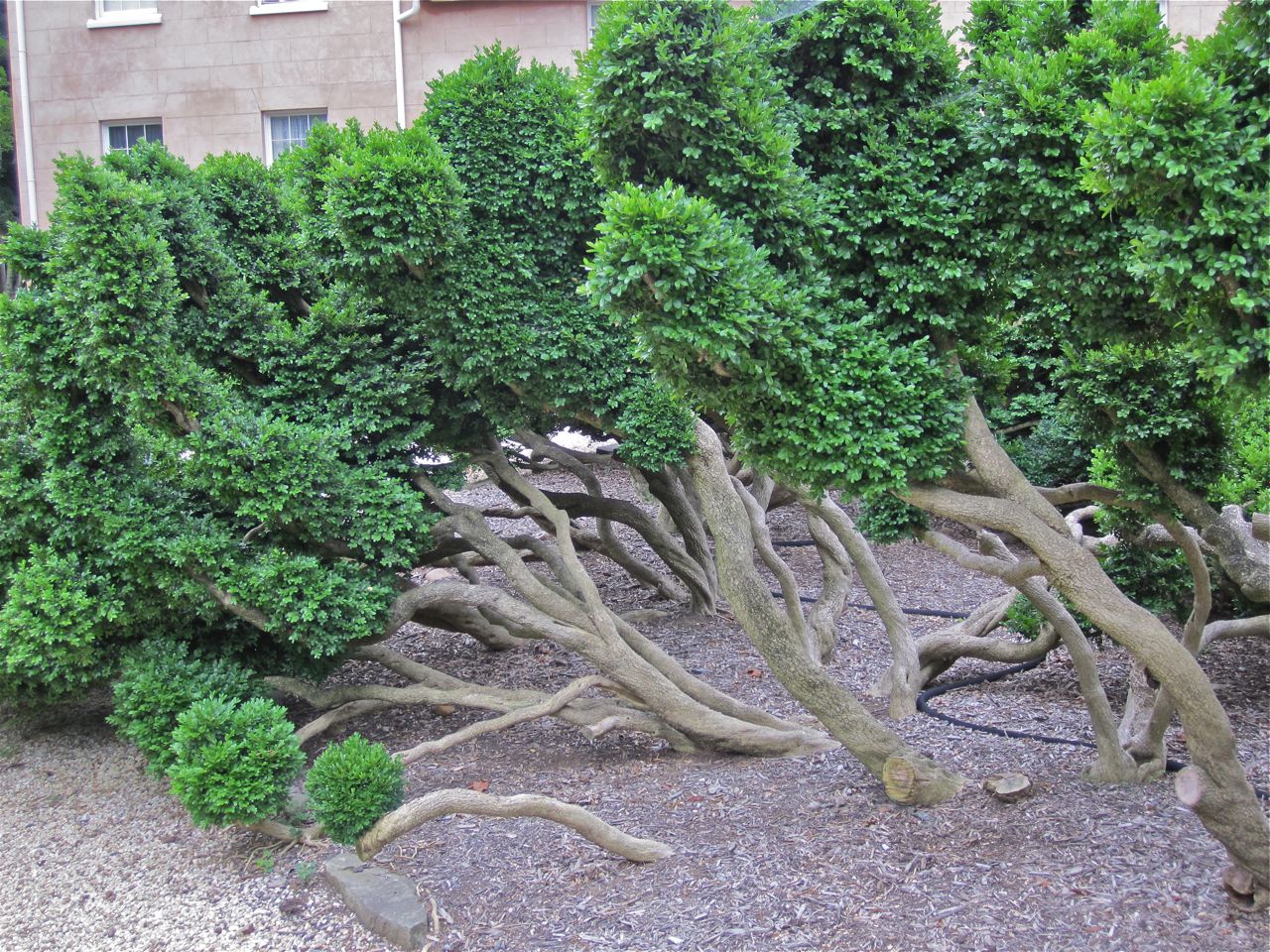
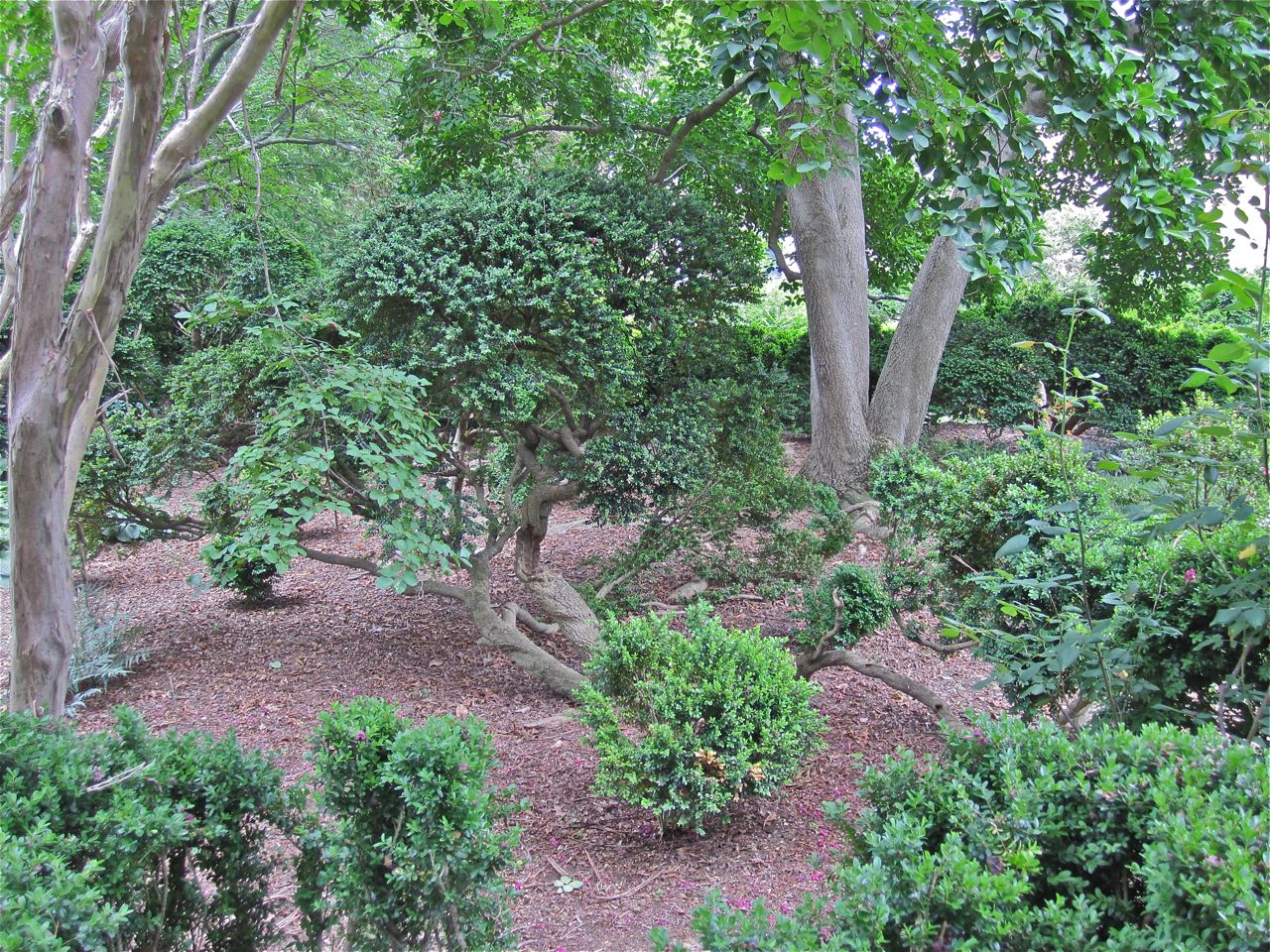
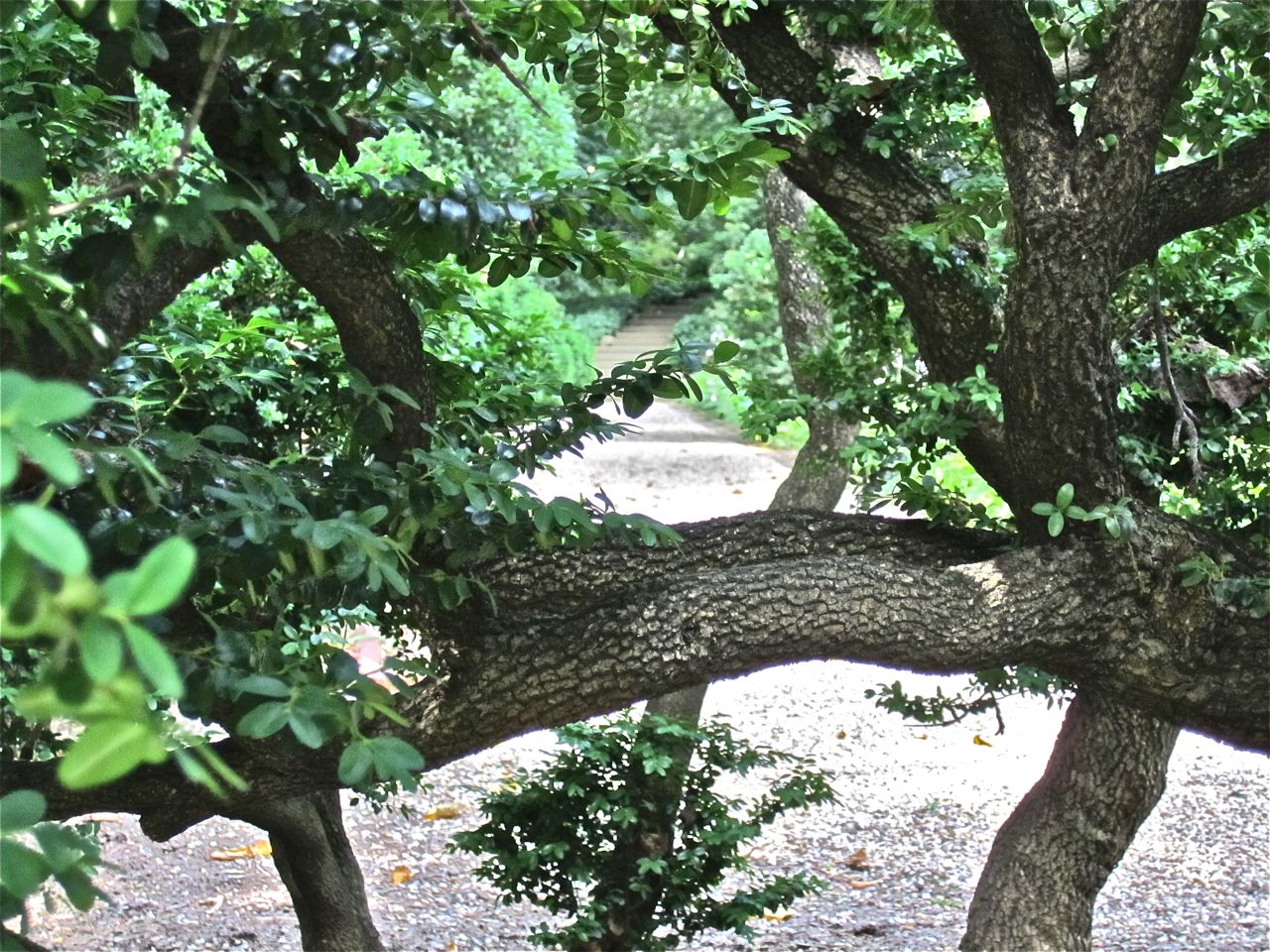
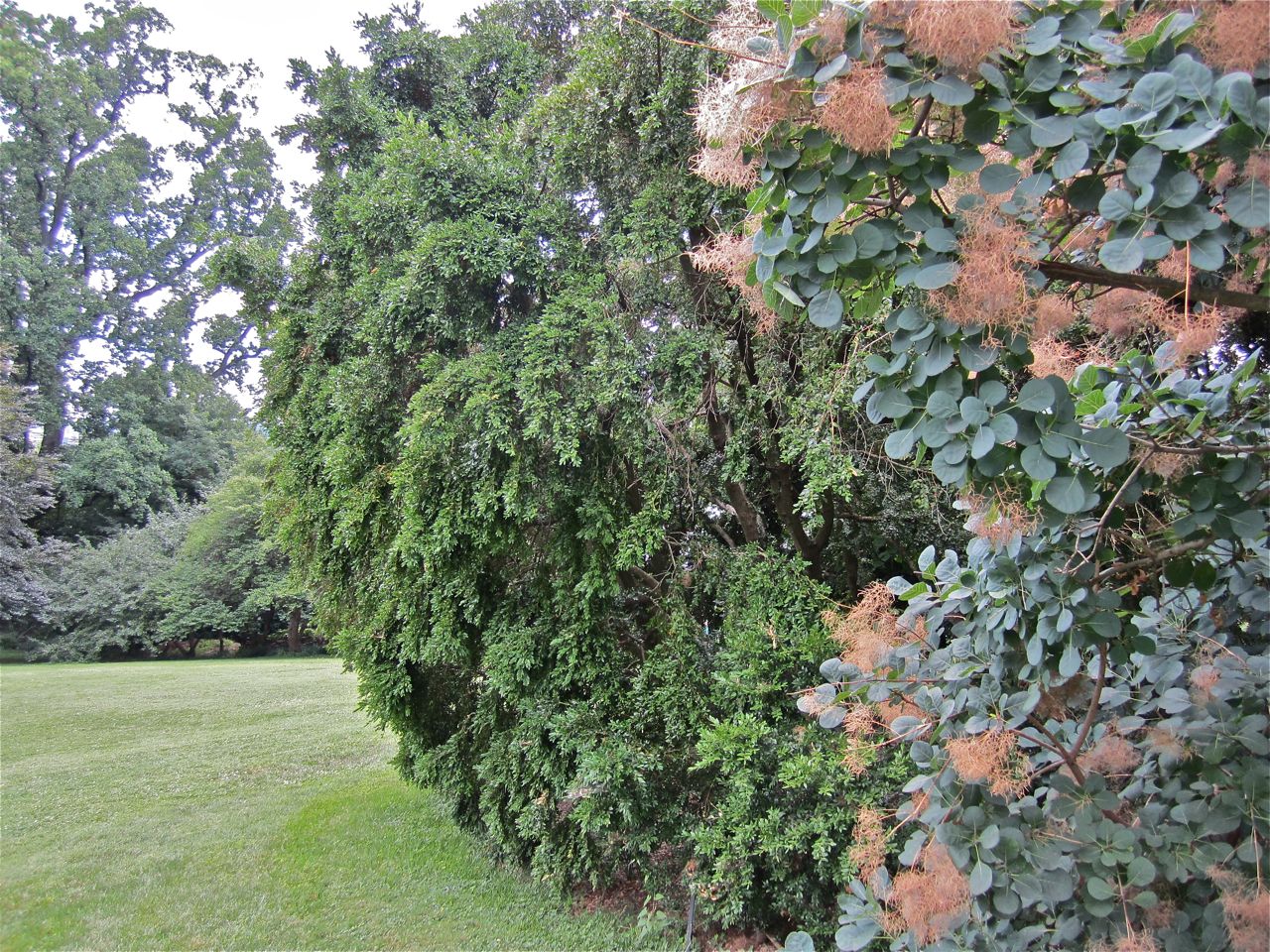
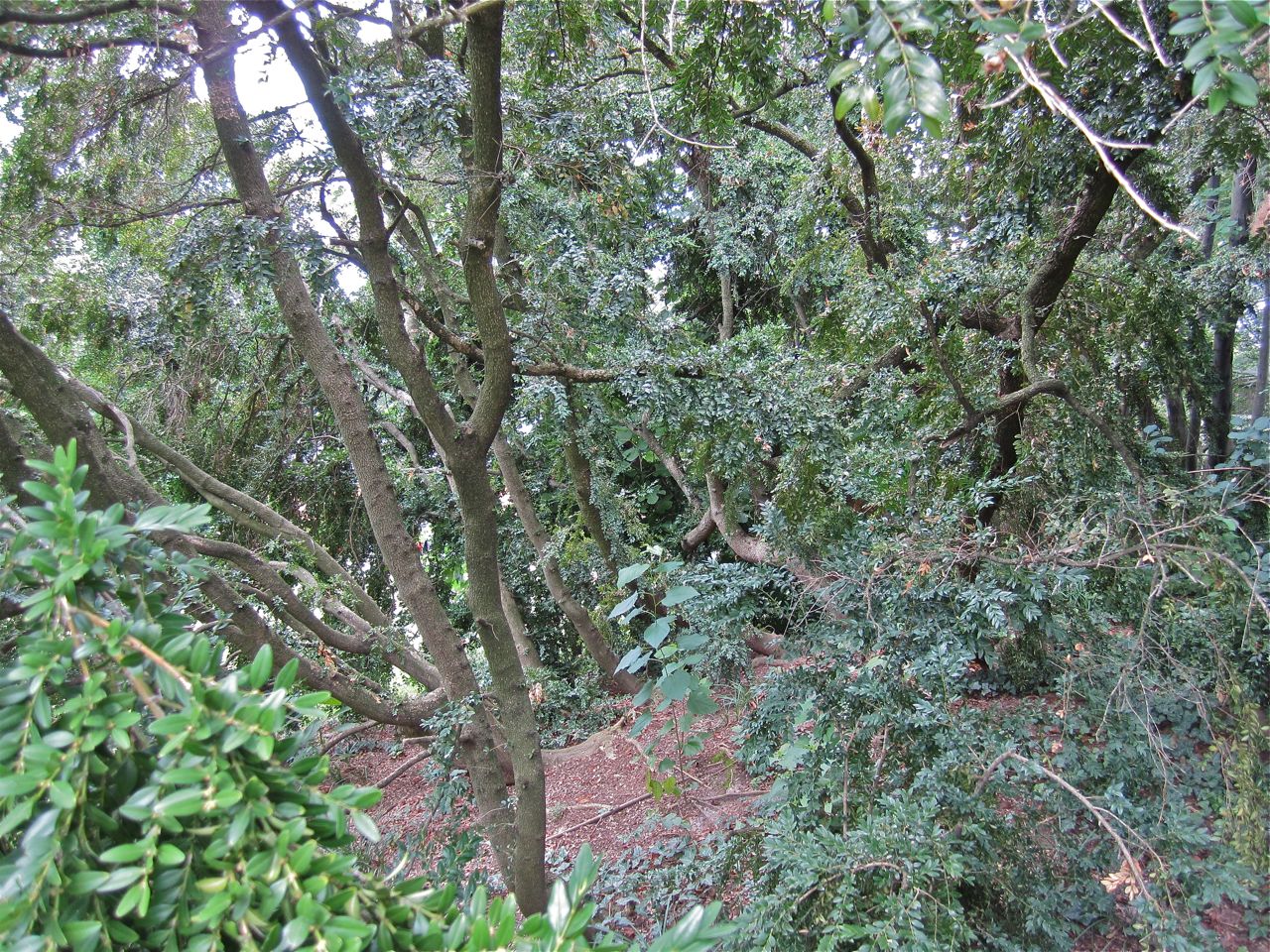
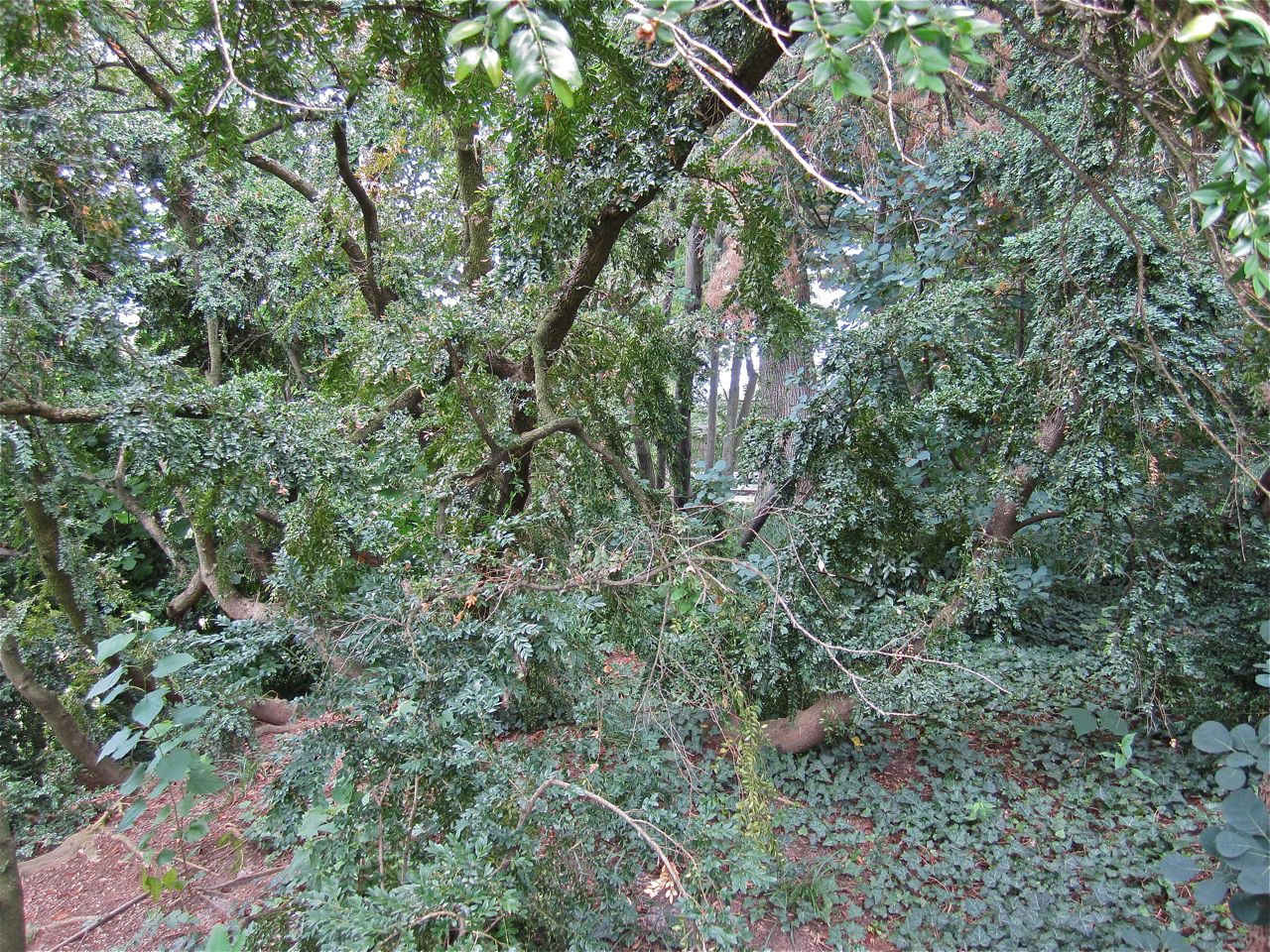
Here are also some photos of a small “grove” of very large, very old boxwoods, also on the south lawn, which I thought were almost other-world-like from the inside.
The outside of an old boxwood the height of a small tree on the front lawn of Tudor Place.Another small environment within the boxwoods. Inside this “grove” of old boxwoods.




 enclos*ure