Creeping fig

Rosamond Carr’s cottage in the Virunga hills is covered in creeping fig or Ficus pumila. The plant (along with the nice windows and the stone steps) turned a little square box into something really charming.

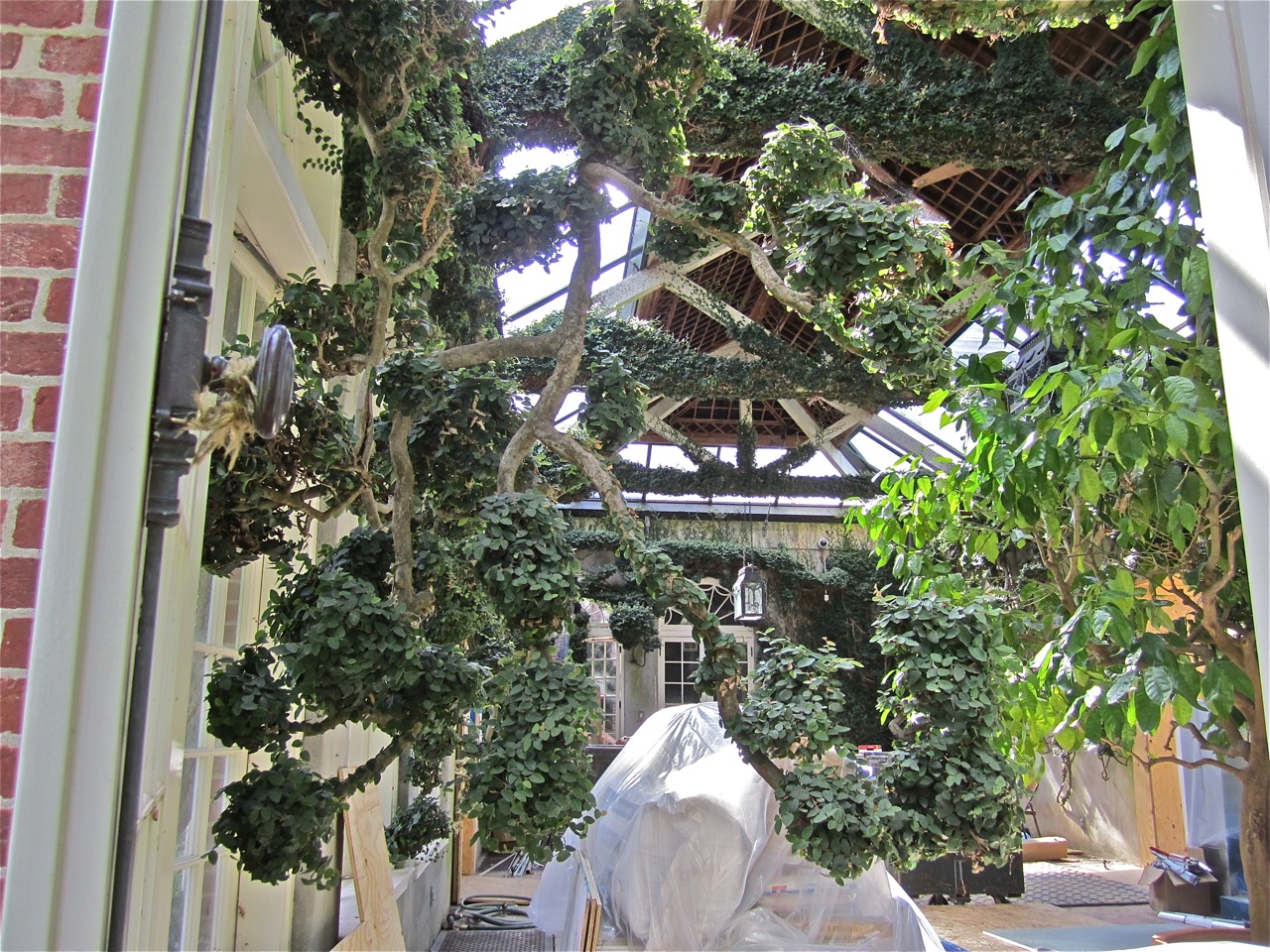
The Orangery of Dumbarton Oaks is also draped with a wonderful specimen, which was planted in its northwest corner in the 1860s.
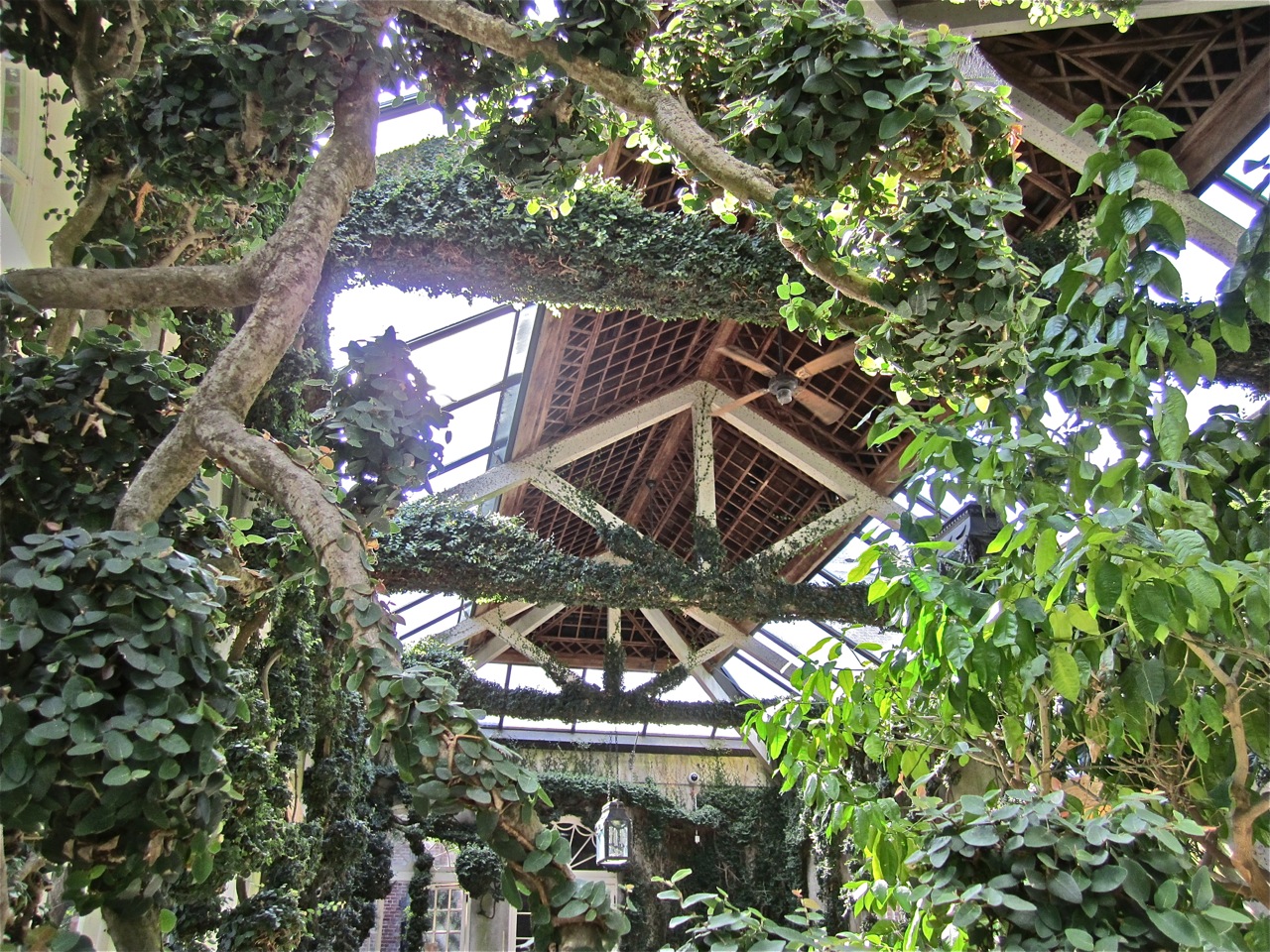
Creeping fig in the Orangery of Dumbarton Oaks. Click the photo to enlarge it.
Built in 1810, the Orangery was undergoing renovation last summer.

Creeping fig will survive outdoors in (U.S.) zones 8 – 11.  It is native to east Asia.
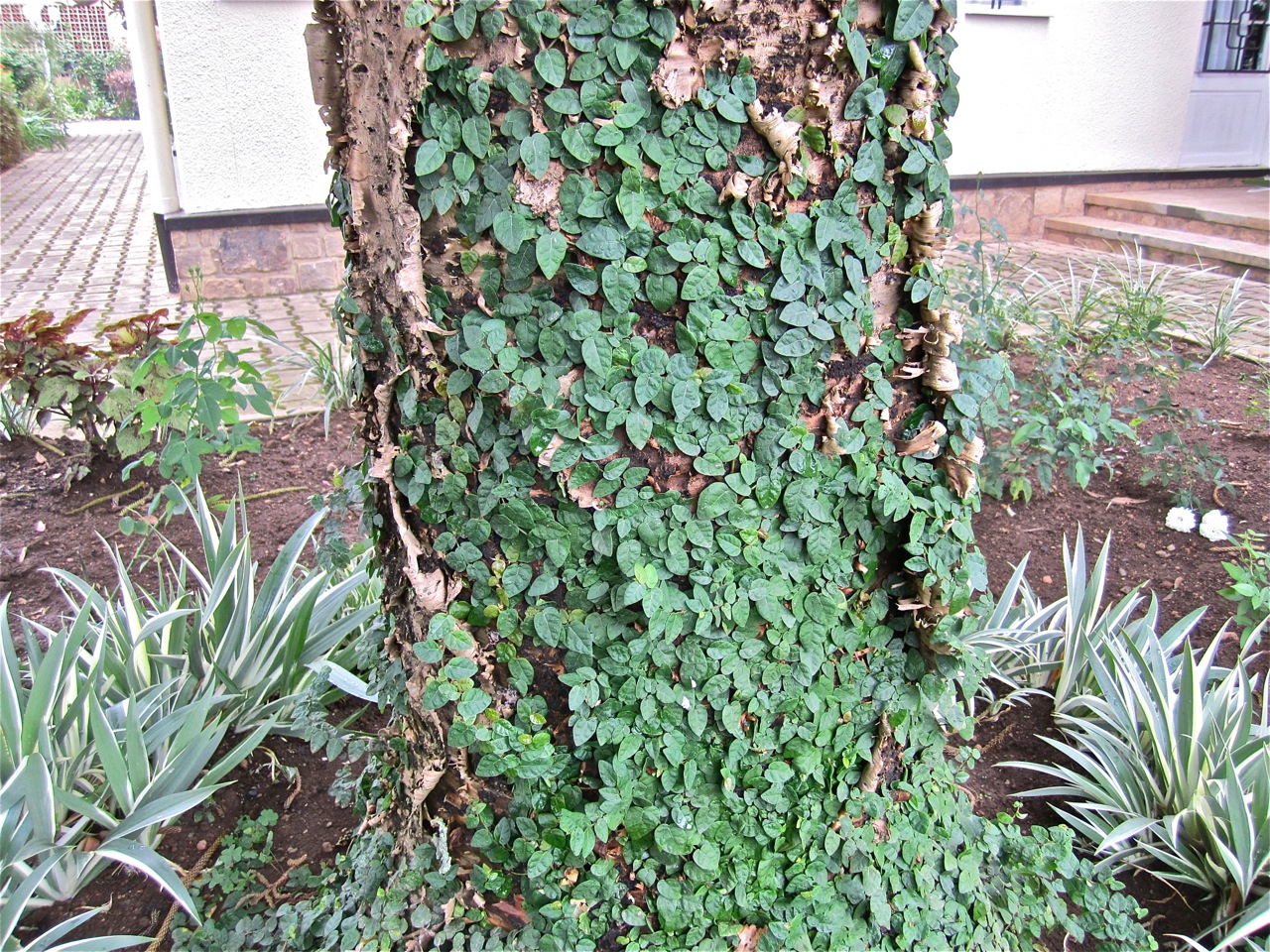
Growing up a tree in our Kigali garden.

The plant is not fussy about its conditions, but does need consistently moist soil.  Very fast growing, its aerial roots will adhere to anything, even metal and glass. All the sources I consulted warned against letting it attach to a wooden structure. With brick or concrete, it should be grown on something designed to support the plant forever, as the little rootlets will be very hard to remove if you later want a bare surface.

The fruit of the ‘Awkeotsong’ variety is used to make aiyu jelly in Taiwan (and ice jelly in Singapore). But several websites warned that all parts of the plant are poisonous. It may be that the processing technique makes the jelly safe to eat.

Since you inquire about creepers and ficus pumila,
They sum up the mood of a dweller in the wilds;
Respectfully visiting you in calf’s muzzle breeks* with a dove-headed walking stick.

— Ruan Dacheng, Chinese poet (1587-1646)

Thanks to Pam at Digging for  hosting Foliage Follow Up today (always the 16th of the month).


* “. . . a kind of shorts, or possibly a kilt, associated with a casual way of life in ancient times.”
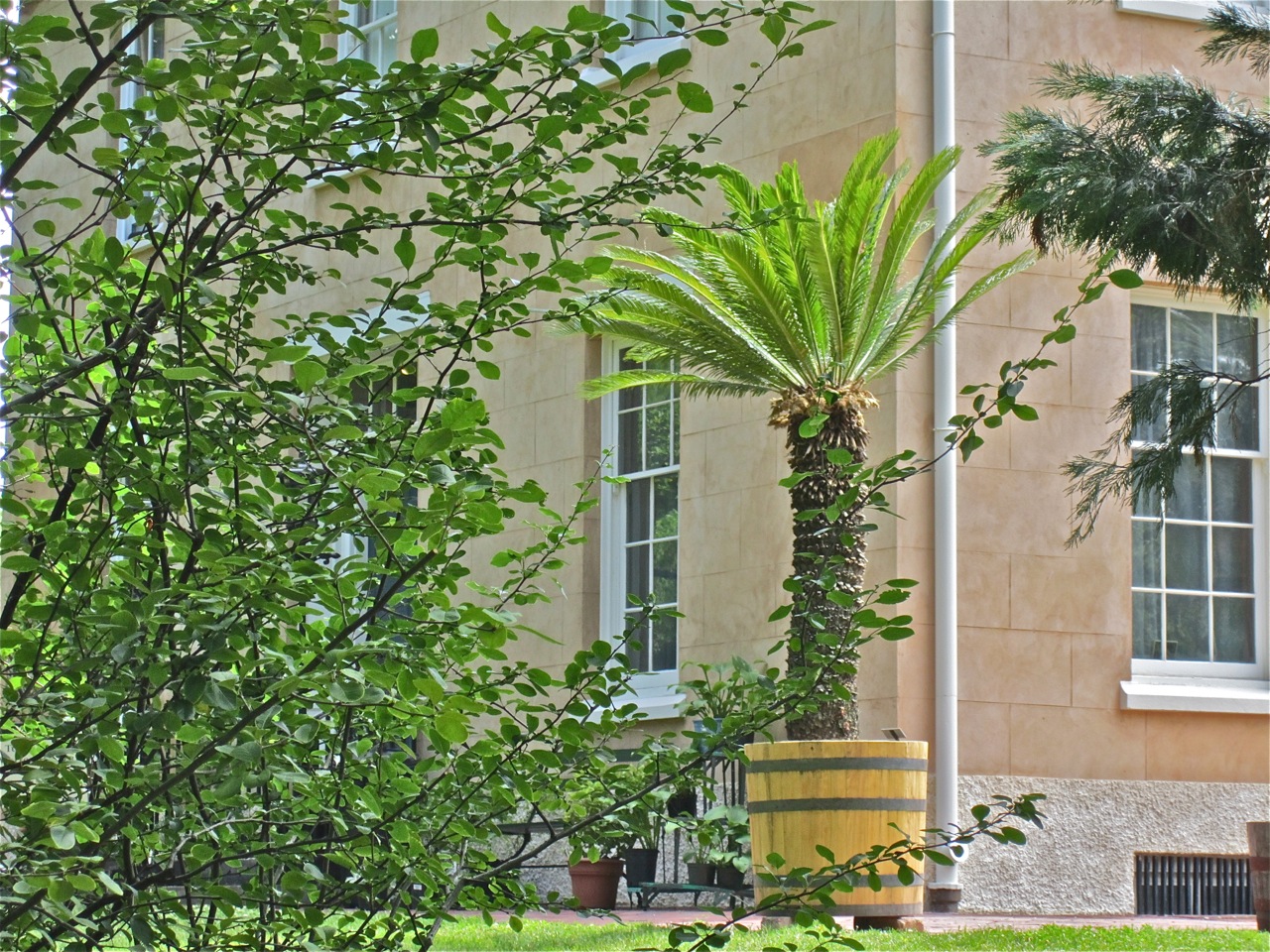
The sago palms

On Friday, Diana of Elephant’s Eye commented on the age of my cycad. (The plant has a reputation as a slow grower.)

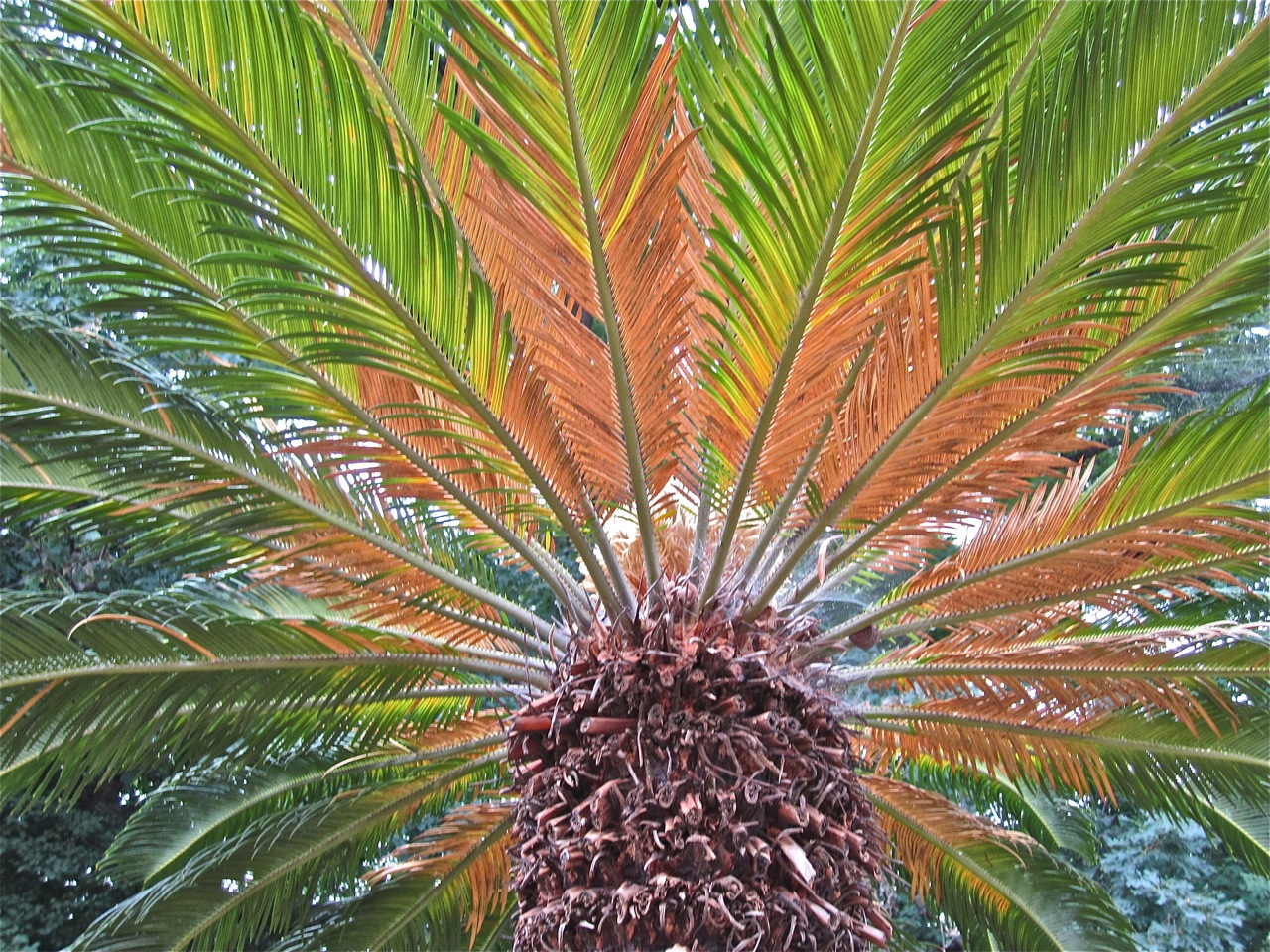
That made me remember some beautiful, rather ancient sago palms that I photographed at Tudor Place in Georgetown this summer. The sago palm is a cycad — Cycas revoluta — native to southern Japan.


Why weren’t our 19th century ancestors thoughtful enough to put away a few sago cycads in the greenhouse for us?

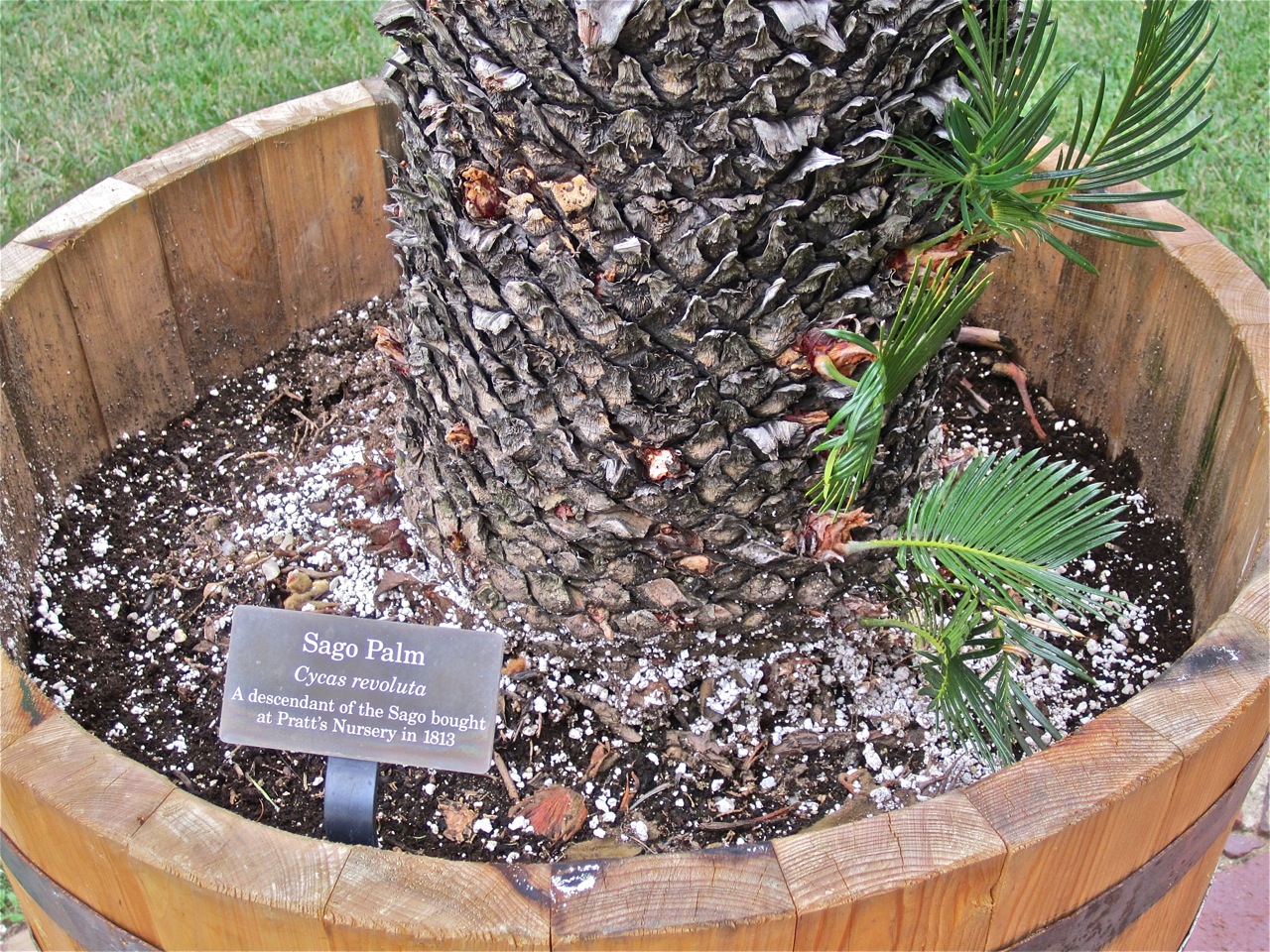
The original Tudor Place sago palm arrived in North America in 1775 on the famous Boston Tea Party ship. There were three sagos on board, and the largest one went to Mount Vernon. Another went to Pratt’s Nursery in Philadelphia, which is where Martha and Thomas Peter purchased it in 1813.

The Tudor Place blog says that the original sago palm is located near the door to the Visitors Center, although I only saw the specimens labeled as its descendants.

The Mount Vernon sago died in 1934. In 1941, a cutting was taken from the Tudor Place plant and given to Mount Vernon, where it grows today.

If you want to start your own little sago palm heirlooms in pots, please be aware that all parts of the plant are extremely toxic to children and pets. Guard it accordingly.

. . . all that predates history survives it.
the sago palm or the bird of paradise flower,
trees that are flowers that are birds.

. . . this high garden
protects the city that protects it.

Alvaro Garcia, “Public Garden” from Para lo que no existe, 1999

Victory gardens

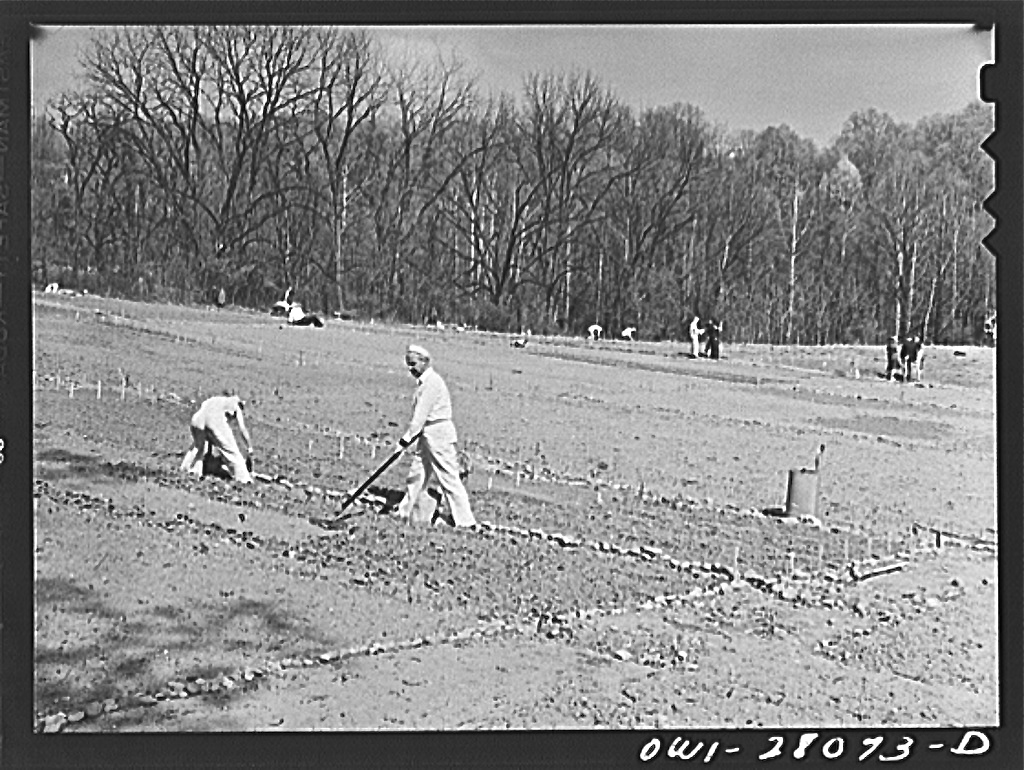
I have been looking at vintage garden photos from the online catalog of the Library of Congress. These two — of 1943 victory gardens in northwest and southeast Washington, D.C. — are really charming.

This couple is heading home from their plot with their sailor whites still looking clean and sharp.

“Washington, D.C. Victory garden in the Northwest section,” 1943, by Louise Rosskam. Via Library of Congress Prints and Photographs Division (all photos here).

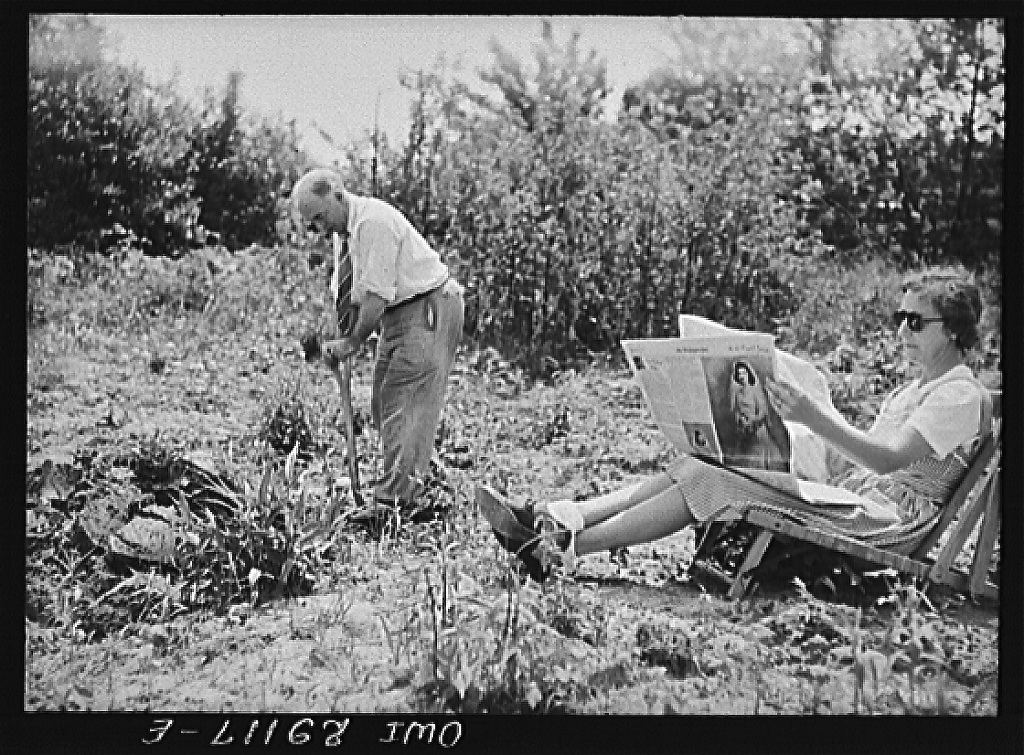
Below, Mrs. Carr seems to be present for moral support only, or perhaps she will take the next shift with the shovel.

“Washington, D.C. Leslie Edward Carr of the British Purchasing Commission with his wife at their victory garden on Fairlawn Ave., Southeast,” June 1943, by Joseph A. Horne. 

Louise Rosskam, who took the first photo above, was “one of the elusive pioneers of what has been called the golden age of documentary photography.” She took a number of pictures of the same group of northwest D.C. victory gardens in the spring of 1943. (Click on any of the photos to enlarge.)

I believe this is the couple in the first photo above.
Apartment buildings in the background.
Another couple working. I love her high-waisted, wide-leg white pants.
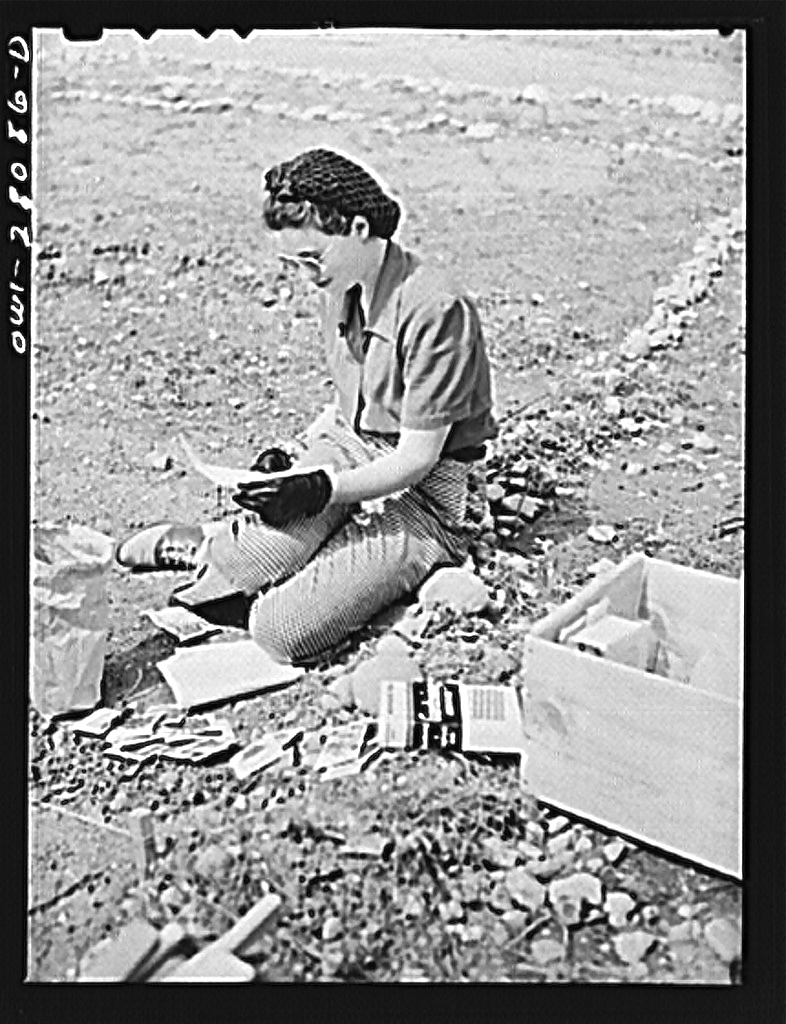
This lady also looks great in black gloves and snood and sunglasses.
The individual plots were outlined with field rocks.
Another gardener heading home by the same fence opening.
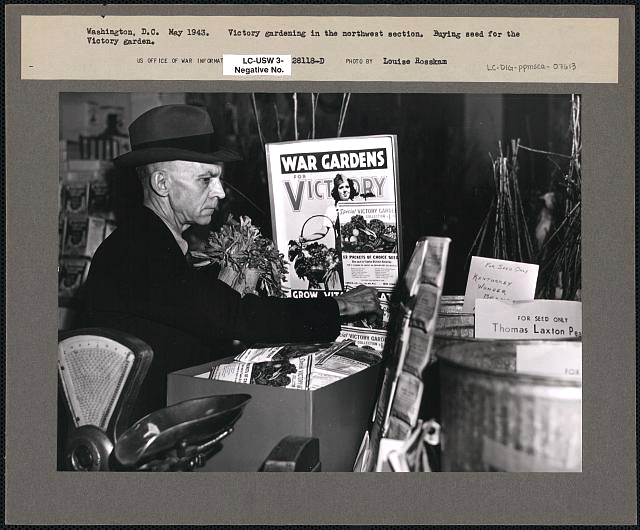
Buying victory garden supplies.

All the photos above (except that of the Carrs) are by Louise Rosskam, via the Prints and Photographs Division of the Library of Congress.

I believe these garden plots were in the neighborhood of Glover Park, where we have a house. According to the Glover Park Citizens Association, it established the first World War II victory garden in the city, at 42nd and Tunlaw Road. It still exists today as a community garden. (Alternatively, they may be of the Tilden victory gardens at Connecticut Avenue and Tilden Street, which Rosskam also photographed.)

This is a link to a short film made in the forties about how to prepare, plant, and harvest a 1/4 acre victory garden. It features a rural northern Maryland family and is an interesting look at home gardening advice and practices of the time.

Vintage landscape: an earlier warm winter

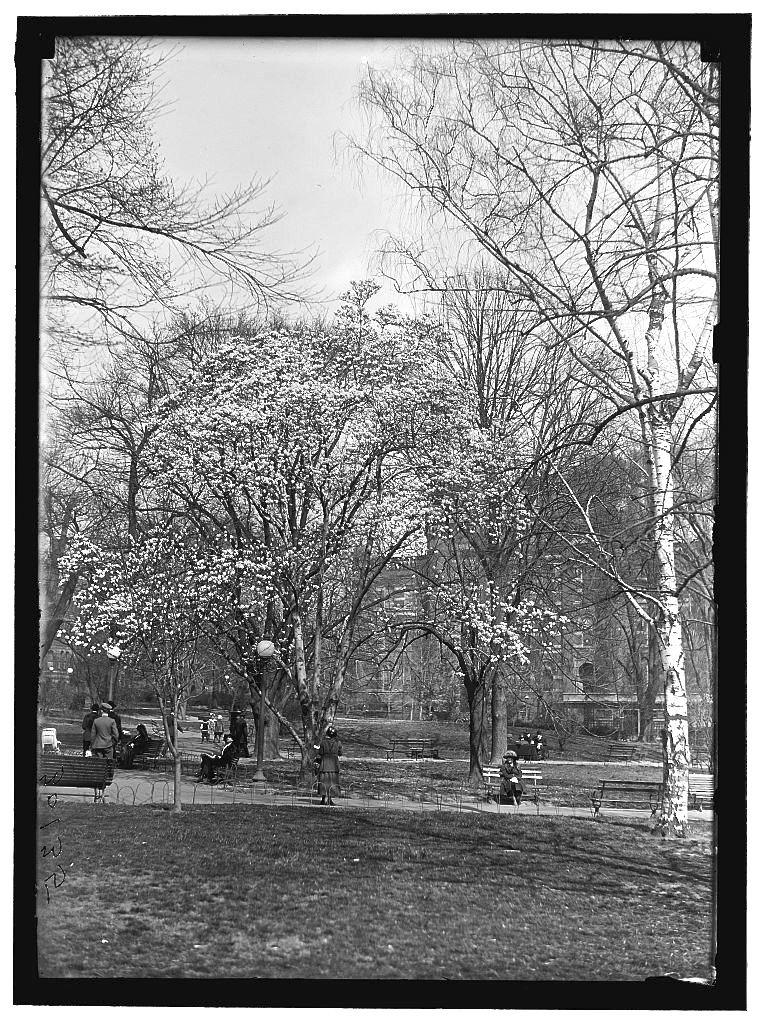
A peaceful view of a magnolia tree blooming in a Washington, D.C., park in 1919 — before any other trees have leafed out.

That winter seems to have been as mild as the preceding year’s was harsh. But the sweet scene may belie the real state of affairs. The influenza pandemic that began in the fall remained pervasive, and in the summer to come, deadly race riots would grip the city.

Photo by Harris & Ewing from the Harris & Ewing Collection of the Library of Congress. Click the photo to enlarge.

The butterfly garden

This slideshow requires JavaScript.


On the same early August day that I visited the Smithsonian’s Heirloom Garden, I also enjoyed a long walk back and forth through the Butterfly Habitat Garden, located on the east side of the National Museum of Natural History.

The garden is made up of plants that have specific relationships to the life cycles of eastern U.S. butterflies. As you walk along, you pass sections that mimic habitats important to the insects: wetlands, meadows, edges of woods, urban gardens.

It’s a long corridor really, bordered by busy 9th Street, N.W., on one side and the museum’s parking lot on the other. Yet, stepping in, you feel enveloped in another world, one that combines a little city polish with naturalism.

I offer these pictures from last summer as more inspiration for those in cold climates who are deep into their nursery catalogs and graph paper, planning for spring.

I haven’t labeled all the plants because the Smithsonian’s interactive map at this link has plant lists for each habitat.  (However, they do not include the grey-green plants in the first and seventh photos  [It’s dinosaur kale, possibly Brassica oleracea var. acephala ‘Lacinato’ or ‘Cavalo Nero’] or the tall plants with the small, purple, fuzzy blooms in the tenth.  [It’s Ironweed, Vernonia.  Thanks James Golden.]  Can anyone identify them?  I feel they are just on the tip of my brain.)

To see much larger versions of the slideshow photos, click on ‘Continue reading’ below and then click on the first thumbnail. You’ll be able to scroll through the images in succession. Continue reading “The butterfly garden”