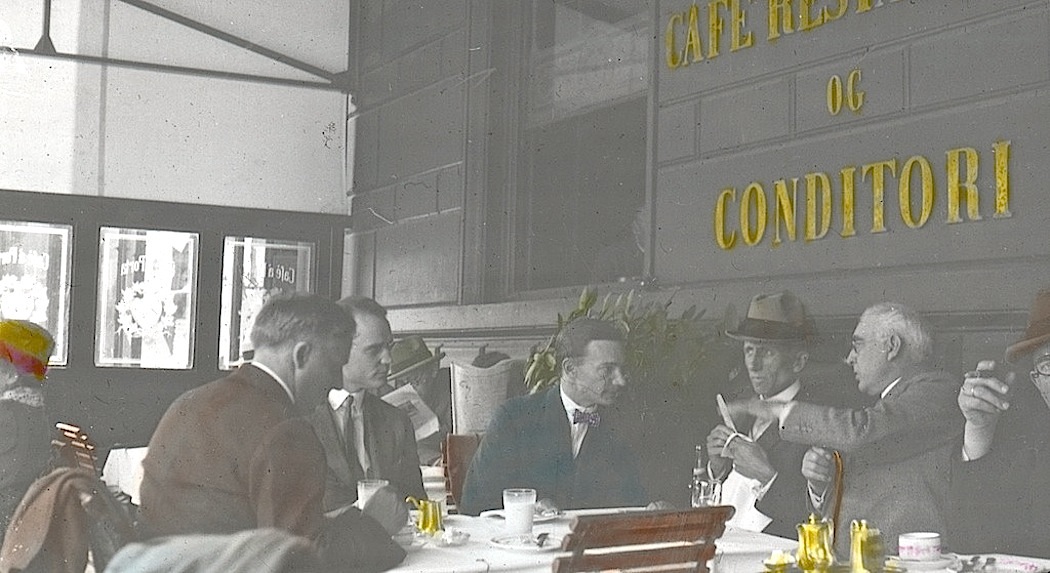
“Outdoor Restaurant,” Copenhagen, ca. 1915, via Oregon State University Special Collections & Archives on flickr. The image is from a collection of lantern slides of the “Visual Instruction Department.”
The accompanying bit of the class lecture observed that “[European] eating places have less of the haste and nervous tension which characterize cafeterias and cafes in American cities. In Copenhagen it is common for tables to be set out under an awning on the broad sidewalk. Here folk can eat leisurely and watch the happenings in the neighborhood.”
In the lettering above the tables, “og Conditori” means “and cake/pastry shop.” There’s another cake shop with nice outdoor seating (in Sweden) here.
I used to mock my father and his chums
for getting up early on Sunday morning
and drinking coffee at a local spot
but now I’m one of those chumps.
— Edward Hirsch, from “Early Sunday Morning“

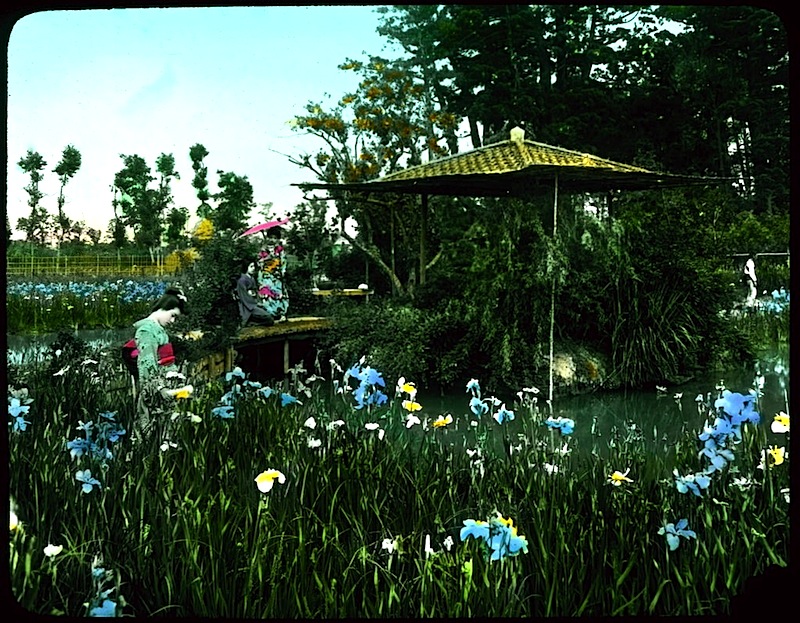 Iris garden beside water in Japan, probably Yokohama, ca. 1910, via University of Victoria Libraries Commons on flickr.