Vintage landscape: the national tree

White House, 19 December 1939, via LoC

On December 19, 1939 — in the photo above — the White House was being decorated for Christmas.  But the “gayly colored” lights on the wreath and trees would not be lit until Christmas Eve when President Roosevelt would also light the “community Xmas tree.”

At that time, what is now known as the National Christmas Tree was called the National Community Christmas Tree (I like that).

For most of the 1930s, the tree was installed in Lafayette Park, on the north side of the White House.  In the photo below, workers (in suits) decorate the 1937 tree on December 23.
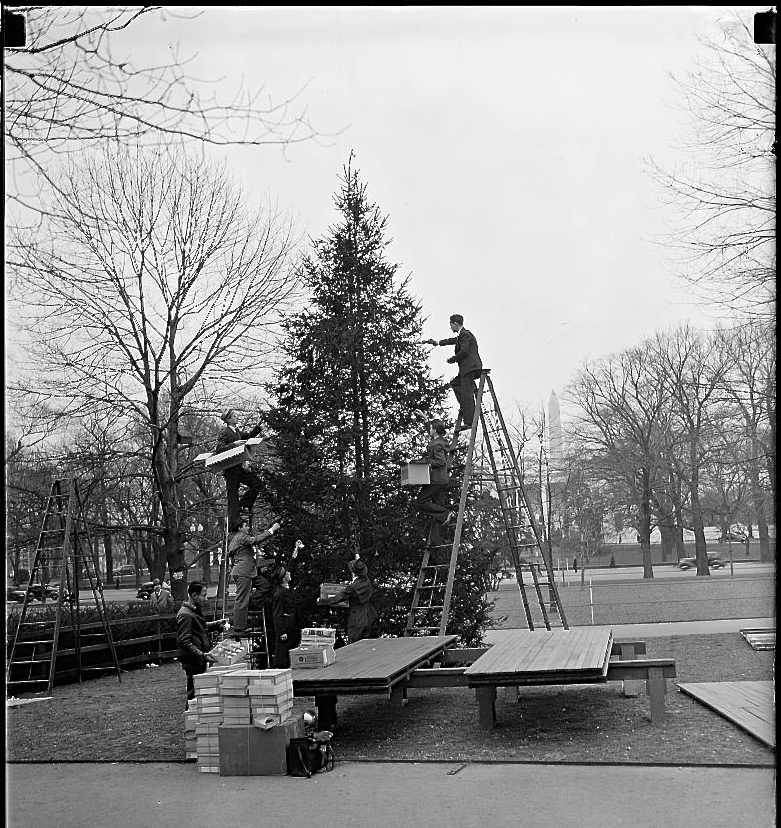
1930's tree, L0C

However, the first national tree had been placed on The Ellipse (also its current location), on the south side of the White House, in 1923 (below).
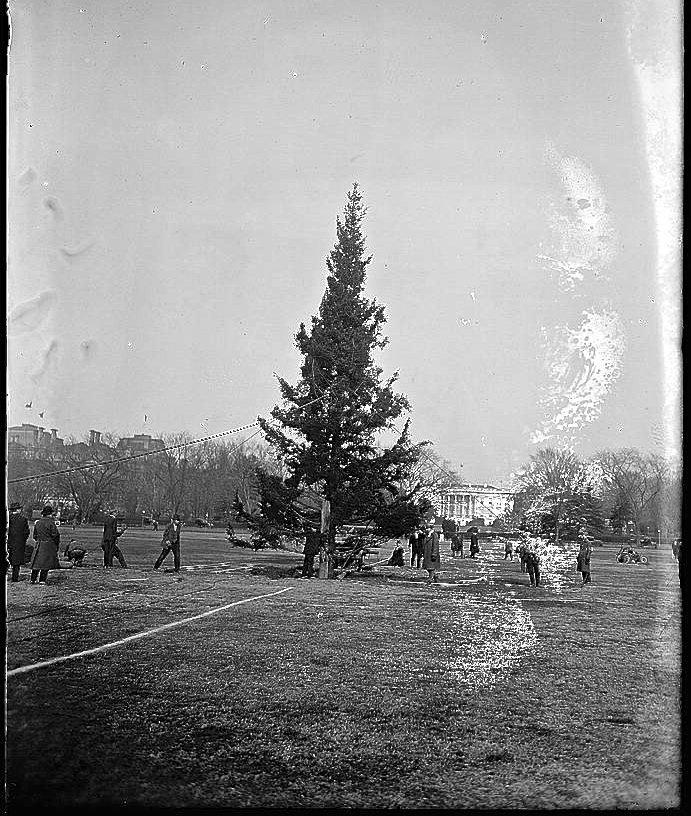
1923 tree setup, L0C

In the early 1920s, according to Wikipedia, “The Society for Electrical Development (an electrical industry trade group) was looking for a way to encourage people to purchase more electric Christmas lights and use electricity, and [Frederick Morris] Feiker [past editor of Electrical World] suggested that President Calvin Coolidge personally light the tree as a way of giving Christmas lights prominence and social cachet.”

The 48′ tall balsam fir was cut and donated by Middlebury College in the President’s home state of Vermont. The Electric League of Washington donated the 2,500 red, green, and white lights.
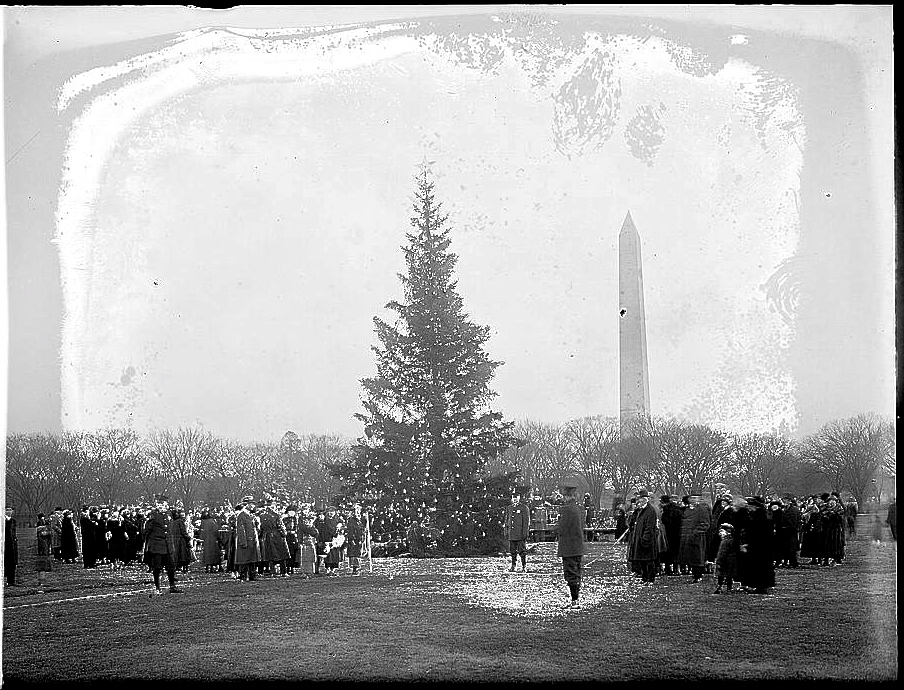
1923 tree, LoC

President Coolidge lit the tree on Christmas Eve without making any remarks (below).  A two-hour music concert was then held. Wikipedia notes that “after the white residents of the city had dispersed, African American residents of the city were permitted on the park grounds to see the National Christmas Tree.”
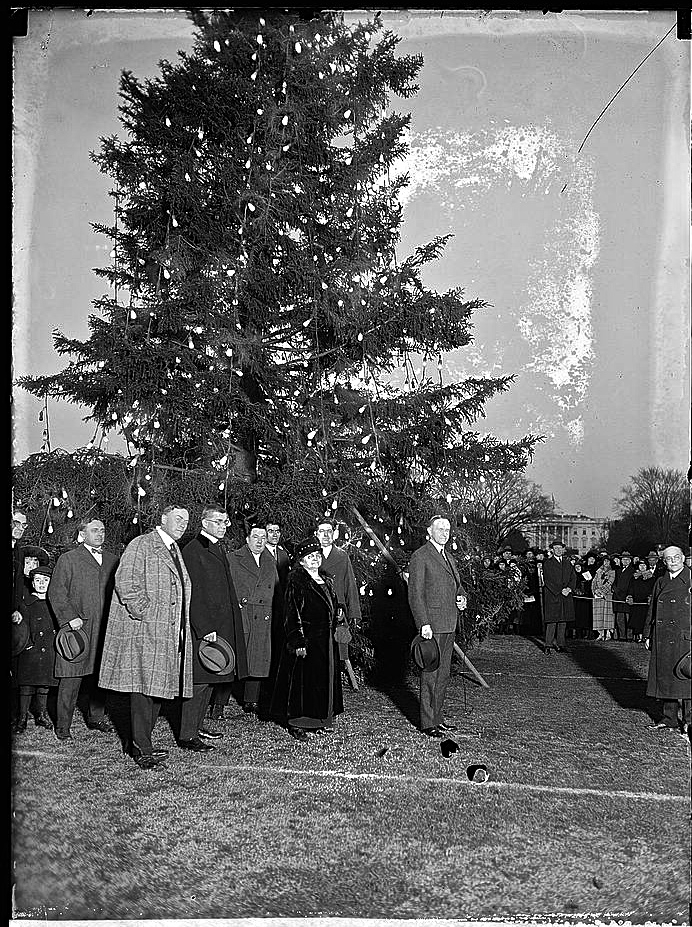
1923 tree lighting, LoC

On December 17, 1924 (below), a live “community” tree was planted in Sherman Park (just southeast of the White House).  This had become necessary after Coolidge, speaking before the American Forestry Association that April, had criticized cutting trees for Christmas decorations. (The national tree had to be replaced in 1929 and has been replaced many times since. From the early 50s to the early 70s, cut trees were used.)
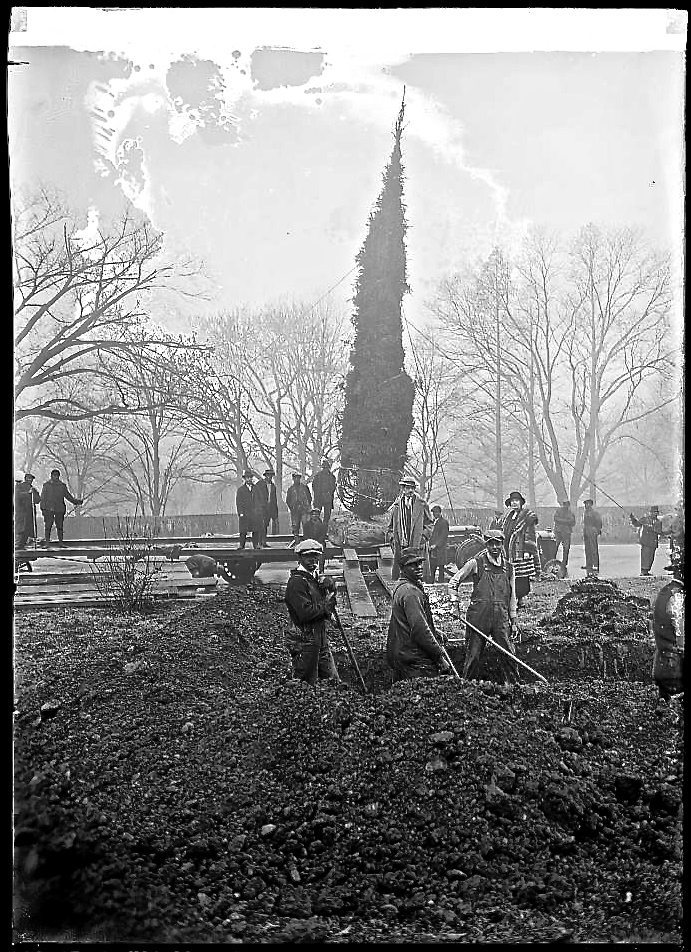
1924 tree planted, LoC

Below is a rather solemn moment from the lighting. The Coolidges’ son had died of blood poisoning earlier in the year, and a new Christmas carol, “Christmas Bells” — dedicated to Mrs. Coolidge — was performed at the ceremony.

1924 tree lit, L0C

Wikipedia has an interesting complete history of the National Christmas Tree here. Two more facts from the article:

“During the 1931 ceremony, a buzzer went off when Hoover lit the tree at 5:00 p.m. Because the button he pressed was not actually connected to the electricity, the buzzer alerted another official to actually light the tree.  The button the president pushed would not be reconnected to actual electricity again until 1980.”

In 1932, “loudspeakers connected to a phonograph were concealed in the branches of the tree, and Christmas carols were played every night from 6:00 p.m. to 10:00 p.m. until New Year’s Day.  The Singing Tree was a hit with the public, and although music and choirs continued to perform each year, the tradition of the Singing Tree lasted for several more decades.”

Facts about this year’s tree are here.

Photo Sources:

1. and 2. Photos by Harris & Ewing via Library of Congress Prints and Photographs Division.

3. to 8.  National Photo Company collection via Library of Congress Prints and Photographs Division.

A study in steps: mission dome

Steps to the dome of Mission San José de Tumacácori at Tumacácori National Historical Park, 1937.  The park is in the upper Santa Cruz River Valley of southern Arizona.

The photos are part of an Historic American Buildings Survey, via Library of Congress Prints and Photographs Division.

The mission was built in the late 18th century by Franciscan Fathers and local Indian labor.  In the early 19th century, Apache Indians attacked and drove away the priests, and by mid-century, the buildings were in ruins.  Preservation efforts began in 1908.  The building still exists as a National Historic Landmark.

ADDENDUM:  There is another image of the mission and more information about the surrounding park in this New York Times article, here.

Vintage landscape: Congressional gardener

“Washington, D.C., May 7[, 1937].  Rep. William R. Poage, a first term Texas Democrat, likes gardening. He couldn’t find a plot of ground in the crowded capital, so he used his newly acquired congressional influence and won permission to help tend flowers and shrubbery in the government’s Botanical Gardens. So he works along with the regular laborers an hour or two daily.”

These days, many congressmen sleep in their House offices, but I haven’t heard of any tending the flower beds. Representative Poage retired from Congress in 1978.

Photo and text in quotes by Harris & Ewing via Library of Congress Prints and Photographs Division.
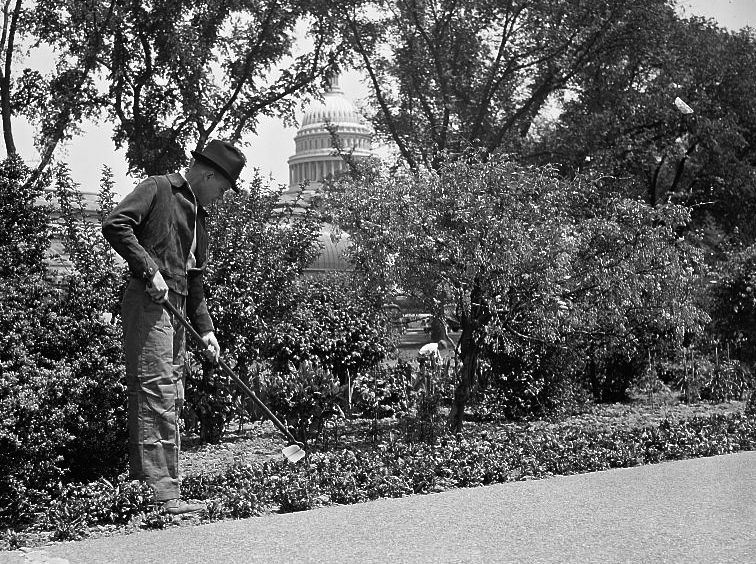
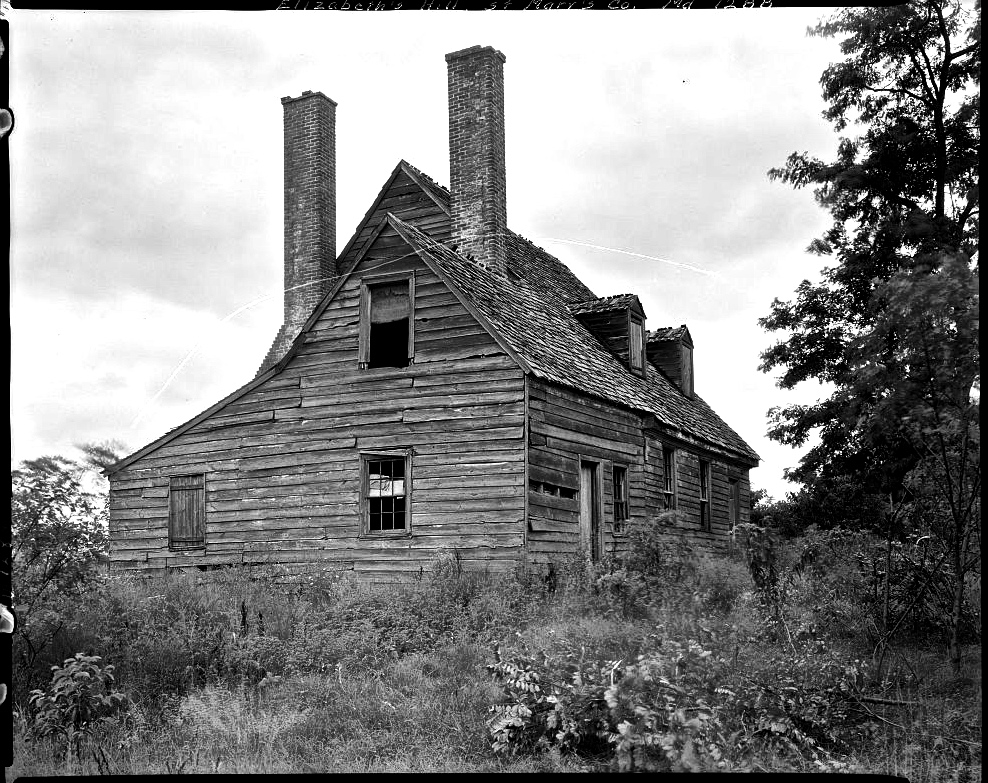
Vintage landscape: beautiful weeds

“Elizabeth’s Hill, Great Mills vic., St. Mary’s County, Maryland,”  1936-37, Frances Benjamin Johnston, via Library of Congress Prints and Photographs Division.
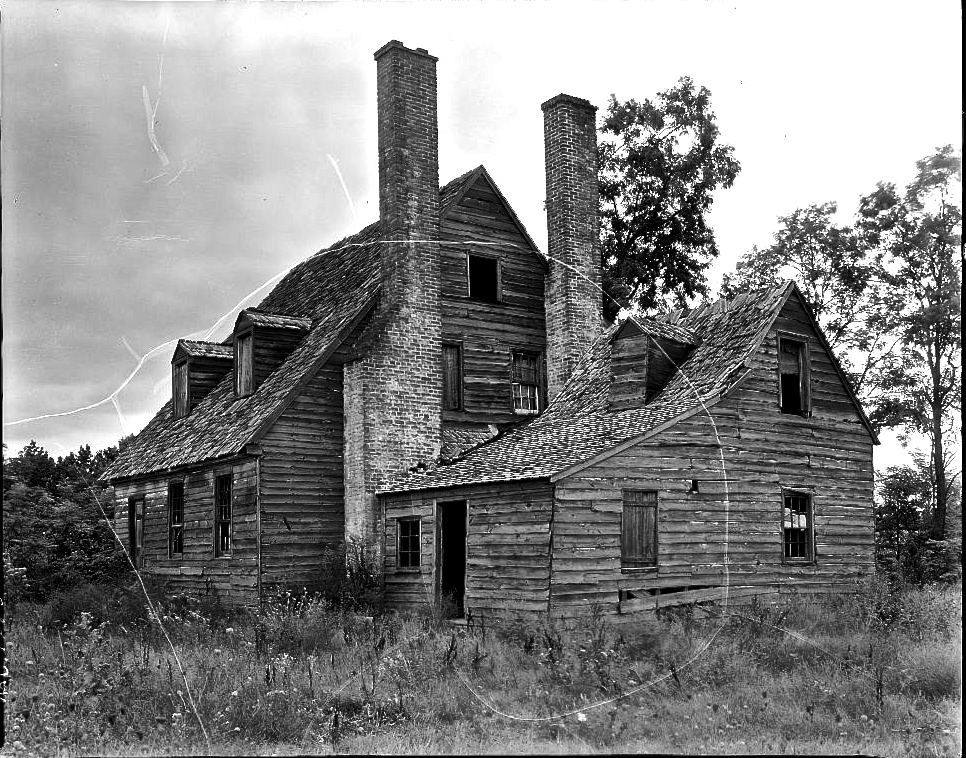
What would the world be, once bereft
Of wet and of wildness? Let them be left,
O Let them be left, wildness and wet:
Long live the weeds and the wilderness yet.
–  Gerard Manley Hopkins, from “Inversnaid”

A porch in 1941 Mobile and Sunday miscellany

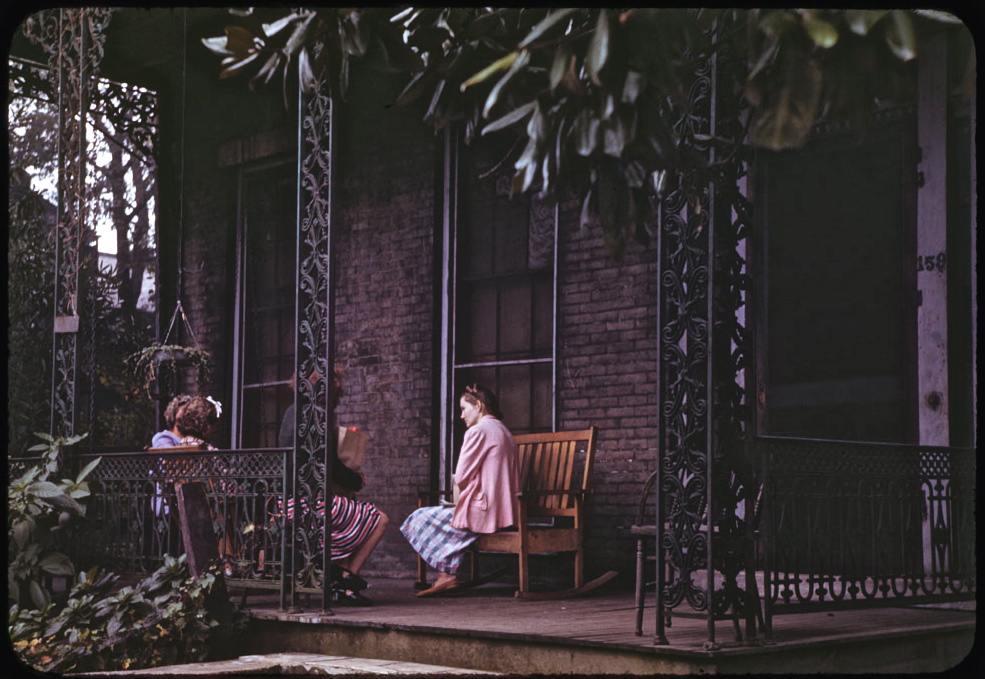
I love this quiet photo: “Porch of old house at Monroe St., Mobile[, Alabama],” taken November 4, 1941, by Charles W. Cushman.

Used with the permission of  the Charles W. Cushman Photograph Collection of the Indiana University Archives.  Please do not “pin” or re-blog without contacting them here.

Miscellany

This post on Gardenista is about houses painted black, but I like the way all of them are incorporated into their natural landscapes.  

And GardenHistoryGirl has an interesting post on what we mean when we talk about ‘natural’ and  “beautiful nature.”

From her post, I learned that you can read the entire book The Wild Garden by William Robinson online  here at Google Books.

Please take a look at View from Federal Twist’s fall photos of the Federal Twist garden — just gorgeous.

Jean’s Garden explains here why your favorite plant may have had one name last year and has another today.

Kigali has gone into billboards in a big way in the last few years.  I wonder if it may eventually be building these too (see here too).

Zoe Tilley Poster of Pearled Earth is now selling her beautiful illustrations at her new Etsy shop here.

Francophiles can catch up on gardening news from France at Our Grumpy Gardener, a blog of French News Online.  If you’ve already starting to think about Christmas, the blog Réparons & Re-Parons Noël has good ideas for handmade decorations.

If you would like to see more of the photographs of Charles W. Cushman, click here for a series of images of New York City in the early 1940s.