
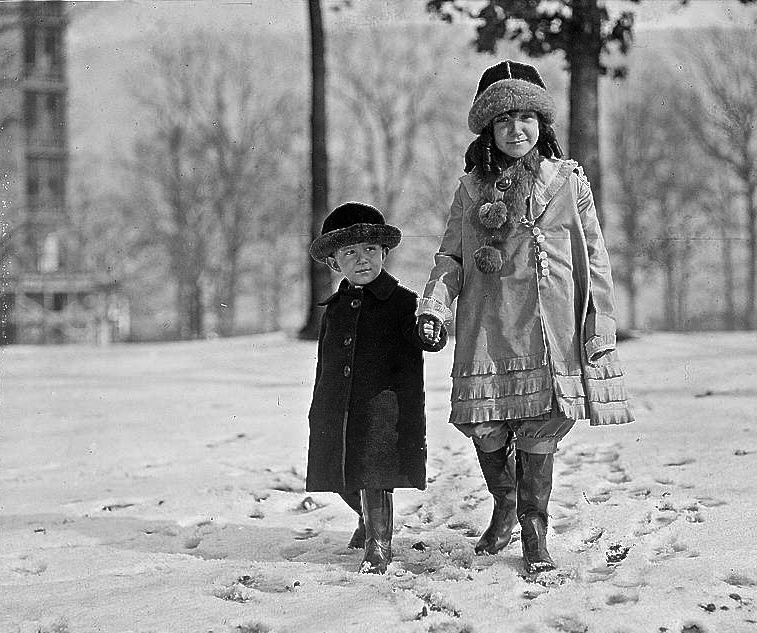
 Well dressed.
Chase children, January 25, 1923, via Natl. Photo Company Collection, Library of Congress Prints and Photographs Division.
Well dressed.
Chase children, January 25, 1923, via Natl. Photo Company Collection, Library of Congress Prints and Photographs Division.
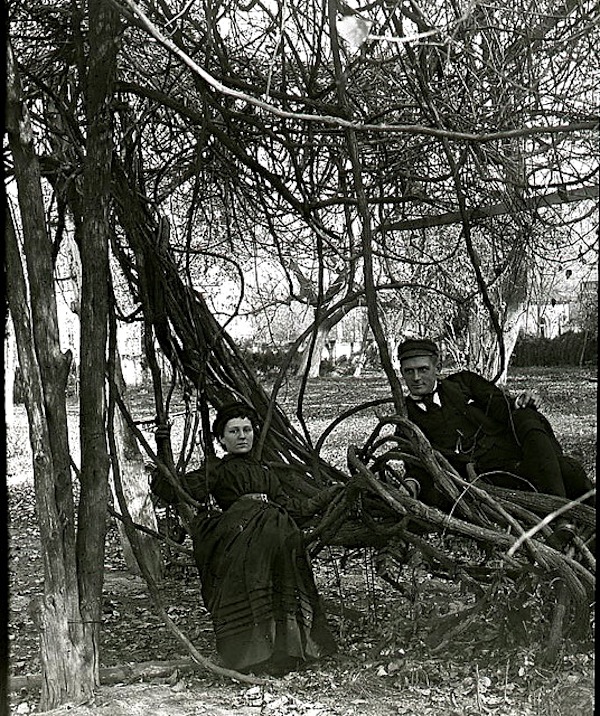 “Two people relaxing in Van Ness Park about 1880,” Washington, D.C., via D.C. Public Library Commons photostream on Flickr.
This park was not located in the present-day upper-northwest neighborhood known as Van Ness. The photo was taken in an area southwest of the White House near the corner of C and 18th Sts., N.W. — which was then known informally as “Van Ness Park.”
According to the Library’s notation on the photo, the building that can be seen in the middle of the far right side (above the man’s legs) is a “dependency of Van Ness Mansion.”
Van Ness House (Mansion) and its grounds were located on the block bordered by 17th and 18th Sts. and C St. and Constitution Ave. Built about 1816, the Greek Revival house was one of the finest in the city until the Civil War. But afterwards, it served as a “German beer garden, florist’s nursery, headquarters of the city streetcleaners, and in the end, for the Columbia Athletic Club,” according to the blog Lost Washington.
The college that became George Washington University bought the property in 1903 but later decided that its location was too unhealthy for campus facilities. At that time, the Potomac River and its marshes came up to B St., now Constitution Ave.
The State Department bought it in 1907, tore down the house, and built the Pan American Union (today OAS) Building.
I think the dependency in the photo is the old stable of the estate, which still exists at C and 18th Sts. If that’s so, the couple may be lounging in what is now Bolivar Park.
According to the blog DC Ghosts, the stables have a connection to a local ghost story in which six white horses “run wildly around the grounds” and then group together to walk to the P St. Bridge crossing to Georgetown and Oak Hill Cemetery. The full story is here.
It is good to be alone in a garden at dawn or dark so that all its shy presences may haunt you and possess you in a reverie of suspended thought.
— James Douglas, Down Shoe Lane
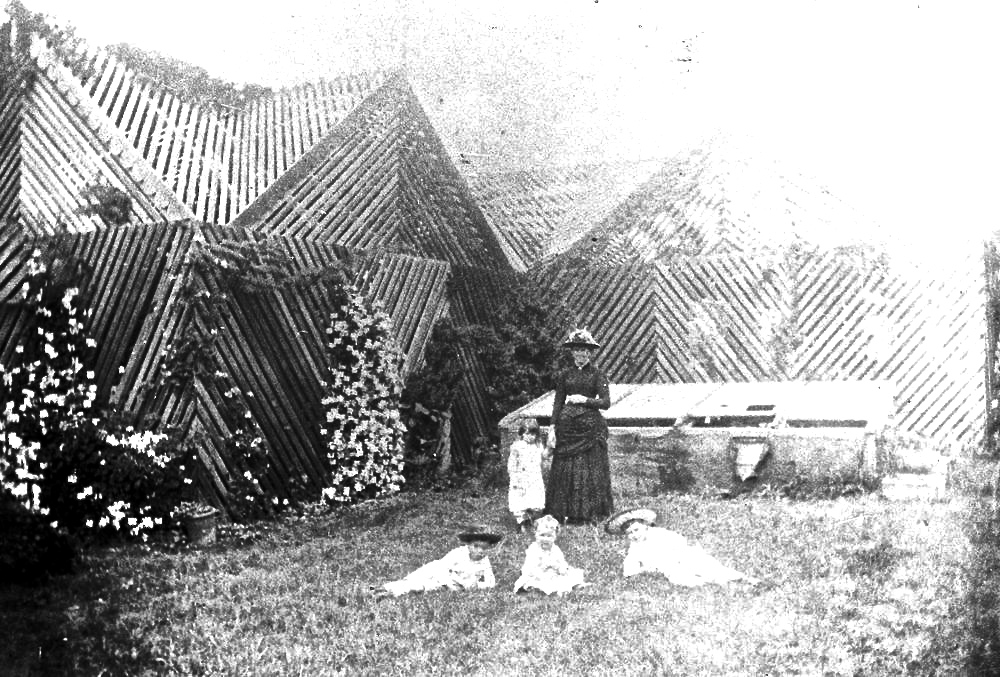
I recently came across these photos of an Australian vernacular garden structure: the bush-house.
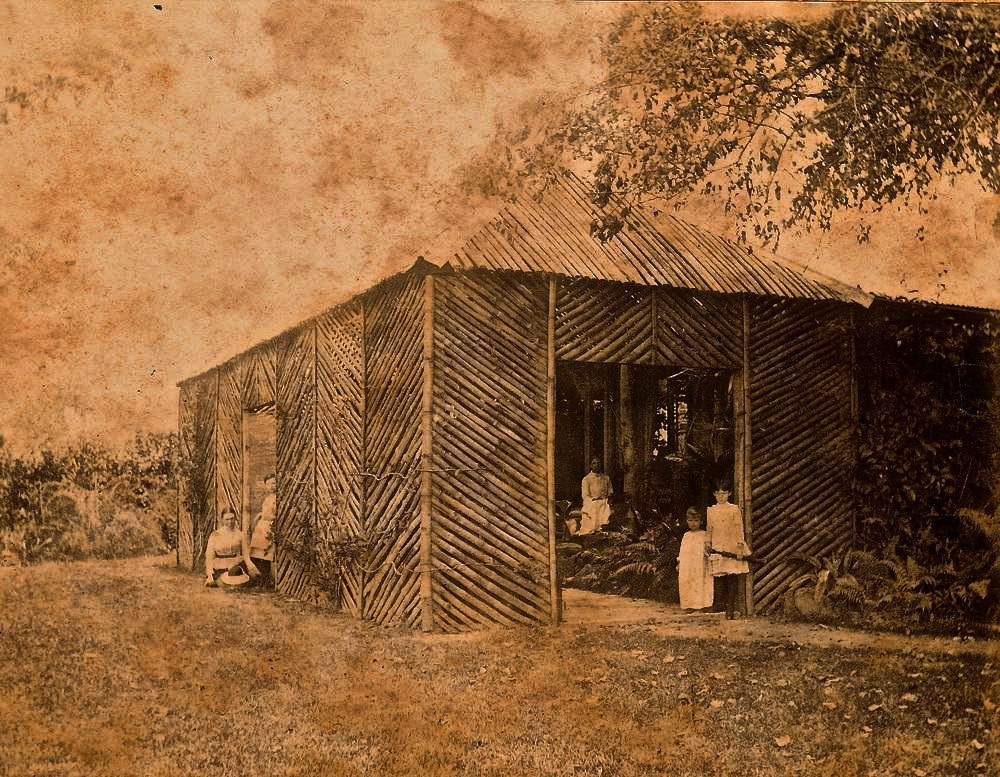
Bush-houses (also called shade-houses or ferneries) were built to protect tropical plants from the sun. By the late 1800s, many Australian gardeners were as enthusiastic about amassing and displaying these plants as Victorian hothouse collectors in Great Britain and North America.
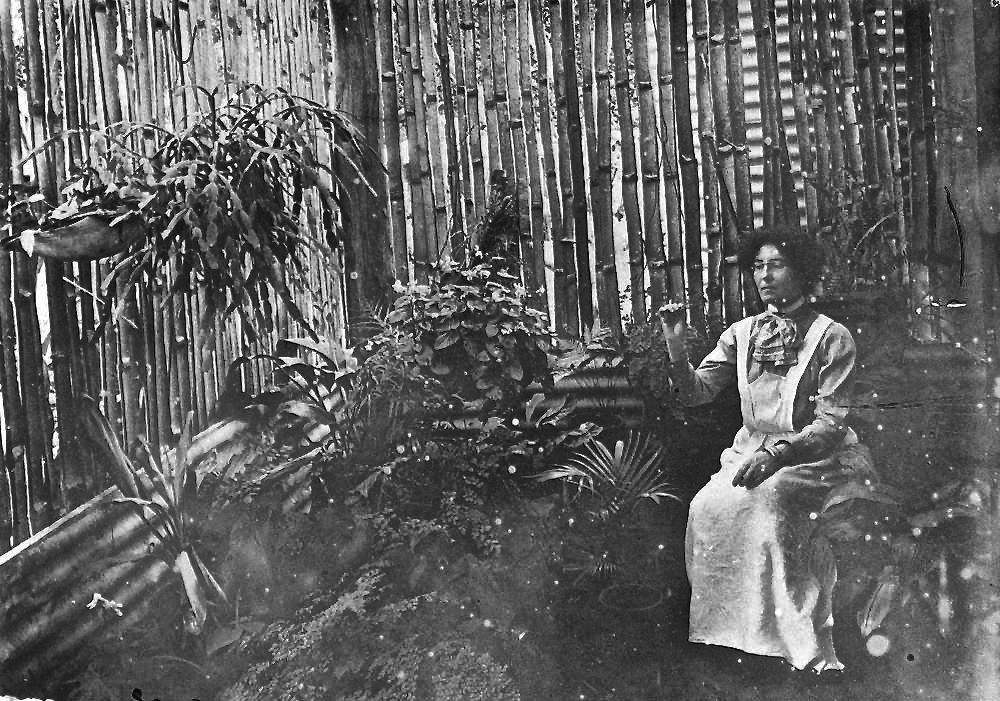
The bush-house was modeled on the English glassed-in greenhouse or conservatory, but built with less costly, local materials.
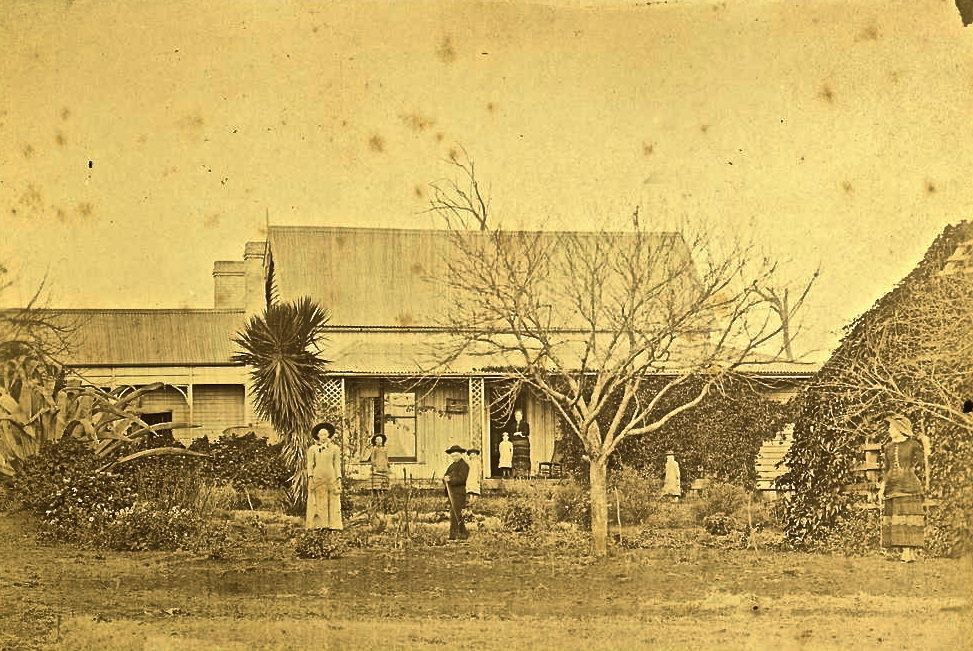
In a 2003 article for Queensland Review, “Tropicalia: Gardens with Tropical Attitude,” Jeannie Sim wrote that, by the end of the 19th century, a number of international exhibitions in Australia were showing off “high-quality examples of tropicalian gardening” in bush-houses.
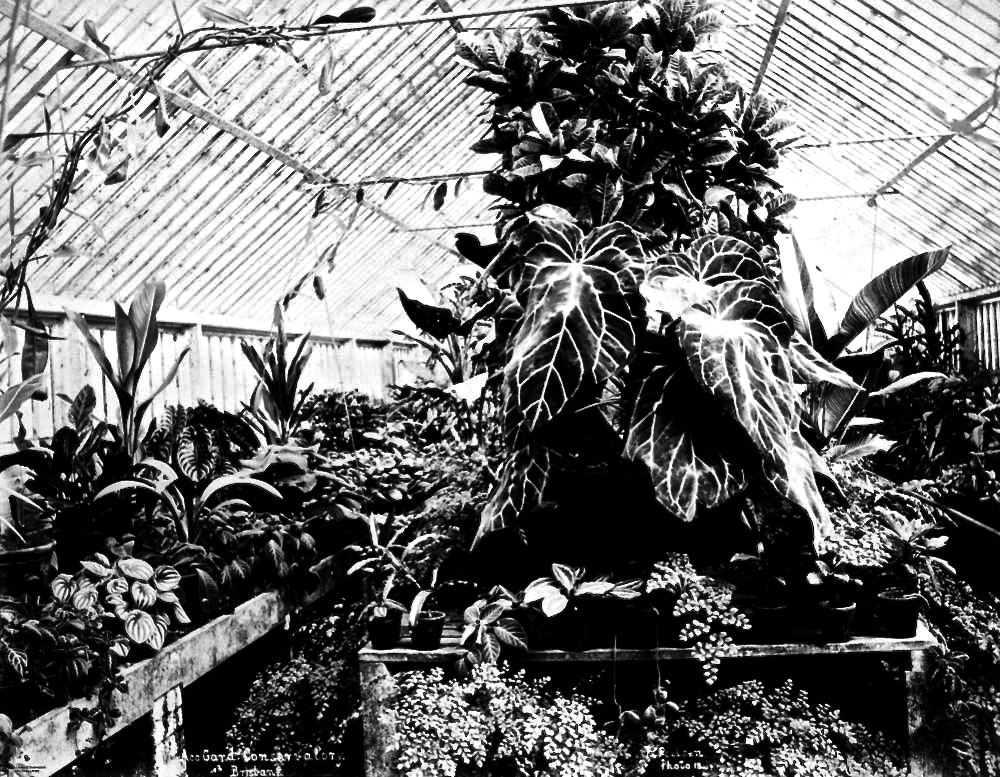
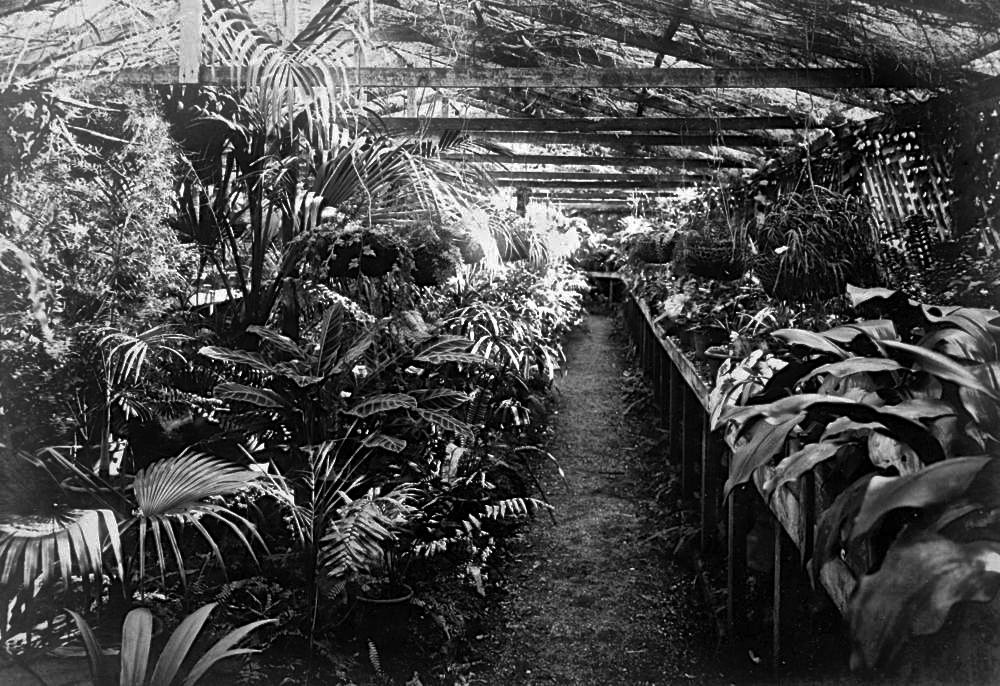
“The most extraordinary of these kinds of structures,” she wrote, “[was] arguably the one built in 1897 for the Queensland Colonial and Indian Exhibition in Brisbane. . . . Covering the walls and pillars of the bush-house were more than 3000 staghorn, bird’s nest and elkhorn ferns collected from the Blackall Range . . . . The exhibition guide [noted that] . . . Queenslanders ‘could gain a more vivid idea than ever before of the unequalled luxuriance of their scrubs.’ These horticultural displays marked both local pride and individuality, and promoted the use of native plants and bush-houses in gardens.”
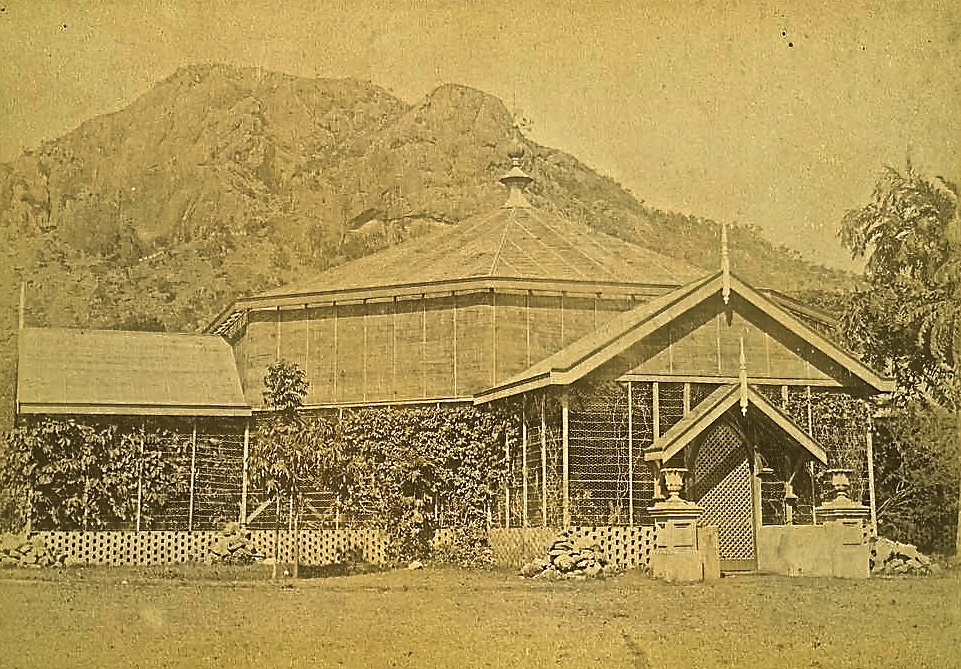
According to Sim, many of the plants cared for and protected in the bush-houses were also displayed in popular verandah gardening. “The verandah was the public showcase for the gardener’s bush-house skills.”
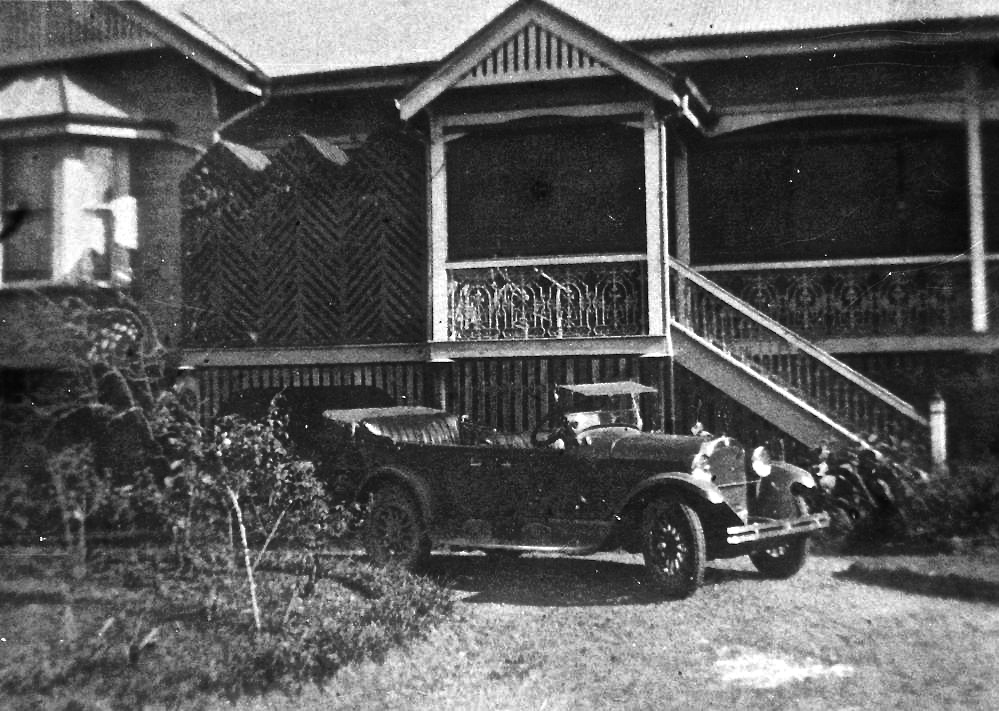
Judging from these photos, bush-houses seem to have been frequently constructed of panels of wood or bamboo lath set at decorative angles.
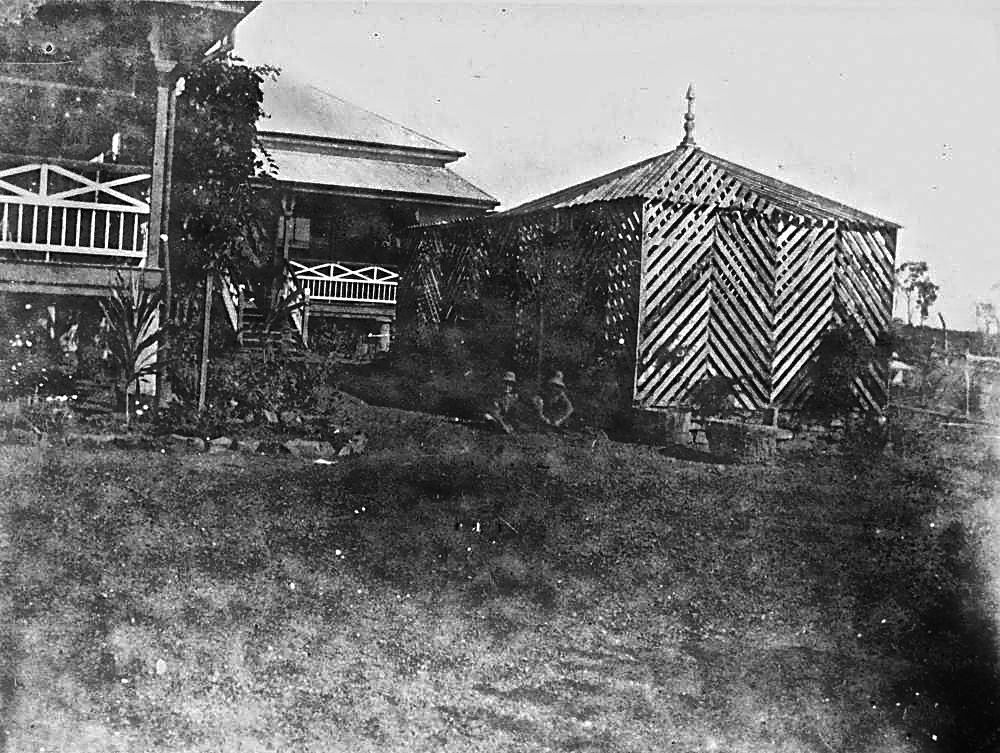
It also appears that many bush- or shade-houses were used as cool(er) places to entertain and relax.
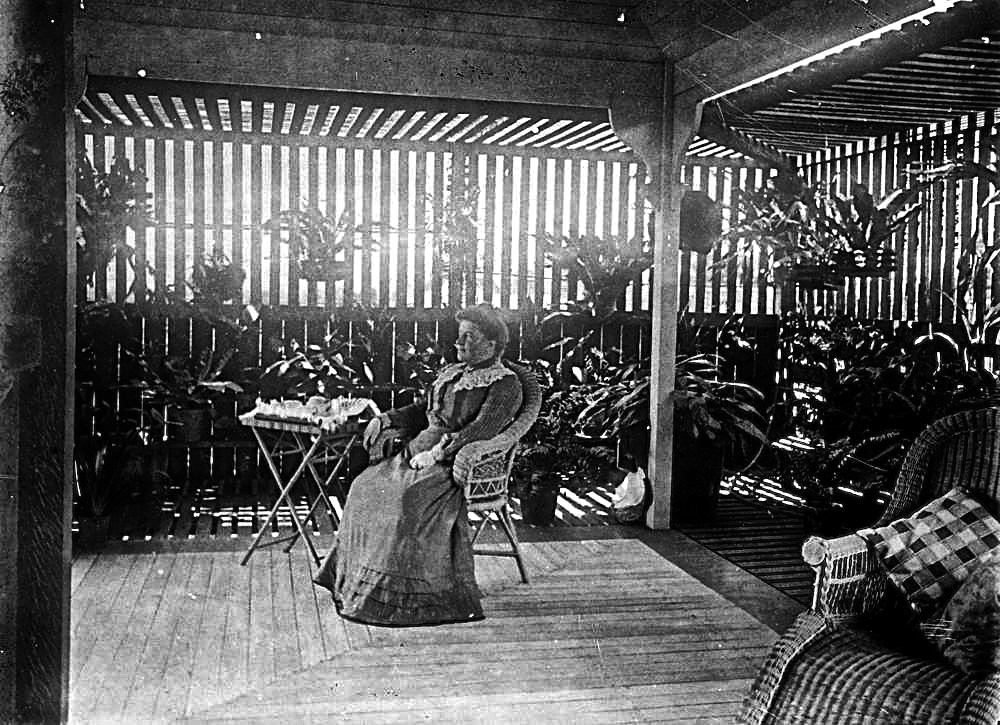
All of these photos are via the Commons Flickr photostream of the State Library of Queensland, Australia.
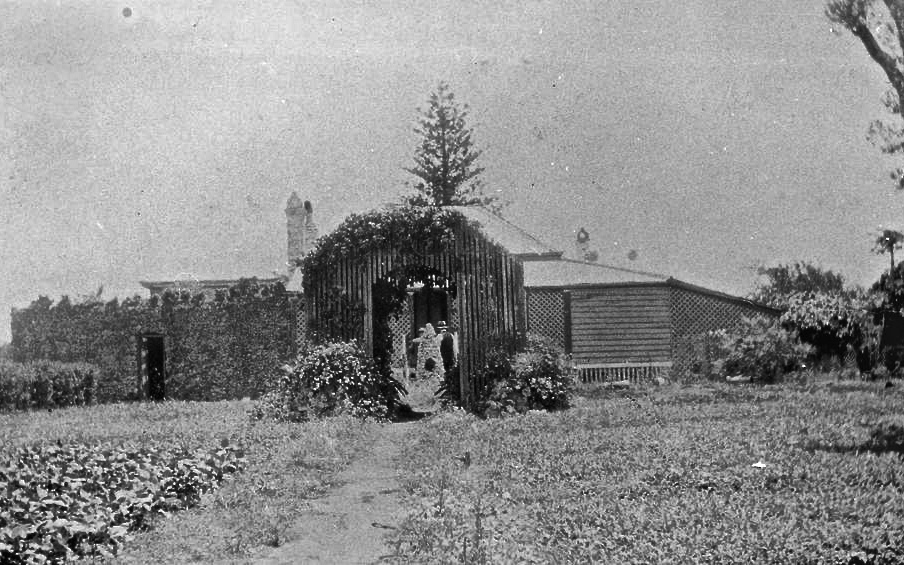
To scroll through larger versions of the pictures, click on ‘Continue reading’ below and then on any of the thumbnails in the gallery.
Continue reading “Vintage landscape: bush-houses in Australia”
Crude seeing’s all our joy. . .*
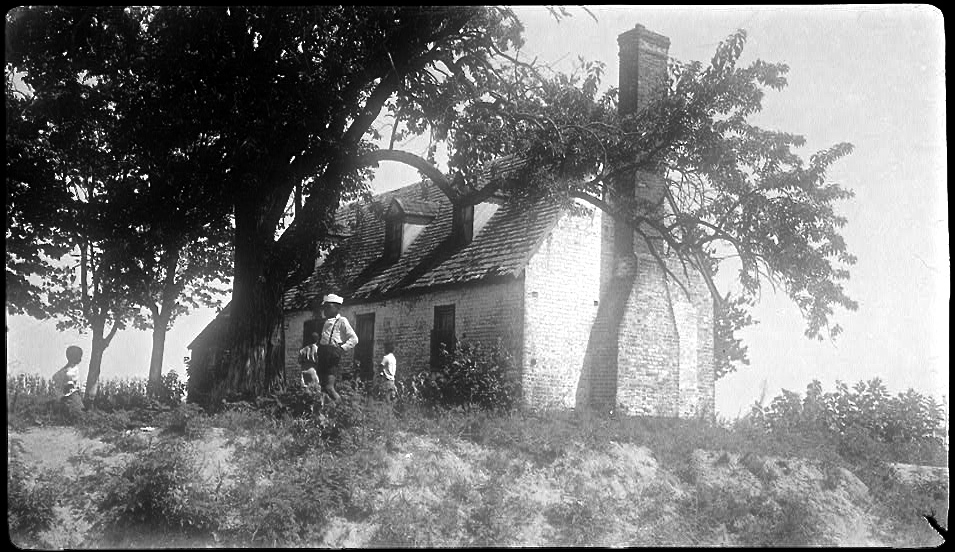 Mount Ephraim, Chincoteague Bay Vicinity, Worcester County, Maryland. Photo taken 1940, by D. H. Smith for the Historic American Buildings Survey (HABS) via Library of Congress Prints and Photographs Division.
*by John Frederick Nims, from “Blind Joy.”
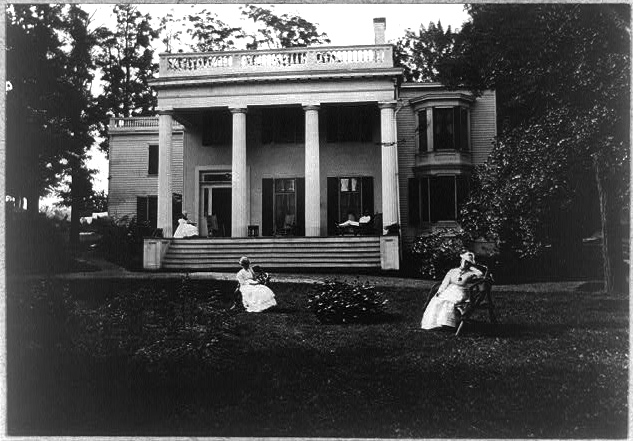
The photo shows Tranquility, the rented summer home of the Theodore Roosevelt family at Oyster Bay Cove, New York, in 1872. The photographer is unknown.
Mr. and Mrs. Roosevelt — the parents of future President Theodore Roosevelt — lounge on the verandah; Edith Kermit Carow (later Mrs. Theodore Roosevelt) and Corinne Roosevelt are on the lawn. The house was demolished in the mid-1940s.
The picture is from scrapbooks Eleanor Butler Roosevelt, daughter-in-law of the President, via the Library of Congress Prints and Photographs Division.
. . . so sweet as drowsy noons,
And evenings steep’d in honey’d indolence;
O, for an age so shelter’d from annoy,
That I may never know how change the moons,
Or hear the voice of busy common-sense!— John Keats, from “Ode on Indolence“

