
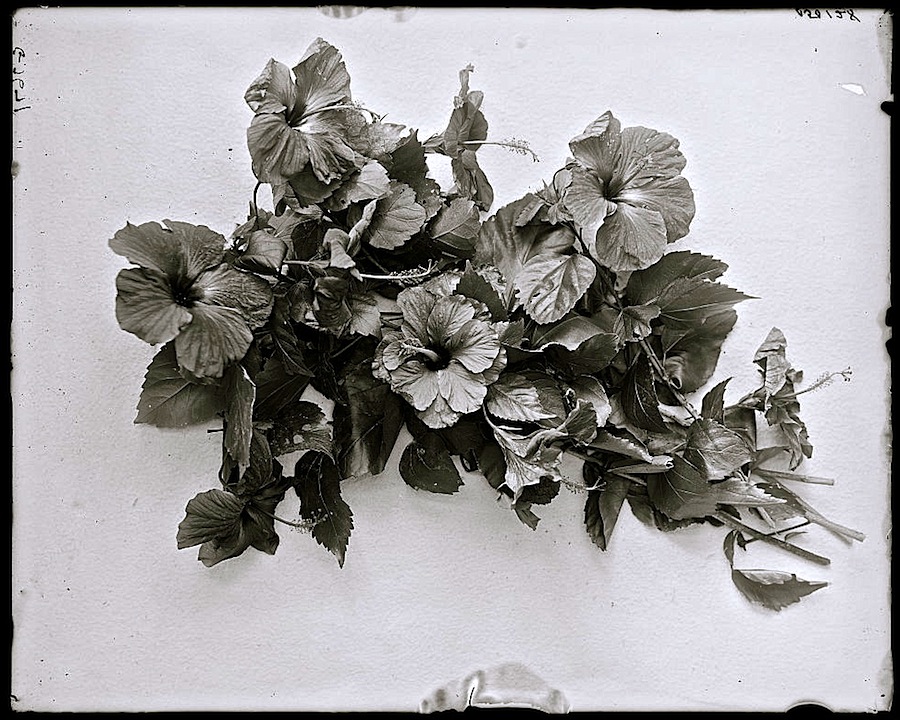
 Palm Beach, Florida, ca. 1900-15, by Detroit Publishing Co., via Library of Congress Prints and Photographs Division.
Where the hibiscus flares would cymbals clash. . . .
— Grace Hazard Conkling, from “Symphony of a Mexican Garden“
Palm Beach, Florida, ca. 1900-15, by Detroit Publishing Co., via Library of Congress Prints and Photographs Division.
Where the hibiscus flares would cymbals clash. . . .
— Grace Hazard Conkling, from “Symphony of a Mexican Garden“
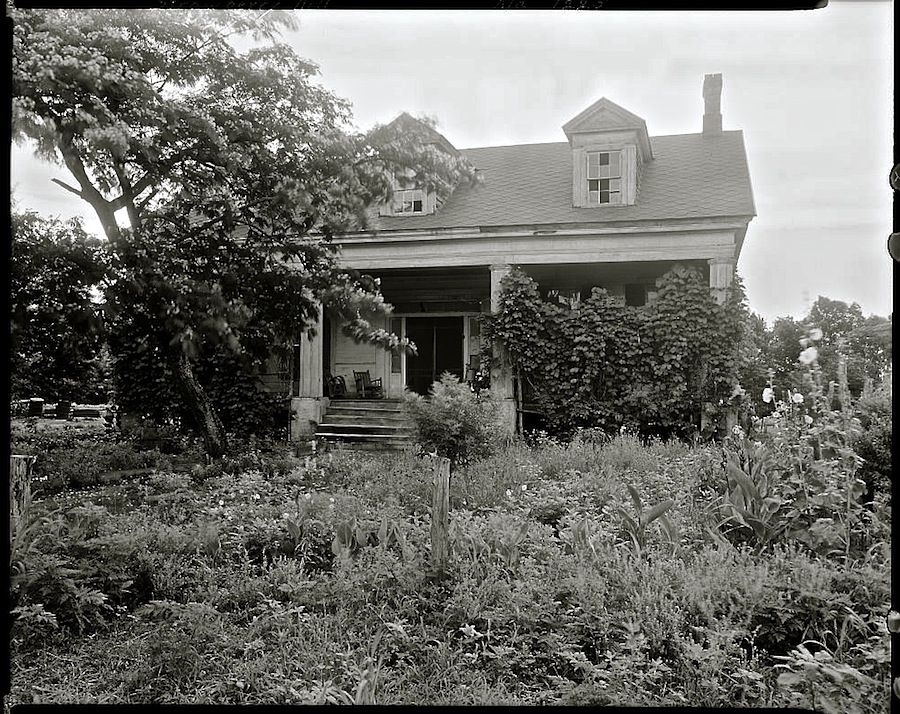 Strawberry Hill, Greene County, Alabama, in 1939. Photo by Frances Benjamin Johnston, via the Library of Congress Prints and Photographs Division. (Click on the image for a larger view.)
I’ve been looking at and bookmarking a lot of old photographs of beautiful porches lately, so today, I’m starting a Sunday series for these pictures.
The porch, particularly the front porch, connects — with a pause — the private interior of the house with the communal landscape beyond it. Andrew Jackson Downing wrote:
A porch strengthens or conveys expression of purpose, because, instead of leaving the entrance door bare, as in manufactories and buildings of inferior description, it serves both as a note of preparation, and an effectual shelter and protection to the entrance. . . .
The unclouded splendor and fierce heat of our summer sun, render this general appendage a source of real comfort and enjoyment; and the long veranda round many of our country residences stands instead of the paved terraces of the English mansions as the place for promenade; while during the warmer portions of the season, half of the days or evenings are there passed in the enjoyment of cool breezes, secure under the low roofs supported by the open colonnade, from the solar rays, or the dews of night.
In his pattern books of the 1840s and 50s, Downing popularized the front porch for the American home as a link to nature.
I see it as a box seat for the theater of the garden or of the street. Although the one above seems to have half drawn its curtains against the buzzing and chirping action of the cottage garden below.
The porch — and 1821 house attached — still exist, although without the vines and flowers. The surrounding land is now a cattle ranch. In fact, it is currently for sale for about $3.8 million.
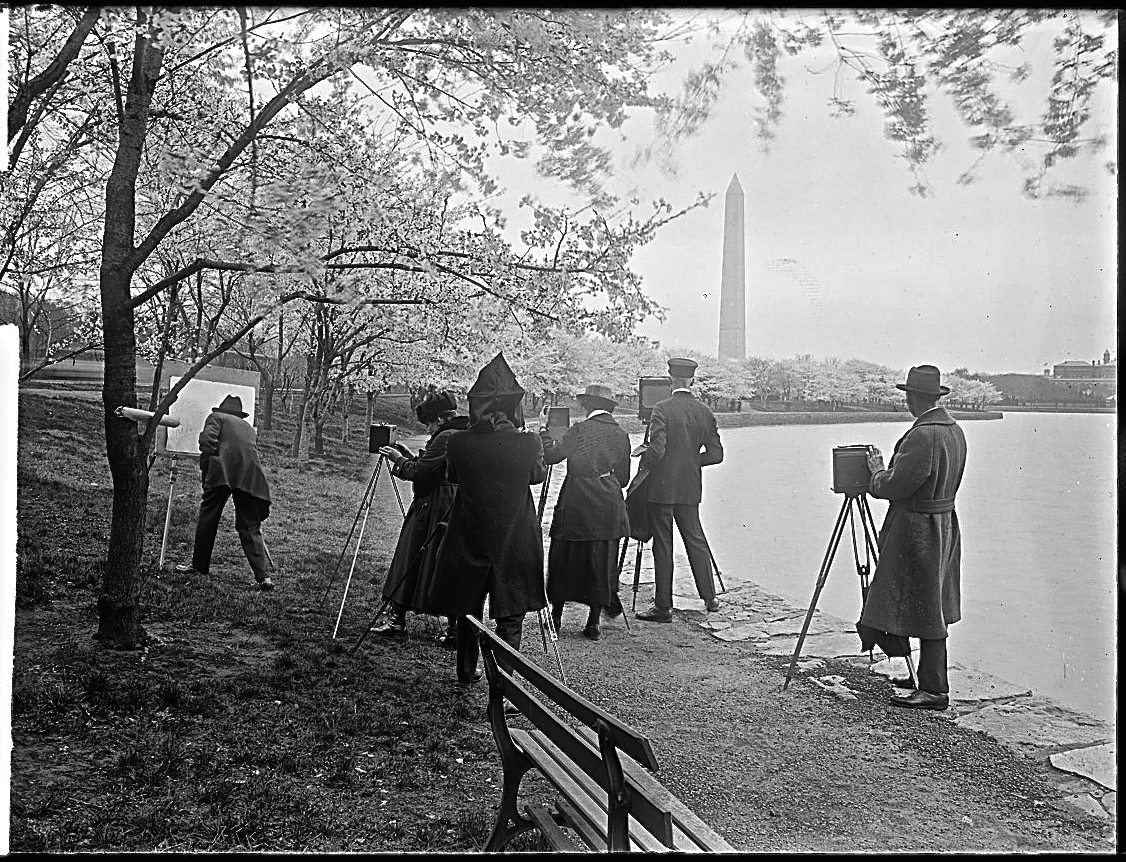
I want to share my recent discovery of D.C. Past, a tumblr blog that is “curating the photographic history” of Washington, D.C.
Kate Birmingham and Guillermo Esteves choose 19th and 20th century photos from the online catalogues of the Library of Congress and the National Archives. However, when shown on D.C. Past, the images are generally much larger and (pretty darn) sharp.
I love this early shot, below, of the Lincoln Memorial — the Reflecting Pool is still only a wetland.
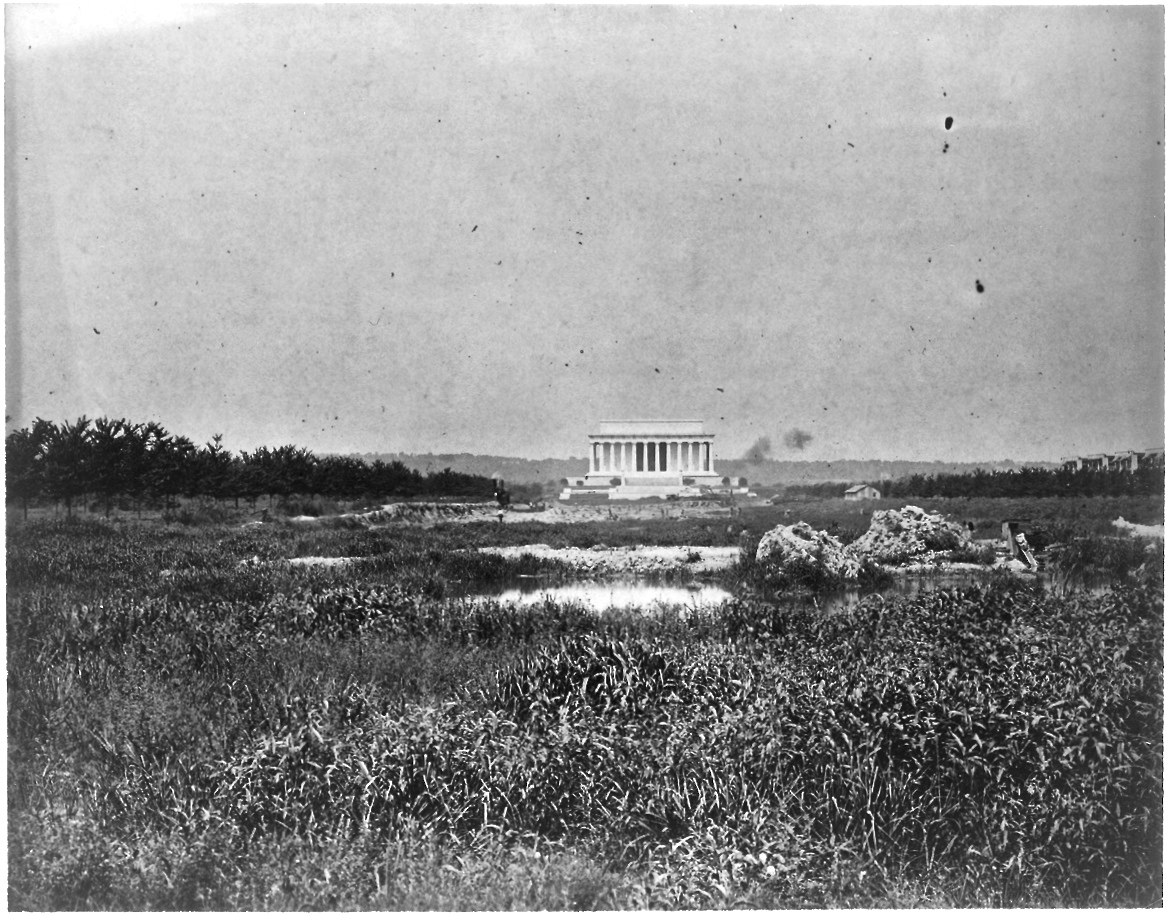
Four years later. . .

You’ll have to go to D.C. Past, here and here, for the “much larger” part.
I like these swimmers below too. They’re in the Tidal Basin. And yesterday’s post was interesting — look at the (lack of) height of the fence.
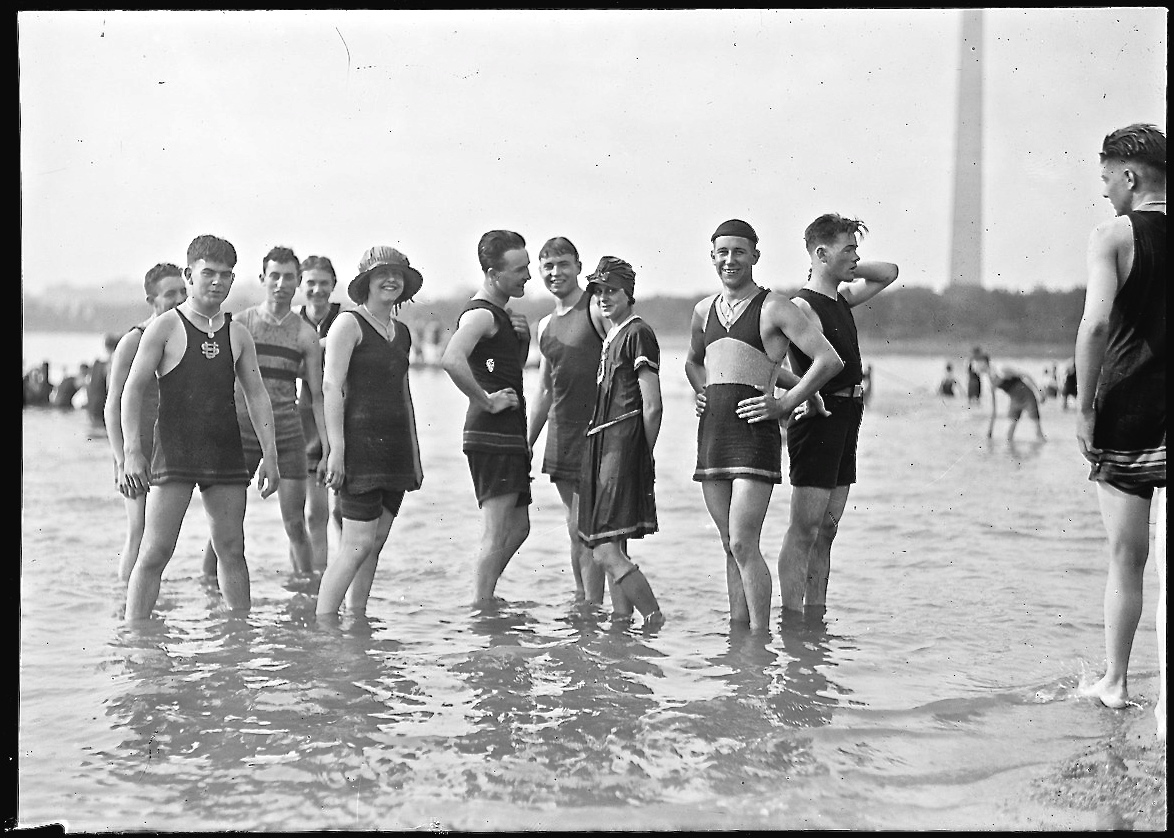
(A link to the photo at the top is here.)
D.C. Past is still rather new; its first picture was posted in March 2013. But this makes it easy to catch up and get hooked.
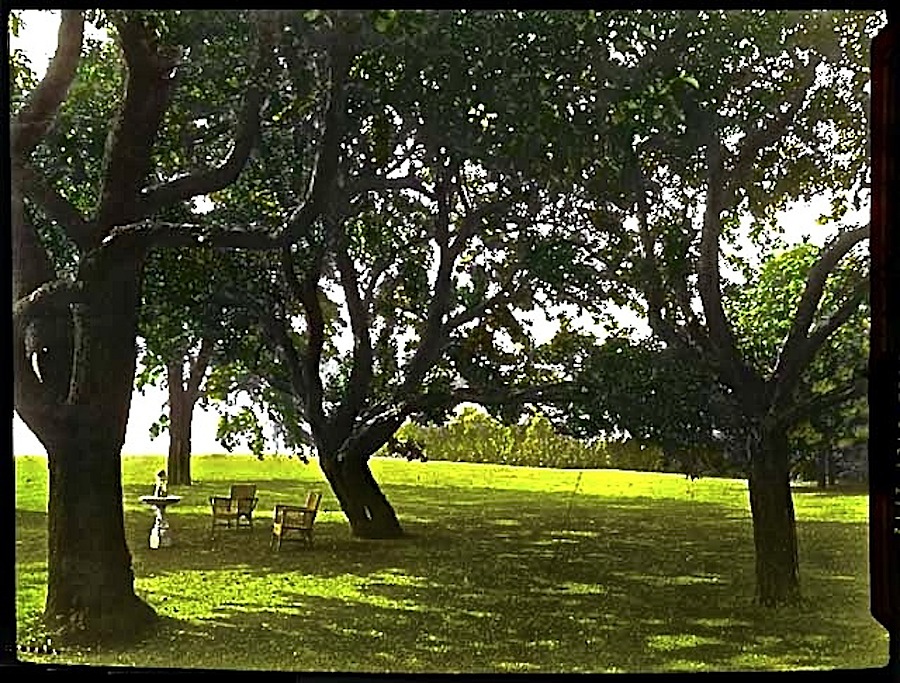
Unidentified garden in Grosse Pointe, Michigan, 1930, photographer unknown, via Archives of American Gardens, Smithsonian Institution Commons on flickr.
Thence thro’ the garden I was drawn—
A realm of pleasance, many a mound,
And many a shadow-chequer’d lawn. . . .— Alfred, Lord Tennyson, from “Recollections of the Arabian Nights“
 I found these early color slides of a 1939 community Fourth of July picnic on St. Helena Island, South Carolina, by Marion Post Wolcott.*
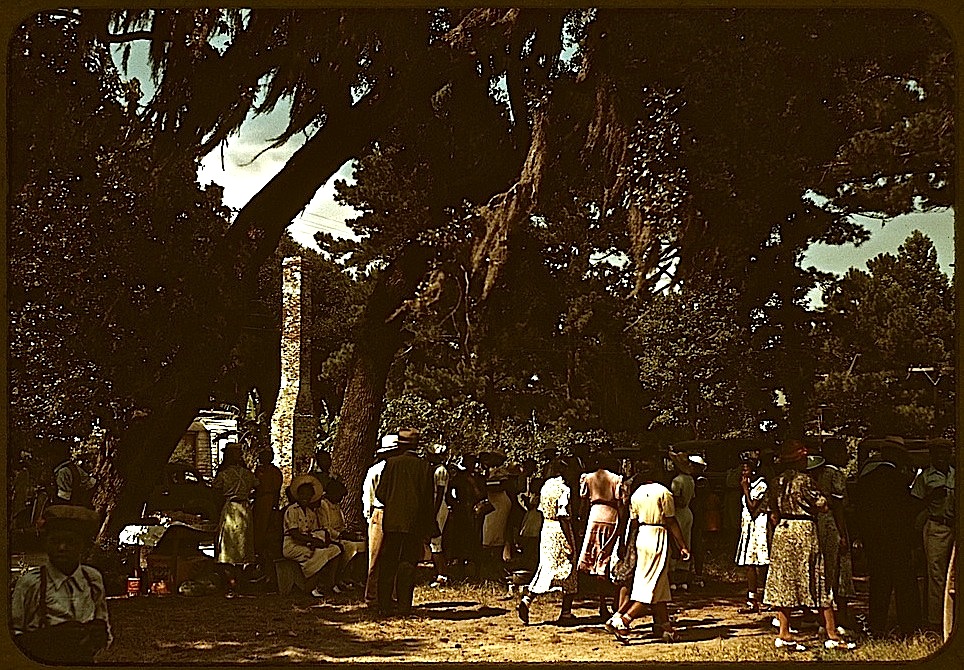 They’re rather shadowy, but still lovely — like old oil paintings.
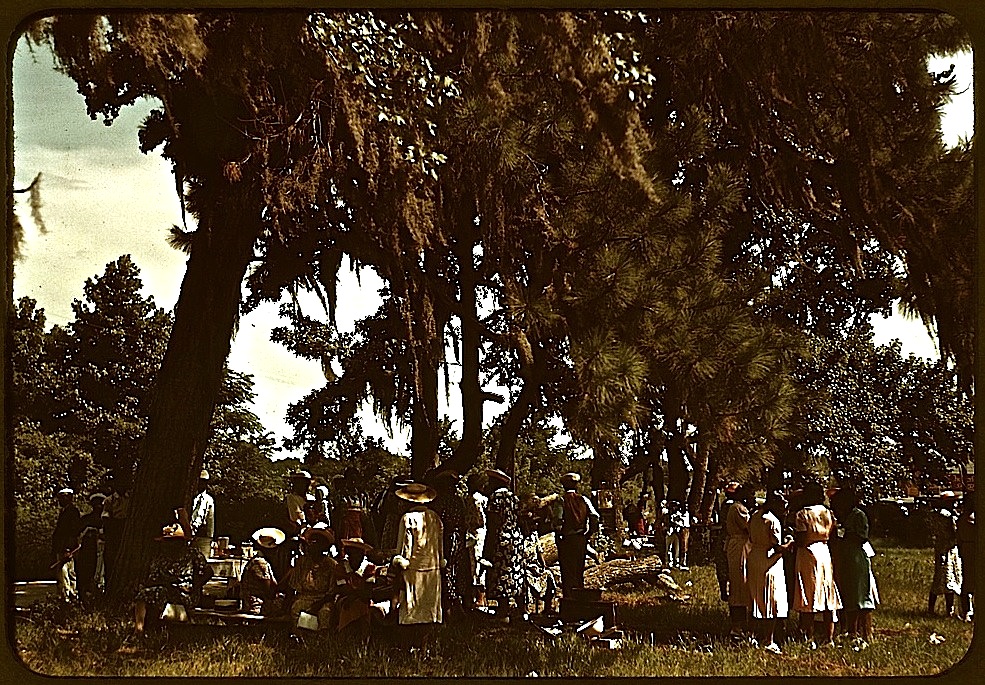 To scroll through larger pictures, click on ‘Continue reading’ below and then on any thumbnail in the gallery. I lightened the images here a little, but those in the gallery are the original versions.
 St. Helena Island is one of the Sea Islands and a center of African-American Gullah culture and language.
 Here in Rwanda, the American Embassy held its Independence Day reception last night. This is because the 4th is Rwandan Liberation Day — when Kigali was liberated in 1994, and the genocide was effectively ended. July 1 is Rwanda’s Independence Day, celebrating the end of Belgian colonialism in 1962.

*via Library of Congress Prints and Photographs Division

