The Sunday porch: Gee’s Bend

Gee's Bend, Alabama, Library of Congress

This porch and its wonderful chairs were in Gees Bend [Boykin], Alabama,  in 1939. The photo was taken by Marion Post Wolcott,* and she captioned it:

Jorena Pettway and her daughter making [a] chair cover out of bleached flour sacks and flower decorations from paper. She also made the chairs and practically all the furniture in the house.

Gee’s Bend is an African-American community located in a large bend of the Alabama River. It has become famous in the last decade for its remarkable quilts.

In 1816, Joseph Gee brought slaves to the area and started a cotton plantation, which was sold in 1845 to the Pettway family. After the Civil War, the farm’s freed slaves remained on the land as sharecroppers and many took the last name of Pettway.

In the winter of 1932-33, the community’s particular isolation — with a small ferry to the east and a bad road to the west — and its dire poverty came to the attention of the Red Cross, which sent a boatload of flour and meal.   It began receiving Resettlement Agency assistance in 1935, and the Agency purchased the plantation in 1937. By 1939, when the Farm Security Administration sent Wolcott to take photos, there had been a number of improvements, such as new homes (one is pictured above).

In 1962, when residents began trying to register to vote, the local government eliminated the ferry service, which connected Gee’s Bend to the county seat of Camden. Without it, people of the community had to drive more than an hour to reach the town. The ferry service remained closed until 2006.

In 2002, an exhibition of quilts made by the women of Gee’s Bend opened at the Museum of Fine Arts in Houston and then traveled to the Whitney Museum in New York City. Another show in Houston and at the Smithsonian Institution followed in 2006. The New York Times art critic, Michael Kimmelman, called the quilts on display “some of the most miraculous works of modern art America has produced.”

In August of the same year, the United States Postal Service released ten stamps picturing Gee’s Bend quilts sewn between 1940 and 2001.

The U.S. Embassy in Rwanda has three Gee’s Bend quilts by Mary Lee Bendolph and Loretta Bennett in its permanent art collection.


*Via Library of Congress Prints and Photographs Division.
Vintage landscape: California living

Back yard, Turlock, CA, 1943, by Russell Lee, Library of Congress

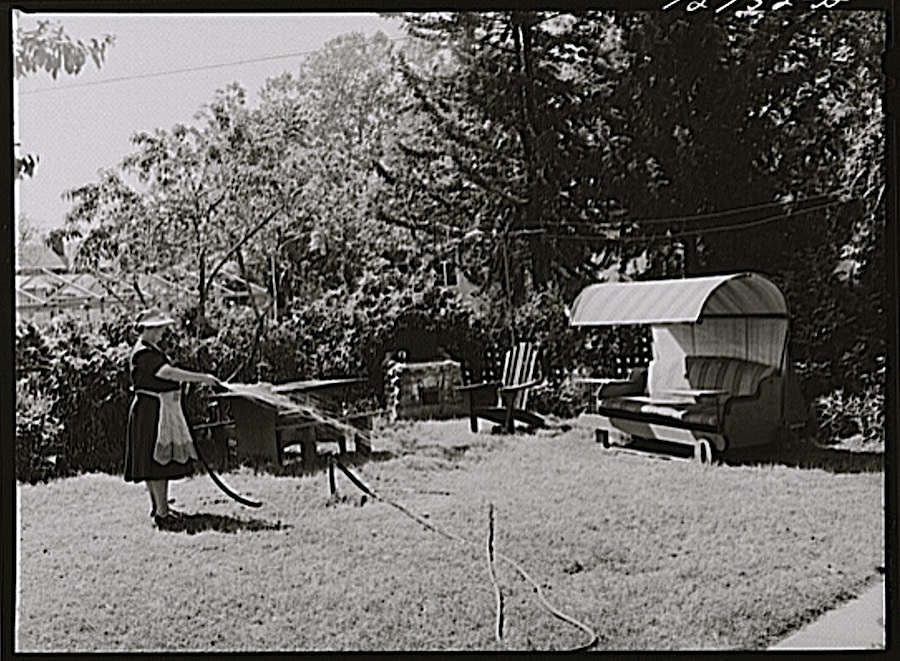
I just like this life-in-the-garden photo by Russell Lee, * of a (May) 1942 Turlock, California, backyard.  (Unfortunately, it’s not very sharply focused.)  The caption, possibly by the photographer, reads:

Housewife waters the lawn. All garden furniture and barbecue pit were made by her husband; about one out of every three houses in this town has such an arrangement in the backyard, and during the summer months people eat and spend many hours in their yards.

I particularly like the rolling sofa thing with the awning.  Turlock is located in central California between Modesto and Merced.

Lee was working for the Farm Security Administration/Office of War Information at the time.  He seems to have been sent to Turlock to photograph townfolks being resilient in the face of changes brought on by the war.  He took a number of photographs of this family, described in the Library of Congress online catalogue as from the “upper middle income group.”

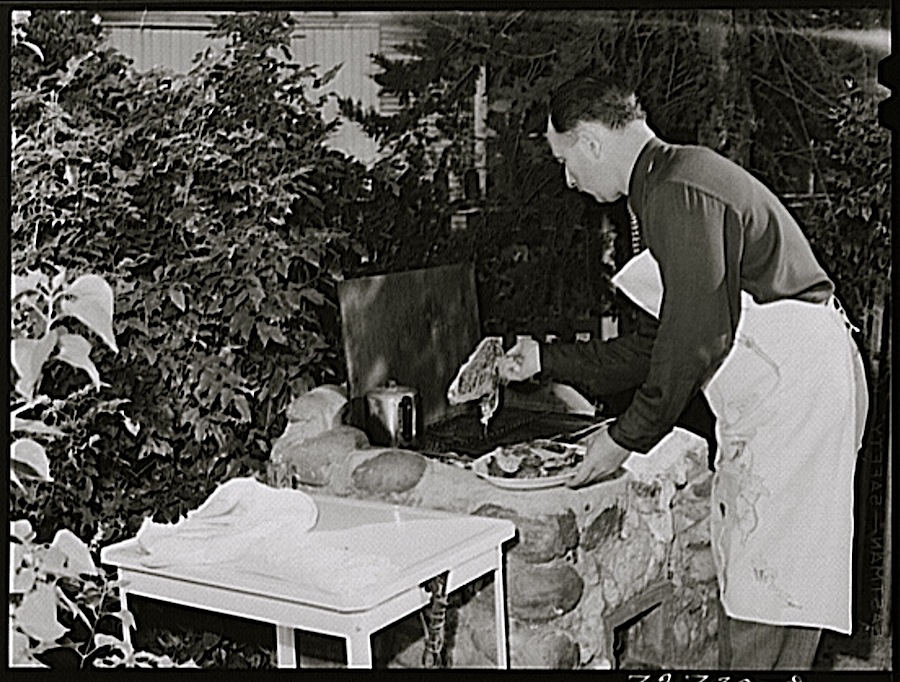
Grillling steaks, Turlock, CA, 1943, by Russell Lee, Library of CongressAbove: “Man of the house barbecues steaks over open grill in his backyard. This family keeps vegetables, fruits and meats in frozen food lockers in town.”

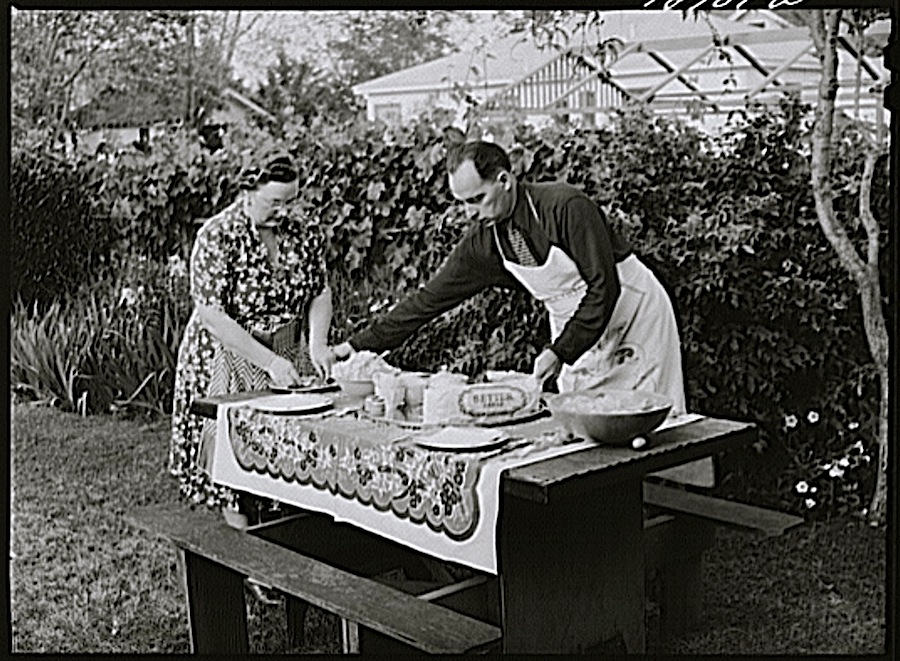
Setting the table, Turlock, CA, 1943, by Russell Lee, Library of CongressAbove: “Husband and wife get ready for dinner in their backyard. Menu: barbecued steaks, fresh peas, potato salad, potato chips, celery and olives, strawberry shortcake, and coffee.”

The package around the loaf of bread says, “Better Bread.”  Over the hedge, the neighbors seem to be putting in a greenhouse.

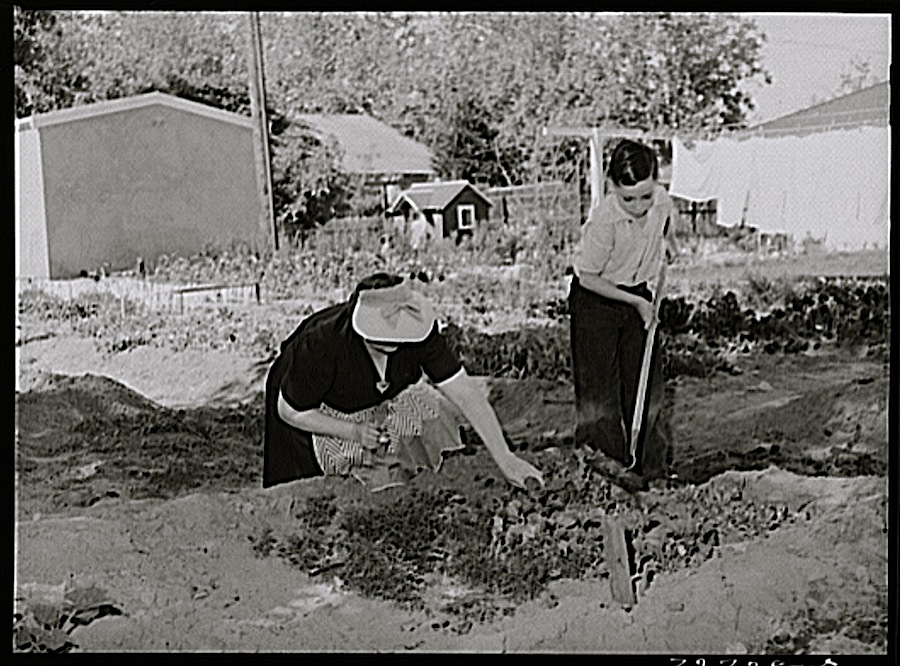
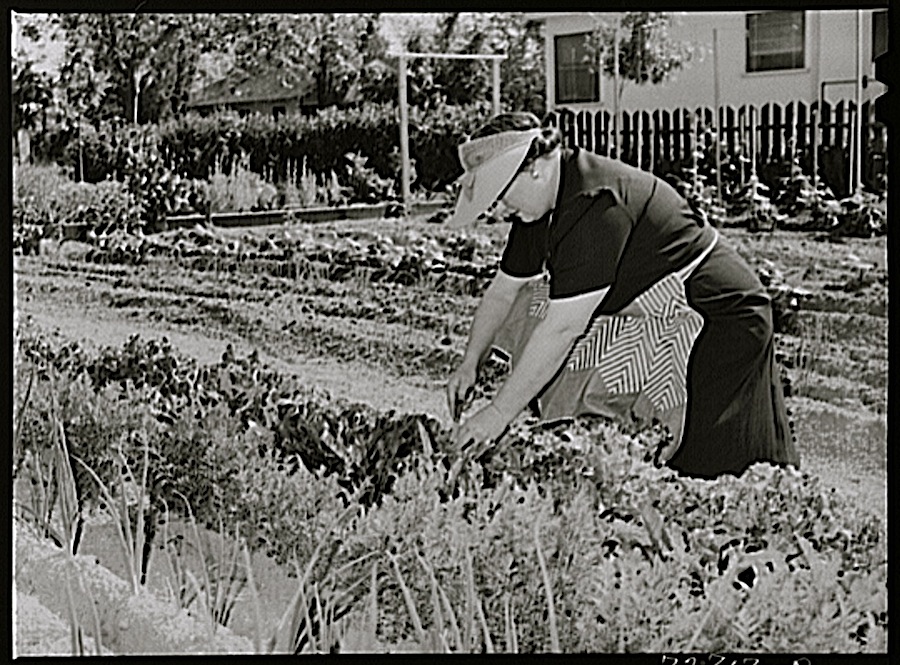
Tending the garden, Turlock, CA, 1943, by Russell Lee, Library of CongressAbove: “Housewife works in her vegetable garden. She lives in small town where there is ample space for gardens; says she would move to country if she couldn’t have a garden in town.”

It’s quite impressive — and particularly that she works it in a dress.  Here’s another view, below:

Son's garden, Turlock, CA, 1943, by Russell Lee, Library of CongressAbove: “Housewife helps her son with his garden.”

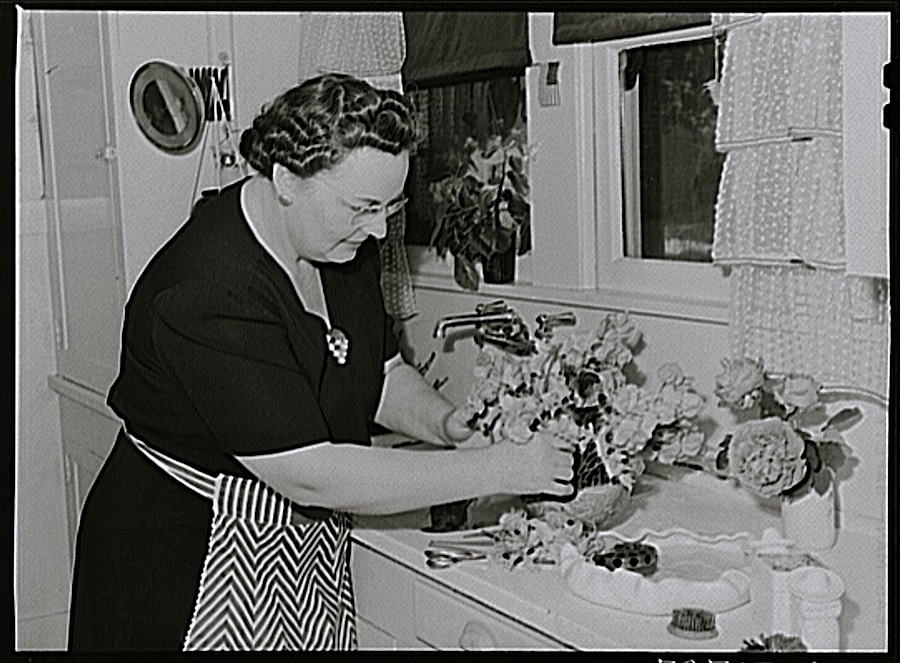
Arranging flowers, Turlock, CA, 1942, by Russell Lee, Library of CongressAbove: “Housewife arranging flowers in her kitchen.”

I like her dotted swiss curtains.

I’m going to take a break from blogging for a few weeks (except for “The Sunday porch”), but I’ll be back for GB Bloom Day in October.


* All photos here via Library of Congress Prints and Photographs Division.
Vintage landscape: into the beautiful

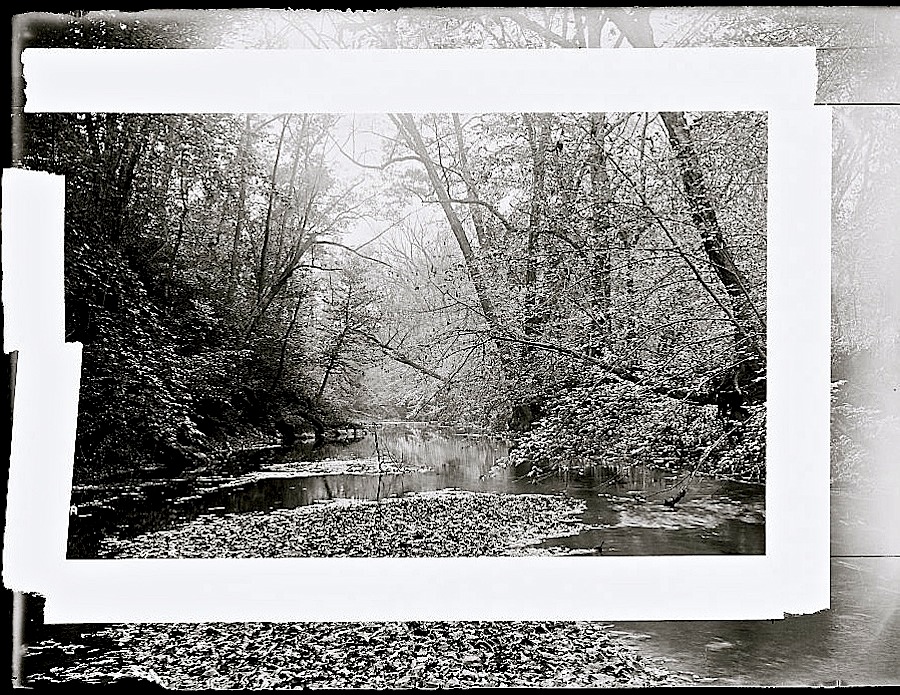
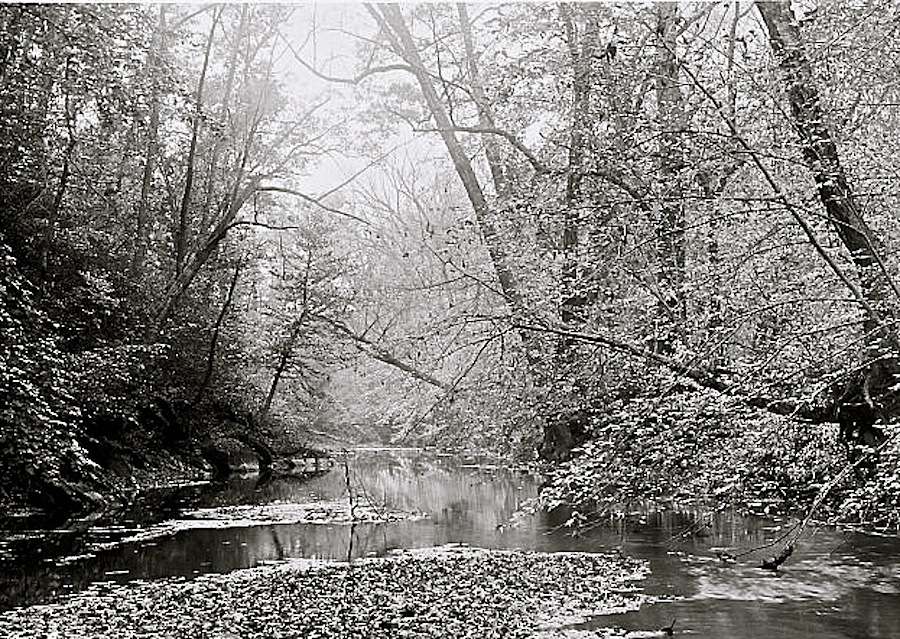
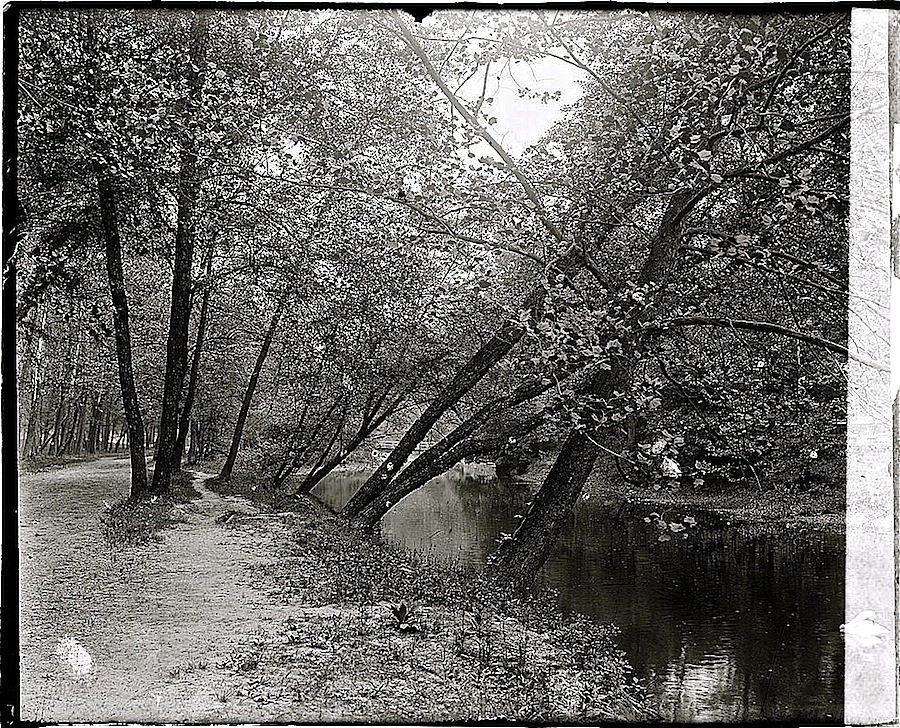
Rock Creek Park, Washington, D.C., ca. 1918-20, Natl. Photo Co. Collection, Library of CongressRock Creek Park in Washington, D.C., ca. 1909-32, photographers unknown.

As imperceptibly as Grief
The Summer lapsed away—
Too imperceptible at last
To seem like Perfidy—

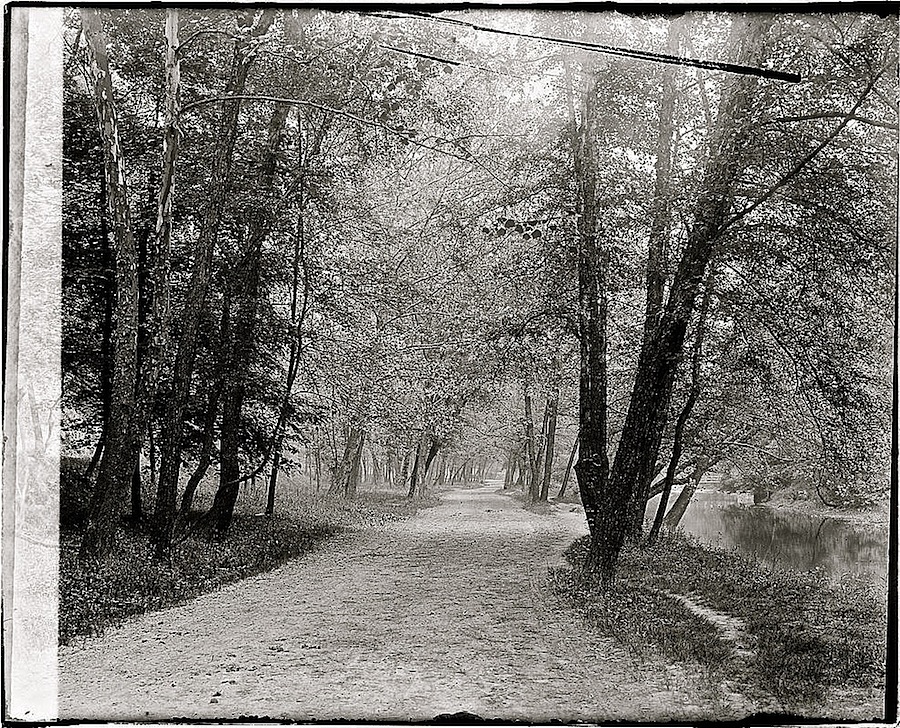
Rock Creek Park, Washington, D.C., ca. 1918-20, Natl. Photo Co. Collection, Library of Congress

A Quietness distilled
As Twilight long begun,
Or Nature spending with herself
Sequestered Afternoon—

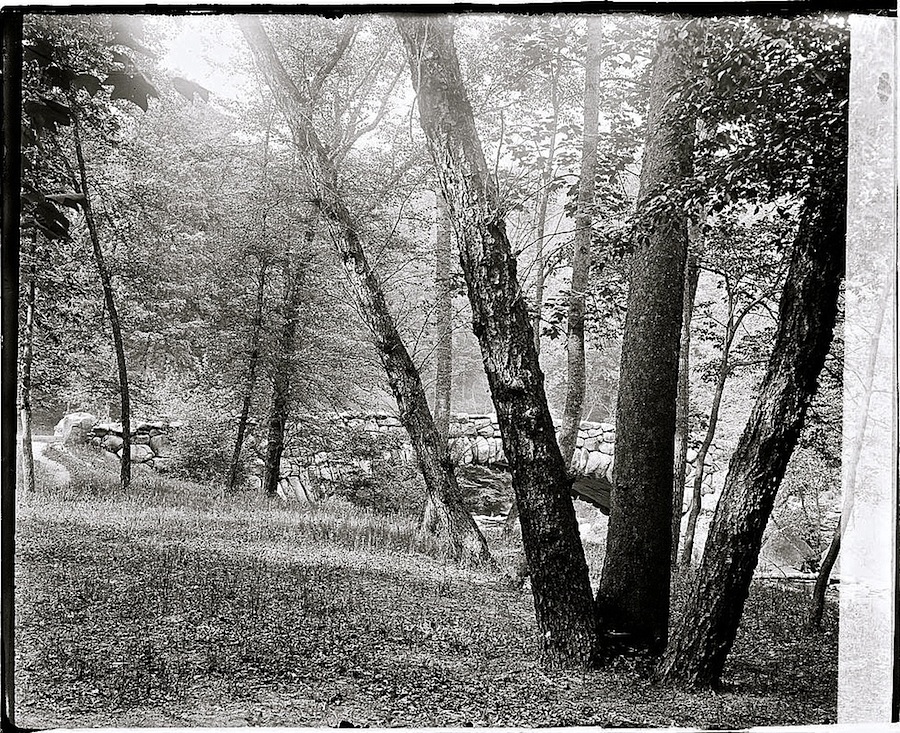
Rock Creek Park, Washington, D.C., ca. 1918-20, Natl. Photo Co. Collection, Library of Congress

The Dusk drew earlier in—
The Morning foreign shone—
A courteous, yet harrowing Grace,
As Guest, that would be gone—

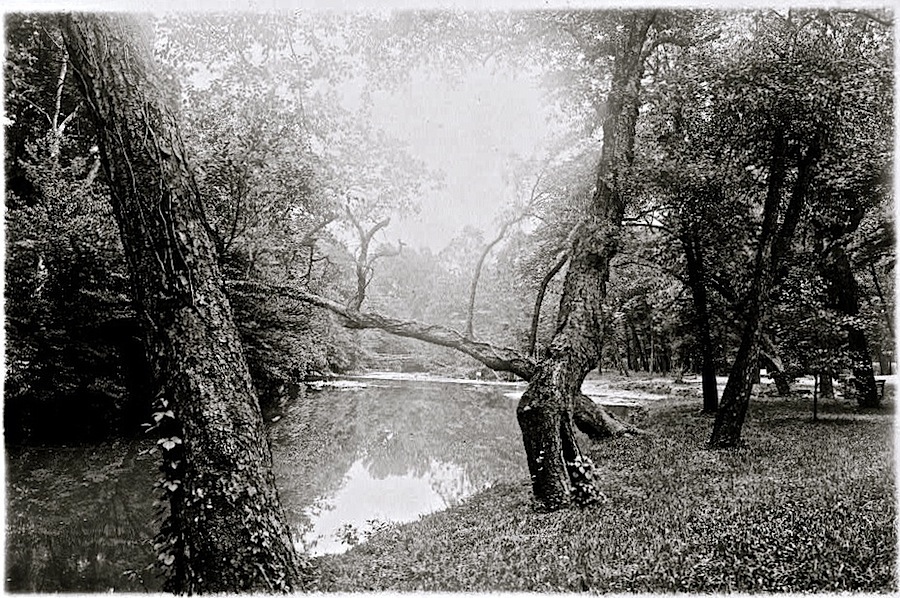
Rock Creek Park, Washington, D.C., ca. 1918-20, Natl. Photo Co. Collection, Library of Congress

And thus, without a Wing
Or service of a Keel
Our Summer made her light escape
Into the Beautiful.

Emily Dickinson, Poem 1540 (Johnson 523)

 
Rock Creek Park, Washington, D.C., ca. 1918-20, Natl. Photo Co. Collection, Library of Congress

All photos via National Photo Company Collection, Library of Congress Prints and Photographs Division — first two: ca. 1909-23; last: ca. 1909-32; all others: ca. 1918-20.

The almost 2,000-acre Rock Creek Park was established in 1890, making it one of America’s oldest national parks.

Rock Creek Park, Washington, D.C., ca. 1918-20, Natl. Photo Co. Collection, Library of Congress

The Rock Creek Park Day 2013 Festival will be held next Saturday, September 28, to celebrate the park’s 123rd. birthday.  For more information, click here.

The Sunday porch: Ellen Glasgow house, Richmond

Preserve, within a wild sanctuary, an inaccessible valley of reveries.
— Ellen Glasgow

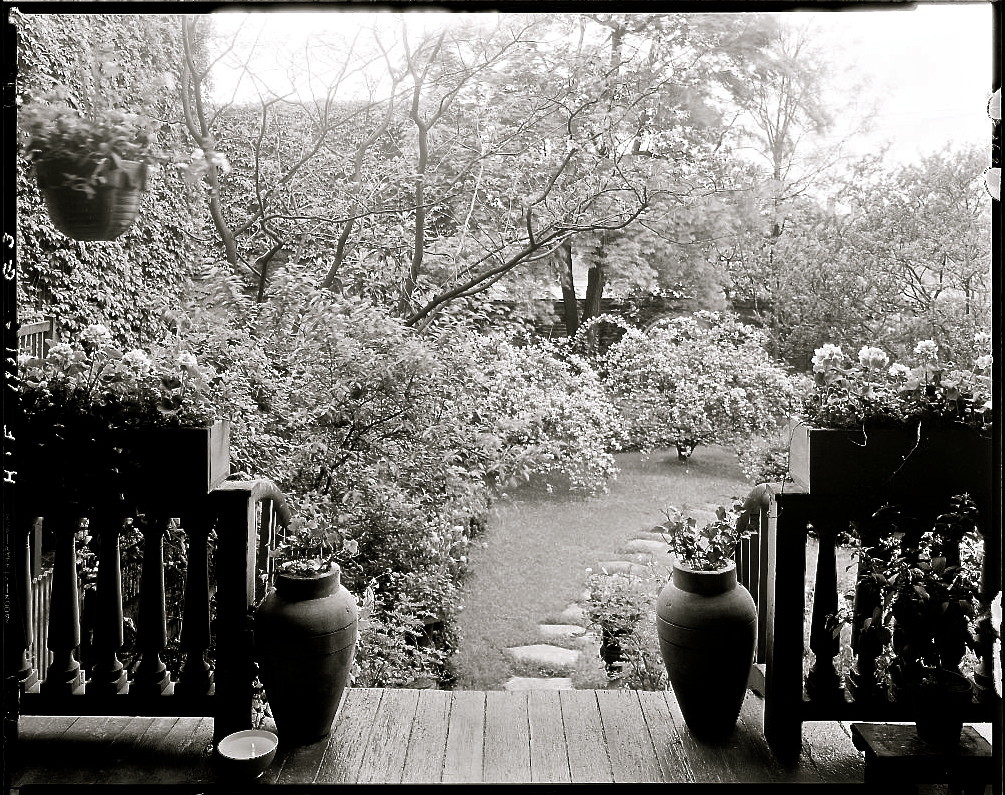
The Sunday porch/enclos*ure: Ellen Glasgow Hse., Richmond, ca. 1930s, F.B. johnston, Library of CongressView from the back porch of the home of novelist Ellen Glasgow, Richmond, Virginia, ca. 1930s, by Frances Benjamin Johnston, via Library of Congress Prints and Photographs Division.  (Click here for a larger view.)
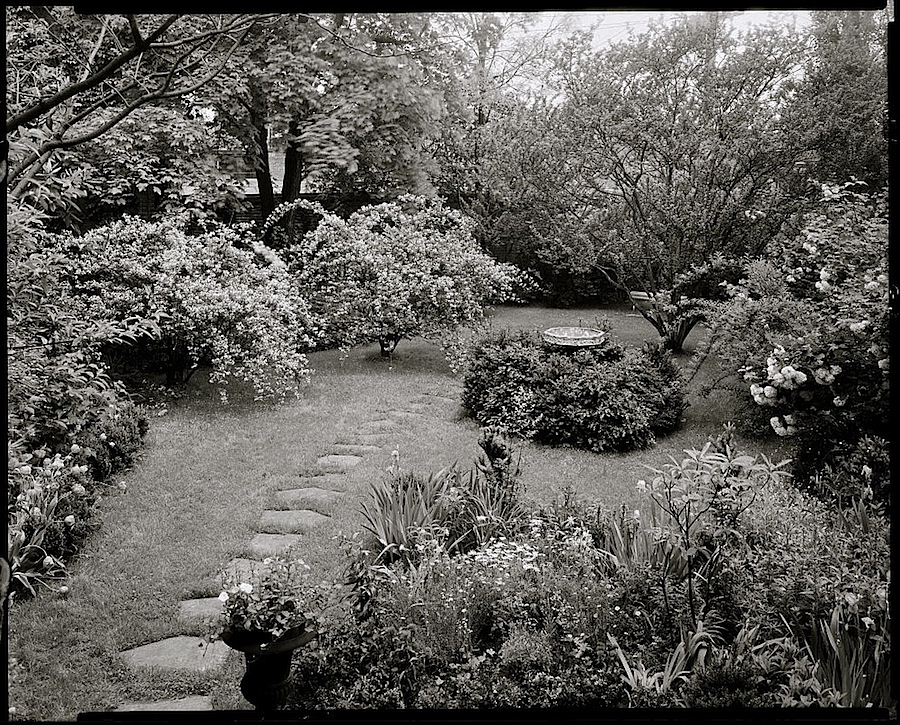
Ellen Glasgow House, 1930s, Richmond, by Frances Benjamin Johnston, Library of Congress

Glasgow published 19 novels and an autobiography — The Woman Within — about life in Virginia. Their realism “helped direct Southern literature away from sentimentality and nostalgia.”

Her books were selling briskly in the 1930s, when these pictures were taken, and she won the Pulitzer Prize in 1942.

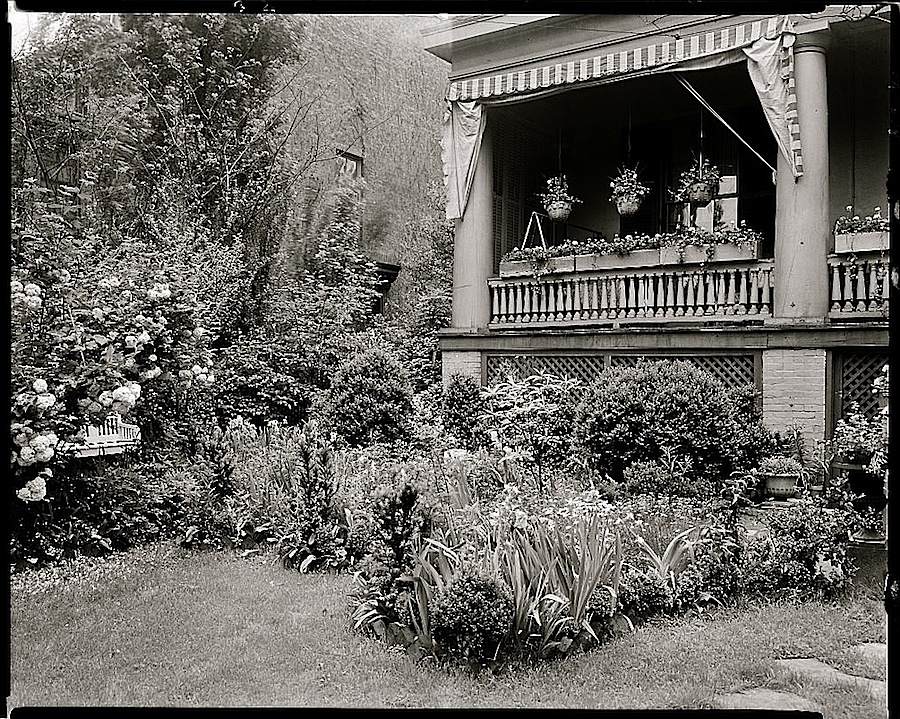
Ellen Glasgow House, 1930s, Richmond, by Frances Benjamin Johnston, Library of CongressHer home was built in 1841, and Glasgow lived there from the time her father bought it in 1887, when she was about 13, until her death in 1945.

Ellen Glasgow House, 1930s, Richmond, by Frances Benjamin Johnston, Library of CongressIt is now owned by the Association for the Preservation of Virginia Antiquities but is not open to the public.

The Sunday porch: Wiseman, Alaska

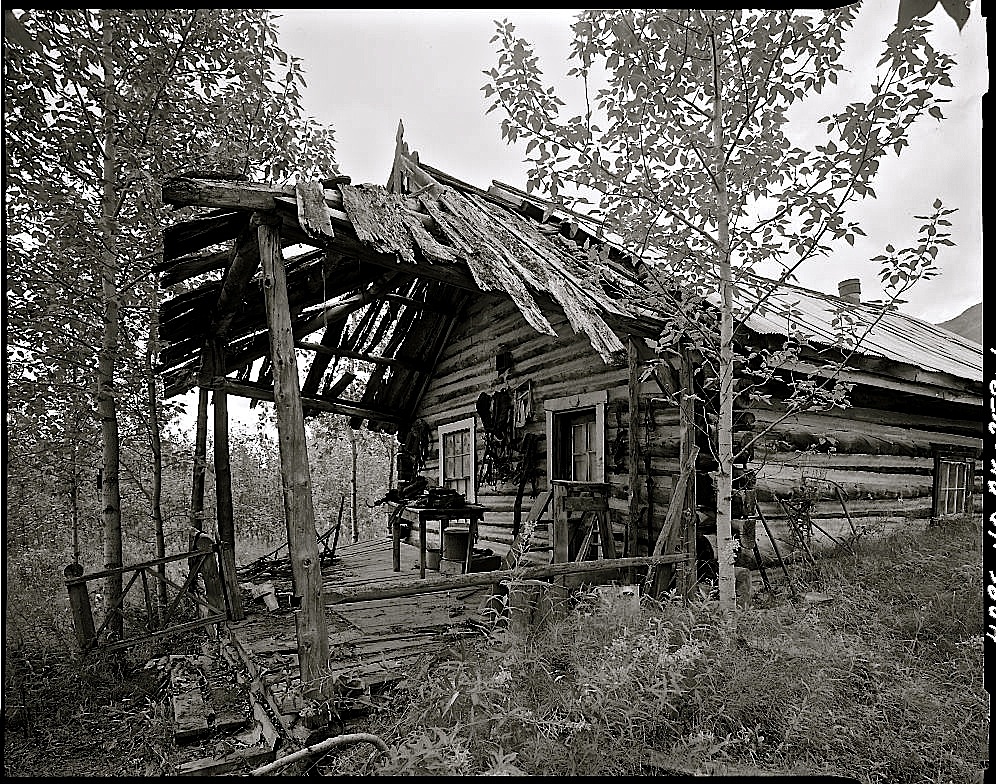
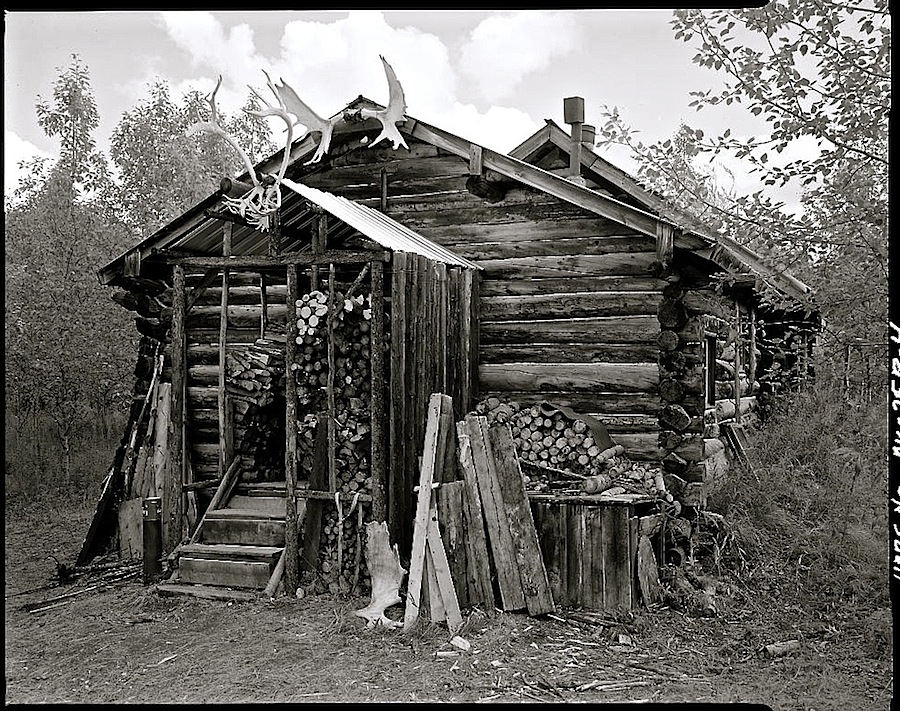
Igloo No. 8 by Jet Lowe, Library of CongressFront porch near the Koyukuk River at Wiseman Creek, Wiseman, Alaska, July 1984. Photo by Jet Lowe for an Historic American Buildings Survey (HABS), via the Library of Congress Prints and Photographs Division.
For over six decades, this little porch sheltered many hours of masculine leisure and conviviality. In 1913, it fronted the Siverly and Bowker Saloon.  The following year, the building was sold to the Pioneers of Alaska and used as one of its local chapters — an ‘Igloo;’ it was Igloo No. 8.   The Pioneers, a fraternal organization, was formed in 1907 “for social purposes to keep alive the memories of the early trailblazers.”

By 1972, the building had been sold again.  At the time of these photos, it was the home of the owner’s son.

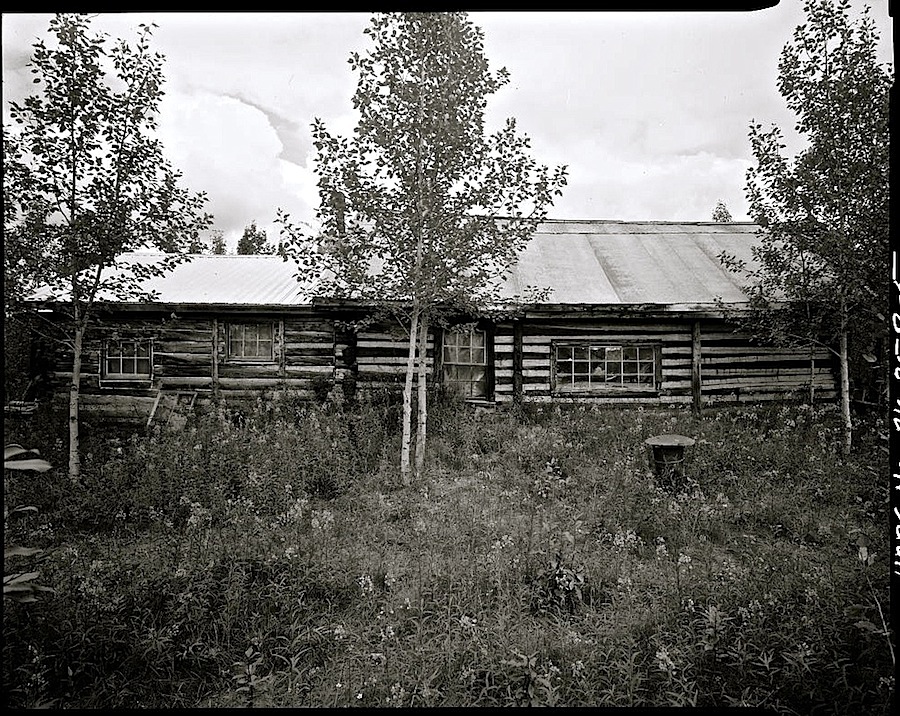
Igloo No. 8, HABS, Library of CongressAbove is the back porch and entrance to the kitchen.

Igloo #8, HABS, Library of CongressAbove is the side view. The flowers and birch trees are so pretty; it’s a pity we don’t have a picture of the view from the front porch. All photos by Jet Lowe.