The Sunday porch: Wellington

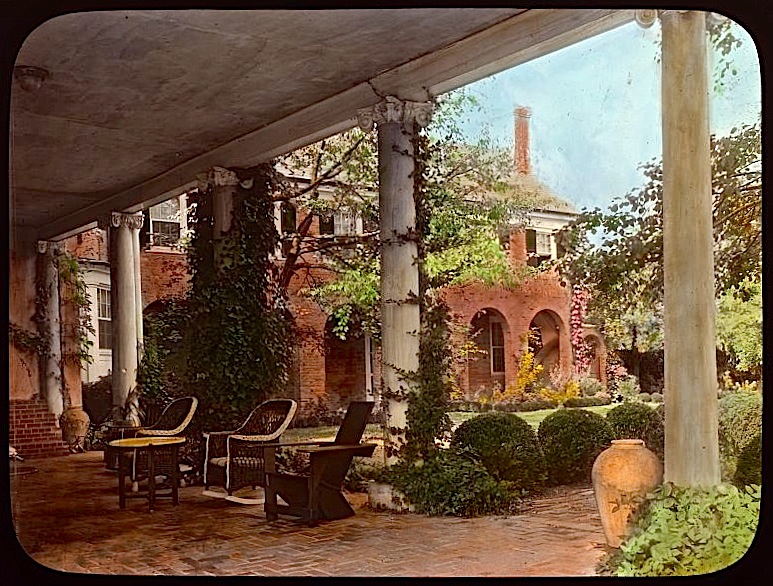
The Sunday porch/enclos*ure: Wellington, now River Farm, about 1931, Alexandria, VA, via Library of Congress.“Wellington,” near Alexandria, Virginia, 1931, hand-colored glass lantern slide by Frances Benjamin Johnston, via Library of Congress Prints and Photographs Division.

The white columned, ground-level porch wrapped around two and a half sides of one wing of the house.  I like the black and white wicker rockers and those terracotta jars.

Today, the house (built in 1757) and its surrounding 25 acres are the headquarters of the American Horticultural Society (AHS) and are called River Farm.

George Washington originally gave the property that name after he purchased it in 1760.  It was then 1,800 acres in size and became one of his five farms around Mount Vernon.

During the 1800s, the property, re-named Wellington, passed through several owners’ hands, becoming progressively smaller in size.  It was only 280 acres in 1919, when it was purchased by local businessman Malcolm Matheson, who restored the house and gardens.

In 1971, when Matheson wanted to retire to Florida, the house and (then) 27 acres were bought by the AHS.  The funds for the purchase had been donated by board member Enid A. Haupt — partly to help the AHS, but also to keep the last of George Washington’s old farm out of the hands of the Soviet Embassy, which had wanted to buy it as a summer dacha for its employees.

Today, River Farm is open to the public  weekdays, from 9:00 a.m. to 5:00 p.m. From April through September, it is also open on Saturdays, from 9 am to 1 pm. Admission is free.

And, of course, it can be rented for weddings and events.

A gardyn saw I, ful of blosmy bowes
Upon a ryver, in a grene mede,
There as swetnesse everemore inow is,
With floures whyte, blewe, yelwe, and rede

— Geoffrey Chaucer, from “The Parlement of Foulys

The Sunday porch: the begonia

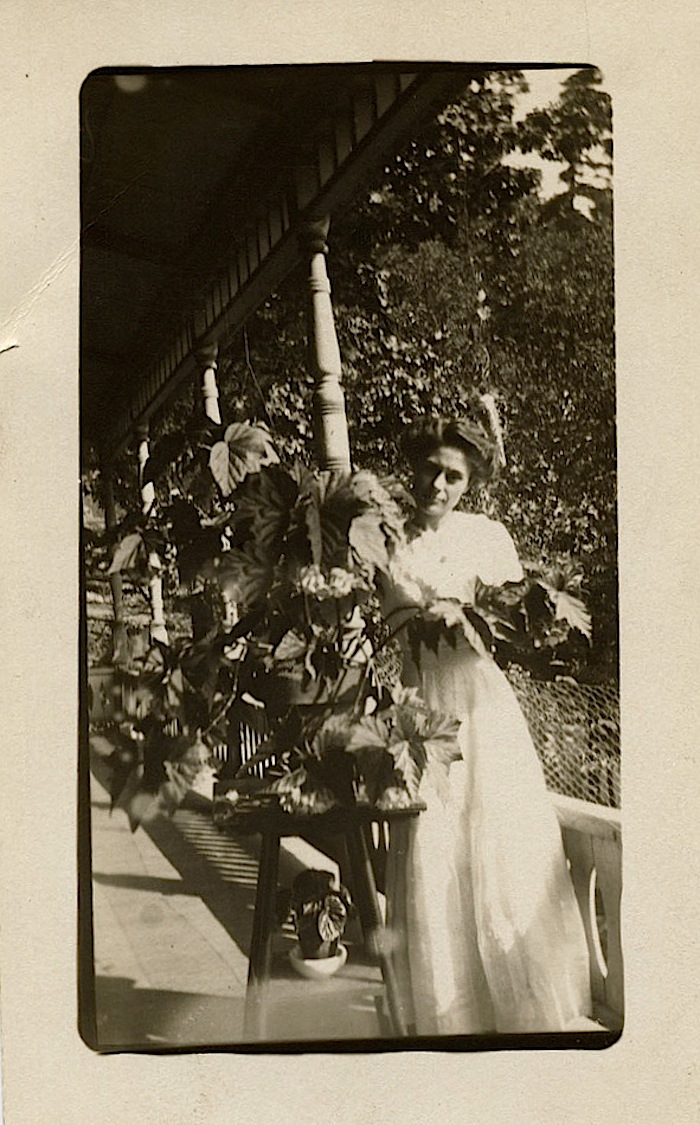
The Sunday porch/enclos*ure: woman with begonia, via Texas State Archives on flickr“Woman standing beside potted begonias on porch, message from Rosa to Alice on back.” Via the Samuel Bell Maxey Collection of the Texas State Archives Commons on flickr.

Beautiful plant. Conditions must have been ideal on the porch.  Or  was it recently evicted from the living room for taking up too much space?

Unfortunately, Rosa’s message to Alice is not revealed. A thank you note for the original cuttings?  Or just a little gardening conversation/showing off?

I’m also curious about whether the chicken wire all along the front railings was supporting vining plants or keeping animals (or even chickens) back.

The Archives’ photostream gives no information on the photographer, location, or date for this image.  The Samuel Bell Maxey Collection includes the late 19th and early 20th century photographs of the Maxey family of Paris, (northeastern) Texas.

The Sunday porch: dogtrot in Texas

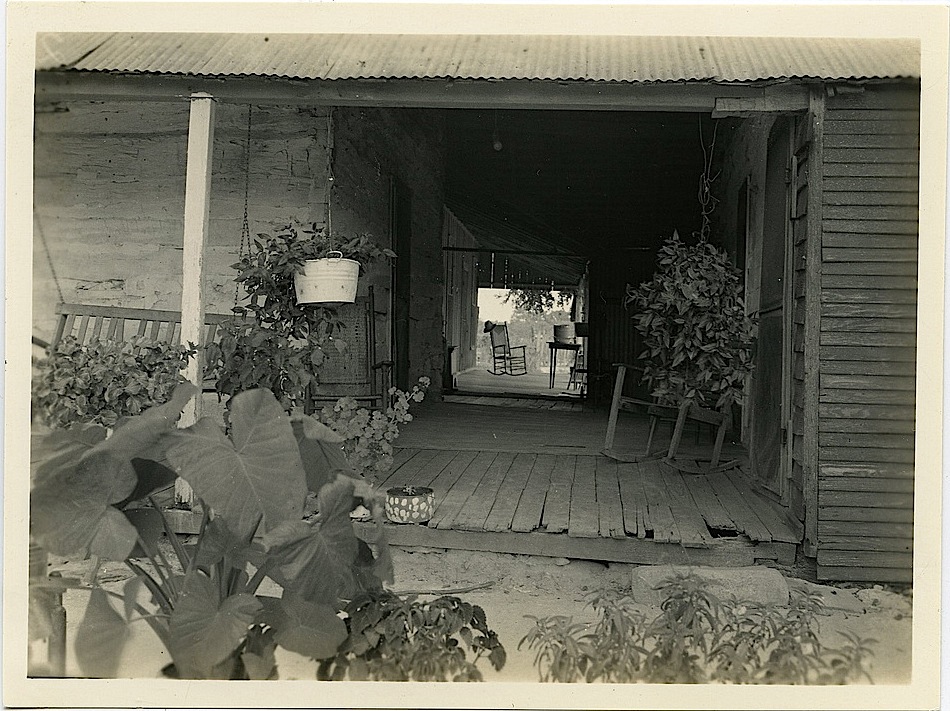
The Sunday porch/enclos*ure: dogtrot in Texas, 1935, probably by Fanny Ratchford, via Texas State Archives Commons on flickr“Unidentified Dogtrot* House” in Texas (exact location unknown), 1935, probably** taken by Fanny Ratchford, via Texas State Archives Commons on flickr.

Fannie Elizabeth Ratchford was a librarian who worked in the rare books collection of the University of Texas at Austin from 1919 to 1957.  During the 1930s and 40s, she also began to put together a photographic and data survey of 19th c.  Texas architecture.

Unfortunately, she ran out of time and funding before the planned book could be assembled and published.  Her images, correspondence, questionnaires, and lists were donated to the Texas State Archives.  Only the photos are available online, but they are wonderful.  I’ll post some more in the coming weeks.

They sang Green, Green Grass of Home.
They sang Ne Me Quitte Pas beneath mesquite.

Ange Mlinko, from “Escape Architecture


*More about dogtrot houses in Texas here.

**According to an email from the Archives:  “Although the majority of the images within our Fannie Ratchford photograph collection were taken by Ratchford, she also acquired photographs from the Historic American Building Survey [HABS] as well as other photographers.”

The Sunday porch: Capels, West Virginia

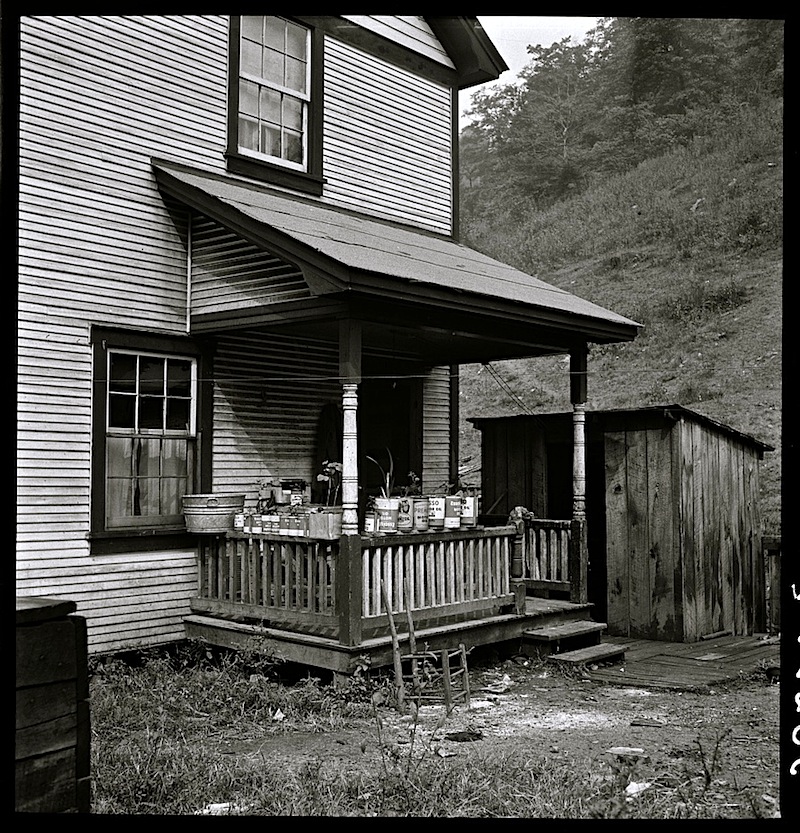
The Sunday porch/enclos*ure: miner's house in Capels, W.V.,1938, by Marion Post Wolcott, via Library of Congress“Plants and flowers in oil cans on back porch of [coal] miner’s house. Capels, West Virginia,” September 1938, by Marion Post Wolcott, via Library of Congress Prints and Photographs Division.*

Capels is an unincorporated community located in McDowell County, the southernmost county in West Virginia.

The homes shown here were “coal camp” houses, owned by Central Pocahontas Coal Co.

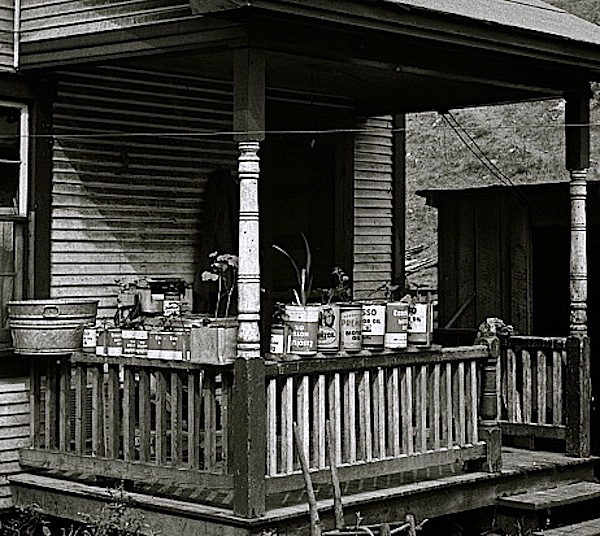
The Sunday porch/enclos*ure: detail, miner's house in Capels, W.V.,1938, by Marion Post Wolcott, via Library of CongressAbove, detail from previous photo:  perhaps the beginning of a winter garden on a windowsill.

Wolcott took a large series of photos of coal miners and their families in West Virginia.  I think the house on the right below may be the same as the one above.

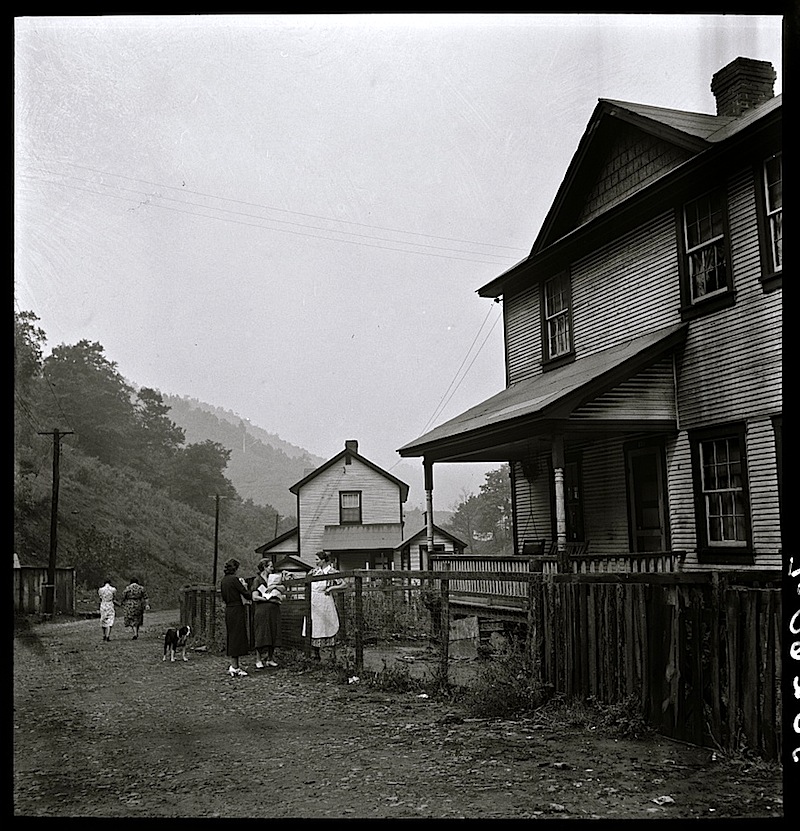
The Sunday porch/enclos*ure: miner's house in Capels, W.V.,1938, by Marion Post Wolcott, via Library of Congress“Wives of coal miners talking over the fence.”

“The women in this photo [above] are dressed up, perhaps for their walk to the company store and back,” according to an online photo exhibit about West Virginia coal miners. “Miners’ wives often led difficult lives and relied on each other for support.”

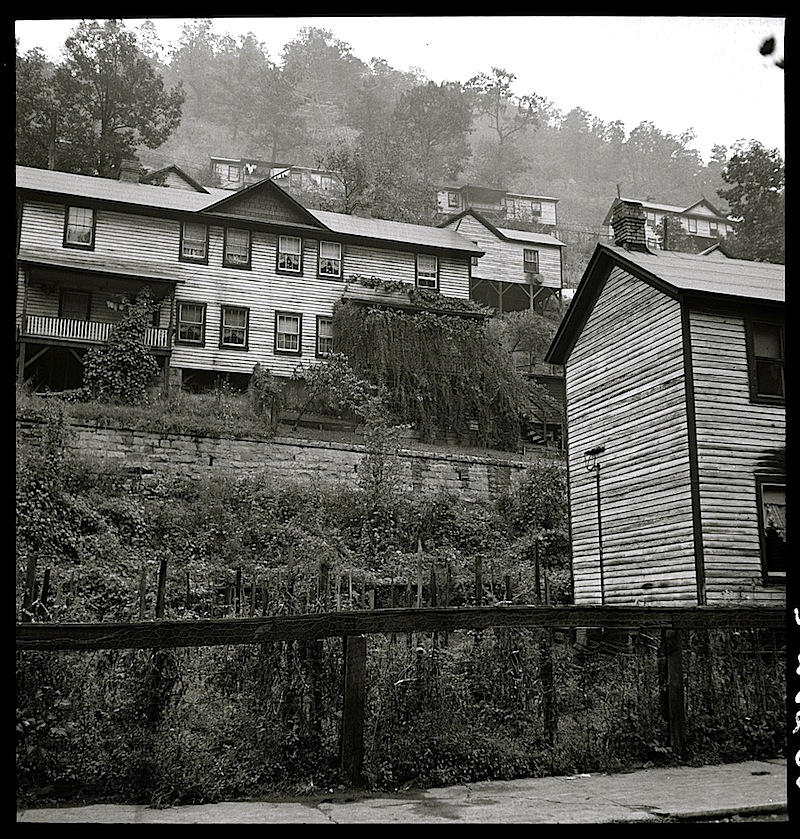
The Sunday porch/enclos*ure: miner's house in Capels, W.V.,1938, by Marion Post Wolcott, via Library of Congress“Better homes in coal mining town.”

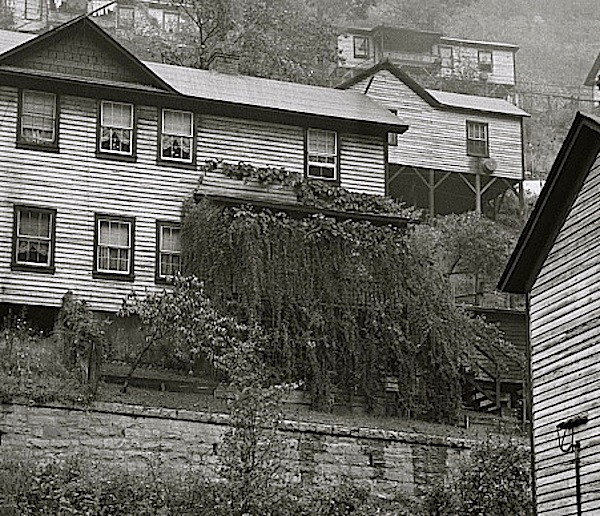
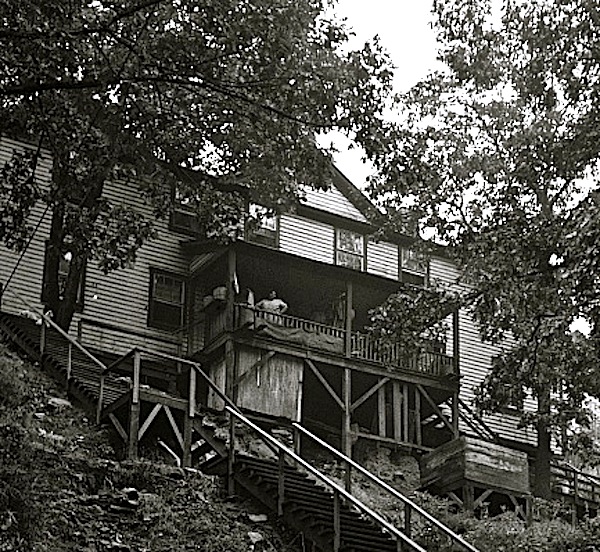
The Sunday porch/enclos*ure: detail, miner's house in Capels, W.V.,1938, by Marion Post Wolcott, via Library of CongressAbove, detail from previous photo: impressive vines on this porch.  Note the house beyond and how it is built out from the hillside.

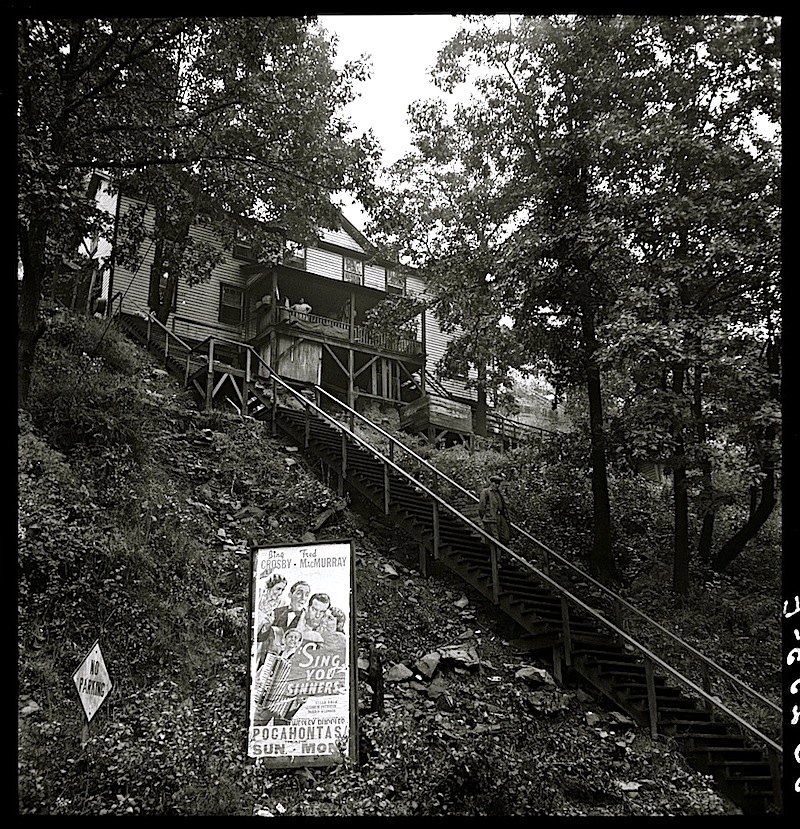
The Sunday porch/enclos*ure: miner's house in Capels, W.V.,1938, by Marion Post Wolcott, via Library of Congress“Home of Negro families.”  I count about 70 steps.

The Sunday porch/enclos*ure: detail, miner's house in Capels, W.V.,1938, by Marion Post Wolcott, via Library of CongressAbove, detail from previous photo: African-Americans moved to the county to work in the mines, as the coal industry grew at the turn of the 20th. century.**

Immigrants also came from Greece, Italy, Poland, Russia, and Hungary.

McDowell County once set records for coal production in the state and country, but since the decline of the industry in the 1980s, it has lost thousands of jobs and has the highest poverty rate in the state.  The mine in Capels (by then owned by Semet-Solvay) closed in the 1980s.

Photos of Capels in 2005 are here. There are photos of McDowell County in 2012 here (and more vintage pictures here).

A number of Wolcott’s West Virginia photographs can be found in the book  New Deal Photographs of West Virginia, 1934-1943.


*All photos here were taken in Capels, September 1938, by Marion Post Wolcott, via Library of Congress Prints and Photographs Division.  The captions in quotation marks are from the Library’s online catalogue and were probably written by Wolcott.

** “McDowell, which had no slave population and no free blacks after emancipation, became the state’s center of African-American population in the industrial era,” according to The West Virginia Encyclopedia“McDowell County blacks established a power base within the state and local Republican Party. . . . A fourth of the population was black in 1950.”

The Sunday porch: Sherrill Inn

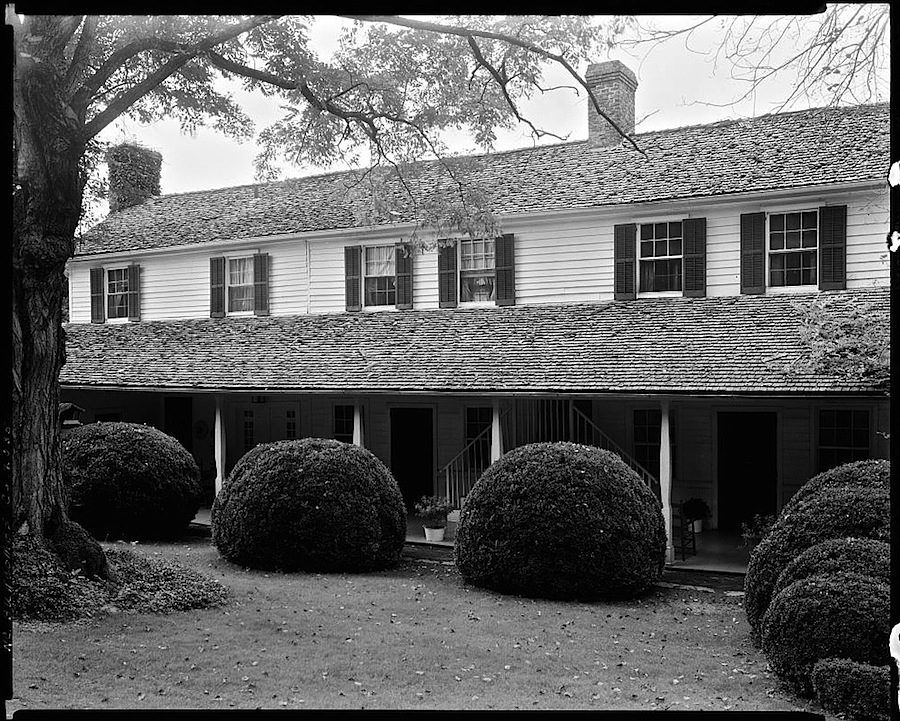
1 Sherrill Inn, North Carolina, 1938, via Library of CongressSherrill Inn, Hickory Nut Gap, Buncombe County, North Carolina, in 1938, by Frances Benjamin Johnston, via Library of Congress Prints and Photographs Division (all photos here).

I know, and even better. . .

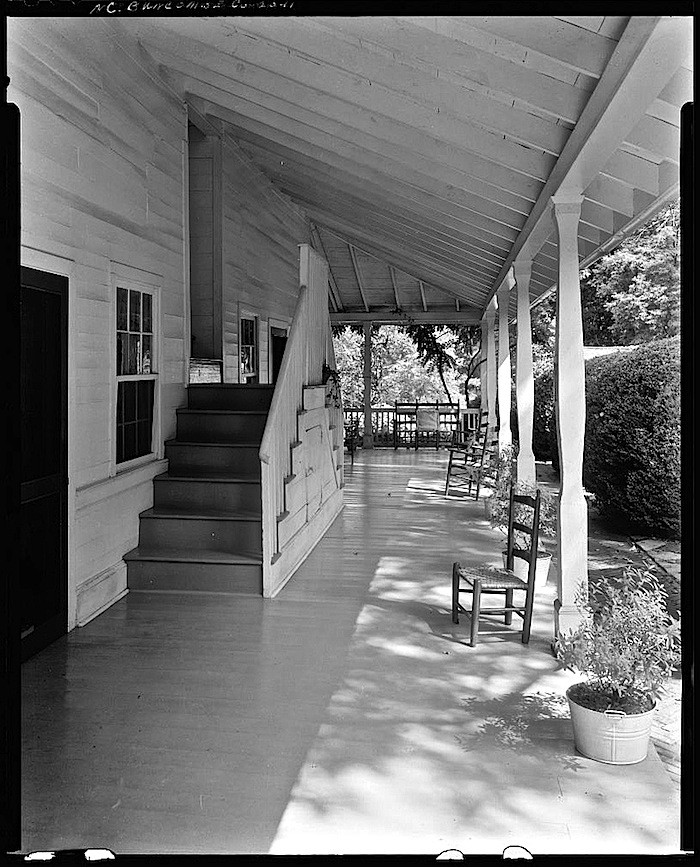
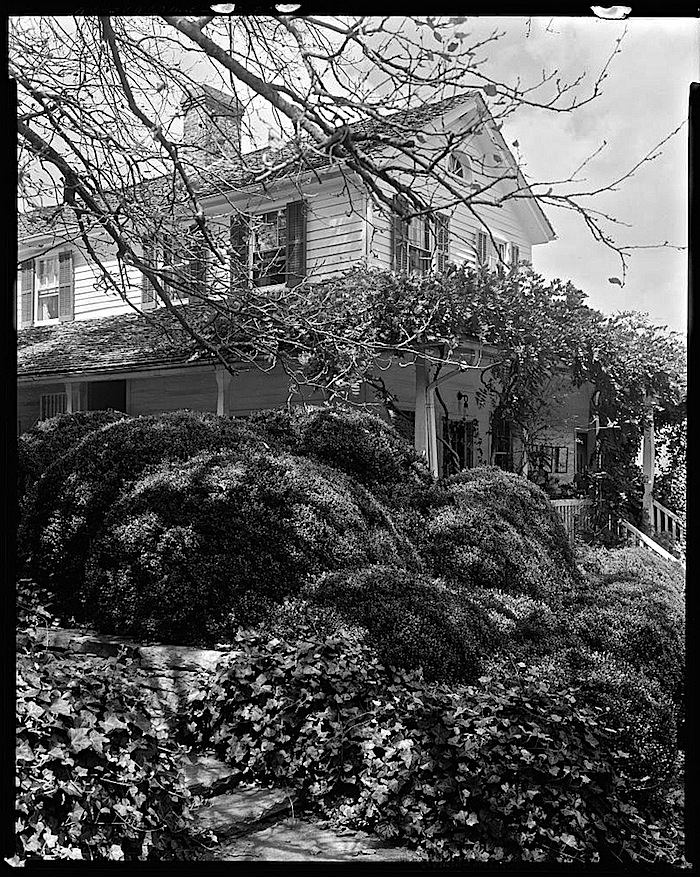
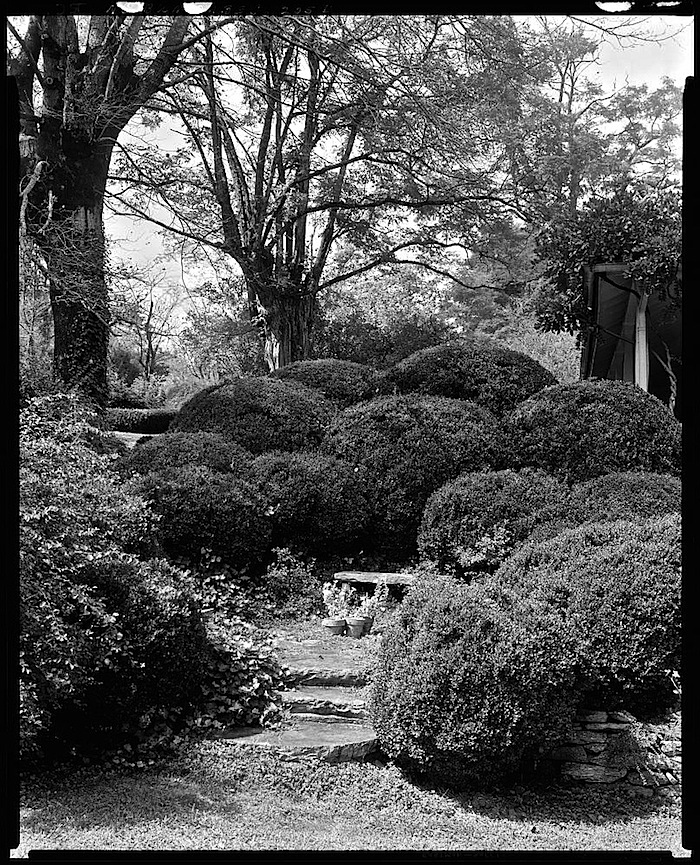
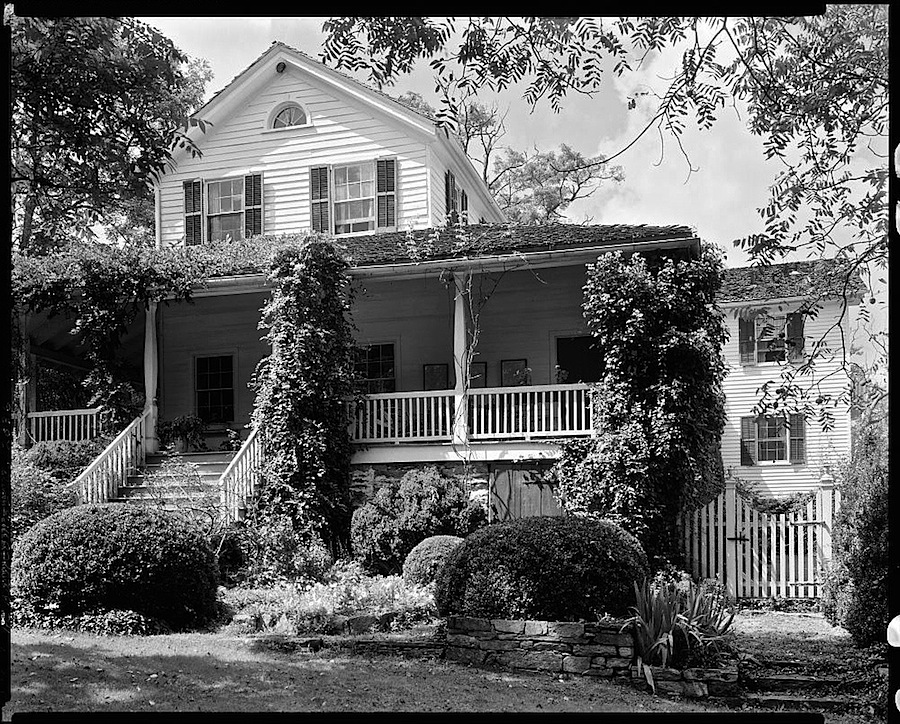
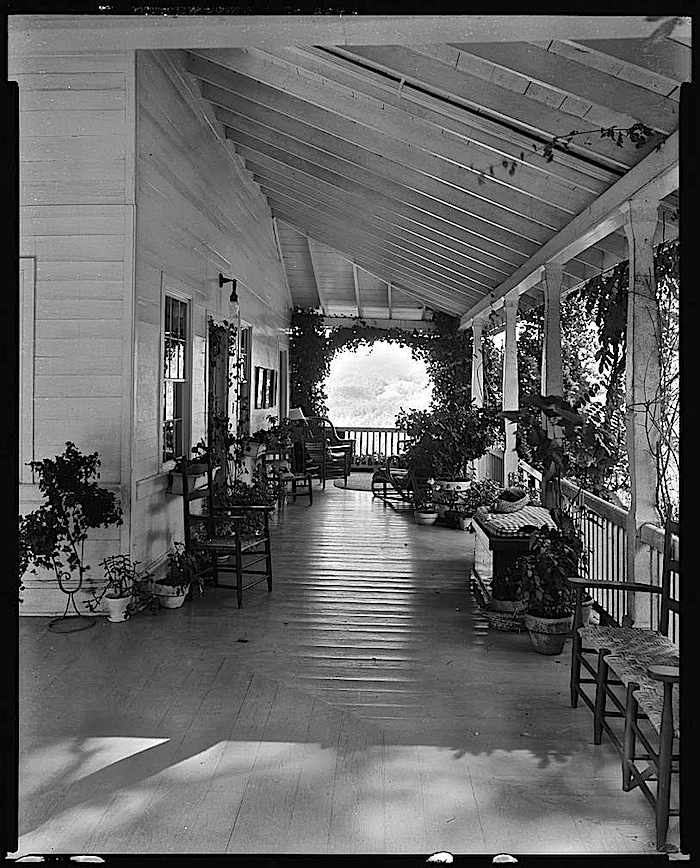
1a Sherrill Inn, North Carolina, 1938, via Library of CongressThis is what’s behind the boxwoods. (There’s another photo of this section of the porch here.)

In the nomination form for inclusion in the National Register of Historic Places, the porch columns were described thusly:

The porch is supported by gracefully tapered posts each rising without interruption from rectangular bases to approximately balustrade level, where it is quickly cinched in on all four sides; above, the post gently flares out to original width near eye level and then back in, until near the top the taper reaches its conclusion to flare quickly into a cap for the porch roof supporting plate to rest upon.

2bb Sherrill Inn, North Carolina, 1938, via Library of Congress

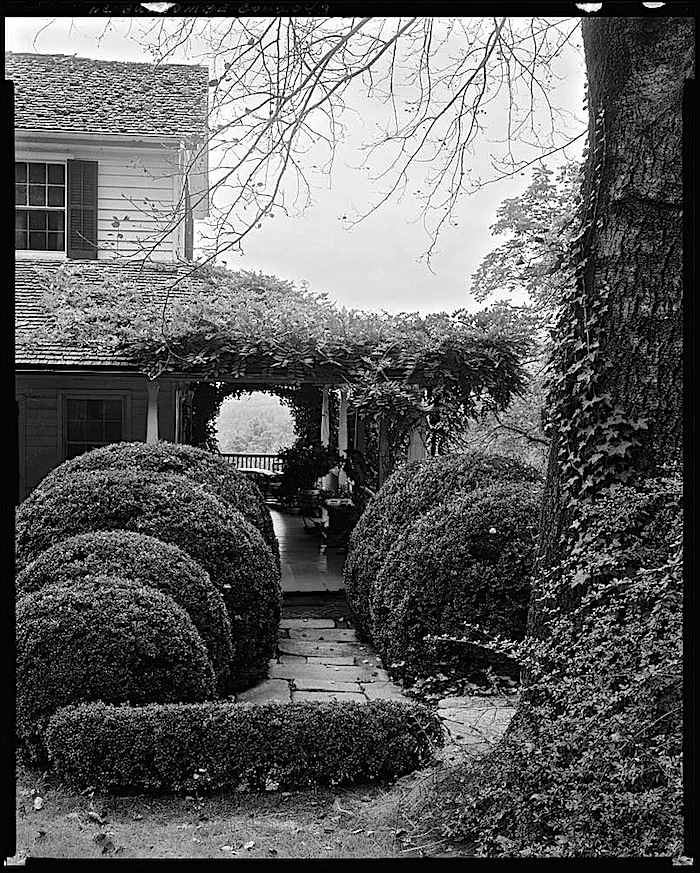
At the corner of the L-shaped porch,

2 Sherrill Inn, North Carolina, 1938, via Library of Congress

. . .the boxwoods cover the slope like giant boulders.

2a Sherrill Inn, North Carolina, 1938, via Library of Congress

And below is the porch after the turn,2b Sherrill Inn, North Carolina, 1938, via Library of Congress

2ba Sherrill Inn, North Carolina, 1938, via Library of Congress

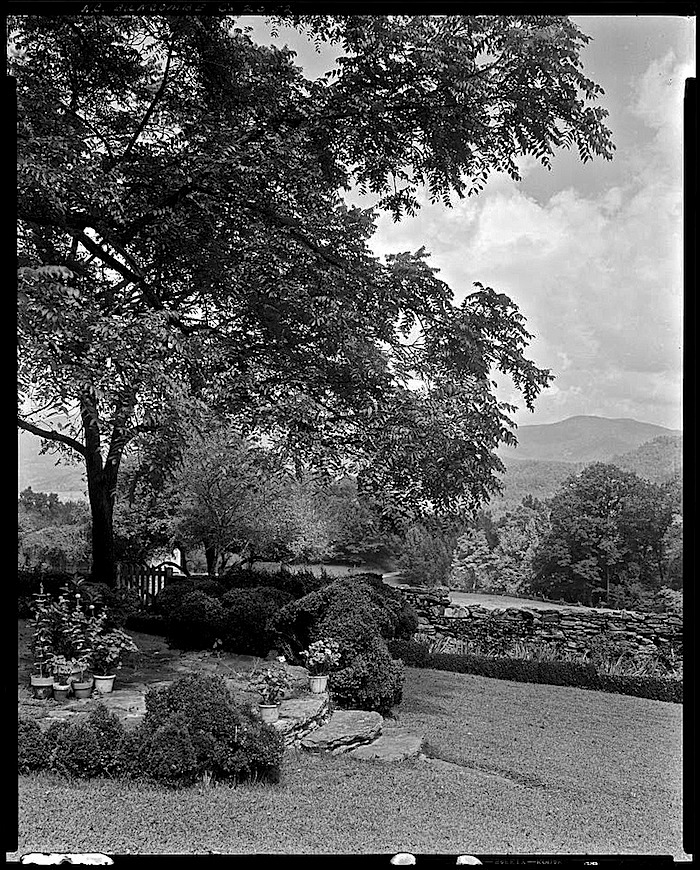
and a view of the mountains.5a Sherrill Inn, North Carolina, 1938, via Library of Congress

A bit of heaven.

Best of all, it seems that most of the old boxwoods are still in place.  The property is being run as an organic farm by descendants of the McClures, the couple who owned the Inn when Johnston took these photos.

Pictures of a beautifully styled wedding held at the Inn in recent years show it to have been in loving hands over the decades.

The house began as two log structures, possibly built by 1806 or maybe even earlier.  Between 1839 and 1850, Bedford Sherrill connected and enlarged those buildings to make an inn for travelers on the “Hickory Nut Turnpike,” an early stage route to western North Carolina.

There are many more details about the history and design of the house and grounds here.