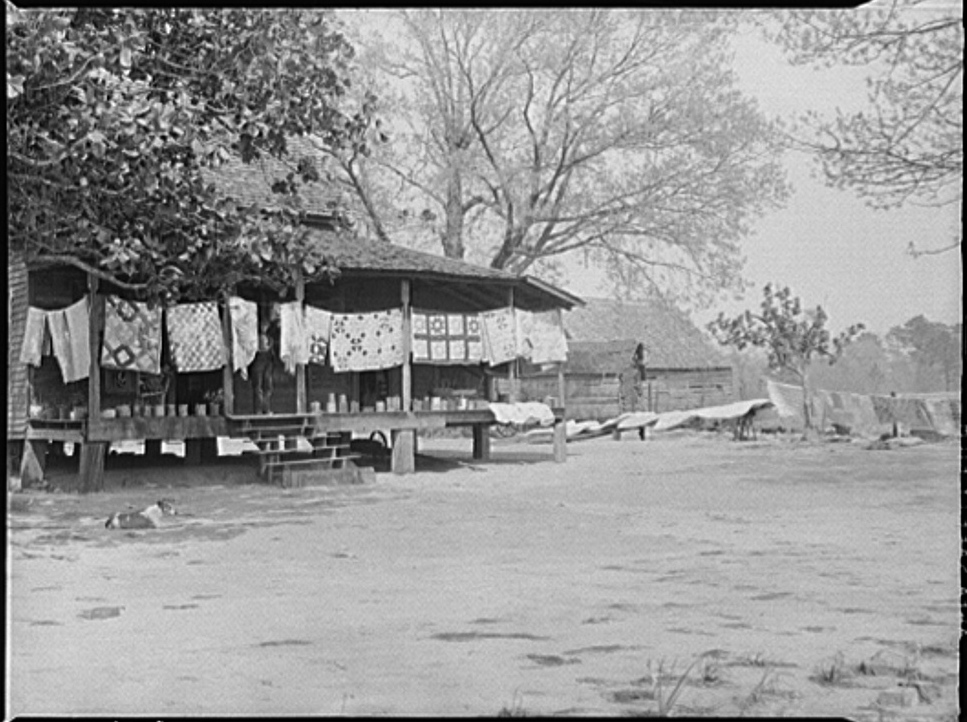
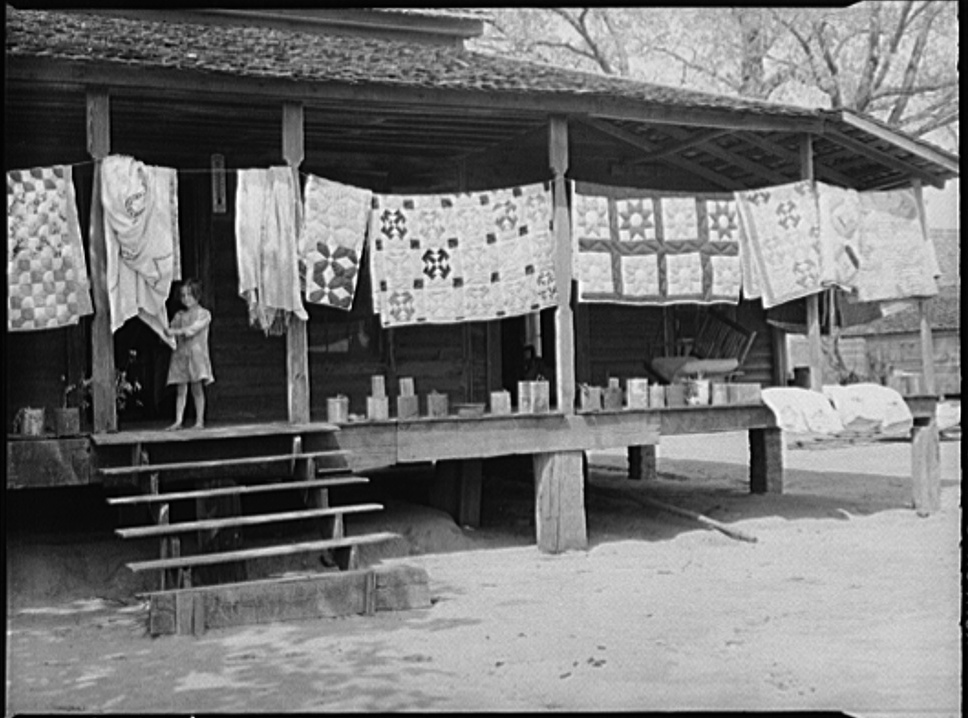
“James F. Drigger’s farmhouse. Coffee County, Alabama,” August 1941, by John Collier, via Library of Congress Prints and Photographs Division.
This photo was taken in the same county as yesterday’s farmhouse with quilts. I think those are papaya plants in front of the porch vines and in the lower left corner. Nope, they’re Ricinus communis or castor beans. Thanks Melissa!
They and the flowers make a nice approach to the lined-up front and back doors.
John Collier was working for the Farm Security Administration when he took this photo. The Drigger family was receiving assistance to raise chickens under the “Food for Defense” program.
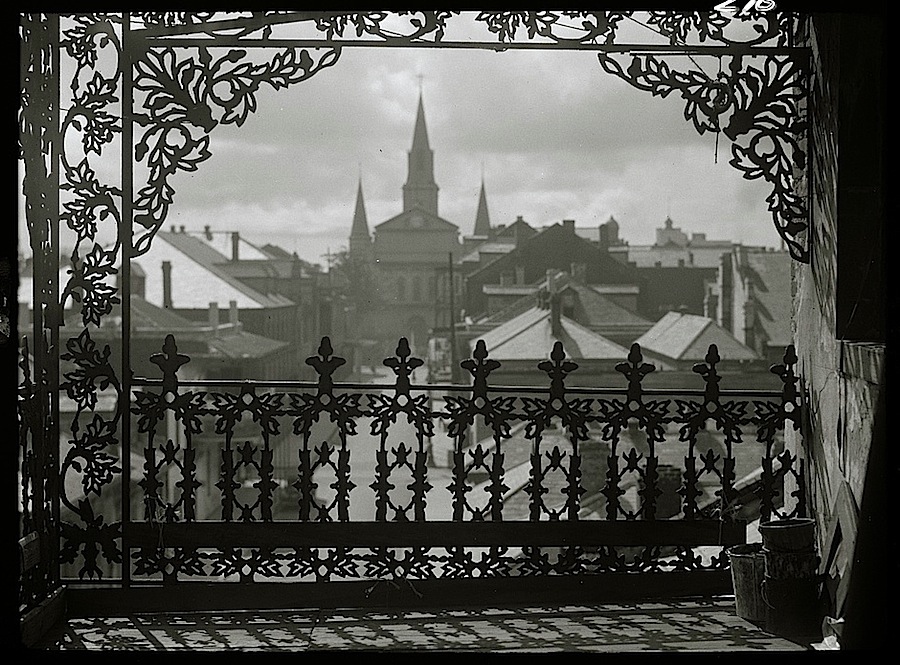
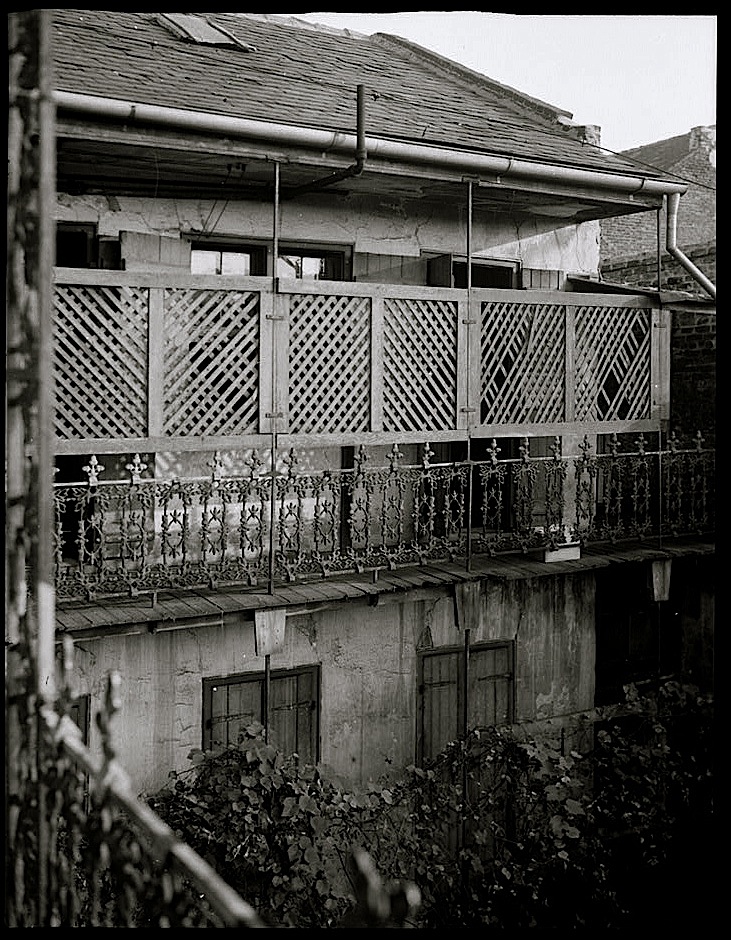
“A vista through iron lace, New Orleans,” ca. 1920-26, by Arnold Genthe, via Library of Congress Prints and Photographs Division.
This is a covered third floor balcony, and it has a wonderful view of the back of St. Louis Cathedral in the French Quarter.
The 1836 house still stands* — wrought iron intact — at 716 Orleans Street. It is now light pink with dark green shutters and is known as the Le Pretre Mansion, for one of its first owners.
It was on the market as recently as this past April — for $2.65 million. Here’s a 1937 photo of the entire house.
An exotic horror/ghost story goes with the mansion:
In the 19th century, a Turk, supposedly the brother of a sultan, arrived in New Orleans and rented the house. He was conspicuously wealthy, with an entourage of servants and beautiful young girls — all thought to have been stolen from the sultan.
Rumors quickly spread about the situation, even as the home became the scene of lavish high-society parties. One night screams came from inside; the next morning, neighbors entered to find the tenant and the young beauties lying dead in a pool of blood. The mystery remains unsolved. Local ghost experts say you can sometimes hear exotic music and piercing shrieks.
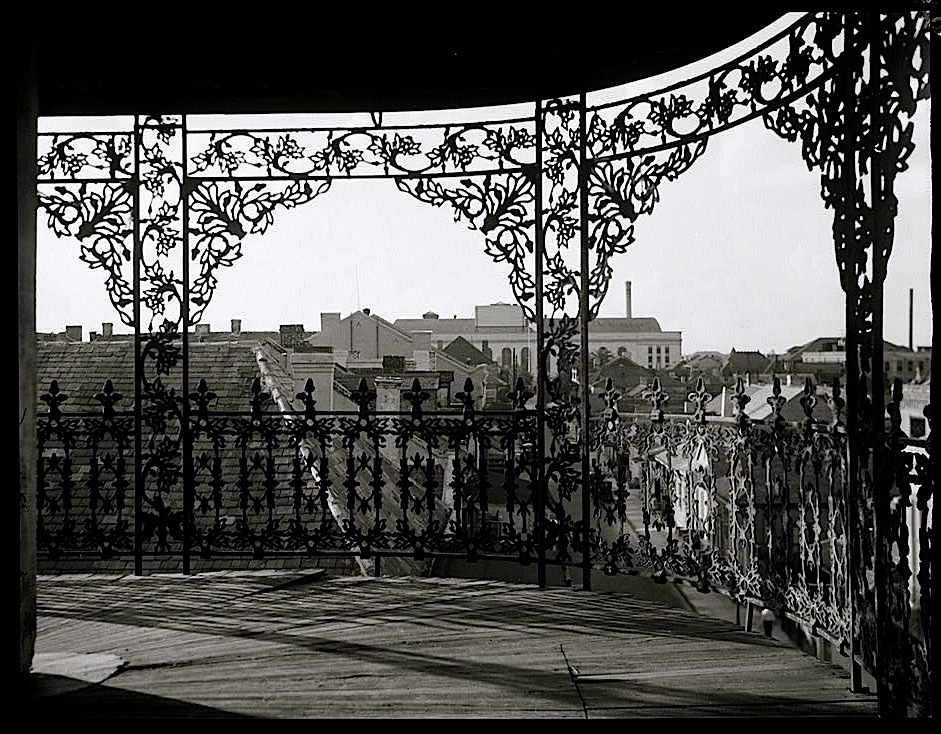
The view above, from the same balcony, looking northeast on Orleans Street, was photographed in 1936, by Richard Koch for a Historic American Buildings Survey, via Library of Congress Prints and Photographs Division.
This privacy panel along the second floor balcony of the service wing, overlooking the courtyard, is interesting too. Photo also by Richard Koch for HABS.
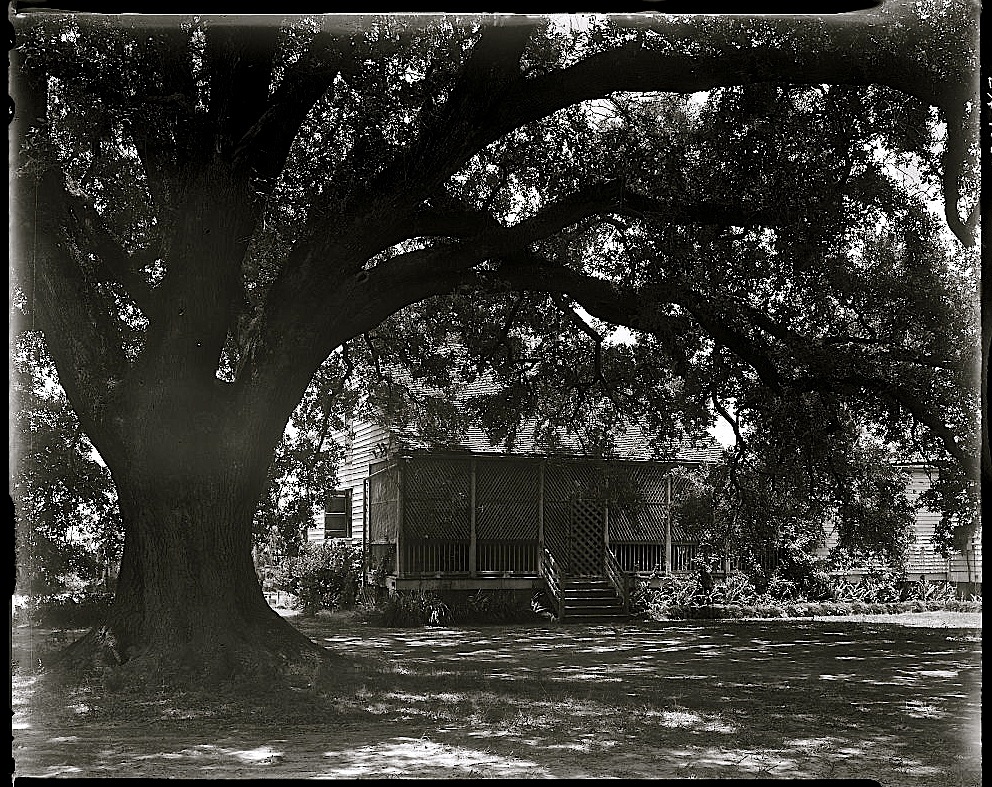
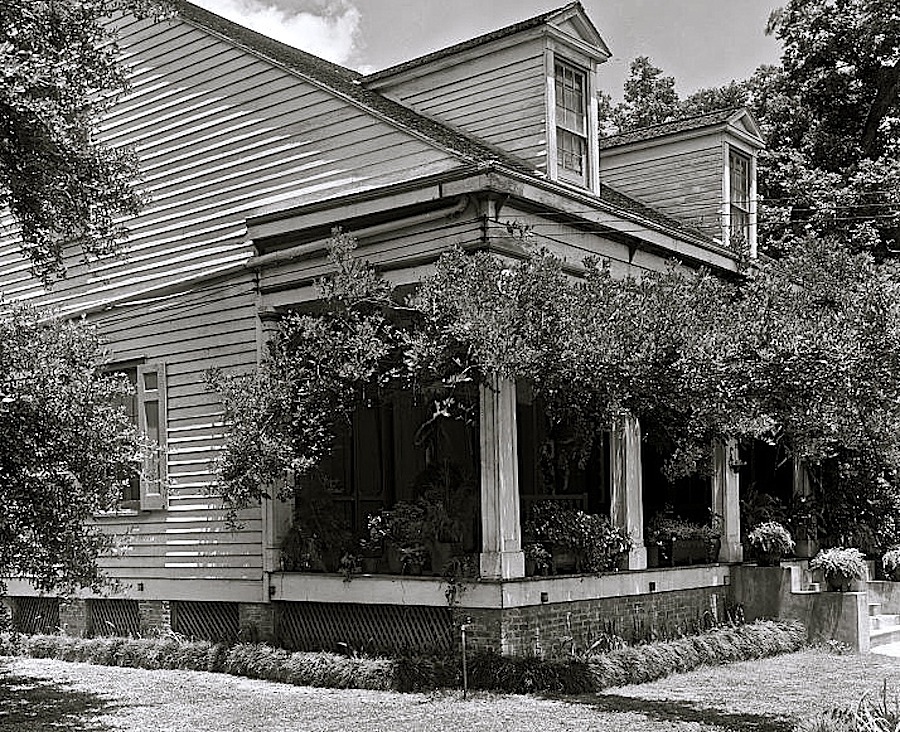
The old kitchen wing of Palo Alto Plantation House near Donaldsonville, Louisiana, in 1938, by Frances Benjamin Johnston, via Library of Congress Prints and Photographs Division.
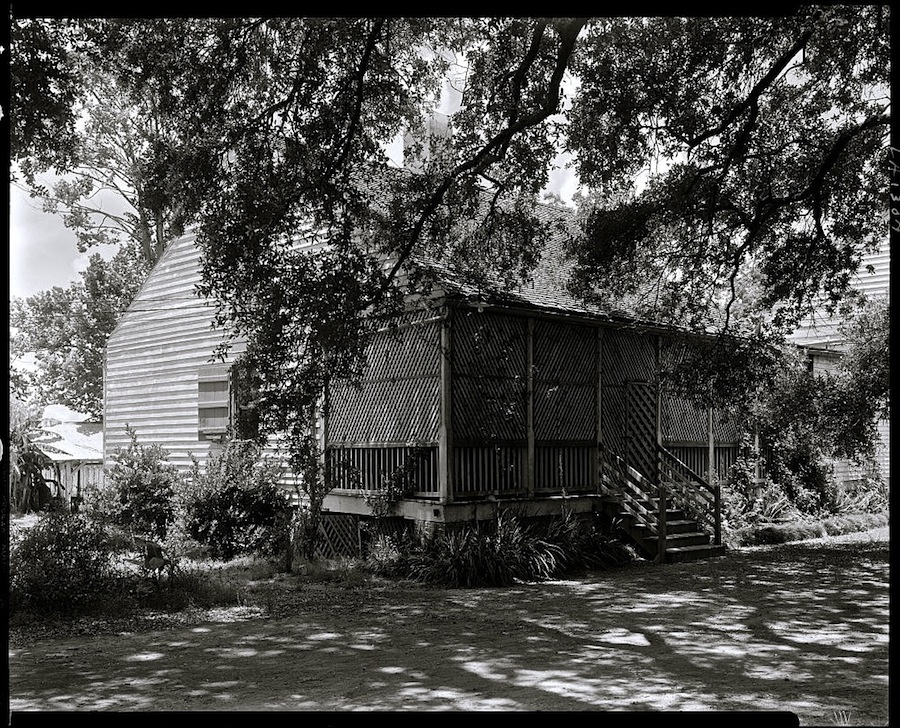
It’s almost too dark and deep to see very well in the above picture. However, this shaded, lattice-enclosed porch must have been the best possible place to sit and snap beans during Louisiana summers.
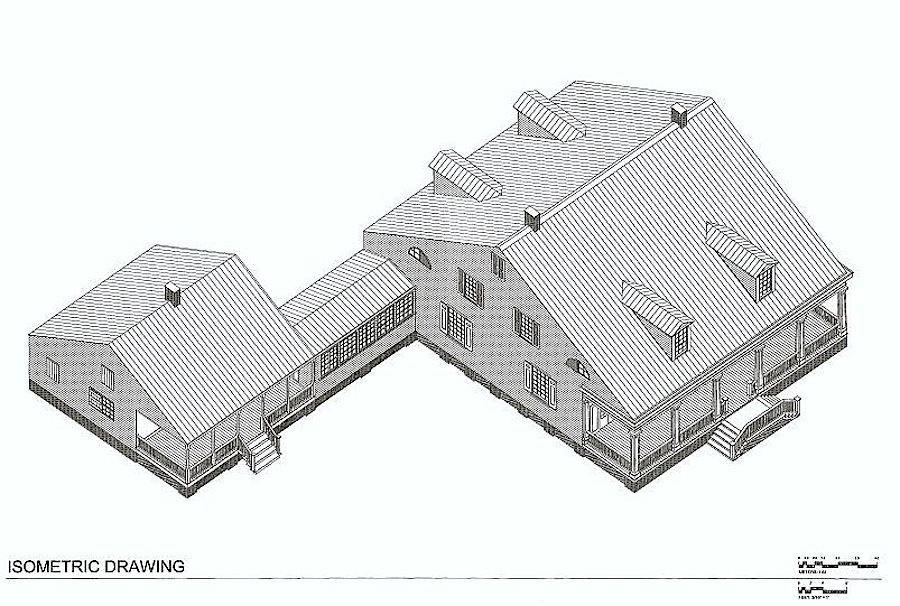
The kitchen building was originally free-standing, about 22′ from the house. Later, it was connected to the main house by a breezeway.
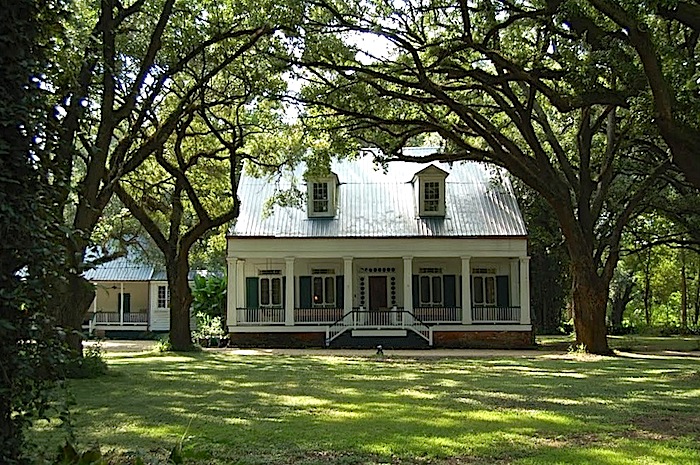
The entire Palo Alto Plantation House, 2003, HABS, via Library of Congress.
A 2003 Historic American Buildings Survey (HABS) drawing of the property seems to indicate that the enormous Quercus Virginiana or live oak tree at the right in the top photo was still standing at that time. Over 15 live oaks are shown in the area immediately in front of the house.
The principal part of the house is described in the HABS as an “Anglo-Creole type Louisiana plantation cottage decorated in Greek Revival style.” It was built in the mid to late 1850s and faces Bayou La Fourche, off the Mississippi River.
Its porch, above,* is a “deeply undercut Acadian gallerie,” according to The Planter’s Prospect: Privilege and Slavery in Plantation Paintings.
In a c.1860 painting of Palo Alto shown and discussed in the book, the main porch originally had railings and double front steps.
The steps and railings were restored (and the lattice removed from the old kitchen porch) by the time of the HABS and this 2010 photo† above. The plantation (with 6,000 acres, according to one source) belongs to a family that has owned it for several generations. They now offer stays in a “Log Cabin” lodge and guided hunting trips on the property.
. . . the tree implies a quiet place
where pendulums might rest,
the heart decline to beat, a place
of time disclosing the lattice of time. . . .
Looking through a “slat screen” from the back porch of a house on Randolph Street (probably N.W.), Washington, D.C., May 1942, by John Ferrell, via Library of Congress Prints and Photographs Division.
OK, it’s possible that I’m easily amused.
Also, I have holiday shopping to do. . . and it’s Bloom Day. (So more later.)
John Ferrell was a photographer for the Farm Security Administration when he took these photos.
Randolph Street, N.W., runs east-west through the Petworth neighborhood of Washington, D.C.
I’ve stayed in the front yard all my life.
I want a peek at the back. . .

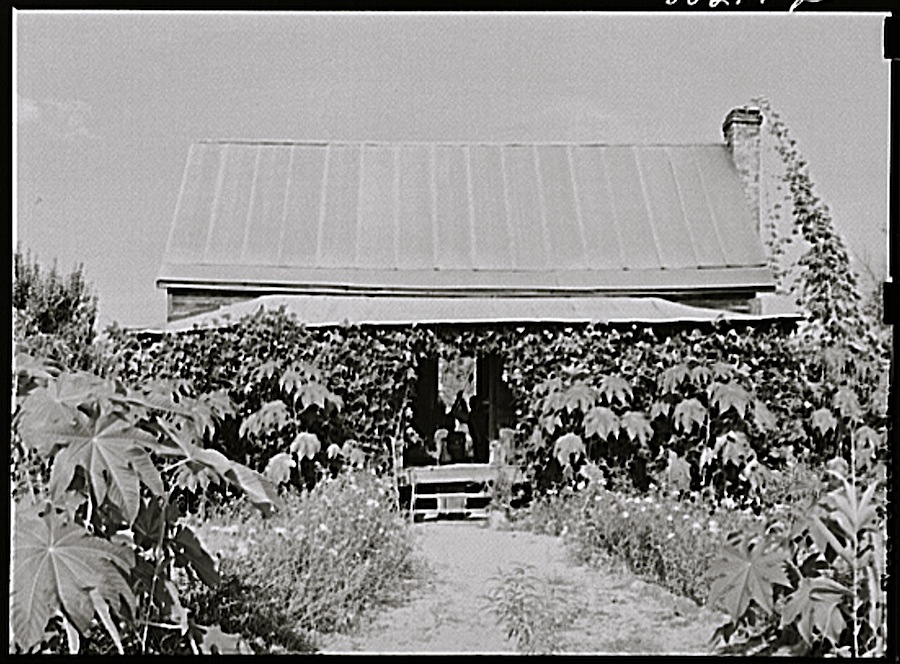 “James F. Drigger’s farmhouse. Coffee County, Alabama,” August 1941, by John Collier, via Library of Congress Prints and Photographs Division.