Garden Bloggers’ Bloom Day: June 2013

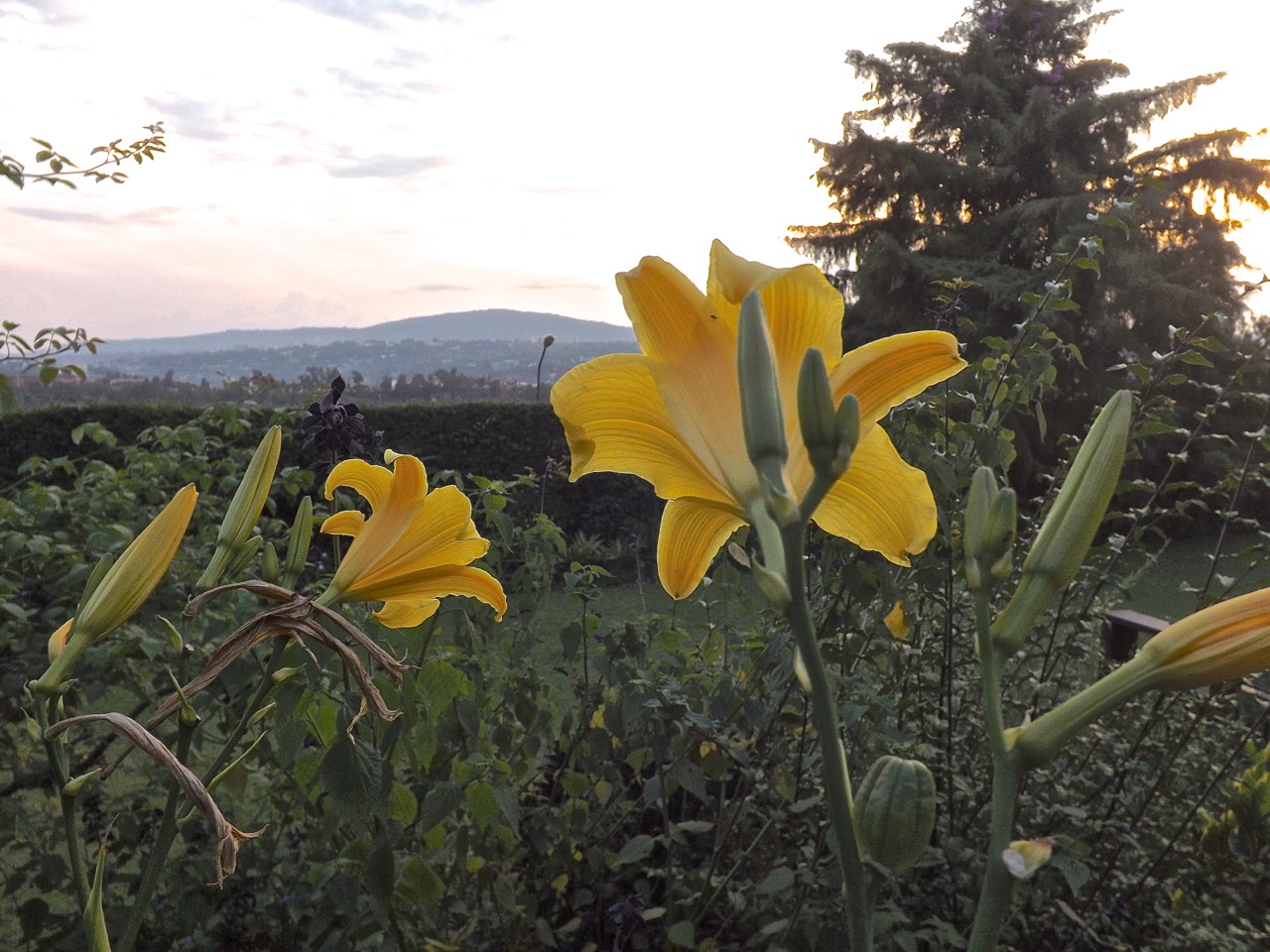
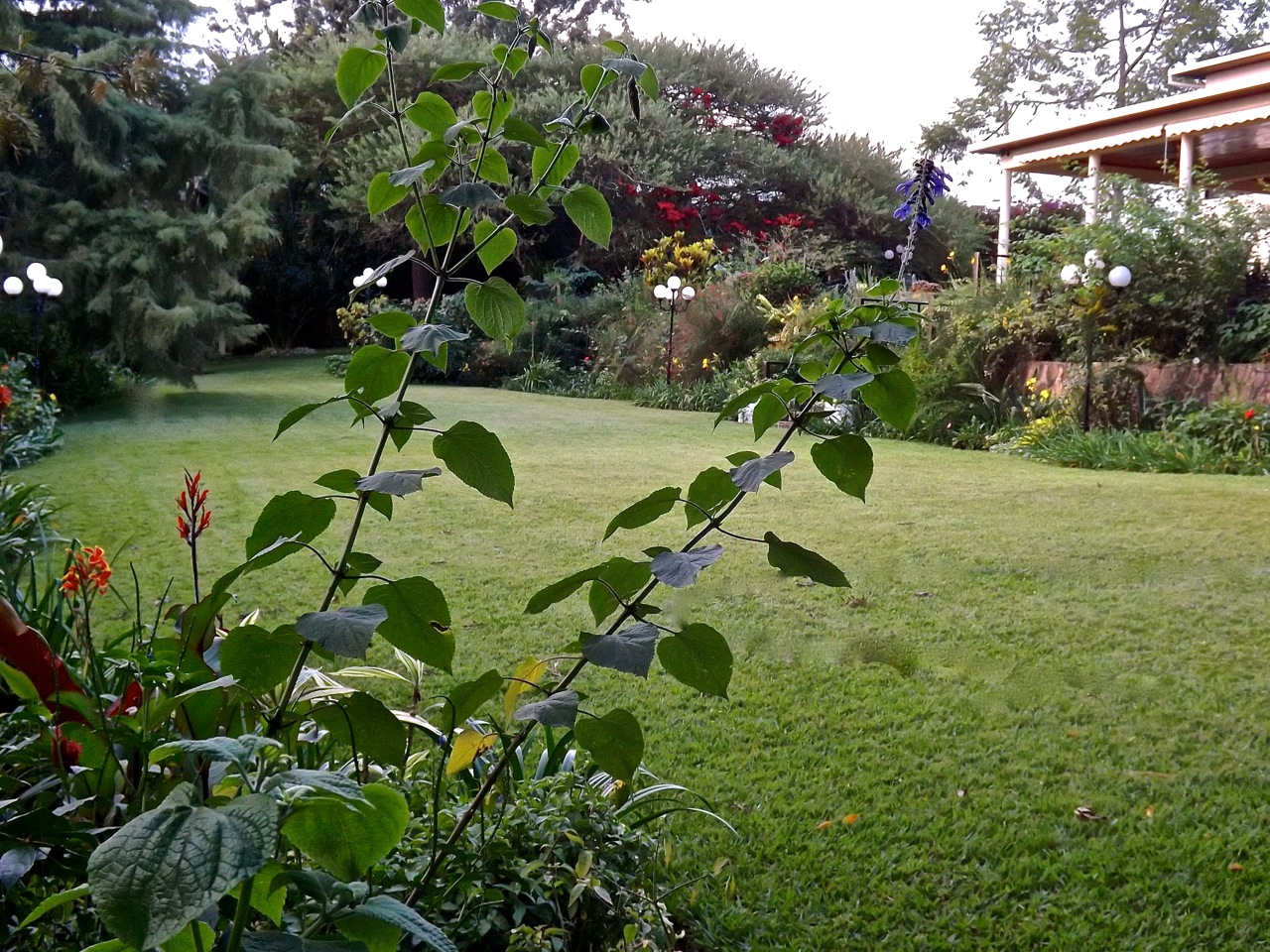
Here are some of the flowers that are blooming in my garden today.

GBBD — the 15th of every month — is hosted by Carol at May Dreams Gardens. Click here to see other garden bloggers’ mid-June flowers.

Click on ‘Continue reading’ and then on any thumbnail to scroll through larger images.

Miriam had allowed her interest in gardening, which had gradually grown to a full-fledged hobby, to consume and define her. . . . She didn’t care for clothes anymore, just equipment; knee pads, trowels, a little bench to carry about and kneel on. To pray to her god, the garden.

— William H. Gass, from Middle C

(In the novel, the main character’s mother discovers her love for gardening after he gives her a stolen packet of annual seeds.)


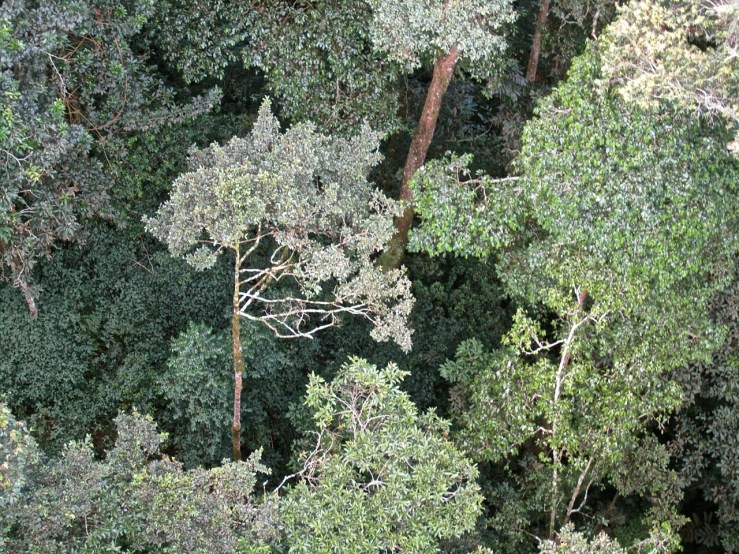
The canopy walk, Nyungwe Forest

13 Moss on tall tree, Nyungwe Park, Rwanda:enclos*ure

Last February, I wrote about our stay at the Nyungwe Forest Lodge.  Recently, however, I realized that I have never given you a look inside the forest.

The Nyungwe National Park, in the southwest of Rwanda, is 393 square miles of mountain forests, swamps, and moorland.

It has over 80 miles of constructed trails, but during our two-night stay at the lodge, we mainly wanted to relax — so we decided to walk the 1.3 mile Igishigishigi Trail, which includes a canopy walkway suspended 197′ above the ground.
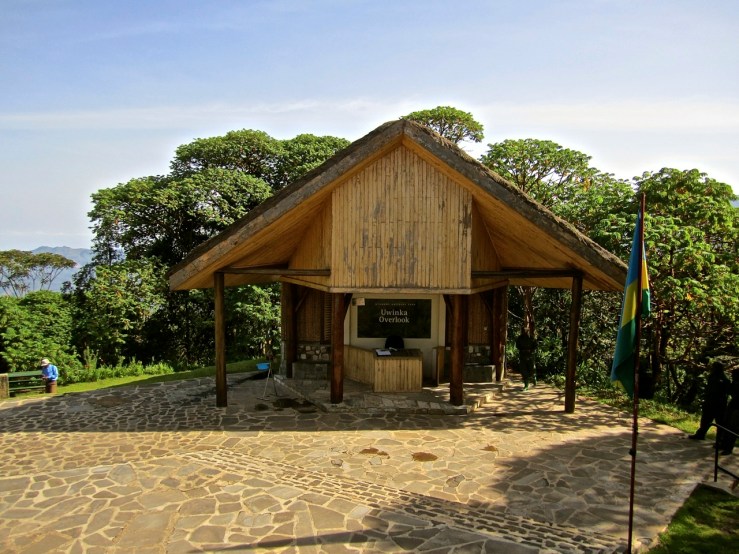
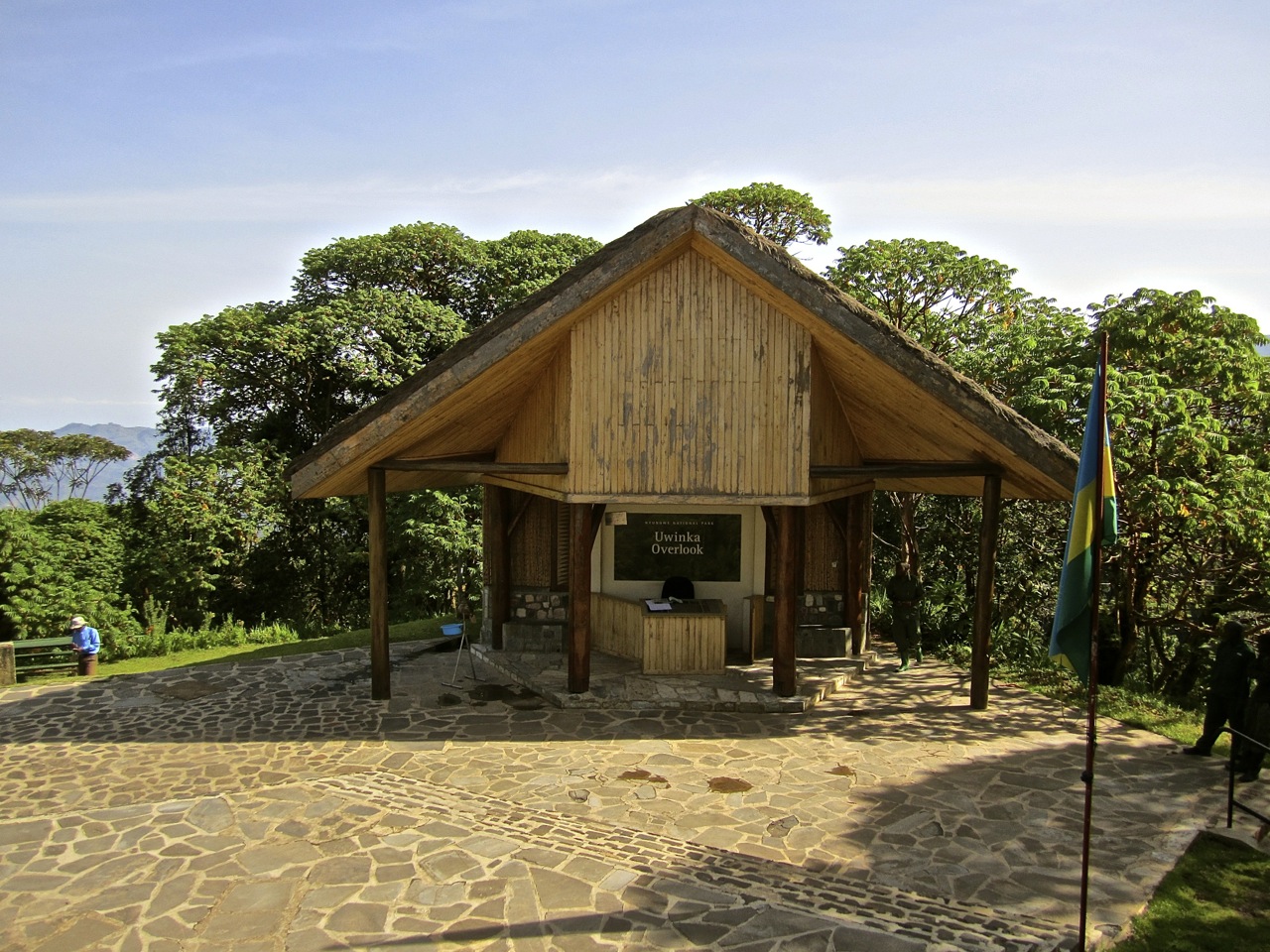
The Uwinka Visitor Center

The trail begins at the Uwinka Visitor Center, which was renovated three years ago with U.S. assistance.

The center’s  interpretative display features panels on the mountain rainforest and Nyungwe’s biodiversity, its people, and its role in the Congo-Nile watershed.  The text is in Kinyarwanda, English, and French.

2a Uwinka Visitor Center, Nyungwe Park, Rwanda:enclos*ure

Below are the steps leading to the Igishigishigi Trail.  The shadow with the camera was me, the one on the left was our visiting daughter, who was wondering what she had gotten herself into.

3 Steps to Igishigishigi Trail, Nyungwe Park, Rwanda:enclos*ure

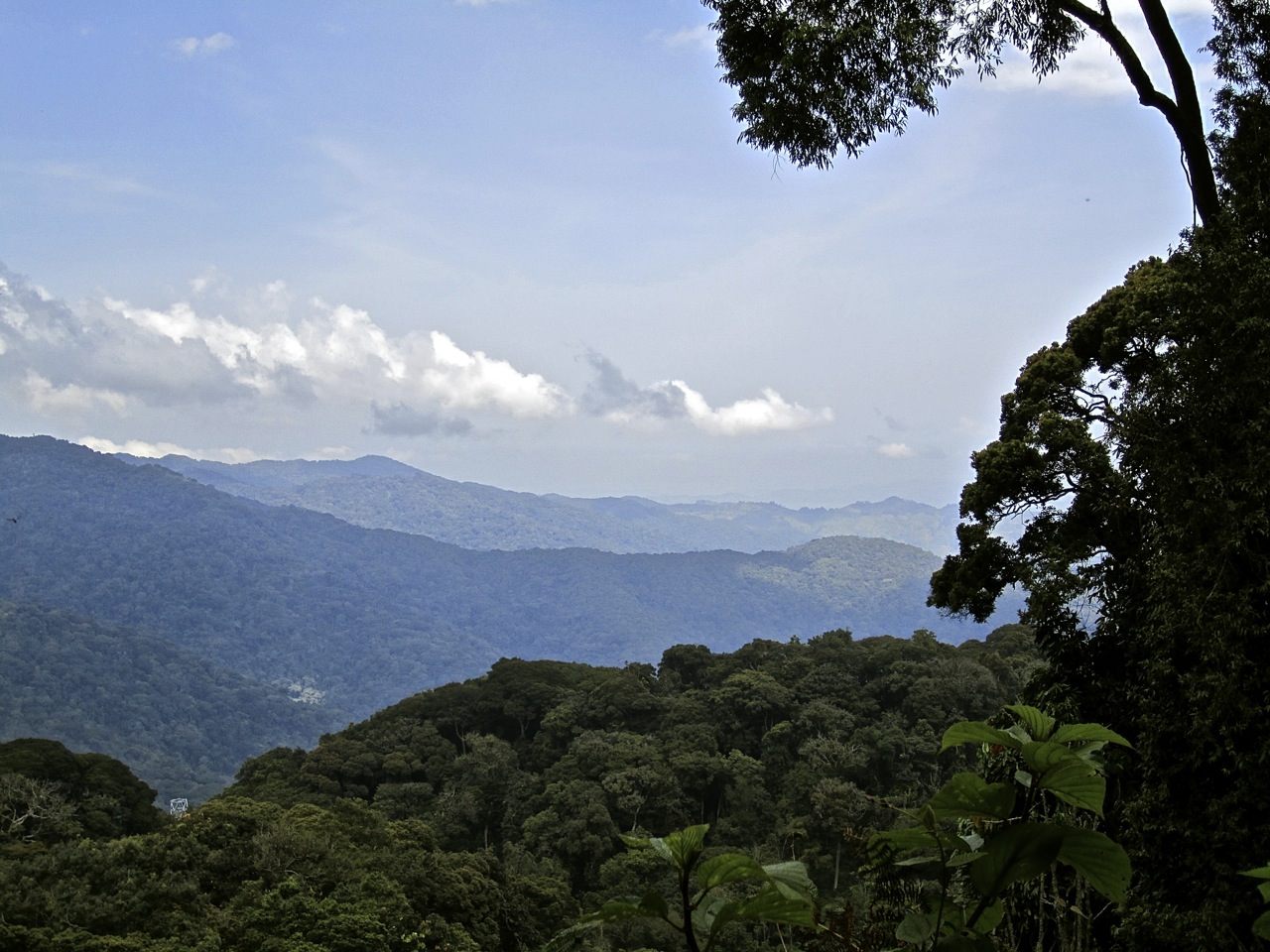
The view near the beginning of the trail is wonderful. Uwinka is at one of the highest points in the park.

7 View, Nyungwe Park, Rwanda:enclos*ure

In the left lower corner above, you can just see one of the towers that support the canopy walk.

Below is the trail,

7c Igishigishigi Trail, Nyungwe Park, Rwanda:enclos*ure

which includes several sections of steps.  The trail begins at 8,038′ and descends to 7,530′.

7d Trail steps, Nyungwe Park, Rwanda:enclos*ure

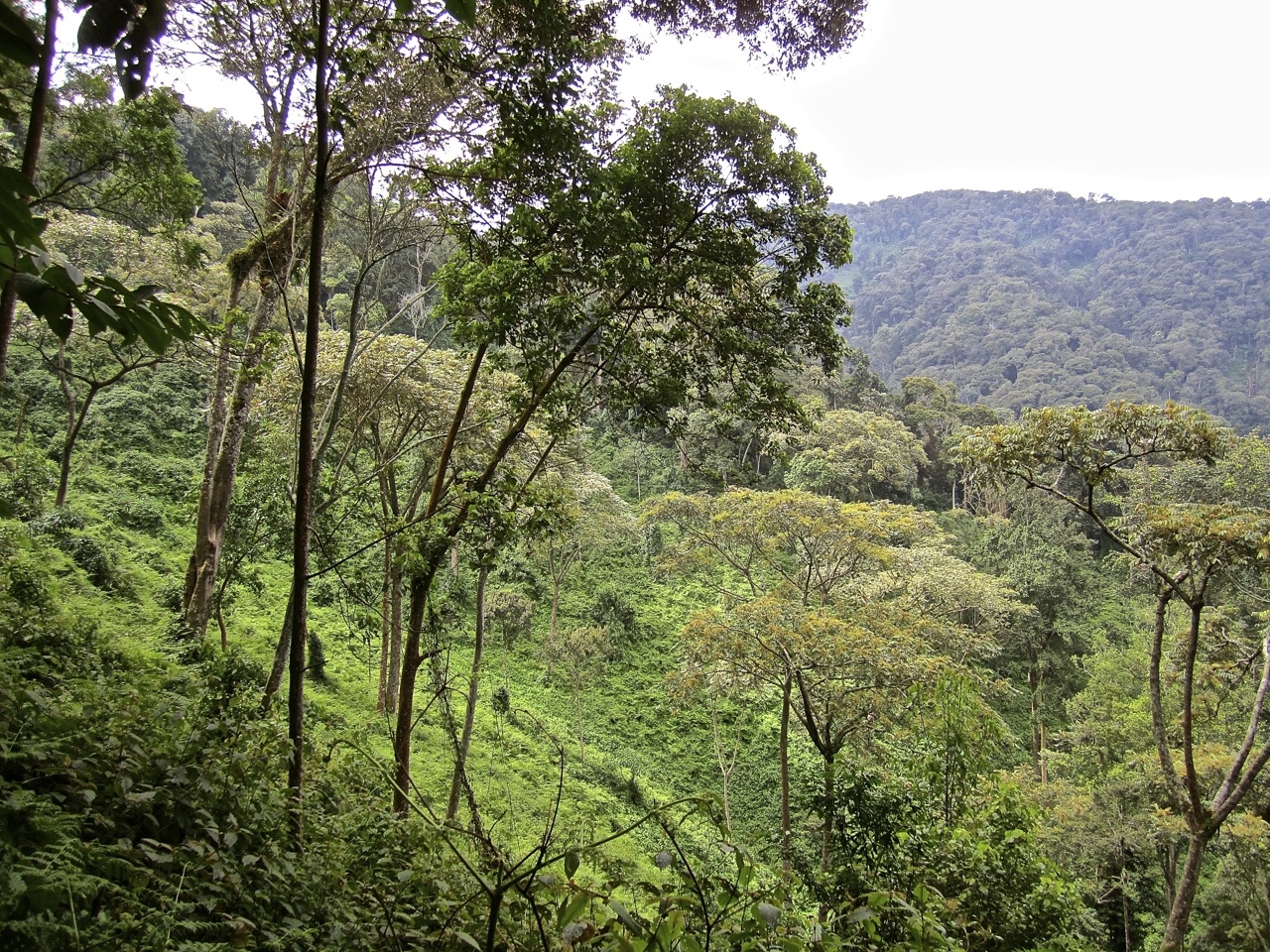
It sometimes passes along more open woodland, below.

7ba Hillside, Nyungwe Park, Rwanda:enclos*ure

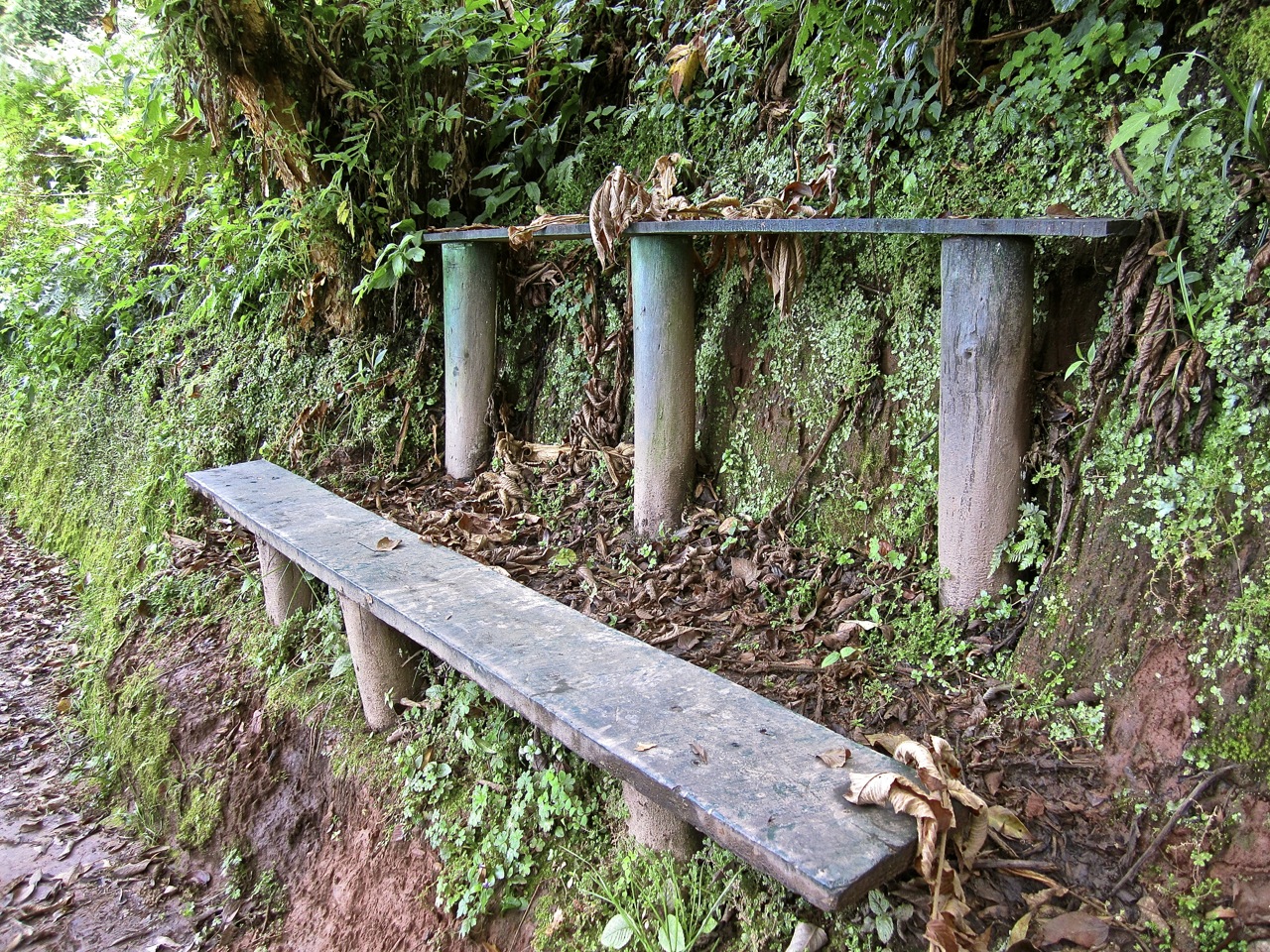
We came across benches from time to time, although this double arrangement, below, didn’t look very comfortable.

14 Trail benches, Nyungwe Park, Rwanda:enclos*ure

Several species of trees are labeled like this one.
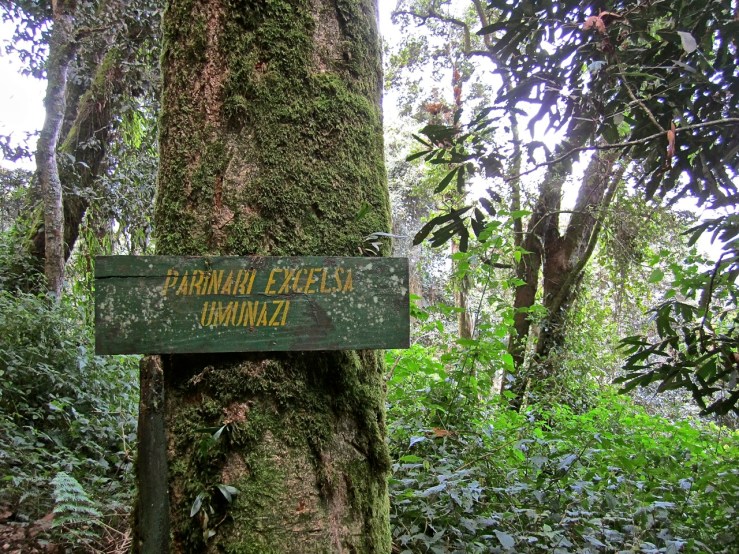
8 Labeled tree, Nyungwe Park, Rwanda:enclos*ure

The Parinari excelsa (or Umunazi in Kinyarwanda) grows to heights of 82′ to 131′ with a thick, cauliflower-shaped crown,

8a Parnari excelsa, Nyungwe Park:enclos*ure

way up there.

An assortment of ferns, mosses, lichens, and orchids live on the magnificent trees

13b Moss on tree, Nyungwe Park, Rwanda:enclos*ure

and on the forest floor.

13c Forest floor, Nyungwe Park, Rwanda:enclos*ure

One of the more common, and easily recognizable, plants along the trail is the giant lobelia, below.
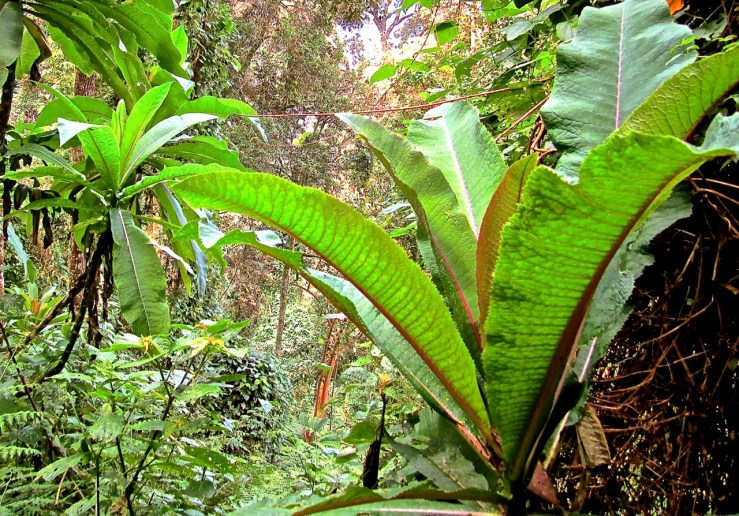
1 Giant lobilias in the Nyungwe Park, Rwanda:enclos*ure

There are two species of giant lobelias in the park.  I think these are Lobelia gibberoa (or Intomvu in Kinyarwanda).

After the explorer Johannes Mildbraed first saw this plant in Nyungwe in 1907, he wrote:

[It] would have awakened the interest of the veriest dullard at botany. . . .  When I first espied these strange shapes. . . my heart beat fast at the realization of a long-hoped-for sight, a feeling that is comparable only to that of a hunter at the first sight of some rare game.

13c Giant lobelia, Nyungwe Park, Rwanda:enclos*ure

The one above was only a few feet tall, but more mature specimens towered over our heads.

13d Giant lobelias, Nyungwe Park, Rwanda:enclos*ure

After about 45 minutes, we arrived at the canopy walk.

14a Canopy walk, Nyungwe Park, Rwanda:enclos*ure

In the photo below, our guide was explaining to us how the suspended bridges can support two cars, or twenty cars, or five elephants, or something like that.

15a Canopy walk, Nyungwe Park, Rwanda:enclos*ure

Oh, why not. . .

16b Canopy walk, Nyungwe Park, Rwanda:enclos*ure

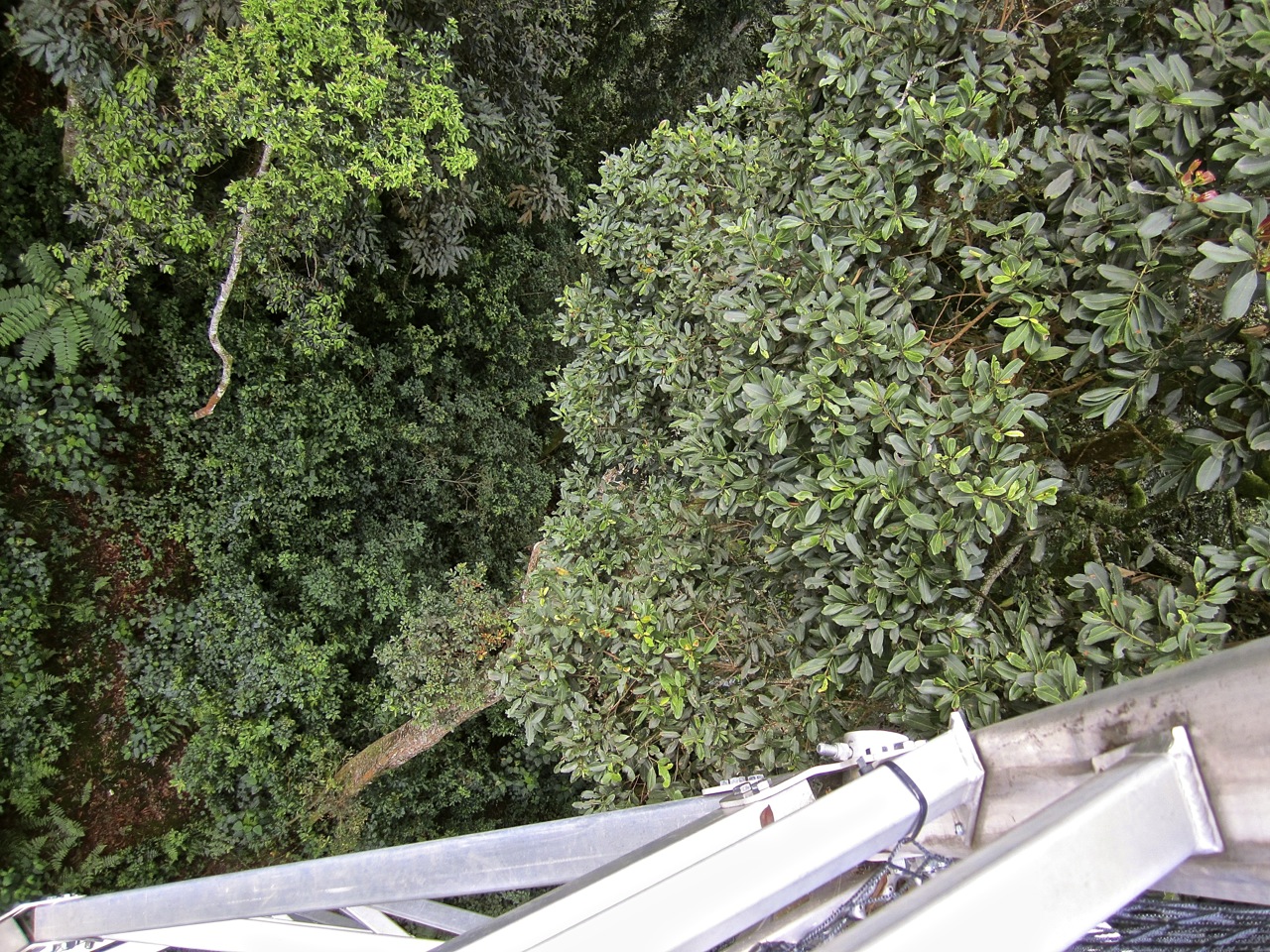
Below:  looking down from the platform of the first tower. . .

18 Look down, Canopy walk, Nyungwe Park, Rwanda:enclos*ure

Below, we started out onto the middle and highest section. . .

19 Treetops, canopy walk, Nyungwe Park, Rwanda:enclos*ure

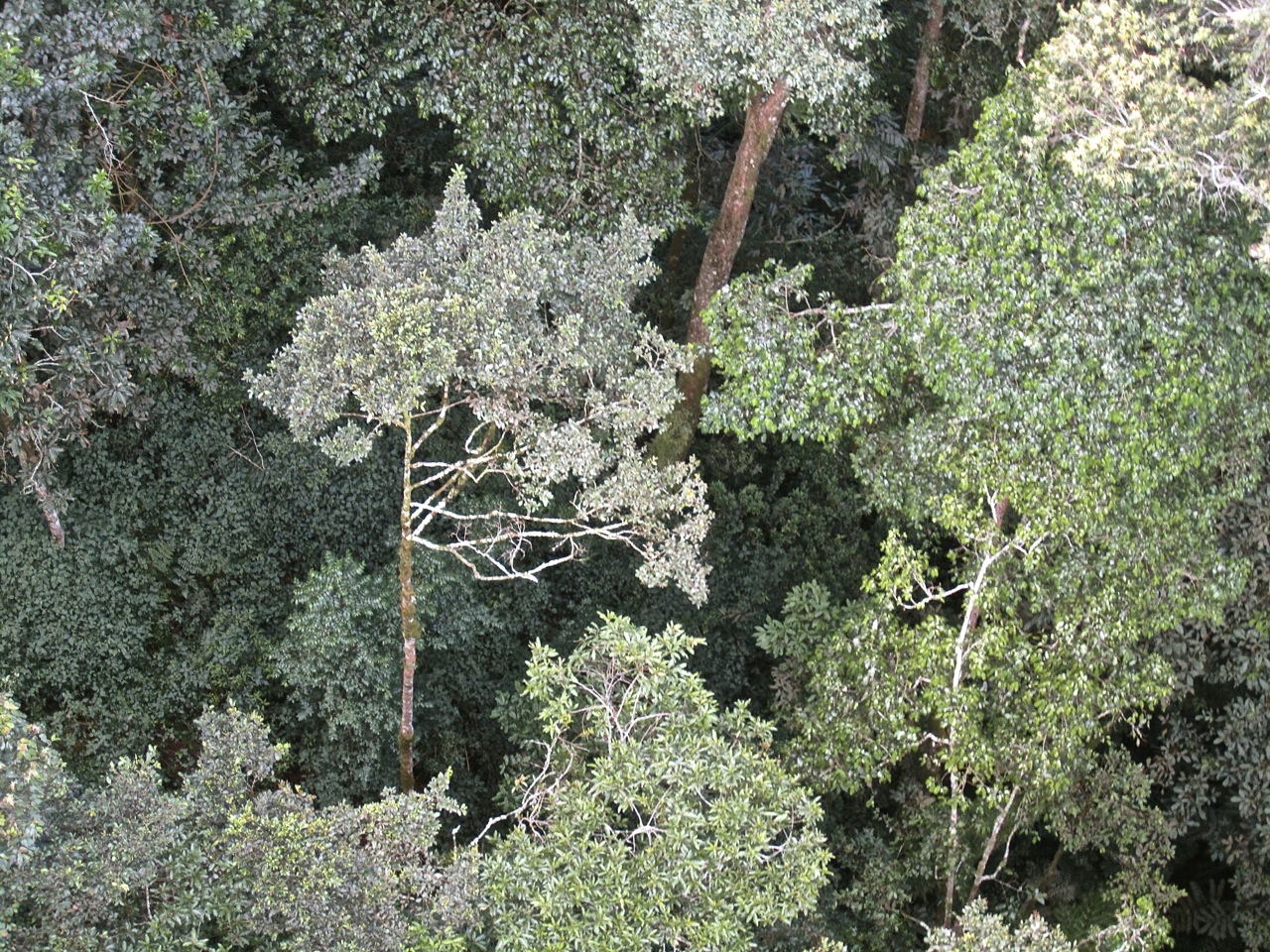
and began to look down.

20 Look down, Canopy walk, Nyungwe Park, Rwanda:enclos*ure

22 Look down, Canopy walk, Nyungwe Park, Rwanda:enclos*ure

23 Look down, Canopy walk, Nyungwe Park, Rwanda:enclos*ure

It is unsurprisingly difficult to take pictures while standing on a 12″ wide swaying walkway.

Below, you can see the tops of tree ferns, for which the trail is named (in Kinyarwanda), and we could hear water from a hidden stream.

25Look down, Canopy walk, Nyungwe Park, Rwanda:enclos*ures

A park guidebook says, “The walkway is strong and secure but will provide the visitor with a definite burst of adrenaline.”

26 View from canopy walk, Nyungwe Park, Rwanda:enclos*ure

In the photo above, taken from the walkway, you can see what I think are the young reddish-rose leaflets of Carapa grandiflora.  There is a wonderful full-color field guide on the plants of the park (here*), but, of course, mine was sitting back home on my desk during our trip.  However, I’m sure this was the best thing for my relationships with my husband and daughter, not to mention the guide.

Although the forest is home to many species of birds and monkeys, we did not see any along this trail — possibly because the popular walk is a bit noisy with humans talking.  But we saw both blue and L’Hoest’s monkeys along the road on the drive back to the lodge and from the balconies of our rooms.  And there is another park trail that features groups of chimpanzees.

And the next day, when we were almost out of the park, we spotted this guy, below, and a friend walking along the side of the road (photo by M. Koran).

Baboon in Nyungwe National Park. Photo by M. Koran/enclos*ure

To scroll through larger version of the images, click on ‘Continue reading’ below and on any thumbnail in the gallery.

*Sometimes you can find it here in Rwanda at bookstores or museum shops.  However, they were not selling it at the park or lodge when we were there.
Continue reading “The canopy walk, Nyungwe Forest”

The better to fade away. . .

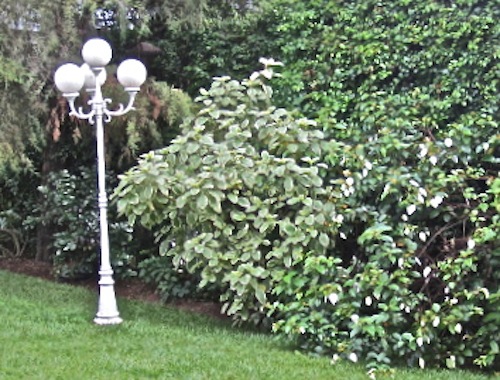
Our garden lights before:

Our garden lightpost before painting/enclos*ure

And after:

garden light/enclos*ure

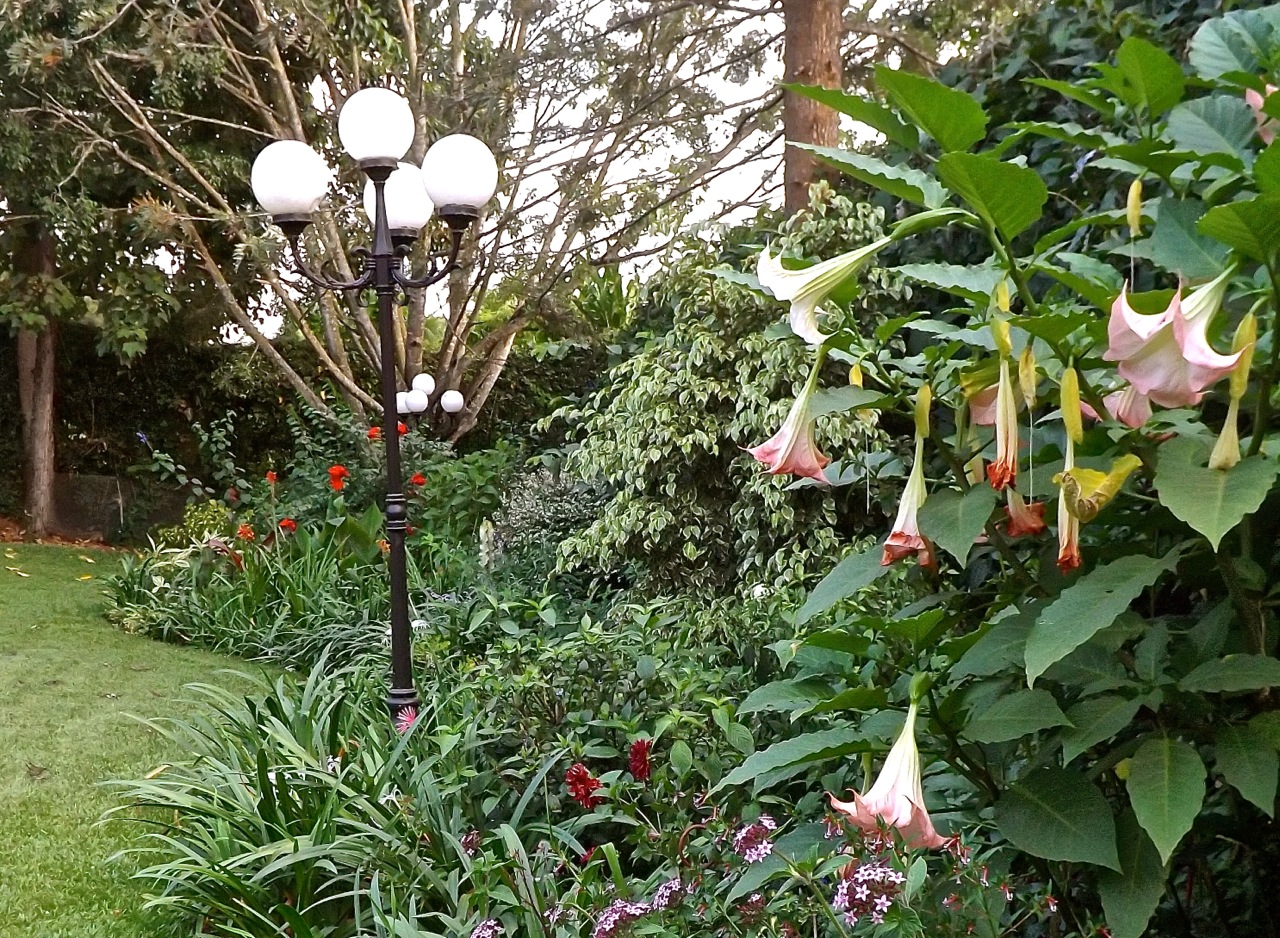
The dark chocolate brown matches the ironwork on the house.

garden lights/enclos*ure

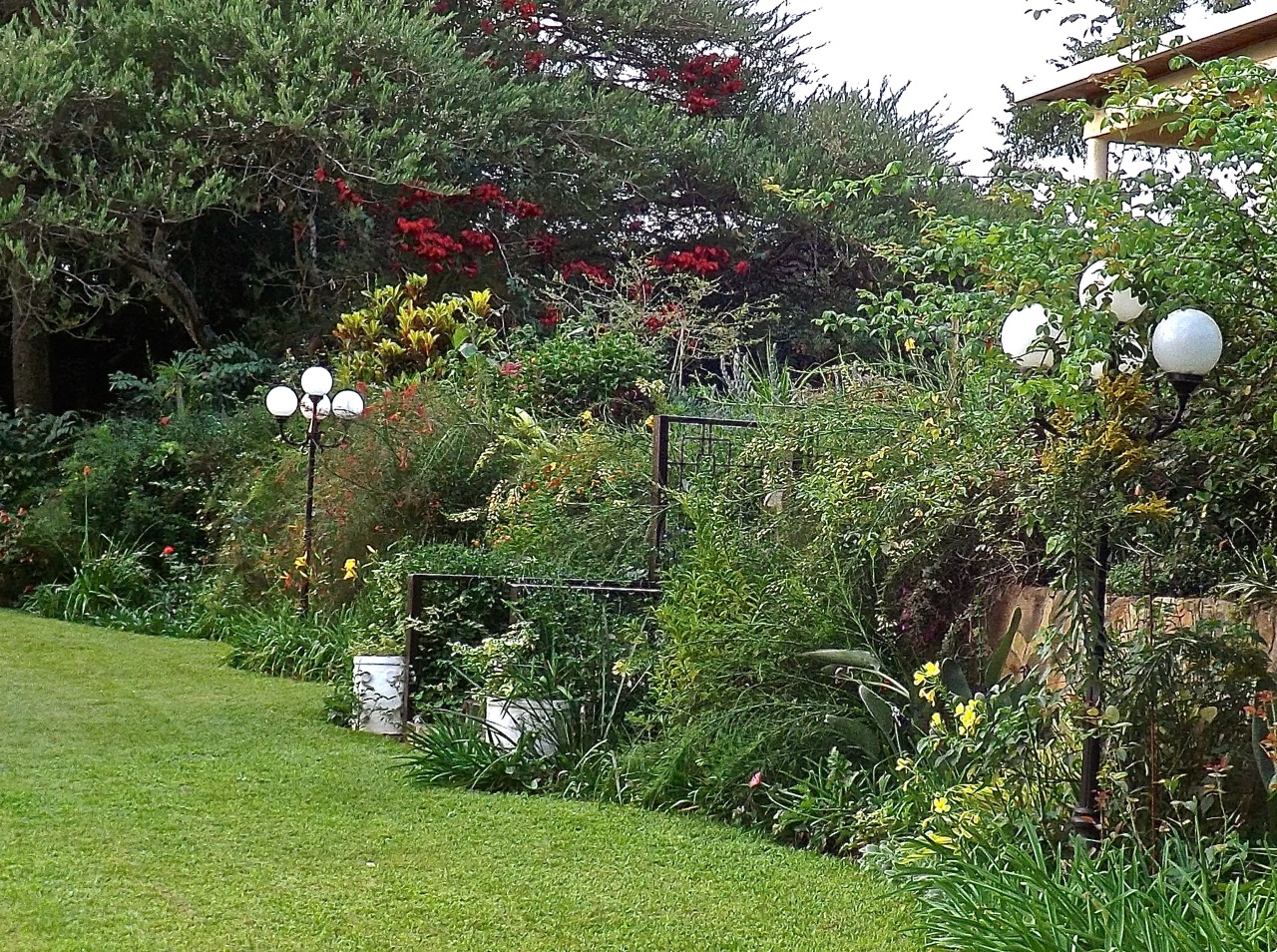
Also, I had remembered reading long ago, advice by Ken Druse that dark brown was the best color for making less-than-beautiful garden features recede.  (He specifically recommended Cabot’s Solid Color Stain in “Spanish Moss.”)

garden lights/enclos*ure

Now, in the evening, we just see floating white balls.

My bargain dahlia

It’s amazing what you can get at Costco.

DSCF1292

I bought a fairly cheap bag of dahlia tubers in mixed varieties there last spring. Then I left it sitting next to my desk until September, when I finally planted the (by then) shriveled-up tubers.

DSCF1293

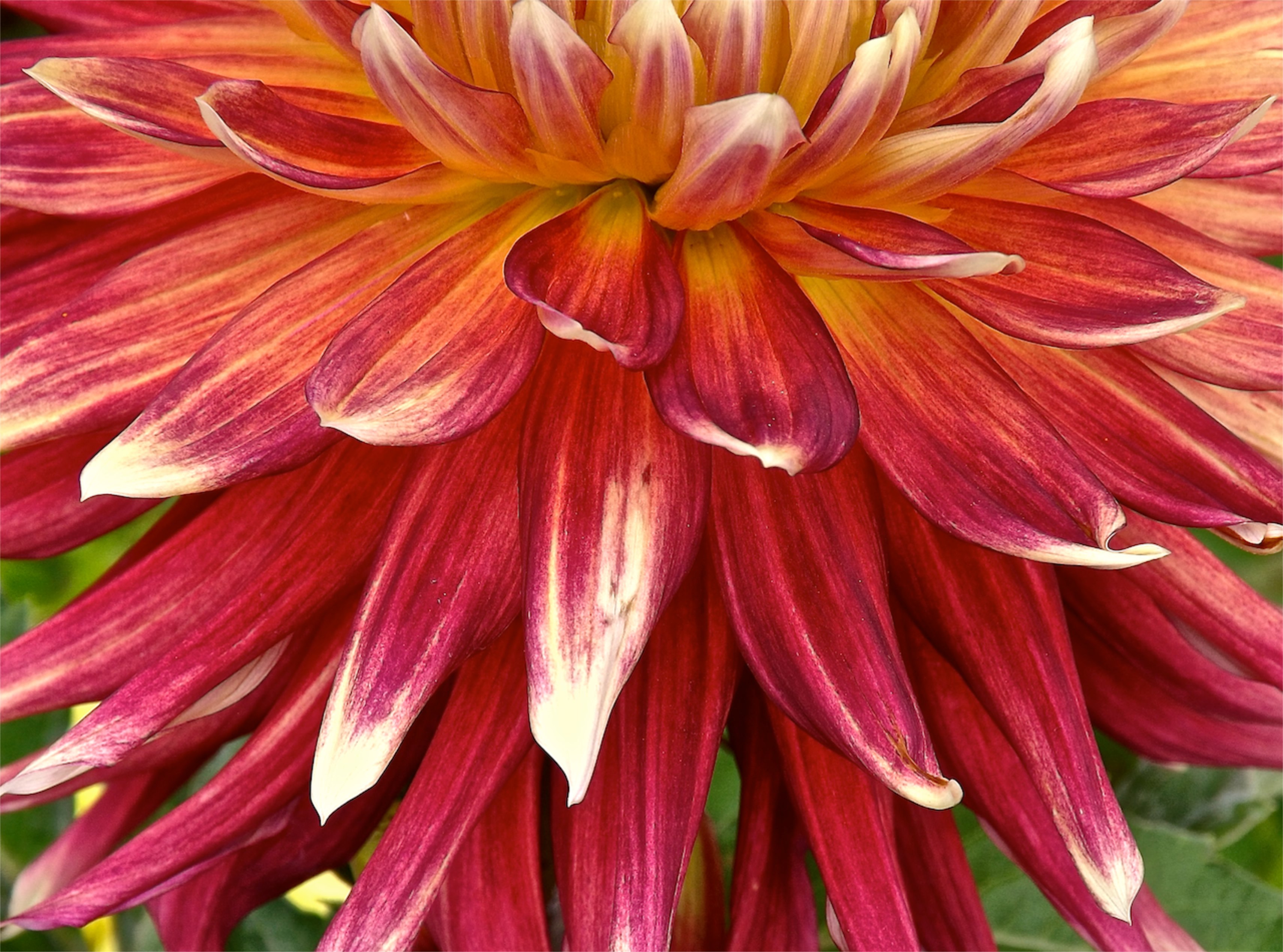
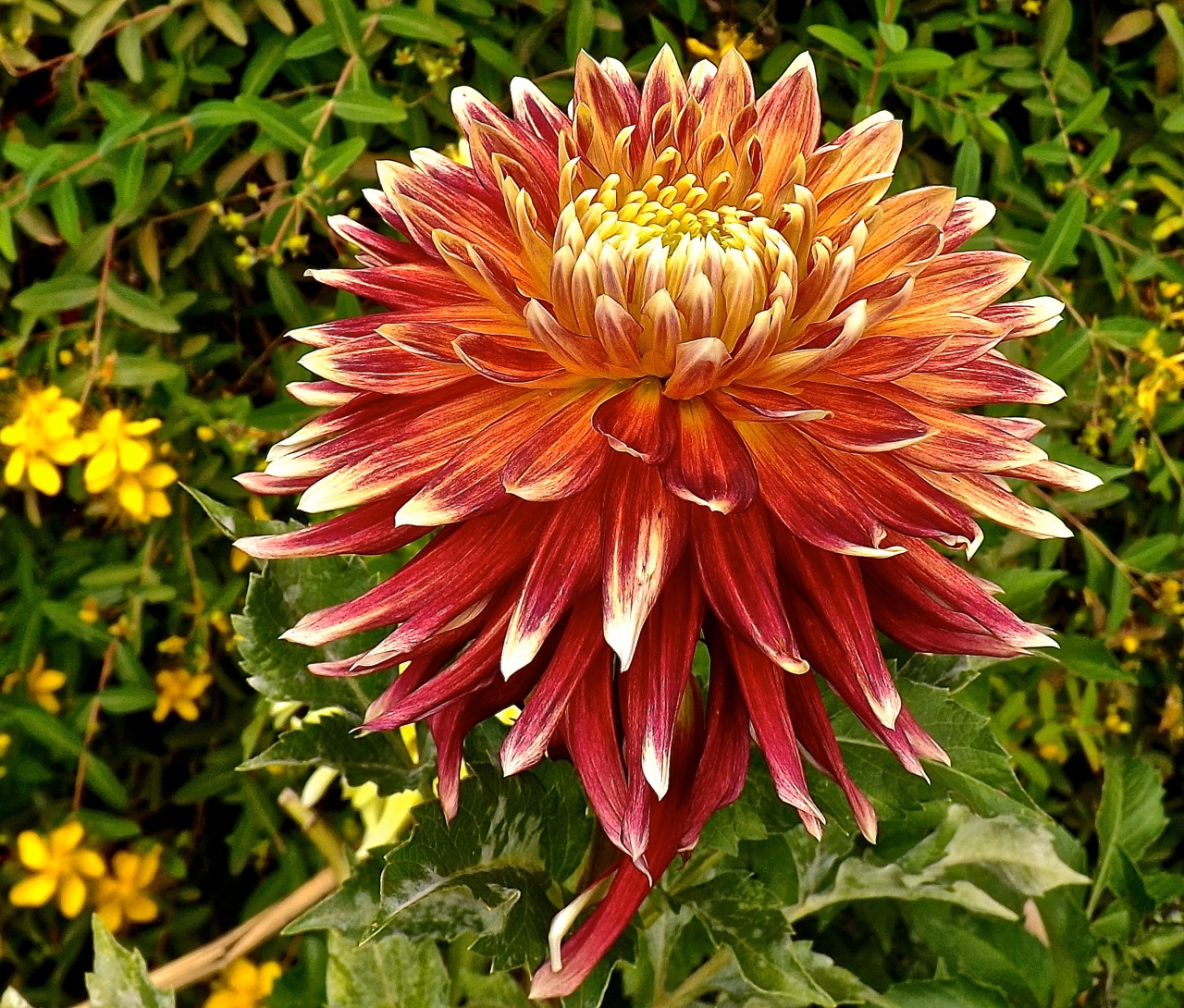
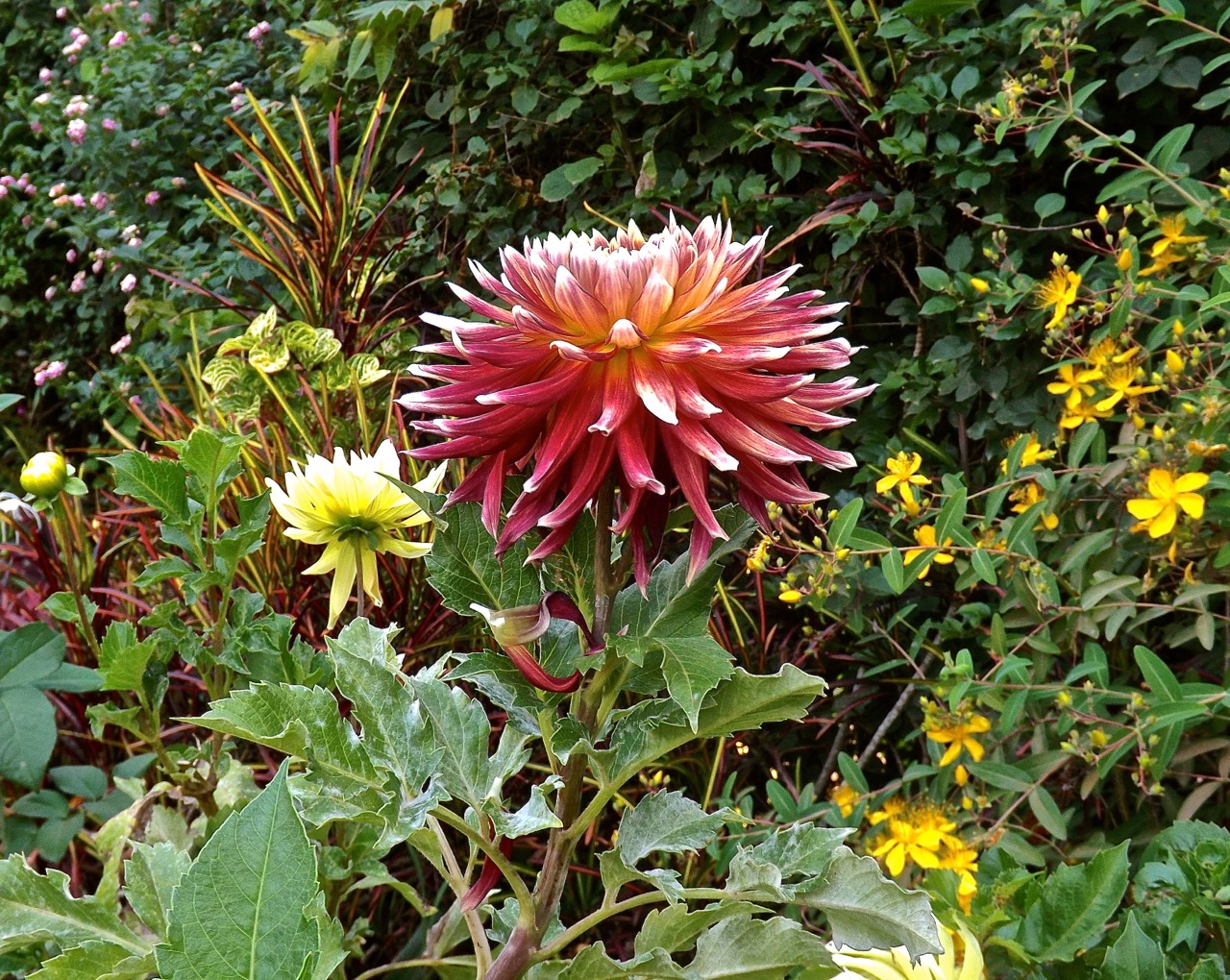
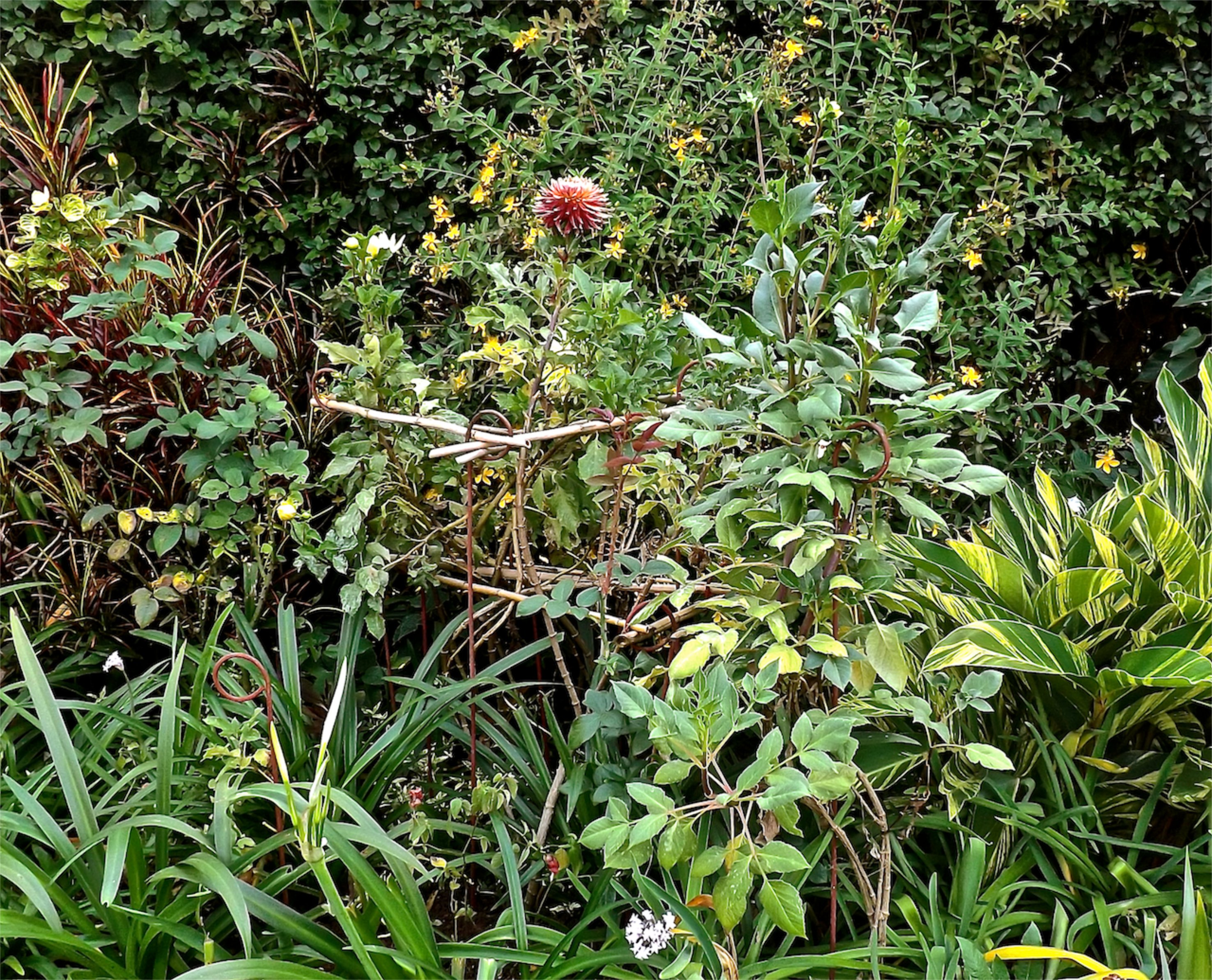
They came up strong, nevertheless, and this light yellow and burgundy one surprised me; I didn’t remember anything so nice on the photo on the bag (which I had tossed).

The others were more ordinary:  a couple in yellow with just a bit of burgundy streaking, three in solid burgundy, and one in yellow with orange streaks (sent right to the cutting garden).

4a

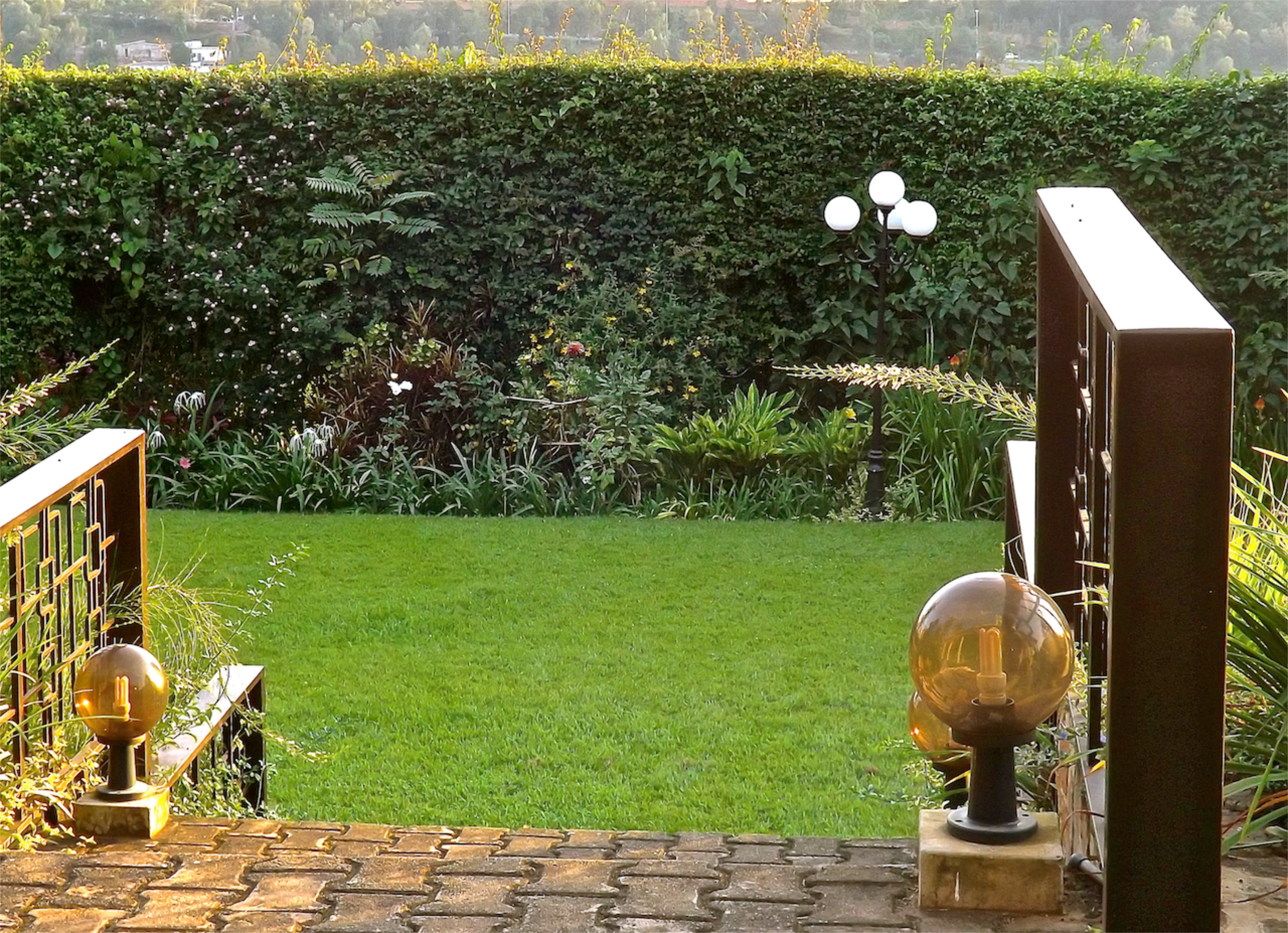
I put the burgundy- and yellow-flowered plants in the center of the long border along the lower lawn.

5a

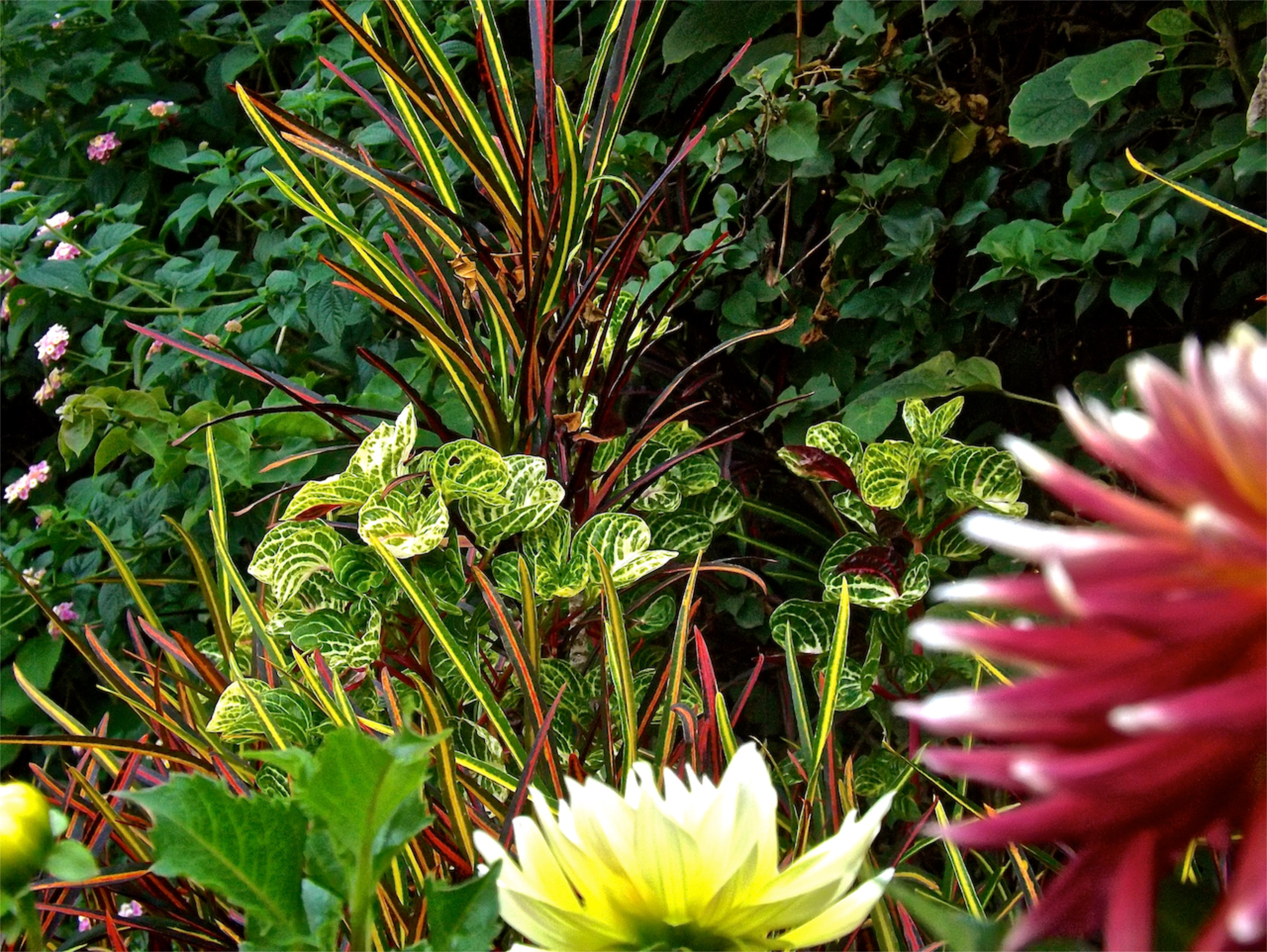
Their bi-color streakiness will go well with the red, yellow, and green tropical foliage of the plants pictured above* and with the yellow and green variegated gingers below on the left.

Growing behind the dahlias and blooming all the time is a shrubby Hypericum, possibly H. perforatum or St. John’s wort.

7a

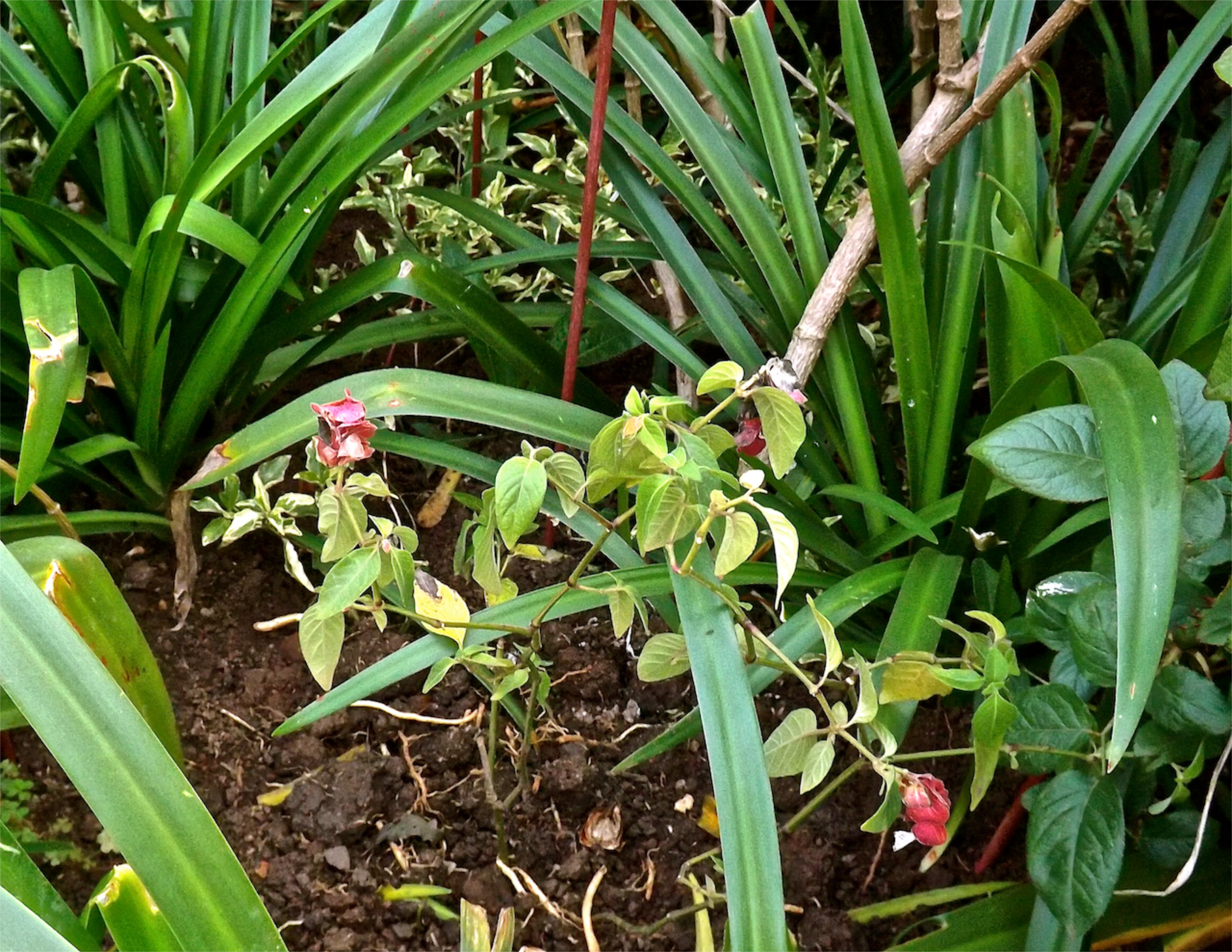
The dahlia plants as a whole are not very pretty at the moment, mainly because I didn’t stake them early enough. I’ve planted two shrimp plants** up front to hide their legginess

9a

. . .eventually.  There’s one in front of the gingers too.  I should be able to maintain them at about 2′ high.

10a

I think the whole yellow and burgundy arrangement will give some drama to this center section — once everything grows a little more.  Those gingers will get at least 12″ taller.

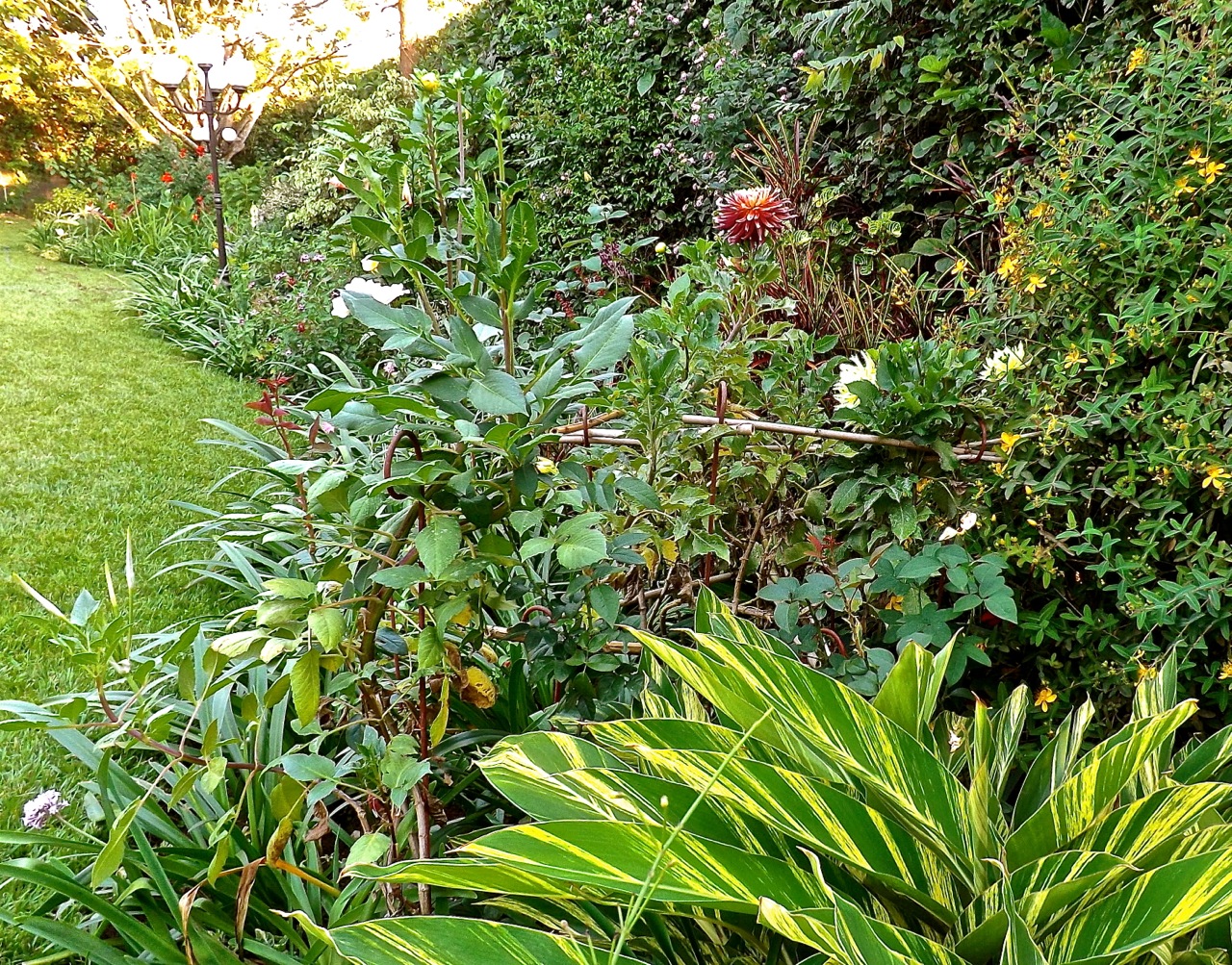
down the border

Above:  looking down the border to the left to a pink and burgundy (dahlias) section –also still in progress — then yellow, purple, and, at the end, red with some pink and blue/purple around the edges.

Click any of the photos for a larger look.


*I think a croton and a coleus.

**Justicia brandegeeana.