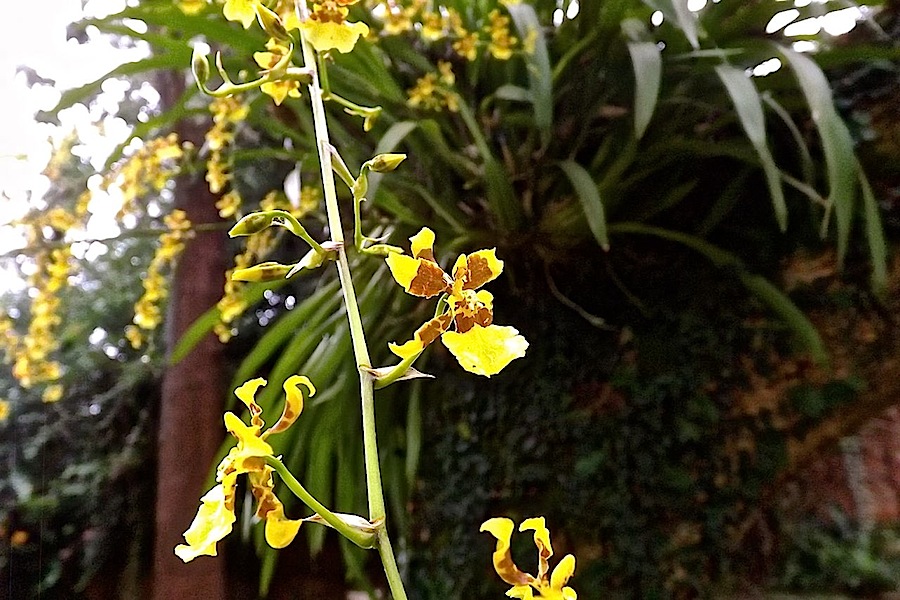
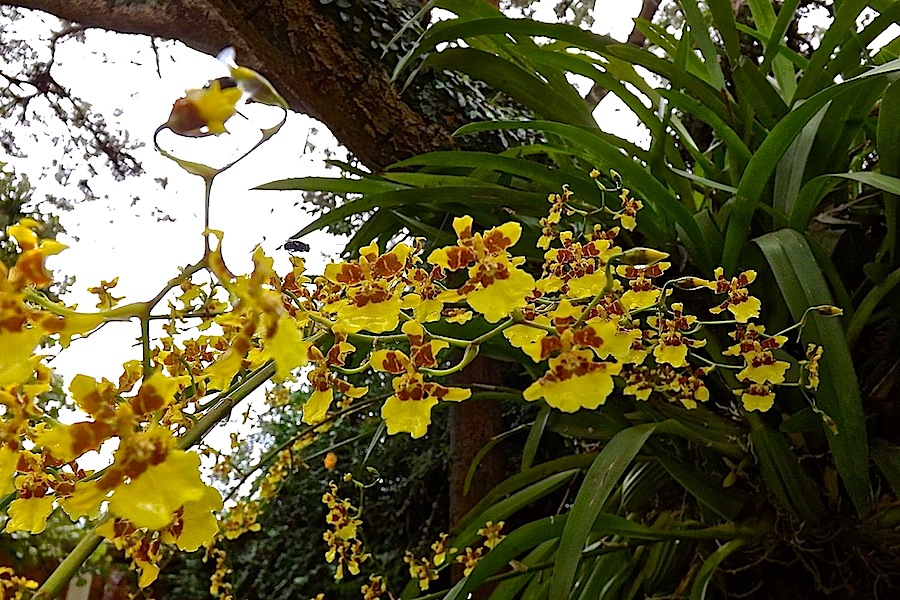
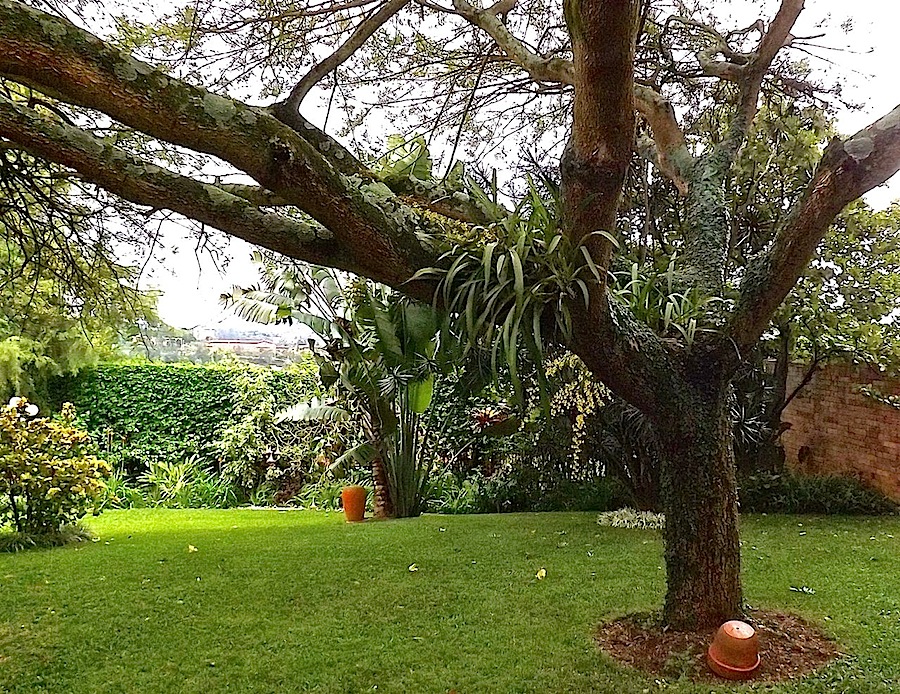
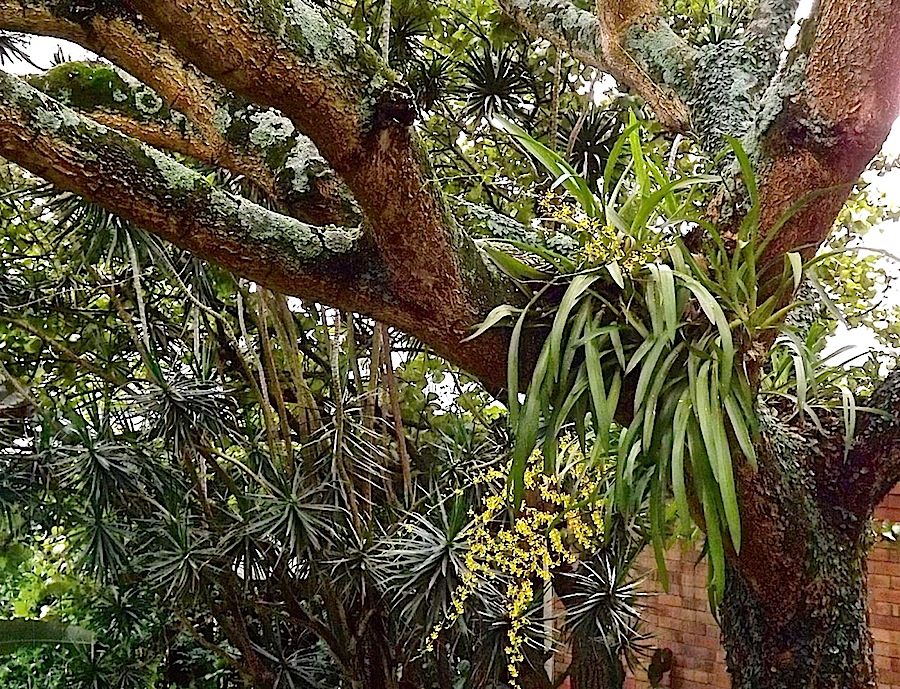
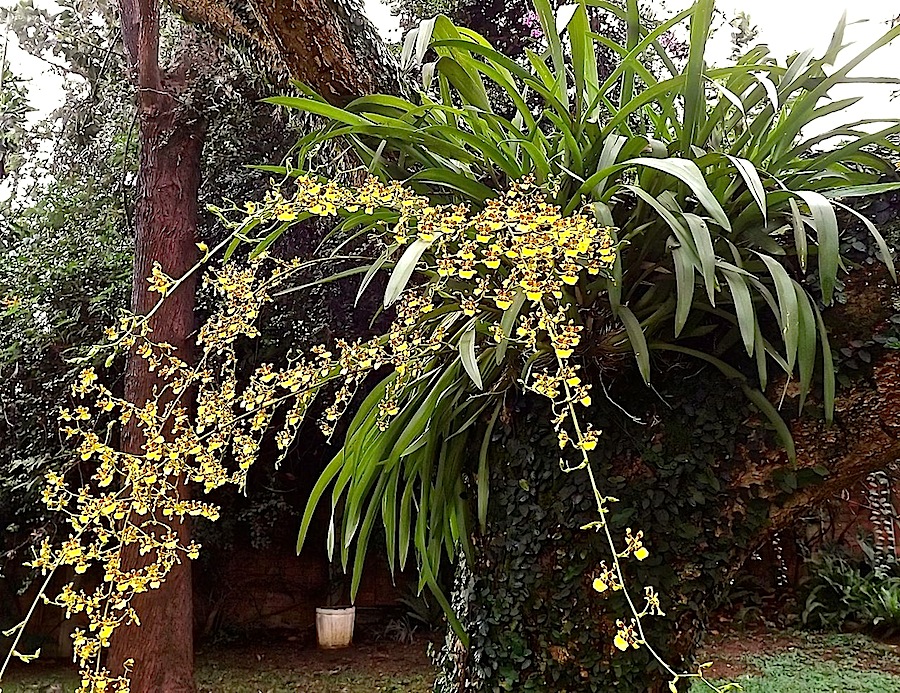
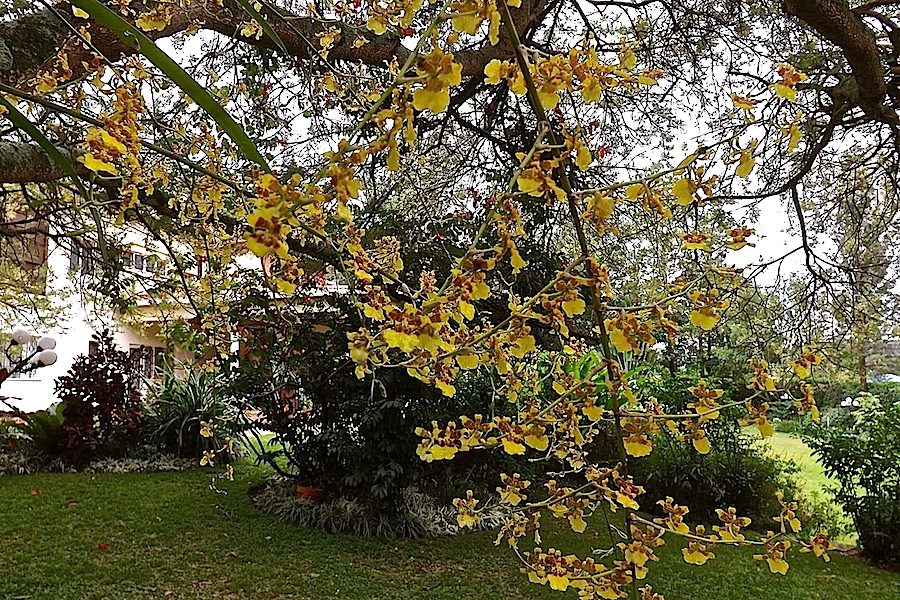
These two clumbs of orchids came out of the big old Norfolk pine that used to grow at the entrance to the terrace. (It was cut down a year and a half ago when it was clear it was dying.)
When we wired them onto the acacia, the gardener said the flowers were yellow, but I really didn’t think I’d ever see them bloom.
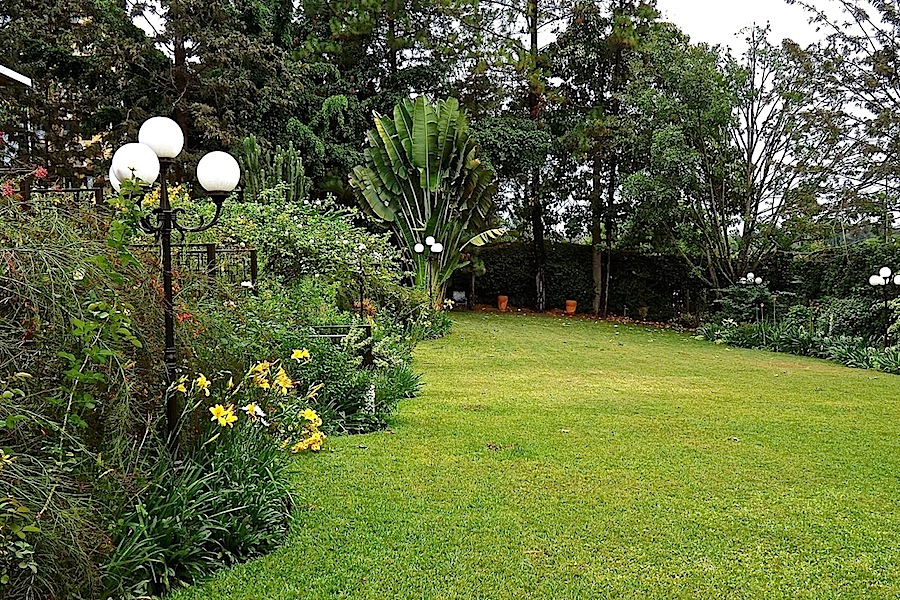
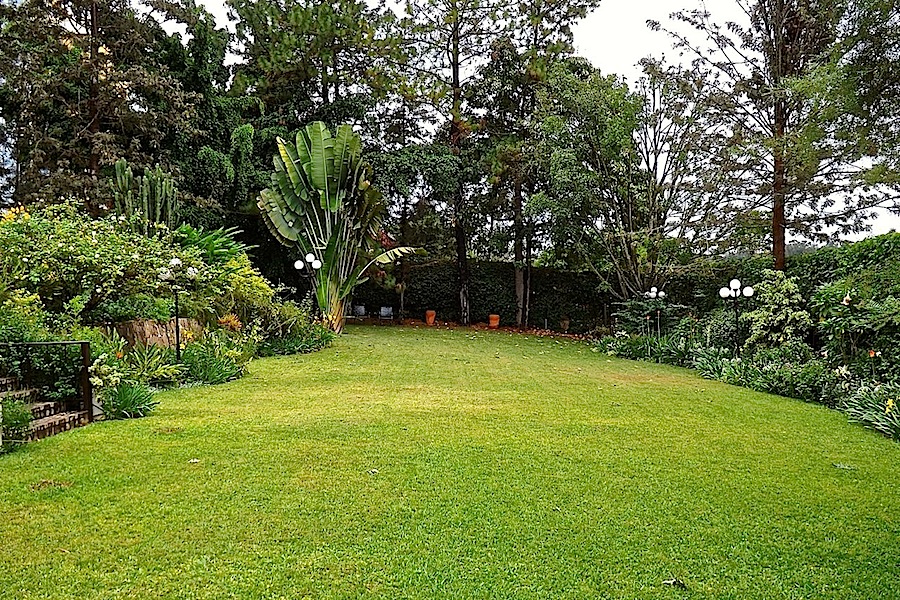
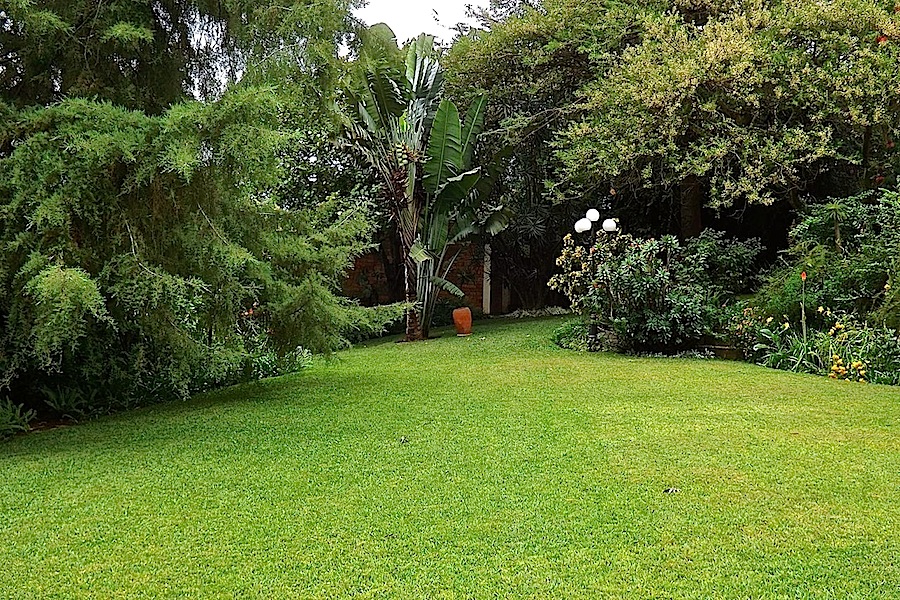
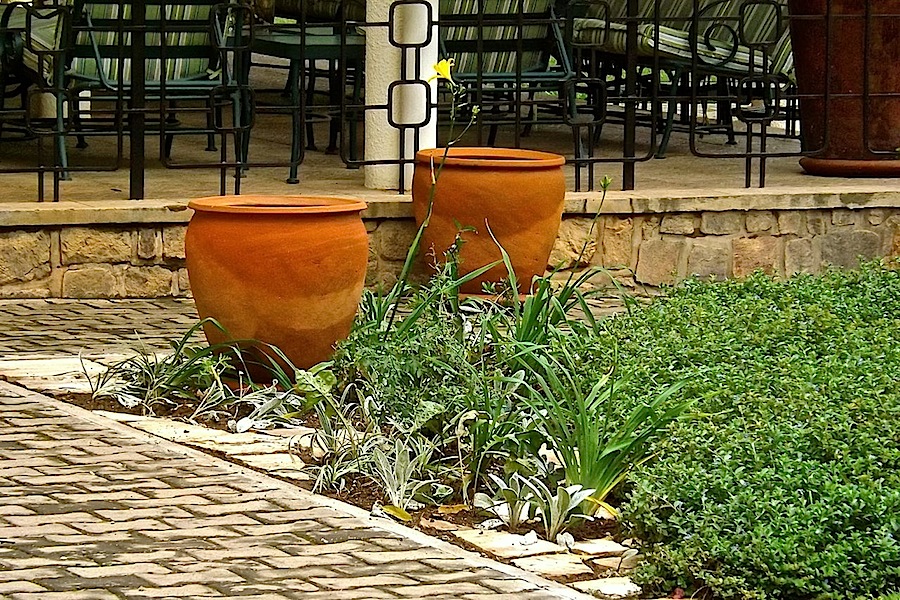
Another change: at the end of the long lawn (below), we have added two tall pots to set off a trio of pine trees.
I will plant something tall to the right of the trees/pots grouping.
At the other end of the lawn, I placed this single tall pot. I will enlarge the planting area at the base of the traveller’s palm and add some stones to make a level base for the pot.
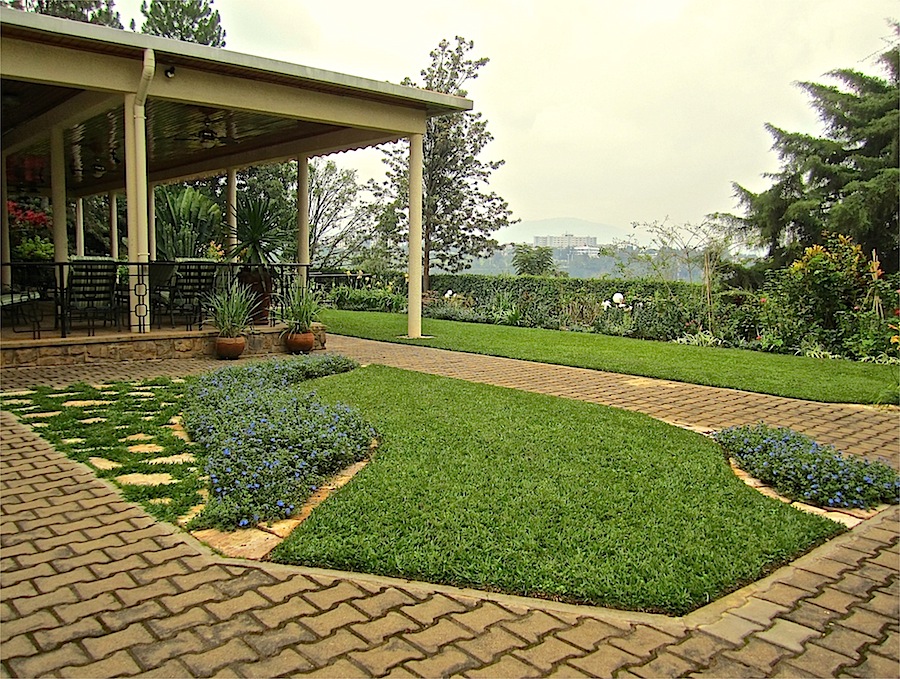
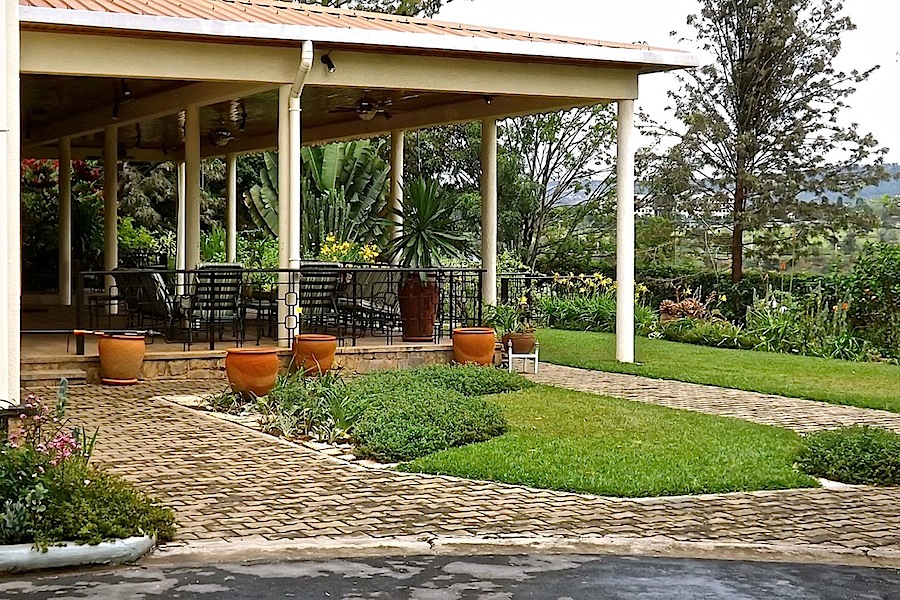
And finally, I faced the fact that my stepping stones and grass arrangement (below) on the right side of the entrance to the terrace just didn’t work. (The aforementioned Norfolk pine used to fill this area.)
We (meaning the gardener mostly) took up all the grass and stones . . .
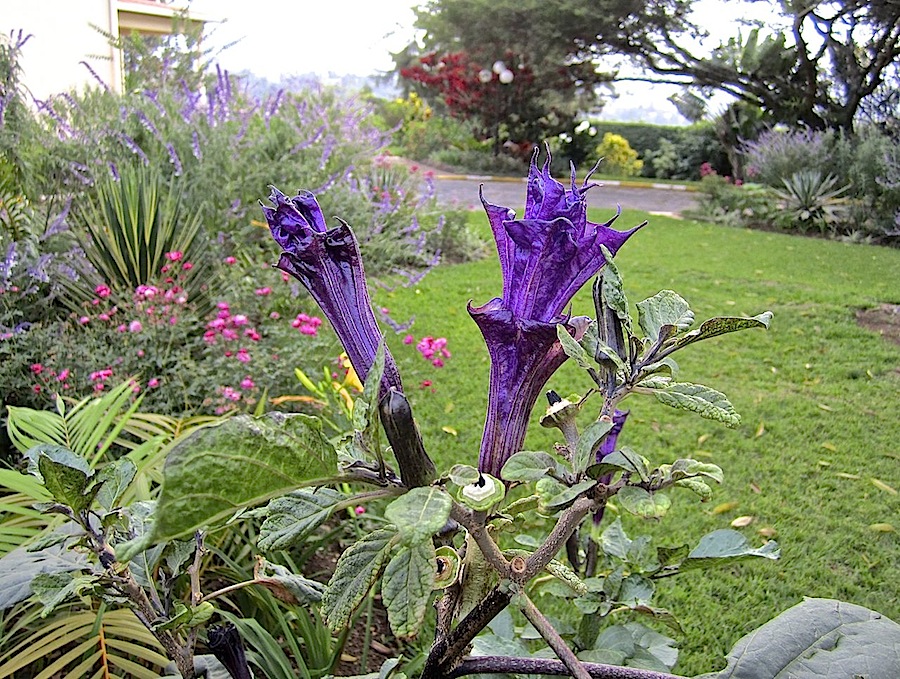
and we replanted (meaning me) with the same plants that are in the borders around the driveway:
Mexican sage, small pink shrub roses (like ‘The Fairy’), datura, lambs’ ear, and yellow day lilies.
I’m still working on the placement of the pots. Please stay tuned.
During the last week of September, I took a walk around the Heirloom Garden of the Museum of American History and was filled — once again — with admiration for the Smithsonian Institution’s horticulture division.
The garden — huge, raised planters, all the way around the building — contains a mix of open-pollinated plants cultivated in America prior to 1950. The perennials and annuals are anchored by crape myrtles and a variety of shrubs.
The space is very large, open, and — at the south entrance — crowded with tourists. Still, the beautiful long borders, which were being allowed to fade with fall naturally, offered a surprisingly intimate and even soulful experience.
One would have thought, (so cunningly the rude
And scorned partes were mingled with the fine,)
That Nature had for wantonesse ensude
Art, and that Art at Nature did repine;
So striving each th’ other to undermine,
Each did the others work more beautify;
So diff’ring both in wills agreed in fine:
So all agreed through sweete diversity,
This gardin to adorne with all variety.
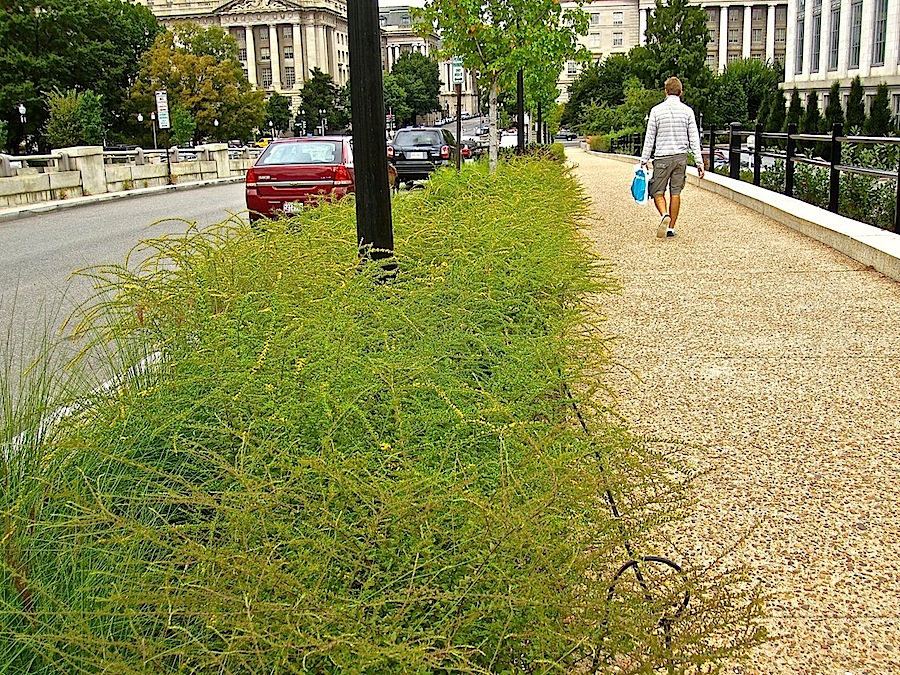
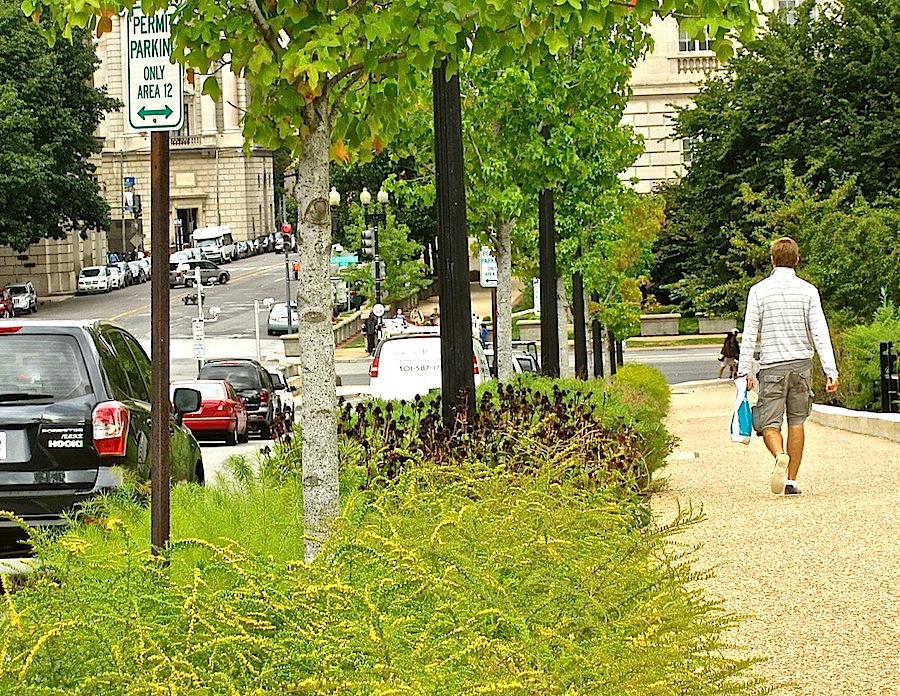
This is an example of how nice an urban ‘hellstrip’ can be. It’s just to the west of the Museum of Natural History of the Smithsonian Institution. I took this photo in the last few days of September.
I think they are all American native plants. I see a fine grass I can’t identify (just visible in the top photo), goldenrod (‘Fireworks’?), amsonia (I think), and the seedheads of purple coneflower.
I like the arrangement of squares of a single species, one after another, rather than all of the plants in one long mix. It goes well with the surrounding architecture.
Sometimes I save a weed if its leaves
are spread fern-like, hand-like,
or if it grows with a certain impertinence.
I let the goldenrod stay and the wild asters.
I save the violets in spring. People who kill violets
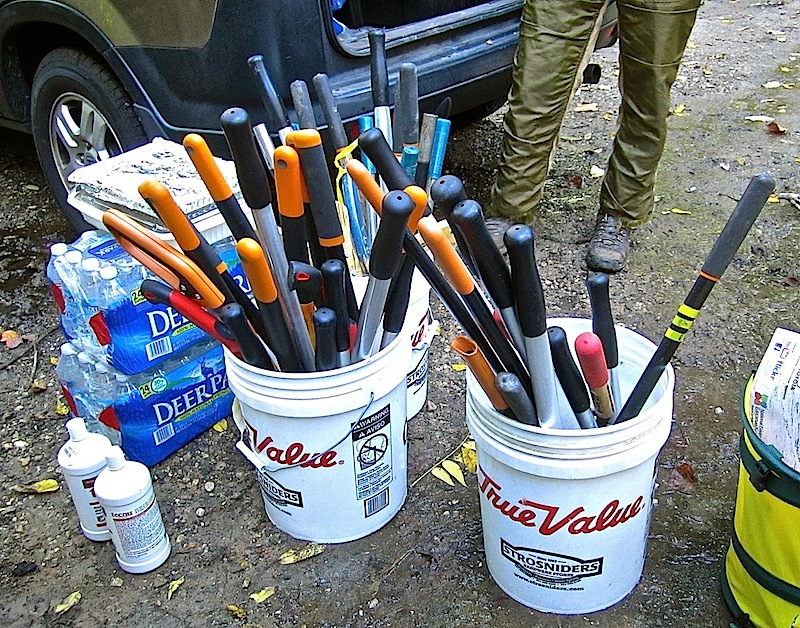
Is this not a picture of fun? Two buckets full of loppers, pruners, saws, and even a couple of machetes.
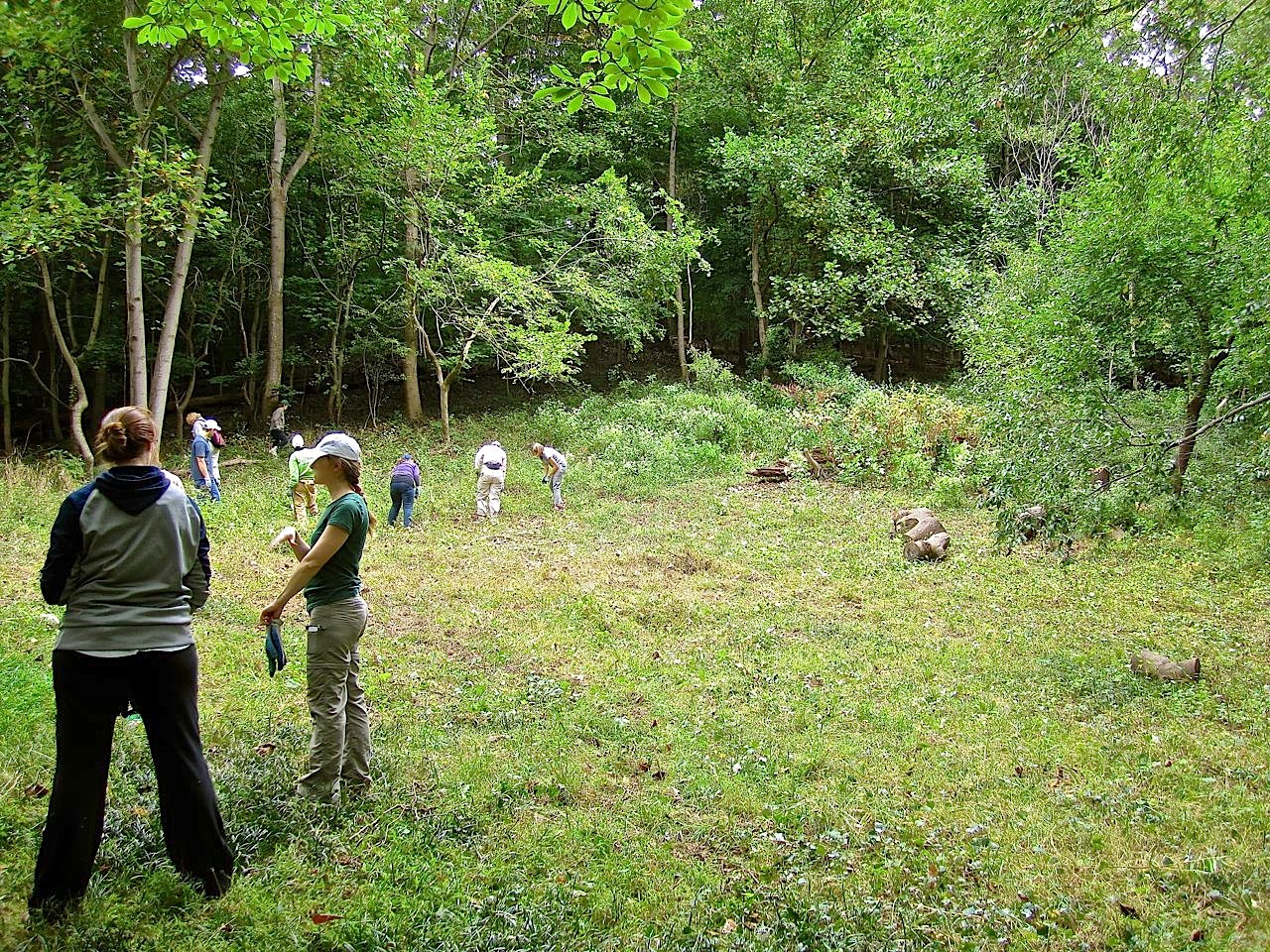
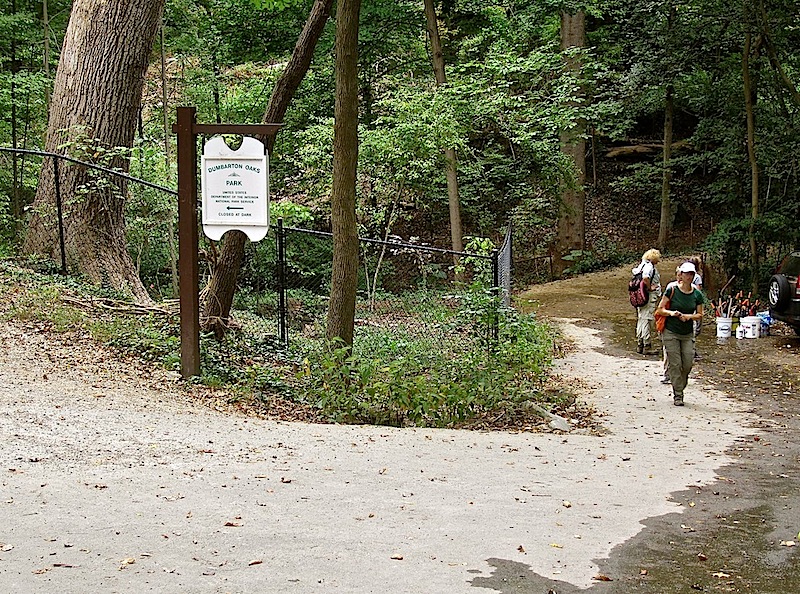
Our recent visit to Washington, D.C., coincided with a September Saturday “Weeding Day” at Dumbarton Oaks Park, sponsored by the Dumbarton Oaks Park Conservancy. I have wanted to volunteer for one of these days for a couple of years — ever since learning about the group’s efforts to restore this Beatrix Farrand masterpiece, which is located behind the more famous Dumbarton Oaks Gardens.
Owned by the National Park Service since 1940, the park has suffered from invasive exotic plants and water runoff.
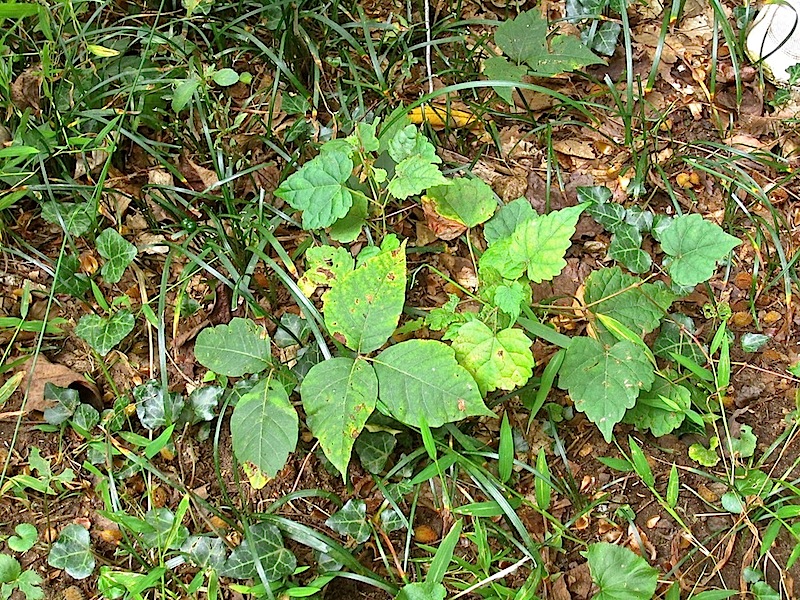
The morning started with Ann Aldrich, the Conservancy’s Program Director, making sure we knew how to recognize poison ivy. Then we all doused our exposed skin in Tecnu, a soap that mitigates the effects of exposure.
We learned that poison ivy was not one of the weeds we would be pulling — it is native to the area and an important source of (protein) food for birds.
(Good) poison ivy surrounded by (bad) porcelain berry, English ivy, Japanese stilt grass, and liriope.
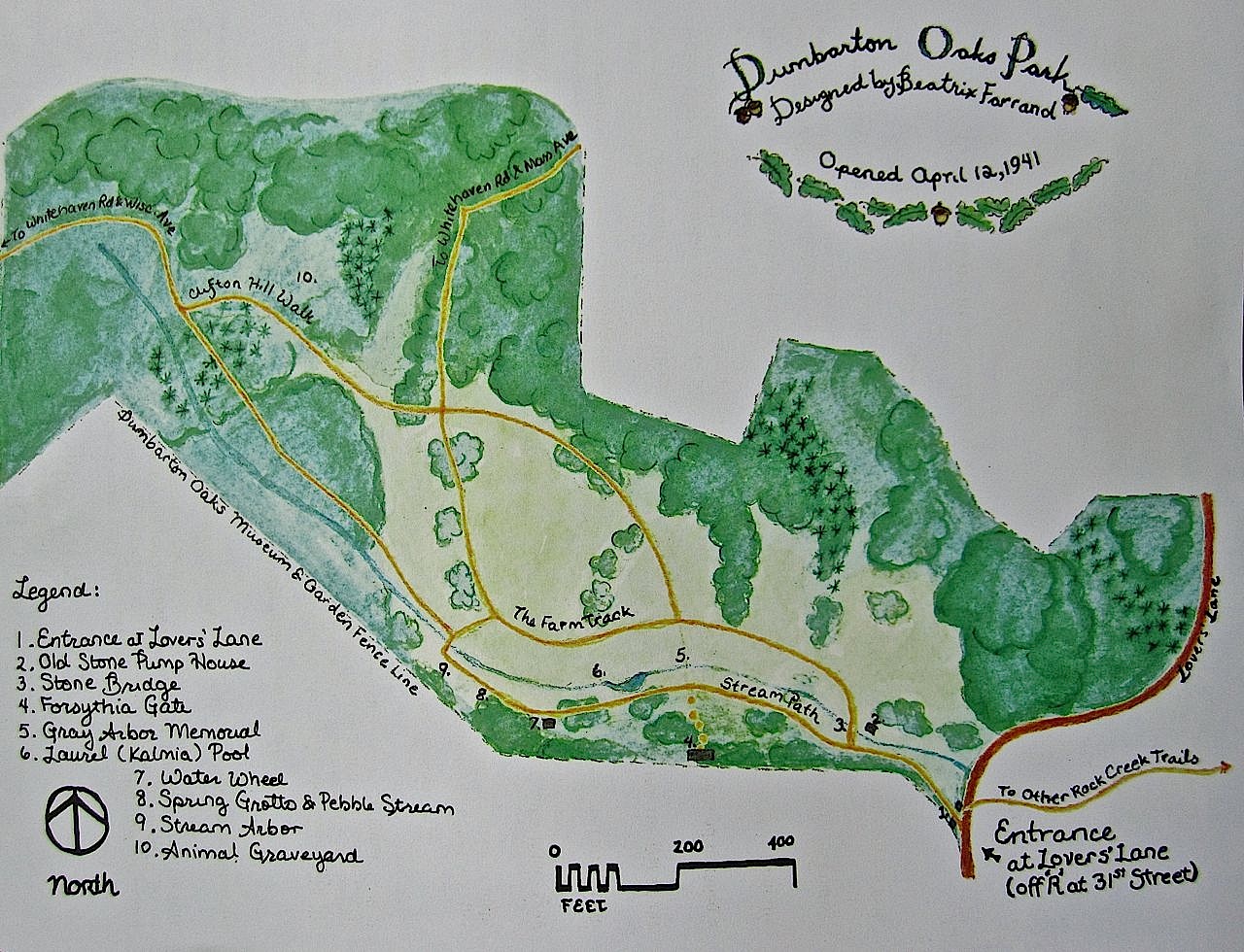
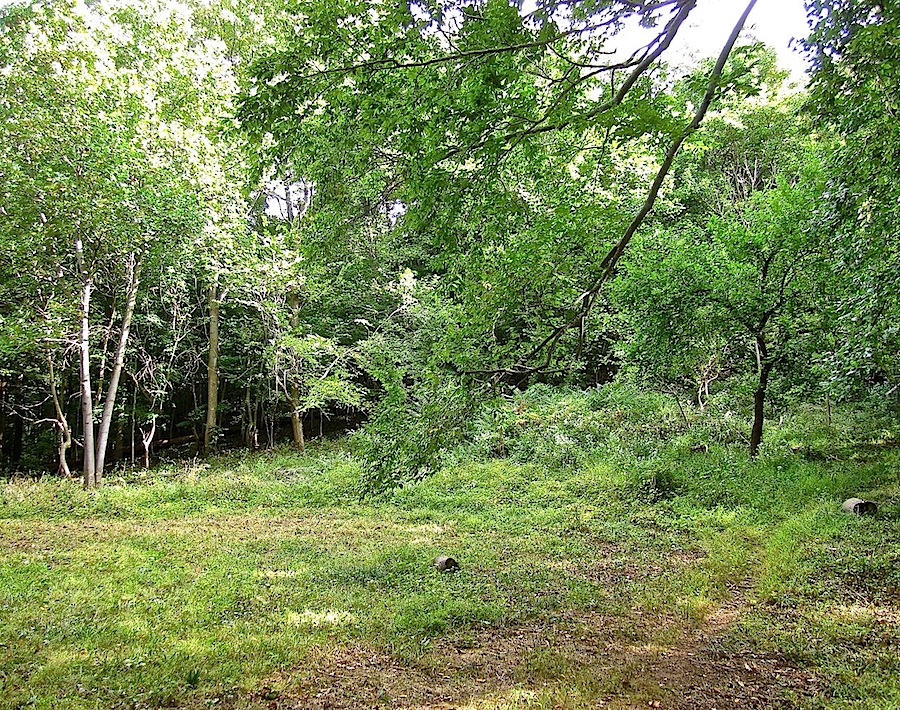
We were clearing a meadow area just above the stone pump house (no. 2), on the right in the drawing below.
Below is a picture of the area before we started. . .
And below is what it looked like after we finished (about 3 1/2 hours later). We probably would have cleared out more above the old log, but there was a bees’ nest on the other side.
Ann has spent many a weekend this summer leading garden enthusiasts, college students, and D.C. schoolchildren in “weed warrior-ing.” There is so much to do, and I am so impressed with the group’s ambitious commitment to this lovely place.
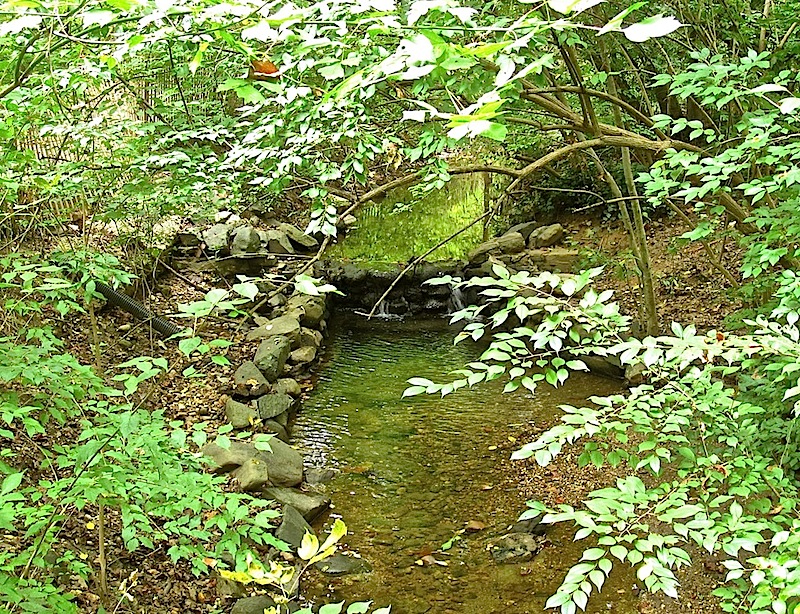
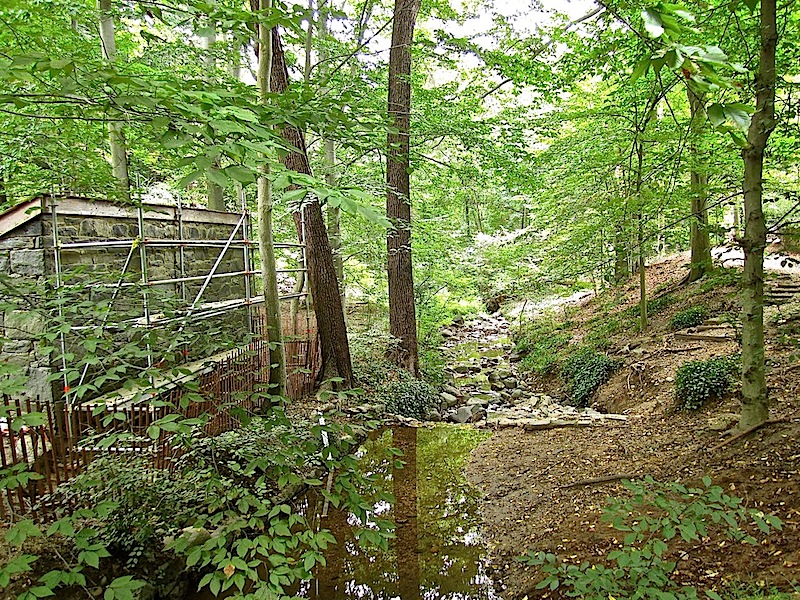
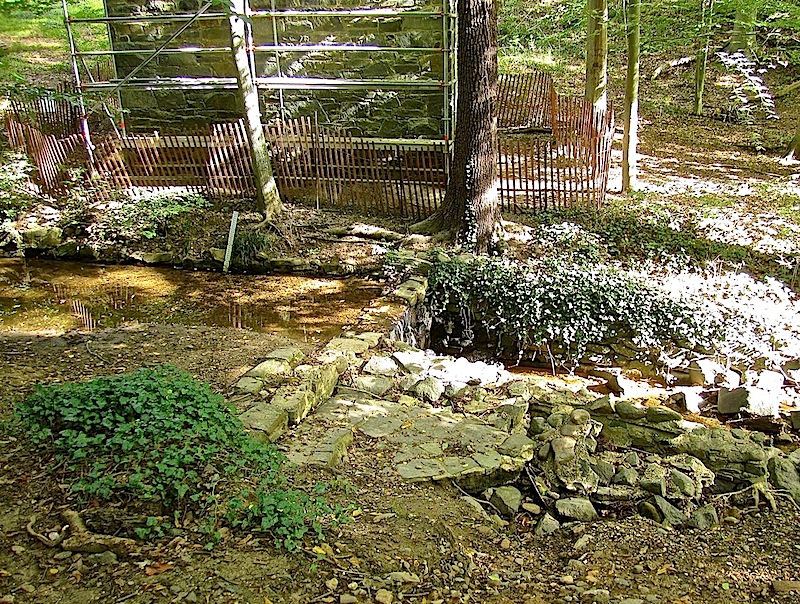
As I was leaving, I stopped to admire the Arts and Crafts-style stonework of the dams that Farrand installed all along the little stream that runs through the park.
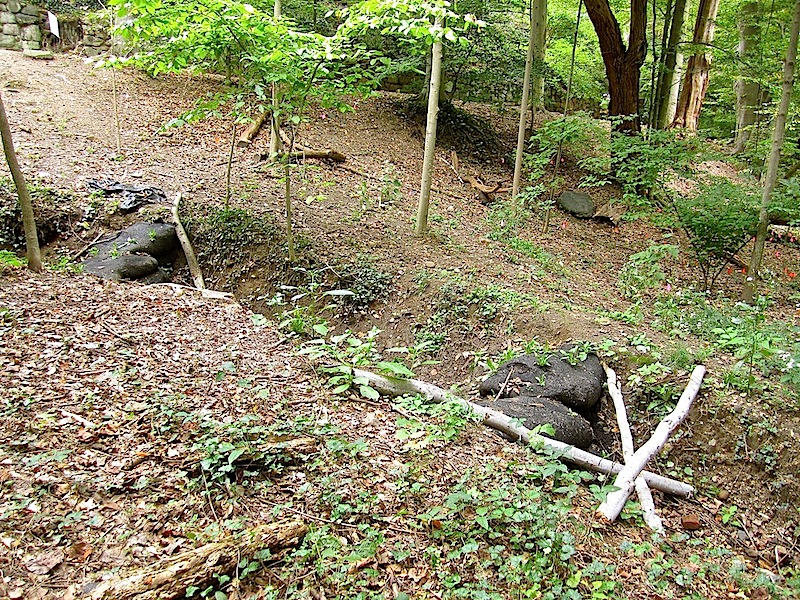
The Conservancy was just about to have a contractor make repairs to this area when the government shutdown put a halt to even volunteer efforts. (The Conservancy supports and is supervised by the National Park Service.) I hope the work is underway now. Earlier this year, the group was able to place compost filter socks (below) near the Lovers’ Lane entrance to the park.
They are preventing further damage from the water runoff that comes shooting down the small asphalt road that runs along Dumbarton Oaks Gardens.
I had a great time and I will definitely do it again when we move back to Washington (the park is an easy walk from our house). If you live in the D.C. area and would like to help, click here and ask to be put on the Conservancy’s mailing list.
Dumbarton Oaks Park Conservancy is also holding a fundraiser on November 7, 6:30 p.m., at The Josephine Butler Parks Center. Author Richard Guy Wilson will speak on “Edith Wharton at Home: Life on the Mount.” (Wharton was Farrand’s aunt.) Tickets are $35; click here for more information.
* Farrand actually specified porcelain berry vine to be grown over her arbors, which just makes me shudder.
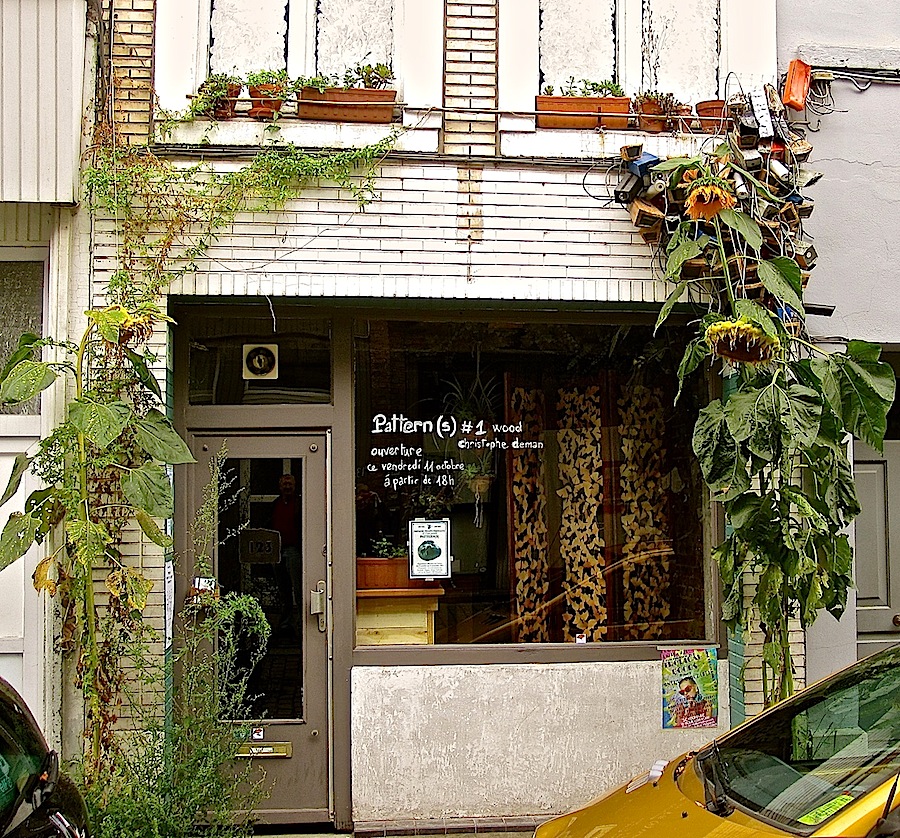
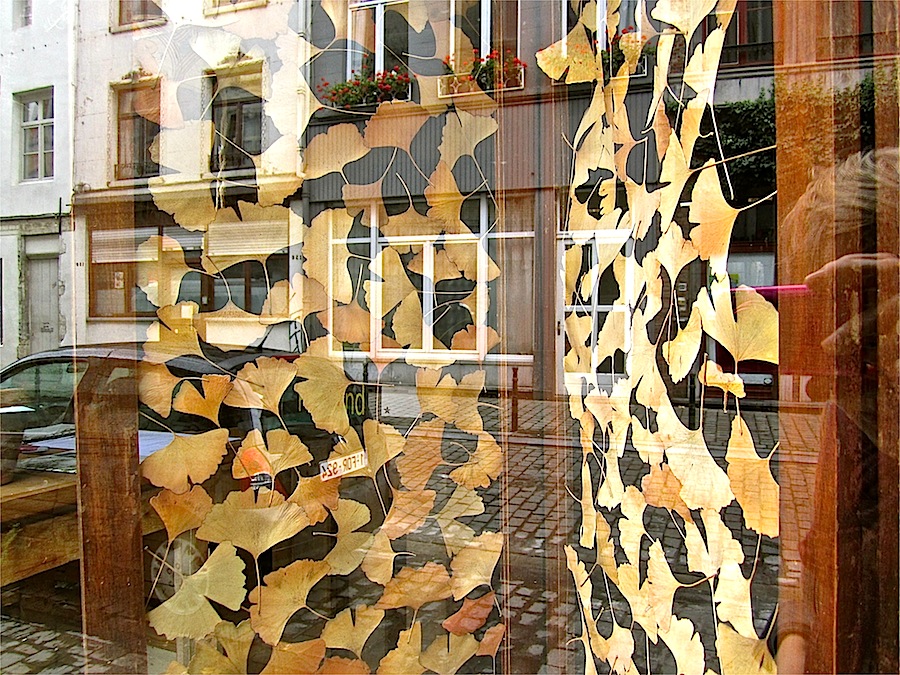
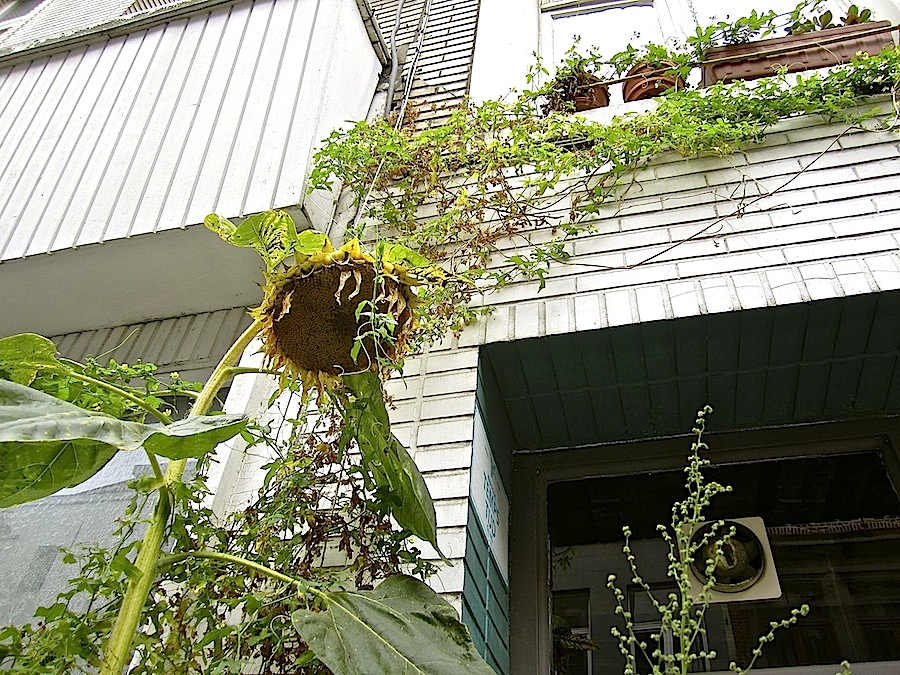
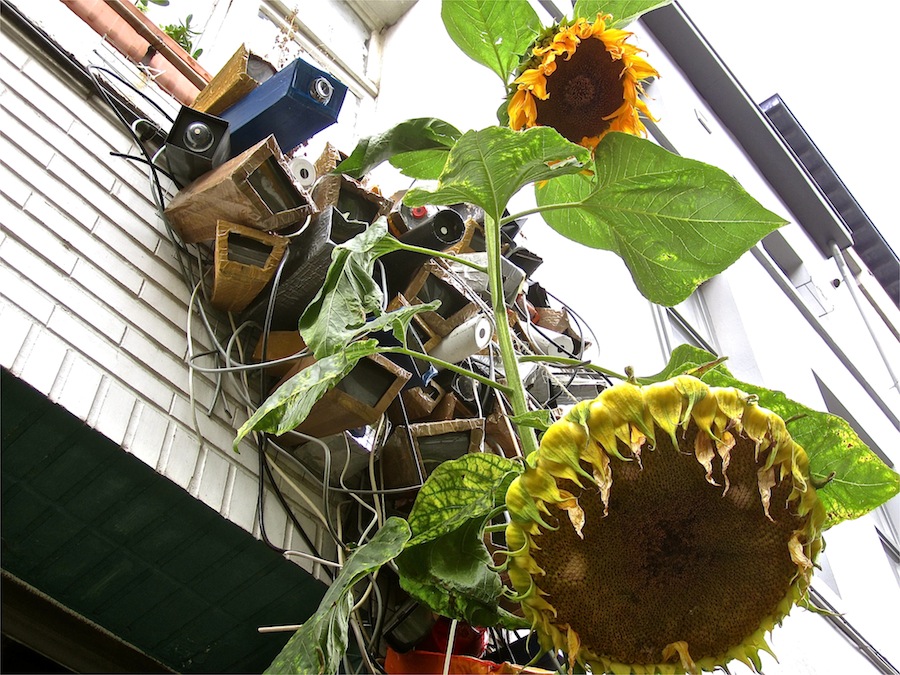
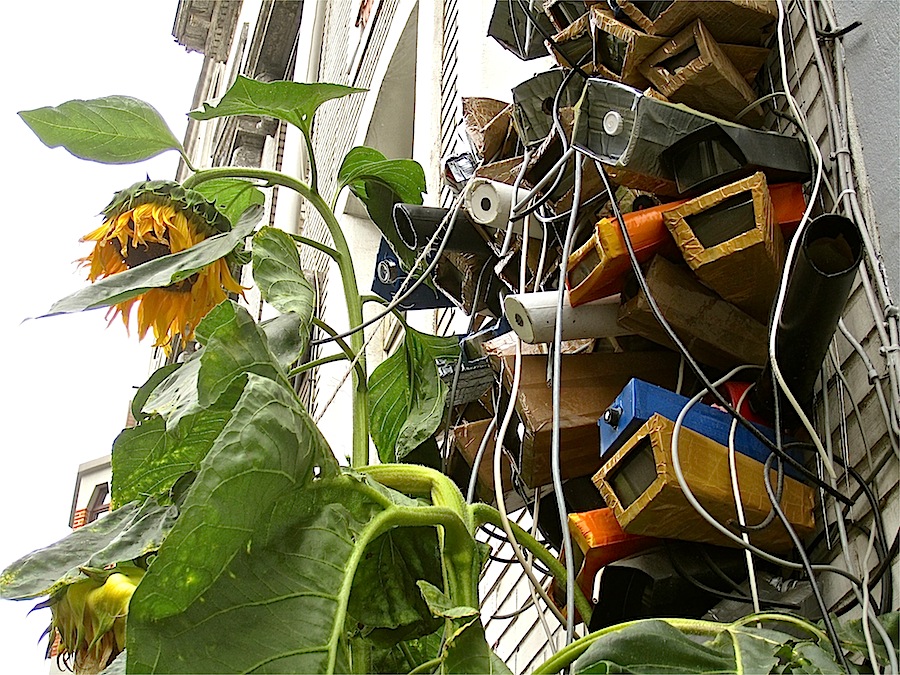
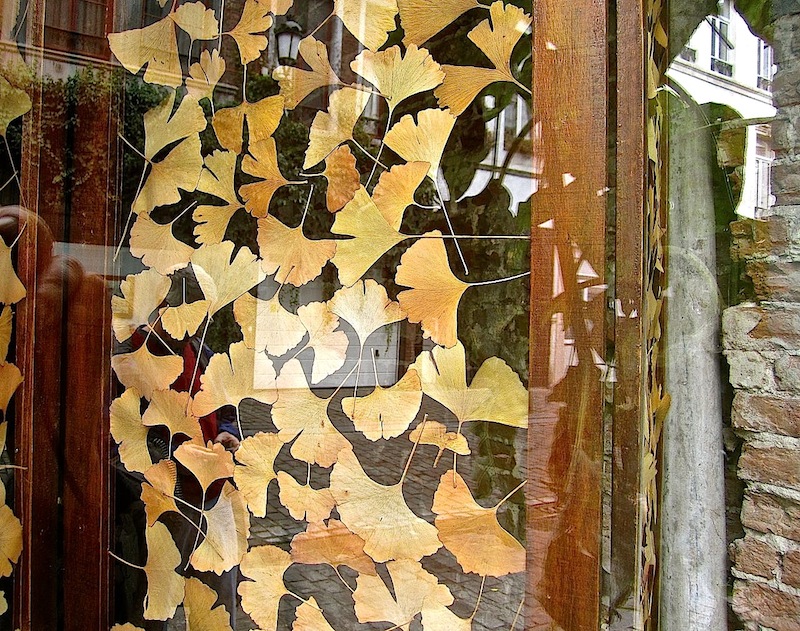
The front of this small gallery on Rue de Flandre (or Vlaamsesteenweg) in Dansaert shows how Brussels can be both charming and a little grim at the same time.
I took these pictures a week ago yesterday.
There’s a nice appreciation of the city on The Economist’sIntelligent Life website here.
The neighborhood of Dansaert starts about four blocks northwest of the Grand’Place and is definitely worth exploring, especially if you are interested in Belgian fashion design and/or food.
The gallery, Impasse Temps/Tijd Gang*, is staging a series of weekend exhibits on “Pattern(s)” between now and November 24.